


Do you know where your food comes from? That’s a common question these days, and it’s also the inspiration behind THE HUNGER, a new HuntStand’s original series.

There are few things humans do every single day. Our eyes blink. Our lungs breathe. Our brain pulses. Our limbs move. Our heart pumps blood.
And, of course, we eat.
While those first five activities generally occur on autopilot, with little or no conscious recognition, putting food in our mouths is recognized by many as one of life’s greatest pleasures. If you don’t feel that way, consider what you’re missing. Food is a blessing and it can be the richest form of art. Sitting down at a table or around a campfire with friends and family to enjoy a meal shouldn’t be a rushed or monotonous routine, it should be a celebration.
The countless people engaged in the farm-to-table food movement are already thrilled by their connection to healthy, free-range meat and organic vegetables, so naturally the next step in this progression is a desire to get blood on their own hands.
Most importantly, we need to understand and acknowledge where our food comes from. It seems a bunch of people have recognized this as of late—so much that we’ve seen a mass food movement driven by “localvores” and “foodies.” This is positive and exciting. But take note: Hunters have been doing it for hundreds of years, and now’s our chance to shed light on what, why and how we do it. It’s a prime opportunity to put some meat on the bone of our deteriorating hunting heritage.
The countless people engaged in the farm-to-table food movement are already thrilled by their connection to healthy, free-range meat and organic vegetables, so naturally the next step in this progression is a desire to get blood on their own hands. There’s nothing more honest and rewarding than harvesting your own organic protein. Every forkful of wild game comes with a memory, a story and a sincere respect for where it came from.
To take our food for granted, and to fill our stomachs with nourishment from sources unknown, could ultimately result in the plight of our species.
And speaking of “organic,” a term that’s loosely tossed around and frequently abused—there’s nothing more organic than our human drive to hunt. There are folks who have devoted their careers to studying human evolution, and some of those brightest minds have evidence to support a theory that says hunting played a major role in our evolution. Like it or not, there’s a damned good chance that the ancient pursuit and consumption of flesh and blood is the reason your modern brain developed to a point that allows you to sit at the top of the food chain.

To take our food for granted, and to fill our stomachs with nourishment from sources unknown, could ultimately result in the plight of our species. Sound a bit extreme? Think twice. Despite the popularity of the phrase, at the end of the day, ignorance rarely leads to bliss. In the unconscious blink of an eye that I mentioned earlier, the precious resources that sustain our existence could disappear. All because we didn’t take the time to honor our food.
I grew up in suburbia, skyscrapers on the horizon and honking horns always within earshot. I did things that most suburban kids do: rode bikes, skateboarded, played sports and video games, and ate my fair share of food out of a box (especially while my teenage parents were living on welfare, going to school and trying to build a future). However, my grandparents and uncles exposed me to the splendor and mystery of the outdoors. They did it mainly through fishing and hunting—two vehicles that will drive a person as close to nature as possible. I can say with certainty that the outdoors lifestyle saved me in more ways than one, and without it I’d more than likely be in a dark place … or dead.
Through countless whitetail and turkey hunting seasons, butchering and cooking my own meat became just as intriguing and important as pursing the animals that bear it. Before long, my trips to the grocery store didn’t involve a stop in the meat department. Now, I have no desire to purchase meat … in fact, it kind of weirds me out. My palate is conditioned to the tremendous flavor of wild game meat. I crave it every day. And I’m confident my body thanks me for it.
For guys like me, THE HUNGER runs deep and it’s apparent at the surface of our being. For others, its roots are buried and anxiously waiting to see the light. Regardless, it lives in all of us. I hope this series will help you to feed your organic passion.
-JD #theHUNGER
THE HUNGER is a hunting series dedicated to the pursuit of wild game meat. Highlighted by monthly HD online TV episodes, this HuntStand original series will also feature regularly updated content related to wild game processing, recipes, conservation and other food-related topics. The series is hosted by Josh Dahlke, an avid hunter and outdoor writer, and co-hosted by Mitch Kezar, a world-renowned outdoor photographer and expert wild game chef.
HuntStand Editor Josh Dahlke gives you an in-depth look at the extensive line of insect-repellent products from Thermacell.
We’re blessed to live in a country where we can find somewhere to go at any time of the year and provide our own wild protein with a bullet, a broadhead or a sharp hook. Hunting and harvesting is always a process, and it always begins with finding your next destination to get it done. Here are a handful of the best places to put meat on ice, coming from some of the most dedicated hunters in America. Check out these great American meat hunts.
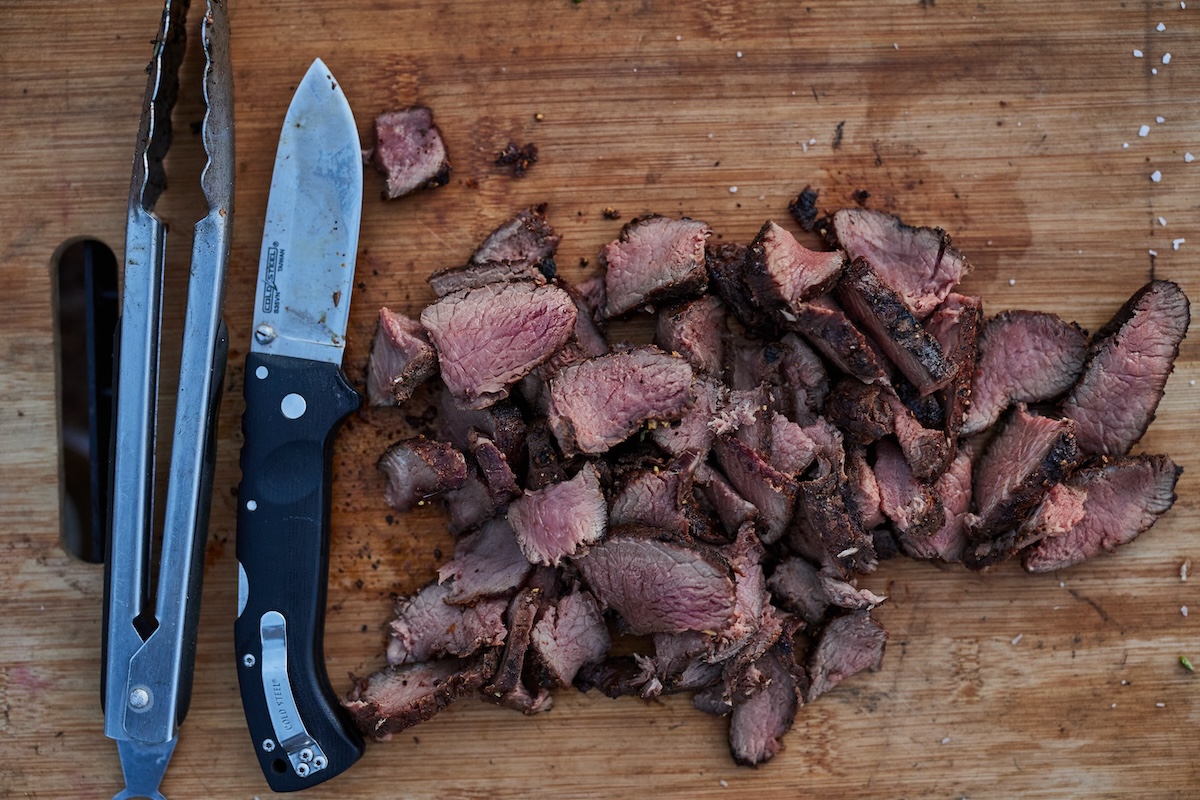

The right knife makes the job even easier.
MAINE: SURF-AND-TURF
Josh Dahlke, HuntStand
My favorite species to hunt is Meleagris gallopavo—the wild turkey. God bless the National Wild Turkey Federation for its efforts in restoring and conserving booming populations of gobblers. From East to West, you’ll find high-odds opportunities to hunt turkeys around every corner. I’ve killed birds in a number of states and south of the border in Mexico. In fact, I make it a point to kill at least five turkeys every spring to feed me throughout the year.
Of all the places I’ve hunted these birds, the state of Maine has been one of the best. But it’s due in part to another type of white meat native to the Pine Tree State: lobster.
I’d recommend starting your Maine turkey trek in the southwestern part of the state, just a stone’s throw from the Portland airport. You’ll find more than 12,000 acres of public land access, including the 5,000-acre privately managed Jugtown Forest. The other key quality of Maine is that it offers the latest spring turkey season in the country, extending all the way into the first week of June—and believe me, they’re still gobbling.
I killed a bird during the final morning of my 3-day hunt while I was walking out of Jugtown Forest. His meat, alongside two fresh live lobsters (yes, alive and crawling), occupied my carry-on baggage and flew back with me to Minneapolis where I enjoyed an unforgettable homecoming surf-and-turf. Oh, and while you’re in the Portland area, make sure someone pours you a Shipyard beer … preferably in a mason jar.
ALMOST ANYWHERE: GROUSE
Mitch Kezar, Writer and Photographer
Not all hunts go the way you plan ’em. Some are easier, some are harder. Others are harder yet. Some of them make you think you’re the star honcho in the next episode of Mission Impossible. A few years back, our little gang of flat-landers in the Sawtooth Mountains—somewhere in the vicinity of Boise, Idaho—were playin’ lead roles in that mythical movie.
We had a former Special Forces lad in our midst. After a 4-hour pull uphill in the dark, I found a stick to push my lungs back in my body, and wheezed, “So, how’s this stuff compare to all that training you guys do?” He wheezed back in his North Carolina drawl, “Well, Mitch, this is about the toughest dang thing I ever done.” That kind of trip.
Elk, packs, bows and arrows, mountaineering boots and vertical walks. Then fording cold rivers barefoot, packs on backs, with special little aches piled on top. Daily fare.
We got into the elk, and the elk got back at us. Screaming monster bulls that would not show themselves, even though they were so close you couldn’t help but think you smelled the stink of their breath rolling up in the cold air. Cows that gave us a shot, but we didn’t take it. Pride, you know. Long, long climbs and ass-scraping rides back down on the slippery goop got us back to camp in the dark. No meat. Sucked. Pretty, but painful.
Next day, in the dark, I made a silent vow: I had me a small-game tag, and I was by God going to use it. A guy’s gotta have fresh meat. Can’t live on freeze-dried cooler glop—no matter how fancy.
So … spruce grouse. They weren’t everywhere, but they were there in clusters. On my way back from another marathon climb and descent and climb and descent, I came upon ’em. Careful shots with my only blunt-tipped arrow loaded up my pockets. A few went into my backpack. I could feel them warm on my back as I marched down in the dark, proud enough. I had meat.
“Can’t eat those damn things,” rang out from the fire. “Bullshit,” I shot back. It’s protein, and I’m betting I can cook ’em. Feathers started to fly as I got ’em ready.
A little love from olive oil, butter and spices, and a slow ride in a Dutch oven buried in coals threw a wet blanket over the disbelievers.
Two of us got seconds, there were no thirds. There WAS meat in camp that night.
NEBRASKA: SMALL GAME
Tony Peterson, Outdoor Writer
A buddy and I traveled to north-central Nebraska last fall for a straight-up meat hunt. In our pockets we had bow tags for deer, fall turkey tags, and small game licenses. In addition to arrowing good bucks early in the hunt, we also spent plenty of time messing with turkeys, quail and rabbits.
Every single night we cooked freshly killed game on the grill over an open fire, and the best part: It was all on public land. Few states offer such reasonably priced nonresident hunting licenses and such game-rich land as Nebraska. For the meat hunter, it’s a must-consider destination.
KENTUCKY: CARP DIEM
Jana Waller, Host, Skull Bound TV
I’ve been an angler and hunter my entire adult life, and I often boast about eating almost all that I harvest with the exception of coyotes. Luckily, I’m blessed with a very open-minded pallet and look forward to eating awkward or exotic dishes.
Recently, I traveled to Kentucky in search of a giant carp species known as “bigheads.” These alien-looking, big-eyed buggers look about as delicious as they do cute, but I was told by my friend and local Kentuckian, Dennis Redden, that they’re scrumptious if taken care of properly. “The key is to remove the filets immediately in the boat and get them on ice,” Redden explained.
Bigheads are an invasive species in many bodies of water in the United States, and they’re creating massive ecological havoc. The good news? They’re a blast to bowfish and truly tasty! Cut the filets into small strips and fry them in canola or peanut oil and you’ll have yourself a delectable ‘Carp Diem’ dish!
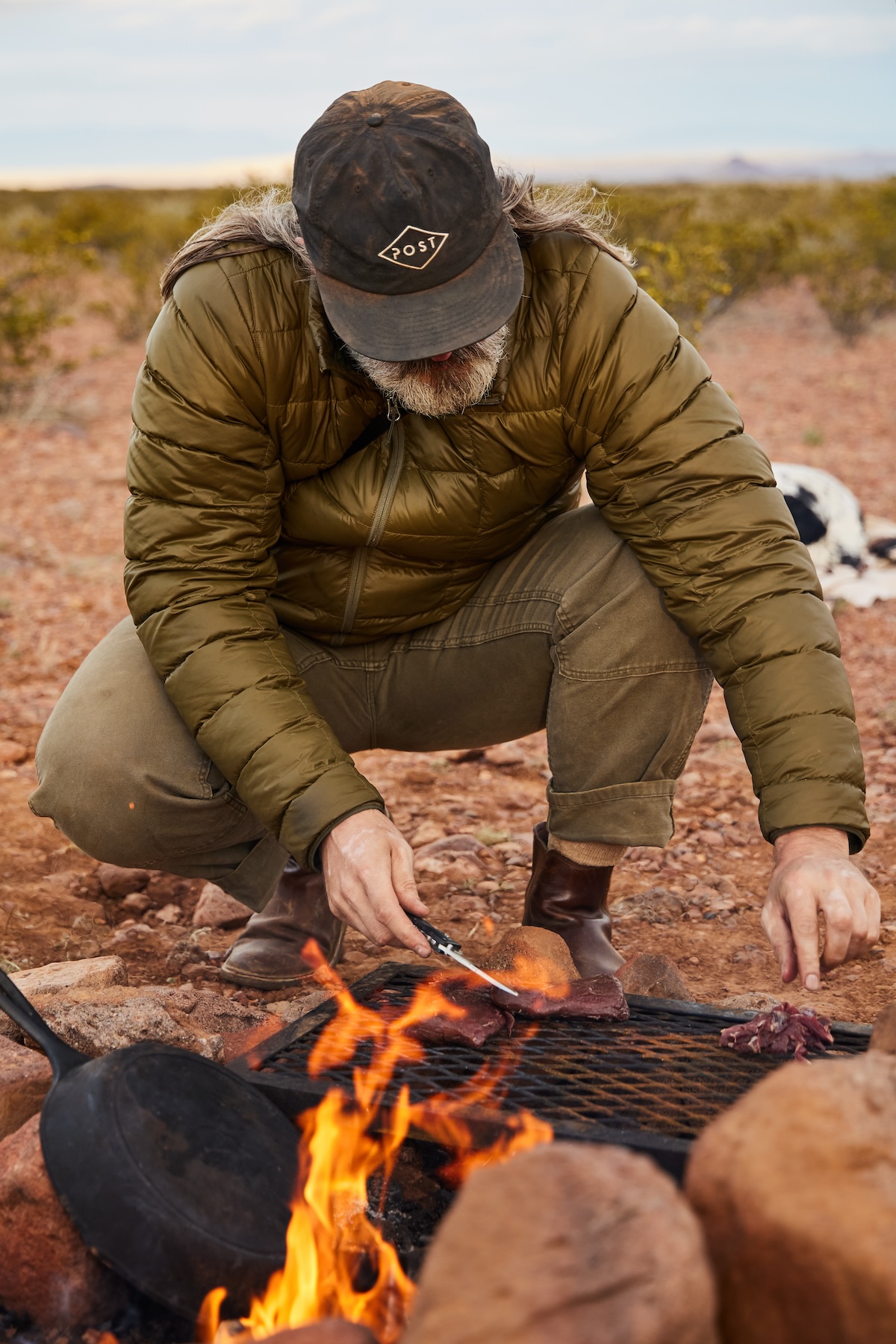
There's nothing like fresh venison at deer camp.
SOUTH DAKOTA: ROOSTERS
Scott Leysath, Host, Sporting Chef
Believe it or not, we have some decent pheasant hunting in California. Yes, California. The season generally starts the first Saturday in November and runs about 6 weeks. I’ve had some memorable Northern California pheasant hunts, but few that can come close to last December’s hunt near Huron, South Dakota.
If you ever think it’s cold in the Sacramento Valley, spend a winter’s day in South Dakota. The first day included frozen ground and 21-below temperatures (with wind chill). You learn to put your discomfort aside and thaw your trigger finger out long enough to react to the flush of hundreds of cackling roosters. Each day, our group shot our three-bird limits of late-season wild roosters. Huron, South Dakota, claims to have 125,000 acres of huntable public land within a 60-mile radius.
WYOMING: LEFTOVER PRONGHORN
Mark Kayser, Outdoor Writer
Pronghorns might not be as plentiful as they were in the days of Lewis and Clark, but in up-trending cycles you can guarantee yourself a cooler full of choice pronghorn cuts. Simply focus on Wyoming hunting units brimming with leftover doe/fawn tags. Some units even offer leftover buck tags to keep your predatory skills alive as you shop for a trophy and a winter cache of protein.
Depending on the unit, you may apply for up to four additional doe/fawn limited-quota licenses. You could literally fill all your tags in one pronghorn-rich basin. And don’t let anyone fool you: With proper care and quick cooling, pronghorn meat is a delicacy that will highlight any meal.
SOUTH DAKOTA: SMALL GAME
Ron Spomer, Owner, Ron Spomer Outdoors
Go to eastern South Dakota Nov. 15 through January. Seek out the 295,000 acres of Game Production Areas with shelterbelts (trees.) Buy a small game license. Hunt those trees with a .22 rimfire. Ten cottontails and five fox squirrels each day. Triple that for possession.
No competition. Locals are too busy hunting pheasants. Oh, you can hunt those, too, on the same license, but do it before Jan. 1 and bring a shotgun. TIP: Ask farmers if you can hunt their shelterbelts for squirrels and bunnies. Emphasize you will not shoot pheasants or deer and they’ll probably let you have at those corn eating rodents and bunnies.
COLORADO: OVER-THE-COUNTER ELK
David Draper, Petersen’s Hunting
Colorado is a meat eater’s idea of heaven with more elk killed there than any other state. Harvest numbers generally come in around 50,000 or more as wildlife officials rely on hunters to keep the state’s nearly 300,000-strong herd in check. The second and third rifle seasons generally have bull elk licenses available, but the over-the-counter archery tag is good for a bull or cow, giving hungry hunters the option of harvesting either.
The Flat Tops Wilderness Area is home to North America’s largest migratory elk herd–the 40,000-animal White River Herd. Look at units 23, 24 and 33 in the White River National Forest or Unit 14 in the Mount Zirkel Wilderness for the best opportunity to fill the freezer with fresh elk meat.
Recipe: Venison Smash Taco with Spicy Slaw
I like to keep two different sizes (one small, one big) of Engel Coolers handy when I’m on the road. Here’s why …

-JD #theHUNGER
Keeping a consistent edge on your butchering blades requires the right tools. I use the Guided Sharpening System from Work Sharp to stay sharp.
-JD #theHUNGER
Cabela’s Instinct hunting apparel has something to offer for every type of hunter. In the Instinct line you’ll find high-performance garments that are thoughtfully constructed with premium materials, plus a layering system that suits any imaginable hunting environment. Learn more about it in this short review video.
-JD #theHUNGER
I’ve been shooting the new Patriot line of bolt-action rifles from Mossberg this entire fall while filming THE HUNGER. Here’s why I’m a big fan of these budget-priced long guns.
-JD #theHUNGER
Learn more about the National Wild Turkey Federation’s #RiseAndFly initiative, and discover how you can join this call to support wildlife conservation.
You can’t comprehend the full value of a rock-solid hunting boot until you’re faced with true treachery. Jagged rocks, water, steep inclines, unstable footing—not every boot is built to handle anything you throw at it. As this video shows, Kenetrek Mountain Extreme hunting boots are an exception.
There’s more to turkey hunting than calls and decoys. Put your optics to work and consider using a spotting scope to get a bead on more birds. I’ve had great luck with the lightweight Nikon Prostaff 5.