




Modern whitetail research continues to deliver impactful findings for deer researchers, deer managers, and even deer hunters. Each year, many of the latest deer research discoveries are discussed at the annual Southeast Deer Study Group Meeting. Fortunately for you, our loyal readers, there were numerous actionable takeaways from the big event. Here are 10 of these.
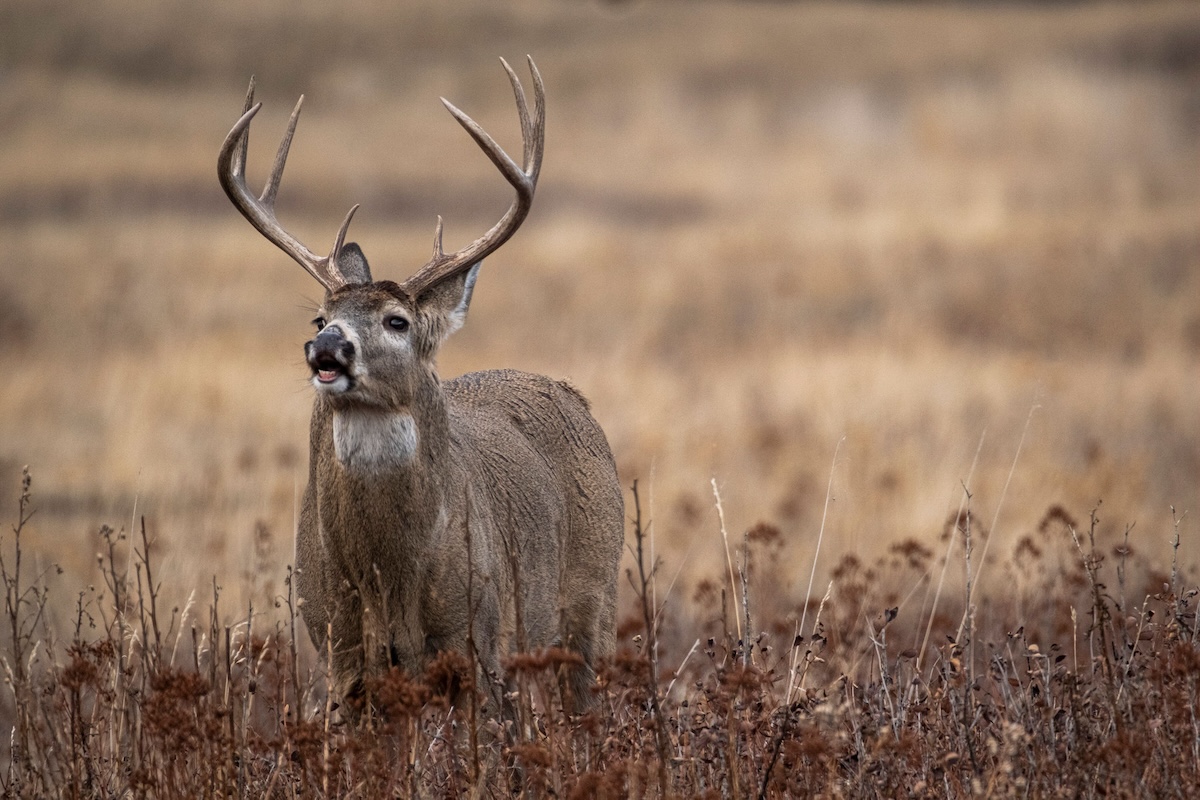

The whitetail is still riddled with mystery, but researchers continue to learn more interesting facts about America's favorite game animal.
1. Drones are very effective tools for deer surveys.
Kevin Gerena with Auburn University presented on the effectiveness of using drones in deer population surveys. While battery life is a challenge (30 minutes of flight time), it can cover a lot of ground. Traveling up to 18 mph at 300 feet of elevation, it provides a 225-ft transect width. While spring, summer, and fall foliage makes it virtually impossible to obtain an accurate survey, winter is the perfect time to conduct one. Working January through March, it’s possible to capture very accurate deer population data. It’s much faster, and in some cases, even more accurate, than traditional trail camera surveys.
“The results are within a couple of deer of known numbers (in high-fenced areas),” said HuntStand’s Brian Murphy. “That’s remarkable. That’s noteworthy.”
Advanced Scrape Hunting Tips to Know
2. Sika deer are outcompeting whitetails in Maryland.
According to Matthew McBride with the University of Delaware, sika deer are expanding rapidly in Maryland. The expansion started in marsh country, but now, these deer are pushing into stands of hardwoods and pines. Unfortunately, whitetails are being pushed out of those areas, too.
“They started 50 years ago in the marshes, and now they’re pushing them out of the high ground,” Murphy said. “The populations are exploding, and whitetails are suffering. Sika deer can digest low-quality forages, such as grass, and whitetails can’t.”
Trail cameras continue to be banned on public lands.
3. Game laws are changing.
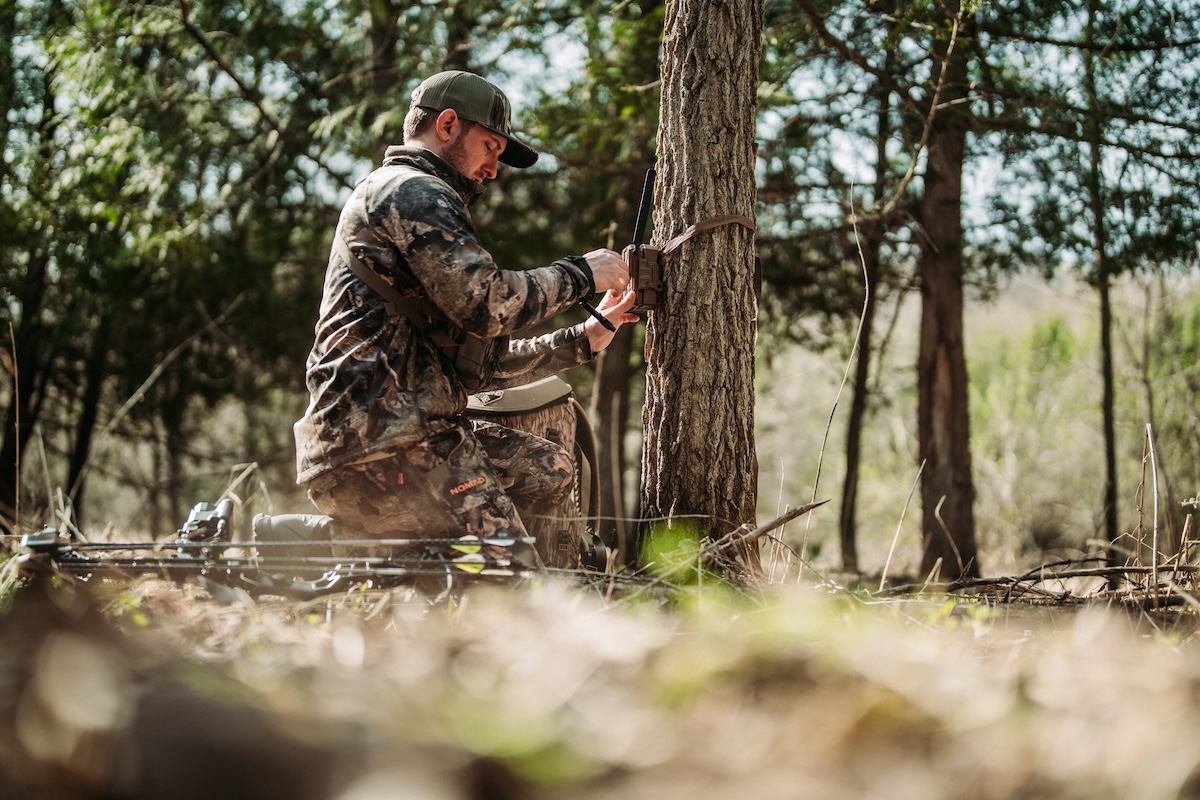
Ben Westfall with the National Deer Association (NDA) discussed how game laws are changing in America. Currently, there is a slow-moving effort to ban trail cameras on public lands. Destinations such as Arizona, Kansas, and others, have already pushed it through. Additionally, baiting and feeding wildlife is coming under fire due to the expansion of chronic wasting disease (CWD) throughout America. Finally, in the South, drones are virtually unregulated in terms of use for recovering wounded game.
4. Epizootic hemorrhagic disease (EHD) is easier to get and moving faster than previously thought.
EHD can wipe out vast swaths of deer. But it happens much quicker than previously realized. Mark Ruder with the Southeastern Cooperative Wildlife Disease Study at the University of Georgia determined that midge flies can transmit EHD to whitetails in as little as one feeding event.
“His research is pretty sobering,” Murphy said. “It appears as few as one feeding event from one infected midge can transmit EHD.”

EHD continues to spread further northward into places it's never been before.
5. Climate change is impacting EHD expansion.
Researcher Sonya Christensen learned that climate is impacting EHD. First, EHD is moving further north annually, which is likely linked to climate change. By her analysis, a three-factor alignment creates the worst outbreaks of the disease. These include a warm spring, wet July, and dry August. That combination creates the greatest odds of EHD outbreak. Unfortunately, she discovered no evidence of successful EHD mitigation strategies by hunters.
“The disease is marching northward,” Murphy said. “Southwest Pennsylvania, southern Minnesota, and even a couple cases jumped the Great Lakes into Canada. We’re seeing it farther north than we ever have.”
Arguments for the Wintertime Supplemental Feeding of Deer
6. CWD prions cling to everything.
In a study to gauge the transmission of CWD, Steve Demarais with the Mississippi State University tested different feeder types in areas with high CWD prevalence rates. The three categories of feeders included those available to all wildlife, those available only to raccoons, and those not available to any wildlife. Within 4 months, both the deer and raccoon feeders both tested positive for CWD. The whitetail feeders were contaminated largely by saliva. The raccoon feeders became infected by their feet, which picked up CWD prions elsewhere and deposited them onto the feeder.
“They shot some raccoons and tested them,” Murphy said. “They found prions on the feet of the racoons, but no internal disease, and they weren’t circulating CWD internally. Essentially, racoons, coyotes, opossums, and you name it — they are more than likely moving this disease around the landscape.”
Even more shocking was that one control feeder (meaning no animal access allowed) also tested positive for CWD. After deliberation, it’s believed this feeder was contaminated by CWD when it was laid on the ground before establishment. In short, environmental contamination of CWD is very real.
7. Hunters can neutralize CWD-infected deer processing equipment.
It was long believed that CWD prions couldn’t be “killed.” Now, according to Marc Schwabenlander with the Minnesota Center for Prion Research and Outreach, it’s possible to neutralize these buggers.
He tested various cleaning agents and discovered that only bleach was consistently effective at neutralizing these prions. As low as a 10% bleach solution used for five minutes was effective. Repeated bleach exposure does impact knife integrity over time, though. Fortunately, 10% for 5 minutes has minimal structural effect on knife breakdown.
This is an important finding, as research has also proven that mixing CWD-positive deer with CWD-negative deer — including the use of processing equipment — can lead to post-harvest meat contamination during the processing effort.
8. Buck bedding research delivers important findings.
Luke Resop with Mississippi State University studied 60 GPS-collared bucks that were 2 ½-years-old and older. He pinpointed several interesting discoveries. First, bucks tend to bed four times per day in two different bedding areas. (Day and night beds were equal at 50% each.) Second, approximately 52% of bedding areas were only used one time by unique bucks. Third, bucks used approximately 31 different buck bedding areas throughout hunting season. (The study group ranged from eight to 87.) Fourth, the fewest buck beds were created during the pre-rut and rut, as this is when bucks are on the move the most. That said, this was the period when bucks visited the most bedding areas. Lastly, bucks average about six days for returns to the same bedding area.
Food plots, feeders, treestands, and even wind, have interesting impacts on whitetail movement.
9. Food plots, feeders, treestands, wind, and more, impact buck movements.
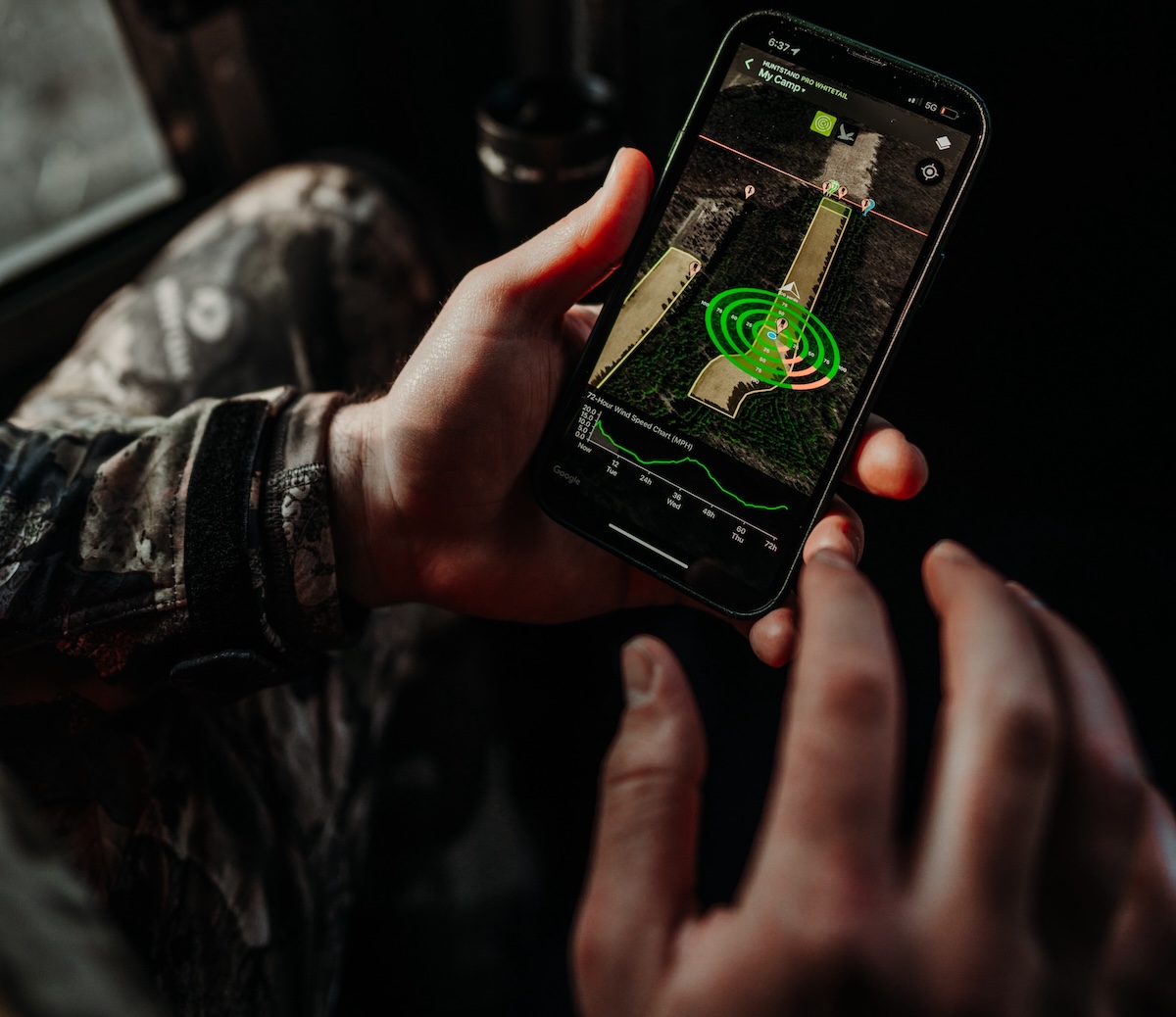
Natasha Ellison with the Mississippi State University observed buck movements in relation to key hunting and land management factors. Her research unveiled several important things. First, bucks visit food plots more during the hunting season. Second, bucks tend to move most when food plots are approximately 4 acres. Third, buck movements are shorter, yet more frequent during the rut. Fourth, most food plot visits are at night. Fifth, bucks usually bed 100-300 yards from food plots. Sixth, bucks oftentimes move with or against the wind, but rarely with a crosswind. And seventh, there does seem to be a spike in deer activity around midday.
Mature Buck Tactics to Know About [Deer Dirt]
10. Shotguns aren’t, in fact, safer than rifles for deer hunting.
It’s long been believed that shotguns are safer for deer hunting than rifles. Peter Acker, who is retired from the West Virginia Department of Natural Resources, analyzed a Virginia case study. He learned this long-held belief isn’t true.
“With substantially more rifle hunting, this approach produced 6 fatalities and 19 nonfatal ones in 20 years (2002-2021),” Murphy said. “This compares to 10 and 195 for shotguns, with essentially all injuries and deaths due to the use of buckshot and running deer.”
There were more revelations presented at the annual meeting, many of which might be interesting to you. If that’s the case, consider keeping up with all the impactful data and research that will be presented at the 2025 event.