



Decoying mature white-tailed bucks during the rut is one of the most exciting ways to hunt, but you have to follow some details for it to work out.
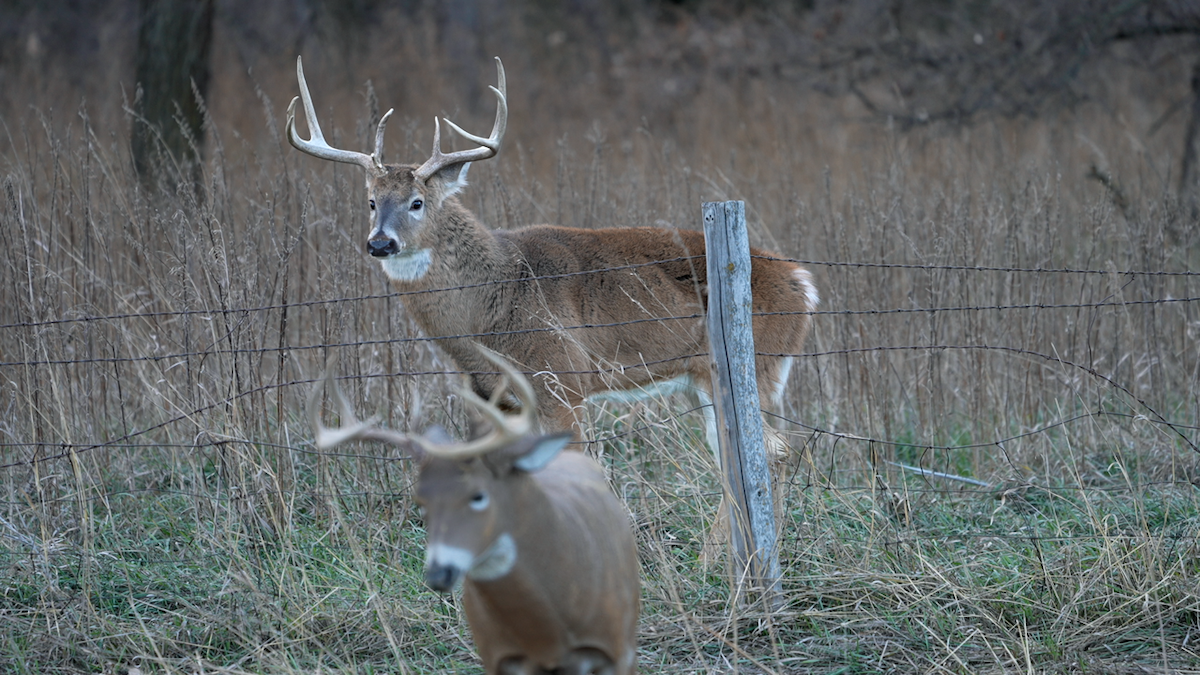
Decoying is most effective during the rut, and especially the pre-rut, as bucks have the increasing urge to fight and breed.
Imagine: You’re sitting in a treestand, overlooking a recently cut cornfield, with a buck decoy set 18 yards away. It’s early November; time to shake things up. After issuing a few grunts, you reach for your rattling antlers, banging them together with force. After 30 seconds, you exchange the antlers for your bow, brimming with anticipation.
A few moments later, you hear a deer walking in the crunchy leaves. Your heart leaps into your throat. The moment the buck pops out of the timber, he’s clearly the one you want. With his ears pinned back, eyes squinted, and hair bristled, he marches with stiff legs toward your decoy. Carefully, you draw your bow, and he turns broadside several yards from the decoy. You bury your top pin on his ribs, and your arrow instantly flashes through him, driving into the dirt on his opposite side. The buck flees, crashing just inside the timber.
Hunts like these only happen on outdoor TV and YouTube, right? Not exactly. Decoying doesn’t always produce encounters like the one above, but with attention to the key details, even an average whitetail hunter can experience a heart-throbbing decoy hunt. And when you do, it will be one of the most adrenaline-packed deer encounters you’ve ever had with a bow in your hands.
That said, here are some of the important details to consider if you’re ready to give decoying a whirl.
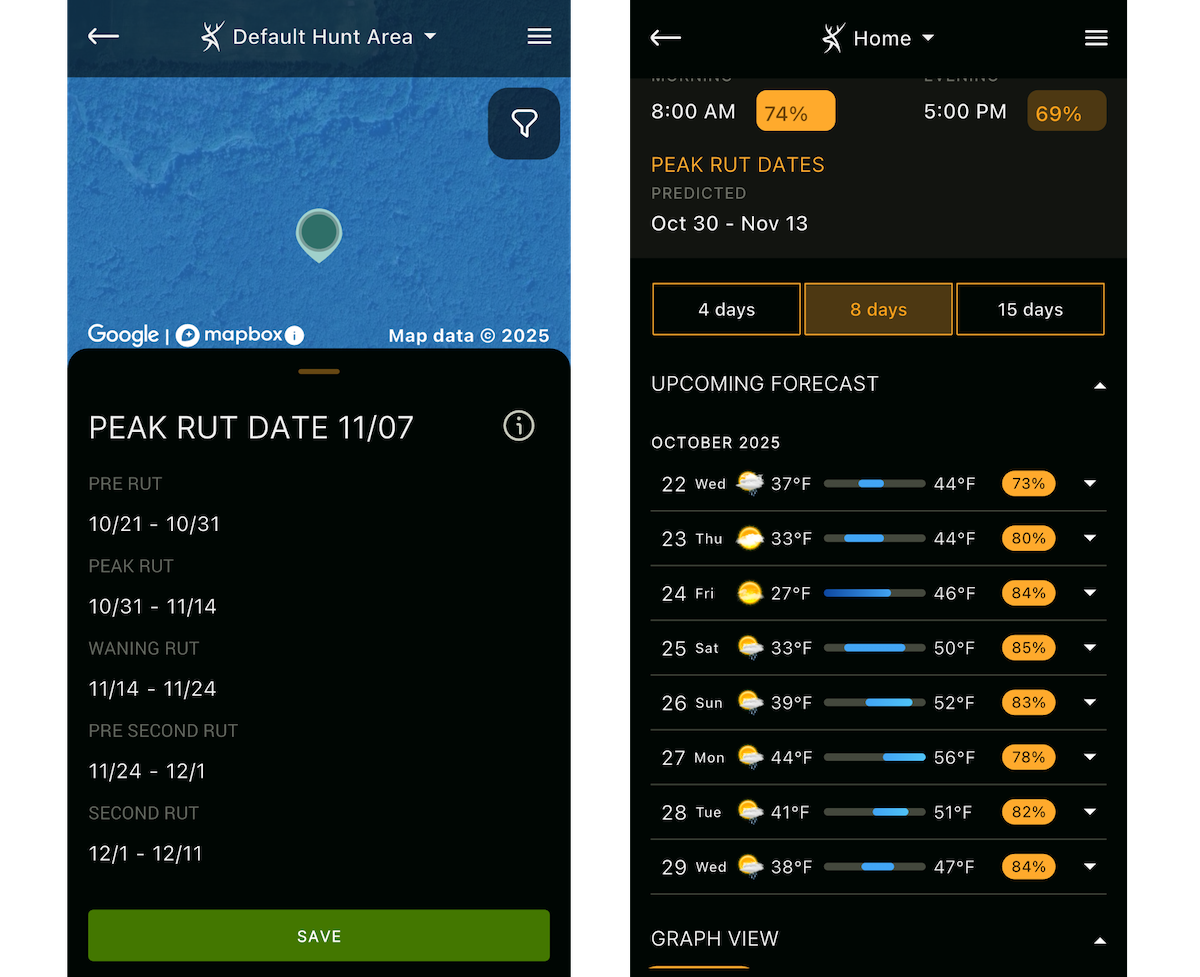
The Whitetail Rut Map provides site-specific dates for all phases of the rut, which can inform when you should break out the decoy.
1. Timing Your Deer Hunts
Decoying can be effective from the time that bucks shed their velvet until they shed their antlers. Anytime bucks are hard-horned, they tend to fight or spar with other bucks. However, the most effective time to decoy is from the late pre-rut (late October through early November in most regions) through the waning rut. To narrow things down even more, the late pre-rut is generally the unequivocal best window for using a buck decoy, as bucks are doing lots of fighting right up until they get on the trail of estrous does.
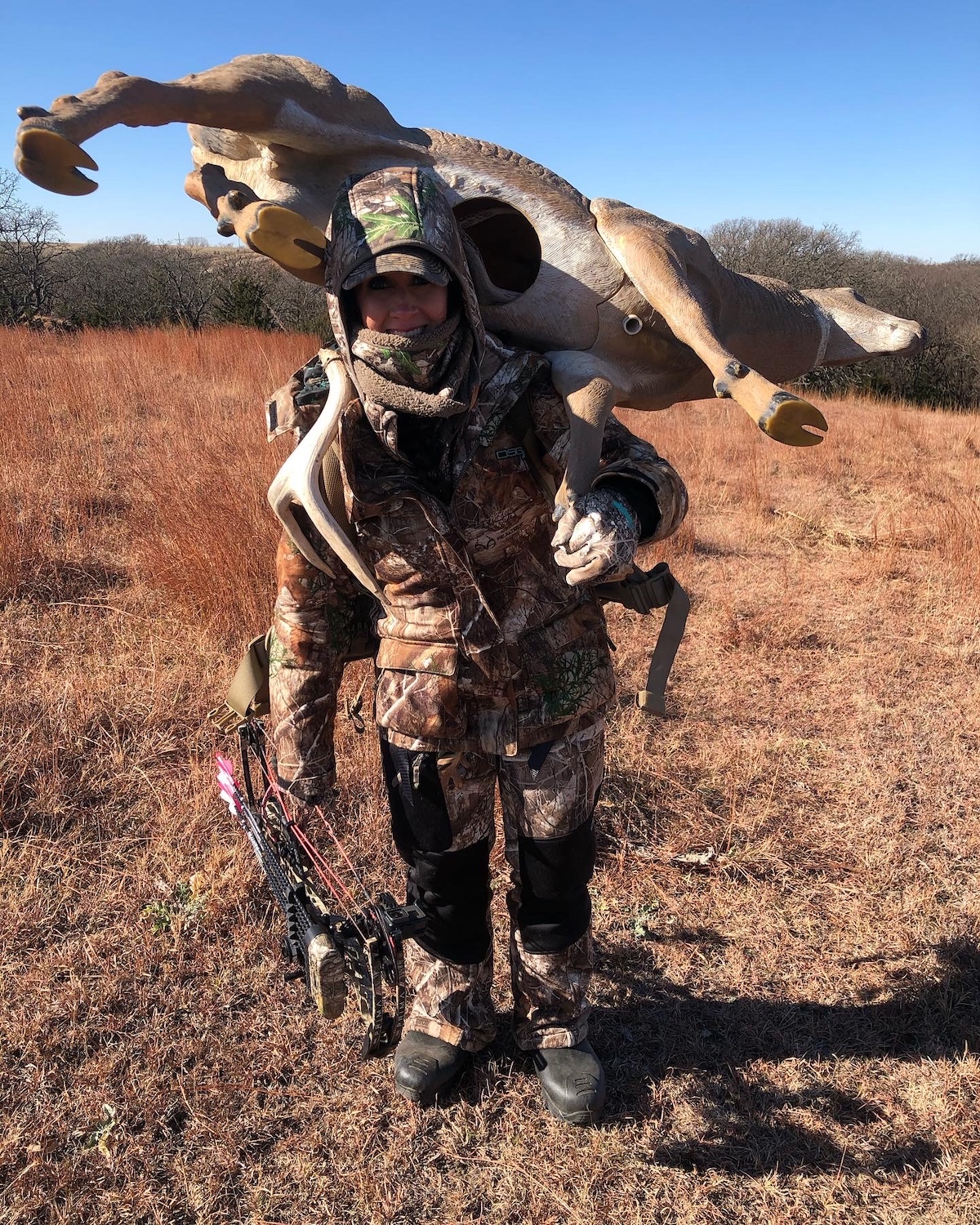
This is when I decoyed in a big public-land Kansas buck to 12 yards. The date was November 1, 2024. I’d seen the buck come out of a bedding area the evening prior, and I moved in tight that following afternoon. Placing a buck decoy and hiding in a cedar behind a bow-mounted doe decoy, I rattled, and the buck came out and walked right in for a point-blank shot.
Things can slow down a little bit during peak breeding, as bucks lock down with does for 24-48 hours and move minimally. Not only are you less likely to see a buck, but if you do, he might be following a doe and be unwilling to leave the doe to come fight. During this window, the open country is a prime place to hunt for the active ground hunter. Find a locked-down pair, move within 80 yards, present a 2-D buck decoy, and grunt to challenge the buck. Lots of prairie bucks are killed this way.
During the waning rut, anything can happen. Bucks are still in the mood to breed and fight, and a buck or doe decoy can be a great option during this time. With the weather cooling down (winter is just around the corner) and the rut fading, bucks often can be susceptible to food sources, where they can replenish lost calories but also mine for any remaining unbred does.
One of HuntStand Ultimate’s most useful tools is the Whitetail Rut Map. With this overlay engaged, you can click on your Hunt Area, and a window will open that provides dates for the different rut phases. Consider this data with the suggestions above, and you’ll know when it’s time to bust out the decoy.
If you have limited time to hunt, watch HuntStand’s Whitetail Activity Forecast like the daily news. When the percentage-based movement score is high during the rut, grab your decoy and get out there.
2. Choosing the Right Stand Location
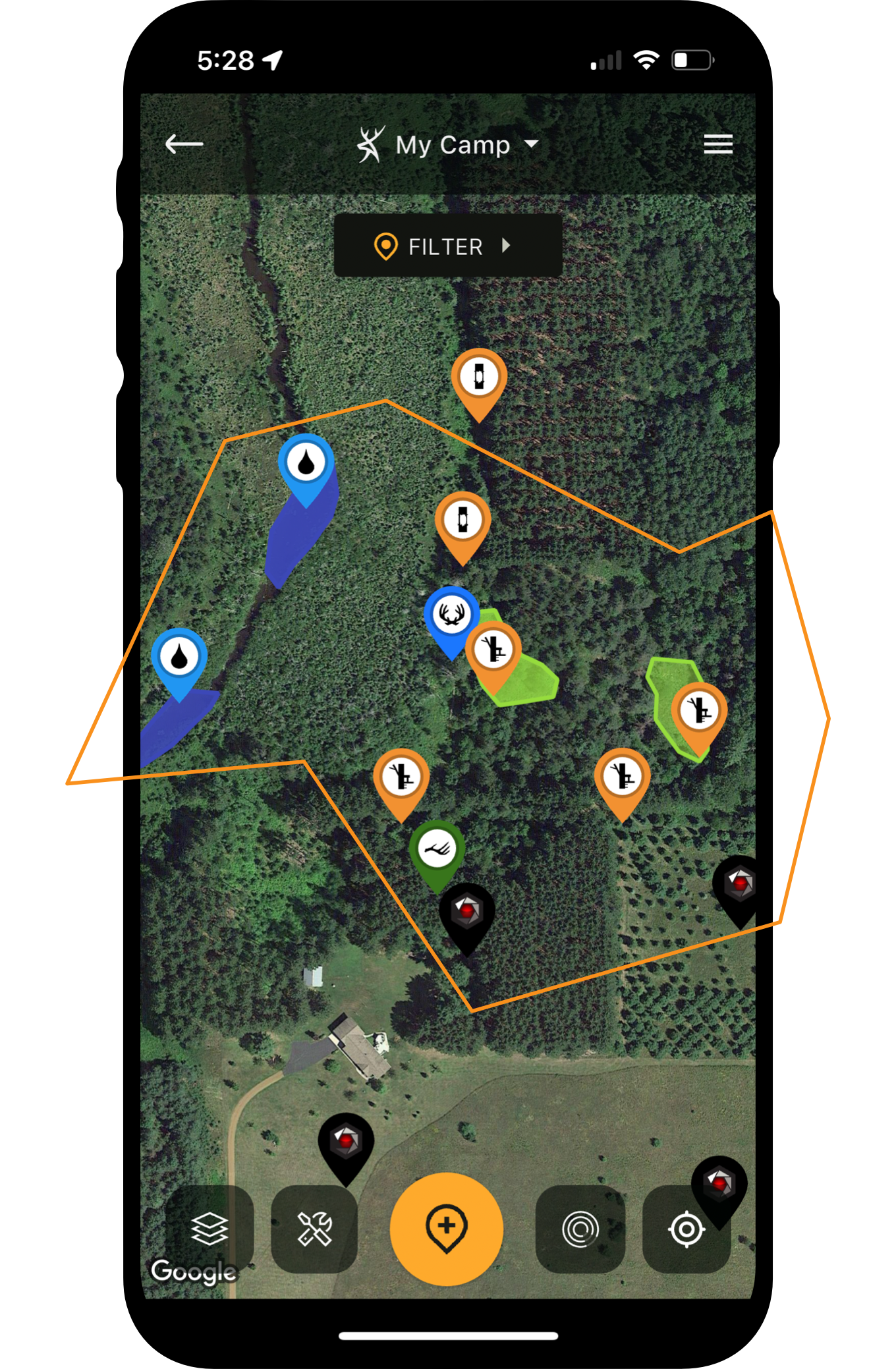
Decoying is most effective in specific settings. Visibility is the key. The most effective decoy setups are where bucks are liable to travel through a distance from the stand or blind location. Think large fields, power-line lanes, brush-country senderos, wide-open hardwoods, and other settings with 100-plus-yard visibility — these are easily distinguishable in the Hybrid or Satellite base maps. Bucks typically like to size up their opponents before committing to a fight. If you put a decoy 20 yards from where you believe a buck will walk, you could surprise and spook it. Plus, 20 yards is in bow range anyway.
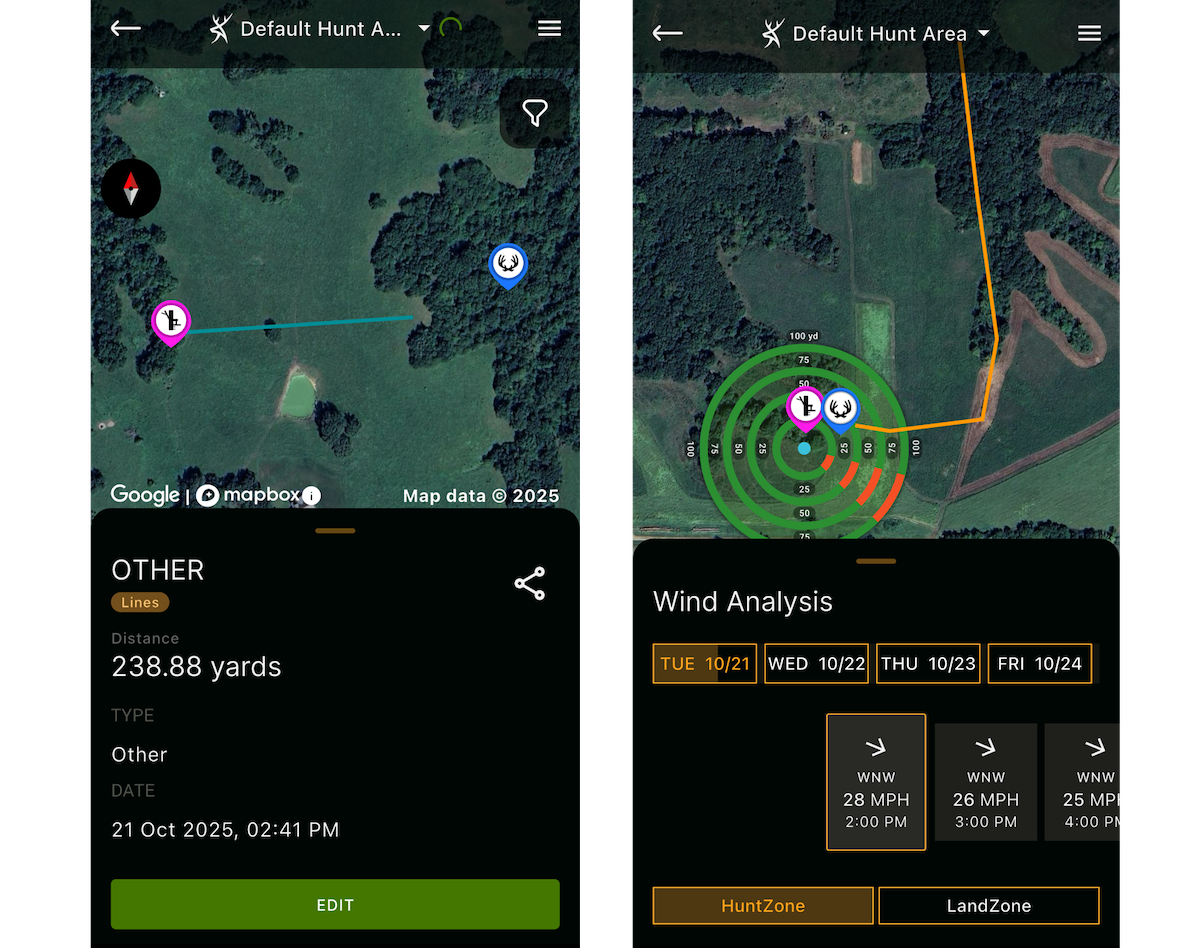
If you’re doing a hang-and-hunt mission in an area you’ve never been to and would like to use a decoy, it can help to use HuntStand’s distance measurement tool beforehand. Measure from a perceived stand location to the anticipated buck movement. Again, 100-yard-or-better visibility allows most approaching bucks to study your decoy, size it up, and commit to a fight.
HuntStand pro-staffer, Melissa Bachman, provided some further considerations regarding decoying locations.
“I like locations where bucks cruise all day long,” she shared. “You want them to see my decoy from a distance. I also prefer to set up in areas where bucks feel comfortable. For example, around a food source, bucks typically cruise the downwind fringe to scent-check does. Try to get your decoy where he’ll see it as he works the wind. If you put a decoy where bucks are less comfortable approaching, they’ll sometimes study it from a distance without coming in.”
Areas with 100-yard-or-farther visibility, especially places where bucks are coming and going throughout the day, make great decoying sites.
3. Deer Hunting with a Crosswind
Mature bucks are pretty picky about how they move in accord with the wind. Often, the best setups for decoying are when the wind is just barely right for the setup. If the decoy is straight upwind, which is ideal for the hunter, the buck might stand and stare but not commit. Or he might make a wide circle to the downwind side and fail to present a shot opportunity.
In contrast, when the wind is just missing the buck, he’s liable to come marching in without reservation because he’s confident that he can smell everything upwind of his location. For this reason, shifting your decoy placement from straight upwind to perpendicular with the crosswind can make the decoy feel more approachable to bucks, as they don’t have to swing downwind before approaching.
HuntZone is an irreplaceable tool for every single deer hunt, but it especially comes in handy when decoying. The feature shows the wind direction and your scent cone (how the wind will disperse your scent the farther it blows from your location). Before placing your decoy, reference HuntZone. Make sure that the perceived buck movement will miss your scent cone and then set your decoy in the crosswind rather than directly upwind.
Again, bucks are more likely to approach a decoy that gives them at least most of the wind advantage. But, make sure that where they come out and their anticipated route that the decoy is never in line with your downwind airstream.
Bachman added a detail regarding wind strategy. “Bucks often circle the decoy close to 360 degrees, so always plan for that when setting up so that they don’t catch your wind,” she suggested.
How to Find Killer Deer Hunting Funnels
4. Adding Scent Around Deer Decoys
Deer lures can spark realism to your decoy setup. Buck urine and doe estrous can be combined to elicit the best results. But wait! Don’t dump the scents directly onto the decoy. There are two reasons why this is taboo.
First, the scent will remain on the decoy, and then it will lose its freshness as it breaks down. In other words, it could smell a bit off on future hunts and alarm deer.
Second, you’ll likely get the scent on your person as you haul the decoy out of the field. This means you could welcome bucks to follow you and potentially pose a threat to your personal safety. The cleanest and best application for scent is around and beneath the decoy.
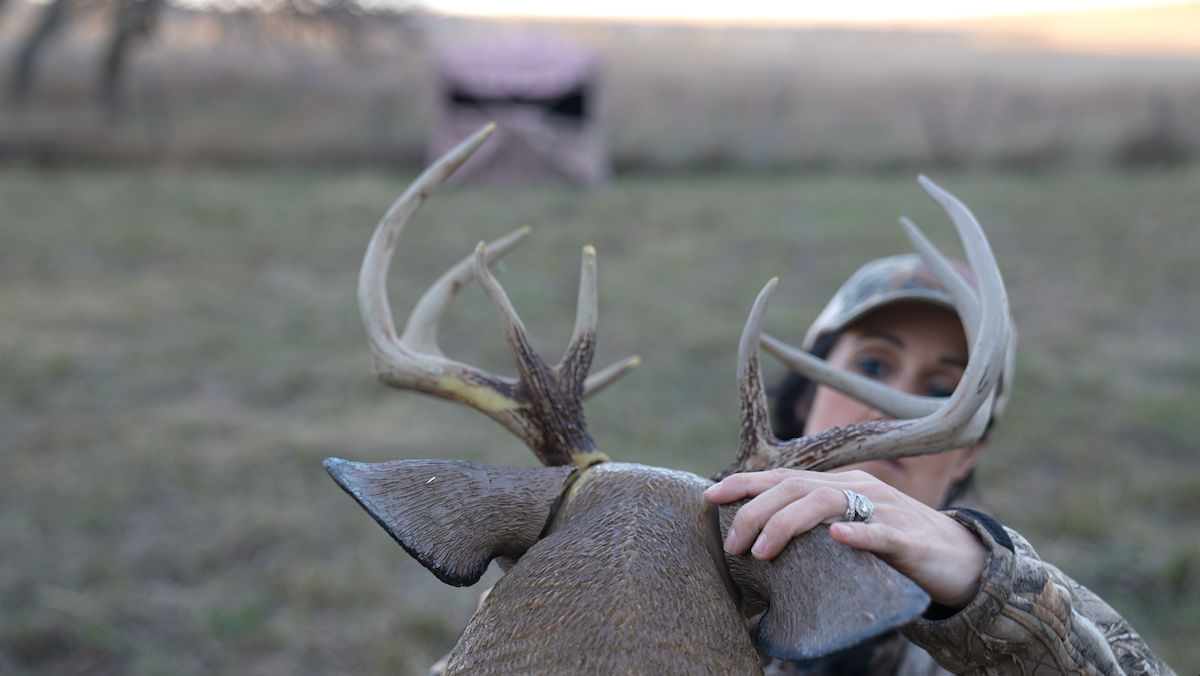
Set the decoy facing toward your blind or stand. Bucks most often approach opponents head-on, which means they’ll swing broadside to make the final approach, giving you a shot opportunity.
5. Setting Up a Close Shot
When setting up your decoy, don’t needlessly lengthen your shot distance by setting the decoy 30 yards or farther from your stand or blind. When a buck commits to a decoy, he’s usually locked in, and you can typically get away with the movement of drawing your bow without a problem. Set up for a slam-dunk shot. Around 15-22 yards is usually the sweet spot that allows for a no-brainer top-pin shot.
Another thing, always set your decoy head-on to your stand or blind. Bucks fight with their antlers, meaning a buck will almost always approach a decoy by circling to address it head-on. This means the buck will have to turn and expose its shoulder before knocking over the decoy, thus giving you a shot.
On some occasions, a buck that isn’t in full-on fight mode might walk back and forth within 20-30 yards of the decoy, and then eventually walk in from behind to smell the decoy. The goal is to smell the opponent’s tarsal glands and confirm that it is a real buck. In this scenario, the buck will still generally offer a broadside shot at some point, even if the decoy is facing you.
“Depending on the terrain, I generally put the decoy about 20 yards away,” Bachman said. “If a buck swings out a little wider, say 30 or 40 yards, he’s still within my effective range. But if he comes right in, it’ll be an easy shot. Also, bucks usually approach the decoy head-on. Knowing that, I position it so that I’ll get a broadside shot opportunity before he hits the decoy.
“When you’re hunting over a decoy and immature bucks come in that don’t give you a shot, you need to move the decoy as soon as they leave,” she continued. “When the wind stays consistent all day, I’ve noticed all bucks basically do the same thing. You don’t want to miss an opportunity when a big buck comes in, so adjust if necessary.”
Wind is imperative to decoy success. Although a decoy set upwind of the hunter’s location makes sense, sometimes a wind that is just barely right for the hunter is a better setup, as bucks tend to approach more confidently when the wind is mostly in their favor. Always reference HuntZone prior to setting up.
6. Dousing the Decoy with Scent Eliminator
Human scent can quickly foil an otherwise perfect decoy setup. You’ll inevitably have to touch the decoy while carrying it to your stand location and setting it up. Regardless of your scent-control efforts, this will introduce some human scent to the decoy. Always douse the decoy liberally with a scent eliminator before scuttling back to your setup. Douse the ground where you were standing and kneeling while setting it up, too. There are lots of ways to ruin a decoy hunt, and human scent tops the list.
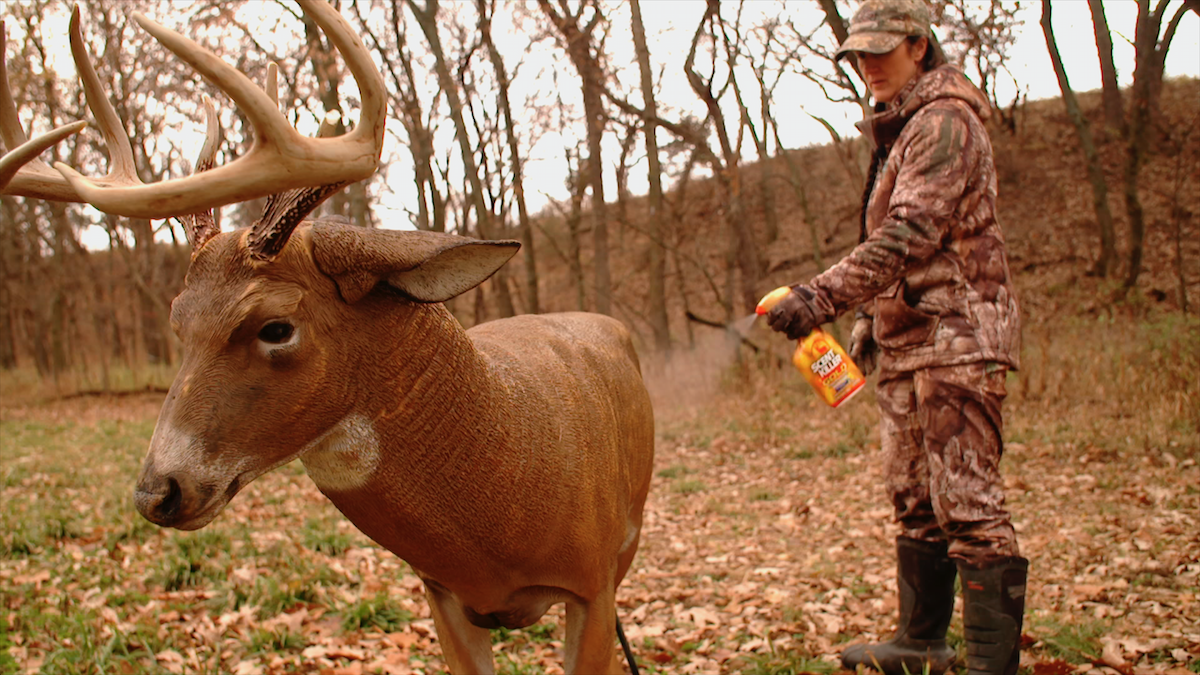
Hauling a decoy in and out of the field introduces it to human odors. For that reason, always douse it liberally with a scent-eliminator after setting it up.
7. Deer Hunting All Day
Anytime in November, especially when hunting the fringe of a bedding area, hunt as many hours as possible, and when the wind direction is ideal for the spot. Bucks often move between 10 a.m. and 2 p.m. You’ll potentially miss out on bucks if you aren’t out there all day. Yes, there will be many hours of inactivity, but it just takes one cruising buck to have a successful decoy hunt.
To that end, utilize HuntStand’s Whitetail Activity Forecast to put your time in when it counts the most. This feature considers many components that influence deer movement, and algorithms calculate movement scores. When the score is at least in the mid-70s, it’s a good time to hunt, and when it’s in the 80s or higher during any of the rut phases, you’d best park your butt out there with a decoy 20 yards away.
How to Hunt the Phases of the Whitetail Rut
8. Spice Things Up
From late October through November, you’ll generally hurt nothing by rattling, grunting, and snort-wheezing. This is a great way to pull bucks in where they can see the decoy. Then the decoy can finish them into bow range. Also, when a buck is sizing up your decoy, a grunt can tip him over the edge and bring him in. Whitetails expect other whitetails to communicate through grunting, rattling, and snort-wheezing. So don’t be afraid to try it.
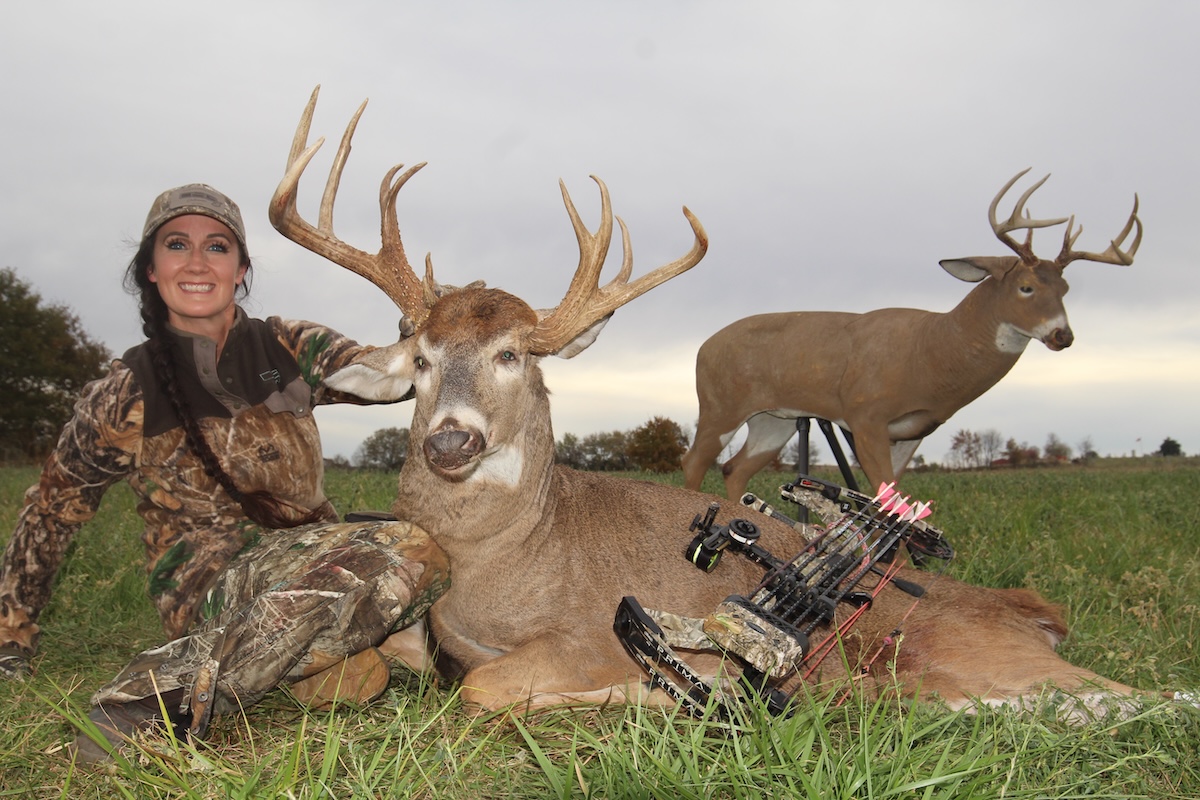
HuntStand pro-staffer, Melissa Bachman, has had loads of success with decoying big whitetails, including this ancient Illinois bruiser.
Final Notes
Now, if an immature buck comes in and topples the decoy over, Bachman said that she walks out and repositions it as soon as that buck leaves. Then, she reassumes her ambush and rattles, which can take an otherwise disruptive situation and make it alluring to any other bucks within earshot.
“Often, hunters ask me, ‘What if I’m after a specific buck, but he’s afraid of my decoy?’” she continued. “That does happen. Sometimes, I’ll remove one antler. When I do, I expect the bucks to approach that side; it’s the decoy’s weak side. Make sure to set up accordingly.”
There’s more to the decoy story, which you’ll learn through trial and error. Every scenario plays out a little bit differently. But the combination of elementary and advanced tips we’ve discussed here will help you get started on the right foot. And who knows? Maybe you’ll have the encounter of your life as a mature buck marches toward your decoy.