



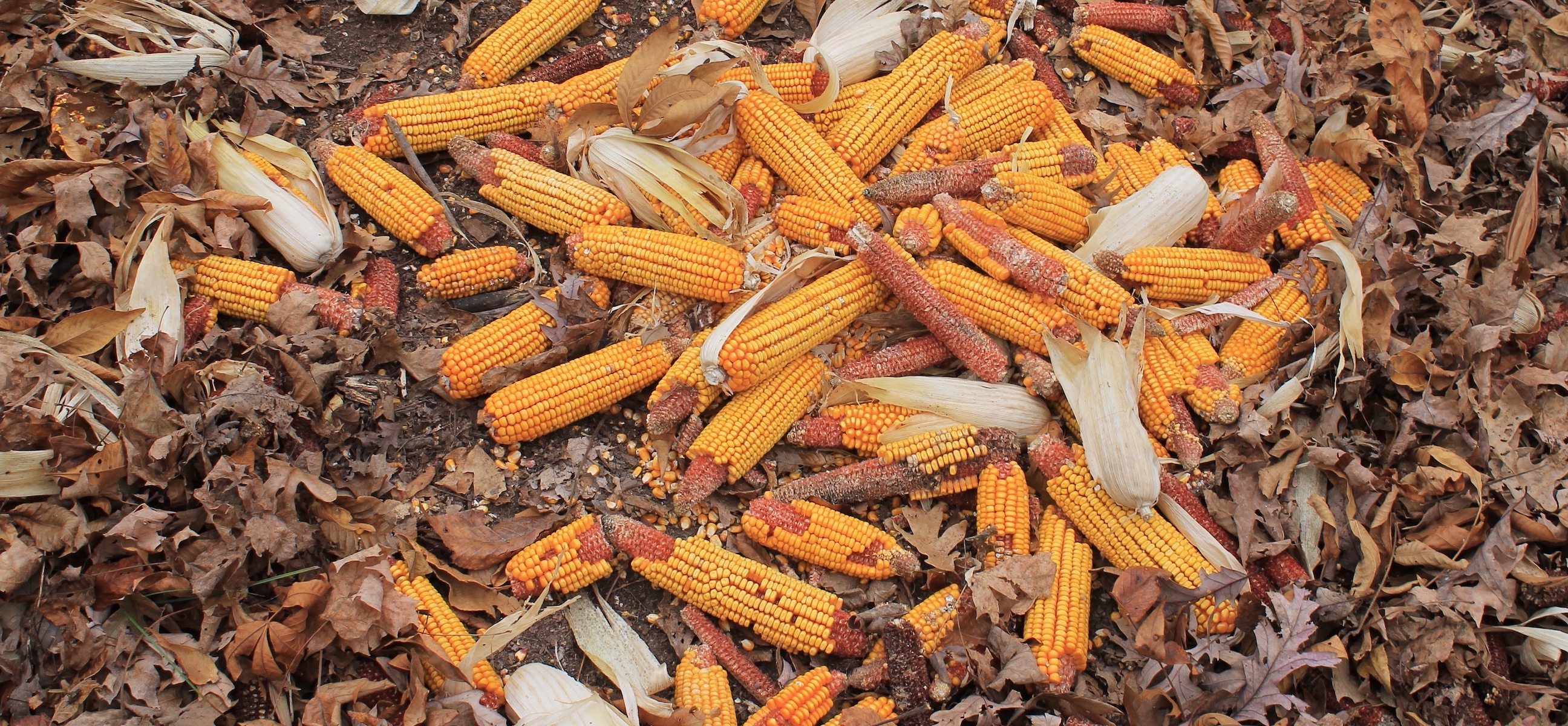

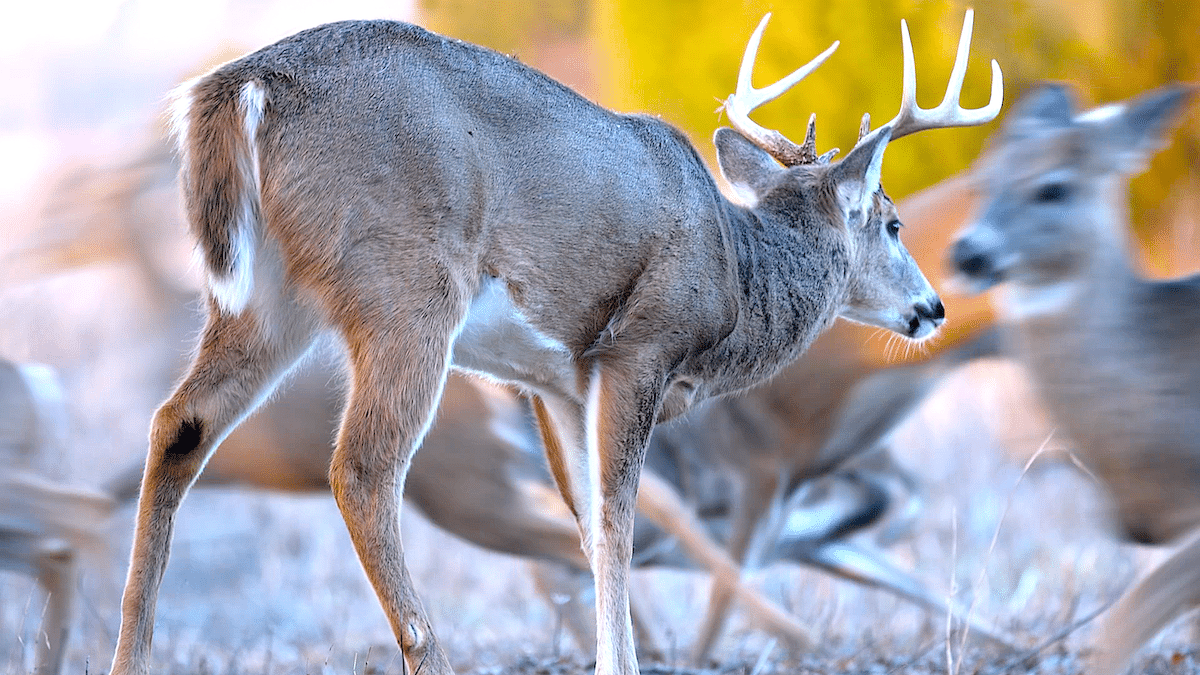

Baiting whitetails is a contentious topic that has sparked debates for decades.
Baiting whitetail deer is a popular strategy for many hunters across the country. Luring game animals to bait is an age-old hunting technique, with plenty of evidence to show that it was used by Native Americans and other early hunters. These days, baiting deer stirs up a lot of controversy, and in many states it’s entirely illegal. We’re not here to settle the score on the bait debate, but we will arm you with the knowledge to decide if deer baiting is right for you.
For those hoping to learn more about baiting deer, our comprehensive guide will get you on the right track:
- Various Uses of Deer Bait
- Best Tactics for Baiting Deer
- Best Types of Bait for Deer
- Alternative Types of Deer Bait or Attractants
- State Laws on Baiting Deer
- Arguments for Baiting Deer
- Arguments Against Baiting Deer
- Subscriber Discounts on Deer Gear
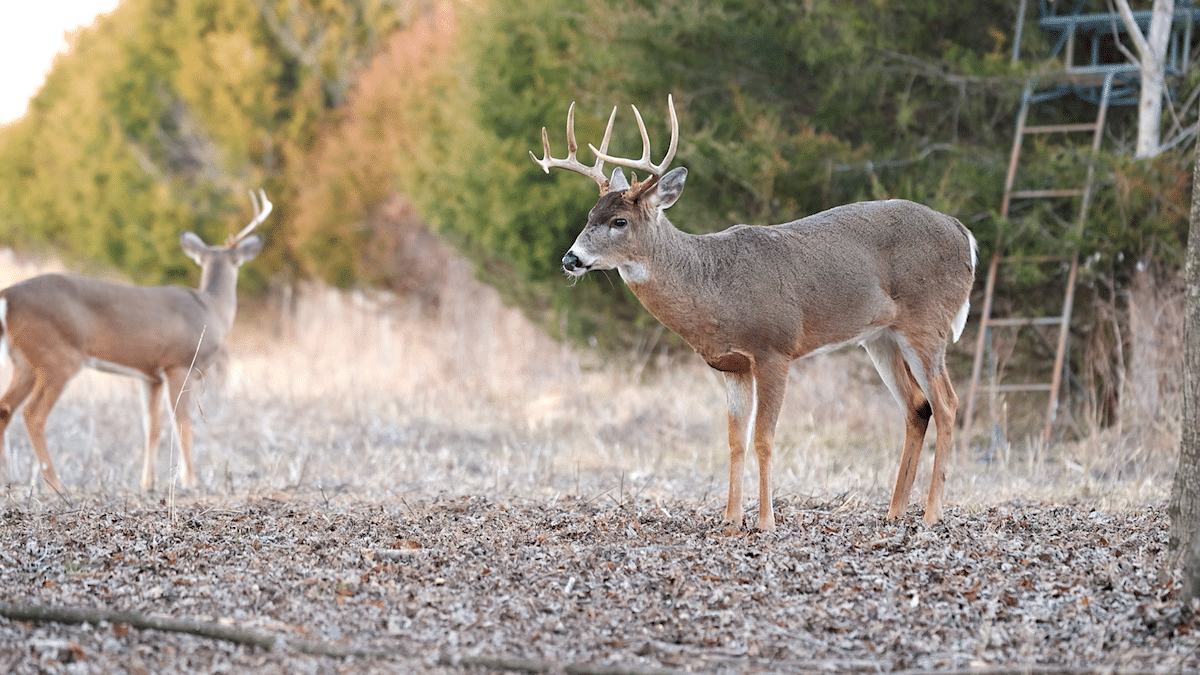
There are different uses for baiting, including attracting deer, holding deer, taking inventory, and more.
Various Uses of Deer Bait
Bait can serve many different purposes. From hunting to supplemental dietary benefits, bait can accomplish numerous goals.
Full-Scale Feeding Programs
Managers of large land tracts oftentimes implement intense feeding programs. They establish feed stations in strategic locations to feed corn, protein, minerals, and more. It’s appropriately used as a dietary supplement to boost herd health.
Attracting and Holding Deer (Out of Sight of Hunting Spots)
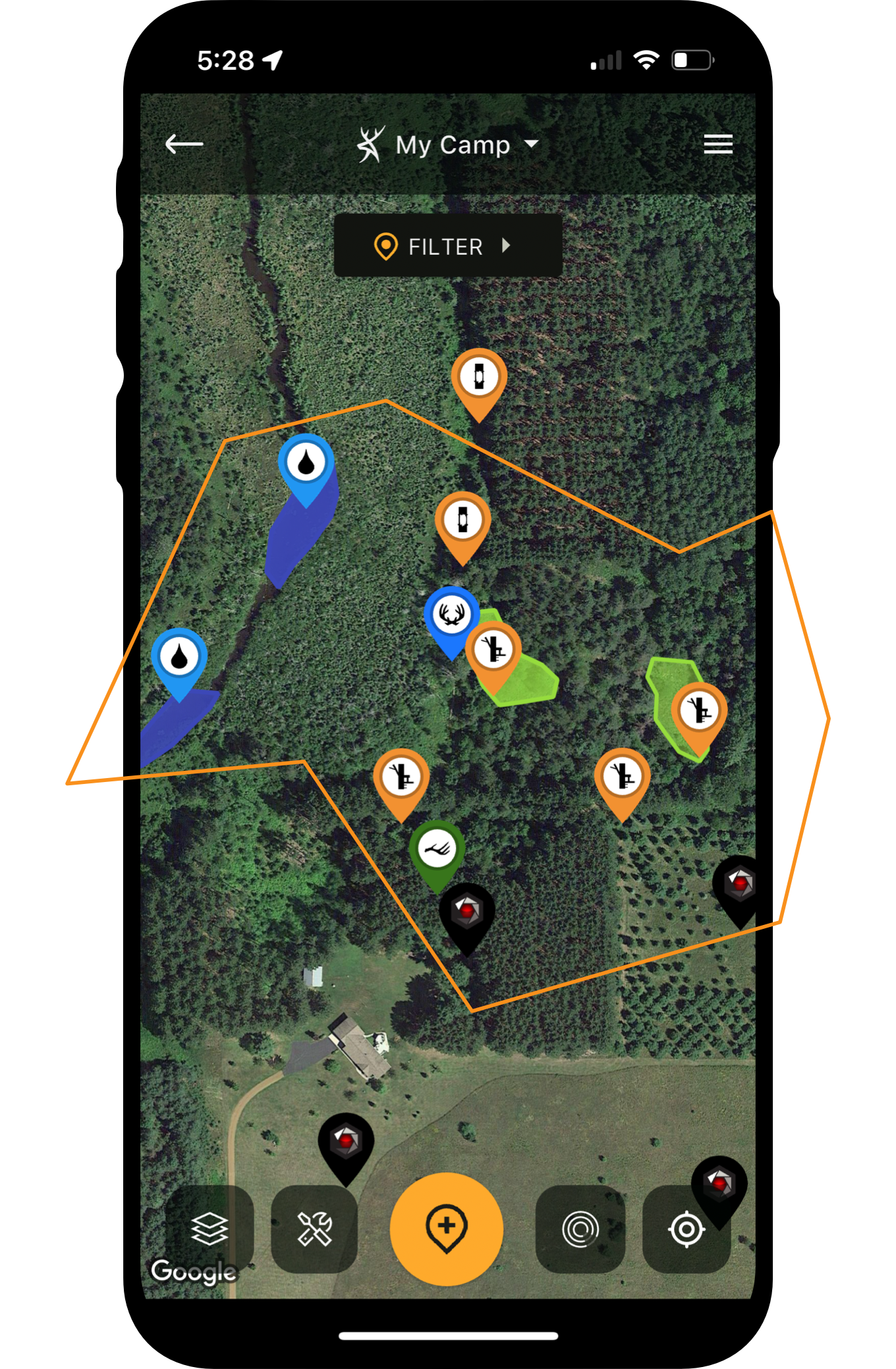
A common tactic in the East is the use of bait out of sight or outside a specified distance from a hunting location. Some states allow baiting throughout hunting seasons, but sometimes you must maintain a minimum distance from the bait site while hunting. Doing this in the center of the property is usually the best option. When there are legal implications, it’s important to know for certain how far away you are from bait. Use the HuntStand distance measurement tool or a laser rangefinder to verify compliance. If baiting law states that you must be “out of sight” from a bat site, don’t forget to take into account foliage die-off (fall leaf drop) when planning your baits and hunting setups.
Attracting and Holding Deer (Hunting Over or Within Sight of It)
Less than half of states permit the use of bait. Even fewer allow it within sight of a hunting spot. However, where permitted, it abounds. Some states permit it under certain restrictions, such as regulating the volume of bait. Others pose no limits.
Taking Inventory
A lot of deer hunters and property managers take inventory of their deer herds using bait. This commonly takes place during the pre-season or post-season. Even in states where hunting over bait isn’t permitted, some permit the use of it for scouting.
In many cases, bait must be removed a certain number of days prior to the season, or prior to hunting. That said, the bait must be completely removed. Land managers who run the risk of bait remnants still being in the area, or bait seeping into the soil, might find themselves in a sticky situation. Some wildlife agencies go as far as to test that soil to ensure no attractants remain. For those in such states, perhaps consider feeding bait or minerals in a trough that can be removed.
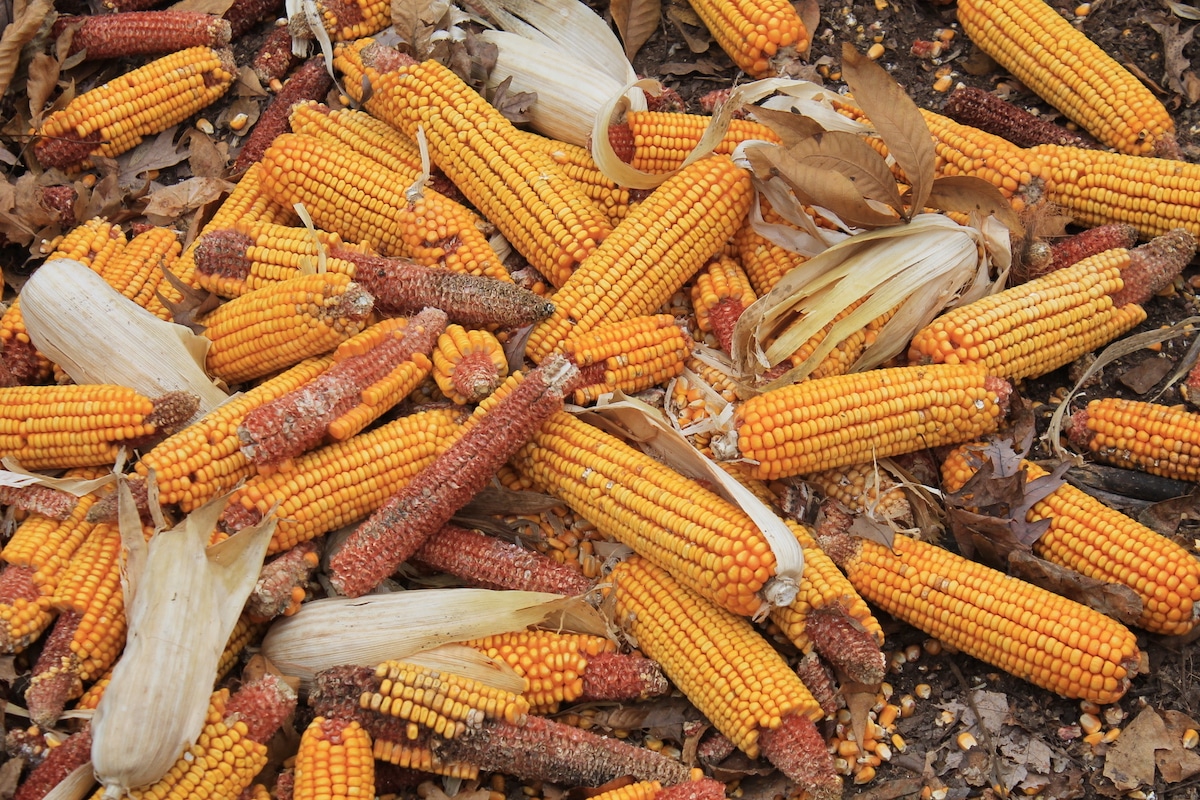
Baiting is more effective when done properly.
Best Tactics for Baiting Deer
For those who choose to bait deer in a responsible manner, it isn’t a simple tactic to use. Baiting whitetails isn’t as easy as some might claim. Dumping corn out just anywhere, or anyhow, isn’t in and of itself going to pull a mature buck out in daylight. Oftentimes, mature whitetails go on high alert around bait piles, especially in areas where baiting is frequently (and carelessly) implemented.
Baiting deer needs to be done thoughtfully and strategically. The difficult part is placement. Hunters must position bait in places where mature deer feel comfortable in daylight. Therein lies the challenge, which includes getting close enough to a buck’s bed to place bait without him detecting you.
While it’s easy to have a “buck first” mentality, also consider the implications of running baits during the rut. As the rut comes into full swing, attracting and keeping tabs on does is perhaps even more important than focusing on bucks. It’s the rut: where there are does, the bucks will follow.
Overall, it’s very difficult to “force” a deer to do something during daylight that it doesn’t already want to do. So, for those who do use bait, it’s important to improve baiting effectiveness. Fortunately, there are numerous ways to do this:
- Place bait in locations where deer already travel (preferably transition zones or staging areas).
- If possible, place bait close enough to bedding areas that those deer will hopefully emerge during daylight.
- Place bait in a manner that allows you to slip into a nearby stand location without alerting nearby deer.
- Think about how deer might circle downwind before committing to baited areas.
- Use blockers such as bluffs and rivers to keep deer from circling downwind.
- Deploy quality feeders that can make bait last longer.
- Distribute bait in such a manner that minimizes the number of human visits and time spent there.
- Monitor bait sites with reliable cellular trail cameras to determine how deer are approaching.
- In unpressured areas, consider hunting over bait from primary treestand locations that are within sight of baited areas.
- In most situations, consider hunting away from bait stations. Bucks will likely circle downwind of baited areas and won’t approach until after dark.
- Broadcast bait in a manner that decreases health risks for deer.
- Never introduce bait suddenly, especially in winter. Introduce it gradually in fall (regulations depending).
Discover Best Trail Camera Locations by Month for Scouting Big Deer
Best Types of Bait for Deer
Deer bait is used in many different forms and formats throughout the nation. Geographical location can play a role in the bait types used, based largely on sources and availability. That said, here are some of the best and most popular deer baits:
- Acorns
- Apples
- Attractants
- Corn (eared)
- Corn (shelled)
- Peanut butter
- Salt
- Sugar beets
- Trace mineral
- Vegetables
Alternative Types of Deer Bait or Attractants
Do you hunt in a state where baiting isn’t allowed? Or maybe you just don’t want to use bait at all? No worries, there are alternative methods for luring bucks without bait:
- Bedding cover
- Calling
- Decoying
- Fertilizing ground
- Food plots
- Funnels and pinch points
- Mineral sites
- Mineral stumps
- Mock scrapes
- Natural scrapes
- Rubbing posts
- Scents
- Water holes

States have nuanced regulations on baiting.
States Laws on Baiting Deer
What’s the simple legal definition of baiting? Bait: Food, or some substitute, used as a lure in hunting, fishing, trapping, etc. This includes corn, pellet feed, minerals or any other type of edible substance.
Just like most other aspects of wildlife management, deer baiting laws vary from state to state. Baiting laws can be black and white, but some state deer baiting laws are quite “gray” or vague. This can leave things up for interpretation. In these instances, it’s especially important to speak with local conservation officers to get their interpretations of the law.
Some states that allow deer baiting do so with certain provisions. Common restrictions include zone or county restrictions; the amount of bait allowed out at once; how close to the bait you can hunt; times you can and can’t bait deer; types of bait that are permitted, and more. In fact, it’s quite rare for a state to allow baiting without regard to at least a short list of stipulations. To that point, although some states might appear on the “legal” list below, it’s extremely important to pay attention to nuances within any individual state by consulting the regulations.
States that (sometimes) Permit Baiting on Private Lands Include:
- Alabama (permit required, distance restrictions)
- Arkansas (condition and zone restrictions)
- Connecticut (condition and zone restrictions)
- Delaware (minimal restrictions)
- Florida (conditions and restrictions)
- Georgia (county and distance restrictions)
- Kansas (minimal restrictions)
- Kentucky (conditions and zone restrictions)
- Louisiana (restrictions apply)
- Maryland (zone restrictions)
- Michigan (location and volume restrictions)
- Mississippi (restrictions apply)
- New Hampshire (permit required, restrictions)
- New Jersey (zone and distance conditions)
- North Carolina (allowed outside of bear season zones)
- North Dakota (zone restrictions)
- Ohio (zone restrictions)
- Oklahoma (conditions apply)
- Oregon (restrictions apply)
- Pennsylvania (only in a select few southeastern counties)
- South Carolina (permitted in certain areas)
- Texas (minimal restrictions)
- Utah (no state agency information provided)
- West Virginia (certain counties only)
- Wisconsin (certain counties only)
- Wyoming (disabled people only)
States that Ban Deer Baiting
In contrast, some states all-out ban the use of bait. These states completely ban the use of bait in any form, under all circumstances:
- Arizona
- California
- Colorado
- Idaho
- Illinois
- Indiana
- Iowa
- Maine
- Massachusetts
- Minnesota
- Missouri
- Montana
- Nebraska
- Nevada
- New Mexico
- New York
- Rhode Island
- South Dakota
- Tennessee
- Vermont
- Virginia
- Washington
Disclaimer: This content shouldn’t be considered legal advice. Check your state’s regulations on baiting deer. Baiting laws are very nuanced and detailed and can be different even within the same county. Furthermore, baiting laws frequently change, and it’s important to stay current. HuntStand isn’t liable for incorrect or outdated information. Consult state hunting regulations for information. When in doubt, contact a local conservation officer with questions.

In some states, baiting deer is life.
Arguments FOR Baiting Deer
There are numerous arguments for baiting. Discover reasons why baiting may be beneficial in the areas it is allowed
Cultural Purposes
In some places, bait is cultural. It’s completely ingrained in the very fabric of deer hunting. “These deer are on almost a 100-percent browse diet,” said Texas-based hunting TV show host Mike Stroff. “There are few crops. Baiting is our food plot. Where a guy in the Midwest spends all summer working the dirt, fertilizing it, getting it just right and planting it, we can’t do that here unless you have a way to irrigate it. Corn and protein feed are our food plots.”
Increases Hunting Odds
Although renowned bowhunter Bill Winke hunts mostly in Iowa where he can’t bait deer, he recognizes that, where legal, it can increase the odds in hard-to-hunt terrain types. “Since they stick to cover when traveling, fence lines and narrow necks of timber become obvious choices,” said Winke. “Once the crops are harvested, the deer are restricted to a small number of places they will travel, and those places are easy to find. I feel that, in other regions where deer have more bedding options, you must be more aggressive with strategies like drives, calling, and maybe even baiting.”
Dietary Supplement for Deer
Used properly, bait can be implemented for positive purposes. For instance, in areas where disease concerns are low-risk, it can serve as a dietary supplement to the deer herd. In areas where the soil and plant life lack vital minerals and vitamins, this can offer unmet needs.
Deer Management & Ethical Hunting
Furthermore, hunters can use it to take inventory. This allows land managers to know the bucks on the landscape, and potentially target the oldest ones in the herd. Baiting can be an essential deer management tool.
In an age where hunter numbers are declining, bait can be used to increase deer sightings, which helps newer and younger hunters remain engaged during the hunt. Also, come time to take the shot, bait can help pose an animal for a shot opportunity. This can make the shot process more ethical, especially for new and inexperienced hunters.
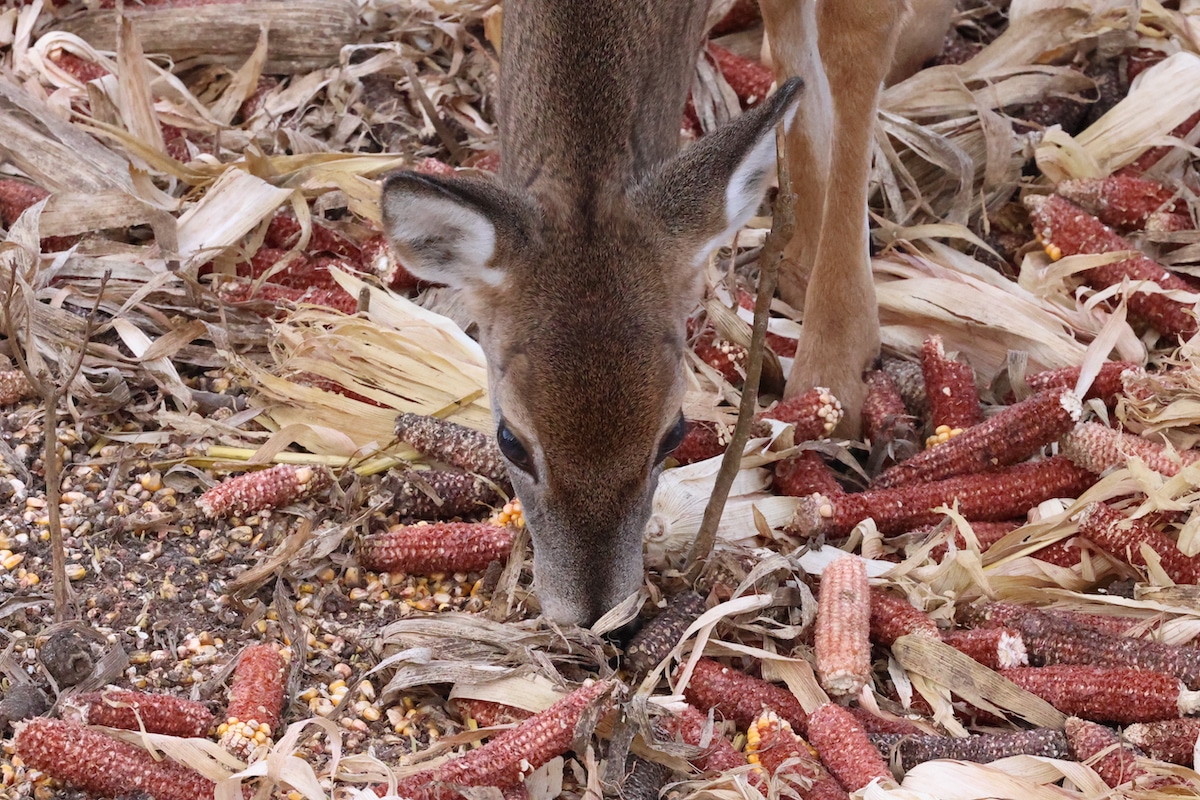
Baiting comes with health risks.
Arguments AGAINST Baiting Deer
Done in an irresponsible manner, feeding whitetails can have negative effects.
Spreads Disease
In concentrated locations, it can increase the chance of spreading diseases and parasites. It can also increase stress levels amongst deer, especially congregating them in such tight areas.
Worrisome diseases, such as chronic wasting disease (CWD), are potentially more likely to spread faster wherever deer congregate. But science hasn’t proven if bait is a significant vector for CWD spread, or if banning it is merely a knee-jerk reaction to its presence.
Most deer biologists take stances against deer bait. “It would be a rare instance where feeding deer would be beneficial,” said Tom Micetich, wildlife biologist for the Illinois Department of Natural Resources. “The risks of congregating deer in one place heavily outweigh the benefits gained from feeding deer.”
Negatively Affects Deer Digestion
Digestion can be another problem. If a whitetail doesn’t have the appropriate enzymes in its stomach at the time of consumption, certain food sources can’t be digested. This occurs when a deer suddenly switches over to a different food source and consumes a lot of it in a short time. Deer have a specific combination of enzymes and microorganisms in their digestive tracts to help digest natural wintertime food sources. Suddenly feeding mass amounts of corn can be disastrous.
“Deer have been here a long time before us,” said Erik Bartholomew, a deer biologist for the Oklahoma Department of Wildlife Conservation. “Deer are primarily browsers. So, as long as there is enough browse, they’ll be just fine.”
Find Hunting Gear & Download HuntStand App for Accurate Mapping
Ready to bait responsibly and start your hunt? Explore quality hunting gear with the HuntStand gear store, and discover the HuntStand App to map out the areas you hunt and to calculate weather metrics for optimal game.
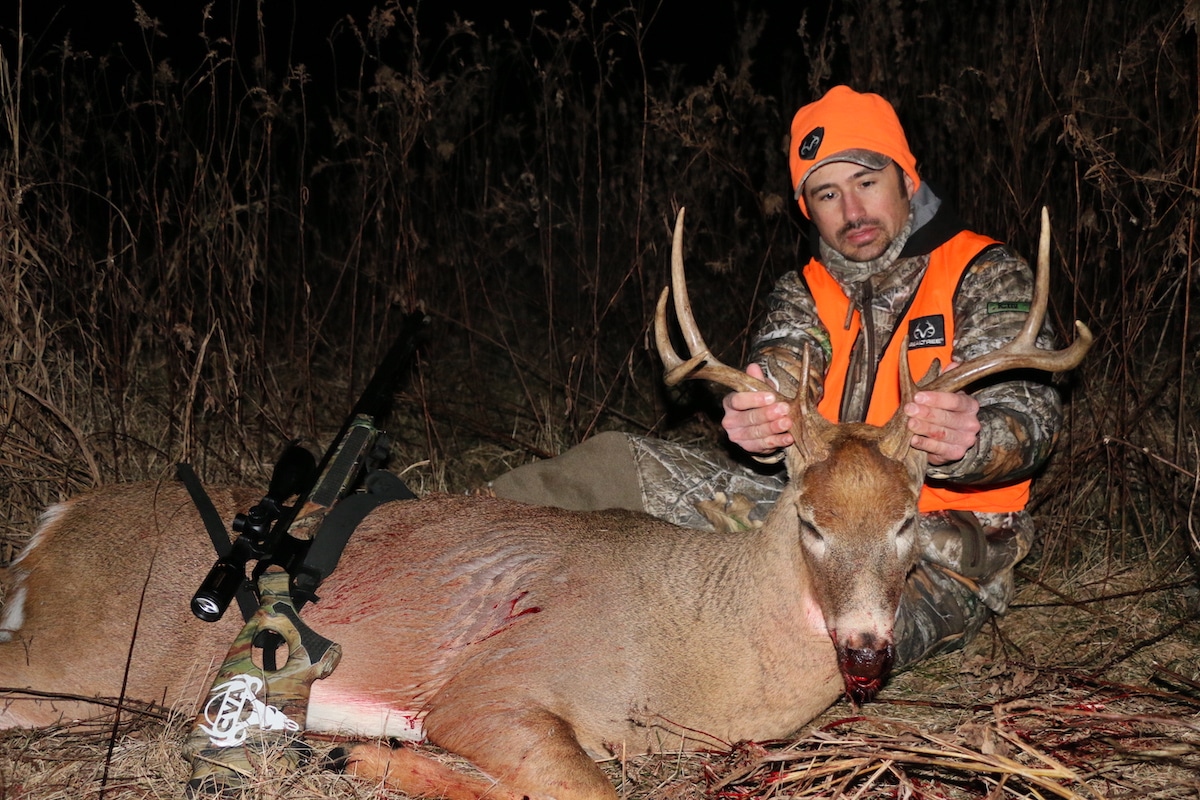
HuntStand Pro Contributor Josh Honeycutt unapologetically shot this late-season deer over broadcasted Kentucky corn. However, he fed corn throughout fall and winter and didn't suddenly introduce it.
50 Best Deer Hunting Excuses to Use This Season