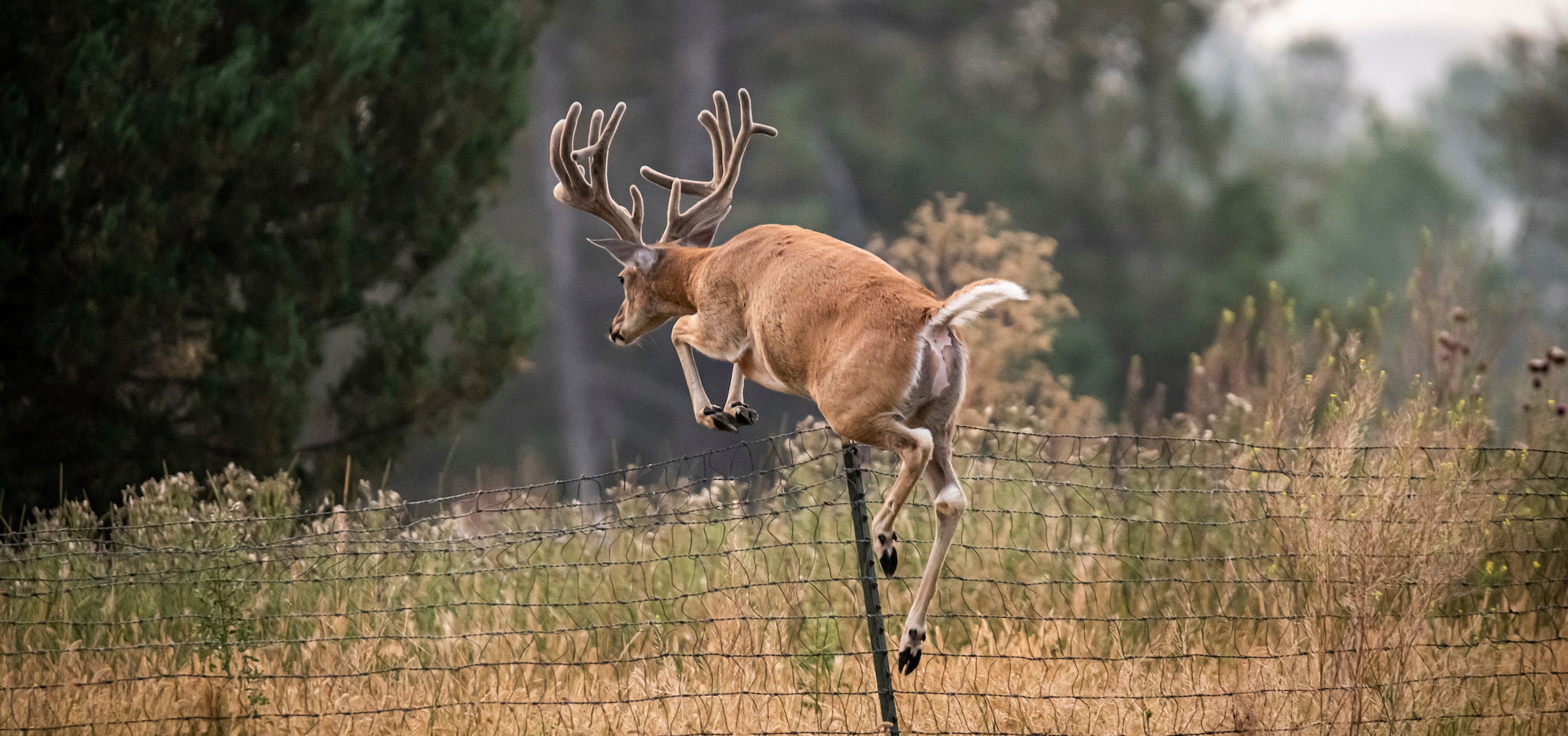




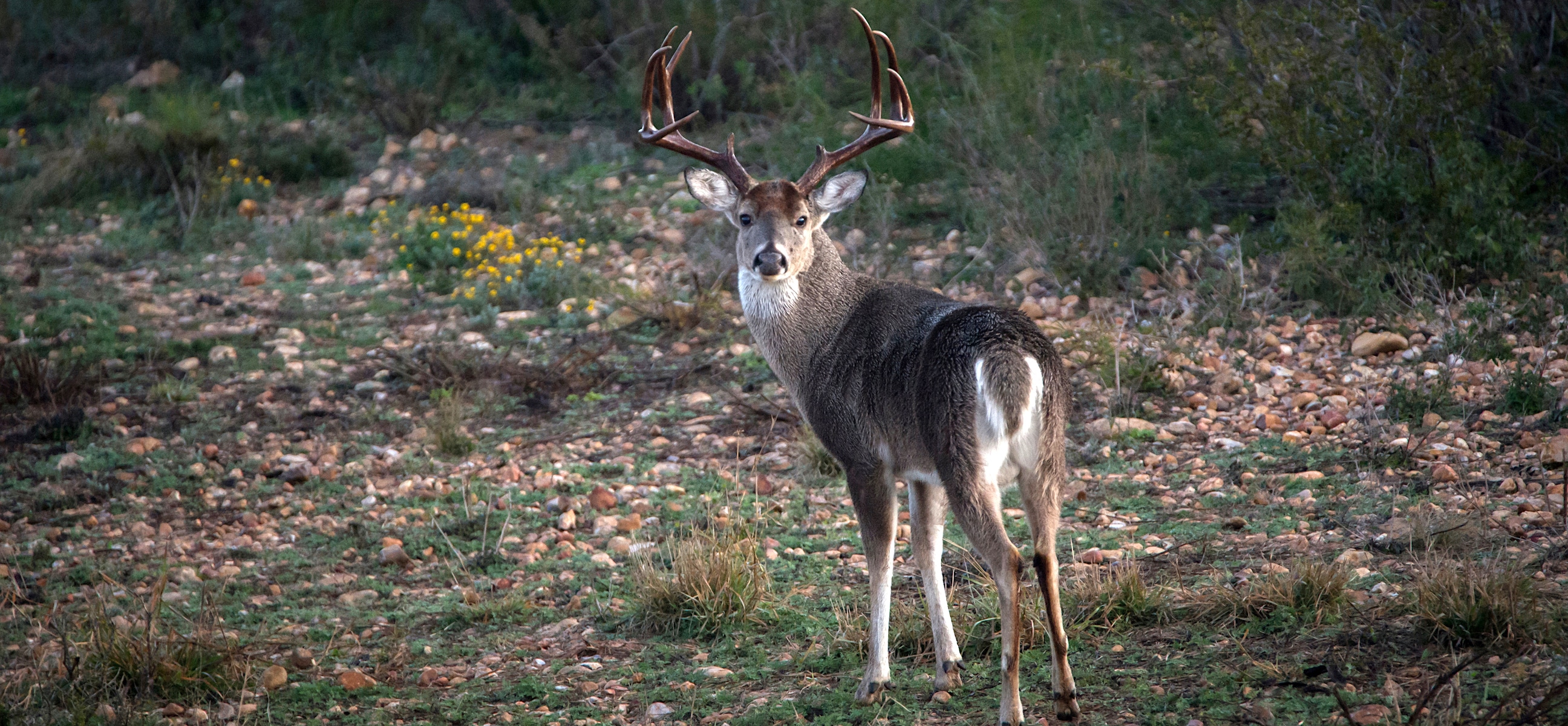



Natural food sources compose the bulk of a deer's annual diet.
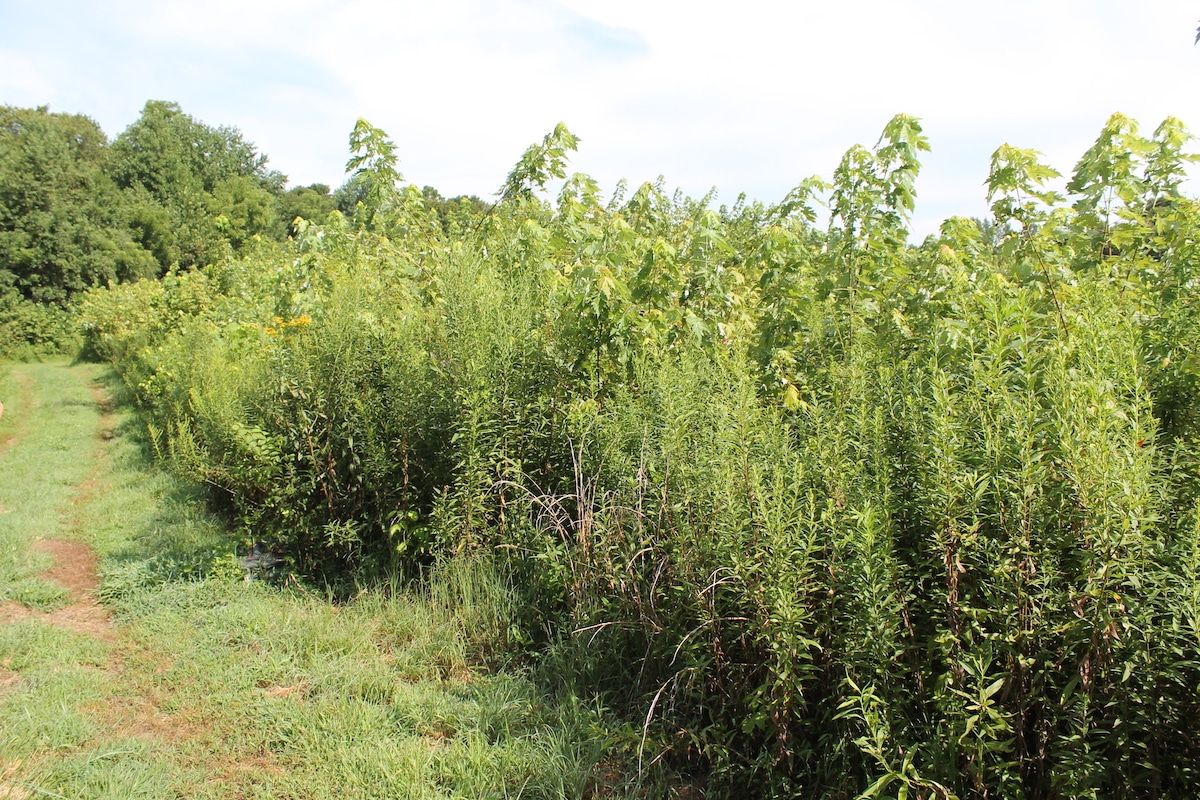
Find early successional cover with good browse, and the deer will be there.
Deer are picky critters, but you wouldn’t guess it from the number of plants they eat. According to most sources, whitetails feed on approximately 600-700 plant species. That’s more than just beans, corn, and brassicas. According to the renowned Mississippi State University Deer Ecology and Management Lab, deer have been documented to eat over 400 plant species in the Southeast alone. Obviously, there are many natural food sources for deer that every hunter should know about.
“They have a huge range of diet potential, and that’s why they are the most widely distributed big game mammal on the planet,” said Brian Murphy, HuntStand wildlife biologist and past CEO of the Quality Deer Management Association (now National Deer Association). “There’s no African ungulate that’s more widespread or geographically dispersed. Whitetails go from northern South America to the frigid timberline of Canada. They can be so flexible in their diet. It’s what makes them what they are.”
According to the National Deer Alliance, whitetails need to consume approximately 7% of their body weight each day. But that 7% comes from numerous food groups. According to the Texas Parks and Wildlife Department, a prairie whitetail’s typical annual diet consists of 36% browse, 20% forbs, 20% mast, 12% grass, 7% crops, and 5% feed.
Questions Food Plotters Need Answers To
“You want deer eating stuff that moves through its system very quickly and efficiently. The key to that is year-round habitat management,” Murphy said. “Think about what a deer needs throughout the year, especially in late summer and late winter. Fill those nutritional gaps.”
So, back to the whitetails being picky part. Cattle are grazers and eat the entirety of plants. People oftentimes believe that whitetails are, too, but they aren’t. Rather, deer are browsers. More specifically, deer are concentrate selectors. They target the best parts of the best plants and rely on many different plant species to comprise their diet.
“The true term for a whitetail is a concentrate selector,” Murphy said. “It’s very discriminatory in what it eats and chooses very selective plants and plant parts. Because of that, it has a smaller stomach [compared to most other ruminants] because it chooses more digestible plants.”
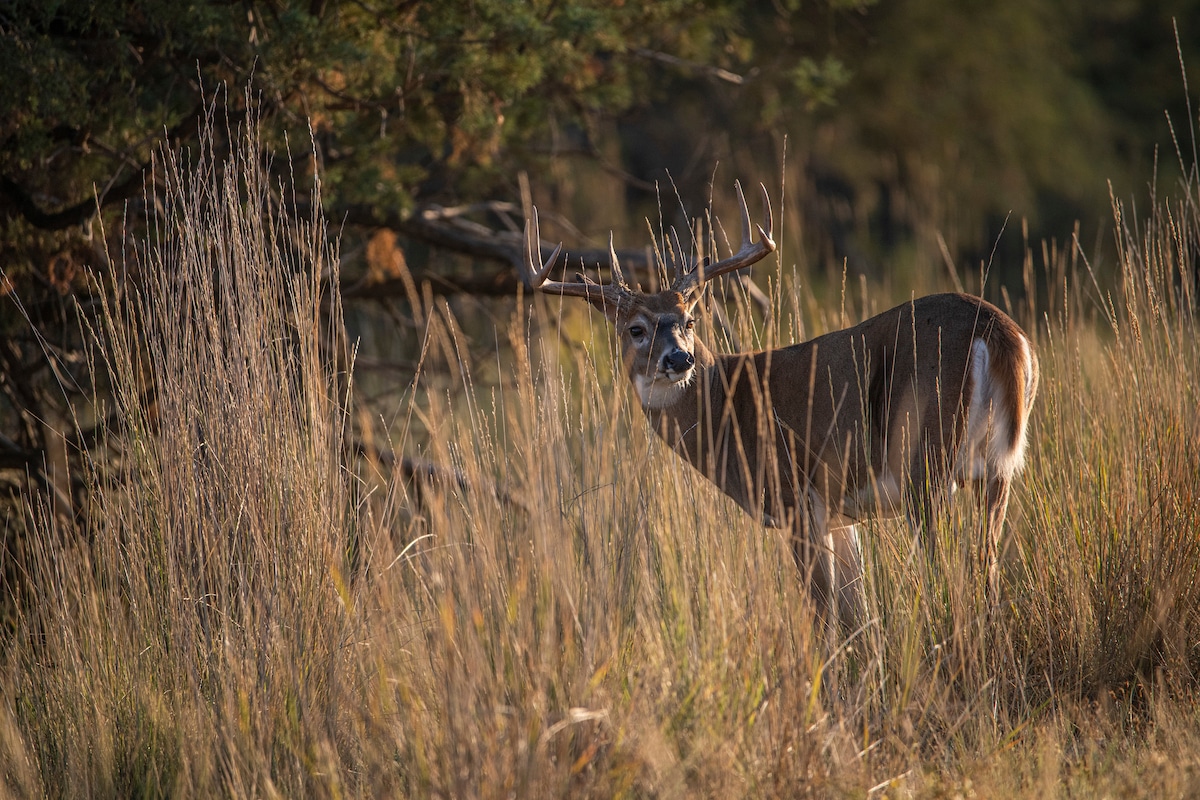
Deer will travel great distances to feed under a producing white oak tree.
Hard Mast
Hard mast gets all the glory in the whitetail world. But it’s for good reason. These nutty morsels of delightful deer cuisine offer good sources of vital nutrients, especially carbs and fats.
Acorns: Acorns are loaded with energy. These are a great source of carbohydrates and fat. These also have low to moderate levels of protein.
White oaks produce a crop every year and tend to drop first in the fall. Lower tannin levels make these sweeter to deer. Mature trees produce an average of 15 acorns per branch. These tend to be great early and mid-season food sources. Rest assured, though, that deer will vacuum these up quickly. While other members exist, the most common members of the white oak family include bur, Chinquapin, overcup, post, swamp chestnut, swamp white, and white oak trees.
Red oaks are on a two-year production cycle. These generally drop later and tend to be more abundant on the landscape. These have higher levels of tannin, making these bitterer than white oak acorns. The average tree drops about 20 acorns per branch. Oftentimes, these remain on the ground for longer periods, which makes red oaks a key mid- and late-season food source. The most common and important members of the red oak family include black, cherry bark, live, nuttall, pin, red (northern and southern), sawtooth, scarlet, shingle, Shumard, water, and willow oak trees.
Fun Fact: The bur oak produces the largest acorn in America. Its scientific name is Quercus macrocarpa, which translated from Greek literally means “large-fruited oak.” It’s that big. But the bur oak isn’t the largest acorn-producer. The largest known acorn comes from a tree called Quercus insignis, or the Chicalaba oak, which is native to southern Mexico. Its acorn grows up to 4 inches in diameter by 3 inches long.
Best Trail Camera Locations by Month for Scouting Big Deer
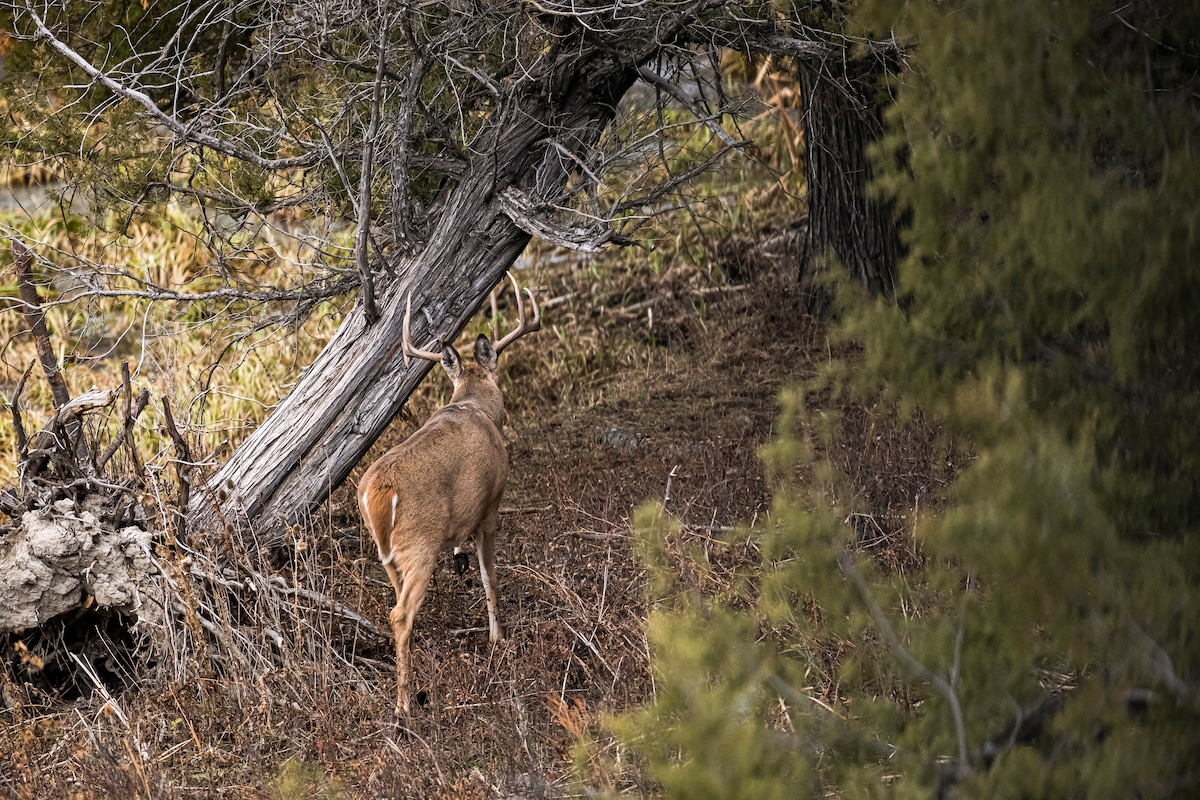
During years with good acorn production, hard mast can comprise 20-30% of a deer's diet.
Beech: Most years, the beech tree isn’t a big-time target for deer. However, deer will consume these, especially when acorns and other more desirable mast crops are lacking.
Chestnuts: Once abundant on the landscape, the American chestnut was wiped from the continent by a blight that arrived from Asia. For decades, the country was void of these trees. Now, thanks to the Dunstan chestnut tree—which is a hybrid (98% American and 2% Chinese chestnut) that’s resistant to the blight—the mighty chestnut is coming back home. Recent research has shown that whitetails prefer chestnuts over acorns.
Hickory: While not as popular as other hard mast species, the rock-hard hickory nut is another consumable nut that deer eat. Again, these tend to be targeted more when better options aren’t abundant on the landscape.
Pecan: A big-ticket tree in the South, deer are sure to slurp up some pecans. These are a major food source in southern climates.
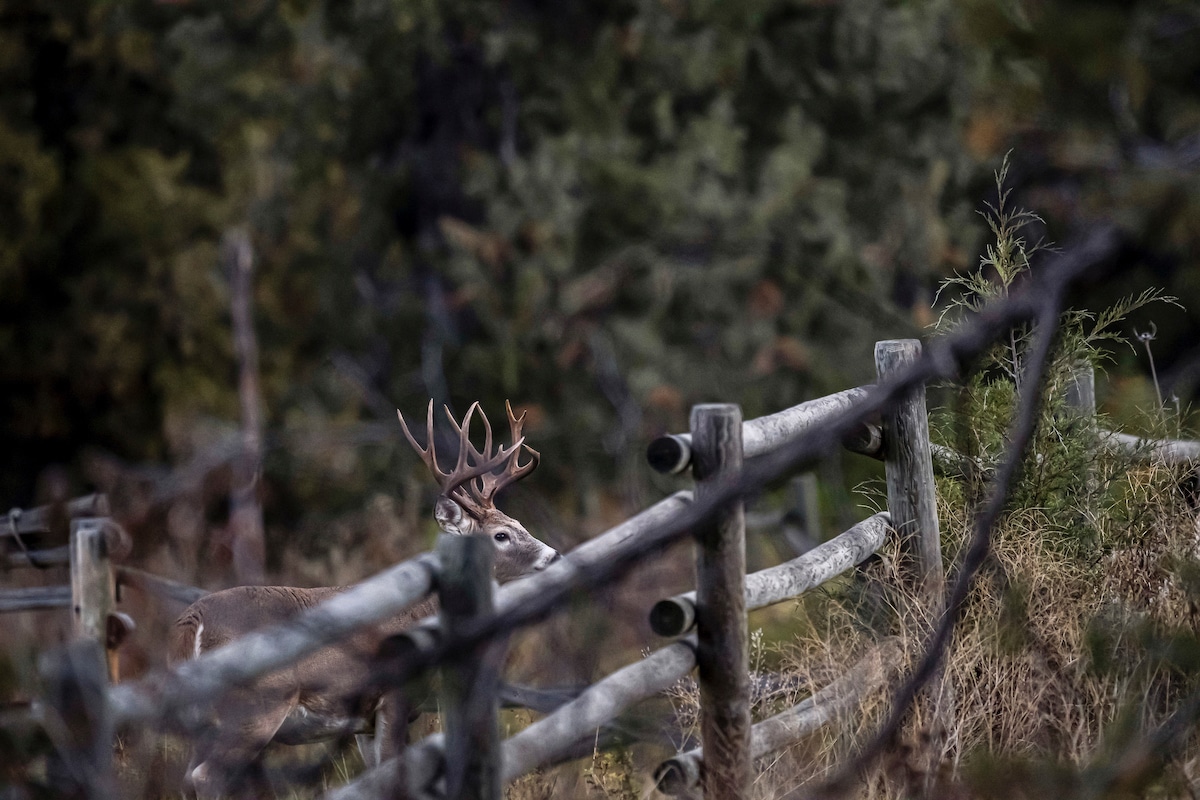
Deer will go to great lengths to reach a soft-mast tree.
Soft Mast
While some trees drop hard mast, others produce soft mast, and these fruit-rich morsels are highly desirable amongst deer. These offer high levels of carbs, fats, fiber, sugars, and more.
Apple: Perhaps one of the best soft-mast options, apples are favorites among deer. All varieties, even the closely related crabapple, are sure to attract deer.
Pawpaw: This deciduous tree is a native species that produces a very attractive fruit. While it isn’t as known to some hunters, deer actively target it.
Pear: The mighty pear is consumed around the world, including anywhere a whitetail can find it. This oblong fruit is rich with high-value nutrients.
Persimmon: Likely the most common and available soft-mast tree that volunteers, persimmons are big-time deer feed.
Plum: Plums are recognized by their dark exterior and red interior fruit. This is a common food among humans, but whitetails consume these, too.
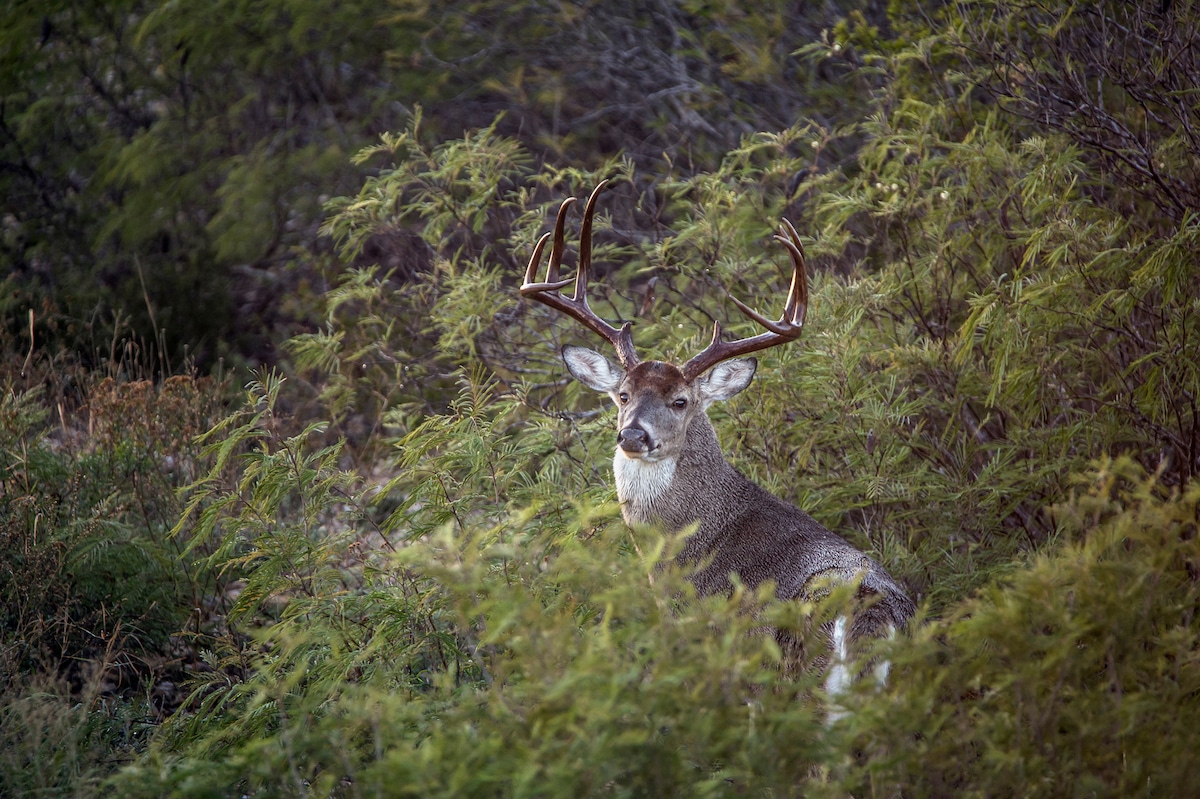
On average, browse can comprise anywhere from 30-60% of a deer's diet.
Common Browse, Forbs, and Grasses
While hard and soft mast are major natural food sources, deer also eat other groups, including browse, forbs, and grasses. Grasses are usually self-explanatory. Browse is best described as briars, shrubs, trees, and other green or woody plant parts. Of course, some trees are targeted for the mast they drop, while others are important for their browse (buds, leaves, and twigs). Generally, forbs include many plants that aren’t grasses, browse, or tree species, and usually have broad leaves.
Beggar’s Lice: A forb that deer target heavily in eastern states, beggar’s lice is a high-protein feed (approximately 28%) that hunters will recognize from clusters of three narrow leaves.
Blackberry: Deer love blackberries, fruit and forage alike. Whitetails target this warm-season food source in abundance.
Black Gum: Early-stage black gum trees are magnets for deer. As young saplings, the oval leaves are highly desirable.
Buckbrush: Also referred to as coralberry, this is a heavily targeted food source wherever it grows.
How to Find Killer Deer Hunting Funnels
Clover: Commonly planted in food plots, clover oftentimes volunteers in the wild. Deer find these small clusters of clovers, and feed on these while browsing on other native species.
Deer Vetch: This flowering plant is a trefoil that deer love. It’s closely related to other plant species.
Dogwood: There are dozens of dogwood species, but in America, these trees are recognizable by their short, broad status and white flowers.
Duck Potato: Common in lowland areas in parts of the Midwest and West, duck potato is a favorite among deer.
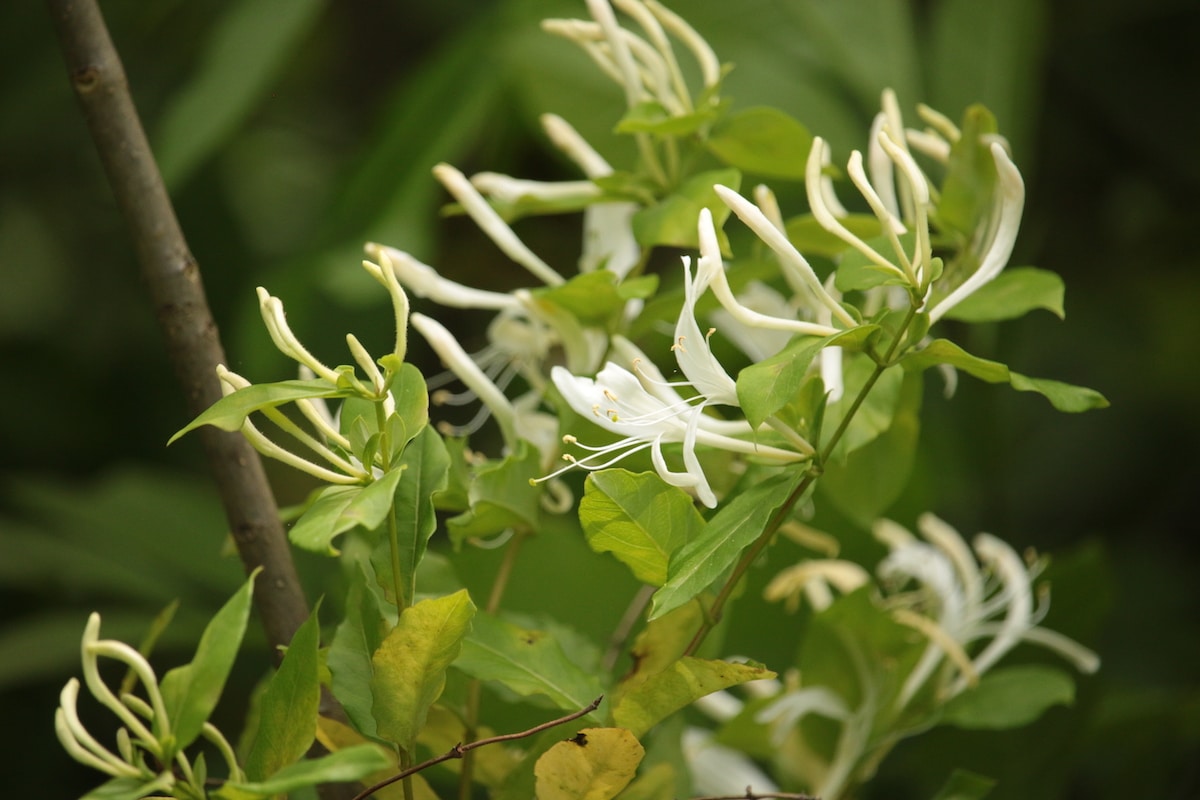
Honeysuckle is a deer magnet.
Eastern Hemlock: This coniferous tree offers shelter to deer. It also provides a browse food source when others are limited.
Elderberries: This flowering species is another berry-producing option that deer love. These small trees produces a dark purple berry.
Elm: Another tree that’s targeted for its buds and leafy browse, the elm is a great natural food source that can help carry deer through the year.
Fleabane: Most attractive during the early growth stage, fleabane grows several feet tall. Recognize these with their white flowers (with yellow centers). It offers up to 20% protein.
Greenbriar: This is a common cool-season food source among deer. Oftentimes, once foods are limited, deer target the leaves, berries, and even the stems. And hunters get caught up in the small thorns.
Goldenrod: The mighty goldenrod is a herbaceous perennial, and comes in several different varieties. It’s most noted for its bright yellow flowers, and it offers solid levels of protein.
Scouting and Installing Water Sources for Deer
Hawthorn: Often referred to as quickthorn, thornapple, and other names, the hawthorn is a small tree that produces an abundance of browse.
Honey Locust: Whitetails love targeting the leaves and pods of honey locust trees.
Huckleberry: A funny name, huckleberry makes a great food sources. It produces small leaves and blueish, succulent berries that deer love.
Japanese Honeysuckle: While Japanese honeysuckle is invasive, deer still love it. This viny plant produces a flower and leaves that deer welcomingly consume.
Kudzu: The highly invasive kudzu plant is a warm-season favorite amongst deer. It offers bedding cover and food sources. However, once these plants dry up, deer abandon them.
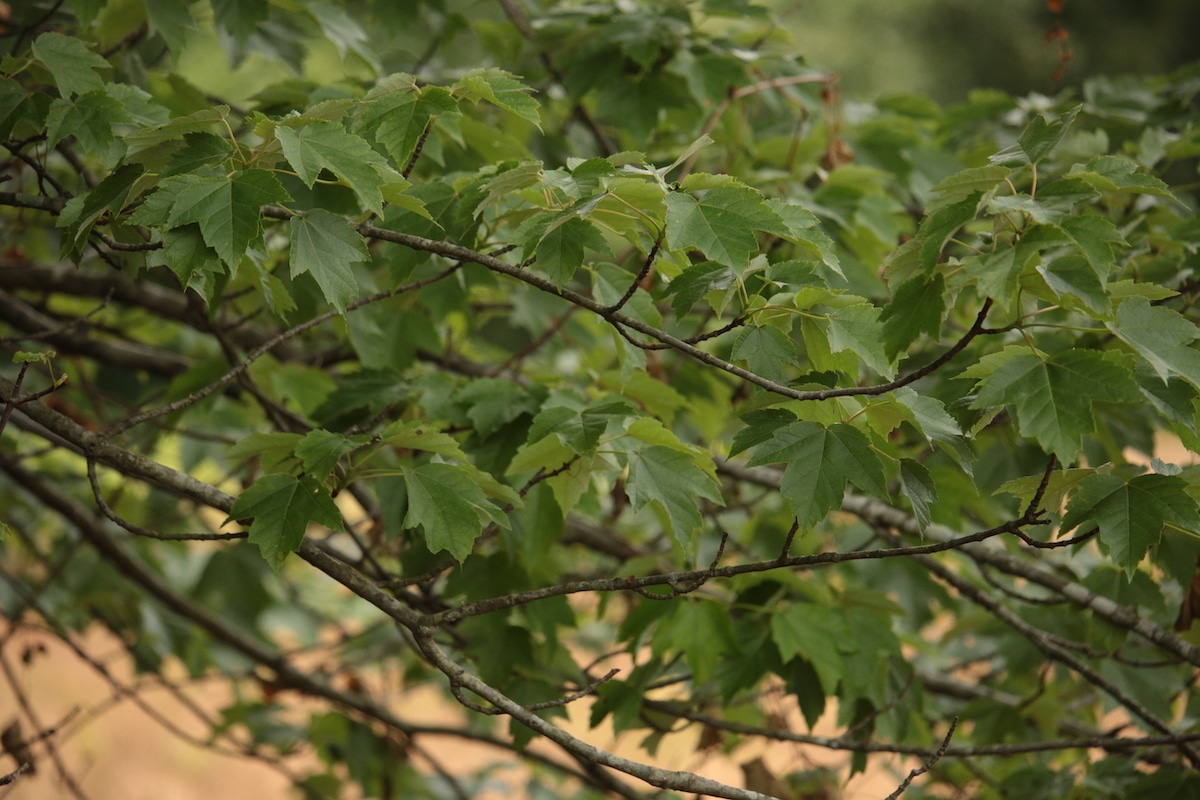
Fallen maple leaves are sure to draw whitetails.
Little Bluestem: A native prairie grass, little bluestem is a grass that deer sometimes eat, but also bed down in. It stands up to 25 inches tall and can even serve as quality fawning cover.
Maple: Maple trees don’t drop a fruit or nut that deer like, but when these leaves fall, deer slurp them up. A passing storm or day with high winds can drop a pile of these, and deer are sure to follow.
Mountain Laurel: Native to the eastern U.S., mountain laurel is a white-flowering plant that serves as excellent browse for whitetails, among other animals.
Mushrooms: Deer consume many different mushrooms, which offer an abundance of much-needed, and hard-to-come-by nutrients.
Best Deer Hunting Excuses to Use This Season
Oldfield Aster: This annual forb offers approximately 23% protein. The grow 2-3 feet tall and produce excellent warm-season forage.
Pokeweed: Ever driven or walked down a fencerow, bumped into a tall plant with purplish-red stalks and black berries, and walked away with purple stains on your close? Thank a pokeweed. It’s also highly nutritious to deer with over 32% protein.
Ragweed: Another great natural food source is ragweed. This annual forb is packed with nutrients, can grow up to 8 feet tall, and offers 17% protein. Deer and other game animals benefit from it greatly.
Sumac: This is a common shrub with heavy leaves and branches. Deer actively consume these when available on the landscape.
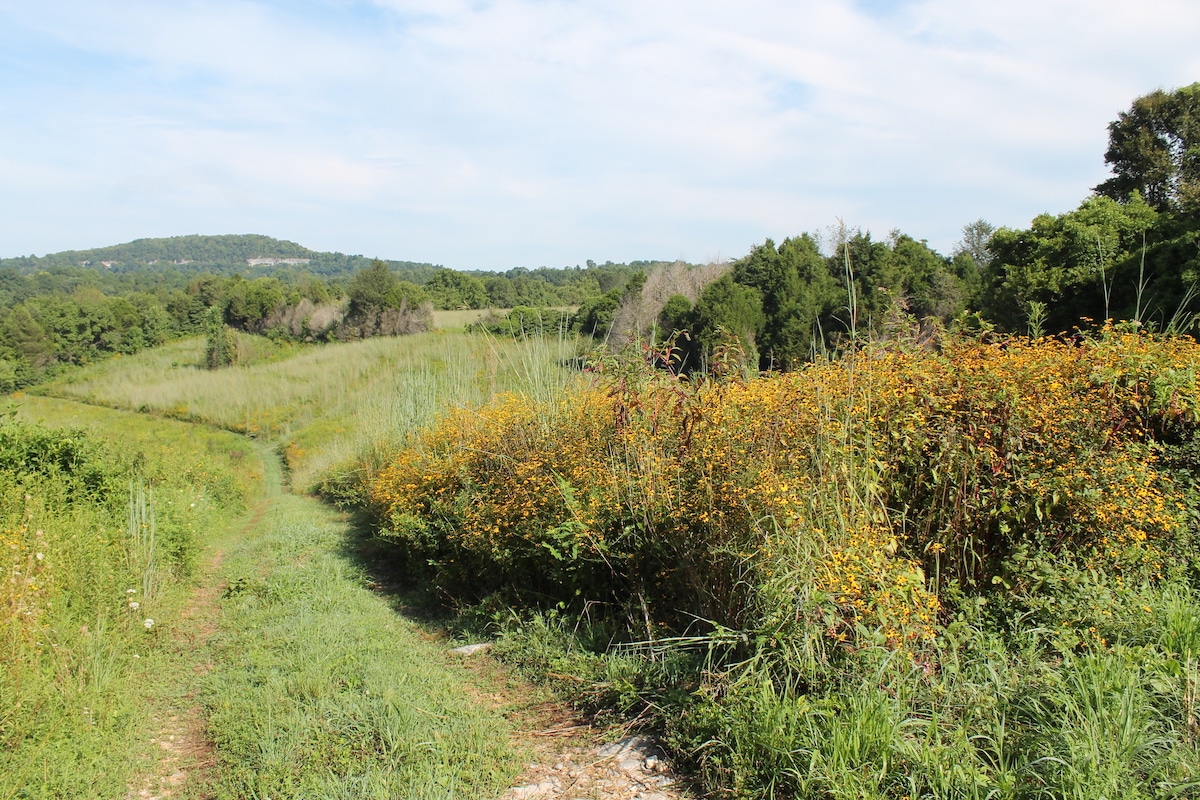
Native grasses are part of a deer's diet, too.
Virginia Creeper: This vine is a woody stem with five-leaf clusters offers about 13% protein. Whitetails target this option quite frequently, especially when other food sources are limited.
White Cedar: Red cedar is virtually useless other than overhead thermal cover. But white cedar offers both thermal bedding cover—which can elevate the temperature by a few degrees—and a late-winter food source.
Wild Grapes: Another favorite among deer, wild grapes are targeted for their nutritious leaves. But deer really love these for the grapes.
Yellow Birch: Another tree that produces quality browse, yellow birch include tasty leaves and twigs that help deer survive the winter.
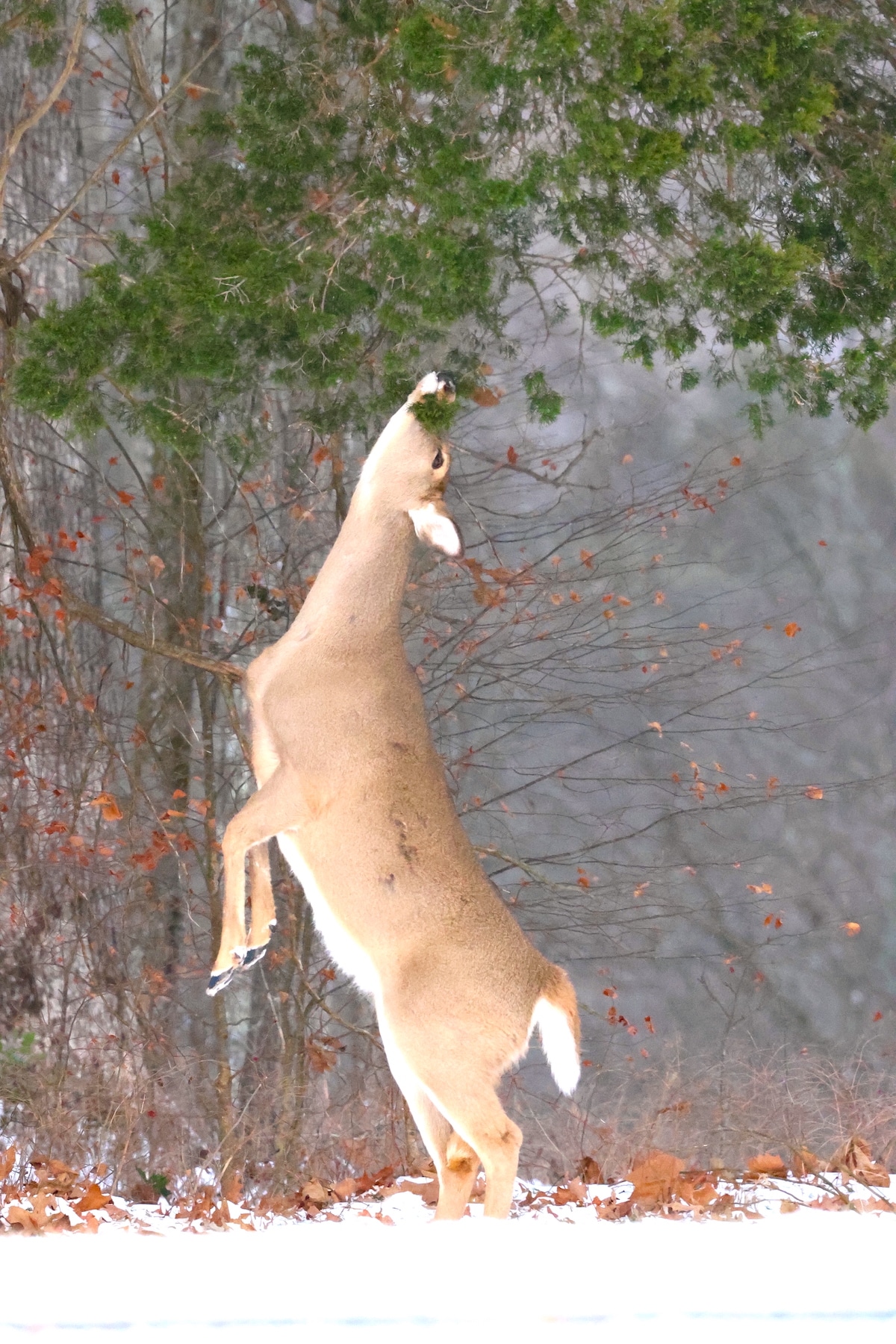
A doe browses on a white cedar in late winter.
Planning Deer Hunting Vacations: Are Opening or Closing Days Better?
Of course, we couldn’t outline every known natural food source of whitetails here. However, according to numerous sources, other common food sources that deer commonly browse on (location depending) include: agarito, Alabama supplejack, American jointvech, ash, aspen, beautyberry, blackhaw, bluegrass, Brazilian vervain, buckthorn, bumelia, catnip noseburn, cedar elm, cherry, chickweed, cinquefoil, chomonque, common snowberry, deciduous holly, dewberry, dichanthelium, Douglas fir, elbow bush, ephedra, evening primrose, filaree, granjeno, guajillo, hackberry, hazelnut, jasmine, kidneywood, lespedeza, lettuces, mat euphorbia, mesquite, mistletoe, partridge pea, plantains, poison ivy, poplar, prickly pear, quaking aspen, red mulberry, rhododendron, roses, sassafras, skunk bush, sideoats grama, snoutbean, spiderwort, sugar hackberry, sunflower, Texas ash, thistle, tick trefoils, trumpet creeper, verbena, violet, western ragweed, western soapberry, wild carrot, wild mustard, wild onion, wild raspberry, winecup, yellow beech, yellow woodsorrel, and many more.
And don’t forget that deer occasionally consume small sources of meat, including baby birds, baby squirrels, eggs, mice, snails, etc.
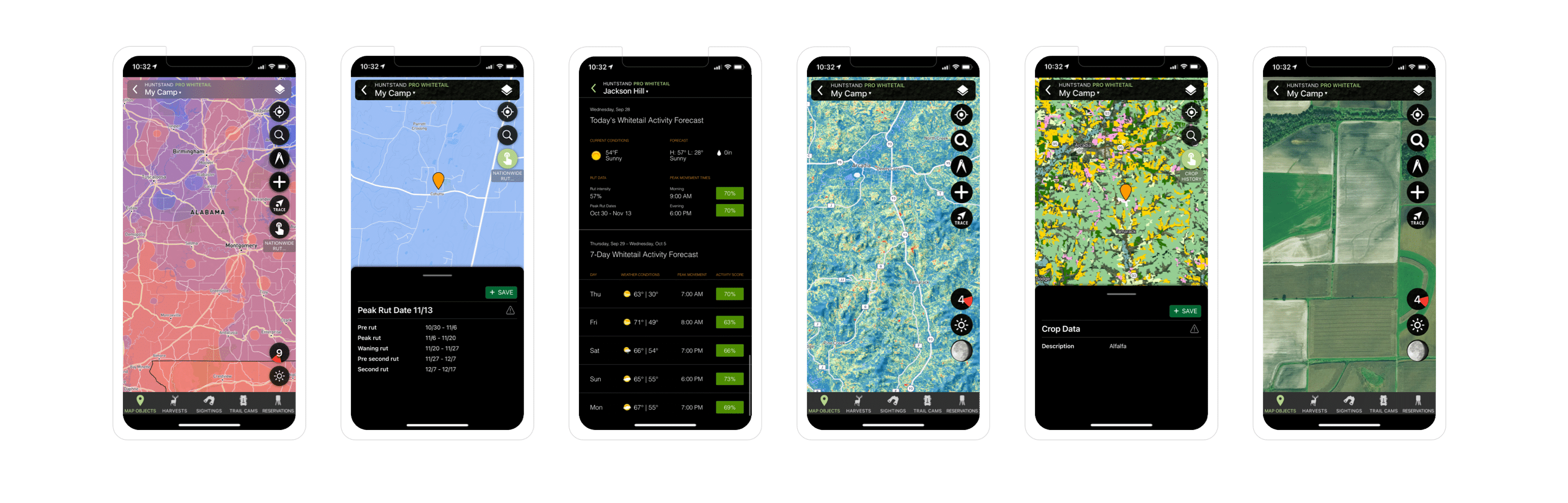
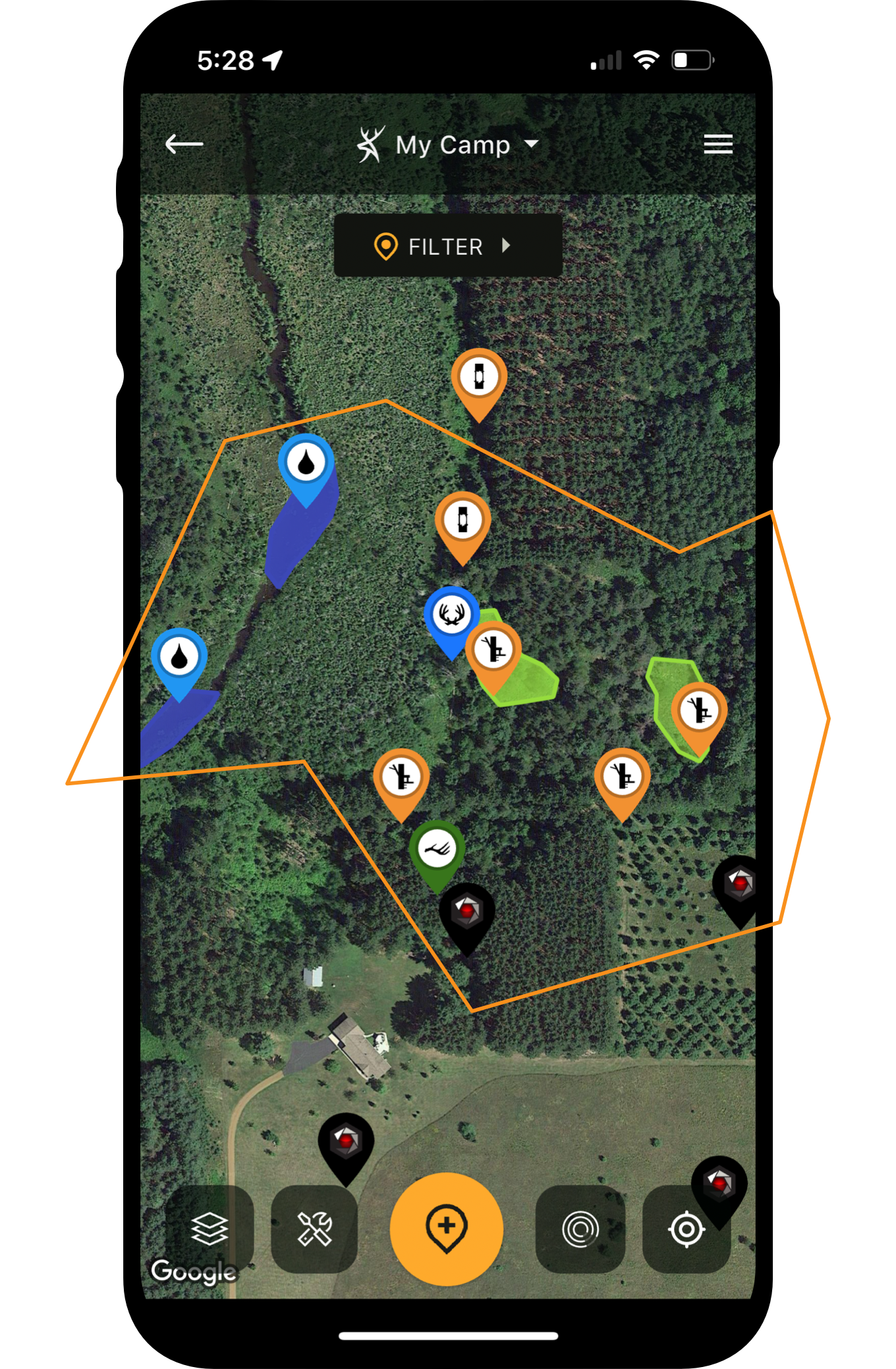
Use the Whitetail Habitat Map and National Aerial Imagery layers to find potential native food sources.
Find the Goods
There aren’t many ways to find natural food sources. The process requires in-the-field, boots-on-the-ground inspection to pinpoint the many different species available to whitetails. However, these food sources change throughout the seasons. Fortunately, HuntStand is ideal for starting the scouting process. While it can be difficult to identify natural food sources, certain tools can provide starting points.
Best of all, the Whitetail Habitat Map, courtesy of a HuntStand Ultimate subscription, shows areas that are more likely to produce natural food sources. Additionally, the Monthly Satellite layer can show changes to the landscape, oftentimes providing clues as to what is occurring. National Aerial Imagery is another great selection for pinpointing potential natural food sources.
Of course, later in the season, study other winter-based aerial layers that might reveal cold-season green food sources. Oftentimes, these appear as thick early successional cover on a map. Other green browse, such as white cedar, will show up on these layers, too.

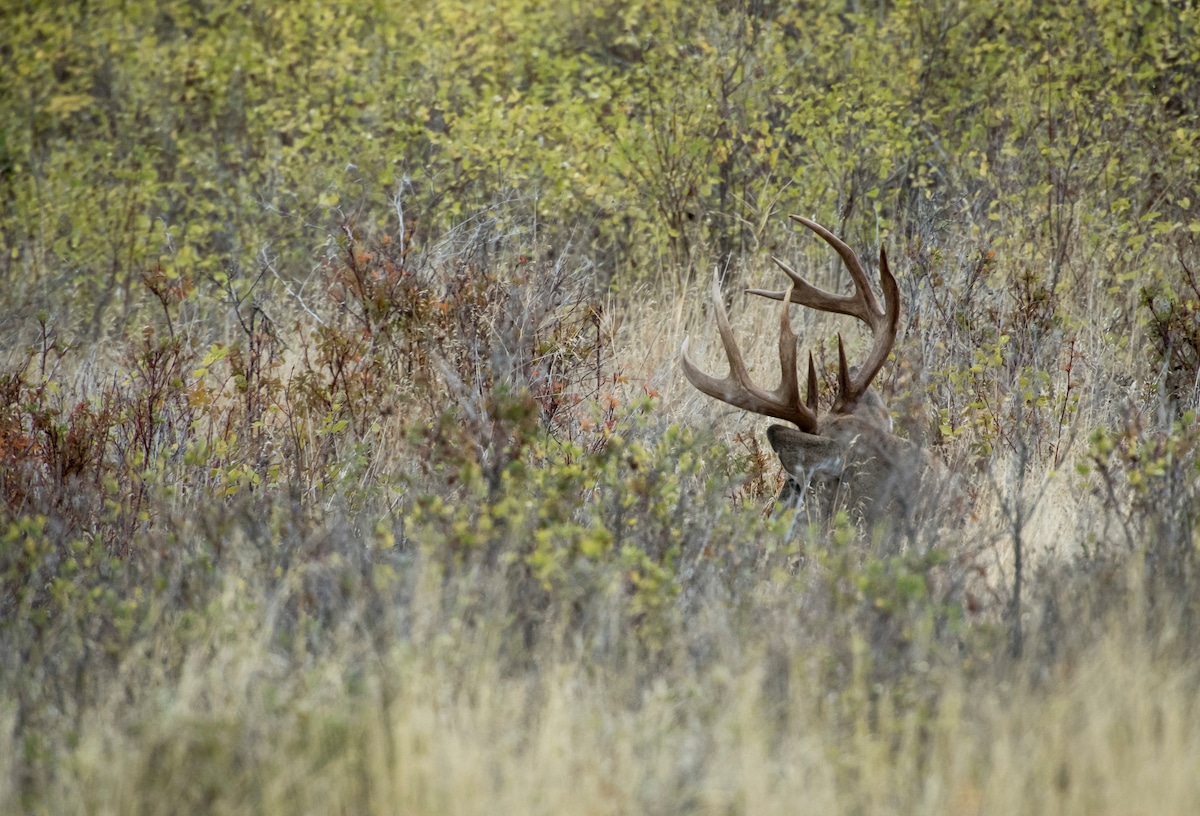
The author tagged this buck as it worked through a field of native grasses, including a high volume of goldenrod.
Once you’ve located these sources in the field, drop pins with notes in HuntStand. And post some trail cameras to see if the local deer herd are hitting the discovered natural food sources, or not.