



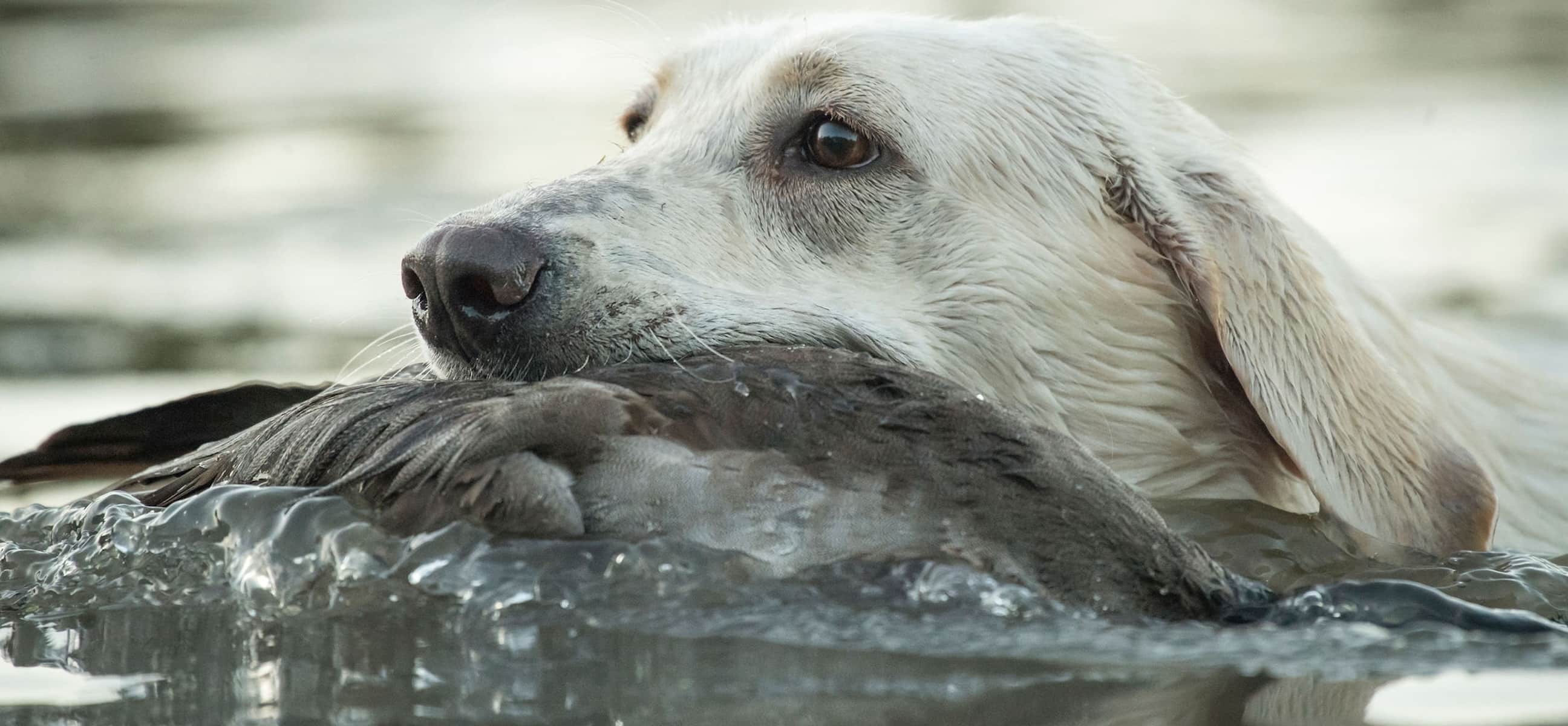

Speckle-bellied, or white-fronted geese are some of the most-coveted waterfowl to fly the skies. They are challenging to hunt and represent some of the best table fare the waterfowling world has to offer. And they’re difficult to hunt. Check out these specklebelly goose hunting facts, tips, and more.

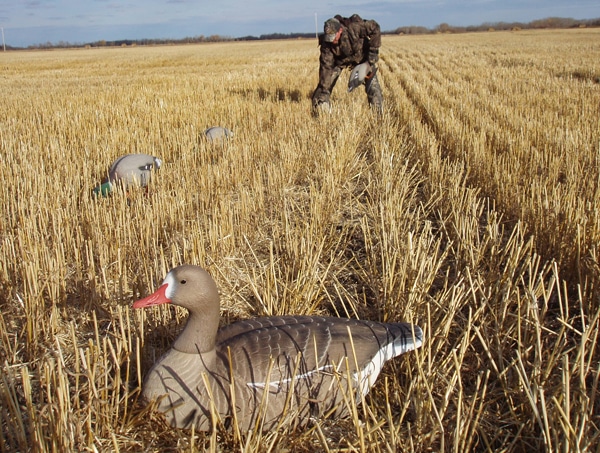

Specks aren't easy to dupe. Use good decoy practices.
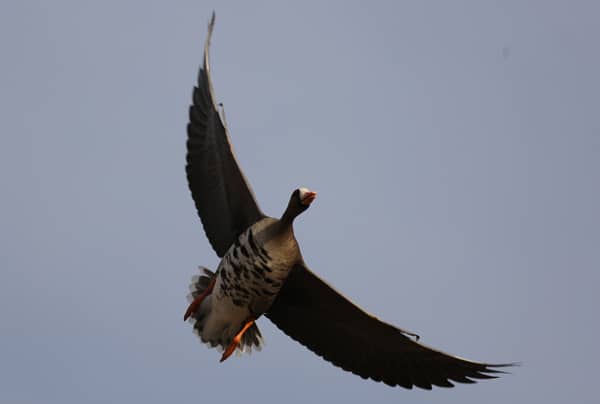
If a speck spots a mistake, it's gone.
- After nesting on islands in the northern extremes of the Arctic Ocean, they migrate to overwintering areas in Texas to Louisiana.
- Specklebellies are early migrants, leaving the Arctic in late August on their journey to overwintering grounds on the Gulf coast.
- A limited distribution in the Pacific and Central Flyways means most waterfowl hunters in North America never see this goose on a regular hunt unless they are in the right location.
- There are several species of white-fronted geese, but the most common is the greater white-fronted goose. The lesser subspecies is most common on the other side of the North Pole, in Europe and Asia.
- There are two other subspecies in North America that include the gambeli which nests on the mainland side of the Arctic Ocean and the Tule, which nests in southwest Alaska.
- There is also a separate Greenland species aptly named for its favorite nesting grounds. All are similar in appearance.
- The greater white-fronted geese migrate through Alberta and portions of western Saskatchewan on their way to Texas and the Gulf Coast to spend the winter.
- Some of the western Arctic birds and the Tule subspecies winter in California and migrate down the Pacific flyway.
- White-fronts are rare in eastern portions of North America.
- White-fronted geese are also referred to as specklebellies or specks. The goose gets its name from the salt and pepper-like specks, or black bars, that decorate their breast feathers.
- Every adult “speck” is as unique as a human fingerprint. Some have a single dark spot on the breast, while others have distinct bars or even a solid black patch of feathers. If you’re looking for a bird to take to the taxidermist, it’s hard to pick just one.
- Only adults have the dark bars on their breast feathers.
- Young birds have light colored breast feathers and will start to develop their unique markings when they grow their second set of feathers after their first return migration to the north.
- Specks are a mid-sized goose with a wingspan of about 60 inches, and are about 28 inches in length.
- Most birds will be in the six-to eight-pound range.
- White-fronted geese are a striking, if not oddly colored bird with orange feet, grey and brown feathers and, on adults, a white patch that borders the bill in front of the eye.
- The bill is often a pinkish orange with more pronounced color on the adult birds. The distinctive coloring and markings become more prominent as birds mature.
- As is true of many geese, white-fronted goose pairs stay together for years and migrate together, along with their offspring. White-front family bonds can last longer than other wild geese, and some young stay with their parents through the next breeding season.
- If a mate is lost, the surviving bird will seek out a new partner.
- They stage at the first opportunity to feed on agricultural fields, with protein-rich grains and specialty crops, where they fatten up fast.
- Specks are typically the first birds off the roost in the morning, often arriving in a decoy spread even before legal light. Being set up and prepared for action at first light is always a good way to quickly put some birds in the bag in speck country.
- Birds of a feather flock together. If you want to shoot more specks, make sure to incorporate realistic speckle-belly decoys into your spread.
- Group decoys (two to six decoys) on the downwind side of a Canada spread to increase your odds of having local birds decoy without hesitation.
- Decoys aren’t the only thing these alert Arctic geese pay attention to, and if you want to harvest them with regularity, you better learn to talk the language.
- When you do everything right, even adult specks will decoy like we dream of when planning a hunt. There is nothing sweeter than having a wary old speck fully commit to your decoys and calls, letting you know unequivocally that you did everything right.
- Speck hunting can be challenging; never surrender, and don’t hesitate to use a dark goose flag to draw attention to your decoys, and make the birds feel like their brothers and sisters have beat them to breakfast. A little motion can go a long way to attract specks when used at the right time.
- When you don’t do everything perfectly, the geese will let you know. With the right wind conditions they will often hover high over a spread of decoys, checking things out like an over-protective chaperone on prom night. If they see anything they don’t like, they peel out and are gone.
- A limit of adult specks doesn’t happen every day, and is very worthy of celebration. Each bird has its unique beauty and distinct plumage, making them special to the goose world.
- The ultimate prize is an adult speck with a leg band. They are a rare occurrence, and anyone with a speck band adorning a call lanyard has the most sought-after jewelry in the North American waterfowl world.
- Speckle-bellied geese are considered a trophy bird by most waterfowl hunters. Not only are they challenging to hunt, but they make some of the best table fare the sky has to offer.
7 Deadly Waterfowl Decoy Spreads
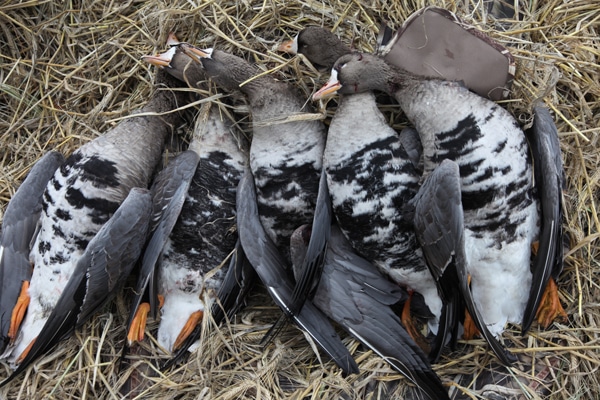
A limit of specks is a true feat.

Speck on a plate ... is on point.
The best place to see a speck might well be on the dinner plate. Often referred to as the “Ribeye of the sky,” they are hard to distinguish from a good cut of beef when grilled correctly. Make sure not to overcook it, as medium rare will let you experience this delicacy at its most tender and flavorful. The legs and thighs cook up like succulent pork ribs that fall off the bone when prepared just right. Who’s up for a speck hunt?