


Setting up decoys to consistently draw ducks and geese is an art and science. Most of us learn something new every time we hunt, which is the science of studying our quarry. We strive to set out decoys like Picasso painted pictures, which is the art that draws the fowl. The learning curve never ends, and especially as we head into the field and deal with shifting winds, blind-shy birds, and unpredictable weather.


Those who implement proven decoy spreads tend to bring home more birds.
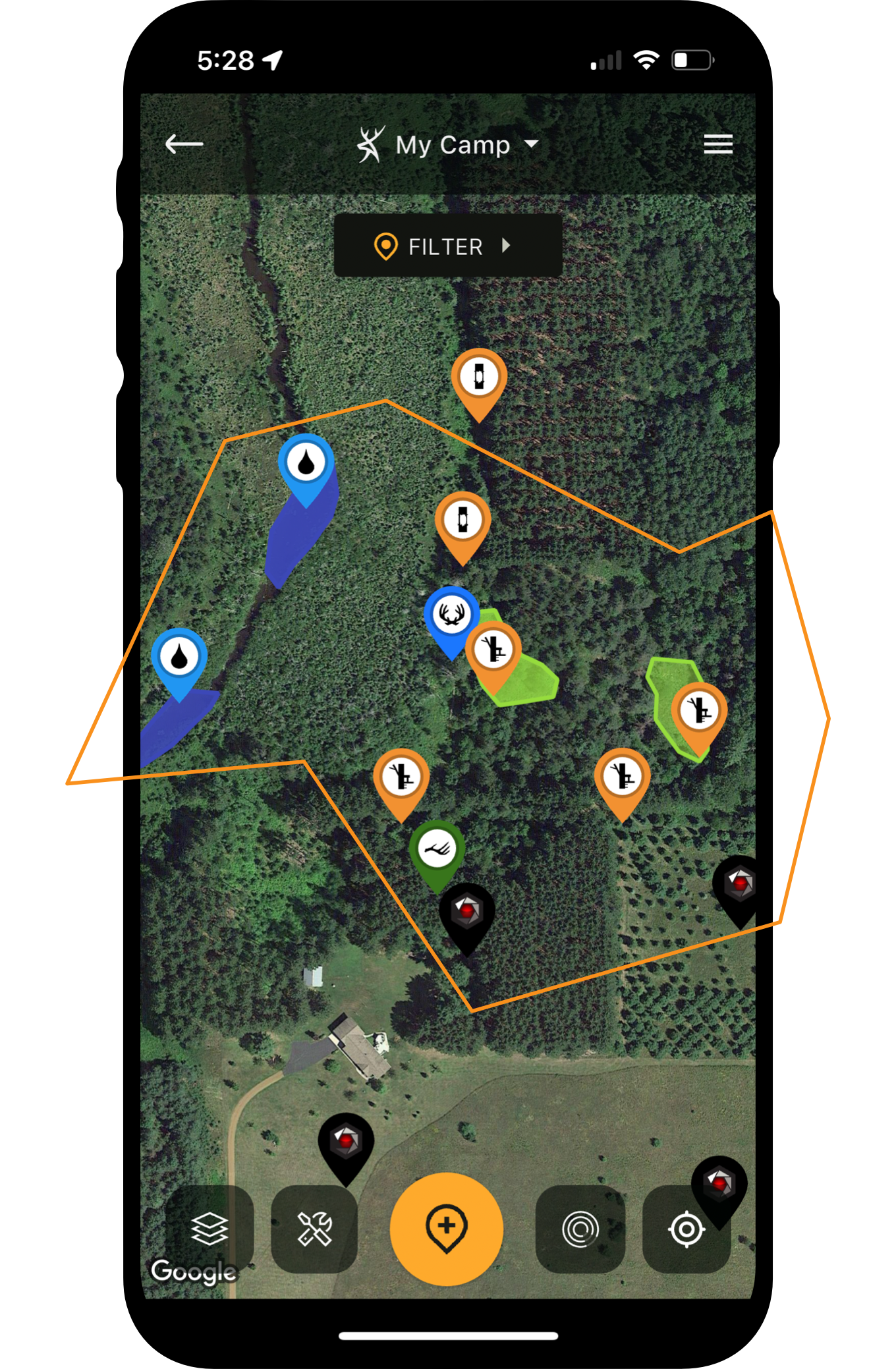
Using modern technology, like the many-featured HuntStand, is one way to tip the odds back in our favor. Just one way it can help is with your waterfowl scouting/spotting. HuntStand allows you to drop a pin on the exact coordinates where you observed or otherwise encountered birds, and finding the precise location the following morning has never been easier. Maybe better yet, that bit of critical info comes complete with detailed maps outlining the best travel routes, access, and logged observations and other information, to tactically set up with confidence.
Another core HuntStand feature for waterfowl hunters is the LandZone wind map. Waterfowl nearly always approach into the wind before dropping their landing gear and hitting the deck. Your decoy spread should always take wind conditions into consideration. Select the LandZone feature in HuntStand, tap on the location where you’re planning to set up on birds, and it will show you how the birds are most likely to approach – hour by hour – right on your HuntStand map. This can be especially helpful to plan for changing wind conditions, as you might need to adjust your decoy spread throughout any given hunt to accommodate a change in wind direction.
What are the most deadly decoy sets for ducks and geese throughout the season? Here’s some insight into a few favorite layouts, and why they work so well.

The U is a great decoy go-to for smaller flocks of birds and in consistent wind directions.
The U
The “U” is one of the easiest sets to draw birds consistently. If you are chasing dark geese, or ducks, this half-moon layout works like a catcher’s mitt to draw the birds straight up the pipe. The important thing to remember is making your “U” wide enough to accommodate the size of the flocks you glimpsed when spotting. If, say, the local honkers are coming in groups of 10, a spread with a 60-foot opening will be required. Each goose has a wingspan of six feet; so when spread out, the flock will need a minimum 60-foot opening to avoid bumping wingtips. Remember that birds clamoring for position often slide to the side if they can’t fit into your decoy set hole.
The W
A shallow “W” is an ideal set for variable/unpredictable wind directions. A big reason why, is that dark geese and ducks like the safety of landing on the downwind side of their buddies already in the field. A “W” allows you to decoy birds straight into the spread, but if the wind changes 30 to 40 degrees off of your center, the birds will be looking to land in the pockets of the “W”. It is important to set your decoys with a shallow bottom point, and the sides stretched out.
Always check HuntStand before setting up, and scroll through the wind conditions for the four to five hours after first shooting light. If shifts in the wind are predicted, a “W” will ensure the birds finish in front of your blinds, and in range.

The J decoy spread accommodates several different blind locations.
The J
The long arm of a “J” pattern decoy set should be extended on the downwind side. For example, if you were faced with a northwest wind, you would set your decoys to look like a “J” — with the long arm of the “J” stretching north, and the small arm of the hook facing west. Mob the point of the spread with decoys to make it the primary focal point for incoming birds.
There are multiple effective blind setups with this set. One good choice is at the hook of the “J”, or the point of the checkmark, while another is along the long side, allowing hunters to side-shoot birds that are never looking directly at blinds. Note that the wind needs to be consistent for the “J” to work, so be sure to check the HuntStand forecast to hit ideal conditions.
The X
Think of your blinds as a rotating hub in the middle of the spread and you’ll understand why an “X”-configured decoy spread is ideal for changing conditions. If the wind direction changes drastically over the timeframe of your hunt, simply rotate your blind to keep the birds coming directly into the decoy spread. With an open “V” in four directions off the “X”, make the right move to keep the birds centered on the shooters, while offering a landing zone for ducks and geese to focus their approach.

The Donut decoy spread setup is perfect for unpressured and inexperienced flocks.
The Donut
A set of decoys shaped like a donut needs to have a large center opening to allow birds to land without fighting for space. The donut set is especially deadly on juvenile geese looking for the safety zone, rather than the prime feeding spot. Snows, Ross’, specks, and lessers all respond well to a circular set with a large hole in the center.
The Group
Early in the season, waterfowl tend to group in family units when feeding. We see a similar trend later in the season when it is colder, or after birds have encountered heavy hunting pressure. Small groupings are always a good choice when birds get wary and hard to hunt. Groupings can be set up over a long area, with blinds situated near the decoys farthest downwind. Incoming birds usually want to land ahead of the first group or two, but behind the majority of flocks on the ground. Create an alleyway with your decoy groups, and set up to side-shoot the birds as they come up the lane. Specklebellies also like decoys grouped and well spaced out, a look that increases both realism and confidence.
Consider the String setup for early and late season hunting.
The String
Arctic geese, like specks, lessers, and cacklers like to group when feeding. Safety in numbers is how they are taught to survive, from the time they are hatching on the nesting grounds, to feeding along their migration routes. Watch the birds when they land in a field, and you will notice they are always in a tight group, allowing additional incoming birds to land snug on the edges.
A tight string of decoys will allow you to set your blind for birds flying directly at you, or set it on one end to side-shoot birds and to stay less conspicuous. Learn from the birds when spotting, and pay attention to the spot where the first birds land. Mark the prime locations, then use the tools in map editor to catalog where birds walk to feed. Pay attention to the edge the incoming birds target for landing, as it will dictate how you set up for the kill zone.

With a good decoy plan, and HuntStand to help before, during, and after the hunt, you and the crew are sure to have a great waterfowl adventure.
Remember to always log your hunt location and success in HuntStand, as it will help you duplicate success in the same field or area. Knowledge is power, so start creating your own personal hunting guide from firsthand experience. Every detail, from weather conditions to moon phase, can play a role in tapping into future waterfowling success.
Recipe: Spatchcock Upland Game Birds