





Choose the best arrow based on your bow's specs and the game you'll pursue.
After about July 1 or so, most bowhunters start getting really serious about planning and preparing for their adventurous fall bowhunting possibilities, and are well into wading through a slew of confusing new gear possibilities. As usual, the new year has brought with it new versions/models in most every gear category, including one of our most-critical items: Hunting arrows. This begs the question: Are small-diameter hunting arrows the best choice?
Thankfully, finding the ideal hunting arrow for your setup is much easier than, say, pinpointing your “perfect” bow — unless of course you possess near-unlimited cash reserves and have a whole bunch of free time on your hands. Arrows are a different story. You should be able to locate your “perfect” arrow without too much trouble.
There are many different sizes and styles of arrows available with the necessary stiffness for your particular draw weight and draw length, which offers many possibilities for finding the one that delivers the best blend of speed, penetration, and silence. Diameter and weight are two very important qualities to consider. Straightness and spine tolerance are also important, but are only truly noticeable if they are absent. Here are a few things to always keep in mind when focusing on weight and diameter.
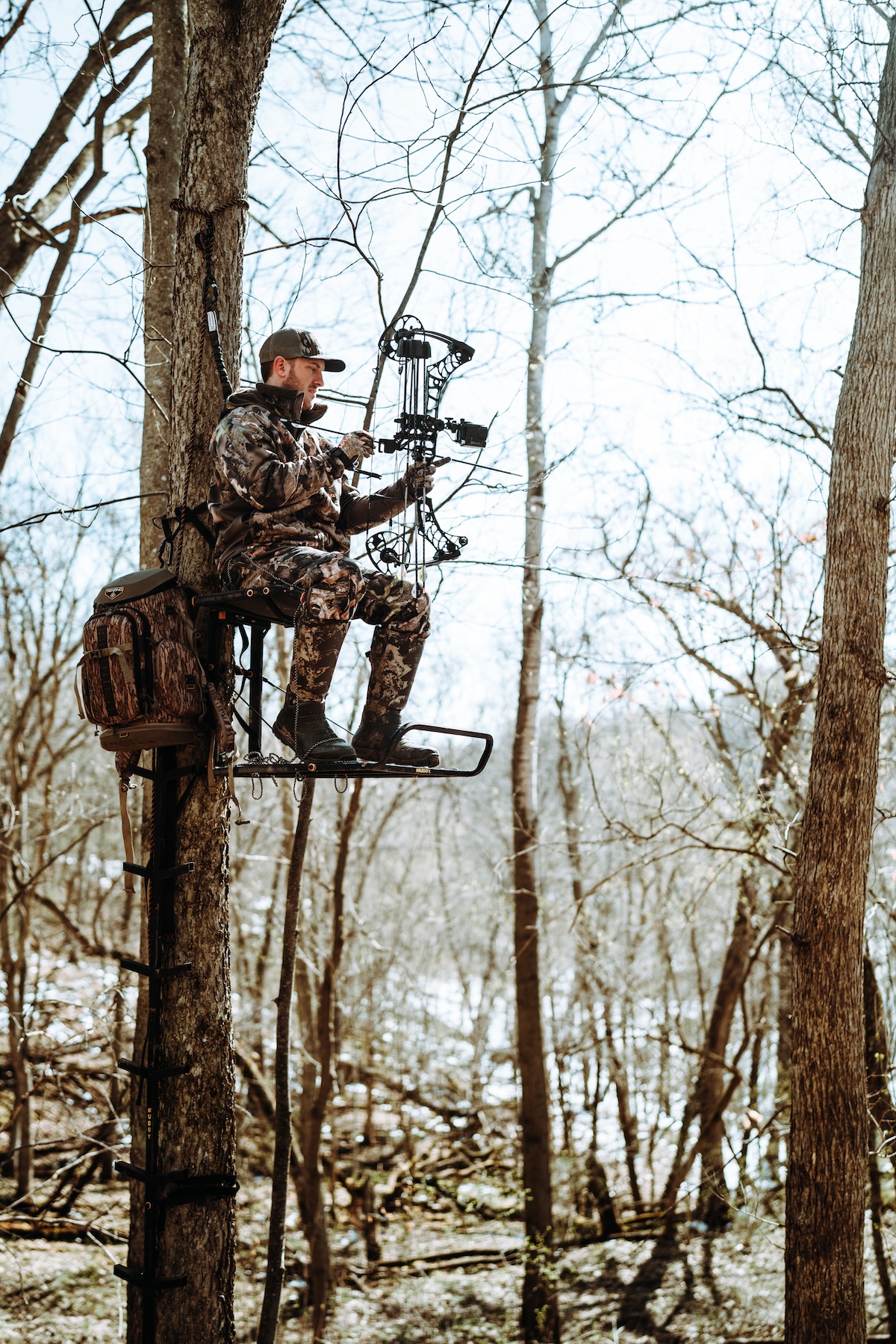
Whatever the arrow you choose, tune your bow, and it'll fly like a dart.
Choose From Three Basic Arrow Weights
There are basically three shaft weight categories: light, mid-weight, and heavy. A light arrow has a finished weight of between 5 and 6.5 grains for each pound of your bow’s maximum draw force. A lightweight arrow for a 70-pound bow would have a finished weight (including broadhead) between 350 and 455 grains. A mid-weight arrow weighs between 6.5 and 8 grains per pound of draw force (455 to 560 grains for a 70-pound bow) and a heavy arrow is anything weighing over 8 grains per pound of draw force (over 560 grains).
Another, maybe more familiar way to consider arrow weight is in grains per inch of shaft. Using this method, a light shaft would be 5-6 grains per inch, a mid-weight arrow 7-9 grains per inch, and a heavy shaft 10 or more grains per inch.
Don’t Forget Heavier Means Quieter
Because light arrows don’t soak up as much of a bow’s energy as does a heavy arrow, there will be more energy left in the bow to dissipate after a light arrow is released, energy that becomes unwanted vibration and noise. All things being relatively equal, a heavy arrow will make your bow quieter. However, with today’s cutting-edge compound bow designs that incorporate a plethora of neat silencing technologies, increasing arrow weight to dampen bow noise today rests mainly in the traditional archer’s realm. Heavier arrows shot out of recurves and longbows can deliver dramatic differences compared to ultralight shafts. When it comes to compounds, a good compromise between speed and quiet shooting (and deadliness on the vast majority of big game animals including whitetails) is a middling-weight arrow.

The author poses with a big black bear taken with archery tackle.
Is Premium Straightness Worth The Price?
The best premium arrows (and the most expensive) have straightness tolerances of +/- .001 to +/- .002 inch. Most mid- to lower-grade arrows have straightness tolerances of +/- .003 to +/- .006 inch. The good news here is, unless you’re shooting long range (50 yards or more) you will not be able to tell the difference in accuracy. If you can afford to shoot the most-expensive, straightest arrows you can find — and knowing this gives you more confidence afield — then by all means go for it. But if your wheelhouse is bowhunting whitetails and shooting 30 yards or less (most all of us) then take heart that mid-priced arrows will get the job done nicely.
Small-Diameter Hunting Arrows Deliver More Penetration
Testing has proven that, all things being more or less equal, small-diameter shafts will penetrate better than larger-diameter shafts. So bowhunters choosing to make the jump (and increased investment) to small- or micro-diameter shafts should see a penetration advantage. I’m a big fan of small-diameter arrows. I’ve seen the differences in penetration using them daily in foam 3-D targets — and also in the field, where they have been as deadly on game as any arrows I have ever shot.
This past May was yet another example. On an unusually warm Alberta spring evening, I arrowed a beautiful trophy black bear, and I know the arrow gave me an advantage that day. Despite the up-close 22-yard shot, as luck would have it, at my release the big boar was simultaneously twisting away. Yet despite the potential for disaster I believe the extra weight of the small-diameter, yet thick-walled carbon shaft helped drive my broadhead right through the right foreleg and chest of that big-bodied brute, resulting in a complete and deadly pass-through shot. The next morning we found the burly deep-chested bruin a mere 50 yards away.
Go with Your Gut
These days, no matter what game animal I’m chasing, you’ll likely find my quiver holds small-diameter hunting arrows, even despite many years of great bowhunting success using “standard-size” carbon shafts. To my mind the newer smaller shafts simply offer more-deadly advantages, the kind that can mean the difference between success and failure on those “in-between” or marginal shots. The stuff you can’t really anticipate.
In the end, if you’re using a fairly standard high-performance compound set in the 60- to 70-pound range, like I do, my advice would be to shoot whatever mid-weight carbon arrow produces the best accuracy and gives you the most confidence. However, if you are a short-draw or low-poundage bowhunter, it’s likely you will see some real benefit from switching over to small- or micro-diameter shafts that are a bit heavier than the norm.
30 Reasons HuntStand Pro Whitetail Makes You a Better Deer Hunter