





Elk sign, rubs, beds and fresh droppings, reveal if elk are using steep terrain to escape hunting pressure.

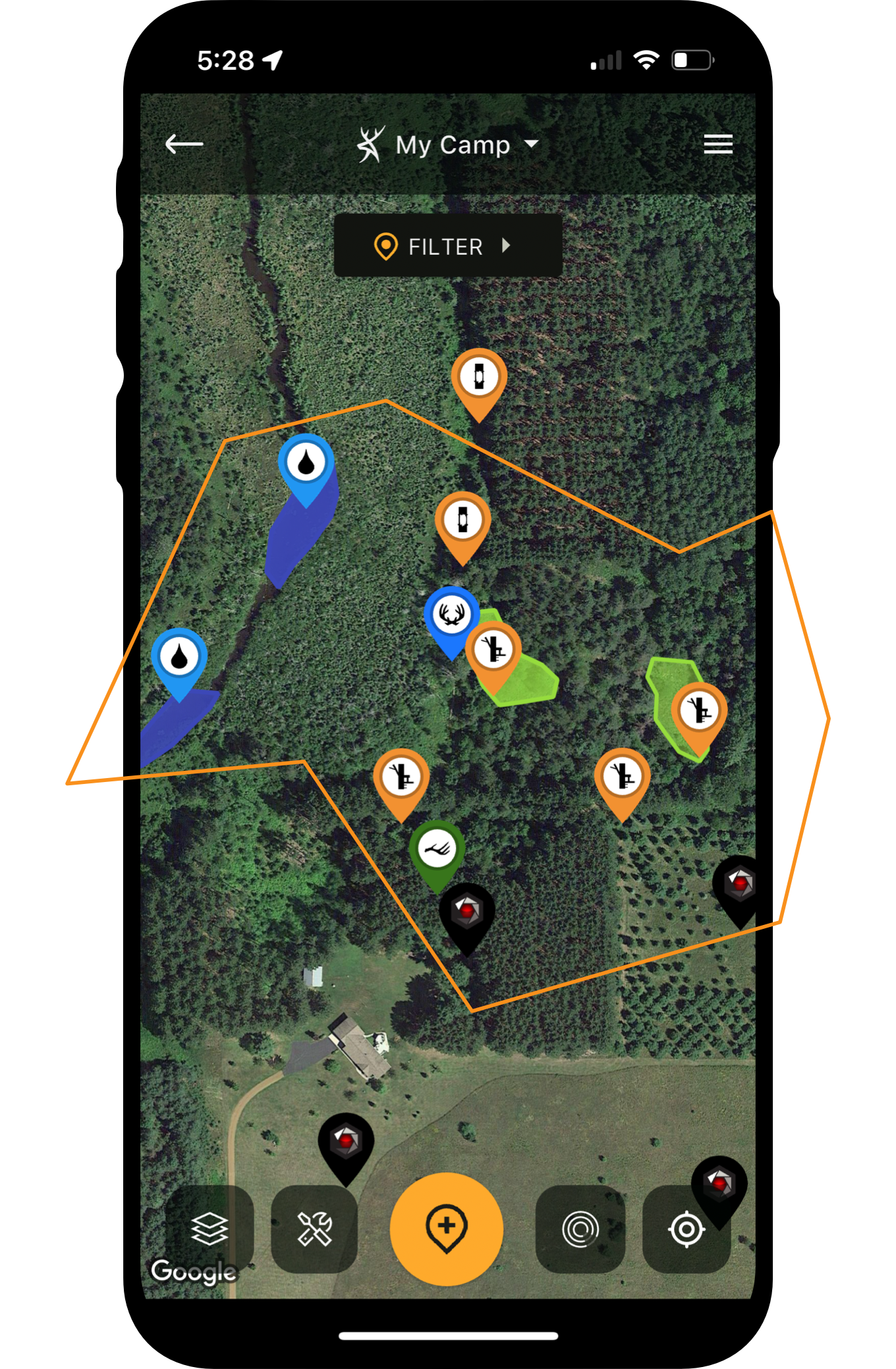
HuntStand’s Monthly Satellite (to review new imagery), Natural Atlas (for topographical terrain information), Hunting Lands (use for locating public hunting), Hybrid Map, Property Info, and more, are great elk hunting tools.
I felt like King Kong scrambling and grappling to the top of the Empire State Building, although I was not the one in search of a sanctuary. Several bands of elk passed by me in the daybreak rush hour. They weren’t heading east, west, north or south. Just straight up.
Of course, elk understand that up equals safety and down equals groceries. Elk hunters should remember this simplistic view of elk hunting. Do that, and success will climb like the elk you pursue. Here’s how to hunt elk at higher and lower elevations.
One of Mark Kayser’s go-to strategies is to use steep country to not only find elk but escape the pressure of other hunters.
Elk Were Made for Survival
Mother Nature equips wildlife with certain survival skills for hunting or evasion. Those skills hone to sharpness over time. For elk, several skills load up their survival abilities. For starters, elk evade pursuers by not being held to a lease on any land like a whitetail. Elk do have favorite areas and return to nursery habitat in the spring and survival habitat in the winter. But when hunted, they have no aversion to leaving an oasis for other pastures.
According to one 7-year study by the Montana Department of Fish, Wildlife, & Parks and Montana State University, hunters added to the influences that spur elk movement.
“Wolves influence elk distribution, movements, group sizes, and habitat selection to varying degrees in different areas, but hunting activity and hunter access have a greater impact on elk distribution, movements, group sizes, and habitat selection than do wolves,” the study reports.
When you or wolves move into elk country, that presence has the power to move elk elsewhere. In the book “North American Elk and Ecology,” esteemed, late wildlife biologist Valerius Geist describes elk escape mannerisms this way. “The elk evolved into a fairly competent long-legged ‘cursor’ (Gambaryan 1974, Geist 1998). Its goal is to escape predators by a strategy of rapid and sustained flight while trying to disorient pursuers by various tricks and, thereby, to lose itself in vast expanses.”
Killer Elk Calling Tips and Tactics

Elk escape to rugged, steep, and roadless areas when the pressure is on. Use HuntStand to help discover these elk areas.
The elk you hunt today inhabit a rugged landscape ordained with sagebrush, boulders, deadfall and other obstacles elk can easily navigate by using their long legs. This speeds them quickly across terrain that slows predators, including you, especially when you add vertical ascents into the escape equation.
By holding their heads high and using oversized eyeballs, they avoid tripping as the gallop from danger to heights beyond. And whereas whitetails might only bound a few hundred yards, elk have no issues jogging three to four miles before stopping to reassess their backdoor. Some days they vamoose. Other days they do act like whitetails. But rest assured, those long legs evolved to cover country.
Post-rut bulls really take to heart the vertical sanctuary as they move into survival mode. Still holding their antlers into early spring, bulls seek isolation in rugged, oftentimes steep terrain to avoid predator detection, noted by those antlers. Seclusion in steep, rough terrain with forage provides them with a haven strewn with hindrances (like steepness) to slow down any predatory attack.
Hiking Miles Deep to Hunt Elk: Is It Necessary? Maybe Not.

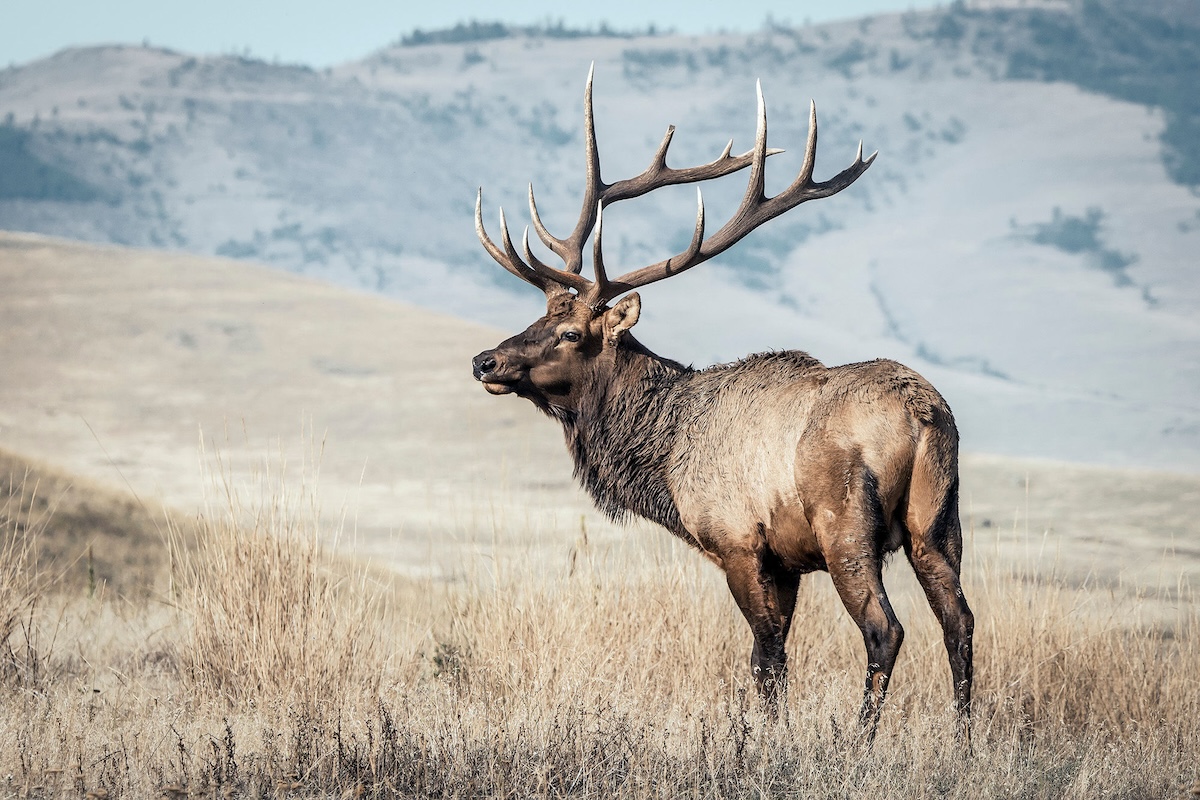
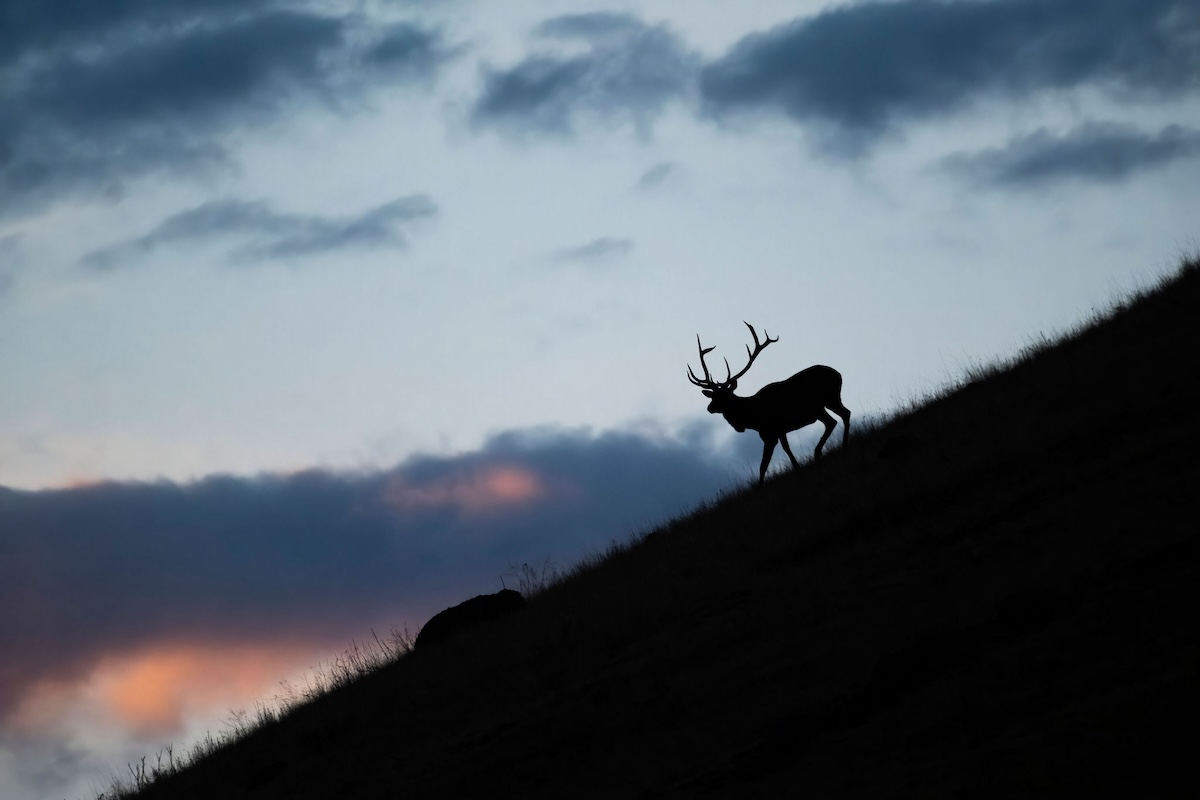
Bulls move upward on vertical slopes to avoid hunting pressure down below.
Hunting Elk at Higher Elevations
Now that you understand why elk not only leave you in the dust, but also have no fear of heights, what do you do about it? First, find their escape asylum. While virtually scouting at home, put your HuntStand Pro subscription to use by analyzing your elk hunting unit for everything described above … except wolves. HuntStand Pro offers a variety of features that can speed along the scouting sessions.
Begin with the Monthly Satellite feature. This satellite imagery is fresh. It gives you a perspective on lands to see if timber harvest, wildfire, development, and other elements recently changed the landscape.
E-Scouting Public-Land Elk [HuntClass]

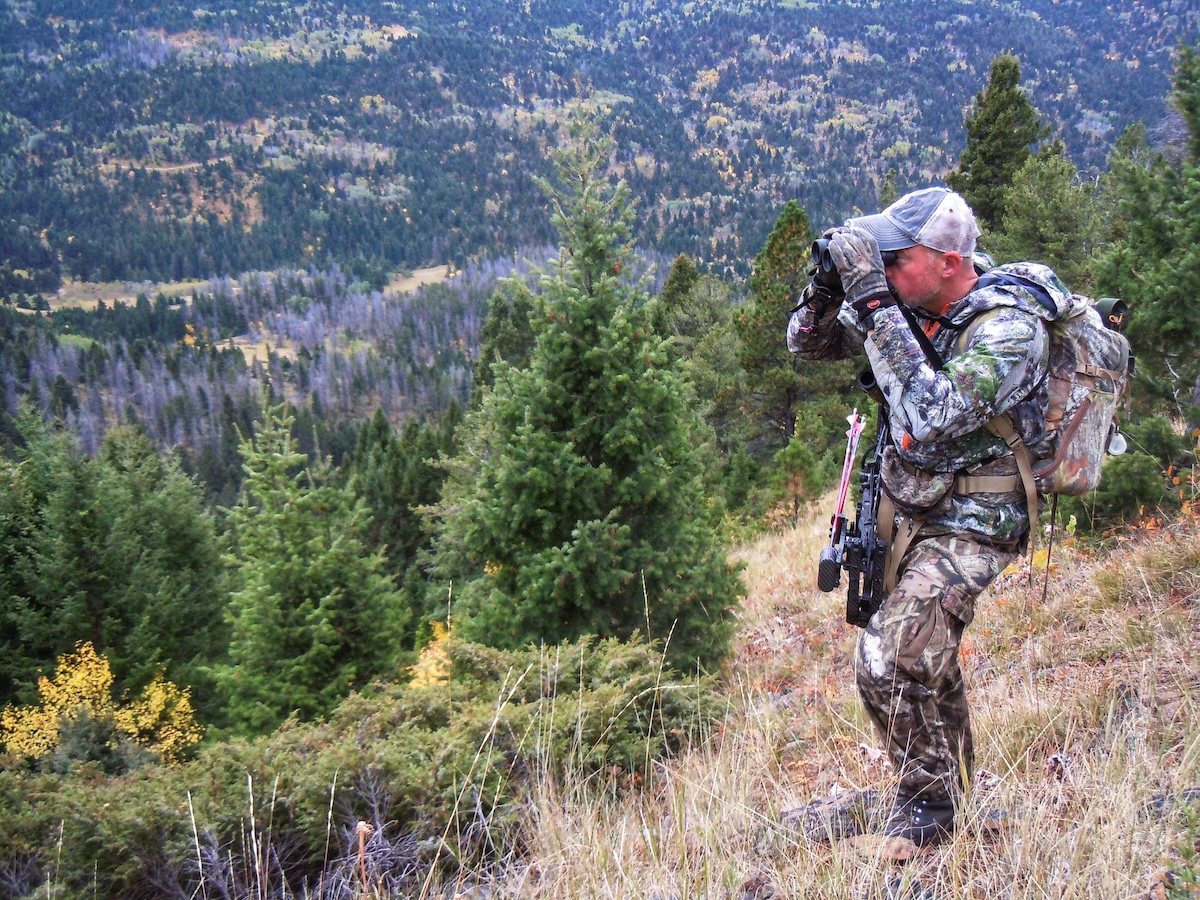
Mark Kayser’s hunting partner, Levi Duncan, packs out his bull through some rugged terrain the elk were using to avoid hunting pressure.
After confirming any habitat makeovers, move on to the use of the Hybrid map along with the Natural Atlas. Search for roadless sections of public lands and then confirm their ruggedness with topographical lines. The closer the lines, the steeper the slope, but don’t go overboard. Elk clamor up cliffs like sheep but prefer grassy or northern slopes intertwined with benches. The occasional flat depression provides grazing and bedding options without rolling down the mountain.
On the way to an end-game location (like a bench), elk can almost climb straight up. Some steep locations could be near a road with steepness providing the single element stopping hunters. Nevertheless, elk still prefer to put a mile or more of nothingness between them and any road. Nearly every honey hole I have hunted over the years requires at minimum a mile of hiking and typically two, or more miles to reach an elk haven. Physical fitness is your winning ticket. Nearly 75% of the American population resides at overweight or obese. Walk beyond the couch crowd to the stairway to elk heaven. Look at your HuntStand app and measuring tools to confirm distances from roads as you evaluate challenging terrain as elk hideouts.
Use the HuntStand distance measuring tools to judge hikes to elk hunting spots.
Hunting Elk at Lower Elevations
Despite all the hype, elk do need to travel low on occasion. Depending on the environment, they might visit lower elevation habitat daily, weekly, or never. Be a sleuth to determine if the elk have a penchant for pushing the down button on the elevator.
The main reason they parachute down is nutrition. Their high sanctuary might just offer pine needles with hors d’oeuvre grazing only. Think of an elk herd as a small cattle herd. As grazers, they require a truckload of hay to keep them happy and some high elevation sanctuaries do not offer those dining options. To keep the family happy, elk drop in elevation and raid valleys, meadows, and meandering creek bottoms for the best in grass selection.
An area in Montana I hunted on a general tag for several seasons. It exhibited this up-and-down herd behavior. High elevation terrain sported little grass and lots of rocky outcroppings. More than 1,500 feet below, elk could graze on lush grass, even sharing the bounty at times with domestic cattle. To escape road hunting pressure, the herd left the lowlands each morning before shooting light to ascend into the timbered, rocky terrain. They bed in the divots left by fallen trees when they could not find a level area. I stumbled upon this pattern and tagged two mature bulls during the general archery season on consecutive hunts.
How to Call Elk Like a Champion Caller [HuntClass]

Mark Kayser tagged this Colorado bull in steep country at the top of a mountain. Elk escape to rugged, steep and roadless areas when the pressure is on.
Using HuntStand’s Hunting Lands feature to find public lands, move on to the Hybrid maps feature to look for any open areas in the rugged zones you discovered earlier. The Tree Cover feature could also help you locate possible open areas sporting more grass. Any grassy areas you discover should be further inspected for nearby water. Elk herds require copious amounts of water while feeding and for recharging during breeding season.
You might not have the option to hunt these grassy areas, though. The Property Info feature of HuntStand could tell you the lowlands fall under private ownership. Still, once you pinpoint grazing and sanctuary, you have a roadmap in your hands to map out an ambush on adjacent public lands.
That is exactly what I did in the opening. I knew I could not catch the elk passing by me in the dawn of the morning. Despite this setback, I followed the elk to the pinnacle of the mountain and soon discovered several benches with heavily used trails. Two days later, a plump satellite bull passed by me at 40 yards for a worthy, public-land trophy in DIY fashion.