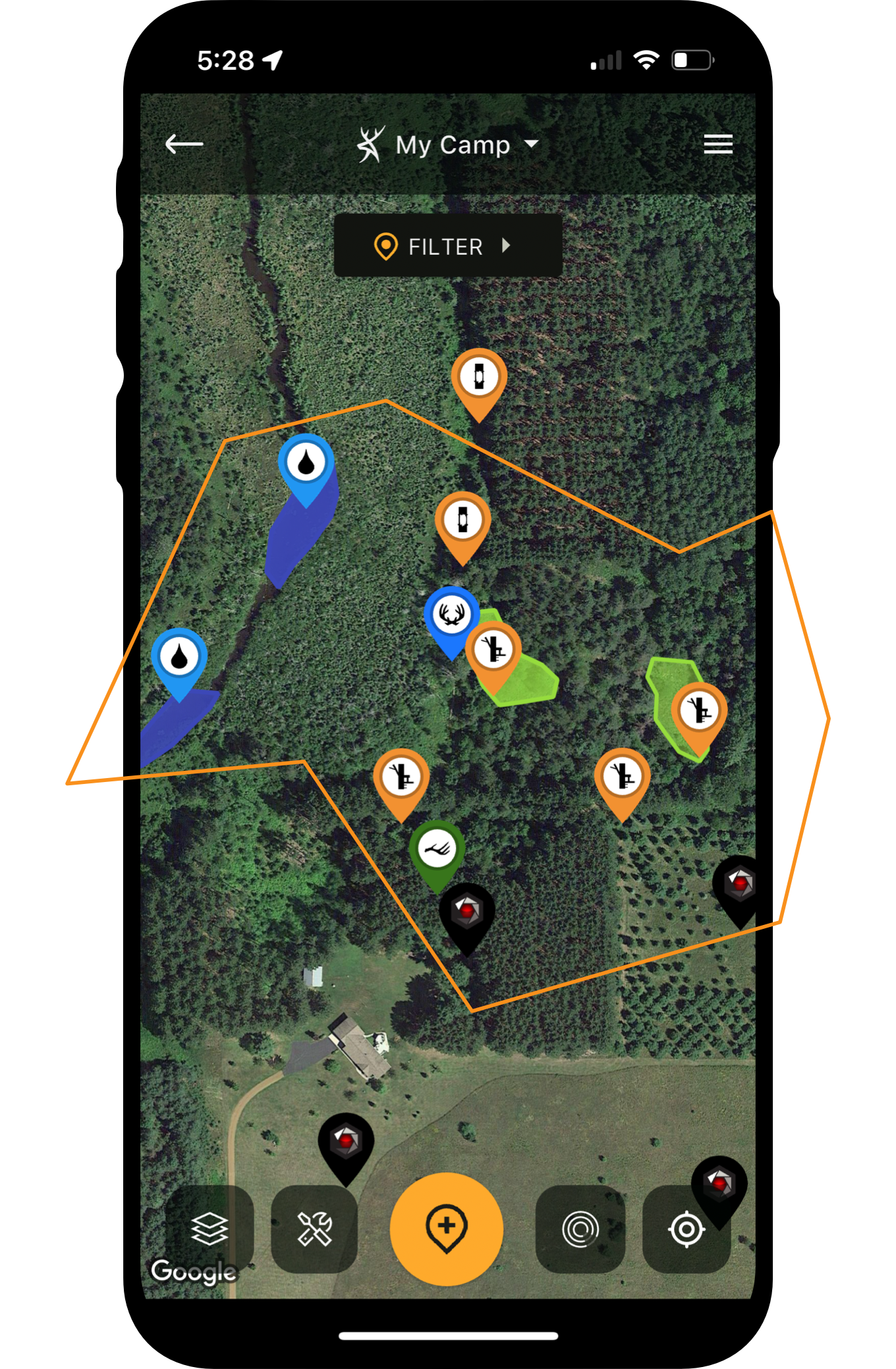





Using the HuntStand Tree Cover overlay to find open areas for possible deer browsing locations. HuntStand’s National Aerial Imagery is great for scouting for sanctuary and feeding areas for deer.
As a resident living in one of the West’s mule deer meccas, Wyoming, I experience a surprising influx every fall. No, it’s not migrating waterfowl. Instead, it’s the influx of nonresident deer hunters. Many arrive with a haphazard approach to their hunt, but when you dig deeper and discuss hunting with many you meet in the backcountry, you realize that a few are here to hunt with a fervor that even rivals the enthusiasm I see with resident hunters. Acquire that nonresident passion and dedication to make the most of any mule deer hunt, and your odds will skyrocket in an already challenging environment.
Why is the mule deer environment challenging? The population of mule deer continues to decrease, or at the very least, not rebuild. Stagnate or decreasing populations equal tougher hunting and lower success, especially for mature deer. To get past this barrier, the hardcore, ardent approach of a committed nonresident needs to be your goal, whether you are a nonresident or resident hunter.
Here is how to hunt mule deer with the fervor of a nonresident mule deer hunter.
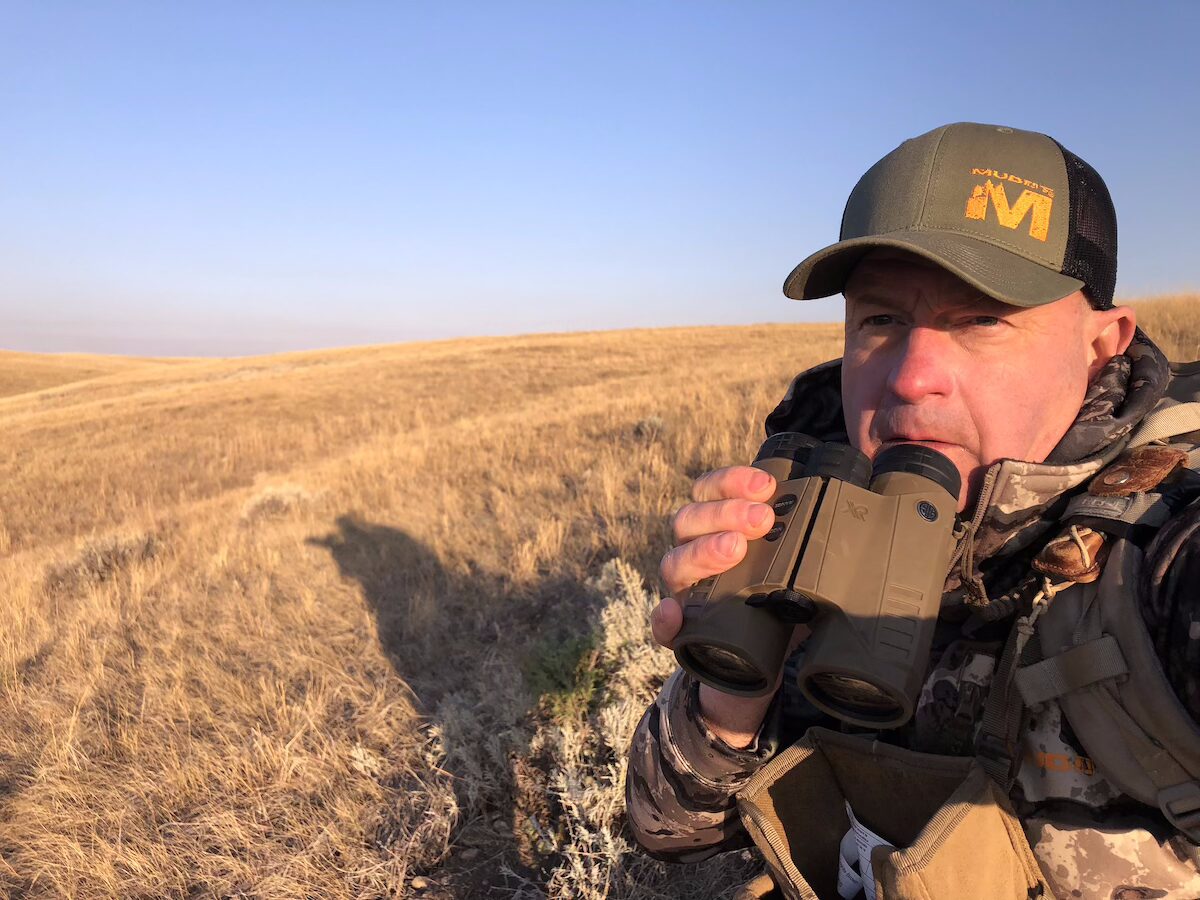
Mule deer hunting is challenging, especially for a nonresident living hours away. Whether you are a resident or nonresident, e-scout and plan like a nonresident with a winning mission.
The HuntStand Property Info base layer helps you find areas where deer might cross from public to private.
Let Cash and Time Incentivize You
Why do many nonresidents hunt like their behinds are on fire? First, many often wait years to acquire a nonresident tag. The annoying game of preference or bonus points leads to point creep, and that leads to years of waiting for a quality mule deer tag, along with nearly every other big game tag west of the Mississippi.
Next, nonresidents accrue economic investment more than most resident hunters. Tags alone typically rise above $500. Then, there’s the cost to get there, not to mention new gear required to hunt a different environment. Resident hunters also dig into their wallets deeper to get the best gear, but licenses typically cost less than $50. And, of course, getting there does not cost as much when hunting your backyard.
Finally, everyone has a time investment in the hunt, but the nonresident has to add at least a day on each end just for travel and possibly another day or two for scouting upon arrival. Time is money, so residents might not have the extended travel investment, but everyone still needs to take off time for scouting and then the eventual hunt.
Add it all together and nonresidents, on average, bleed more money and time than the resident hunter leading to the final big consideration. They want it. With the long wait, economic ventures and time lost, it adds up to a resolute hunter going all in. So, if you plan on finding success as a garden variety nonresident or resident hunter, consider going all in like a zealot from out of state.
How to Pick the Best Days for Your Elk Hunting Vacation
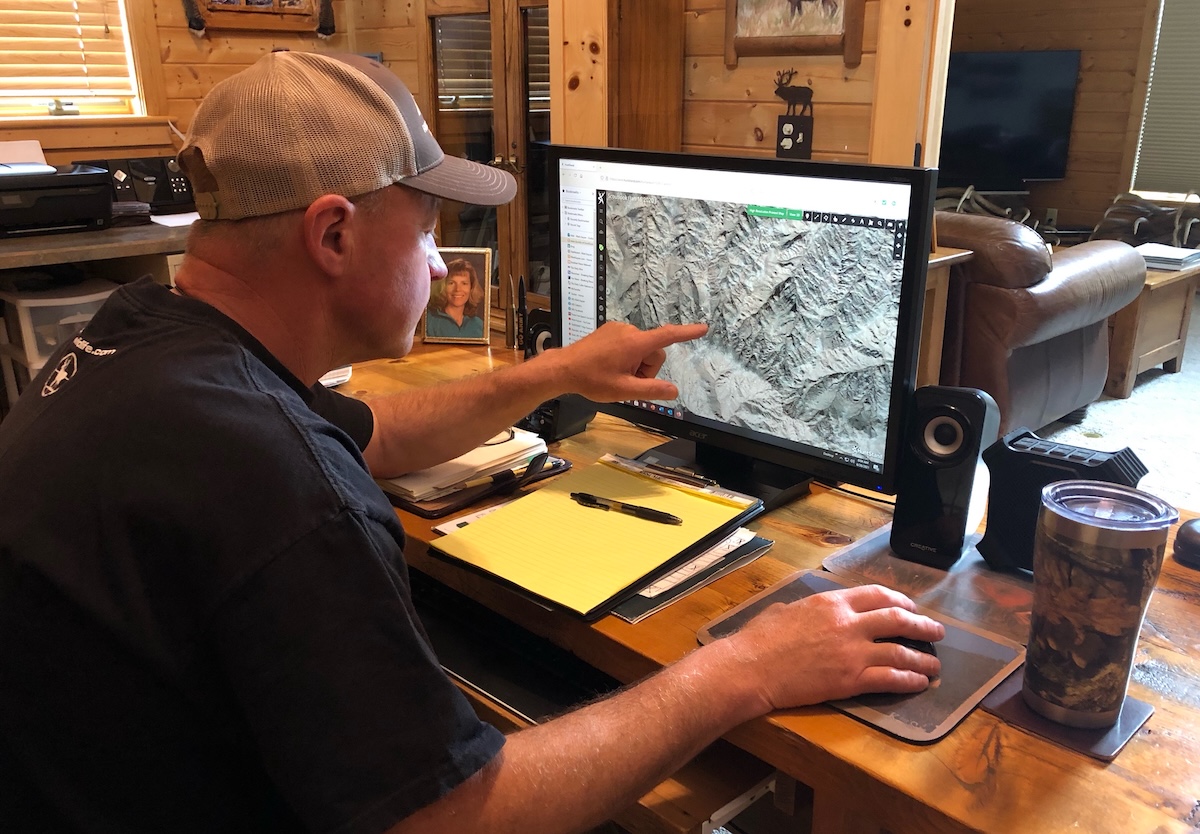
Mule deer hunting is challenging, especially for a nonresident living hours away. Whether you are a resident or nonresident, e-scout and plan like a nonresident with a winning mission.
Scouting Mule Deer the Right Way
One thing all successful nonresident fanatics have in common is e-scouting months, if not years before the hunt. HuntStand offers a solid platform to get the job done while at home or even a quick break while at work. Keep the work scouting sessions on the covert level though. The free version of HuntStand offers you the tools to succeed, but to get even more, peruse the subscriptions and consider upgrading to HuntStand Pro or Ultimate. Both unlock the most in e-scouting, as well as assurance once your boots hit the ground in your hunting unit.
HuntStand has even expanded its features to include the new Mule Deer Rut Map and Mule Deer Activity Forecast in addition to Whitetail Activity Forecast and Whitetail Rut Map. Use these HuntStand features to knowledgeably plan your hunt like a nonresident pro who has waited years for a tag. (And maybe you have, even as a resident.)
Your e-scouting should include a two-pronged approach. Consider the fact deer might be in a more mellow pattern and spending time in the open. Then move to Plan B. This plan takes into consideration increased hunting pressure. After the first few days or a week of hunting pressure, expect deer to go into a SERE (survival, evasion, resistance and escape) mode.
Terrain Features Elk Can’t Resist
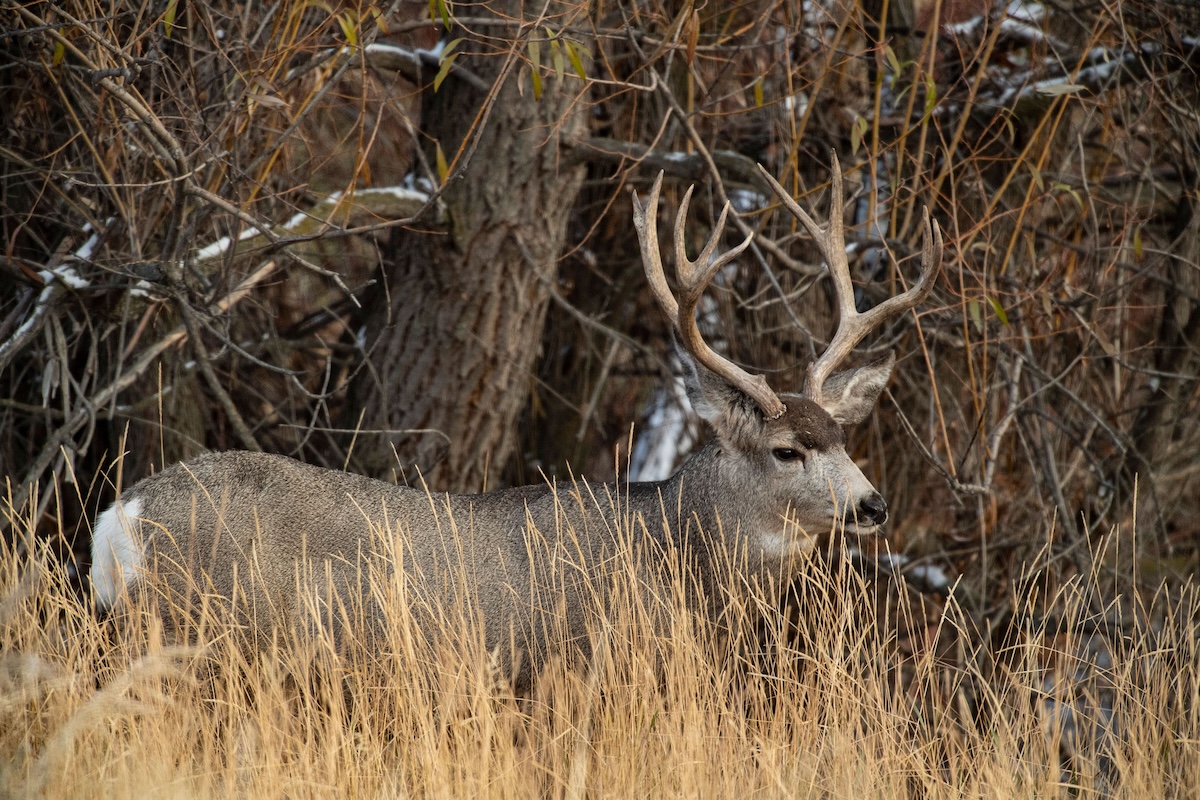
HuntStand’s Quad Topo base layer is great for scouting steep sanctuary cover for deer. HuntStand’s 3D Map gives you an aerial perspective of your deer hunting areas.
The Basic Needs of Mule Deer
Mule deer habitat varies from alpine mountains to southwestern desert landscapes. Some deer find everything they need within a relatively small area, whereas others require migration to help them survive the elements of seasonal changes. Scrutinize the area to ensure it has all three lifecycle elements available — food, water, and sanctuary.
Just because it has one element, such as cover, it might not have the other needed elements. Desert environments might be lacking in water. Old growth forests might be missing vegetation for browsing. Valleys, especially those efficiently farmed on private land, might not have sanctuary. Once you determine your hunting unit, identify these crucial elements to find mule deer in their happy place.
Which element means more? Sanctuary is a vital component that without, could make the other two components meaningless. Without security, nothing else in the mule deer life cycle could occur. They need to escape climatic conditions, predation, and other various threats surrounding them before they can eat, or drink.
How to Plan for Public-Land Elk Hunting
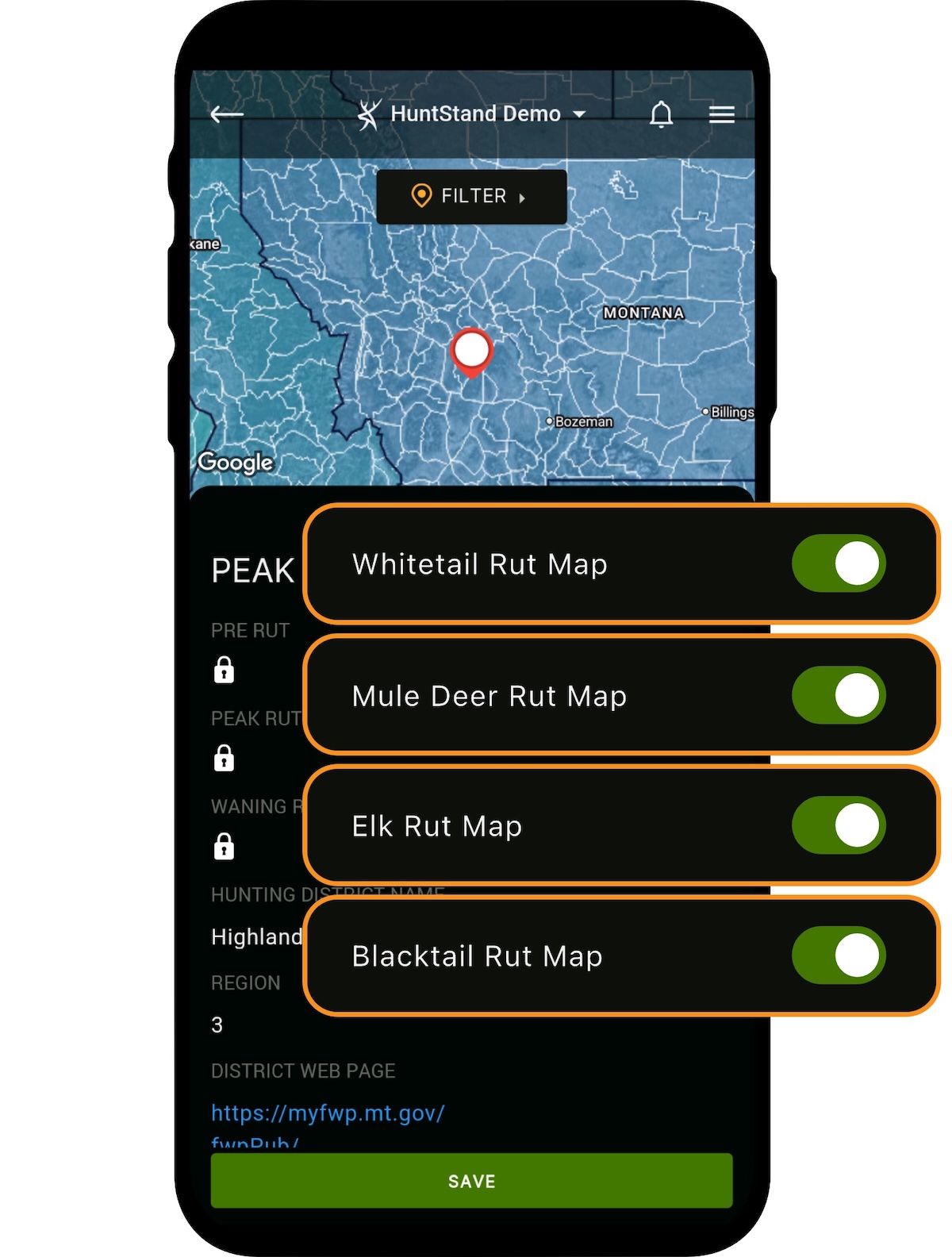
Use the Mule Deer Rut Map to time your hunt perfectly.
Using HuntStand to Find Mule Deer
HuntStand offers many base layers to help you find sanctuary habitat including a review of the landscape with the Hybrid, National Aerial Imagery or even the Satellite base layer. The Tree Cover overlay could also be helpful, especially when looking for areas of canopy to give mule deer thermal cover.
Water shows up not only in the Hybrid bigger view, but also in the Natural Atlas and Outdoor base layer. And since mule deer are categorized as browsers, their diet could be dozens of species with favorites including sagebrush, mountain mahogany, cactus fruit, and Gambel oak acorns, to name a few.
Plants in early successional stages of growth tend to provide the highest quality nutrition. Many times, these sprout after a managed logging operation or from wild fires that have not burned too hot. Find a recent wild fire of moderate burning and you could be near a hot spot attracting mule deer.
HuntStand’s Monthly Satellite base layer, at a lower resolution, provides insight into some of the more recent land changes occurring in your hunting unit. This map is updated monthly for the most recent view of your hunt area. Use the Monthly Satellite throughout your long wait to witness change and of course, check it right before your departure to ensure your hunting plan is executed with precision.
How to Hunt Elk During Gun Season
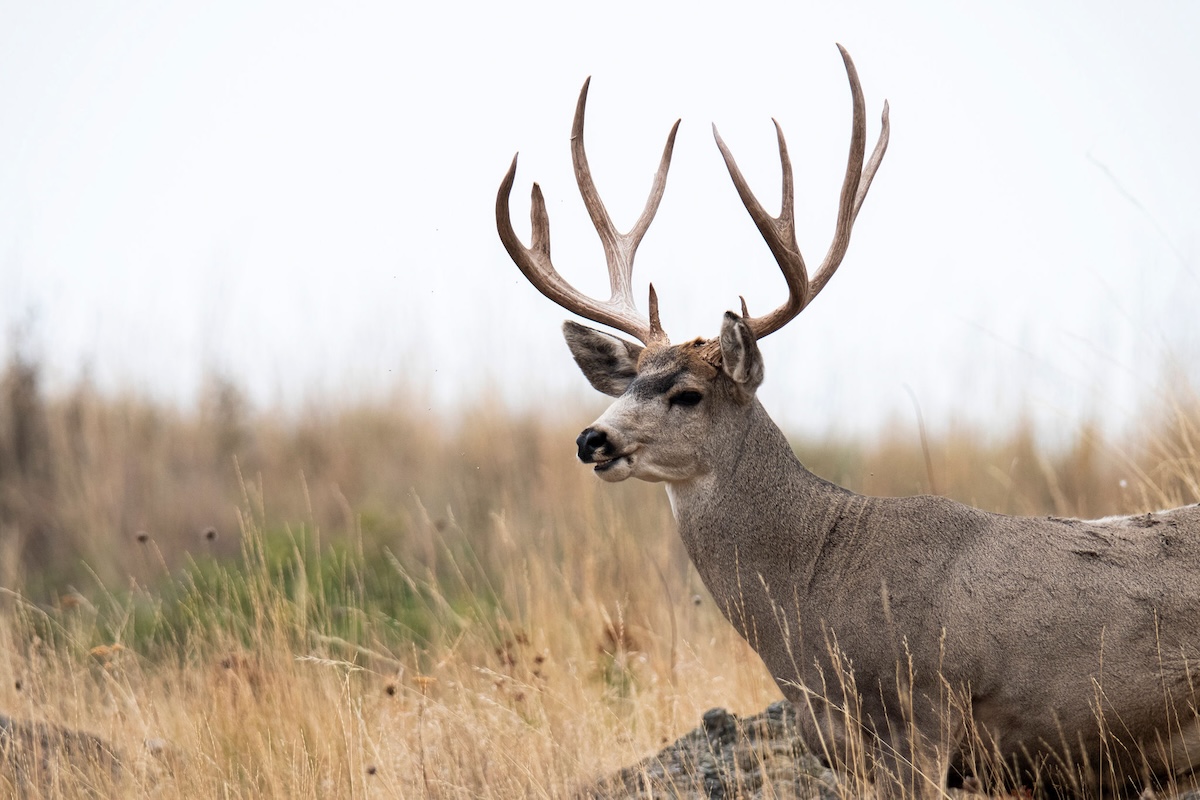
HuntStand’s Natural Atlas aids in finding roadless areas for deer refuge. Also, use it to find possible water sources while scouting.
Have a Plan B, C, D, Etc.
Your nonresident e-scouting craziness could be over with a single, detailed scrutinization of your hunting unit … but don’t bet on it. Craft multiple game plans. Then, if needed, move on to Plan B. Odds are your initial plan will go out the window quickly with hunting pressure, so begin searching for the absolute nastiest country on the map.
If the area holds browse, water, and concealment, expect deer to utilize the real estate, especially mature animals who have experienced years of hunting pressure. One hint of hunters setting up camps puts mature deer into evasive action. High elevation, alpine openness, badlands, deep basins protected by scree slopes, and any region void of a road, fits this definition. America’s oftentimes unhealthy relationship with off-road vehicles has prodded big game farther from the dusty trails, but that can work in your favor if you are not afraid to hike.
How to Hunt Late-Season Elk
My hunting plan is to utilize my truck or ATV to access the edge of a steep, roadless region and HuntStand’s Hybrid and Natural Atlas base layer points these areas out. Look for areas with at least 2 square miles of roadless sanctuary. Of course, the bigger, the better.
I also attempt to put more than a mile and 1,500 feet of elevation below or above me. That separates me from approximately 70% of the public that is overweight and obese. Those are the same people hunting close to the roads and their off-road vehicles.
The Quad Topo, Outdoor, and Natural Atlas base layers all provide elevation insight with topographical information. And when you finally find a roadless area, possibly with steep topography, put the HuntStand 3D Map feature into play. Use it to virtually fly over the country. It’s way cheaper than purchasing a drone or renting a helicopter when you arrive.
In addition to putting miles between you and the closest two-track, be mindful of boundaries, especially with private lands. The grass is always greener on the other side of the fence, and that holds true in some mule deer locations. Public lands that abut a private ranch with limited hunting access provide refuge for pressured deer. Desert habitat that adjoins an irrigated hayfield could serve up a herd of deer moving between rough country and a lush buffet.
HuntStand’s variety of base layers combined with the Property Info, Hunting Lands, and Public Lands overlays allow you to home in on the best boundary hunting around.
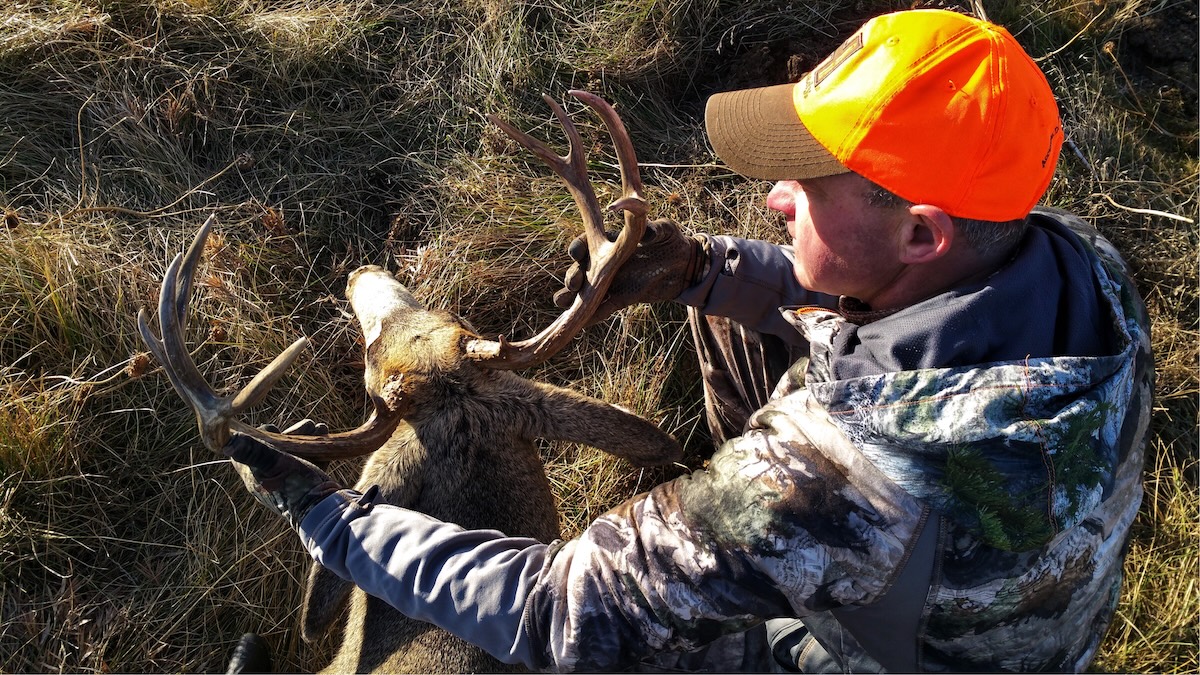
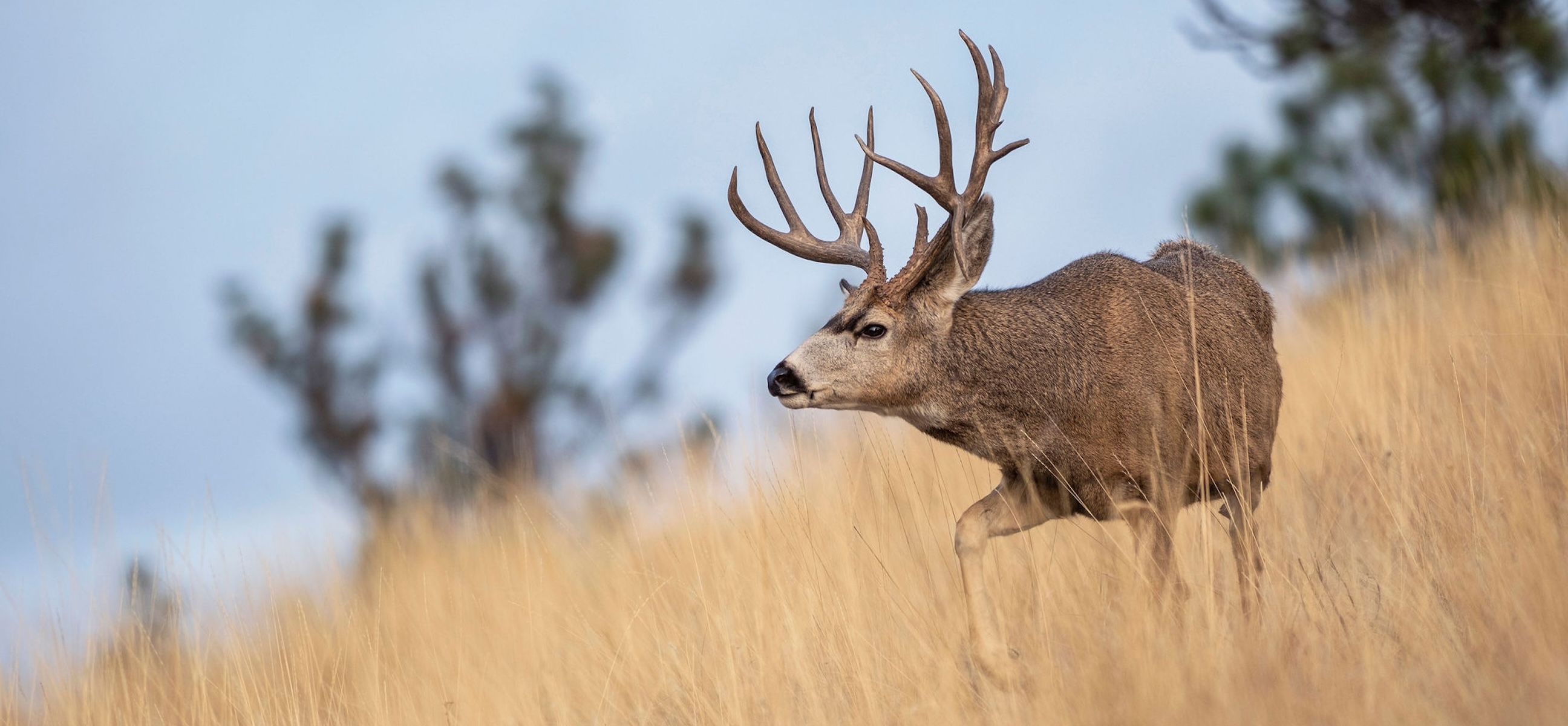
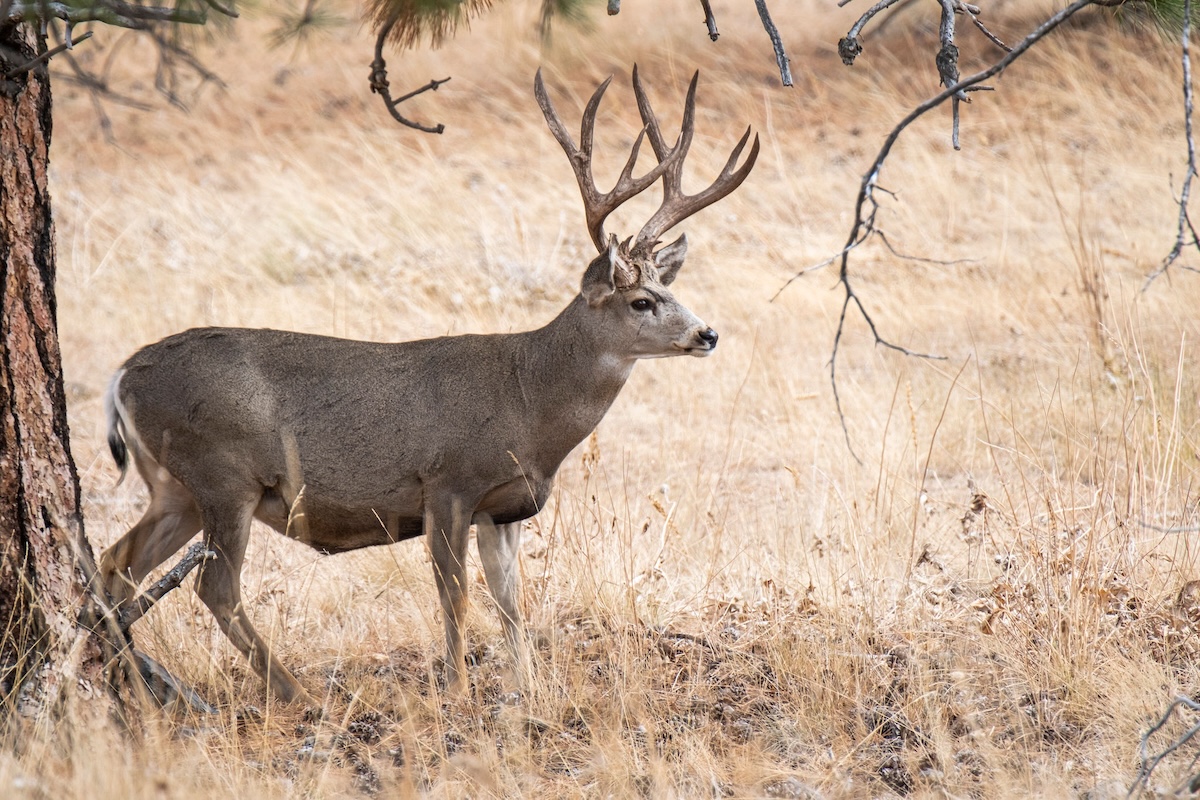
When you land boots on the ground, your hunt should speed along smoothly. You just might tag a buck like the author's deer.
In conclusion, you do not have to be a hunt-hungry nonresident with years of waiting to e-scout like you mean it. Pick a hunting unit. Study your odds of drawing a tag. Begin e-scouting with purpose and skyrocket your odds of success when you finally do land a great mule deer hunt — resident or nonresident hunter.