




Finding quality edge habitat for deer is part of a hunter’s scouting duties. Creating it is part of a land manager’s responsibilities. No matter which side of that coin is reality for you, deer hunting revolves around edge habitat. This is your edge habitat guide, and the 411 on how HuntStand helps find the best edge cover near you.
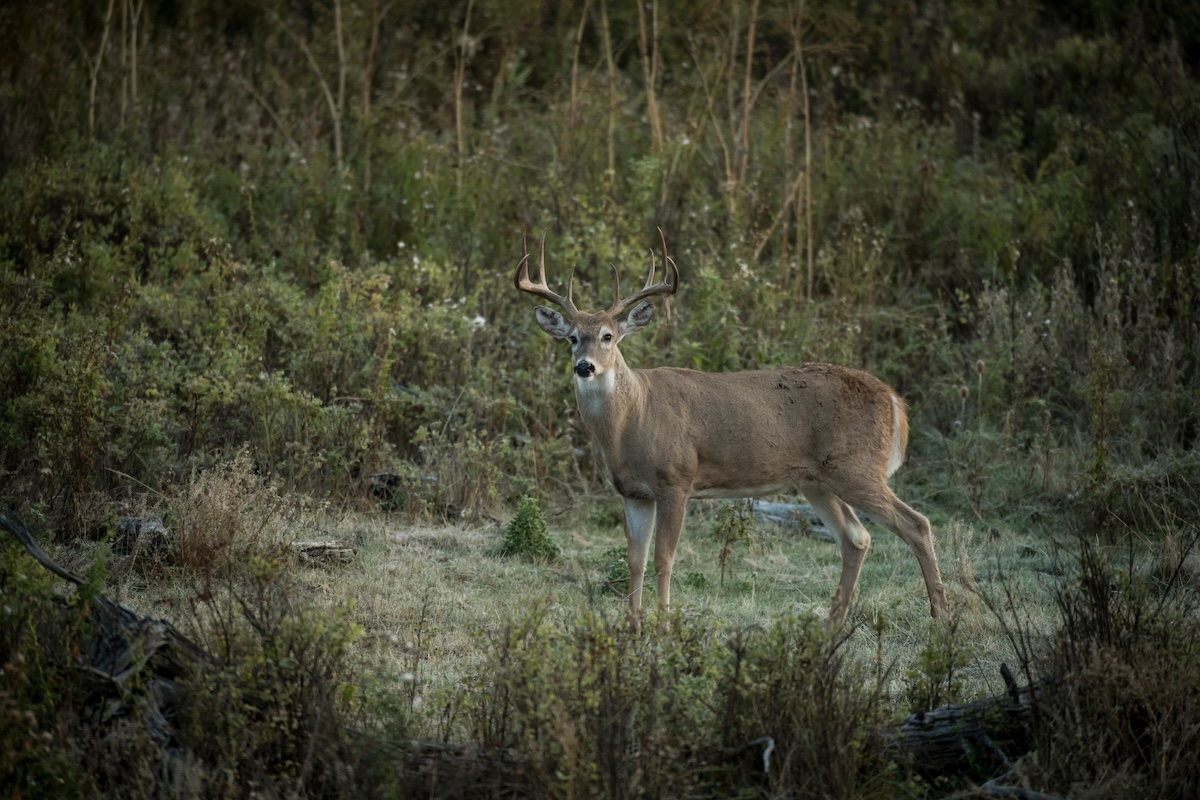

Edge habitat is king in the world of whitetails.
Edge Habitat (Edge Cover) Defined
The simplest definition of edge habitat (or edge cover) is where two habitat types meet. Edge provides whitetails and other animal species with key needs along these boundaries. In large part, this is due to greater plant diversity, and that’s what whitetails (and other game animals) are all about.
Edge habitat comes in many forms. It doesn’t all look or behave the same way. Expect various combinations of habitat types to create edges.
Examples of Edge Cover:
- Mature, uncut timber meeting timber with a select-cut harvest.
- Mature hardwoods meeting a stand of pine trees.
- Mature hardwoods meeting secondary succession (bushes, shrubs, short trees, etc.).
- Mature hardwoods meeting advanced-stage, tall-growing native grasses.
- Mature hardwoods meeting open fields or food plots.
There are various phases of edges. The most important types include hard, moderate, and soft edges. In most situations, the latter end of that spectrum is preferred by deer and deer hunters. A lower-contrast transition is more desirable.
Hard Edge: A hard edge is a sharp, sudden change from mature habitat (mature hardwoods or pines) to low-level vegetation (such as a hayfield). There is no gradual change to “soften” the edge.
Moderate Edge: A moderate edge is somewhere between a hard and soft edge. An example might be mature timber transitioning to native grasses and then to an open field or food plot.
Soft Edge: A soft edge is a gradual change from one habitat type to another. Rather than the hard edge mentioned above (shifting immediately from mature timber to grassy fields), a soft edge places another layer or two between the two habitat types. Therefore, it transitions from mature timber, to secondary successional cover (bushes, shrubs, and young trees), to early successional cover (native grasses), and then to an open field. This gradual shift offers deer far more security and peace of mind.
The Ultimate Early Season Food Plot
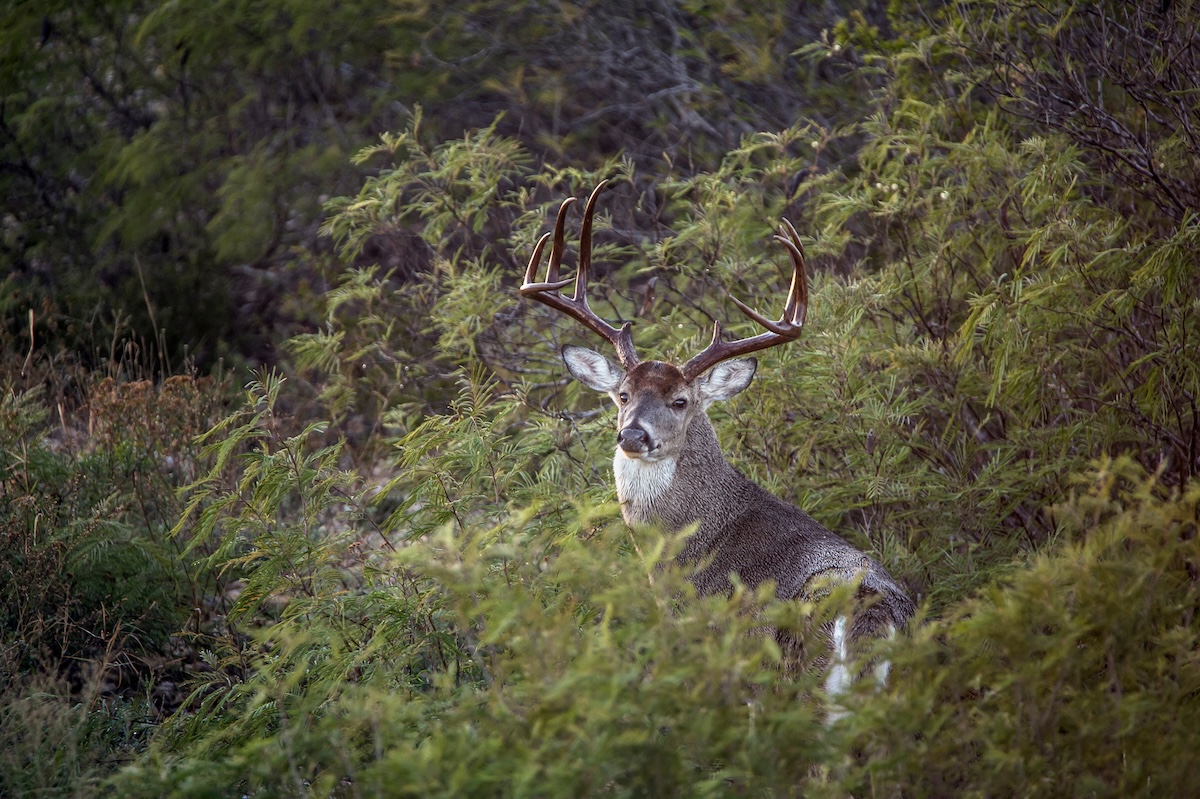
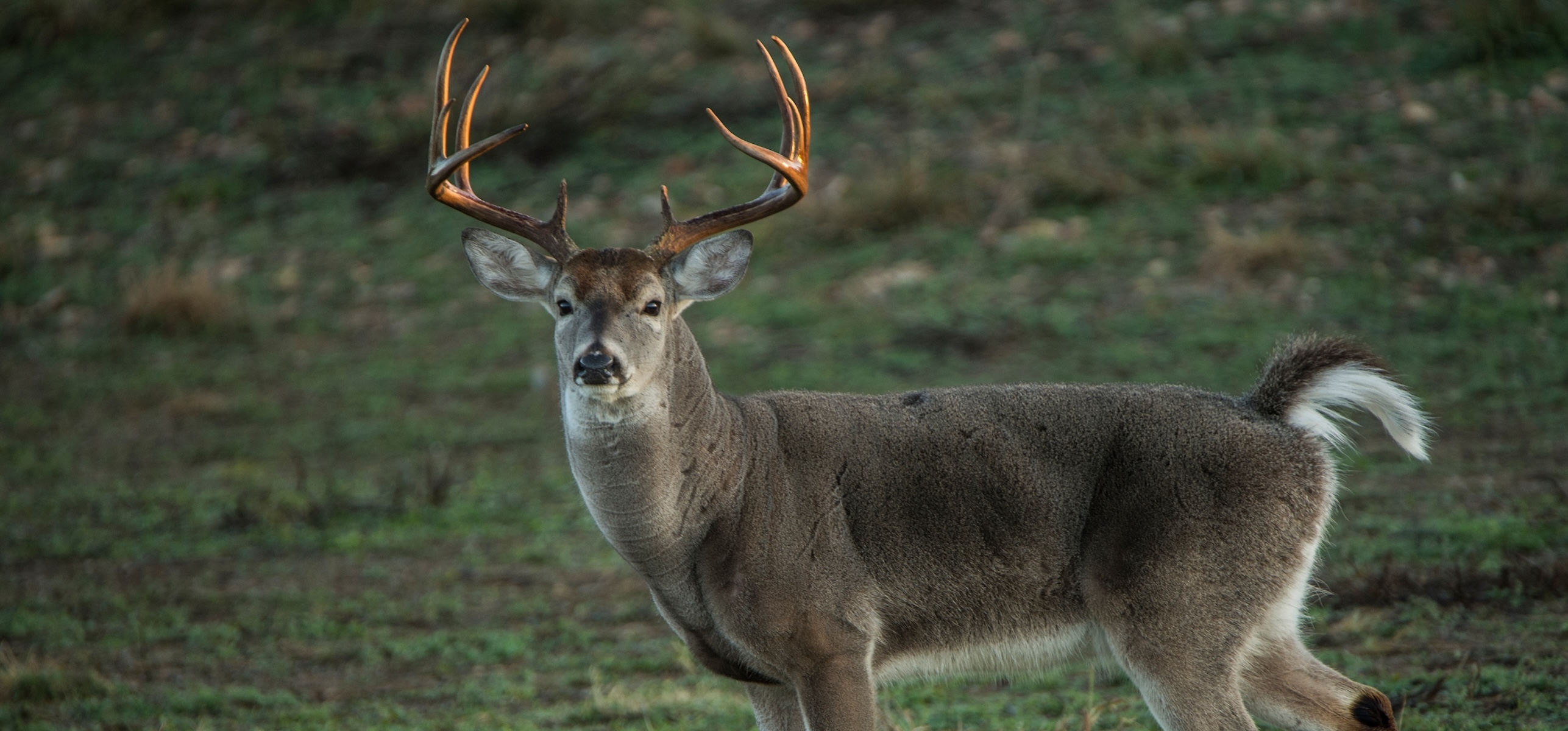
Deer feel hidden and safe in early successional habitat.
Why Deer Love Edge Cover
Whitetails seek out edge cover for numerous reasons. Primarily, deer benefit from the bedding cover and food sources provided by this habitat type. Deer love early successional cover. This is a type of edge, especially when directly adjacent to other habitat types, such as mature hardwoods, mature pines, open fields, etc.
Drilling down, although whitetails have ruminant digestion systems, they don’t feed like most ruminants (such as cattle). Cattle and other ruminants are largely grazers. This means they eat virtually the entire plant, or most of the plant, they contact. In contrast, whitetails are concentrate selectors. They usually consume only the best parts of the best plants, which offer higher protein levels, among other needed nutrients. (The exception is when the area habitat can’t support the deer density, and deer eat further down the plant.)
Despite this classification, deer still prefer a variety. Furthermore, they tend to find said variety along edge cover. They can find tender shoots, flowering plant parts, fallen mast crops, available waste grain, woody browse, and more.
Deer certainly prefer secondary succession over mature habitat. The former offers bedding cover and food sources simultaneously, whereas the latter might only offer hard or soft mast (if that). Early successional growth (secondary succession) typically comes in the form of tall grasses, bushes, shrubs, and short trees. This results in thick cover, which deer love.
Without question, deer prefer certain types of edges over others for security reasons, too. For example, deer prefer to be hidden, even when moving from one habitat type to another along edge boundaries. In early successional cover, deer can remain hidden as they slowly push through and toward more open settings, such as field edges or mature hardwoods with a large forest canopy and wide-open forest floor. Here, they can stand and survey the scene from the edge of cover without exposing themselves.
Additionally, when edge enters the discussion, most hunters think of habitat types, and not topography changes. That said, terrain can establish edge-based elements that draw and funnel deer movement. Examples include benches, bluffs, ditches, drainages, overgrown fencerows, ridge lines, saddles, thermal hubs, valleys, waterways, and more. With each of these, the key is a change in topography. Oftentimes, these areas establish edges that become travel routes. These also impact wind flow, provide different soil types, produce different plant types, and more.
All said, due to the bedding, feeding, and security benefits that coincide with edge habitat scenarios (that include early successional plant growth), these are the areas that see the most daylight deer movement. That’s especially true for mature bucks. Find this type of edge, and experience better deer hunting.
As expected, when habitat- and topography-based edge cover combine in the same location, it amplifies the drawing power.
Spring Whitetail Scouting 101: Making a Plan for Fall Deer Seasons
Hunting closer to edge cover should increase deer sightings.
Hunting Close to Edge Cover
In reflection, edge cover can be used to attract and hold deer that would otherwise spend most of their time on neighboring tracts of land. It can also provide deer with fawning cover, bedding areas, food sources, staging cover, and more.
Therefore, there are many different potential treestand locations to consider. That’s even truer along the best edge habitat. For example, consider deploying treestand and or hunting blinds along key food sources, such as the sweetest oak acorns, freshest persimmons, and more. Focus on high-visibility areas that also provide edge, such as power line strips. Find key trail networks, trail emergences, community scrapes, water holes, and more, to home in on whitetail interception points.
Edge cover is ideal all season long. However, my favorite time of year to focus on true edge cover is during the early season. At this time, bucks aren’t wary, but they soon will be. Until then, capitalize on their “nonchalant” behavior as they fixate on bed-to-feed patterns.
The rut is another great time to hunt along edge cover. At this time, bucks cruise for estrus does. Intercept an unsuspecting whitetail.
Once fall and winter set in, edge cover shines its brightest. This is when bedding cover and food sources are most limited, and edge can still provide it. Edge cover coinciding with other late season hotspots, such as south-facing slopes (solar cover), dense stands of cedars or other conifers (thermal cover), ag fields with waste grain, and more, create scenarios for surefire success.
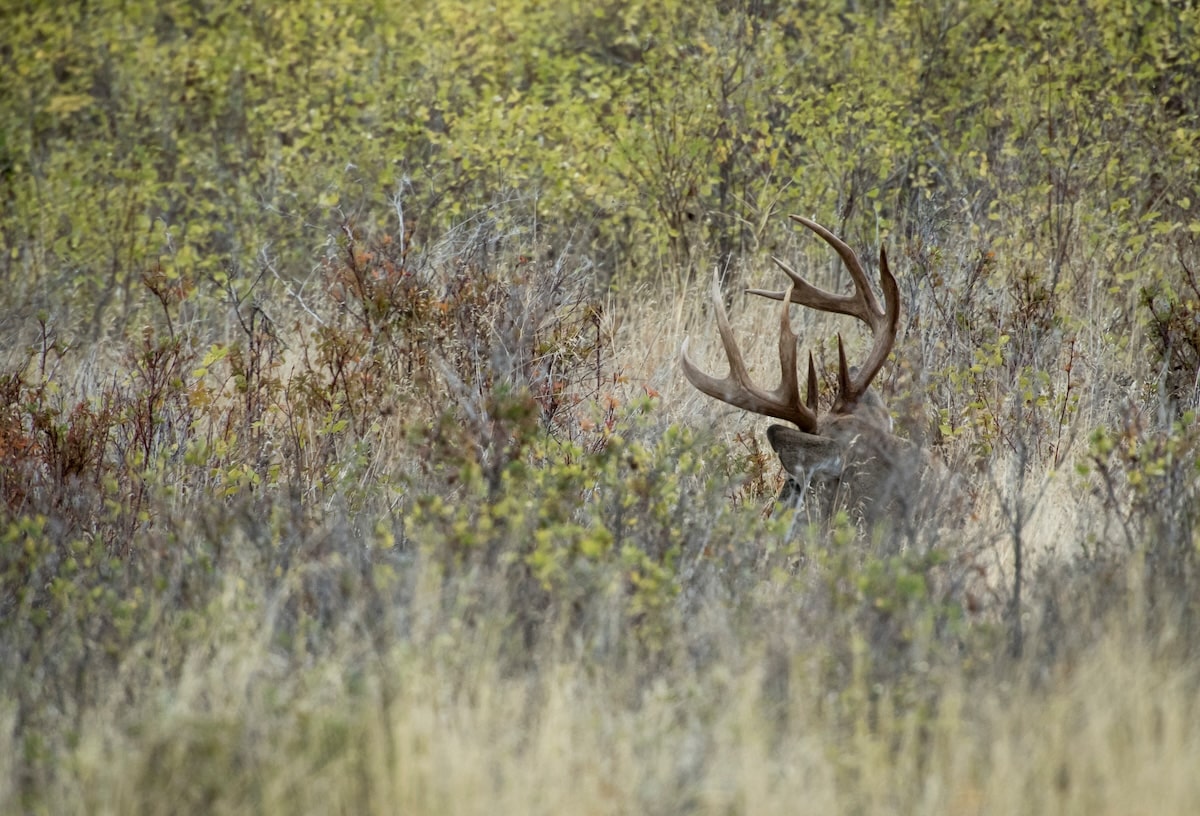
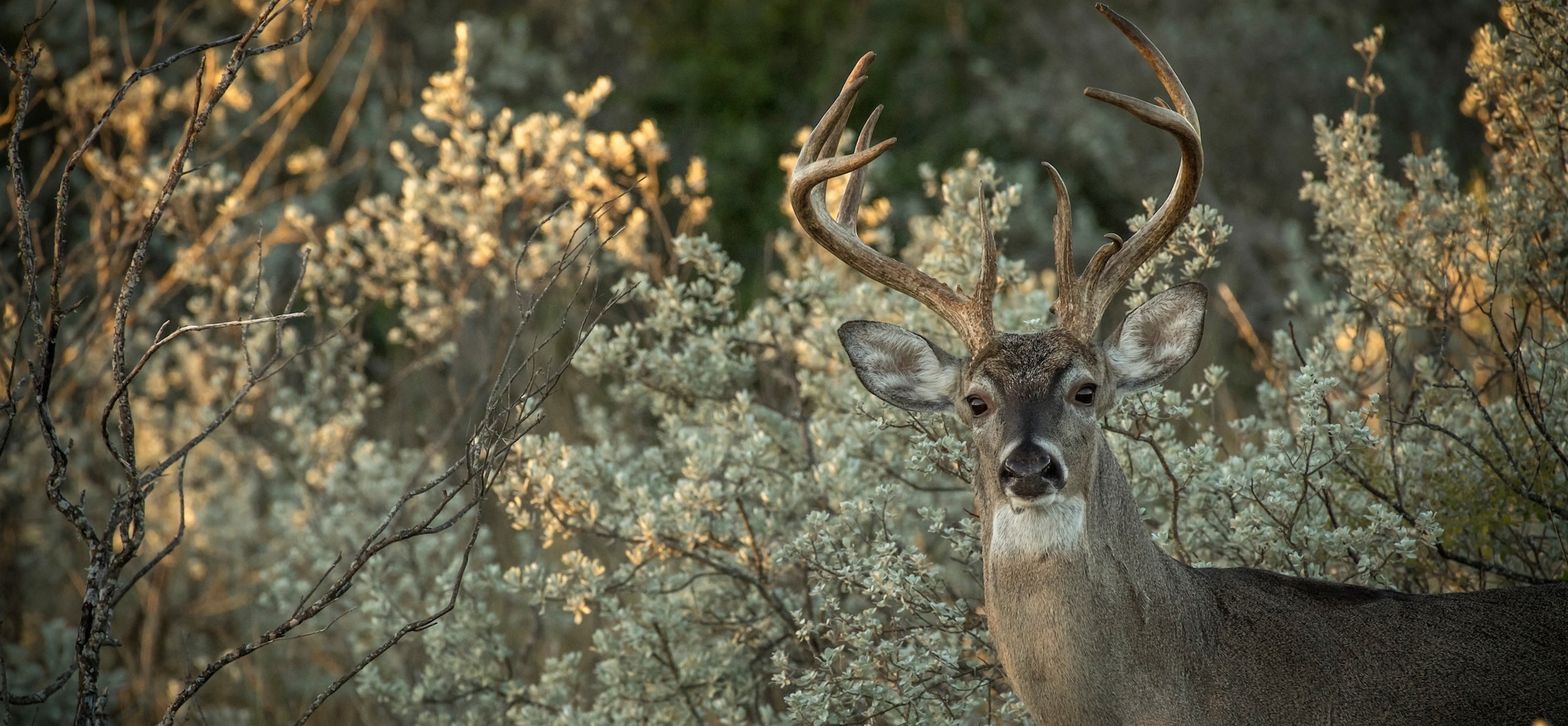
Deer bed, feed, and find sanctuary in edge cover.
Manipulating Edge Cover for Deer Hunting
While locating edge habitat is great, it’s also possible to manipulate edge cover for deer hunting. When managing a property, it’s important to offer diversity to deer. Through that, edge is created. Potential projects include:
- Conducting a select timber harvest in certain areas, but not others.
- Implementing controlled burns to reset the biological clock.
- Deploying the hack-and-squirt method to remove unwanted trees and create space for immediate sunlight to regenerate the forest floor with new, early successional plant life.
- Hinge-cutting trees to establish screening cover and create space for edge cover.
- Planting layers of bushes, shrubs, and small trees up against mature timber.
- Edge feathering with native grasses around the perimeters of ag fields and food plots.
- Establishing screening cover with tall-growing plants, such as Egyptian wheat (annual) or giant miscanthus (perennial).
- And more.
In addition to creating edge habitat, another way to stack the odds is to offer extras along edge habitat corridors. Consider establishing bait stations (when/where legal), food plots, mineral licks (when/where legal), mock scrapes, scrape trees, rubbing posts, watering holes, and more. Offer the extras, and deer are even more likely to traverse the area.
Want to Double Your Bowhunting Chances? Extend Your Effective Archery Range.
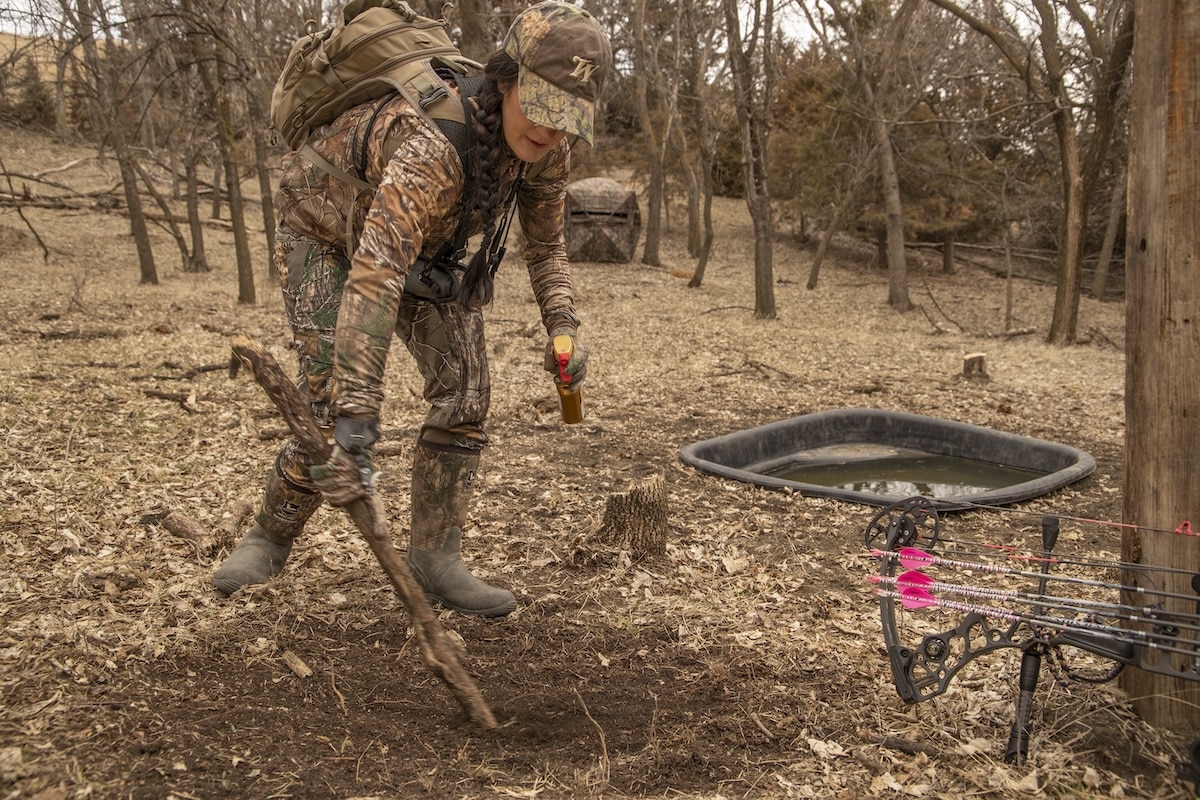
Add some extras, like a watering hole, and mock scrape, to make edge cover even better.
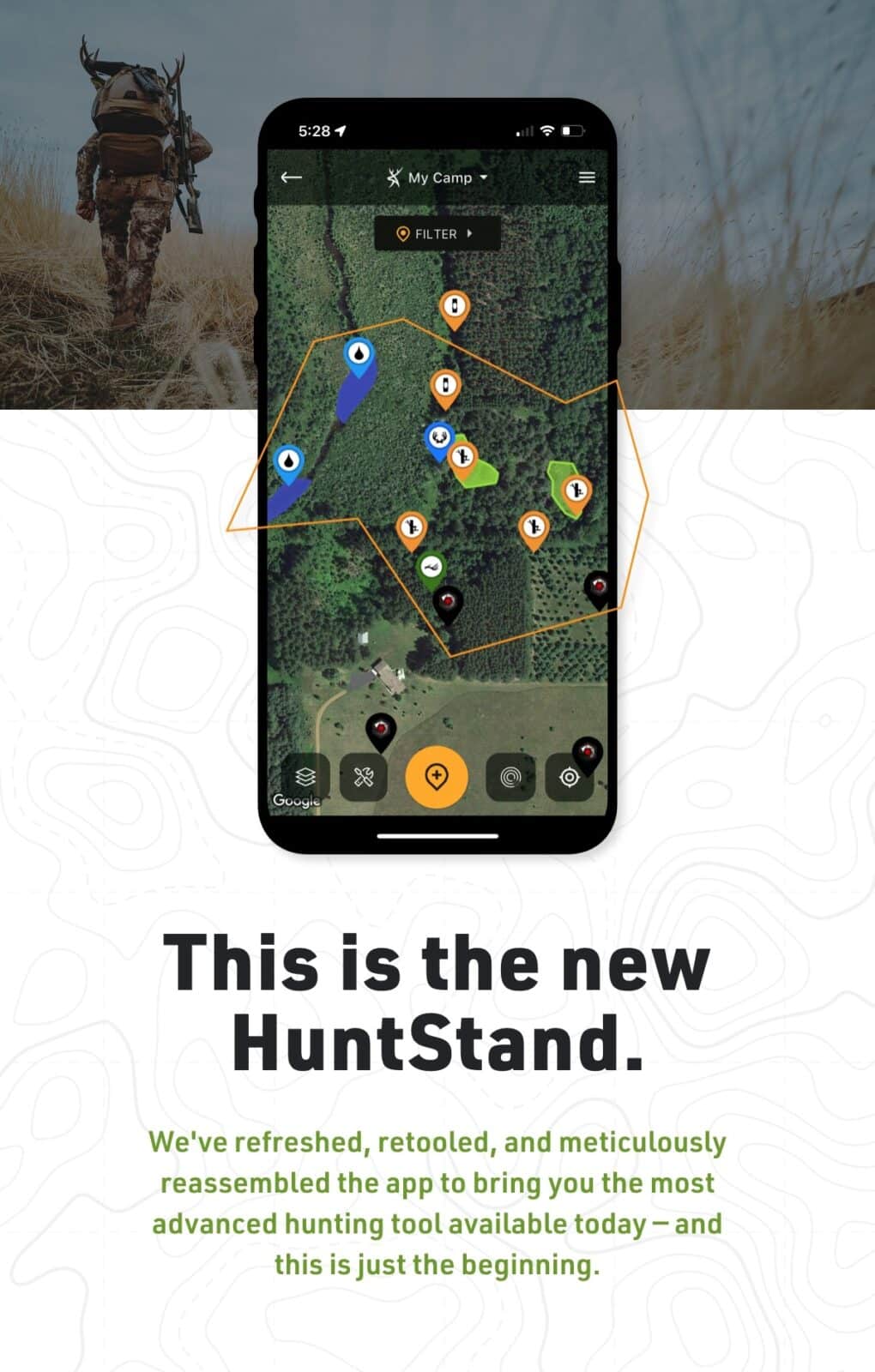
Using HuntStand to Find or Create Edge Habitat
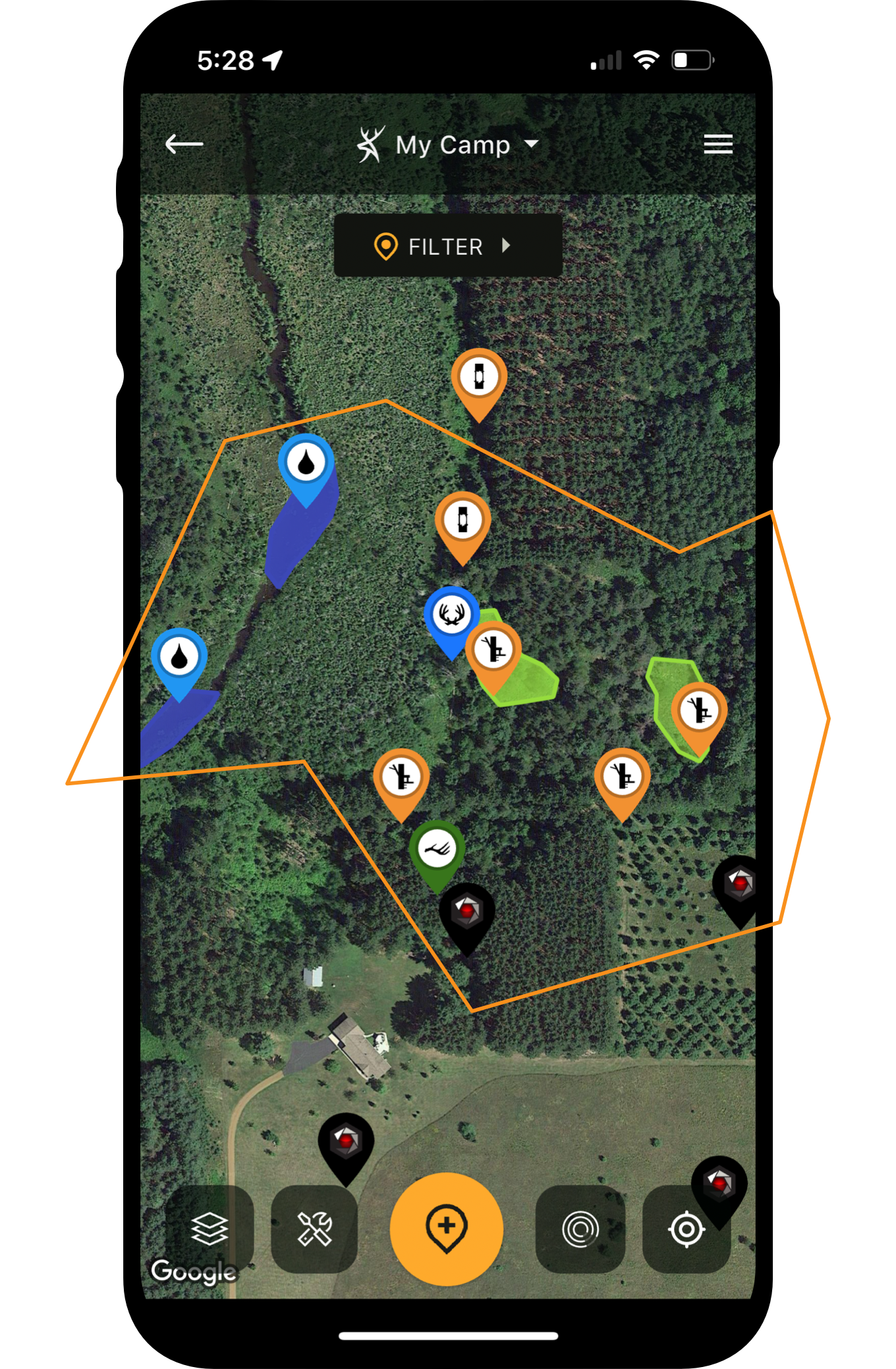
HuntStand Pro and HuntStand Ultimate offer incredible tools for those planning to scout their way into a good area with great edge cover. Naturally, certain app layers and tools are better suited for discovering edge habitat. That said, rules to remember include:
- Older growth (mature timber) tends to be darker green.
- Younger growth (secondary succession) tends to be lighter green.
- Early successional growth will appear more sparce from above, but is actually quite dense.
- Fencerows and obvious tree lines can create exceptional edge cover.
- Brushy areas overlooked or underutilized by farmers and landowners quickly turn feral and offer edge cover.
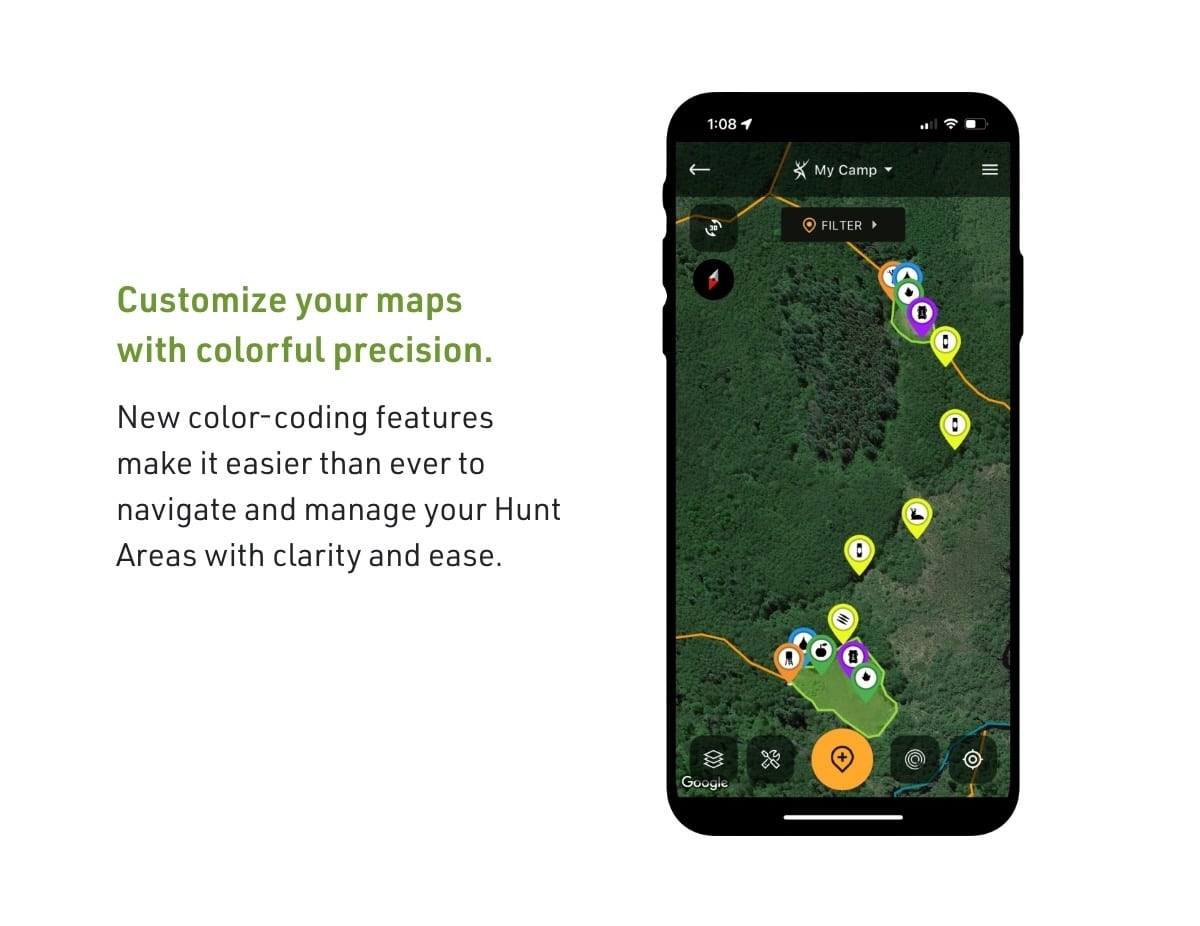
Area Tool: The Area Tool is ideal for measuring food plot size, which impacts seed, fertilizer, and lime purchases and application.
Crop History: An important capability includes gauging what the ag crops have been and likely will be. Deciphering this data helps find good areas, forecast crop rotations, predict deer movement, etc.
Mapbox Color-Corrected Satellite: This app layer provides some of the truest-to-life color and depicts the landscape well.
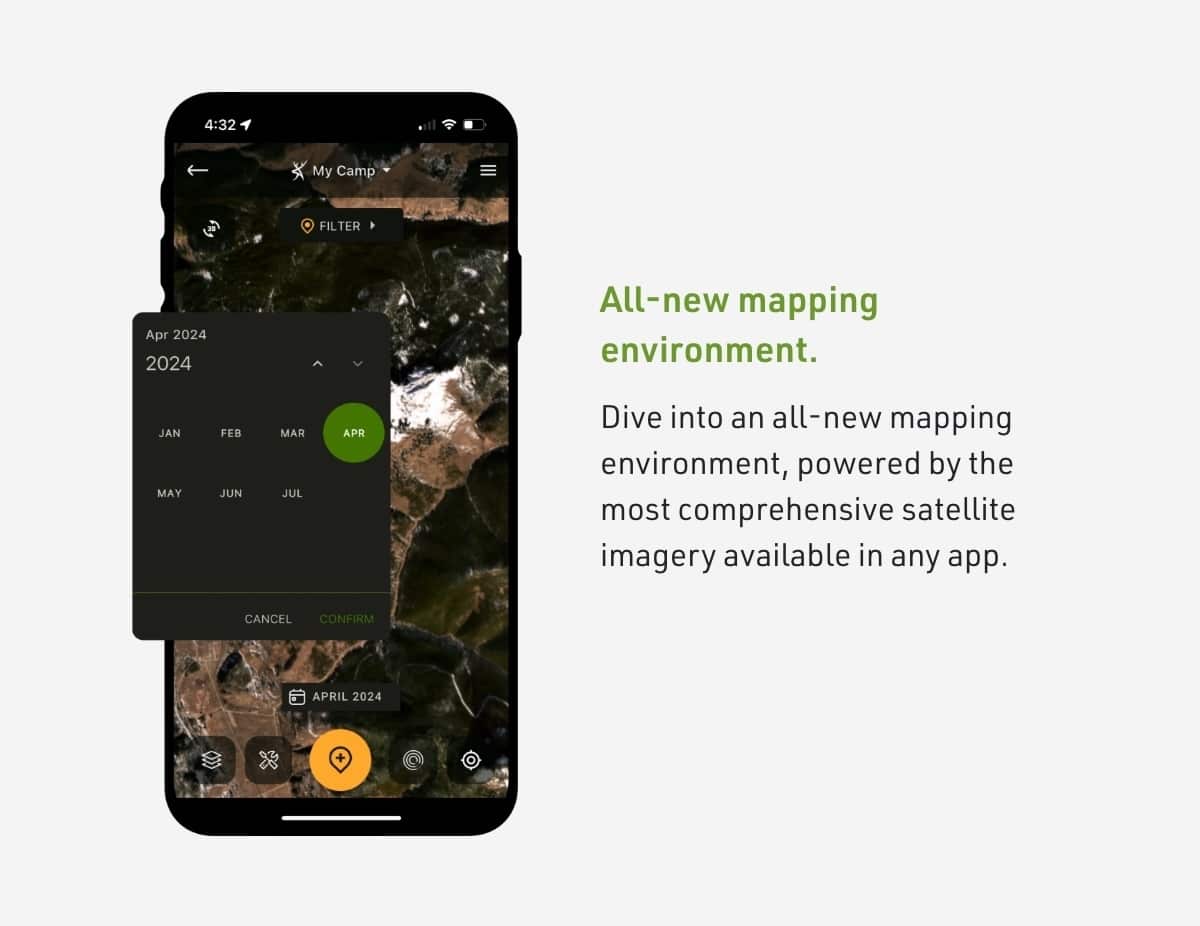
Monthly Satellite: Studying land changes in near-real-time is game-changing. The Monthly Satellite layer is perfect for detecting and studying agricultural activity, controlled burns, field plantings, timber harvests, and more.
National Aerial Imagery: The National Aerial Imagery comes with HuntStand Ultimate. It’s courtesy of high-resolution aerial imagery via the USDA Farm Services Agency. It’s updated frequently (every one to two years).
Satellite: The classic Satellite experience is one most are familiar with. It provides the typical aerial-based look.
TerraPulse Tree Cover: Seeing the best and worst areas is a fast way to drop pins and rule out other spots. It’s a higher-level operation, but once areas are chosen, it’s easier to home in on solid treestand and hunting blind locations.
Whitetail Habitat Map: With a HuntStand Ultimate subscription, use the Whitetail Habitat Map to pinpoint the best whitetail ground around. Observational data, advanced satellite production, artificial intelligence, and more, make finding potential edge cover much easier.
3D Map: The 3D Map service is the ideal tool for pinpointing both habitat- and terrain-based edge cover. It’s an all-in-one viewing of the land, and that makes the process much easier and faster.
Other app layers and tools are also beneficial for finding and managing edge cover. For finding topography-based edge features, consider using 3D Map, Contours, Natural Atlas, Terrain, Shaded Relief, USGS Terrain, Topographic Quad, and more.
18 Secrets to Building the Best Food Plots (And How HuntStand Helps)
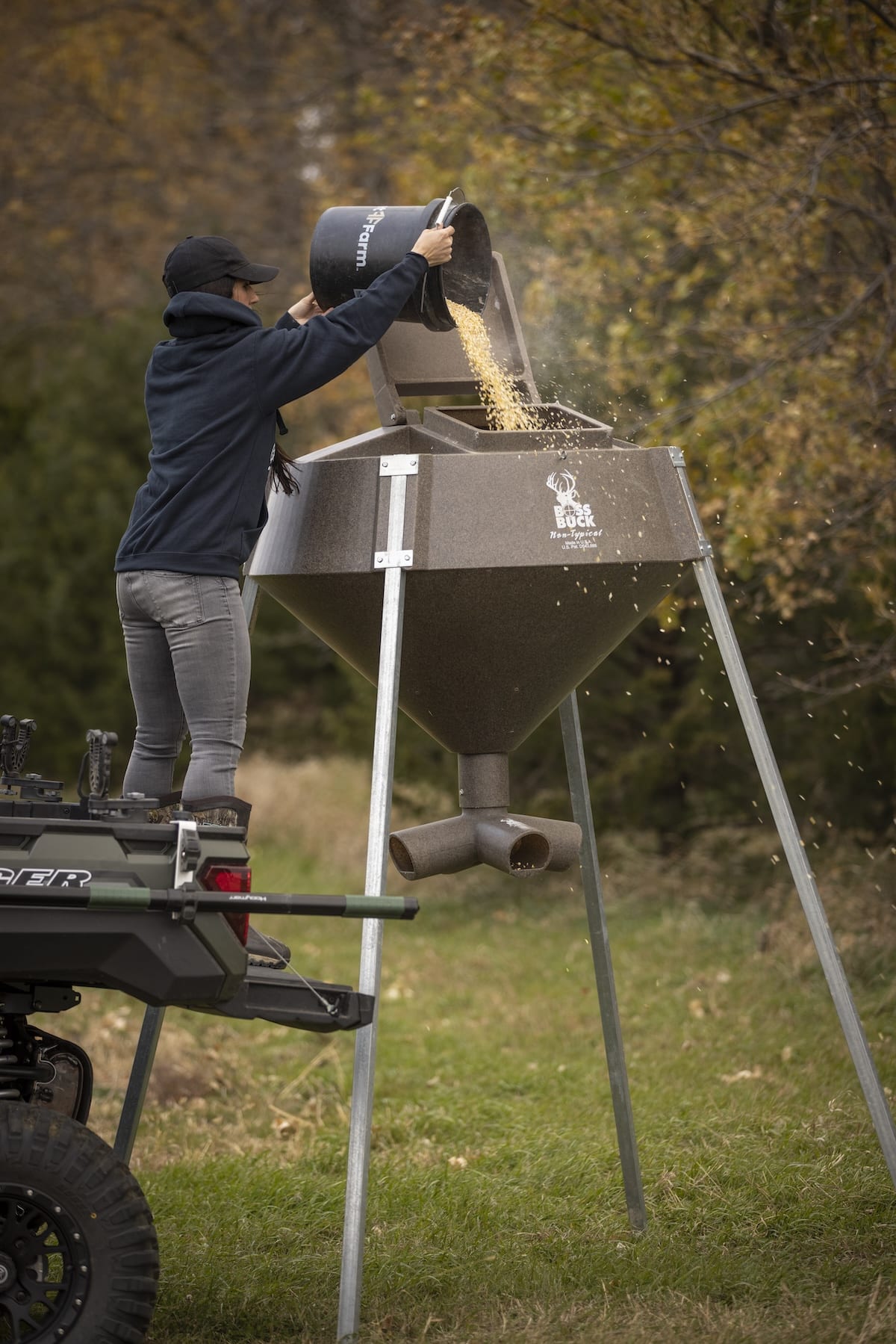
A well-placed feeder can provide great supplemental feed in areas where edge cover is abundant, or even limited.
Hunters who learn the ins and outs of edge habitat for deer should expect better deer hunting. Those who develop a skillset on hunting around edge cover, and even creating it, serve to benefit greatly. Keep that in mind this deer season, and beyond. After all, deer are edge animals.