




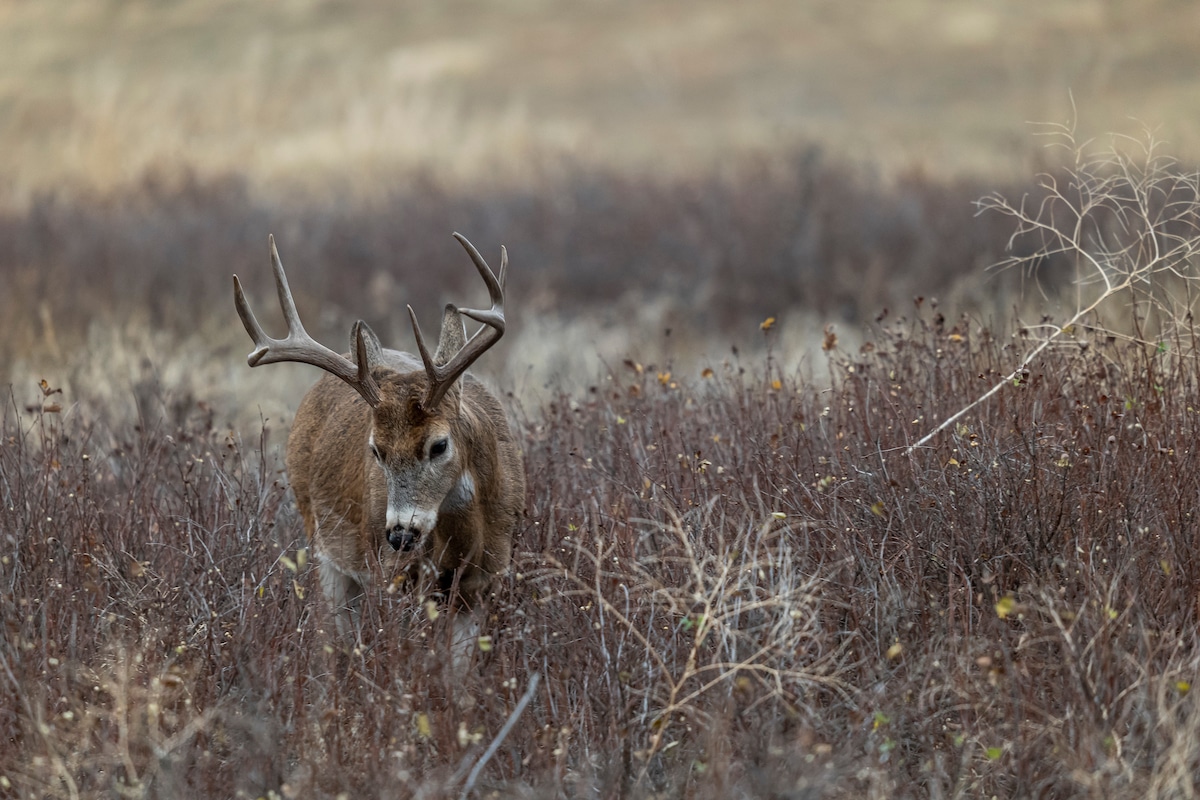

Understanding how mature bucks use the wind is a crucial element of arrowing these magnificent beasts.
Whitetails are creatures of habit, and so are hunters. Deer that practice poor habits, such as coming in to a hunter’s call without the wind in their favor, usually end up in freezers. Hunters who learn how to shoot bucks that circle downwind might fare just as well, though.
In contrast, calling from an improper setup usually ends up looking at the white flag of regret waving goodbye. You can do nothing as that buck of a lifetime saunters out of sight.
Personally, I’ve been calling bucks into bow range for the past 30 years, and I’ve perfected the art of calling to the point I don’t believe there’s a buck out there that I can’t get to come to my calls.
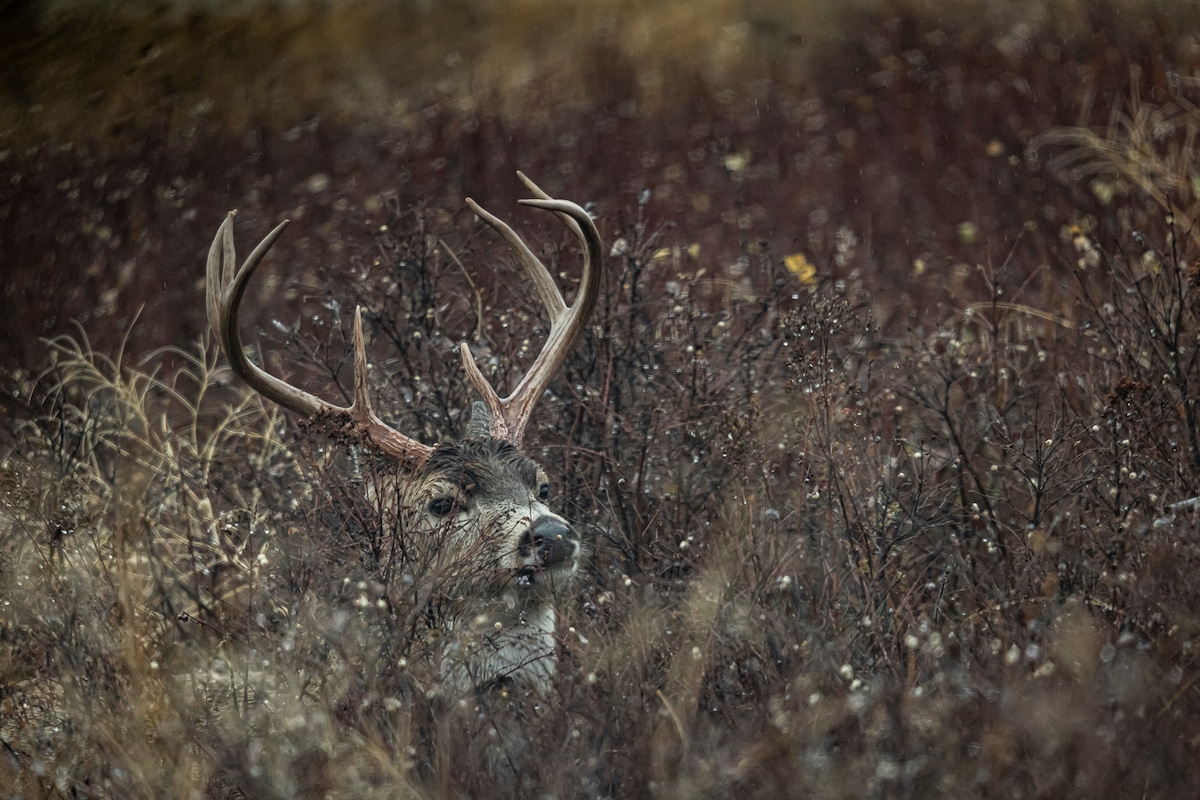
Mature bucks almost always circle downwind of the source of calling.
Understand the Setup
During the past three decades, all but one of the bucks I arrowed were called in. It’s a passion of mine, and through much trial and error (mostly error), I’ve learned the most important aspect of successfully calling bucks lies completely in your setup.
Modern-day grunt calls sound realistic enough to fool a buck’s ear. There’s a vast difference, though, from calling-in bucks and actually calling one to a position where you can harvest it with a bow. In fact, I’d argue it’s only 10% about making the right sounds … and 90% about setting up in a position that will enable you to get him in close, and then get a shot.
When choosing a place to set up and call from, you need to always conceal yourself using the terrain. By “concealing yourself,” I don’t mean hiding. Rather, I mean setting up in a place where the ground is higher in elevation, or obstructed by a hedgerow or brush from the main route of travel of the bucks you’re calling. This makes the buck want to move your way to get a look at the other buck in his turf.
Blood Trailing Deer with Confidence
Offer a Visual
If a buck can clearly see as far as you are calling from, then he can see there’s not a deer there. Bucks that live past their second season have likely been called at before, and are wary enough to be reluctant to move your way without a second sense of confirmation. If you set up on a bench above him, or beyond a brush-line, his curiosity will usually mount, and he’ll close in at least enough to get a visual.
The exception to this, and a great tactic to give visual confirmation, is use of a decoy. In this case, use a buck’s eyesight to fool him into charging in for a doe or to run off the less-dominant buck decoy.
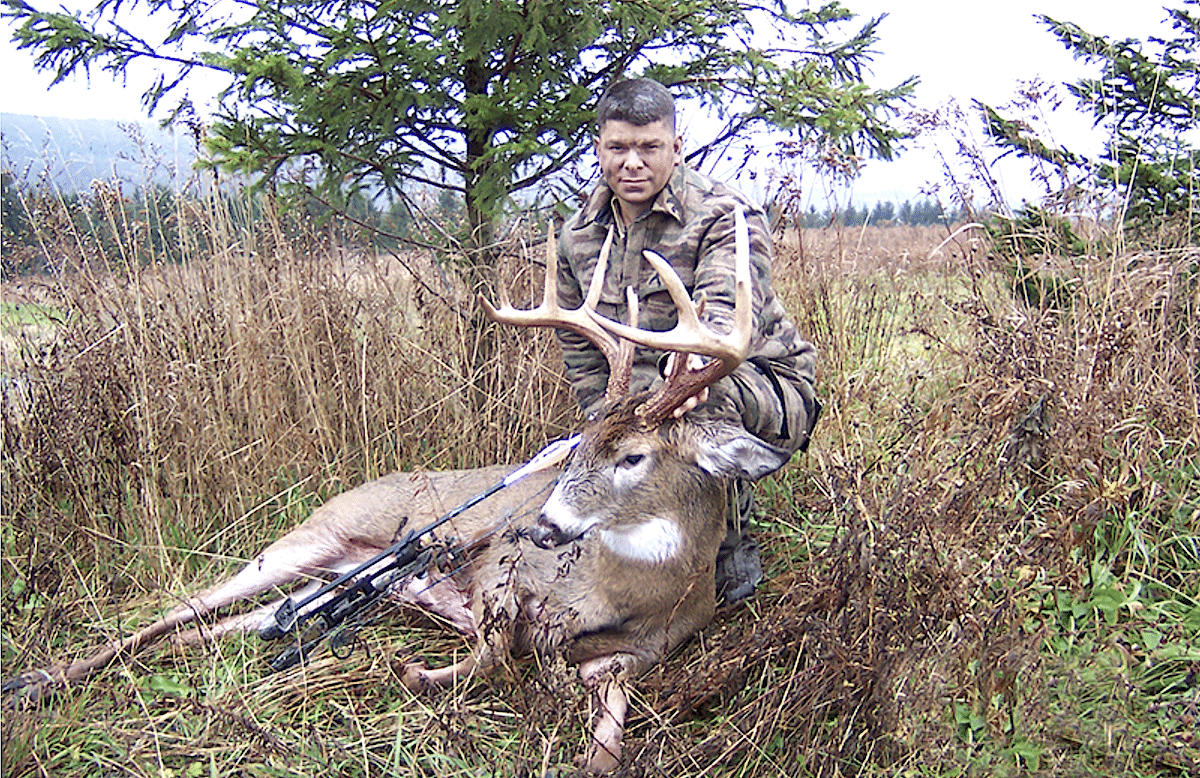
The author poses with a buck he called in.
Trick the Nose
Most deer, and especially older bucks, tend to trust their sense of smell far more than they do their ears. As a result, one habit that most — if not all — older, dominant bucks stay true to is one I call the “Death Curl.” They will always curl downwind of your location when coming to a call. They do this to get a nasal assurance of what they heard.
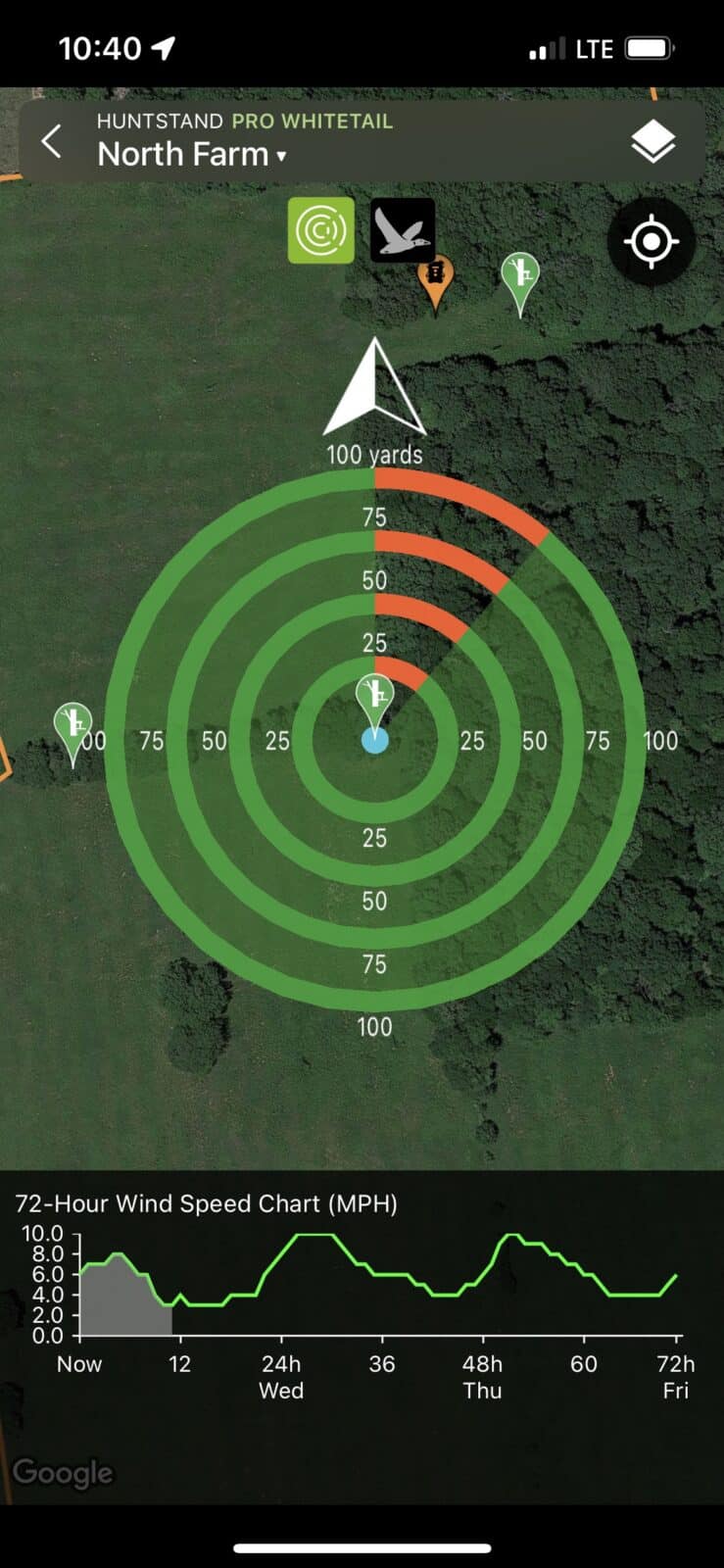
About 10 years ago, after getting foiled by a monster buck, I named this the Death Curl. I had called at him across a goldenrod field, and rather than pass directly in front of me in the open, upwind (where I planned to shoot), he cut behind me, downwind in the cover of a dense spruce stand. At 5 yards from my tree, he got my wind and busted out, never to be seen again. For every hunt thereafter, I’ve planned for that to happen. I’ve started to set up with my stand facing downwind, expecting that as the norm, and I make sure I have a clear shooting lane just before the buck hits the edge of my HuntZone.
When I call to a mature buck, I’m in position to shoot exactly in the place where most hunters would not be, and the results are astonishing. In the course of seven seasons, I’ve harvested five mature bucks, all of which have circled downwind at 25-30 yards, right into my planned shooting lane. It’s the bucks’ last move before I turn my arrow loose, and it works so well that I’ve named it the Death Curl.
Use HuntStand’s HuntZone
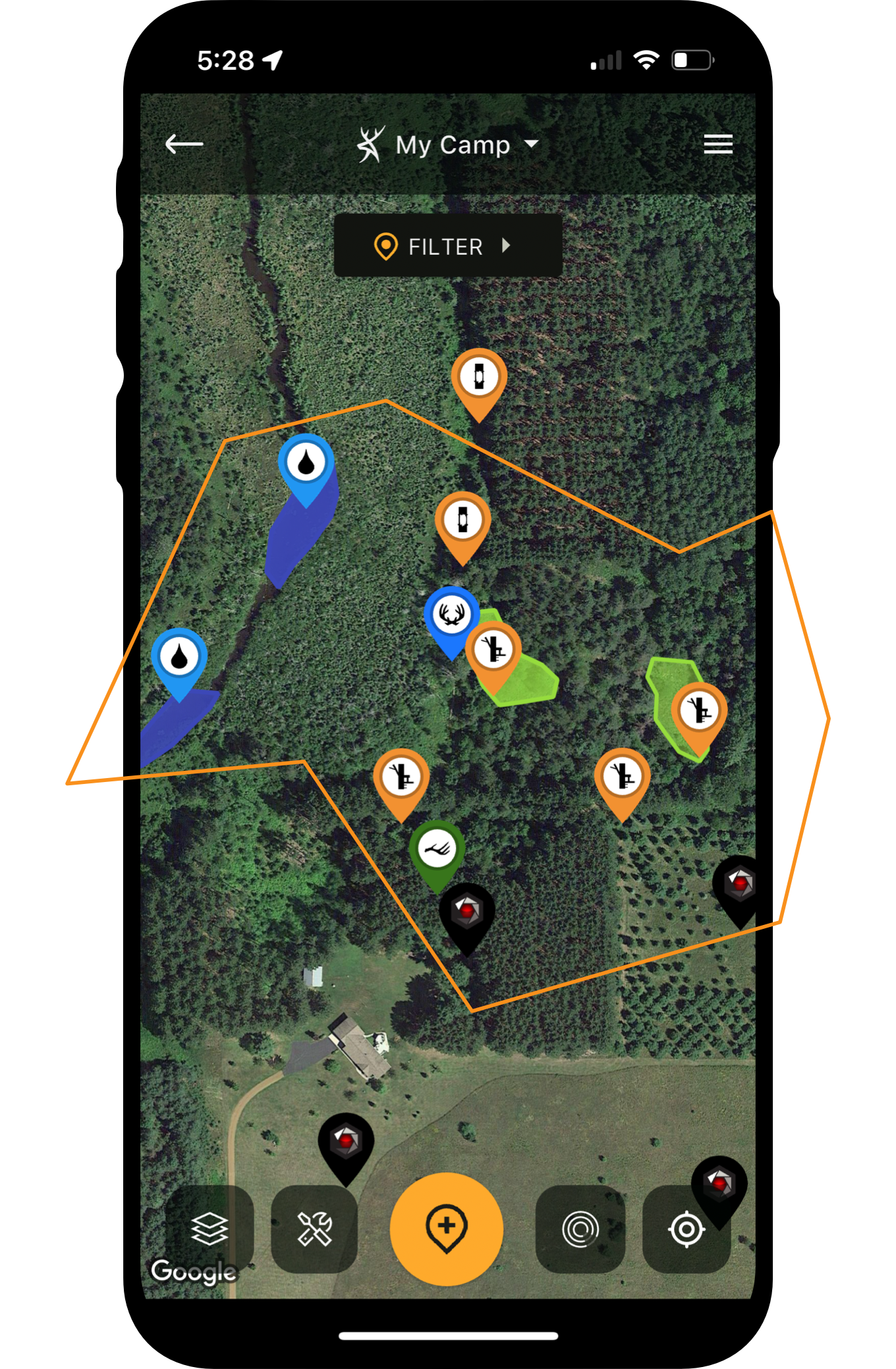
Fortunately for deer hunters, HuntStand’s HuntZone is the perfect tool to determine where your scent cone will project at each given hour. It offers a real-time, and up to 72-hour projection, which makes planning “Death Curl” hunts much simpler.
Overall, understanding bucks’ habits will always help you be in the right position. There’s nothing worse than becoming part of the statistical mass that returns to camp reporting to have “seen that bruiser buck,” yet never get a shot. Learn how to shoot bucks that circle downwind. Play the Death Curl every time you plan to call whitetails.
Choosing the Best Treestand Tree on the Property