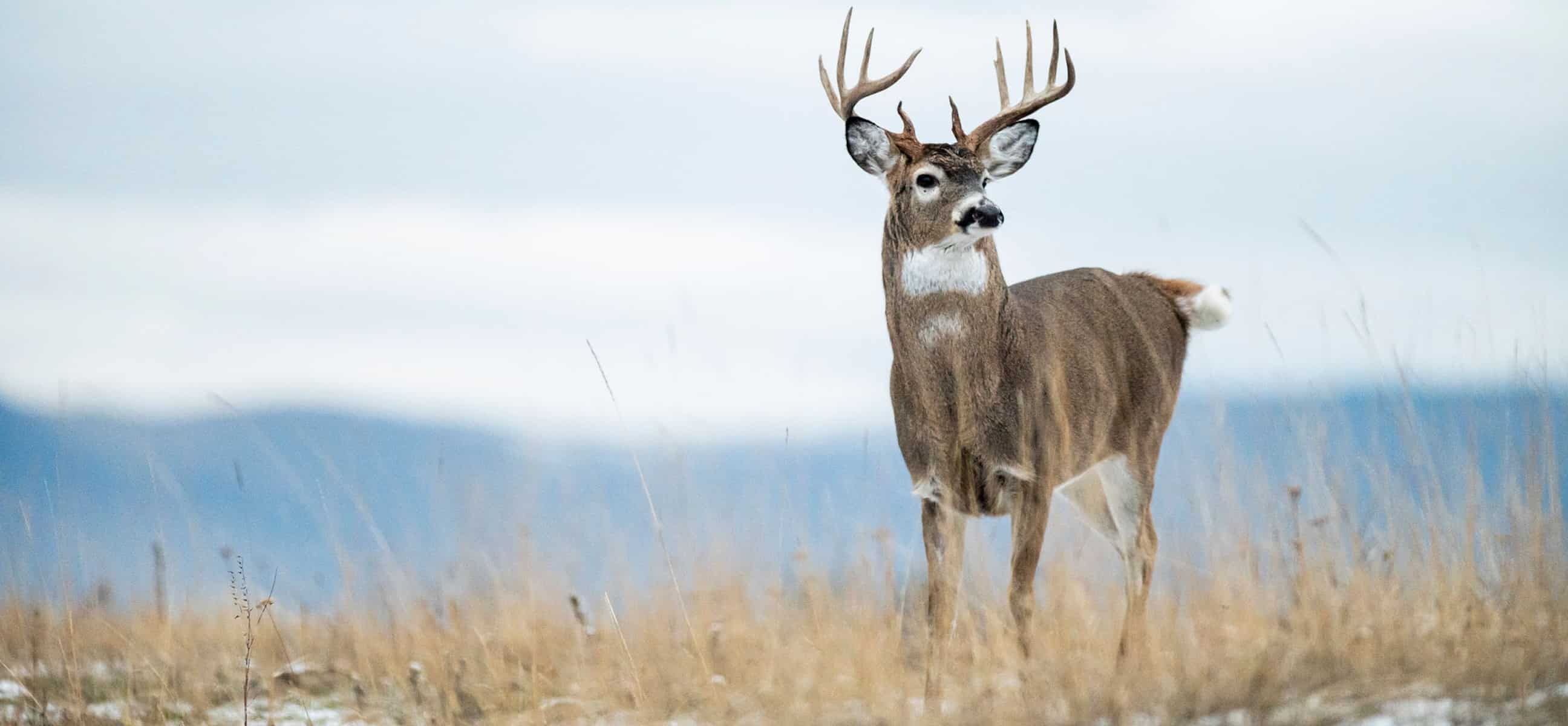







Use important scouting tactics to learn how deer use and maneuver the landscape.
The key to consistently harvesting mature whitetails is found in the details. It’s also found in consistency, determination, and an unwavering dedication to honing your craft. Even so, finding, patterning, and tagging big bucks is no easy feat. Here’s a five-step scouting plan to pattern mature bucks.
E-scout before heading into the field.
1. E-Scouting
The first step in patterning a mature buck is e-scouting. While e-scouting continues to be a common thread throughout each phase of scouting, and eventually, the hunt, a heavy dose of it on the front end, saves time and increases efficiency.
This effort revolves around locating a specific buck’s core area. Where might that deer be bedding, feeding, watering, and otherwise traveling? What circumstances does that deer prefer when it uses certain bedding areas and travel routes? Where can you effectively set up to intercept this deer without it picking you off?
The big advantage of e-scouting is simultaneously crossing off obvious spots to avoid and pinpointing potential areas of interest. This saves time, because you aren’t spending as much of it with boots on the ground. Additionally, it reduces pressure, as you’re not applying as much human intrusion to the property.
Using HuntStand, deploy important base layers to study your hunting grounds. The Hybrid, National Aerial Imagery, Satellite, Mapbox Satellite, and 3D Map are great for studying habitat. The Monthly Satellite is ideal for analyzing month-over-month changes on the landscape. Use Natural Atlas, Quad Topo, Outdoor, Terrain, and 3D Map to gauge topography. Of course, use the Contour overlay, 3D Map, and other tools, to view habitat and topography at the same time.
While e-scouting doesn’t drill down on the fine details of every pattern, it does provide an excellent starting point once the field work begins.
How to Chart a Buck’s Home Range and Core Area with HuntStand Markers

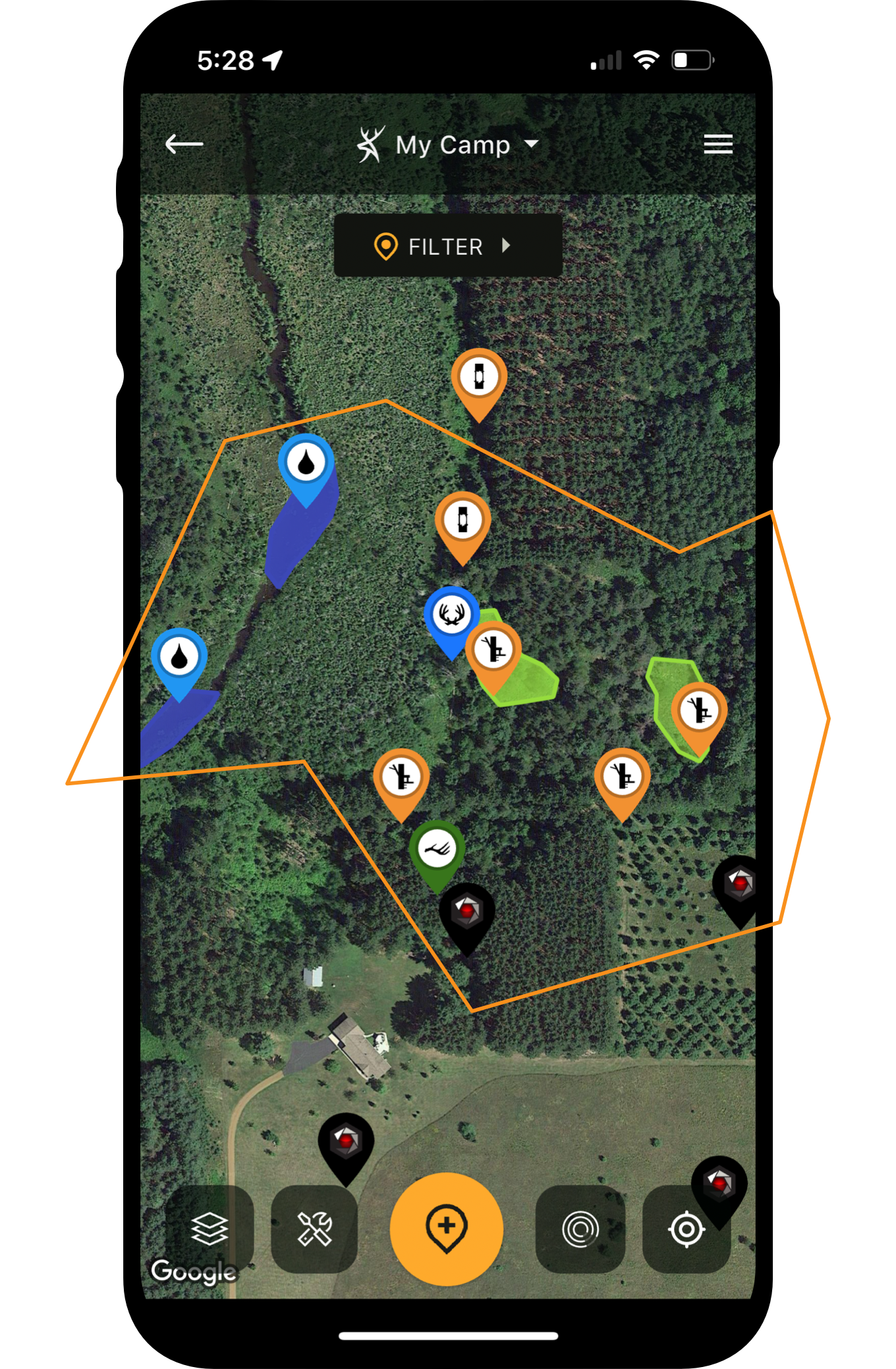
Drop HuntStand markers for each important scouting discovery.
2. Boots-on-the-Ground Scouting
With a good e-scouting plan complete, it’s time to put boots on the ground. It’s best to put one hard day of walking the property, learning it well, even with the applied pressure, than not knowing the property and hunting it ineffectively all season.
Spend time walking the areas that prove most interesting from aerial and topo maps. Start with the best-looking spots and work down the list from there. Study the intricacies of each potential stand location. Drill down on what stand locations work in relation to wind directions, and which ones don’t.
While walking, drop pins in HuntStand. Leave markers for important discoveries, including bedding areas, food sources, water sources, rubs, scrapes, tracks, trails, trail crossings, and much more. Type out relevant scouting notes that come to mind. This can help remember important things that might be forgotten later on.
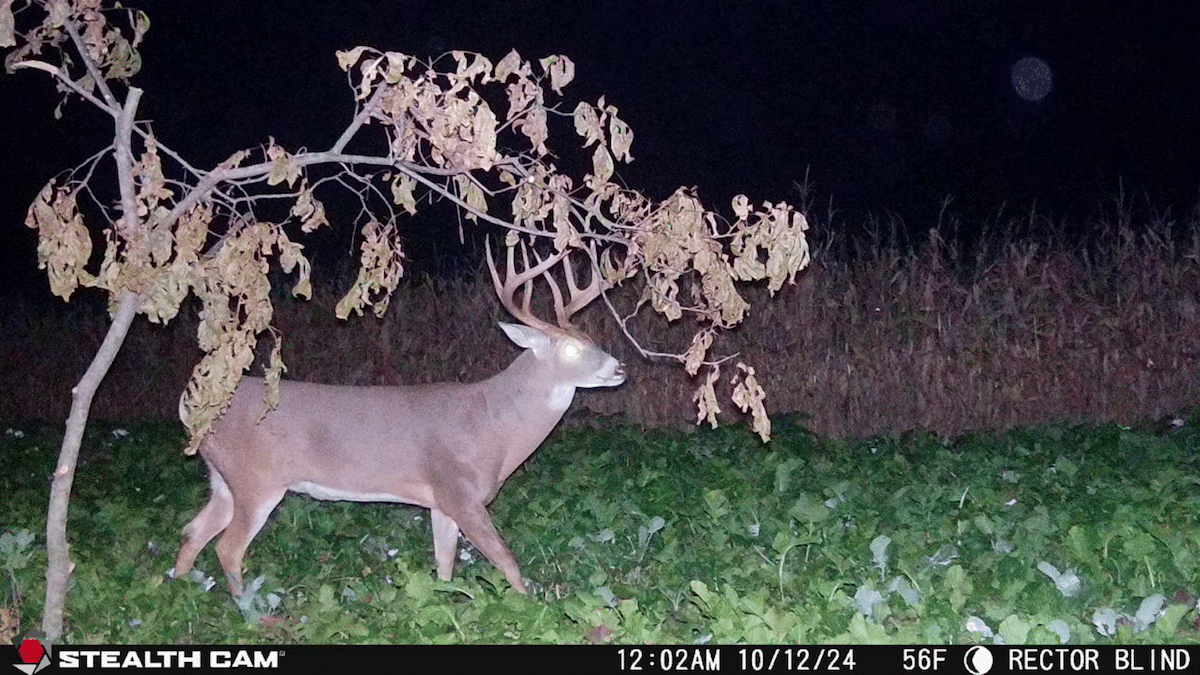
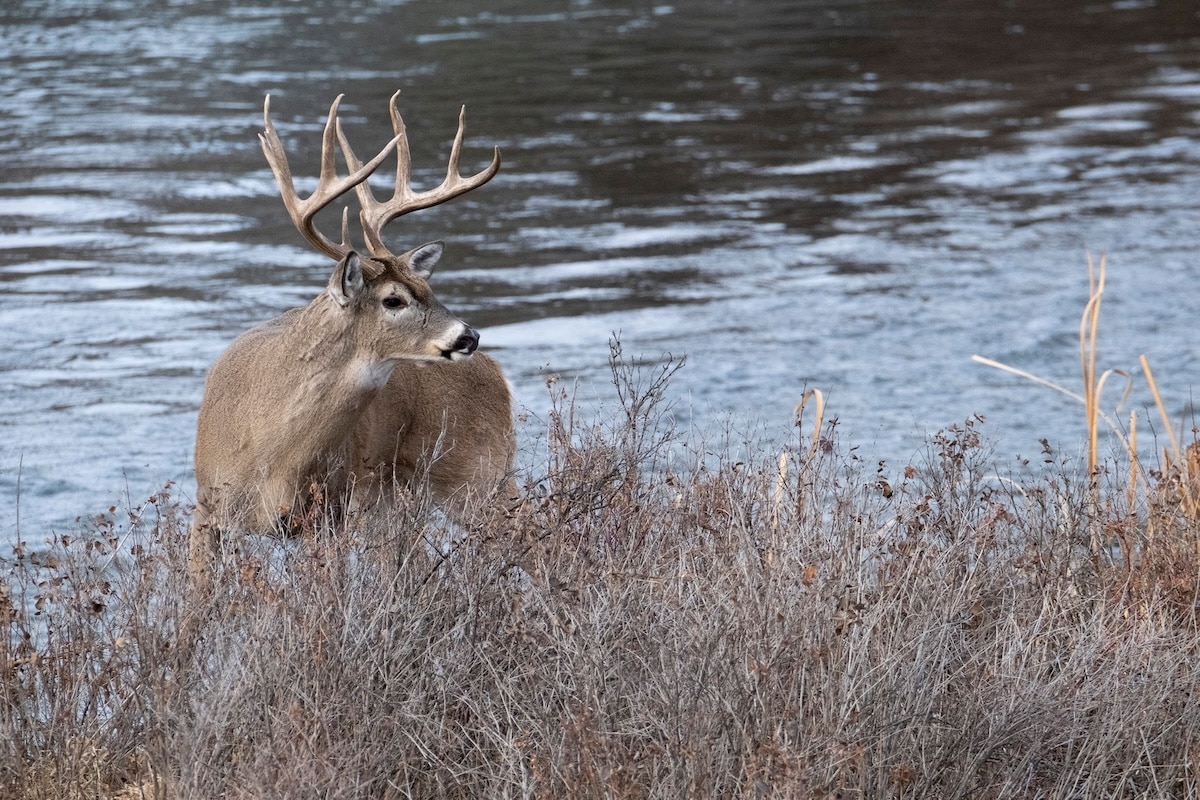
Analyze trail camera photos of each target buck.
3. Deploying and Monitoring Cell Cameras
Deploy cell cameras while walking the property, or directly after doing so. Some prefer to see everything and then post available cams in the best-looking spots. Others decide to post cams as they go, but risk running out of cams before locating all the most promising areas.
Personally, on public land, where driving isn’t allowed, I usually post cams as I go. This saves a lot of time and energy and limits the need to backtrack.
On private land, where I’m able to access with an ATV, UTV, or truck, I prefer to post cams after walking the entire property. This allows me to consider the entire area, choose the best spots, and deploy cameras in the most efficient manner.
Of course, once photos begin rolling in, monitor cams as needed. Using the Command Pro app, analyze the Muddy and Stealth Cam images. Study potential patterns reflected in the compilation of trail camera photos and videos.
Additionally, reflect on trail camera photos from past seasons. If hunting a return buck, study what it did in prior years. If property circumstances are the same (same crop rotations, similar mast crops, no large-scale habitat changes, etc.), you might see deer do things similarly. Bedding areas, food sources, travel routes, and general property usage might mirror that of the past. Expect at least some patterns to be repeated.
Deer Hunting Problems and HuntStand Solutions
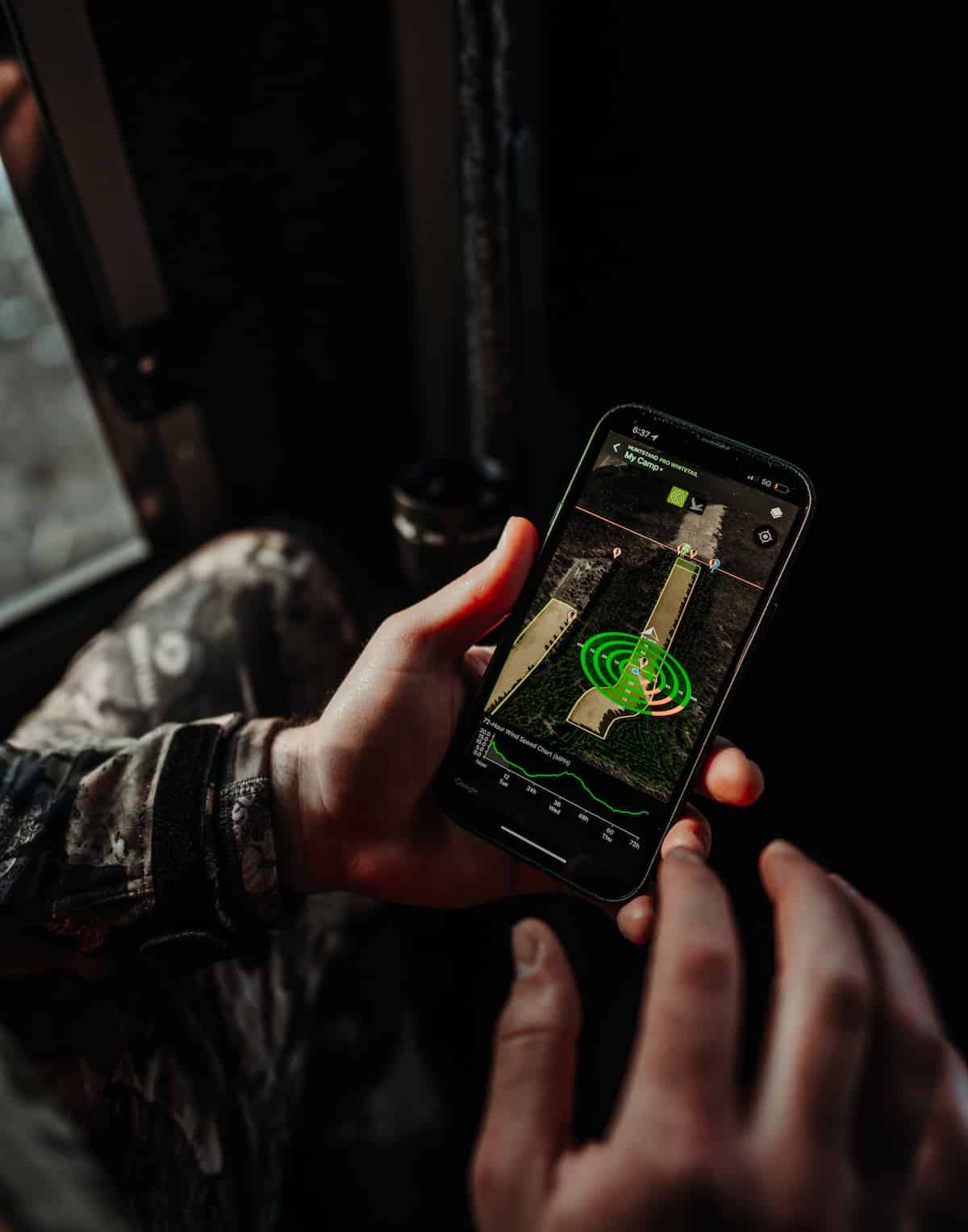
Keep the wind in mind, even when glassing from afar and hunting observation stands.
4. Glassing Deer from Afar
Support your boots-on-the-ground and trail camera scouting by glassing deer from afar. Choose good vantage points and use quality optics to study deer movements at a distance. Ag fields, large food plots, and open oak flats can be areas to deploy this tactic.
Oftentimes, glassing from afar is especially useful if cameras are missing deer or your specific target buck. Casting a wide net with glassing can reveal if your cams are missing deer by a few yards, or by a few hundred yards. Then, you can readjust camera and treestand locations as needed.
When glassing deer, be sure you aren’t alerting deer from your vantage points. Neither should entry and exit routes to and from these locations. Obviously, keep wind directions in mind.
Keep drilling down on your target buck's core area.
5. Fine-Tuning with Observational Sits and Hunts
Finish the scouting plan by fine-tuning it with observational sits. Still don’t have your target buck pinned down? Once the season opens, hunt stand locations that are close to the action, but that are more attuned to visualizing the area movement than actually hunting. This tactic closely resembles glassing from afar, but you’re positioned close enough for potential shot opportunities, too. Ultimately, it’s the in-season version of glassing at a distance.
All things considered, patterning mature bucks is no cakewalk. But with the right series of steps, it can be slightly easier. Then, all that’s left is making the shot.
Pre-Season Deer Hunting Tasks for Summer
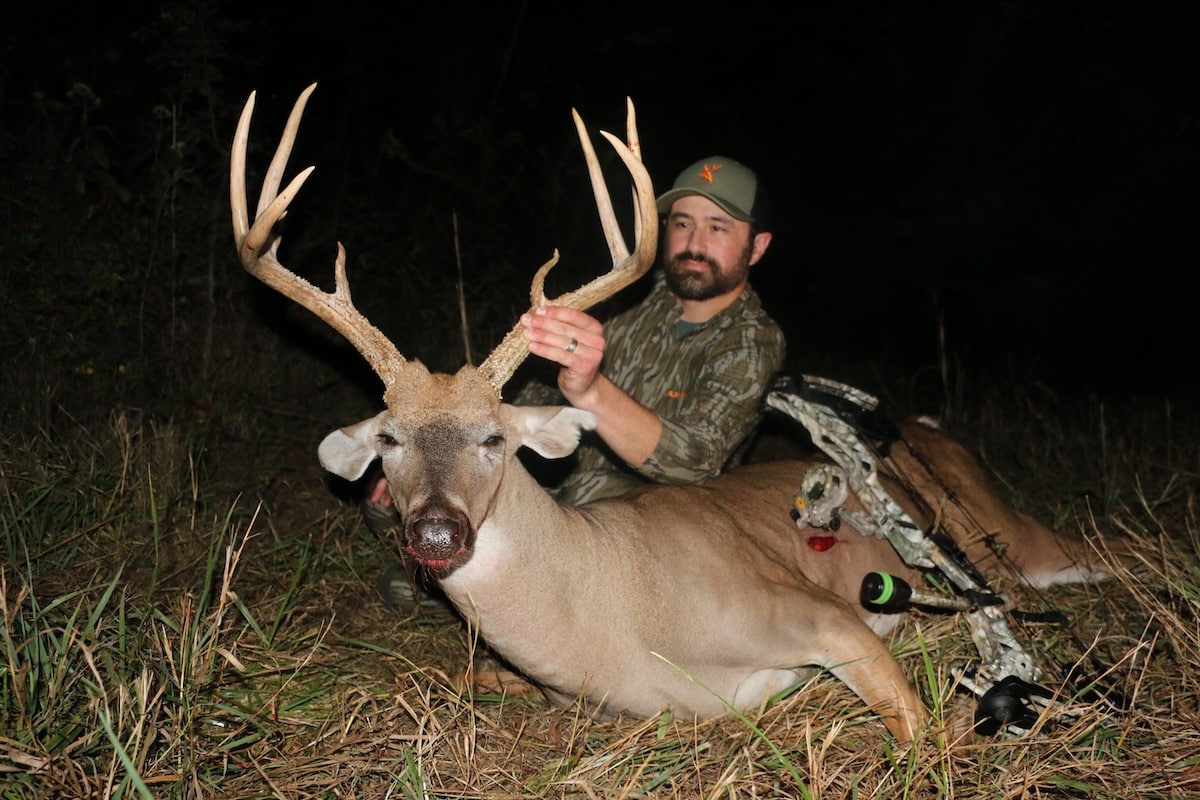
With enough effort, you'll be sitting behind a big whitetail this fall.
Level Up with HuntStand Pro Whitetail
While some of the aforementioned tools are available with HuntStand Pro, HuntStand Pro Whitetail provides the ultimate suite of digital scouting assets. Level up your scouting and patterning abilities by securing a HuntStand Pro Whitetail subscription.
UPGRADE TO HUNTSTAND PRO WHITETAIL