



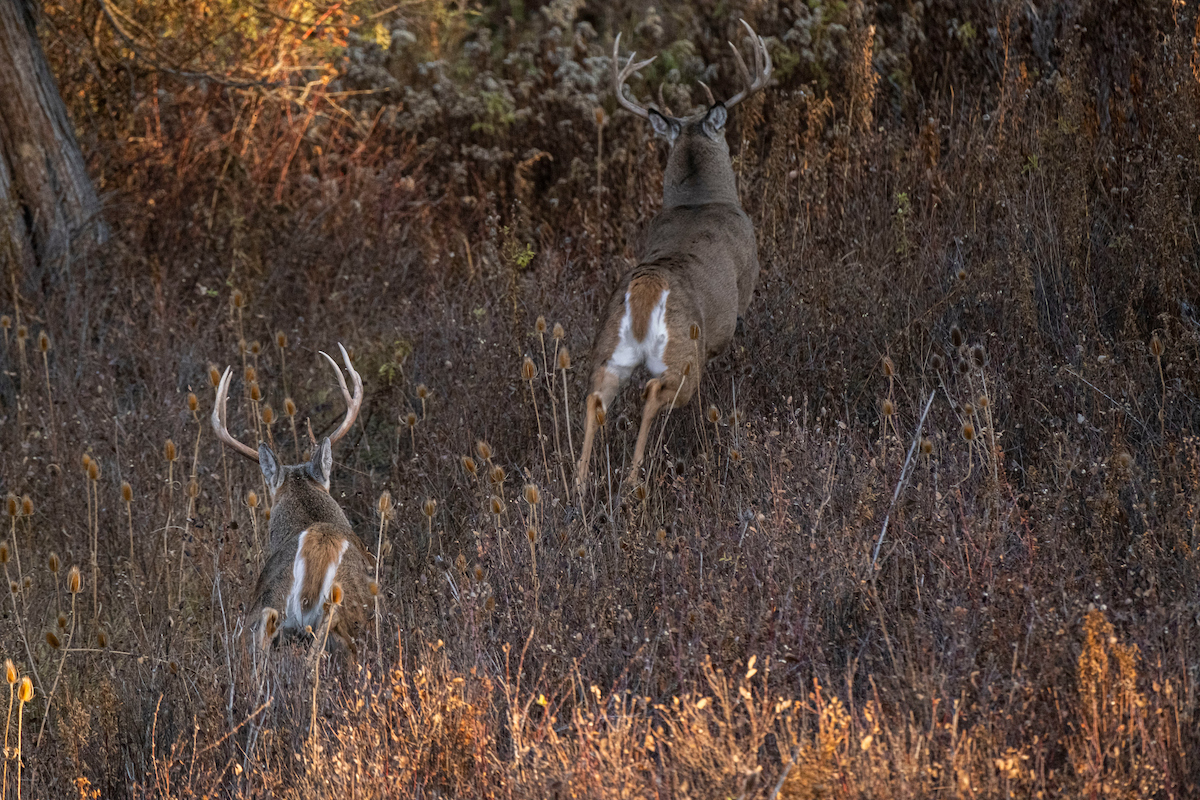

Sometimes, bucks go missing, and it's difficult to relocate them. But it isn't impossible.
Today’s hunters can go afield armed with photographic evidence of nearly every buck in their hunting area. Of course, I’m referring to the use of trail cameras—perhaps the greatest deer hunting and management tool ever created. However, they also can lead to significant frustration. Each year, hunters photograph mature bucks during summer or early fall only for these bucks to disappear during the hunting season. Even more frustrating, many magically reappear after the hunting season. Did these bucks leave the property or simply avoid being photographed? Thanks to several recent studies, we are starting to gain answers to these and other important questions. Here is how to find missing late-season bucks.

Spend ample time scouting, and you just might relocate that target buck.
Home Range and Core Area Use
Research by Dr. Dave Hewitt and others at Texas A&M-Kingsville revealed significant variation in home range size and activity patterns among bucks. Surprisingly, they did not find a strong correlation between a buck’s age and the size of its home range. In other words, some bucks are “homebodies,” and some are “wanderers,” regardless of age. Their research, and that of several others, suggests a buck’s home range in the eastern United States is generally between 600 and 2,500 acres, though considerable variation exists.
Multiple studies have revealed that many bucks make seasonal shifts within their annual home ranges, likely in response to food availability and breeding opportunities. These shifts commonly occur in early autumn just before the rut, and again in late winter after the breeding season. Thus, bucks may occupy very different areas, often separated by a mile or more, at different times of the year. This means that many bucks you photograph during late summer or early fall will not be on your property during hunting season or, at best, pass through only occasionally. This is especially true on small properties. However, keep in mind that bucks on surrounding properties are doing likewise, meaning that many “new” bucks often will magically appear during the hunting season.
8 Advanced Scrape Hunting Tips to Know
Thankfully, some of the bucks you regularly photograph will establish all (or a portion) of their home ranges on your hunting property. However, this alone does not mean you have a great chance of killing one of them. The key is determining a buck’s core area, or where he spends at least 50% of his time. Unlike home range which can be several hundred to a few thousand acres, a buck’s core area can be less than 100 acres. So, if you can determine his core area, you can narrow your search pattern by nearly 90%.
This is best accomplished with the use of trail cameras. Pay close attention to the times and locations of your photographs and the direction from which the buck typically approaches. Obviously, daylight pictures, or those just before sunrise or sunset, are more useful than those in the middle of the night. Keep moving your camera locations until you have maximized both the frequency of photographs and the number taken during daylight hours (or as close as possible).
However, just because you took dozens of daylight photos of a buck in August doesn’t mean that’s where he will be during December. Remember, within their home ranges, bucks often shift core areas seasonally. Therefore, to harvest a particular buck you will likely need to shift your scouting and hunting areas during the hunting season.
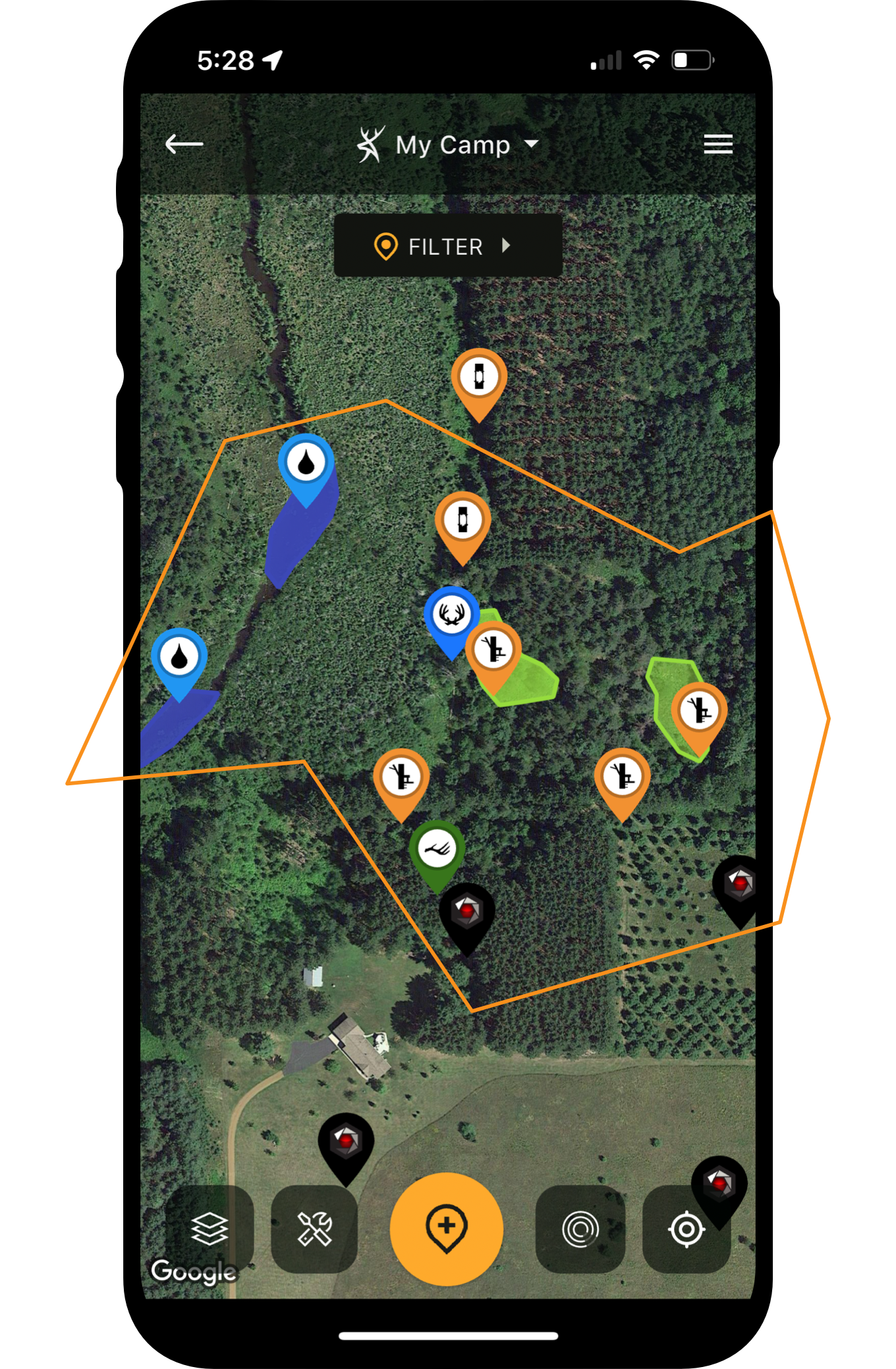
Of course, the HuntStand and Command Pro integration makes organizing trail camera location and studying trail camera photos much easier. With the use of artificial intelligence, it also studies applied photo tags, weather conditions, dates, and time of day. It shows you the geographical location of where the photos were taken, which amplifies your ability to pattern that target buck or understand how the deer herd is maneuvering the property.

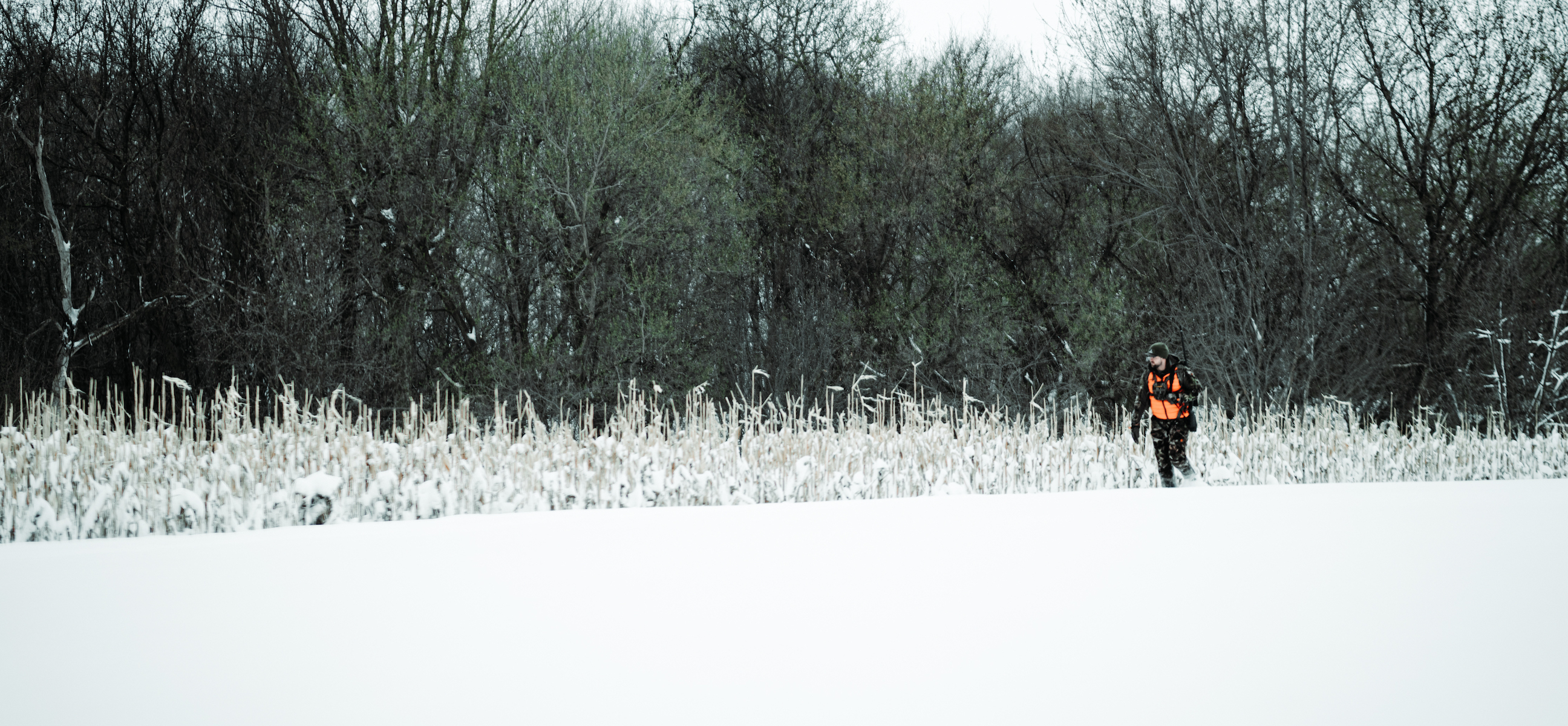
As the late season sets in, it's tempting to give up, but only quitters do that.
Specialized Avoidance Behaviors
A whitetail’s behavior also is highly adapted to avoiding predators—including deer hunters. Research by Dr. Mickey Hellickson in South Texas revealed some interesting behaviors exhibited by mature bucks. Over three years, Dr. Hellickson collected 470,000 one-minute locations of 43 bucks outfitted with motion sensors that revealed if the bucks were active (feeding, walking, etc.) or inactive (bedded, standing, etc.). Surprisingly, over a 12-month period, bucks were active only 43% of the time. In other words, nearly 60% of the time, bucks were not moving. During the hunting season, there were two primary activity periods—7 to 9 a.m. and 6 to 10 p.m. This reinforces why whitetails are considered “crepuscular,” or most active at dawn and dusk.
10 Steps to a Successful Deer Drive
Whitetails also are highly in-tune with their environment and sensitive to human intrusion. Research by James Tomberlin and others in Maryland suggests that some bucks can “pattern” permanent hunting stands. Using GPS radio-collars, they monitored movements of numerous adult bucks throughout the hunting season, many of which actively avoided permanent stand locations during daylight hours.
Despite numerous studies of wild bucks, there is no clear evidence yet that bucks become more nocturnal with age. Certainly, bucks of all ages may reduce daytime movements in response to increased human activity. Equally surprising, studies to date have not supported the claim that bucks are more active at night during a full moon or more active in daylight during a new (dark) moon.

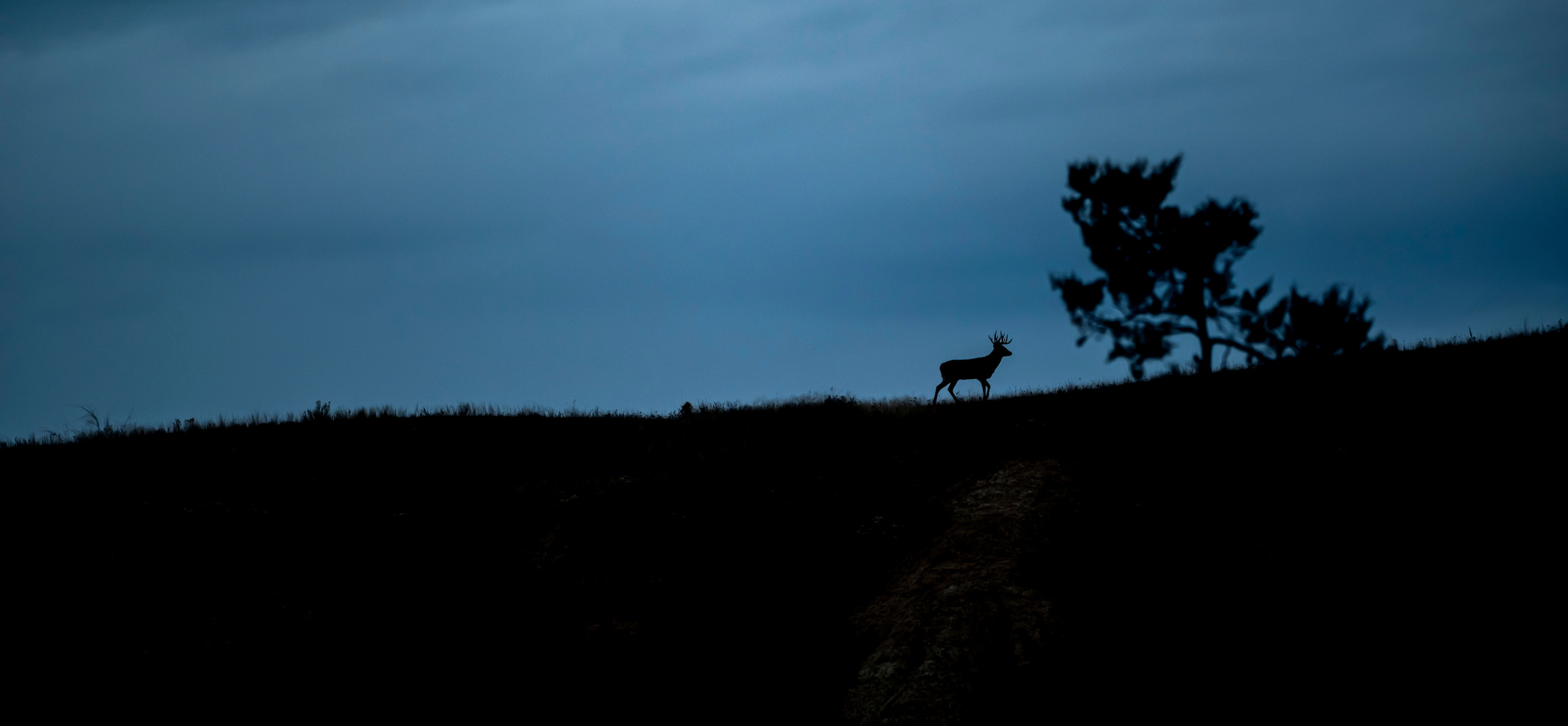
Yeah, that buck you had on camera in summer might not be where it once was. Determine where it went.
Grouping Your Bucks
Given all the “mixing and moving” of bucks across the landscape, how can a hunter determine which bucks are annual residents, versus those that are only there during the summer or the breeding season? The best way is to run your trail cameras year-round or at least from mid-summer through late winter. This will allow you to “capture” nearly every buck using your property during some portion of the year.
The next step is to identify individual bucks and assign them to two broad seasonal groupings—July to late September and October to February. These groupings are based on a traditional November rut, so it could vary in areas with later ruts. Placing bucks in these groups will help determine which are using your property during their “summer” home range, and those using it during their “breeding” or fall home range. Certainly, there will be some resident bucks that are photographed throughout the year. So, in essence, you are hunting two fairly distinct groups of bucks, with a third, overlapping group.
21 Tips for Still-Hunting Deer
Without question, bucks using your property only during summer and early fall are the most difficult to harvest because your window of opportunity is so brief. You better arrow them in the first couple of weeks of the archery season—or kiss them goodbye until the following year. However, if you photograph a buck of interest throughout the year, or consistently during the breeding season, a different strategy is in order. These bucks are likely to remain in the area during the rut, so a well-designed plan of attack is warranted. Pay close attention to the locations where the buck was most commonly photographed, as these can provide clues to his core area. Placing stands on the edges of bedding and travel routes in these areas can be particularly effective.

Use the Whitetail Habitat Map, courtesy of HuntStand Pro Whitetail, to pinpoint where that late-season buck might be.
Putting It All Together
Clearly, there are many reasons why mature whitetail bucks represent such a difficult hunting challenge. However, you can use a deer’s behavioral patterns to your advantage. Given that some bucks are far more active than others, frequent sightings of a buck during the hunting season suggest he is one of the active ones. This is both good and bad. If it’s a young buck with good potential, he is a great one to pass—because the chances are good he will be equally active and visible the following season. In contrast, a buck that is seldom seen (or even photographed) is likely less active and will be more difficult to harvest. Bucks like this also are more likely to reach full maturity given their “shy” nature.
While many hunters don’t need the Maryland study to convince them that some bucks can pattern frequently hunted areas, it’s surprising how many hunters continue to hunt the same stands over and over. Whenever possible, avoid permanent stands altogether—and rotate other hunting locations as well as entry and exit points. Simply put, be random in your hunting approach—but do so in specific areas of your property, based on recent camera intel.
How to Work the Wind When Stalking Deer
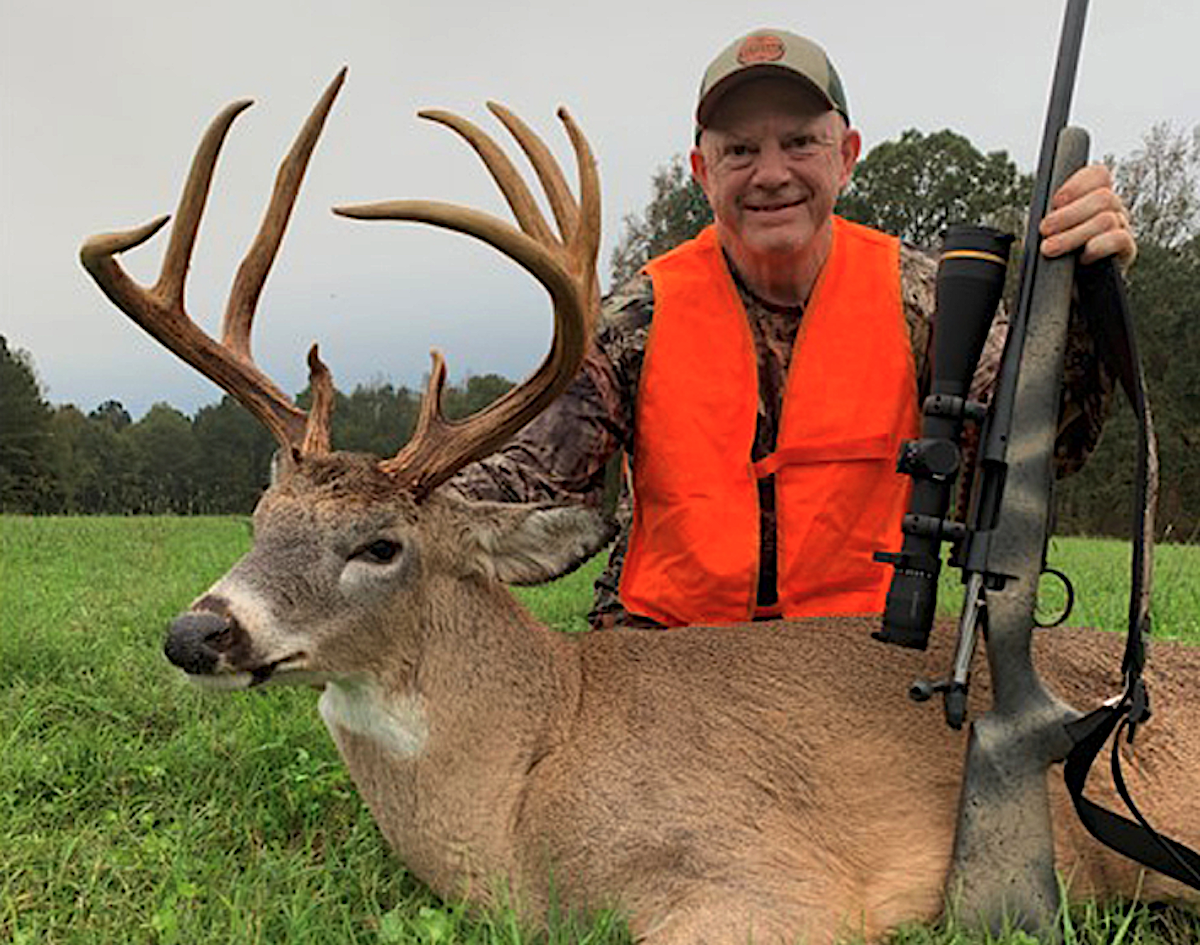
The author poses with a great whitetail buck.
So, are mature bucks really smarter or unkillable? I don’t think so. They are, however, an extremely well-equipped prey animal with highly developed strategies to avoid predators. As good friend, mentor and professor emeritus at the University of Georgia, Dr. R. Larry Marchinton, once stated, “The prey needs the predator just as much as the predator needs the prey.” One without the other causes both to be less wild, less natural—less than they should be. This primal relationship connects us to nature in an intimate and often spiritual way that only hunters can comprehend. It’s the perfect balance—for both the hunter and the hunted.
UPGRADE TO HUNTSTAND PRO WHITETAIL