





Once on the hunt, stay focused. Pressured hogs aren’t pushovers.
A hog catches wind of a guy’s three-day-old Axe body spray. Another hears the tell-tale crunch-crunch-crunch of a bipedal mammal (hunter) walking through the timber. A third boar sees a couple mid-morning fellows waddling across an ag field in hot pursuit of biscuits and gravy at the local diner. All three hogs make a break for it and head for safer pastures. And all three are wiser from their encounters.
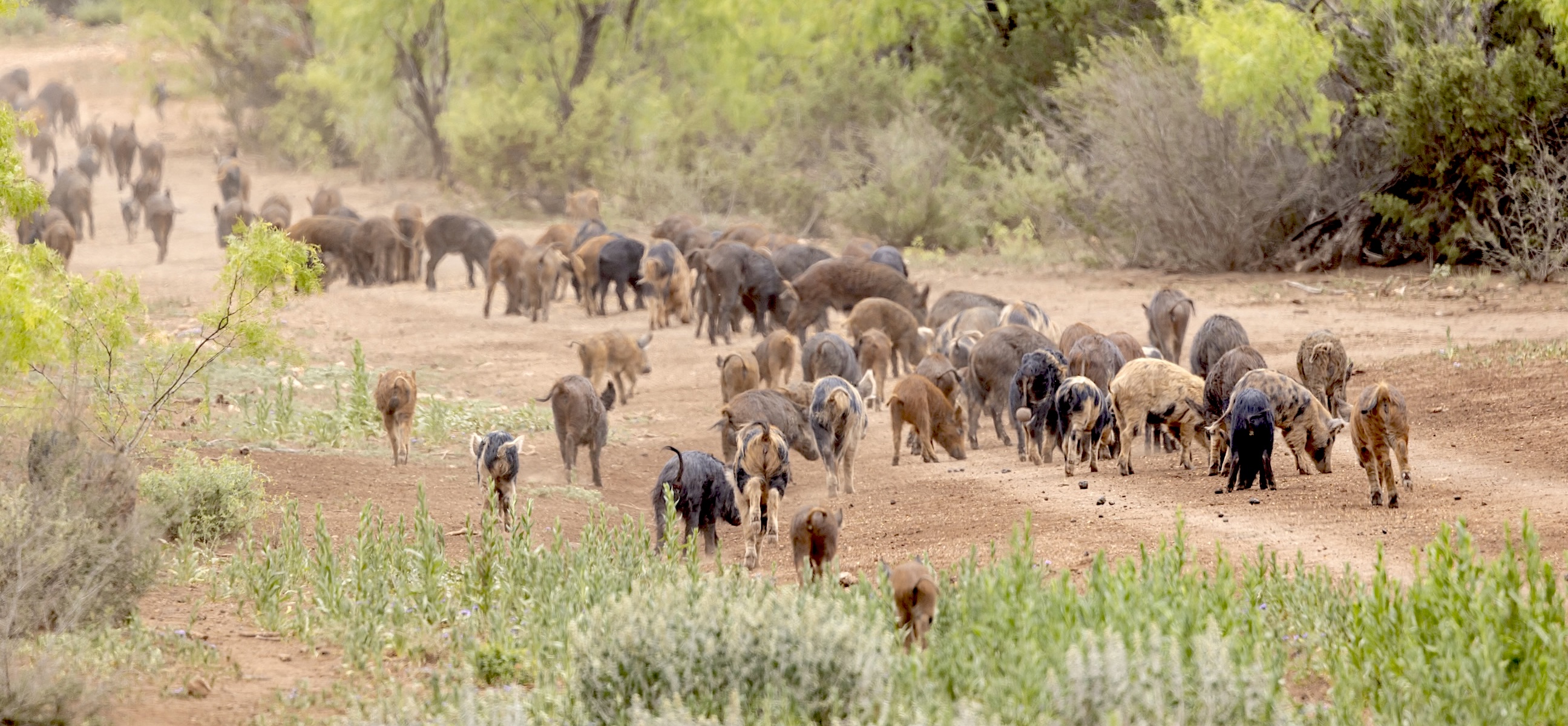
Without question, pressured wild hogs oftentimes move locations. If not that, they at least begin moving more under cover of darkness. During daylight hours, they effectively avoid areas they’ve received or sensed pressure from hunters. With high levels of intelligence, and among the smartest in the animal kingdom, they’re highly adept at detecting, reacting, and otherwise avoiding areas with human intrusion.
The basis of stealthy hunting tactics for pressured hogs revolves around a very important and notable shift. This involves abandoning generalized approaches commonly used amongst hunters and implementing more covert methods. For those looking to hunt pressured pigs, and need a change in how they hunt, read on.
Wear Quiet Clothing and Use Quiet Gear
Hogs aren’t as dumb, deaf, and blind as hunters think they are. While it’s true feral hogs don’t have great vision, they have excellent sense of smell. They also have incredible hearing.
The latter requires wearing quiet clothing. Wear traditional materials, such as fleece, wool, etc. These make less noise and aren’t nearly as likely to give you away when in close proximity to hogs. Of course, avoid synthetic clothing materials that are noisy. (Some have been or are being developed to address the need for quietness while maintaining synthetic benefits and efficiencies.)
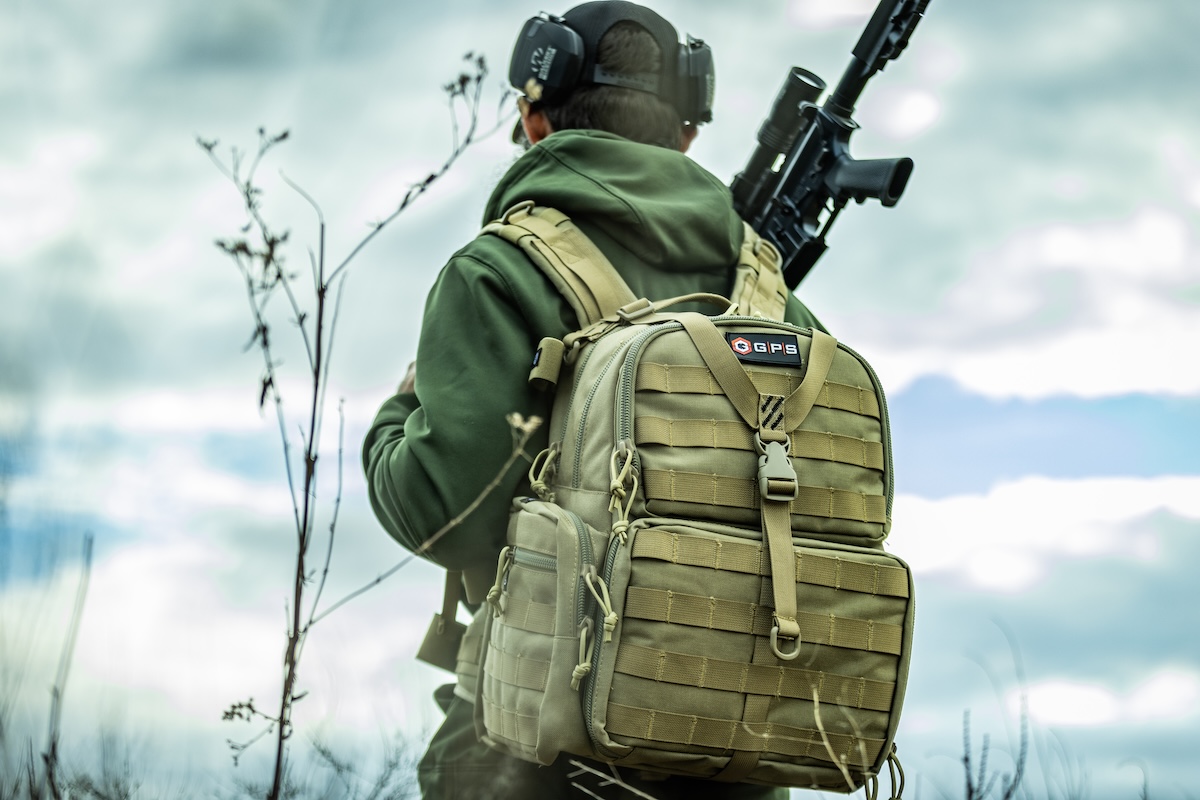
Likewise, when possible, purchase and use quieter gear. That includes your packs, firearms, etc. Silence all contact points and remove or amend items that might be an issue.
Night Hog Hunting Tips
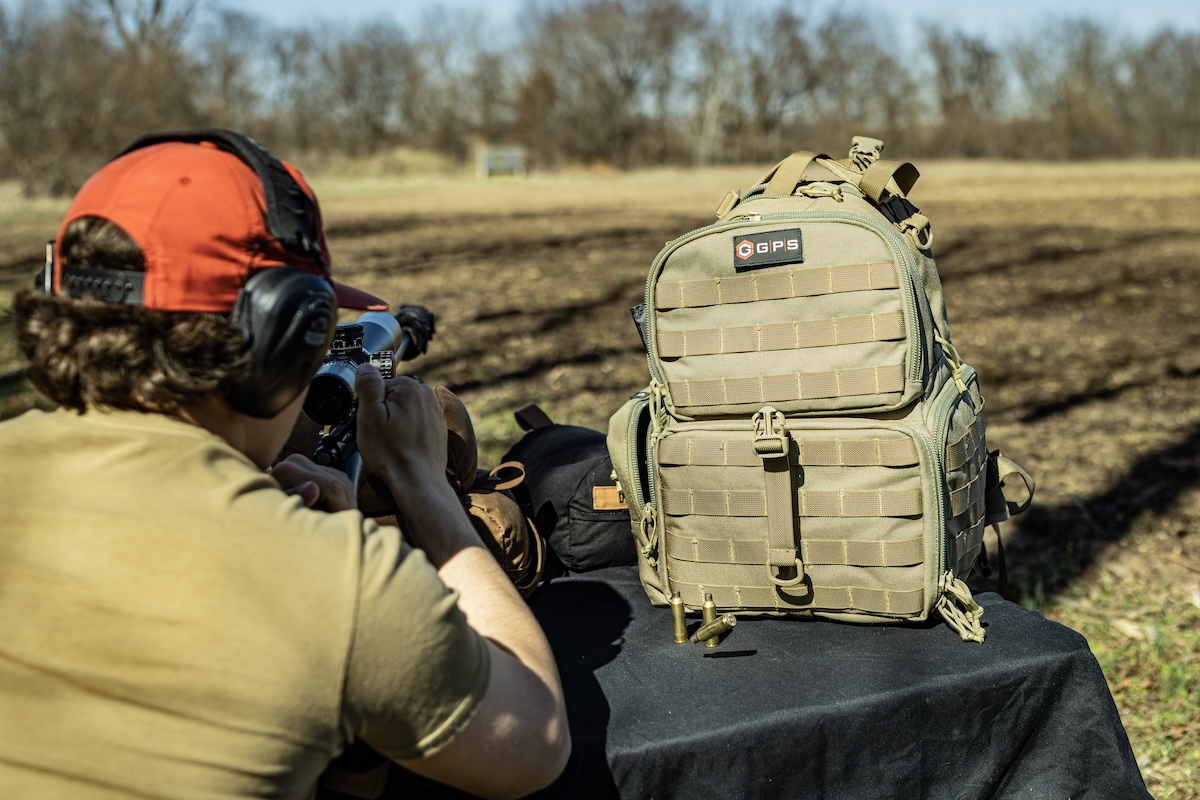
Set up and learn your preferred hog hunting gun and optics.
Choose Calibers and Gun Setups Deliberately
A key point in hunting pressured hogs is choosing calibers and gun setups deliberately. Be mindful of your needs, and the hog gun mentality you prefer. Of course, there are two hog gun methodologies to subscribe to.
No. 1, select a light to moderate caliber. Hogs are sensitive to sound and skittish to the sudden blast of a rifle. However, lighter calibers produce fewer decibels, and paired with a silencer, can be quite quiet. While not always possible, this setup can allow for multiple shots at a sounder. The downside? You don’t have as much horsepower behind the projectile, which can lead to longer blood trails.
No. 2, choose a larger caliber. Hogs are tough. It takes a heavy punch to knock them down, especially dropping them in their tracks. A heavier bullet and more powder behind it can accomplish that. The negative? It’s a lot louder. Certainly, still pair it with a compatible silencer, but don’t assume it will result in as many follow-up shots as a quieter rig.
Ask 10 hog hunters which of the above camps they fall into, and you’ll have a house half divided. It’s important to assess the pros and cons, weigh additional factors not mentioned above (size of the shooter, ammo availability, and much more), choose a direction, and commit to it.
Buy a Quality Silencer
As previously mentioned, consider buying a quality silencer to pair with your hog hunting gun. Whatever the rifle caliber, apply for a silencer. Send the gun off to be threaded, if it isn’t already. Then, once the paperwork and wait times are complete, fit the can to the rifle barrel and hit the woods.
Reflecting on the past, it hasn’t always been easy to get one. At one time, it was quite difficult to obtain a silencer. Now, it’s much more streamlined. That’s in part thanks to common silencer brands, such as Silencer Central and Silencer Co.
Tips for Public Land Hog Hunting
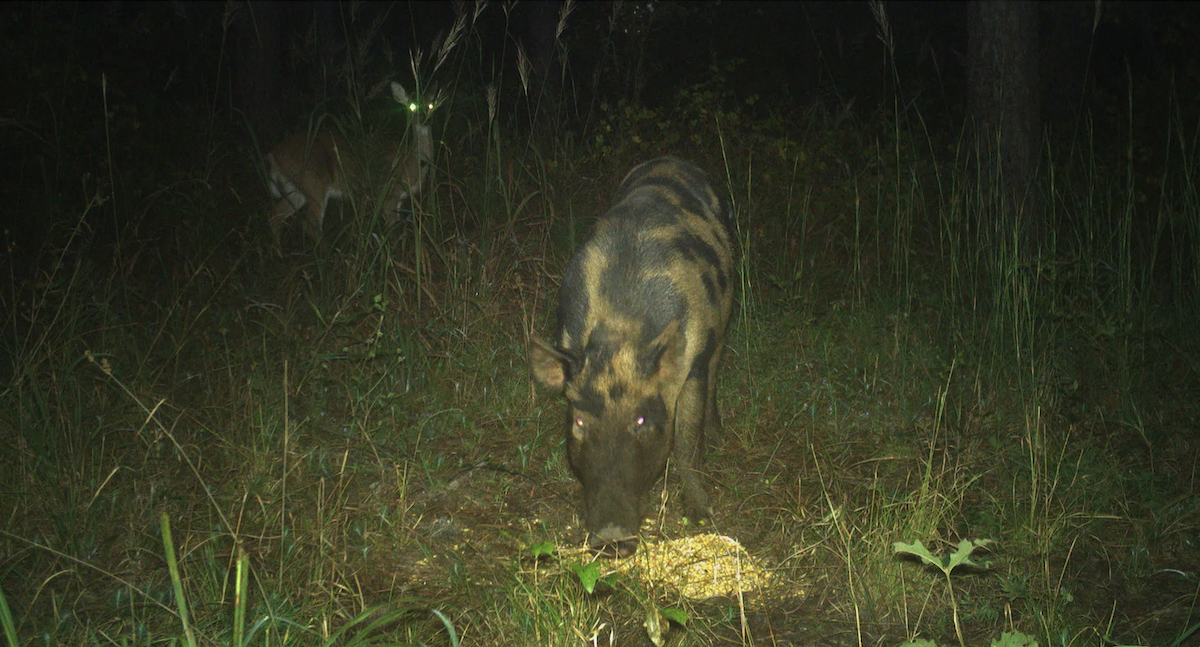
Hard-hunted hogs tend to move under cover of darkness, especially around high-pressure areas, such as feeders. Pressured hogs sometimes seem to associate feeders with humans. Consider pouring bait on the ground instead, or use a different style of feeder they aren't used to seeing.
Quit or Moderate Calling, Stop Hunting Over Bait, and Other “Giveaway” Tactics
Those hunting pressured hogs should implement stealthy hunting tactics. They should not use stale hunting tactics that have been used by every other hog hunter from the past two or three decades. So, stop using “giveaway” tactics that pigs just might be attributing to human hunting pressure.
For example, avoid calls. They’ve heard every piglet-in-distress sound on the digital market. Stop hitting them with these washed-out sounds that have graced the woods on repeat. If calling is necessary, sprinkle in some fresh sounds, or don’t call at all.
In areas with heavy baiting, continue to do so for the sake of holding hogs in the area. However, don’t expect to shoot daytime hogs over it. Rather, use it to assist with patterning pigs on the property.
Essentially, whatever the area population is used to seeing, hearing, and otherwise sensing, consider other means of pursuit. This can give you an edge and catch hogs off-guard.
Add Stealth Mode to Traditional Tactics
If carrying forward traditional tactics, consider freshening them up and adding a new twist. Do you and others bait hogs? Quit using feeders. Dump corn on the ground instead. Hunting from the same old stand and blind locations? Sit new spots on the property where hogs aren’t used to seeing hunters. Whatever the case, add newfound stealth to traditional tactics.
Completely Re-Draw the Battle Lines, Game Plan, and Overall Approach
It’s crucial to assess your overall game plan. Analyze the current approach and determine if it’s viable. More times than not, if your hog hunting has gone cold, it’s time to shake things up. For example, choose new properties. Select new areas on current properties. Re-draw entry routes and exit paths, if required. Oftentimes, re-drawing the game plan and building a better overall approach can prove enough to pull the wool over the eyes of pressured hogs.
Public Land Hog Hunting Hotspots
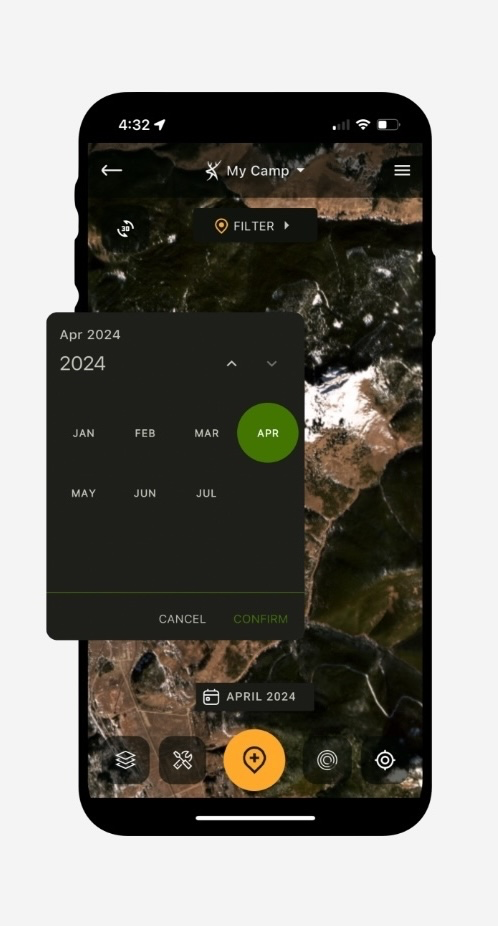
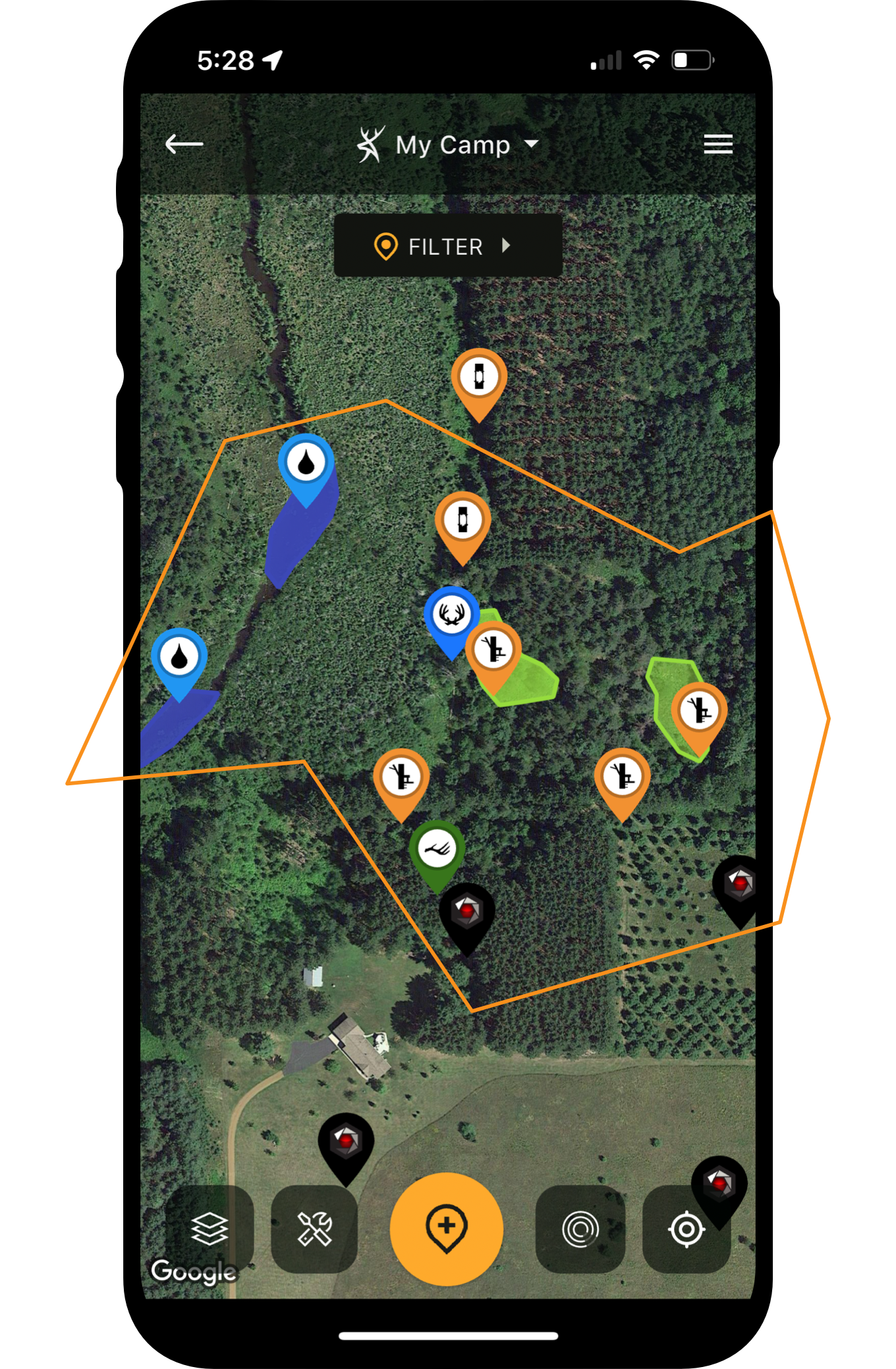
Use various HuntStand tools to better prepare for your next hog hunt.
Use HuntStand to Pattern Hogs Like Whitetails
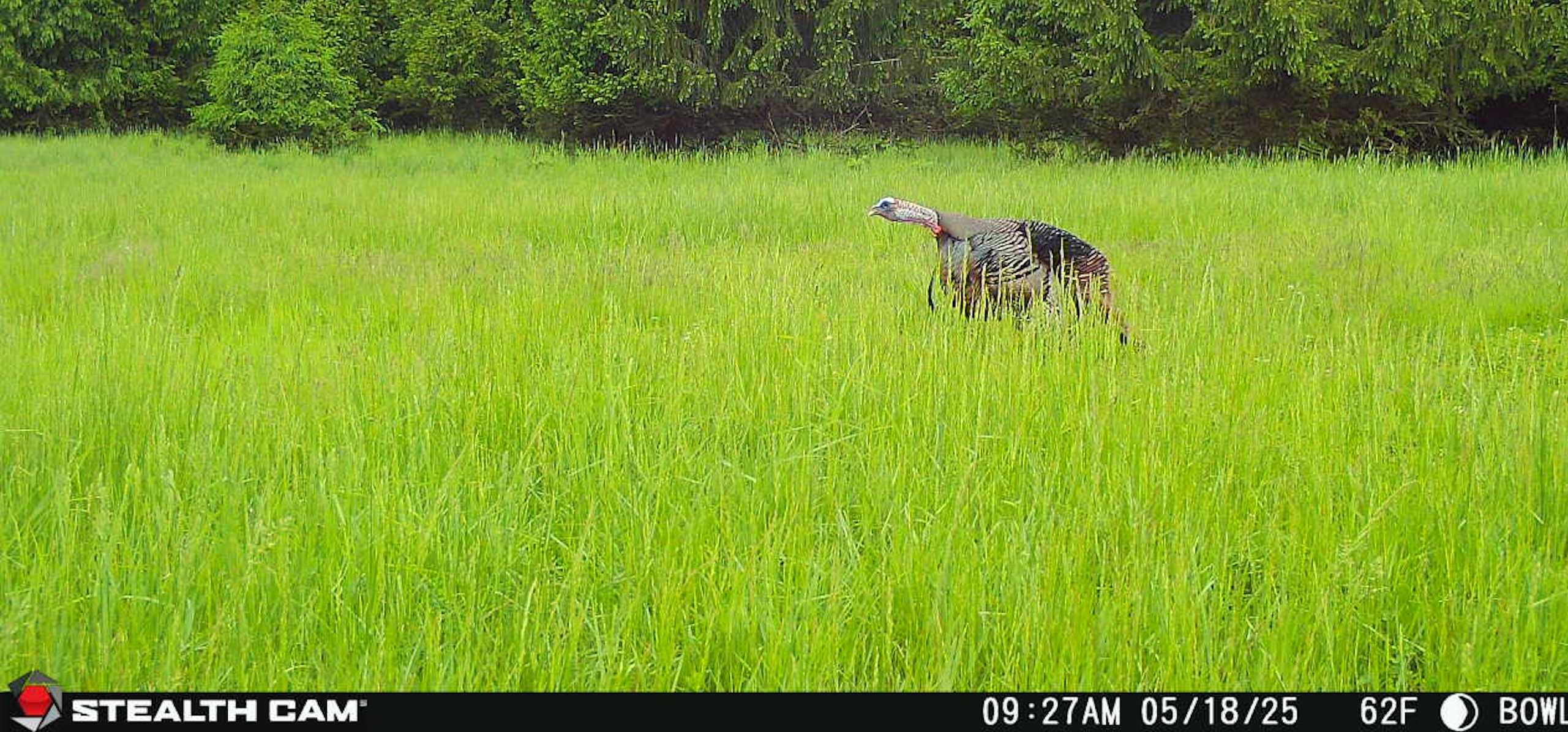
Pressured hog hunting scenarios become much more like whitetail hunts. Through scouting in the field, glassing from afar, searching for sign, and running SD and cellular trail cameras, hog hunters can determine the patterns of local pigs. This allows for building profiles around specific hogs or sounders. It also makes it simpler to determine bed-to-feed and feed-to-bed lines of movement.
When scouting, search for pig tracks, hog scat, hog wallows, rubs, rooting, beds, and more. These are tell-tale signs that hogs are nearby. Use this intel and drop markers in HuntStand to piece together a visual of how pigs use the property. You’ll notice things you didn’t see before and pinpoint excellent spots to intercept pig movement.
Talk to local individuals and ask their opinions — especially if you’re from out of town. They can oftentimes offer valuable intel on what other hog hunters are doing. Then, you can sift through the intel and either do the same or make the conscious decision to do something entirely different to avoid applying familiar pressure and tactics.
Warm-blooded sources aside, also study your hunt area via HuntStand. Pinpoint likely areas other hunters are targeting oinkers and see what remains. Oftentimes, just like mature whitetails, tested hogs push into areas that hunters avoid, and these places commonly don’t look great via aerials. Simply, wherever hunters avoid, that’s where pigs will be during daylight hours.
Maintain Good Wind Direction Awareness
Feral swine have poor eyesight, but as stated above, they do have great hearing and incredible sense of smell. Hunters must maintain good wind direction awareness. They cannot allow prevailing winds or thermals to carry scent into the nostrils of pigs. If they do, the gig is up. So, whatever hunters would normally do to help mitigate and overcome a whitetail’s nose, these same things should be duplicated to avoid detection by wild hogs.
Hunting Hogs at Night with Thermal
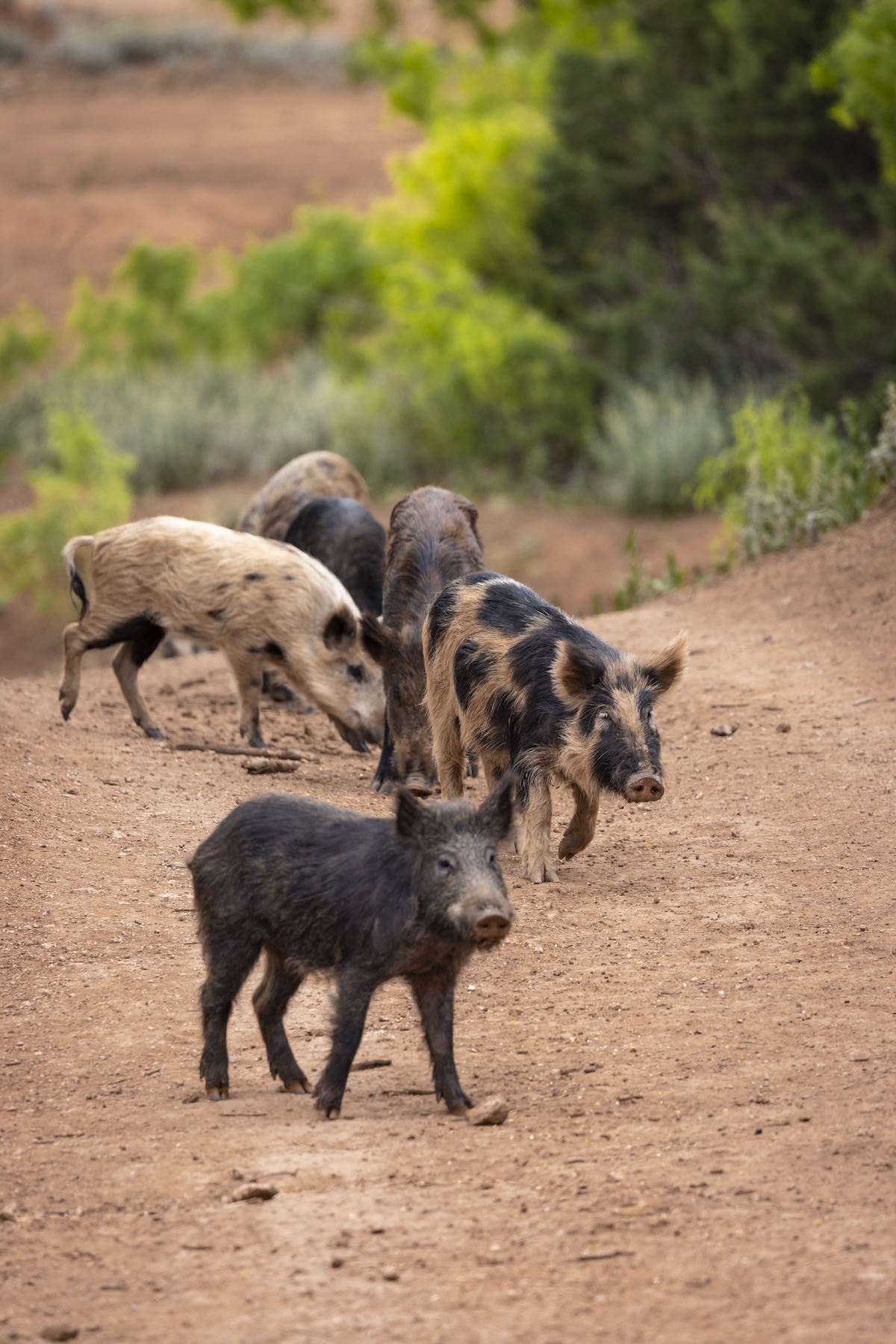
Post cameras and glass from afar to pattern general hog movements.
Stalk and Still-Hunt Hogs with the Right Conditions
Those going mobile should employ the stalking and still-hunting methods. That said, only deploy with the right conditions. The following examples can minimize hogs’ abilities to detect you moving across the landscape.
Rain is a still-hunter’s best friend. They benefit from it both during and after a precipitation event. Stalking and still-hunting during a light to moderate rain quietens the ground. The falling drops, moving leaves, and wind-blown landscape provide visual cover, too.
Speaking of wind, when airflows kick up, and foliage starts swaying, it’s even more challenging for hogs to see humans. Use that as an advantage while slipping along edge cover.
On a different note, don’t forget about environmental noise. Those hunting closer to lumber yards, saw mills, construction zones, farming operations, rock quarries, and other noisy businesses, can use that as audible cover while traversing the landscape. It’s a distraction that can help mask some of your own sound. That said, hogs are used to these sounds, and they can still differentiate foreign decibels that usually aren’t within earshot. They can hear through the noise.
Lastly, bright sunny days might not seem like good stalking conditions, but they can be. Harsh sunlight casts long shadows. This results in high-contrast visibility, especially closer to cover. It also makes it more difficult for hogs out in the open to see into the timber. (As compared to overcast days with a muted, low-contrast differential when looking back into cover.) Therefore, if hogs are spending time in the fields, and you can traverse the edges of cover and scan both open areas and back into the timber, this can prove an exceptional play.
Of course, if you can align all or most of these conditions, it can prove highly effective when pursuing wild hogs. Having multiple advantages only raises the odds of bringing home the bacon.
Take Strategic Shots at Sounders
Some only see single hogs. Others get cracks at the entire sounder. With the latter, to maximize the carnage, it’s crucial to take shots in a strategic manner. Essentially, select targets in a manner that reduces the odds of other pigs in the sounder detecting the shot. One example is shooting the rear-most hog first, and moving up the line, to reduce hog detection and travel distance between volleys.
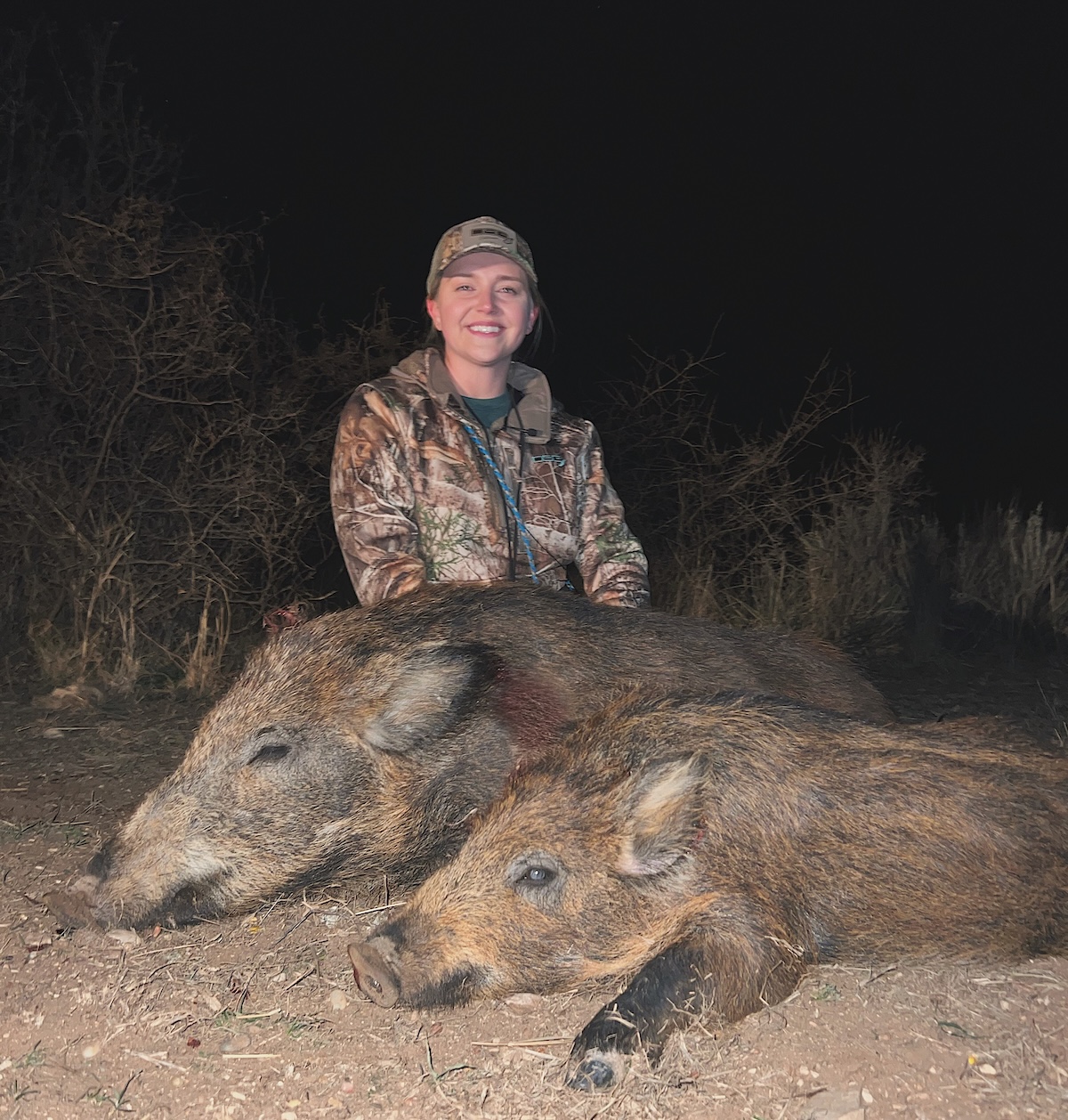
Bagging any hog isn’t easy. Downing pressured hogs is greatly challenging.
Hunt Hogs at Night
One of the most covert ways to hunt hogs — consider hunting hogs at night. This is a great way to see hogs while they’re on the move, rather than hunting while they’re bedded up during the day.
As for lights, use red or green LED lights to scan for hogs. They struggle to see these colors, making it a lower-impact option when searching the landscape for movement.
Where legal, consider using more advanced optics. Night vision and thermal are two excellent tools for pursuing feral hogs after dark. Thermal scopes allow you to see heat signatures, and the shapes of these. Night vision operates in a similar manner but delivers an entirely different look.
Generally, night vision (especially quality products) is vastly more expensive than thermal monoculars, binoculars, and scopes. You’re not talking hundreds of dollars. Rather, it’s thousands to tens of thousands.
Go Full Rambo Style (Hunt Hogs with Dogs, Knives, and Spears)
The last and most exciting tactic on the list, go full Rambo style on the hogs. Where legal, hunt hogs with dogs (chase and catch dogs). Then, with the hogs secured by the dogs, terminate the pigs with either knives or spears.
That’s not “stealth,” you say. No, it is not. I grant you that. But stealth isn’t just going undetected. It’s also meant to catch hogs by surprise. This hog hunting tactic accomplishes that. Just remember, it’s dangerous, requires a lot of training, and shouldn’t be taken lightly.
No matter your chosen route, put safety first. Maintain stealthy hunting efforts. Keep after the pressured hogs, use stealthy hunting tactics, and eventually, you’ll have bacon for the skillet.