



You’ve got your turkey vest loaded up, you’ve done all your scouting, and you’re ready for your next turkey hunt. But have you overlooked one of the most important steps toward a successful turkey hunt? You need to pattern your shotgun for turkey hunting. Watch the first part of this video above to learn the basics of turkey gun patterning, and stick around until the end if you want to take your turkey gun to the next level. Or you can read on below for the full scoop on patterning your shotgun for turkey hunting.
The Basics of Turkey Gun Patterning
What does it mean to pattern your turkey gun? It’s the process of target shooting your shotgun with the shotshell that you’re going to use for turkey hunting. It’s critical to do this and see how your pellet pattern will look downrange. No different than sighting in a rifle for deer hunting, you need to know where your projectile is going to hit when you squeeze that trigger — or in this case, what your distribution of pellets looks like as they’re heading for a turkey.
Patterning a shotgun for turkey hunting is easy. All you have to do is shoot some paper. Or cardboard. Or a turkey target. Whatever you’ve got to shoot safely that will show where the pellets are hitting.
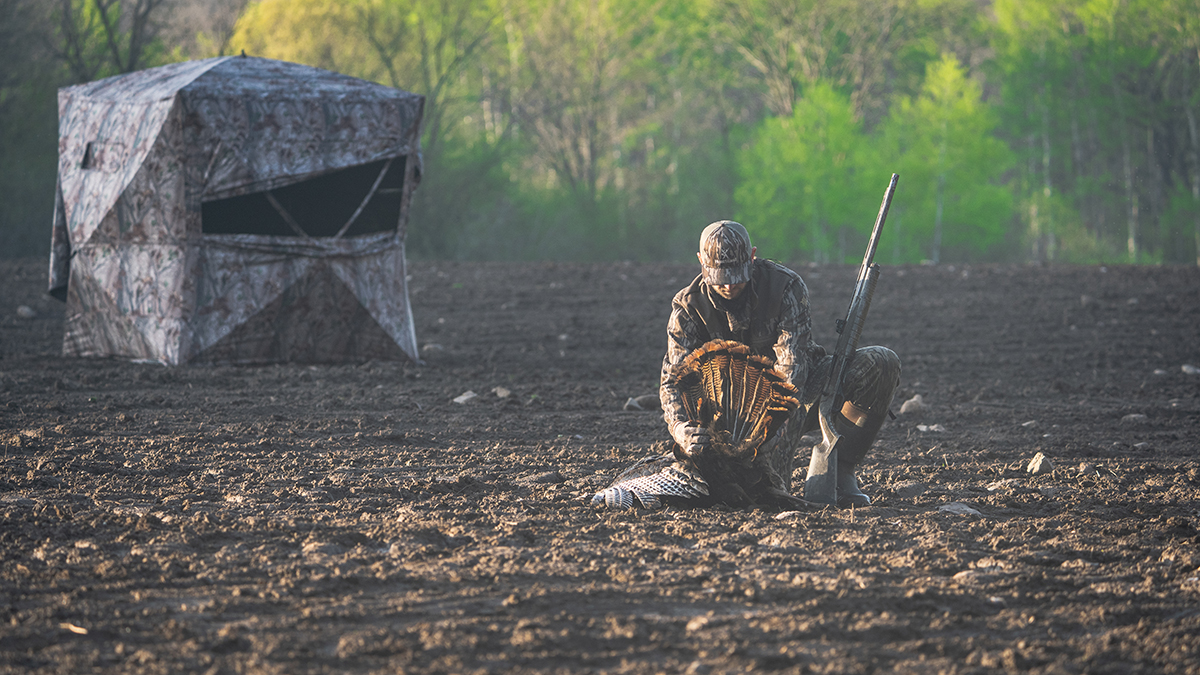

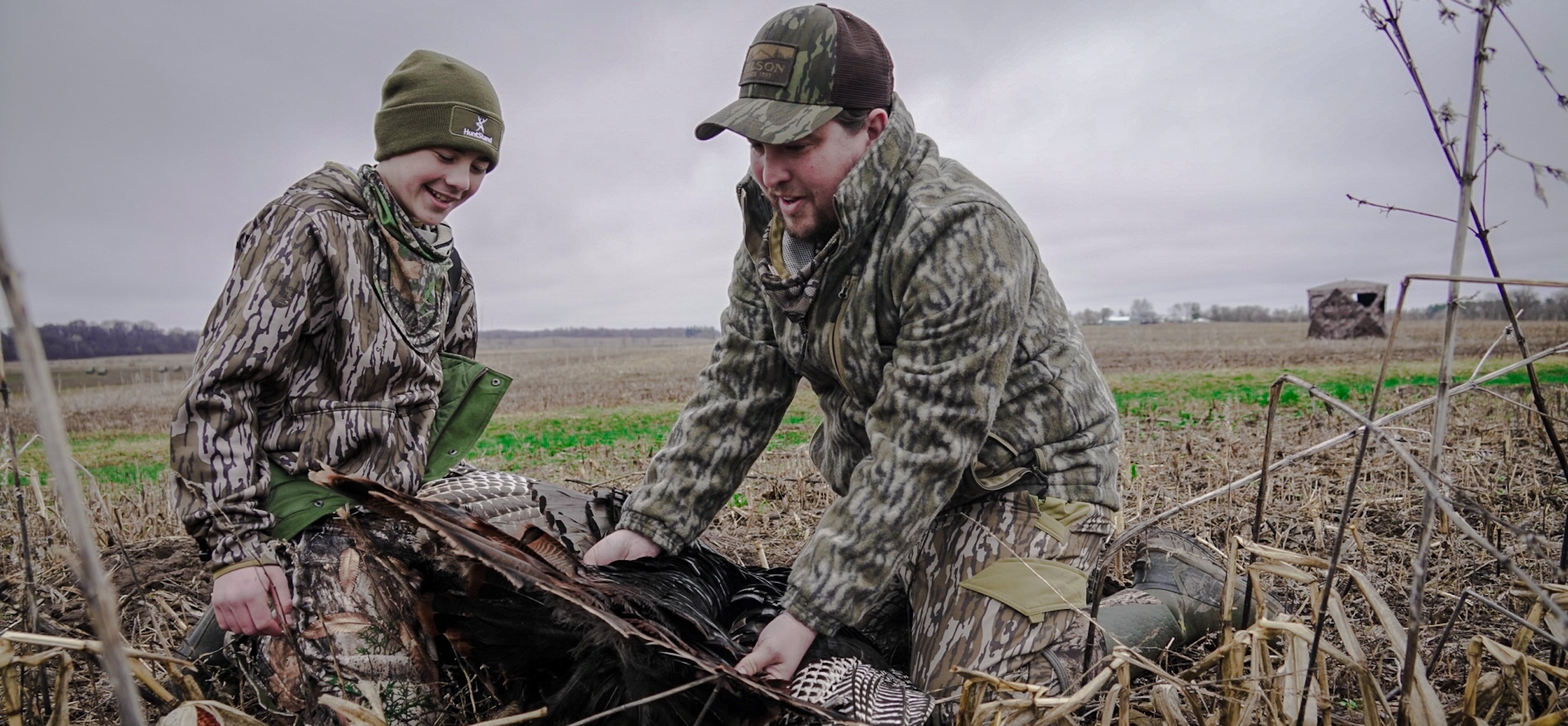
Patterning your turkey gun will result in more sacred moments like this.
At minimum, choose one turkey load off the shelf. There are tons of turkey loads to choose from, but select a load that’s labeled for turkey hunting and pattern it at 40 yards. Forty yards was established as the standard turkey shooting distance a long time ago, and it’s still considered the standard today because any turkey load worth its salt should provide a good enough pattern and lethal energy at 40 yards to kill a turkey. You should also be shooting a full or extra full choke tube if you want to hold a tight pattern out to that magic 40-yard mark. You can probably get away with a modified or improved cylinder choke if you’re shooting Federal Heavyweight TSS; it uses a special Flitecontrol Flex wad to hold tighter patterns with a less-constricted choke.
The reason you need to pattern your chosen turkey load is because you need to understand what that pattern looks like, and how it’s shooting out of your gun. Just about every turkey load will shoot differently out of any given shotgun, so before you start cracking away at gobblers, it’s your responsibility to know what that pattern looks like.
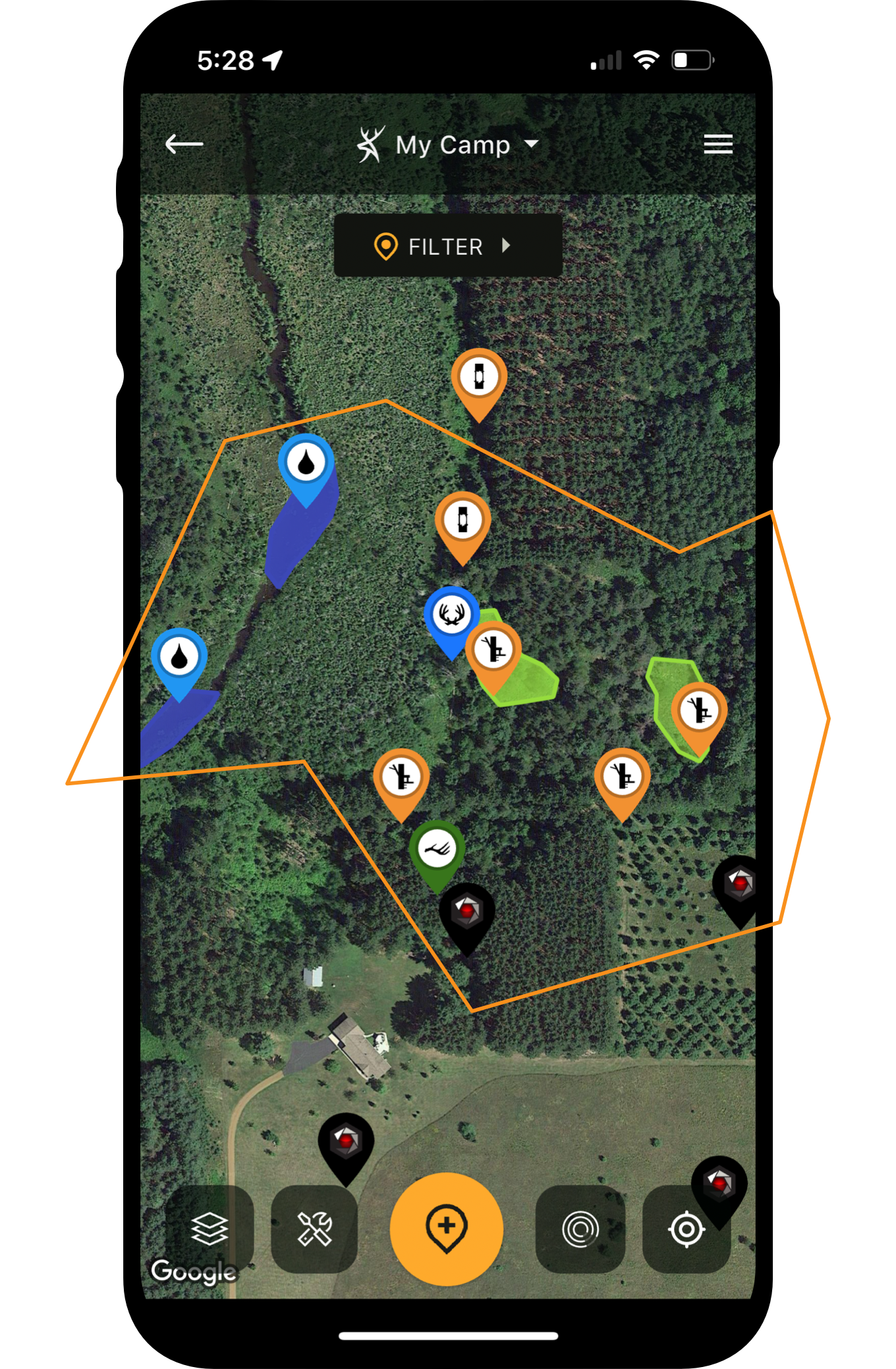
App Layers and Tools for Backcountry Turkey Hunting

You need to understand what your pellet pattern looks like at all possible shot distances.
If you’re using fixed sights, you might just have to compensate your aim if the point of impact isn’t true to your aim. But that’s why you should thoroughly consider an adjustable sight system on your turkey gun, whether it’s a simple adjustable fiber-optic sight system, or even better — an optic like a red dot. This will allow you to sight in your turkey gun just like your deer rifle. Shooting turkeys isn’t like shooting other upland birds. You shouldn’t be shooting instinctively. You should have a shot process, just like you do with a rifle. Even the most basic turkey gun should be treated like a precision shooting tool — don’t spray and pray — you need to aim, squeeze, follow through … and be ready to make a follow-up shot if you screw up the first one.
Advanced Turkey Gun Patterning
You’ve got your shotgun, you’ve chosen a full or extra full choke tube, you’ve picked a decent turkey load, and you know where your pattern is hitting downrange. You’re ready to hunt. But if you want to get serious about maximizing the potential of your turkey gun and up your odds of killing gobblers more effectively, stick with me.
Like I said before, just about any old shotgun can be used as a “turkey gun.” But these days, for those of us who geek out on all things turkey hunting, we’re blessed to have some badass shotguns that are purpose-built for turkey hunting.
Biggest Threats to the Wild Turkey
The DNA of a Turkey Gun
So, what makes a shotgun a true turkey gun? Well, just like anything in hunting, that’s a conversation that can get people pretty riled up. But I’ll try to keep it practical. A good turkey gun should probably be camouflaged, it needs to function reliably with no hiccups — because when you finally get a chance to kill a bird your gun can NOT be the weak link.
A lot of turkey guns have pistol grips or thumbhole stocks, which can be nice. And a sling — you definitely want a sling to be hands-free as you’re running and gunning. And perhaps most importantly, a turkey gun should have an adjustable sight system. You need to be able to adjust your sights to match your pattern, so your point of aim is true to your point of impact. And going a step up from that, please consider a red-dot sight. Let me explain why …
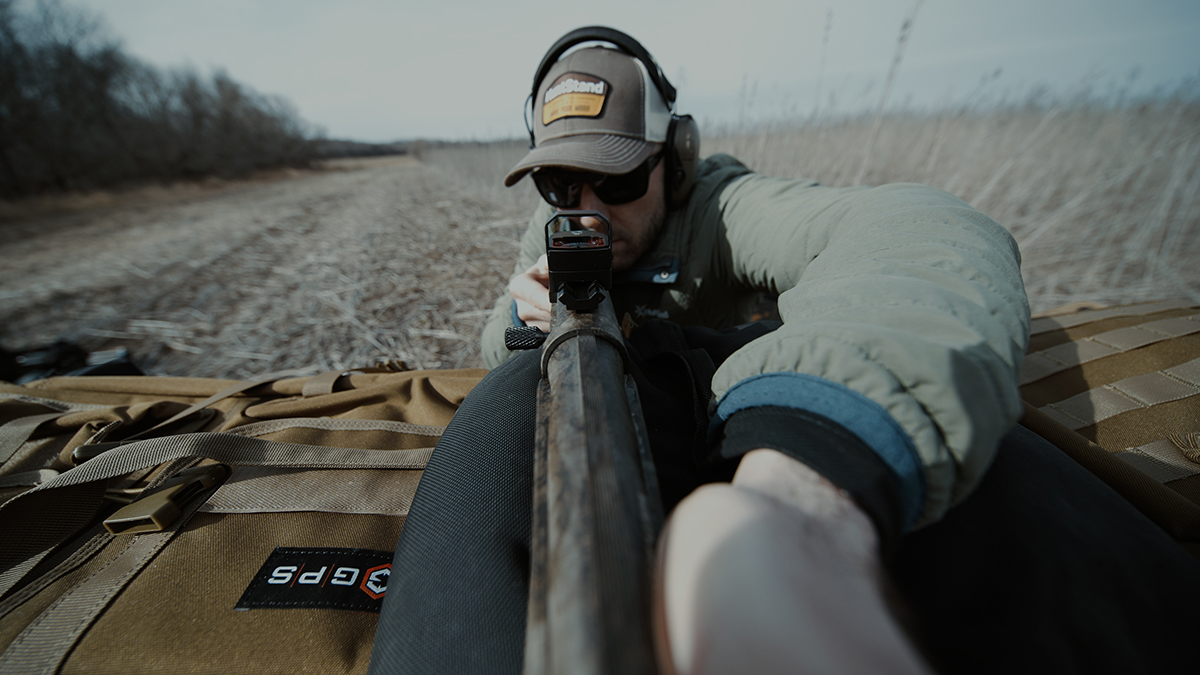
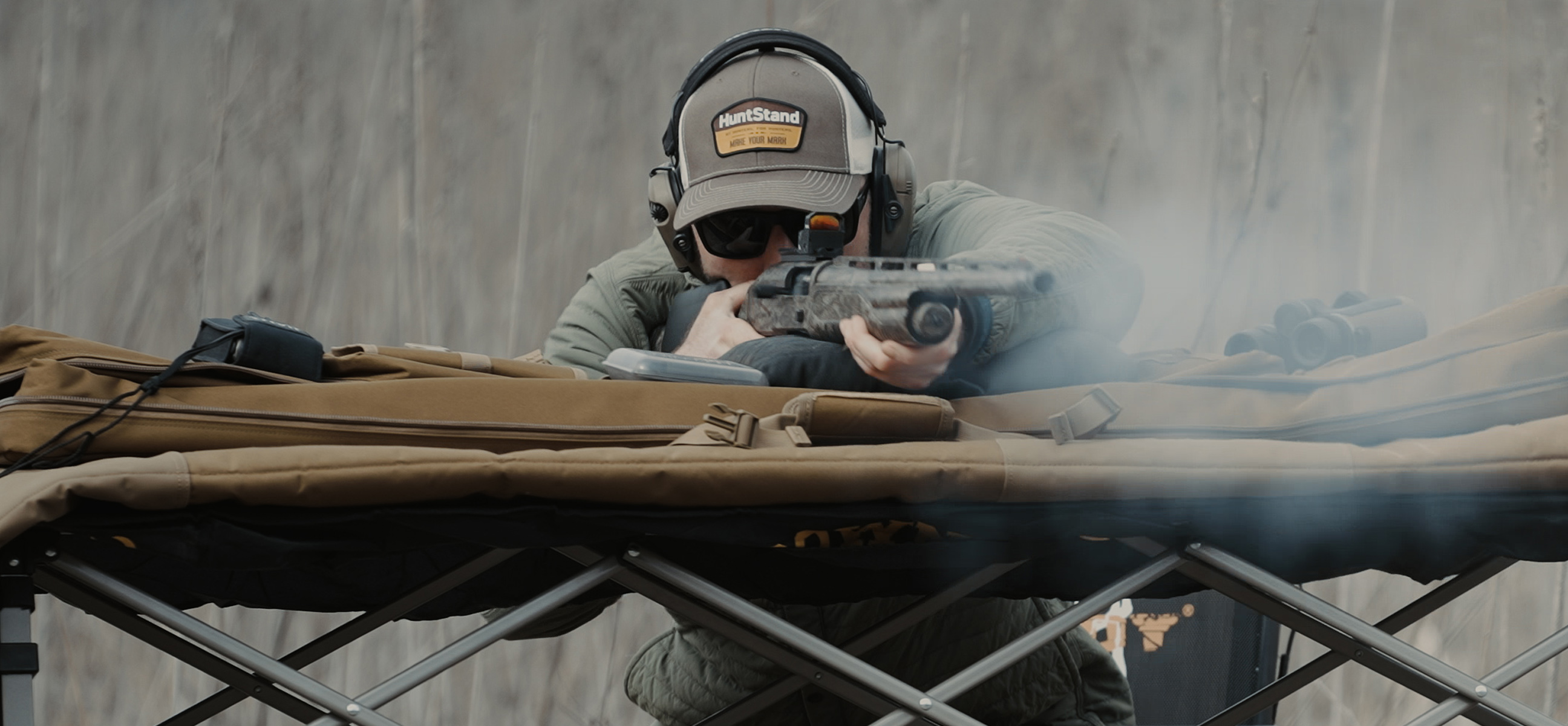
Choosing an adjustable sight like a red dot will allow you to sight-in your turkey gun for precision shooting.
Red-Dot Sights for Turkey Guns
A red dot gives you the adjustability you need to sight in your turkey gun. But more than that, it gives you a precise aiming point to be able to shoot gobblers perfectly at close range or farther distances. A plain bead sight or even a fiber-optic sight begins to cover too much of the bird at distance — even at 40 yards — and it can be just as easy to miss a bird at close range with a basic sight system. Red dots also excel in all light conditions because they have adjustable illumination levels.
Another huge benefit of a red-dot sights is that they’re parallax free – so even if you’re not perfectly mounted on your gun, your shot is going to hit exactly where you see that dot on the target. Finally, one of the biggest reasons people miss turkeys is because they pull their head off the gun as they’re pressing that trigger when they’re looking down a barrel through a more traditional sight system; a red dot does a good job of forcing you to keep your head down and follow through with the shot, because you know if you don’t see that dot, you’re not aiming.
Whether you go with a red dot or not, just make sure you have an adjustable sight system.
Best Ways to Improve Your Land for Wild Turkeys
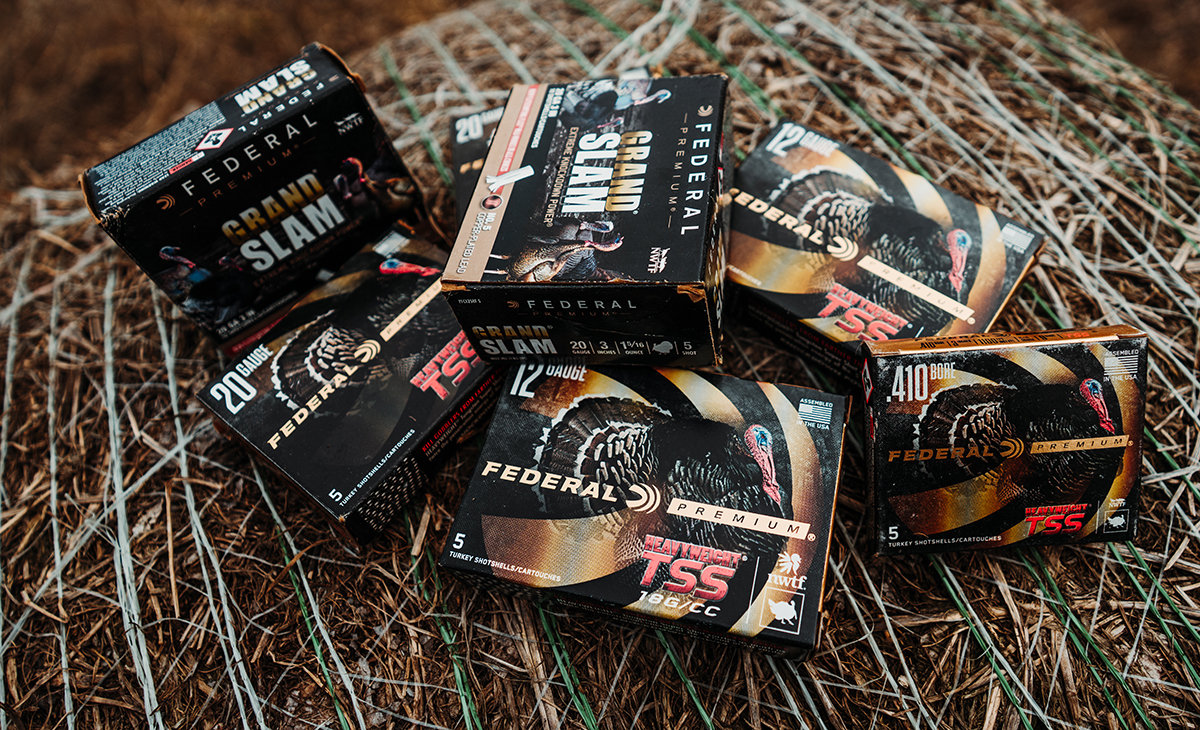
Test multiple turkey loads of different variations in velocity, pellet size, pellet type, and payload weights, to find the best combination for your style of hunting.
Turkey Ammo & TSS Talk
Now, let’s talk briefly about turkey load selection. Turkey shotshells have come a long way in the past 20 years. The old reliable copper- or nickle-plated lead shot in a standard wad has been killing turkeys for decades, and it will continue to do so. But one of the best ways you can get better performance out of your turkey gun is by investing in Tungsten Super Shot (TSS). TSS is expensive, because the tungsten alloy material is expensive, but it’s way denser than lead — like upwards of 60 percent denser than lead.
What this gets you for your turkey load is the ability to use a smaller shot size while still retaining lethal energy. With smaller shot size, you can pack more pellets into your payload, and so what you’ll see on paper is that you get a much better pattern – more pellets, with less holes in your pattern, to save you from losing those gobblers as they’re duckin and weavin. For example, I’ve been shooting a lot of turkeys with Federal Heavyweight TSS No. 9s out of my 12-gauge. Compare that to a shell loaded with the same weight of lead No. 5 pellets, and you get more than double the pellet count in your payload – yet you still get the same amount of energy per pellet. Smaller pellets, big energy, and lots of pellets in your pattern.
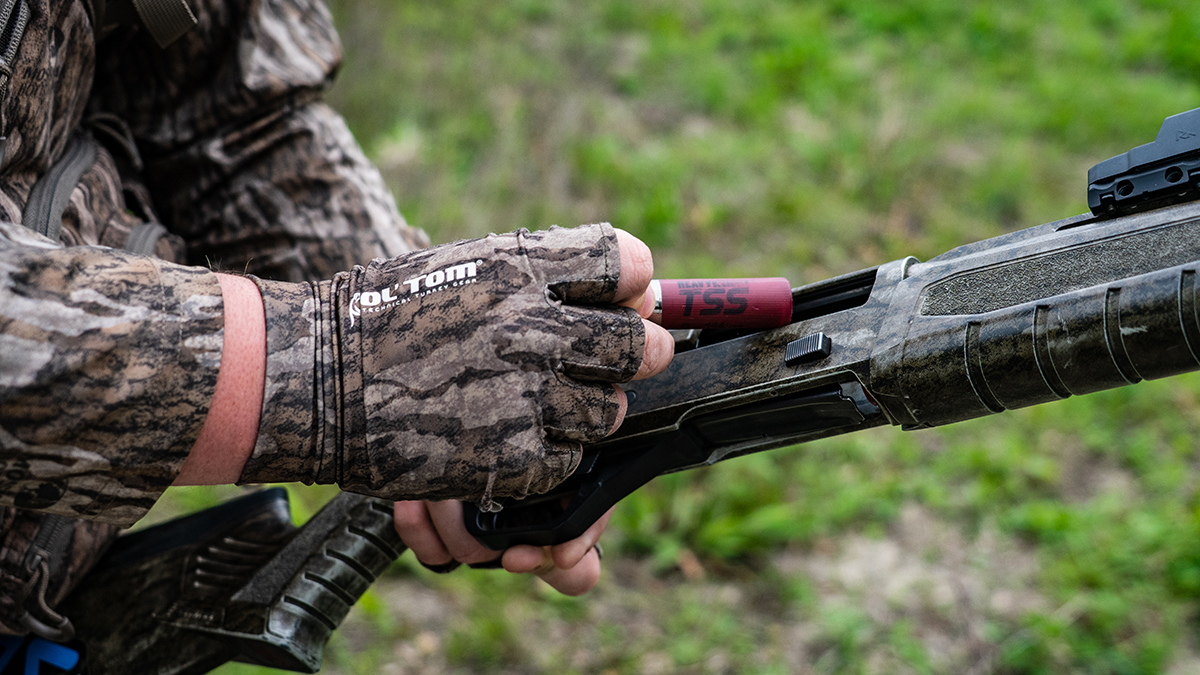
Tungsten Super Shot (TSS) is an ultra-dense tungsten alloy material. Choose TSS turkey loads and you can shoot a smaller shot size and pack more pellets into your payload while retaining insanely lethal energy.
Another major benefit of TSS is that, because the pellets are so hard, unlike lead, they don’t deform when your shotgun goes boom. When you’re spitting a bunch of bent pellets out of your turkey gun, your pattern starts to go haywire while the pellets are in flight. Imagine a swarm of bees flying together trying to sting someone, and half the bees just drank a bunch of whiskey — that beautiful flight formation is going to get messy, and a bunch of those bees are going to fly off and miss the target. The same thing happens with lead pellets. You don’t have that problem with TSS. That even flight of the dense pellets means you can ethically extend your effective turkey killing range.
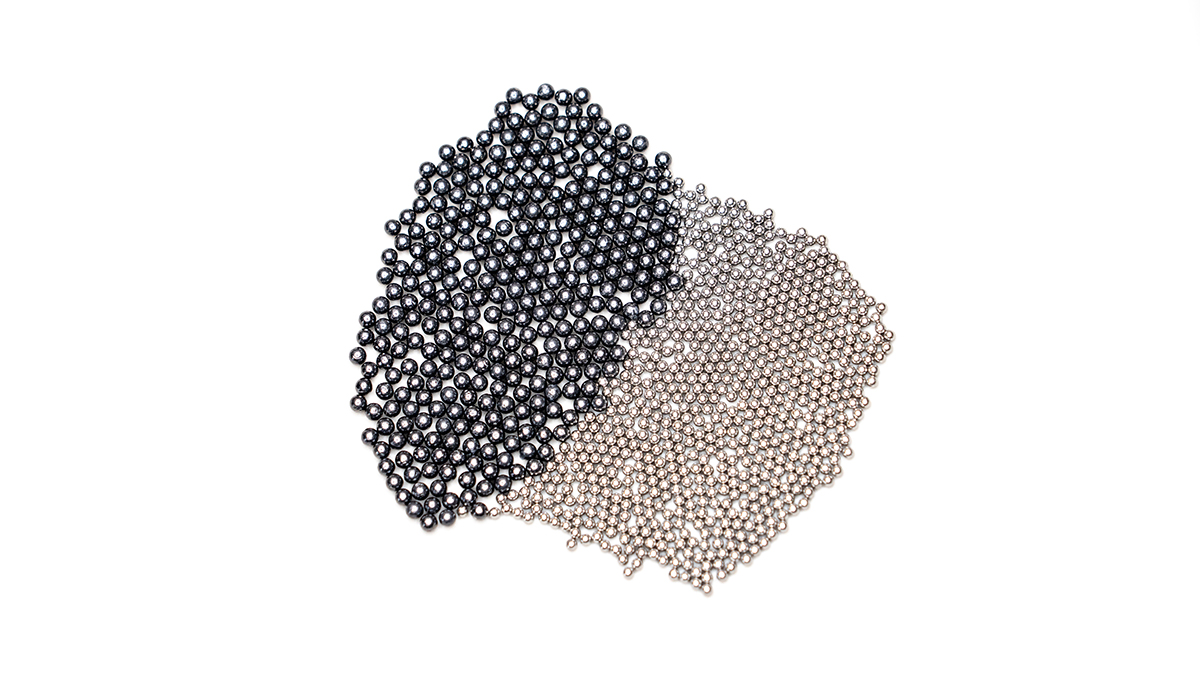
The "old standard" copper- or nickle-plated lead pellets (left) vs. Tungsten Super Shot TSS (right). No doubt, TSS is the superior pellet type for turkey hunting.
Remember, TSS wasn’t around when the old 40-yard standard was established for shooting turkeys back in the day. That said, you’ve got no business shooting turkeys much farther than 40 yards unless you’ve got a steady rest, a tried and true shot process, and a precision sight like a red dot. Oh, and by the way, you’re bound to run into a situation where you’re trying to kill a gobbler that’s hanging out with some other turkeys — so the last thing you want to be dealing with is a crappy pattern with pellets flying off course.
Plain and simple, TSS is a game changer.
Whether you’re sold on TSS or not, let’s roll into a patterning process that you can use to get more out of your turkey gun.
Finding & Hunting Terrain Features Turkeys Love
Variables in Turkey Gun Patterning
The two main variables in your patterns are going to be your choke tube and your turkey load. The more combinations of the two that you’re willing to test out of your gun, will land you in a better spot with your pattern.
Without going too deep into choke tubes, the main thing you need to know is that choke tubes come in a variety of constrictions. Just like the name suggests, a choke tube is choking down that payload before it leaves your muzzle. In general, what makes a choke a turkey choke is that it’s a pretty severe constriction, because turkey hunters usually want tighter patterns.
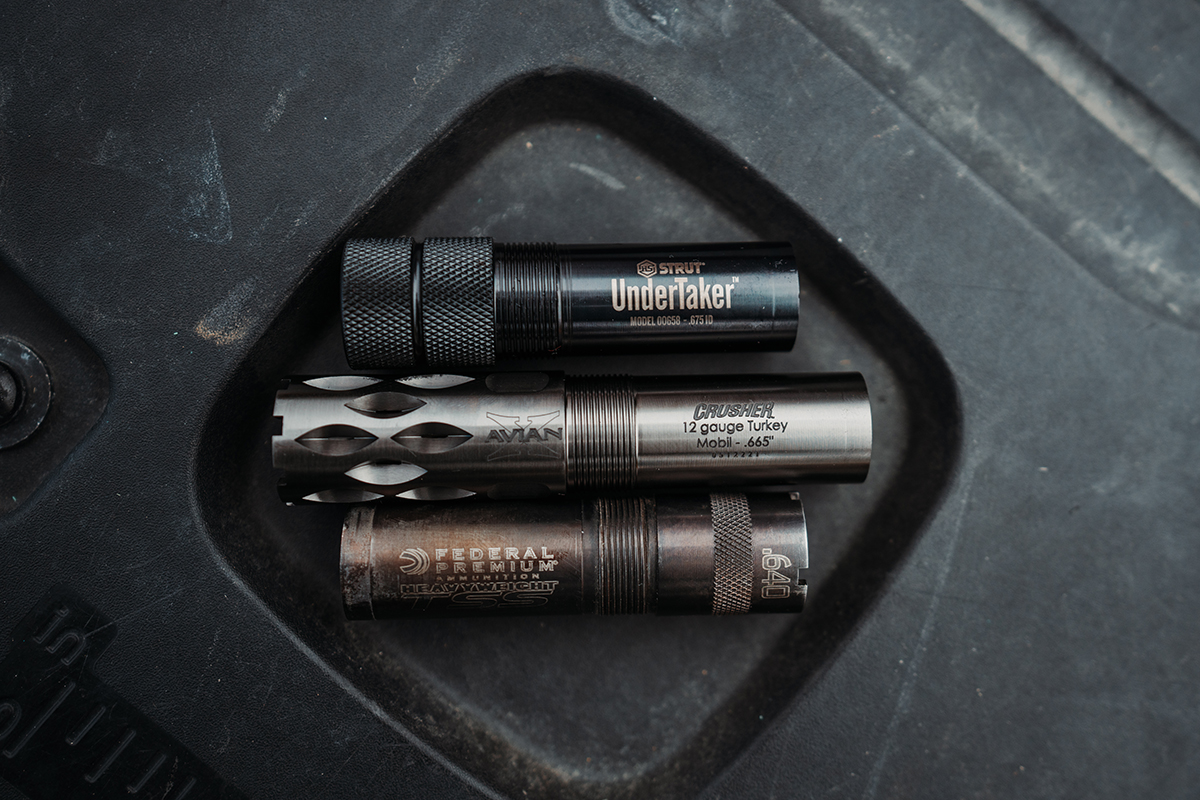
Ammo and choke tube selection will determine your patterns. Every combination will shoot differently, even out of the same model of shotgun.
Every turkey load is going to shoot differently out of every choke tube. Some constrictions work better than others. And not to overcomplicate matters, but truth is, even the same model of gun shooting the same load with the same choke tube can produce different patterns. At the end of the day, if you try several combinations out of your shotgun, you should be able to print a pattern that you’re happy with.
What should your pattern look like? That’s a personal decision, no different than what kind of camo you think is best in the turkey woods. Some turkey hunters strive for a super tight pattern, and others want a wider pattern to provide a margin of error for those rubber-neckin’ gobblers. A tight pattern will hold better at longer distances, but it can make it easier to miss when a turkey struts into your lap. A wider pattern is a happy medium, but this likely limits range.
This is why you pattern your turkey gun. This is your chance to experiment and ask yourself how you want your pattern to behave for your style of turkey hunting.
Alright, once you’ve got the choke tubes and turkey loads that you want to test, you need to make sure your gun is on paper. Just like a rifle. Usually, you can get pretty close shooting any kind of cheap shotshell. But here’s the key: To do this right, you need a large target area. A small 10- or 12-inch shooting target just won’t do the trick. You need to see where all the pellets are hitting. Saving or scavenging cardboard boxes is a cheap and easy way to come up with some patterning targets. In this case, I bought a giant roll of 4-foot wide paper from Amazon. To get on paper, keep the target close — around 15 yards is good. Adjust your sight so your point of impact matches your point of aim.
HuntStand Pro Tips for Last-Minute Turkey Hunting Road Trips
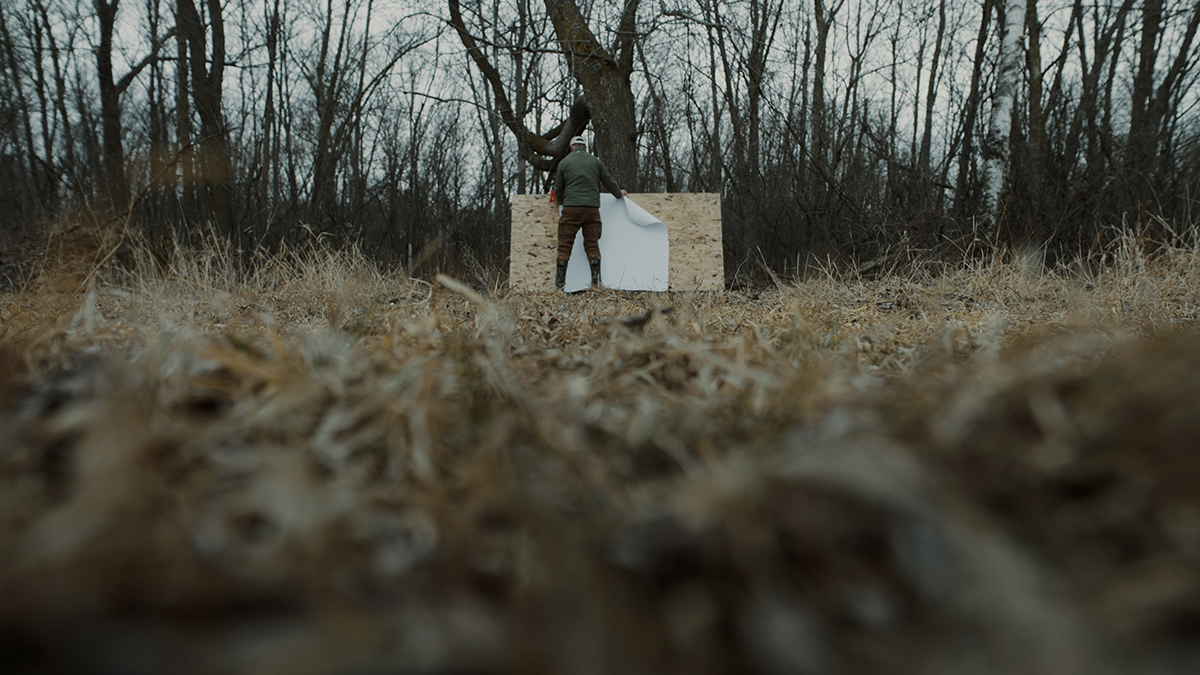
Start your turkey gun patterning process with a large target area to see the full pellet distribution.
Now it’s time to pattern your turkey loads. You’ll want to shoot all your different turkey loads through each of your choke tubes. Start with a fresh target area each time, and make sure to write the choke/load combo on the paper so you don’t lose track of what’s what.
This is a great opportunity to practice your shot process. It’s the same one to commit to memory by the time a gobbler is in your sights. It’s also important to have a steady rest. And, of course, make sure everything is safe. Wear hearing protection. Check everything downrange. Make sure the shotgun and choke tube are designed to handle the loads you’re shooting, especially if shooting TSS.
For patterning distance, we’re going to stick to that old 40-yard standard. And speaking of old standards, someone at some point decided you want at least 100 pellets in a 10-inch circle to have an ethical turkey load. I don’t know where that came from, but it seems fair. The important thing is you need enough pellets making contact with the gobbler’s head and neck to turn his lights out. Most folks agree about 8 pellets through the spine and skull will do the job. But when you’re even remotely serious about patterning, you can do a hell of a lot better than that.
Once you’ve shot all your patterns, it’s time to take a close look at each of them. Find the center of each pattern, draw a 10-inch circle around that center, and see what you’re workin with. Whether you want a super tight pattern or a wider pattern, ideally you don’t want a pattern with any big holes or gaps in the pellet distribution. If you want to get really fancy, do a manual pellet count.

Printing a respectable pattern on a turkey target is a sweet part of the turkey hunting process.
Choose your favorite pattern, and then rock and roll with the choke and turkey load combo that produced it. Then, sight in your turkey gun for that combo. Finally, it’s also a good idea to pattern your new setup at all the distances from which you intend to shoot gobblers, so you know exactly what you’re dealing with in the field. Turkeys will give you a run for your money most of the time, but a solid turkey gun will help to level the playing field.