




Use HuntStand and other tools to locate elk in rugged terrain.
The biggest dilemma for elk hunters is looking at a map or even a vast landscape and thinking “how am I going to find elk in this sea of mountains?” Elk do have preferential areas they stage in during the year. Regardless, unlike whitetails, elk have no commitment to a dedicated homeland unless it equals an unpressured environment that includes plentiful grazing, water, and sanctuary habitat. When elk receive repeated invasions from you into their homelands, they move to another suitable habitat.
No single strategy of finding elk holds all the answers, but by combining several strategies together, the sea of mountains might transition to a more focused area leading to elk encounters. Here’s how to find elk in a sea of mountains.
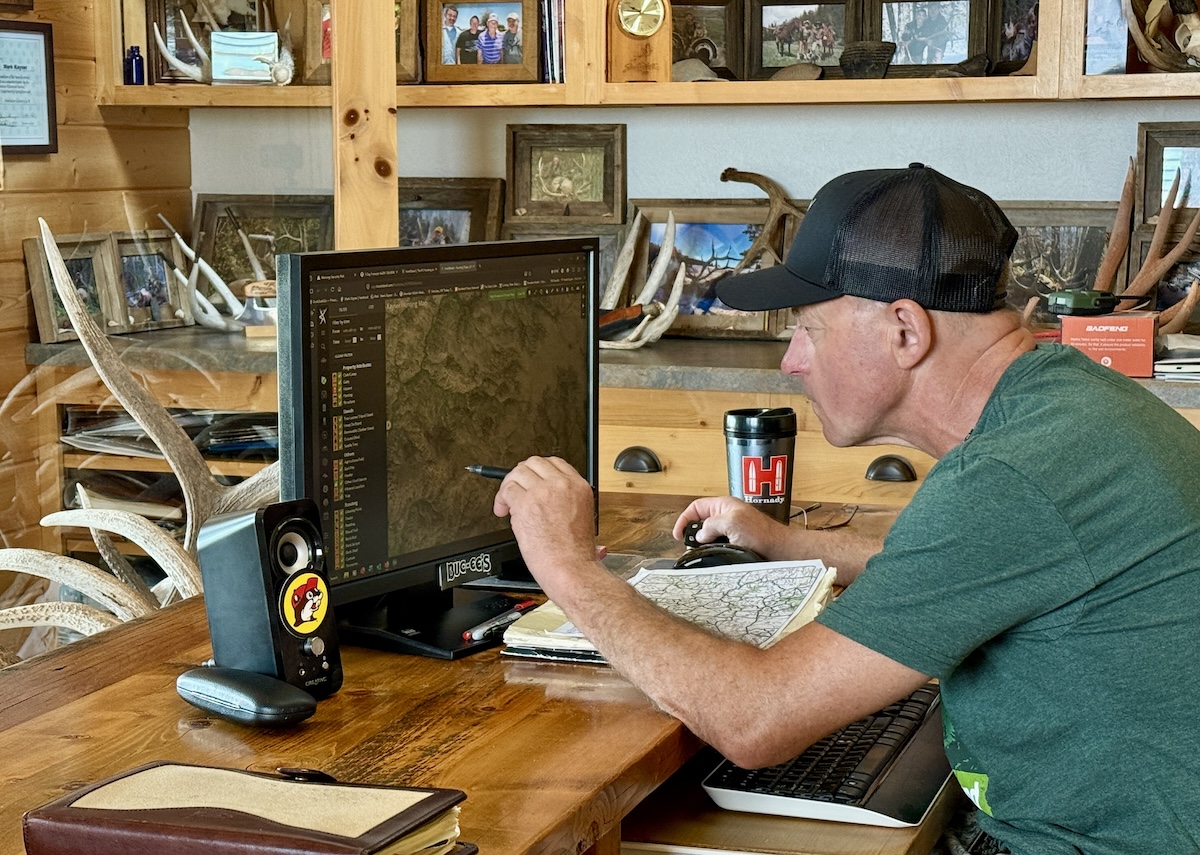
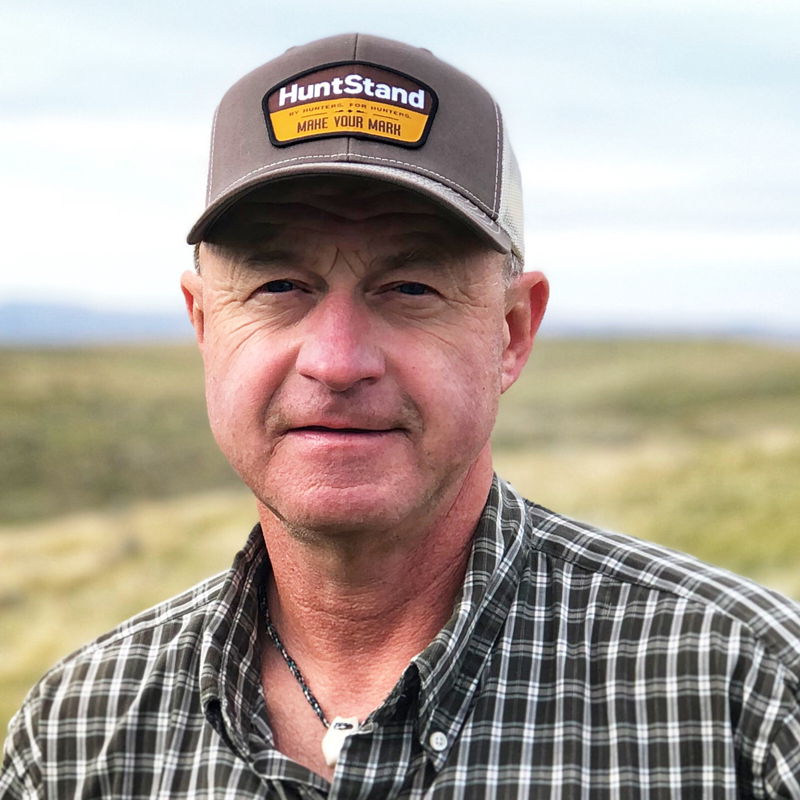
Mark Kayser researches online with HuntStand and studies forms for unit information.
How to E-Scout Elk on HuntStand
Start easy and be a digital sleuth to find elk. Don’t, however, go down an internet rabbit hole on bigfoot sightings. Begin snooping and sleuthing for elk clues on popular hunting forums, state game and fish agency sites, and even on social media with direct ties to elk hunting. These online sites might provide generous clues to where you can find elk in the unit you are hunting.
If the elk unit you drew is a once- or twice-in-a-lifetime license, you will discover locals and others who held the tag prior have few aversions to sharing information. I’m in that boat right now holding a once-in-a-lifetime tag. While researching forum threads on the specific elk unit I drew, I soon discovered that individuals were more than helpful in supplying targeted creeks, mountains, and valleys to look for elk.
After noting many of the locations, I then researched the state’s information on elk hunting the specific unit. To my surprise, much of the information on the forum was corroborated by the state’s data. The state went even further with trail condition reports and even weather advisories for changing conditions at varying elevations.
Tips for Your First Elk Hunt with HuntStand Ultimate
Research elk units in your spare time for a future hunt.
I did not find as much on social media as I would have liked. Nevertheless, I connected with a local guide in the area and again, the information flowed and substantiated forum threads and wildlife agency remarks. The local guide even offered to direct me into several canyons for summer scouting where they assured me, I would see bachelor groups of velvet bulls.
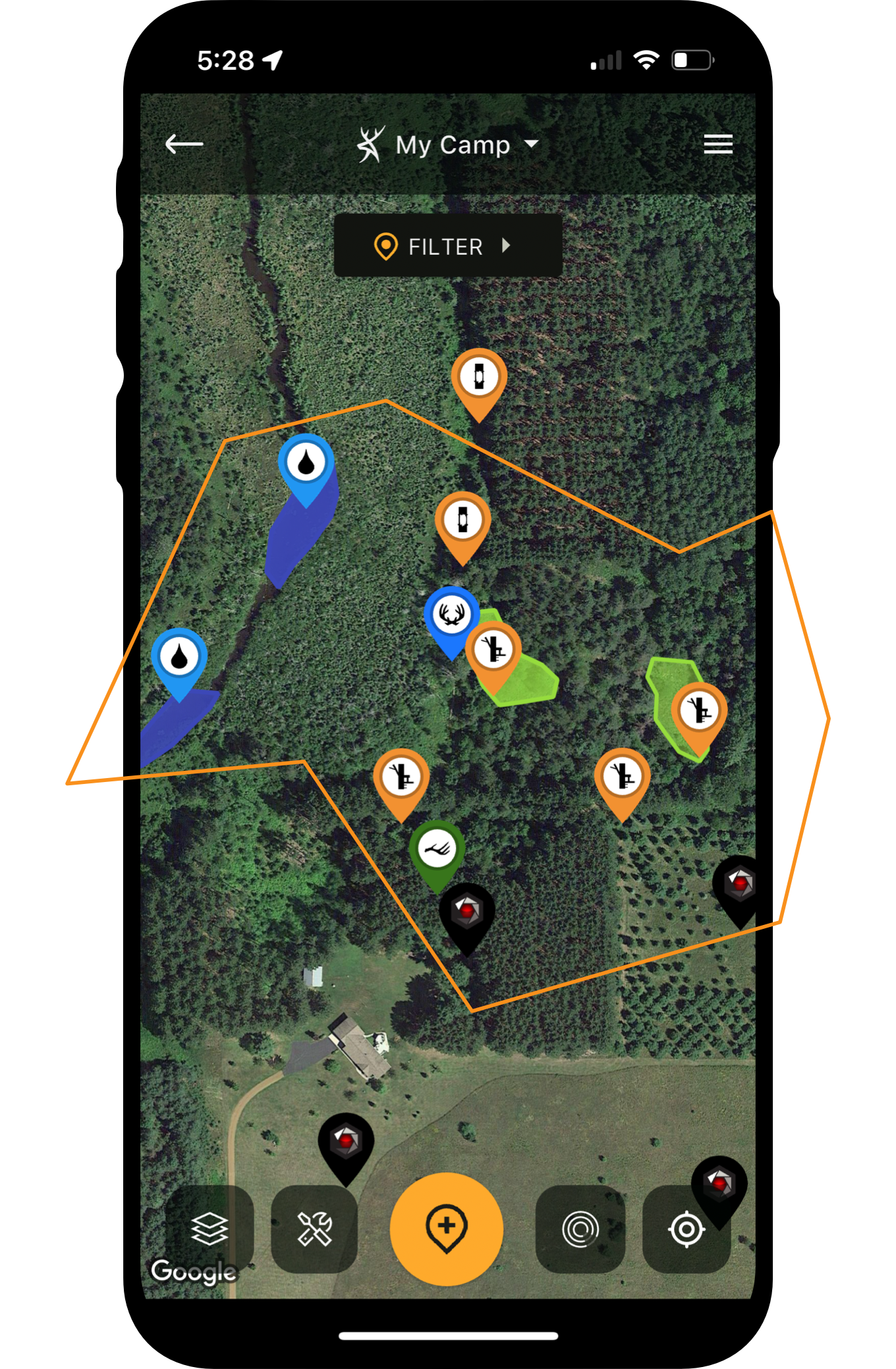
Remember though, in popular units where licenses are abundant, other hunters absorb much of the same information. Expand beyond your initial findings and an easy way to do that is to look at noted areas. Then, put your HuntStand Ultimate app to work. Use the Hybrid, Natural Atlas, Street or even 3DMapbox Street base layer. Seek out adjacent areas without trails or motorized access. Flip between the Outdoor or Quad Topo base layers for roadless areas with rugged terrain. Elk will likely move to these areas when they sense hunting pressure. You can even add the Contour overlay to the Satellite base layer for a similar analysis of the most remote country in your hunting unit.
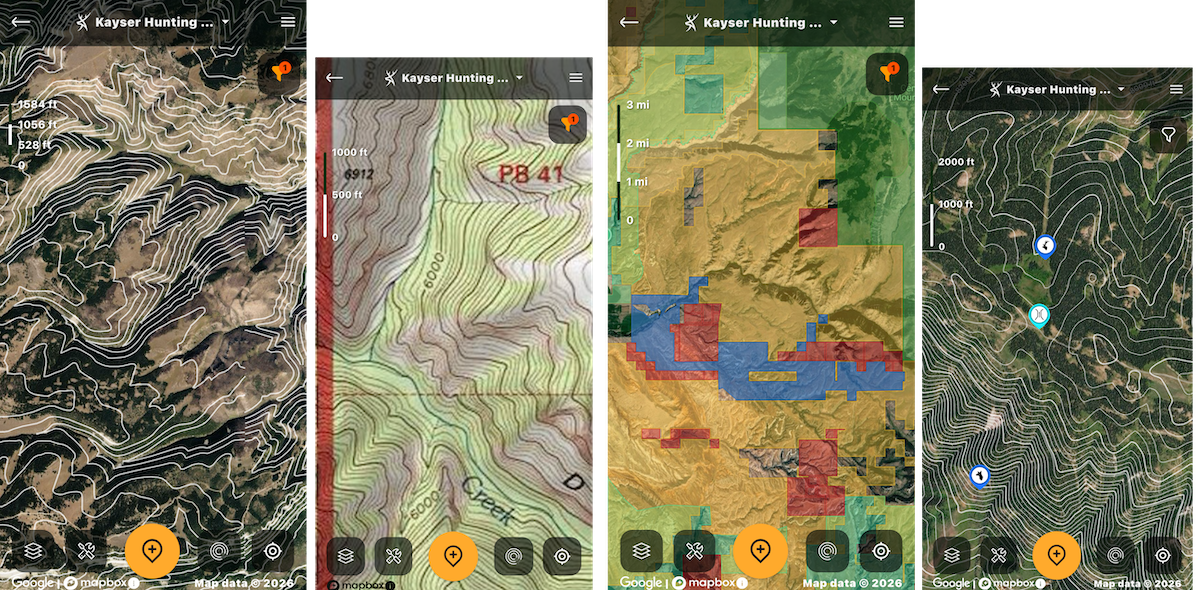
Use the HuntStand Hybrid base layer with Public Lands overlay showing public and private land nearby, Water Features overlay to locate H2O, Contour overlay to show a saddle where elk might cross, Hybrid base layer with Elk Rut Map overlay, and more.
Terrain Features That Elk Love
You read it a second ago. Yes, when the heat (hunting pressure) is on, elk seek out rugged and remote areas. In units broken up by private-land holdings, they also might run to these refuges if hunting pressure is minimal. The Property Info overlay, plus Hunting and Public Land overlays, can help direct you to any deeded ground with public access nearby.
Beyond that, always keep in mind that elk require copious amounts of grass and water. The Satellite base layer reveals openings in timber and the Water Feature overlay reveals water sources worth investigating. Reviewing clues, such as crips tracks and steaming droppings, plus fresh rubs on saplings, give away the presence of elk. In states where legal, trail cameras become a critical team member for scouting elk.
Terrain Features That Nomadic Elk Use
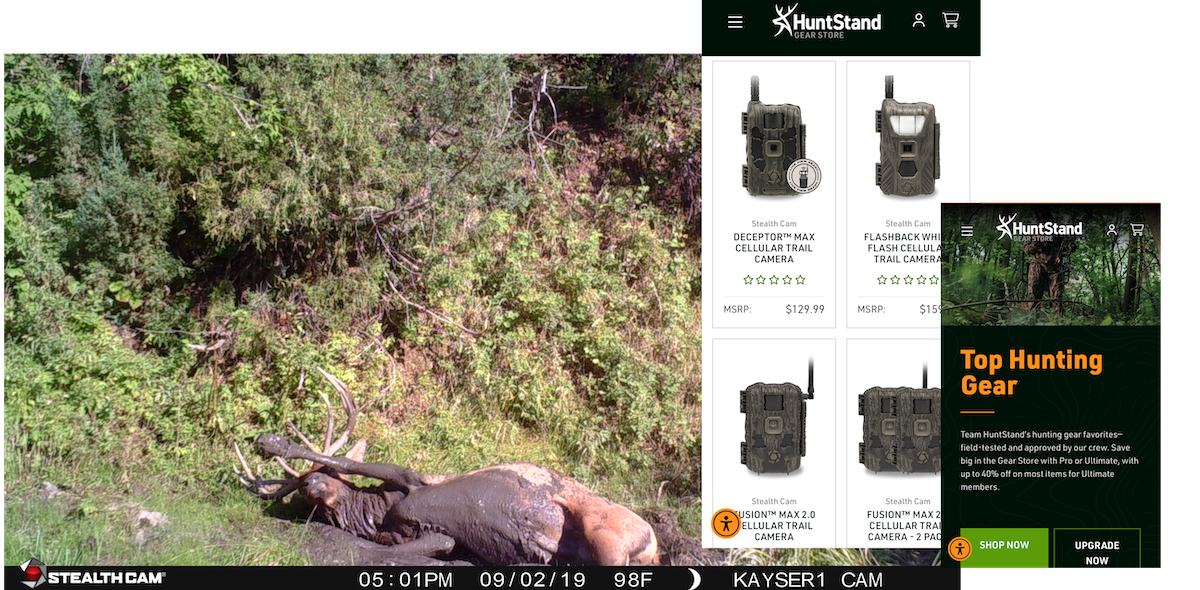
Visit the HuntStand Gear Store for great deals and up to 50 percent off. Look for trail camera and binocular deals.
By placing trail cameras on trails leading to secluded mountain meadows and on the banks of water sources, you can not only confirm the presence of elk but also numbers and trophy quality (if that is your goal). The HuntStand Gear Store is a must visit to shop for great deals on trail cameras and trail camera accessories.
Take your trail camera surveillance for elk a step further and monitor trails leading between food and water and between mountains. Use the HuntStand Contour overlay to look for steep areas interrupted by a mountain bench, ledge or ridge. The contour lines will widen and indicate a possible, path-of-least-resistance area for heavy elk traffic. A strategically placed trail camera will confirm traffic flow, plus point you in the direction of where to place a treestand.
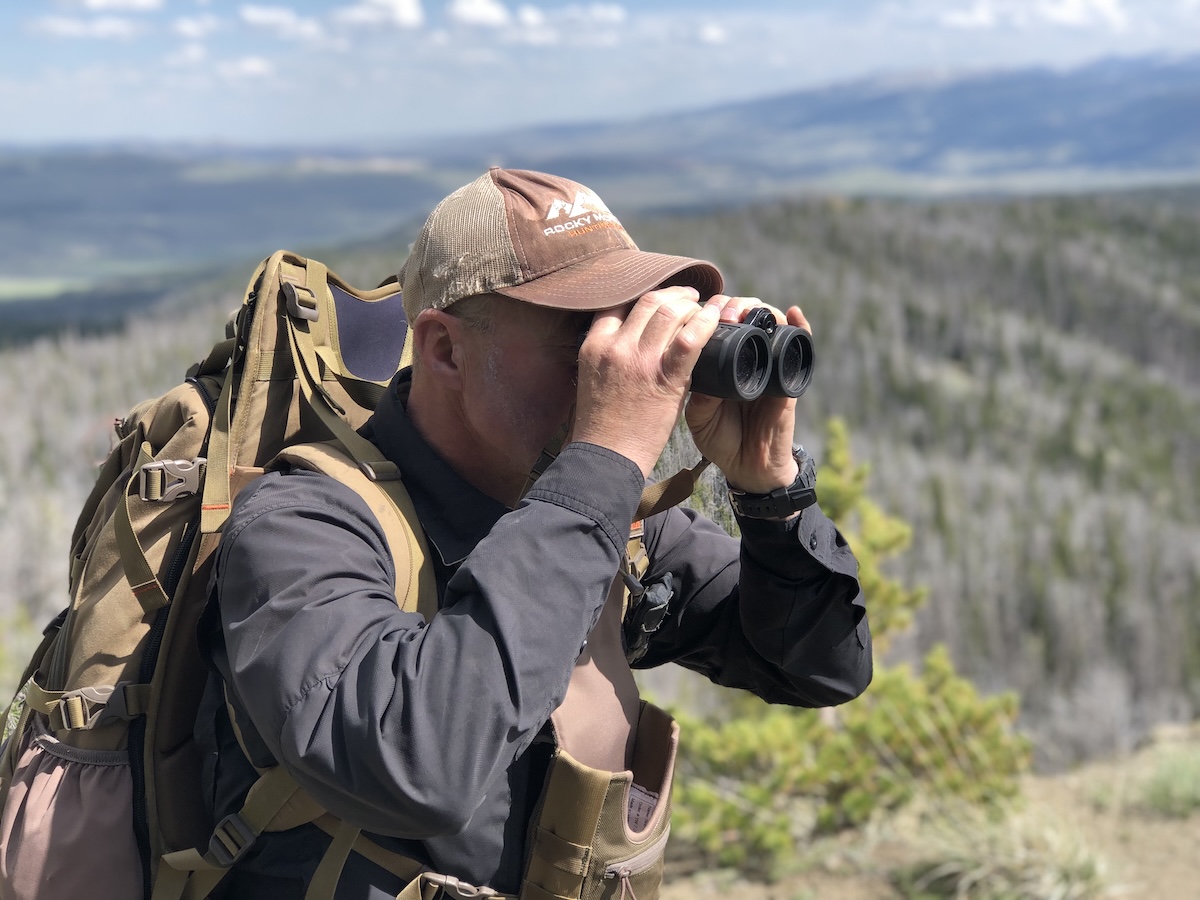
Use quality optics to glass for elk in a sea of mountains.
Glassing Elk From Afar
Unpressured elk routinely show themselves in openings at dusk and dawn due to the amount of feeding their bodies demand. Over several decades of DIY, public-land elk hunting, glassing for elk in a sea of mountains has revealed many opportunities leading to success. In 2016, my buddy spotted two rag-horn bulls in a tiny opening more than a mile from our position. I marked the location, and on three consecutive hunts in that unit, I bow-killed bulls in that area. Several years later, I spotted a herd of elk in an opening several miles away. After marking the location on my HuntStand app, I made my way to the steep slope. Today, there are more than a half dozen bulls my son and I have killed in less than a square mile area. Spotting elk from afar in openings is key to most elk hunts.
Because of weight, I rarely carry a spotting scope in the field and do so only in once-in-a-lifetime hunts to guarantee my field-judging capabilities. Mostly, I rely on a 10-power binocular, like the Halo 10×42 K2000 LRF rangefinding binocular, found in the HuntStand Gear Store. The rangefinder aspect aids in determining distance to the elk in close proximity. Plus, the 10-power optics provide you with the ability to determine mature bulls from rag horns and mature cows from yearlings. Spend time glassing every opening in front of you when you reach pertinent vantage points with an emphasis on dawn and dusk. Note the location of sightings on your HuntStand app. Then, move your butt over to the location and find those elk.
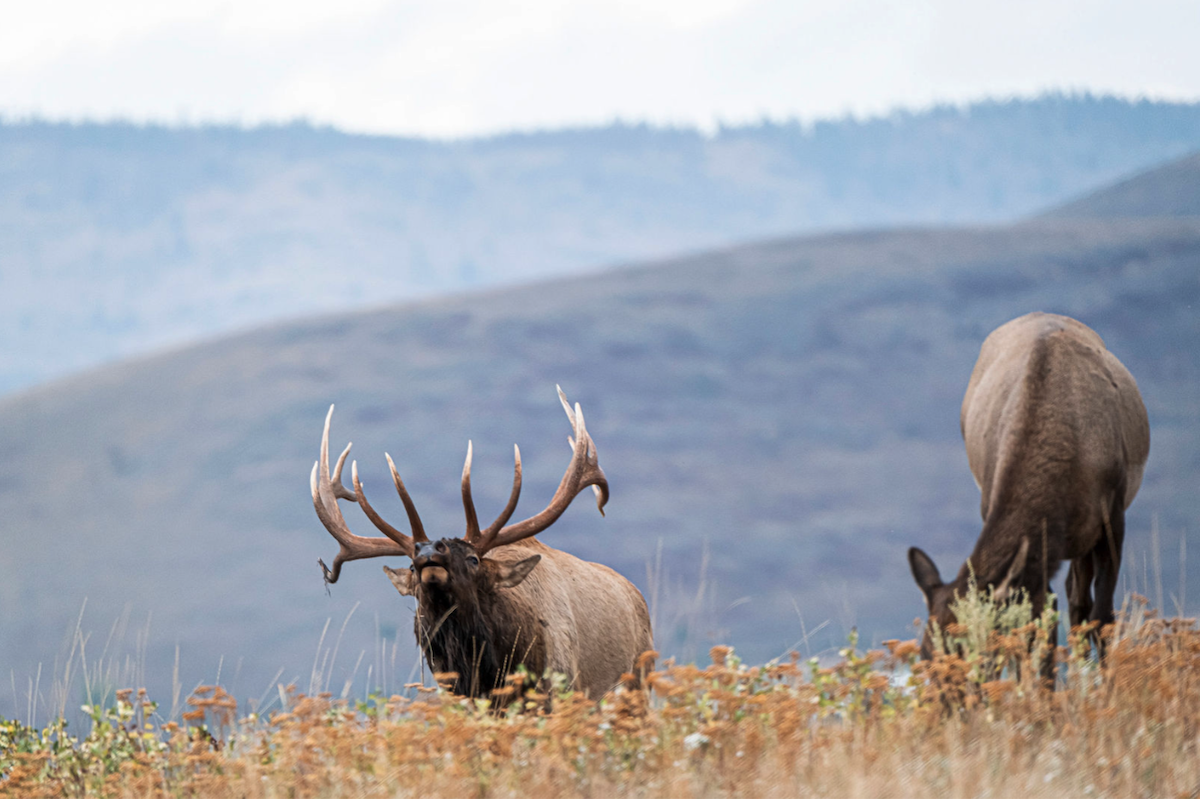
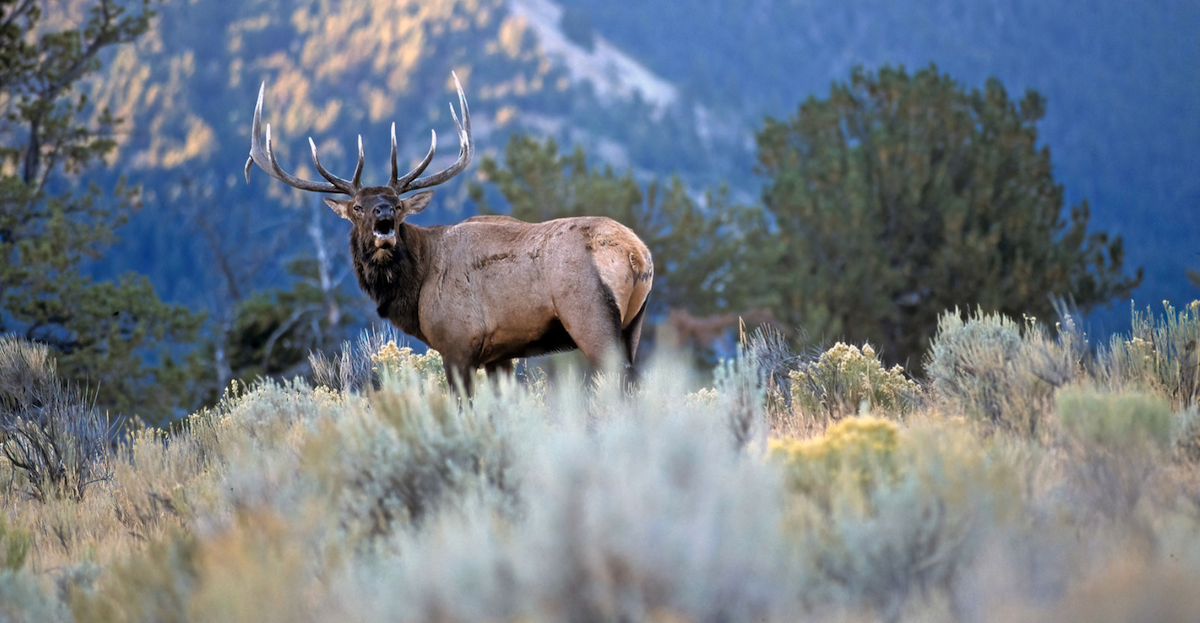
Use a bugle tube to locate elk at dawn.
Elk Calls That Initiate Elk Responses
Elk calls can play a significant role in locating elk markedly during the rutting season of September and even in the post-rut as young bulls command herds given up by mature bulls seeking solitude. To dial in the various phases of the elk rut with a targeted approach to elk activity, utilize the Elk Rut Map on the overlays section of HuntStand Ultimate app. Peak periods of the elk rut, chiefly in September, indicate the most vocal periods of herd vocalization. HuntStand’s Gear Store includes deals not found elsewhere on elk hunting equipment, such as calls. Visit it while checking off needed items on your elk hunting list.
Your best go-to vocalization to begin any morning hunt, usually at daybreak, is the bugle. A nonaggressive bugle with a “who’s out there” message can bring back responses near or far. Oftentimes, pressured bulls bugle back better when separated by approximately a mile away. Supercharged bulls will scream bugles back at you as well when close, but they might be more apprehensive if they have encountered recent hunting pressure that used aggressive calling.
How to Plan for Public-Land Elk Hunting
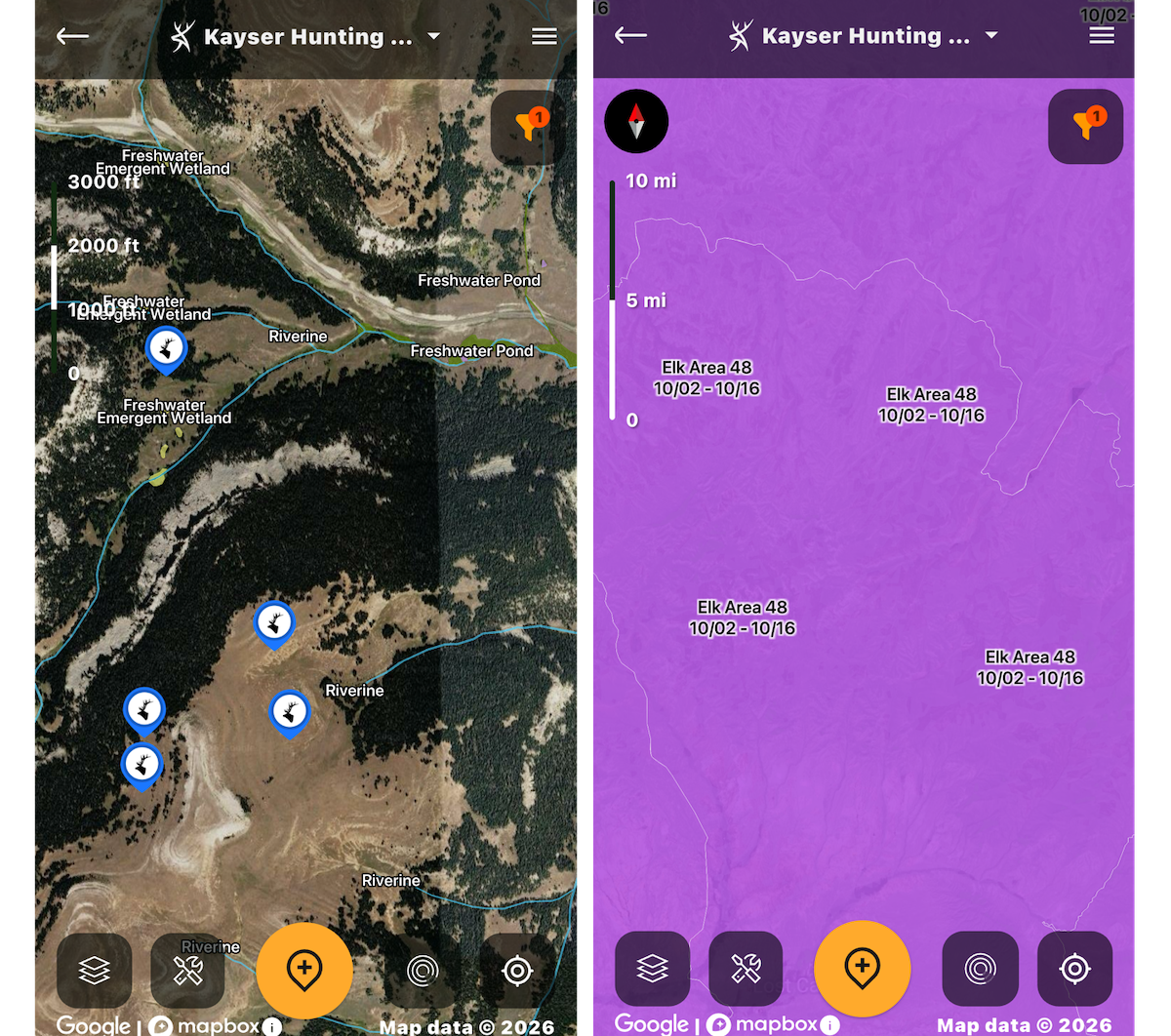
HuntStand's Elk Rut Map can help time hunts and locate elk herds.
Veteran Colorado elk guide Travis Shippey handles bulls reluctant to answer bugles with a female vocalization approach. If he believes bulls are in an area but hesitant to respond to bugles, he immediately switches to cow calls. His first attempt mimics the sound of a cow calling for herd location or to possibly locate a stray calf. On pressured elk, he might then switch to the yearning sounds of a cow seeking male companionship. This estrus whine triggers both mature and adolescent bulls who have peaked in testosterone but have not found an estrus cow to breed.
Never let one call determine if a mountainside is void of elk. Start with a bugle or two. Add in a chuckle. After a few minutes, shift to cow calls with a bugle inserted in to create the sounds a herd makes while on the move. Typically, elk that hear any combination will reply, but do not bet on it. If you truly believe elk are in the neighborhood, move downwind 120 yards and wait quietly. A silent elk might arrive out of curiosity.
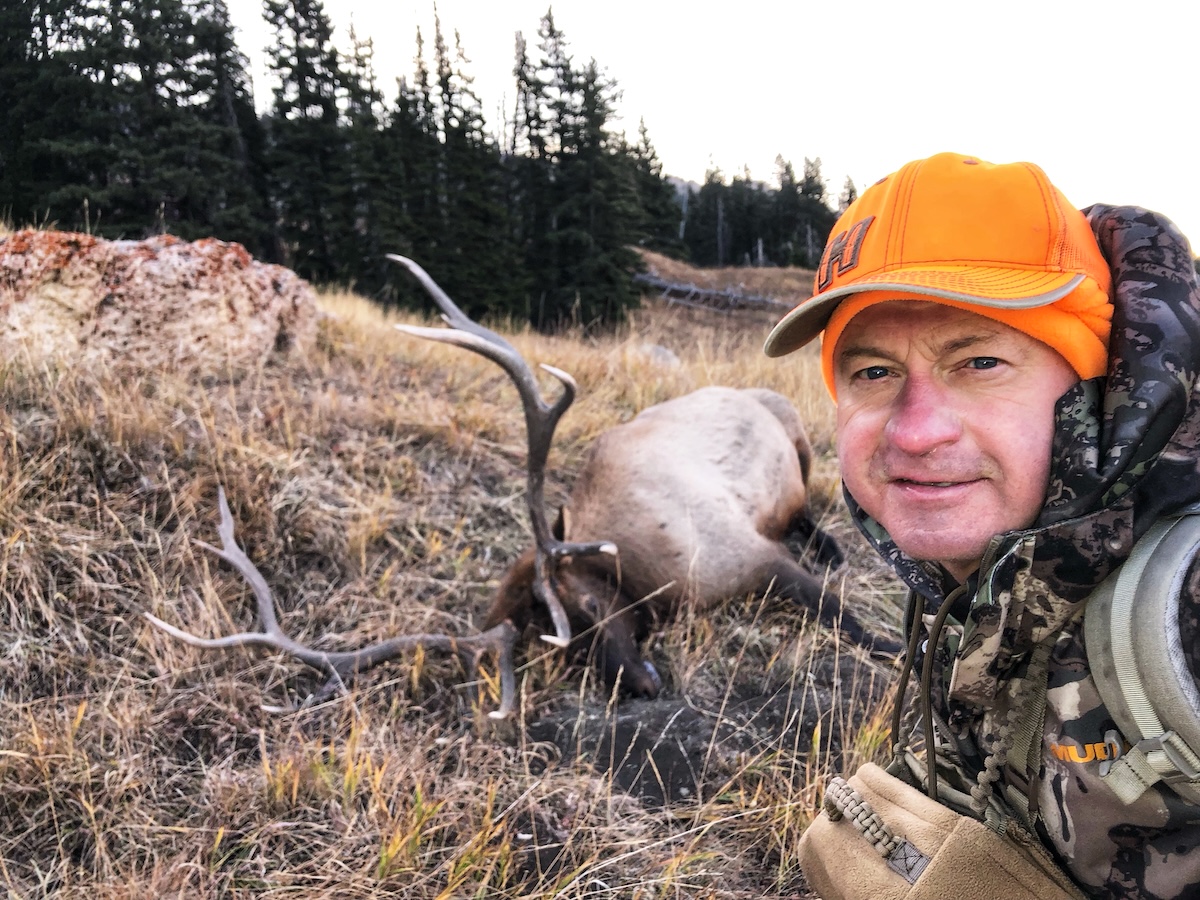
The sun had not risen yet and Kayser was already staring at a huge job just minutes into the season. You can find elk in a sea of mountains.
Locating elk in a sea of mountains seems like an unattainable feat. It’s even more challenging in a national forest of 1 million-plus acres or a hunting unit that spans more than 100 square miles. Nevertheless, it’s an attainable feat with a team of strategies. Go find those elk and turn that sea of mountains into your elk playground.