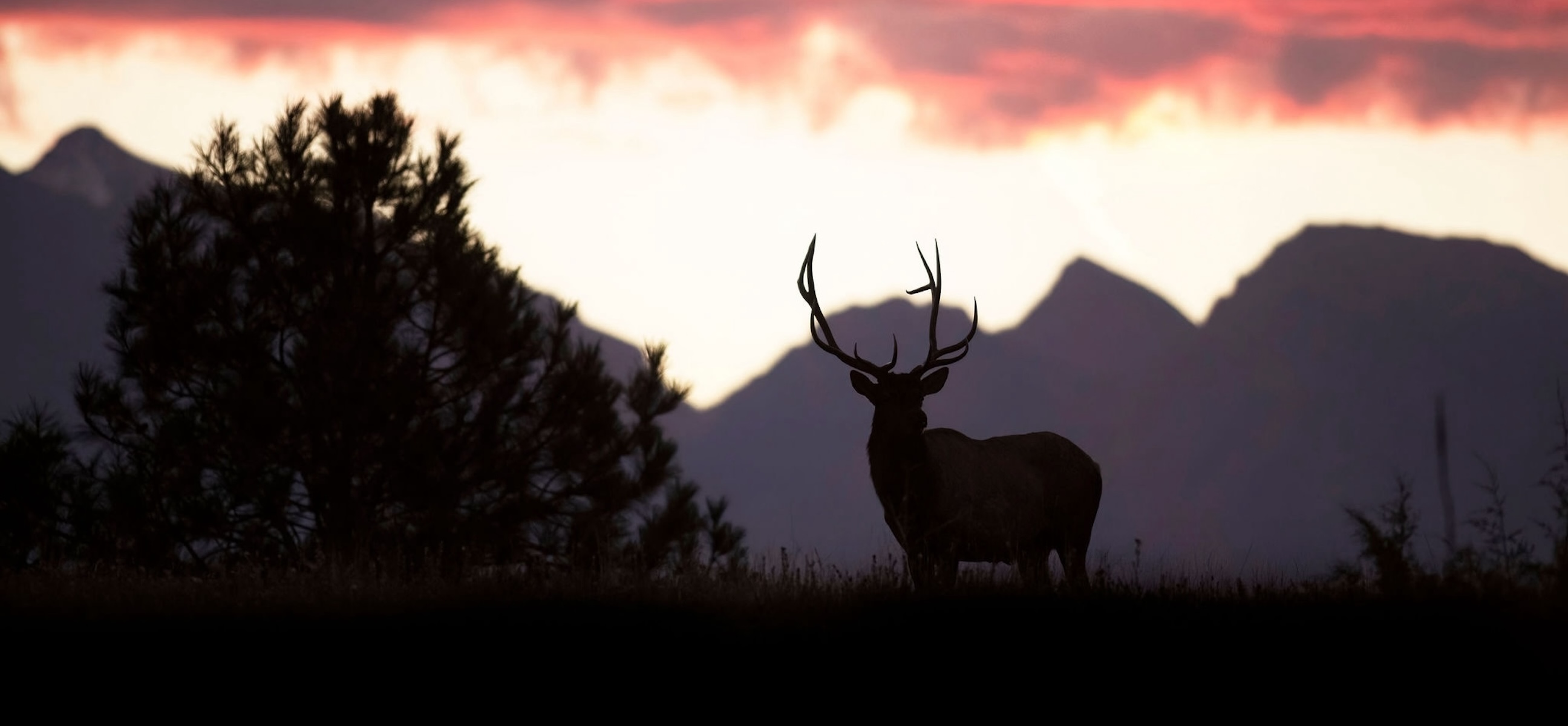




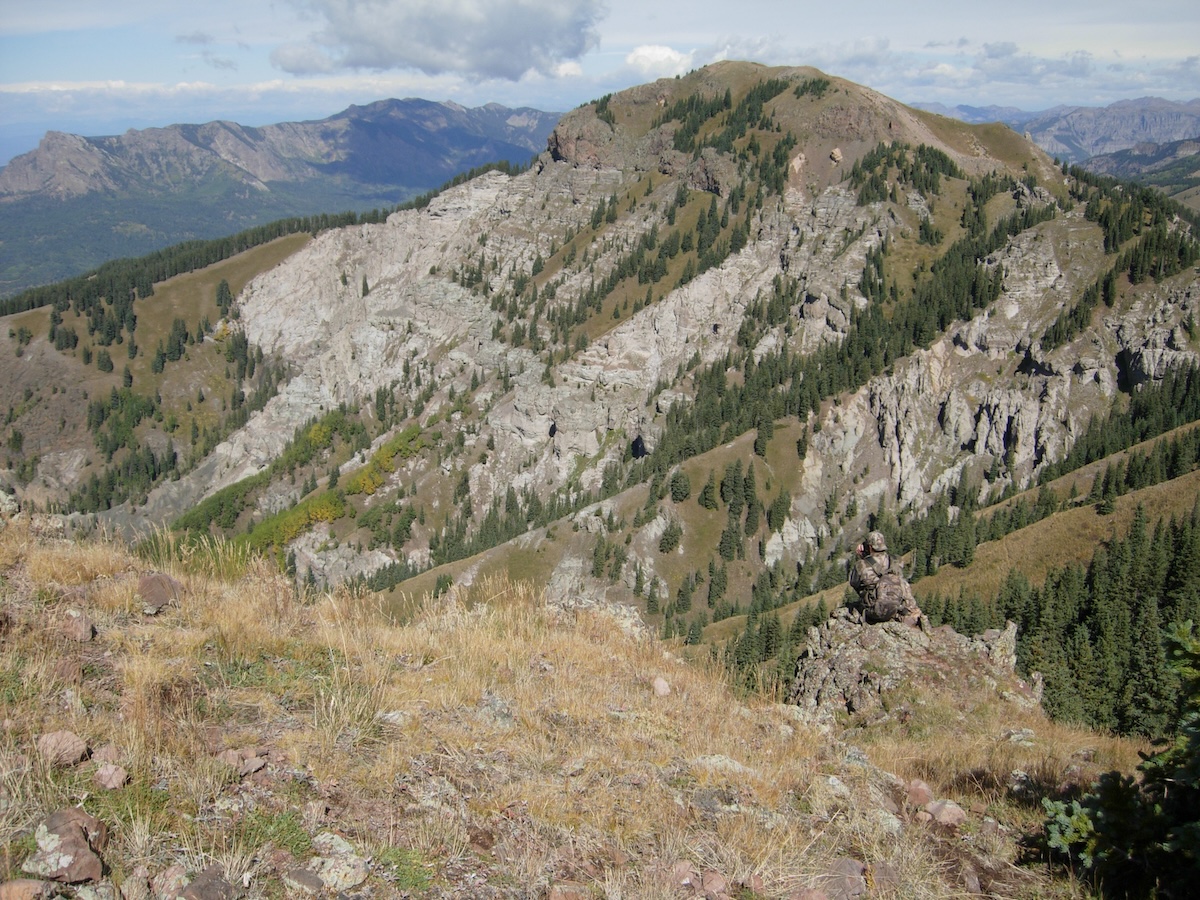

Elk herds require lots of grazing nutrition. Some of the best areas are on valley floors, but look for steep slopes to hold good grazing and security for elk, too.
Getting the most from a hunt is important. You only have limited days to put into a hunt and using your days wisely requires a savvy playbook. Fortunately, archery elk hunting provides you a platform to hunt elk all day while capitalizing on their daily schedule.
Although they do not have a schedule as stringent as a city subway system, they do exhibit trends toward varying behaviors throughout the day. Understand these behaviors and set your watch to take advantage of any mistakes they might deliver during your hunt. Here is how I plan my archery elk days during the elk rut.
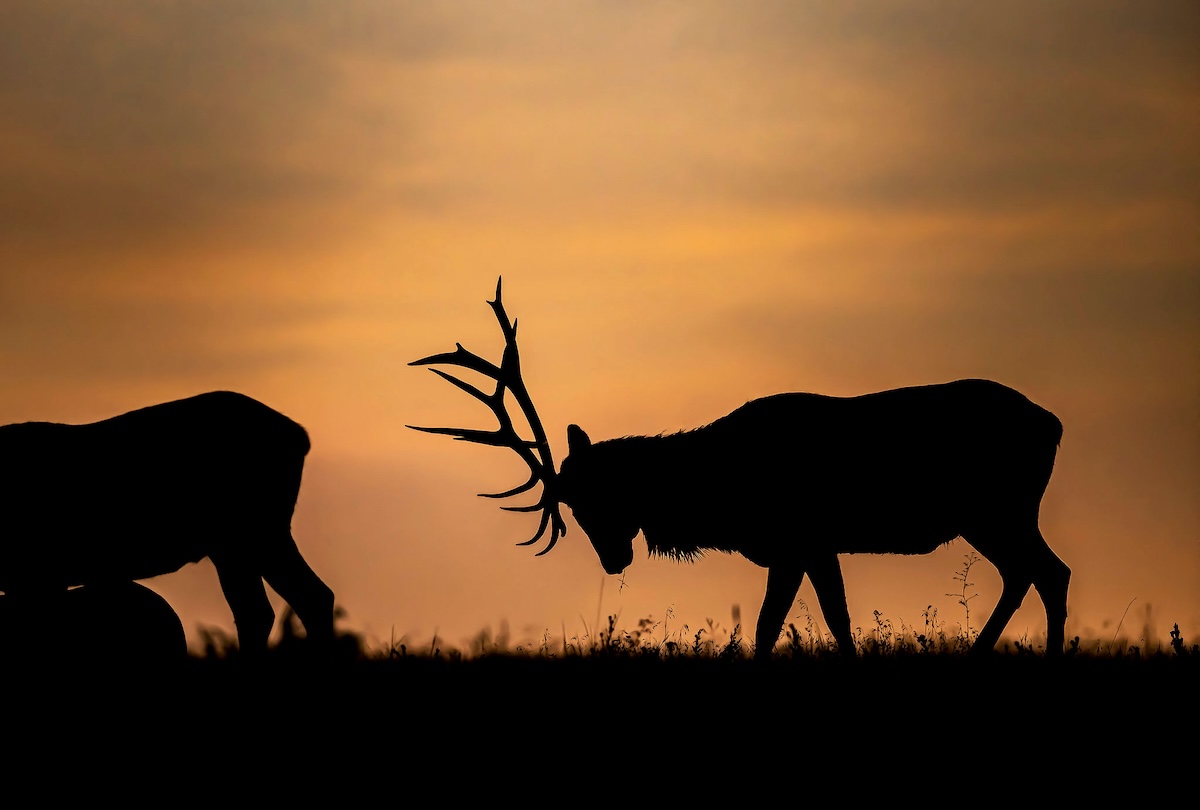
Follow elk in the morning and attempt to cut them off in an ambush.
Hunting Elk from Dawn to Mid-Morning
My archery hunts kick off well before dawn. Start your days early as well. Rise early and get into the woods way before sunrise. It offers multiple benefits. For starters, you beat most other tired hunters to the good spots. By day three or four of any hunt, most feel fatigue and grind. Getting out of the sleeping bag becomes a real challenge.
More than that, your dark hike allows you to move ahead of elk, which traditionally take off at dawn toward daytime refuge. Beat them to their bedrooms. And while moving through the woods in the dark, you also glean important information. Occasionally, bulls sound off and ramp up their talk as the first light of sunrise offers you a chance to shut off the headlamp. Use these vocalizations to direct your ambush and fine tune the final approach to a herd.
Hiking Miles Deep to Hunt Elk: Is It Necessary? Maybe Not.
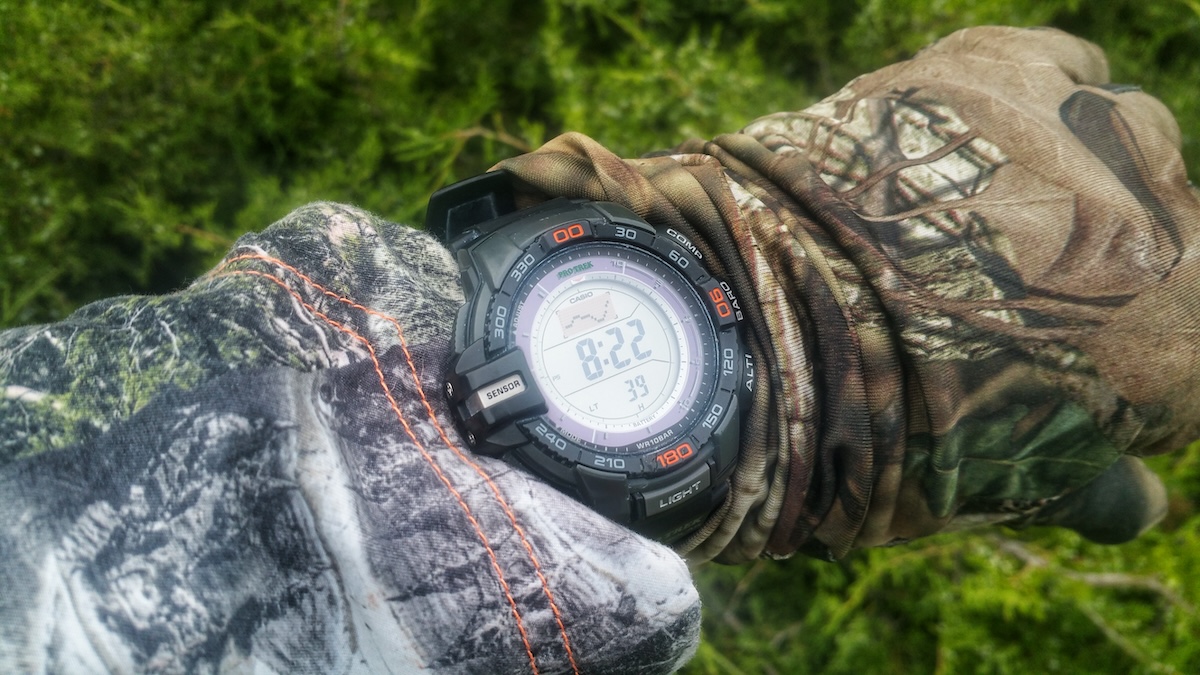
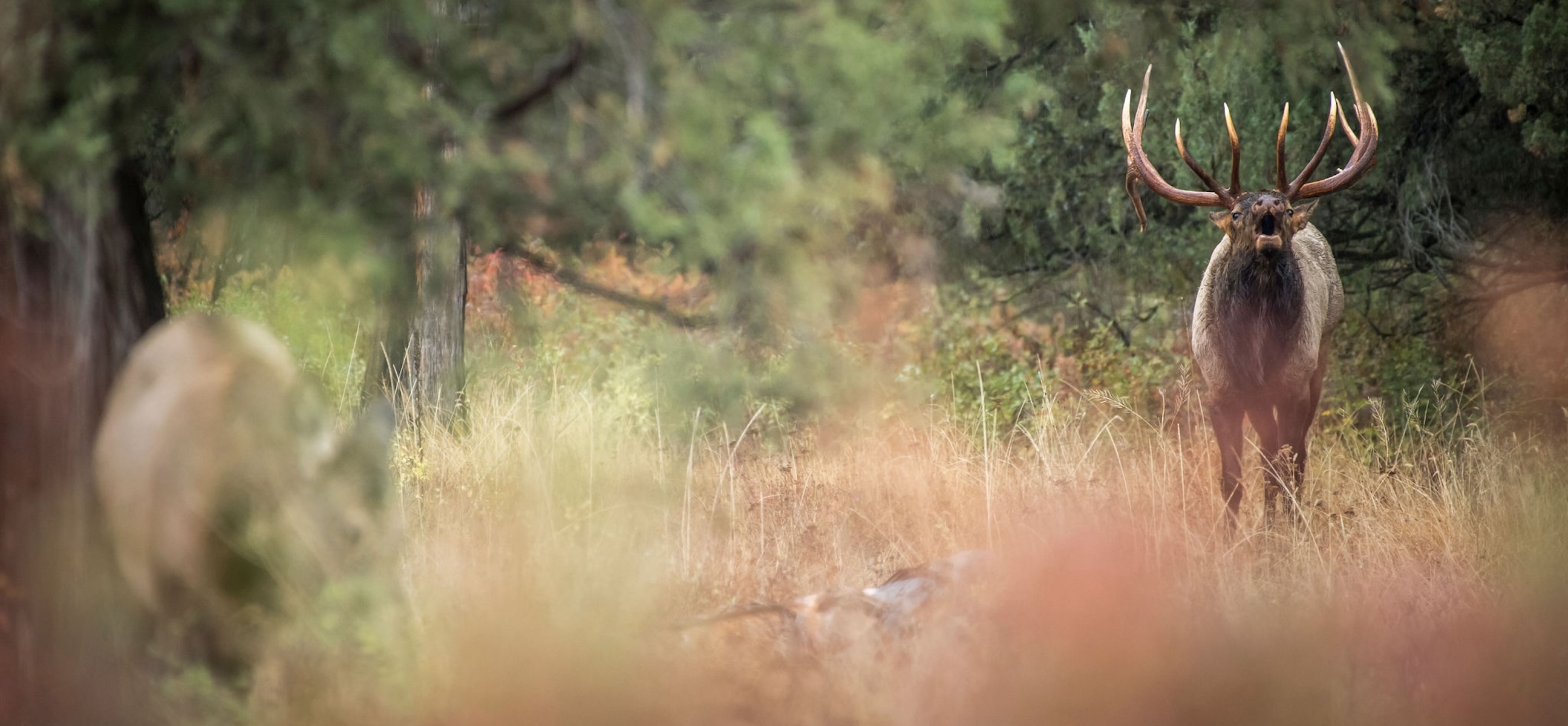
Elk follow a loose schedule during the rut. Learn that schedule and it helps you craft an all-day hunting plan.
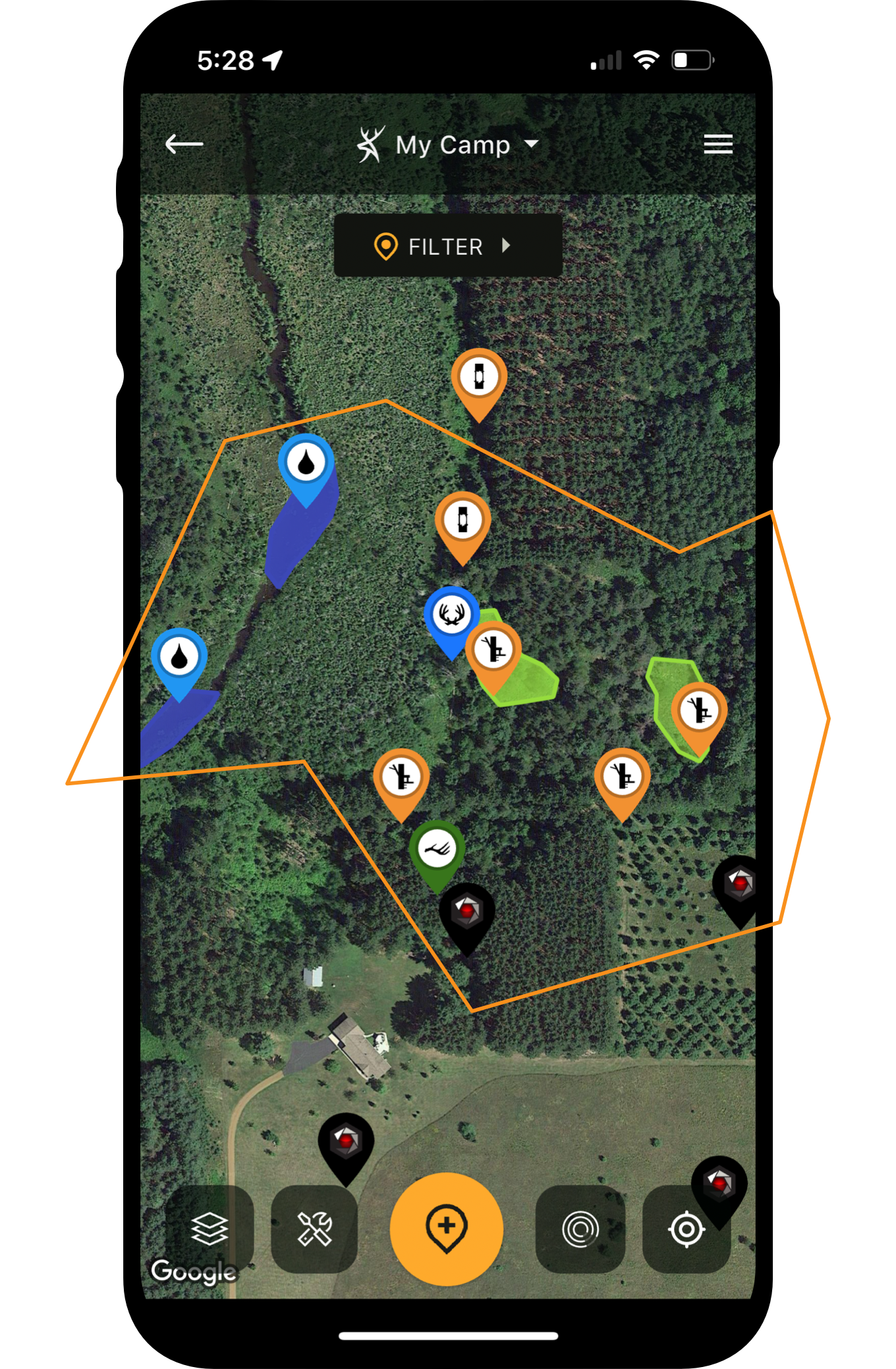
A HuntStand Pro subscription plays an important role in these moves. Utilize HuntZone to monitor wind forecasts and stay abreast of terrain changes while adjusting to elk randomness. The Hybrid map feature, along with the Natural Atlas topographical information, guides you in tandem with bugles. Offline Maps gives you freedom to navigate without cellular service.
Stay as close to any herd as possible and adjust your position as thermals and winds change from the cool of the morning to the heating of the day. The goal of most herds is to end up high on a north face, across a major canyon, and buried in thick pines or junipers. Rugged terrain and dense cover forces you to burn calories to meet up with the herd, but you might be able to coordinate an encounter early in the morning movement, or later.
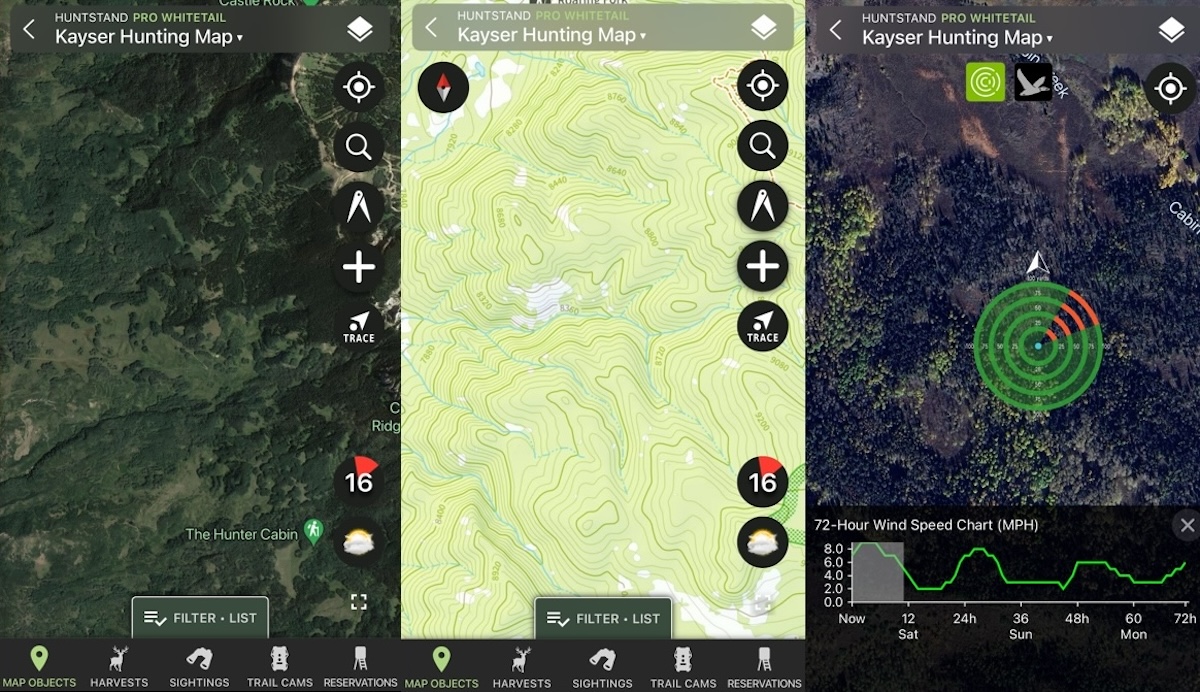
HuntStand’s Natural Atlas is good for comparing topographical terrain in elk country. The Hybrid map feature on HuntStand is ideal for studying elk country. Use HuntStand’s HuntZone to review wind for elk hunting.
Once elk reach a lounging location of their choosing, they often roam, rut, and frolic instead of merely dropping into beds. This bedroom teasing distracts elk giving you yet another opening to slip into shooting range.
If elk activity is high, you might not need to call. To nudge elk into your shooting lanes, consider sounding like a lost cow or a subordinate satellite bull. If the bull responds with vigor, cut him off and ramp up your challenge. He might have a cow nearby in estrus and ready to rumble to protect his domain.
How to Call Elk Like a Champion Caller [HuntClass]
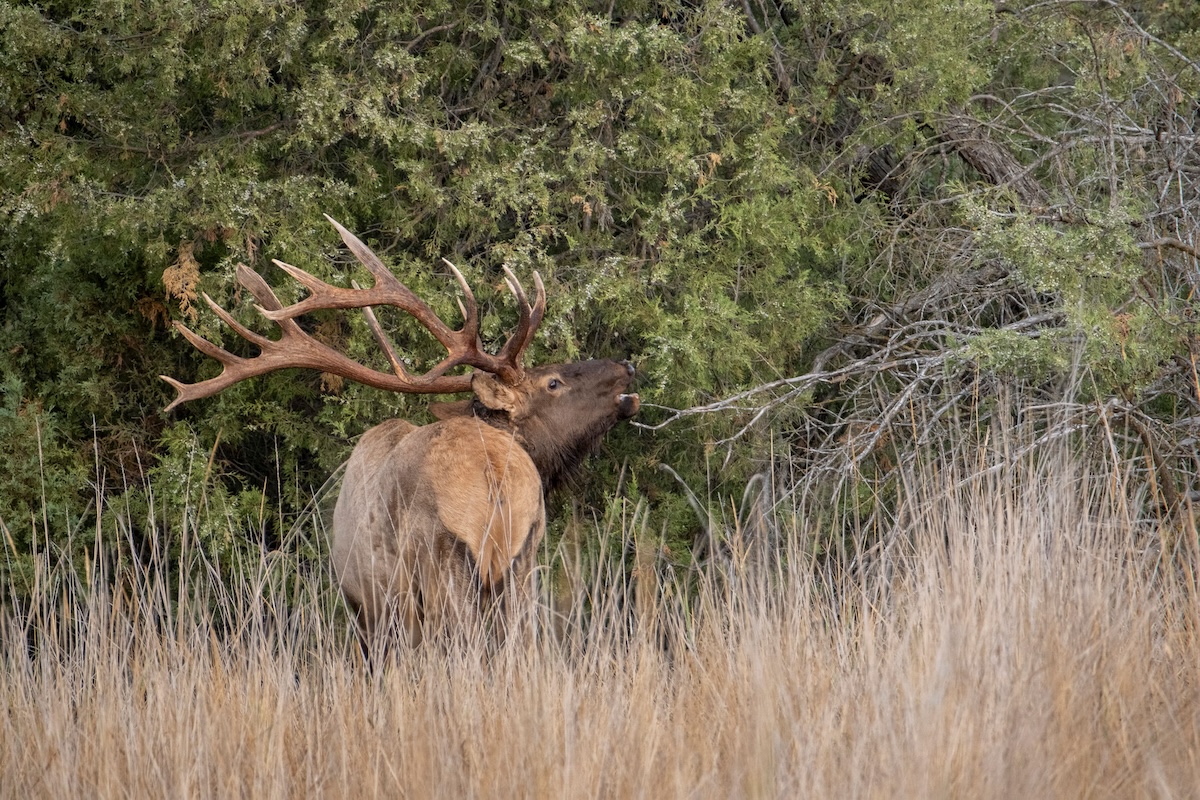
Construct a hide from a fallen tree and wait for elk to slip by in dark timber on a well-used trail.
Hunting Elk from Mid-Morning to Mid-Afternoon
Around mid-morning, whitetail hunters typically head back to camp. Don’t be a whitetail hunter. Instead, stay out and consider three strategies.
Your first strategy relies on if elk are bedded nearby. Keeping tabs on the wind, use your HuntStand Offline Maps feature to dissect the terrain and map out a route to get as close to the bedded herd as possible. With a stealthy approach, set up downwind (without spooking the herd) and wait for elk to stretch, graze, or walk anxiously around the bedroom. At any point during midday, a bull could walk by (silent or chuckling).
If you do not have a good handle on the location of a herd, but feel the area is “elky,” just still-hunt. Slowly drift into heavy cover, stop, glass, and then move a few more yards. Keep the wind in your face and put HuntStand Pro to work utilizing Natural Atlas to seek out benches and mesas that might be hidden under a canopy of pines.
How to Hunt Elk at Higher and Lower Elevations
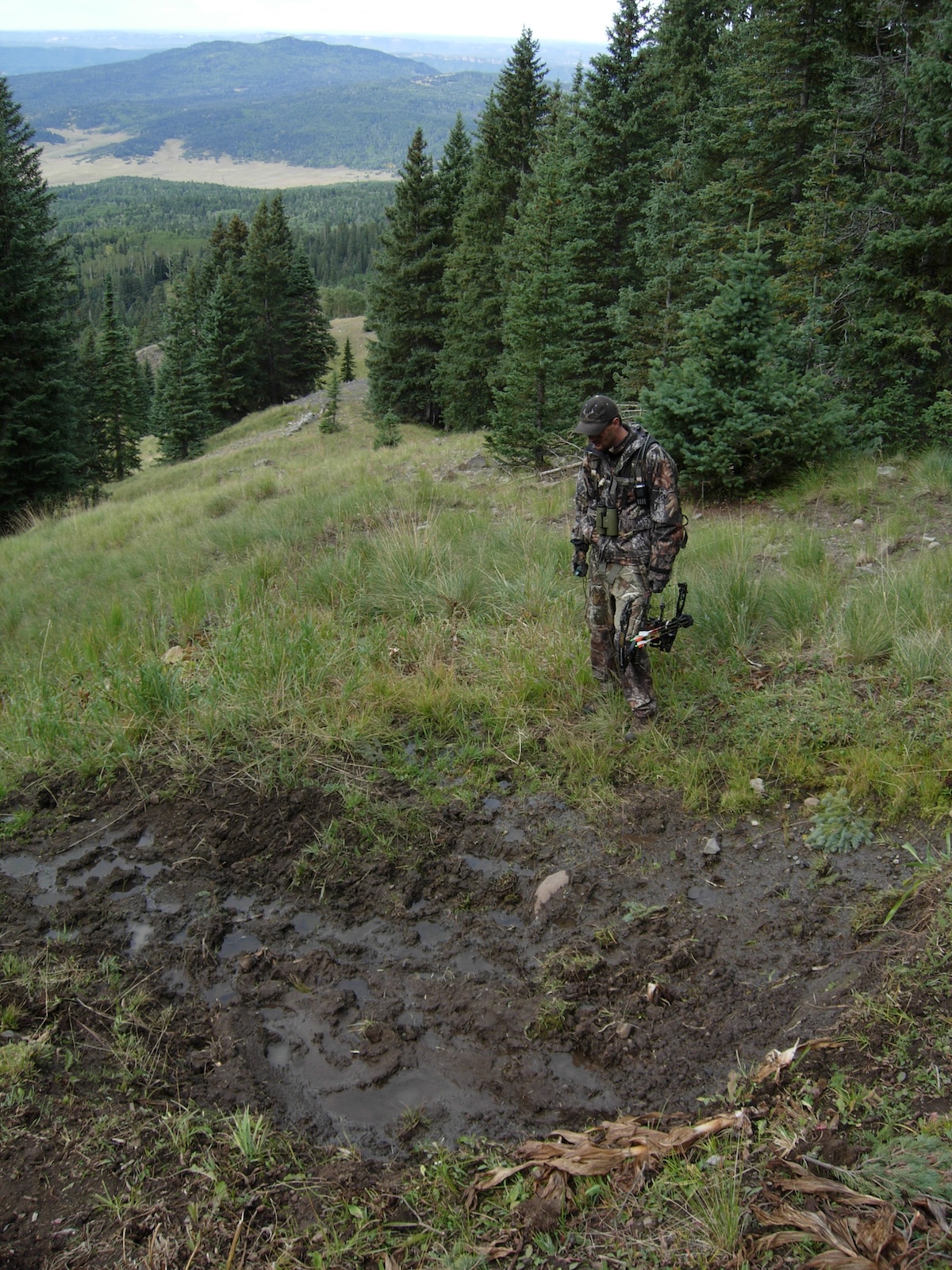
Elk can wallow and water at any time, but mid-morning to mid-afternoon is an ideal time to watch water in the heat of the day.
The third strategy option is water. Ek often drink right before bedding. Bulls commonly leave a bedroom to drink, or wallow, anytime during the midday siesta.
HuntStand’s Natural Atlas feature notes all major water sources in an area. Whenever you discover water, study it for activity. Place an icon on your map and revisit those with a muddy, wallow character. If I cannot locate a herd, I review my offline map for previously found wallows. After choosing one I feel has potential, I build a homemade hide downwind and catch a wink while waiting.
E-Scouting Public-Land Elk [HuntClass]
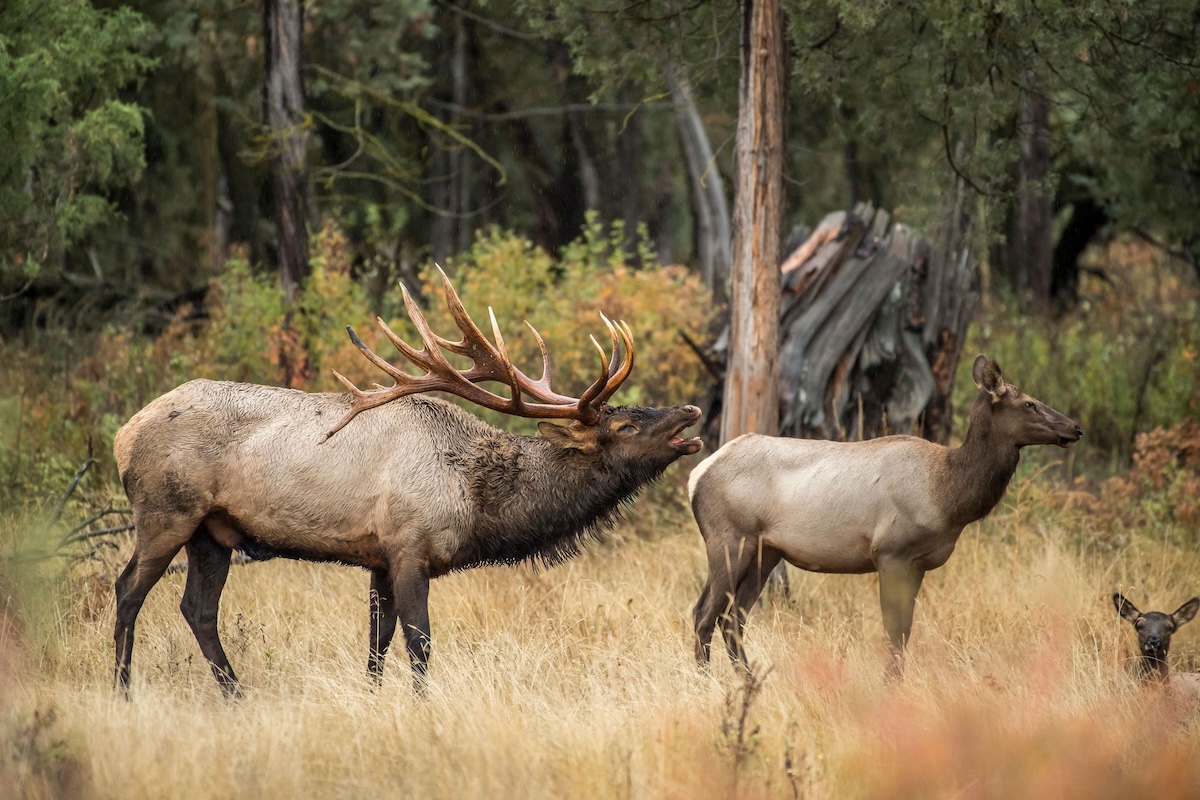
Build hides at key locations, such as wallows and trail pinch points, to wait for elk around midday.
Hunting Elk from Mid-Afternoon to Dusk
The afternoon could be a replay of the morning. Or, elk could leave you so far in the dust you cannot catch up to the busy herd. If they don’t, you have two strategies before dusk.
The first relies on setting yourself up in the exit alley of elk heading to their evening haunt. Think water, and then food. The second strategy relies on intuition, which is hopefully scouting based. Be at or near where the elk want to be at dark.
The first option takes into consideration that you know where the elk are bedded. While elk snooze, use HuntStand National Aerial Imagery layer to decipher their first move out of bed. This layer never gets older than two years (with constant updates) to give you the latest above-ground view of the area.
As you virtually scout, look for water sources elk might visit first. September can be hot, and elk seek water for relief, and to recharge from rut rigors.
Next, look for the best grazing. A herd requires hundreds of pounds of feed daily. Valleys, creek drainages, and mesas offer highly nutritious grazing vegetation.
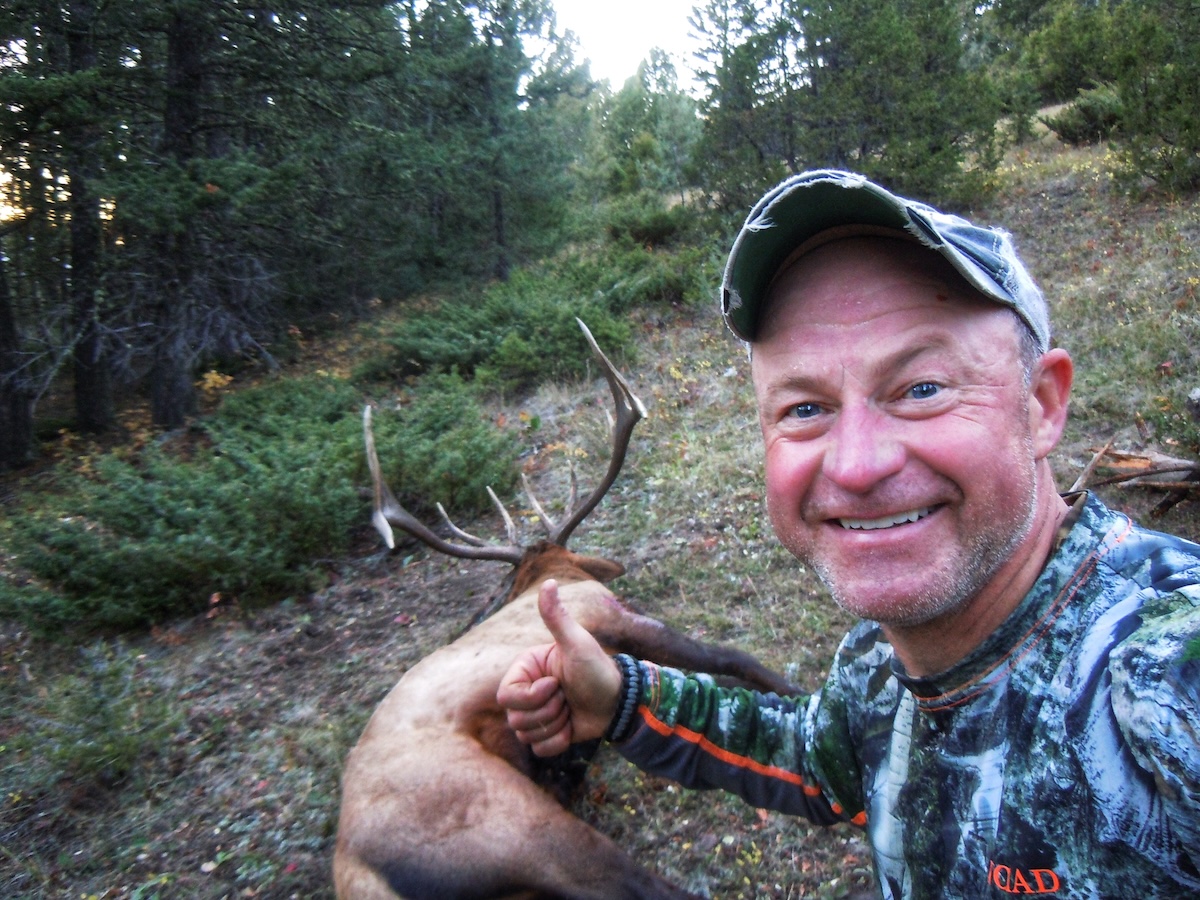
Most of Kayser’s archery kills are in the morning, but he called this satellite bull into archery range late in the afternoon after it split from a herd.
After noting a couple possibilities, take a guess on their route and maneuver into place. Wait in silence or use subtle calling as an attraction. Think whitetail-esque pinch-points and funnels as your best places to set the trap.
If too many escape routes exist, but you feel the elk will head to a grassy valley below, get ahead of them. Navigate to the feed or water and wait for them to arrive. A small meadow on the way might be a smarter bet, as herds could loiter there waiting for darkness before visiting the prime buffet. Remember again to consider shifting thermals that might be rising, but eventually falling, later in the day.
In the case of you have no clue of a herd, or their destination, I suggest working toward camp. Use the occasional locator call to spark any conversations along the way. If no bull wants to scrap, might as well get back to camp and grab an extra hour of sleep. Public land elk hunting is grueling, and the next day will not be any more forgiving.