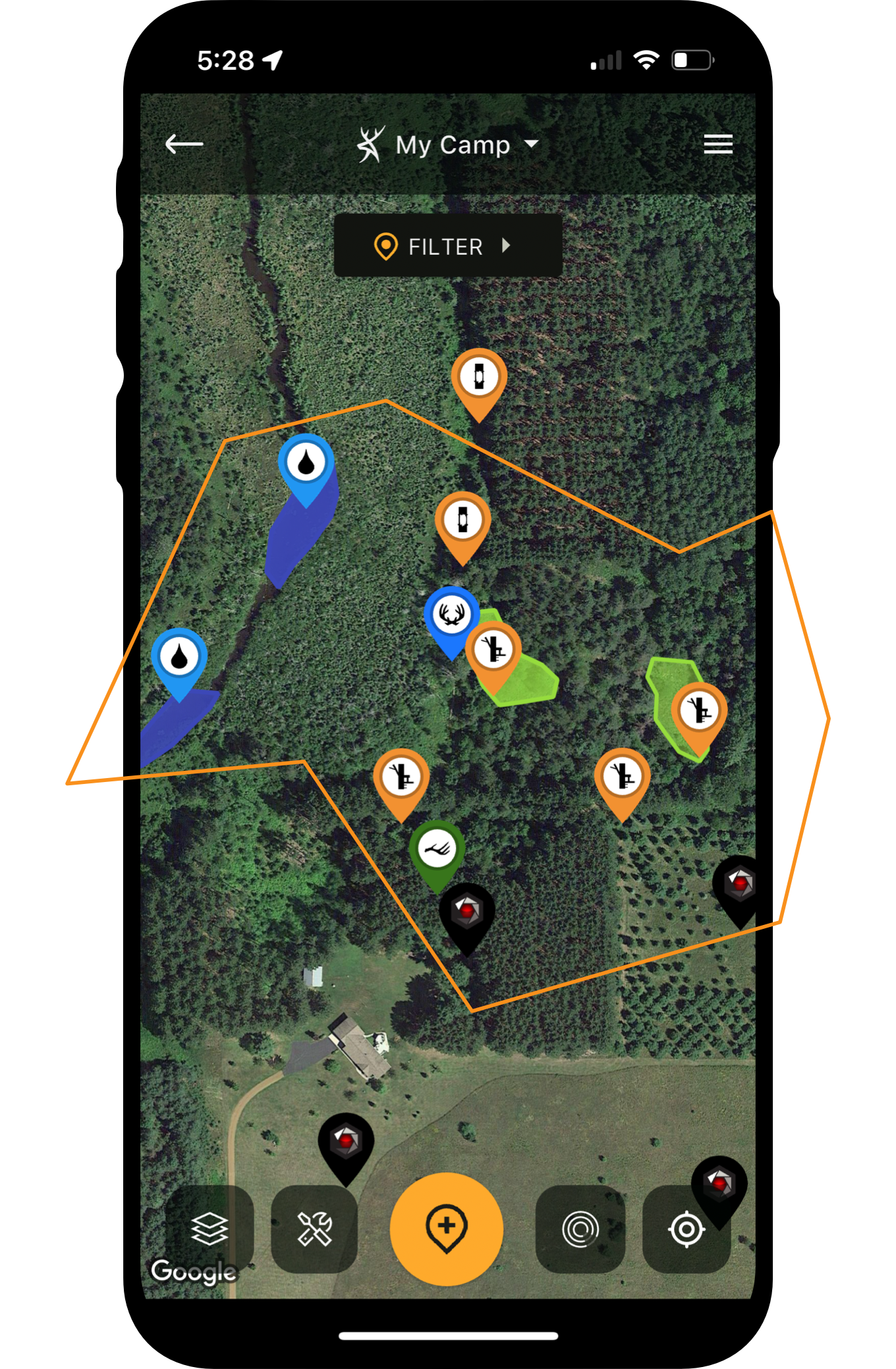






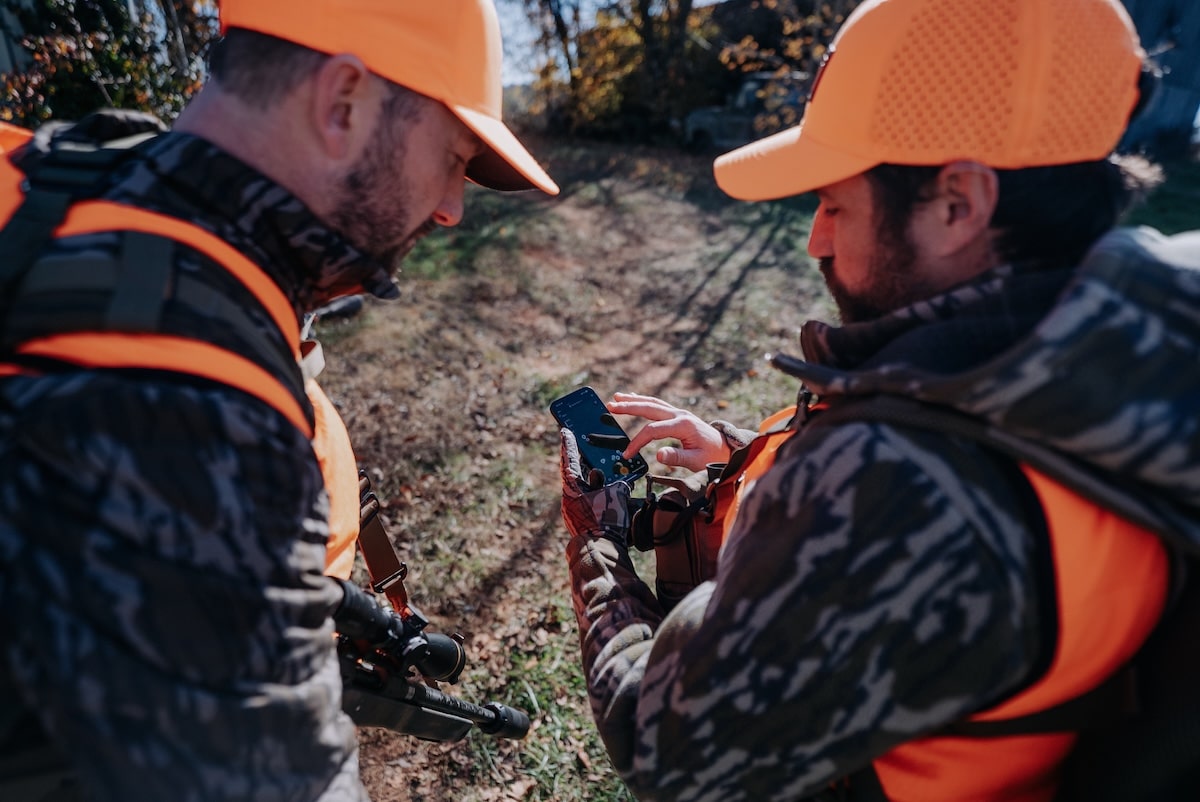

Use HuntStand Ultimate to find pressured whitetails.
An old buck scans his surroundings. Wind to back, anything that approaches out of sight will trigger the infamous olfactory warning by wading straight up his nostrils long before it gets in sight. Crunchy leaves will sound the alarm well in advance, too.
He’s a heavy-antlered, main-frame, 12-point buck with double drop tines, stickers, kickers, and a couple daggers for good measure. Every hunter within a 2-mile radius has at least one nighttime photo of the ghost. But none of them can seem to determine his daytime patterns. Half of them pulled out their remaining hair by mid-season. The other half are only a few days away from insanity.
Where does this buck bed?
What stand location will kill this deer?
Is the deer even real, or is it a mythical figment of my imagination?
These thoughts and more float around in the minds of the hunters hunting that big 12 with drops, stickers, kickers, and daggers. The crazy part? They just keep hunting the same old worn-out spots they’ve targeted the deer all season, and that’s insanity defined and depicted — expecting different results with no change in action.
Of course, it’s no surprise most deer hunters flock to the primo-looking spots they find via aerial views. Apps and maps routinely lead hunters to the better-looking hunting spots. Throughout the course of the season, these places experience significant levels of human intrusion and become pressured.
All the while, most deer, but especially mature bucks, are packing into places bucks hide once pressure mounts. Unfortunately, most deer hunters aren’t relocating to these spots.
So, don’t be like the aforementioned hunters. Instead, find where these big deer retreat to. Here are places pressured bucks hide. (And how HuntStand helps find them.)
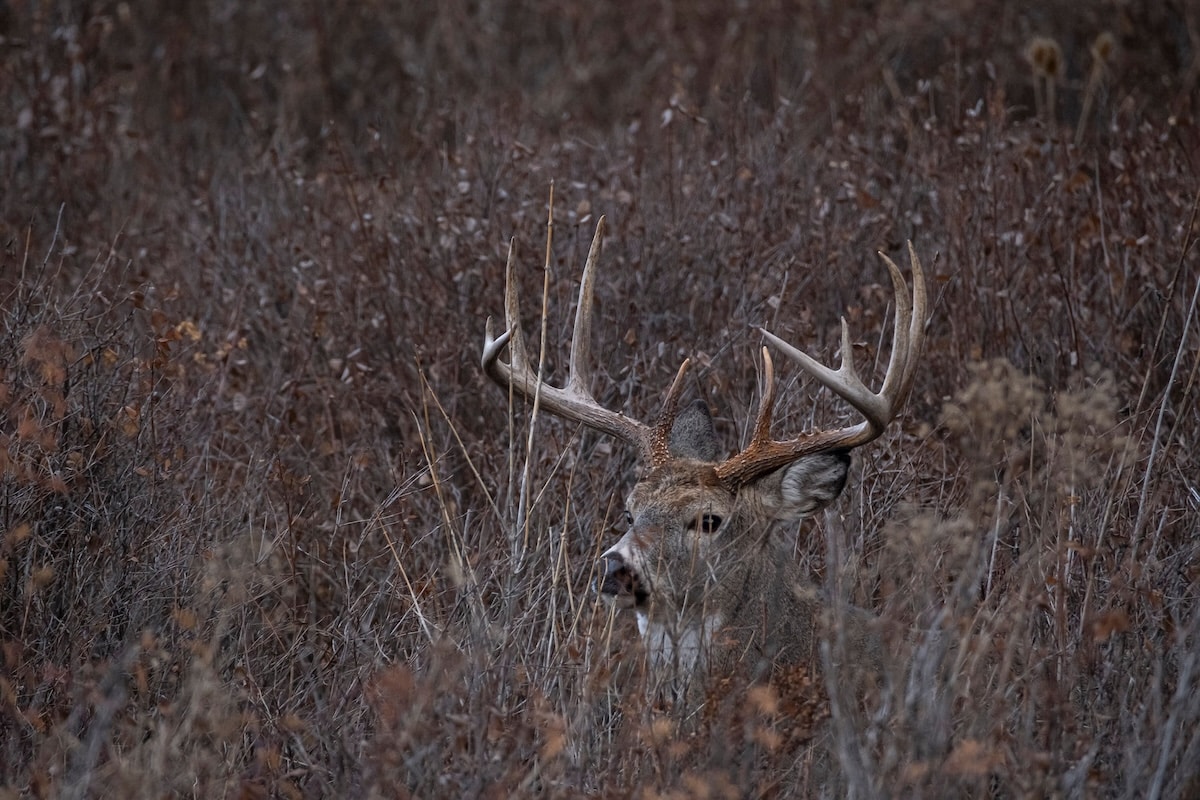
Whitetails retreat into fields full of native grasses.
1. Dense Stands of Native Grasses
Whitetails love early successional habitat, and native grasses are the earliest of such habitat stages. They thrive on this dense, low-level, high-stem count structuring. Furthermore, most hunters walk right by fields of grasses to hunt the timber, and in doing so, they’re walking past or through deer.
HuntStand Help: Native grasses look different than timber from aerial views. Implementing 3D Mapbox Satellite, National Aerial Imagery, Satellite, and Mapbox Satellite, locate stands of native grasses. Deer will bed and feed within these areas.
2. Brush Piles and Sinkholes
Deer love out-of-the-way areas that hunters actively avoid. In other words, if it’s ugly to a deer hunter, whitetails tend to go there. Oftentimes, this leads deer into unorthodox places, such as brush piles and sinkholes.
HuntStand Help: Base layers with high-resolution viewing, such as National Aerial Imagery, Satellite, and Mapbox Satellite, are the best options for seeing the detail needed to pick out brush piles and sinkholes. Zoom in to locate these within fields and other property features.
10 Hunting Tips From Mature Buck Research
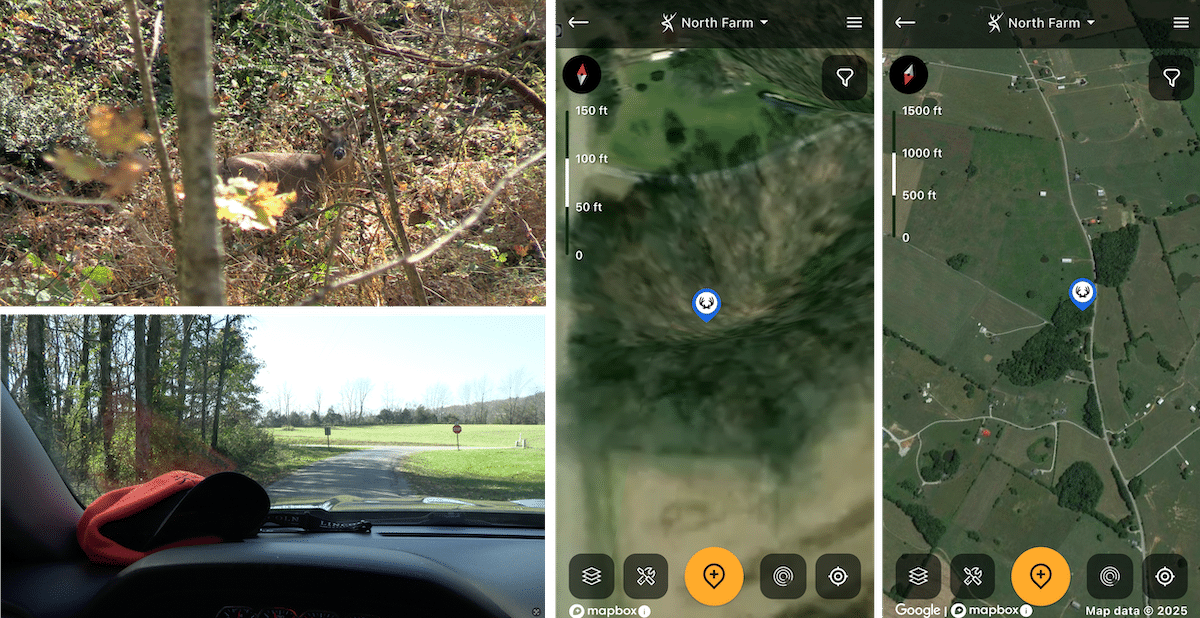
The author glassed this buck from his truck while driving down a backroad. It was bedded in a 2-acre thicket up against a major highway. The kicker? Gun season had been in for more than a week, and he found safety well away from the nearest hunting.
3. Drainage Ditches with Habitat
Throughout rural America, waterways continue to carve drainage ditches into the landscape. These shallow, and sometimes deep, crevices in the earth grow low-level habitat, such as grasses, shrubs, and small trees. Deer love bedding in these because they’re safe and out of sight. Plus, once again, hunters completely overlook such spots.
HuntStand Help: Use the Contour overlay, or the right base layers, such as Lidar, Natural Atlas, Outdoor, Quad Topo, Terrain, 3D Mapbox Satellite, 3D Mapbox Street, and others, to locate ditches that might harbor bedded deer.
4. Overlooked Cover
Any cover that’s overlooked has late-season potential. Corners of properties that don’t receive pressure. Pockets of timber that go overlooked. These and similar areas are magnets to deer that have seen, smelled, and heard hunters come and go for months on end.
HuntStand Help: Are there small, out-of-the-way woodlots? Any pockets of cover that you and others completely ignore? Scout and/or hunt these areas during the late season. A giant just might await you.
15 Killer Gun Season Strategies for Deer Hunting
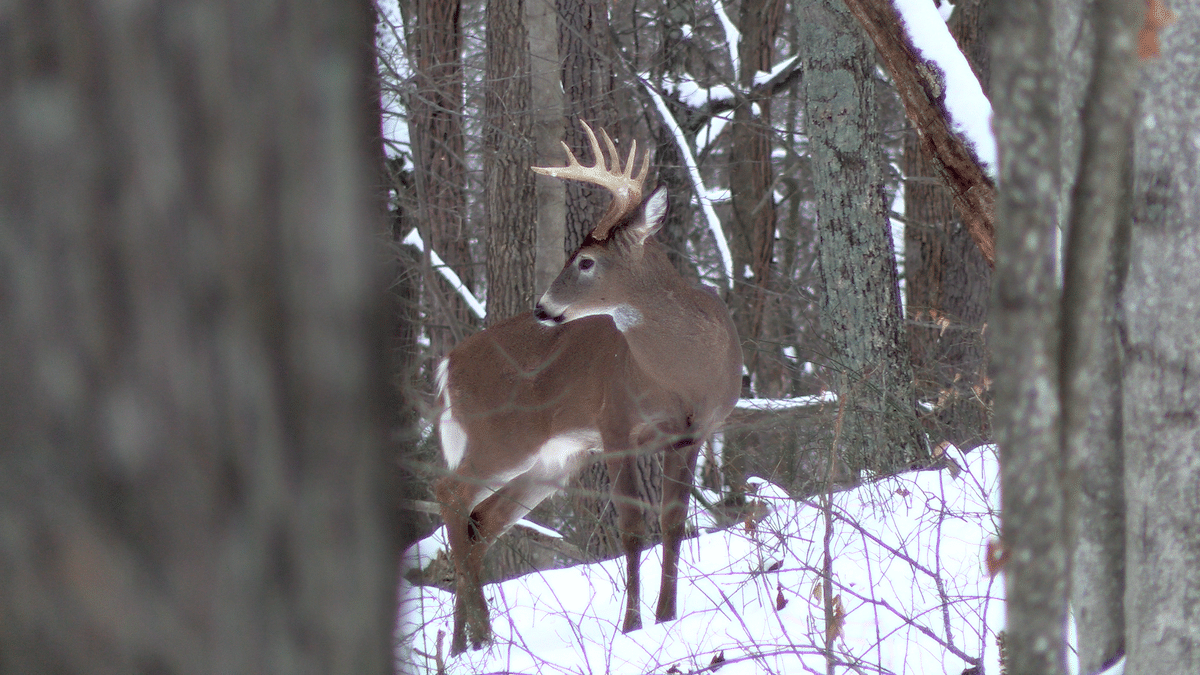
The big woods almost always draws the attention of bigger whitetails. They can escape human intrusion and still find food, water, and cover.
5. Deep in the Big Woods
Most deer hunters won’t hunt more than a few hundred yards from the truck. Even dedicated enthusiasts rarely press in more than ½ to ¾ miles from the access point. That’s why late-season deer push deep into the big woods. They’ll retreat into larger patches of timber to escape that surface-level hunting pressure they’ve experienced all season.
HuntStand Help: Using 3D Mapbox Satellite, National Aerial Imagery, Satellite, or Mapbox Satellite, search for areas of contiguous big woods. Use the Measure Distance tool to gauge how deep you should go, or if certain areas are beyond the distance most hunters will reach.
6. Leeward Ridges with Visibility
Whitetails rely on their eyesight, hearing, and sense of smell to survive. Therefore, leeward ridges benefit all three of these. The leeward ridge, by definition, plays to the strength of a deer’s nose. These ridges with visibility allow them to use their eyes. And late in the season, all the dry leaves make for noisy treks toward bedded deer.
HuntStand Help: Find ridge lines using beneficial base layers, such as Terrain or 3D Mapbox Satellite. Or use high-definition layers, such as National Aerial Imagery, Satellite, or Mapbox Satellite with the Contour overlay turned on. The all-new Lidar layer is exceptional for this effort, too.
15 Ways You Aren’t Using HuntStand Ultimate, But Should Be
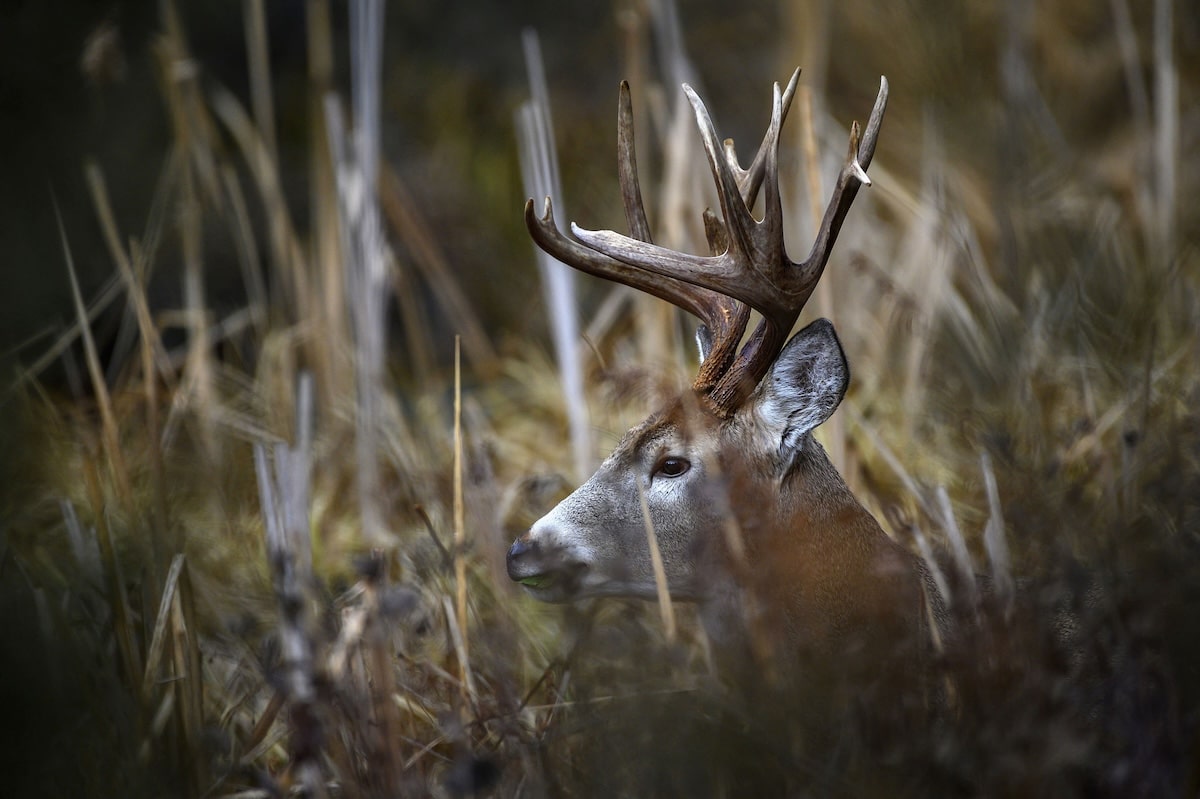
Marshes and swamps are big-buck hotspots. Many a whitetail hides in the cattails.
7. Marsh and Swamp Islands
Deer love watery landscapes. Marsh and swamp islands offer exceptional security advantages. Deer bed on these small pockets of high ground with water all around or nearly so. They’ll wade through shallow waters upon arrival and departure, but these waters deter predators and deer hunters alike. Whitetails also hear danger approaching through the noisy waters, and they bound for safety long before it arrives or poses a true threat.
HuntStand Help: Implement the Natural Atlas, Outdoor, Quad Topo, Streets, and other layers to find marshes and swamps. Other layers can help find these areas, too. Then, look for slight rises that create dry ground within these spots, which are often shown by one topo line variation (but usually it’s less). Where these can’t be seen via topo line change, use habitat-centric layers to pinpoint habitat changes within the swampland. Generally, you’ll see more mature trees, or different tree canopy types, amidst the marshes or swamps. These rises almost always harbor slightly different plant and tree species, as well as habitat succession levels.
8. Oxbows
Continuing with the water theme, oxbows provide numerous safety advantages as well. Sometimes, creeks, streams, lakes, and rivers create oxbows, which are U-shaped peninsulas of land. These have water on three sides and land access from one direction. Deer love bedding in these areas, because most predators and hunters won’t approach from the three water-laden directions, and they can focus their attention toward the land-based access route. If danger approaches from that direction, deer bound or swim across the water to safety. With the right wind directions, they’ll spend their daylight hours here.
HuntStand Help: Using the Natural Atlas, Outdoor, Quad Topo, Streets, and 3D Mapbox Street layers, among other, look for obvious oxbows created by waterways. Once these are located, switch over to habitat-centric layers, such as Hybrid, National Aerial Imagery, Mapbox Satellite, or 3D Mapbox Satellite, to determine quality bedding exists within the oxbows, and if there might be nearby food sources.
30 Reasons HuntStand Ultimate Makes You a Better Deer Hunter
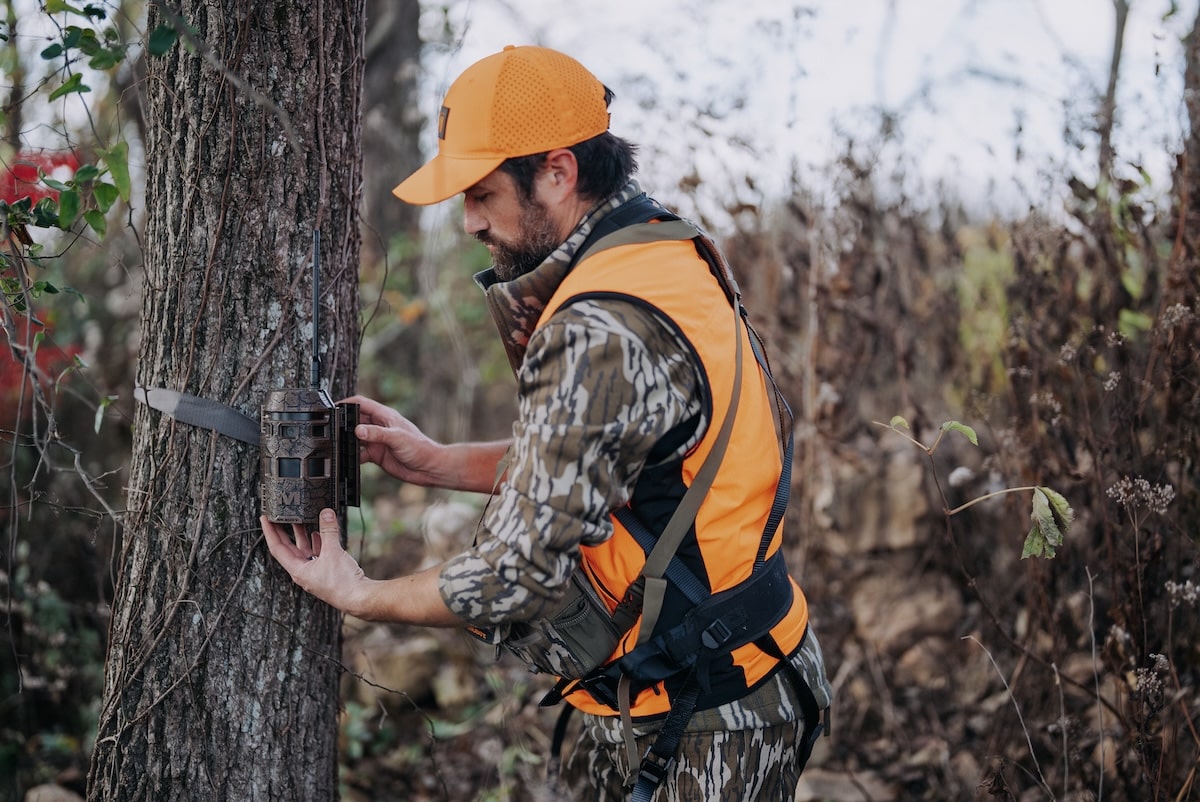
When deer disappear from cameras, it's time to re-post these scouting sentries and find where pressured deer relocated to.
9. Strategic Topography Types
Certain topography types are strategic for deer to inhabit. These offer key advantages for the senses, and make it easier for deer to see, hear, or smell danger approaching. Some topography types are already mentioned above (i.e.: leeward ridges). That said, there are others to keep in mind. Examples include thermal hubs, ridge lines, ridge endings, and more.
HuntStand Help: Deploy topography-centric layers to pinpoint important terrain changes. Base layers without habitat depiction include Natural Atlas, Quad Topo, Outdoor, Terrain, and 3D Mapbox Street. That said, 3D Mapbox Satellite is the premier option to include habitat and topography visualization. Of course, you can turn on the Contour overlay atop all base layers to see topographic changes on the landscape. Brand new to HuntStand, the highly popular Lidar feature is great for this as well.
10. Un-Hunted (or Less-Pressured) Neighboring Tracts
So, you’ve hunted your parcel hard. Maybe you’ve even scattered deer like beagle hounds on a rabbit hunt. Without question, deer have pushed into un-hunted or less-pressured neighboring tracts. You can’t hunt across the property lines, but if you’ve hunted your land hard, pushing closer to the edges might pay off.
HuntStand Help: Using the Property Info overlay, position closer to property lines, but not in a manner that’s unethical, disrespectful, or dangerous to you or other hunters.
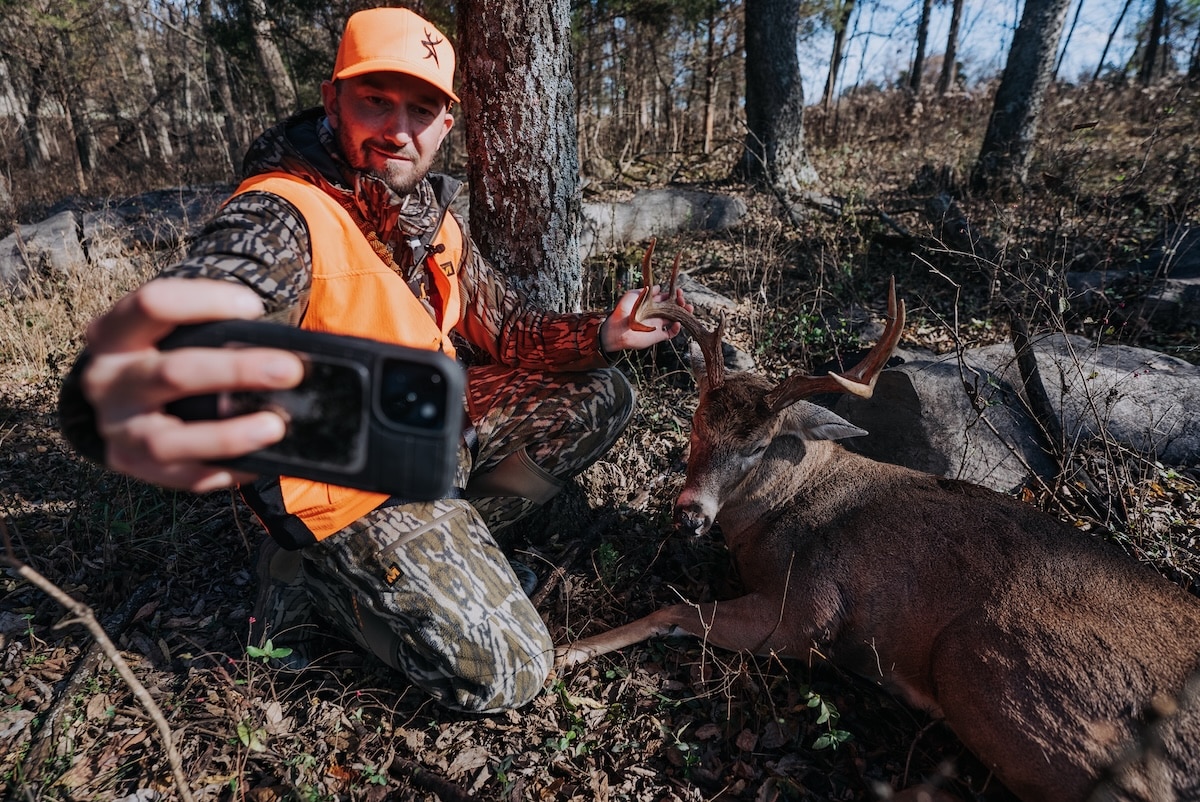
Benefit from HuntStand Ultimate and all its many hunting assets and tools.
Level-Up with HuntStand Ultimate
You’ve been hunting without the help of HuntStand. Perhaps you’ve had some luck. Maybe you haven’t. It’s possible you’re already a bona fide deer hunting genius who’s shot more deer, skinned more bucks, and holds more knowledge of the white-tailed deer than Fred Bear, Saxson Pope, and Davy Crockett combined. No matter where you land on that spectrum, HuntStand Ultimate can take your whitetail pursuits to the next level. Sign up for a subscription today.