



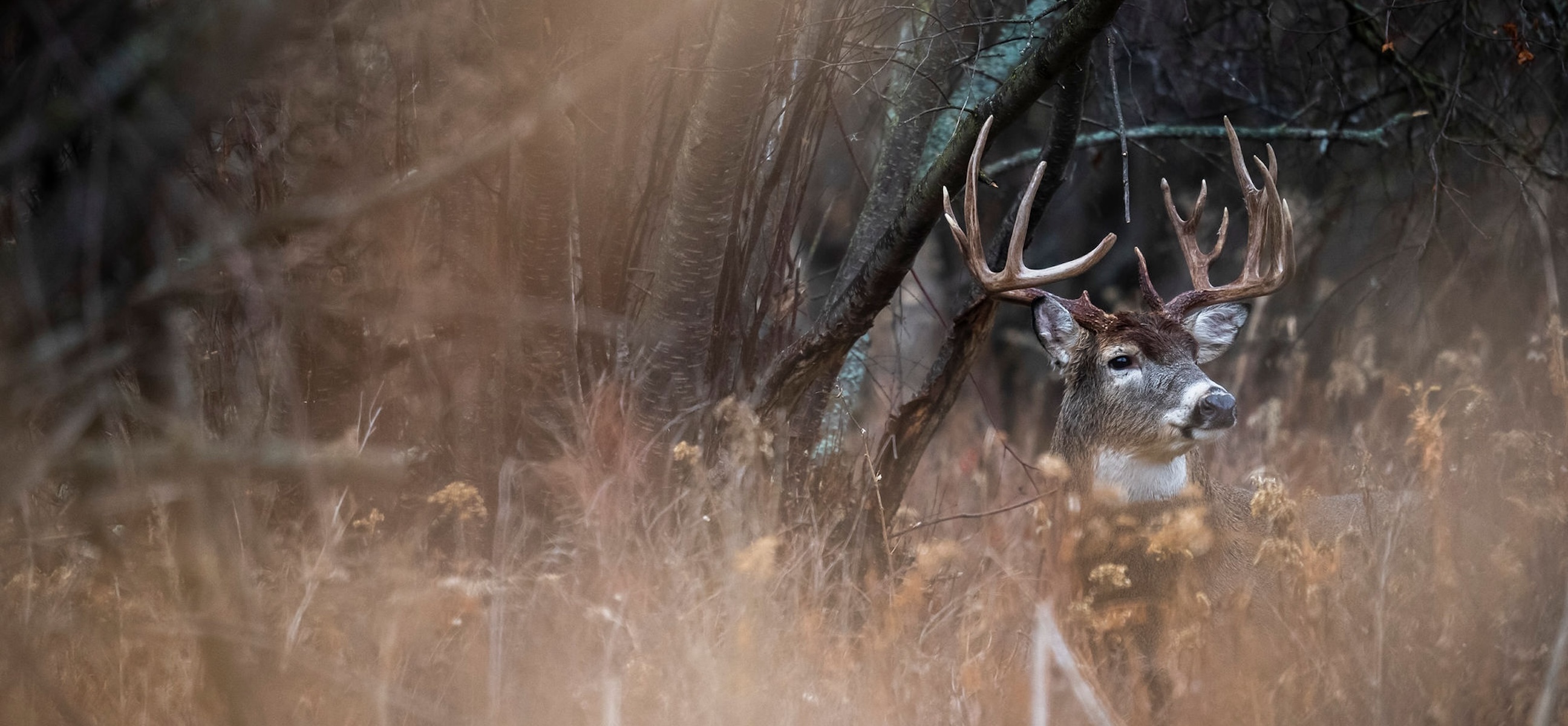

Consistently tagging big, old, mature bucks is one of the most difficult things in deer hunting. Killing big deer year after year isn’t luck. It’s accomplished by those who create opportunities. Fortunately, some tactics are attuned for targeting old, mature bucks. The following 15 are some of these, and each one has aided me in harvesting old whitetail bucks. Here are the best strategies for hunting big deer.
Regardless of the big buck hunting strategy, deer hunters must find the one small spot where the mature buck in question is most vulnerable.
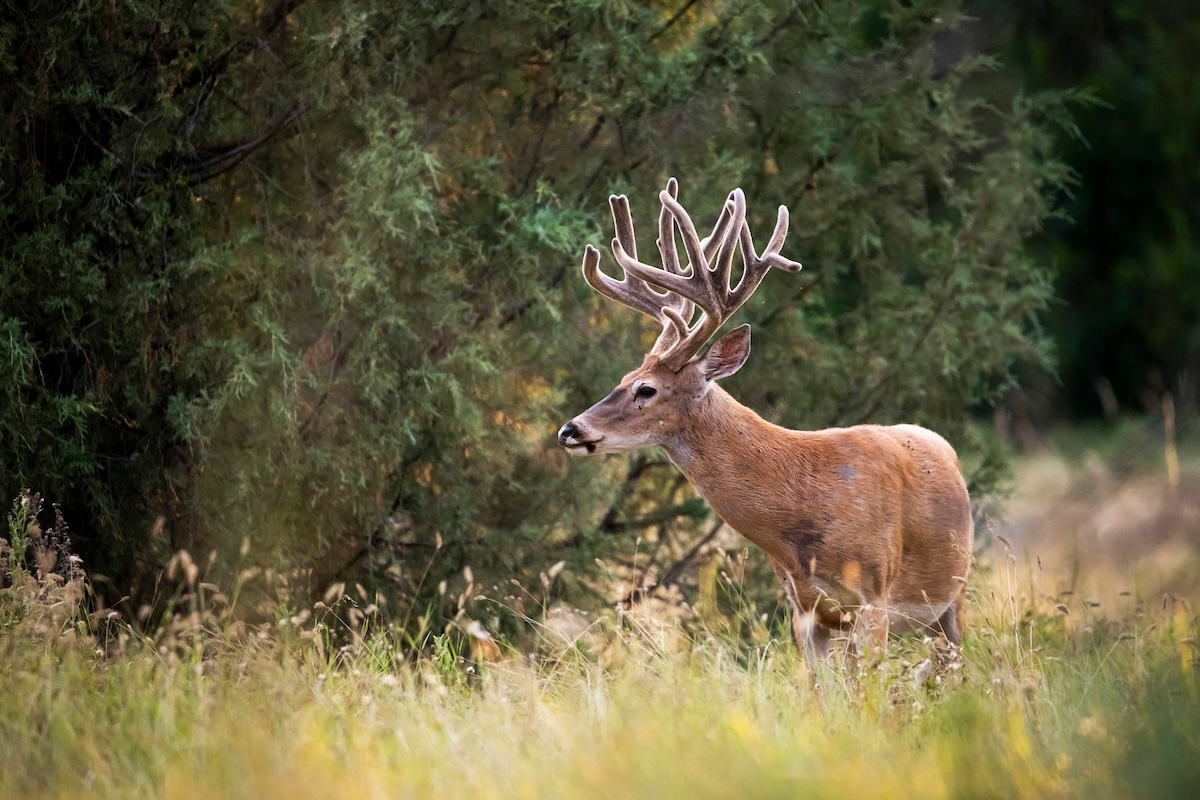

You can't shoot big deer if they don't reach older age classes.
1. Let Them Grow
You can’t kill big deer if they don’t get old enough to grow large antlers. It’s crucial to allow bucks to reach older age classes. Studies demonstrate that bucks grow their largest set of antlers at 6 ½ to 8 ½ years old. Of course, in most areas, hunting pressure is too high for many deer to reach these ages.
Attempt to shoot bucks that are at least one year older than most bucks harvested in the area. That way, you’re letting deer walk, and waiting for the top 10-15% of bucks on the landscape. Over time, you’re attempt at this can influence others to do the same. Gradually, the entire area begins to produce older (bigger) bucks.
HuntStand Application: Keep track of historical scouting notes for specific bucks. Use the “Sightings” tool to monitor historical data for each target deer.
2. Pattern a Buck
The best time to kill a big buck isn’t during the rut. It’s during the early season and pre-rut. These are two phases where most deer are patternable, including mature ones.
Finding and patterning a big deer requires effort and time. But once done, the chances of killing it rise sharply. Pinpoint where a deer beds, feeds, waters, and travels in-between, and it levels the playing field into manageable odds.
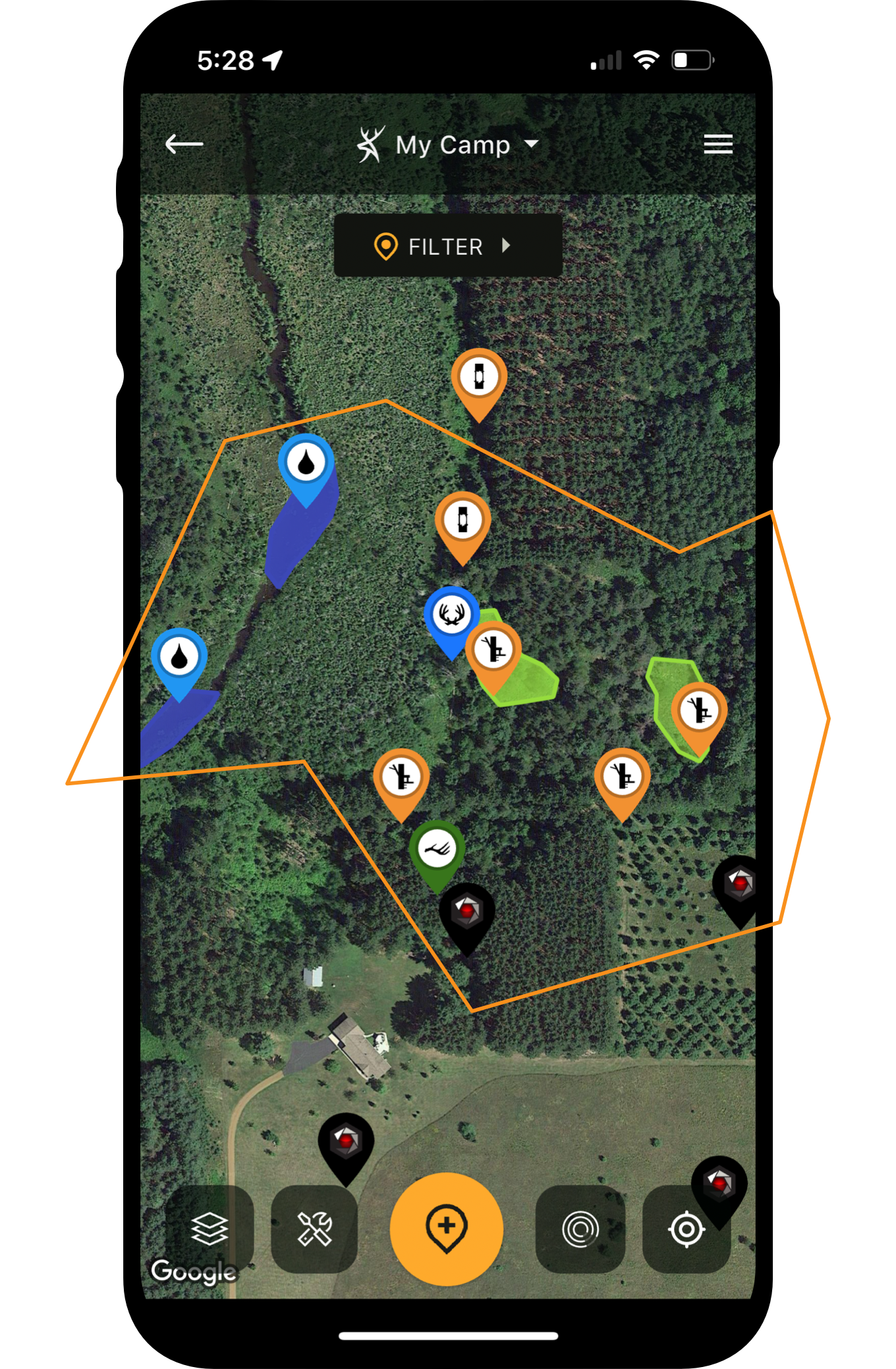
HuntStand Application: Use HuntStand layers and tools to find potential bedding cover, food sources, water sources, etc. Use these e-scouting assets to begin the process, and then conduct in-the-field and trail camera efforts to pattern individual target bucks.

Use HuntStand's Whitetail Activity Forecast to plan high-odds hunts.
3. Be a Wizard
Without question, temperature, weather, and other environmental factors influence deer movement. Time of year, and closeness to the rut, impact daylight movement, too. Fortunately, deer hunters turned wizards can predict these occurrences even before they happen.
HuntStand Application: Study HuntStand’s Whitetail Forecast, which offers four-, eight-, and 15-day activity forecasts. Each of these provide morning and evening percentages that project expected deer movement. Important factors, including weather, temperature, time of year, and more, feed an algorithm that predicts deer movement. Use this tool to plan hunts.
Finding a Buck’s Core Area with Cell Cams
4. Scout Hunt
One of the most effective ways to find big deer is to scout and hunt at the same time. It’s a process of slowly scouting into a property with your hunting gear in tow. If a spot looks good, camp out and hunt. If not, keep moving until you discover the right area.
Of course, knowing when to halt and hunt, and when to push deeper into a property, is a difficult skillset. It requires reading and interpreting sign, including beds, droppings, tracks, trails, rubs, scrapes, and more. It also involves understanding the relationship between deer movement and cover, habitat, and topography.
HuntStand Application: Keep an eye on HuntStand aerial and topo layers while easing into and through a piece of hunting land.
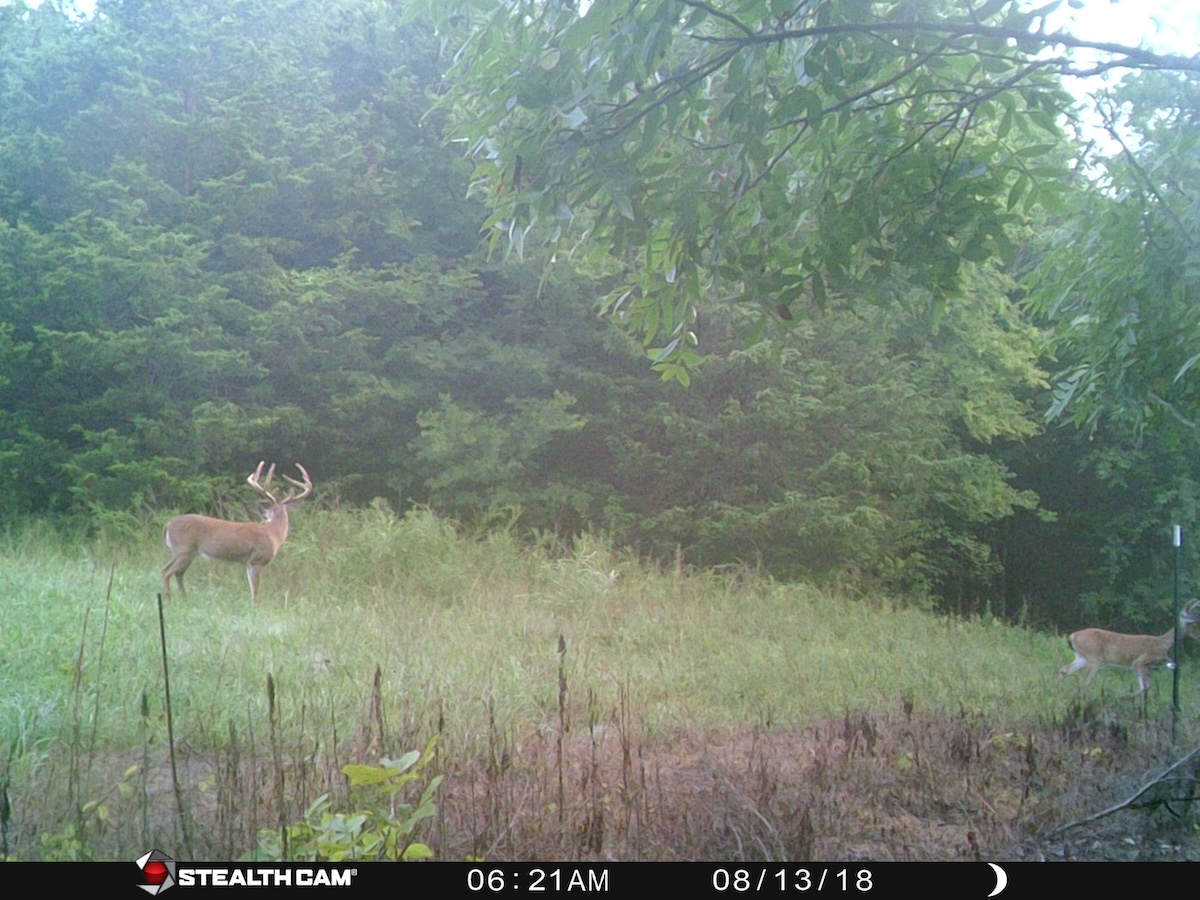
Consider "blitzing a buck" by positioning trail cameras in non-intrusive areas around its core area.
5. Blitz a Buck
Finding a buck’s home range, and the general area it lives, is easy. Drilling down on a buck’s core area, and the area it spends 90% of its time, and nearly all daylight hours, is far more difficult.
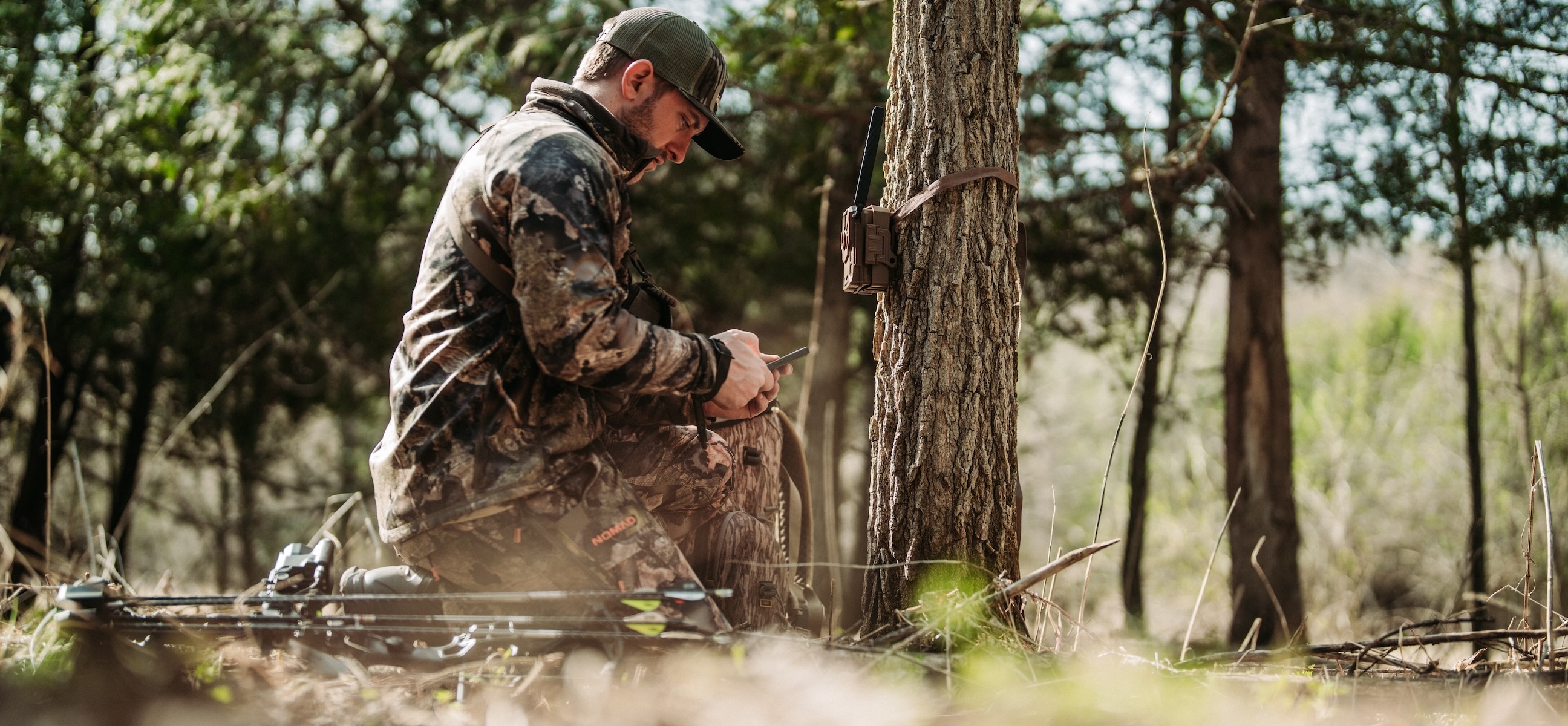
If less intrusive methods don’t work, blitzing a buck with trail cameras is one way to do it. Positioning SD or cell cameras (preferably the latter) around a buck’s suspected core area is the first stage. Let the cameras run for a week or so. Leave the cameras that produced daylight or near daylight sightings. Reposition cameras that didn’t produce, and place these closer to cameras that did, or in other areas the buck might be spending daylight hours.
Time permitting, allow cameras to sit for a week or more between movements. Of course, only move cameras when conditions are right: Good wind directions that prevent scent from blowing into bedding areas. Incoming rain to wash away ground scent. These and more are important for staying off a buck’s radar.
Some bucks tolerate human intrusion more or less than others, and trail cam work can be a factor. So, when in the field, ride from cam to cam on an e-bike, ATV, UTV, truck, tractor, etc. Don’t walk (unless it’s public land). Furthermore, handle cams with rubber gloves. Wear either rubber knee boots or rubber hip waders to cut down on contact scent with grasses, limbs, and other foliage.
In time, more cameras should produce. But this effort is a balance between effectively deploying (and re-deploying) trail cameras, and applying too much pressure to the herd. If the latter becomes an issue, pull the plug on the operation.
HuntStand Application: Integrate the Command Pro trail camera app (for Muddy and Stealth Cam) with HuntStand. This pulls cell camera photos directly into HuntStand and houses them within the associated trail camera icon marker. This way, it’s easier to keep track of where deer are spending time. It even analyzes trail camera data on a deeper level, effectively helping to detect vulnerabilities.
6. Hunt a Just-Off Wind
I began killing more (and bigger) deer when I started hunting wind directions that were “bad” for me and “good” for deer. Hunting a “just-off” wind is where the wind direction is mostly good for incoming deer to detect danger with the wind quartering or straight into their nose. However, it’s just off enough the deer doesn’t enter the hunter’s scent cone. Or, the hunter is hunting from a hard-sided blind with air-tight windows closed, and the deer can’t smell them.
Regardless, this can be a killer tactic. Whitetails trust their nose above all else. When the wind is right for them, it gives mature bucks the confidence to move during daylight.
HuntStand Application: The HuntZone wind direction and scent cone indicator is the perfect tool for planning a hunt with a just-off wind direction.
Edge Habitat for Deer (And How HuntStand Helps Find It)

Find where bucks bed, and then hunt them with "just-off" wind directions.
7. Pin Some Buck Beds
Off-season scouting is the perfect time to scour a property and find buck bedding. Knowing where a buck beds during daylight is crucial. This is vital information for positioning treestands or hunting blinds close enough (but not too close) to intercept daylight buck movement.
Of course, deer have different bedding needs throughout the year. So, study the surroundings and gauge whether it’s viable for early season, pre-rut, rut, late season, etc. Is it a north-facing slope with a large-canopy area where the wind flows through and cools down bucks during warmer months? Perhaps it’s a nasty thicket with a high stem count where bucks can hide (and feed) during peak hunting pressure periods? Is it a south-facing slope with cedars that offers both solar and thermal bedding cover? These are but a few examples of how deer rely on different bedding area types throughout the year.
HuntStand Application: When buck bedding areas (or specific beds) are found, use the HuntStand Map Editor tool to drop pins and type out relevant scouting notes.
8. Find Some Hidey Holes
Some places are overlooked by deer hunters. That’s true for private and public lands alike. These might be obscure pockets of cover with homogenous habitat that are difficult to pick apart. Or, difficult-to-reach areas that require extensive effort to hunt. Maybe it’s simply ignored for being too close to a road, isolated from better habitat, etc. Oftentimes, these places hold deer.
HuntStand Application: Study hunting properties using various aerial- and topography-centric layers to find potential hotspots.
Hunting along the fringe of a sanctuary can create great deer hunting opportunities.
9. Sit a Sanctuary
To reach old age, a buck must live somewhere it doesn’t receive as much hunting pressure. This comes in the form of a sanctuary, which can exist on private and public land. But to be sanctuaries, hunters must stay out of these. Furthermore, these must include bedding cover and at least small daytime food sources. However, while invading sanctuaries is bad, hunting the fringes can produce results.
HuntStand Application: Use aerial- and topography-based layers to find areas that are likely to be overlooked, or that are very difficult to access.
15 Public-Land Deer Hunting App Tips
10. Hunt a Killer Staging Area
A staging area is anywhere a buck oftentimes holds up before dusk. Usually, these are thick, brushy areas just outside of bedding cover, and tend to be located along afternoon bed-to-feed lines of movement.
Think of a property in layers. Bedding cover and sanctuaries are layer No. 1. Travel routes (trails) are layer No. 2. Destination food sources are layer No. 3. Generally, staging areas are within layer No. 1.5, and can be great spots to intercept old bucks.
HuntStand Application: Pull up applicable HuntStand layers to discover possible staging areas adjacent to bedding cover.
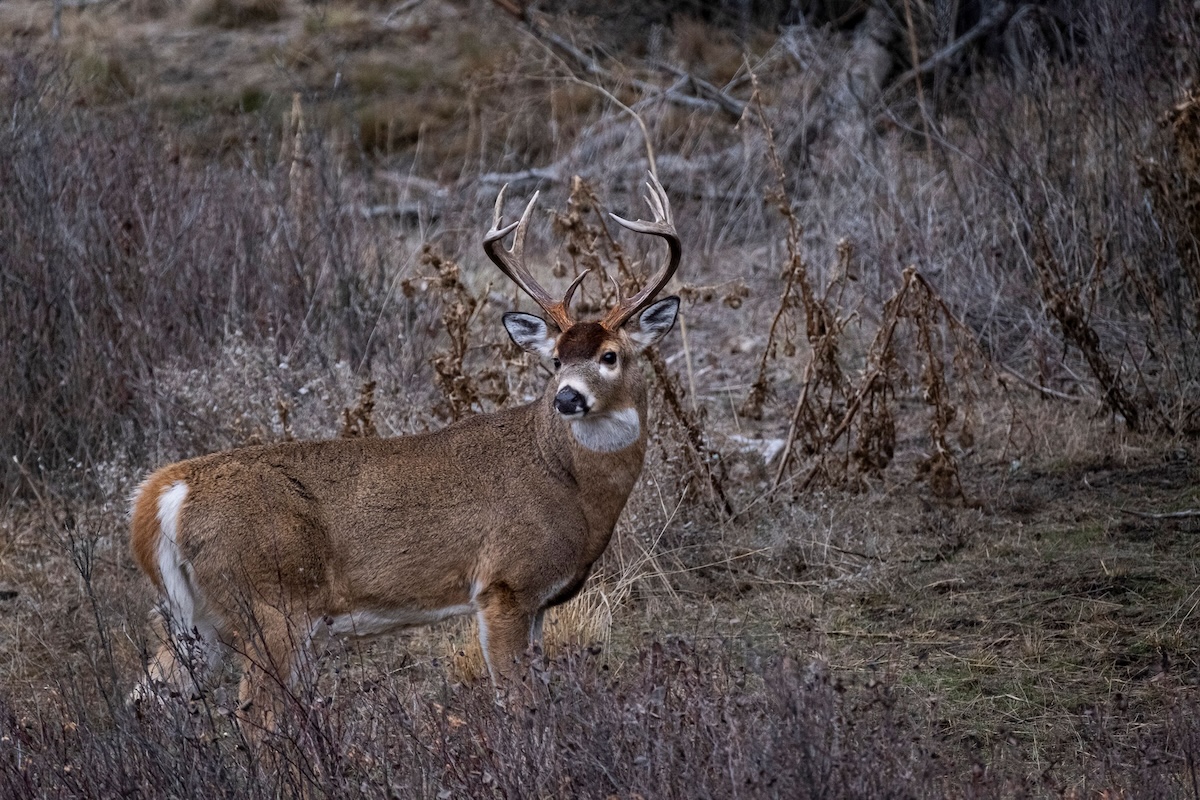
A big white oak laden with acorns on the edge of a staging area can produce daylight sightings of mature bucks.
11. Pinpoint a Hot White Oak
When white oaks start dropping, deer patterns begin shifting. Ag fields, corn piles, and food plots be danged. None of that matters anymore (for a while). Any daytime buck movement is likely to be in the timber (oaks).
As alluded, hard mast is one reason why people believe in the October lull. Deer suddenly vanish from ag fields, bait stations, and food plots. But it isn’t actually a lull in activity. It’s merely a shift in land usage. Now, deer are spending time under white (and some red) oak trees.
Most hunters aren’t posting cameras or treestands over oaks, though. Therefore, they chalk it up to an October lull that doesn’t exist.
HuntStand Application: When scouting in the field, place map icon markers for each white and red oak tree you discover. Make detailed notes associated with each tree.
12. Plan a Killer Access Strategy
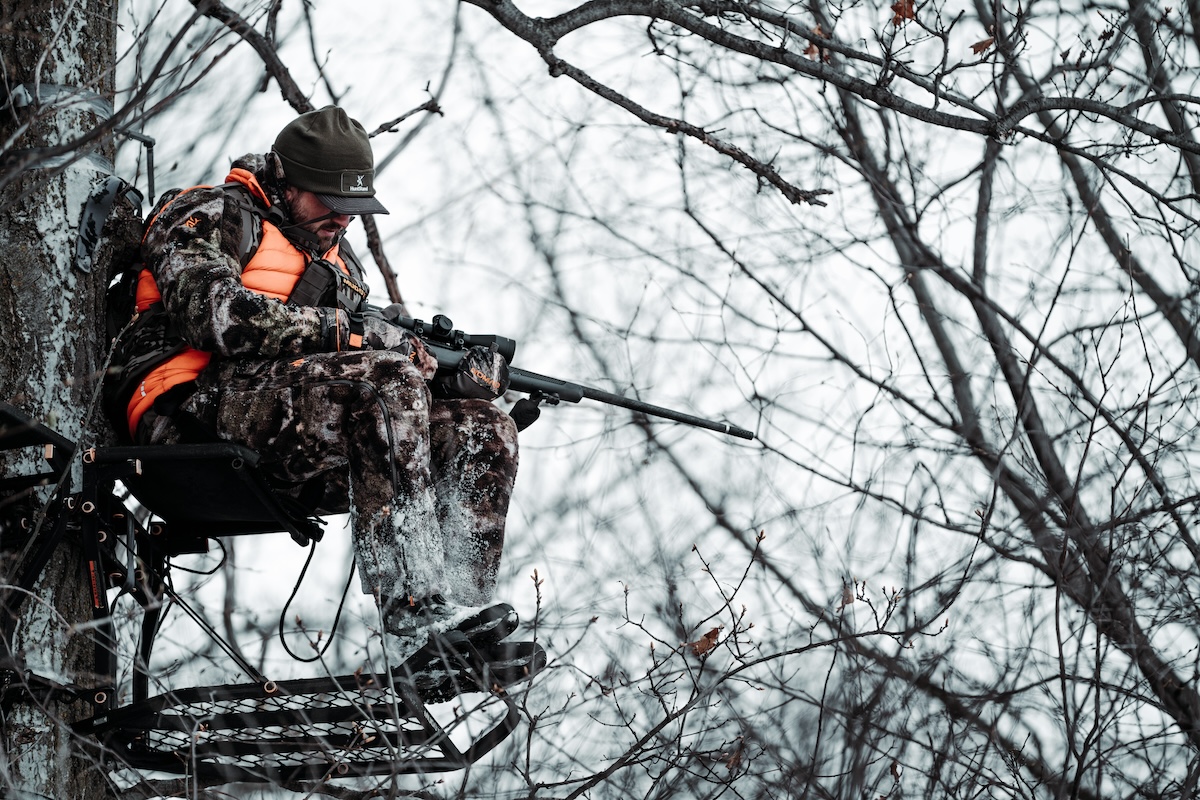
A lot of deer hunters ruin deer hunts before they begin. They spook deer walking to blind and treestand locations. Other hunters ruin it after the first few outings. They jump deer walking back to the truck.
Hunters who plan a killer access strategy experience awesome results, though. Maybe they plan a great land route that steers clear of most deer. Perhaps they use water access and walk through a shallow creek that kills ground scent and banks that shield them visually. Maybe they use a boat, canoe, or kayak to back-door into a great stand location. Whatever the case, their access is solid. That kills big bucks.
HuntStand Application: Using the Map Editing function, draw lines for entry and exit routes to each stand and hunting blind. Stick to these routes.
30 Reasons HuntStand Ultimate Makes You a Better Deer Hunter

A good still-hunting route can land a big buck in the back of the truck.
13. Chart a Still-Hunting Route
Still-hunting was once a great deer hunting tactic. It still can be. While some private land hunters don’t like using this tactic due to applying pressure, done correctly, it doesn’t have to. For example, a good still-hunting route might parallel deer trails, bedding area fringes, food sources, etc. By moving very slowly, pausing often, and with cover to shield you visually and audibly, it’s a great way to kill deer.
On public land, it is certainly a viable hunting tactic. Consider using this, especially in areas where hunter density isn’t high. This way, there’s less risk of interrupting other hunters’ outings.
HuntStand Application: Keep an eye on HuntStand as you still-hunt through a property. Study the hourly changes in wind direction using the HuntZone wind direction tool.
14. Kill a Topo Buck
Properties with varying topography might seem more difficult to hunt, but these offer a degree of predictability flat ground cannot offer. Generally, whitetails use certain topographic features in very specific ways. Hunters can benefit from this. The following are but a few examples.
- Benches: Common travel routes for deer.
- Leeward Ridges: Predictable bedding areas for bucks.
- Ridge Lines: Expected travel routes, oak-laden feeding destinations, etc.
- Ridge Endings: Typical bedding areas for all deer.
- Saddles: Routine travel route existence.
- Thermal Hubs: Common afternoon staging areas for mature deer.
HuntStand Application: Use topography-specific app layers, such as 3D, Contour, and Terrain, to find important topography features.
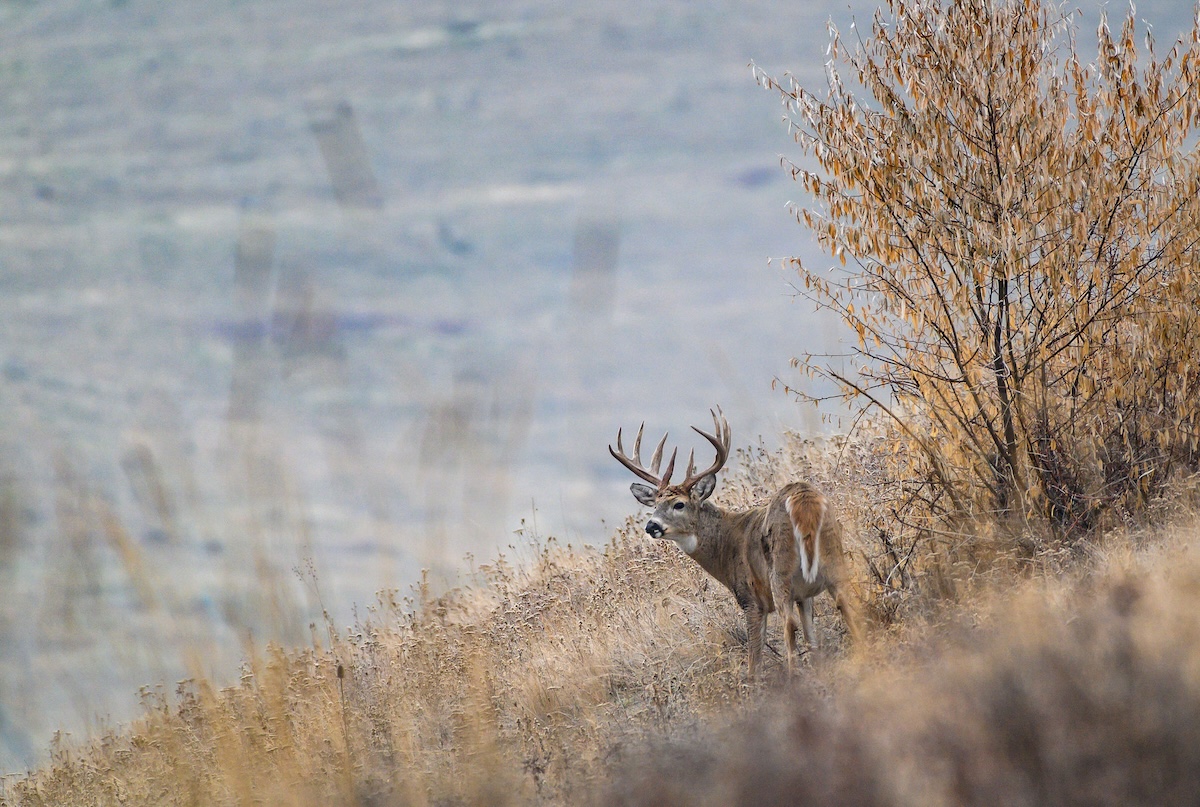
Topography plays a big role in how deer use and maneuver the landscape.
15. Hunt a Rut Hide
During peak rut, when bucks are pairing up with estrus does, they often push into areas away from other deer. Oftentimes, these end up being overlooked, out-of-the-way pockets of cover where mature bucks won’t get harassed by other suitors. These spots aren’t usually good outside of the rut, but can be during that week to 10 days when the bulk of does are receptive.
HuntStand Application: Study the Nationwide Rut Map tool to determine peak rut dates. Use aerial-centric layers, such as 3D, Mapbox Satellite, National Aerial Imagery, Satellite, and more, to find potential spots.

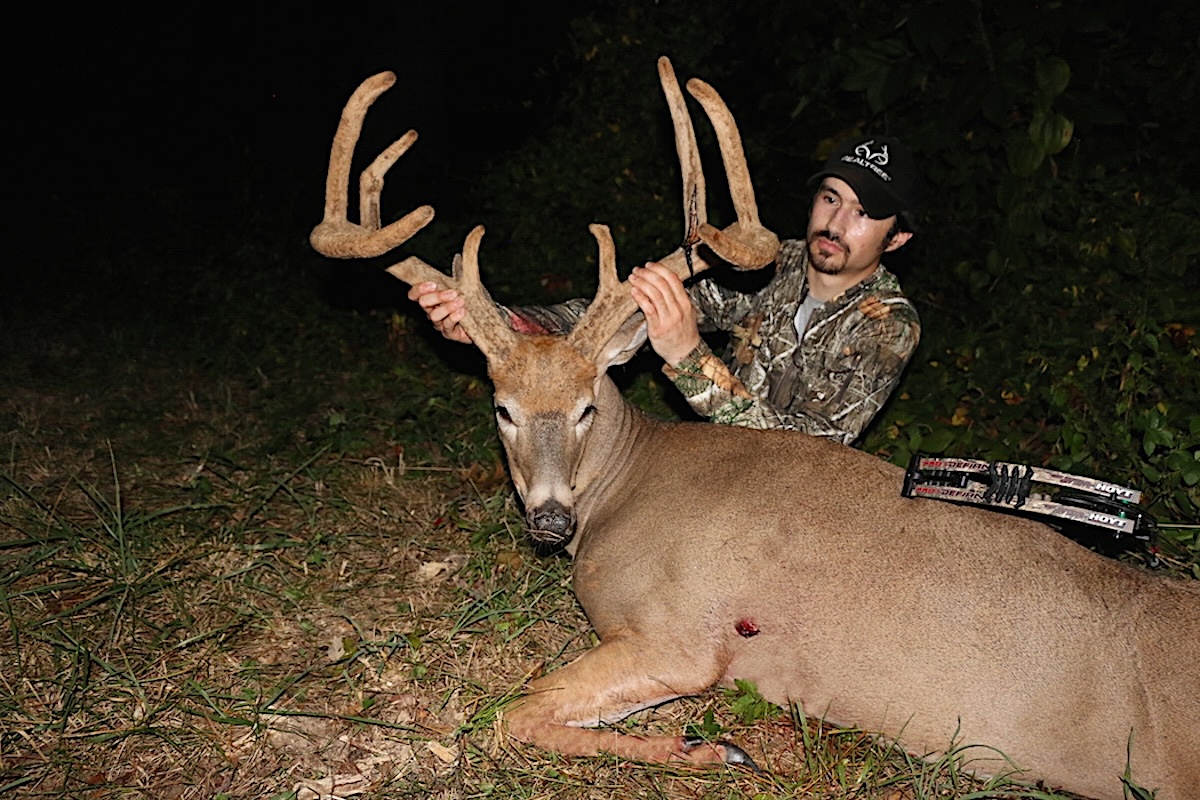
The author with a massive velvet 8-pointer he tagged during the 2018 Kentucky deer season.
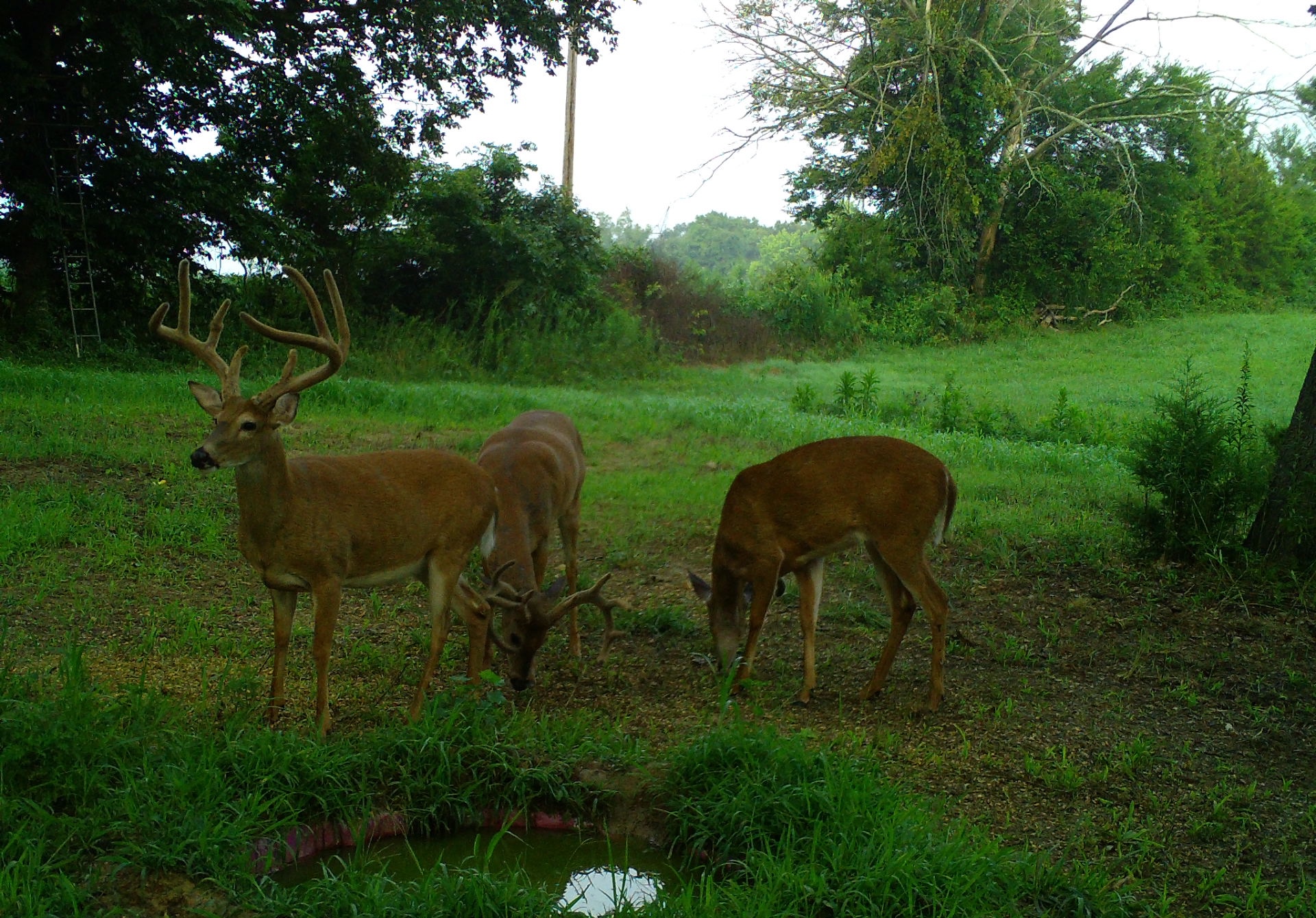
After visiting a bait station throughout August, and as archery season neared, the buck quit hitting trail cameras. The author used some of the tactics outlined above to relocate and harvest this deer.
Find the X
Regardless of the big buck hunting strategies implemented, every deer hunter must find the X. That’s where the mature buck in question is the most vulnerable. Find these spots, and odds of daylight encounters improve noticeably. Obviously, HuntStand Pro and HuntStand Ultimate help find these places.