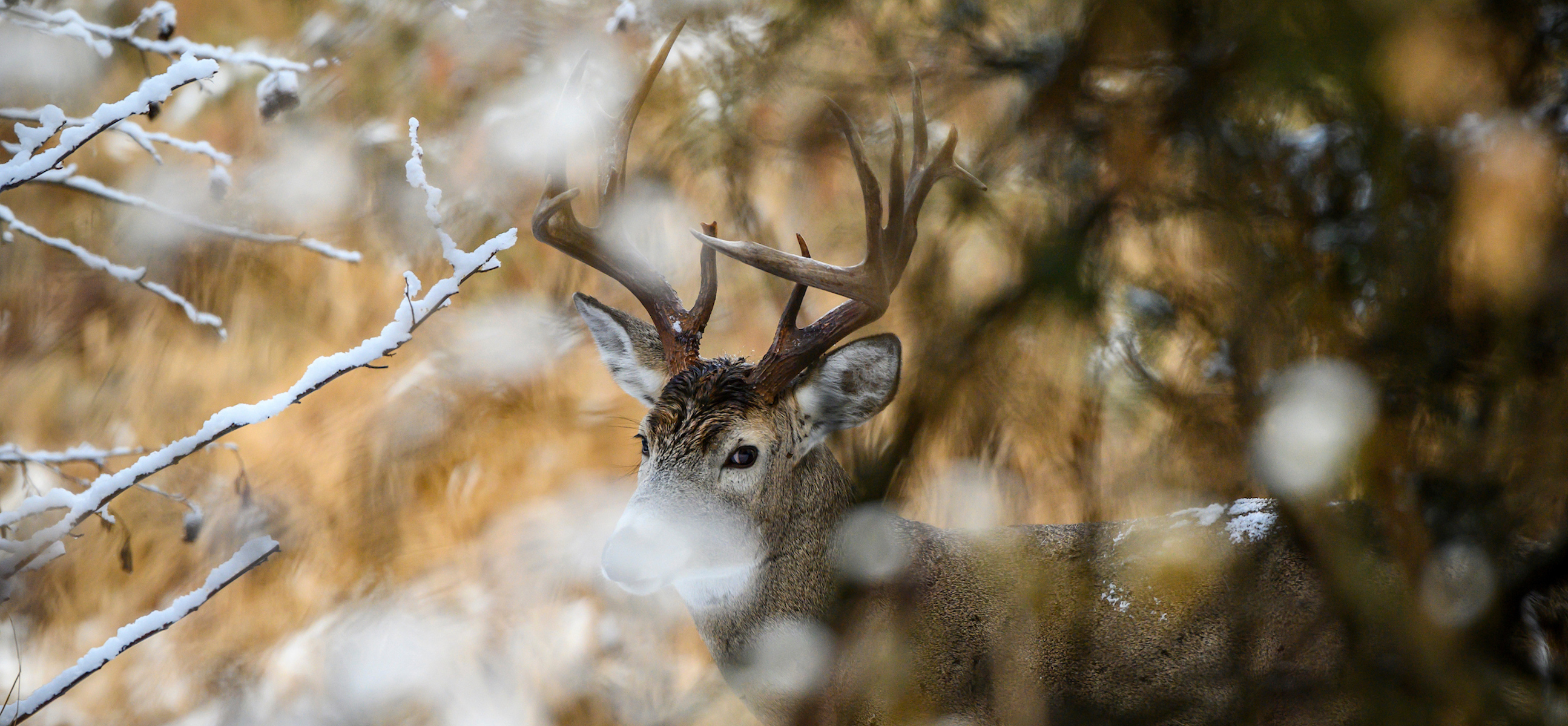





Rattling can still attract bucks during the late season.
Take a breath and reset. The late season is here, and the road to a whitetail will not be easy, especially if you lack access to a mega property with whitetails openly frolicking due to unpressured conditions.
Yeah, that’s not me, either.
Fortunately, despite whitetails having been hunted in many states for up to three months, the late season does provide opportunity. You just need to focus on the positives. Try to forget about those negatives, like unrelenting pressure, whitetails already resting in a chest freezer, and oncoming winter harshness. That’s right, just put those aside.
Instead, motivate yourself with positives, like bucks tripping over themselves to land the last hint of lust, frail breeder bucks forced to feed in daylight, and more. You also can’t ignore the positive that most bucks that ranged in the rut now transition back to a pattern with limited baselines. So, put a strategy into play to ensure the late season gives you a last-chance reward until next season.
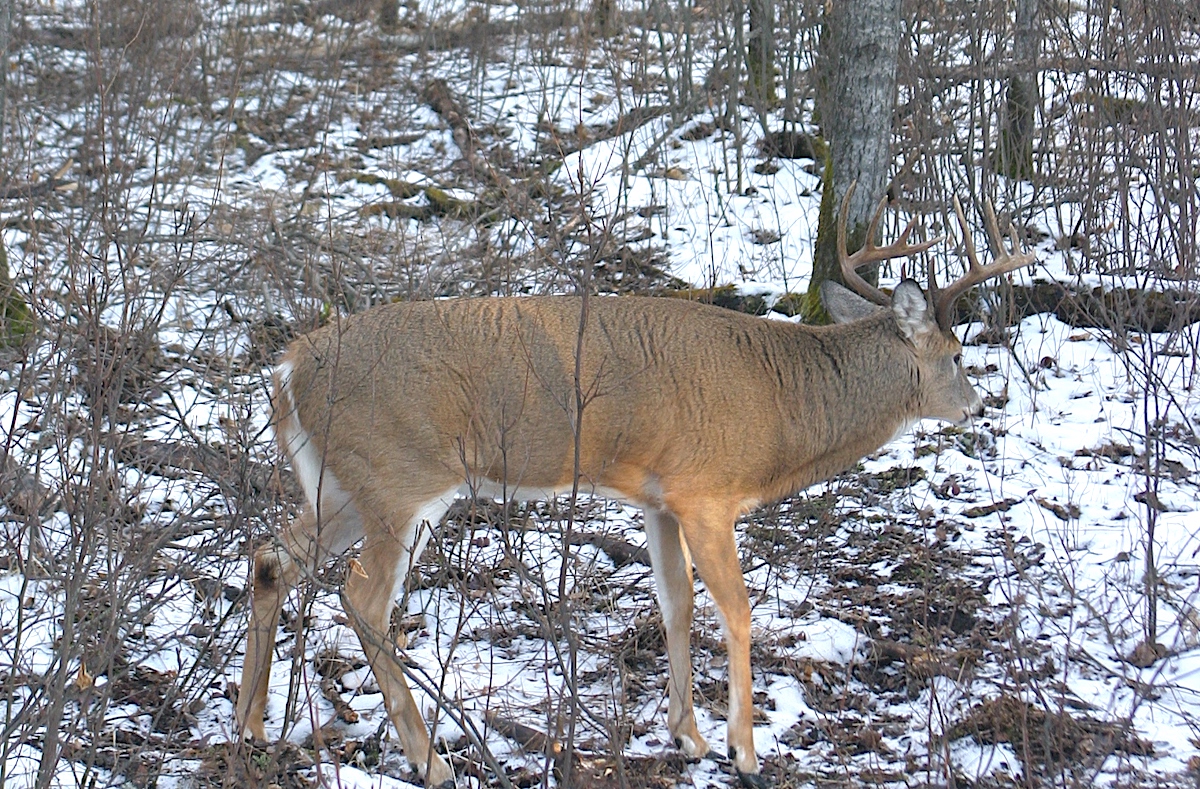
Although buck activity begins to wane after the main rut, approximately 10% of female fawns come into estrus in December, causing sparks of buck activity.
Motivation No. 1: Finding Love
Nearly every study you read states that by the end of November, approximately 90% of the females in a given whitetail population are bred. The remaining 10% — primarily healthy fawns of the year — could produce that spark of buck action you need for a spectacular December afternoon.
If you frown upon a 10% glimmer of hope, look at it this way. If someone told you that you had a 1 in 10 chance of winning the Powerball, would you stay at home on the couch to watch football or would you race down to the convenience store to purchase a ticket? I thought so.
You might even have a front-row seat to mature doe coming back into estrus. Although not common, some females simply do not get bred in the peak rut due to their lifestyle or bucks merely missing them due to a frantic schedule. That means they will cycle again about 28 days later for a second opportunity. That is the same window when a few, select fawns will come into estrus.
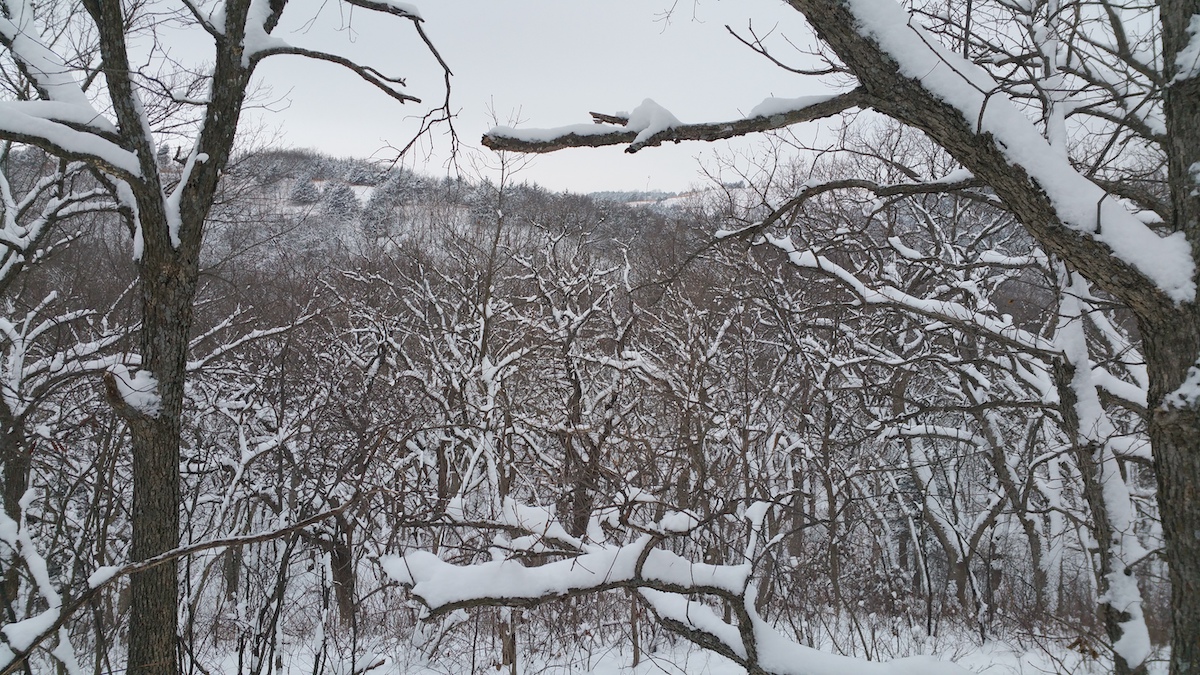
A post-rut environment can be challenging for whitetail survival, so look for food and shelter.
Although you see bucks hit the brakes on their long-distance searches, many still make the rounds as they enter a field. Oftentimes, you will witness them doing a downwind check of all females on a field as they enter, or casually as they feed amongst a herd. This creates opportunity for you. Consider scents or calls to entice a buck into bow, muzzleloader, or rifle range. I rarely hunt the late season without my rattling horns, a grunt tube, and a wick soaked in estrus strategically set in a shooting lane. I’m not afraid to climb down and move on distant deer action.
On numerous occasions I’ve seen all-out chases occur that prompted me to drop from my treestand and stalk estrus-fogged bucks. On one notable December muzzleloader hunt in Nebraska, a breeding party kicked off in a thick cedar patch. A mature buck made the mistake of stopping too long in a gap before my CVA filled the scene with successful smoke.

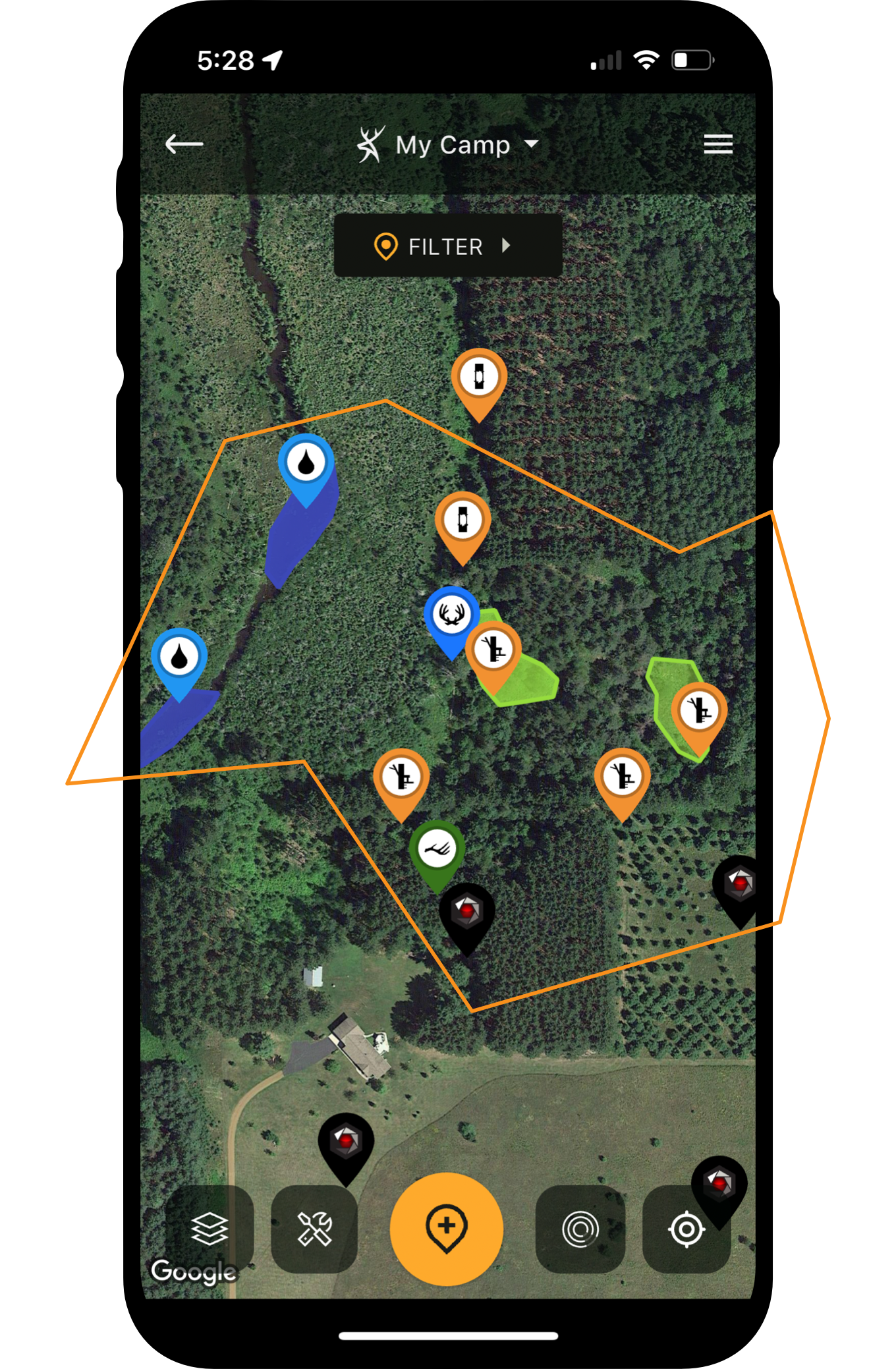
Upgrade to HuntStand’s Pro Whitetail subscription. It offers the Annual Rut Map, plus a Whitetail Activity Forecast, Whitetail Habitat layers for the United States, and more.
Not sure how to time that second rut? Upgrade to HuntStand’s Pro Whitetail subscription. It offers the Annual Rut Map, Whitetail Activity Forecast, Peak Whitetail Movement Times, and Whitetail Habitat layers for the United States. All this helps you when the 10% rule comes into play.
How to Find Deer with Topo Maps
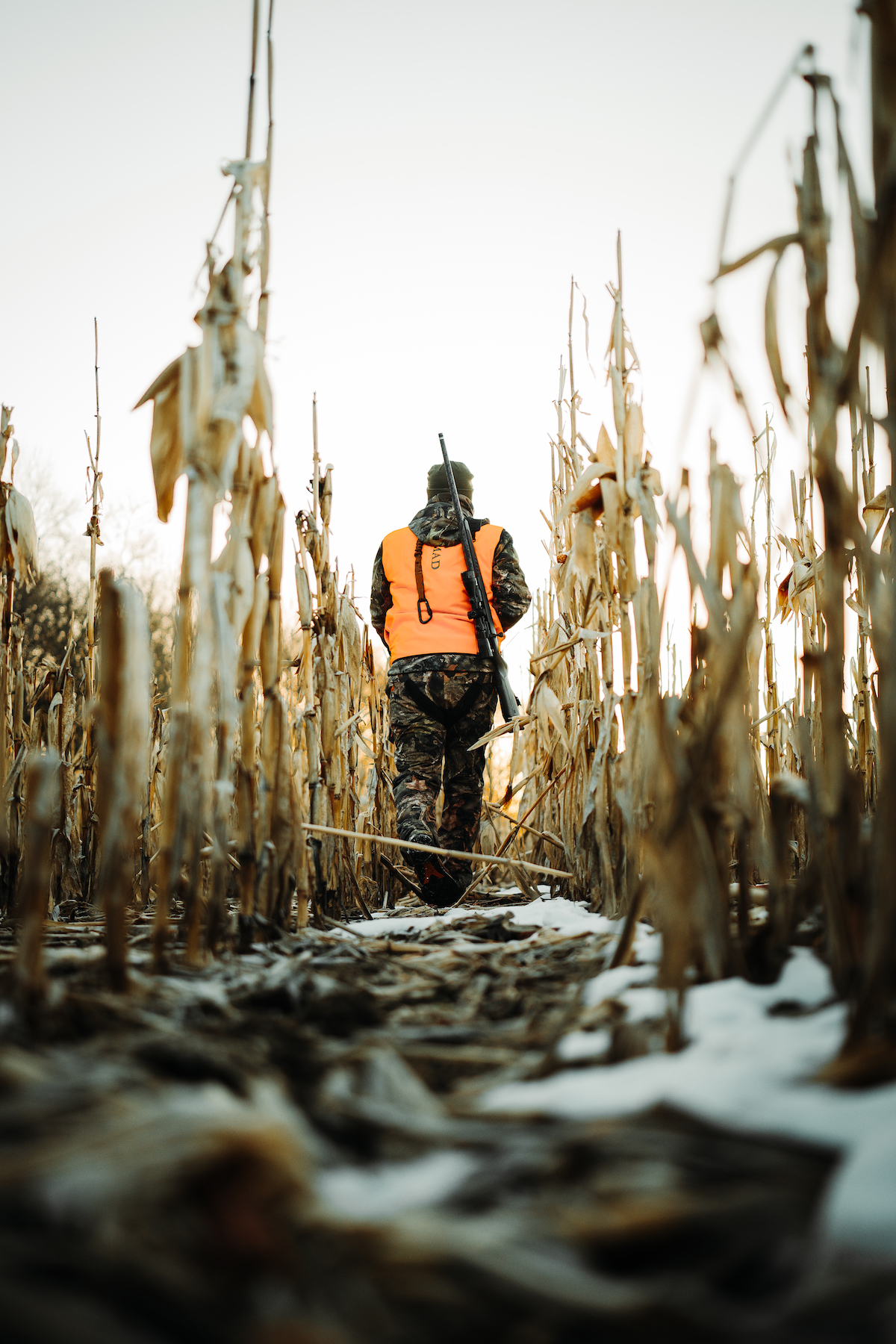
The weather can play a crucial role in your late-season success so pay attention to forecasts of cold and moisture.
Motivation No. 2: Achieving Survival
According to research from Penn State’s College of Agricultural Sciences Deer-Forest Blog, whitetails consume an enormous number of calories. In the summertime, they can chow down on an amazing 43,000 calories per day, as they sprout antlers or feed fawns.
By the end of the rut, whitetail bucks might lose 20 to 25% of their body mass. Rarely do they decline further, or death usually results. To combat this, they seek out the highest winter feed available near home. To look beyond your borders, utilize HuntStand’s Monthly Satellite imagery base and the Crop History feature. Combined, these will help you narrow down where deer might be feeding in the post-rut.
You’d think they’d try to match the summer calorie goal, but instead, data determines they drop their caloric intake to approximately 20,000 per day, or about 6 pounds of browse. Several factors matter. For instance, nutritional value in many foods drops in winter. Also, bucks slow down as a survival method. Researchers witness deer that voluntarily reduce activity to mimic a resting lifestyle, almost like hibernation without the den. They move less, consume the best nutrition around, and every so often, chase an estrus female. That begins the life of a whitetail buck in the post-rut period.
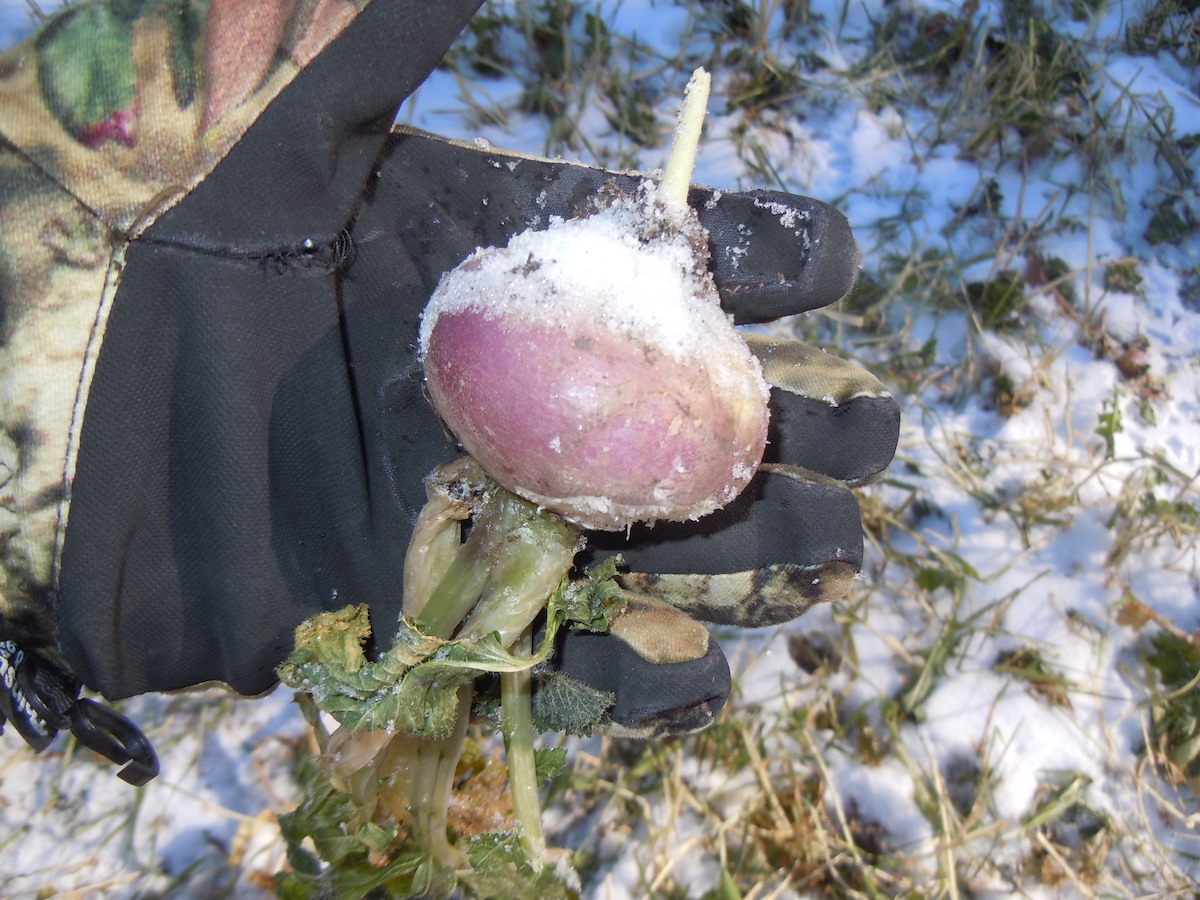
Turnips and similar food sources attract whitetails once temperatures begin to drop, and the rut is diminishing.
What’s the game plan? First, consider plotting a food-based ambush. Determine the highest energy nutrition in your hunting area. It could be as simple as setting up next to a turnip or brassica food plot. A farmer up the road could be behind on harvesting corn or have a poorly harvested soybean field. In areas void of heavy agriculture, varying browse and acorn mast could attract deer. Glass from afar, monitor cellular trail cameras, and begin a thorough search to determine the most valued nutrition in proximity to your hunting area.
10 Steps to a Successful Deer Drive
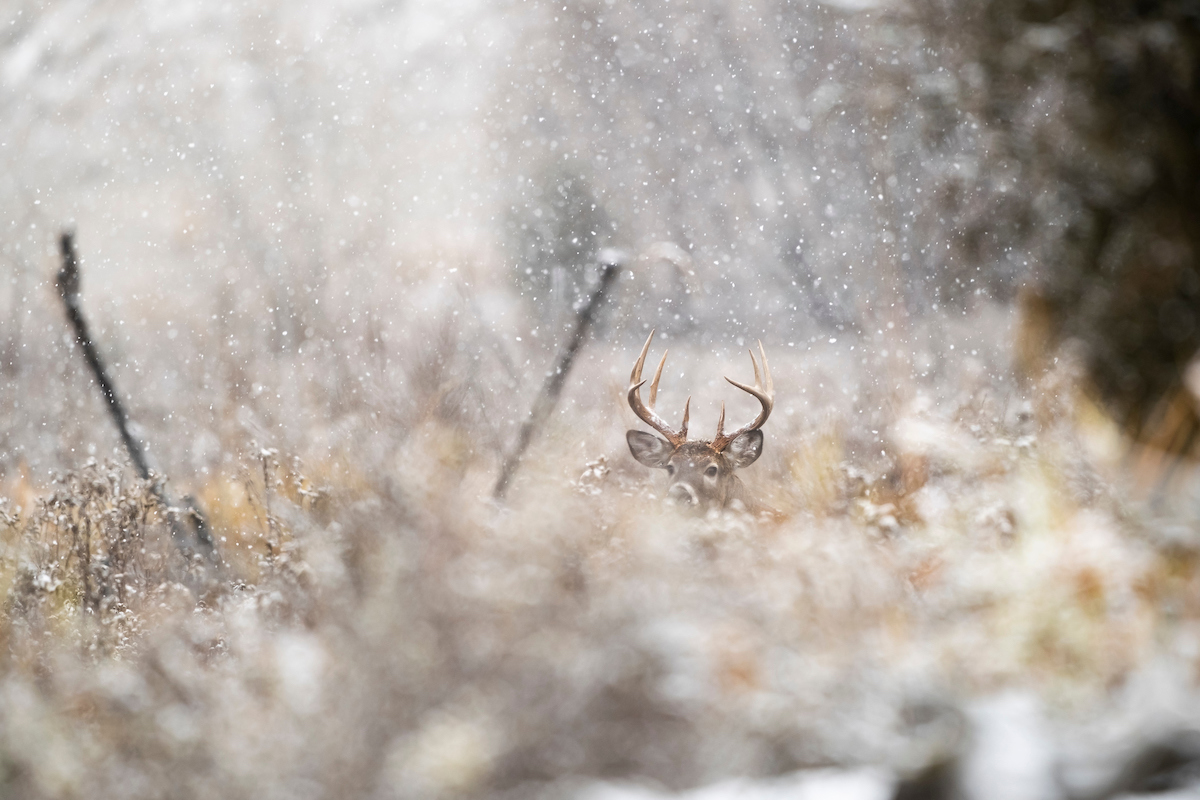
As the weather gets cold and food dwindles, whitetails move about to find the best in feed and sanctuary, but still try to stay close to home.
Motivation No. 3: Staying Home
Some help comes your way while trying to track down hungry deer. Bucks slowly transition from a wandering lifestyle to homebound living. Bucks that might’ve taken side trips of a mile or three to search for a doe settle down in their home territory. So, hunt them like you did during the early season.
Depending on the latitude and elevation, bucks might need to adjust bedding cover to take advantage of better nutrition and protection from winter environments. They also might adjust bedding cover to accommodate their paranoia from being hunted for months.
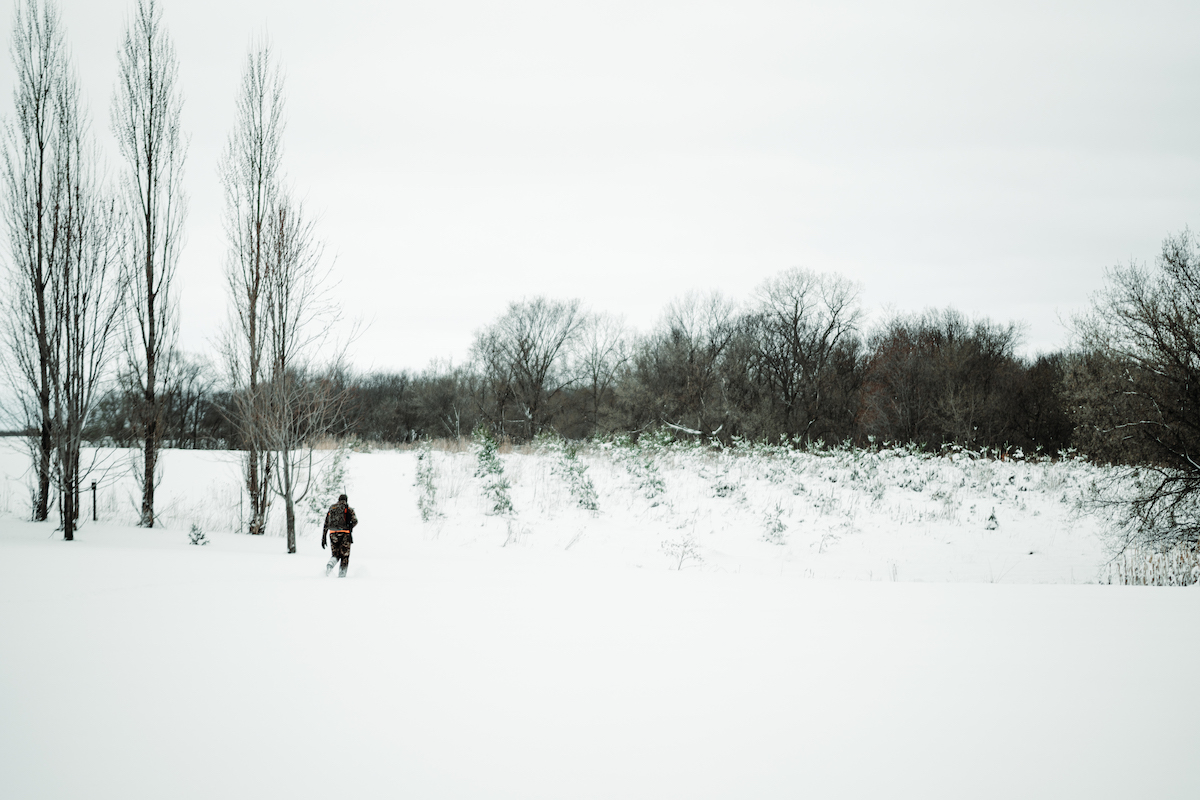
HuntStand has an incredible weather feature for you to use in forecasting and planning your hunt.
As food sources dwindle, expect bucks to follow the crowd. Look for the masses and set up surveillance. Trail cameras and time behind your binoculars are mandatory. Most deer focus on the best food sources around. Although you might not spot your target buck in daylight, nighttime trail camera images should confirm it’s in the vicinity. Again, think ambush, but with a tweak.
Start your ambush plans by monitoring the weather. Look for the nastiest winter weather available. Cold and moisture force skinny-jeans bucks to feed during daylight. Next, consider an ambush inside cover on the perimeter of suspected buck bedding areas. Do not invade the heavy cover, but use your HuntStand app to find any funnels or pinch points between security and feed. Place your ambush there with a downwind advantage.
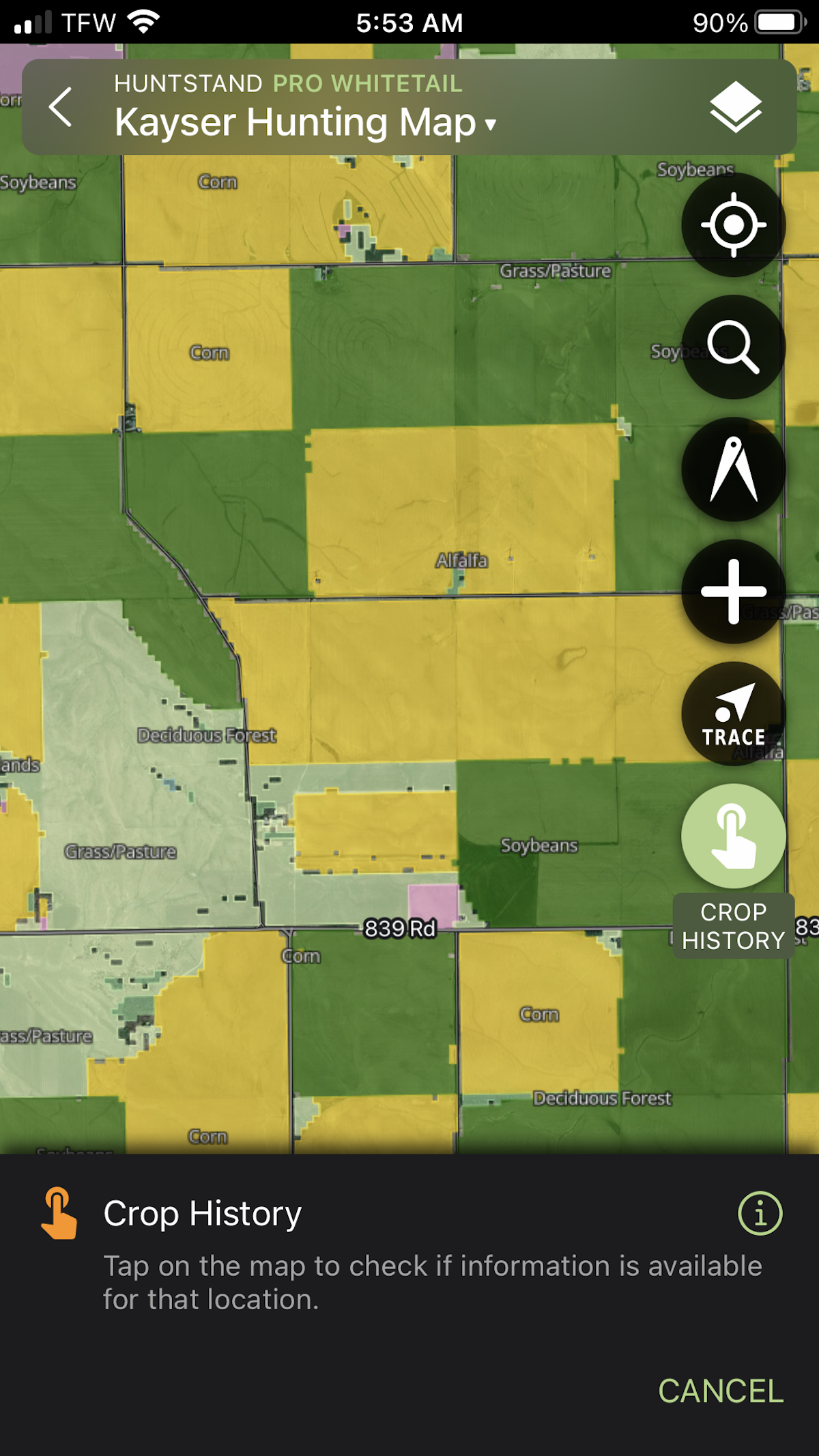
HuntStand’s Crop History feature aids you in finding food near your hunting property that whitetails might be visiting.
In severe conditions, such as deep snow, deer might bed within 400 yards or less of high-quality feed, like standing corn, or succulent browse on the perimeter of a forest thicket. If snow depth is not an issue, deer might still bed nearby. They could also travel a half mile or more to separate themselves from any perceived danger that feeding exposure could bring.
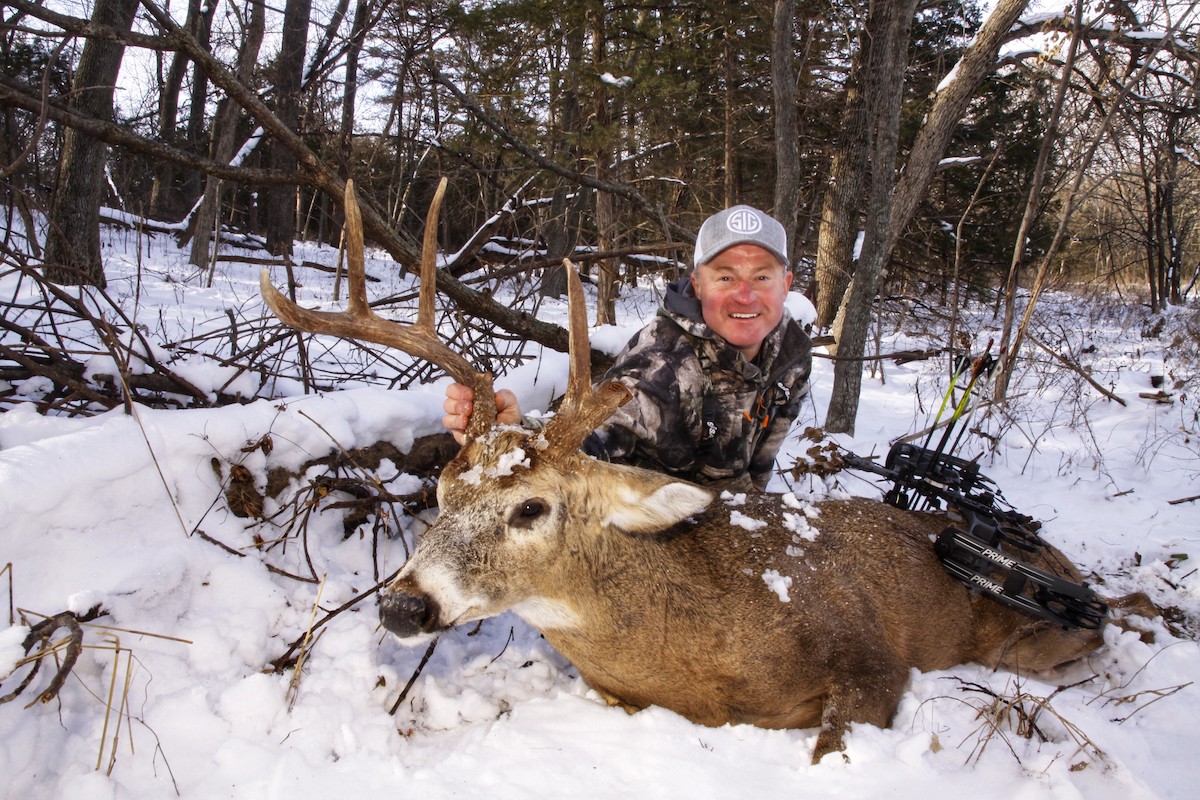
Mark Kayser arrowed this old whitetail while watching a visited food source. Kayser had a relationship with this buck for three seasons.
Deer might be less motivated in the post-rut, but elements exist to spark some action. Some of the activity could be as hot as seen earlier in the rut, while most will display a subdued nature. Take advantage of every motivational aspect in the post-rut for your last-gasp chance to fill a tag. Take advantage of the things that motivate monster late-season bucks.
15 Ways You Aren’t Using HuntStand Pro Whitetail, But Should Be
UPGRADE TO HUNTSTAND PRO WHITETAIL