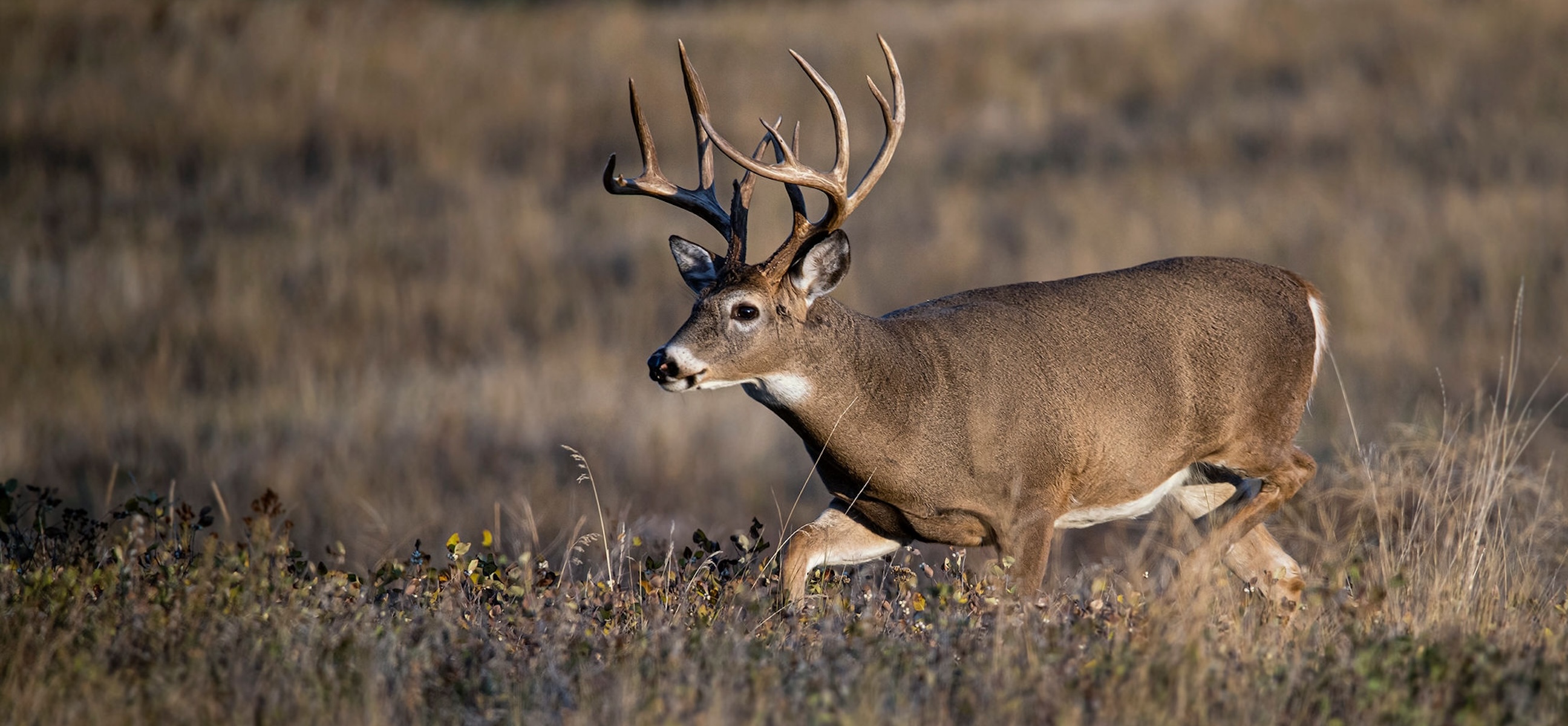




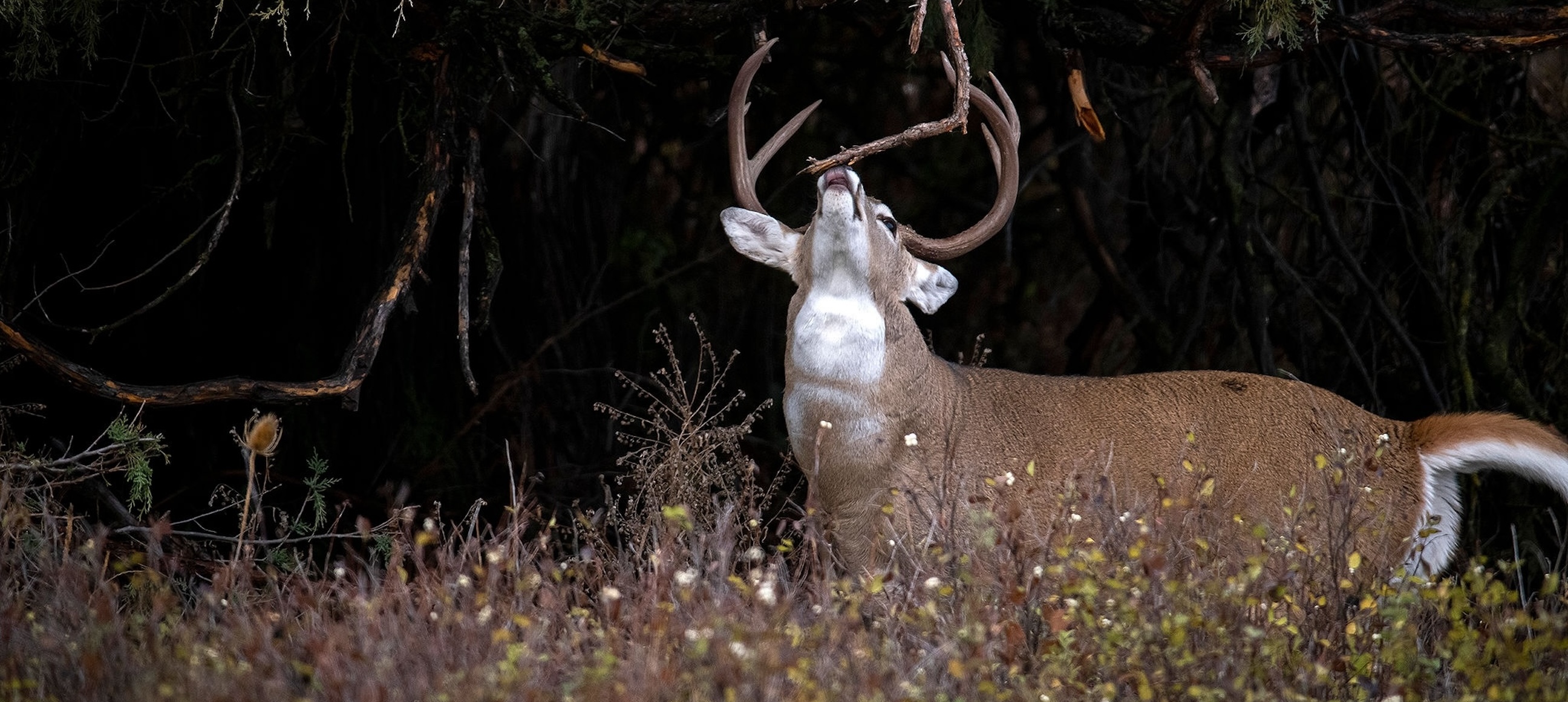


Fruitless sits during October aren’t a function of decreased deer movement, but rather a result of bucks shifting from their summer grounds to their fall breeding grounds.
Deer hunting the “October lull.” We’ve reached the period of the deer season many hunters dread. Most often called the October lull, some hunters struggle to even see bucks during this time. Accordingly, some of them resort to watching the Sunday football games while counting down the days until the buck action reboots closer to November 1.
Have you bought into the October lull theory, which suggests that buck movements substantially decrease in early and mid-October? Do you struggle to see bucks during this time? If so, this article aims to reframe what you know (or thought you knew) about deer activity during this often misunderstood phase.
In the rest of the article, HuntStand’s Brian Murphy, a certified wildlife biologist, will guide us through some interesting research-based findings. Murphy, who has devoted his career to understanding whitetails, will also suggest some HuntStand Ultimate features relative to hunting during this timeframe that will help your cause.

October success is possible when you understand the shift in deer activity results from bachelor groups of bucks splitting up due to hormone changes, food source alterations, and hunting pressure.
October Lull Fact or Fiction?
First, let’s address the elephant in the room. Is the October lull real or merely a misconception?
“The October lull is an old wives tale that has perpetuated to this day,” Murphy said. “First, I believe the term is incorrect. We should call it the early pre-rut lull because it is the transitional time between summer patterns and what I call the true pre-rut. Many hunters experience a perceived lull because bucks change their behaviors dramatically; they aren’t as visible where they were in September.”
Murphy said that numerous research studies conducted with radio transmitters on bucks and does have proven that deer actually move more in any given 24-hour period during what hunters call the October lull than in September, which nullifies the entire decreased deer movement viewpoint.
Interestingly, Murphy further explained that what hunters call the October lull doesn’t apply to about one-third of the whitetail’s range. Why? Well, it all correlates with rut dates. While two-thirds of the country find bucks rutting in November, regions such as South Texas and other southern locales have a later rut. There are also oddball rut dates in places like Florida’s Lee County, where the peak rut occurs during summer with the exact dates depending on where you are in the county.
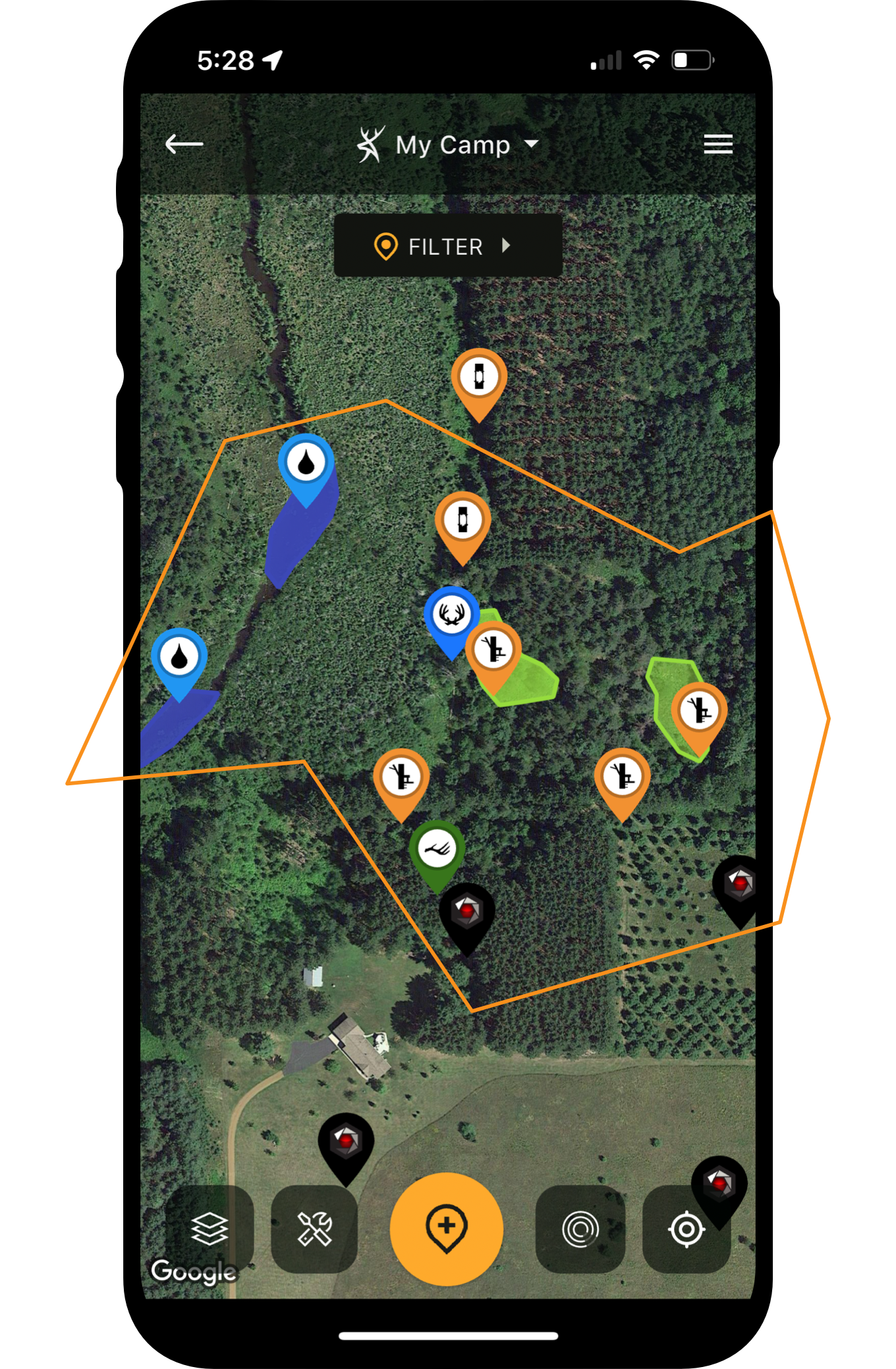
Use HuntStand Ultimate’s Nationwide Rut Map to identify exact rut dates for your area, then go back about 3-4 weeks from the pre-rut. That should be when the perceived pre-rut “lull” unfolds.

Buck movements also change in response to the sudden influx of hunting pressure imposed by early season hunters. Bucks that were visible in fields during daylight have now sunken deeper into the landscape.
Where They Go and What They Do
If research has proven that deer move more in October than in September, what can a lack of buck sightings be attributed to? Murphy noted several things.
“The main difference between late summer and early to mid-October is where the bucks are and when they actually move during a 24-hour period,” he explained. “A lot of early season hunters focus on bachelor groups of bucks on feeding patterns, and then suddenly those bucks all seem to disappear. Understand that they haven’t stopped moving. Bucks experience a testosterone boost, and they split up and head to their fall breeding ranges. In most cases, it’s within a mile of where they spent the summer. In general, October bucks are more evenly distributed across the landscape than they were all summer.
“Besides the hormonal shift,” Murphy continued, “deer in general and particularly mature bucks respond quickly to the initial influx of hunting pressure imposed by hunters in states that have archery, muzzleloader, or youth hunts in September. Not only are folks hunting, but they’re running trail cameras, baiting (where legal), hanging or building stands, and creating other disturbances that bucks did not experience in the summer.”
Another inevitable factor that sparks what folks have long called the October lull is that food sources change, and in turn, bucks shift where they spend most of their time. Both hard- and soft-mast foods become available in many areas, and that triggers bucks to feed in different areas than they did late in the summer.
How to “Beat” a Deer’s Nose
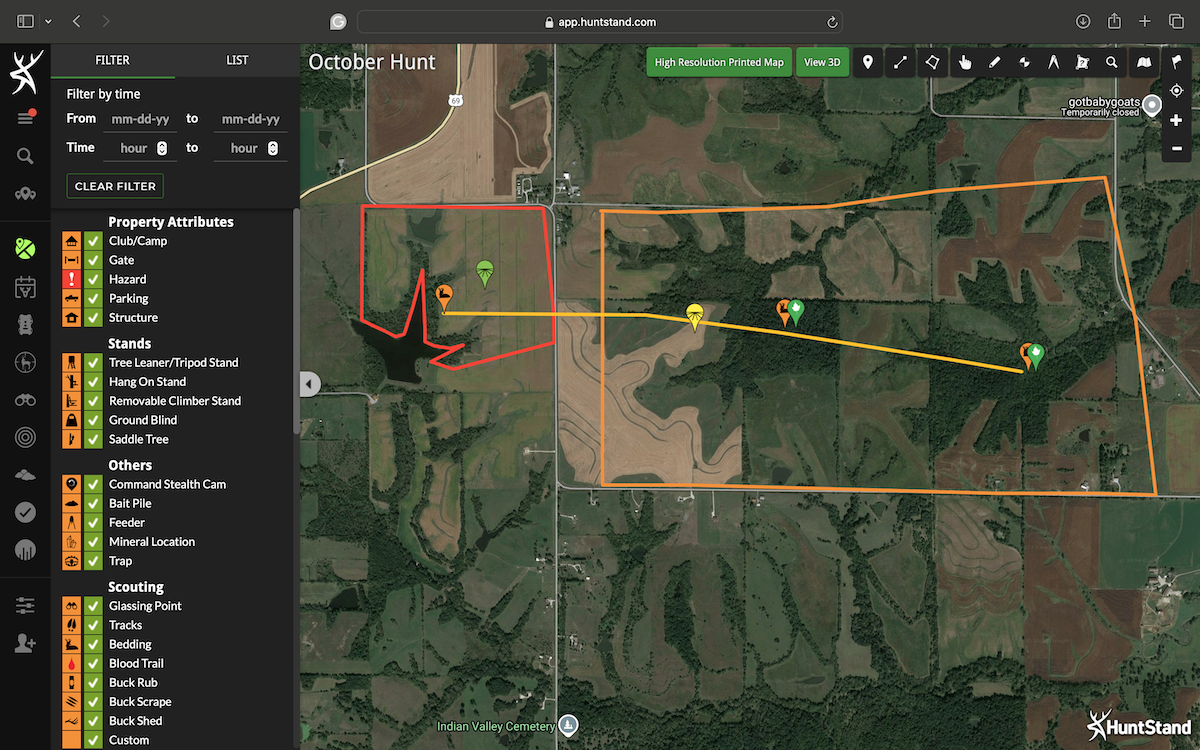
With HuntStand, using various layers, often you can identify habitat changes such as crop harvesting, timber cutting, and massive soil disturbances. Deer generally flock to these areas in October.
“Although research shows that bucks move more during any given 24-hour period than they did during the late summer, when they move during a 24-hour period begins to change,” Murphy said. “In September, most hunters sit the afternoons on or near food sources. However, as bucks transition into this new phase, research shows that the movements somewhat balance out between mornings and afternoons. A lot of hunters don’t take advantage of that. And with temperatures cooling down, deer movements can even unfold mid-morning. In general, deer movement transpires over a longer period, so hunters may have to hunt later into the mornings to take full advantage of the increased movements.”
Murphy explained that the transitional time between summer patterns and the true pre-rut affects buck behavior and movements on a larger scale than does and fawns. “Does are still nursing their fawns and trying to ween them,” Murphy said. “They’re still pretty much on their summer patterns and feeding as much as possible to prepare for the rut and the winter ahead. Bucks are the ones that really change their ways.”
While it would seem that things like hunting pressure and sudden acorn crops would restrict buck movements to small core areas, research instead shows that a buck’s smallest seasonal core area is where he spends the summer.
“In the summer, a buck often beds within close proximity of an ag field,” Murphy said. “He eats, sleeps, and stays in a small area — maybe only 10-15 acres — because he has little reason to venture out. Bucks also have relatively tight core areas during the transitional phase, especially if there is a lot of food in the timber. They don’t cover a lot of ground like they do in the rut, but it typically is a larger footprint than their summer core area.”
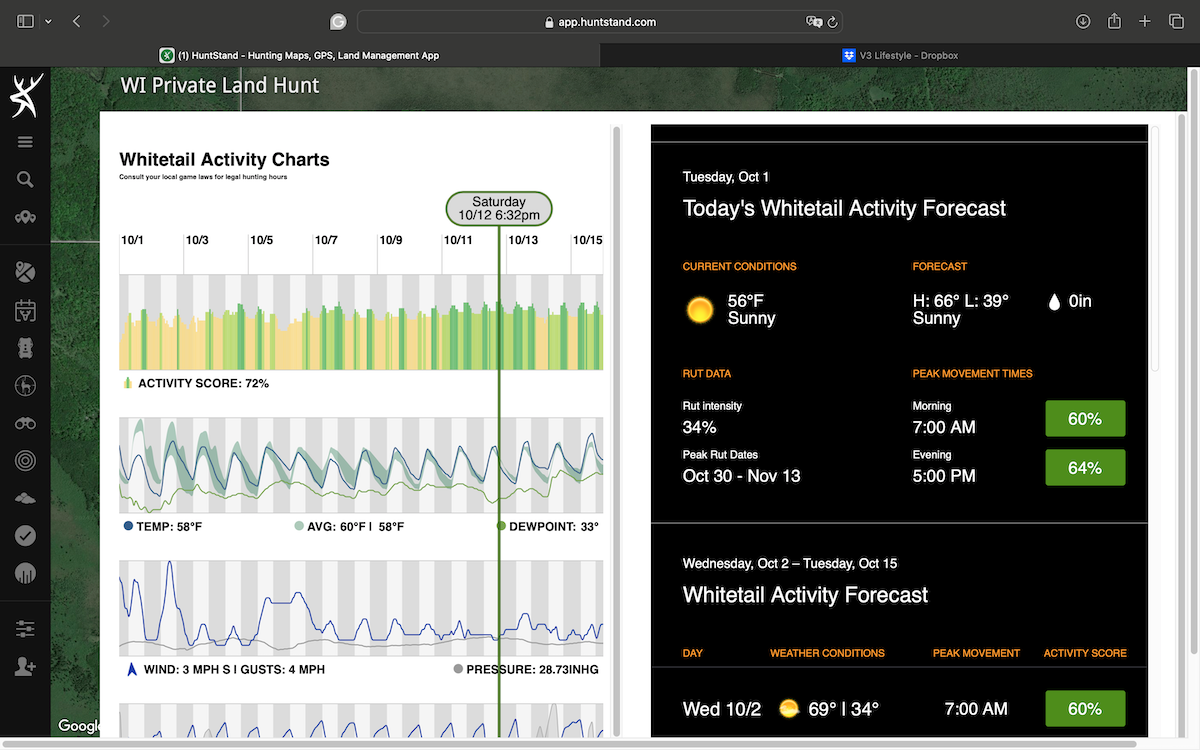
If you have a limited amount of time to hunt, be sure to reference the Whitetail Activity Forecast, which will show you days with the highest movement scores so that you can hunt when all things that impact deer movement are favorable.
Hunting Tips and HuntStand Ultimate Uses
Even with a great knowledge of buck behavior during the October timeframe, warm temps can still make it difficult to successfully encounter a mature buck. But, a temperature swing can turn things around.
“I’ve studied a lot of research data based on how cold fronts impact deer movements during the early pre-rut timeframe,” Murphy said, “and a lot of that is baked into HuntStand Ultimate’s deer-movement-prediction feature called Whitetail Activity Forecast. Fundamentally, any time we have a demarcation of 10 degrees or more below the most recent average temperature, research shows that it sparks the possibility of more deer movements.”
Another way that a cold front might influence buck movements is that, despite what a lot of hunters think, bucks are on the lookout for the first hot doe even though the rut is weeks away, and November-like weather can incite rutty behaviors.
“If you look at as many fetal measurements as I have,” Murphy said, “it becomes evident that bucks can and do breed much earlier than the peak rut. In an area with peak-rut dates of November 1-10, for example, a small number of does could be bred a month earlier than that. There are odd does that cycle into estrous early. As soon as a buck sheds his velvet, he’s technically ‘in the rut.’ He might not be demonstrating true rut behavior, but once he is hard-antlered, he is fertile and interested in breeding.
“Not only does the cold snap get bucks thinking about does and breeding,” Murphy added, “but it might just feel better for bucks, which are overweight from bulking up all summer, to get up and move.”
We touched briefly on the Whitetail Activity Forecast, and you should pay it close attention all season, but especially during early and mid-October. The Nationwide Rut Map, which provides rut dates on a county level, has some influence on the daily movement scores in the Whitetail Activity Forecast. Other variables that influence the movement scores are weather, barometric pressure, wind speed, and all the factors we know from research that affect deer movements.
How to Shoot a Deer on Opening Day
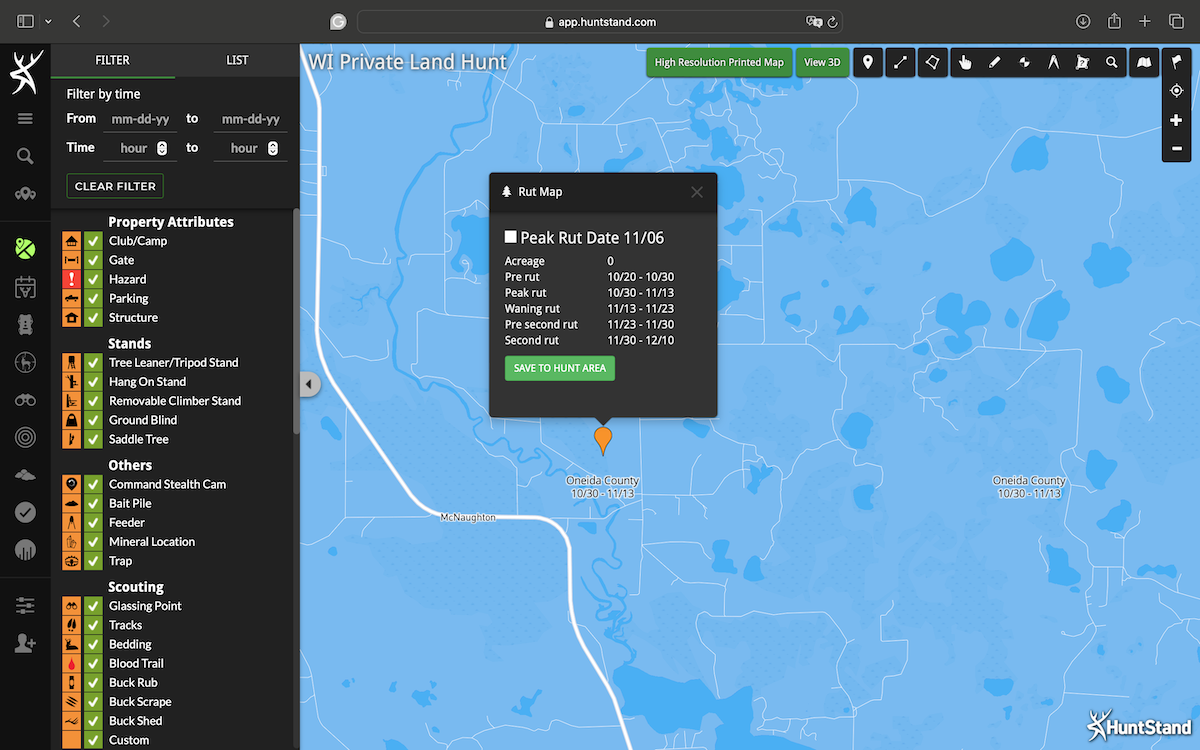
The Nationwide Rut Map can help you determine the exact rut dates for your county. Once you do that, rewind 3-4 weeks, and that is likely when the transition between summer patterns to fall breeding range relocation will occur.
“Whitetail Activity Forecast is a customized report for your area,” Murphy said. “If you have a limited number of stands or a limited amount of time to hunt, I suggest referencing the Whitetail Activity Forecast and adjusting your hunting days to take advantage of the days that have the highest movement scores. Now, those scores aren’t your chances of seeing a buck or even seeing a deer. A high score simply means that all the conditions in the model are favorable.”
Murphy also suggests using two other HuntStand Ultimate features to enhance your October hunting program. “If you hunt in an agricultural area, use the Crop History overlay in conjunction with the Monthly Satellite Imagery base map,” he said. “During the October timeframe across most agricultural areas, crops are being harvested. Use Crop History to see what agriculture exists in the vicinity, and then transition over to Monthly Satellite Imagery to see what was harvested within the last month and what is still standing. If all the farmers south of you have cut their beans and corn but there are two standing-crop fields to the north, you might want to move your hunting efforts toward that end of the property.
“I also like to use Monthly Satellite Imagery to identify areas of disturbance,” Murphy continued. “By that, I’m talking about logging operations or areas that have been cleared by heavy equipment. Deer love disturbances such as these. If I see that a neighboring landowner has done a bunch of dozer work a month or so before my hunt, I know that new forbs will sprout up and become attractive to deer. Burns or any other disturbances that have changed the landscape either on my property or an adjoining property, attract deer, and I often shift my hunting focus to that vicinity.”
Murphy shared that tons of research has been done on scrapes and that bare dirt in the right location without the presence of any deer urine is highly attractive to deer. He said that you could doze an area in your forest and that deer would absolutely walk through it within 24 hours. They will use that area at a higher proportion than the surrounding areas.
Speaking of scrapes, it is a good time to hunt them. While scrapes around food sources are visited primarily in the dark, you might jump on HuntStand’s Satellite and Terrain base maps to identify possible bedding areas away from the food source. Look for thick cover and/or terrain. Next, check the HuntZone feature to ensure a favorable wind, then go for a hang-and-hunt mission. When you find fresh rubs and scrapes, set up over it. This is a great way to catch an October buck off guard in an area where he has been pressured little or not at all.
Tips for Planning Mind-Blowing Out-Of-State Hunting Trips


It’s important to understand that bucks have a summer range and a fall breeding range. When bucks seem to disappear where you saw them all summer, it likely means that they’ve moved to their fall ranges, especially in areas with abundant hard-mast crops.
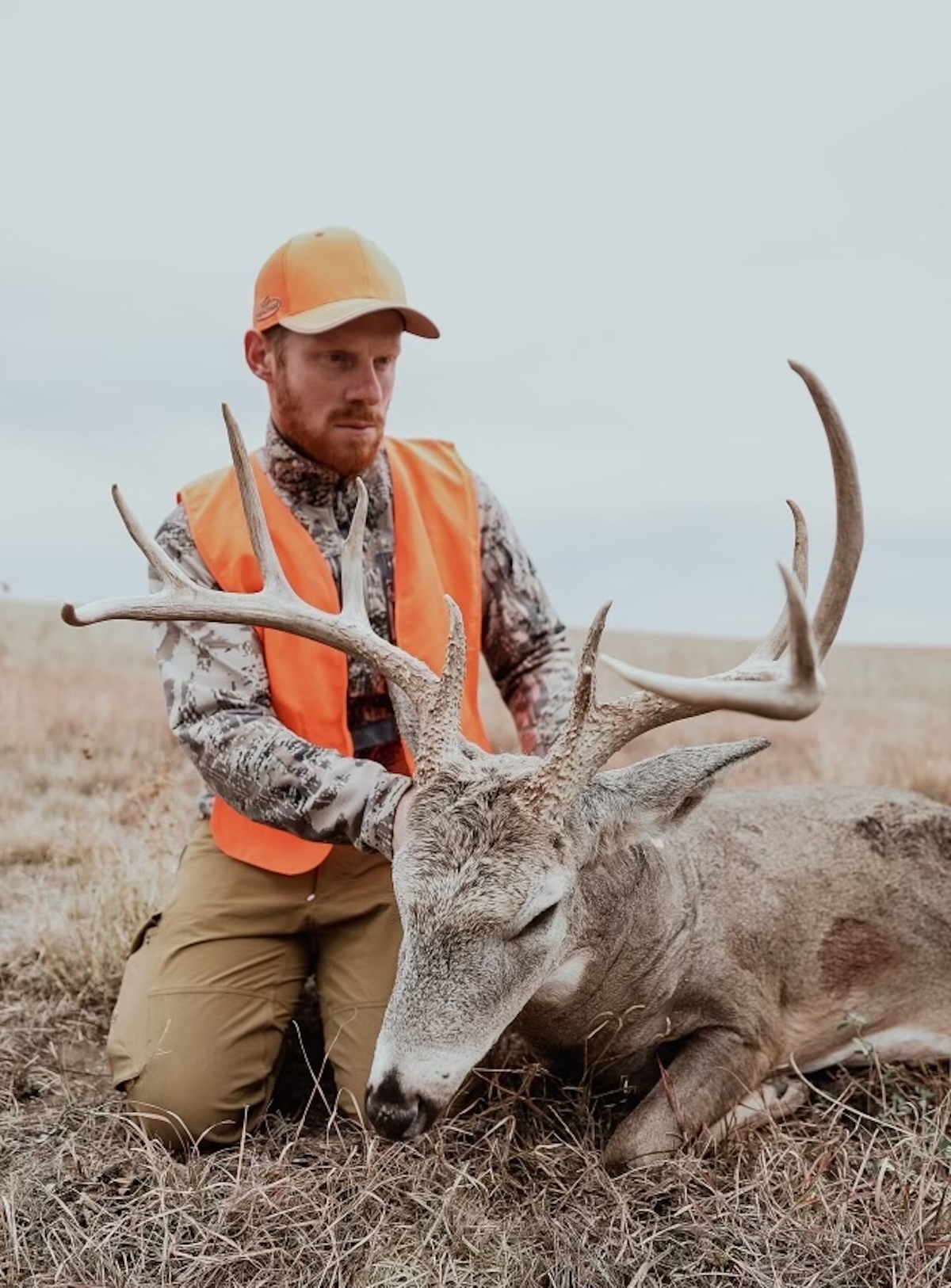
Author Darron McDougal took this 22-inch-wide 11-pointer on October 13, 2021. While speed scouting/hunting a new public parcel, he located the buck about a mile from the road. When the wind direction was right, he slipped back in and sealed the deal on the 146-inch bruiser when it stepped out 54 yards away.
A Few More Things
To boost our hunting potential, we must harness what we know about October deer behavior and adjust our strategy. Hopefully, you know a lot more about this phase of the whitetail season than you did before reading this article, and more importantly, hopefully, that additional knowledge will help you better understand where to hunt to catch now-reclusive bucks that were visible in bachelor groups in wide-open fields just a few weeks ago. Even if you don’t get your buck this October, you’ll learn some things that can be helpful in future seasons. If you ask us, that alone makes October hunting worth it.