





Off-season scouting is as valuable as the investment you put into it.
Rubs shine like beacons in the timber. Scrapes dot the forest floor look like Swiss cheese. Deer trails snaking the forest floor appear as slug lines across concrete. With all that sign, the deer numbers must rival rat populations, right?
Of course, the above is an extreme exaggeration. Deer are far fewer in number, sign is much less abundant, and off-season scouting for whitetails isn’t nearly that easy. But with HuntStand, it doesn’t have to be all that difficult, either. Here’s HuntStand’s guide to post-season scouting for deer.
Post-season scouting can set you up for better success next fall and winter.
Reasons for Post-Season Scouting
Post-season scouting is a significant factor in future land management, wildlife management, and deer hunting success. Within these realms, there are many reasons for post-season scouting. That said, it’s really about completing important off-season tasks. The following are just a few of these.
Reflecting on Deer Season: Now is the time to think about the past several months. Consider the ups and downs of deer season. Note where you saw deer, where you didn’t, and other important things.
Walking Deer Trails: Walk all deer trails on the property. The complete network of deer trails connects important parts of the landscape, including bedding areas, food sources, water sources, escape routes, and more. Traverse these paths to understand how deer use the property.
Reading Relatively Fresh Deer Season: As you walk deer trails, consider the freshness of deer sign. Does it seem to be from the early season, rut, or more recent? Make note of these things to gauge at what point in the season deer used the area.
Garnering Seasonal Scouting Data: Deer patterns change throughout the year. They behave differently based on the time of year, available bedding and food, volume of hunting pressure, and more. Fortunately, much of the discovered deer sign can be categorized into certain phases of the season. Most rut sign (rubs and scrapes) are made during the latter part of the pre-rut through the rut. Of course, very fresh deer sign was made during the late and post-season.
Analyzing Changes in Property Usage: Deer patterns often remain consistent from year to year. However, some things change. Food sources alter or rotate. Trails shift. Water sources dry up. Deer hunters won’t know these things (and much more) without getting out and walking the landscape.
How to Scout Deer in Winter
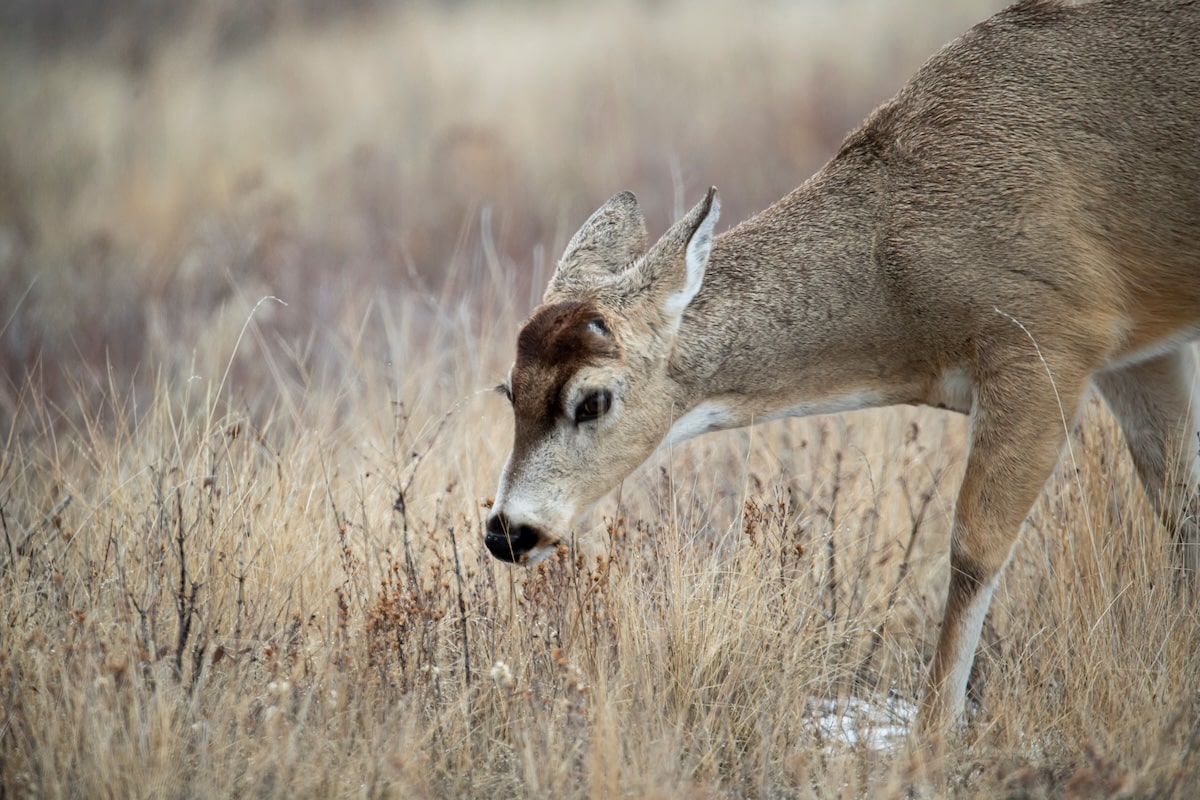
Might as well search for some sheds while out there scouting during the off-season.
Searching for Shed Antlers: Shed hunting is becoming a very popular pastime during the off-season. Hunters and non-hunters alike are burning boot rubber and scooping the brownish-white gold. For hunters, it confirms deer made it through the season, but also notes where they potentially spent time toward the end of deer season, and just after it.
Comparing Trail Cam Intel to Scouting Discoveries: Your SD and cellular trail cameras ran all season. In fact, they’re still cranking great off-season photos. Now, scroll back through photos from the pre-season, deer season, and post-season. Study the photos in relation to the scouting discoveries made while post-season scouting. Putting these resources together provides a better overall understanding of how deer are using the landscape.
Gauging Population Trends: The dynamics of the local deer herd changes over time. Population densities rise or fall. Buck-to-doe ratios improve or skew. At times, the status remains quo for both. That said, the off-season is a good time to gauge population trends. This assists with making harvest decisions the next hunting season.
Managing Treestand Deployments: Treestands require maintenance and safety checks. The off-season is the best time for this. Pull all stands. Check for needed repairs or replacements. Then, re-deploy stands as needed with your latest scouting assessments in mind.
Cutting Shooting Lanes: While working with treestands, consider assessing current shooting lanes. Trim these as needed. Of course, cut new lanes, too.
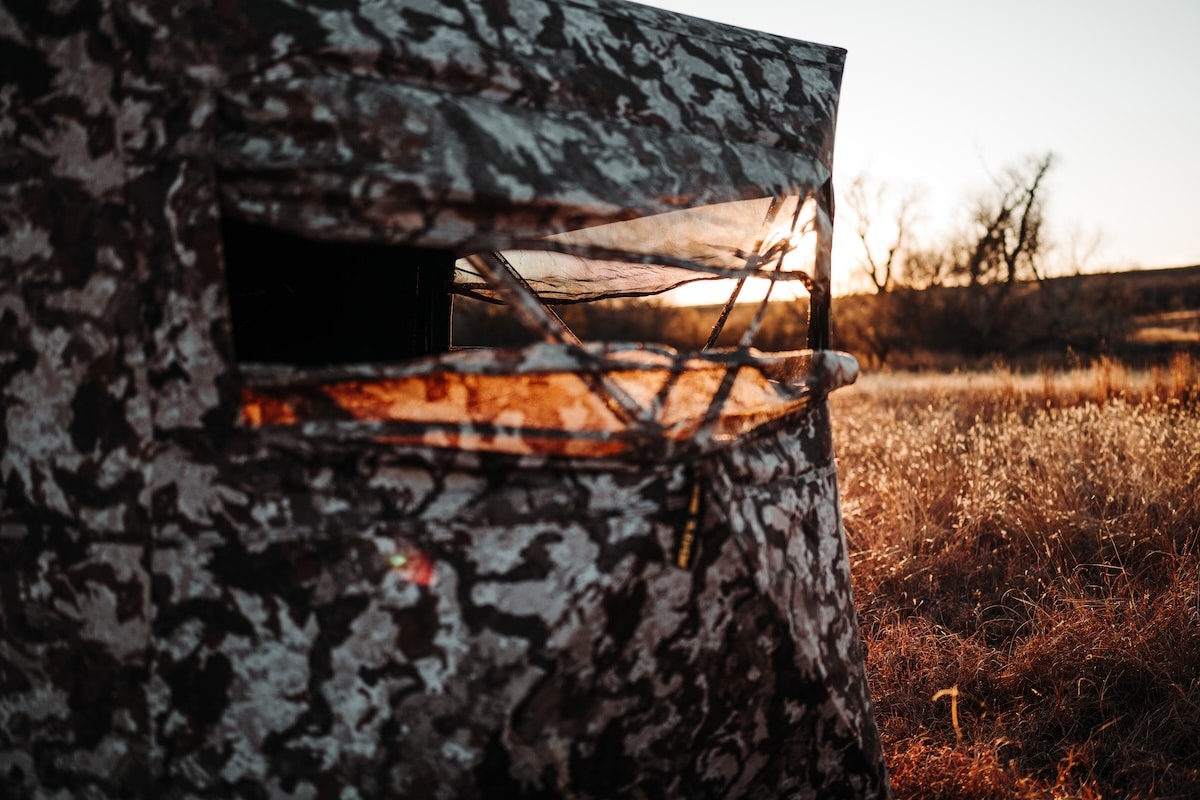
Pull your hub-style blinds, clean them up, and store until next deer season.
Managing Blind Placements: Likewise, now is the time to manage hunting blind placements, too. Pull, clean, and store hub-style hunting blinds. Clean and reposition (if needed) larger permanent box blinds.
Cleaning Up and Re-Deploying Trail Cameras: Some deer hunters only use their cameras during deer season. Others deploy them year-round, or close to it. The latter option provides the most intel for how deer live on the landscape. The off-season is the time to clean up cameras and reconsider their next postings, though.
Prepping Spring Food Plots: Other than opportune frost-seeding, it isn’t time to plant just yet. That said, land managers can begin prepping for spring food plots. Consider clearing new plots, pulling soil samples, completing soil tests, and finishing other relevant tasks.
The above are great reasons to conduct off-season scouting. Each one is either directly linked to or reliant on wintertime scouting efforts. Of course, it’s a beginning list, and not an exhaustive one. Assess your own hunting area and goals. Then, determine additional projects as needed.
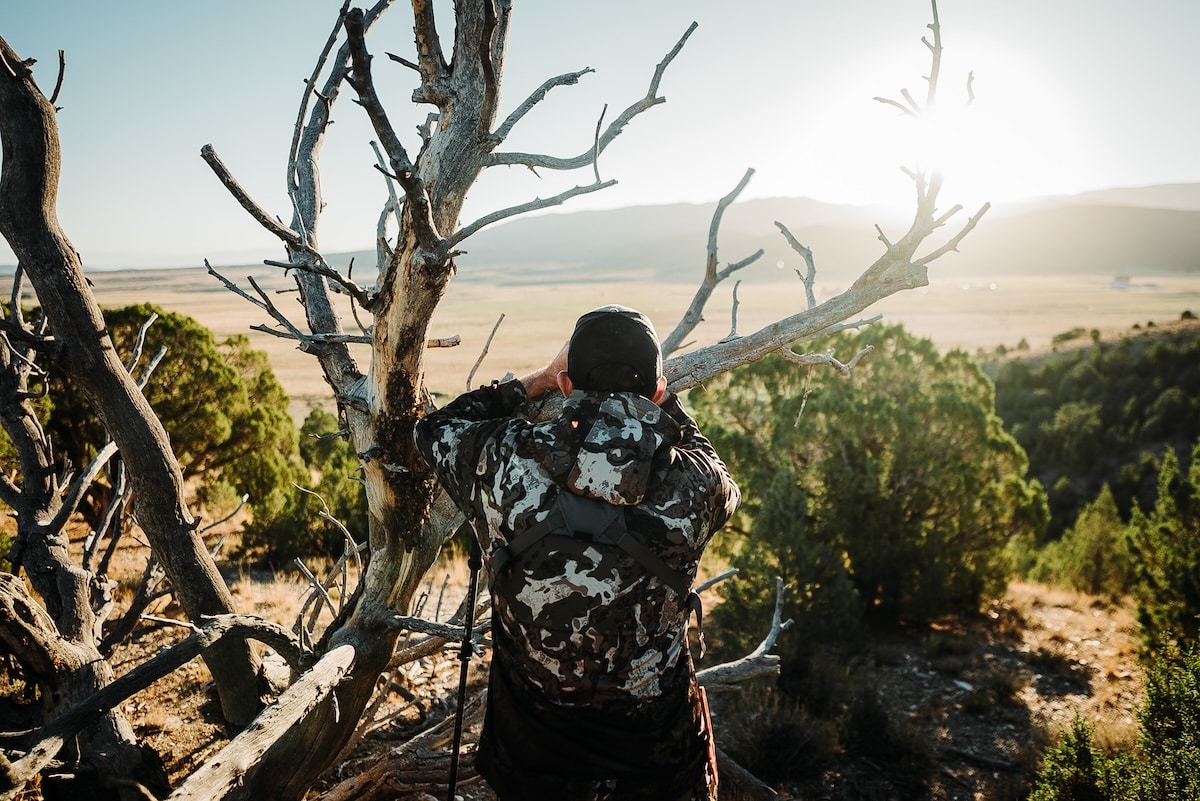
Keep your binos handy while scouting.
Notable Differences in Post-Season Scouting
Post-season scouting efforts varies based on certain factors. The geographic location, type of access, number of hunters, and other factors, impact the how, when, and where of off-season scouting.
Private vs. public land can impact how you scout. For example, private land with complete control of the property allows you to wait longer before scouting. On public land, or shared private ground, it accelerates the start time. Furthermore, objectives vary, too. For example, on public and shared private land, you’re searching for overlooked areas other hunters miss. In contrast, on controlled private ground, this is less of a concern.
Regional differences in post-season scouting come into play, too. Winter scouting in the North looks different than in the South. In the North, deer “yard up” in large groups. These tend to be in key areas that offer solar and thermal bedding cover with nearby winter food sources. In the South, deer rarely exhibit this behavior. Therefore, hunters can more closely see and study deer in their typical in-season, bed-to-feed patterns.
Advanced Shed Hunting Tips
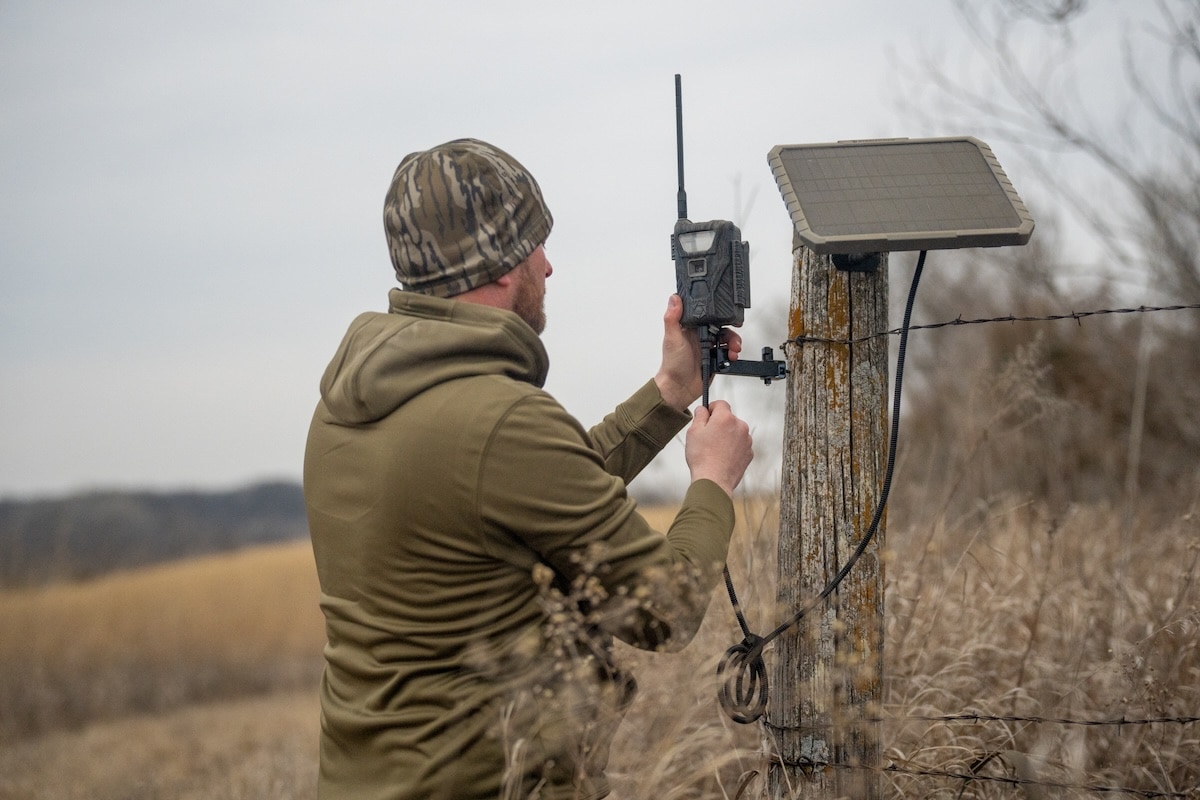
Refresh cams, and get them right back to work.
Primary Post-Season Scouting Objectives
Post-season scouting for deer comes with large objectives. These include locating bedding areas, finding food sources, pinpointing water sources, and more. Assembling these pieces of the puzzle completes the scouting picture.
Bedding cover is where deer spend the bulk of daytime hours. Finding these areas is crucial when game planning stand and blind locations for intercepting deer as to they move toward and away from daytime bedding areas.
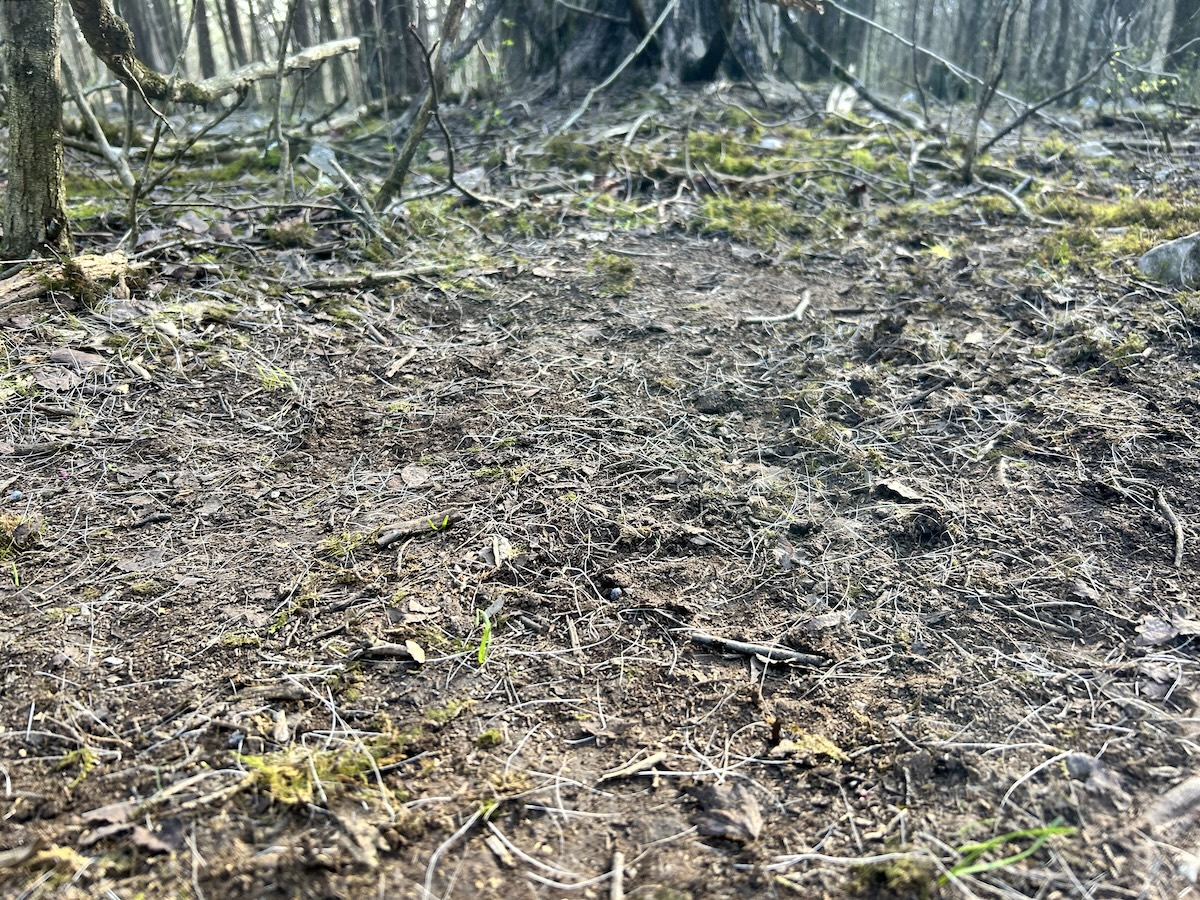
Well-used beds will be covered with white hair.
Generally, deer bed in more remote areas with higher stem counts and horizontal cover. Some bedding areas are seasonal, such as cooler North-facing slopes in summer and warmer South-facing slopes in winter. Deer also tend to bed on the downwind (leeward) sides of ridge lines.
Food is the next piece of the equation. Deer eat hundreds of plant species. However, spend time on the landscape and you’ll begin to see what they target most.
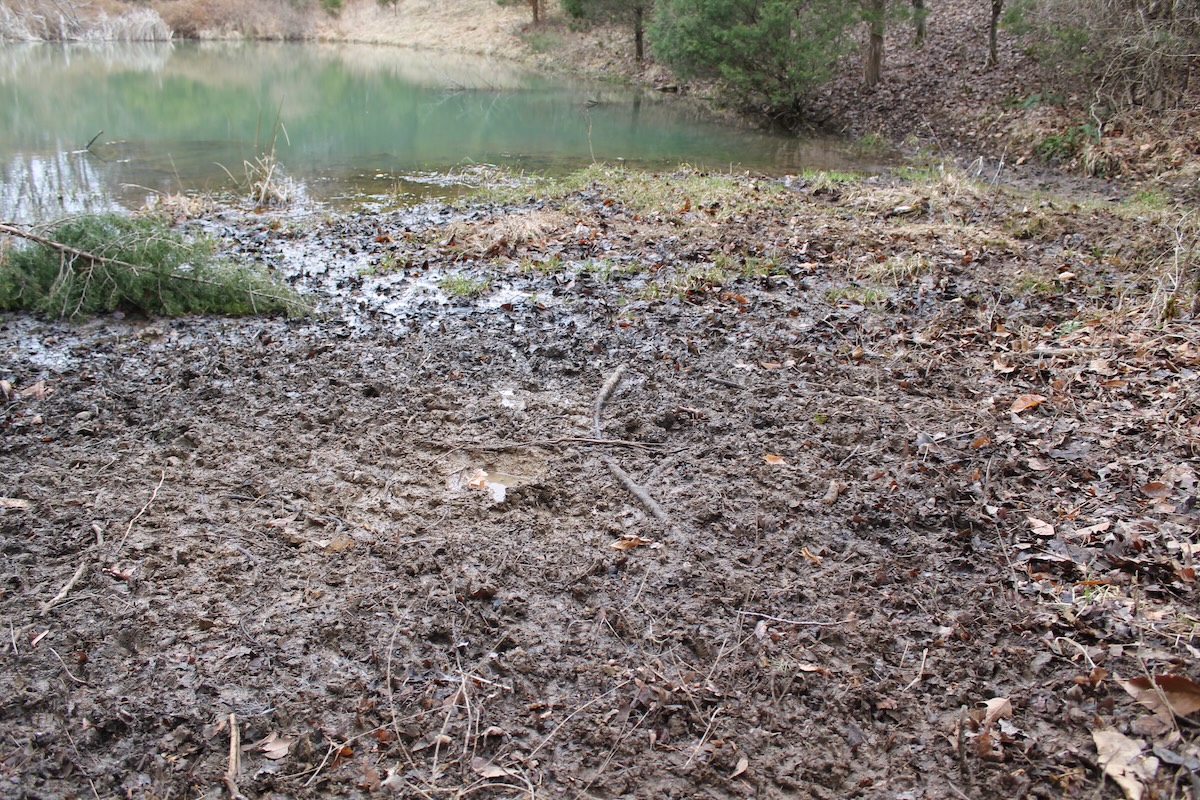
A good, isolated water source is quite valuable on a hunting property.
Water is often overlooked. In areas with limited sources, water has even more drawing power. Therefore, it has increased hunting relevance. Mark these sources. Deer will travel along routes connected to these, which certainly impacts hunting and land management decisions.
As previously noted, log all scouting info in HuntStand, including bedding areas, food sources, water sources, trails, rut sign, general sign, and more. When possible, scout in the snow, which makes it easier to see primary and secondary deer trails.
While in the field, pinpoint key habitat and topographical land features. Examples include benches, bluffs, bowls, drainages, funnels, pinch points, ridge lines, ridge endings, saddles, thermal hubs, etc. These influence deer behavior, impact land management decisions, and dictate stand location choices.
Shed Hunting Hacks, Tips, and Tactics with HuntStand Ultimate
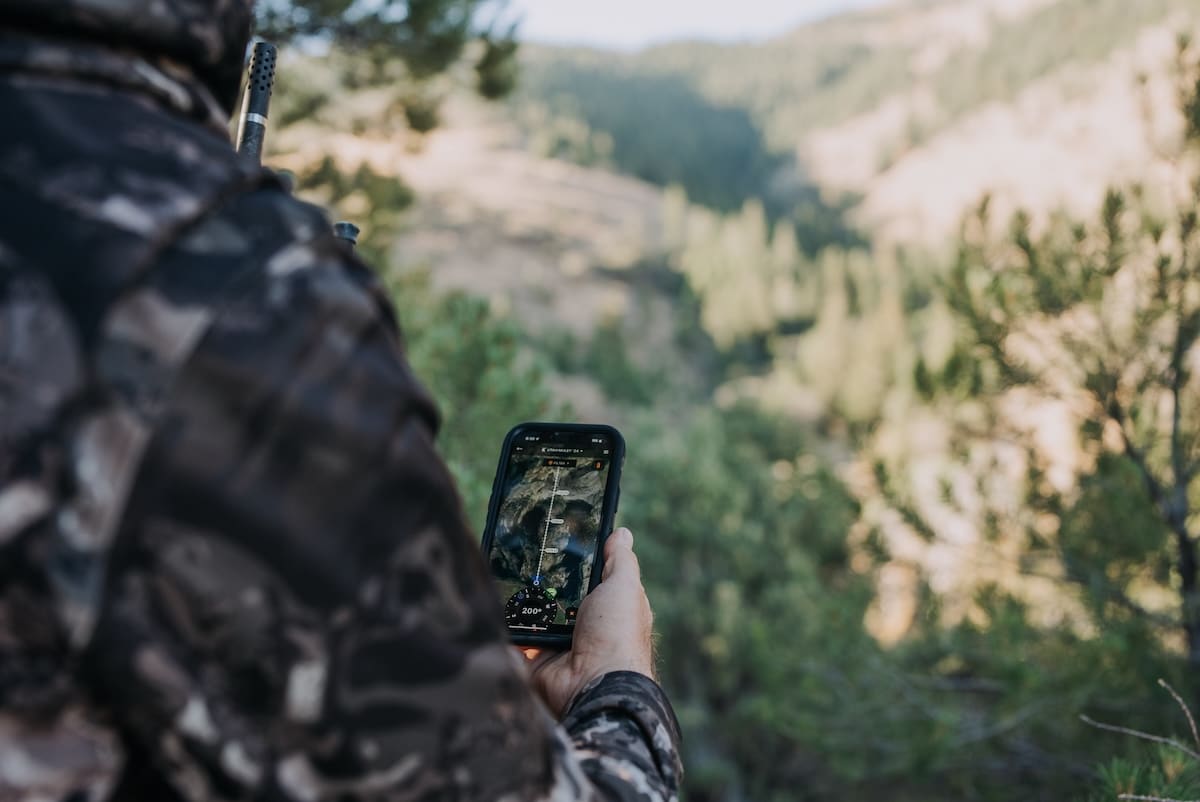
HuntStand is very valuable for those scouting whitetails.
HuntStand Tools That Streamline Post-Season Scouting for Deer
HuntStand Pro and HuntStand Ultimate are excellent tools for post-season scouting. These tools streamline the off-season scouting process. These help navigate the landscape, find important land features, keep hunters organized, record important data, assess crucial trail camera information, and much more.
Here are just some of the key tools that benefit hunters. Plus, a few examples of advanced scouting tactics these tools can be used for.
Base Layers: Numerous base layers are excellent for post-season scouting. Aerial-based layers, such as Hybrid, National Aerial Imagery, Mapbox Satellite, Monthly Satellite, and more, are great for seeing habitat-focused land features. Topography-centric layers, such as Quad Topo, Terrain, 3D, and others, are ideal for studying terrain-minded elements. Of course, activating the Contour overlay is essential when studying most map layers.
Command Pro Integration: Those using the Command Pro app — which is compatible with Muddy and Stealth Cam cellular trail cameras — can integrate it seamlessly with the HuntStand app. It’s great to see all trail camera photos within the HuntStand app, and know the exact locations of where they were taken. Furthermore, the data interpretation and top-tier trail camera photo analysis offers significant scouting advantages.
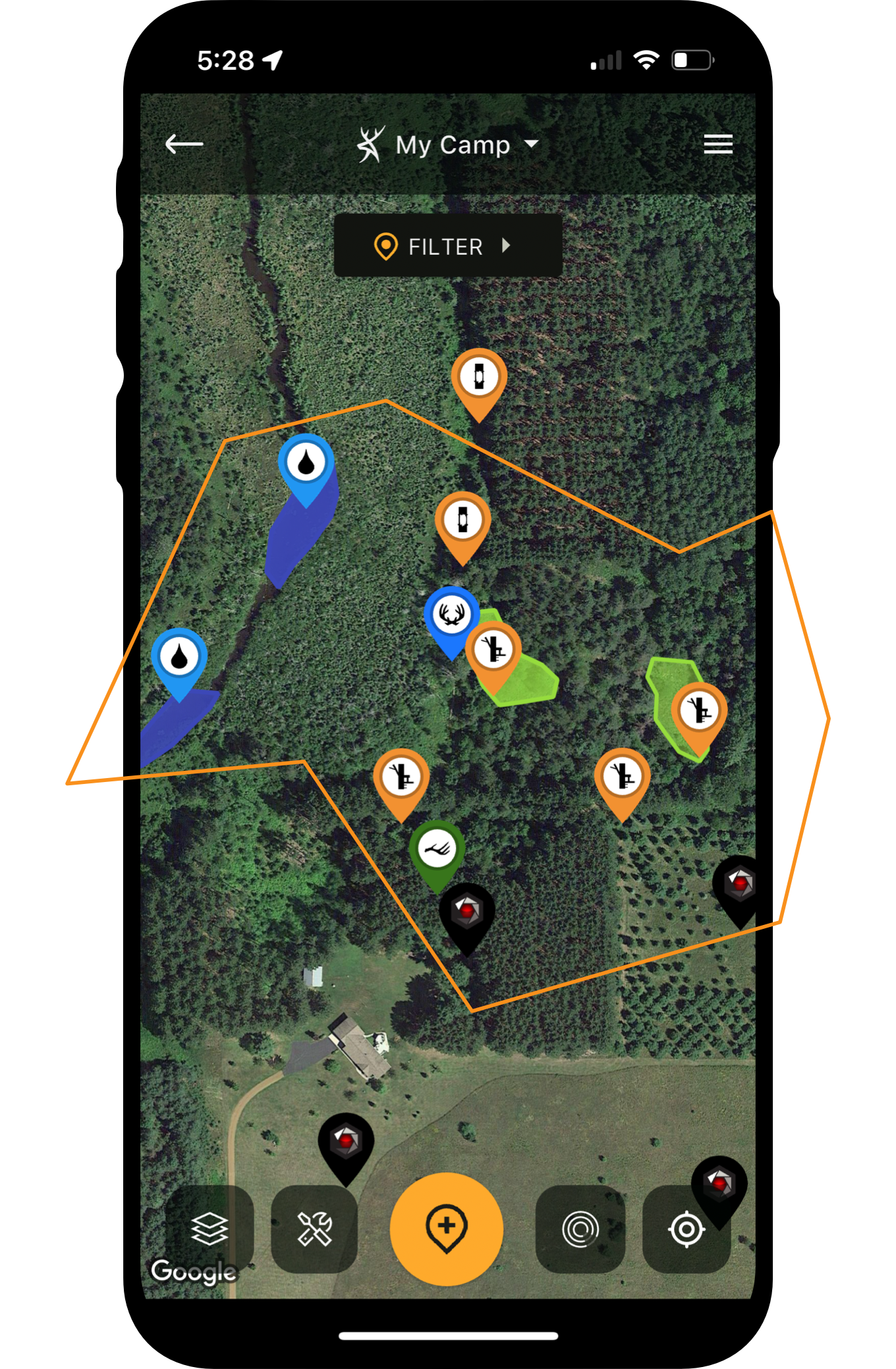
Adding Markers: HuntStand comes loaded with unique and customizable markers (pins). Hunters can drop these for each scouting discovery. Examples include dedicated marker representations for bedding areas, heavily used food, heavily used water, other food sources, droppings, funnels, pinch points, rubs, scrapes, shed antlers, tracks, trails, trail crossings, and much more.
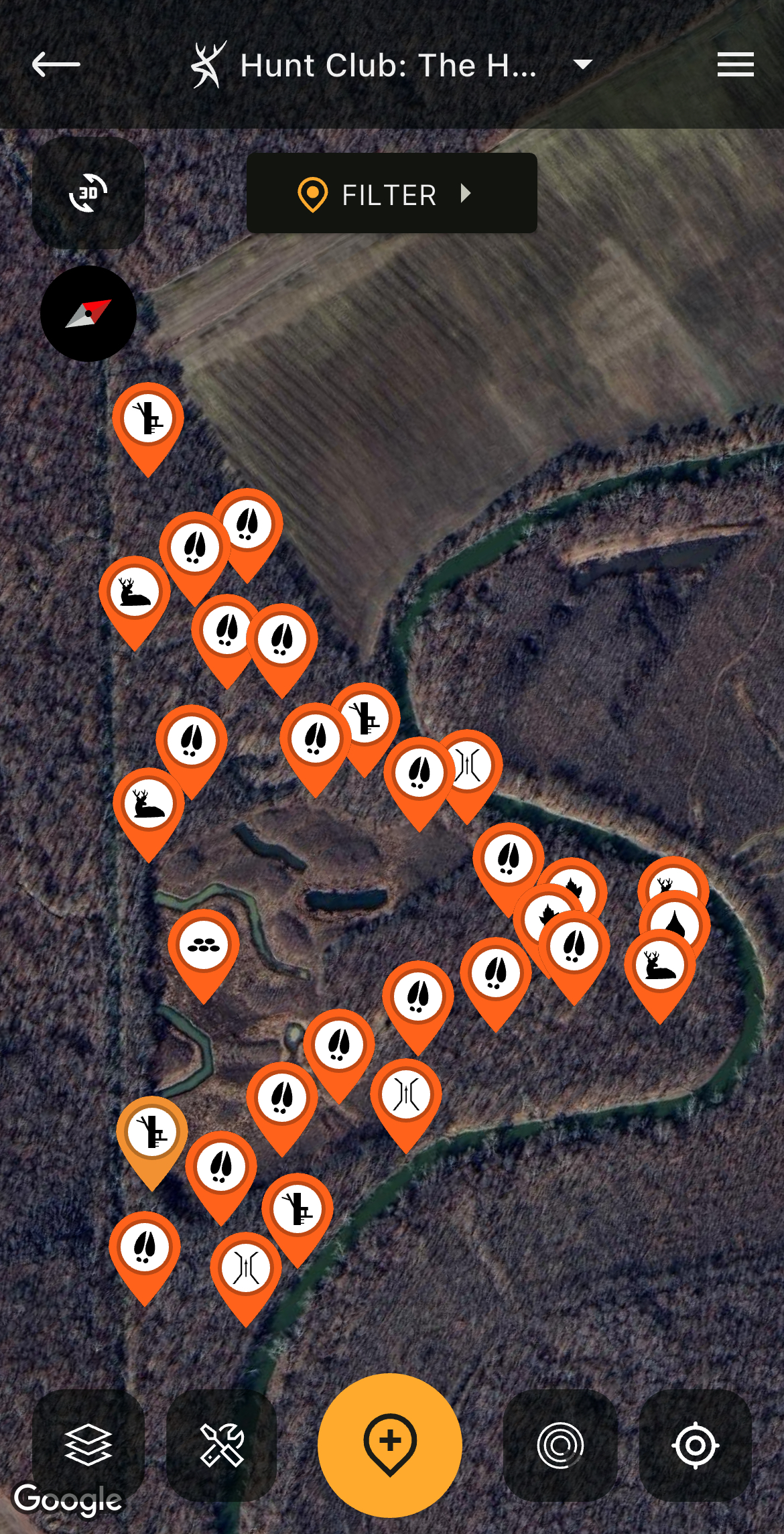
Drop plenty of scouting markers to depict how deer use the landscape.
Customizing Markers: Dropped map markers can be customized by color. Furthermore, app users can type dedicated notes for each one. This has many applications.
For example, drop a “heavily used food” pin for each oak tree you find. Color code each “pinned” oak as red or white based on which family of oak trees it belongs to. Then, type the specific oak tree species into the notes section. Remembering this information is crucial, because most oaks tend to operate on one- to two-year cycles (species depending). You can keep track of this information and better understand how deer are utilizing oaks on the landscape. Then, barring mast crop failure, predict when they’ll produce.
HuntZone Wind Analysis: Wind direction is influenced by terrain and topography. Therefore, wind directions aren’t always as predicted by weather outlets. While scouting in the field, compare the stated wind direction to what it’s actually doing in the field. While it’s the exception, and not the norm, the topography can alter directions significantly. Once you know this, make notes in HuntStand for reference when planning future hunts for these areas.
Additionally, observing the HuntZone Wind Analysis tool while scouting provides better understanding of your scent cone. In-the-field visualization of this further enhances the planning and effectiveness of hunting with just-off wind directions.
Track Path: The Track Path feature has numerous hunting applications beyond blood trailing. It’s also exceptional for planting food plots. Plus, it’s perfect for showing where you’ve covered while scouting, shed hunting, and more. Best of all, when turned on while walking all deer trails, it can provide a great visual of the deer trail network within your hunt area.
Property Info: See heavily used deer trails that lead onto a neighboring property? Perhaps use the Property Info tool to determine the landowner. Then, consider contacting them and making the ask to lease the land or hunt by permission.
Offline Mapping: Some hunting properties don’t offer quality cellular service. For these areas, it’s ideal to save offline mapping versions. Then, hunters can continue to use the app unimpeded during the post-season scouting process.
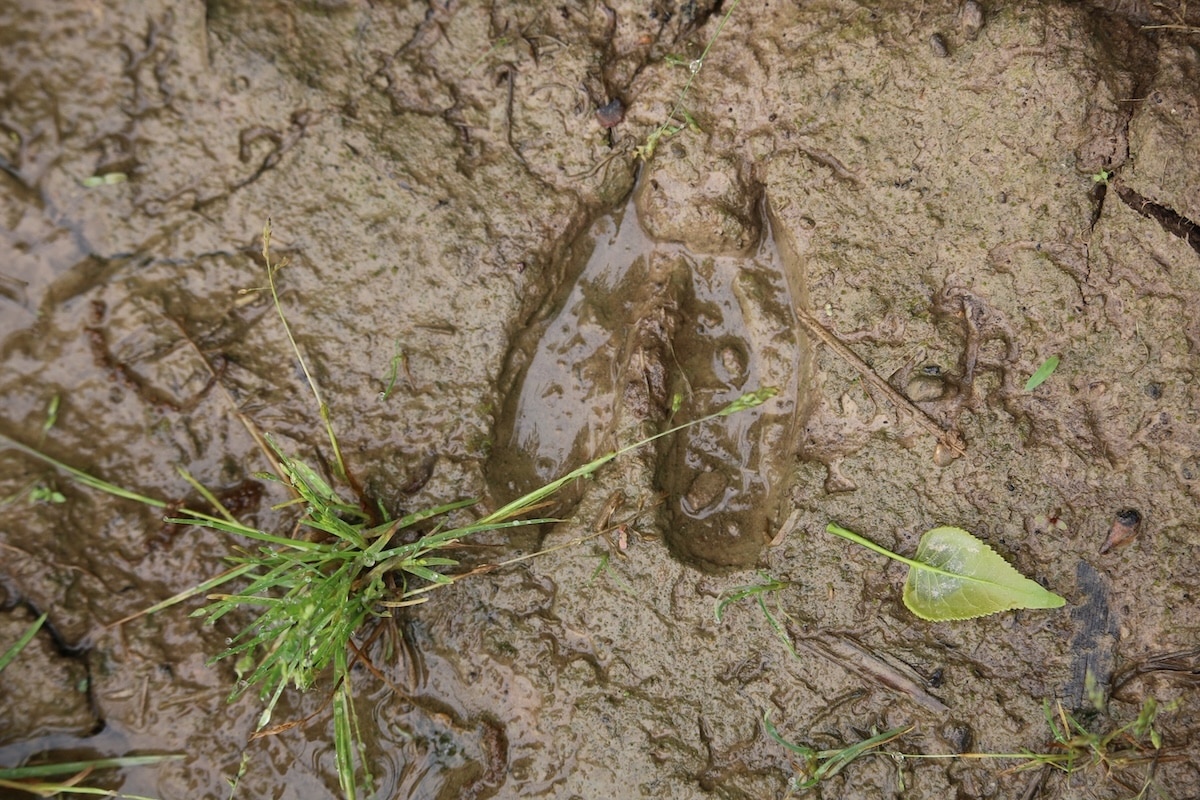
Make your off-season scouting better this year with HuntStand Ultimate.
Overall, the biggest benefit of post-season scouting, and inserting HuntStand into the scouting process, is about painting a picture. HuntStand helps visualize things that we cannot do with our naked eye alone. Thus, take your post-season scouting for deer to the next level this year. Make it better with HuntStand Ultimate.