





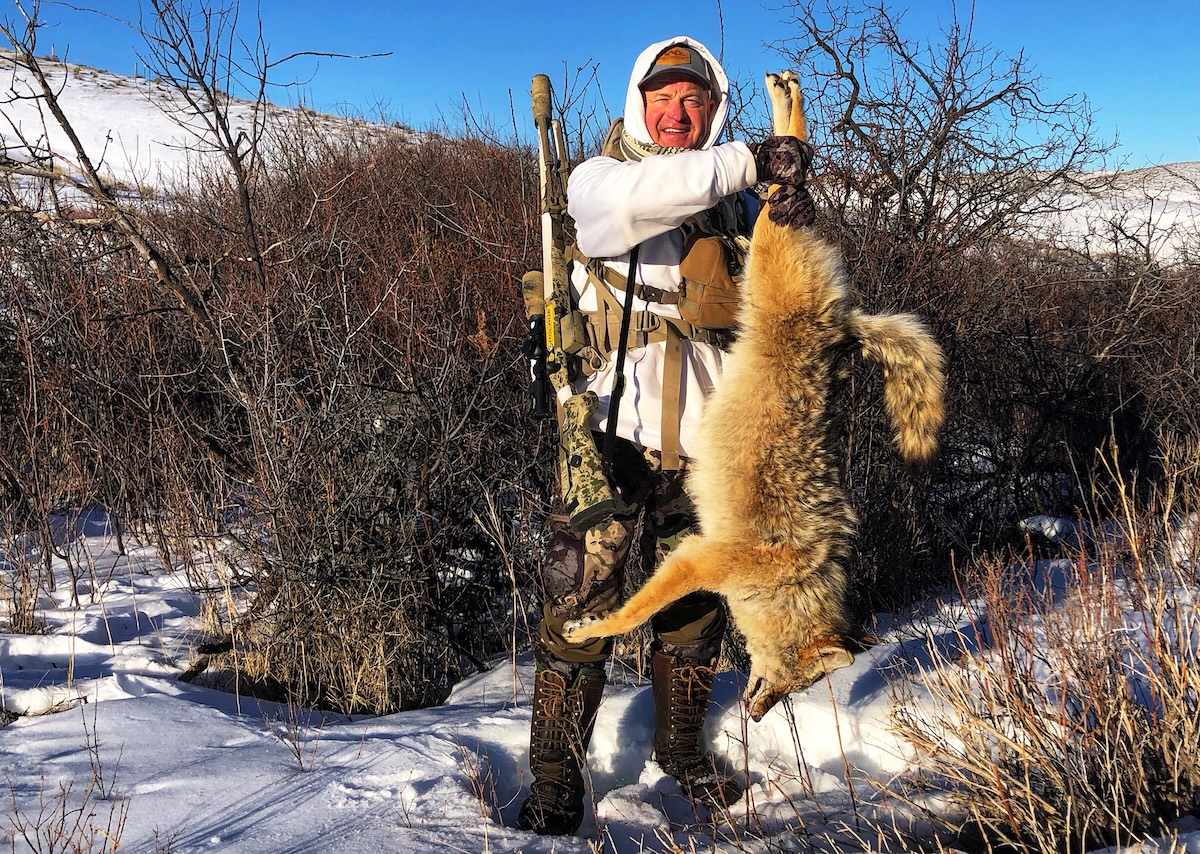

Mark Kayser with a February coyote that played right into a howling ambush.
Big game can draw coyotes, too.
You watch YouTube videos and think to yourself, this coyote hunting thing is easy. Well, you’re wrong. In recent years, the sport of calling coyotes in close has transformed. More hunters jumped into it and educated coyotes quickly. I recently read an article by coyote pro Fred Eichler and even he was expressing how coyote hunting has become more challenging in recent years. I agree.
Whining aside, you can increase your success by having a playbook prepared ahead of your hunt to guide you to higher odds of success. By understanding coyote lifestyle, coyote behavior, coyote needs, calling site dominance and more, you remove many of the elements that cause failure on a hunt. Start with understanding your quarry.
Here’s how to hunt coyotes, with help from HuntStand Pro.
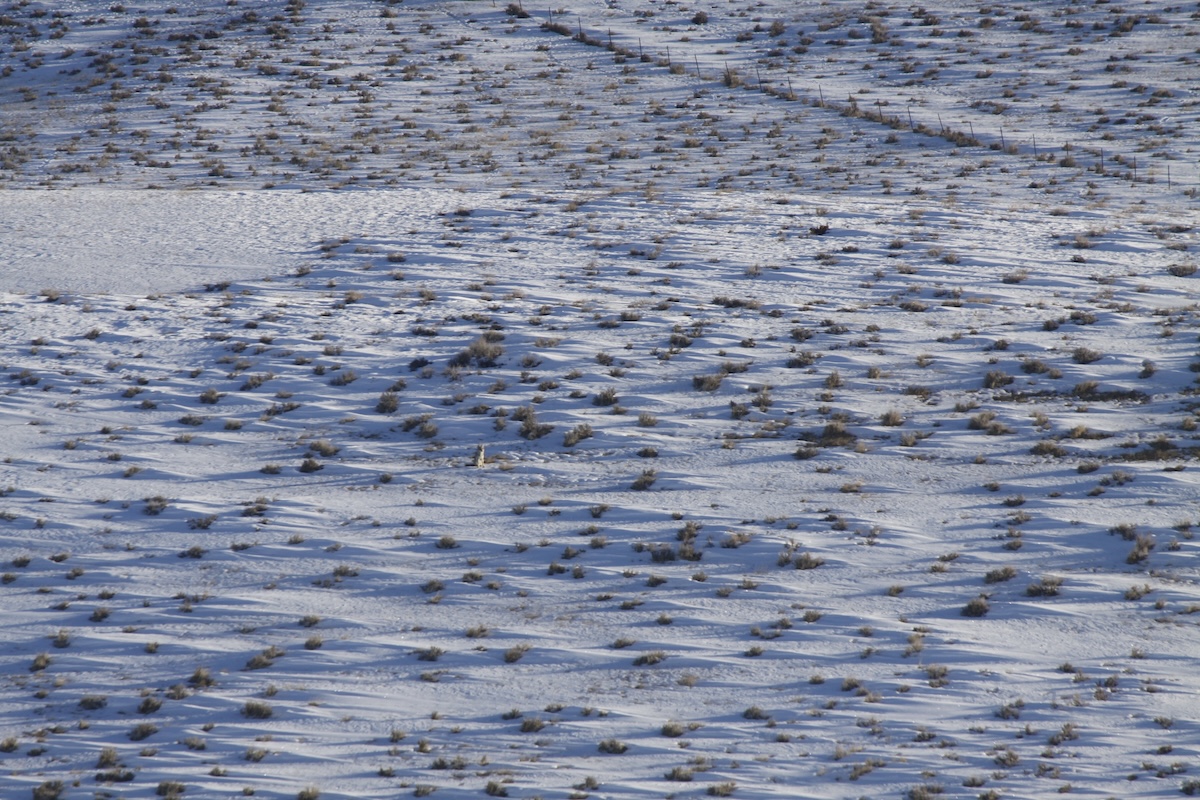
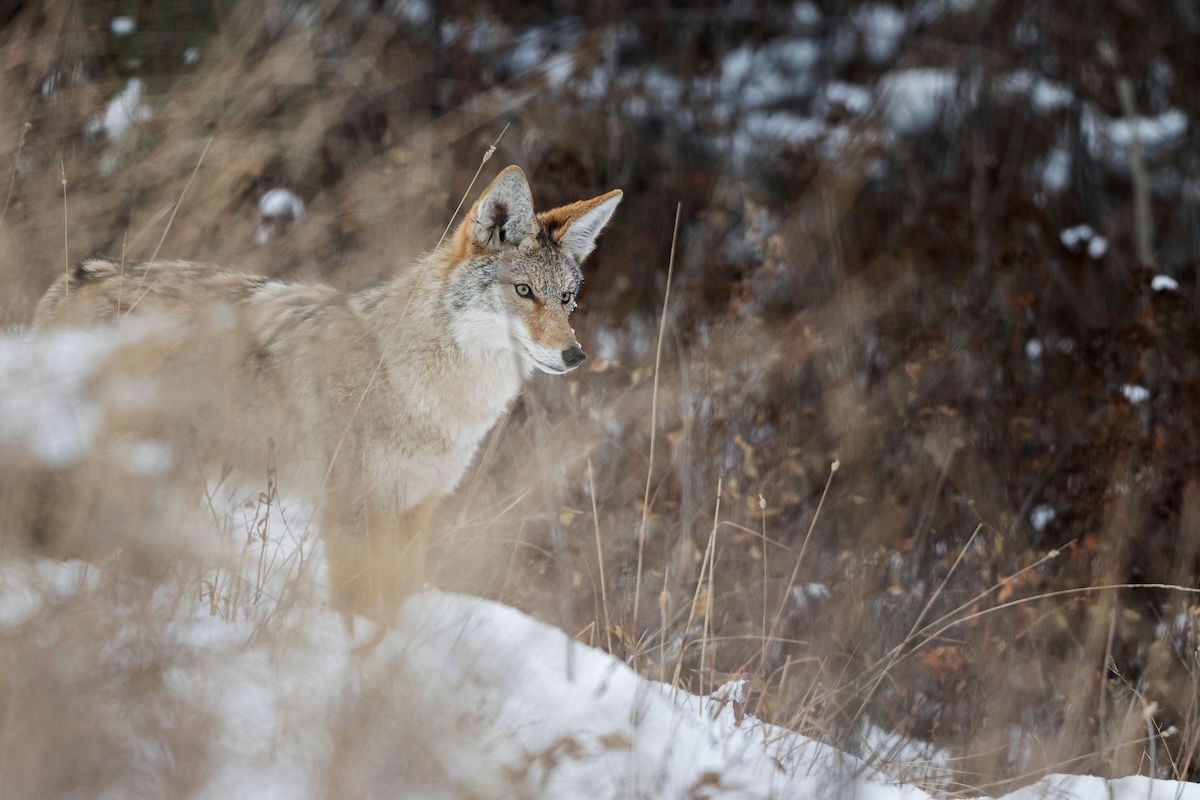
A coyote sitting on a hill waiting for its mate to survey an area.
Coyote Hunting 101
Midwinter coyote hunting differs greatly from summer, fall, or even a spring hunt. Coyote hunting in the dead of winter means coyotes are educated, paranoid, and evasive. They have been hunted hard since fall, either directly or indirectly as incidentals during other popular hunts. Even so, they have two weaknesses this time of year: food and love.
Start with food. Spring, summer, and fall represent a wealth of food for all species, including coyotes. Winter leaves the cupboards bare causing coyotes to hunt farther, take on larger prey, and scavenge more.
They need more calories to stay warm in frigid conditions, just like you and those calories arrive from a more determined hunt. Deep snow only eats up more calories as coyotes use precious energy to plow forward during the hunt.
As you plan a hunt in the winter, put an enormous amount of thought into where a coyote is finding its next meal. It’s a top location for your setup. We’ll talk sounds in a moment, but Coyote 101 moves on to breeding.
Coyotes across North America primarily breed in February. It’s the coyote rut and just like coyotes trotting farther to find food, they also embark on long jaunts looking for love. Coyotes begin to change from pack or single status to pairs in midwinter. Therefore, doubles could arrive at your setup at any time. From February through summer, pairs and a spring litter of pups dominate the life of coyotes.
Best Spots for Calling Winter Coyotes
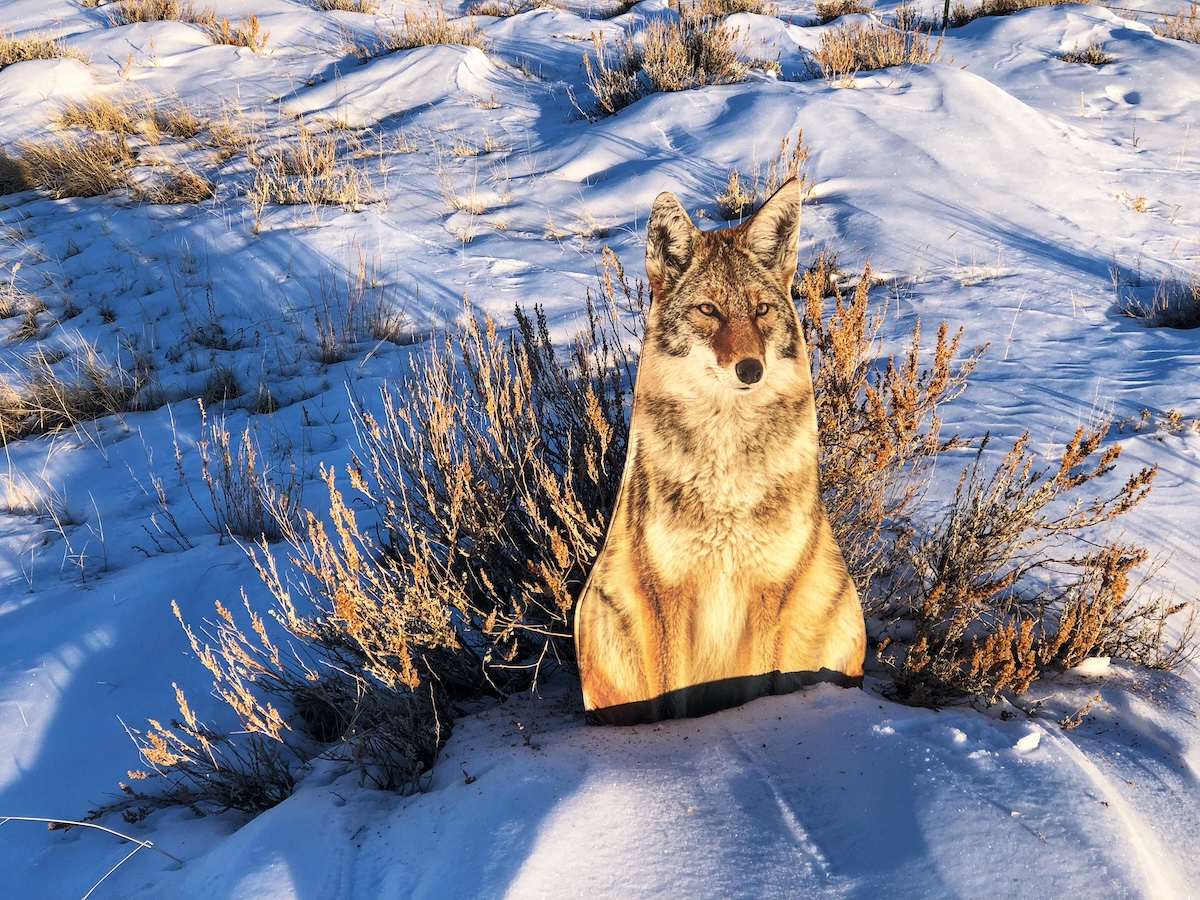
The Montana Decoy Sitting Coyote decoy looks quite real.
Call and Decoying Coyotes
In reality, you can call in a coyote at any time of the year with any sound. Nevertheless, use what you learned in Coyote 101 to match sounds to seasonal behavior. The midwinter blues might be hitting you, but for coyotes, it equals hookup time as coyotes choose mates for litter season ahead.
With the breeding season in full swing throughout February, consider a rousing round of coyote vocalizations during each set. Why vocalize? Coyotes that have not found a mate could easily be lured to your sounds looking for love. Lone howls, yips, and an end bark all signal a coyote looking for companionship. Master the lone howl in February and you have all the tools to call in a lonely coyote.
Of course, some coyotes are already paired up. No worries. Those coyotes running in pairs have switched their mission from finding a mate to holding territory. A lone howl to a pair already establishing territorial dominance over an area for denning also has the power to pull in coyotes.
Pairs might arrive out of curiosity. They might even be ready for an all-out brawl. One pair I called in last winter arrived with blinding speed and nonstop challenge howls letting me know my visit was not appreciated. One escaped. One did not.
Fortunately, there are certain scenarios proven to spark more and better responses from winter song dogs.
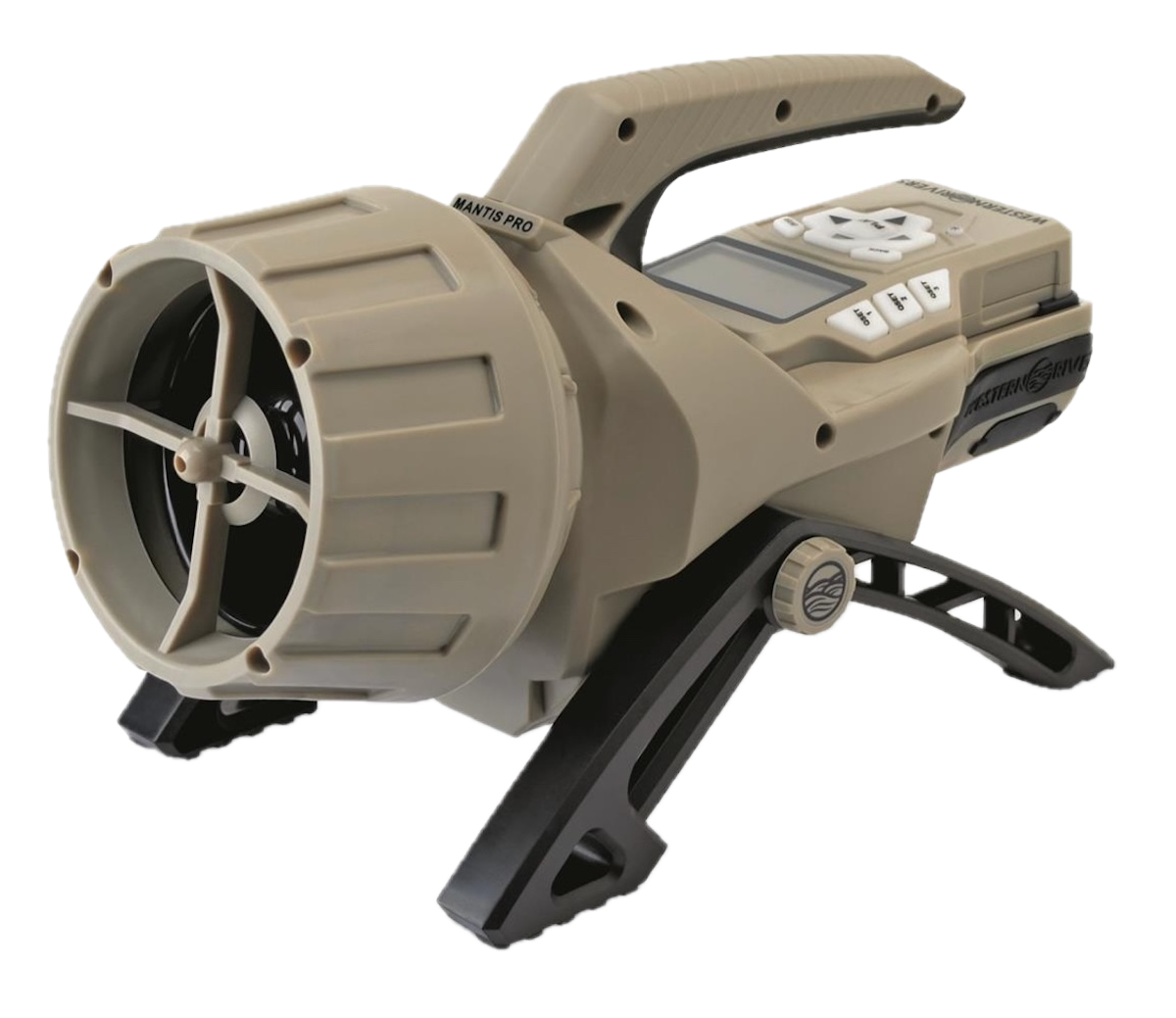
The Western Rivers Mantis Pro 400 electronic predator caller.
Males Fighting Over an Estrus Female: Hunters can take coyote vocalizations to the next level, especially during the breeding season. After initial howls, consider adding in estrus whines, yipping, and even coyotes-in-distress. This combination recreates the illusion of coyotes fighting over a female in estrus. Howls cement the location. Estrus whines and yips clarify an estrus female is onsite. Distress sounds indicate a fight over a lovely lady is taking place. I use this scenario consistently in breeding season.
Pups-in-Distress Sounds: Howls continue to irritate denning coyotes fervently defending dens. Once pups arrive in the spring, you can use pups-in-distress sounds to lure overprotective adults into shooting range.
Prey-in Distress Sounds: Later in the summer and early fall when pups begin hunting on their own, any prey-in-distress sound works. Be ready for multiple coyotes arriving at once. Finally, as fall transitions back to winter, use new prey sounds and slowly work back to more vocalizations.
Decoys add one last theatrical reality to your setups. Year-round, I carry the Montana Decoy Company Sitting Coyote decoy in my pack. When coyotes arrive, it bolsters coyote confidence to seal the deal. Set any decoy — coyote or prey — attached to your electronic caller, approximately 100 yards upwind of your position to take advantage of any coyote circling downwind. This puts the coyote between you and the caller with its attention focused away from you.
Coyote Hunting Setups with HuntStand
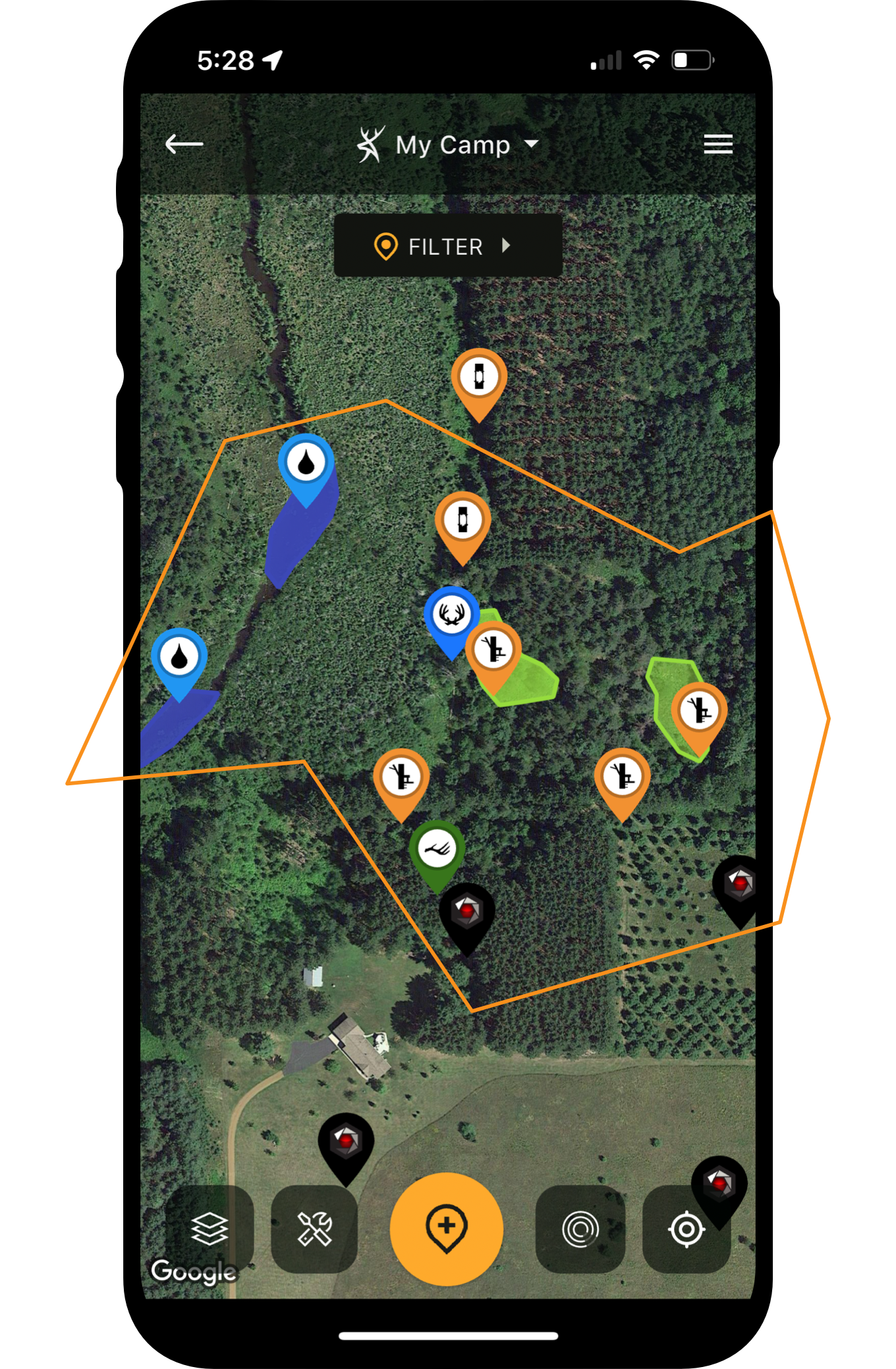
HuntStand's HuntZone is great for choosing coyote calling sites.
Coyote Hunting Hotspots
Site selection is where HuntStand performs at its highest level. HuntStand Pro or Ultimate subscriptions extend your ability to scout out calling sites even more.
Begin with locating the two most important habitat elements of a coyote’s life: sanctuary cover and hunting grounds. Coyotes top the charts for adaptability in each category. Even so, they prefer to seek seclusion away from humans in cover that not only acts as a weather shelter but also as a castle wall. Think of areas such as ungrazed prairie pastures, cattail wetlands, dog-hair timber, and craggy canyons. Any of these located away from roads and human activity need notes on your app.
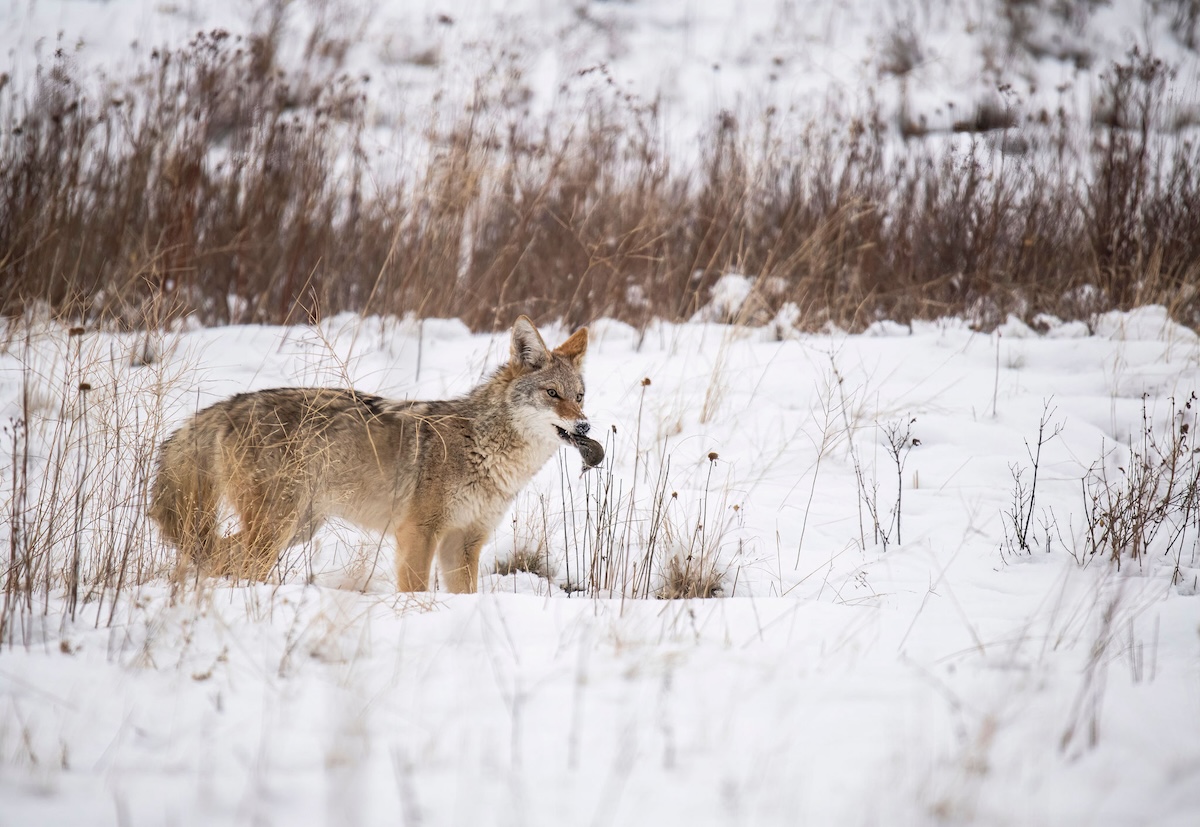
Rodents make up the bulk of a coyote diet. Find them. Find coyotes.
Small Rodent Hotspots: Next, look for hunting grounds. Most of a coyote’s diet consists of rodents, big and small. Again, coyotes might hunt anywhere, but habitats that hold an abundance of prey can be hotspots. Fields that hold mice and voles, a favorite of coyotes, plus brush pockets brimming with cottontails, are attendance record setters for coyotes.
Large Game Hubs: Next, move up to larger game. Coyotes tag along with deer, elk, and pronghorn herds hoping for a weakling to emerge. They visit turkey flocks and stalk geese in the big bird category. They also know the location of all cattle herds, goat herds, and chicken coops in their territory. Coyotes rarely attack a full-grown cow, but sometimes a cow dies and livestock producers who calve early know coyotes cruise the herds for stillborn calves, afterbirth, and to snack on milk-rich droppings of calves.
With several sites in mind, take an educated guess on the routes coyotes might use to travel between refuge and tempting hunting grounds. I generally try to think of where coyotes might hunt under cover of darkness and where they will retreat for a daytime nap.
Then, look for openings. High vantage points (with wind advantages) allow hunters to see and stay downwind of any coyote activity area. Invisibility while accessing or exiting these sites only helps keep your presence veiled. Look for timber stands, coulees or creek bottoms you can utilize to cloak your form when moving into position.
Hunting Coyote Bedding Areas
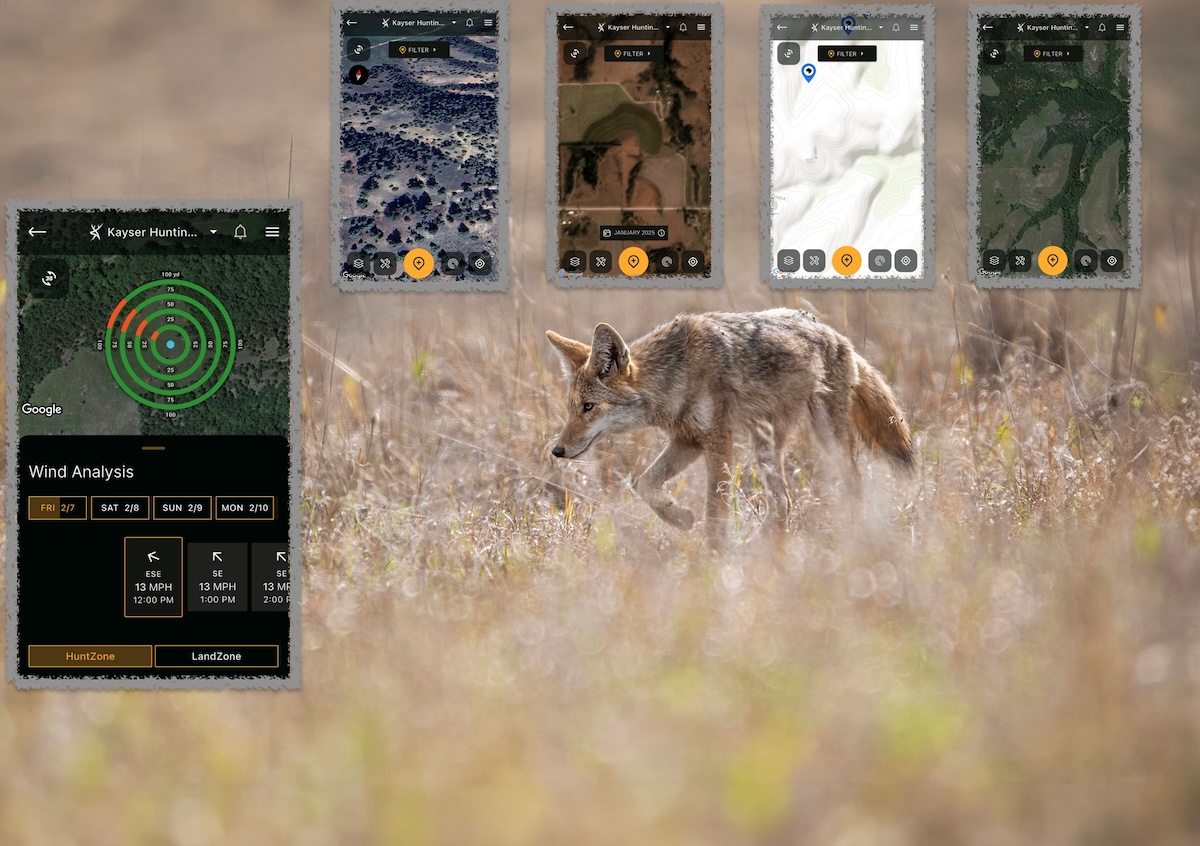
HuntStand's Monthly Satellite provides a fresh look at your hunting area. Quad Topo aids in finding elevated ambush sites. Hybrid map provides a clean look at your hunting area. The 3D Map layer gives you the flyover feel of your hunting area. And the 10-Day Forecast helps plan your hunt.
HuntStand Tools That Find Coyotes
Confirm your findings by doing a flyover using both the Hybrid and 3D Map layers. Cruise the area to get a feel for topography.
Next, confirm elevation of calling sites with a topographical review. Accomplish this using the Natural Atlas or Quad Topo base layer map.
If you can’t visit the site before your hunt, and you worry land management practices might have changed, use the Monthly Satellite baser layer. It offers a month-old view of the area at a lower resolution, but with ample quality to examine if the land use has changed recently.
Using appropriate marker locations, you can place coyote markers to indicate where you’ve seen coyotes. Or use it as the main marker to note best calling locations. Other markers you can place on your customizable Hunt Area include a parking marker, gate access, pinch points, heavily used food, or water markers. These and more help you better understand how coyotes use an area, plus aid you in navigating to sites under cover of darkness.
Finally, don’t forget about the weather. HuntStand shines in this area as well. HuntStand provides you with current conditions, hourly forecasts, and a 10-day forecast. Combine that information with the HuntZone wind analysis to see direction and the scent cones of your scent dispersion at the site. This feature is invaluable for whitetail hunters and coyote hunters alike.
With precise scouting of refuge and hunting areas, you might not even need calls. Several times a year, I set up and coyotes pass by me without ever lifting a call to my lips. That is precise scouting and demonstrates your playbook is complete.
HuntStand Pro helps accomplish this and more.