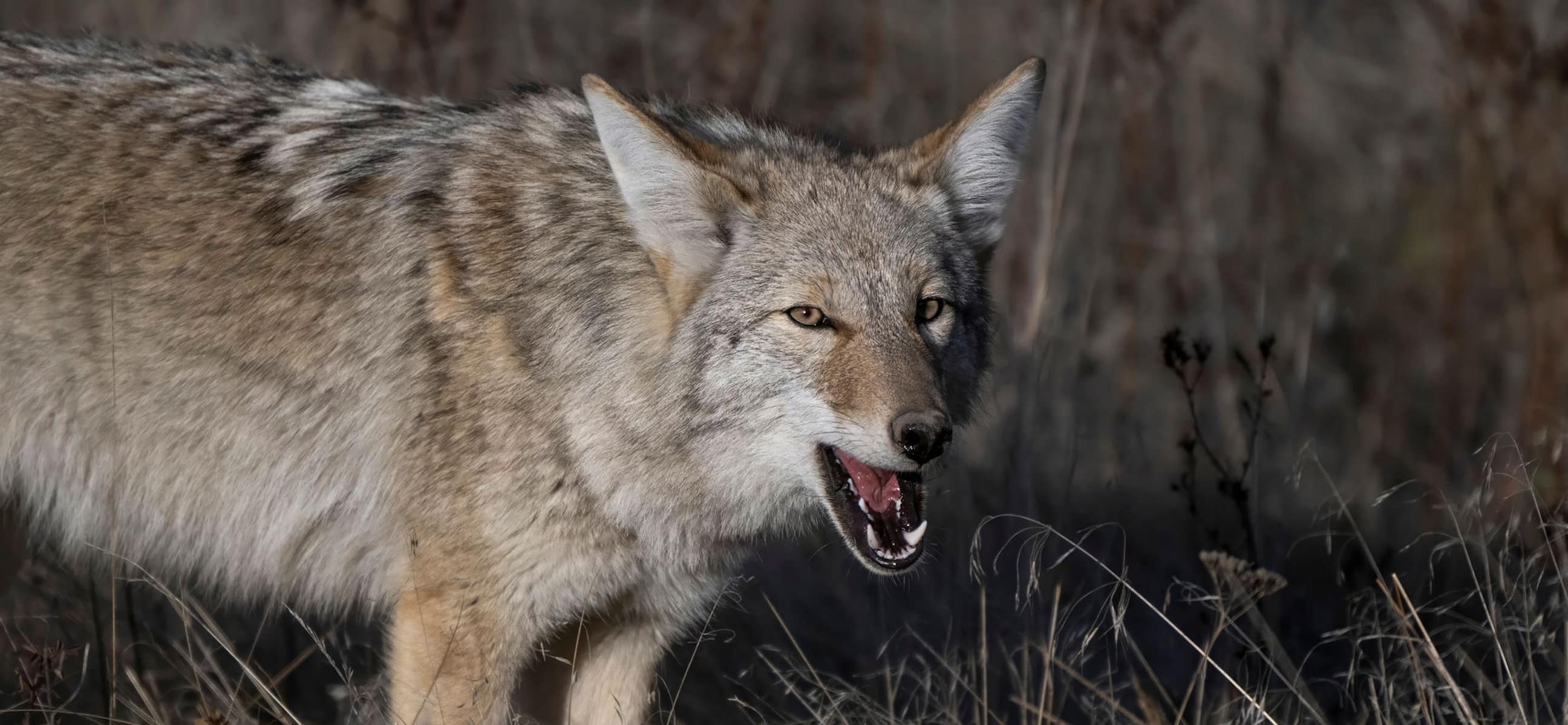





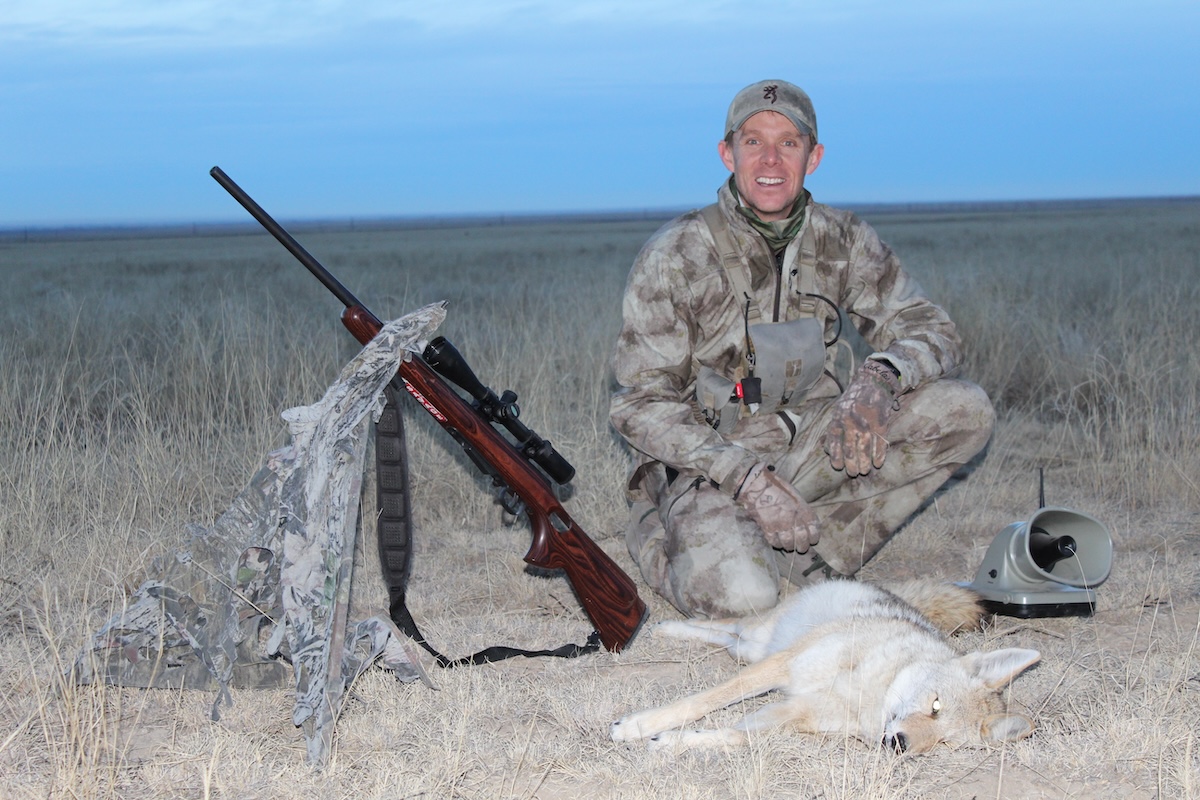

Public-land coyotes offer a little extra challenge, but it's worth the added effort.
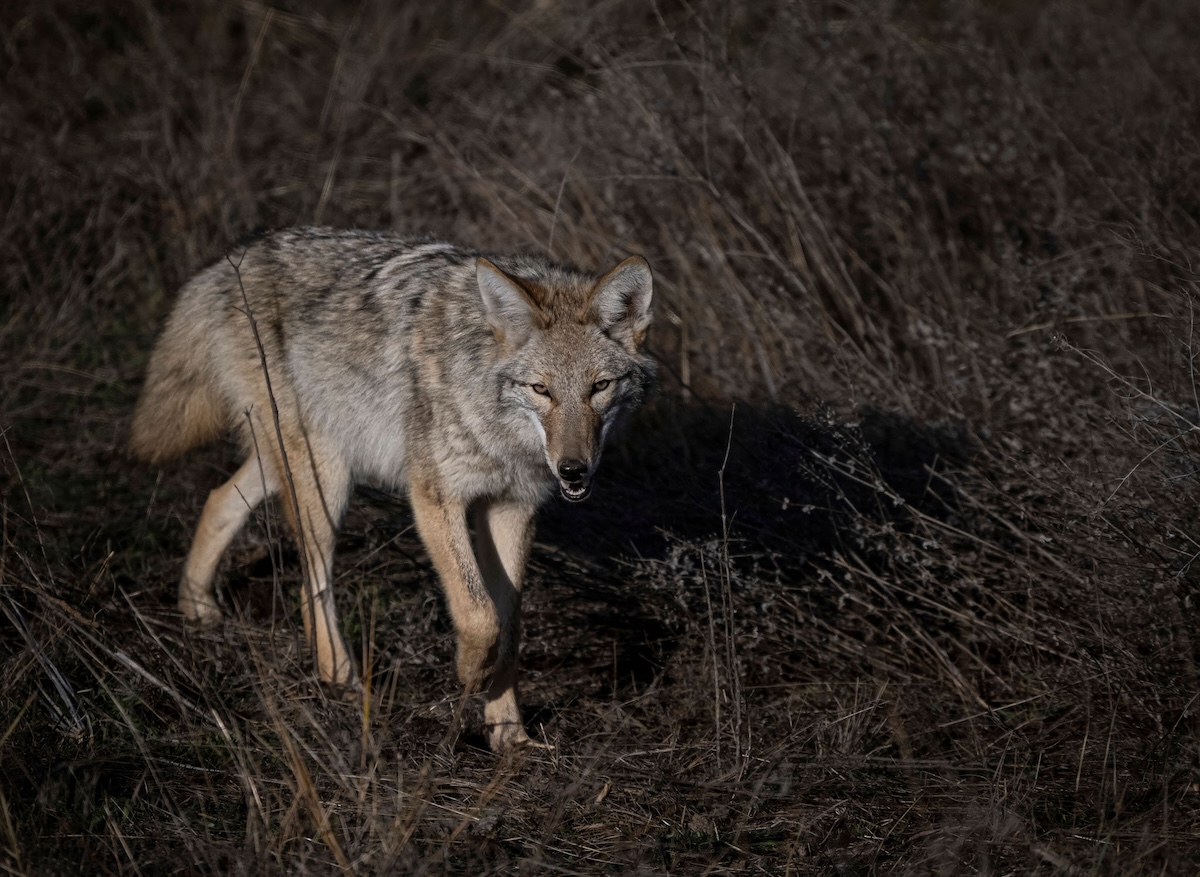
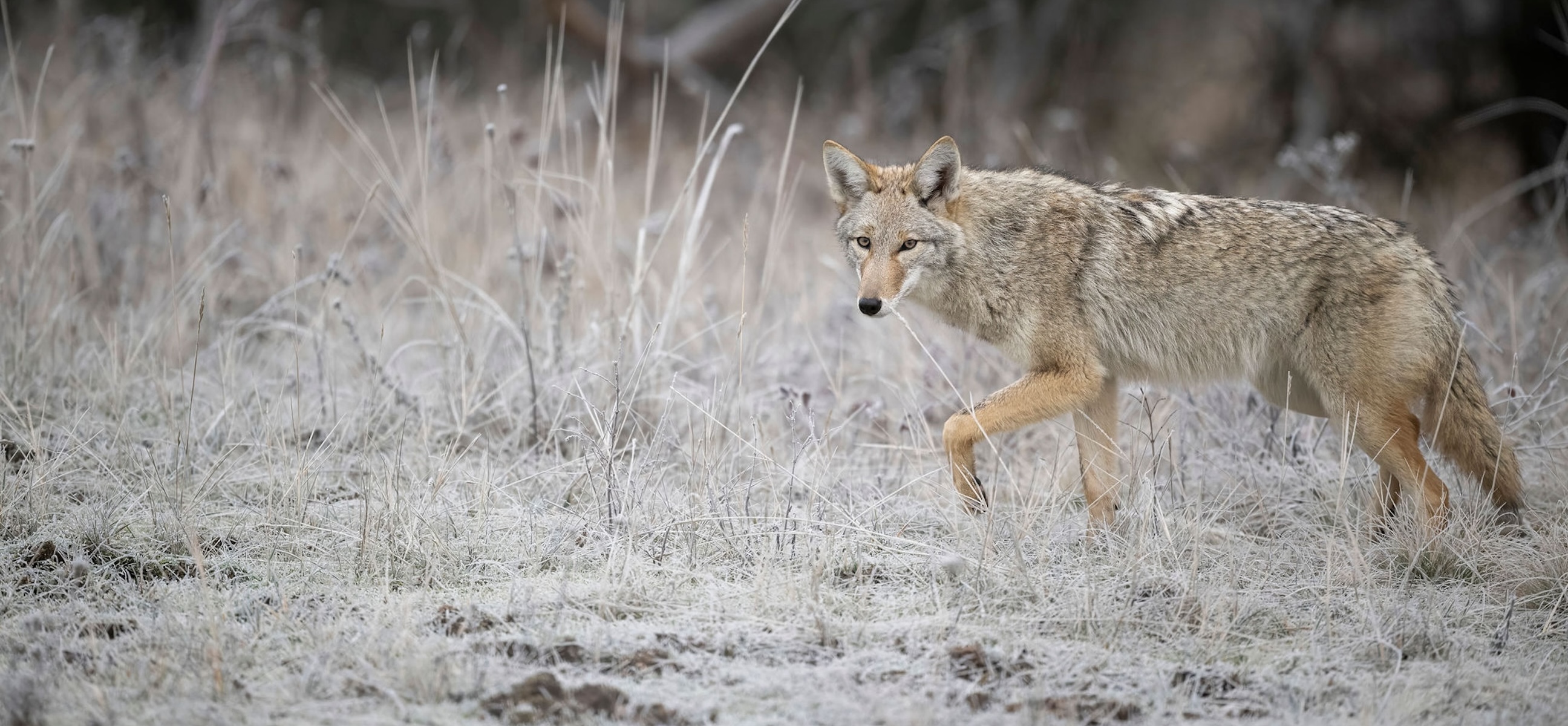
A wily public-land coyote is a worthy foe.
The morning hunt wasn’t going well. We walked into a breeding pair of song dogs on our first stand. Our second stand produced three crows but no fur and teeth, and we ran smack into a pair of other coyote callers on our third.
By then, it was late morning. The sun was high in the sky, and the February temps were too warm for my liking. Still, after 32 minutes of calling, a lone coyote appeared. The dog walked cautiously to the knob of a high hill 723 yards away. He sat on his rump and looked in our direction.
We continued the serenade of howls, but he didn’t budge. In desperation, I triggered a rabbit distress call on the e-caller. The coyote couldn’t run in the opposite direction fast enough.
Calling coyotes on public land can seem like mission impossible at times. This is especially true later in the season when coyotes have received heavy hunting pressure and heard a litany of sounds.
So, do you wave the white flag? Never! You just adjust your tactics.
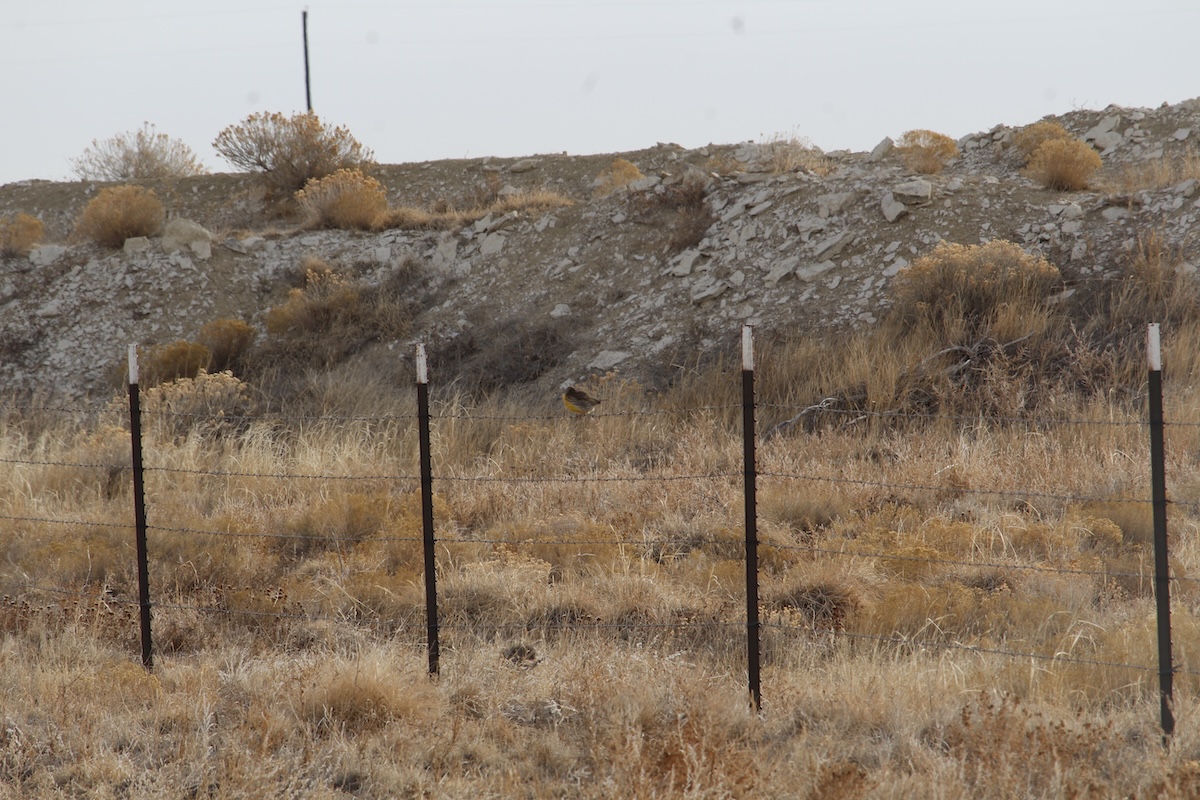
Coyotes aren't picky. They eat what they can when they can. Birds are a top-end coyote food source. While scouting, the author discovered significant populations of meadowlarks and plenty of scat with meadowlark feathers. Don't be afraid to scour the internet and search for the sounds of prey you discovered on your scouting foray.
Step 1: Find Prey Animals
I credit intense, outside-the-box scouting to much of my hunting success, and my winter fur count is no exception.
Fill the truck with gas, grab your best optics, and look for prey. You read that correctly — look for prey, not a predator.
Coyotes have to eat, and they know where the game is. The most significant piece of the public-land puzzle is finding where prey animals are. Find the prey and find the coyotes.
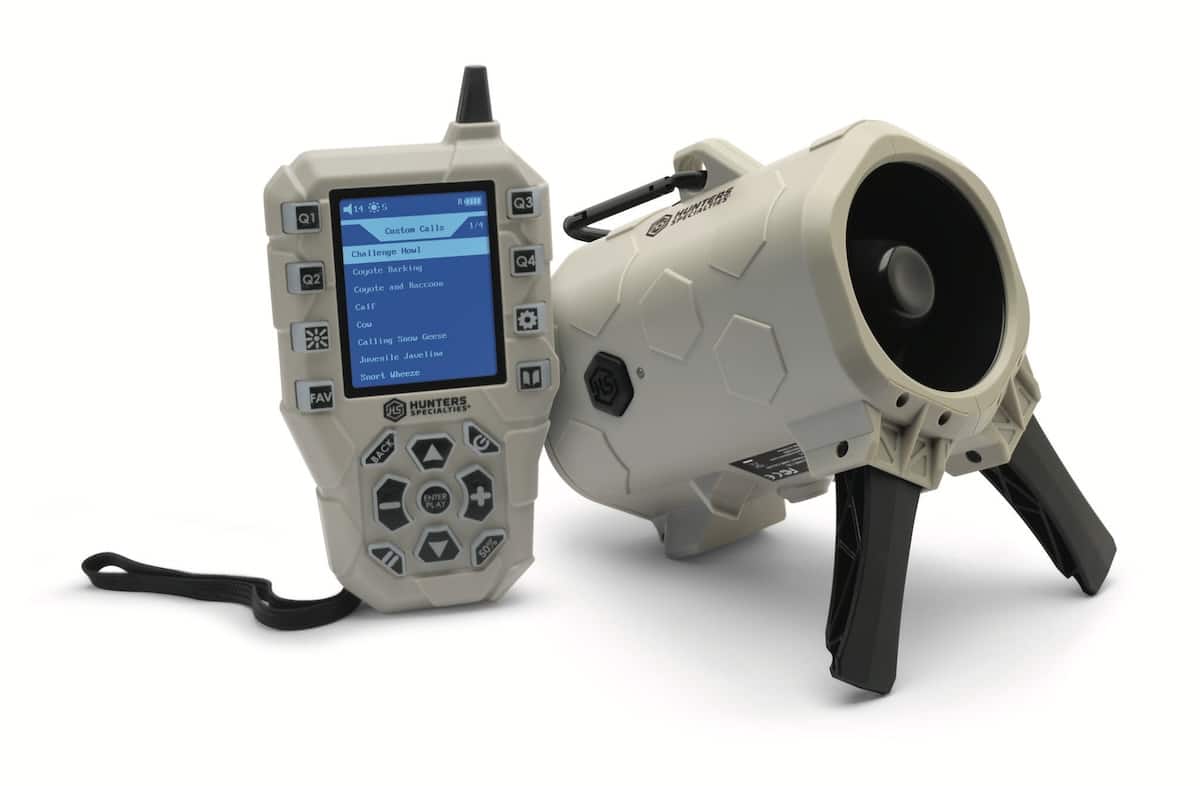
Load up a good E-caller, such as this Johnny Stewart Executioner Electronic Game Caller, with unique prey and coyote sounds other public-land coyote hunters are less likely to use.
Coyotes have a diverse appetite. They will dine on road kill, cattle afterbirth, rodents, birds, big game, etc. Coyotes are scavengers. They won’t pass up an easy meal, and if given the opportunity, won’t hesitate to kill to eat.
Prey animals vary by geographic location. When hunting the plains of southeast Colorado, my scouting missions focus on finding winter herds of pronghorn, various bird species, prairie dogs, and cattle.
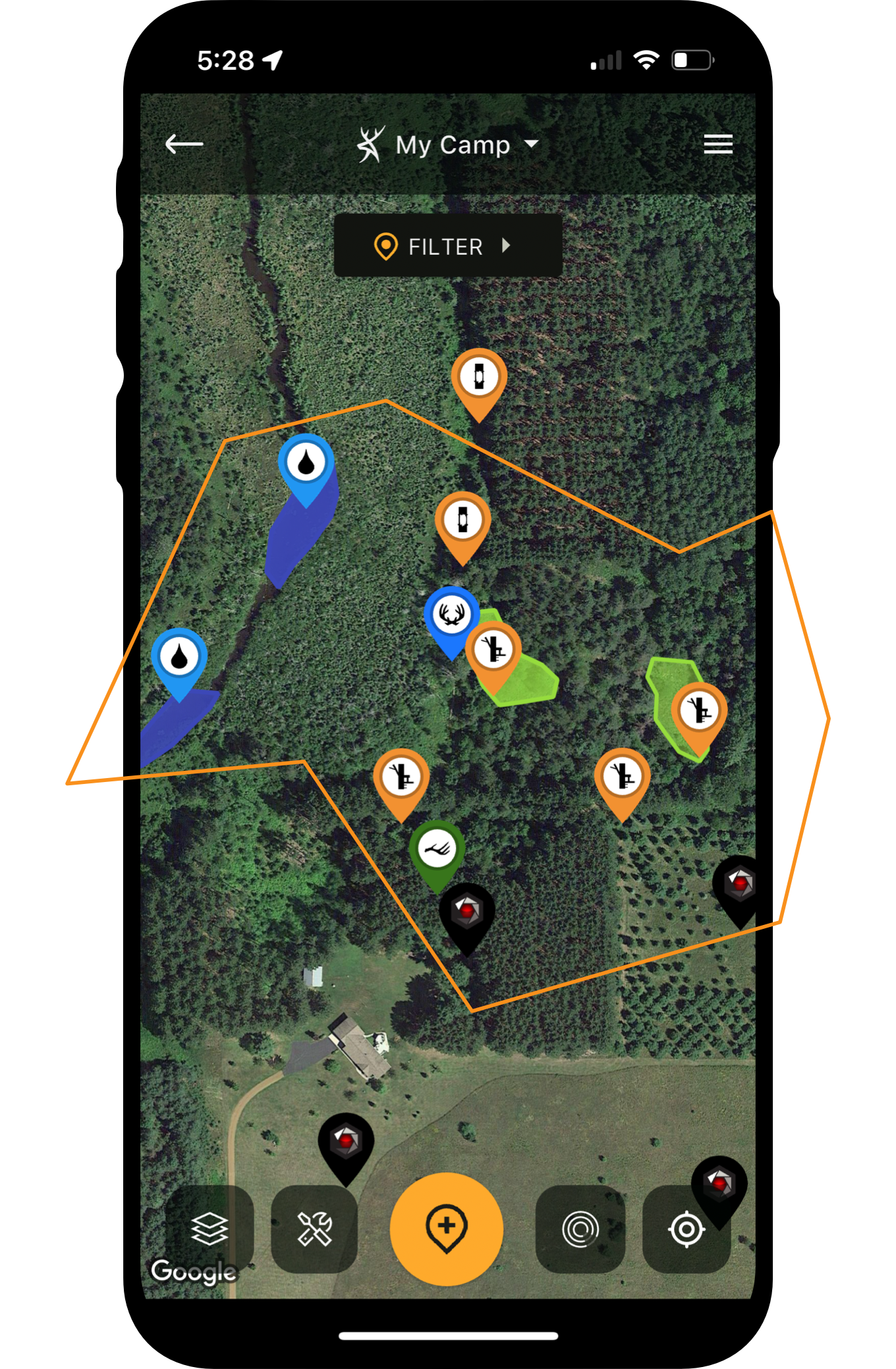
I drive and use my optics to find areas rich with game. If I take note of a particular bird species I don’t recognize, I look in my field guide bird book, locate the species, and write it down. With all the available prey downloads for e-callers, there aren’t many species sounds I’ve been unable to find. I also pin locales on my HuntStand app and add notes. This way, I know what areas hold the most prey animals and can build a list of places I want to return to.
Howling for Coyotes: How to Hunt Coyotes During the Mating Season
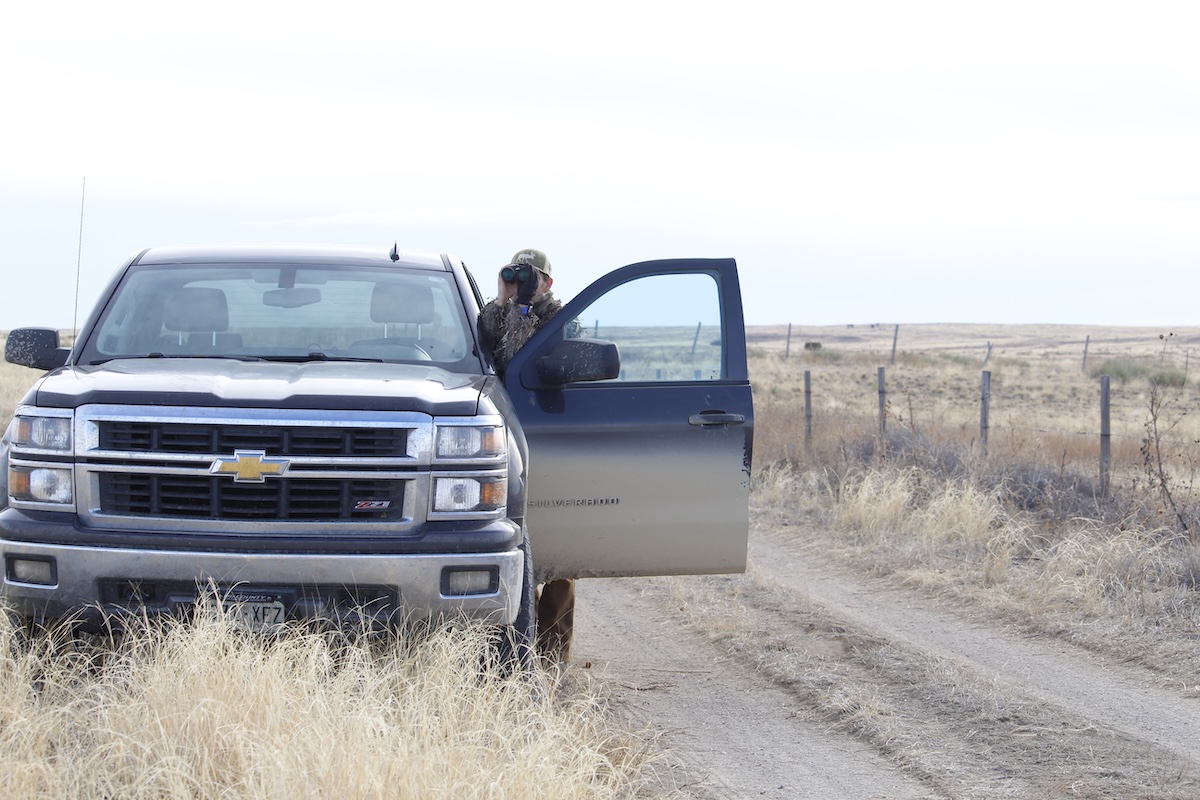
When calling coyotes on public dirt, use your vehicle and optics to find where concentrations of prey animals are living. Then, get off the roads and go on a walkabout.
Step 2: E-Scout Areas of Interest
You can have the prey MRI (most recent information) and all the sounds downloaded and still hit a public-land calling wall.
Before diving headfirst into an area, make a bulletproof plan.
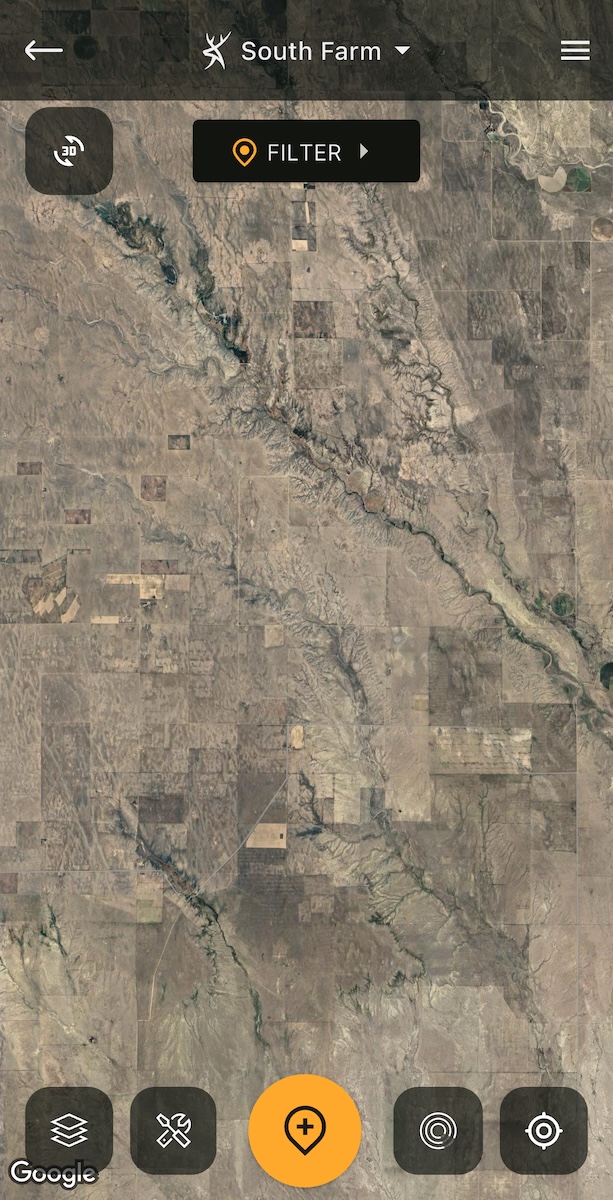
First, pull up your HuntStand app and view your area’s aerial view. Next, pull up HuntZone on the app and get the wind direction. With the wind direction known, look at the aerial view and find a location that offers suitable cover and is off the beaten path. Stay away from areas that allow two-wheel access, and avoid parking your truck behind a hill and walking over the rise and calling.
When calling public-land coyotes, I often walk or e-bike into areas that require a jaunt of a mile or more. It’s a lot of work, and I don’t get nearly as many stands in during a day of hunting. However, I usually earn an opportunity if I know where the prey is, pay attention to the wind, and go further than most callers are willing.
Step 3: Follow Quality Access Routes and Plans
Of course, a walk or bike of a mile or more doesn’t guarantee you’ll get to pop a pelt, especially if you don’t pay attention or take shortcuts.
Once I decide where to call from, I look at my HuntStand app to plan my entrance. I look for terrain features that will conceal my approach. Never silhouette oneself on a hill or ridge. While looking at my app, I also predict where I figure coyotes will be, and as I do when hunting public-land whitetails, I plan a route that keeps me away from those areas.
When walking or biking into an area, it’s essential not to go too fast or lose focus. When I hunt public-land elk, especially in the timber, I move slowly and methodically. My eyes are up, and I often stop and scan ahead for signs of elk. I follow this same approach when walking/biking into a coyote stand.
Though I don’t move across the landscape as slowly as I do when hunting in the timber for elk, I stop and glass often. My go-slow and glass efforts have been rewarded multiple times over the years. I often spy a coyote or two hunting, loafing, or sunning. This is a massive benefit to the public-land coyote hunter. If you see a coyote before it sees you, you can use the terrain to get closer or set up and make your stand. Seeing the coyote’s initial reaction to your calling will tell you whether he likes what he hears or doesn’t.
When we blind call, and nothing comes in, we often wonder if it is our calling or if perhaps no coyotes heard it. When you see the coyote, you see its immediate reaction.
Proven Calling Setups for Foxes and Coyotes
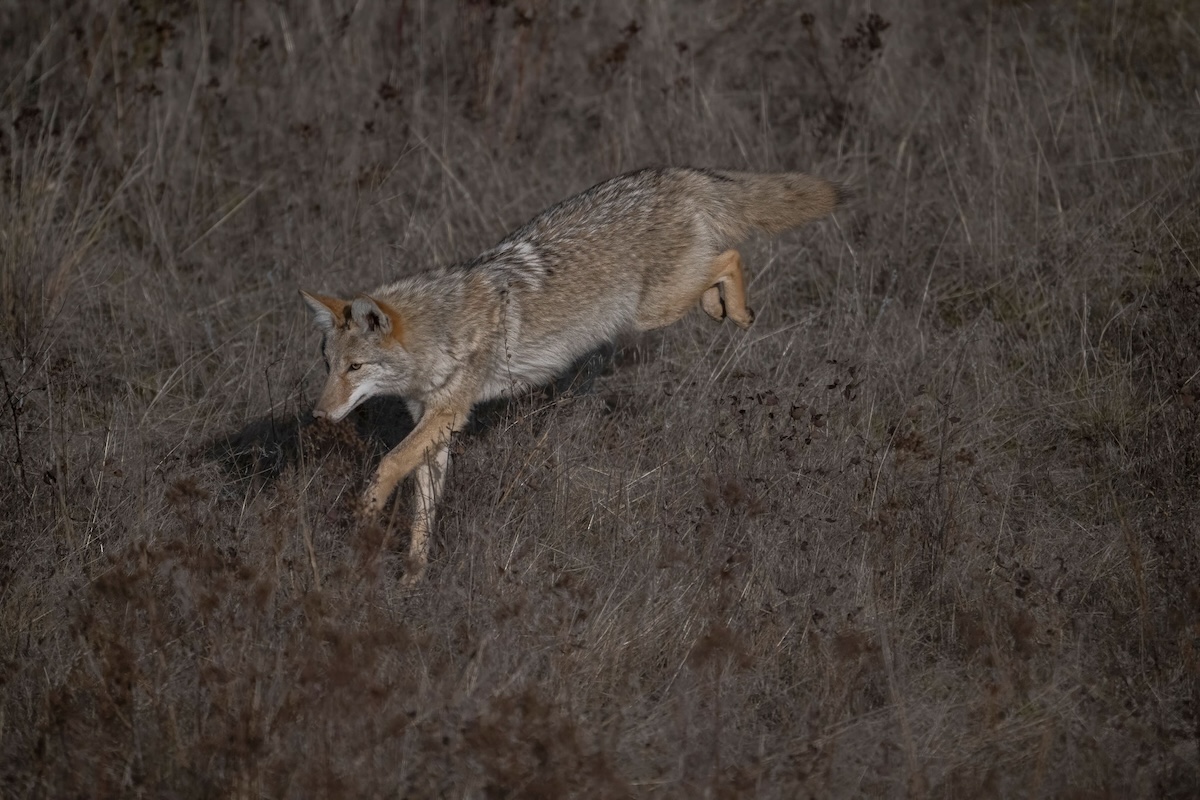
By locating pockets of prey and walking up to a mile or more, you can hit pelt pay dirt calling song dogs on public land.
Step 4: Be Ready for Long Shots
Don’t get me wrong; I like to get coyotes as close as possible when calling them in. My goal is always to get them shotgun close, but wintertime calling on public land isn’t early fall calling on private land.
I expect close encounters when I call coyotes on private land in September and October. Often, I reach the ears of spring-born pups that sprint in for an easy meal. During the winter on public land, surviving pups have gotten wise, and adult dogs are just flat tough to get in ultra close. No matter how much you match the sound or how good your setup is, wintertime dogs on public dirt tend to stop and hold up.
For this reason, I spend lots of time on the bench and up my caliber of choice from a .223 Rem. to a .22-250 Rem. The .22-250 has a more extended case, which holds more powder and is an absolute screamer. Bullet drop is less at extended distances, and the bullet hits with more energy.
If you pair your .22-250 with excellent ammo, top it with a quality optic — preferably one with a yardage-dial turret — you can kill from a long distance. Often, during winter, when hunting coyotes on public land in open terrain, shots of 300-plus yards are typical.
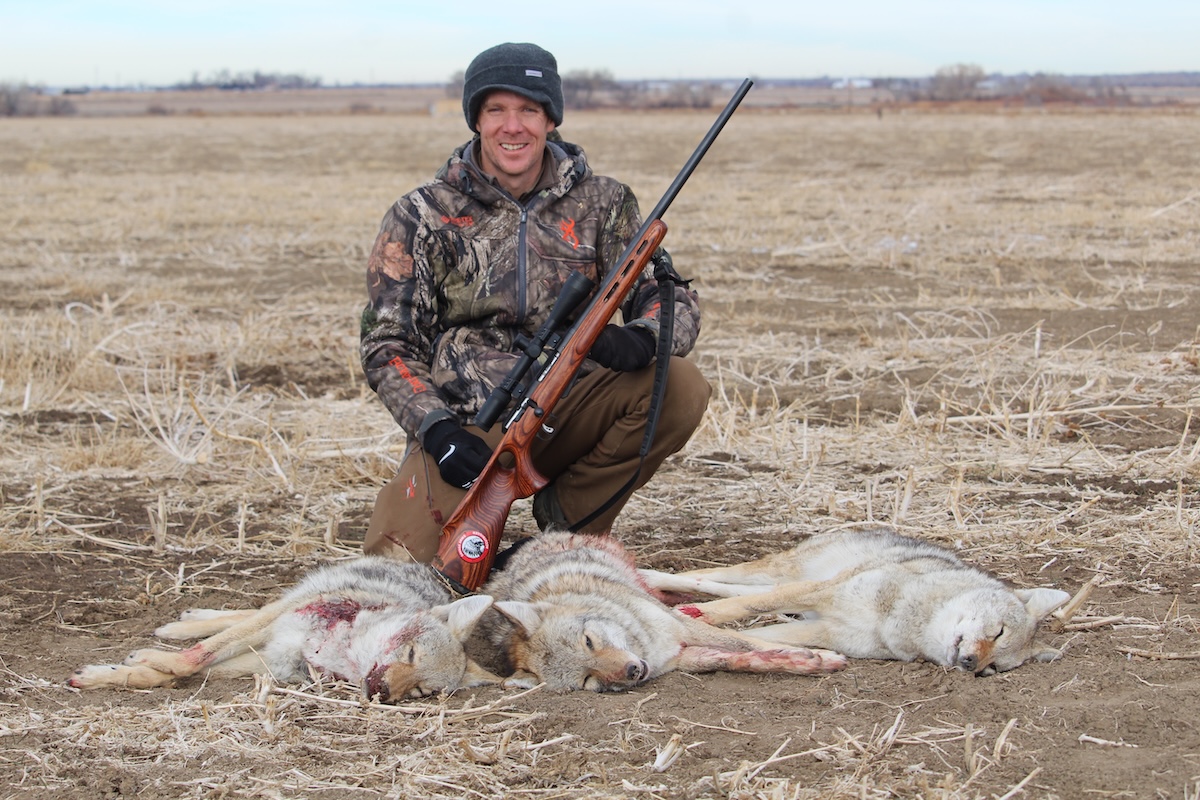
The author poses with a trio of well-earned song dogs.
Step 5: Shoot Suppressed
My last significant public-land coyote tip is to shoot suppressed. The reasons for screwing a can on the end of your favorite predator rifle are many. The main one for the public-land coyote caller is noise reduction. A suppressor protects your ears and boosts your chances of calling in more than one dog on a stand.
Plus, when you’re walking or using an e-bike to travel between spots, shooting suppressed means the boom of your rifle is greatly minimized, which means you don’t have to move as far between stands.
I move at least a mile between stands when I’m not shooting suppressed. This isn’t a lot of fun when you’re walking or using an e-bike. When I have a suppressor on the end of my rifle, I often only move 1/4- or 1/2-mile between stands.
Last year, in January, I walked deep into rolling cedar country. The landscape was extremely broken up with hills, dry creeks, coulees, and trees. All of these terrain features reduce sound, and when you combine them with a suppressor, the distance the report of your rifle travels is far less than the sound of your e-caller.
On my first set, I killed a double — a male and female pair came screaming into the call. I shot the male at 120 yards, and the female, who wasn’t sure what happened because she didn’t hear the shot, jogged a few yards from the male dog and stopped. My second shot put her down.
After loading my gear, I walked 300 yards to the south and made another set. I sat against a small cedar and called toward a dry creek bed littered with tamarisk and dry weeds. Within two minutes of turning on the caller and using a pronghorn in distress sound, I called in another pair and took both dogs.
Without question, calling coyotes on public land, even late in the season, can produce excellent results if you’re willing to do the work.
5 Ways to Outsmart Pressured Coyotes