


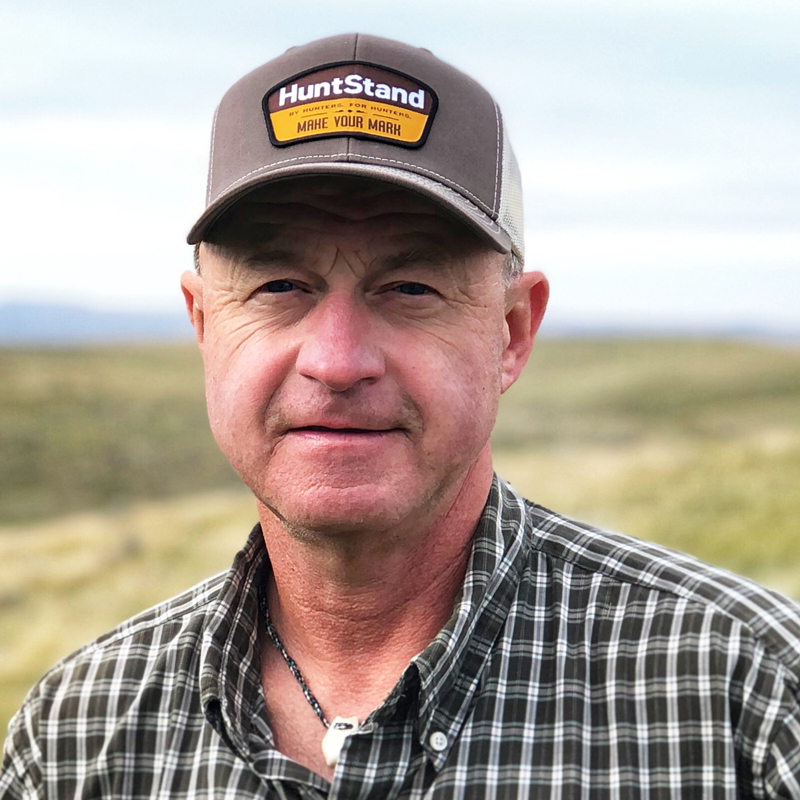


TRAKR App Co-Founder Shane Simpson and his dog.
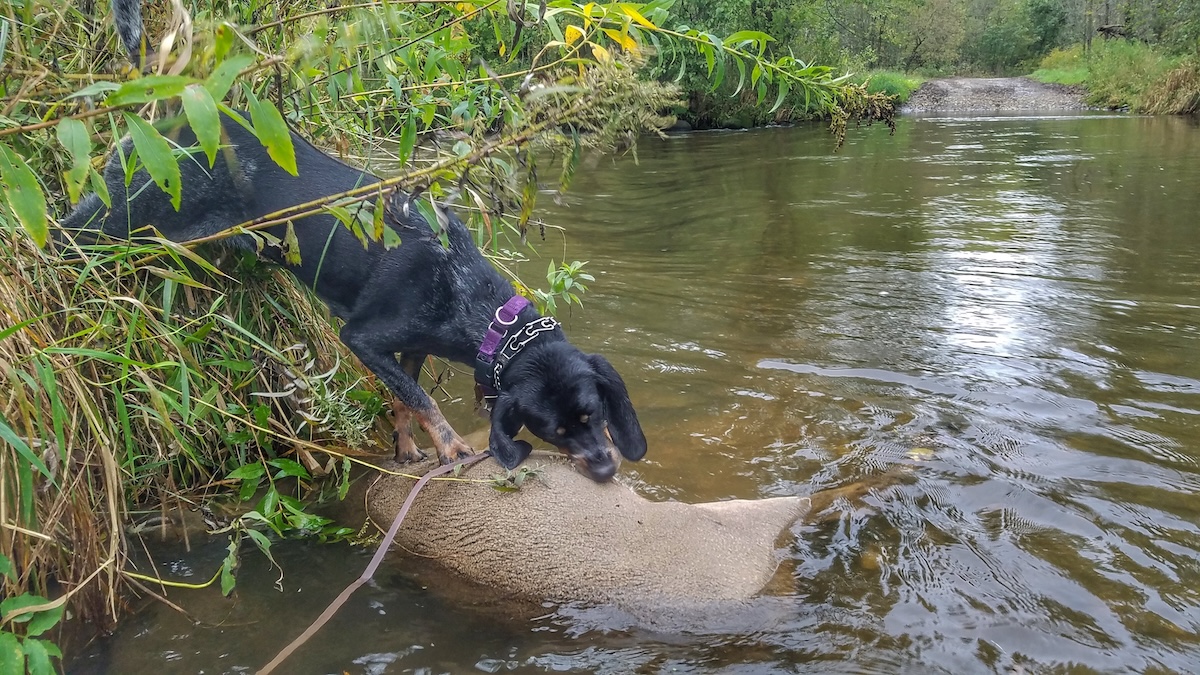
Benefit from a canine nose to find your downed, hard-to-find deer.
Should drones or dogs be allowed to recover big game animals? More than 10 million of you hunt whitetails and most have personal or friend experience of tracking a wounded deer with both positive and negative outcomes. Would a drone have helped or a tracking dog have helped? They likely would have. So, should tracking dogs or drones be used for big game recovery? Read on to learn more.
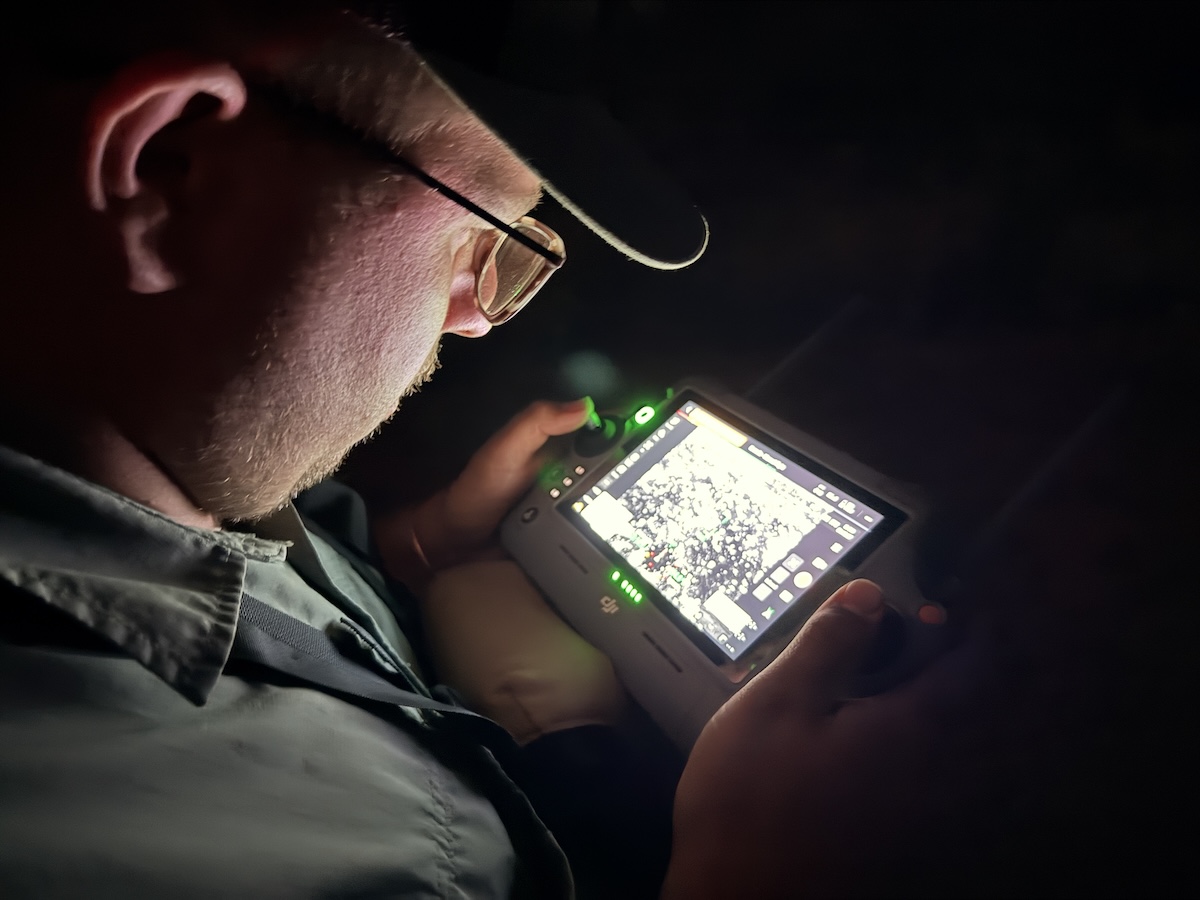
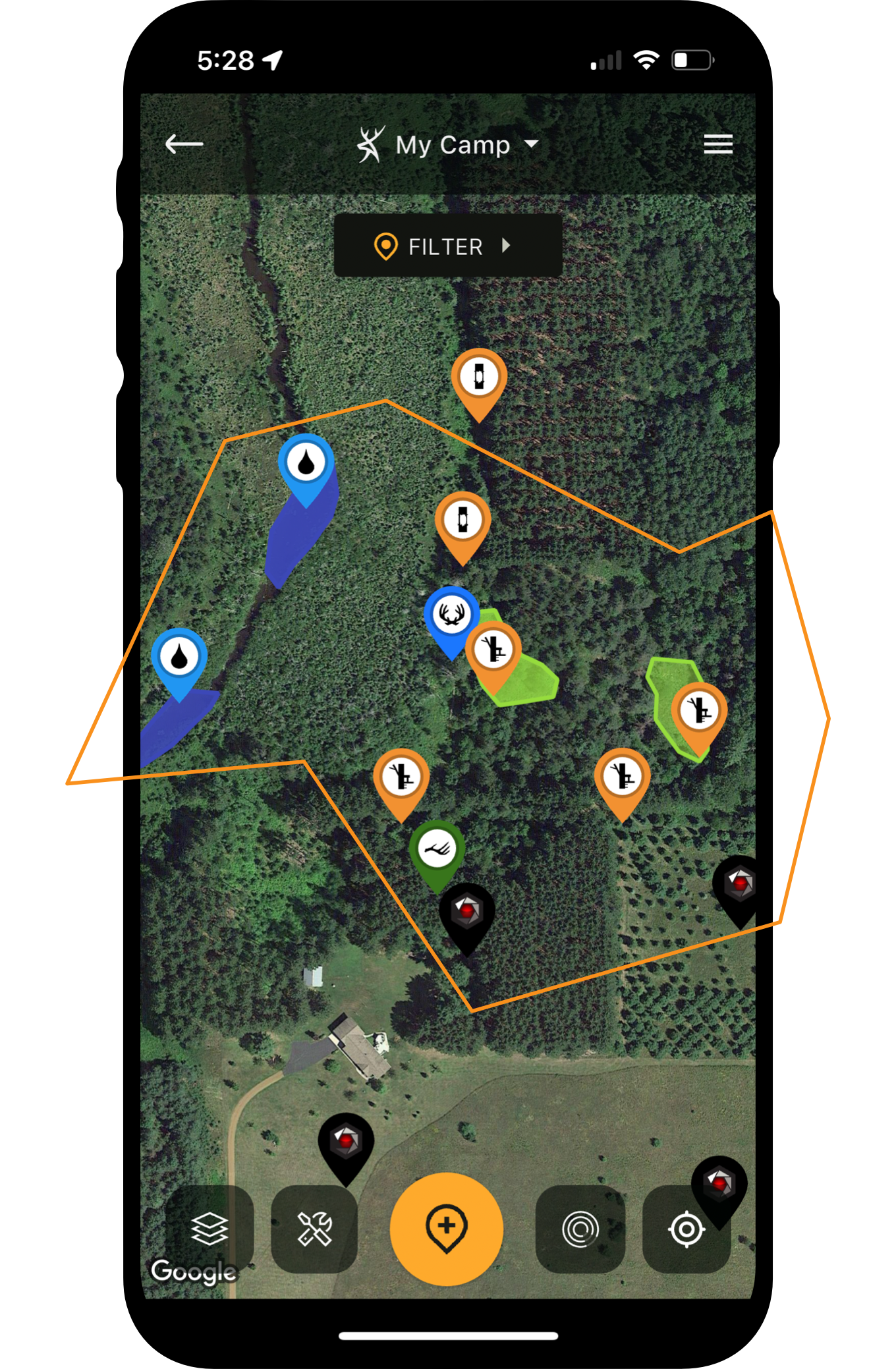
Use HuntStand to mark blood while tracking a hit whitetail to recover, especially if you plan to call in a dog or drone.
Drone Recovery
Currently, most states allow the use of drones for recovery but a big but is included. Most states highly regulate the use of drones, including only being able to use them outside of hunting hours, with state permission, in a regulated window of time, and not for hunting. With 50 state game and fish agencies, you best research the rules of drone use, as they vary widely.
You also need to be concerned with federal laws and regulations. The Federal Aviation Administration (FAA) requires you to hold a commercial drone license if you operate as a business. Drones are for observation only and cannot be used for hunting. They only must be used for recovery efforts.
Between state and federal regulations, the use of a drone for animal recovery becomes first a lesson in reading laws. Do your homework. And although there is the obvious benefit of being able to look down on a tract of land, including with the use of thermal optics, not everyone agrees that drones are welcome on a hunt. Through online research, no surveys on yes or no to drones could be found. However, by just talking with hunting peers and reading forum threads, a clear divide is present. Some appreciate the quick recovery possibilities using drones and optical advantages while others believe it to be another technological intrusion that degrades the historical traditions of hunting.
Personally, I have never used a drone for whitetail recovery, but while on safari in South Africa, the professional hunters (PHs) utilized drones for nearly every aspect of the hunt. While accompanying another hunter in our camp, he made what appeared to be a good shot on a warthog. However, the heart-shot animal dashed into a thick area of brush before dying. The PH put the drone up and within minutes found the dead warthog, transitioning any tracking into just recovery. To find an animal in dense cover, or where a blood trail has suddenly quit, it’s hard to debate the application of a drone with hunter etiquette and regulations followed.
Kill More Deer in September with HuntStand’s Whitetail Activity Forecast
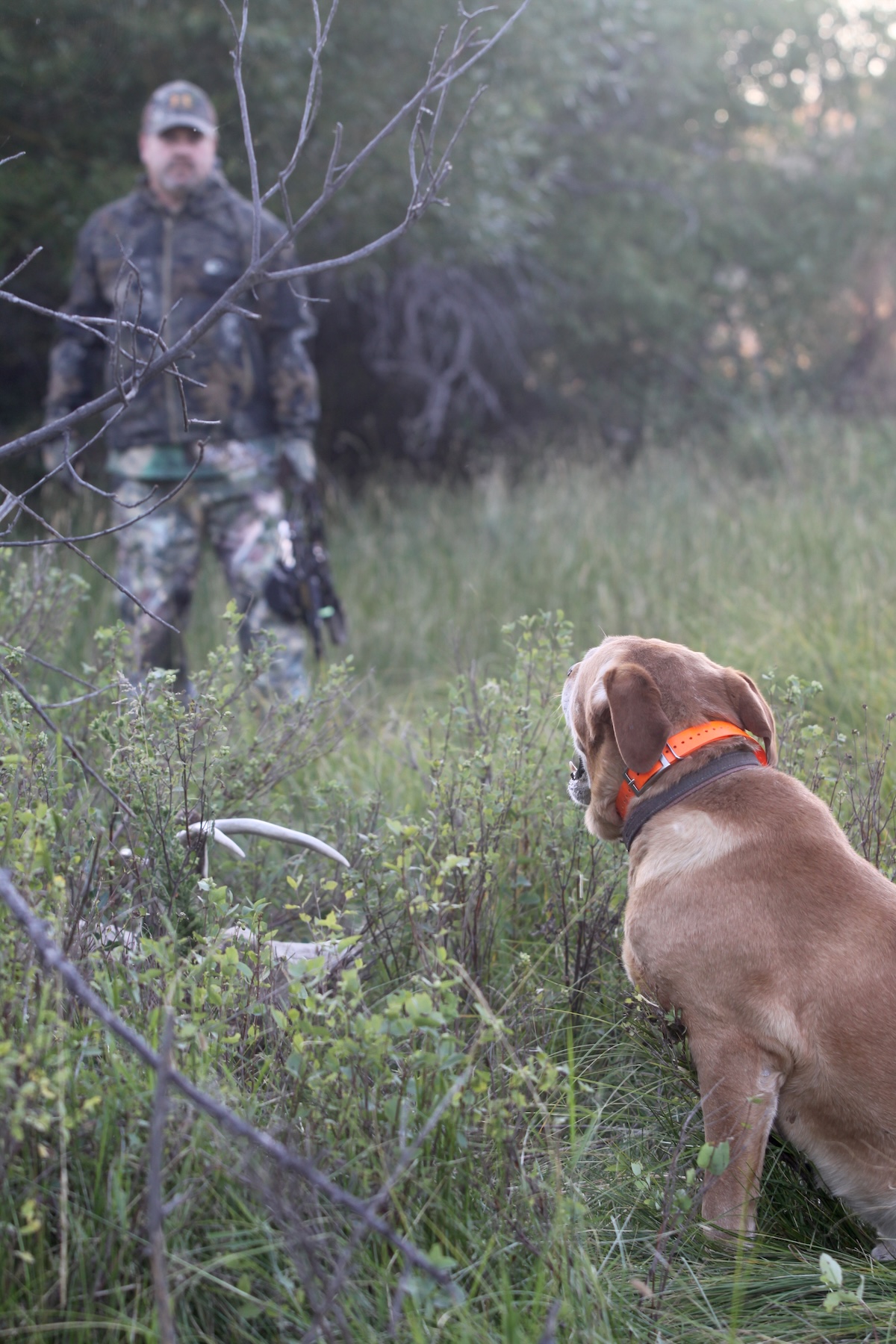
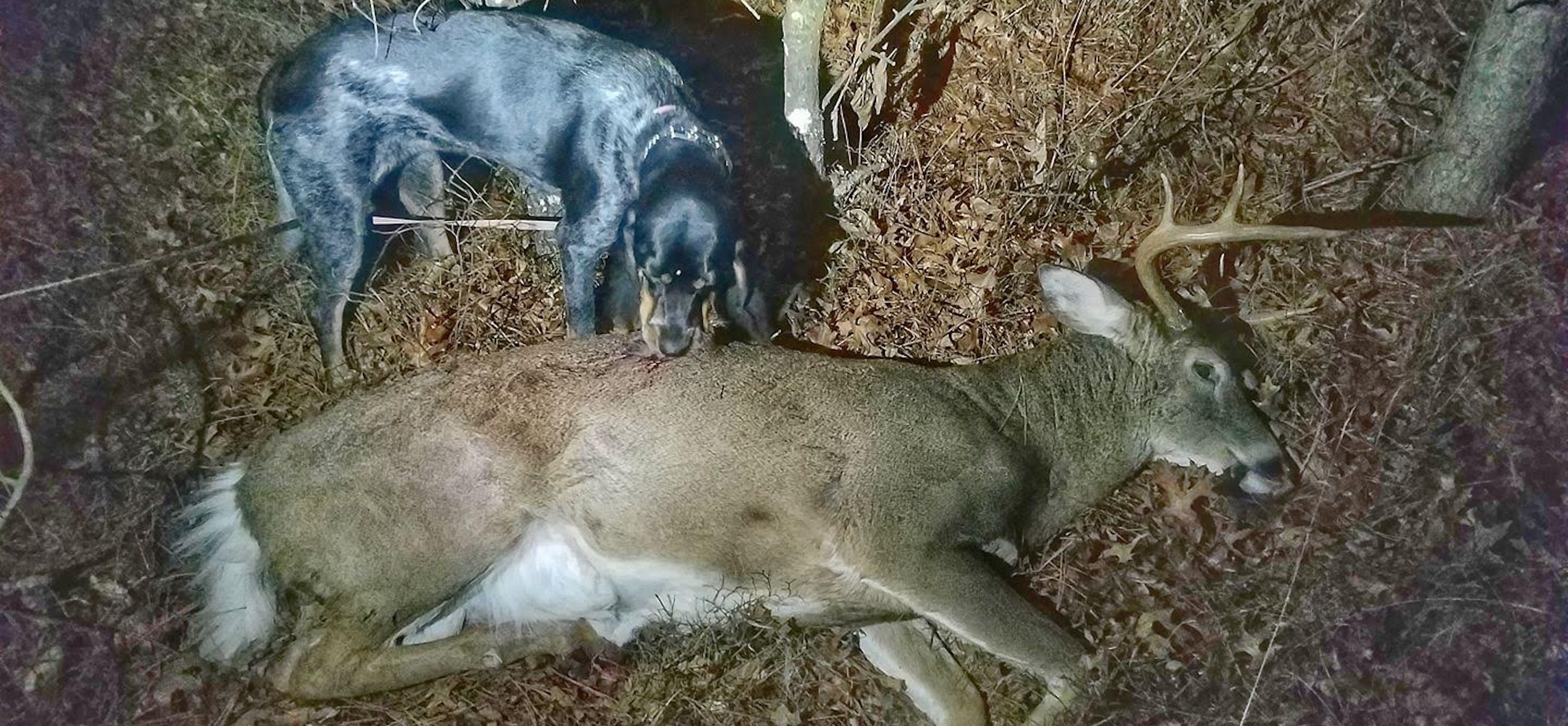
Bowhunters often use tracking dogs to recover whitetails.
Tracking Dog Recovery: There’s an App for That
Other than good tracking skills and luck, dogs provide another option to drones. They also come with some controversy, particularly with stories of dogs running wild and chasing deer. Feral, untrained and free-range dogs aside, dogs as hunting companies have a storied hunting history. If a good bird dog can recover a lost ringneck or mallard, why can’t an equally trained dog be put to good use on big game recovery?
Blood tracking dogs are nothing new and have been used as such for centuries with a strong history in Europe. The practice of blood tracking has origins leading back to Germany and one of the more popular breeds is the German wire-haired Dachshunds. This breed is small enough for searchers to control on a leash and pick up and move to a new position when speed is essential. If you’re not a fan of wiener dogs, there are plenty of options. Other breeds commonly used to track wounded deer include the Deutsch Drahthaar, Dachsbracke, Basset Hound, curs, bloodhounds, the ever-popular Labrador, and of course, golden retrievers.
If you doubt a dog’s ability to smell, you simply need to witness a drug dog, bomb-sniffing dog or bloodhound in action sniffing scant traces of evidence leading to a discovery. Depending on what study you embrace, a dog’s ability to smell is at least 10,000 to 100,000 times greater than our own. It seems like a no brainer that you should be using a trained dog to track wounded deer that don’t die in an obvious manner. Today, blood tracking with dogs is legal in 44 states. The remainder have vague laws, unclear regulations, or are strictly not allowed. Again, be diligent about checking laws on legality.
According to published information on the Congressional Sportsmen’s Foundation website, a South Carolina study documented that 493 deer that were harvested in the specific study, 20% were located with the use of tracking dogs. As a note, hunting deer with dogs in the South is a time-honored activity. A true tracking dog focuses on blood as much as the overall scent of a deer, thus separating it from canines that might run amuck tracking/chasing anything that smells like a deer.
HuntStand was able to catch up with TRAKR app developer Shane Simpson from Minnesota. This app pairs hunters struggling to find a wounded deer with qualified tracking dogs. The app is free to download, and use has skyrocketed with nationwide results. Simpson himself has become more knowledgeable with each passing year on the significance tracking dogs can play in recovery success.
Kill More Mature Bucks in October with HuntStand’s Predictive Weather Tools
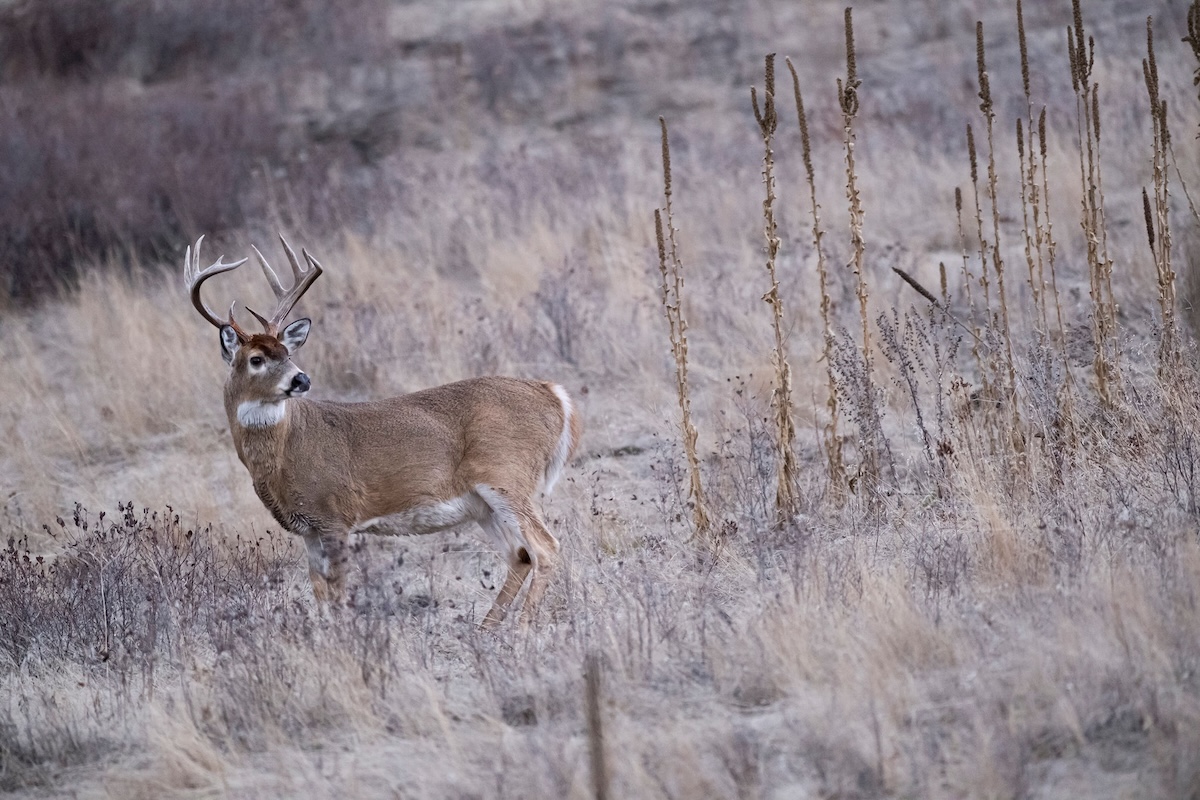
The world of deer hunting is changing, and in terms of game recovery, for the better.
How Long Have You Been Deer Hunting? How Long Have You Been Interested in Dogs to Track Blood?
“I started deer hunting when I was around 12 or 13 years old, possibly even younger. Hunting and spending time outdoors were things I was naturally drawn to from an early age. In addition to deer hunting, I became involved in turkey hunting and small-game hunting. Hunting has remained an important part of my life ever since. My interest in using trained dogs to recover wounded game grew through my involvement with the blood-tracking community and my work with a tracking network here in Minnesota.”
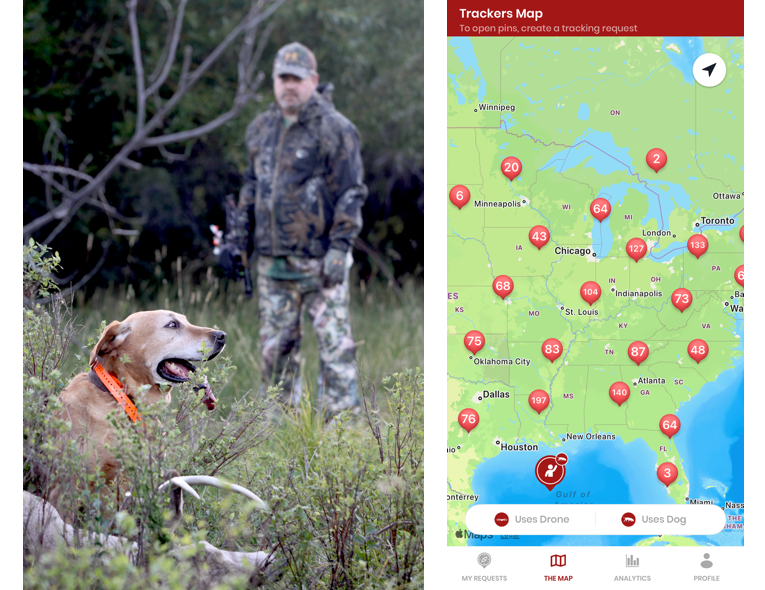
Use the TRAKR app to find a deer tracker near you.
What Spurred You to Create the TRAKR App?
“I am an administrator for a tracking network in Minnesota. As the number of tracking requests increased, it required a significant amount of time and effort to review each request and connect the hunter with an appropriate tracker in that area. We initially created a website form that hunters could complete and submit to us. That allowed us to test the concept and determine whether a more automated system would be beneficial. Once we saw that the process worked, we decided an app could streamline and automate much of that work. We also recognized that the app could collect valuable information about shots on deer, bears and other game animals. It became a win-win situation: We could make it easier to connect hunters with trackers while also gathering data that could improve our understanding of wounded-game recovery.”
How Long Ago Did You Conceptualize the App?
“I first began seriously thinking about the concept around 2020. A few years later, we began building the app and officially launched it in the fall of 2023. The company is owned by four of us: me and three friends. Developing the app was a substantial financial undertaking, so I needed help with both financing and the collective brainpower required to navigate a project unlike anything I had previously attempted. My partners provided a tremendous amount of assistance and insight throughout the process. The four of us still own the company today, and TRAKR continues to grow.”
A Detailed Guide to HuntStand App Tools for Deer Hunters
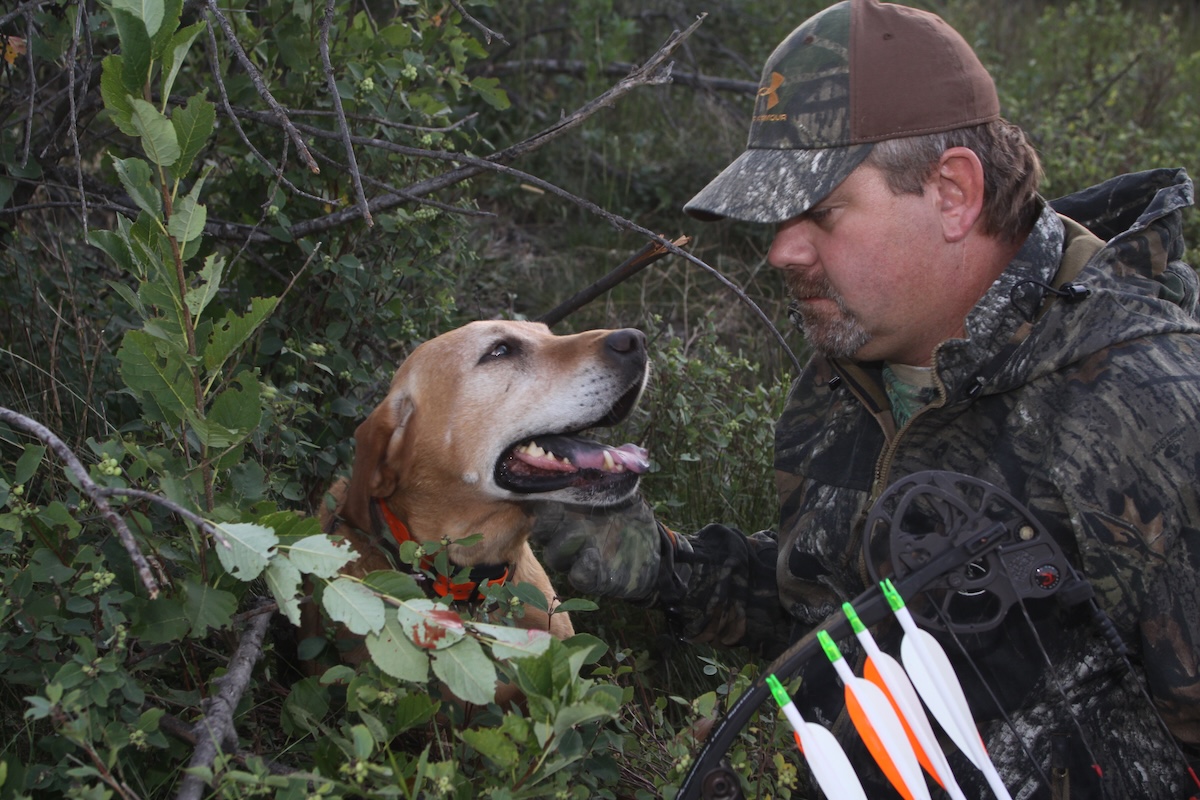
Check state hunting laws on using tracking dogs to recover wounded game.
Why Do You Believe It Is Important to Connect Hunters With Blood-Tracking Dogs?
“The most immediate benefit is that trackers can provide hunters with answers. More importantly, trained tracking teams can help reduce the number of wounded animals that are never recovered. Hunters successfully recover the majority of the animals they shoot, but there will always be some they cannot recover on their own. Making trained trackers more accessible can help reduce those losses. Improved recovery can also help wildlife agencies receive more accurate harvest information. It might prevent a hunter from assuming an unrecovered animal survived and then filling the same tag with another animal. Ultimately, reducing game loss supports ethical hunting and helps keep harvest levels aligned with what wildlife populations can sustain.”
What Is Your Vetting Process to Get the Most Experienced Dogs and Trackers Out There?
“We work closely with established tracking networks in individual states. Those networks are extremely important because each one has its own standards and requirements for trackers and dogs. We generally rely on their experience and follow their recommendations when approving trackers affiliated with their organizations. The networks also help new trackers enter the field, train their dogs and improve their skills. There is a great deal of communication and mentorship within the tracking community, and that ultimately produces more capable tracking teams and better outcomes for hunters. Someone cannot simply register as a tracker, claim to have a dog and immediately begin offering tracking services through TRAKR. We verify that the person has a trained dog or is actively participating in a legitimate training process. A tracker who is still developing experience might receive a provisional account. When a provisional tracker applies for a request, that designation is clearly shown to the hunter so the hunter can make an informed decision. To receive a standard tracker account, applicants must demonstrate that they have a trained dog. That might include certifications through United Blood Trackers, the American Blood Trackers Association or other acceptable evidence of training and experience.”
What Are the Best Features on a Hunting App?
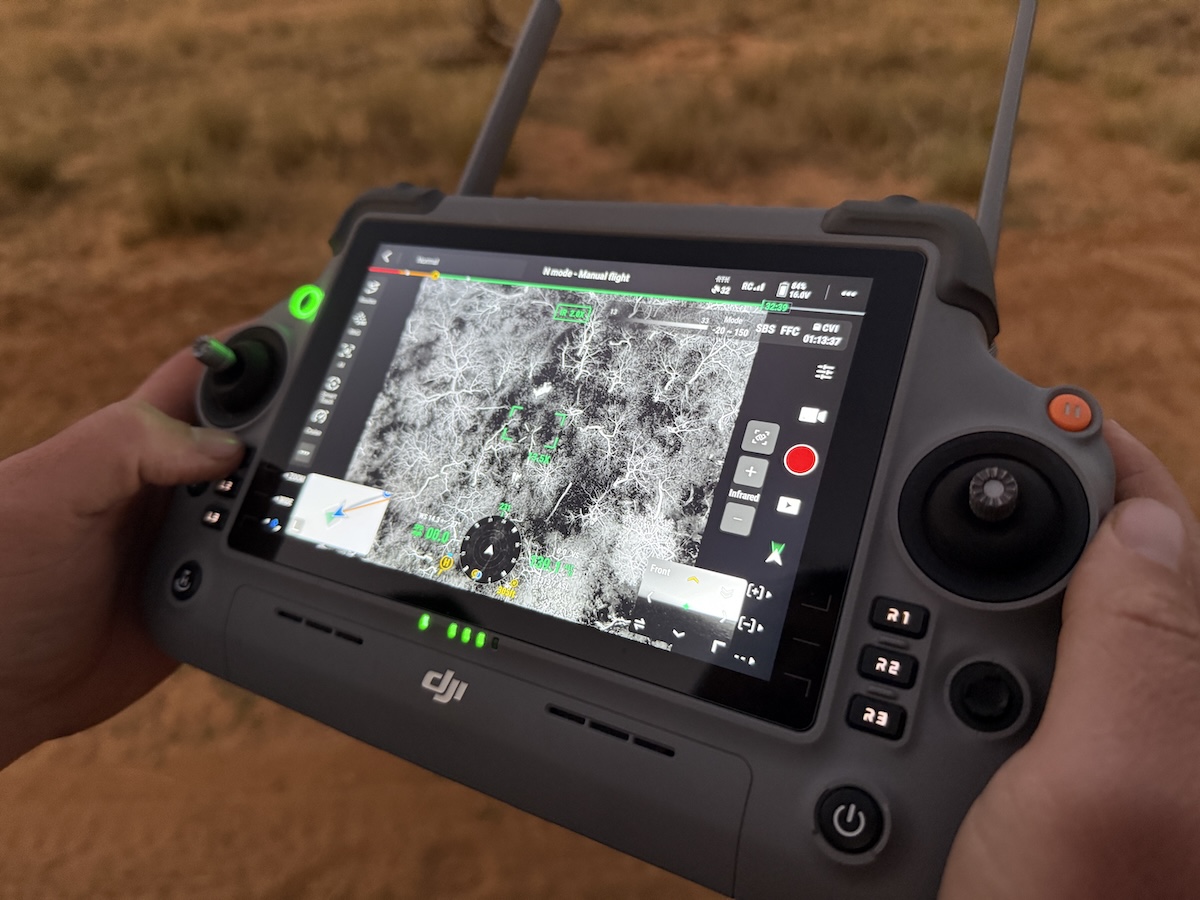
Follow all state and federal regulations when using drones to find dead deer.
What Can You Tell Us About the Drone Aspect Of TRAKR?
“Our initial requirements for drone operators have not been as stringent, but we are strengthening that process. We intend to require verification that operators have the appropriate licenses, sufficient flight experience, and a practical understanding of wounded-game behavior. A drone operator should understand not only how to fly legally and safely but also how different injuries affect recommended wait times and recovery decisions.”
What Are Some of Your Most Interesting Data Discoveries or Statistics?
“We are currently taking a much deeper look at the information collected through TRAKR, and several interesting patterns are beginning to emerge. One area we have been studying is the relationship between compound-bow draw weight and arrow pass-through rates. Our preliminary data appears to show a point of diminishing returns at approximately 65 pounds of draw weight. Once a hunter reaches that general range, increasing draw weight to 80 or 90 pounds does not appear to produce a corresponding increase in pass-through rates. We are also seeing that fixed-blade broadheads have a higher pass-through rate than mechanical broadheads across the draw weights represented in our data. Another interesting area involves recovery distances at different times of the season. Bucks shot during the rut appear to be more resilient and might travel farther than bucks shot during the early season. Physiological and behavioral changes associated with the rut might contribute to that difference. We are continuing to analyze successful recoveries compared with total attempts. As the dataset grows, we will be able to separate those results according to shot placement, weapon, broadhead type, penetration, wait time, animal behavior and other important variables.”
What Do You Get with a HuntStand Ultimate Subscription?
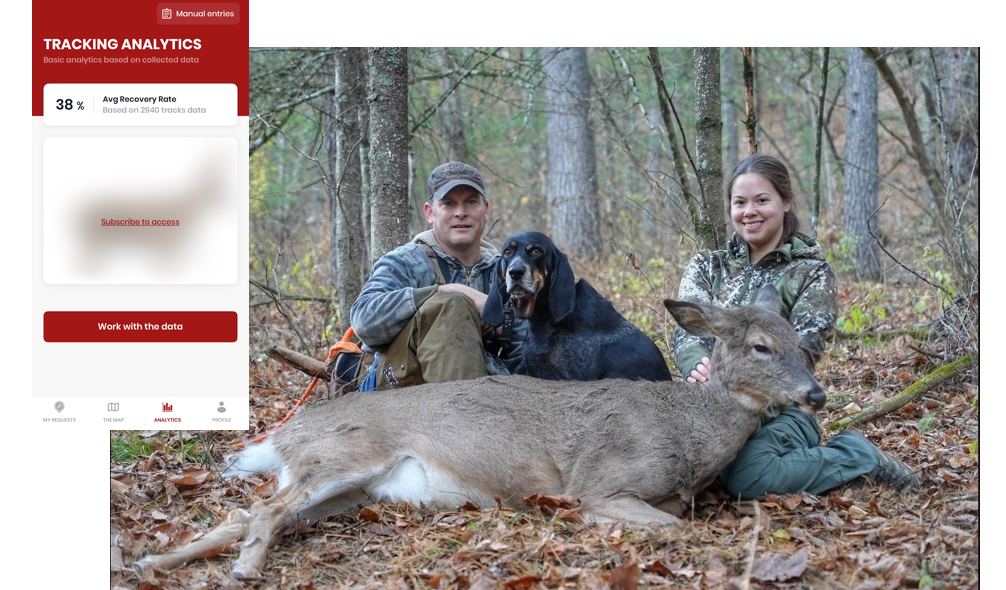
The TRAKR app offers a bounty of valuable information.
Both Hunters and Trackers Input Data. What Are Some of the More Interesting Discoveries From This Compiled Information?
“One of the clearest findings is that many hunters do not wait long enough before beginning to track a wounded animal. On average, the amount of time between the shot and the beginning of the search is often much shorter than it should be. Hunters understandably want to find their animal as quickly as possible, but beginning too soon can cause a wounded animal to leave its first bed and travel much farther. Once the animal has been bumped, the recovery becomes considerably more difficult. In many cases, that is when the hunter finally contacts a tracker. We are also seeing that many hunters conduct extensive grid searches before requesting professional assistance. Sometimes five, six or even 10 people have already walked throughout the area looking for the animal. That can disturb the scent trail, spread human scent across the search area, and potentially push the wounded animal even farther. Our data strongly suggests that hunters could reduce game loss by contacting a qualified tracker before organizing a large grid search.”
Name Several Interesting Finds You Have Discovered From Data Shared By Hunters and/or Trackers.
“At this point, I do not believe the app has collected enough detailed GPS tracking data to definitively confirm or disprove some of the common beliefs about wounded deer. Two examples are the claims that wounded deer intentionally go to water or that they will not travel uphill after being shot. We hope an upcoming feature that allows hunters and trackers to record the complete route traveled during a recovery will eventually help us answer those questions with a much larger dataset. However, before TRAKR was available, I personally collected information from hundreds of tracks, including whether the deer traveled uphill or downhill and where it was recovered in relation to water. Based on that information, my initial conclusion is that both beliefs are largely myths. Water is abundant in the areas where I track in Minnesota and Wisconsin, yet fewer than 2% of the deer I recovered were found near water. Based on chance alone, I would expect more deer to be recovered near water if wounded deer were deliberately seeking it. A deer that survives for several days might eventually seek water because of dehydration. In most other situations, however, the deer appears to flee from the perceived danger and expire wherever that escape route takes it. When a deer is found near water, the water might simply have acted as a barrier, or the surrounding area might have contained thick cover where the deer felt secure enough to bed down. The same applies to elevation. In my experience, a wounded deer might travel uphill, downhill, or across level ground. Its immediate priority is escaping danger, and it will generally travel in whatever direction provides the best escape route.”

Easily navigate the app to put in a tracking request.
Editor’s Note: HuntStand thanks Shane Simpson for his time and commitment to the recovery of all game animals with the TRAKR app.