



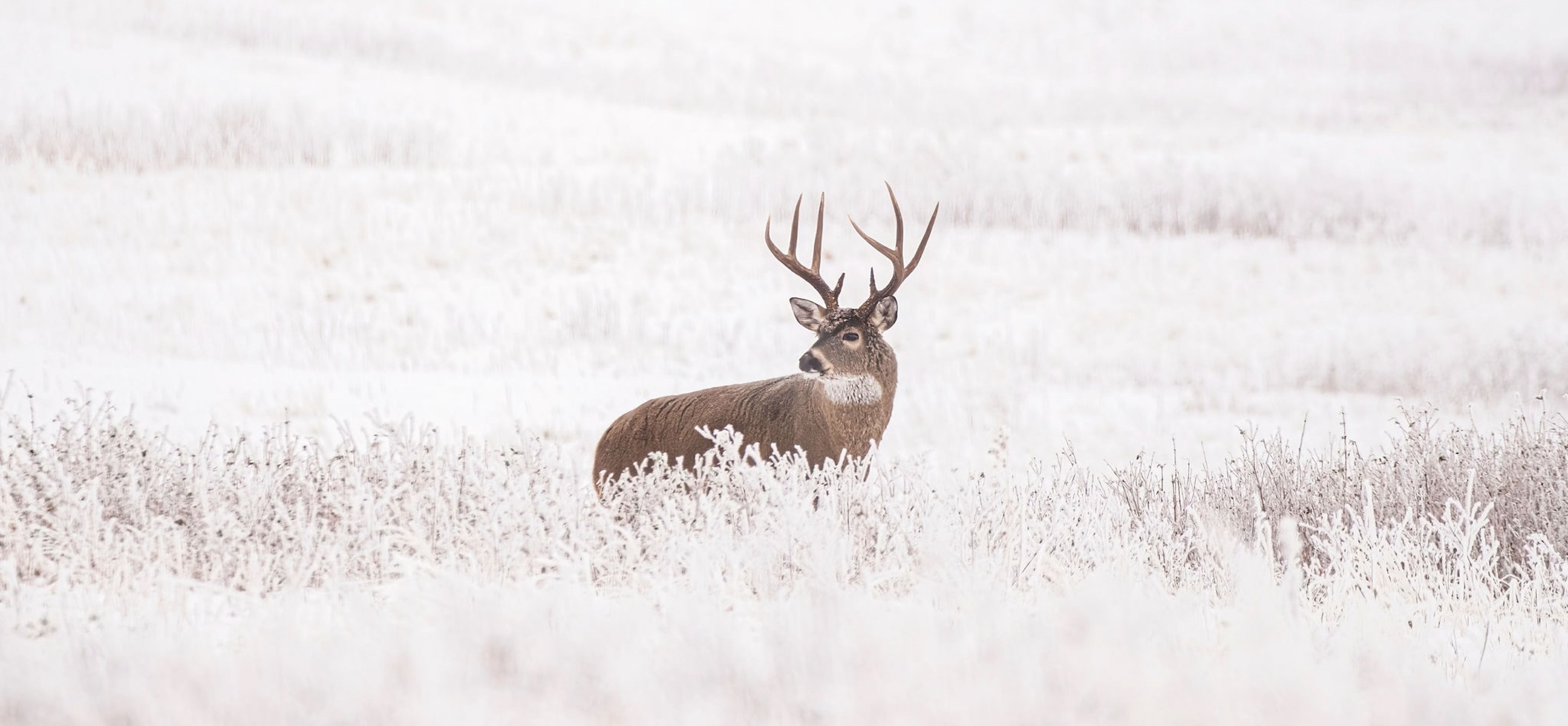

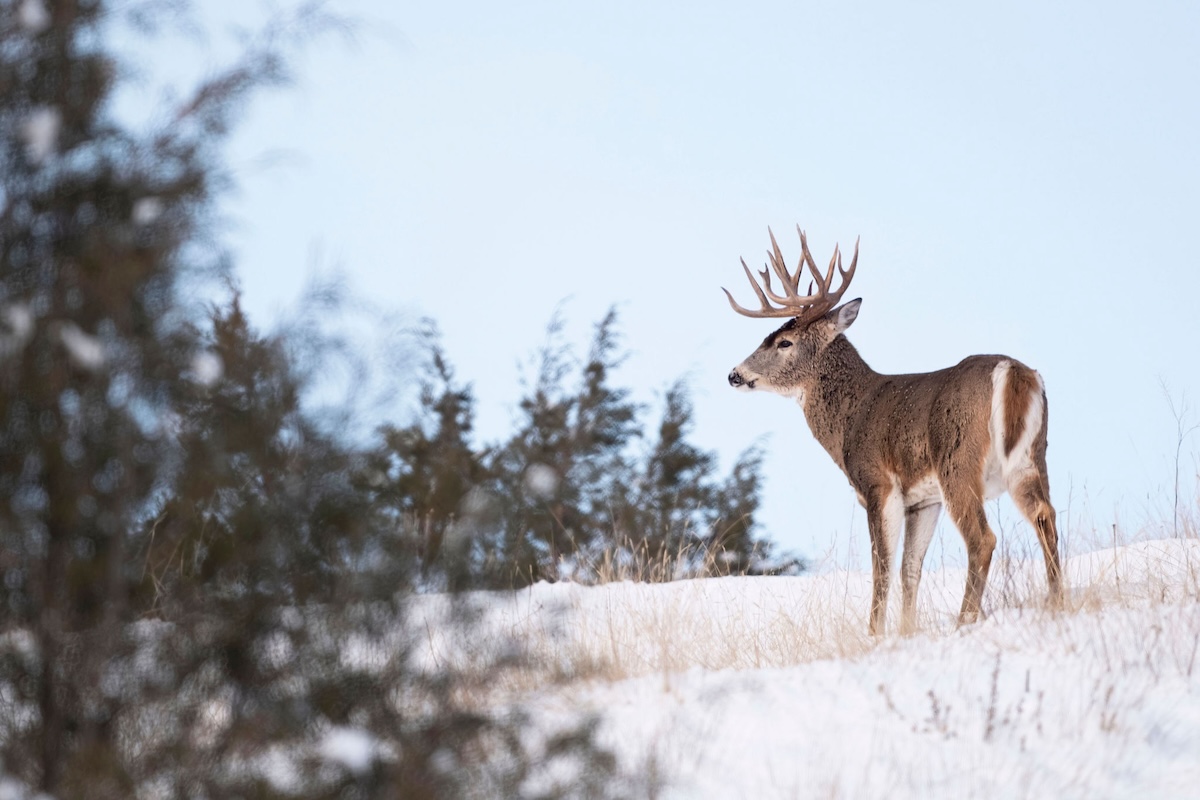

Late-season deer hunting poses many challenges.

HuntStand offers solutions for many of these problems facing late-season deer hunters.
Save for southern locales and little trickles of the “second rut,” the rut is virtually over across the greater portion of the whitetail’s range. Additionally, firearm seasons and months of archery hunting have imposed immense pressure on deer herds nationwide. Deer are more skittish than ever, and their central focus is on survival — evading danger while eating enough to withstand the winter ahead. The second part of that means that key winter food sources are the money spots if you’re still packing a buck tag, or even a couple of antlerless tags.
Despite a whitetail’s need to feed, late-season hunting is far from easy. Often, deer are very nocturnal, and if they do step out in the daylight, they’re most likely going to be on high alert. Add to that sitting through brutally cold weather, and the odds are against you. But, for the stalwart late-season hunter, the possibility of taking a monster buck or a few does is within reach.
Are you committed to giving the late season your best shot? Consider leveraging all that HuntStand Pro Whitetail has to offer. Follow along for some tips on finding food sources and some bonus app uses that will increase your odds for a productive late season.
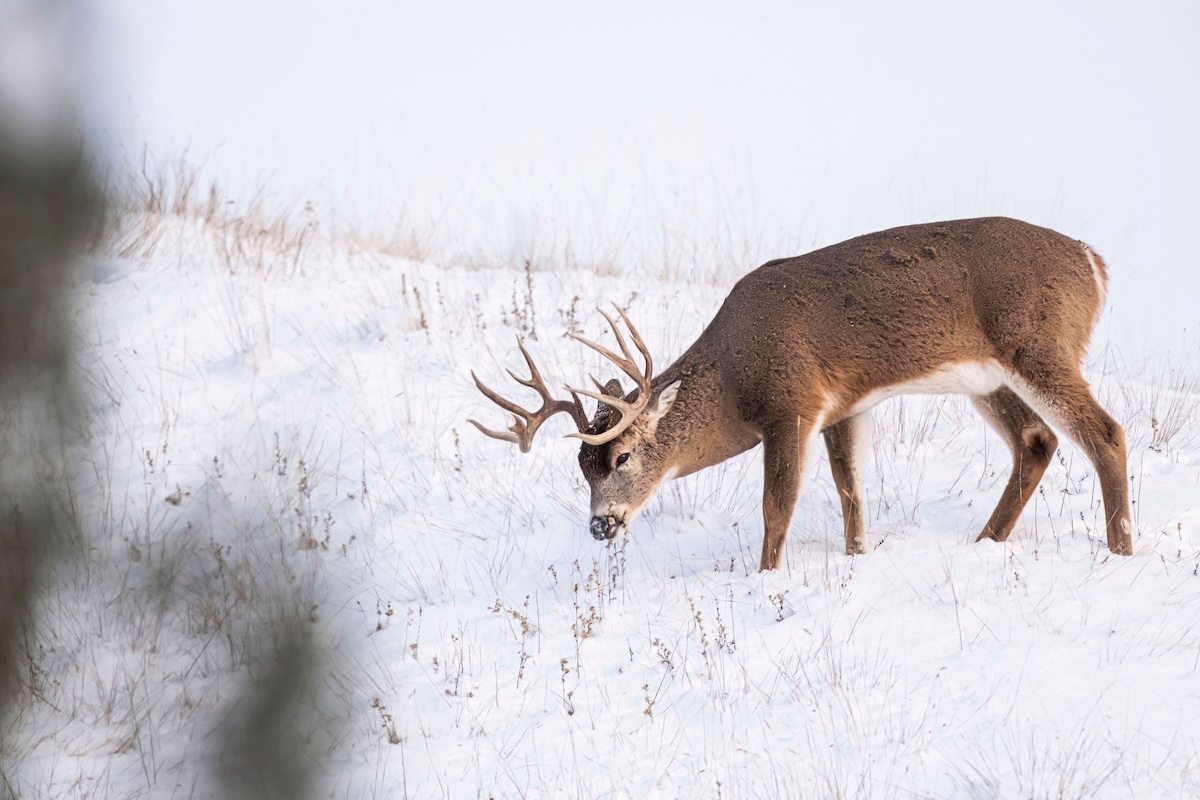
Afternoons are the best time to hunt over winter food sources in most instances, and if you have only one or two stands, be sure not to over-hunt them. Strike during the best times as shown in HuntStand Pro Whitetail’s Whitetail Activity Forecast.
Map the Food
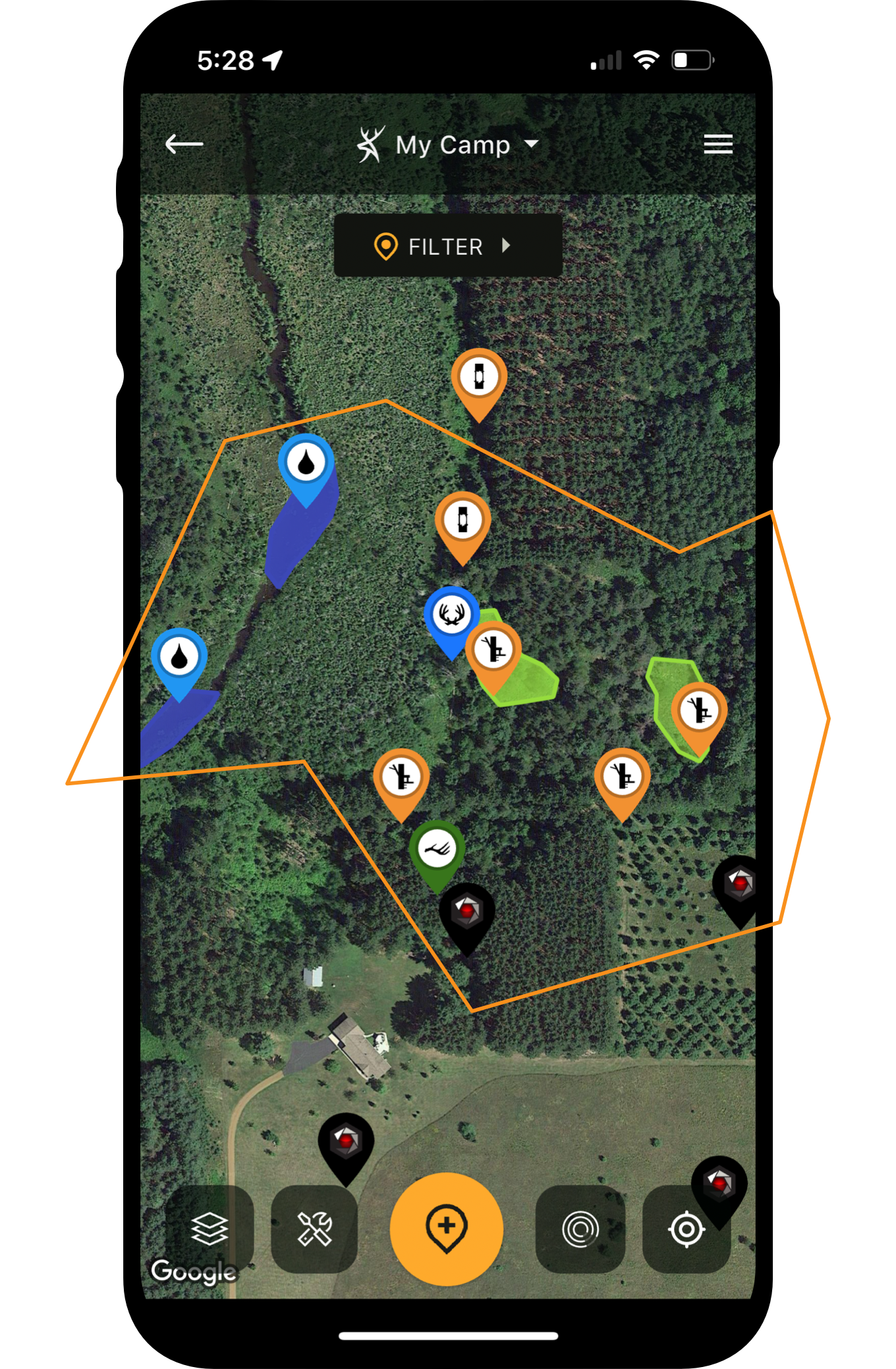
The Hybrid base map is always a good starting point to get an overview of your hunting area. It provides an excellent, high-res satellite image. If you’re hunting on private land, then you likely know what exists in terms of crops and whether or not they have been harvested.
However, you can always navigate to Overlays and engage the Crop History overlay. This shows and highlights all agriculture with color-coded shading. It lists what’s in each individual field or pasture the previous year. Click on the actual food source to open a window that details four more years’ worth of crop-rotation detail. Then, assume what was planted this year, even if you haven’t physically been to the food source.
A great next step is to switch to the Monthly Satellite Imagery base map. It is low in resolution, but it should give you a good enough recent view to determine if a field was planted in row crops, or whether it is a green or grain field. In western states, green hayfields are money all season long — I’ve seen western deer paw through tons of snow to reach alfalfa.
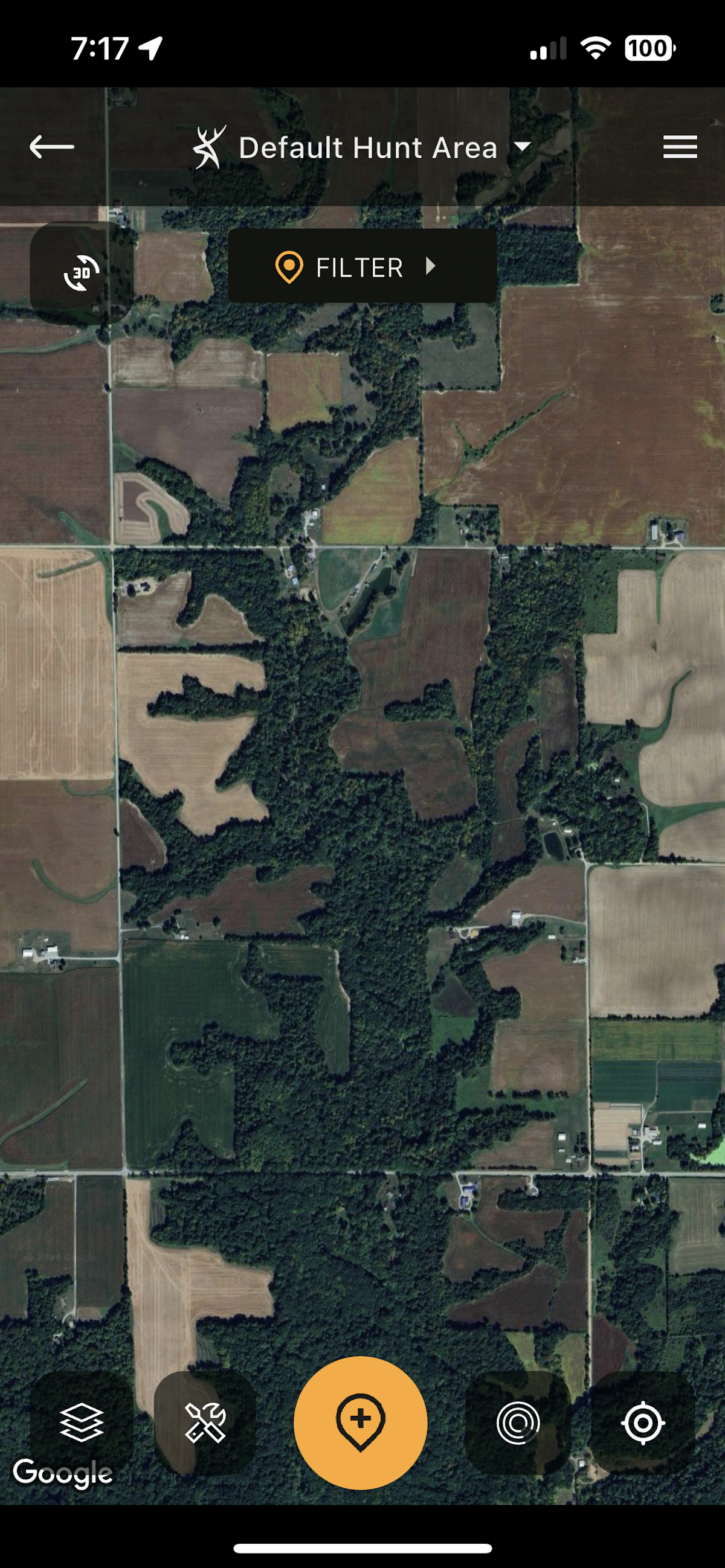
The Hybrid base map is always a good starting point to get the best virtual overview of the property you’ll be hunting as you begin making late-season plans.
Next up, in areas with more crop diversity such as the Midwest, the two leading crops for late-season deer activity are always corn and soybeans. In the Monthly Satellite Imagery base map, you can sometimes tell if row crops were harvested. Standing crops are always best, but a lot of corn and soybeans usually fall behind during harvesting, and deer will continue to frequent the field (unless it gets tilled), especially if there are no standing crops in the vicinity.
Another great use for Monthly Satellite Imagery is a big-woods, public-land setting. In vast areas like this, deer often don’t have the luxury of crops, so they must make a living on natural foods such as hard masts, soft masts, woody browse, and broadleaf plants. In particular, the Monthly Satellite Imagery base map can help you identify logging activity. Treetops left behind from logging become highly attractive to deer as they nibble the tender ends.
If you cannot identify fresh logging activity, then carefully visit oaks in person to search for leftover acorns on the ground and deer feeding activity. Be attentive to any soft masts (apples, for example) that are still on the tree, as deer will gladly take to high-sugar foods when available.
Down South and out West, winter wheat or winter rye fields are also deer magnets. The key to identifying these is using Crop History in conjunction with Monthly Satellite Imagery. Some wildlife areas or wildlife management areas grow winter wheat every year, making Crop History a good way to peg it in the app. You can then engage Monthly Satellite Imagery to confirm that the field is green as of October and November. This will take away a lot of guesswork if you haven’t been to the property in a while.
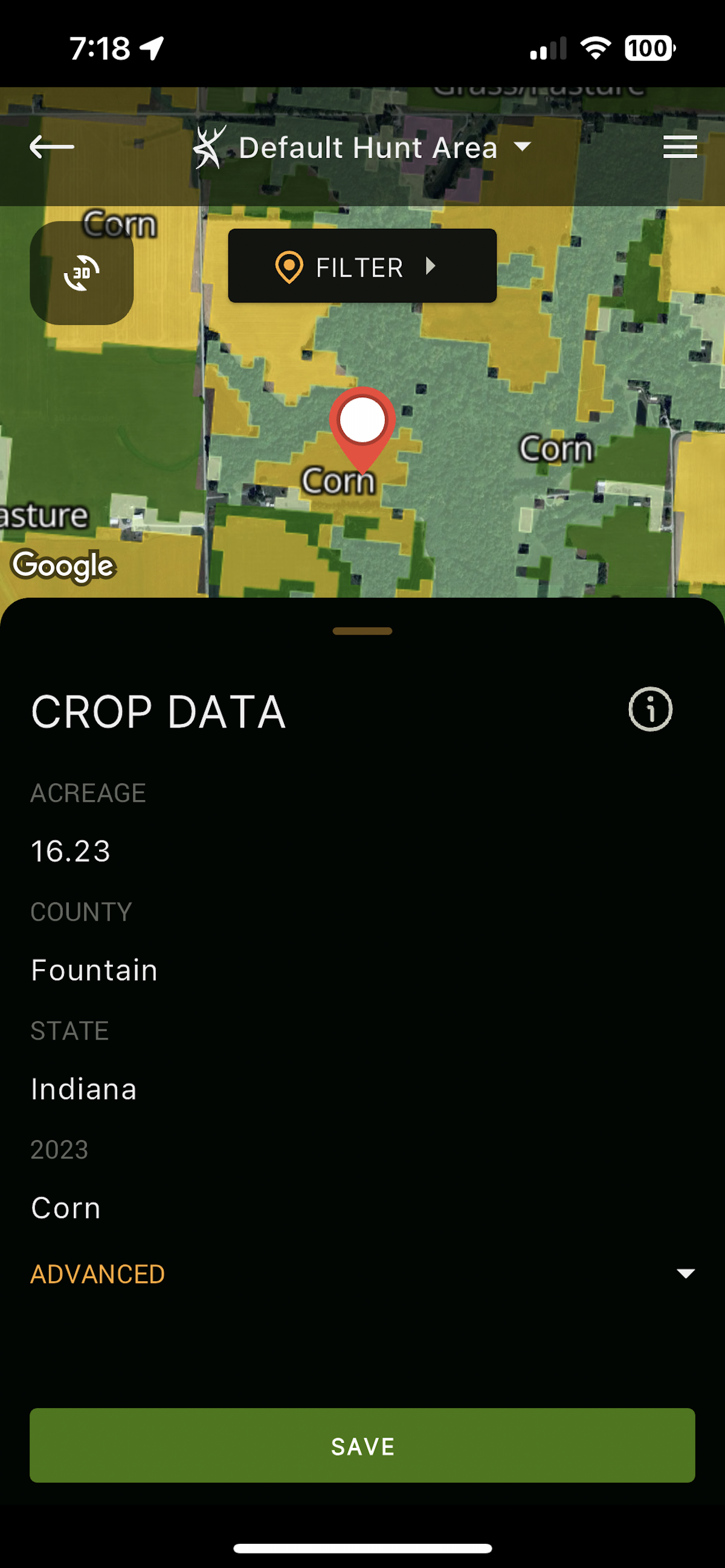
The Crop History overlay not only tells you what was planted last year, but if you click “Advanced,” you see what was planted in the four preceding years, which will help you learn the crop rotation.
When you’re e-scouting public lands, always be sure to use the Public Lands overlay to find lands that are open, but don’t ignore adjacent private lands that have potential food sources, particularly when the public land offers bedding habitat. The Tree Cover overlay can help you identify traditional bedding cover, but don’t forget to look for cattail sloughs, shelterbelts, small thickets, etc. Often, you can intercept public-land deer just outside of their bedding area as they head for the local private-land fine-dining experience.
To summarize, the top late-season foods for areas that are rich in agriculture are corn and soybeans. In the west and south, hay, winter wheat, and winter rye are select options. In the big woods, browse in young-growth forests or around logging operations are hotspots. If that fails, scout for deer-feeding activity around oaks, as deer will dig through the snow to reach leftover acorns, if available.
If you have your own hunting property and planned ahead, hopefully, you planted a plot specifically for the late season. While deer will dig through snow to eat clover, they’re more likely to dig up radishes, turnips, rape, kale, and turnips, especially once they produce higher sugar content.
Of course, small plots of corn and soybeans are effective, too. And if all else fails and baiting is a legal practice in your state/area and no other food sources exist, it can be a great way to attract deer to a specific area, especially if you’re bowhunting and need a 20-yard shot.
Finding Big Public-Land Bucks Where No One Else Hunts
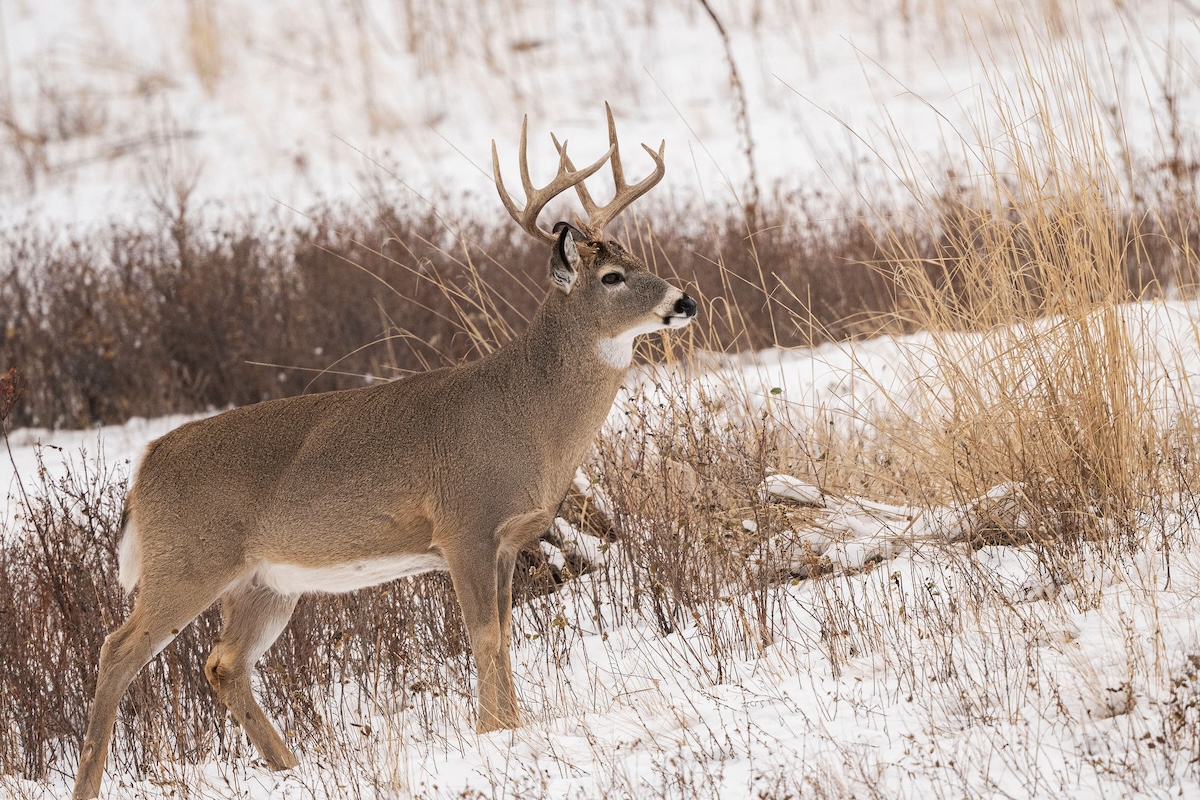
Keep a positive attitude amidst the challenges and difficulty of late-season conditions. It can help pave the way for success.
Wind and Access
Killing a late-season buck isn’t as easy as finding where he feeds or putting out food. Now more than ever, hunting the wind and utilizing clever access routes and strategies is critical. Whether you’re hunting directly over a food source or between the food source and a bedding area, don’t plan any outing without first utilizing the HuntZone feature, which provides detailed wind info and a graphical overlay showing how your scent will disperse at your exact stand location. This will help you make sound decisions for hunting the wind.
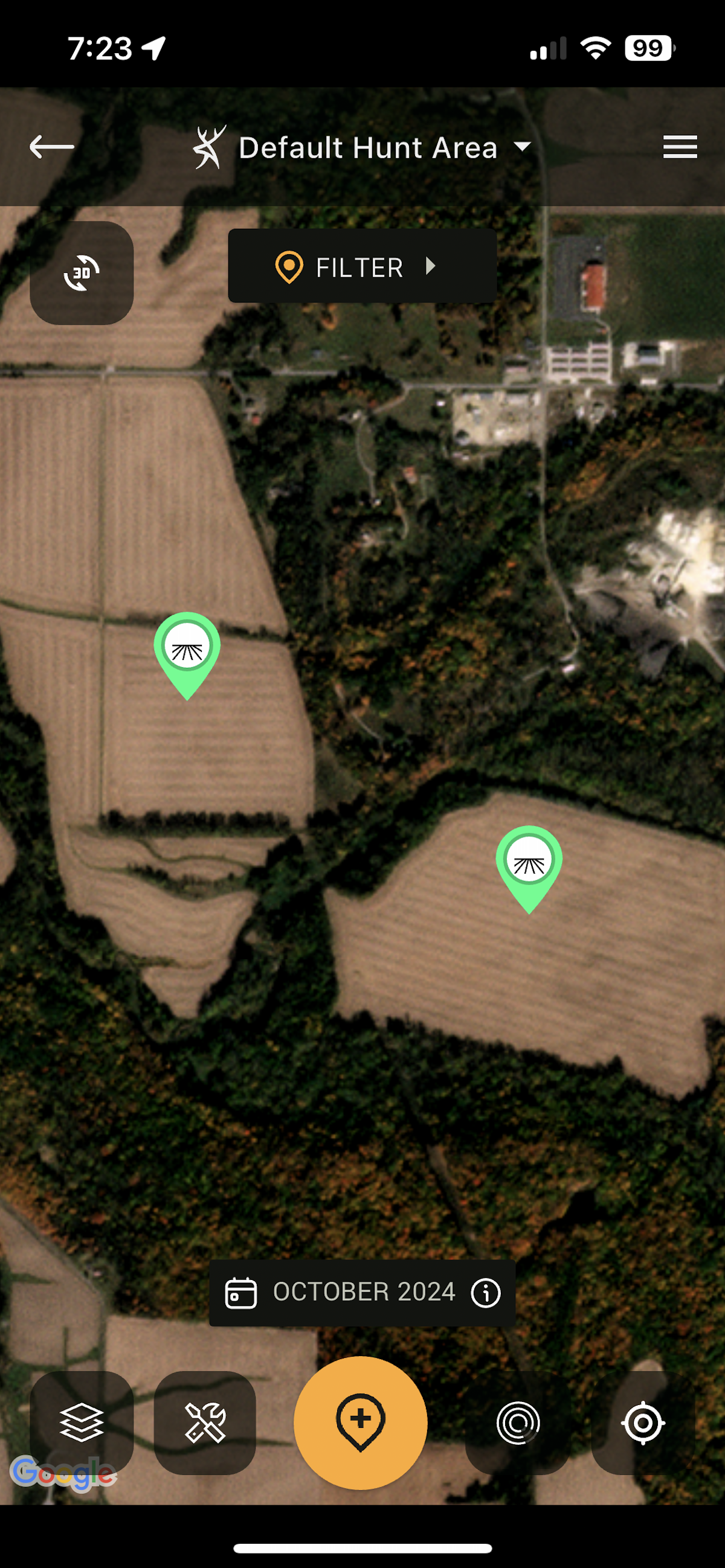
Monthly Satellite Imagery provides a recent view of the property. Although the resolution is low, you can usually identify row crops and sometimes even determine if the crops were harvested or not.
Access is equally important. You often can reach your stand undetected, but exiting following an unsuccessful outing can be tricky, as deer tend to congregate on food sources during the waning moments of daylight and in the dark. For that reason, you must have a good exit strategy. This also might entail tweaking your stand location and locating it in a way that allows you to utilize land features to exit discreetly.
Look for natural barriers such as creek banks, ditches, manmade structures, etc. to cover you as you exit. Land features should stand out by engaging either the Terrain base map or the Contours overlay.
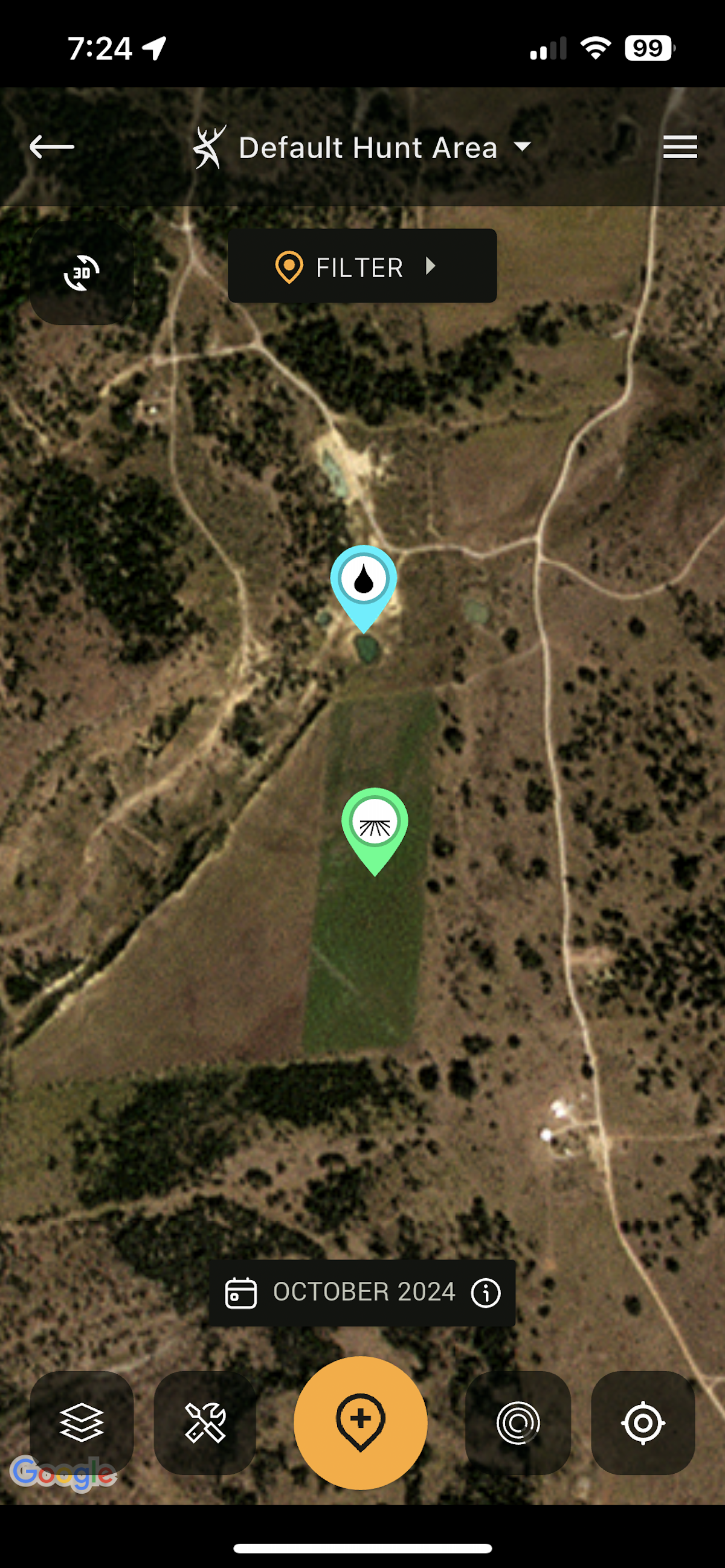
In the drier western and southern climates, anything that is still green in October and November will likely be attractive to deer throughout the winter. Think alfalfa and winter wheat.
If no advantageous land features or property structures exist and you’re hunting over a field or plot, someone might drive into the field and pick you up with a tractor, vehicle, or snowmobile, as deer in agricultural country are accustomed to machinery. Bumping deer off a field after dark is better than climbing down a tree and walking through the middle of them.
If all else fails, howling like a coyote can clear the field without introducing humanistic disturbances. That’s probably your best bet, especially in big-woods areas or in agricultural settings. (Especially if someone picking you up isn’t an option.)
Finding the Best Rut Hunting Spots with HuntStand Pro Whitetail
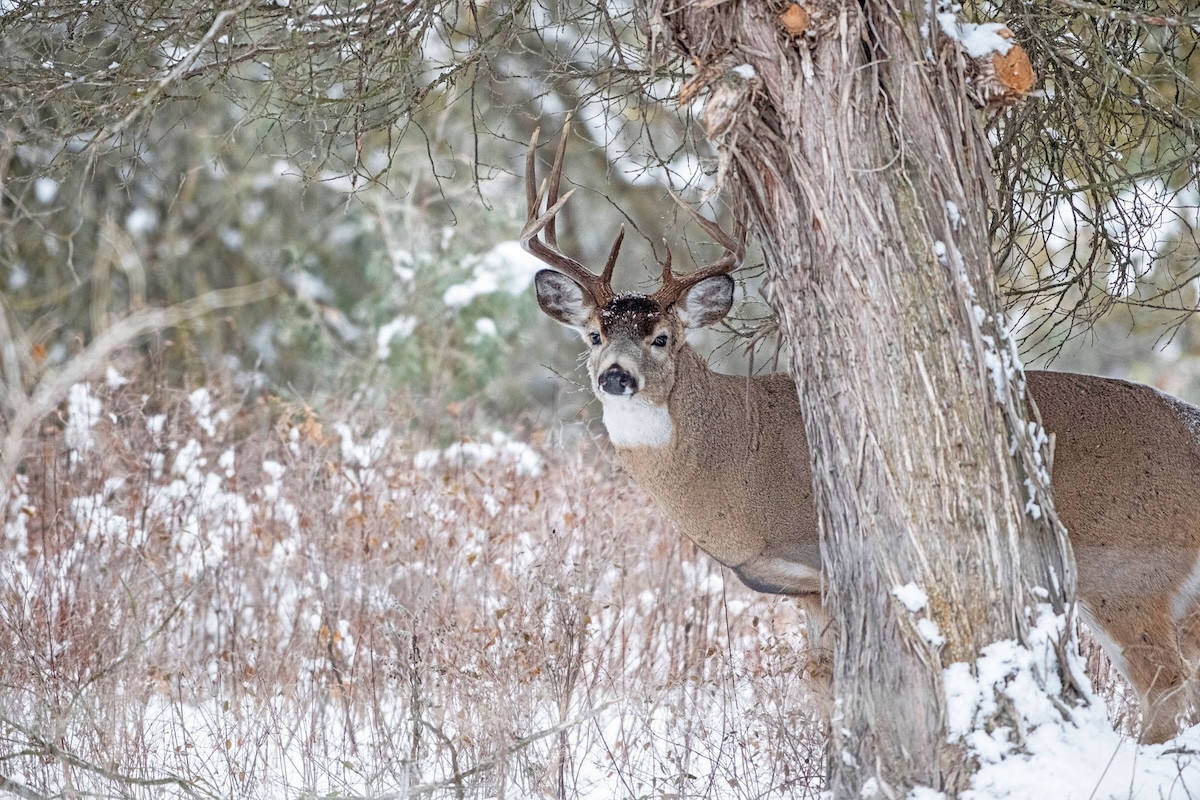
Logging operations often yield treetops, which make attractive deer browse. Scouting using Monthly Satellite Imagery can help you identify recent timber-cutting activities in big woods settings and home in on the action.
Focus on the Best Afternoons
Unless you have pegged a buck’s pattern or have some magical access, hunting late-season food sources in the morning is incredibly risky. Accessing a stand overlooking a food source without spooking deer is nearly impossible since deer tend to feed through the night and into the morning hours before returning to their bedding areas.
If you must hunt mornings, you best do so closer to the perceived bedding area so that you can arrive undetected, though exiting becomes riskier.
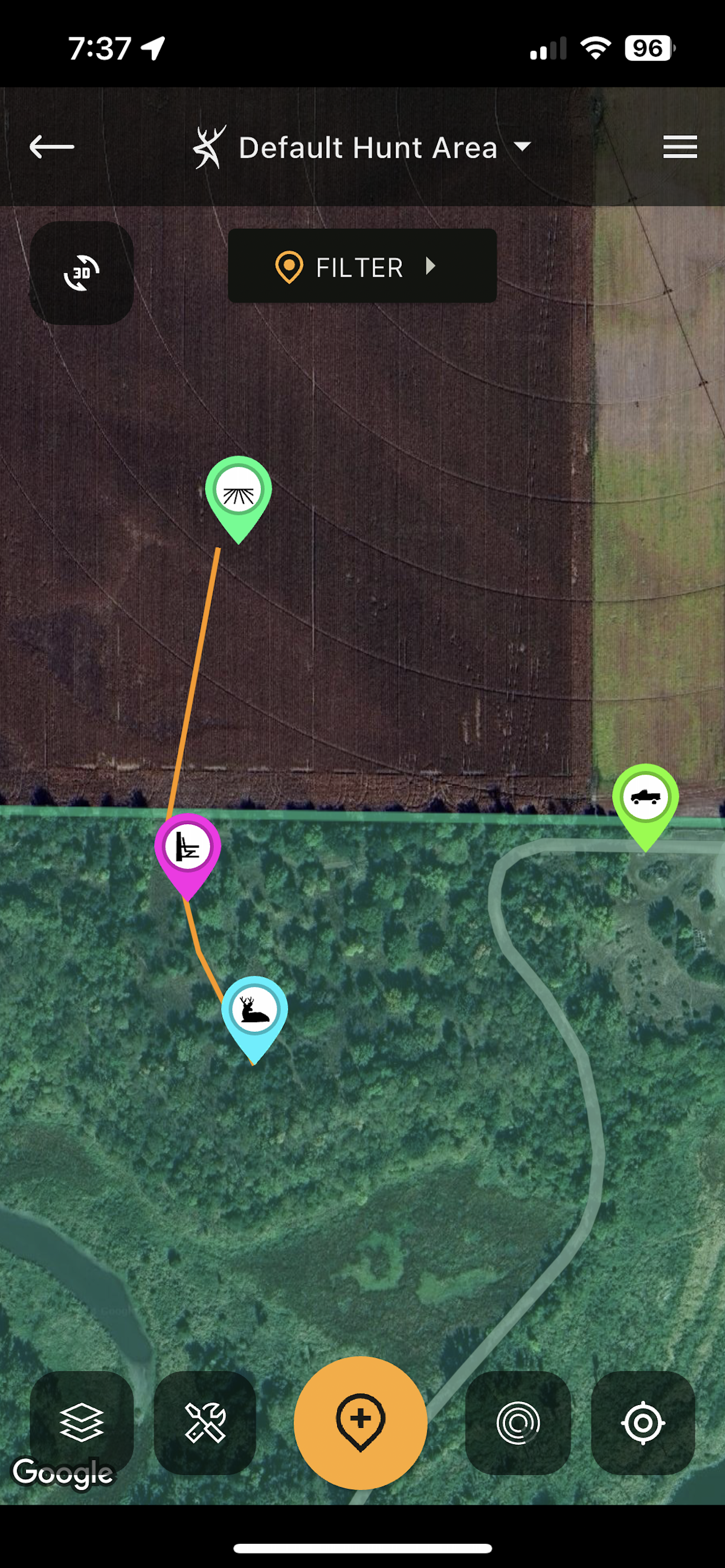
Don’t ignore potential food sources located on private land adjacent to the public land you’re hunting. Given sufficient bedding cover, deer will often bed on public land and move to private land to feed, making them susceptible to a well-executed hunting plan on the public land.
In most cases, the most productive hunting on late-season food sources is in the afternoon. This allows you to enter undetected in most instances, and you’ll leverage the onslaught of feeding activity that tends to transpire during the last 30 minutes of legal shooting light.
We’ll go another step and suggest hunting only the best afternoons, especially if you only have one or two stands.
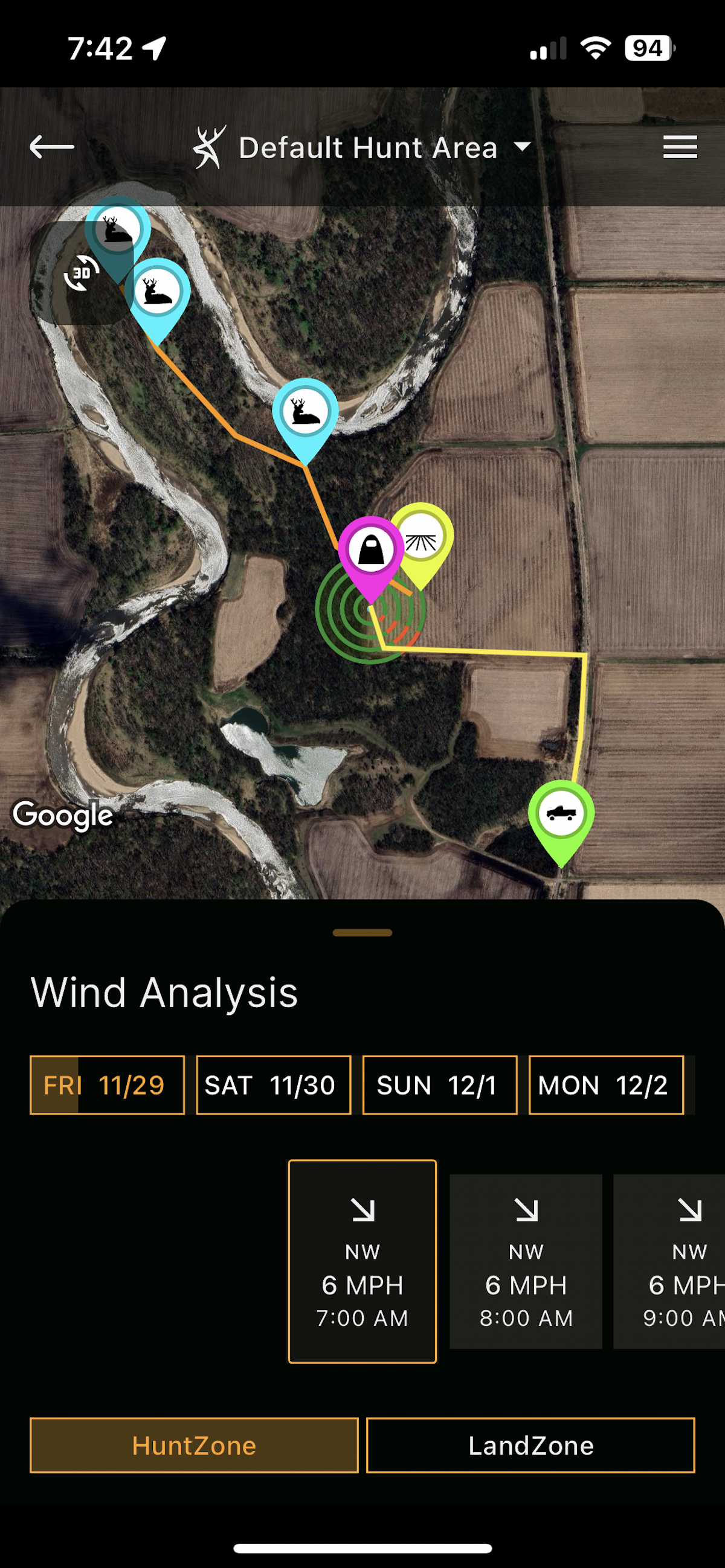
Now more than ever, hunting the wind is critical, and the HuntZone feature provides all of the wind details you need to effectively plan your late-season hunts around the wind.
How can you determine which afternoons are the best? Open the Whitetail Activity Forecast feature. It uses algorithms and scientific details to compute percentage-based movement scores for every hour of the day. Afternoons that show a movement score of 70 percent or higher are what you’re looking for.
By hunting the afternoons when HuntZone shows an ideal wind direction and when Whitetail Activity Forecast shows a 70-percent-or-higher movement score, you’re avoiding burning out your stand(s) on less-than-ideal conditions and putting in your time when and where it counts.
Whitetail Rut Deer Hunting Guide with HuntStand Pro Whitetail
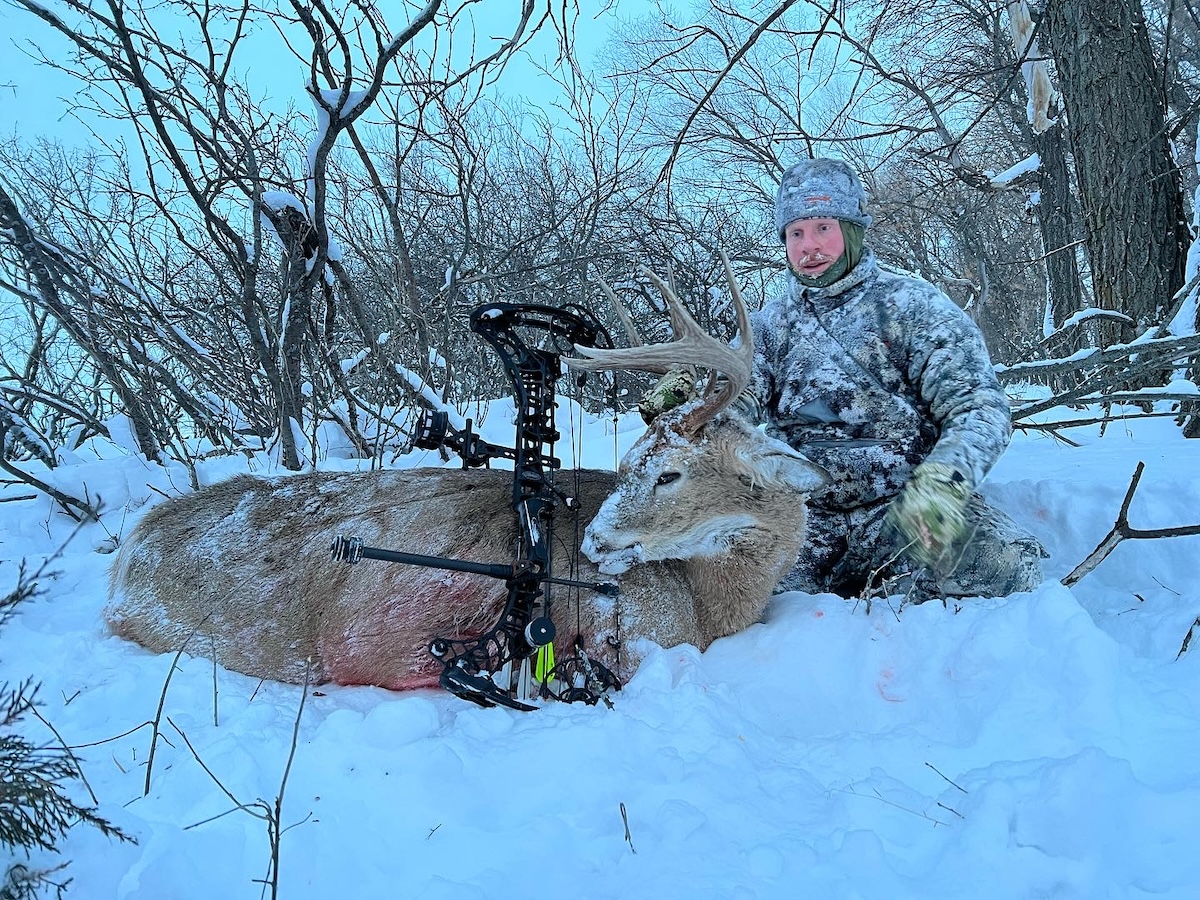
HuntStand ambassador Darron McDougal withstood subzero weather and arrowed this North Dakota bruiser late in December before the season ran out.
Be Faithful to the End
Late-season hunting comes with challenges and frustrations. Battling the cold alone can be an accomplishment. But, given the right weather conditions, the last few days of the late season can be some of the best. A lot of that is due to the lack of hunting pressure, and the rest is due to the fact that deer must eat to survive.
Without question, it can become tempting to throw in the towel, but good things can happen if you remain steadfast. Embrace a never-quit mindset and utilize the HuntStand Pro Whitetail tips outlined herein to boost your odds for success this late season.
UPGRADE TO HUNTSTAND PRO WHITETAIL