





Never do the same thing as others when hunting coyotes on public land. Change your stale hunting tactics for a fresh approach.
Although a few of you live in coyote-rich havens with no issues in calling these survivalists with consistency, the rest of us struggle from time to time. Like any issue, a collection of elements could be affecting our coyote hunting. Everything from the likely increase in hunting pressure to disease or even lack of hunting access could be affecting your success. Most of these factors you have no power to change. On the other hand, you do have the power to change up your playbook. Has it gone stale? Freshen it up with a new look at your approach to coyote hunting. Read on to learn more about hunting pressured coyotes.

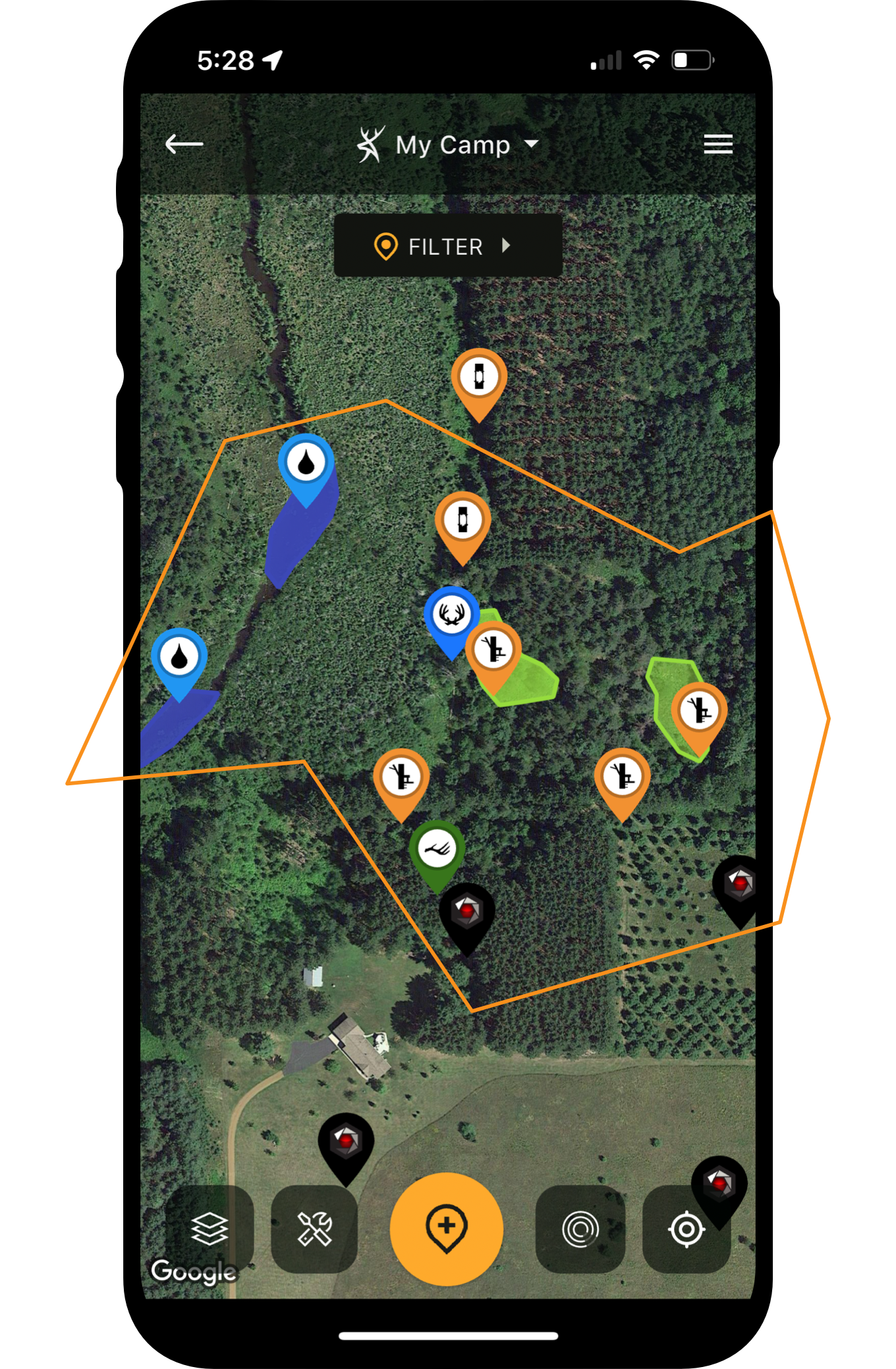
Run the HuntStand Natural Atlas base layer to locate water sources where coyotes might hunt near. Use the HuntStand Hybrid base layer and Contour overlay to look for high points to call coyotes from. Deploy the HuntStand Natural Atlas base layer to locate openings, high points and roadless areas for coyote calling. Implement the HuntStand Quad Topo base layer to locate high points for calling coyotes.
Finding Coyote Hunting Hotspots
One of the great things about coyote hunting is you can practically plunk down anywhere and call a coyote. Can you though? As coyotes become wiser to calling, hunting pressure and just overall human activity, you might be wise to take a deep dive into their homelands for X-marks-the-spot calling locations.
Despite some habitats looking strikingly similar throughout, coyotes do have preferences and uncovering those niche areas takes some sleuthing. Top priorities include sanctuary and food. In arid areas, such as the desert Southwest, water also becomes a critical factor.
Begin with sanctuary. Although a coyote can hold up almost anywhere, use your HuntStand app to discover areas that include denser cover, more rugged topography and have fewer roads. These all add up to less human visitors when a coyote has downtime. Upgrading to HuntStand Pro or Ultimate adds more power to your e-planning. Put your Hybrid, Natural Atlas, and Quad Topo base layers into play and whenever needed, add the Contour overlay onto a map for another view of possible refuge characteristics coyotes love.
For food, take into consideration that most studies point to the fact coyotes subsist primarily on rodents. They eat almost anything and focus on fawns in the spring, but their overall livelihood relies on rodents. Grassy areas, meadows, wetlands, and overgrown suburban lots all provide the habitat needs for the rodents coyotes love. Scan for these on your Hybrid base layer or add the Tree Cover overlay to your favorite map to get a view of areas with possible open-country rodent infestations. All maps have the potential to give water clues, but the Natural Atlas base layer shines in this area along with the Outdoor base layer.
How to Hunt Public-Land Coyotes
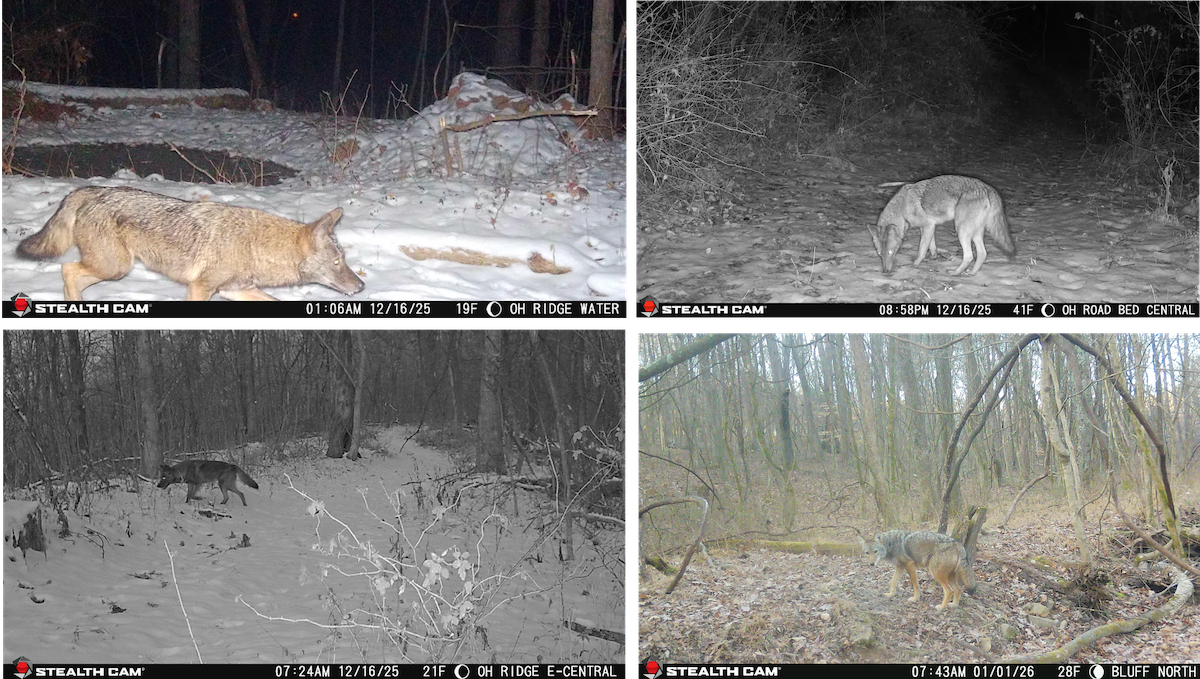
Deploy cell cams to scout coyotes. Use scent-eliminating spray on your boots and hang coyote urine wicks on either side of your scent stream to stop a coyote in your preferred shooting lane.
Choose Coyote Hunting Entry Routes, Stand Locations, and Exit Strategies
Once you have a homeland waypoint in hand, use it to map an invisible entrance. Utilizing wind forecasts on HuntStand’s HuntZone wind graphic and topography base layers start you out on a journey to invisibility.
Even without HuntStand, you can use common sense. If you’re hunting primarily flat country, access the area under the cover of darkness and wait at your setup site for shooting light. Coyotes might have great eyesight, but on dark nights, even they cannot gather enough light to see you. Have the wind in your favor and walk stealthily to your stand site.
For public land hunters, the advice is simple. Don’t be a lemming. Avoid hiking in from main trailheads and instead look for backdoor entrances. A secondary gate or even a right of way, when legal, could provide parking to hop over a fence to adjoining public land. Predators are fully aware of where most human traffic emanates and steer clear of it during daylight. Mimic their moves to put yourself in their core area. The Property Info overlay aids in keeping you on the right side of the fence.
Lastly, cloak your approach. Use terrain to stay hidden from big openings. Use low spots, such as ditches, gullies, or creek beds to advance out of sight. Add the Contour overlay to any applicable map for e-scouting assistance. And never silhouette yourself, if possible, day or night. Instead of going over a hill try and side hill to give yourself a background to blend against.
Hunting Coyote Bedding Areas
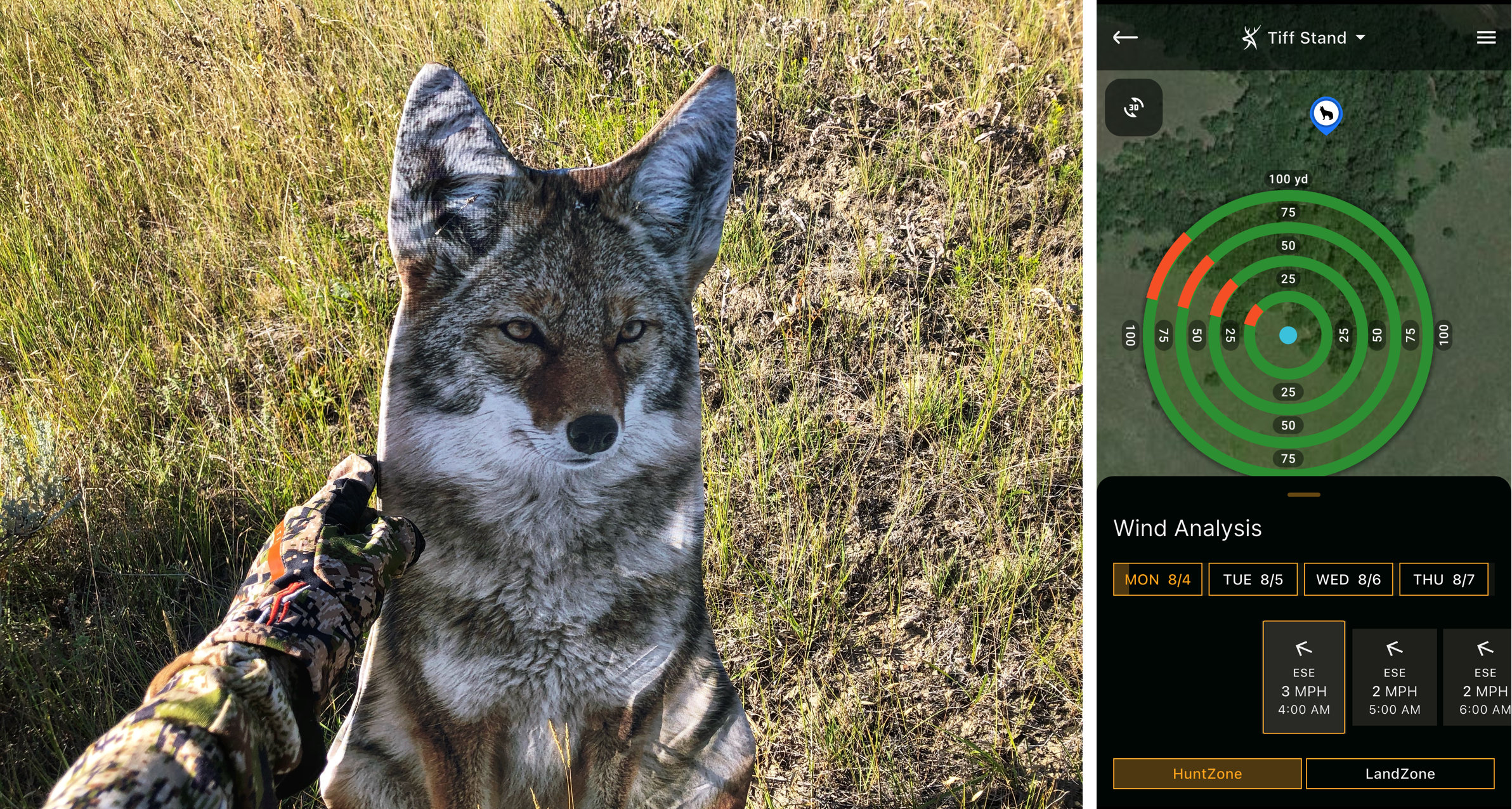
A coyote decoy not only boosts a coyote’s confidence but also can stop a trotting coyote to give you a standing shot. Use the HuntStand HuntZone to study wind forecasts for coyote calling and decoying.
Implement Advanced Coyote Calling, Decoying, and Hunting Tactics
When you hunt coyotes, you pit yourself against a 4D chess opponent. Make sure you match their wit with your own 4D moves. Begin with your electronic caller. It should never be positioned beside you. All major e-callers come with a remote, so use it. Place the caller away from you and in a strategic position to own the wind. How far away you place the e-caller depends on how pressured the coyotes are and how far you can see.
A good rule of thumb is to place the e-caller approximately 100 to 150 yards upwind of your position. This leaves a gap between you and the e-caller for coyotes to circle downwind and when they do, their focus should be on the origin of the sound, not you. Camouflage yourself appropriately, sit in shadows and do not adjust for the shot until the coyote looks completely away.
You can do the same 100-to 150-yard setup play with a downwind placement of the e-caller. In this scenario, you want to make sure there is plenty of room on either side of the e-caller for the coyote to be stopped before it reaches your direct downwind scent path. HuntStand’s HuntZone wind graphic gives you an exact read on where your scent is blowing. In both scenarios, using scent eliminating spray on your boots and hanging coyote urine wicks on either side of your scent stream to stop a coyote is a good idea.
I’m a fan of hand calls, so I often use decoys, but in similar setups as with an e-caller. The decoy stands ready to pull coyotes away from my position while distracted away from me in the shooting lane. A quality looking coyote decoy — even the 2D photo image decoys do the trick. If you set the decoy downwind, again use scent to stop a coyote before it crosses your scent stream or leave ample shooting room on each side of the decoy.
A final tactic I employ with hand calls, especially while using mouth howlers, is to move 100 yards or so upwind of my calling site, rip a series of mouth howls, then jog the 100 yards back and set up. This sets the stage for coyotes to look in the vicinity of where the howls emanated, not my current location.
Tips for Hunting Big-Woods Predators

Mark Kayser with a mature coyote he shot after e-scouting a location on HuntStand that held all the right ingredients.
Use Coyote Hunting Tactics Song Dogs Haven’t Seen Before
A final tactic to freshen up your coyote setups is to expand the conversation. When I hunt with buddies using e-callers, they place it upwind and run the remote. I’ll be caller No. 2 with hand calls and answer the e-caller’s howls, add a coyote fight, or work the prey-in-distress message with augmentation from the e-caller.
Ten minutes into the set, I like to add the squawking of crows or cries of magpies. These sounds almost always attract real aerial scavengers, giving coyotes a visual to focus on as they move toward the sound. Plus, crows, ravens, magpie and jays arriving boost a coyote’s confidence that the commotion is real, thus increasing your odds of seeing the coyote.
Old school is fine, but in the busy world of predator hunting, coyotes quickly understand that everything they hear is not what it seems to be. Freshen up your stale approach to coyote calling.