


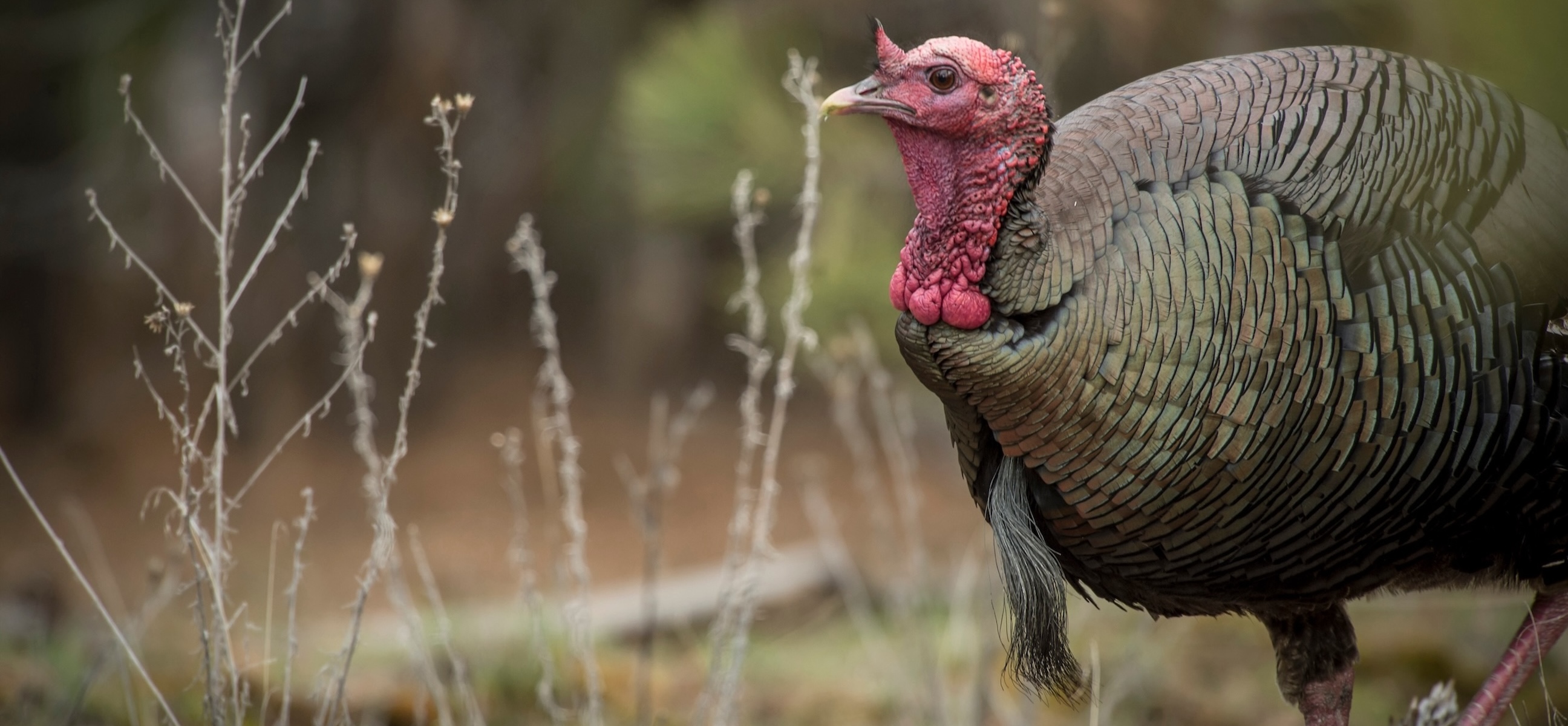

The Osceola wild turkey, carrying the full scientific name of Meleagris gallopavo Osceola, abides in Florida. Of the four subspecies that comprise the Grand Slam, it’s one of the more challenging turkeys to hunt. Here’s a complete guide for these southern, long-legged birds, including how to hunt Osceola wild turkeys.


The Osceola is the most beloved bird of Florida.
About the Osceola Wild Turkey
The Osceola wild turkey is a smaller, darker version of the Eastern wild turkey. Osceolas have darker-colored feathering throughout, including much darker wing feathers and darker brown tail fan tips. Additionally, many of the iridescent hues within the feathering have less bronze coloring and more red and green coloration.
Osceola turkeys are found only in Florida, and more specifically, the southern three-quarters of the Peninsula. In fact, biologists draw a differentiating line across the state to separate “Easterns” and “Osceolas.” That line runs along the northern borders of Alachua, Dixie, Duval, Gilchrest, Union, and other counties.
Don’t Miss: The Royal Slam
- How to Hunt Eastern Wild Turkeys
- How to Hunt Gould’s Wild Turkeys
- How to Hunt Merriam’s Wild Turkeys
- How to Hunt Osceola Wild Turkeys
- How to Hunt Rio Grande Wild Turkeys

The biology of an Osceola is closest to the eastern turkey, but it's still unique.
Osceola Biology: On average, adult male Osceolas weigh approximately 15-20 pounds, with most within the heavier end of that spectrum. In contrast, hens tend to weigh about 10-12 pounds. Interestingly, these turkeys are known for exceptionally long legs, which is likely an adaptation for walking on wet, swampy ground. Furthermore, in comparison to eastern turkeys, this subspecies is known for longer spurs, shorter beards, and darker coloring.
Osceola Behavior: Due to warmer weather and a heavy presence of predators, Osceola turkeys don’t gobble quite as much. When they do, it’s not as boisterous and “throaty” as an eastern gobble.
“From a behavioral standpoint, they aren’t like Rios or Merriam’s,” said Backwoods Life’s Michael Lee. “They don’t gobble a lot. They aren’t very vocal and active. The Osceola sneaks around a good bit. They’re tougher to hunt.”
Osceola Habitat: In Florida, wild turkeys consume many different foods, including acorns, other hard masts, seeds, fruits, other soft masts, insects, small vertebrates, and more. They inhabit cattle pastures, cypress heads, oak hammocks, oak motts, orange groves, palmetto thickets, pine savannas, and swamps.
“The terrain is one of the biggest things,” Lee said. “Down in Florida, there are a lot of cow pastures, a lot of water, and not many crops. So, you’re hunting sloughs, swamps, and bottoms. It might even be a large live oak area. It’s a totally different game.”
Osceola Populations: While the current number of Osceola turkeys involves speculation, it’s believed there are approximately 100,000 of these in the world. Of course, all are in the Florida Peninsula.
Osceola Wild Turkey Research: According to Wild Turkey Lab, Florida turkeys face big threats and steep challenges. Urban sprawl and habitat loss are significant concerns. As reported on by the NWTF, trapping and GPS tagging research efforts continue in southern Florida. In one study, they captured, tagged, and released dozens of turkeys. Equipped with GPS-VHS backpacks, they hope to generate important data. Additionally, they deployed sound recording units, which should collect information on the effects of hunting on gobbling chronology.

Due to dense foliage, Osceolas are more difficult to hear, but Walker's can help with that.
Best Scouting Tactics for Osceola Turkeys
Scouting is an essential step in pursuing Osceola turkeys. Start by utilizing distribution maps and resources provided by the FWC. For example, check out this map, which shows the turkey population prevalence. The color codes break this into three categories, including “turkeys are absent or rare,” “low number of turkeys,” or “moderate to high number of turkeys.”
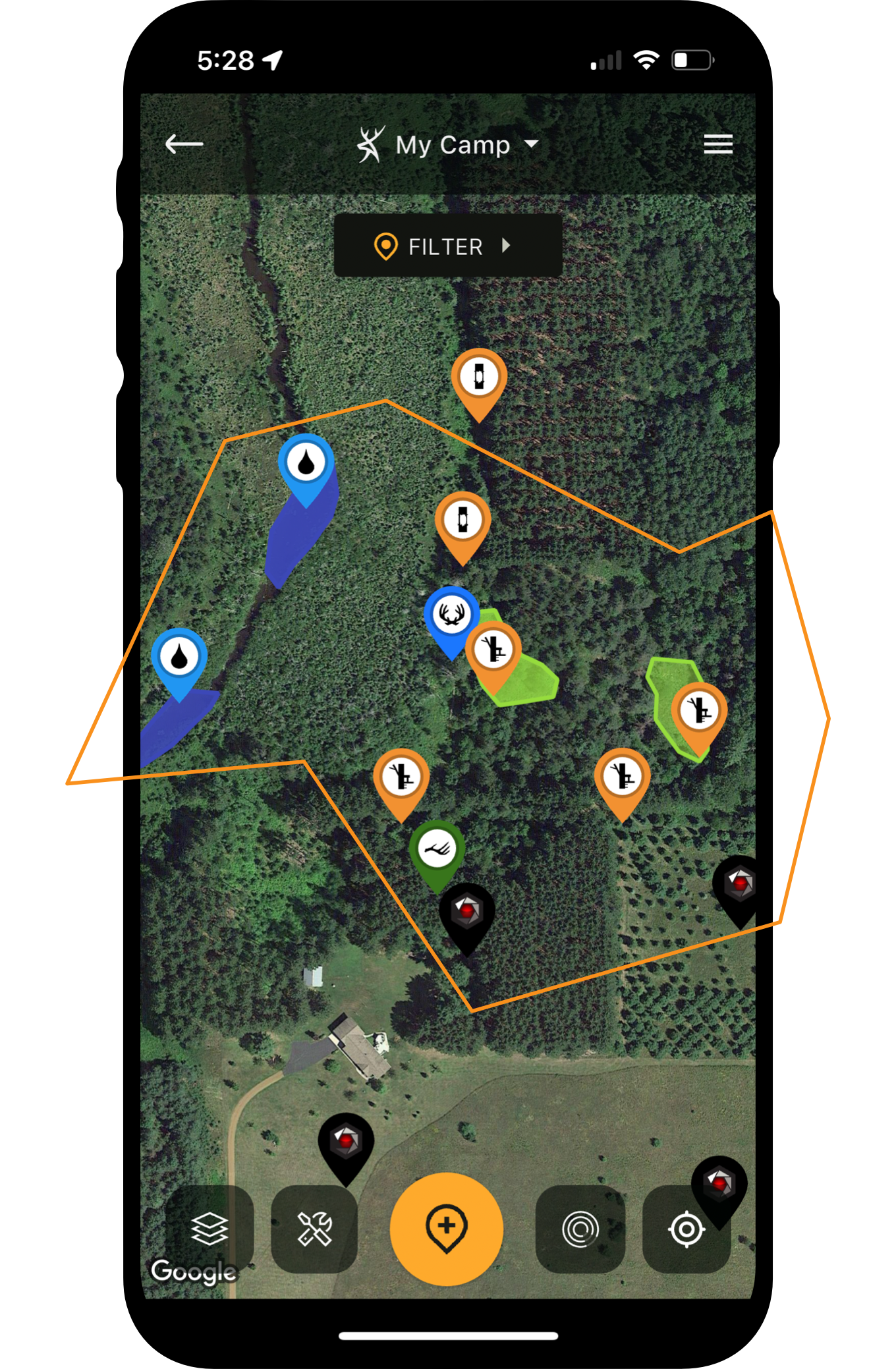
Use the FWC map to select areas with moderate to high populations of turkeys. Then, use HuntStand Pro to drill down further on the significant areas of interest.
Of course, every good turkey scouting effort should start from a digital perspective. HuntStand Pro (and other subscription levels) offer excellent features that benefit the effort of scouting wild turkeys.
HuntStand offers numerous base layers, including the 3D Map, Monthly Satellite, Satellite, Mapbox Satellite, Terrain, and more.
- 3D Map: See and scout your hunting area in a realistic 3D manner. It’s a true-to-life look at the landscape. This is good for finding both habitat- and topographic-specific land features that turkeys love.
- Monthly Satellite: Study what properties looked like recently, or in the past. Observe month-over-month changes using the Monthly Satellite feature.
- Satellite / Mapbox Satellite: These are high-resolution 2D looks at the land. These offer great platforms for use of the Map Marker icons.
- Terrain: View the topography flow and changes without the distraction of habitat-based depiction.
Important overlays also benefit turkey hunters. Some of these include Contour, Hunting Lands, Public Lands, Property Info, etc.
- Contour: Add contour (topo) lines to base layers already being used. This adds another important scouting layer to your view of the landscape.
- Hunting Lands / Public Lands: Use these tools to locate potential public land hunting spots.
- Property Info: Find property locations by typing in landowner names. Or determine who owns property, as well as affiliated property and mailing addresses. This is vital information for gaining hunting permission and leases.
Other tools are highly effective for scouting turkeys, too. Examples include offline mapping, stand reservations, trail camera management, weather overlays, etc.
- Map Markers: Map marker icons are great for noting sightings, scouting discoveries, harvests, property attributes, and more. Turkey-specific markers to use include designated icons for dusting areas, feathers, feeding areas, gobble heard, roosted gobbler, roosting area, scat, scratching, setup location, strutting area, tracks, wing tip marks, and more. Additionally, add important information, such as conditions, dates, details, photos, story details, and much more.
- Offline Mapping: A lot of turkey hunting hotspots don’t offer quality cellular service. At best, it’s spotty. Therefore, the Offline Mapping feature is crucial to maintain access to HuntStand, even when service fades out.
- Stand Reservations: Hunt club and lease members often use the Stand Reservations feature to reserve deer hunting spots on shared-access properties. That said, it’s a solid play for reserving turkey hunting spots, too.
- Trail Camera Management: Cellular trail cameras are excellent for deer and other big game. These are exceptional tools for scouting turkeys, too. With the HuntStand and Command Pro integration, keeping track of turkeys via cell cams has never been easier or more effective.
- Weather Overlays: Weather impacts turkeys and matters from a hunt planning perspective. Furthermore, turkey hunters are routinely eyeing clouds and trying to determine if it’s time to find cover, or if they’re brave enough to sit through it.
Once in the field, finding turkey sign is critical. Locate dust bowls, feathers, scat, scratching, strut marks, tracks, and more. These are indicators turkeys are in the area.
Important areas to scout include ag fields, bottomlands, food plots, oak flats, ridge lines, logging roads, trails and travel routes, and more. Don’t forget crossings, funnels, and pinch points, as turkeys routinely travel through these, too.
As for scouting methods, put boots on the ground, glass from afar, and post trail cameras. Most certainly, listen at dawn for potential roost sites and to take a pre-hunt gobbler inventory. Where legal, use a locator call (crow, owl, woodpecker, etc.) to encourage turkeys to shock gobble on the limb. Although less effective, this can be used to locate turkeys during the day, too.
Turkey Hunting Gear for 2025
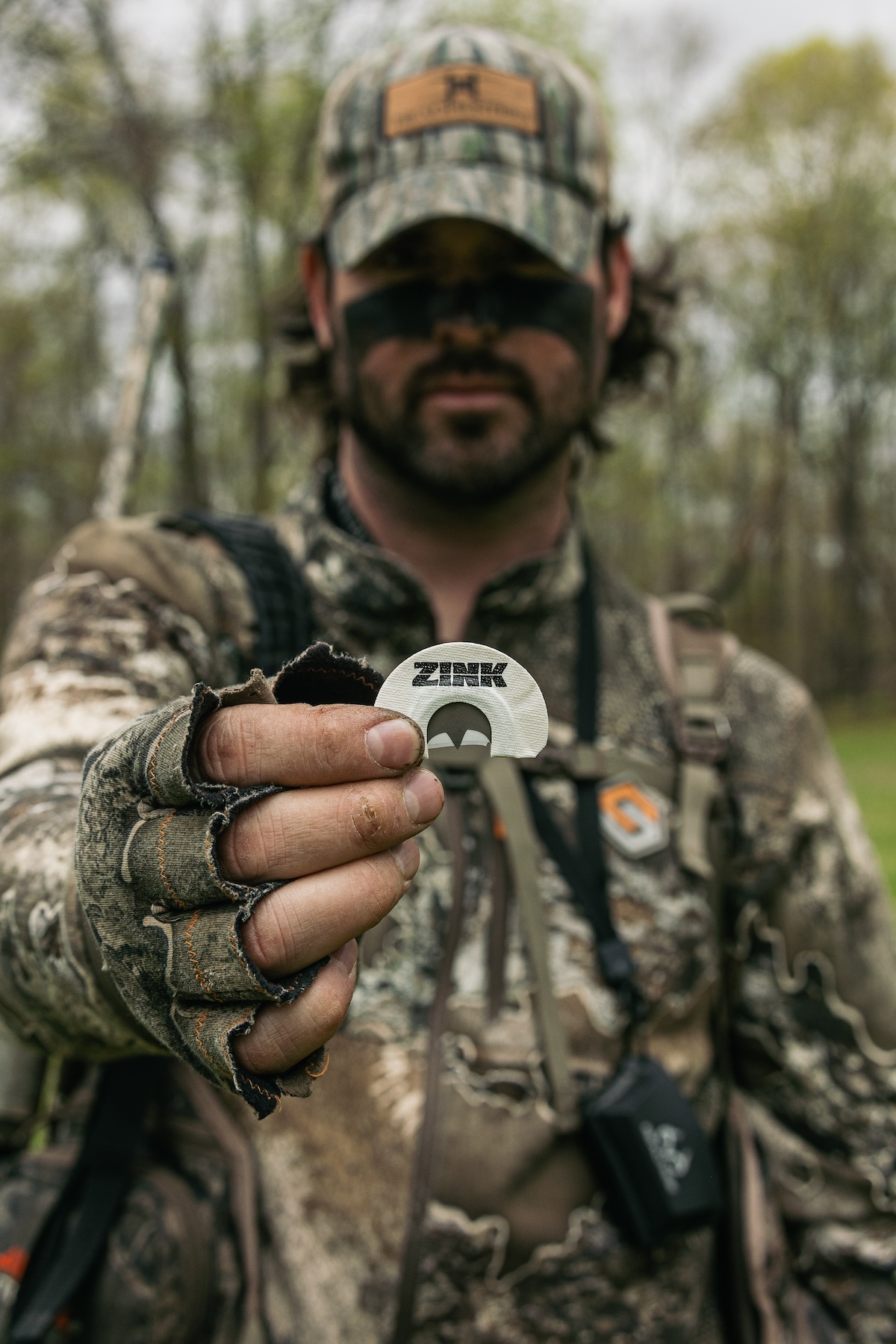
Use subtler calling to lure in Osceola turkeys.
Best Calling Tactics for Osceola Turkeys
Calling an Osceola turkey requires an understanding of general (and universal) wild turkey vocalizations. That said, Osceolas have a reputation for being less vocal.
While the above statement is true, these birds are difficult to hear for other reasons. This also has to do with the dense South Florida foliage. As a result, gobbles sound more muffled.
All said, it’s best to pull the reigns back on calling, especially when turkeys aren’t being very mouthy. Match your calling to the behavior of the turkeys in each given moment.
When a turkey fires up, then it’s time to make your move. Call more aggressively when it seems to be working.
Best Decoying Tactics for Osceola Turkeys
Ever considered the ficklest of turkey subspecies, as when calling Osceolas, it’s important to mirror a more reserved effort in decoying, too. To reflect this in your hunt, display more aggressive decoys earlier in the season. (For example, consider a strutter or three-quarter strut jake with several hens.) As the season progress, shift toward a less aggressive stance. (Such as a single or pair of hens.)
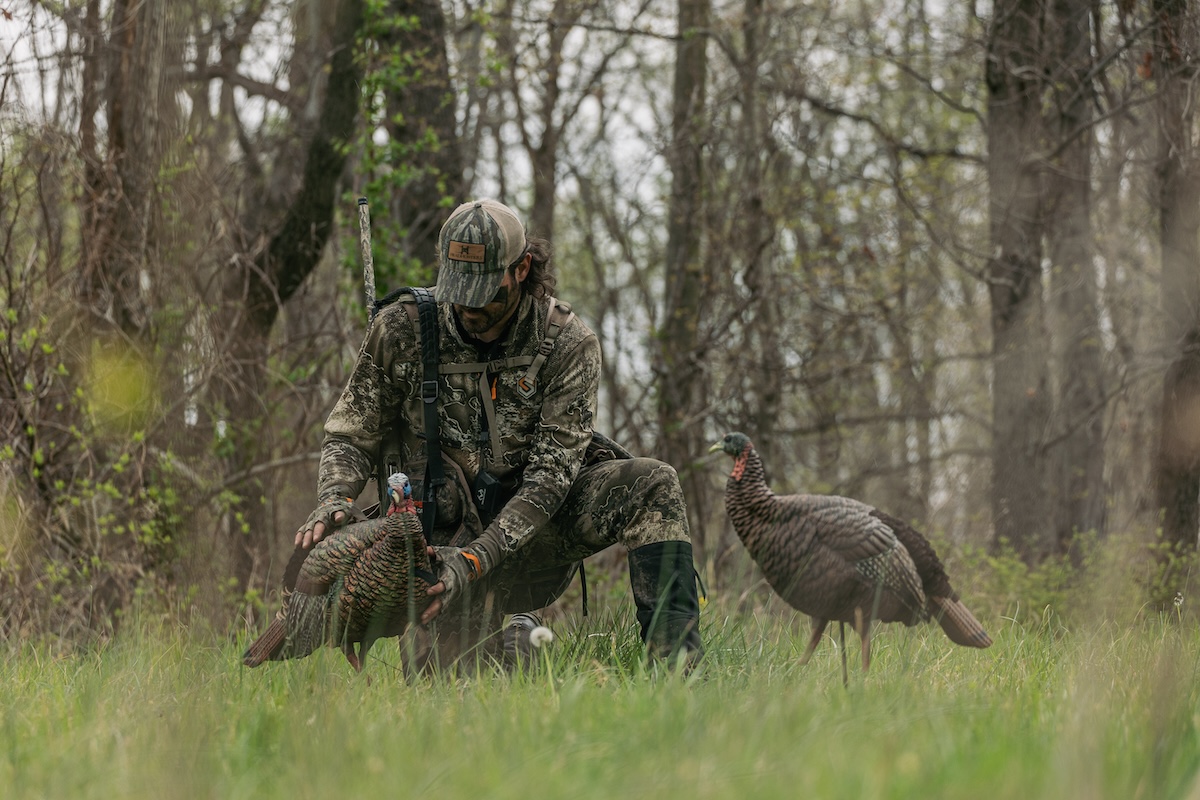
Match your decoying to the phase of turkey season.
Best Hunting Tactics for Osceola Turkeys
Certain hunting tactics are better suited for pursuing Osceolas. This is true for numerous reasons, including relevant biological elements, behavioral tendencies, habitat preferences, and more.
For starters, as dawn arrives, Osceolas are apt to gobble on the limb just as any other subspecies. But these birds are known for going quiet once on the ground. So, it’s important to know where to find these birds once they pitch down.
Locate Common Roosts: Osceolas tend to roost in oak motts, cypress heads, pasture edges, and other areas. Begin the hunt in these such locations.
Ambush Close to Food: Determine where turkeys are feeding. Learn their travel routes from roost to feeding areas. Ambush them in known areas they frequent.
Hunt Cattle Pastures: Wild turkeys love cattle pastures, including those residing in Florida. Turkeys enjoy “bugging” where cattle pasture, as these attract and harbor significant insect populations.
Find Oak Hammocks: Turkeys routinely spend time roosting in and around oak hammocks. During the day, they also feed and loaf in these areas.
Set Up Around Orange Groves: Turkeys don’t roost in orange groves, but they do travel toward these after fly-down. They regularly feed, strut, and spend mid-morning, midday, and mid-afternoon hours there.
Sit Over Swamp Interiors: Florida turkeys are highly pressured, and it’s common for them to seek reprieve in areas hunters and predators spend less time. The interiors of swamps offer protection, and oftentimes, the needed roosting and feeding habitat Osceolas rely on.
Pinpoint Palmetto Thickets: The palmettos are synonymous with Florida turkey hunting. These thickets commonly provide exceptional wild turkey hunting opportunities.
Camp Out in Pine Savannas: A good pine savanna can attract and hold wild turkeys. These areas routinely serve as quality roost sites and bugging opportunities.
Sit a Ground Blind: A ground blind positioned in a good spot is a great play. It’s especially helpful on rainy days. Turkeys pay no mind to blinds, so you can pop these up just about anywhere and hunt. In the middle of fields is especially effective.
Run the Pendulum Play: This is for stubborn, hung-up toms. One hunter sits stationary. A second hunter drops back into cover and calls. When the gobbler swings left, the caller shifts right. When the gobbler moves right, the caller eases left. Hopefully, with each pass, that turkey gets closer and eventually walks within range of the shooter.
Deploy Creative Decoy Sets: Get creative with decoys. Use a breeding pair (jake and hen). Deploy a strutter with six or eight hen decoys (to mimic a flock).
Paint the Full Picture: Hunters can deploy additional efforts to convince a turkey they’re the real deal. Use a turkey wing and simulate the fly-down (alongside a fly-down cackle) or fighting (with fighting purrs). Add some movement to the decoy spread with a jerk string.
Target Satellite Toms: That boss tom isn’t leaving the hens? Target some of the satellite toms in the area.
Call to the Hens: Is there a boss hen with that dominant gobbler? Get her riled up. Mock her vocalizations, spark her to commit, and she’ll drag that gobbler along for the ride.
Move Slower: Regardless of the geographical types you hunt, Osceola turkey hunting requires moving slower. These birds operate on a slower pace than other subspecies. Therefore, hunters should do the same. Move slower, express increased patience, and be more observant.
“Be patient,” Lee said. “Don’t move around a lot. They come in quiet. I’ve had a lot of birds gobble in the distance. Or they gobble well on the roost. But then they go quiet and sneak right in on you. I’ve had several really good birds do that. I had to be really patient with them.”
Deploy Hunting Blinds: A hunting blind is the prepared Osceola turkey hunter’s best asset. Oftentimes, patience is king, but only if you’re scouted, patterned, and learned the local turkey population. Pair HuntStand e-scouting with glassing and scouting in the field to choose the best hunting blind deployment locations.
Focus on Afternoons: “I’ve had more luck hunting Osceolas midday and later in the afternoon,” Lee said. “They really work better. And if you get one to gobble, they’ll play well, and most of the time, come in. So, if you don’t get them off the roost, don’t worry about it. They’ll do better later in the day.”
The Best Turkey Hunting States in America

The North Zone is north of State Route 70, and the South Zone is everything south of it.
When to Hunt Osceola Wild Turkeys
Florida hunters can pursue turkeys during spring and fall hunting seasons. In the spring, turkey season is divided into two zones. The North Zone is north of State Road 70. The South Zone is south of State Road 70. In 2025, the South Zone youth turkey weekend is February 22-23 and spring turkey season is March 1 to April 6 (outside of the WMA system). The North Zone youth turkey weekend is March 8-9 and spring turkey season is March 15 to April 20 (on private lands). The daily and season limit is two turkeys.
In the fall, hunters can pursue gobblers and bearded turkeys only. The daily bag limit is two. Its season structure is regulated under four zones, including A, B, C, and D. Seasons vary greatly by zone and weapon type.

Use HuntStand to find public land turkey hunting opportunities.
Where to Hunt Osceola Wild Turkeys
Florida is the only destination in the world that harbors Osceola wild turkeys. The Florida Peninsula is home to this relatively rare bird.
As noted above, the starting line for official, recognized Osceola inhabitation runs along the northern borders of Alachua, Dixie, Duval, Gilchrest, Union, and other counties. Everything south of that line is considered an Osceola.
Some individuals choose to hunt south of State Road 70, which is a major divider for season date structures. Others hunt north of that divider. However, odds of encountering true Osceolas (rather than eastern-Osceola hybrids) are better in the South Zone, and southern counties within the North Zone.
According to the NWTF, “Birds near the dividing line might exhibit minimal physical differences, so turkey hunters seeking an Osceola gobbler in its truest form often hunt south of Orlando.”
Interestingly, the FWC publishes a wild turkey distribution map, with an emphasis on habitat quality. This map is derived from Florida-based data in relation to habitat quality and wild turkey relative abundance. Overall, it’s a turkey population density and habitat suitability index.
About it, the FWC says, “Wild turkey populations often fluctuate from one year to the next, and these changes are influenced by many factors including weather, habitat quality, predation, and hunting. FWC biologists monitor turkey population trends through a variety of techniques and use data to estimate populations and develop models to gain a better understanding of habitat quality.”
Hunting Osceolas on Private Land
Finding your own private land access can be challenging. Due to high-demand for Osceola turkeys, door-knocking is all but over in Florida. Therefore, unless you have inroads with a landowner, odds are you’ll need to book with an outfitter. Go with a full-service outfitter or enjoy a semi-guided adventure.
Hunting Osceolas on Public Land
Those hoping to tag a public-land Osceola are in for a big challenge. Given the intensity Osceolas are pursued, and the limitedness of the resource, many open public lands are overrun. Most of the better public lands (for Osceolas) are located in the northern half of the Peninsula.
All told, there’s approximately 20 or so WMAs with Osecolas. Public lands FWC touts as “inhabiting” Osceolas include Big Bend WMA — Jena Unit, Big Cypress WMA, Green Swamp WMA, Herky Huffman/Bull Creek, Hungryland WMA, J.W. Corbett, Jumper Creek WMA, Kissimmee Chain of Lakes, Kissimmee River, Lake Monroe WMA, Lochloosa WMA, Log Landing WMA, Raiford WMA, Richloam WMA, Sante Fe Swamp Wildlife and Environmental Area, Three Lakes WMA, Upper Hillsborough WMA, Upper St. Johns River Marsh, and more.
All stated, even many of these don’t provide the greatest hunting opportunities. Therefore, hunters should certainly look to limited-entry quota turkey hunts. You must draw a tag, but the effort can be worth it. Study the Quota Hunt Dashboard, fill out the appropriate paperwork, and wait.
Click here for more info on applying.

Michael Lee with a big Osceola turkey.
Go Hunt an Osceola
Regardless of where you hunt Osceola turkeys, or how you pursue them, just go do it. It’s an incredible adventure. Plus, if you dream of completing the Grand Slam — which requires harvesting a legal Eastern, Osceola, Merriam’s, and Rio Grande wild turkey — this is a box that must be checked. So, make it happen this season.