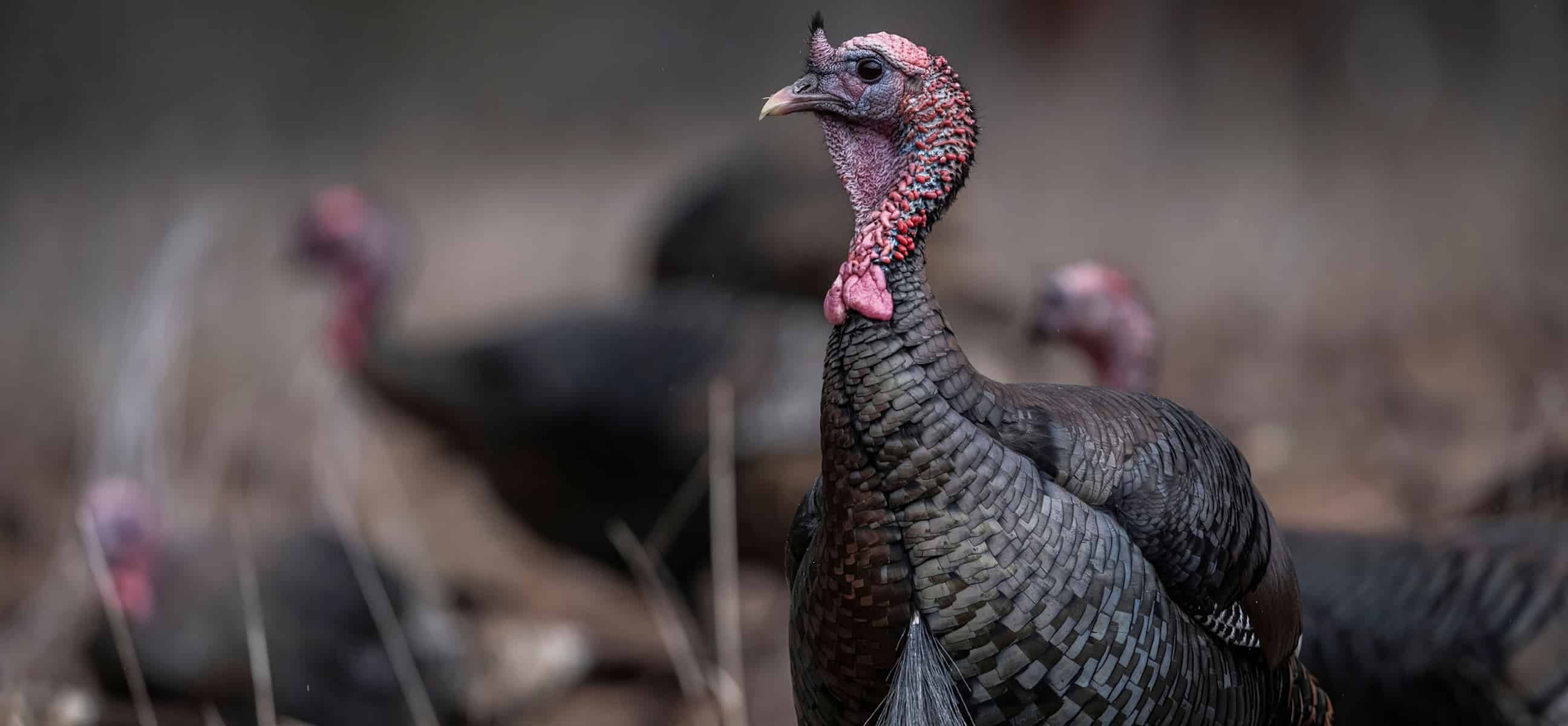




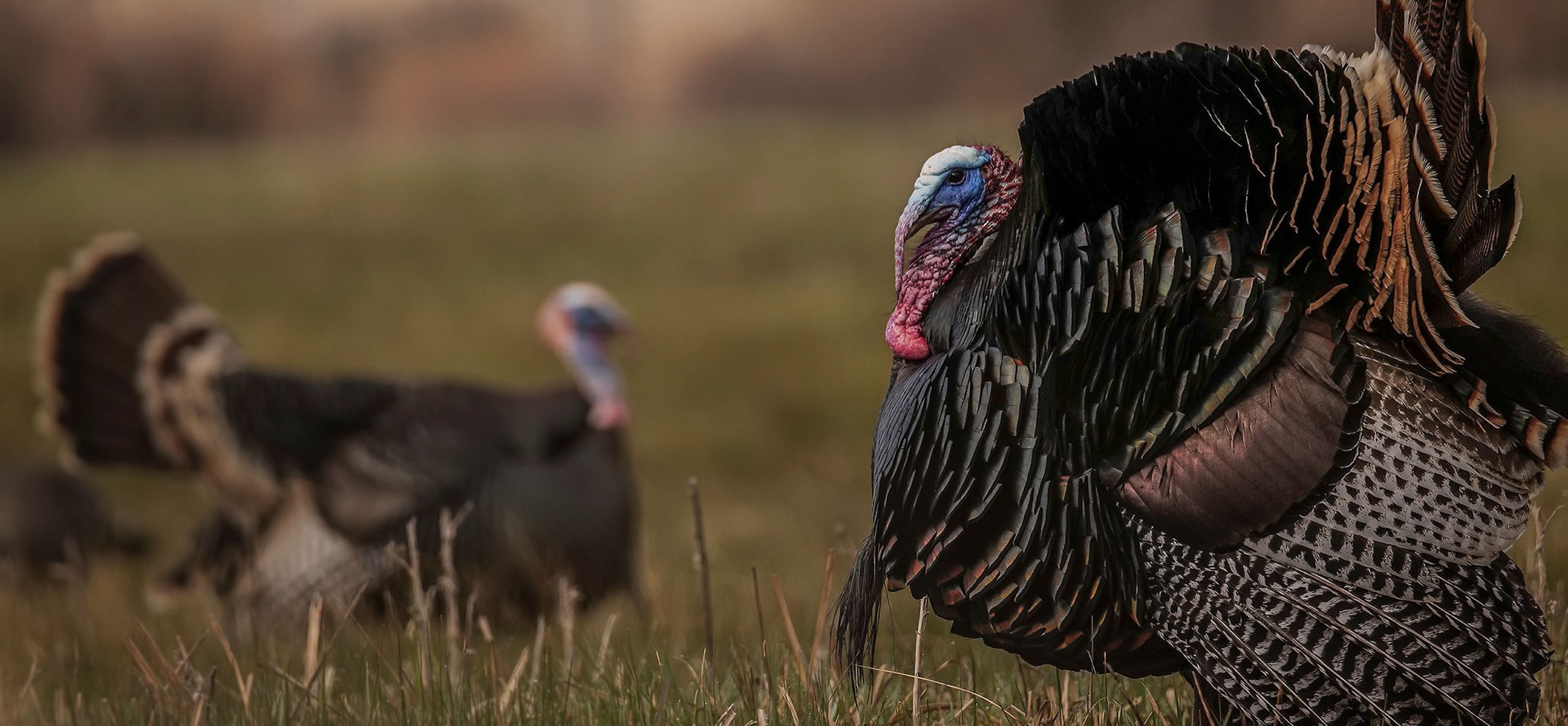



The Rio Grande wild turkey is at home on the prairie, and other brushy places.
The Rio Grande wild turkey, carrying the full scientific name of Meleagris gallopavo intermedia, abides throughout parts of the Midwest and West. It’s also the stronghold bird of the Great Plains. Of the four species that comprise the Grand Slam, it lives in more arid regions and requires different hunting techniques than turkeys in the East. Here’s a complete guide for these hard-gobbling, attitude-driven longbeards, including how to hunt Rio Grande wild turkeys.
About the Rio Grande Wild Turkey
The Rio Grande wild turkey is home to parts of the Great Plains, Midwest, and West. The prairie bird is the second-most abundant in the nation.
According to some sources, it’s believed the Rio Grande turkey resulted as a cross between Easterns and Merriam’s. Although it’s technically its own subspecies today, it’s actually a hybrid. Thus, the “intermedia” scientific name.
Today, when you look at distribution maps, they’re primarily located in Hawaii, Kansas, Oklahoma, and Texas. If you go further West, there are some in California, Colorado, Oregon, Utah, and Washington. There are even small pockets throughout Nevada, eastern New Mexico, and eastern South Dakota. Obviously, they have a diverse range, but they’re very spread out, with vast areas between populations.
Don’t Miss: The Royal Slam
- How to Hunt Eastern Wild Turkeys
- How to Hunt Gould’s Wild Turkeys
- How to Hunt Merriam’s Wild Turkeys
- How to Hunt Osceola Wild Turkeys
- How to Hunt Rio Grande Wild Turkeys
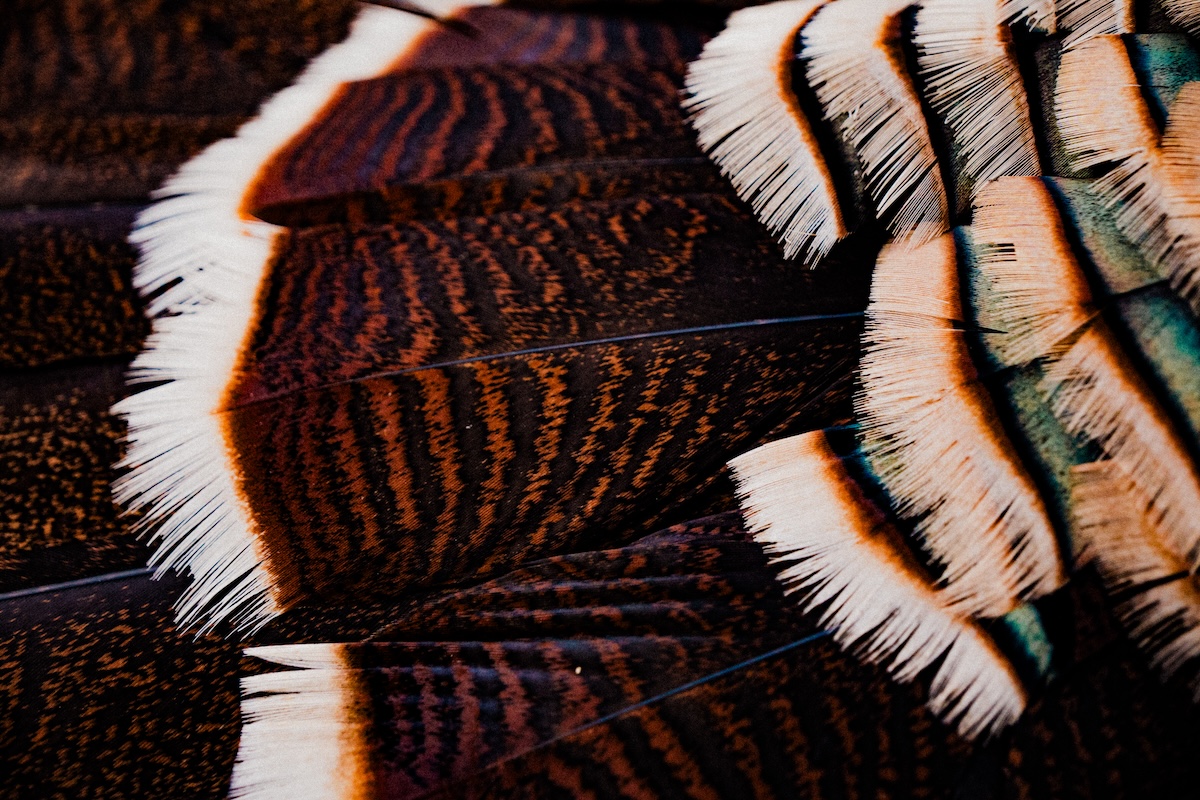
Rios are known for their tan-colored feather tips.
Rio Grande Biology: Much of the Rio Grande turkey’s biology is similar to other subspecies. Adult males tend to weigh upward of 20-22 pounds, and hens usually weigh 10-12 pounds. That said, compared to other subspecies, feather coloration is different.
“The fan tips are a little bit darker than what a Merriam’s would be, but they are certainly lighter than an eastern,” said Clayton Lenk, a district biologist for NWTF. “It’s a light brown versus that chestnut brown found in Easterns.”
Additionally, Rio Grande turkeys have a slightly weaker gobble than an Eastern, but stronger gobble compared to Merriam’s. Additionally, on average, they tend to have shorter beard and spur lengths than Easterns, but longer than Merriam’s.
Rio Grande Behavior: The Rio Grande turkey’s range is commonly characterized by a lack of tall-growing trees. Thus, they roost in various oddball places, including power lines, oil tanks, and more. Generally, these birds feed on available green food sources. Additionally, they target insects, seeds, mast, small invertebrates, and more. According to Texas Parks & Wildlife, one research effort determined turkey diets consisted of 36% grasses, 29% insects, 19% browse, and 16% forbs.
Rio Grande Habitat: Lenk says these turkeys tend to inhabit more arid habitats, such as the Great Plains. This subspecies loves scrub oak forests, pine forests, mesquite grasslands, edge habitat along waterways, and other areas. This contrasts with the eastern turkey, which is more aligned with woodlands and mixed habitats. Overall, habitat is a major distinction between Rio Grande turkeys and other subspecies.
According to the Oklahoma Department of Wildlife Conservation, it can be found up to about 6,000 feet of elevation. Oftentimes, they have vastly different spring and summer ranges than fall and winter ranges.
Rio Grande Populations: Overall, the Rio Grande turkey populations are doing well. “I have been hunting turkeys in Texas now for almost 20 years,” said HuntStand’s Will Cooper. “From the time that I started to now, it seems (where I hunt) that populations have been growing. When and where we’re not in a heavy drought, it really seems that the birds flourish. Also, people have been taking note to include predator control. So, we’re really seeing a population boom in Texas.”
Important Rio Grande Wild Turkey Research: Research efforts are ongoing for the Rio Grande wild turkey. According to Turkeys for Tomorrow (TFT), several partners are working together to implement GPS technology to assess the relationships between turkey populations and predator management on properties where habitat and land management practices are implemented. Read more about that here. Additionally, the NWTF recently conducted research on Rios in Texas to investigate diseases and parasites and their impacts on Rio Grande wild turkeys.
The Best Turkey Hunting Spots (and How HuntStand Pro Finds Them)
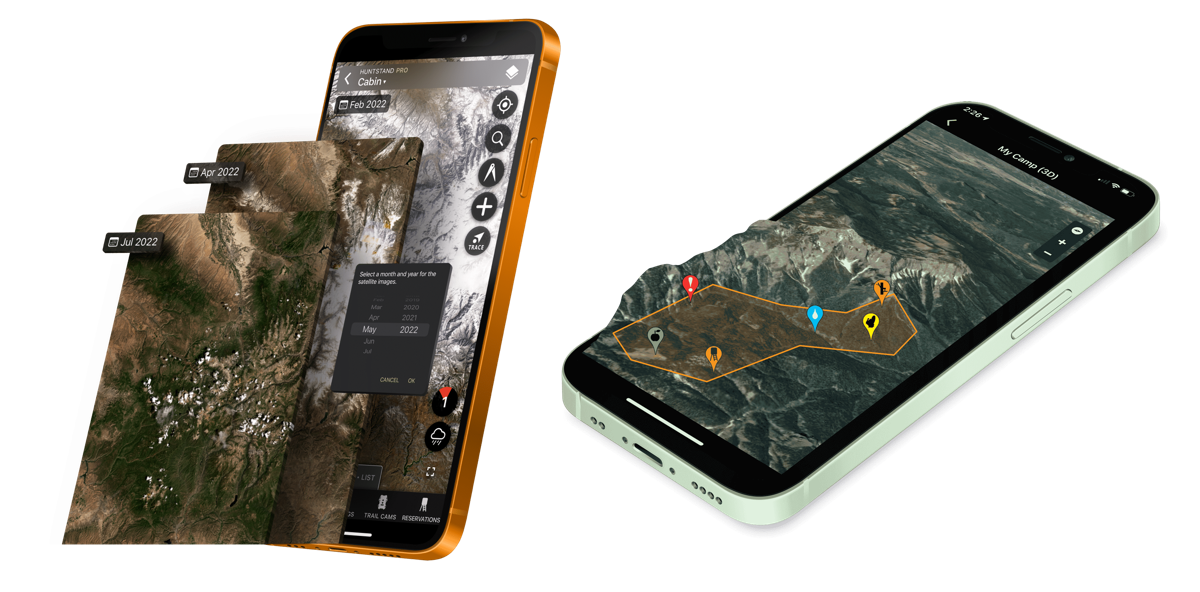
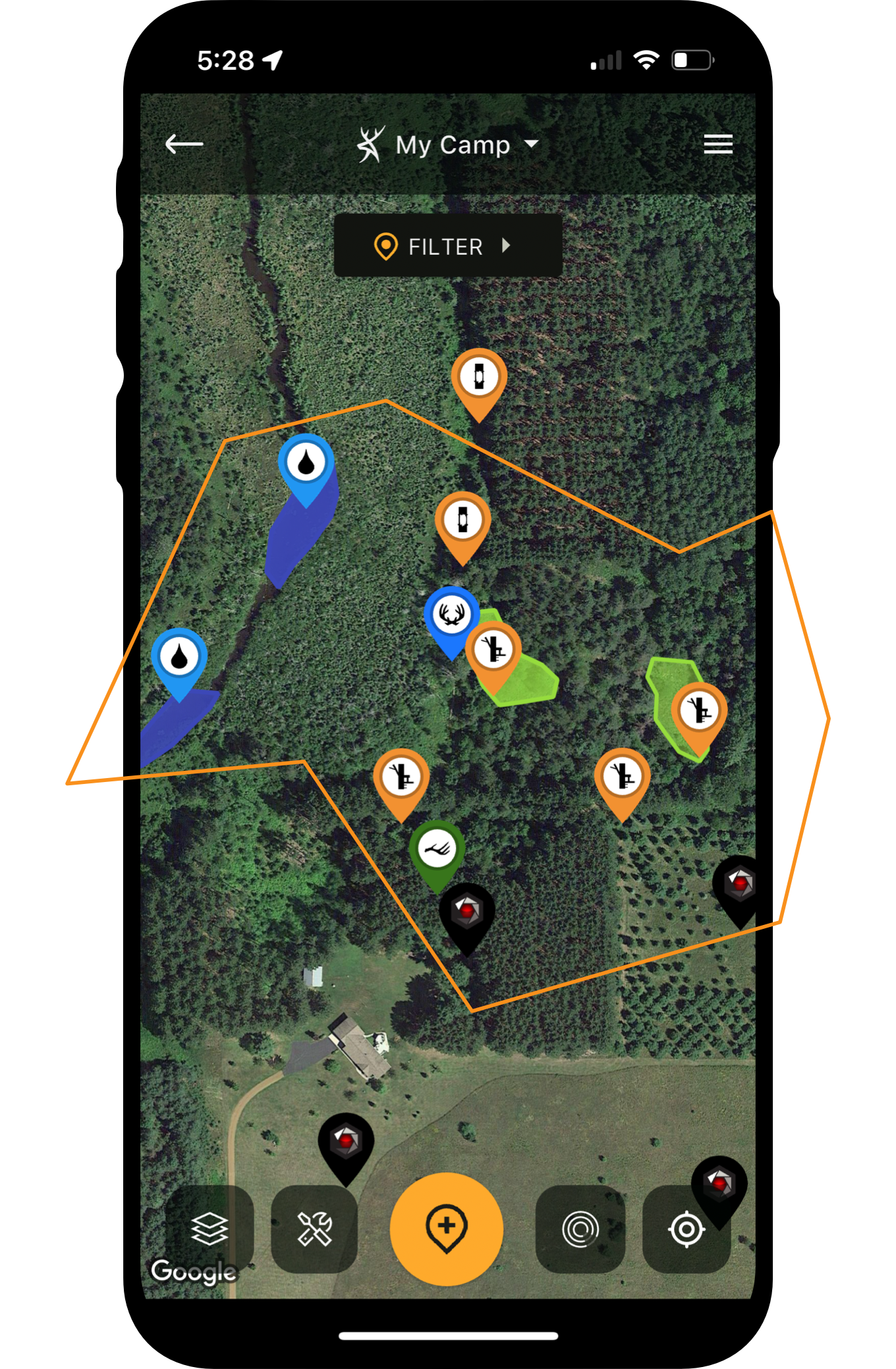
HuntStand provides numerous tools for scouting Rio Grande wild turkeys.
Best Scouting Tactics for Rio Grande Turkeys
Rio Grande wild turkeys are most unique in the areas they live. The habitat and terrain are vastly different from Eastern, Merriam’s and Osceola turkeys. Therefore, when it comes to Rio Grande turkeys, some things are unique to scouting this subspecies.
“I think something unique with scouting Rios is that they can roost in almost anything,” Cooper said. “I’ve seen them roost in 8-ft cedar bushes, tall live oaks, small mesquite, and I’ve even seen them use windmills. So, it makes it a little bit more difficult trying to key in on roost areas.”
Certain habitat types have limiting factors. Throughout much of the Rio Grande turkey’s range, it’s water. Generally, these birds live wherever it runs.
“They really key in on water down here,” Cooper said. “There are cattle troughs, old mostly dried-up creek beds that hold some water from a recent rain, etc. Anywhere you can find water is key and likely going to hold birds.”
Of course, every good turkey scouting effort should start from a digital perspective. HuntStand Pro (and other subscription levels) offer excellent features that benefit the effort of scouting wild turkeys.
HuntStand offers numerous base layers, including the 3D Map, Monthly Satellite, Satellite, Mapbox Satellite, Terrain, and more.
- 3D Map: See and scout your hunting area in a realistic 3D manner. It’s a true-to-life look at the landscape. This is good for finding both habitat- and topographic-specific land features that turkeys love.
- Monthly Satellite: Study what properties looked like recently, or in the past. Observe month-over-month changes using the Monthly Satellite feature.
- Satellite / Mapbox Satellite: These are high-resolution 2D looks at the land. These offer great platforms for use of the Map Marker icons.
- Terrain: View the topography flow and changes without the distraction of habitat-based depiction.
Important overlays also benefit turkey hunters. Some of these include Contour, Hunting Lands, Public Lands, Property Info, etc.
- Contour: Add contour (topo) lines to base layers already being used. This adds another important scouting layer to your view of the landscape.
- Hunting Lands / Public Lands: Use these tools to locate potential public land hunting spots.
- Property Info: Find property locations by typing in landowner names. Or determine who owns property, as well as affiliated property and mailing addresses. This is vital information for gaining hunting permission and leases.
Other tools are highly effective for scouting turkeys, too. Examples include offline mapping, stand reservations, trail camera management, weather overlays, etc.
- Map Markers: Map marker icons are great for noting sightings, scouting discoveries, harvests, property attributes, and more. Turkey-specific markers to use include designated icons for dusting areas, feathers, feeding areas, gobble heard, roosted gobbler, roosting area, scat, scratching, setup location, strutting area, tracks, wing tip marks, and more. Additionally, add important information, such as conditions, dates, details, photos, story details, etc.
- Offline Mapping: A lot of turkey hunting hotspots don’t offer quality cellular service. At best, it’s spotty. Therefore, the Offline Mapping feature is crucial to maintain access to HuntStand, even when service fades out.
- Stand Reservations: Hunt club and lease members often use the Stand Reservations feature to reserve deer hunting spots on shared-access properties. That said, it’s a solid play for reserving turkey hunting spots, too.
- Trail Camera Management: Cellular trail cameras are excellent for deer and other big game. These are exceptional tools for scouting turkeys, too. With the HuntStand and Command Pro integration, keeping track of turkeys via cell cams has never been easier or more effective.
- Weather Overlays: Weather impacts turkeys and matters from a hunt planning perspective. Furthermore, turkey hunters are routinely eyeing clouds and trying to determine if it’s time to find cover, or if they’re brave enough to sit through it.
Once in the field, finding turkey sign is critical. Locate dust bowls, feathers, scat, scratching, strut marks, tracks, and more. These are indicators turkeys are in the area.
As for scouting methods, put boots on the ground, glass from afar, and post trail cameras. Listen at dawn for potential roost sites and to take a pre-hunt gobbler inventory. Where legal, use a locator call (crow, owl, woodpecker, etc.) to encourage turkeys to shock gobble on the limb. Although less effective, this can be used to locate turkeys during the day, too.
The 2025 Spring Turkey Season Forecast

Calling a Rio requires a solid game plan.
Best Calling Tactics for Rio Grande Turkeys
Most calling tactics carry over from one subspecies to another. That said, each one does express unique characteristics. The Rio’s? Intensity.
“I don’t think you can get too aggressive with calling Rios,” Cooper said. “I’ve had a lot of birds that I can throw everything but the kitchen sink at them, and it just seems like they’re gonna gobble at almost anything. There are days they get pretty quiet, but when you find a fired-up bird, it’s almost like they prefer you to be more aggressive. Otherwise, it seems like they just lose interest and move on to either picking up bugs or going on to the next hen.”
Additionally, due to high winds throughout the region, hunters use higher-pitched calling to cut through the wind. Ironically, Rio Grande hens tend to sound slightly higher pitched than Easters, so it works out. Generally, a box call, or diaphragm with fewer reeds produces a higher pitch.
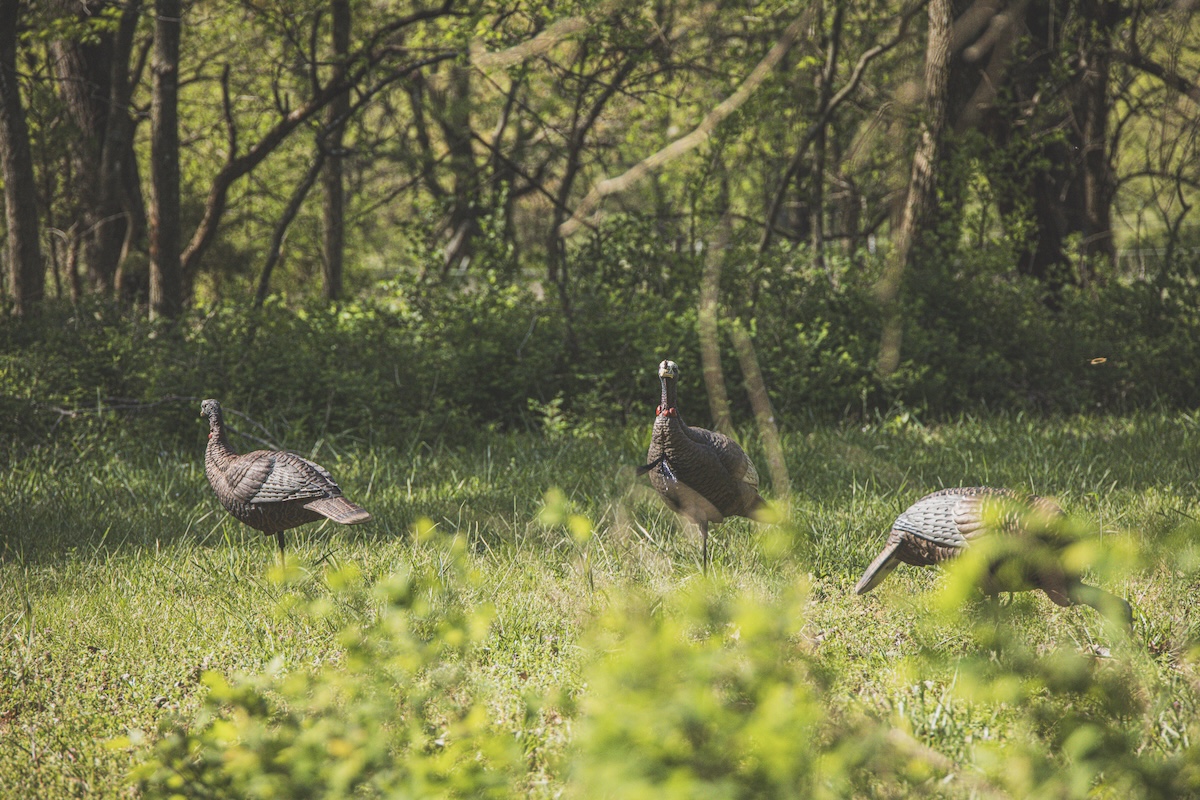
Use decoys wisely when hunting Rios.
Best Decoying Tactics for Rio Grande Turkeys
Those planning to deploy the dekes should know that Rio Grande turkeys are susceptible to the fakes, just as any other wild turkey. Cooper encourages hunters to use decoys, but with a purpose and time of year in mind.
“I’ve had situations where birds came into full-strut decoys, or jakes and lay-down hens, and beat them up,” Cooper said. “But I’ve had birds that it doesn’t matter what the decoy is. As soon as they see it, they run the other way. So, it’s kind of a toss-up.
“I think it really just depends on time of year,” Cooper continued. “I’ve found that, within the first two to three weeks of the season, they’re pretty aggressive and you can decoy pretty easily. But anything after seems like decoying almost hurts more than it helps.”
So, use decoys more during early and middle portions of the season. Also, if a bird is behaving overly dominantly, consider a decoy spread, regardless of the time of season.
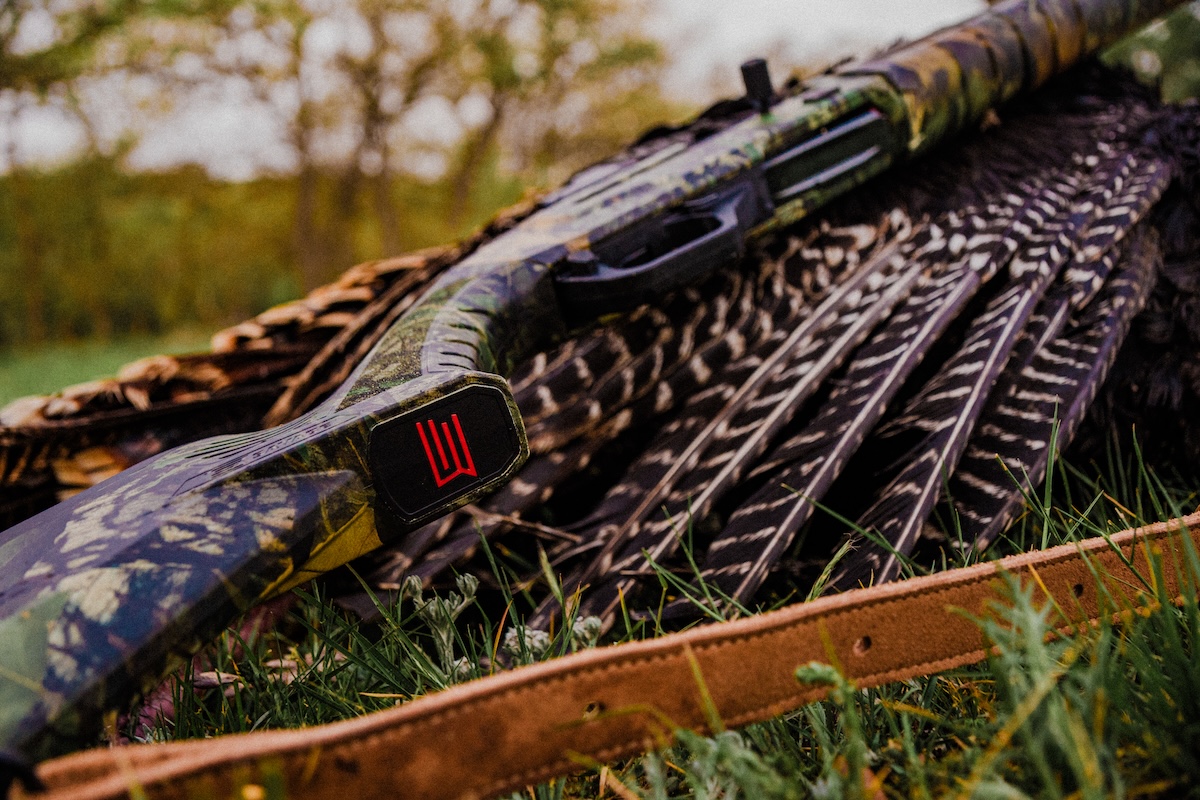
Deploy proven hunting tactics when pursuing Rio Grande turkeys.
Best Hunting Tactics for Rio Grande Turkeys
Certain hunting tactics are better for pursuing wild turkeys. That said, some hunting tactics for Rio Grande turkeys are suitable for all subspecies. Others are attuned to chasing these prairie turkeys.
Ambush Close to Food: Determine where turkeys are feeding. Learn their travel routes from roost to feeding areas. Ambush them in known areas they frequent.
Sit a Ground Blind: A ground blind positioned in a good spot is a great play. It’s especially helpful on rainy days. Turkeys pay no mind to blinds, so you can pop these up just about anywhere and hunt. In the middle of fields is especially effective.
Deploy Creative Decoy Sets: Get creative with decoys. Use a breeding pair (jake and hen). Deploy a strutter with six or eight hen decoys (to mimic a flock).
Paint the Full Picture: Hunters can deploy additional efforts to convince a turkey they’re the real deal. Use a turkey wing and simulate the fly-down (alongside a fly-down cackle) or fighting (with fighting purrs). Add some movement to the decoy spread with a jerk string.
Target Satellite Toms: That boss tom isn’t leaving the hens? Target some of the satellite toms in the area.
Call to the Hens: Is there a boss hen with that dominant gobbler? Get her riled up. Mock her vocalizations, spark her to commit, and she’ll drag that gobbler along for the ride.
Be Patient: More than anything, just be patient. Give each setup more time than you think you should. Oftentimes, that bird will be there with another 30 to 45 minutes of waiting.

HuntStand's Will Cooper downed this Texas Rio.
Where and When to Hunt Rio Grande Wild Turkeys
As noted above, the stronghold for Rio Grande turkeys includes Hawaii, Kansas, Oklahoma, and Texas. In the West, there are smaller pockets of Rios in California, Colorado, Nevada, New Mexico, Oregon, South Dakota, Utah, and Washington.
Early Season vs. Mid-Season vs. Late Season: The early season is characterized by larger turkey flocks, henned-up toms, aggressive gobblers, and vocal turkeys. The mid-season is known for gobblers being less henned-up and more responsive. The late season is known for strutters not being as henned-up and being less aggressive.
Early Morning: Sometimes, Rio turkeys remain fairly close to their roost areas. That said, these birds are known for pitching from the limb and traveling great distances in a short time.
Mid-Morning: As the morning progresses, birds transition to destination feeding areas, such as ag fields, cattle pastures, areas with mast crops, etc.
Midday: Midday tends to see turkeys retreating to cover. Oftentimes, this includes areas that provide shade and bugging opportunities.
Mid-Afternoon: Mid-afternoon might lead birds back out to fields and open areas. Some birds might remain closer to cover, though.
Late-Afternoon: By late-afternoon, turkeys are shifting back toward their evening roost sites. They’ll feed along these travel routes and continue feeding until fly-up.
Hawaii Turkey Hunting [Turkey POSSE]
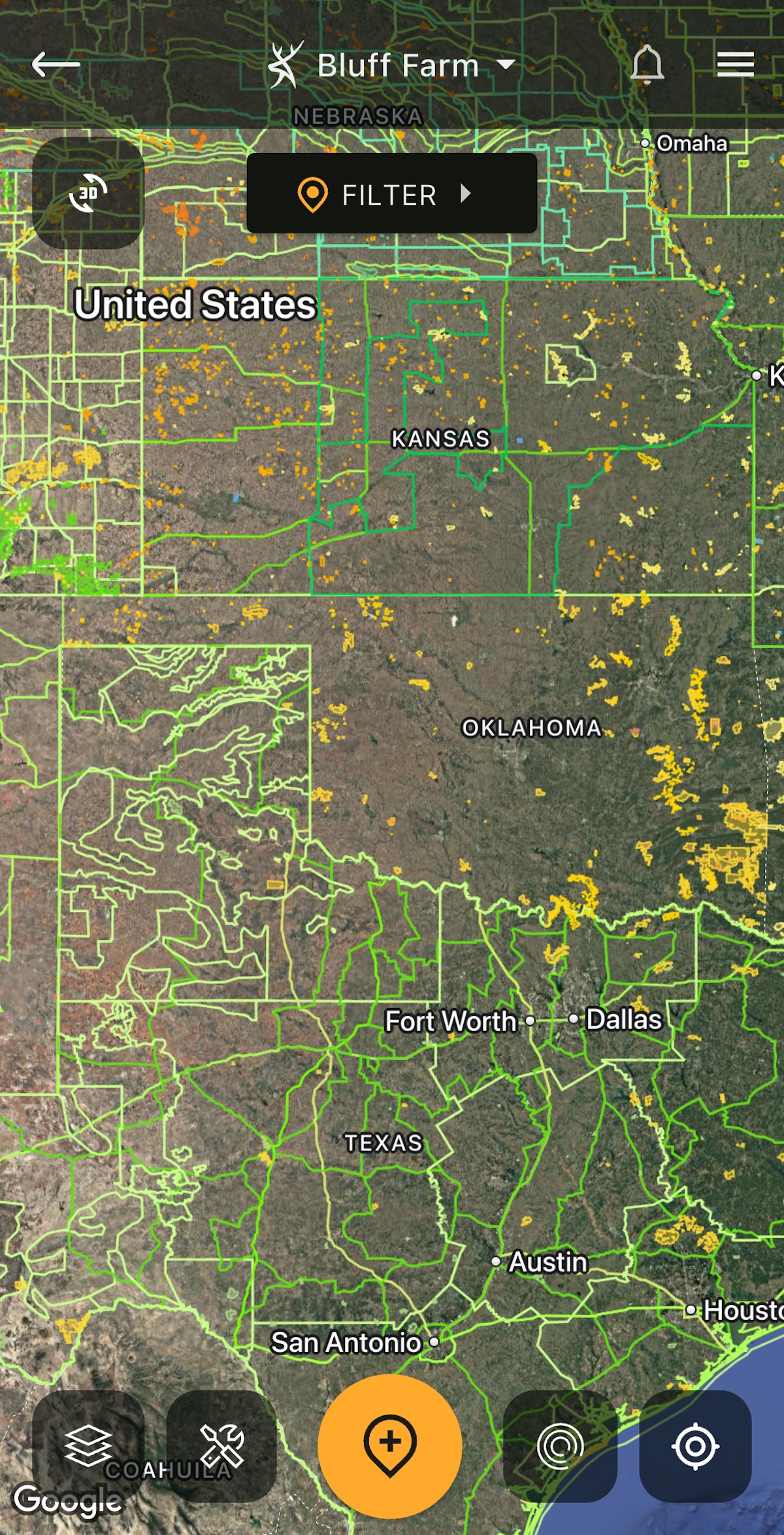
Public land is limited within the Rio Grande wild turkey's range, but western Kansas and Oklahoma offer some of the best opportunities.
Hunting Rio Grande Turkeys on Private Land
Most who hunt Rio Grande turkeys are chasing these birds on private lands. After all, the vast majority of these exist in western Kansas, western Oklahoma, and Texas. The latter two don’t have much public ground where these birds thrive. Western Kansas offers more, but not many opportunities. Thus, it’s important to find private land access by owning, leasing, outfitting, or gaining permission. Of course, Hawaii offers a unique destination to hunt these birds.
Hunting Rio Grande Turkeys on Public Land
As noted, there aren’t many opportunities to hunt Rio Grande turkeys on public land. That said, the best areas to do so include western Kansas, western Oklahoma, and parts of California, Colorado, and Oregon. Study the hunting regulations and requirements for each of these destinations and choose the hunt that best fits your goals.

Kansas, Oklahoma, and Texas comprise the Rio Grande turkey stronghold. Here, Will Cooper shows off a trophy tom from Texas.
Go Hunt a Rio Grande Turkey
Hunting the Rio Grande wild turkey is no simple endeavor. It takes planning, skill, and a bit of good fortune. But those who embark on this adventure will find themselves with memories to last a lifetime. Chasing these prairie turkeys gets in your blood, and once there, it never leaves.