





Optimize your treestand setups for the utmost success.
You did your summer scouting and found the hotspots. You hung a handful of treestands, and in September, you canvased the area with trail cameras. A few great bucks are showing up in the dark. You know the pre-rut will be your time to shine. Then, it comes and goes. So does the rut. And now, it’s the late season.
You reach your stand nice and clean without spooking any deer, and now you’re settled in and ready, several hours before dark. A few does and fawns move through, then two young bucks. It’s about 40 minutes until dark, and movement through the hardwoods catches your eye. Through your binos, you identify the buck as one of your targets. It’s a no-brainer.
As the buck approaches, your heart rate skyrockets. Just as he enters your shooting lane, you attempt to draw your bow, but your elbow hits the tree trunk, inhibiting the motion. You adjust your stance and try again, this time reaching full draw, but feeling discombobulated. You try to get the buck in your peep sight, but by the time you do, he’s back in the brush and walking out of your life.
One small oversight is all it takes for an otherwise ideal treestand setup to inhibit a successful hunt. Anyone who’s been hunting long enough has been there. In this article, we’ll cover six separate details that can make or break your treestand ambush. If you’re looking to improve treestand ambushes, follow along.
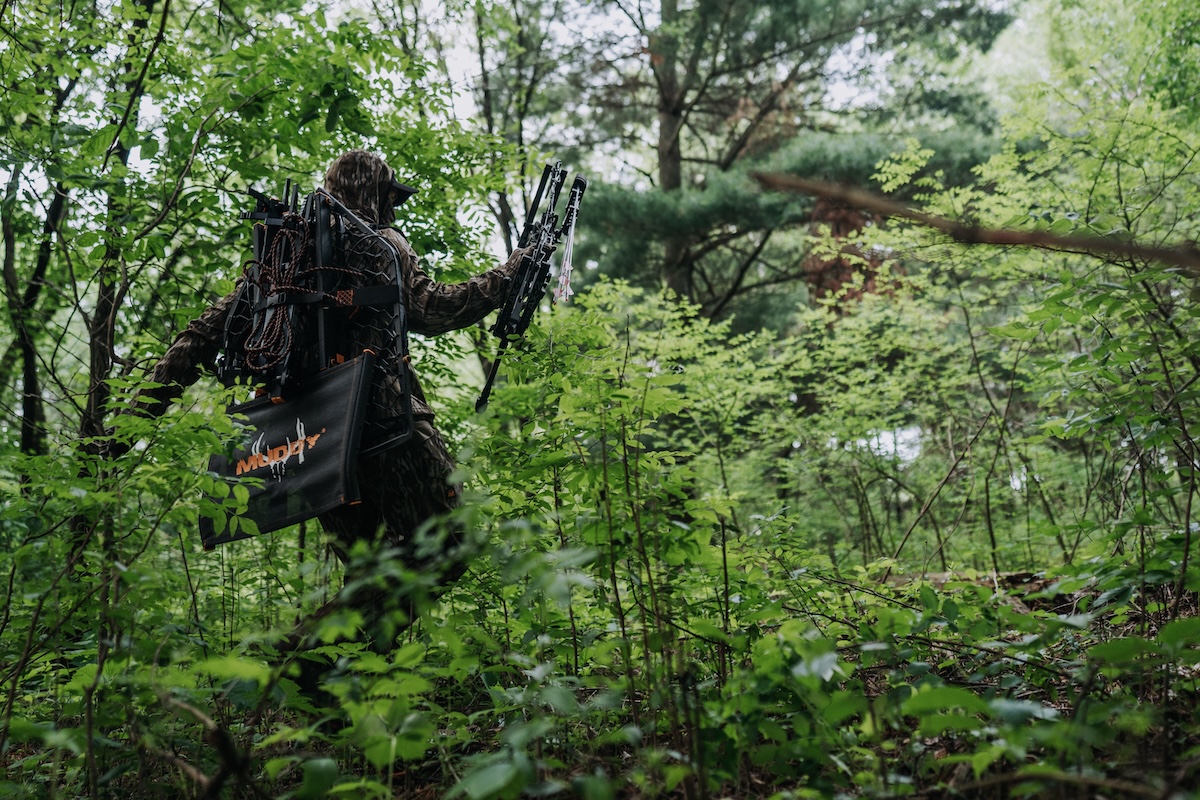
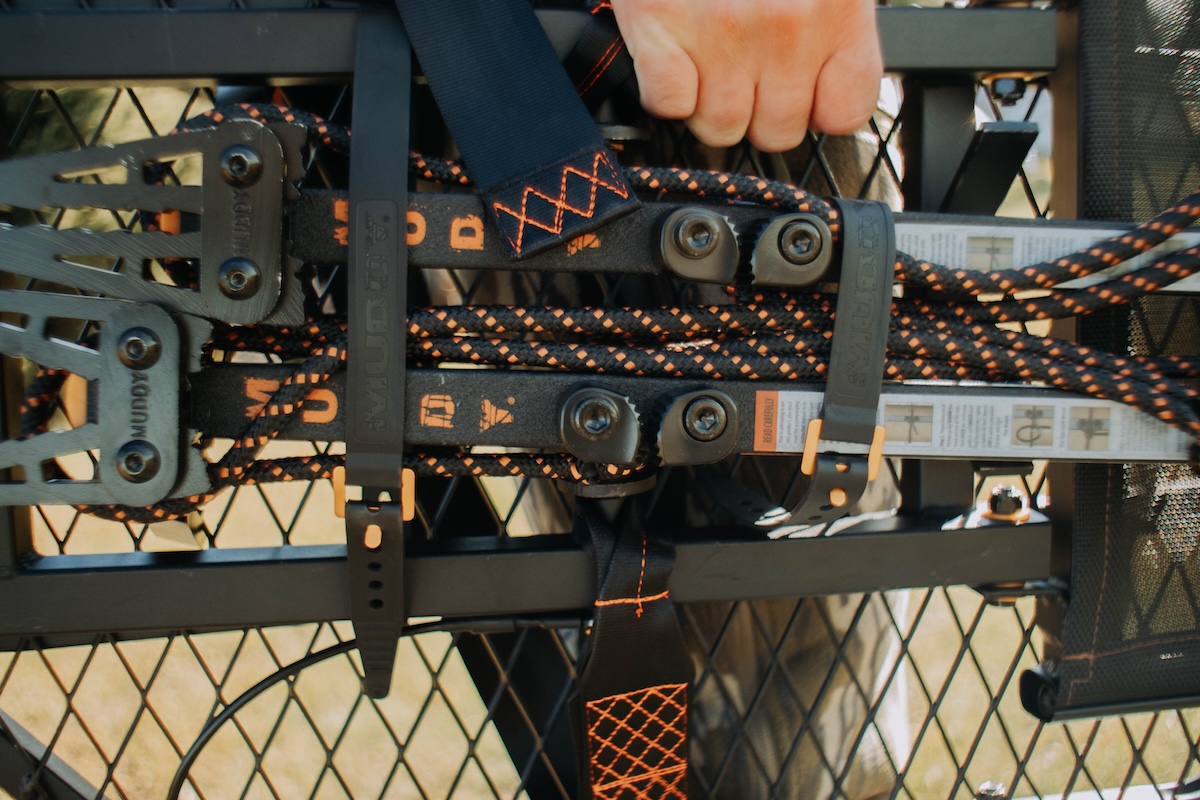
Silence your treestand gear so it doesn't alert deer you're on the way.
1. Silence Your Treestand Equipment
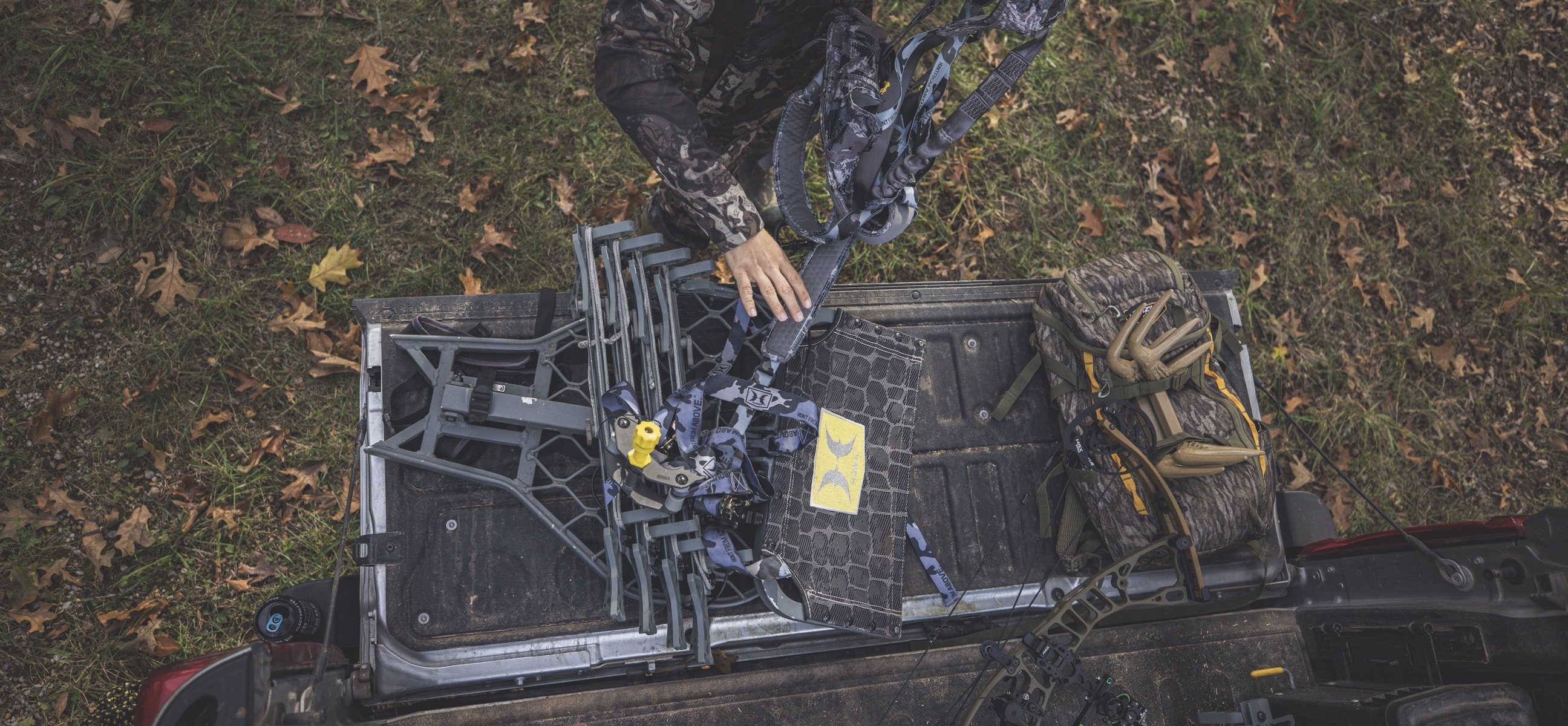
Treestand gear has improved substantially over the last two decades. Hawk Hunting and Muddy manufacture lightweight, streamlined treestands and climbing equipment. Regardless, treestands are made from metal, and we all know that metallic noises don’t belong in the woods. So, you either have to micro-manage your stand and gear to prevent metal-on-metal contact while hauling it through the woods or climbing into a treestand, or you must find ways to silence it. No matter how careful you are, it’s still likely that your tree gear will clink or clank, so silencing it is the best option.
There are a couple of feasible ways to do this. First, you could obtain a rubberized spray paint, such as Plasti Dip Camo. You’ll want to avoid spraying any moving parts of the stand or climbing stick, and you’ll want to check with the treestand manufacturer to ensure that this doesn’t void the warranty. A few coats of Plasti Dip on the platform and other stationary components of the stand and sticks will minimize the noise of unintentional contact with items like rattling antlers and other tree gear. The downside? Fumes will take a while to disappear. Paint naturally has odors for a long time, so plan to leave your gear outdoors to air out.
Another way to silence your tree gear is with Stealth Outdoors Stealth Strips. These are made of an adhesive-backed moleskin-type material that can easily be cut to size and stuck on the solid surfaces of stands and sticks. The odor will be substantially less than with the rubber spray paint. Spray the material with a scent-eliminating spray, and you should be good to go.
With older treestand gear, it’s wise to set it up in the yard before the season and test it out for squeaks and failing parts. Shifting your weight on a treestand platform alters where your weight is distributed, and that can cause the stand to squeak. The initial solution might be WD-40, but it has an odor. There are some odor-free firearm lubricants that would be suitable to lubricate the squeaky spots to keep your stands and sticks as stealthy as possible.
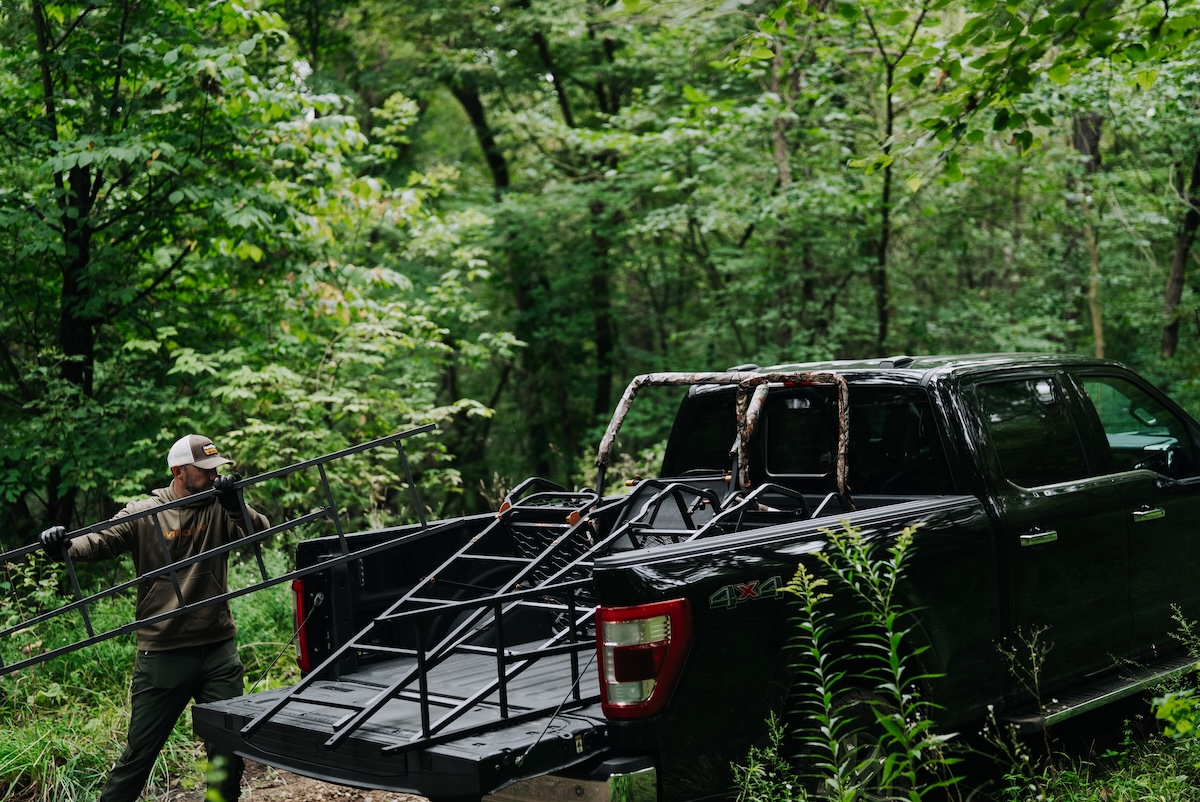
Set up more permanent treestands in proven areas that work for the prevailing wind.
2. Set Up to Exploit Prevailing Winds
When choosing an exact tree to hunt from, there are a handful of things to consider, which we’ll cover here and in the next few tips. Most important is the wind direction. Some stand spots are very limited to certain wind directions, but many stand locations have different trees that you can hang in to leverage the area’s prevailing or dominant wind. In the Midwest, for example, west and northwest winds are common in the fall, which means you’ll have more opportunities to hunt a stand set for those wind directions.
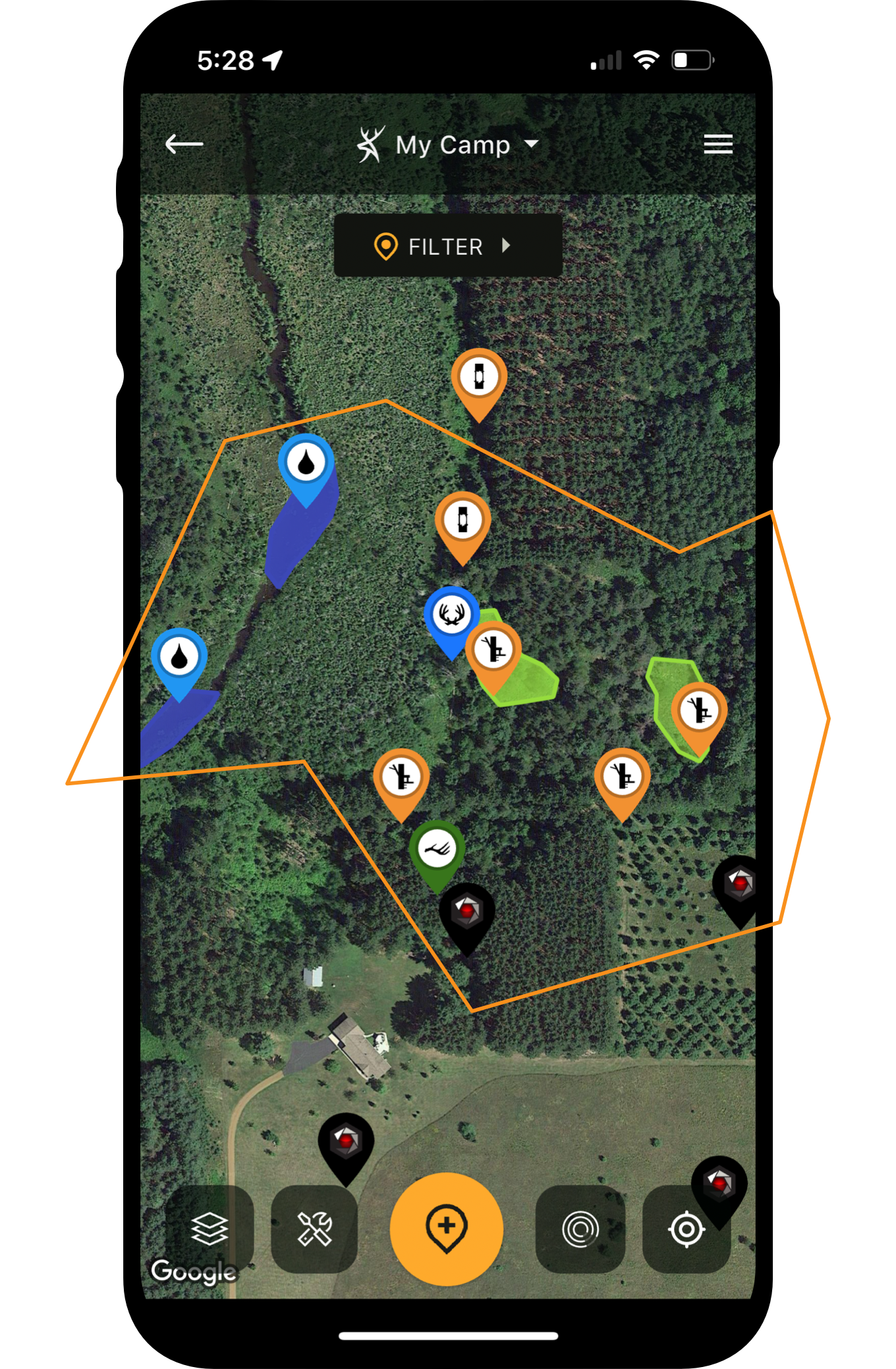
To help with this, track wind tendencies in HuntZone. Not only will you be able to identify the prevailing wind for your area, but you’ll also be able to see how your scent will disperse in your exact stand location. Some hunters don’t realize that their scent dispersal widens into a cone shape as it goes downwind. It’s very important to understand this and plan for it. Don’t just check a generic forecast. Utilize the combination of the weather and HuntZone features in the HuntStand app.
10 Places Pressured Bucks Hide (And How HuntStand Helps Find Them)
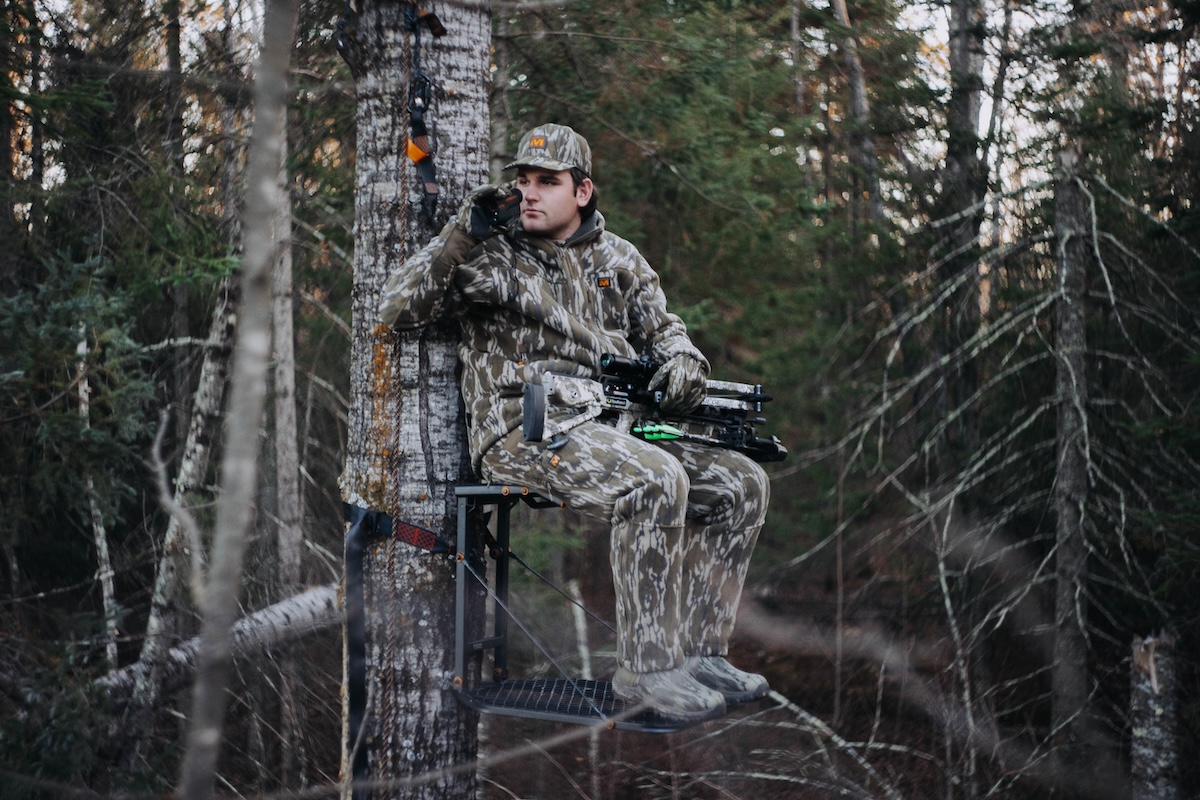
Set your treestand at the optimal stand height.
3. Pick the Best Treestand Height
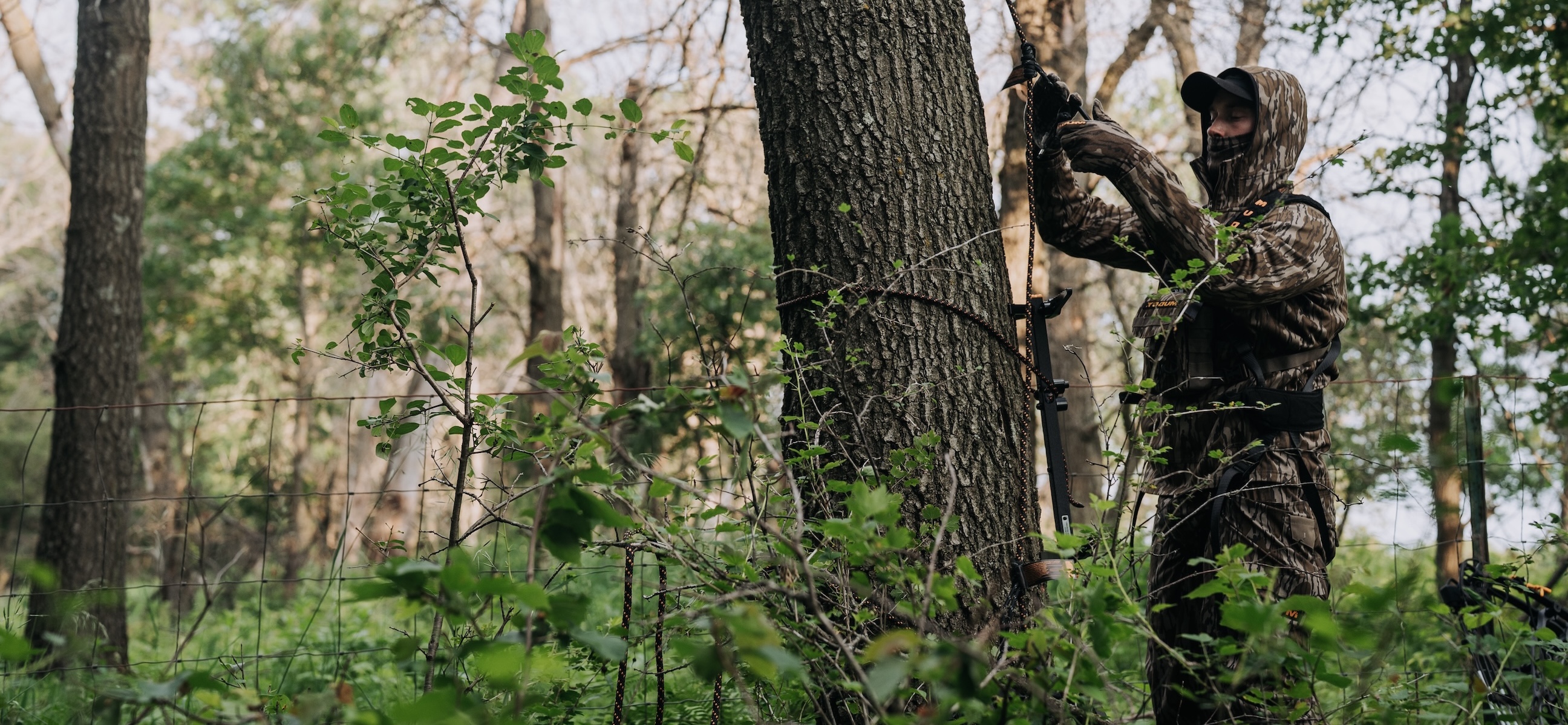
Some hunters believe you must be 30 feet high, while others hunt 10 feet up. There are merits to hunting high up. First, it puts you above the whitetail’s periphery, making your movements of standing up and drawing your bow less detectable. It also keeps your scent above most of the deer, essentially allowing it to blow over them.
Tall stands have some downsides, too. First, many hunters lose a lot of comfort the higher the treestand is hung. Second, it makes shot angles very steep, which narrows the kill zone on close-range shots. Third, high stands in open hardwoods after leaf-off put you on the skyline, making you actually more visible to deer than if you have the trunks of other trees behind you, as you would with a stand set lower.
It boils down to assessing each stand location individually, and oftentimes, that means settling on a lower height or at least a happy medium.
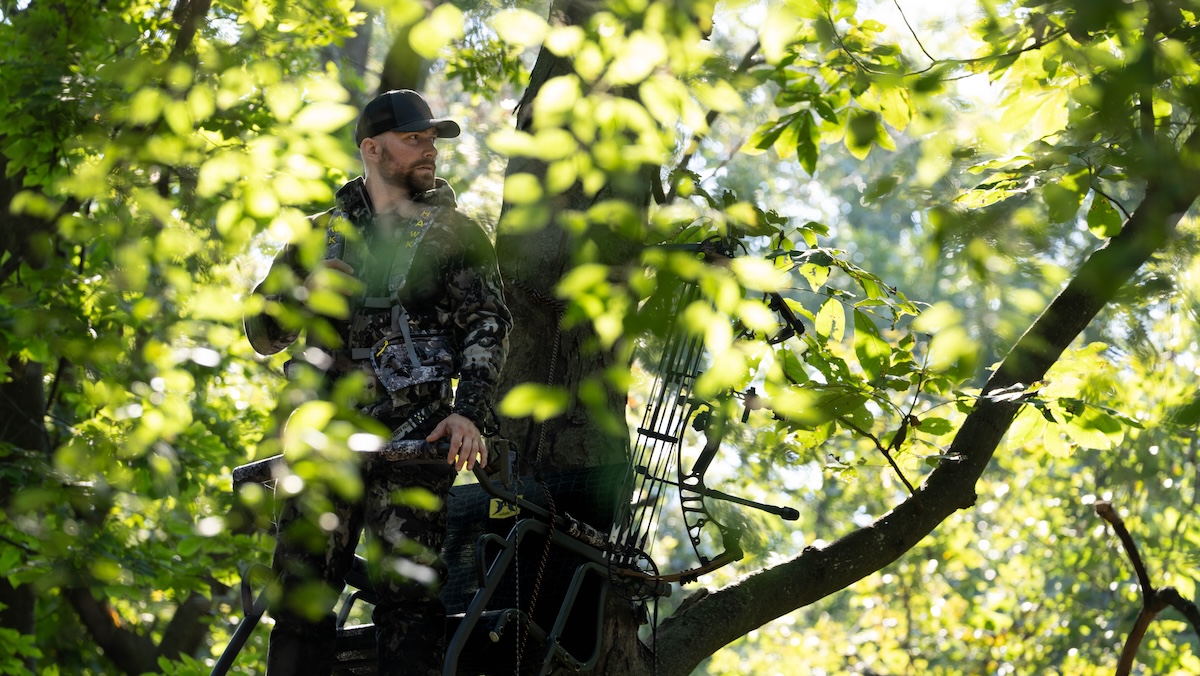
Ensure your setup has plenty of front and back cover.
4. Weigh Backdrop vs. Front Cover
Cover is crucial to staying undetected while treestand hunting. What kind of cover? Well, that depends on the area and what’s available. The main thing is to balance the backdrop and front cover. A little bit of front cover is OK, especially while firearm hunting. For archery hunting, you don’t want very much because it could interfere with your arrow flight.
In most cases, background cover trumps front cover because it better disguises your human outline. A good way to choose the right tree and stand height is to be where the deer will be and look up into the trees. Will your stand be obvious or hidden? What backdrop cover is available to disrupt your outline? This is best done during the off-season and honestly isn’t very helpful for hang-and-hunt outings, as walking on deer trails can inhibit deer movement due to ground scent. But if you can do it well before the season, it’s a great idea.
15 Public-Land Deer Hunting App Tips
Set up your post at just the right distance from the action.
5. Choose the Ideal Distance from Perceived Deer Movement
OK, now onto shot distance and angle. Consider all of the potential deer movement a stand location will provide. Once you nail that down, if there are two or more suitable trees for your stand, consider which will be best for most of the deer movement. Bowhunters: If you pick a tree 10 yards from most of the movement, you’ll potentially be presented with steep, downward shots that narrow the kill zone and require an awkward shooting position, which will challenge and potentially alter your shooting form.
Contrarily, if you say, “Ah, I can shoot 40 yards,” and hang your stand that far from the perceived deer movement, you’ll needlessly lengthen your shot distance, which means a deer is more likely to duck or move during the shot. So, try to select a tree that is within easy bow range and provides a good perspective of the deer’s kill zone. This is typically about 15-20 yards.
Crossbow and gun hunters should also be mindful. While both can be extremely accurate out to their respective long distances, shooting from a treestand is entirely different from shooting off a bench rest. Always set up for the easiest shot possible, so long as the tree you pick also provides cover and works with the prevailing wind.
HuntStand Ultimate’s Distance Measurement tool can be accessed by double-tapping the compass at the lower right when viewing your Hunt Area. Not many hunters remember to bring their rangefinder along when scouting and hanging stands, and this makes a good backup option. Holding your phone parallel with the ground, aim the phone toward the areas of perceived deer movement. You’ll be able to identify the distance to specific landmarks, which can inform tree selection and stand placement.
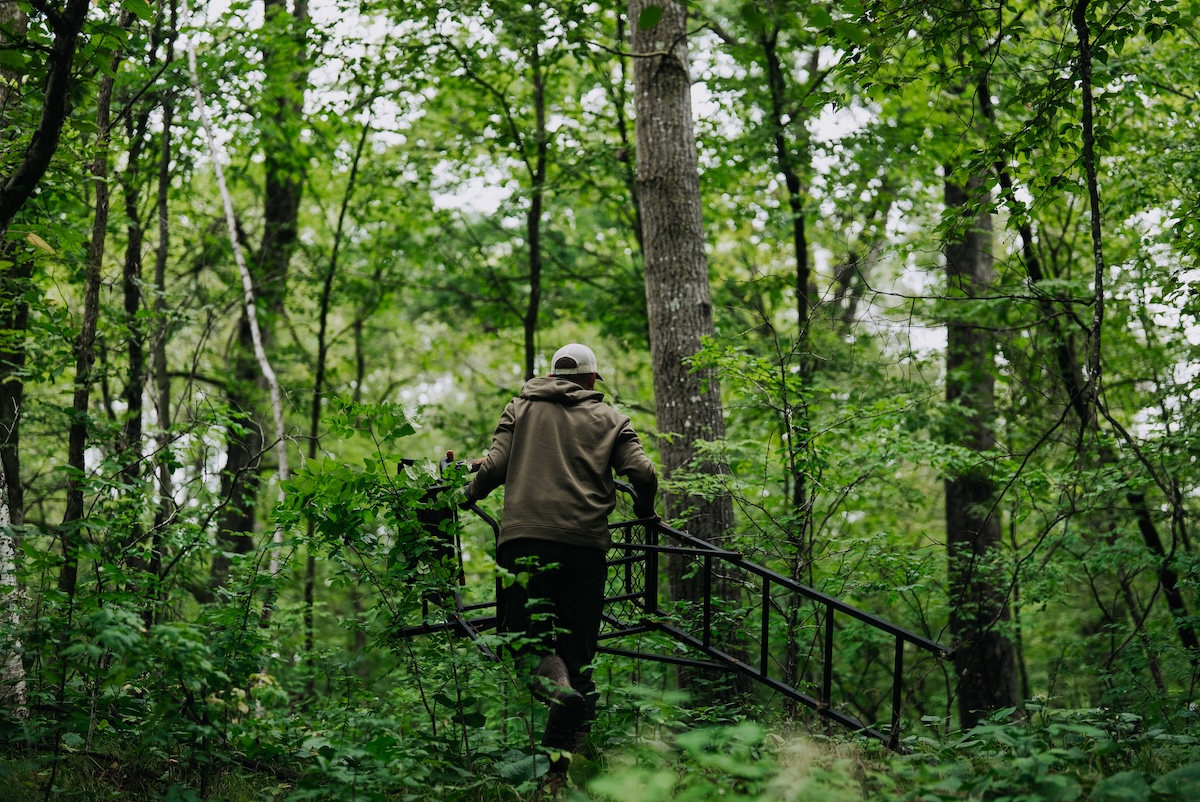
Turn your treestand so that it makes your shot the easiest in the direction you plan to shoot.
6. Position Your Treestand Platform to Minimize Movement
A lot of hunters make the mistake of facing their treestand toward the deer trail they intend to cover. This means that you’ll have to shift to get into a more comfortable position to acquire the animal and take your shot. This applies to firearms, crossbows, and bows. The goal is to position the platform to minimize the movement required to take the shot while keeping the best possible shooting form.
Right-handed shooters do best to aim the platform 90 degrees to the right of the perceived deer movement, and left-handed shooters should aim it 90 degrees to the left. With this orientation, standing up isn’t 100 percent necessary, meaning you can draw and shoot with hardly any movement. Or, if you’re firearm or crossbow hunting, this same platform orientation provides more natural positioning to the target, allowing you to aim with more stability and without shifting.
30 Reasons HuntStand Ultimate Makes You a Better Deer Hunter
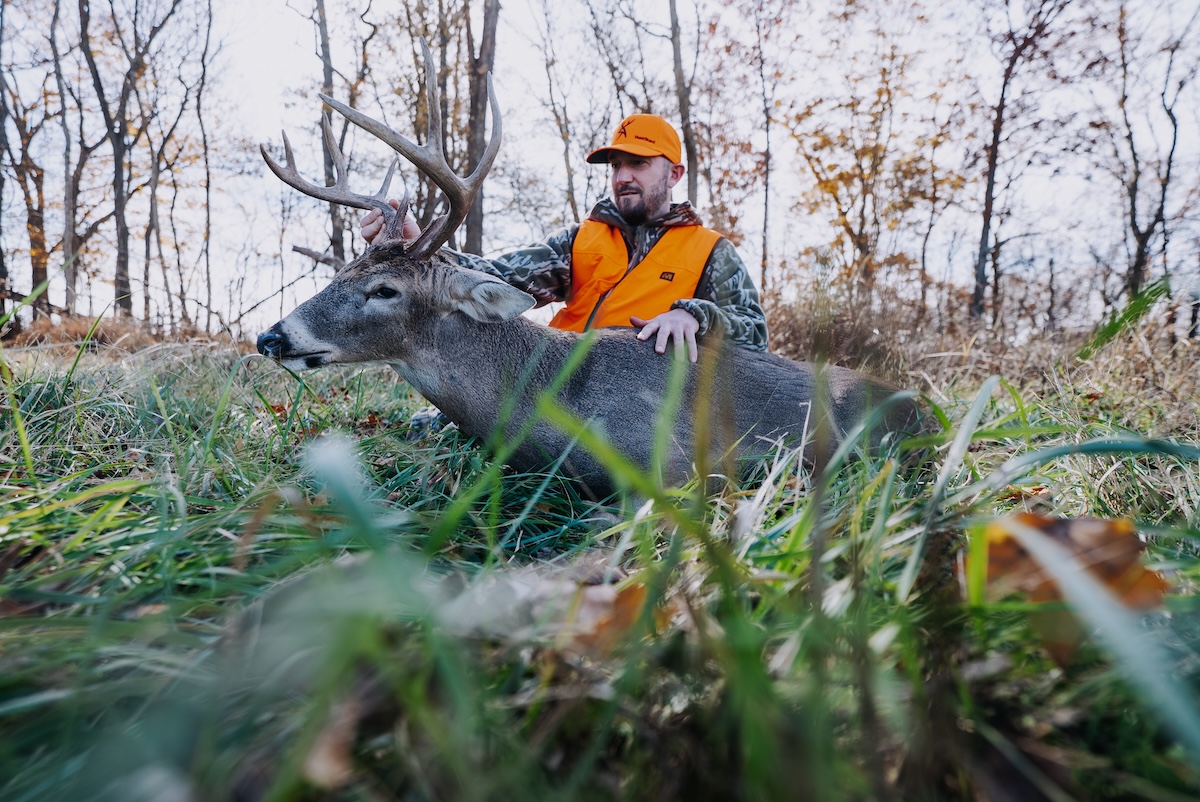
When possible, test your treestand setup to ensure everything works as planned.
7. Check It Out to Make Sure Everything Works
It’s not very practical to do for hang-and-hunt outings, but advance stand setups should be checked for bugs and kinks before hunting from them. Have a buddy or family member stand on the ground and look up at you to see how obvious or disguised you are. Wearing your harness and camo, stand up, shift around, and make the motion of raising your crossbow or firearm, or drawing your bow. If anything is less than comfortable, make some adjustments. You’ll want to be as comfortable as possible when the time comes to take your shot so that you can make the best shot.
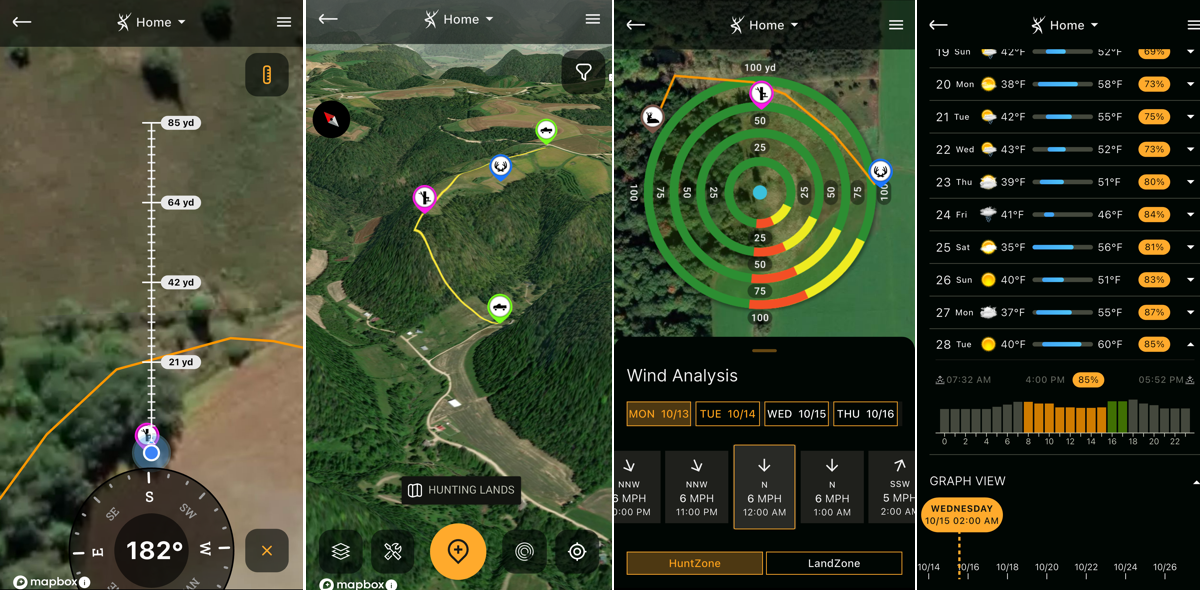
Use HuntStand to dial in your treestand setups.
Fine-Tuning Your Treestand Setups
As we wrap up, you can address all of the details discussed above, but your treestand setup is only as good as your access to it. Identify food sources using the Crop History overlay and also get a finger on the pulse for potential bedding areas using the Hybrid map and on-foot scouting during the off-season. From there, it’s fairly simple: Avoid food sources on the way to your stand during morning hunts and avoid walking through or near bedding areas as you access stands in the afternoon.
As well, make sure that your scent isn’t blowing to areas you know will hold deer en route to your stands. Aren’t sure how your scent will disperse? Reference HuntZone, and you’ll be in the know.
For access, it’s always best to have some sort of hedge between you and the deer. Screen plantings are ideal, but if you are unable to cultivate on the property you hunt due to lack of equipment, landowner permission, or because it’s public land, study the terrain. HuntStand offers several options to visualize the area’s layout and terrain that can shield your approach. Use the 3D Mapbox Satellite, which is best in more rugged terrain, and the tilt and pan feature gives you more or less of an in-person perspective of the landscape. Identify terrain features that will be the least conspicuous and then use the line tool to draw your route. This will be especially useful to reference when accessing stands in the dark.
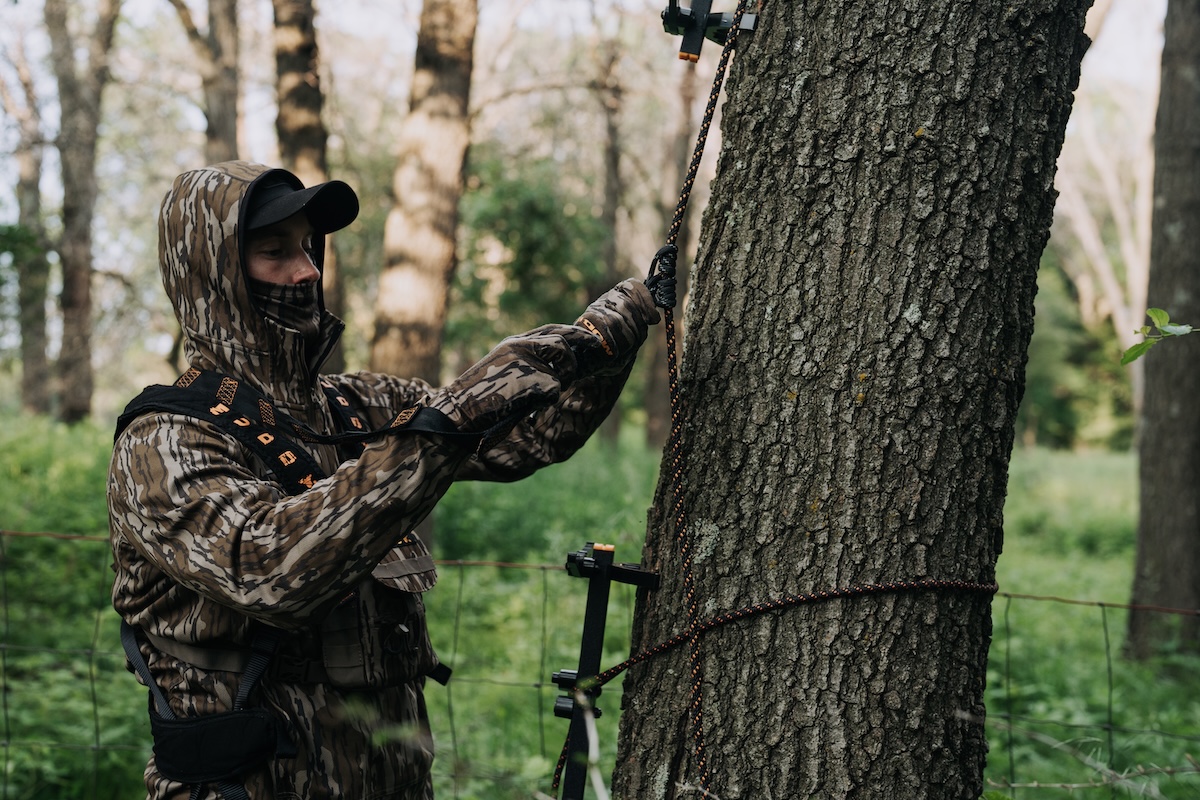
Finally, wear your safety harness. Family, friends, and loved ones are awaiting your safe arrival following your hunt, and each time your feet leave the ground is an opportunity for misfortune, unless you’re properly using a harness and safety line. There isn’t a big buck worth risking safety for, so don’t cut corners or take shortcuts in the realm of safety.
By following the tips outlined here, you can improve your treestand ambushes, and in turn, that will boost your odds for a successful treestand hunt.