


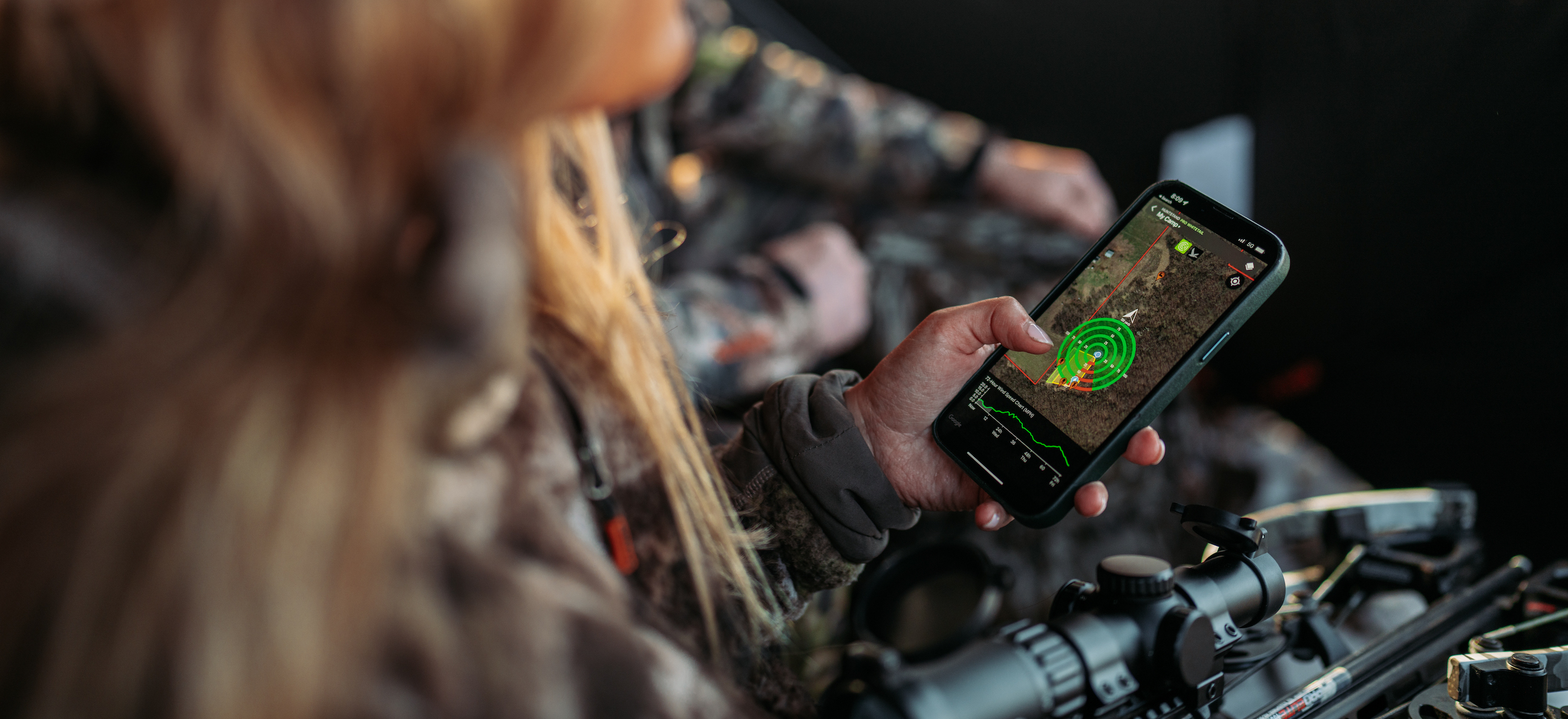
As far as whitetails are concerned, October is a throw-away month for many folks — at least the first three weeks, anyway. This mindset stems from overblown credit given to the “lull,” and the fact that a lot of whitetail-hunting advice is dispensed from hunters who live in states such as Iowa, where the firearms’ season doesn’t interrupt rut-time bowhunting.
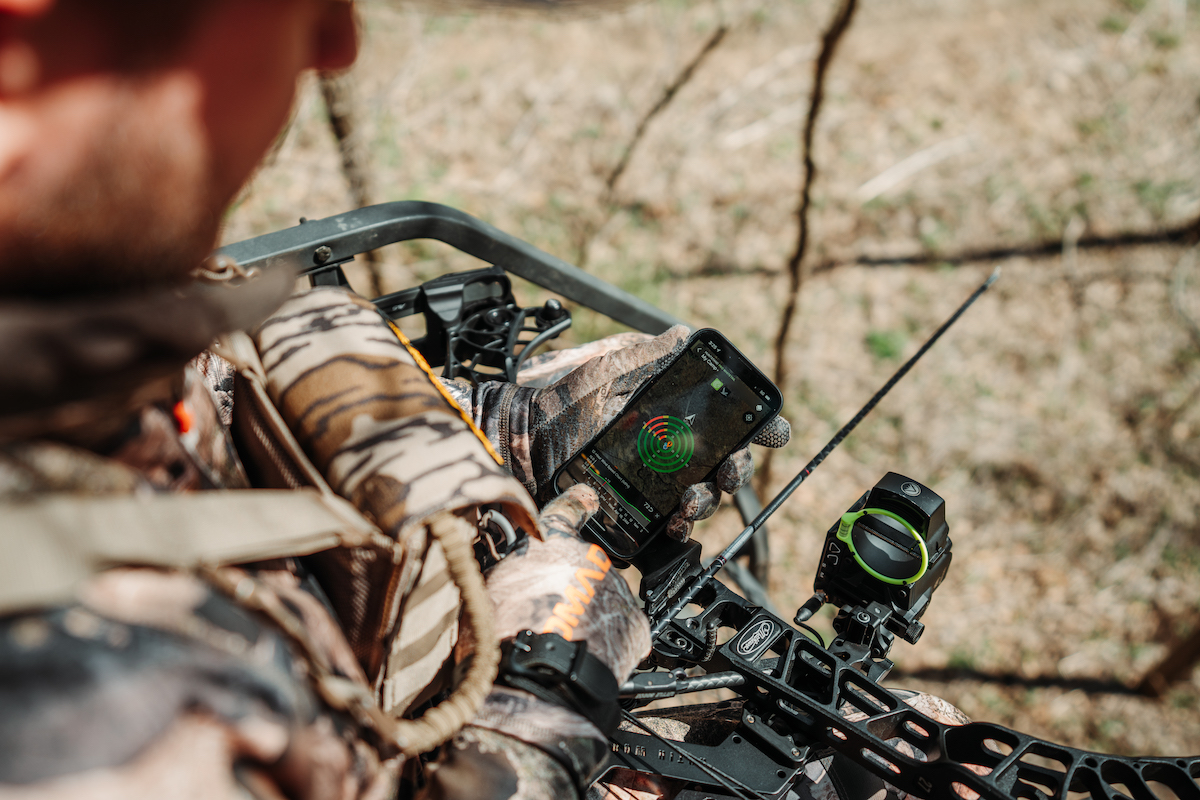

When the weather is right, check HuntStand's HuntZone wind direction indicator, and get in the deer woods.
For the rest of us, who still wish to sit in a stand every chance we can and make the most of valuable hunting time, October gives us a chance. This is especially true when the weather gets downright nasty. Deer, now sporting their winter coats and not overly concerned with rutting activity, will move more during periods of weather that seem far more conducive to staring skyward in search of approaching mallards than climbing into a stand.
To capitalize on the best-of-a-worse-case scenario, pay close attention to the best weather patterns for hunting and plan your hunting time around the following:
Hunting Weather Fronts
Recently, throughout much of the Upper Midwest, we had a spate high heat. The scorching daylight temperatures didn’t do much for deer movement; however, like all warm fronts, it came to an end. What rolled in after the heat was a cold front, which is always good news for whitetail hunters. What followed the first cold front, though, was a gift — another cold front. Temperatures that went from 80-degree daytime highs to those in the 40s presented a perfect opportunity to get into a stand. In fact, when the second front hit, I started getting frequent texts and phone calls from hunting buddies about encounters with big bucks. It felt like the second week of November, not mid-October, when conventional wisdom says that the deer hunting should flat-out stink.
Hunting Rain Events
Although Guns N’ Roses didn’t think as highly of rain during October as they did of November showers, bowhunters can thumb their nose at Axle and Slash by watching the radar like a hawk during this month. Precipitation in the light to heavy category will get deer on the move. True downpours that cause arc-building thoughts might be worth sitting out, but you better try to get into a stand as soon as the rain lets up. Deer will move then, if they haven’t already. Better yet, unlike cold fronts, rain keeps other hunters out. This is a bonus for those of us hunting public land or pressured private ground.
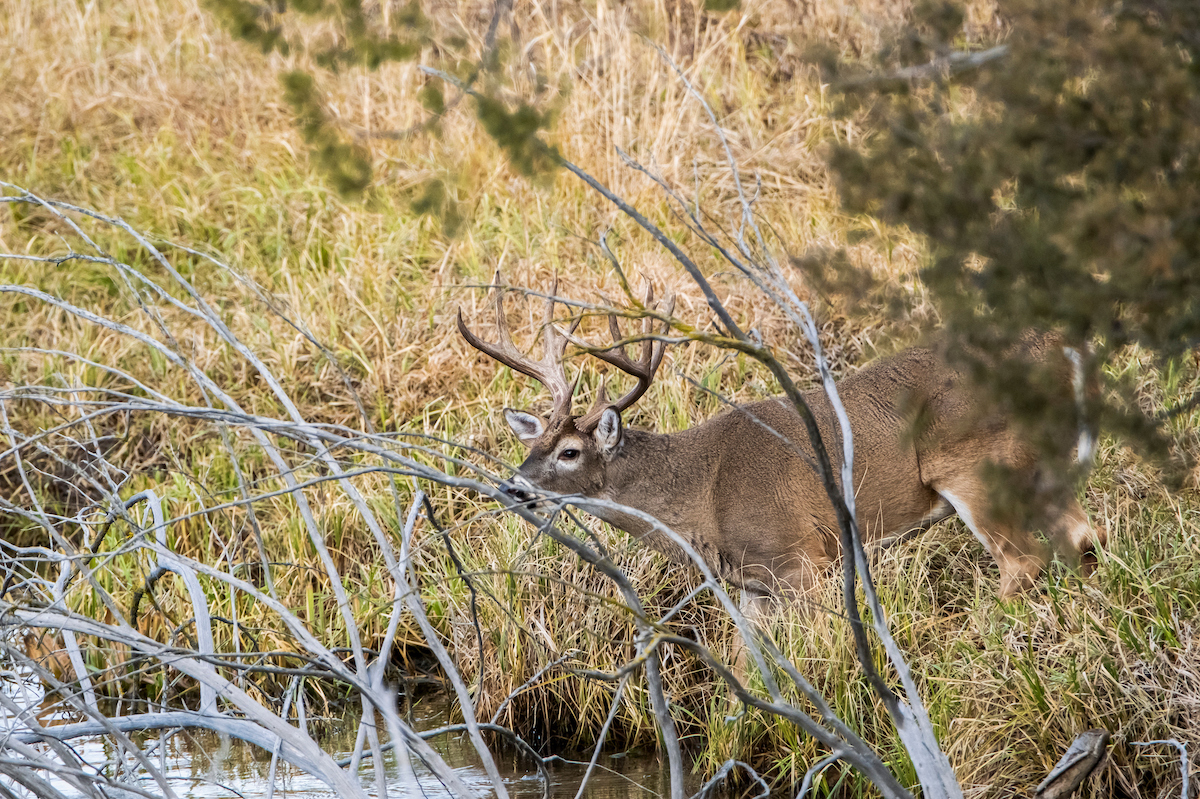
Several different weather patterns have the power to encourage increased daylight movement.
Hunting in Hot Weather
On the note of hunting when others won’t, it does pay to hunt during those hot days of October. I know they are the least appealing, but your competition is likely to stay home. A single day with sweat-inducing heat might not be worth it, but a sustained heat wave will offer an opportunity and it’s very simple: Sit the water. Creeks, ponds, rivers, puddles, cattle tanks or any other place where the deer can stay in cover and slake their thirst are good bets. To up your odds, consider sitting water close to a green food source such as alfalfa or hay.
You’ll have the woods to yourself when it gets truly hot, and provided you play the wind to keep your sweaty, stinky body from tipping off approaching deer, you’ll be in on action. This is the least fun time to hunt. The misery will only last until you see a mature buck working his way toward you. Then those thoughts of crisp November mornings will drop through the trapdoor in your mind to make room for the present need to range, settle the pin, and send an arrow on its way.
UPGRADE TO HUNTSTAND PRO WHITETAIL
The Bottom Line
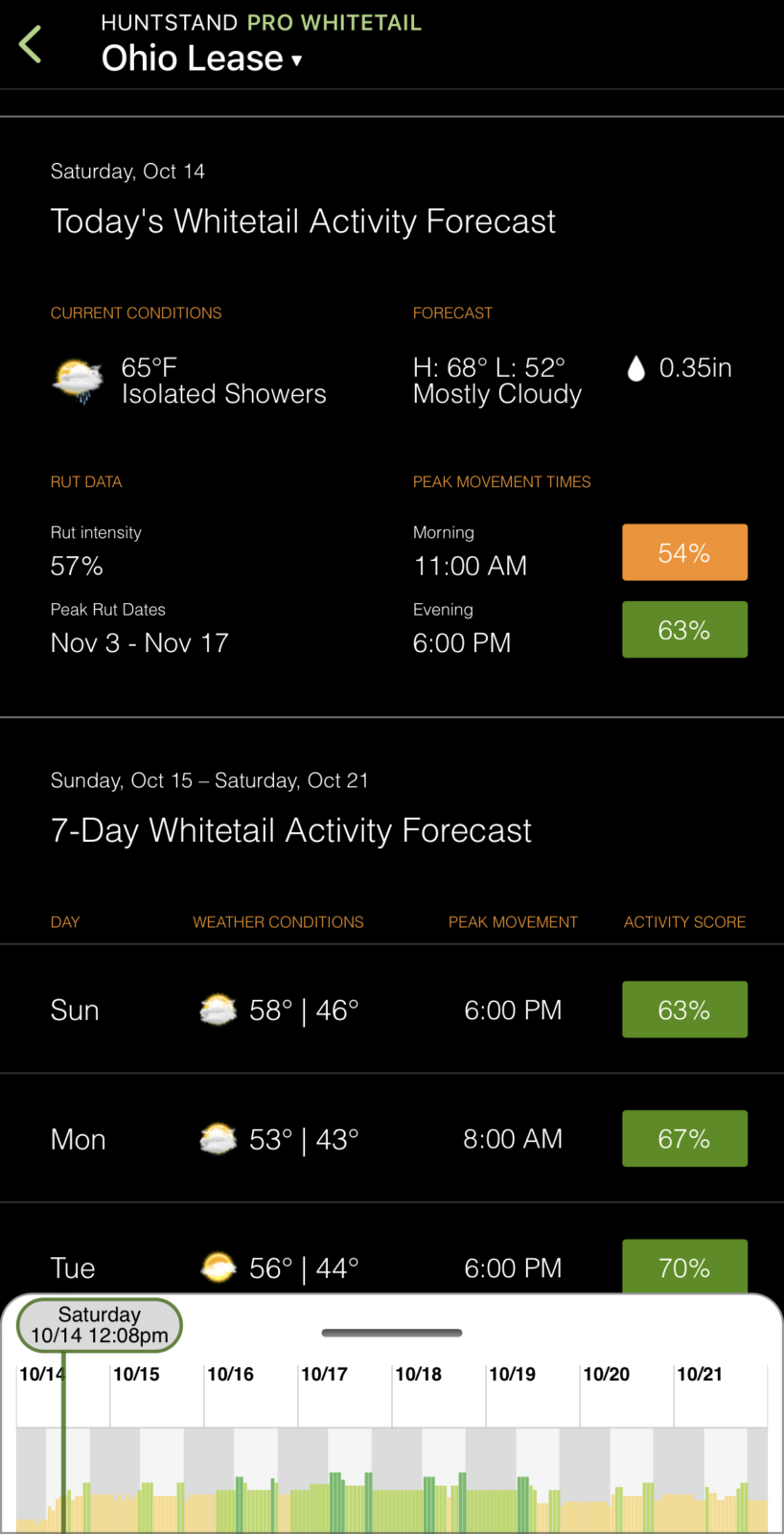
Some of the best times to hunt include the weather fronts and rain events of October. These tend to drop temperatures and spark deer movements. Of course, keep an eye on the Whitetail Activity Forecast percentages, courtesy of a HuntStand Pro Whitetail subscription. This gives you an opportunity to hunt the highest-odds days. It’s a tool well worth the investment.
Without a doubt, mid-October isn’t the best time to kill a mature buck. They are still out there, though, and they will move during daylight. This gives you a chance, especially if you take the time to follow the weather patterns and capitalize on the changing conditions. It only takes a single deviation from normal patterns to get bucks on their feet. You won’t kill them if you stay home like the rest of the weekend warriors.
Overlooked Public Deer Hunting Hotspots: How Mature Bucks Use Water
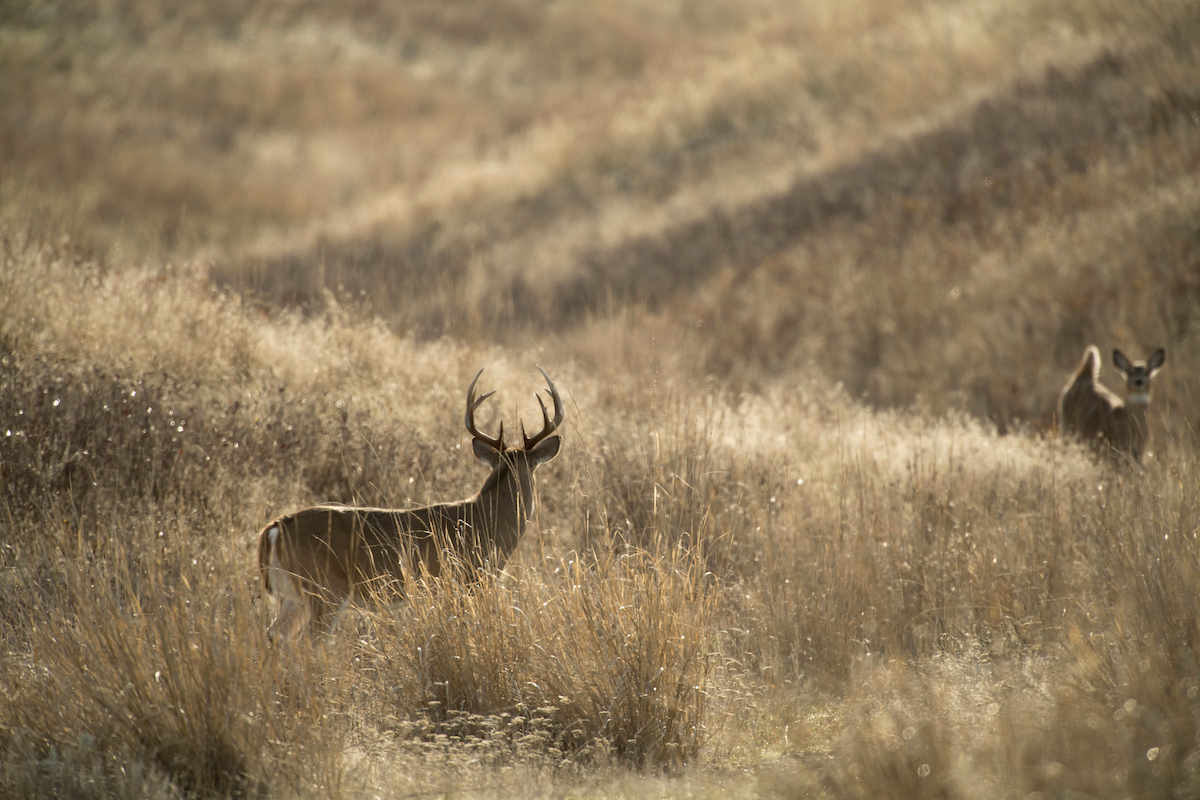
Don't give up hope on big rutting bucks on public. But you do have to give up your old way of thinking. Get creative to find success.
On private ground — where I have a good idea of how much hunting competition I’ll face — I enjoy the rut for obvious reasons. While hunting public ground, I have a much more complicated relationship with the month of November. I still love having faith that a mature buck will screw up and trot by my stand while scouring the woods for a good-to-go doe, but I hate the fact that everyone else feels the same way.
If there’s one time aside from opening week when public land is bound to be overrun with other bowhunters, it’s during the rut. When Halloween ends and October gives way to November, it seems that every single hunter with a tag in their pocket decides to hunt. This doesn’t bode well for anyone on tax payers’ deer ground. However, just like during the rest of the season, there are some things you can do to out-hunt the competition and take advantage of the rut. Here is how to deer hunt public land during the rut.
Use Vacation Days
Whether I’m hunting small public parcels near my home in the Twin Cities or camped out in the Badlands of North Dakota, there’s one constant: Weekends are always busier than weekdays. This is reason enough to plan vacation days around mid-week hunts. If you have the option to take a few days off of work during the week, take them. Fewer hunters will be out, giving you a better chance to encounter a good buck.
Go Simple
Manufacturers of hunting products love the rut because the promise of dumbed-down bucks means more folks will go out and buy whatever calls, lures, scents, and decoys they’re peddling. Some of those hunters will end up hunting your area, and trust me, they’ll use whatever they bought. Whitetails that have walked the earth for more than 1 1/2 years have already encountered these tricks, and they’ll be wary. Let the others try out the latest and greatest gimmicks, and stick to a plan. Figure out where the deer want to be and get in there, stay quiet, and stay ready.
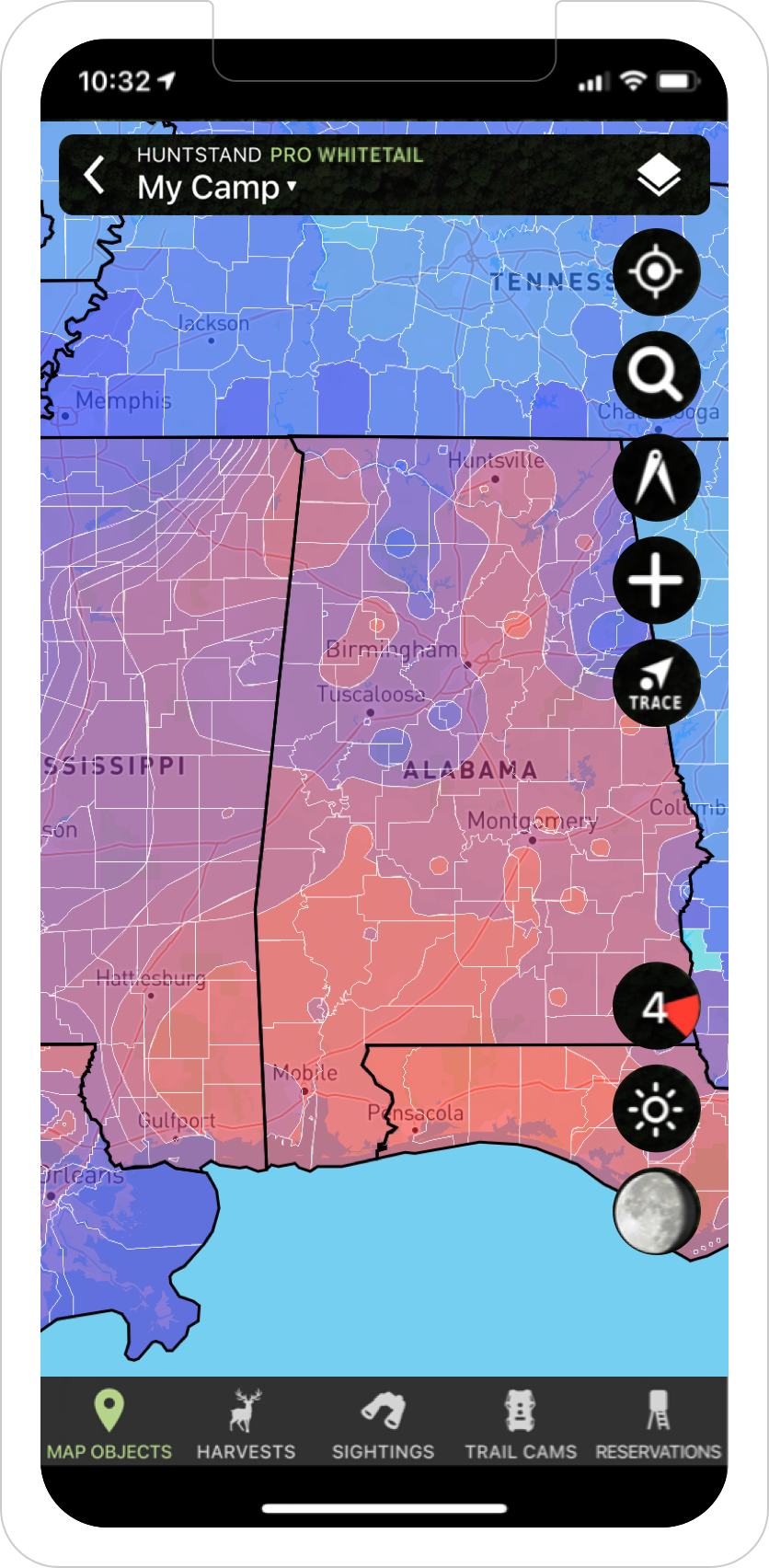
The Nationwide Rut Map with a HuntStand Pro Whitetail subscription helps you know exactly when each rut phase occurs in your county.
Location, Location, Location
On the note of getting in to where the deer want to be, rut hunting is all about the “where.” The simple explanation involves travel routes such as funnels and pinch-points; however, simply finding a good pinch-point isn’t enough. If it’s easy to find and looks obvious, you’ll have company. Public-land deer encounter hunters, or evidence of hunters, in obvious spots all season long. This pushes them into the cover and into places people don’t want to go — this rule holds true during the rut as well.
This is why, when I hunt public land in November, I almost always wear knee-high rubber boots, no matter how cold it gets. The reason? I’m going to have to cross water, whether that be a stream or a cranberry bog, to get to my spots. Out-work the average Joe and you’ll be much better off all season, but especially when the chase phase is cranking up.
UPGRADE TO HUNTSTAND PRO WHITETAIL
Punch the Clock
When you’re not hunting tightly managed ground, time in stand can be your biggest asset. The true secret to public-land success involves putting in more time than everyone else. Every minute you spend in stand this time of year could yield an encounter, which means the more minutes you spend, the better your odds. Too many hunters spend a couple of hours in the morning or evening on stand and call it good enough, but the ultimate secret to killing mature bucks (in any situation) is making the time to do it right. It’s not easy, but it’s true.
This starts with scouting and goes all of the way through to the late-season. And, of course, during the rut. Use the Nationwide Rut Map, included in the HuntStand Pro Whitetail membership, to tune your hunt dates and game plans to when each rut phase peaks in your specific county. It truly is a revolutionary tool.
The same old whitetail advice holds true for public-land rut hunts — advice such as playing the wind and planning your routes. If you don’t have these basics downs, it’s going to be a rough one. If you do, and you decide that it’s time to sneak into the cover on a Tuesday morning to set up where others dare not tread, you’ll be much better off. You can find those hotspots courtesy of various HuntStand layers, too.
How to Find Deer with Topo Maps
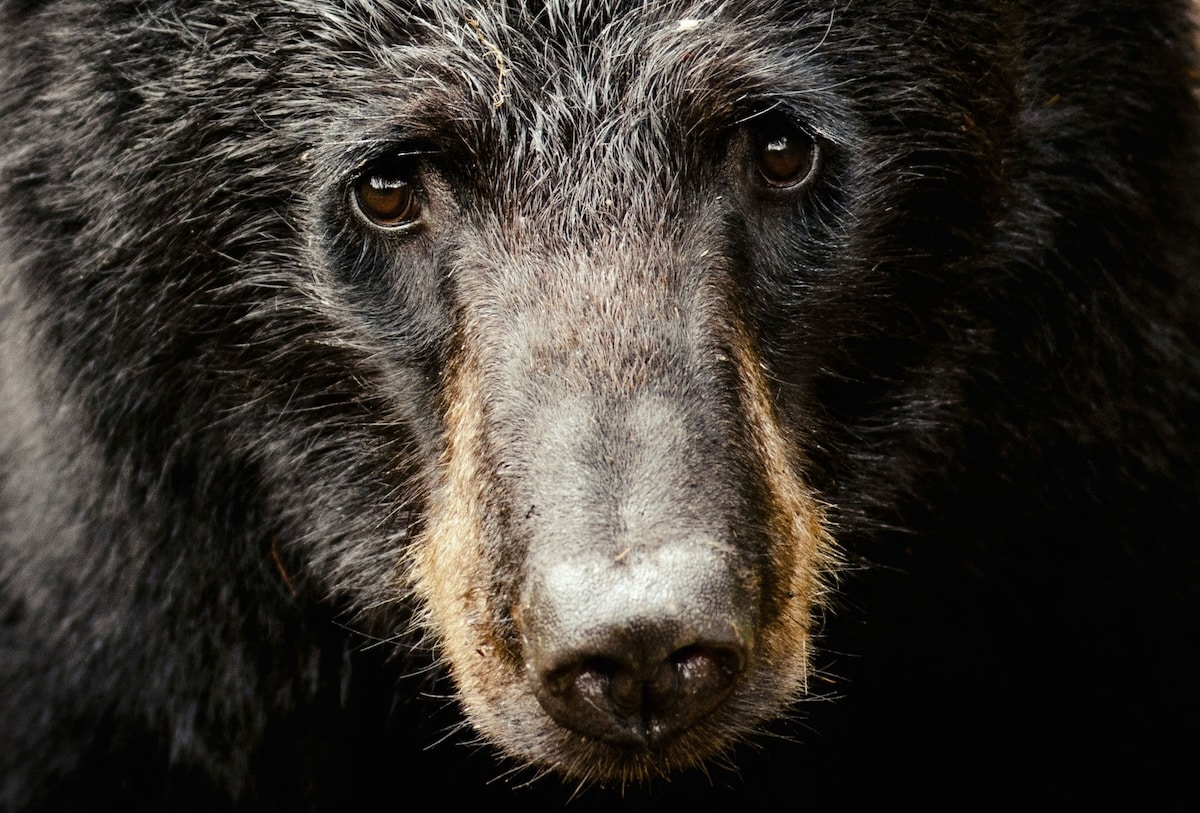
Even though bears aren’t known for their eyesight, they do possess olfactory skills that would shame a 7 1/2-year-old public-land whitetail. Set your stand at 20 yards, in a good-sized tree that offers both cover and the ability to play the wind.
Hunting pressured fall black bears isn’t easy. And I’m convinced that one of the reasons black bear hunting isn’t more popular is because it looks so easy on television. Most bear hunting shows follow a very similar pattern of a hunter showing up at an outfitter’s place and then setting up over a bait. Soon enough, a black blob walks in and it’s all over. In my experience, that’s about as far from reality as bear hunting gets.
The bulk of black bear hunting work is baiting. It’s no different than killing mature whitetails consistently for the DIY hunter. The actual hunting is a very small part of the overall equation, and success almost always stems from the work conducted well before the opening bell. Baiting fall black bears is pretty similar.
Where I hunt in Minnesota is an area with unlimited over-the-counter tags. It’s also at the very fringes of the best bear territory, which means we’ve got a low population of bears and a high population of hunters.
To draw in bears where other hunters are baiting, use trail mix, plan bait sites very carefully, and hunt through the entire season.
Best Black Bear Hunting Locations
After messing around with different bear sites, I’ve found a few things do help my odds of success. The first is exact location. I started scouting out bear sites much like I’ll scout deep-woods deer stand sites. If there’s a high spine in the swamp for the bears to travel, that’s a good start.
Even better is a high spine that terminates near an oak ridge. Black bears love acorns, and in the fringe-territory where I hunt, acorns play a tremendous role in bear movement throughout the fall. If I can set up a bait site close to a natural food source that’s sure to draw bears, I’m much better off. Farther north, it might boil down to blueberries or some other natural food source that will influence bait sites.
A good bear bait site will also allow you to play the wind during every sit. I like to set up with a few different plausible wind options, with my favorite allowing me to hunt everything but a south wind. That means that 75 percent of the wind directions allow for a bear hunt, which is important for me considering I don’t have a ton of free time to burn on a bear stand. If I get a free night to drive north and hunt, I like knowing that I have one place that I can probably sit. I never leave home without first checking my scent cone for all my bait sites.
A good location will also have a near-perfect tree for a stand. I like to be 20 yards from my barrel, with enough cover to feel like I’m somewhat hidden. It doesn’t seem like a big deal to be hanging out in the open with bears, but a couple of decades of hardcore whitetail hunting has instilled in me a deep belief that being hidden from game is a good thing, so that’s what I opt for in the bear woods.
Spring Bear Hunting: How to Hunt Trophy-Class Black Bears
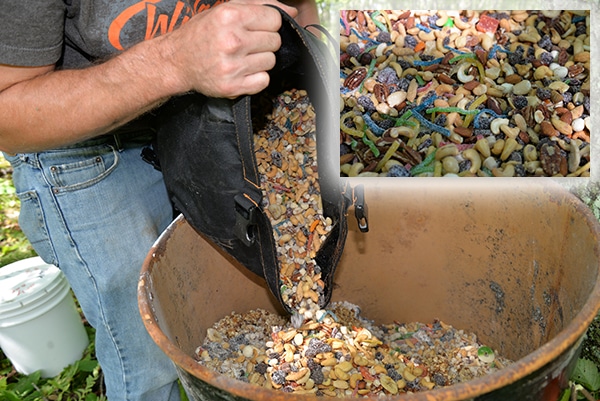
Most hunters opt for bread-based baits, but those can get soggy and moldy in a hurry. The author prefers trail mix, which contains nuts and dehydrated fruit—two things the bears need in their diet. Plus, trail mix is more naturally weather resistant than most baits.
Baiting Black Bears
The key to drawing in bears where others are hunting involves giving them something the others are not. This is a tricky proposition and involves sourcing the right kinds of baits. Over the years, I’ve come to rely heavily on trail mix. It seems like no matter what kind of bait I put out, the bruins eat the trail mix first. They’ll eat gummies, frosting, doughnuts or whatever, but they eat the trail mix first.
That’s important for a few reasons. It has nuts, dehydrated fruit, and other things the bears need in their diet. It also means there can be some competition for the available trail mix every day. If you’ve got a couple of bears hitting your site, you’ll be prone to having more daylight visits as the bears try to be the first to fill their bellies.
Trail mix offers another benefit, as do certain gummies and candies — they’re more weather resistant. If you can’t bait in a covered barrel, your bait is going to be exposed to rain. Doughnuts, wafer cookies and pretty much anything bread-based is going to turn to a soggy mess. That doesn’t mean the bears won’t still eat it, because they might not. But I’d rather have something out that is more appealing than a glob of doughy sugar. This is especially true if there’s plenty of competition amongst bear baiters.
5 Affordable Bucket List Hunts (That Won’t Break the Bank)
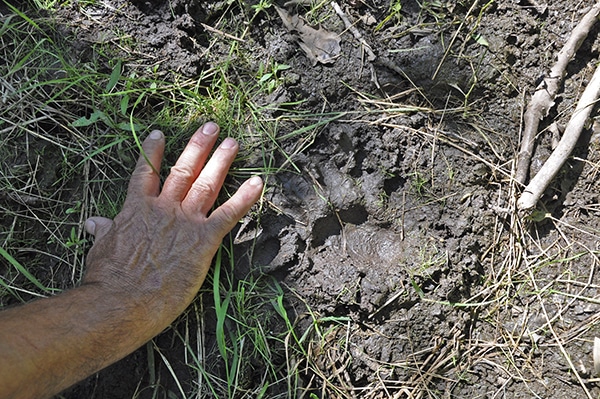
In areas with low bear numbers and high hunter numbers, you’ve got to out-bait and out-hunt the competition. Oftentimes, that means baiting right through to the end of the season when most of the other hunters have tagged out or given up.
Time Your Bear Hunt
It seems as if everyone starts baiting as soon as it’s allowed, but a couple of weeks into the season a lot of hunters lose that initial fervor. That means the back half of your season can be much better than the front, simply from a diminishing food-supply standard. This is even more true when you consider natural food sources can also start to disappear.
Stick it out if you have to and keep baiting. Eventually, a bruin will learn that your buffet is the most restocked feast in the woods, and he’ll be in line every day.
5 Best Spring Black Bear Hunts (in Canada)
Earn Your Black Bear
Black bear hunting is work, there’s no way around it unless you opt for an outfitted hunt (and even then someone is doing a lot of work, just not you). It’s also one of the most rewarding hunts because of the labor necessary to succeed. There’s something so cool about lugging bait into the woods during late August and September and waiting for just the right time to sit. And if you’ve never been on a bear stand, over a freshly hit bait, as the sun sets and the woods settle … you’re missing out on something truly exciting.
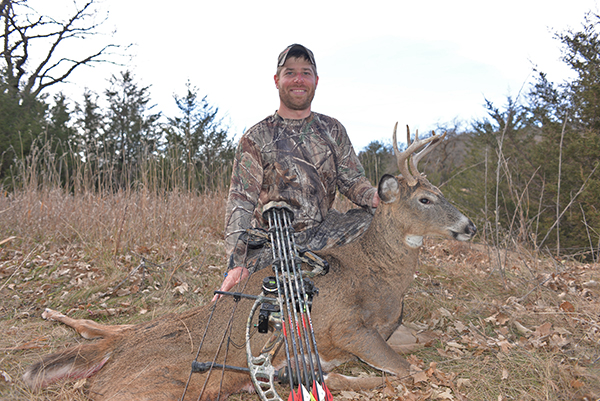 If the recent flare-up over Walter Palmer’s infamous lion incident tells us anything, it’s that pure trophy hunting is ugly to the masses. This is really no surprise, especially when it comes to “megafauna” such as lions and elephants. Here in the lower tax brackets, where the whitetail is king, it’s much easier to ignore the perceptions of the antis and the non-hunters. But we shouldn’t be so naïve as to think that trophy hunting for deer is doing us any favors, either.
It’s a rare day that I meet someone who is a deer hunter solely to collect large sets of antlers, but it’s not as rare as it once was. This is where things get a bit tricky for me, because I love the fact that we are able to hunt for any reason we desire. If it’s inches of bone that matters to you, so be it. Whether decorating your mantel is the sole reason for the hunt or not, who am I to deem your motives good or bad? Still, there is a point when I start to care about my fellow hunters’ motivations. My personal tipping point occurs when the non-hunting public is exposed to reasoning that sours its opinion of hunters in general.
We’ll Settle for Acceptance
Perhaps one of the toughest tasks for any hunter is to explain to someone why he or she hunts. Or why he or she loves to hunt. Most of us have multiple reasons. One is likely that feeling deep inside of us that begs us to do more than merely watch nature run its course. If you’re like me, there is a primal need to act—to participate in the entire process—an almost mystical, nearly magnetic draw. For many of us this powerful feeling is undeniable; it’s also plenty fulfilling to indulge.
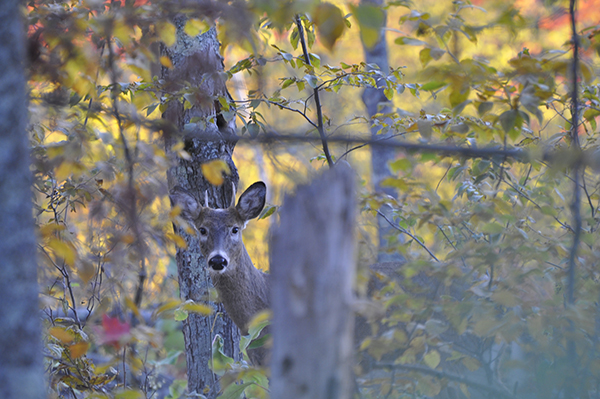 History has proven that the nonhunting public will approve of what we do, as long as we eat what we kill. Are you projecting a positive hunting image?
The non-hunting public—those pesky folks who weigh heavily on our available hunt opportunities and, ultimately, will decide our fate as hunters—may never understand our need to hunt. And that’s okay, I believe, as long as they accept us for what most of us are: average people who love to hunt and enjoy the spoils of our success that include, first and foremost, the meat.
It’s become increasingly clear that the key to our overall societal acceptance lies in eating what we kill. When we choose to do away with this time-honored hunt tradition—in lieu of the singular goal of seeking trophy heads for our walls—all of us lose. It’s really that simple.
Fantasy vs. Reality
I’m always telling fellow hunters that there are about three people in their lives who truly care about the size of the deer they kill. Everyone else is merely pretending. Because of this sobering fact, it’s best to kill what makes you happy. If that animal is a 43-inch six-pointer, shoot it. If something larger is what you’re looking for, fine. But be realistic about your expectations.
There is a lot of pressure these days to “compete” in the deer world, but the most-common litmus test used to see if your latest buck “measures up” is bunk. Outdoor television, arguably the worst thing to happen to hunters overall, is great at showing bucks that were grown to be killed. Most shows are full of hunters who didn’t burn a calorie to kill a big deer, or any other critter for that matter. I know this because I’ve been there and done that. Several times. And tasting “success” has never been difficult.
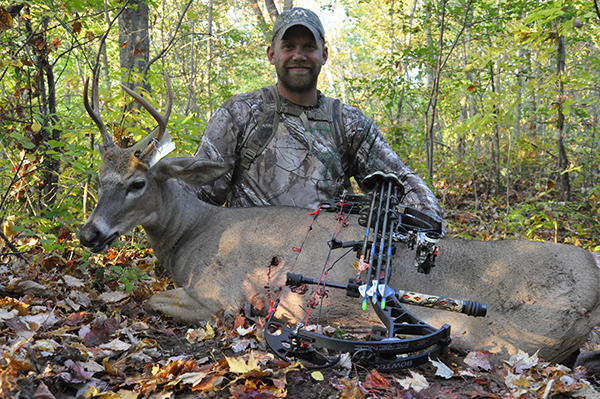 The reality of hunting is very few people actually care about the size of deer you kill. Because of that, it’s best to hunt for what makes you happy. If that is a young buck, fawn or whatever, go for it. You’ll have more fun hunting to your own standards than someone else’s.
To me, TV hunting would be fine if we were honest about one major point: That an awful lot of it exists simply for entertainment—and that, most of the time, the “hero hosts” haven’t done a thing to be successful other than making the shot. Of course, this is not how much of the viewing audience sees things. Today, we have scads of hunters throughout the country who speak in terms of “young 125-inchers,” or “decent 140s-type bucks.” Are you kidding me? Most hunters will never get a chance at a true 140-inch buck over an entire season. And when (or if) they do, the odds are stacked heavily in the deer’s favor.
 You can’t kill trophy bucks if none exist on the properties you hunt. The best hunters make the most of their situation, and hold themselves to the highest ethical standards.
Big bucks are awesome, but so are little bucks. Does and fawns aren’t bad either. When it comes right down to it, several fine meals of lean, protein-rich venison, for many of us, is plenty enough reason to squeeze a trigger or let an arrow fly. My message here is simple: Hunt for each one of your very own reasons. You’ll be much happier for the effort, and as a whole, we as hunters will be better off for years to come because of it. If one of your reasons is to obtain an eye-popping trophy, fine. I understand the feeling completely; I love mature bucks as much as anyone. But if their headgear is your sole motivation, please keep that info to yourself, or at least within your inner circle of close hunting friends.
Producing Under Pressure
I’d be willing to bet the average hunter hailing from truly hard-hunted states like Pennsylvania or North Carolina could out-hunt most other hunters in the country. I know that’s a broad-stroke statement, but having hunted a ton of public land over the years, I can safely say that hunting pressure is what makes hunting the most difficult.
Hunting pressure is the reason why so much of the deer hunting information you see on television is almost totally absurd. Most offending footage of which I speak comes from tightly controlled properties where the local bucks don’t risk death, or danger of most any sort, until they are at least 5.5 years old. So it’s no wonder they are on their feet during most all hours of the day. Does showing game activity and/or hunting techniques in places like that really help you? I think not.
 A love of venison is a great way to keep the masses on our side, just as espousing pure trophy hunting is a way to turn them away. All of us need to choose wisely.
To me, the best hunters are those who make the most of their specific situation. If you’re a “weekend warrior” in a hard-hunted area, killing any deer consistently is probably the mark of a good hunter. If you’ve got 1,000 acres all to yourself in southern Iowa, I’m not likely to be impressed unless you consistently kill Booners. Because you should.
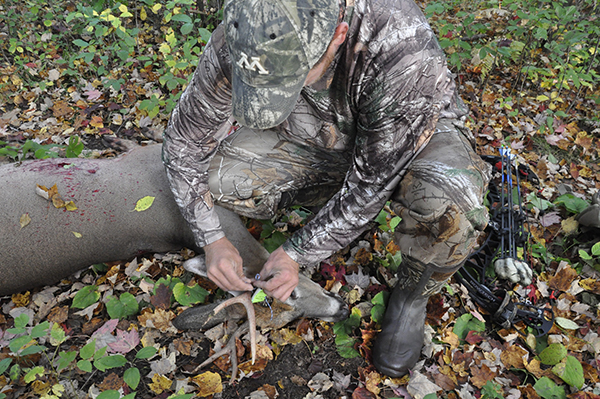 The measure of a good hunter rarely boils down to inches of antler. Many skilled hunters must haunt heavily pressured public lands, where “huge” bucks are scarce.
Somewhere between the two examples above is where most of us fall. If you fit in this group, your mission this fall should be simple. Hunt the deer that challenge you, the specimens that get your heart racing. Most importantly, aim for the deer that make you happy. Through it all, compare yourself not to television hunters, but to those who have truly earned your respect. People you’ve met with a reputation for ethical behavior first, and consistent success second. Emulate those hunters, and you’ll do the entire lot of us a huge favor. And for that, I say thank you in advance.
I don’t know if it’s his tendency to stand in the wide open during the middle of the day. Or perhaps his ability to create a sudden mile of distance between us in roughly the same amount of time it takes me to curse under my breath and wipe the lenses of my binoculars clean with a shirttail. It might be his more-than-passing resemblance to a few African critters.
I don’t know what it is.
What I do know is that antelope have their hooks in me and I can’t shake the draw of bowhunting them. And it’s not the suffocating confines of a waterhole blind that calls to me every August… that stuff is for a different kind of hunter. I want the open prairie and the challenge of beating the best eyes in the business on even ground.
Spotting and stalking antelope with a bow is a lesson in humility 99 percent of the time. Failure on the prairie is different than the deer woods or the elk mountains, because with antelope you can always see the damn things. They are always there, tan-and-white and always on the cusp of deciding they’ve had enough of your crawling in their general direction.
That 1 percent of the time though, when they’ve fed into a draw or too close to a bit of hands-and-knees-hunter-height sage brush—that brings a feeling of serious accomplishment. And if the arrow flies true, some of the best meat out there.
A Free-for-All
The beginning of a proper antelope hunt should start with finding a place to hunt. Guided hunts are pretty common, but the beauty of antelope in my eyes is that they are available on public land in good numbers, in several states. National Grasslands throughout the west will have decent populations of antelope, and in most states, easy-to-obtain tags. Better yet, a nonresident antelope tag will cost you much less than a typical deer or elk tag.

A Shadeless Camp
On most of that public land you’ll be able to pitch a tent and declare a temporary home wherever the mood strikes you. The downside is that open fires are almost always a no-no, given the timing of the antelope season and the arid land they inhabit. A propane stove on the tailgate of a pickup will work just fine for meals, and quite frankly, during most antelope hunts you’re not going to want to sit by an open fire anyway. If you’re not a hunt-all-day kind of bowhunter, invest in a battery-operated fan for your tent to make mid-day naps somewhat tolerable.

The View
Sunset on the prairie tends to be an awe-inspiring event. Ditto for sunrise. If you’ve watched the sun set, you’ve probably also watched a few antelope doing their thing. After breakfast the next morning, get back on them. They’re usually pretty easy to relocate in the morning, and that means when you’re laying in the tent thinking of the goats you watched at dusk, you know that you’re going to be in the game right from the get-go in the morning. It can be tough to sleep and easy to rise with the alarm, which is how all hunting should be.
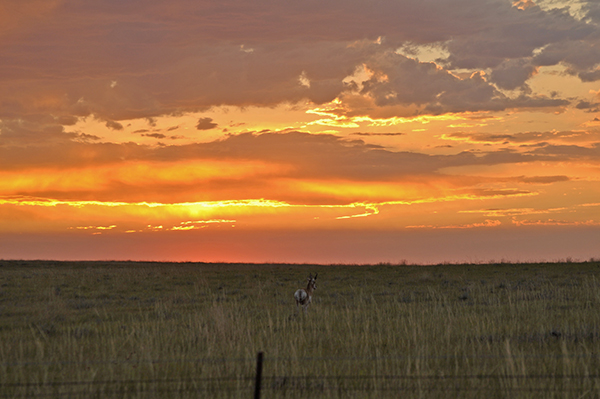
Getting Busted
If you’re of the easily discouraged variety of hunter, you might want to stick to the whitetail woods because antelope will beat you far more often than you beat them. Stalking them with a bow is no joke. Prepare to get busted, a lot. After a few blown stalks you’ll start to realize that even though the antelope are visible, they aren’t always approachable. Learn to find the goat that has tipped the odds in your favor and spend your time on him. And go slow. Even when they’re on their feet and feeding, antelope don’t move as much as it appears. That is, of course, until they decide to go somewhere—and then they’ll be gone.
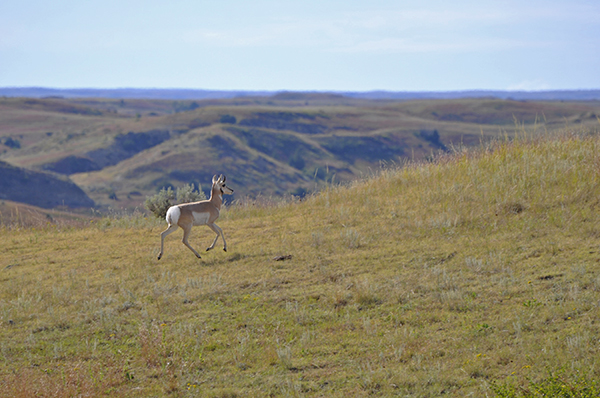
Trophy This, Trophy That
A big goat will sport horns of at least 12 or 13 inches in height. A “good” goat, on public land, taken by spotting and stalking with archery equipment will be any goat. If your tag is good for either sex, stalk every antelope you can. If you’re looking for the boys, stalk every legal male you can. This is not the type of hunt to be picky on, especially if you’re new to antelope hunting. If you decide it’s Pope & Young or nothing, you’ll get in very few stalks and are almost guaranteed tag soup. Lower your standards, hunt everything and have fun.

Watch for Danger
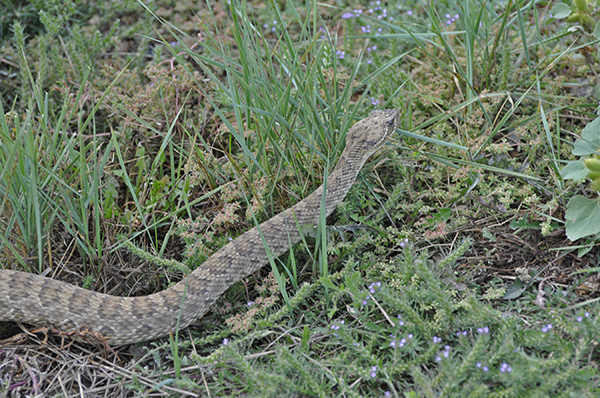
It’s easy to look at the wide-open prairies and assume there isn’t any danger out there. This, unfortunately, isn’t true. I once showed up to a new area in South Dakota and pitched a camp in the dark. When I awoke before sunup I realized I was surrounded, and I mean surrounded, by hump-backed bulls. The whole pasture was covered in them, and they didn’t particularly like my intrusion into their buffet. Rattlesnakes are also another concern, and I’ve had enough close calls to realize that it’s always a good idea to give the potential of an encounter some respect.
Take the Shot
If you’re good out to 20 or 30 yards but sketchy any farther out, you’re not ready for antelope. Some folks will say there’s no need to shoot farther than that, but those folks also tend to live in antelope country and either have unlimited time to spotand stalk, or they’re ambush hunters. Most of my antelope shots have been between 30 and 60 yards. That’s reality, and you better be very comfortable with your rangefinder and shooting off of your butt or knees. The upside of the longer shots is that antelope at that distance aren’t string jumpers, and they’re designed with an excellent demarcation line on their sides to aim at.

A Last Resort
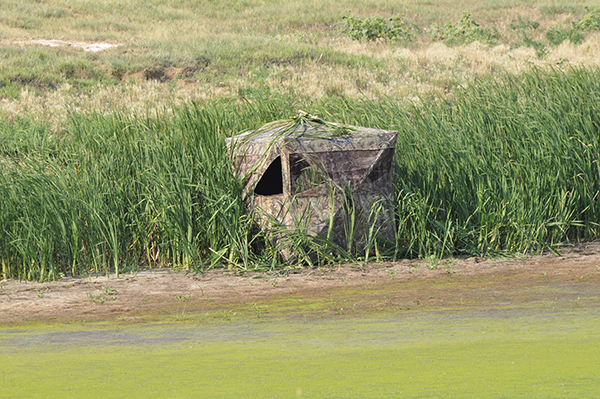
One time of my life I got my tail kicked so bad spotting and stalking that I set up a blind on a waterhole. The 12 hours I spent in the confines of that pop-up were terrible, and while I did have a pair of antelope come in, they never offered a shot. It was 30 seconds of excitement and the rest was torture. I might have killed one if I had waited it out, but I want to have fun when I’m hunting and that wasn’t fun. Spotting and stalking, while much more difficult, is also much more enjoyable. If, for whatever reason, you can’t handle another day of watching diaper-butts disappear in the distance, try the blind thing. You’ll see what I mean.
Great Success
Just like bears and mature whitetails during the rut, antelope have a bad reputation meat-wise. In my experience, this is insane. I’d rather eat antelope than elk. I did have one Wyoming antelope that simply didn’t taste that great, but it was my fault. I shot him and threw him in the back of my truck with some ice in his chest cavity. A 12-hour drive didn’t treat that goat too well, and I’m to blame for it. The rest of the antelope I’ve shot, I’ve field dressed and butchered quickly. Every one of them has been delicious. If you get lucky and make a good shot, take your pictures, admire your animal, and then get to work. At the very least get him pieced out and on ice in a cooler. You won’t regret hustling to get the job done the first time you grill out.

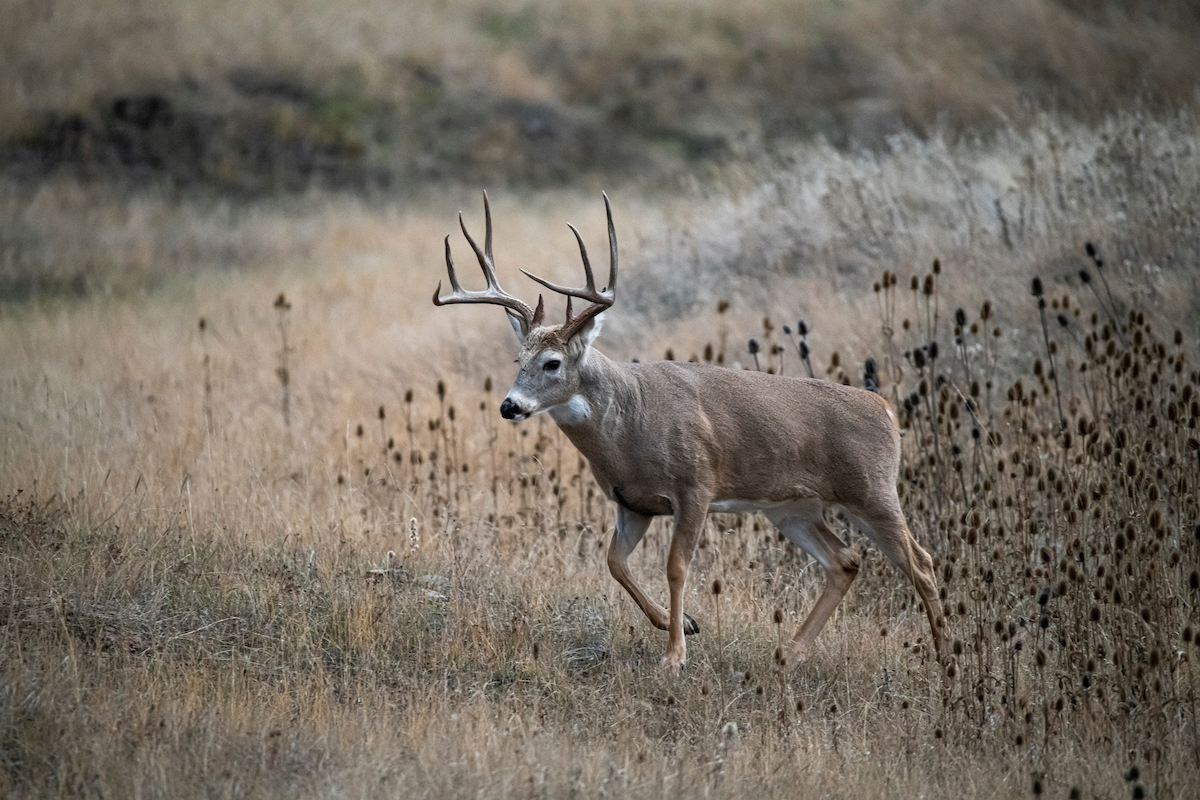
It's possible to find big public-land whitetails. But it takes skill, effort and maybe even a big-buck blessing.
Hunting rutting whitetails on public land sometimes requires kindergarten-teacher levels of patience. Not because of the deer, but because of dealing with “other” hunters. For those, we deliver a guide on public land rut hunting tips to avoid other deer hunters.
To be fair, not all hunters deserve the label. Most don’t, in fact. Most of them are just out there trying to take advantage of the deer magic associated with the time of the year. There are others though, who clearly don’t know what they’re doing.
I’m not judging inexperienced hunters here, because we’ve all been there. You don’t know what you don’t know. However, it’s those folks, and others who lack the basic deer hunting skills that make public land much more difficult to hunt for everyone. That’s the reality of more hunting pressure, and on Uncle Sam’s ground, it’s unavoidable. This is especially true once the kids are finished trick-or-treating and it’s suddenly November. To work around this influx of hunters possessing vastly different levels of whitetail savvy, a public-land hunter looking to fill his tag needs to go the contrarian route in nearly every way. And that all starts with location.
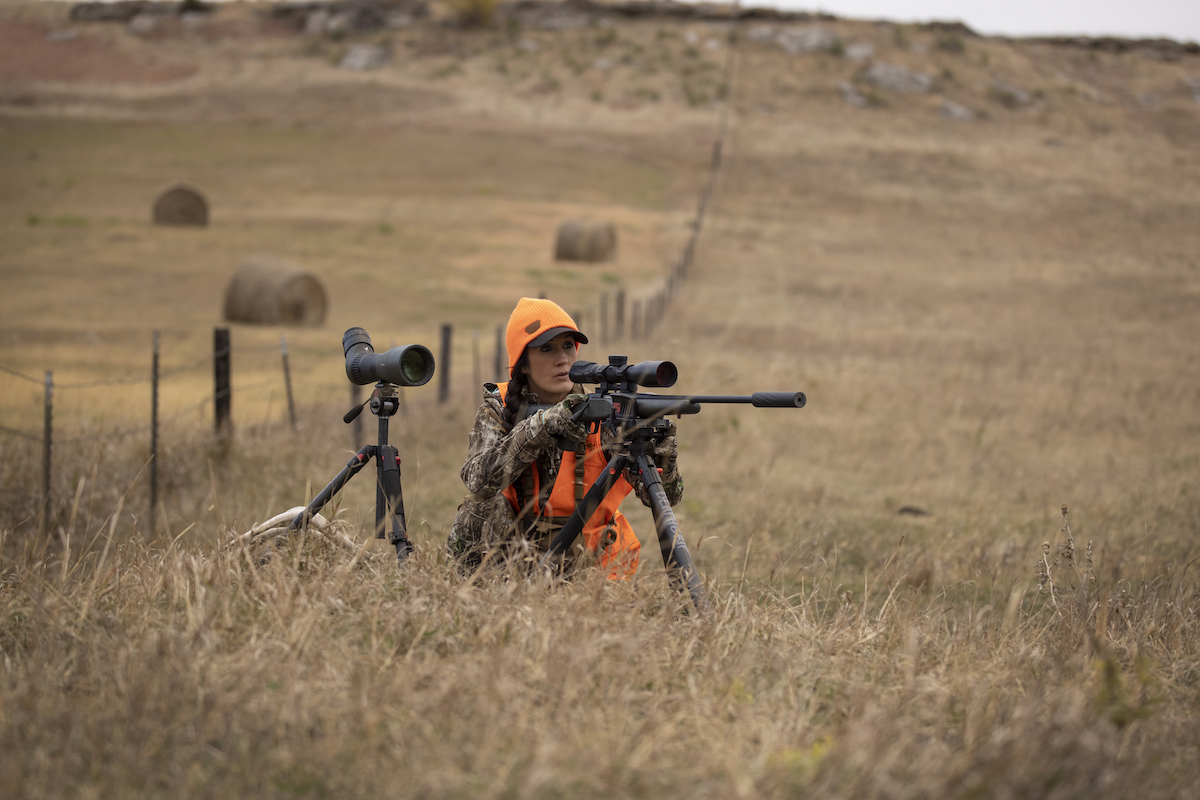
Hunting borders where private and public land meet is a very real and effective tactic. Just be courteous and considerate toward hunters on the nearby private ground.
Step 1: Find Overlooked Areas
During a rut-hunting trip to a few Walk-In Areas in South Dakota, I thought the agricultural fields on the public ground would be the ticket. I didn’t anticipate much pressure in my chosen location. What I was quickly reminded of, is that it doesn’t take much field-edge pressure to ruin the hunting. This point was driven home as I watched a sweating hunter bang a full-bodied buck decoy on every piece of brush he could as he walked past my blind. I needed to re-think where the deer would choose to be to do their thing and avoid the two-legged predators.
That led to some time sitting on peaks, observing. What I saw was whitetail movement that centered on winter grass, some kind of volunteer clover sprouting up on the hillsides, and a litany of browse, like the red tops of sumac bushes. The deer I saw were living in areas much more suited to mule deer.
With that info, I scoured my aerial photos to try to find a few ponds tucked into no-man’s land thinking that all of those deer browsing and chasing on the ridgetops would eventually get thirsty. The first waterhole I hiked into had a buck on it at 11 a.m., and so I hung a stand and got out. The hope was to play off of the hot weather and the fact that with the weekend, more hunters were likely to pile into the no-brainer spots.
4 Reasons You Need HuntStand Pro’s Property Info Layer
It took only two hours perched over that pond before two bucks chased a doe fawn past me. The second deer, an oddball non-typical, caught an arrow as he grunted his way through. He died 40 yards from my stand, tucked deep into an area of the Missouri River Breaks that didn’t look anything like typical whitetail ground.
Make a plan to find several areas that might hold deer, and resign yourself to the fact that the best-looking stuff will be covered in competition. This is tough to stomach, but can actually work in your favor. Hunt the thick stuff, well away from the fields, and you’ll find more deer. The farther the better for the most part, but remember that overlooked is overlooked. The spot I arrowed my South Dakota buck was only half of a mile from a road, which is much closer than I thought I’d be if I filled my tag.
UPGRADE TO HUNTSTAND PRO WHITETAIL
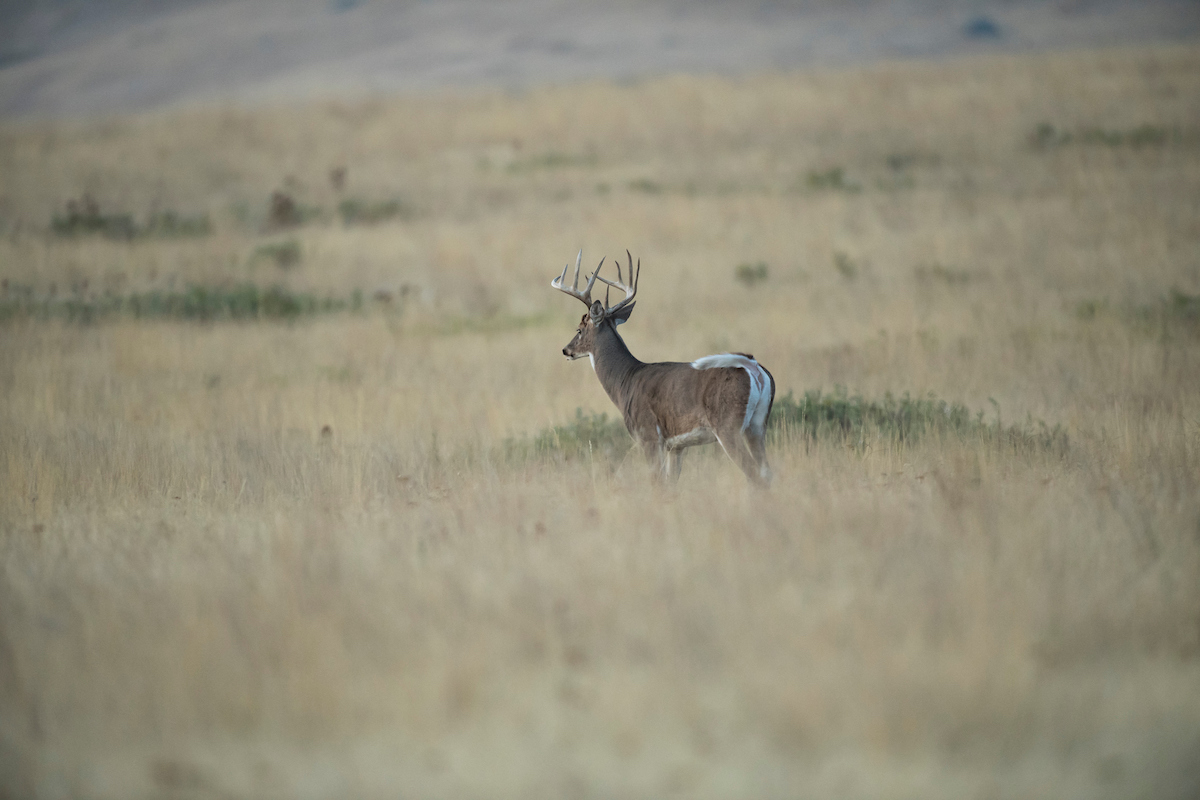
Finding public-land whitetails takes considerable thought and planning, especially when other hunters start pressuring areas.
Step 2: Forget the Gimmicks
All those other hunters who are going to be jockeying into position for the same deer you’re hunting have one thing in common: get-rich-quick products. They’ll have rattle bags, calls, scents, lures, and decoys. And they’ll use them. All might work, but the reality on public ground is that it’s a far better bet to go find where deer like to be and hunt them there. This is something that can really only be learned by experience, but it’s almost a better bet on public land to simply stay quiet and wait out natural movement.
On public land, most deer that make it past 1 1/2 years old have encountered every kind of trick we can throw at them. The ones that fall for any of the tricks usually have a negative encounter with a hunter, which may or may not end up in death. If it doesn’t, they’ve learned a valuable lesson. Those lessons stack up over time, creating deer that are much harder to fool and much easier to spook.
Scout hard, look for fresh sign, and learn to read the terrain for your rut stands. And remember, the thick stuff is your friend. Go where the deer want to be and leave the gimmicks to your competition.
5 Times for All-Day Sits in the Deer Woods
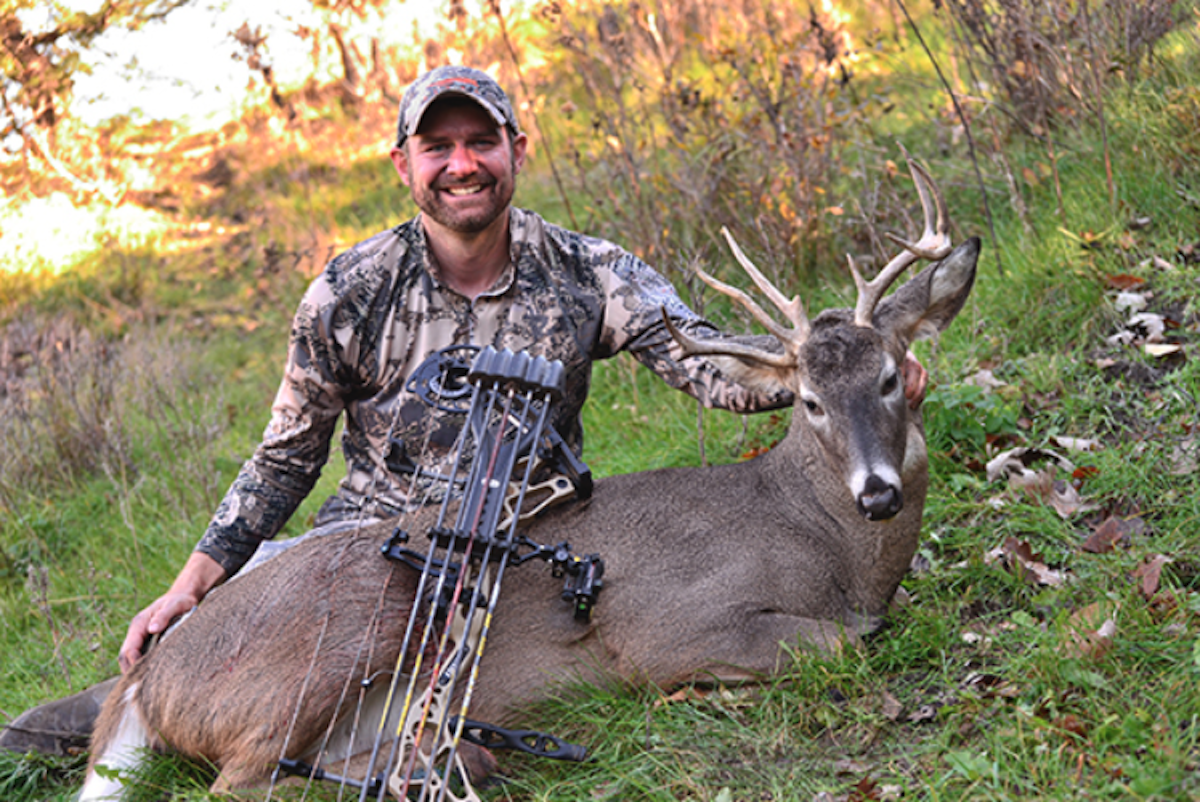
The author poses with a nice rut buck of his own, advice applied, of course.
Step 3: Keep Your Head Straight
A couple of buddies and I spent some time hunting a national grassland down in Oklahoma this fall. Through our scouting efforts, we identified one creek-bottom that was by far the most consistent spot for mature bucks. It also held plenty of bonus turkeys and pigs. On opening night, one of my friends snuck in at 2 p.m. to sit out the evening. Three hours later, two hunters walked right up to his stand.
He was bummed, but not out of the game, which carries a big distinction. Attitude has a lot to do with hunting success, and it’s easy to get frustrated on public land. During the rut, when everyone is out hunting, this can happen daily. How you deal with it will dictate whether you kill a buck or not. If it gets you down and you let your guard slip, you’ll start to get sloppy and become the hunter you’re trying to avoid. If you rally, sit it out, or move to a Plan B or C spot, you’ll keep your odds up. It’s that simple.
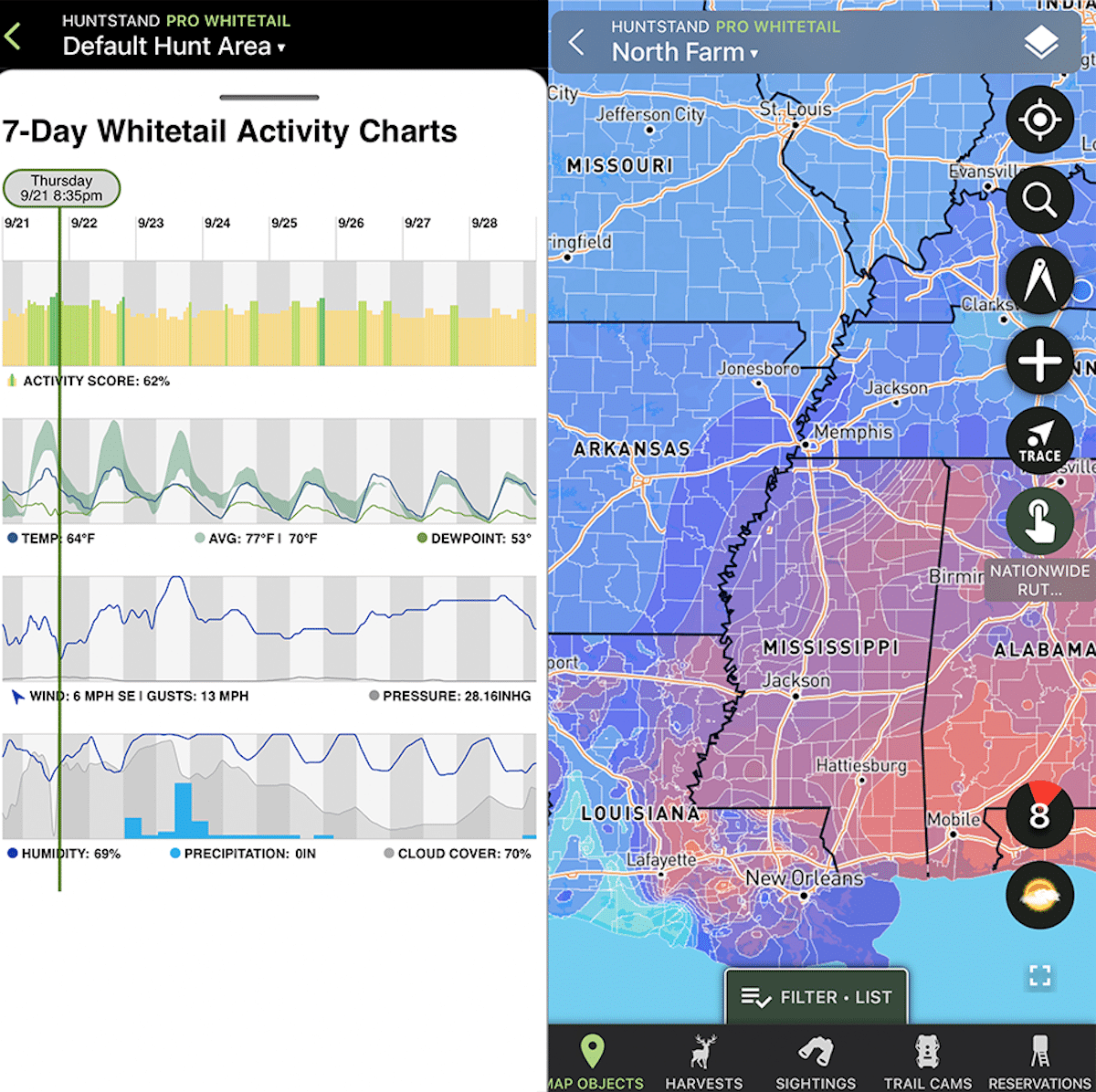
Use HuntStand's Nationwide Rut Map and Whitetail Activity Forecast to choose the best days to hunt.
Smart Synopsis
Conventional deer hunting wisdom doesn’t steer most hunters to totally contrarian hunting styles, but most of the hackneyed deer-speak out there doesn’t come from public land hunters. It comes from folks hunting places where pressure is tightly controlled. To succeed on public land when the general public of the bowhunting community is out in full force, it is necessary to be an individual and do what others aren’t. It’s not easy, but it’s the best way to tag out while others are struggling.
Choosing High-Odds Deer Hunting Days

Study HuntStand's Public Lands app layer to pinpoint potential locations for cameras.
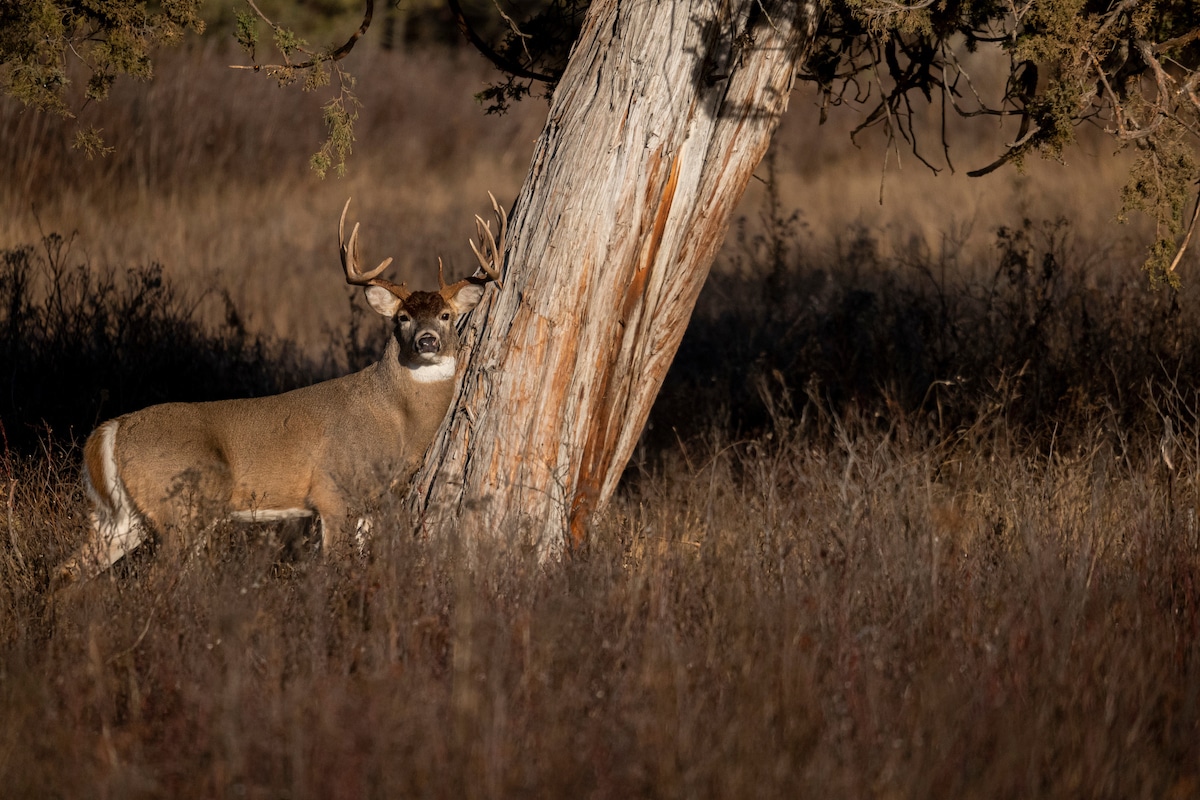
Focus on overlooked areas that other hunters might miss.
These days it’s become increasingly rare to run across a whitetail hunter who doesn’t use trail cameras to scout. But, unfortunately, those who choose to ignore the fine details can wind up doing more harm than good. For the private-land bowhunter, trail cam placement decisions are usually pretty simple. Find the preferred food, or pounded trails leading to that food, and, well, that’s about it. The public-land bowhunter doesn’t usually have that option, and instead needs to consider a few “sneaky spots” deer might be—strategic places that other hunters will likely ignore. Those are the places worth hanging a trail camera on common ground. Here are seven trail cam spots for public-land deer hunters to consider.
1. River and Stream Crossings
If the water is moving, there will usually be a few places the deer prefer to cross. Whether you’re dealing with a small, easily wadeable trout stream or a decent-sized interior river that is dicey for you to cross in chest waders, the deer will have preferred locations for traveling from bank to bank. Find them, and hang your camera to watch over them. Typically, the hottest river crossings show consistent deer movement patterns throughout the season; this means that if you dial into current deer activity at a particular crossing, you don’t need to worry about phase of the rut, seasonal timing, or anything else. Just hunt it.
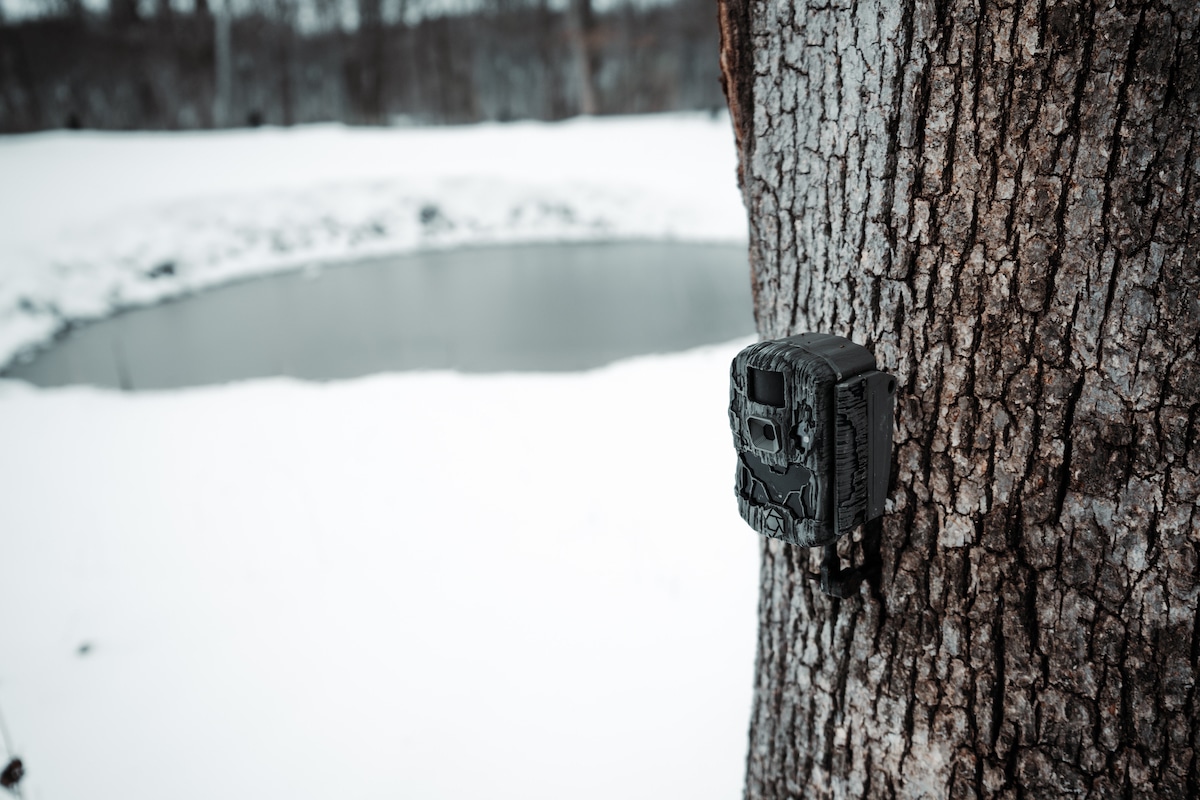
Small, secluded water holes make great camera locations.
2. Isolated Waterholes
Hot crossings are often a no-brainer, but watering holes are a different story. The “obvious” pond sitting 200 yards from a public parking lot is probably a lost cause. Every bowhunter on the place knows about it, and it will get hunted a lot. Skip the obvious water. Check out your aerial photos for smaller water sources—the farther from access points the better—and get in there to check things out. If you have to work to get to water, the deer will use it. Hang your cameras on all of the “sneaky” water sources you can, because just like crossings, they can be good for the entire season.
Natural Food Sources for Deer Every Hunter Should Know
3. Swamp Crossings
Each year, some of the best local whitetails are bagged in some of your area’s nastiest swamps, mostly for obvious reasons. However, finding a place to hang a camera in and around a low, wet swamp can be a tough proposition. So do your primary scouting from home. Find opposing points, or long spines, of high ground that allow for easier travel through the lowland muck, via aerial photography. This is a time-honored big-woods strategy, and can work very well at all times of the season, but especially during the rut. When you’ve identified a few of these spots through digital scouting, hike in and hang some cameras. If the deer want to get from one side of a swamp to the other, they’ll probably pass by your camera.
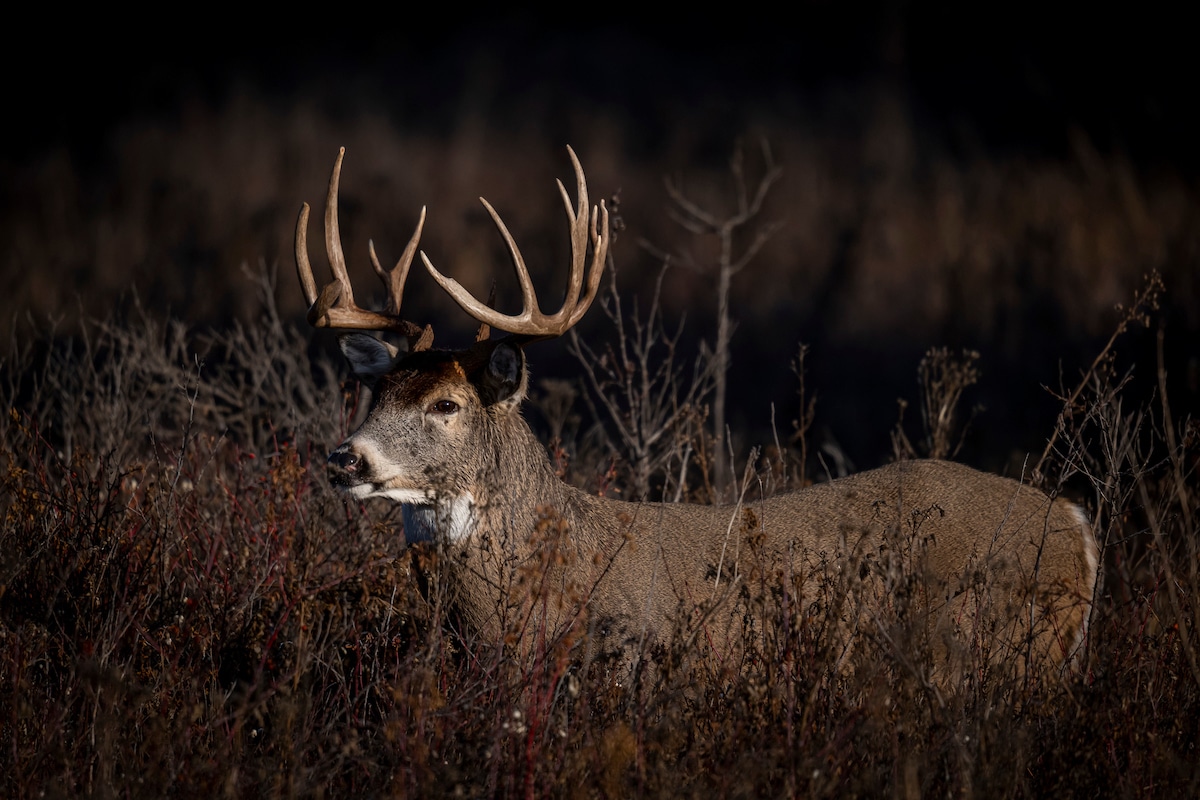
Overlooked islands of cover, and islands of cover surrounded by water, are oftentimes inhabited by big bucks.
4. Islands
If you’re digging into swamps during your digital recon, you’ll probably encounter some isolated “islands” of cover. If your pulse didn’t start to quicken, it should have. Mature bucks love these islands because they offer most every possible advantage as bedding sites. A good buck spending daylight hours on an island can easily hear approaching predators, including bowhunters, but you can build a plan around a suspected sanctuary and use it to develop a solid hunting strategy.
Run cameras to see how a buck accesses, and exits, his island. If you know where he comes from and where he’s going, you can play off of that travel and possibly catch him sneaking out at last light—without ever having to slog your way in to his island sanctuary. Keep in mind that you’ll want to intrude as little as possible, so be sure to play the wind and make every camera check count.
Mature Buck Travel Patterns: Summer Vs. Fall Data
5. Staging Areas
What if your chosen ground lacks streams, rivers, or even a swamp? Don’t worry. You can still hunt like a private-land bowhunter—sort of. In this scenario your goal should be to figure out the “destination food sources” of the local deer herd. These areas might be on public ground, or they might be across the fence beyond the No Trespassing signs. Either way, your challenge is to “reverse-engineer” the travel routes, until you find a spot that looks like it might be a staging area—a place where the local deer linger and otherwise mill about after leaving their day beds, just before entering their preferred feeding area.
Staging areas will usually be within 200 to 400 yards of the “groceries,” especially in areas with good cover. Run a camera or two on the best trails, to start figuring out just who is using them and when. If you identify a good staging area, you’ll be light years ahead of most of your hunting competition, most of whom will likely be setting up right on the local food source. And as a bonus, any direct food source hunting pressure can often make the area’s staging areas even more important—and productive.
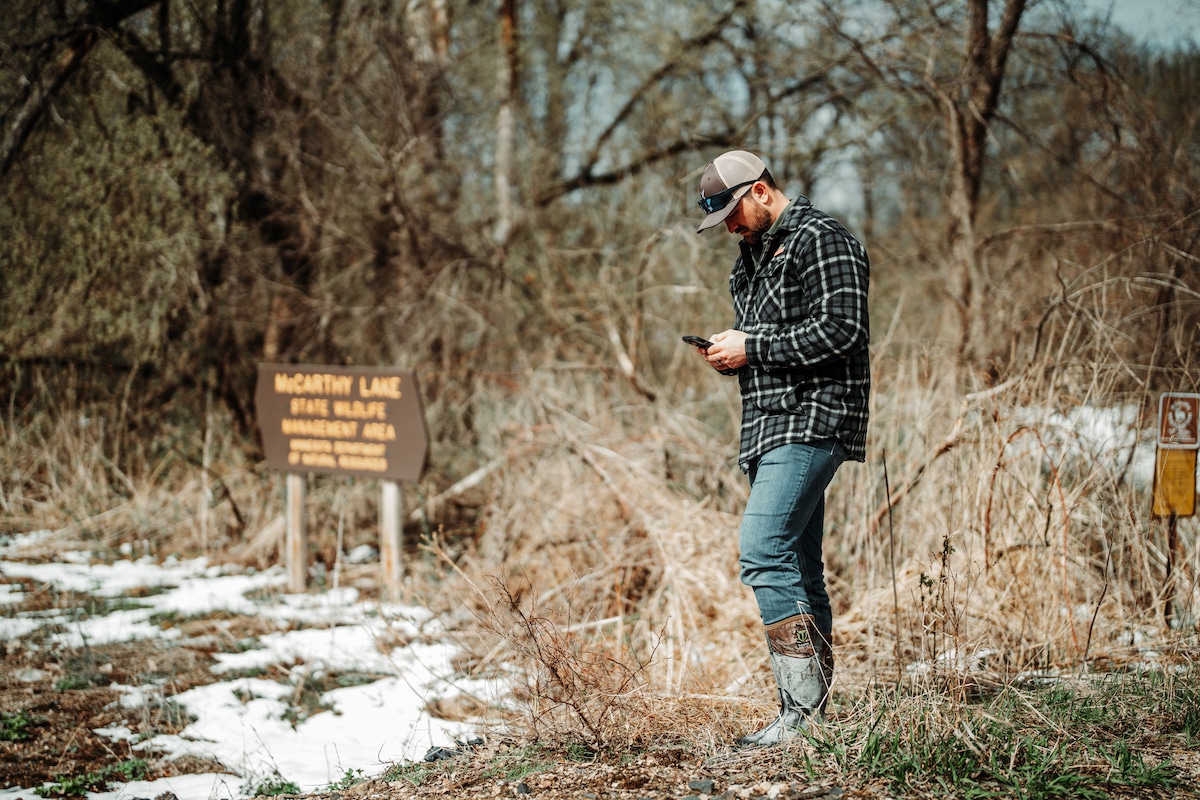
Some areas on public lands go overlooked by other hunters. Find those places.
6. Isolated ‘No-Go’ Zones
Nearly every piece of public land I’ve ever hunted has featured at least one area virtually untouched by human pressure. Sign, as they say, does not lie. Sometimes it’s the five-acre patch of woods by the parking lot that most hunters simply walk right by, or sometimes it’s the ridgetop located a full two miles from easy access that is just too far for most weekend warriors. These spots require an on-site “speed-scouting” mission to verify their potential, but if the deer sign is there and the human sign is not, you should hang a camera and back out. It may seem too simple, but the reality of public-land success often boils down to hunting where other people don’t—or won’t.
How to Hunt Your Neighbors’ Deer
7. Property Boundaries
Much of the deer movement on public land is influenced by what’s happening on nearby private ground. A great way to flesh out this impact is to find well-used fence crossings and monitor them with trail cameras. Some of my best year-to-year spots were discovered this way. Start by walking the perimeter of your chosen parcel and keep an eye out for where the deer leave it to enter private ground. Even if the land doesn’t have a maintained fence, you might find an old rusty three-strander still hanging in certain spots. Where the barbed-wire is busted, broken or sagging, you’ll often find a crossing.
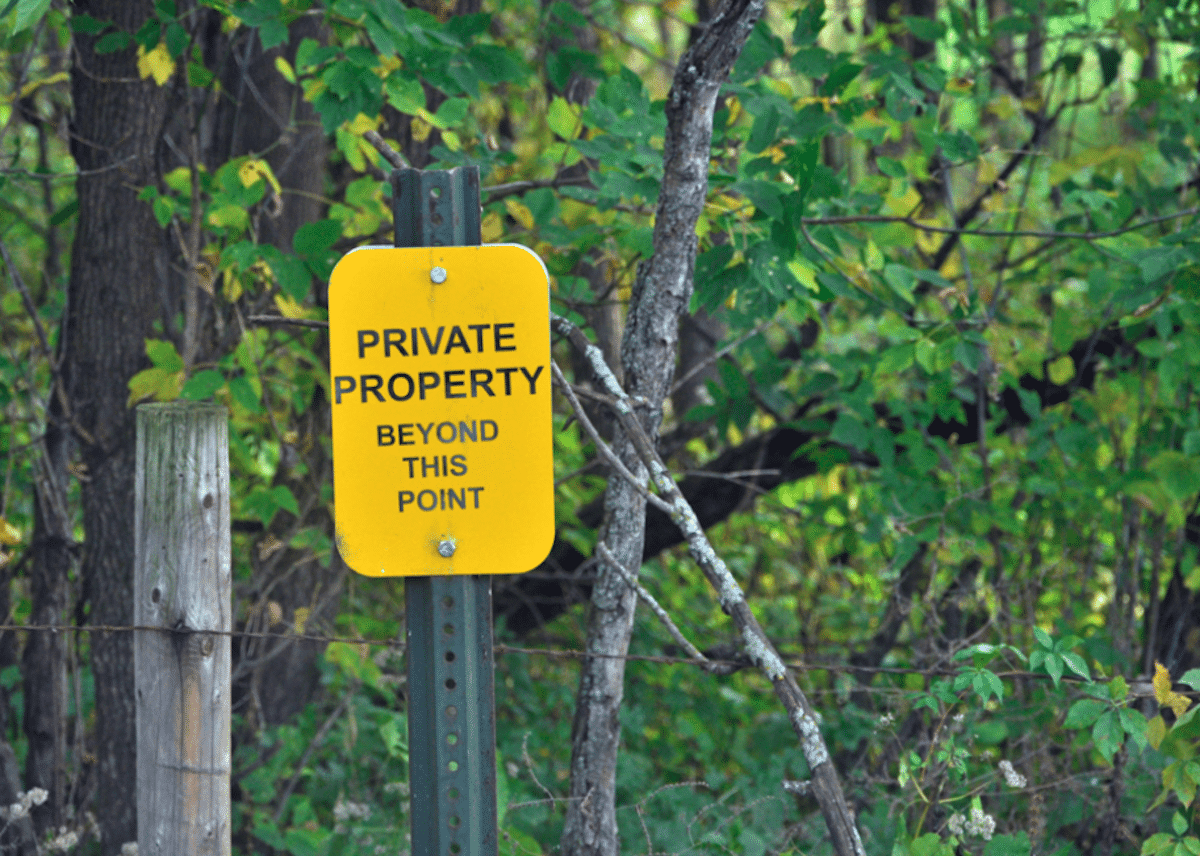
Respecting a property line is important, but don't hesitate to benefit from areas where deer cross over onto public land.
Focus on the Details
I almost always hang my cameras above my head and angle them down, for a few reasons. The first is that this reduces theft. The second is that it cuts down on the number of passing deer that get spooked. Whatever type of “flash” or “no-flash” system your camera utilizes, deer often take notice of cameras showing up in their bedrooms, and they don’t appreciate it. I also use quality SD cards, long-life lithium batteries, and pay special attention to my camera settings. I hate returning to a trail camera that has been in the woods for a month only to realize the batteries died a few days after I hung it, or that I set the date/time wrong. Or worse, never even turned it on. Think about all of these things with every camera setup, and you’ll gather much more useful intel.
As a public-land bowhunter, you don’t have the luxury of a lazy scouting strategy when it comes to trail cameras. You’ve got to out-think and out-work your competition, while attempting to keep tabs on the same bucks that everyone else is trying to keep tabs on. This isn’t easy—nothing about public-land bowhunting ever is—but it is entirely possible if you’re willing to exert a little extra effort right now. Take the time to get out there this summer, and you’ll be setting the stage for fall hunting success.
Early Season Trail Camera Tips [HuntClass]
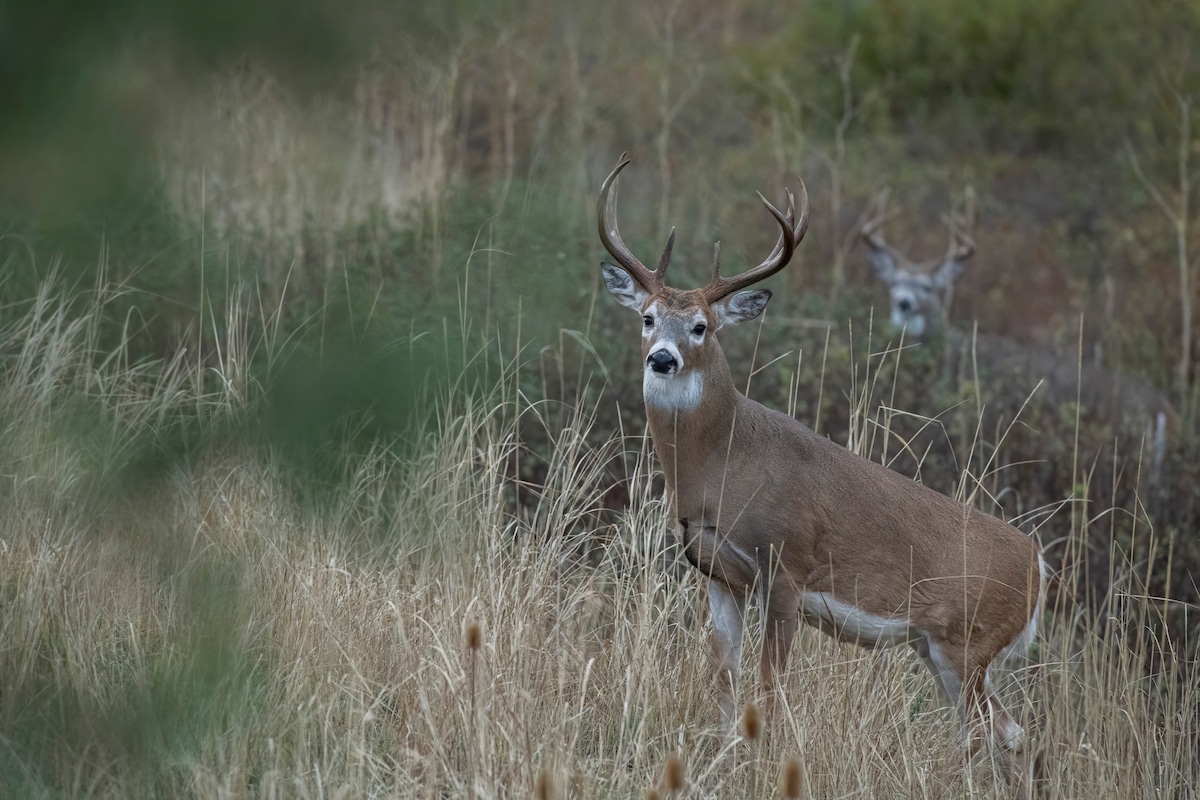
The early archery season can prove quite effective.
The whitetail rut is often touted as the time when anyone can arrow a good buck. Certainly, this much-anticipated period opens a few doors that are otherwise closed throughout the season, but it’s far from a guarantee for most of us. This is particularly true if you live in a state where the general firearm season kicks off during the first half of November. Perhaps, bowhunting whitetails during the early season is better?
In my home state of Minnesota, for example, the latest we’ll see a gun opener is the 9th of November. During some years, it’ll be as early as the 3rd. For hunters in states like Minnesota, or anyone who simply wants to tag out early and move on to other fall pursuits, it’s not all doom and gloom. The answer is often making it a point to hunt opening weekend—and often, the entire first week of the season—a small but important window that can prove to be every bit as productive and consistent as the hallowed rut.
Truth be told, hunting early can even be better than the highly unpredictable rut, with one huge caveat: You’ve got to be properly set up for opening-day success.
Here’s a nine-step plan to help you score early:
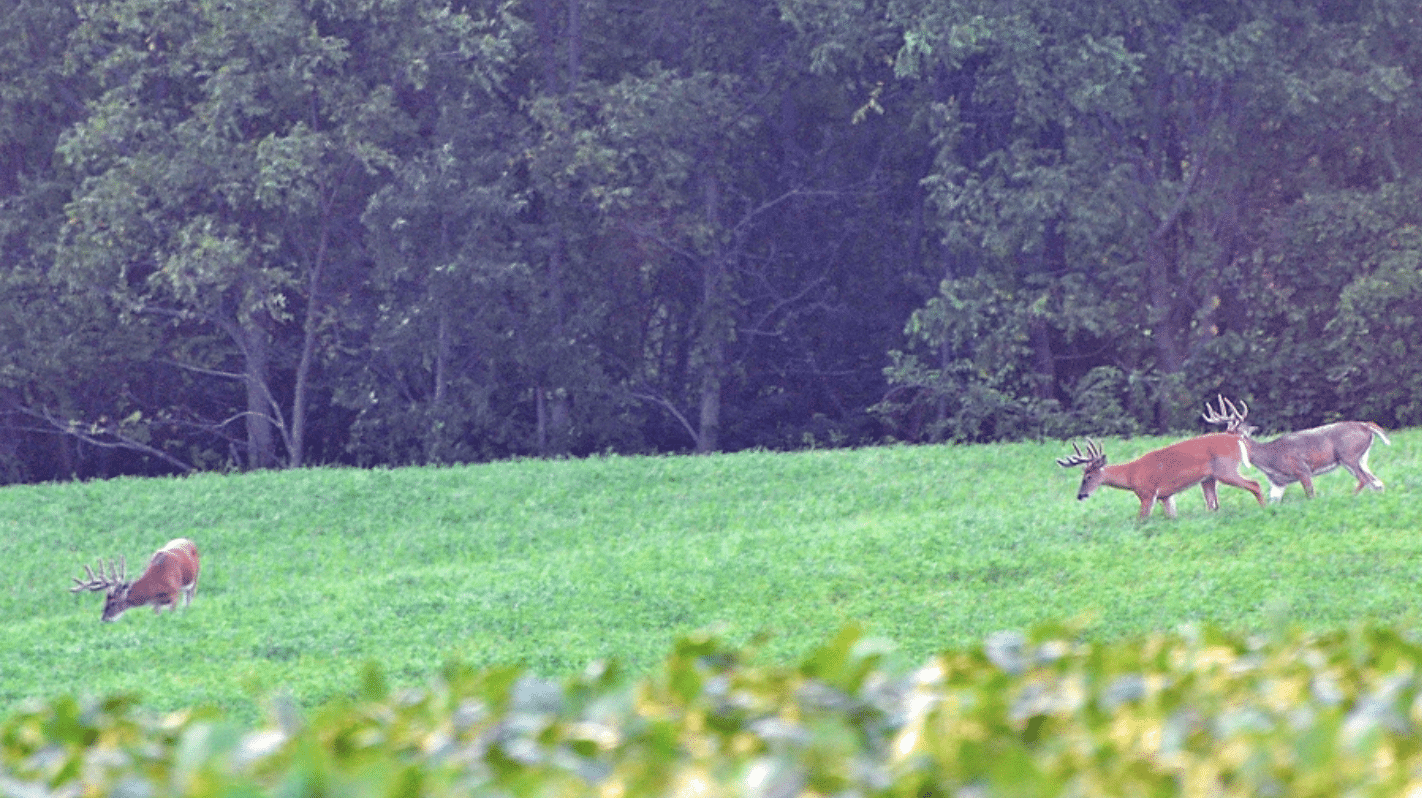
Learn what the deer are feeding on, and increase the odds of success.
Step 1: Figure Out the Food
We often pin our bowhunting hopes on a single, destination food source. This might be the food plot that we put in and worked all spring and summer, or it might simply be a lush alfalfa field on a parcel we’ve got permission to hunt. For public-land bowhunters, it might be a neighboring bean field. Whatever the destination is, figure it out. And don’t stop at one, because that alfalfa field might get cut the night before the season and suddenly become much less attractive. Or the wind might be totally wrong for your food plot. Perhaps the acorns might start dropping the week of the opener. Or,—you get the idea.
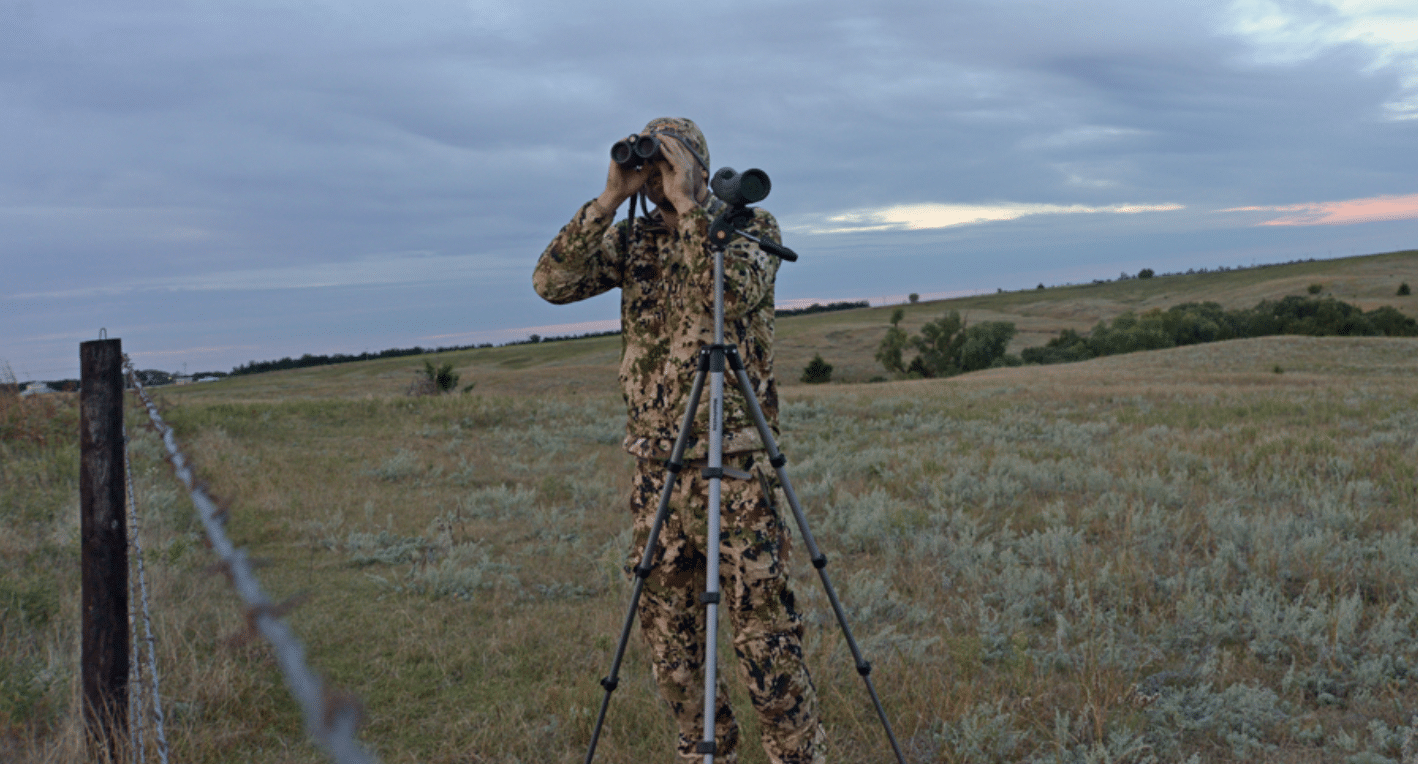
Glassing from afar can help drill down on patterns.
Step 2: Scout to Hunt
The problem with most scouting efforts is that the primary, and often the only, goal is to determine if a good buck is in the neighborhood. Maybe we identify an obvious summer food source, throw up a few cameras, and call it good. And what we find out is what we already knew. To build a solid opening day plan, you’ve got to understand when and why the deer are using the food. And how they get there. This necessitates a two-fold scouting strategy. The most obvious is to watch from a safe distance with your optics. Nothing ground-breaking here, but remember to pay attention to wind direction and all other conditions, each night you’re out. You might find that the bucks that seem so reliable might only take a certain trail when the wind is straight out of the west. If that’s the case, you’d better know it.
How to Protect Your Hunting Spot
Step 3: Advanced Scouting
Not all soybean fields are pool-table flat and provide 100-percent viewing opportunities. Many, particularly those in bluff country, tend to be irregular shaped and often fall off in elevation at the edges. This means you can’t glass where the bucks are likely to be without getting right on top of them. In this scenario it’s time to bring in a few trail cameras, so you miss as little as possible when it comes to usage of a destination food source. If you can’t monitor the food source because it’s on someone else’s property, or at least not located on the public ground you hunt, watch and monitor the suspected travel routes. It’s the best you’ve got.

When possible, hang treestands in advance.
Step 4: Start Building the Plan
Consistent success during opening week involves smart options. The bachelor group hitting the beans is a good start, but what if the beans turn yellow five days before your opener and the deer have vanished? What if the wind is terrible, and you’ve pinned your hopes on a single stand? Don’t do that to yourself. Scout enough to find at least a couple of spots worth sitting, and make sure they don’t all require the same conditions to work. Both south and west winds will probably be blowing over a typical early season stretch, so factor that into your plan.
How to Speed Scout with HuntStand Pro’s Monthly Satellite Imagery
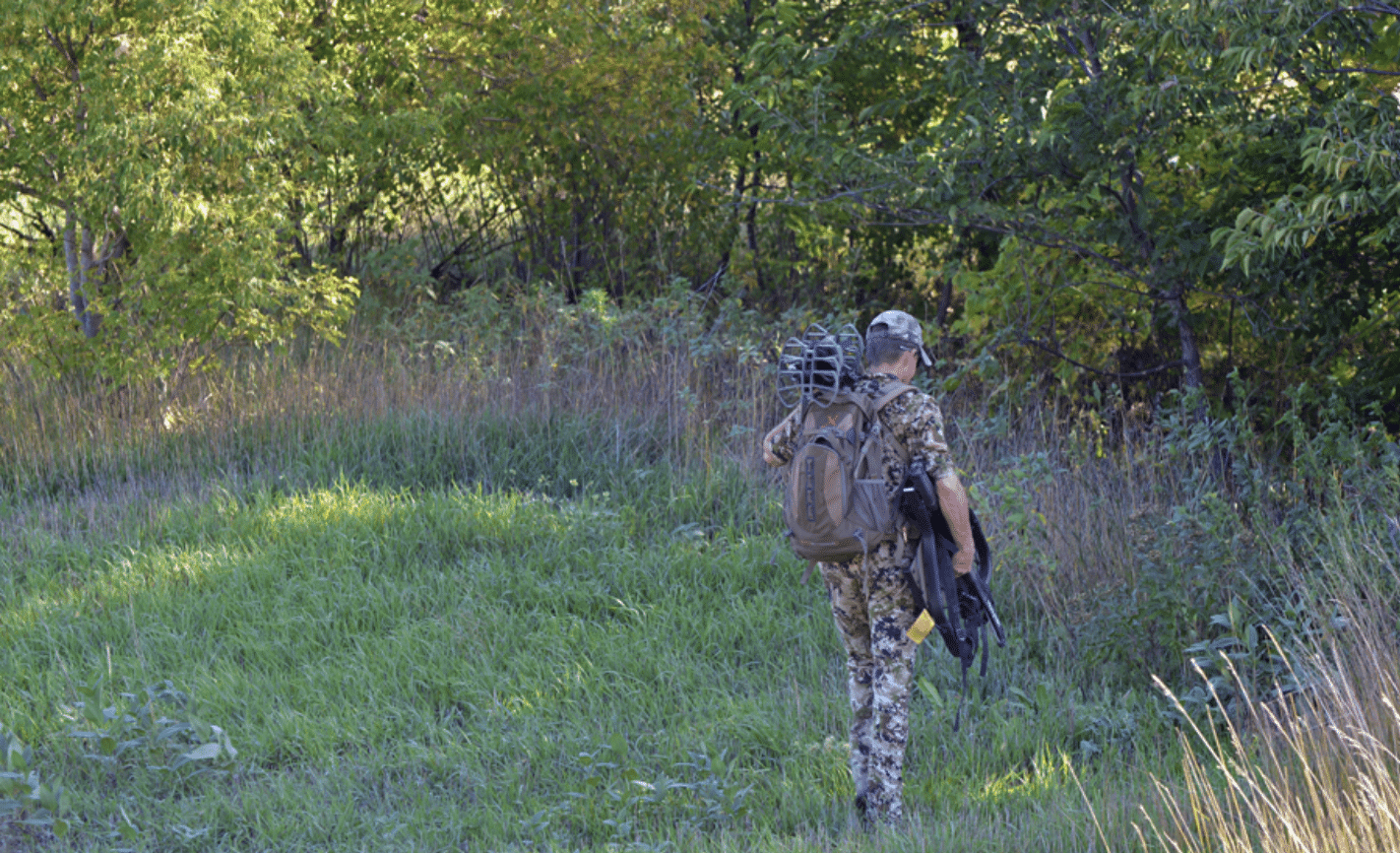
As season nears, it might be better to wait on hanging stands. Instead, once season opens, conduct quiet hang-and-hunt missions.
Step 5: Get ‘Em Up, Get Out
By mid to late August, you should have a good idea of what the local deer are doing. Now is the time to get stands up on private ground. If you’re a public-land bowhunter, you might be able to hang stands ahead of time, or you might just have to scout for suitable trees, and mark the locations of your potential ambush sites. Mark entry and exit routes in HuntStand. Even if you’re on a small property, give yourself at least a few good options.
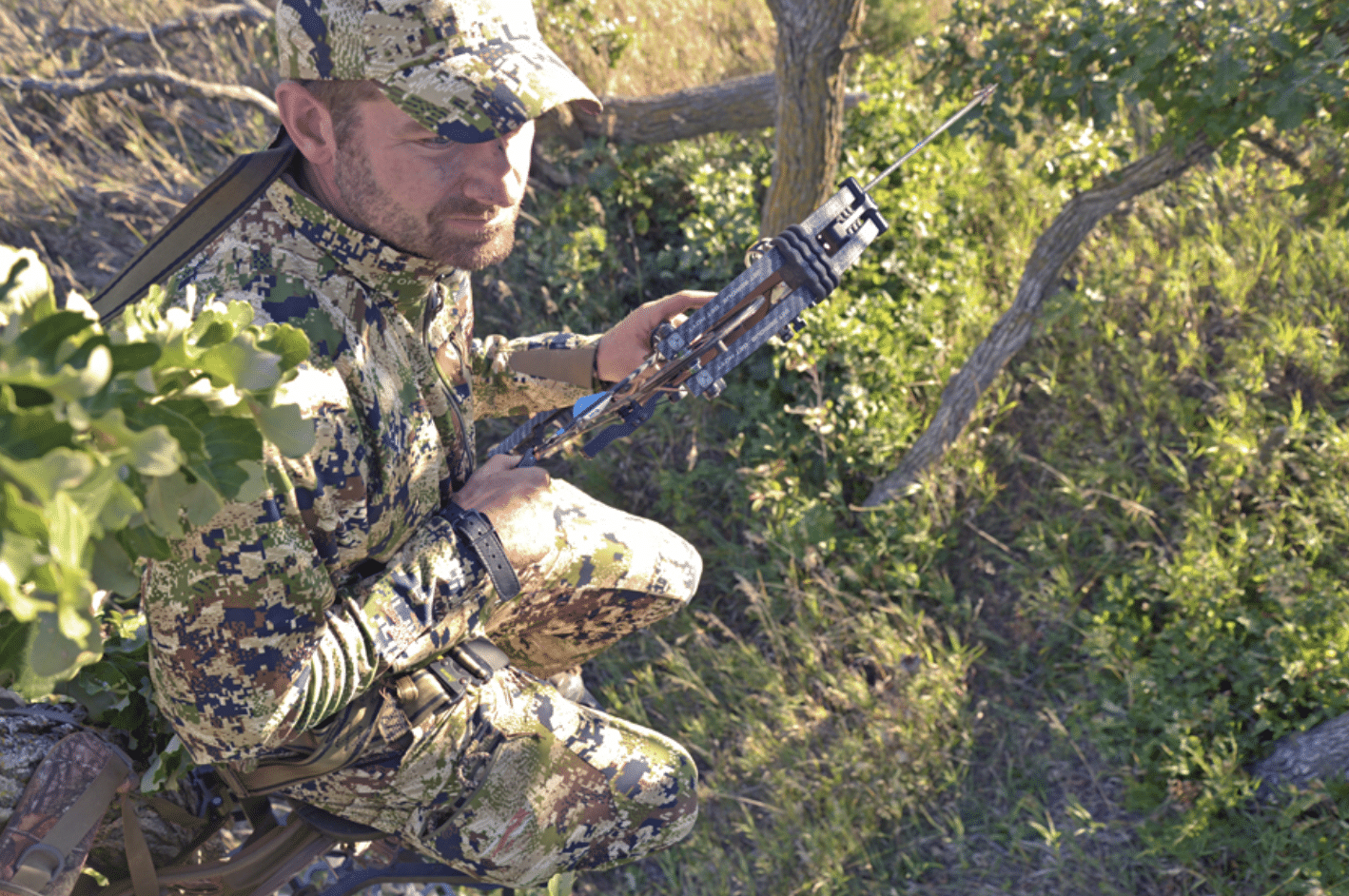
The bow opener comes with risks, but the rewards are great.
Step 6: Know the Opening-Day Risks
The first day of the season is always exciting, but it’s also a time when we feel pressure to put all of our pre-season work to good use. And that pressure can cause us to make critical mistakes. No matter how excited you are, you’ve got to make smart decisions. If the conditions are absolutely right for your best spot, get in there. If not, move on to Plan B. Even in states with a late opener, you’ve probably got a few days of reliable patterns before the pressure and changing conditions blow them up. For the private-land hunter, that might be a week. For the public-land hunter, it might be two days. Plan accordingly.
Find Better Deer Stand Sites with HuntStand Pro
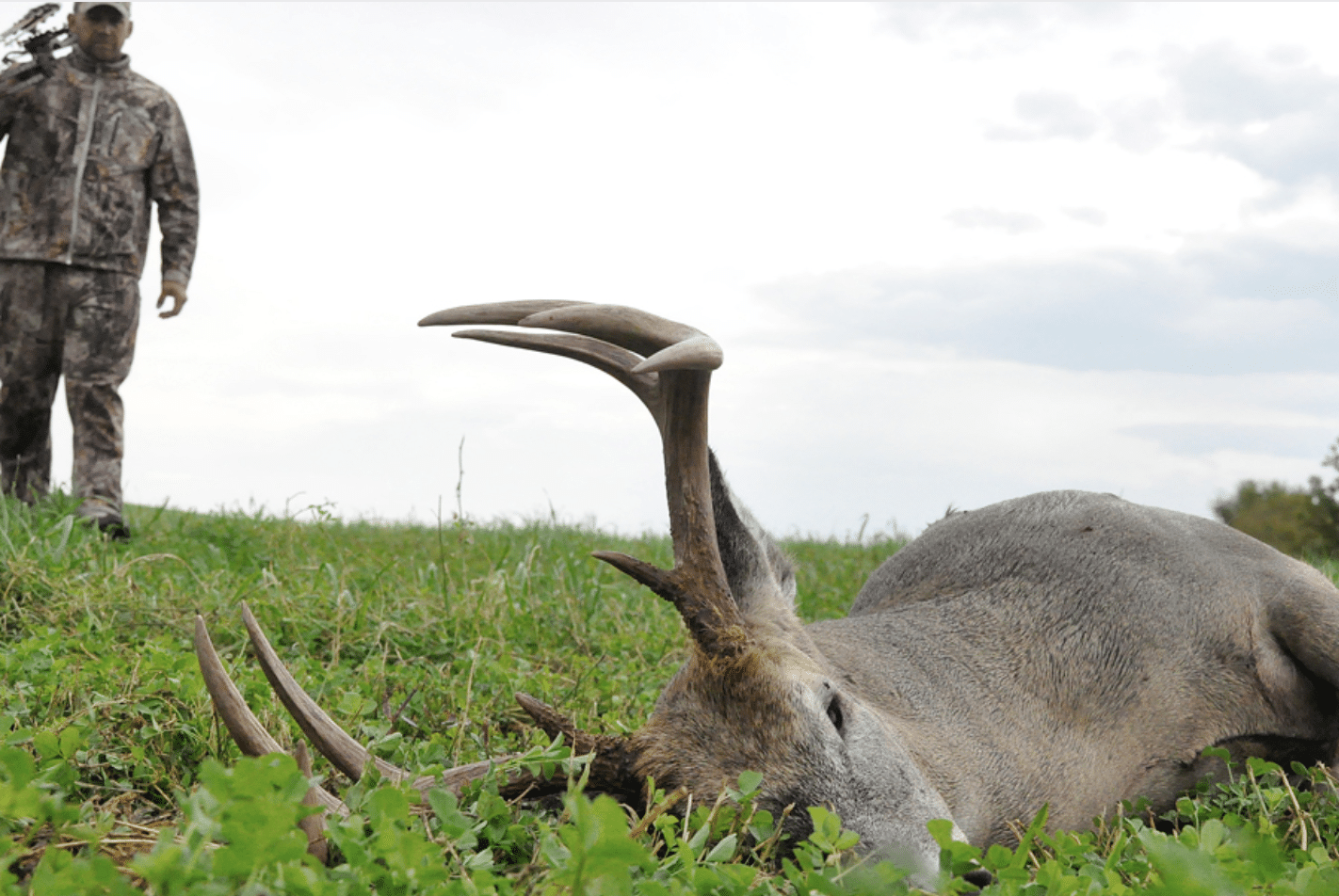
Check all the right boxes, and success might just be nigh.
Step 7: What Happened?
If opening day doesn’t pay off, figure out why. Was it all does and young scrappers, in areas that held big velvet bucks browsing away for much of late summer? There’s a reason. Those bigger deer might now be staging just off the food, until they are hard-antlered, or they might have decided to stop off at a nearby pond on their way to the groceries. Either way, if you strike out opening day, don’t consider it a failure; consider it a chance to learn what went wrong and adapt. Hunt through your best setups as the conditions allow.
Step 8: Close, But…
Let’s say it’s the second night of the season and you see your target buck, but he steps out at 150 yards and feeds away from you. You’ve got a few options. The first is to try to contact grunt him in, which is typically a low-odds possibility. The second is to move stands the next day and try to pick him up at that exact spot. The third is to hang tight and hope he does what he’s supposed to, when you get the chance to hunt again. I’ve killed opening-weekend bucks doing all three, and even crawled up on one that gave me too good of a stalking opportunity. Consider all your options carefully, then make your decision and go for it.
One Buck Tag to Fill? Hedge Your Bets with Multiple Game Plans.
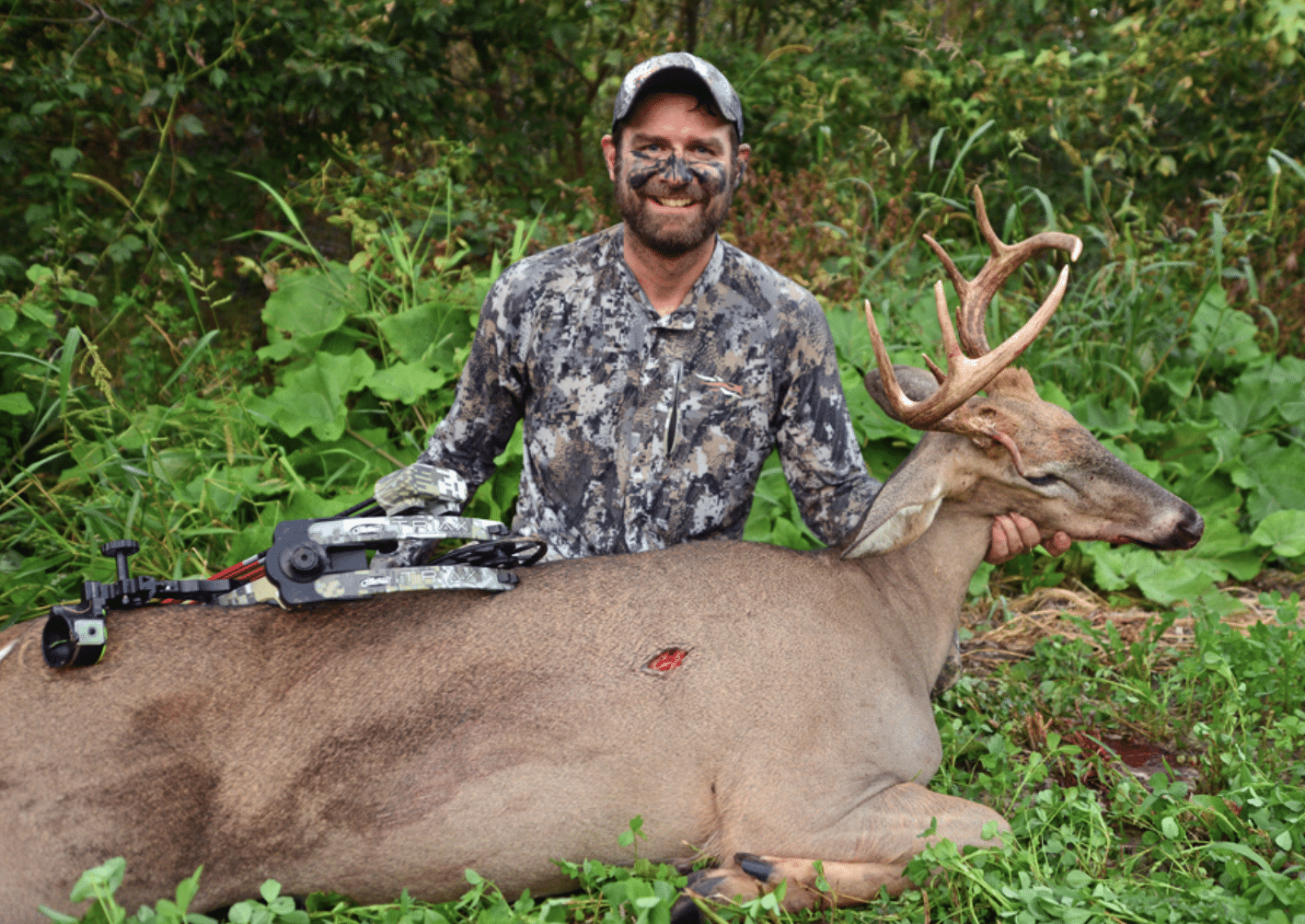
The author poses with an early season buck.
Step 9: Sealing the Deal
Patience (and persistence) pays. If you’ve set yourself up with enough options and enough intel to make good decisions, you’ll likely get your chance. This is especially true if you make the commitment to hunt through the heat, the wind, the rain, the relentless mosquitoes, and whatever else that will keep your competition at home. In the end, you must take heart that the bucks are there, and they’ll be moving—somewhere. When you boil it down, opening-week success often depends on your willingness to build a good plan and see it through, no matter what Mother Nature throws your way, or how much, or how little, the local bucks follow the script.
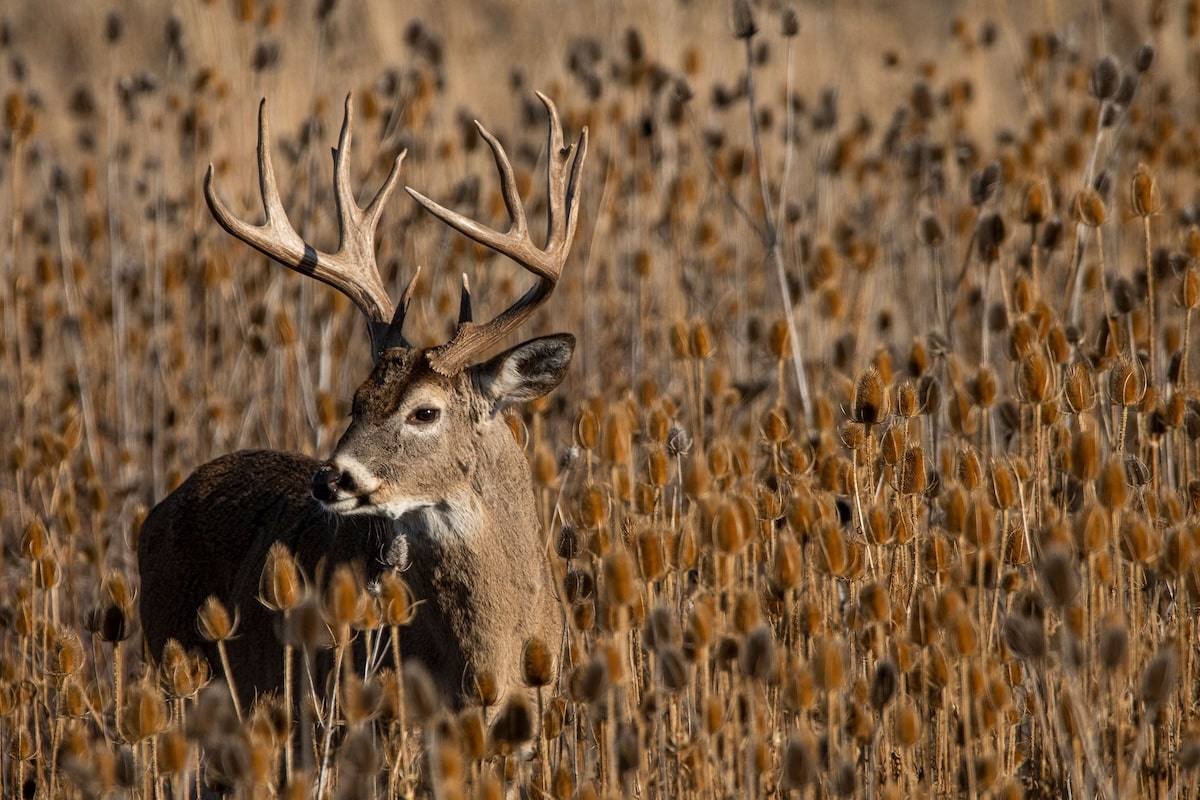
Deer hunting in October can be good, especially with the right conditions and setup.
When it comes to deer hunting in October, for many hunters, this is a throw-away month (at least, the first three weeks, anyway). This mindset stems from overblown credit given to the dreaded “October lull” (which doesn’t exist, by the way). Plus, the fact that a lot of whitetail hunting advice is dispensed from hunters who live in states such as Iowa, where the firearm seasons don’t interrupt rut-time bowhunting.
For the rest of us, who still wish to sit in a stand every chance we can and make the most of valuable hunting time, October gives us a chance. This is especially true when the weather gets downright nasty. Deer, now sporting their winter coats and not overly concerned with rutting activity, will move more during periods of weather that seem far more conducive to staring skyward in search of approaching mallards than climbing into a stand.
To capitalize on the best-of-a-worse-case scenario, pay close attention to the weather and plan your October hunting time around the following. Here’s how to deer hunt in October.
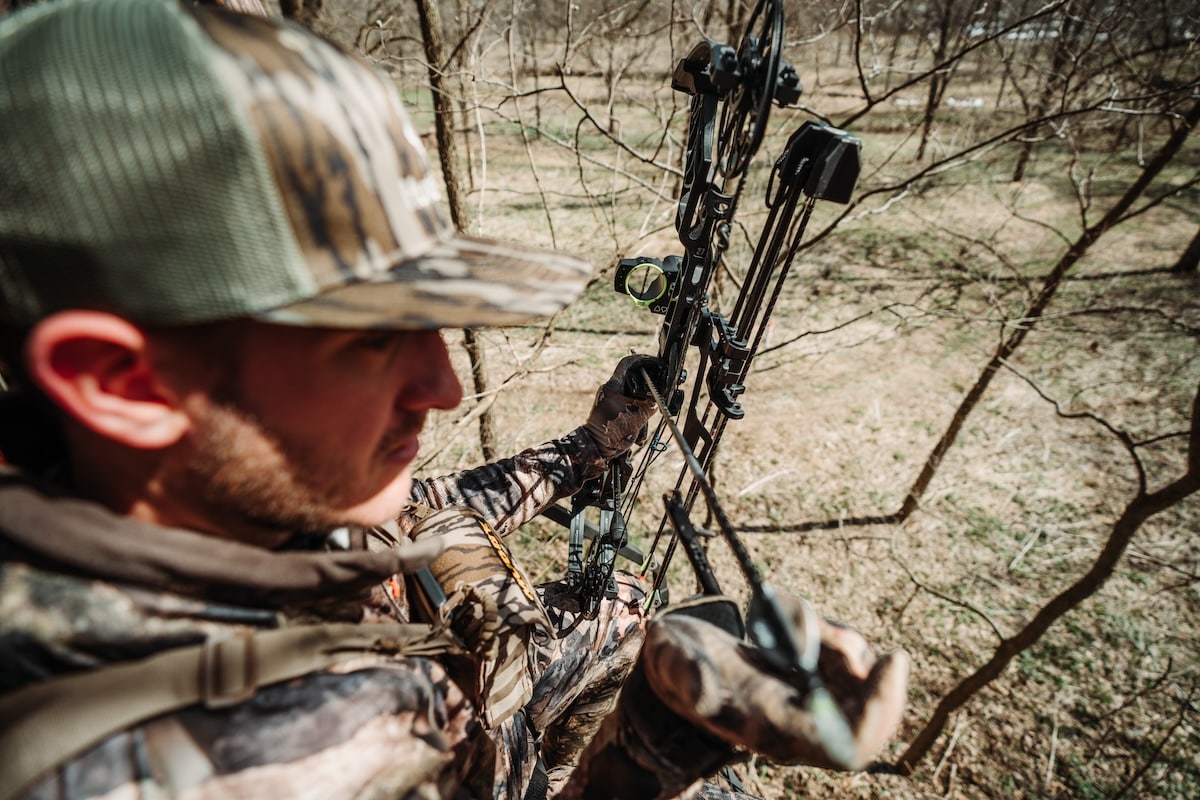
Generally, your October stand locations should be far different than September spots.
Deer Hunting During Cold Fronts
Some years, throughout much of the Upper Midwest and nation in general, we deal with near-record heat. The scorching daylight temperatures don’t do much for deer movement. However, like all fronts, these come to an end. What rolls in after the heat is a cold front, which is always good news for whitetail hunters.
What sometimes follows a first cold front, though, can be an even better gift — another cold front. When temperatures that can range easily to 80-degree daytime highs suddenly drop into the 40s, you’ve been gifted a perfect opportunity to climb into a stand. In fact, during a string of “piggy back” cold fronts, I start getting frequent texts and phone calls from hunting buddies about encounters with big bucks. This is no coincidence. Conditions felt like the second week of November, not mid-October, when conventional wisdom says that deer hunting should flat-out stink.
How to Shoot a Deer on Opening Day
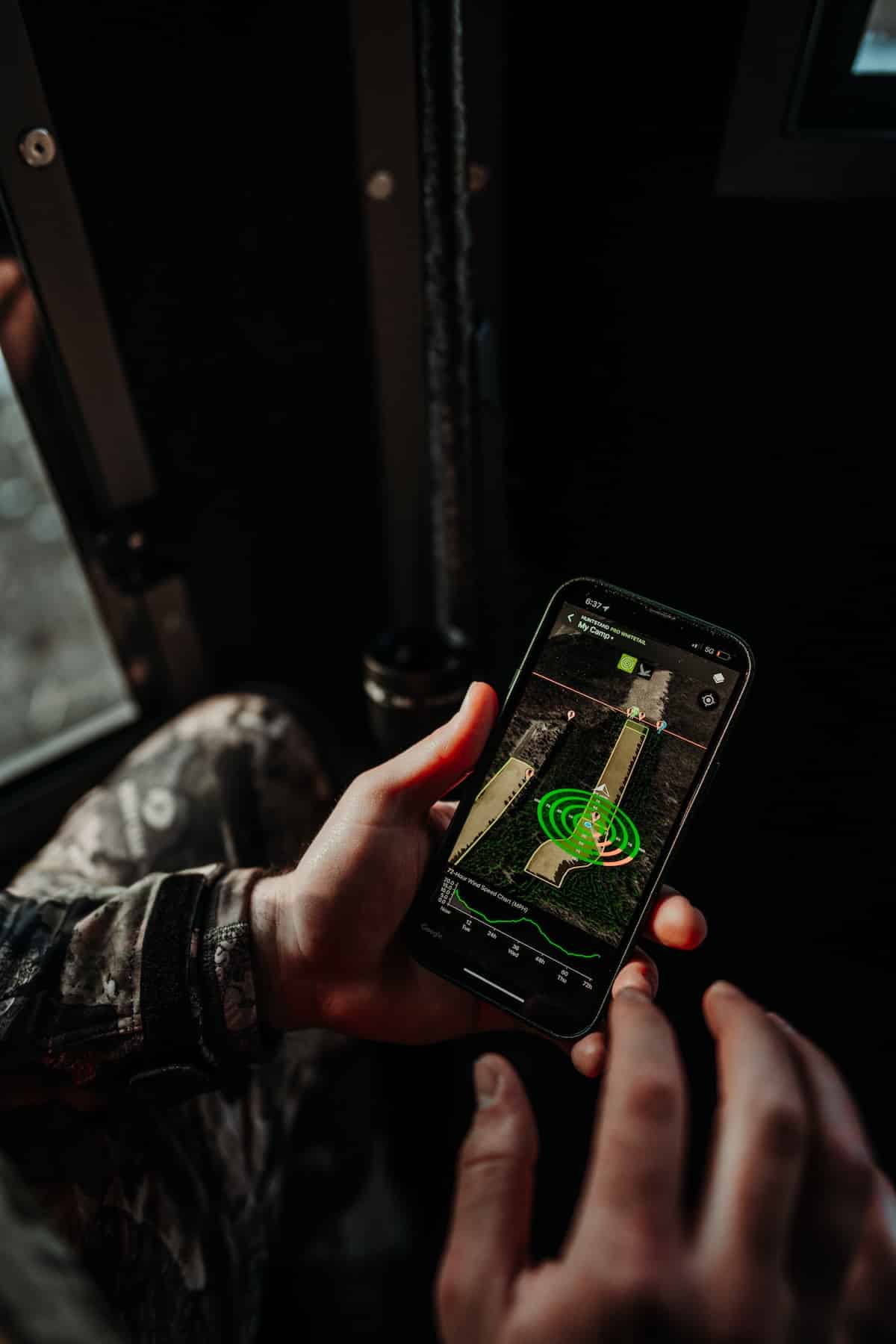
Use HuntStand to determine good wind directions for stand locations.
Deer Hunting During Warm Fronts
Cold fronts are great. However, regarding hunting when others won’t, it really does pay to hunt during those hot days of October. I know they are the least appealing, but your competition is likely to agree … and stay home.
A single day with sweat-inducing heat might not be worth it, but a sustained heat wave will offer an opportunity and it’s very simple: Sit the water. Creeks, ponds, rivers, puddles, cattle tanks or any other place where the deer can stay in cover and slake their thirst are good bets. To up your odds, consider sitting water close to a green food source such as alfalfa or hay.
You’ll have the woods to yourself when it gets truly hot, and provided you play the wind to keep your sweaty, stinky body from tipping off approaching deer, you might be in the action. This is the least fun time to hunt. However, the misery will only last until you see a mature buck working his way toward you. Then those thoughts of crisp November mornings will drop through the trapdoor in your mind to make room for the present need to range, settle the pin, and send an arrow on its way.
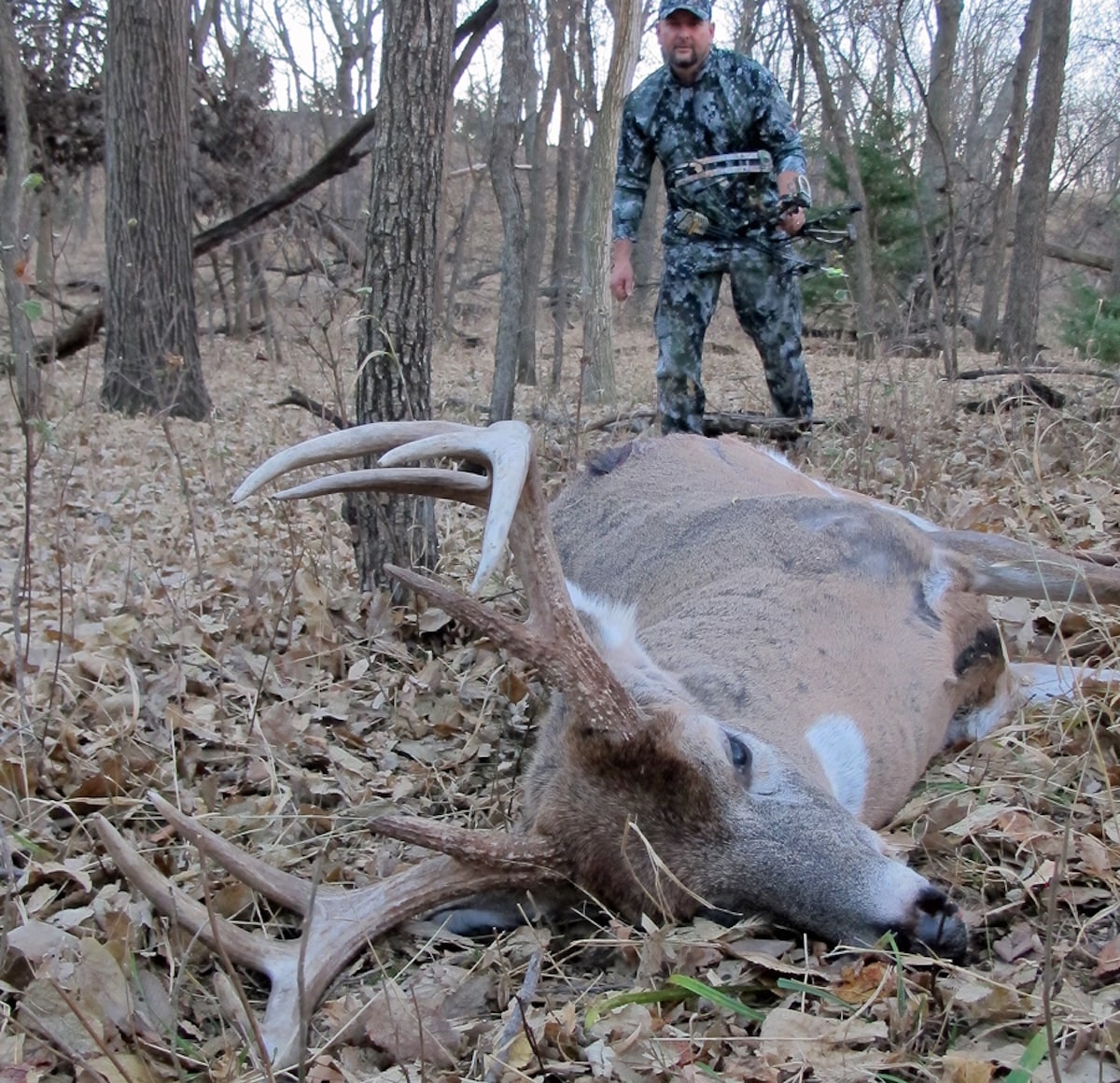
Work hard, and you just might fill your buck tag.
Deer Hunting in the Rain
Precipitation in the light to moderate category will get deer on the move. True downpours that cause arc-building thoughts might be worth sitting out, but you better try to get into a stand as soon as the rain lets up. Deer will move then, if they haven’t already. Better yet, unlike cold fronts, rain keeps other hunters out. This is a bonus for those of us hunting public land or pressured private ground.
Deer Hunting the October Lull (with HuntStand Pro Whitetail)
Deer Hunting in October
Without a doubt, mid-October isn’t the best time to kill a mature buck. They are still out there, though, and they will move during daylight. This gives you a chance, especially if you take the time to follow the weather patterns and capitalize on the changing conditions. It only takes a single deviation from normal patterns to get bucks on their feet. In the end, the only absolute certainty is this: You won’t tag one if you stay home like the rest of the weekend warriors.
UPGRADE TO HUNTSTAND PRO WHITETAIL
I don’t know if it’s his tendency to stand in the wide open during the middle of the day. Or perhaps it’s his ability to create a sudden mile of distance between us in roughly the same amount of time it takes me to curse under my breath and wipe the lenses of my binoculars clean with a shirttail. It might be his more-than-passing resemblance to a few African critters.
I don’t know what it is.
What I do know is that pronghorn have their hooks in me and I can’t shake the draw of bowhunting them. And it’s not the suffocating confines of a waterhole blind that calls to me every August … that stuff is for a different kind of hunter. I want the open prairie and the challenge of beating the best eyes in the business on even ground.
Spotting and stalking antelope with a bow is a lesson in humility 99 percent of the time. Failure on the prairie is different than in the deer woods or the elk mountains, because with pronghorn you can always see the damn things. They are always there, tan-and-white and always on the cusp of deciding they’ve had enough of your crawling in their general direction.
That one percent of the time though, when they’ve fed into a draw or maybe too close to a bit of crouching-hunter-height sage brush—are the times that deliver a feeling of serious accomplishment. And if your arrow flies true, more reward comes in the form of some of the best game meat on the planet.
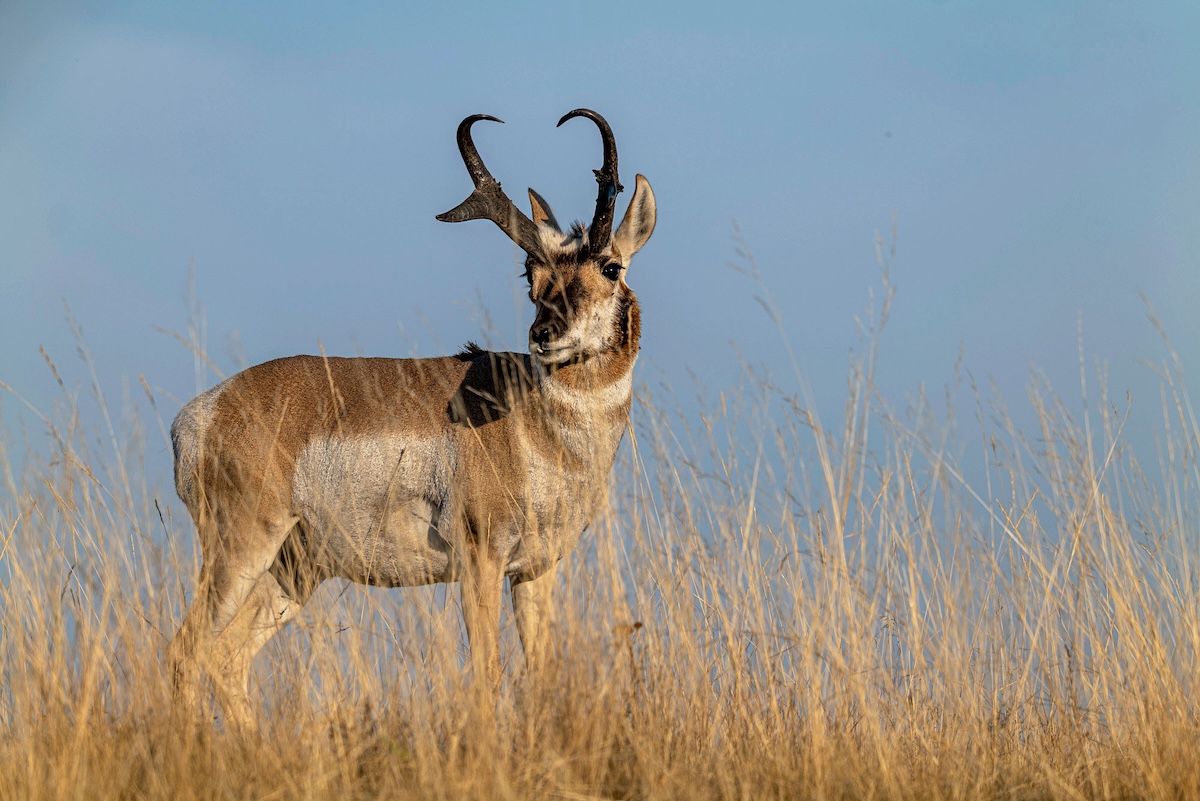
Plan now for a great late-summer adventure.
Plenty of Room to Roam
The beginning of a proper pronghorn hunt should start with finding a place to hunt. Guided hunts are pretty common, but the beauty of antelope in my eyes is that they are available on public land in good numbers, in several states. Tapping into the HuntStand property boundaries feature will show a staggering amount of public lands in many prime pronghorn states. But where to focus? National Grasslands throughout the west will have decent populations of antelope, and in most states, easy-to-obtain tags. Better yet, a nonresident antelope tag will cost you much less than a typical deer or elk tag.
Shadeless Camps Are Standard
On most of that public land you’ll be able to pitch a tent and declare a temporary home wherever the mood strikes you. The downside is that open fires are almost always a no-no, given the timing of the antelope season and the arid land they inhabit. A propane stove on the tailgate of a pickup will work just fine for meals, and quite frankly, during most antelope hunts you’re not going to want to sit by an open fire anyway. If you’re not a hunt-all-day kind of bowhunter, invest in a battery-operated fan for your tent to make midday naps somewhat tolerable, and packing some type of portable canopy can also help, delivering some welcome shade.
Hunting Pressured Fall Black Bears
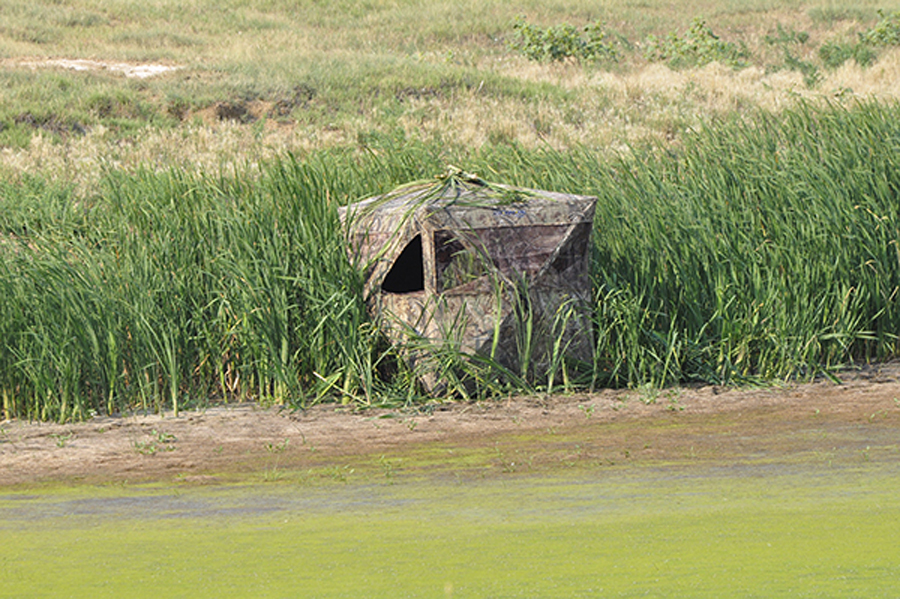
Set up shop on key waterholes.
Can’t Beat the View
Sunset on the prairie tends to be an awe-inspiring event. Ditto for sunrise. If you’ve watched the sun set, you’ve probably also watched a few pronghorn doing their thing. After breakfast the next morning, get back on them. They’re usually pretty easy to relocate in the morning, and that means when you’re laying in the tent thinking of the goats you watched at dusk, you know that you’re going to be in the game right from the get-go in the morning. It can be tough to sleep and easy to rise with the alarm, which is how all hunting should be.
Prepare to Get Busted
If you’re of the easily discouraged variety of hunter, you might want to stick to the whitetail woods, because pronghorn will beat you far more often than you beat them. Stalking them with a bow is no joke. Prepare to get busted—a lot. After a few blown stalks you’ll start to realize that even though the antelope are visible, they aren’t always approachable. Learn to find the goat that has somehow tipped the odds in your favor, and spend your time on him. And go slow. Even when they’re on their feet and feeding, pronghorn don’t move around as much as it might appear. That is, of course, until they decide to go somewhere—and then they’ll be gone.
Hunting Elk During Gun Season
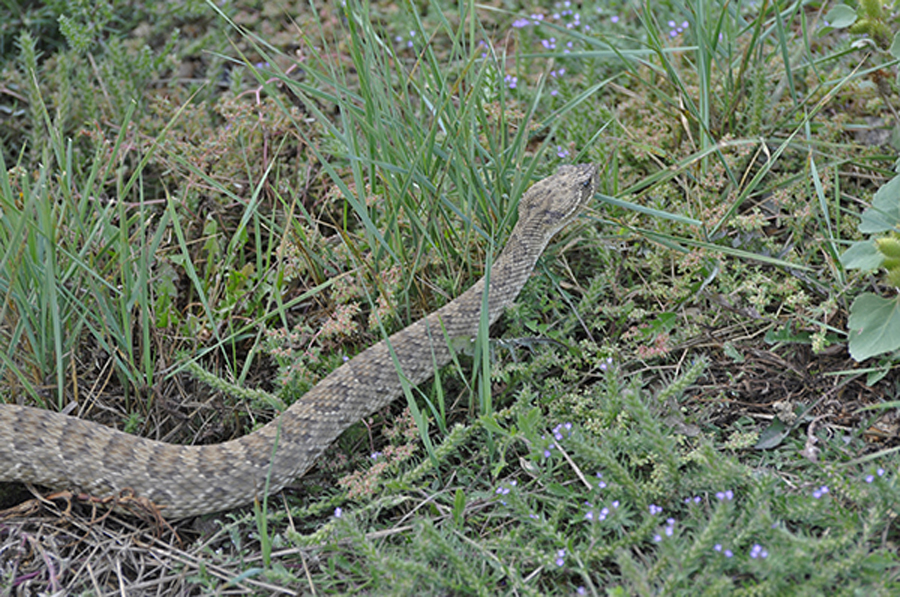
Watch out for unexpected challenges during the hunt.
Hunt for the Adventure
A big goat will sport horns of at least 12 or 13 inches in height, and anything larger than that is a serious bonus. And now for the reality check. A “good” goat on public land, taken by spotting and stalking with archery equipment, will be any goat. If your tag is good for either sex, stalk every pronghorn you can. If you’re looking for the boys, stalk every legal buck you can. This is not the type of hunt to be picky on, especially if you’re new to pronghorn hunting. If you decide it’s the Pope & Young recordbook or nothing, you’ll get in very few stalks and are almost guaranteed tag soup. My advice? Lower your standards, hunt everything and have fun.
Beware the Pitfalls
It’s easy to look at the wide-open western prairies and assume there isn’t any danger out there. This, unfortunately, isn’t true. I once showed up to a new area in South Dakota and pitched a camp in the dark. When I awoke before sunup I realized I was surrounded, and I mean surrounded, by ornery hump-backed bulls. The whole pasture was covered in them, and they didn’t particularly like my intrusion into their buffet. Rattlesnakes are also another concern, and I’ve had enough close calls to realize that it’s always a good idea to give the potential of such an encounter some respect.
How to Plan for Public-Land Elk Hunting
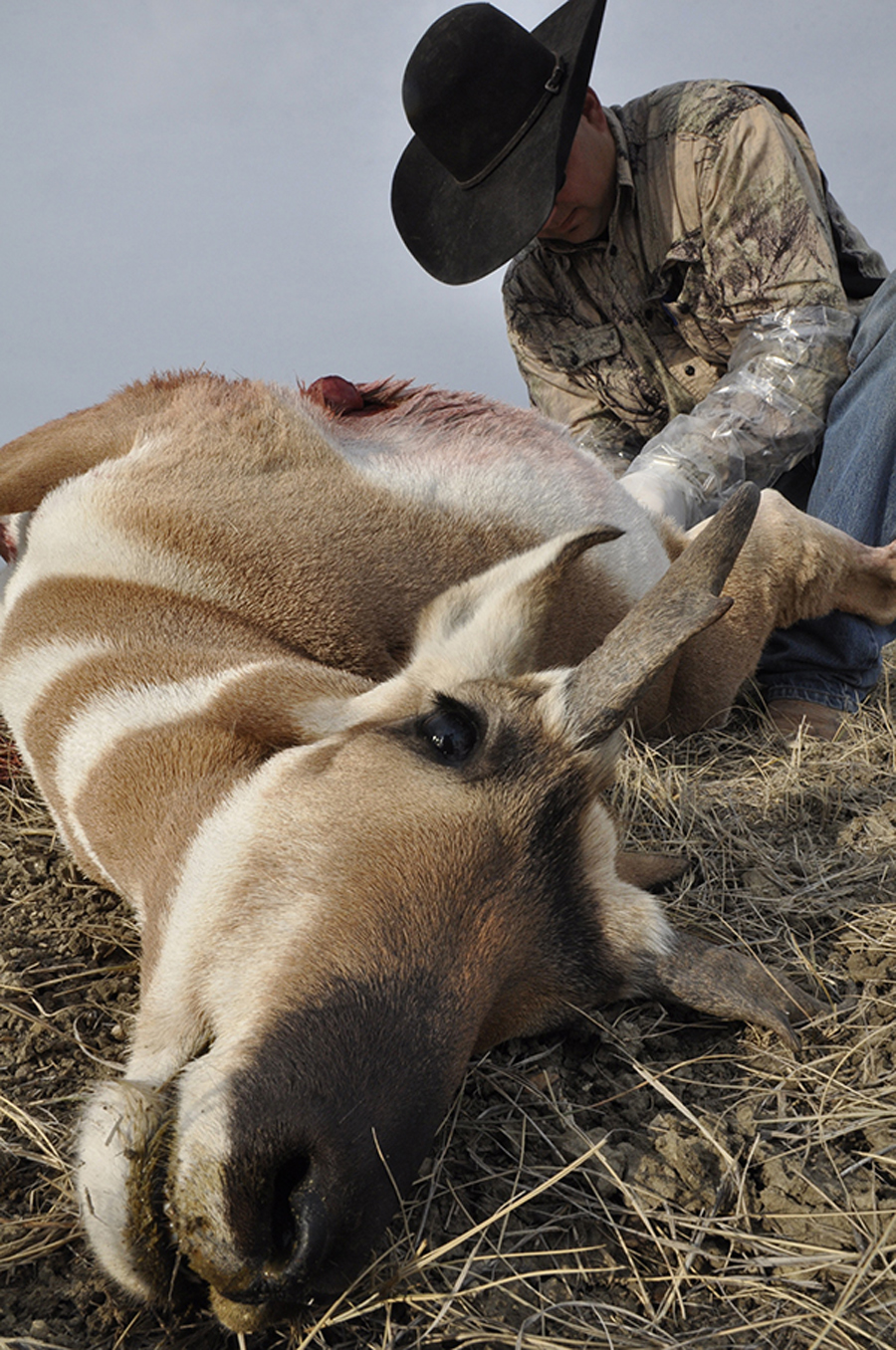
Work hard, and you'll get a goat of your own.
Making the Shot
Here’s another pronghorn bowhunting reality check: If you’re accuracy is good out to 20 or 30 yards but sketchy any farther out, you’re not ready for antelope. Some folks will say there’s no need to shoot farther than that, but those folks also tend to live in pronghorn country and either have unlimited time to spot and stalk, or they’re ambush hunters. Most of my pronghorn shots have been between 30 and 60 yards. That’s reality, and you better be very comfortable with leaning on your rangefinder often and shooting off of your butt or knees. The upside of the longer shots is that pronghorn at that distance aren’t string jumpers, and they’re designed with an excellent demarcation line on their sides on which to focus your aim.
The Ambush Option
During one particular (and somehow still-memorable) hunt I got my tail kicked so badly while spotting and stalking that I resorted to sitting a blind on a waterhole. The 12 hours I spent in the confines of that pop-up were terrible, and while I did have a pair of antelope come in, they never offered a shot. It was 30 seconds of excitement and the rest was torture. I might have killed one if I had waited it out, but I want to have fun when I’m hunting and that wasn’t fun. Spotting and stalking, while much more difficult, is also much more enjoyable. If, for whatever reason, you can’t handle another day of watching white pronghorn butts disappear in the distance, try the blind thing. You’ll see what I mean.