



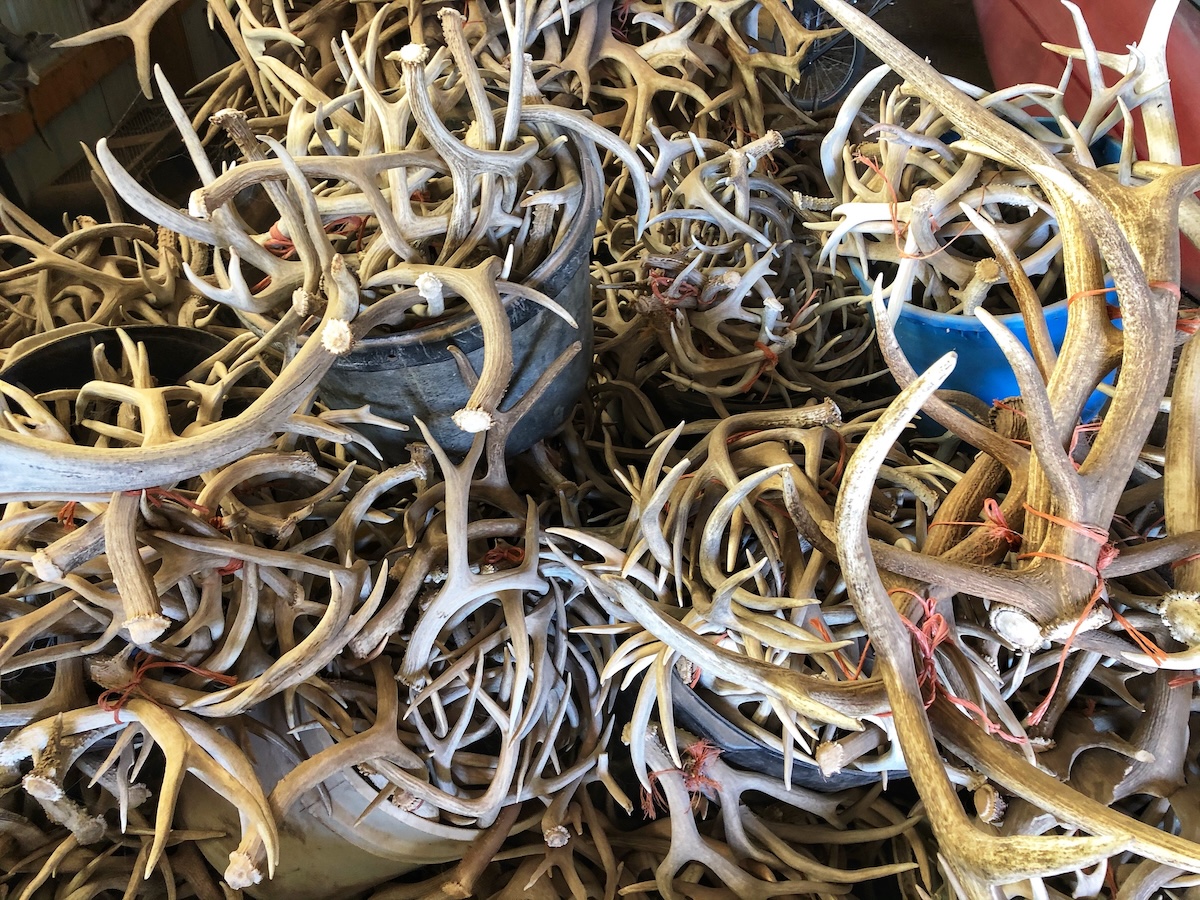

Mark Kayser's antler pile reveals much about individual hunting properties and areas.
It was 1976 and I was a young lad … a very young lad. Making an escape from my parent’s watchful eyes in South Dakota’s Black Hills, I stumbled across a small four-point shed whitetail antler already in chalky condition. That trivial tined prize would seem insignificant to most, but to me it was treasure and sparked a decades long Easter egg hunt for shed antlers wherever I might roam. Little did I know that my pursuit of shed antlers would be a consequential part of my hunting strategy.
The lessons learned from shed antler hunting are many. These are lessons I never try to dodge. Here’s what shed antlers teach you about deer and elk.
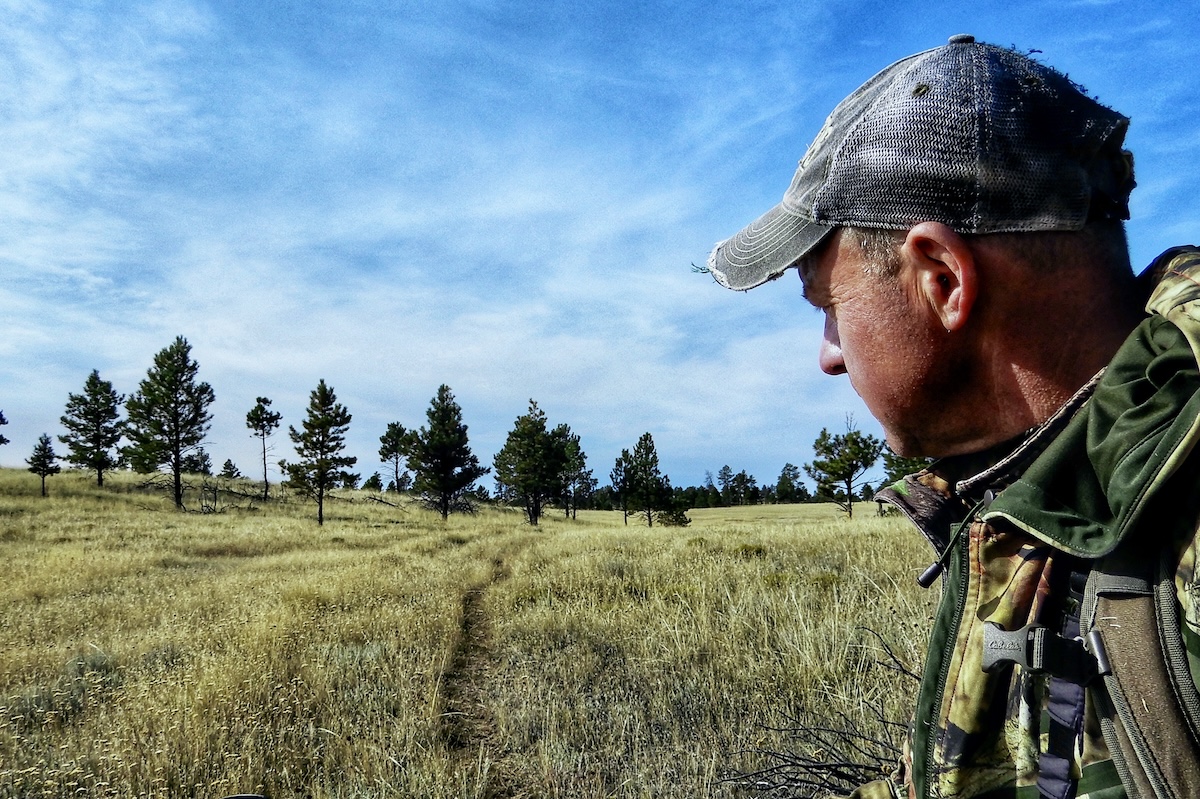
Examine trails while shed hunting.
Finding New Hunting Lands
No doubt, you virtually fly over the country sleuthing to find new hunting lands on your HuntStand hunting app. It’s worthy of time for the serious hunter. As you poke around for new public or private holdings, keep in mind their significance for a spring shed antler excursion. Although some Western locales (think high elevation) might not winter big game, most hunting locations across the country double as waypoints to kick off your spring shed antler hunts.
By focusing on possible new hunting lands, you are proverbially killing two birds with one stone. After a thorough vetting on HuntStand for everything your target species requires on a property — refuge, food, and water — an onsite visit allows your vetting to make a massive boost on whether your virtual discovery is as solid as the real world. Your satellite snooping often conjures images of trophy success, but hiking a property tells the real tale of whether a parcel holds the key to the kingdom or leads you toward a dead end.
How Deer Survive Winter
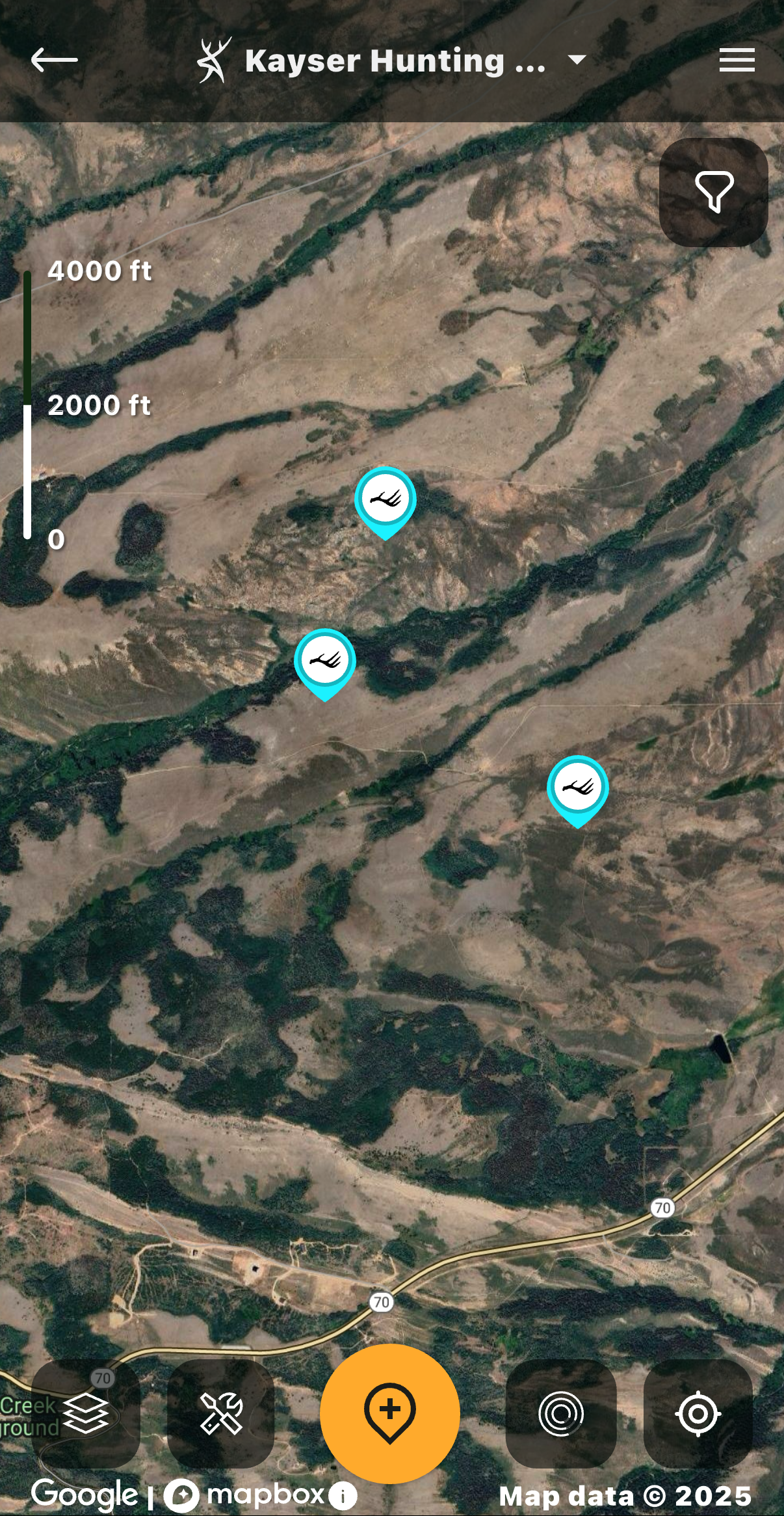
Use HuntStand's Hybrid base layer to help locate shed antlers.
One of my best elk hunting areas (when I can draw a tag) started out as a favorite shed antler hunting locale. At first, I never thought about hunting it. Then, it dawned on me one day, the same shed antlers I picked up at lower elevations were on bulls during the fall season at a slightly higher altitude.
A HuntStand examination of higher terrain along with access routes spurred me to apply for a license. To date, my son and I have taken seven public-land bulls from the area, and it all started with shed antler hunting.
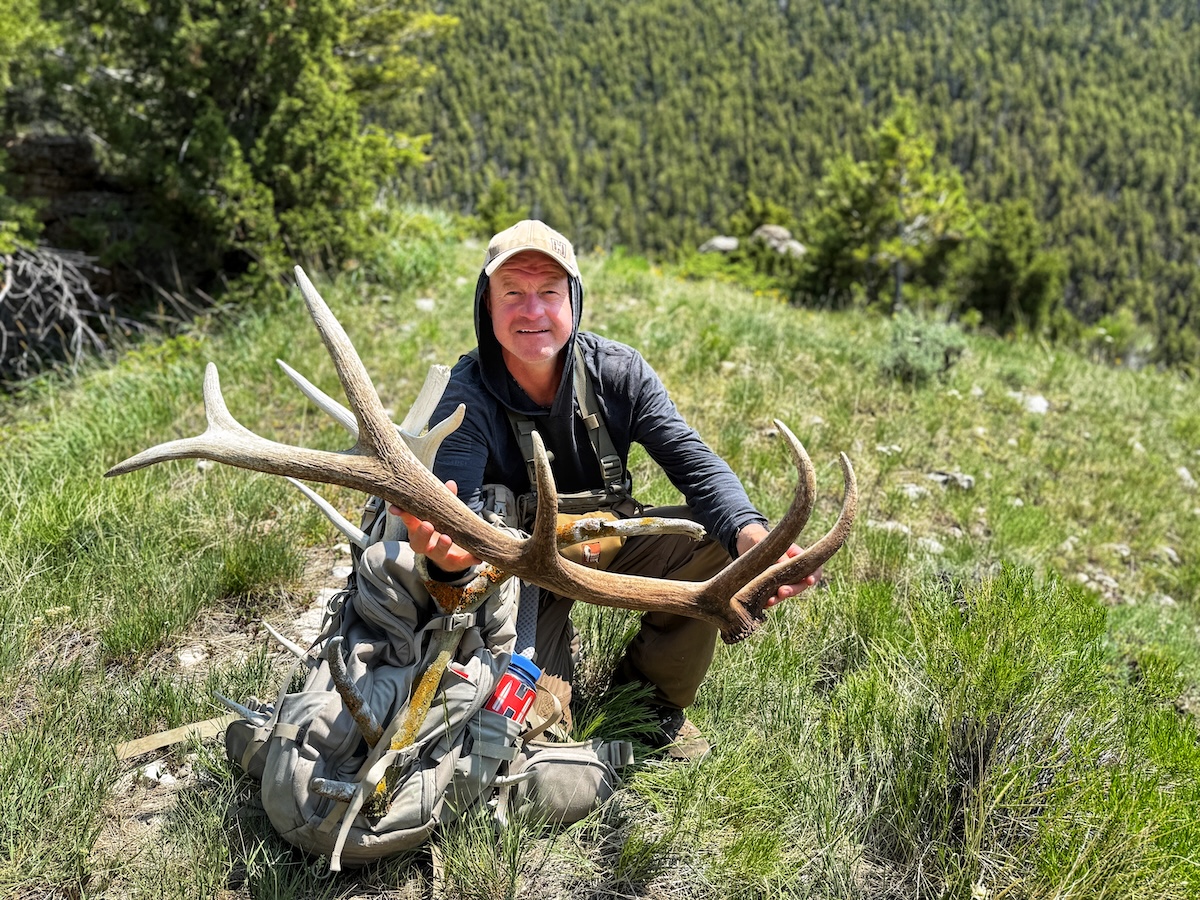
Mark Kayser with a nice elk shed found while learning the countryside.
Understanding Hunting Lands Better
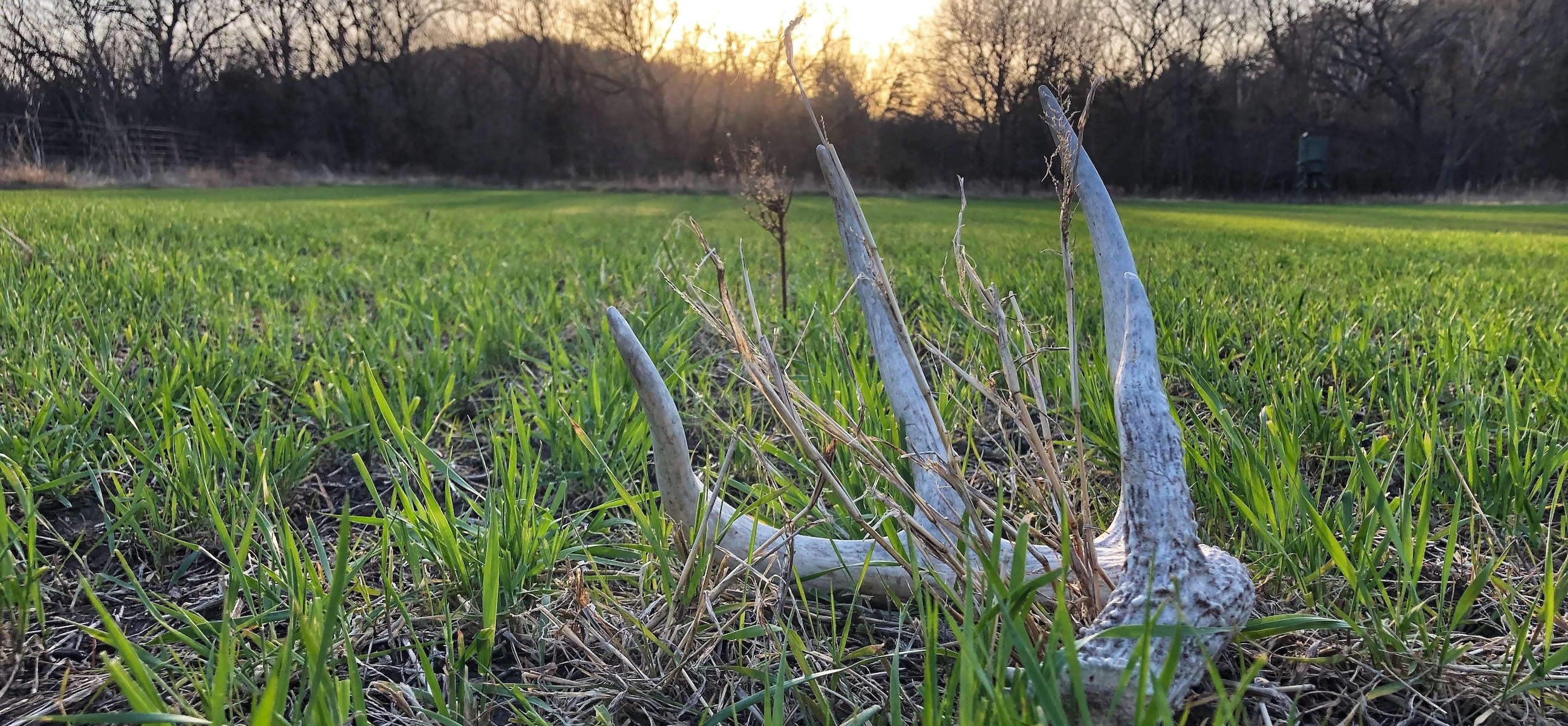
As you shed antler hunt an area for the first ever visit, or through an extended relationship over the years, you simply understand the property better. Of course, your eyes scan for the signs of antler tips or curved beams on the landscape. Still, never overlook what spring visits can share with you. It can help assemble an all-inclusive hunting strategy.
Whether exploring Midwestern woodlots, Eastern forests, or Western slopes, stay alert for clues indicating the usage of a property over the months. In all environmental instances, look for trails with the highest traffic clues. Beaten paths, muddy highways, and snow-packed routes indicate heavy usage. The HuntStand Hybrid base layer and National Aerial Imagery base layer offer views ahead of where trails might end, such as food sources or dense sanctuary cover.
Next, note any rub lines or clusters of rubs with significant activity. Whitetails, mule deer, and elk all rub, and their clusters or lines of activity also indicate areas often frequented. Most rubs were made in the fall, but all three species rub throughout the winter until they shed their antlers. You can use various Tools on your app to mark trails or simply circle a cluster of good-looking rubs.
How Mature Bucks Move from A to B
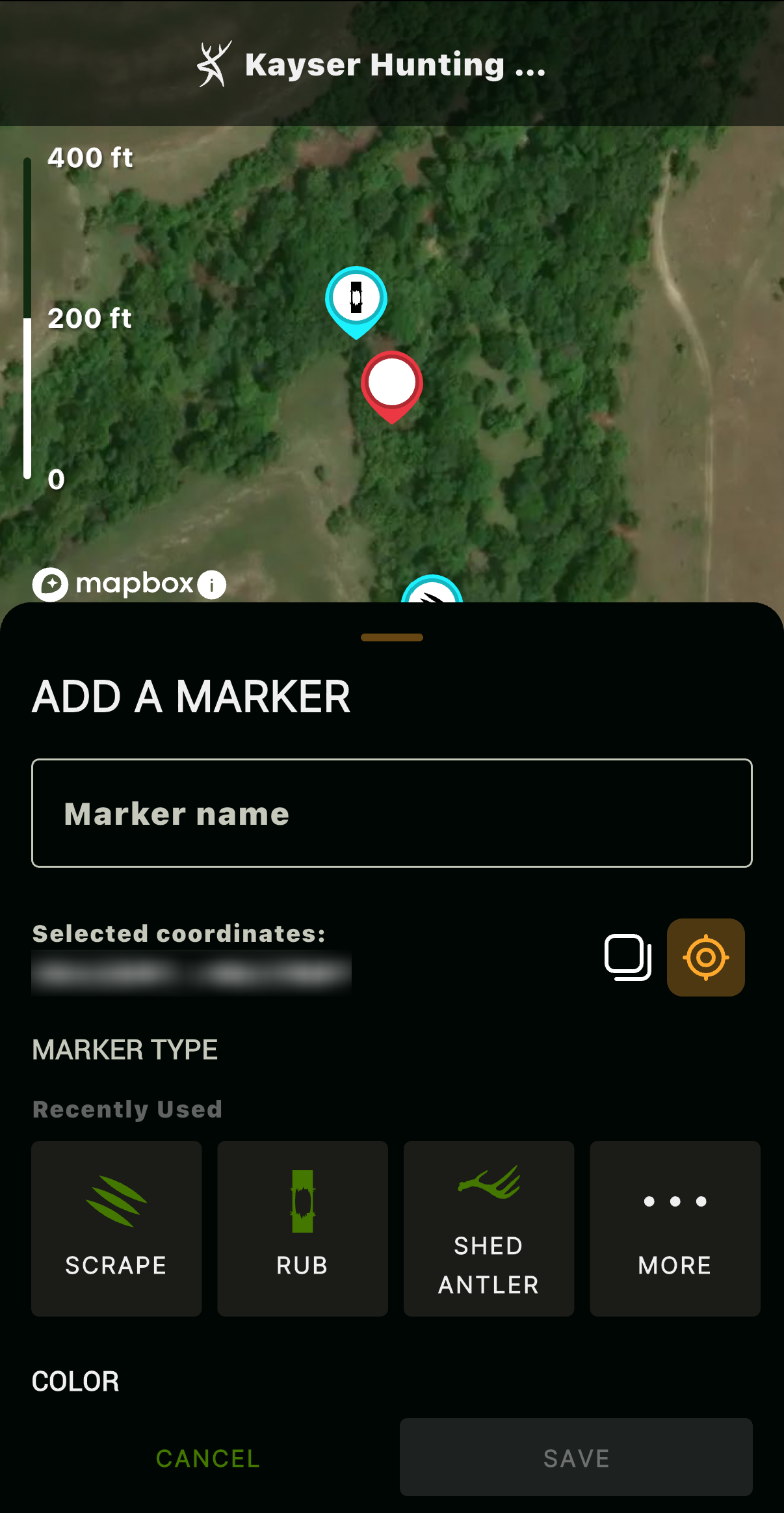
Use HuntStand's markers to mark scrapes and rubs to help locate shed antlers.
Finally, pay attention to the ground for scrapes, which are whitetail trademarks. Pay particular attention to those larger than a garbage-can lid in diameter. Scrapes are also used throughout the winter. The good thing about scrapes is that they often stand out even after months of nonuse.
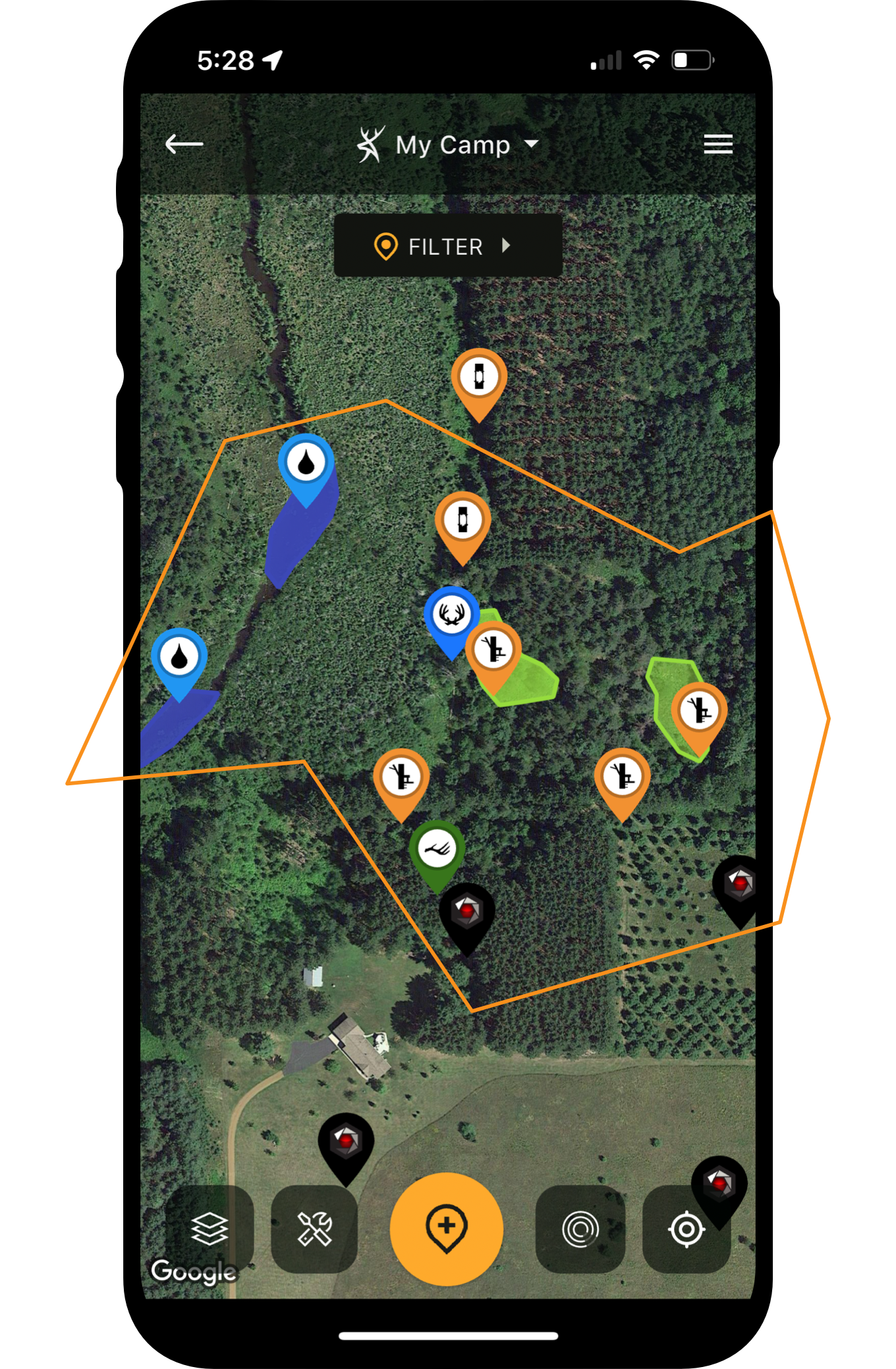
Mark every scrape with a HuntStand scrape marker location. In whitetail country, the scrape and rub lines will stand out when you view them from above with the help of HuntStand.
A bonus for you is to peek into bedrooms and sanctuary areas. Trails will lead to these hideouts and beds should be evident in the pre-spring barren environment. Again, take a break from shed hunting to make notes for setting any bedroom perimeter stands or ambush locations to use on a later hunt.
Use HuntStand's National Aerial Imagery base layer to help locate shed antlers.
Witnessing Real-Time Animal Behavior and How It Relates to the Land
Any shed antler hunt needs to be as covert as a U.S. spy in a foreign country. You never want to stress animals this time of year unless they live on manicured property and have had a mild winter. That noted, shed antler hunting allows you real-time observations of how game species utilize a property. Depending on the species, animals use a property differently exhibiting differing behavior. Understanding their location preferences, food choices and preferred travel routes, plus their escape plans, all give you a jumpstart on a future hunt.
Having that hard evidence of shed antlers in hand gives you a boost of confidence, but by hiking and sneaking around a hunting area, you obtain a unique, first-hand perspective of how animals utilize their homeland.
Find Next Season’s Public Land Stand Locations Right Now
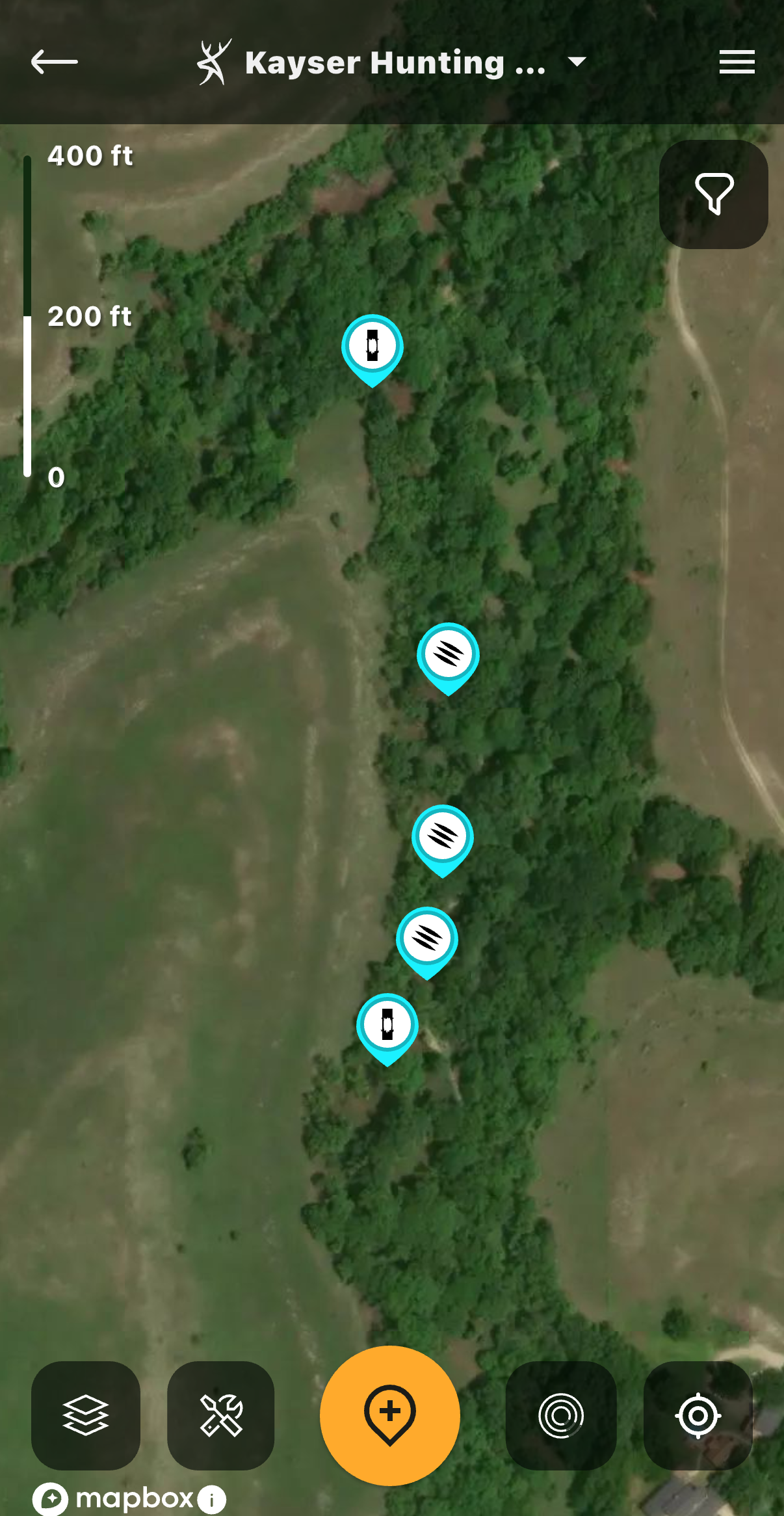
Use HuntStand's markers to mark scrapes and rubs to help locate shed antlers.
Additionally, hikes combined with HuntStand’s Terrain or Outdoor base layer reveal subtle terrain funnels, hidden benches, traffic-jam saddles, and more. Every time you see animals repeatedly using a geographic feature, add a marker and use the Tools to add lines of travel to understand the full hunting potential of each property segment.
I’ve learned to follow trails. Yes, they lead you to animal preference points, but better yet, they offer you speedy access. Carved trails in the Western mountains or through whitetail coulees did not receive eroded significance overnight. They represent decades of use with the path of least resistance being a major reason why.
In elk country, it’s not uncommon to run into dead ends, cliffs or grades too steep to traverse. Backing up and finding an elk trail has always been my easy out. Although elk definitely can traverse country beyond my capabilities, almost all trails offer an out and have gotten me out of tight spots where injury could easily have occurred.

Whether grid or circular, cover an area well for shed antlers.
Discovering the Good and Bad of Populations
Your shed antler finds are giving you some indication of the age structure of the bucks or bulls on a parcel of land. But what about the recruitment team for next season and the future? Evaluate the density of the overall herd, as shed antler hunting provides a platform for an informal census.
Are you seeing too many animals, too few, or just the right amount? Before the spring bloom, you have an open view, even in woodland settings, to see through the brush and into openings for accurate counts. Plus, you’ll have the chance to formulate estimates on male-to-female herd ratios. At this time of year, most males in all species have resumed a bachelor group lifestyle while females and young of the year make up the larger herds.
Shed Hunting Hacks, Tips, and Tactics
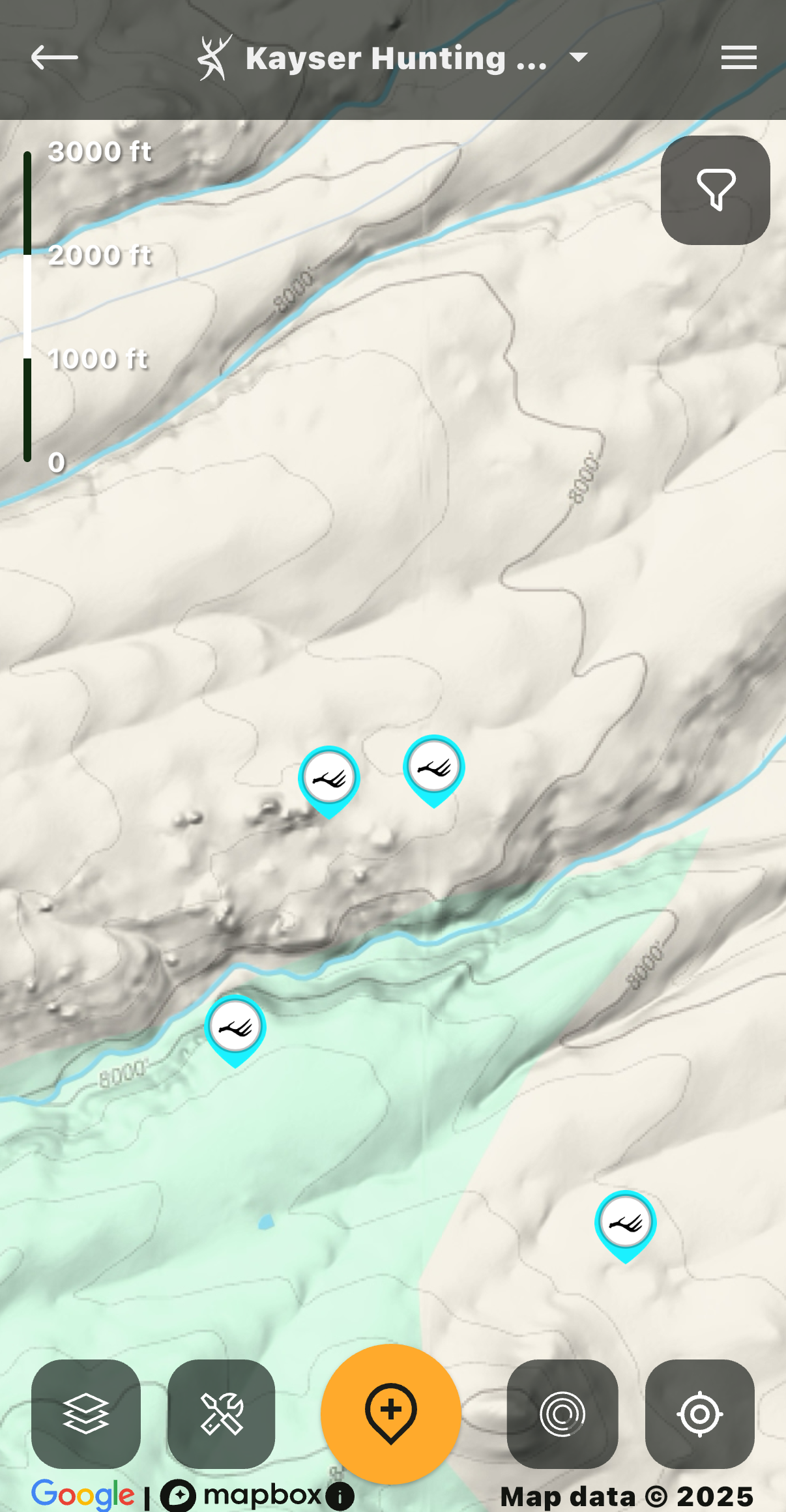
Use HuntStand's Terrain base layer to help locate shed antlers.
As you hike around your hunting area, take notes on the female groups you view, accurate counts, and if possible, how many fawns or calves are within the group. Young animals are critical to the ongoing well-being of any herd. If you notice an abnormally high number of missing fawns or calves, it could signal a problem.
Most plan several shed hunting outings. Therefore, record your big game counts on each trip using HuntStand markers to note the location of animals. Include counts in the name of the marker. This gives you several tallies to average for an accurate estimation.
Inevitably, you might discover some dead animals during your hikes. That is not uncommon, but if you find too many, you might discuss these findings with a local conservation officer or big game biologist. They can offer insight on what might have killed the animals. A variety of circumstances might lead to die-offs. Big game species might succumb to winter-kill, effects of wounding, disease, predation and other mishaps. They might even die from a simple accident. Big game might slip, fall, misjudge, and make blunders. One of those blunders is misjudging vehicle speed, but they also misjudge distance and routinely get trapped in barbed wire fences, even trapped in downed timber.

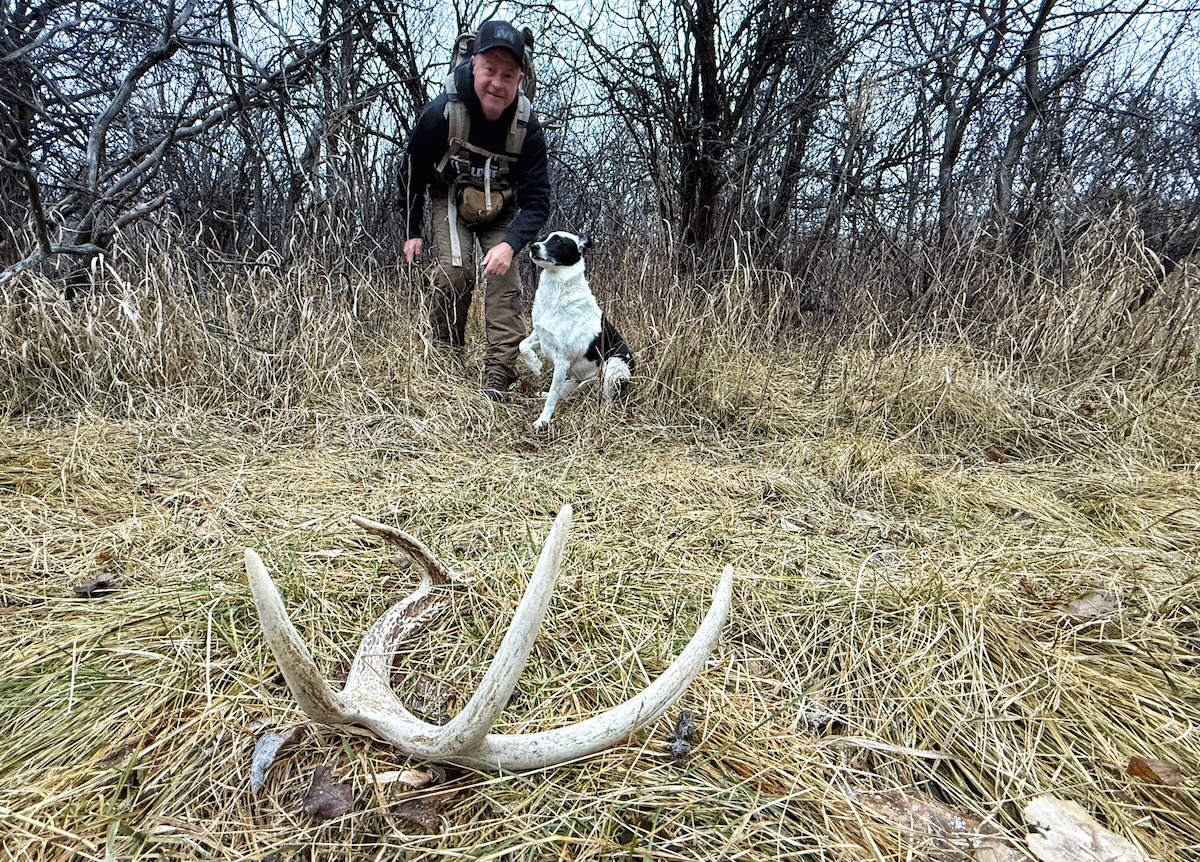
Mark Kayser and Sully find whitetail shed antlers in thick cover.
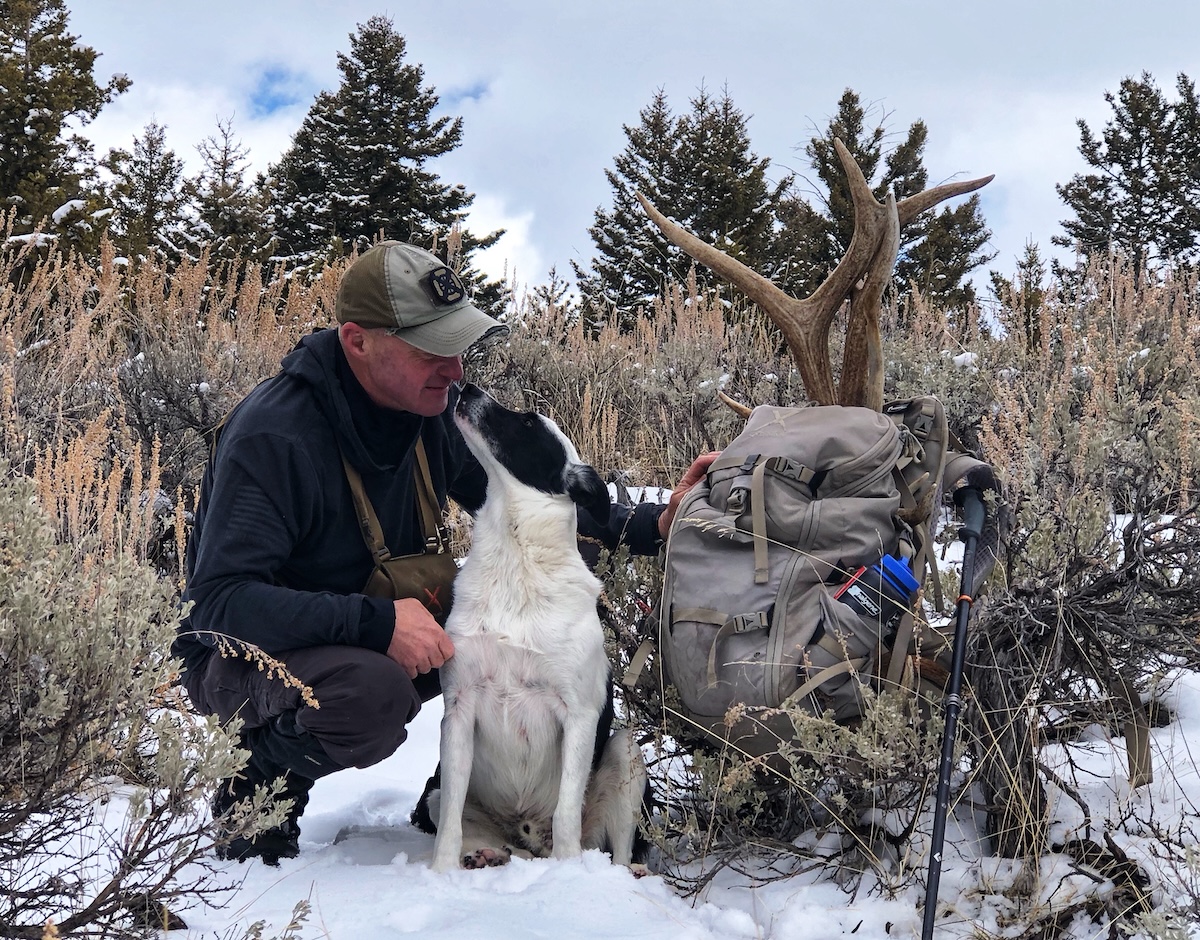
Shed hunt for elk antlers in thick, deep canyon cover, too.
Take your shed antler hunts a step further this spring, literally, and figuratively. The knowledge you acquire by finding a nice pair of shed antlers combines with an intimate understanding of a tract of land is invaluable for hunting seasons ahead.