





Deer survive winter via the fat stores built in summer and fall.
Several dozen deer bed down on the hillside. The rising sun graces their faces, providing much-needed warmth for the bitter-cold day ahead. The south-facing exposure, and the standing soybean field down below, are just what they need to stay strong through the dead of winter. But are these things actually as important as most hunters realize? Yes and no. These help, but it’s spring, summer, and fall nutrition that provide deer the ability to battle the coldest months of the year.
Here’s how deer survive winter. Plus, things that happen to deer in harsh, cold, snowy weather. And even a few myths about winter whitetails.
“Deer are well-equipped to survive,” Adams said. “Their hair and hide are made to hold in so much of their body heat that they can lay in snow and never melt it.”
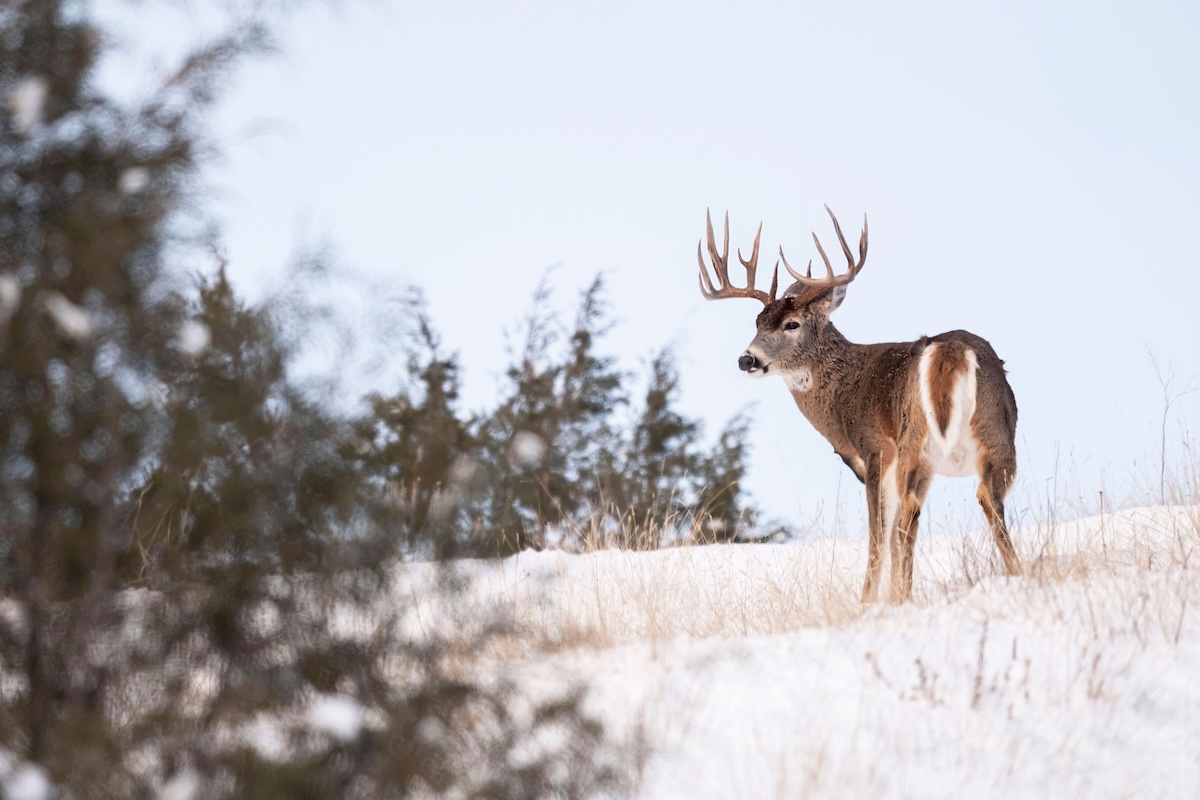
Far north deer tend to yard up in areas that offer reprieve from the elements.
How Deer Survive Winter
Whitetails are incredibly adaptive creatures. In fact, they live on four continents (North America, South America, Europe, and Australia). Of course, the United States, Canada, and Mexico comprise its native stronghold. Other countries, such as Guatemala, Argentina, Bolivia, Brazil, Chile, Peru, Finland, Czech Republic, Serbia, New Zealand, and more, also harbor measurable populations of whitetails.
That said, in the United States, northern and southern whitetails behave differently in winter. They don’t prepare for it the same way, either.
“Some research from the University of New Hampshire, where I went to grad school, showed the average healthy northern deer with access to food — from the halfway point of the U.S. northward — goes into winter with about a 90-day fast supply,” said National Deer Association Chief Conservation Officer Kip Adams. “Very few winters last longer than 90 days.”
Fortunately, it takes a lot of snow and cold weather to hurt the deer population. Small to moderate snowstorms pose virtually no risks.
“Deer really aren’t negatively impacted until it’s more than a foot of snow, and it goes down below zero degrees for extended periods of time,” Adams said. “They’re just built to live and survive these winters.”
Southern whitetails don’t operate the same way, though. They’re less prepared, you might say, because they rarely, if ever, need to be.
“Southern deer are different,” Adams said. “These deer don’t add as much fat in the fall. They typically don’t have to deal with extended periods of really harsh weather and minimal food.”
All things considered, it’s other game animals, and not whitetails, that are most susceptible to sudden blasts of arctic weather.
“Extended periods of snow and ice tend to be far more devastating for turkeys and other upland game birds,” Adams said. ‘They simply don’t have the fast supply and must forage every day.”
How Mature Bucks Move from A to B (and How HuntStand Visualizes Patterns)
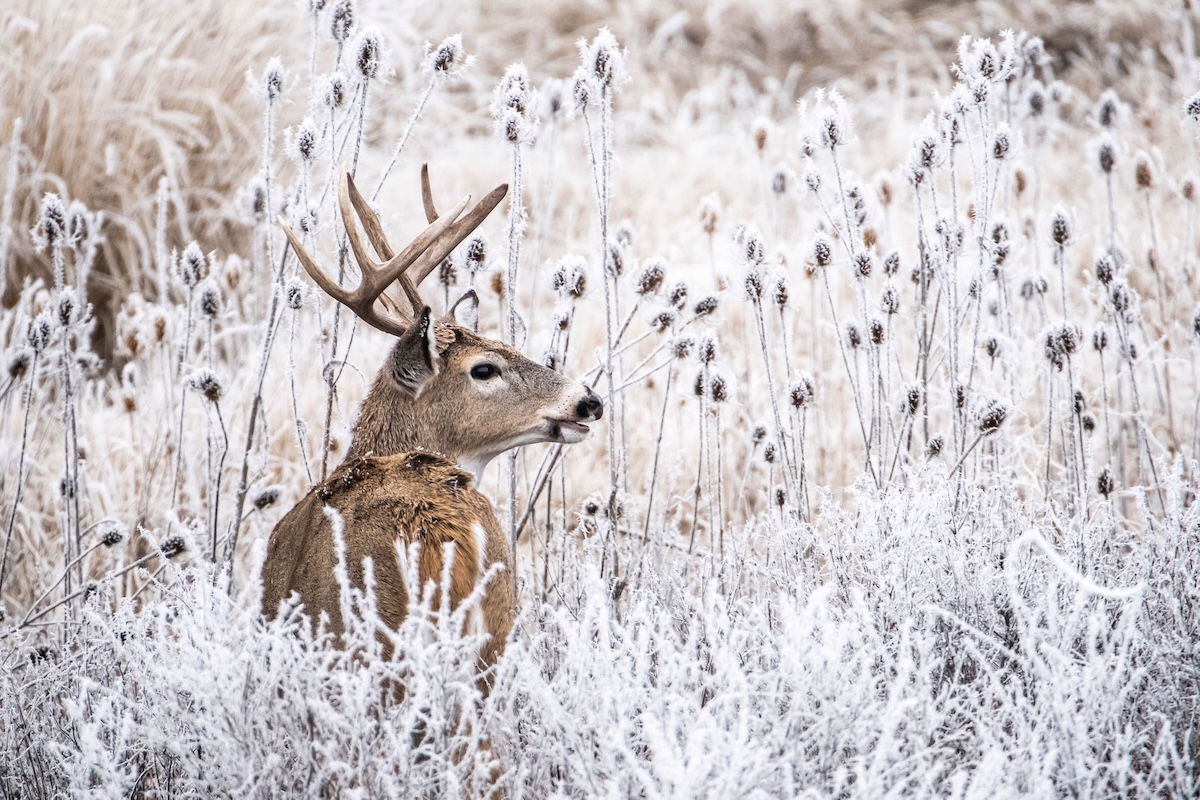
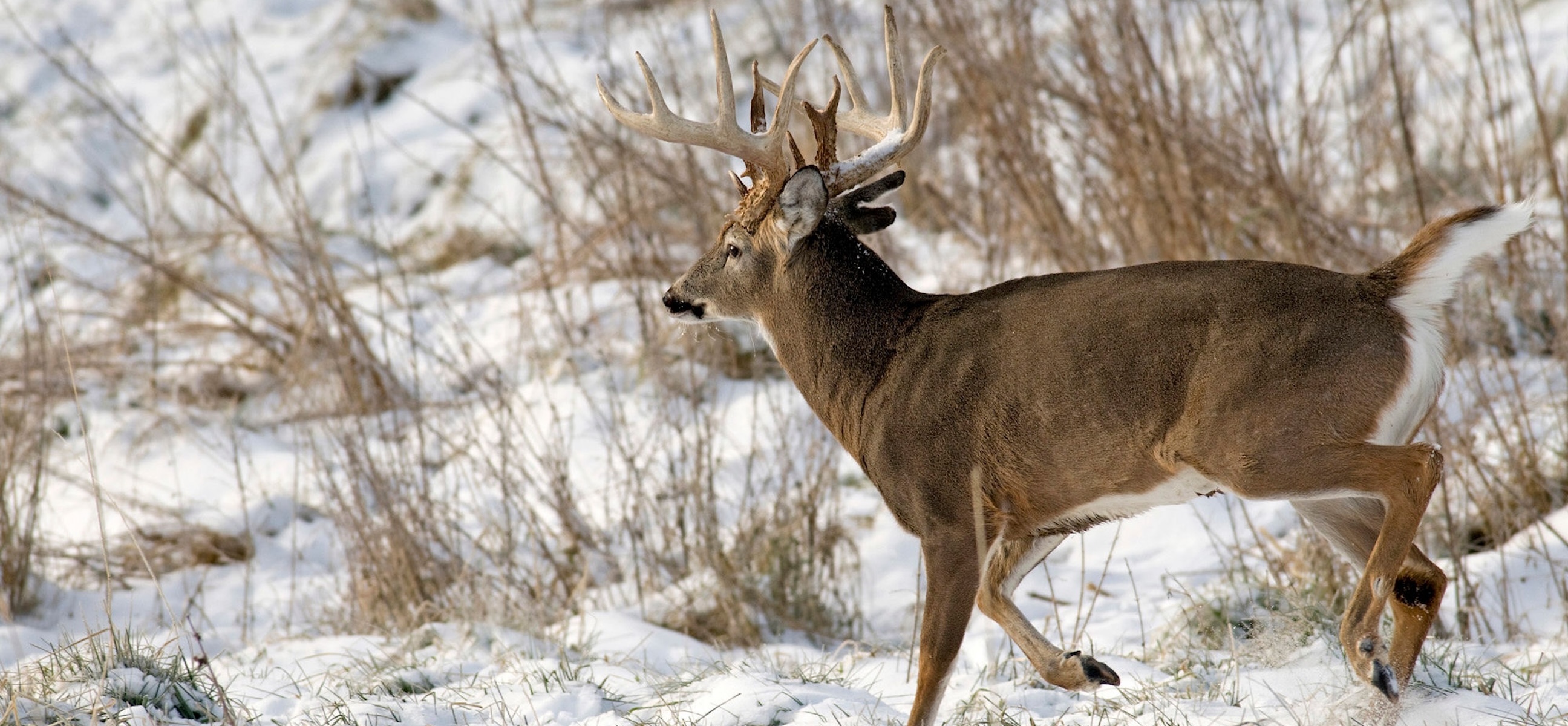
In winter, deer spend more time bedded and less time moving.
1. The Deer “Yarding” Effect
“Yarding” is a term used to describe large gatherings of deer in winter. They assemble into large groups in areas that are more survivable and that provide them with the needed bedding cover and food supply to live through the bitter days of late winter.
“A deer yard is the same thing as a wintering area,” Adams said. “These are in extreme northern regions of the whitetail range. It’s typically coniferous forests with heavy conifer canopies where the snow depth is less than the snow depth under hardwood canopies or out in the open. It’s easier for deer to move through there. Also, the wind speed tends to be less and the temperature at ground level tends to be a bit warmer.
“Some deer will migrate in winter to reach traditional wintering areas, because winter survival is higher there,” Adams continued. “This is at the extreme northern range of the whitetail, though.”
For example, most Pennsylvania deer don’t need wintering areas. (Other than some deer in northwestern Pennsylvania within the snow-belt of Lake Erie. There are places that get 200-300 inches of snow each year from the lake effect. Deer in that environment absolutely use wintering areas.)
Herds in the UP of Michigan, and northern regions of northern border states, often do the same. But other whitetails “yard up” in much lesser capacities, if at all. Because it requires 12, or even 18-plus inches of snow, before deer are greatly impacted by it. Even then, deer run the same trails, pack the snow, and save some calories.
2. The Whitetail “Hibernation” Effect
Is it true? Do deer actually hibernate during winter? Not really, but in a way, they do. It’s an interesting, but little-known fact about America’s most popular game animal.
“Northern deer survive winter by putting on a big layer of fat,” Adams said. “They get as heavy as they can, and they actually survive winter very similarly to bears. They live off that tissue fat. Obviously, deer don’t go to sleep like bears. But the majority of their daily nutrition is from fat that they’ve accumulated in the fall.”
During harsh weather patterns, deer tend to bed in more strategic bedding locations (as outlined above). They also exhibit incredible insulation.
“Deer are well-equipped to survive,” Adams said. “Their hair and hide are made to hold in so much of their body heat that they can lay in snow and never melt it.”
3. Reduced Calorie Intake (Not a Slowed Metabolism)
It’s a common misstatement that whitetail metabolisms slow in winter. That’s actually not true. While some past research suggested that, the University of New Hampshire determined this to be a myth.
“A deer’s winter metabolism is very similar to its summer metabolism,” Adams said. “But the amount of movement decreases. So, a deer’s metabolism doesn’t slow down. They just reduce their need for calories by moving less. It’s a behavioral change, not metabolic change, in deer.
Places Pressured Bucks Hide (And How HuntStand Helps Find Them)
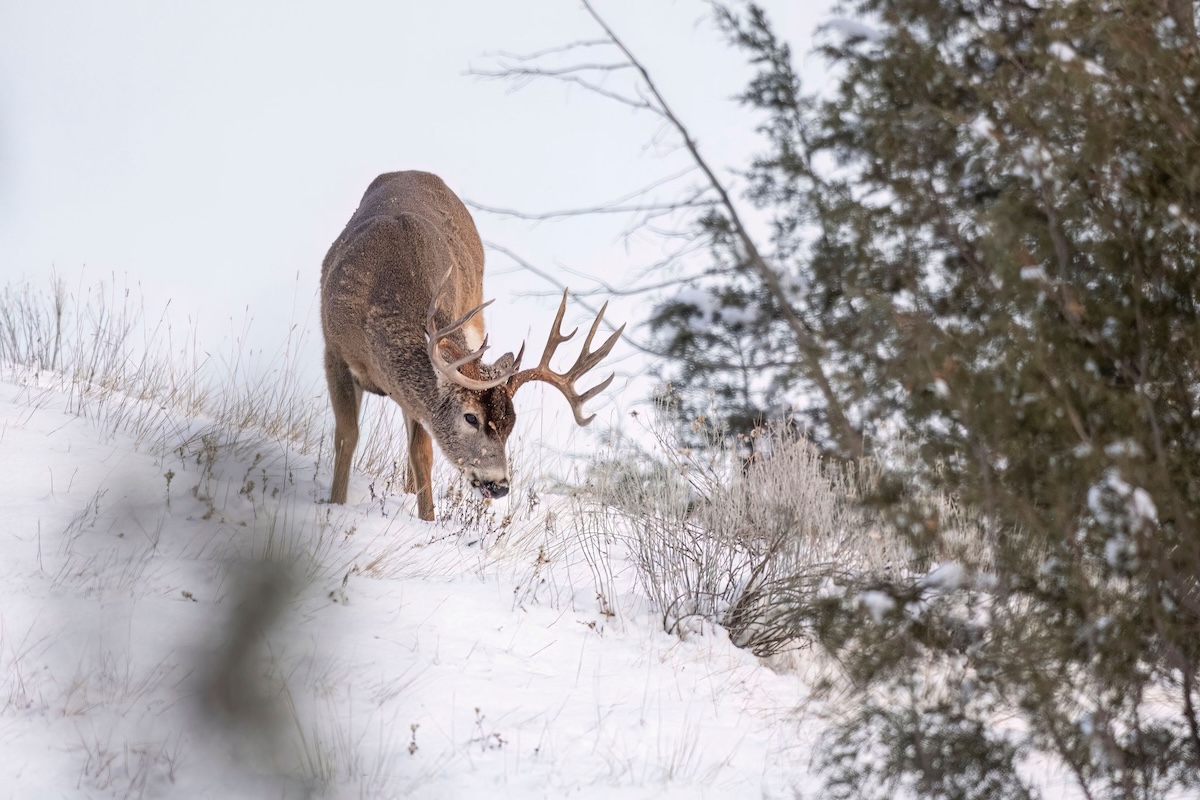
Winter food sources consist mostly of fibrous, low-quality woody browse.
4. Decreased Overall Movement (Not Increased Movement for Food and Warmth)
Many people believe that deer must move more in winter to stay warm and survive. That’s not true, either. Deer actually move less in winter than at any other time of year.
“Deer survive harsh environmental conditions by reducing movement,” Adams said. “They don’t move as much because they’re saving energy. They get into pockets where the weather isn’t as bad. That’s why you see deer going to wintering areas, such as pines, hemlocks, or something else that helps block the wind and keep some of the snow out.
“During storms, they hunker down and move less,” Adams continued. “They get into these micro environmental areas where the climate is a little better and they just wait it out with reduced behavior and movement. When they do move, it tends to be in the warmest parts of the day. They’re taking advantage of the sun.”
5. Notable Deer Dietary Changes
Whitetails have been known to consume upward of 700 plant species. In winter, that number drops off drastically, though. Furthermore, what they do consume isn’t nearly as palatable. Most of it is woody browse.
According to Adams, these food sources are very low quality. They don’t get much out of it. That’s OK, though, because they aren’t growing anything at that time of the year. But what they do consume at least slows the use of their fat reserves.
Adams says that, by filling their stomach (even with low-quality browse, dead leaves, and other things like that) their body is trying to digest that food. Interestingly, one of the byproducts of that is heat generation, which allows dear to help maintain body temperature without having to use precious fat resources.
Essentially, while deer aren’t eating steak dinners, they are making it through the winter on Beanie Weenies and some kindling on the fire.
6. More Predictable Travel Patterns
As food sources dwindle, so do viable whitetail patterns. As deer are forced into strategic bedding cover (i.e.: solar bedding, thermal bedding, and unpressured settings), and closer to remaining food sources, they settle into more predictable travel patterns. For hunters who have access to such areas, and where seasons remain open, that’s a benefit to those still carrying deer tags.
7. Faster Whitetail Health Decline
While early winters rarely impact whitetail health, extended winters certainly do. As Adams noted above, extended winters that endure beyond the typical 90-day threshold can have devastating impacts on whitetail health. This can lead to poorer bodily condition throughout the next year, and even beyond.
Shed Hunting Hacks, Tips, and Tactics with HuntStand Ultimate
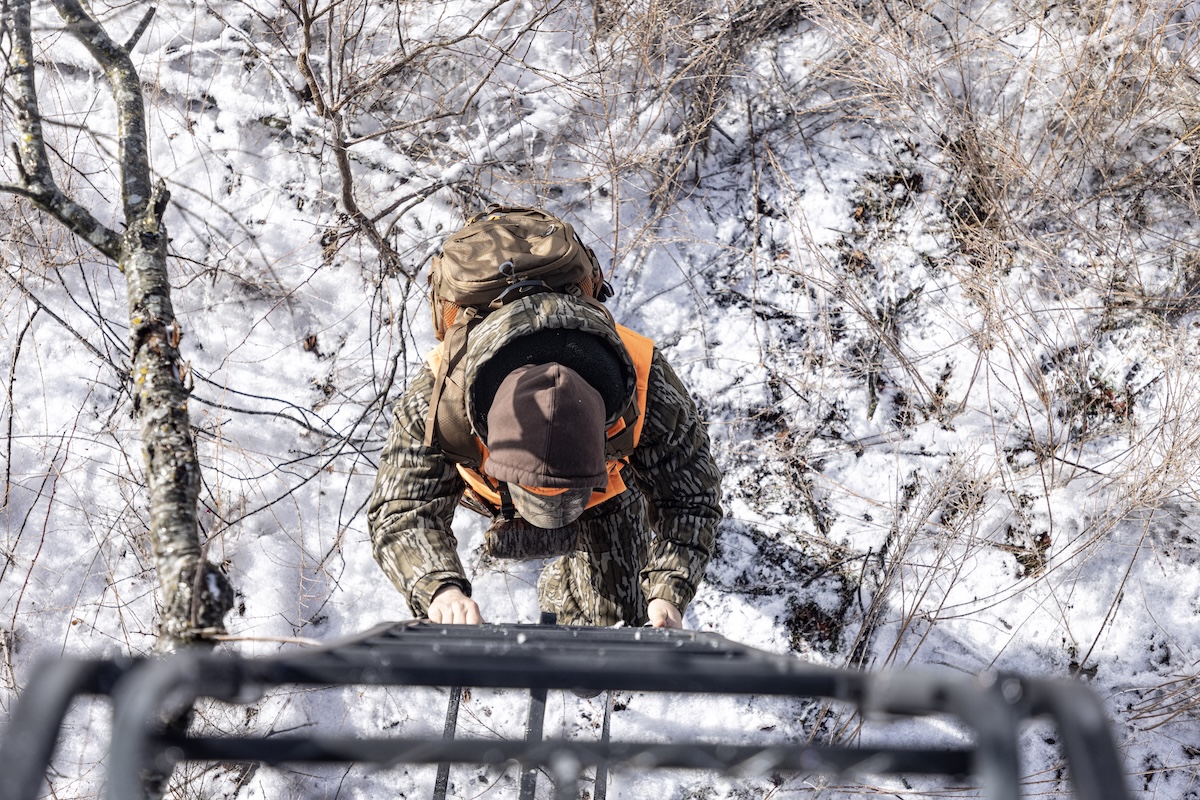
Hunters, where seasons remain open, and who still carry tags, can capitalize on condensed deer patterns.
8. Increased Deer Predation Risks
Long winters, and especially deep snows, create predation risks. In deeper snow, it’s much easier for bobcats, coyotes, and other predators to catch and kill deer. When there’s just enough crust on snow to hold a coyote, but deer break through, deer are at much greater risks of predation.
9. Earlier Antler Shedding Dates
Predation aside, stress of any kind negatively impacts deer. Provoking them to run and expend energy diminishes their fat reserves. Enough of that can limit or even prevent their ability to survive until spring green-up. At the very least, it can lead to health issues, the least of which is earlier-than-normal antler shedding.
“Extended periods of harsh weather can lead to more stress on deer herds,” Adams said. “This can provoke earlier antler shedding dates.”
10. Greater Whitetail Winter-Kill Rates
Winter-kill is a significant factor in western settings, and the northernmost stretches of the U.S., where deeper snows, long stints of bitter-cold temperatures, and longer-than-usual winters are more common.
“In the North, we get some bad weather,” Adams said. “It’s not that big of a deal, but where we can run into trouble, is when you have extended winters, in particularly the winters that run into spring. Deer are very well equipped to handle extreme cold and snowy conditions in December, January, and February. But that March timeframe, and when winter extends later than normal, northern deer get into trouble.”
30 Reasons HuntStand Ultimate Makes You a Better Deer Hunter
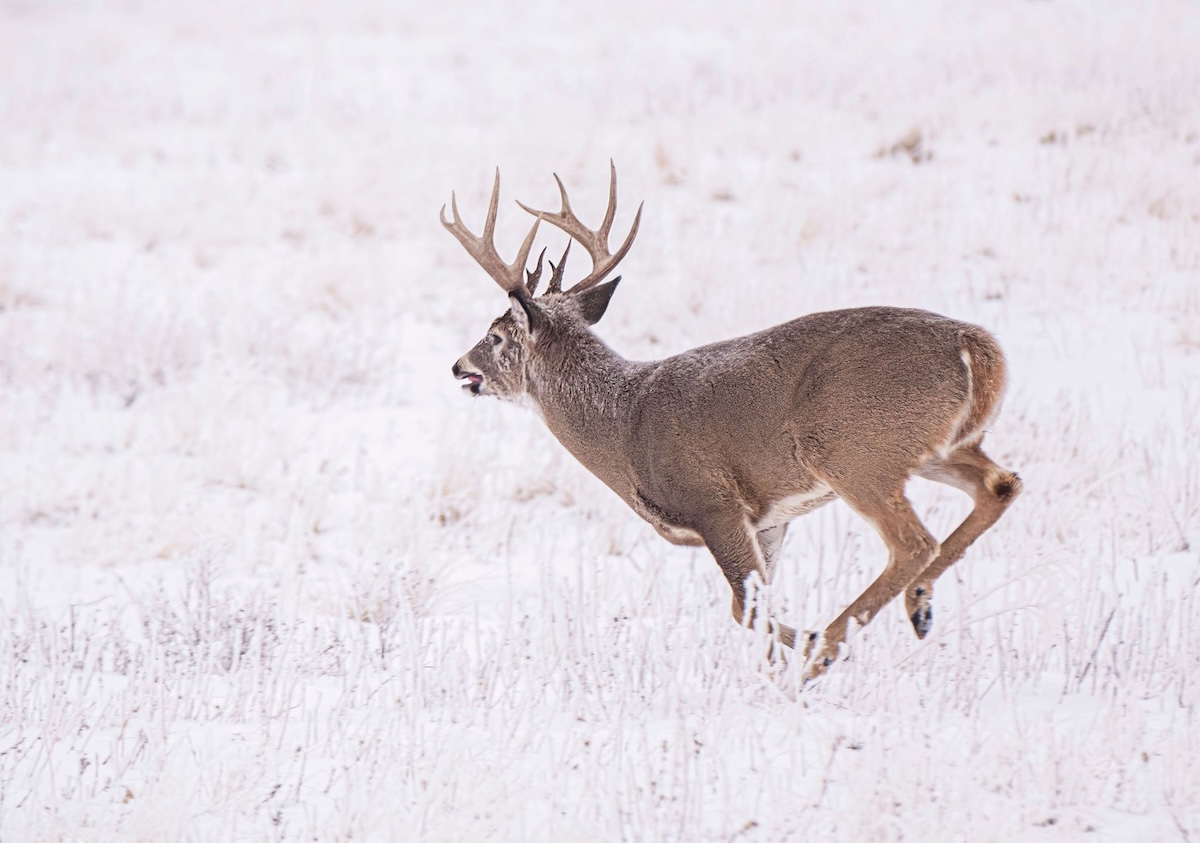
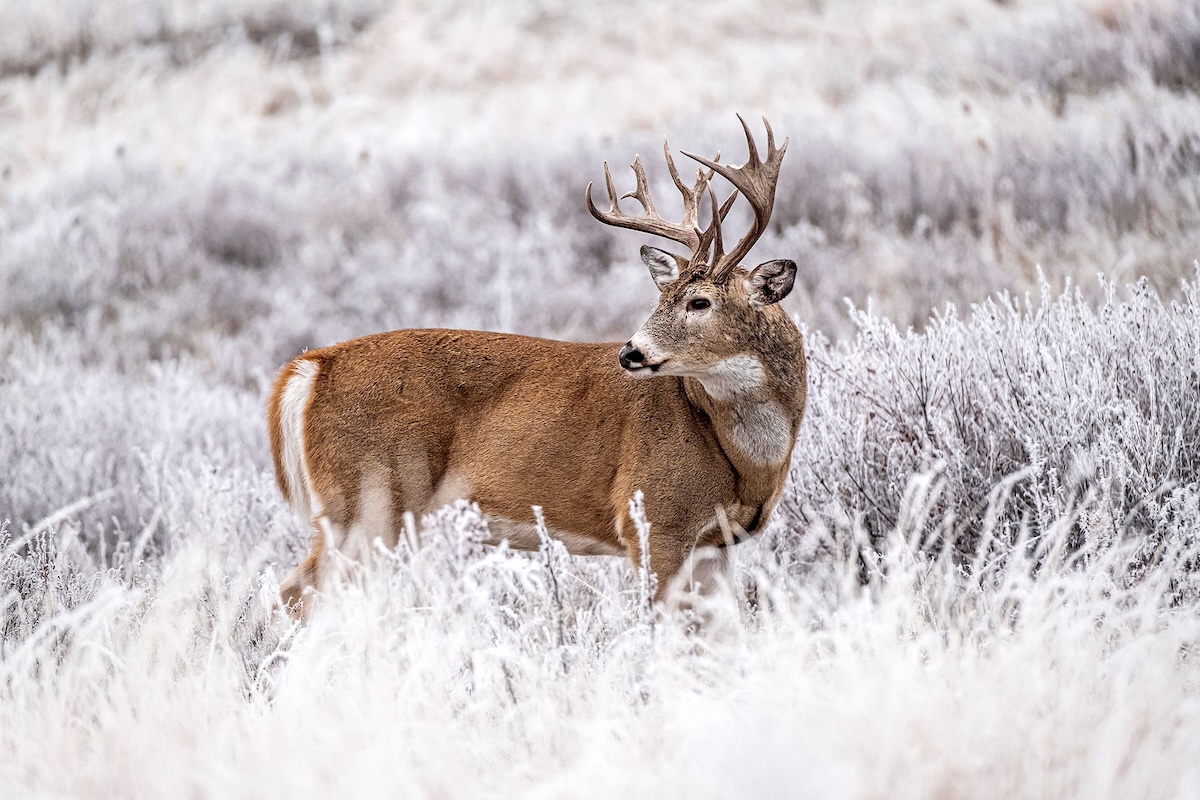
When possible, avoid stressing (running) deer in winter. It cause them to waste much-needed fat stores.
Avoid Stressing Deer During Harsh Weather
So, what’s a hunter, land manager, or general whitetail enthusiast to do? For the most part — nothing. Whitetails are equipped to handle most winters. The worst thing you can do is suddenly offer deer corn or other feed that deer haven’t already been consuming. In short, it can create serious (even lethal) digestive issues. (That’s a discussion for another time.)
What you can do? Avoid stressing deer out in winter, especially during bouts of harsher weather.
“Deer are stressed during the winter — more than any other time of year,” Adams said. “The worst thing that we can do is add additional stress by pushing them out of areas they’re bedding in and using for cover, particularly when we get really bad snow events. We need to minimize stress from our end to give them every chance to survive.”