




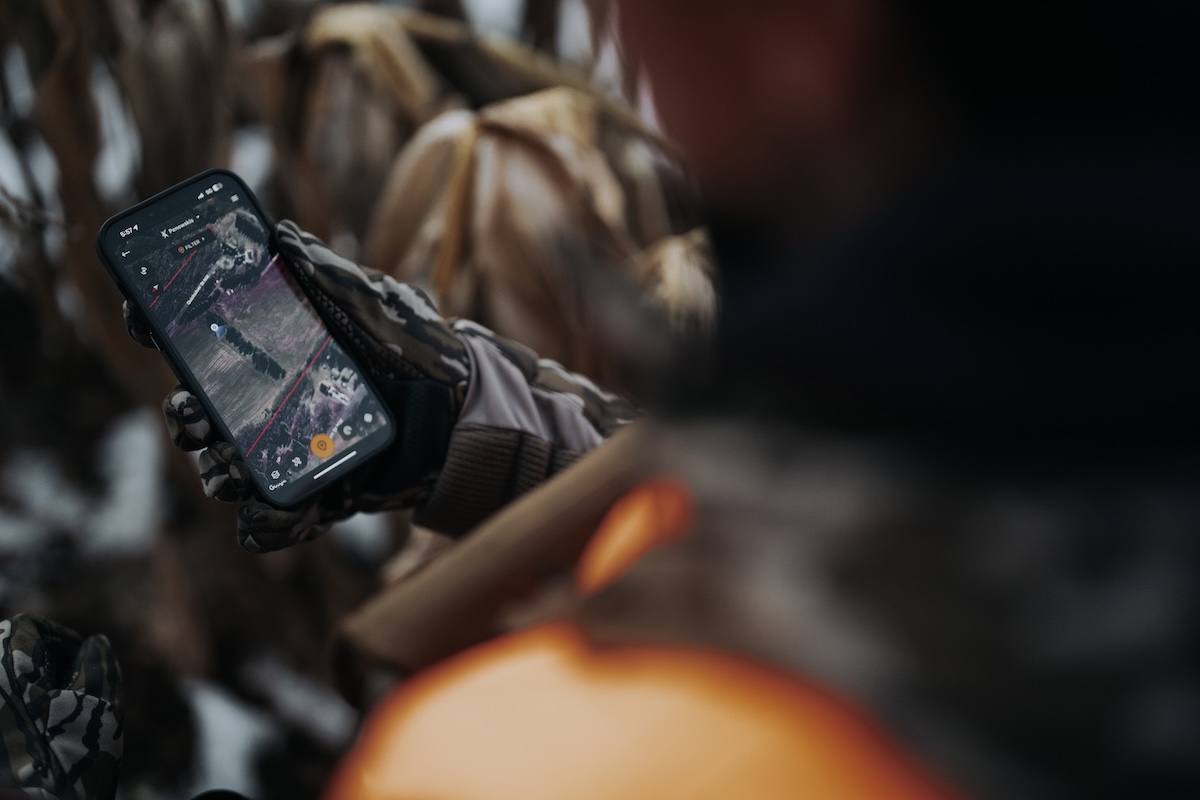

Use HuntStand to map out your deer hunt and enjoy a better deer season.
Hunting whitetails is challenging. Hunting mature bucks is downright difficult. Some days, it might even feel impossible. But it isn’t, and certain practices can help bridge the gap between unpunched tag and a buck in the truck.
Those who consistently harvest mature bucks do things differently. They understand the nuances of whitetail patterns, and the details found within bedding areas, food sources, travel routes, and more. More specifically, they know how to chart a buck’s home range and core area. Here’s how HuntStand assists with that.
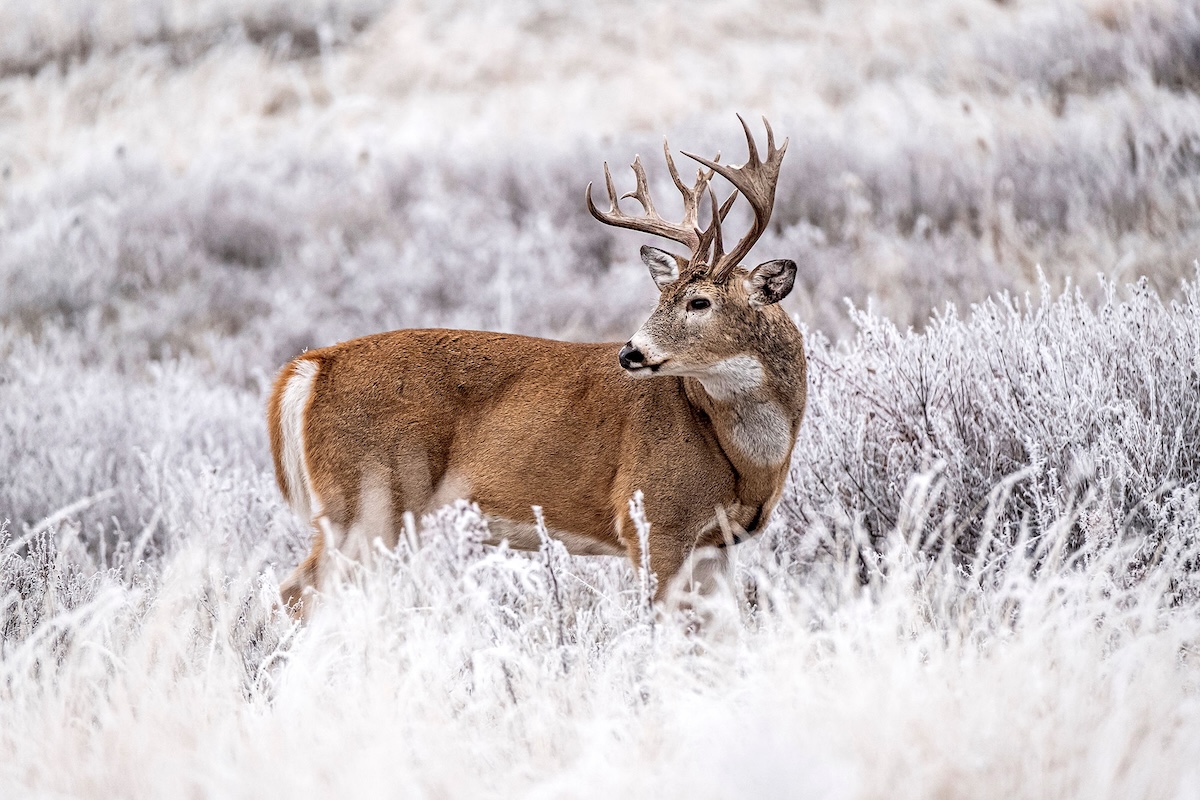
A buck's home range is the overall area that it inhabits.
Whitetail Home Range Defined
A whitetail’s home range is best defined as the overarching area that a buck lives. It provides all bedding, feeding, and watering needs that deer requires throughout the year.
The home range is where deer spend virtually 99% of their time. It’s the entire scope of the area utilized throughout the year, minus any short-term excursions it might go on. Short-lived jaunts outside of the typical home range are not included in the home range.
Some deer have relatively fixed home ranges, and these don’t change during the year. Other whitetails have two different home ranges, of which both are used at different times of year. For example, a buck might spend spring and summer in one location and fall and winter in another. Other times, bucks might only show up for a month or so of the rut and be gone again.
When targeting specific bucks, it’s important to know if they’re the type that stick around all year, or if they show up only for certain phases. This directly impacts when you hunt specific target bucks.
Of course, the nationwide average home range for a whitetail is approximately 650 acres. That’s a large area, which poses big challenges for deer hunters. How do you find a buck, and effectively hunt it, when they live in such a vast space? Start by locating the core area, which includes the deer’s bedding area and nearby food sources.
A Detailed Guide to HuntStand App Tools for Deer Hunters
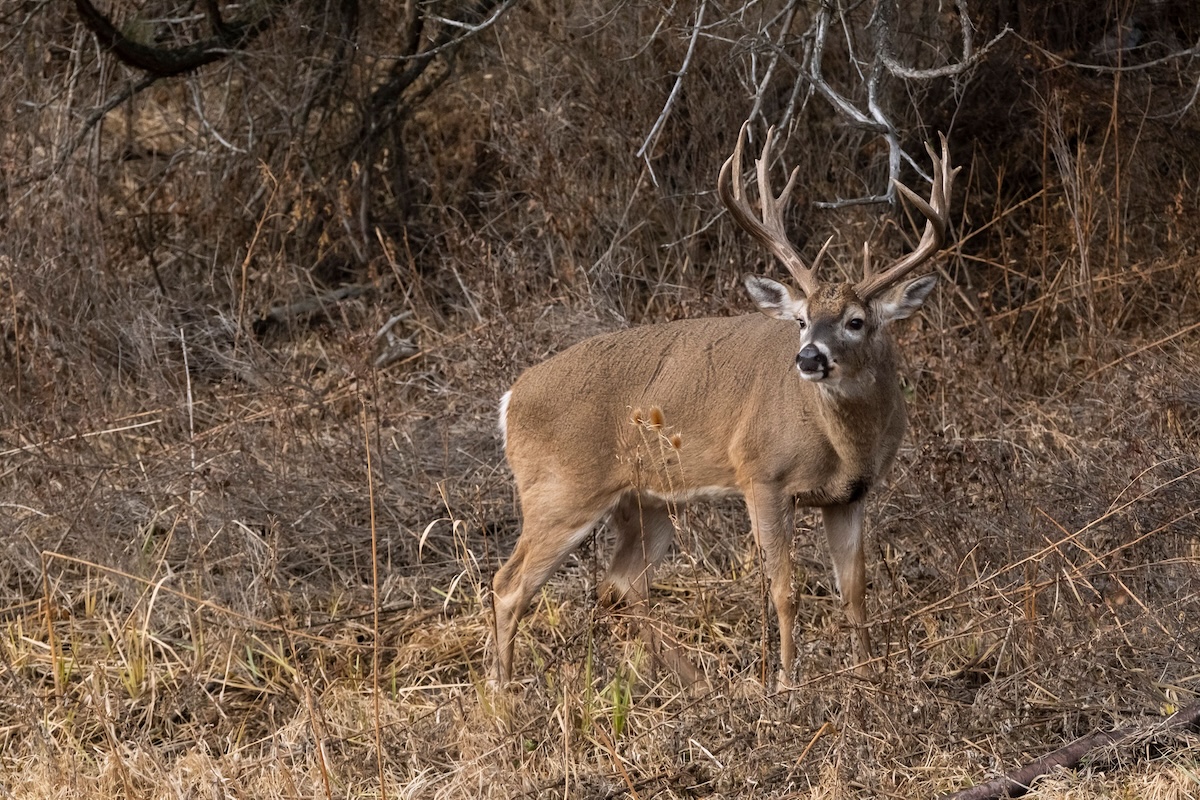
A buck's core area is the small but defined area it uses more than anywhere else.
Buck Core Area Defined
A whitetail’s core area is found within its home range. Generally, this is where the buck’s primary bedding area(s) are located. It also has access to numerous food and at least one water source in this area, too.
This is where a deer spends nearly 75% (or more) of their time. Virtually all of a deer’s daylight hours, and some nighttime hours, are spent here.
Oftentimes, a deer’s core area is 30-50 acres. This is the location that best serves its needs, including safe, effective bedding cover, viable food sources, and water.
Due to the nature of core area inhabitation and use, hunters must locate these areas to have legitimate odds at harvesting a specific target buck. Other than random whims during the rut, hunters have little chance of bagging a buck outside its core area.
How to Manage Deer Hunting Land with HuntStand
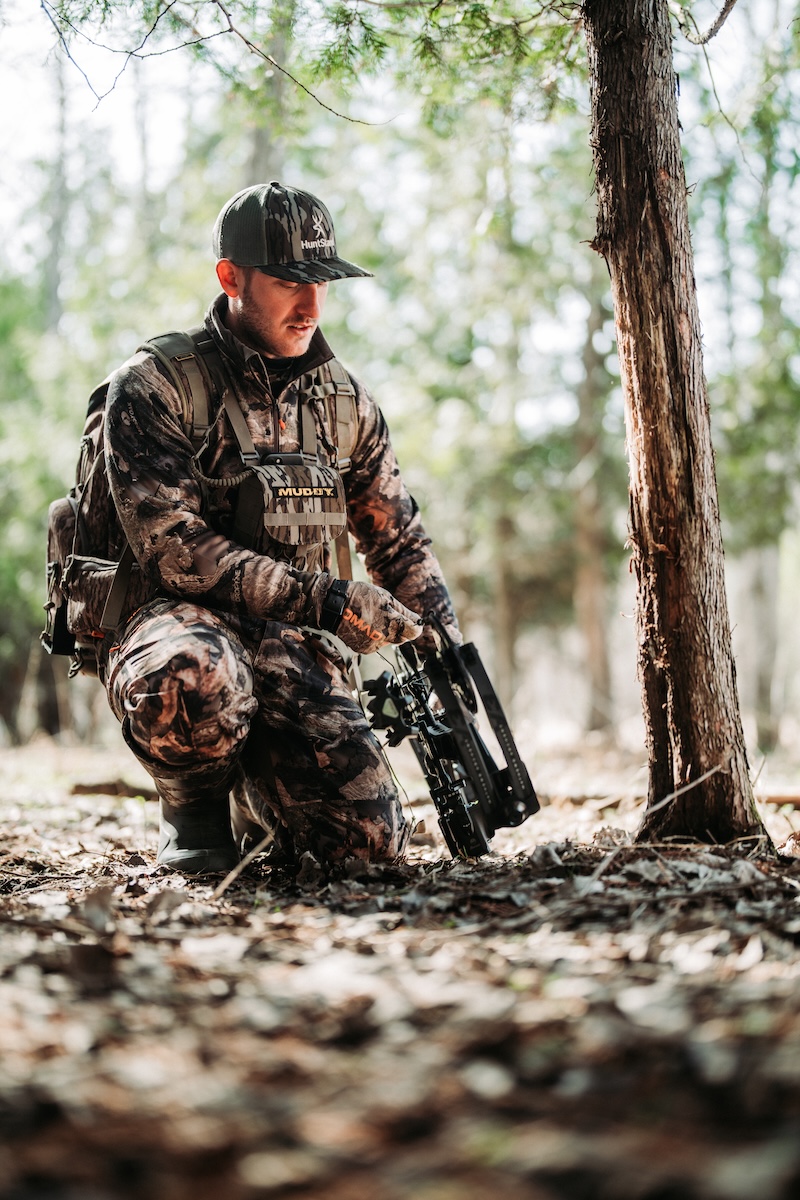
Various clues help piece together info to act on.
Identifying Bedding Areas, Food Sources, and Lines of Movement
Not only must a hunter locate a buck’s core area but also find the exact bedding areas, food sources, and water sources within it. These areas are relatively fixed, and knowing the locations of each bedding area, food source, and water source, assists in patterning deer.
Furthermore, it’s paramount to determine the lines of movements. Knowing these endpoints, and associated travel routes, helps pinpoint optimal spots to intercept deer. These stand locations can then be hunted as needed based on current deer patterns, wind directions, and more.
Sometimes, how we visualize a property’s layout, and how it actually does so, are different, though. For example, a bedding area might be a bit east or west of where we think they are in our head. Without visualizing bedding areas and food sources on an app, we might believe the line of movement is straight north to south, when it’s actually a northwest to southeast movement. Even that slight difference can make significant alterations to hunt plans.
This is also true in terms of directional orientation (North-South-East-West) and affiliated wind directions. While, in our head, we visualize a North wind working just fine for a spot, it might not actually work until it’s a northwesterly or westerly direction. HuntStand helps get this right and plan effective hunts.
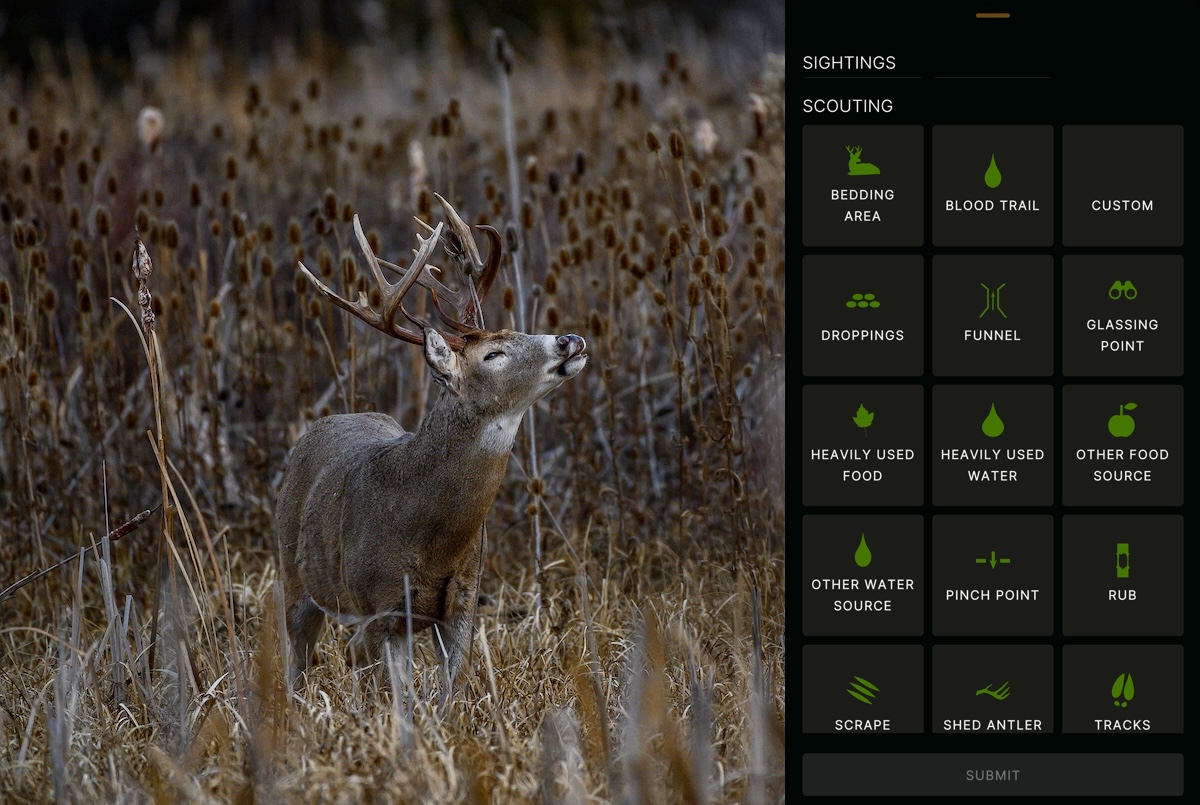
Drop relevant markers for specific scouting-related notes.
Deer-Specific HuntStand Markers to Use
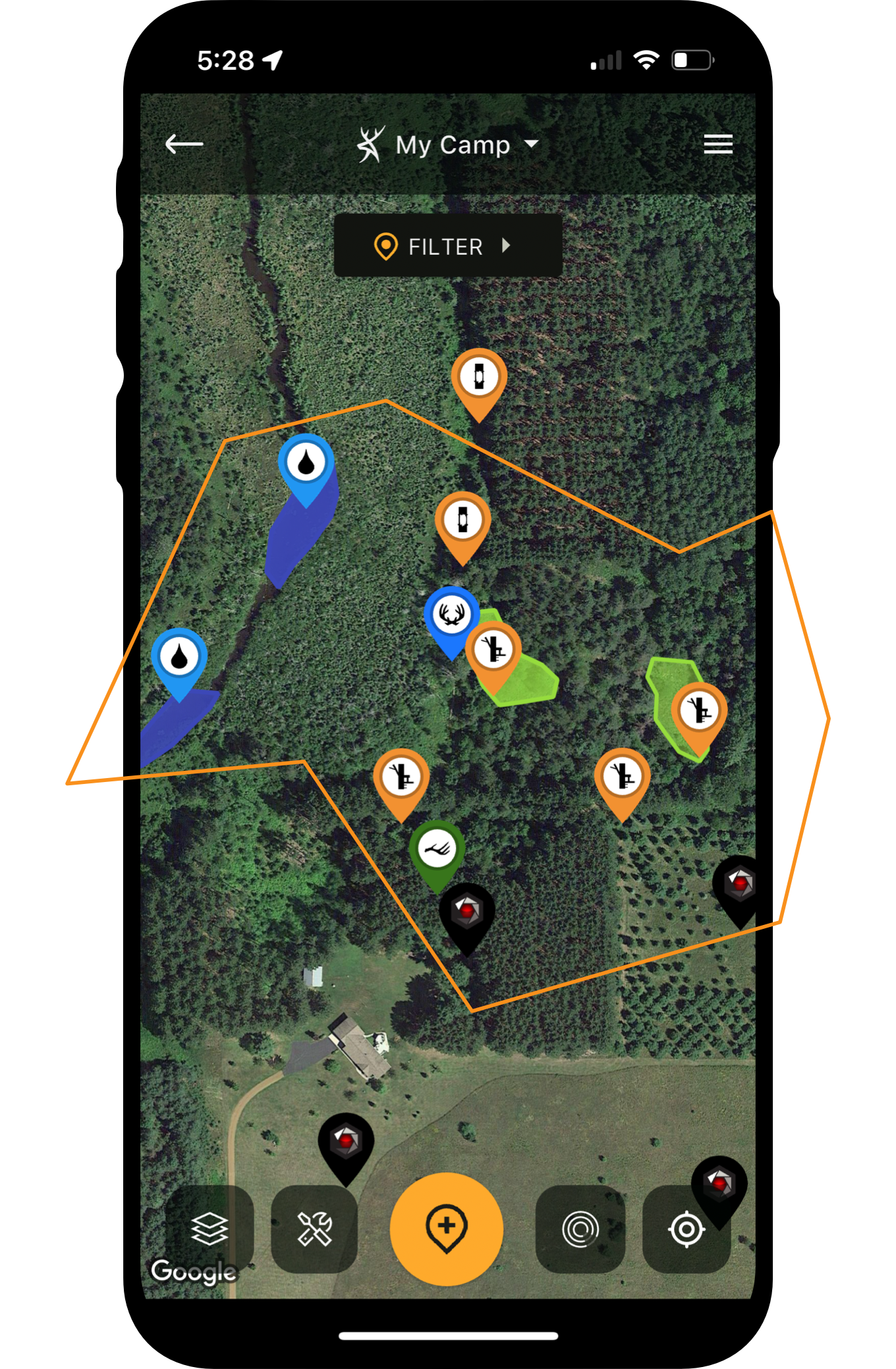
HuntStand and its many (and nuanced) markers are excellent for charting a buck’s home range and core area. By scouting, and dropping pins for important discoveries, hunters can better determine the layout of their hunting land. They can more accurately assess how deer use it.
With HuntStand, hunters can drop deer-specific markers in their associated locations. Use these for beds, food, water, sign, and much more. Then, choose your preferred base layer from a great list of options, and study exactly how deer are using and maneuvering the property.
Bedding Area: Use the “Bedding Area” pin to mark the general bedding areas on the property. If needed, use different colors for each unique buck, or time of year the bedding area is typically used. This can help differentiate quickly where bucks tend to bed. Plus, consider typing relevant notes for each dropped marker. Examples include bucks that bed there, winds preferred for bedding, etc.
Heavily Used Food Source: The “Heavily Used Food Source” is ideal for marking large destination food sources. Examples include large sources of corn, soybeans, wheat, and other crops, or red oaks, white oaks, and other hard and soft masts. In the notes section, type out the exact species, peak attraction windows, etc. Personally, when dropping food source markers, I use colors that most closely match the food source representation. Examples include red for red oaks, white for white oaks, green for soybeans, yellow for corn, orange for persimmons, etc.
Other Food Source: The “Other Food Source” marker is great for noting small- to medium-sized food sources. Examples include singular or small pockets of oak trees (red or white), isolated soft mast trees (apple, persimmon, etc.), early successional browse, and more. Oftentimes, these can even be used to note staging areas, which commonly have small food sources.
Heavily Used Water Source: Mark large water sources with the “Heavily Used Water Source” marker. This is great for lakes, rivers, ponds, and even most creeks. While deer don’t always use large water sources during daylight, they do need these within their home range and core area. Lacking a large water source can discourage deer from living there.
Other Water Source: More importantly for hunting, deploy the “Other Water Source” pin for smaller water sources. Oftentimes, these are slow-running streams, stagnant water holes, and other sources of H2O. Generally, these are located closer to bedding areas, are within cover, and bucks feel more comfortable using such spots.
Rub: Keep track of discovered rubs with the “Rub” marker. This can assist with highlighting new and historical rub lines. These also help project (historical rub lines) and confirm (recent rub lines) buck travel patterns.
Scrape: Drop the “Scrape” marker for each one that dots the landscape. In conjunction with rub lines, each scrape helps paint the picture of property usage, too.
Tracks: Although less valuable than rubs and scrapes, tracks also project clues. Use the “Tracks” marker as needed to help fill the gaps in scouting intel.
Pinch-Point, Trail, and Trail Crossing: HuntStand also has unique markers for “Pinch-Point,” “Trail,” and “Trail Crossing.” These further outline the buck’s core area and help choose potential stand locations.
Sightings Markers: Glassing from afar, sitting observation stands, and close encounters upon moving in to hunt should be remembered via “Sightings” markers. Sure, you might remember where you saw that monster buck that was just out of range. But will you remember the direction of travel, wind direction for that timestamp, and other details that most certainly factored into that buck walking during daylight? Without a Sightings pin drop, you’ll likely forget the important details associated with encounters.
Custom: Those who need a unique pin can implement the “Custom” option. Use this for any other marker needs not already addressed in the available dedicated pin groupings.
Edge Habitat for Deer (and How HuntStand Helps Find It)
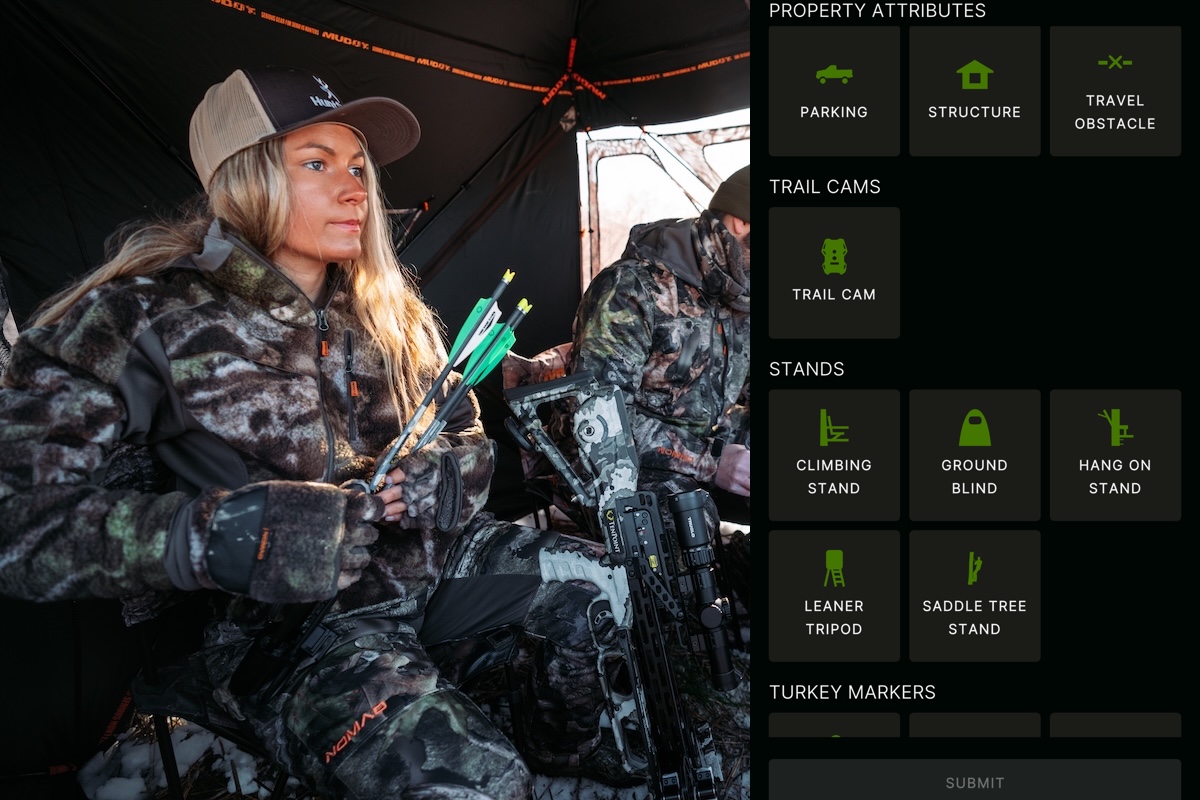
Use needed gear-related markers to remember and visualize deployments.
Other Hunting-Specific HuntStand Markers to Implement
Whitetail-specific markers aside, benefit from other hunting-specific HuntStand pins to implement in Hunt Area maps. These are more about marking your gear deployments than deer patterns. Still, these are important to visualize in relation to buck bedding, feeding, and travel routes.
Agriculture Field: Corn, soybean, wheat, and other crops are integral parts of daily deer movements. Keep track of these with the “Agriculture Field” marker. Keep track of annual rotations, too.
Bait Pile: Some states allow baiting. Hunters who choose to implement this tactic might have numerous bait stations running. Drop a “Bait Pile” marker to establish and remember these in HuntStand. Type out notes for how much bait was deployed to gauge how long it might last.
Feeder: Drop a “Feeder” marker for each feeder location. This should help remember that element of gear deployments.
Mineral Location: Running mineral is quite common throughout most states. Drop a pin for each “Mineral Location” on the property.
Ground Blind: A sector of the hunting population prefers ground blinds. Place these markers to remember important locations of blinds, preferred wind directions, and more.
Climbing Stands: Those who use climbing treestands sometimes leave these on trees. Other times they pack the stands in and out. Regardless, mark deployed stands, and mark trees that are straight, limbless, and otherwise suitable for climbers. Use a dedicated color for deployed stands, and a different color for good trees without stands currently positioned.
Hang-On Stand: Another sector of hunters are more apt to use hang-on treestands. Thus, the “Hang-On Stand” marker is ideal for noting where these are in the field. Also, use it to remember great trees more suitable for hang-on stands than climbers. Again, use two different colors to differentiate between deployed stands and good trees without a stand.
Saddle Tree Stand: As saddle hunting becomes more popular, it’s only fitting to have a “Saddle Tree Stand” marker. Obviously, most saddle hunters aren’t leaving their gear in the field. That said, you can use the pin to mark great trees to come back to.
Glassing Point: Great glassing spots are valuable, and sometimes, difficult to come by. Remember each of these with the dedicated “Glassing Point” pin. Leave notes on needed wind directions and other important details.
Trail Cam: HuntStand also offers the “Trail Cam” marker. Of course, with the integration of the Command Pro app (for Muddy and Stealth Cam cell cameras), you can import, view, and even analyze cell cam pics right there in the HuntStand app. Plus, it shows the location of the photos based on the associated pin drop.
Next-Level HuntStand Tips for Advanced Deer Hunters
Be ready when your moment finally arrives.
Why It Matters
Charting a buck’s home range and core area is a challenging task. Even so, it’s one worth doing. Knowing exactly where a buck beds, feeds, waters, and travels is great information. It’s needed intel to pattern deer, find their weaknesses, and determine viable stand locations. That’s what HuntStand was designed to do, and a HuntStand Pro Whitetail subscription is your path to big buck success this season.
UPGRADE TO HUNTSTAND PRO WHITETAIL