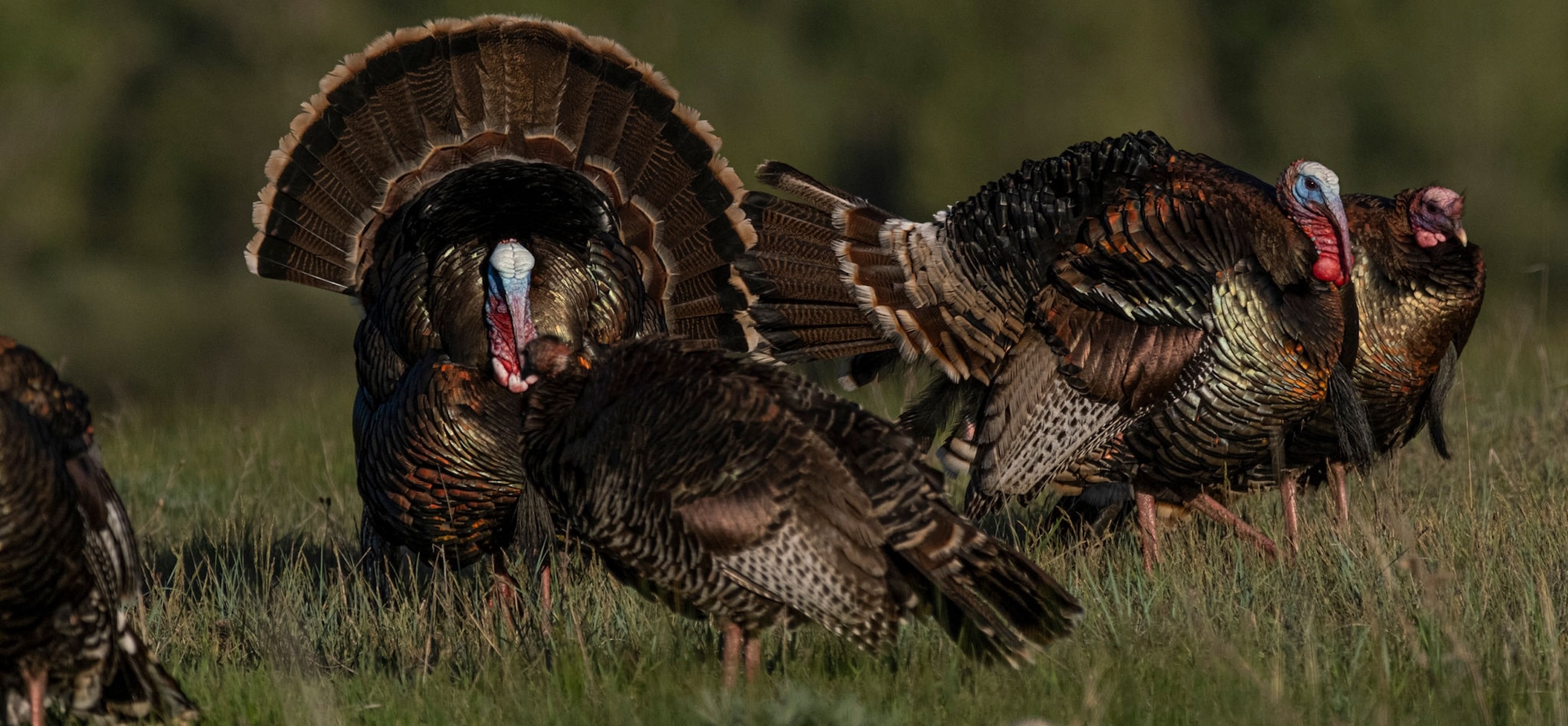






Easterns are stubborn, but with a good game plan, you can bag them.
The South is commonly considered the most challenging turkey hunting region. At scale, southern wild turkeys gobble less, respond less often to calling, hang up more than in other regions, and altogether seem more difficult to bag. It’s quite the learning curve, but not an impossible one. Here’s how to hunt southern turkeys.
- How to Hunt Northern Turkeys
- How to Hunt Southern Turkeys
- How to Hunt Western Turkeys
- How to Hunt Midwestern Turkeys
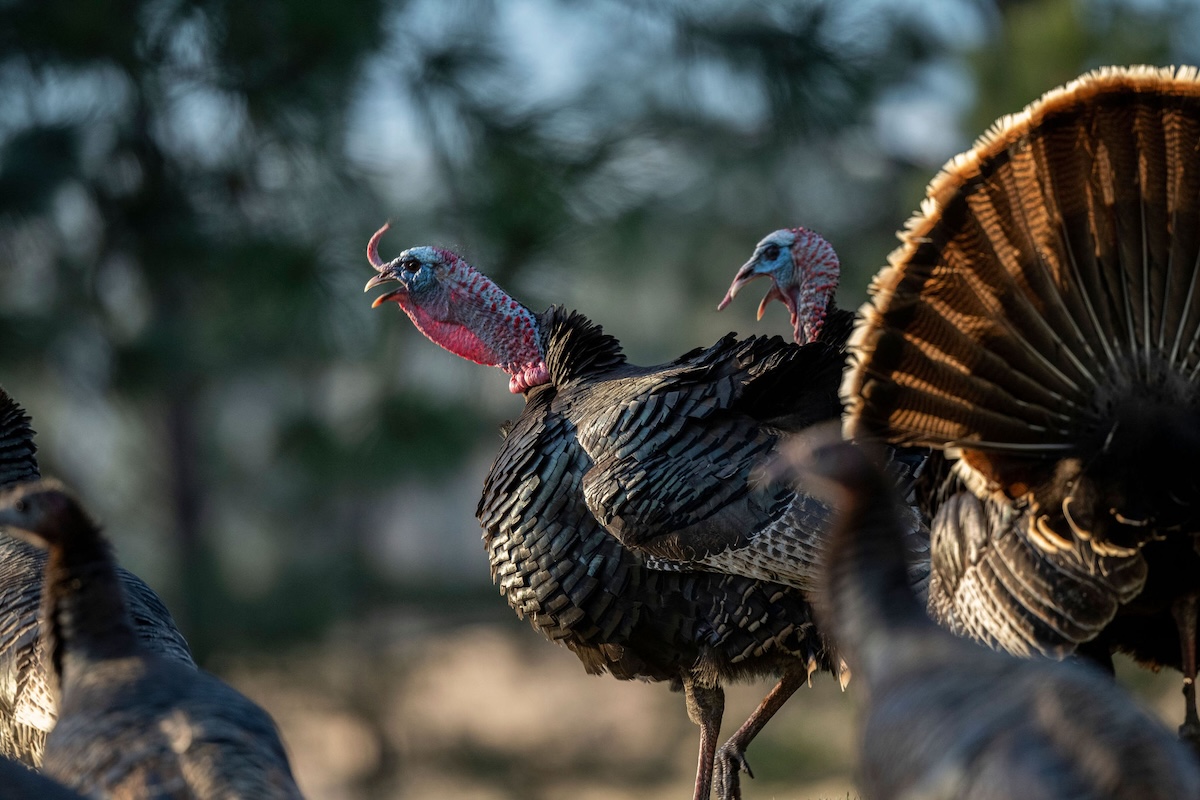
The Southeast is home to eastern turkeys, but also Osceolas in Florida and Rios in Oklahoma and Texas.
Turkey Subspecies in the South
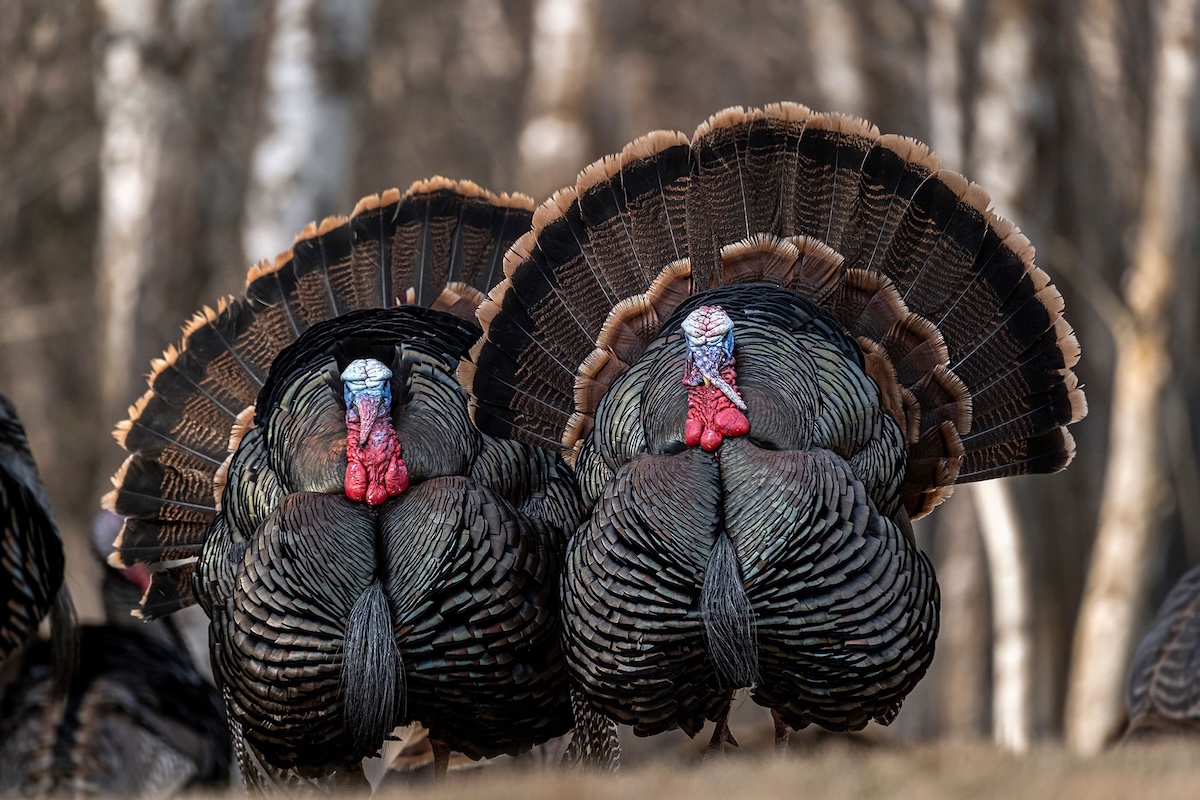
In the Southeast, you have the Eastern and Osceola subspecies. Rios are in Texas. Generally, the Osceola is recognized in the southern two-thirds to three-quarters of the Florida peninsula. All other turkeys north of that in the state and region are Easterns.
Due to their scarcity, Osceola turkeys are highly sought-after. Therefore, they also tend to be more challenging to harvest. Public land hunting is entirely difficult. Securing hunting permission is a big feat, too. But hunting with a reputable outfitter and/or guide can provide high-odds opportunities.
Easterns can be equally cagey, especially in highly pressured situations in the South. When hunting these turkeys, it’s best to find public that’s well away from roadways. Hunt private that has limited numbers of hunters.
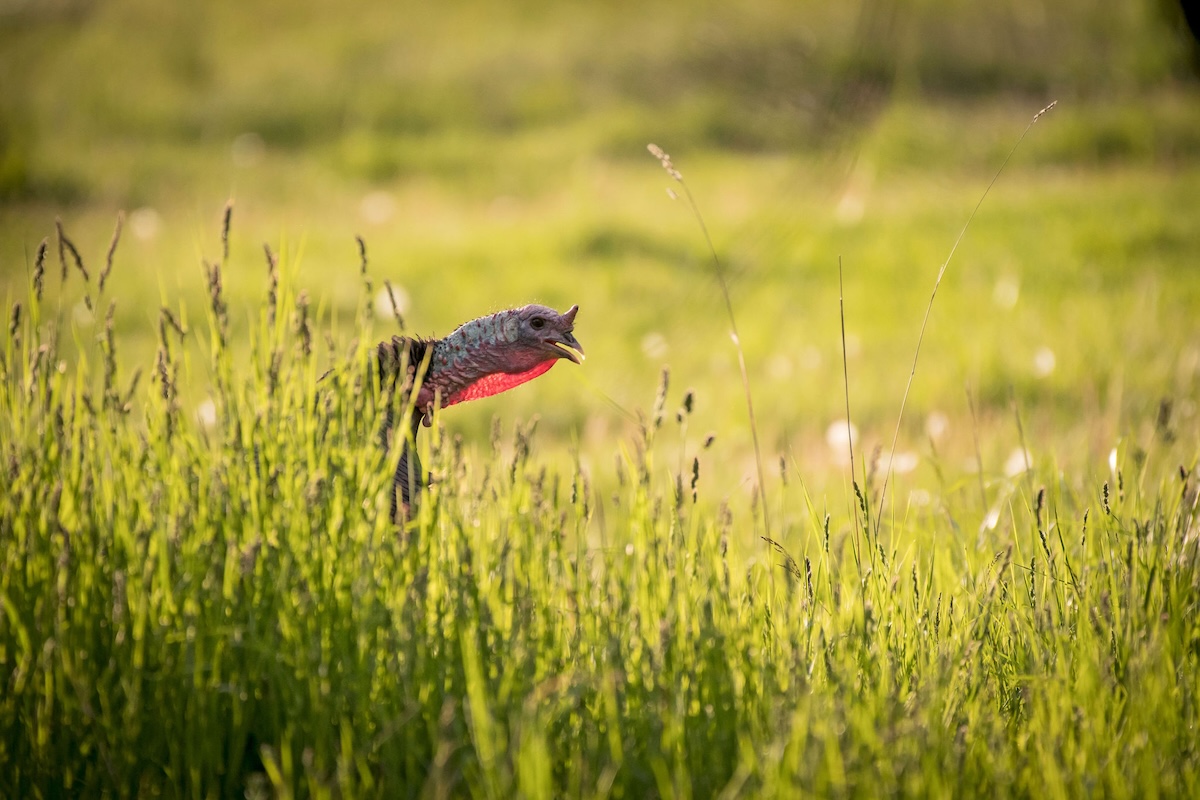
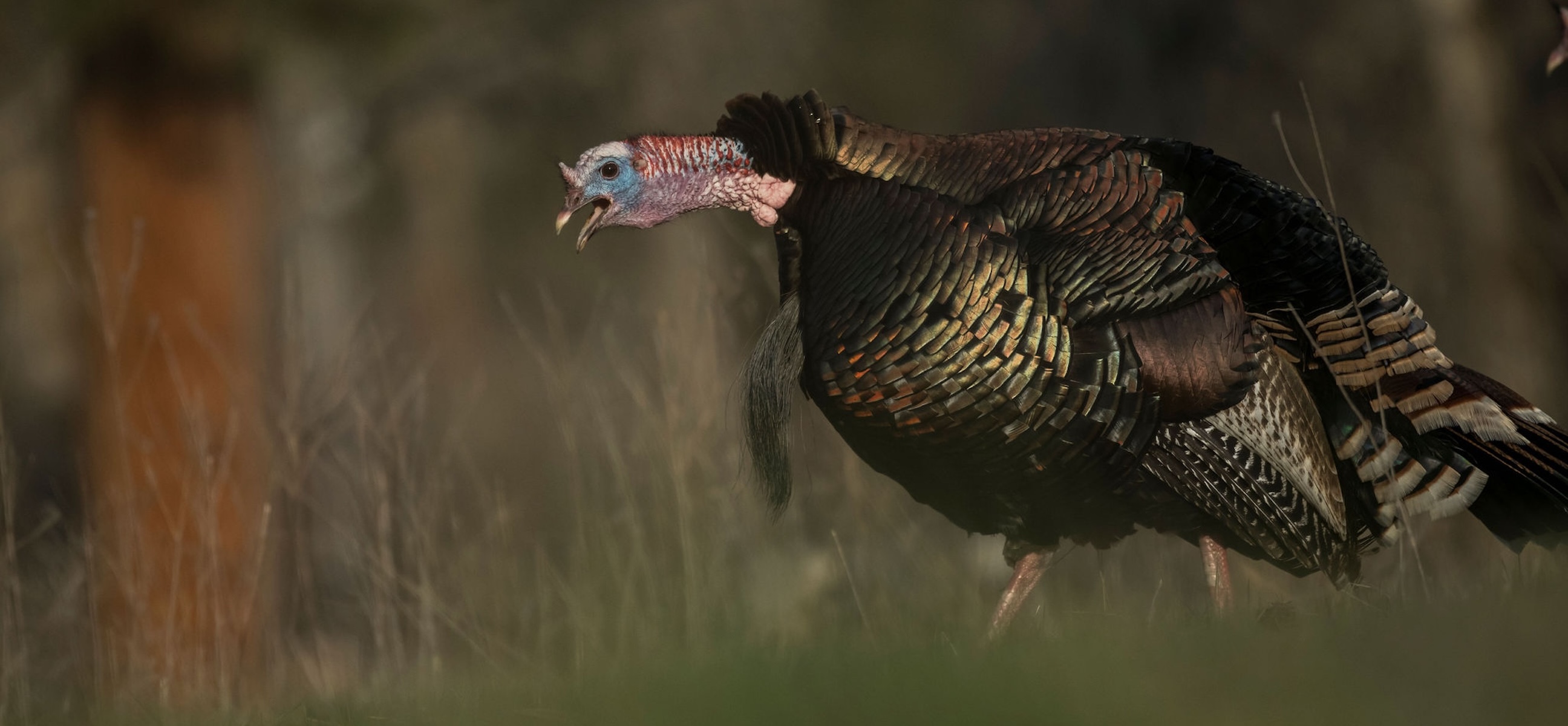
Sometimes, Easterns gobble well. Other times, they don't gobble at all.
Behavioral Tendencies of Southern Turkeys
When it comes to hunting turkeys in the south, are there behavioral tendencies of note? Do southern turkeys really react to the severe heat, elevated hunting pressure, and increasing predator populations? Absolutely they do. Without question, there are subtle biological behavioral differences of southern turkeys.
“Anyone who tells me they’re consistently killing southeast Easterns are doing something,” said Jeff Budz, a highly experienced turkey hunter and hunting guide. “They should be their own subspecies. You are not going to get them gobbling, coming right in, and running you over. Typically, they’re coming in silent or hanging up.”
Of course, Budz is an experienced turkey hunter, and accomplished turkey hunting guide (Moreturkeys.com). He has killed more than 600 turkeys worldwide, registered 117 Grand Slams (he thinks), and has helped guide other hunters to more than 1,000 turkeys.
He says, one gobble will be at 50 yards and just around the corner. The next is 200 yards away. Anywhere with significant levels of pressure tend to harbor smarter and wearier birds.
Surprising Facts About Wild Turkeys
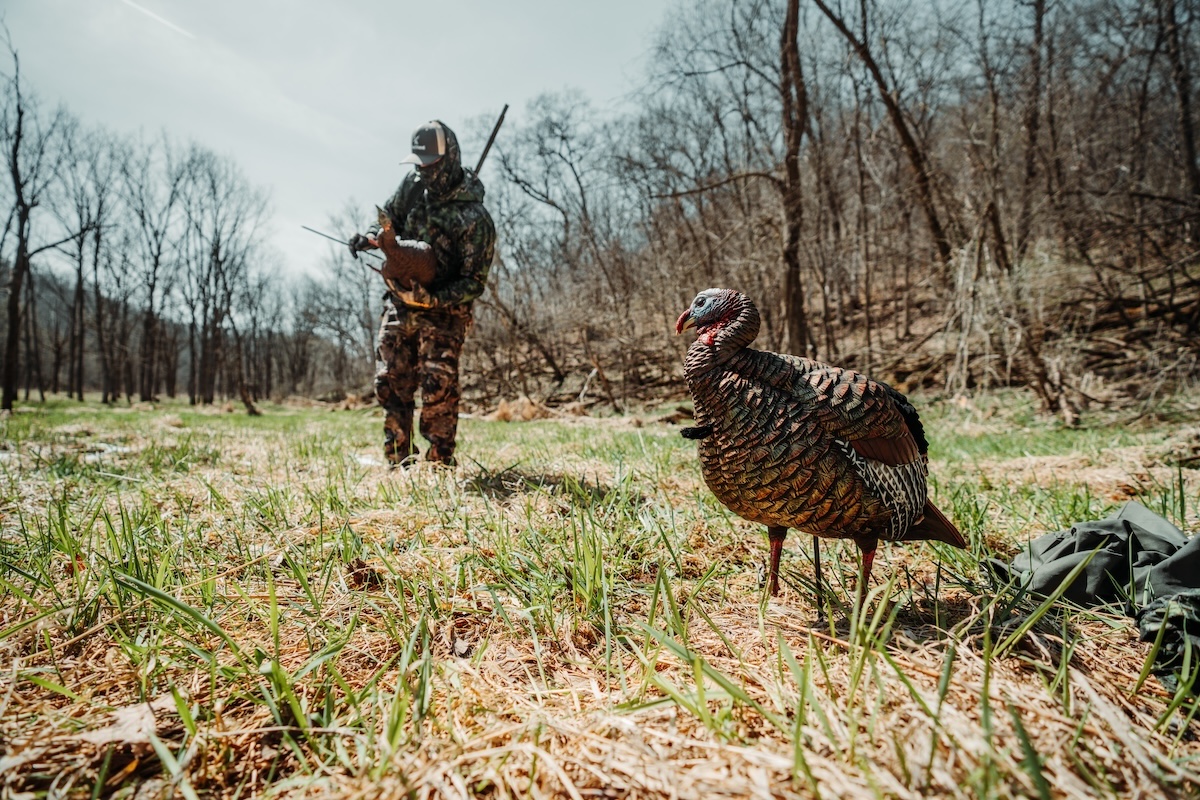
The terrain greatly impacts where hunters set up.
Southern Turkey Hunting Terrain
The South is a surprisingly diverse landscape. Mountains, hill country, ag lands, cattle country, big timber, open country, swamps, and more — hunters can find themselves in a wide array of terrain types.
Of course, waterways are big. Perimeters of lakes and larger ponds can be excellent. Most rivers and creeks are extraordinary. Even small streams can produce solid turkey action. Generally, creek bottoms produce.
Another big one in the South? According to Budz, if you’re on plantations, there’s two different types of these. There are manicured plantations managed for quail populations. Also, there are plantations managed for planted pines. Oftentimes, in each scenario, turkeys can thrive.
As noted, topography type matters, and the lay of the land influences how and where turkeys thrive. For example, turkeys tend to roost along the high ground. Exceptions include windy, stormy nights, when they might choose to roost in valleys and lower elevations to escape some of the wind.
As spring continues, and more hens start nesting, and eventually brooding, find these turkey holding tighter to thicker cover. Of course, gobblers will gradually begin drifting into these places with thicker cover, too.
Even before late season arrives, on warmer days, turkeys tend to head for cover that offers shade. Mature stands of cedars, oaks, and other hardwoods can provide reprieve from the heat. “That’s where the birds go in the middle of the day,” Budz said.
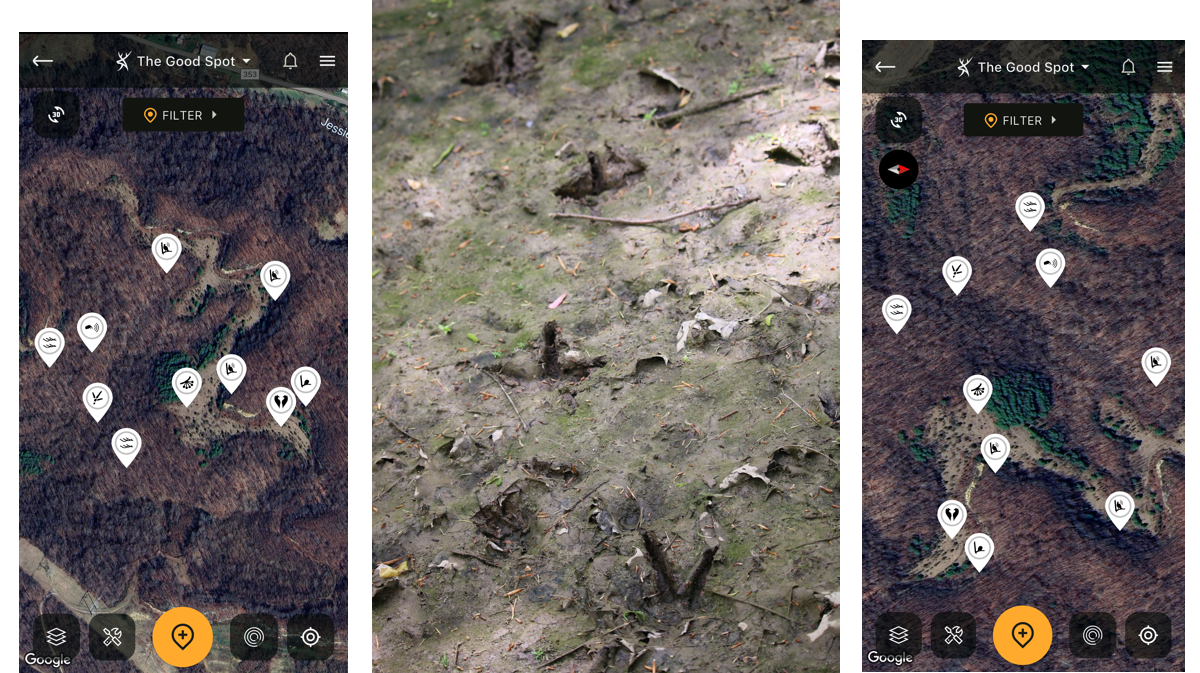
Scout for turkeys, and use HuntStand, to maximize success.
Scouting Southern Turkeys
The nuances of scouting southern turkeys vary somewhat from other parts of the country. “When I scout, I like to cover a lot of ground,” Budz said. “I sort of scout and hunt the same way. Cover a lot of ground. I would rather bump a bird and know that the bird is there than to just sit in one spot and watch or listen and get lucky to find a bird.”
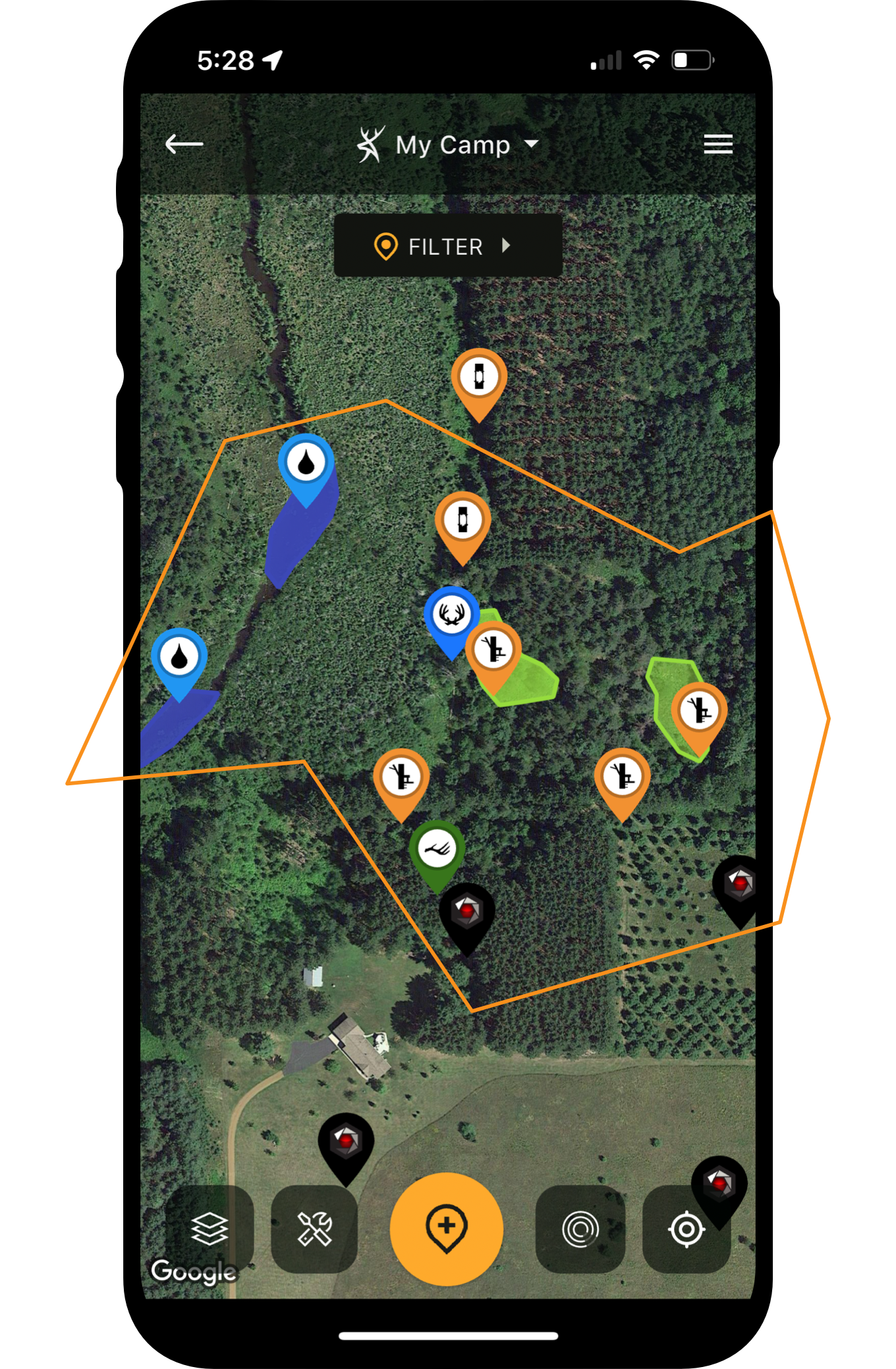
Focus efforts close to known roost trees. Large, mature timber with accessible horizontal limbs tend to serve as good roosts. Don’t overlook standalone trees or small pockets of timber with the necessary characteristics. HuntStand layers, such as Satellite, Mapbox Satellite, Tree Cover, and other habitat-based tools, can assist in finding roosts.
During the day, find areas that turkeys feed and strut. Edges such as fencerows, field corners, ridge lines, hillside benches, logging roads, mature oaks, mature pines, cattle pastures, livestock feedlots, green ag fields, green food plots, lush meadows, and other places turkeys love. A good slope or ridge line that connects to other areas turkeys love is sure to produce. Use HuntStand’s 3D Map, Contour, and Terrain features to find these locations.
HuntStand also provides other scouting tools. Examples include the Property Info, Hunting Lands, Public Lands, Tree Cover, Crop History, Monthly Satellite, and other base layers and overlays.
Overall, use HuntStand to accomplish key turkey scouting tasks. Pre-scout digitally to reduce scouting pressure once in the field. Study terrain, topography, and other key land features to find good turkey areas. Find quality private and public hunting lands to seek access. Drilling further down, pinpoint roosts, food sources, water sources, strut zones, and other turkey hotspots. Analyze where turkeys might be throughout the day, as their cyclical patterns tend to hit certain “checkpoints” based on time of season and time of day.
Once in the field, use the app to mark roosts, turkey sightings, heard birds, etc. Home in on the location of heard gobbles with the directional tool. Additionally, use the app to consider key access routes, setup spots, and more.
Biggest Threats to the Wild Turkey
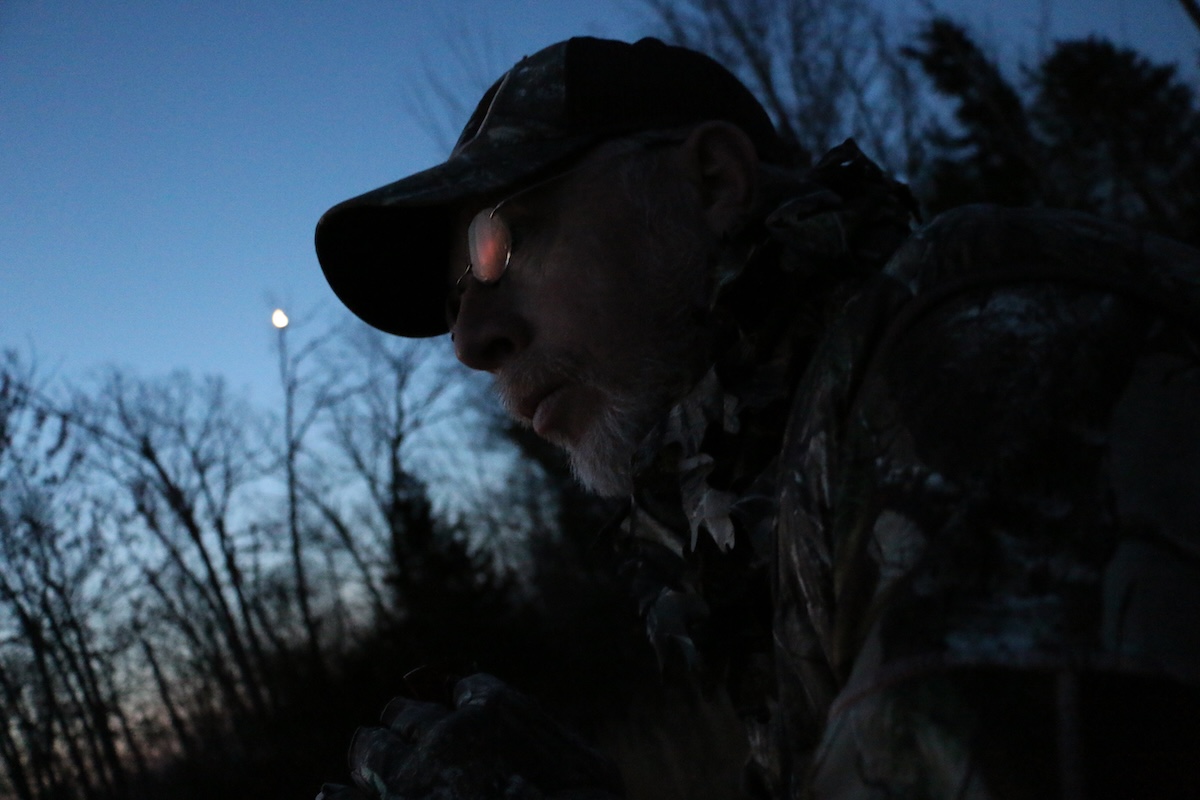
Listen on the roost before and during turkey season to gauge how many birds are around and where they tend to hang out.
Calling Southern Turkeys
Many calling tactics used in other parts of the country are viable for calling turkeys in the South. Oftentimes, southern turkeys hang up and expect the hens to come the remainder of the distance.
“If there’s any chance for me to call and then move forward, that’s what I’ll do,” Budz said. “Or if you have a buddy with you, and he’s a caller and team player, get him to back up and call. Call the tom through the hunter. But he has to be smart. If that bird moves a little to the right, he has to move to the left. Keep that gun in-between him and the hunter. A lot of people don’t understand how to do that.”
In some situations, it’s best to call with decoys deployed. Examples include when hunting in the open. Pressured turkeys that don’t see a turkey they’ve heard, and yet expect to see them, might hang up or altogether spook.
In contrast, if hunting in the timber, it’s easier to get away without having decoys. If it’s harder to see, the gobbler should continue approaching.
Of course, the common myth that turkeys get call-shy most likely originated in the pressured Southeast. But that isn’t true that overcalling produces call-shy birds. Turkeys are used to hearing other birds, even incessant vocalizing, at times.
So, why do southern turkeys get so quiet? Three reasons. First, hunting pressure (not calling pressure). Secondly, larger predator populations. Third, high temperature levels.
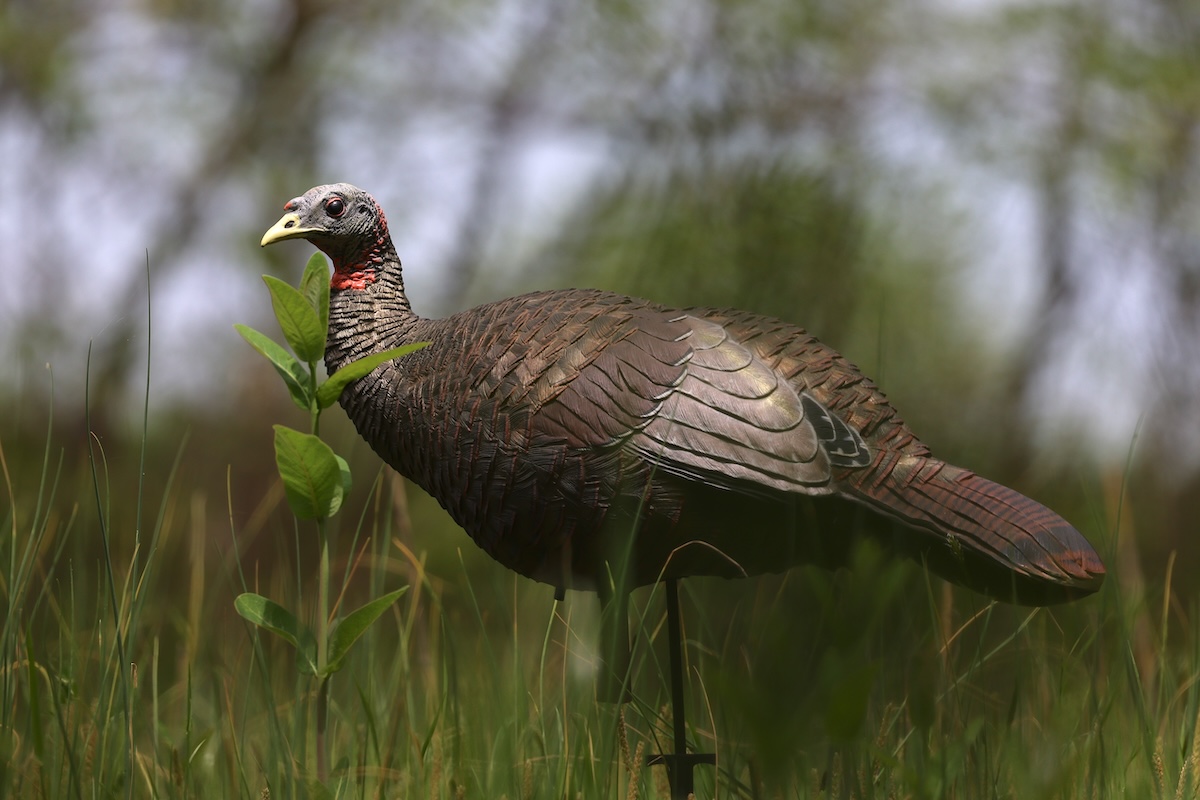
Decoys can increase the odds of gobblers working into range.
Decoying Southern Turkeys
Certain decoying tactics work better than others for southern turkeys. Budz is all about being different. He doesn’t want to do things the same way that other turkey hunters do. He wants to implement fresh tactics that turkeys rarely if ever see.
For example, most hunters use one, two, or three decoys. Oftentimes, in pressured hunting situations, he might deploy eight, nine, or 10 decoys. Turkeys aren’t used to seeing that, so they’re more apt to think it real and commit.
“I bring in everything, including the kitchen sink,” Budz said. “Do anything and everything that few others do. I want them to see something different.”
In other words, don’t stake your jake and hen decoy 20 yards away looking back at you. Pressured turkeys have seen that over and over.
Best Ways to Improve Your Land for Wild Turkeys
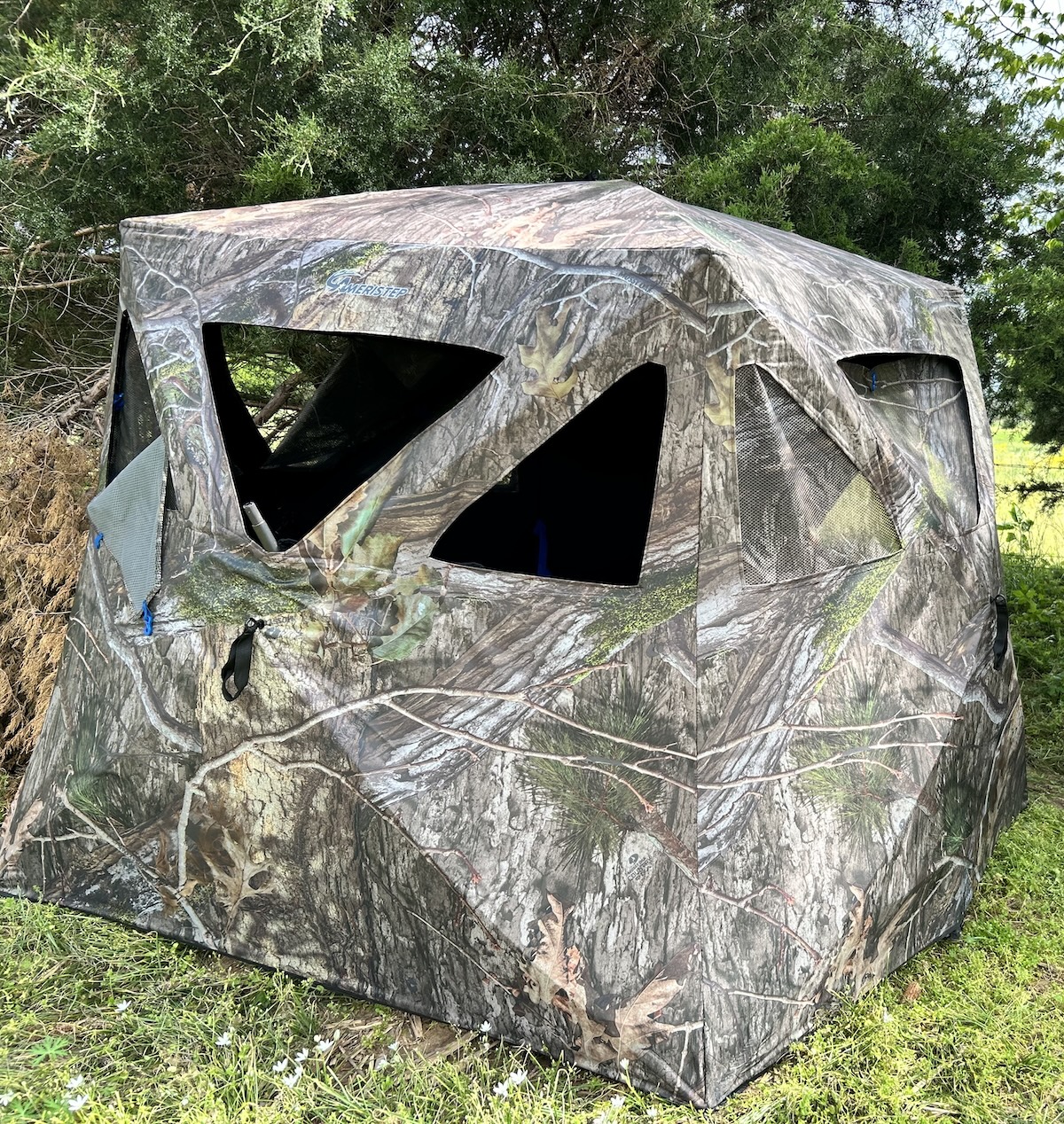
Use ground blinds to reduce pressure in your areas.
Basic Tactics for Southern Turkeys
Basic tactics to use on southern turkeys vary from situation to situation. Of course, use good calling and decoying sense. That said, stubborn southern turkeys don’t always respond well to calling. If they do, they come in silent.
Sometimes, the best play is to stake a decoy and not use a single call. Position in areas that tend to hold birds, and let it ride until a turkey walks into view.
Or consider no calling or decoying at all. Scout turkeys effectively, learn their patterns, and set up accordingly. Essentially, “deer hunt” the turkeys and shoot them as they hit food sources, visit water sources, follow travel routes, etc.
A third option is spot and stalking turkeys. Maybe that’s purely belly-crawling. Perhaps it’s fanning with a turkey fan. It might even just be slipping through the timber, still-hunting until you spot birds out in the open, and shadowing them until they slip close enough for a shot.
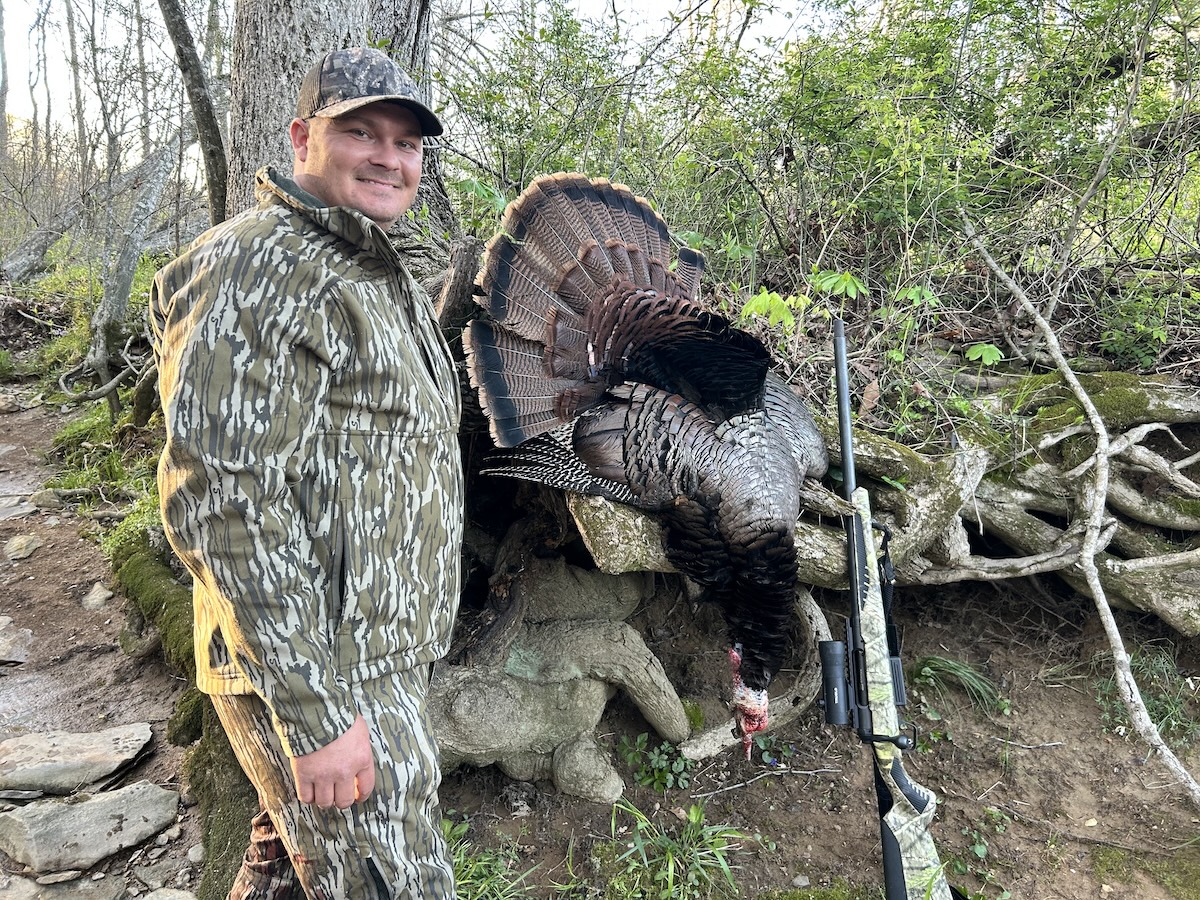
Bagging a big Eastern takes hard work, implemented skill, and a bit of good fortune.
Advanced Tactics for Southern Turkeys
Some tactics are more basic, while others are more advanced.
Additionally, setting up in typical locations that turkeys are used to seeing isn’t always the best move, either. Consider coming at turkeys from a different direction, setting up in new locations, and even thinking well outside the box.
“Change it up,” Budz said. “Go out in the middle of the field. I’ll get out there in the middle 300 yards away from the tree line because nobody else is doing that. I’ll lay out there with a couple decoys just because nobody else ever does that.”
Without question, southern turkeys aren’t easy to kill. It takes implementing new skills, applying fresh tactics, and hoping for a bit of good fortune. Even then, odds are against you.
“I wouldn’t want to make a living hunting birds in the Southeast,” Budz laughed.
The Best Turkey Hunting Spots (and How HuntStand Pro Finds Them)
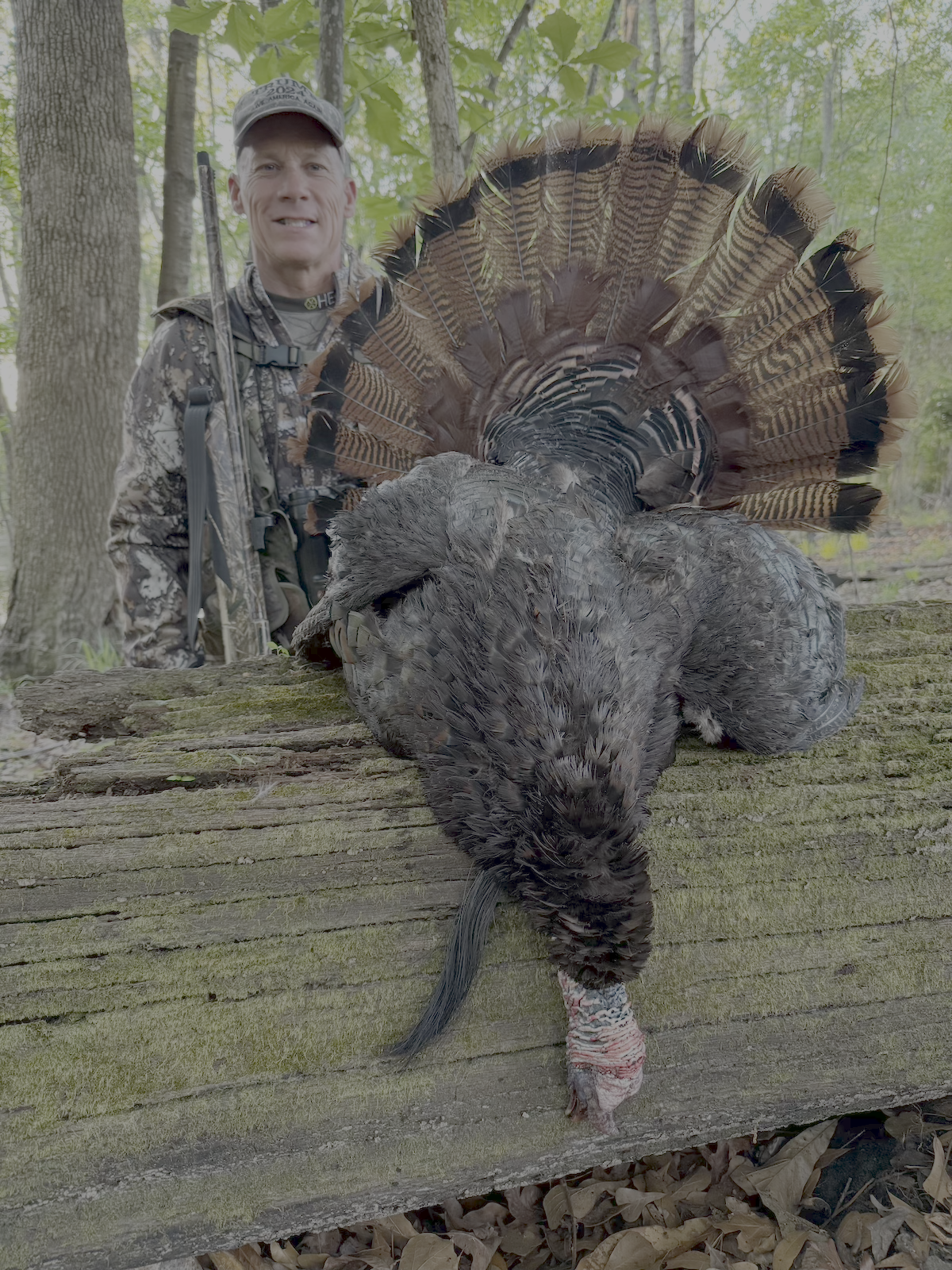
Jeff Budz has tagged more than 600 turkeys, many of which were Easterns, like this Georgia bird.
Turkey Hunting in the South
The South is a great turkey hunting region. Some states are more challenging than others. Even so, they all have something good to offer. Search for key opportunities in areas of interest.
Alabama: The Alabama turkey population is down from the all-time high. However, it still offers strong opportunities. This state is managed under three zones, as well as WMA and USDA lands, which are managed by the Forest Service. If you want to hunt a late-March eastern, this state is a great option, and public ground is abundant.
Arkansas: David Moscicki, the Arkansas Game and Fish Commission turkey program coordinator, says turkeys are bouncing back all across the state. The past several years has seen great production. Of course, recent reductions in tag availabilities have reduced statewide harvests and allow turkey populations to uptrend.
Florida: Home to the Osceola in the southern ¾ of the Peninsula, and Easterns in the upper ¼ and Panhandle, Florida offers unique experiences. Essentially, you’re hunting birds on sandy ground in cattle pastures and swamps. Generally, south of State Road 70, the season kicks off March 1, which provides an early season opportunity for hunters to knock off the rust and chase Osceolas. (North of State Road 70, it usually begins March 15.) The state has 6 million acres of public land, but much of that doesn’t have turkeys. What does often gets pressured.
Georgia: Without a doubt, the Georgia turkey harvest is on the decline. That said, Emily Rushton, the Georgia DNR state wild turkey projects coordinator, said the 2024 hatch was great. That translates to a lot of jakes in 2025 and 2-year-old birds in 2026. Furthermore, she says that, over the past several years, southern counties have reported better poult production, meaning a higher percentage of older birds there.
Kentucky: Every year, Kentucky records excellent harvest numbers, which is usually 25,000 to 35,000 birds. Home to 300,000 turkeys total, you can fill two tags here. It has moderate volumes of public land, but overall, it’s a winner.
Louisiana: Perhaps the most challenging turkey hunting state in the South, the Pelican State doesn’t have a lot of these animals. With only 50,000 turkeys statewide, don’t expect high densities. That said, jakes are not permitted for harvest, which in time, should help the population.
Mississippi: Mississippi holds a lot of turkeys. With 250,000 birds, and jakes not allowed for the harvests (except for youth hunters), there’s a lot of 2-year-old birds here. Tag up to three turkeys (zones allowing). Typically, the southern counties have the best populations.
North Carolina: One of the most diverse states in the region, North Carolina offers coastal areas, mountain ranges, and everything in-between. Incredibly, the state has about 275,000 turkeys. Also, the state has 2 million acres of public land, which creates a lot of opportunity.
South Carolina: Just to the south, the southernmost Carolina doesn’t offer quite as good of hunting as its neighbor to the north. That said, according to DNR officials, population and harvest numbers are starting to trend back upward. It has 2 million acres of public lands. Hunters can tag two turkeys.
Tennessee: With about 300,000 turkeys, Tennessee is an excellent place to hunt these birds. It’s a common go-to state, even though it restructured season dates and eliminated the March portion of the season many hunters flocked there for.
Texas: The Lone Star state has about 500,000 turkeys, including a mix of Easterns in eastern counties, Merriam’s in a few western counties, and Rio Grande turkeys throughout much of it. Jason Hardin, the Texas Parks & Wildlife Department wild turkey program leader, says that central Texas currently offers the best numbers.
Virginia: Home to about 175,000 turkeys, Virginia logs more than 20,000 harvested turkeys each spring. Furthermore, it offers 1.7 million acres off public ground. That should make for plenty of hunting areas to go around.
Finally, wherever you choose to hunt turkeys in the South, enjoy your time there. These animals are majestic, but they’re tough. It won’t be easy, but with a bit of skill and good fortune, you just might fill a tag or two.