


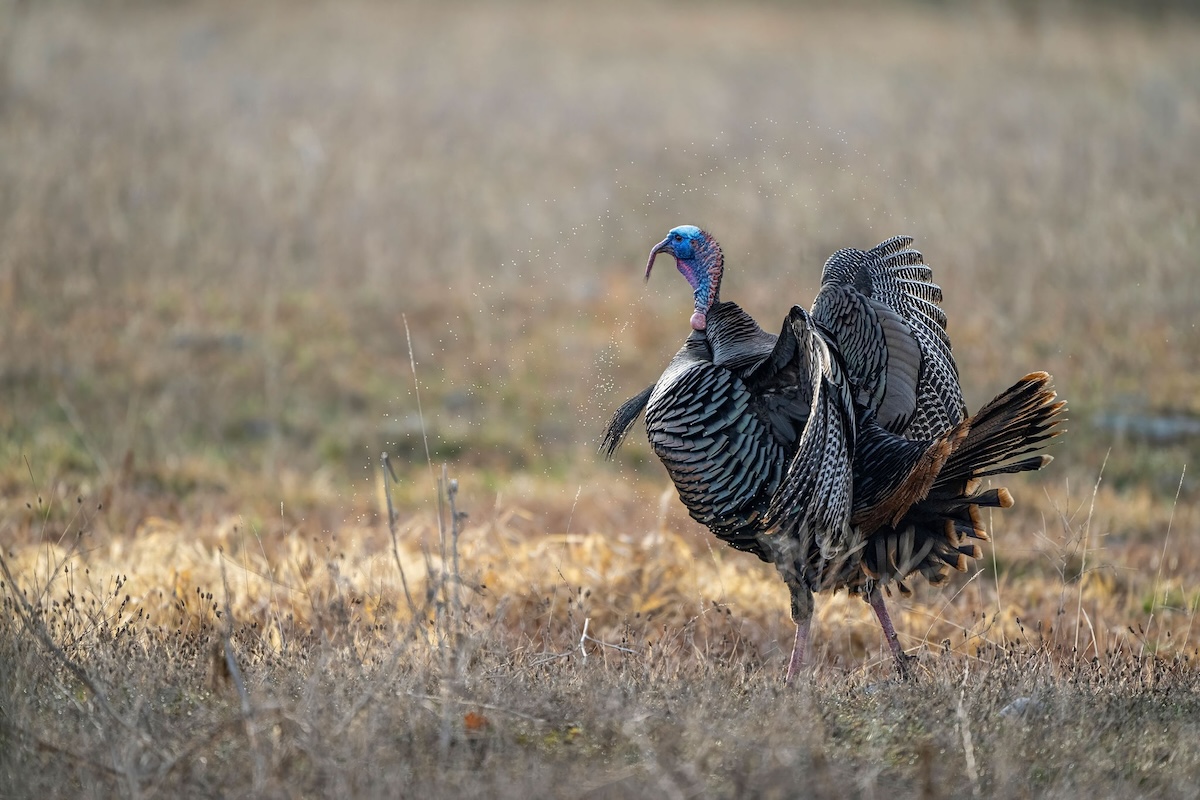

Hunting northern turkeys poses its own list of challenges.
Those who haven’t chased northern thunder might inquire about how to hunt northern turkeys. In many ways, the pressured settings found in hard-hunted northeastern states mirror the significant challenges found in hunting the Southeast. For those seeking newfound adventure, here are tips, tactics, and insider knowledge of hunting turkeys in the North.
- How to Hunt Northern Turkeys
- How to Hunt Southern Turkeys
- How to Hunt Western Turkeys
- How to Hunt Midwestern Turkeys

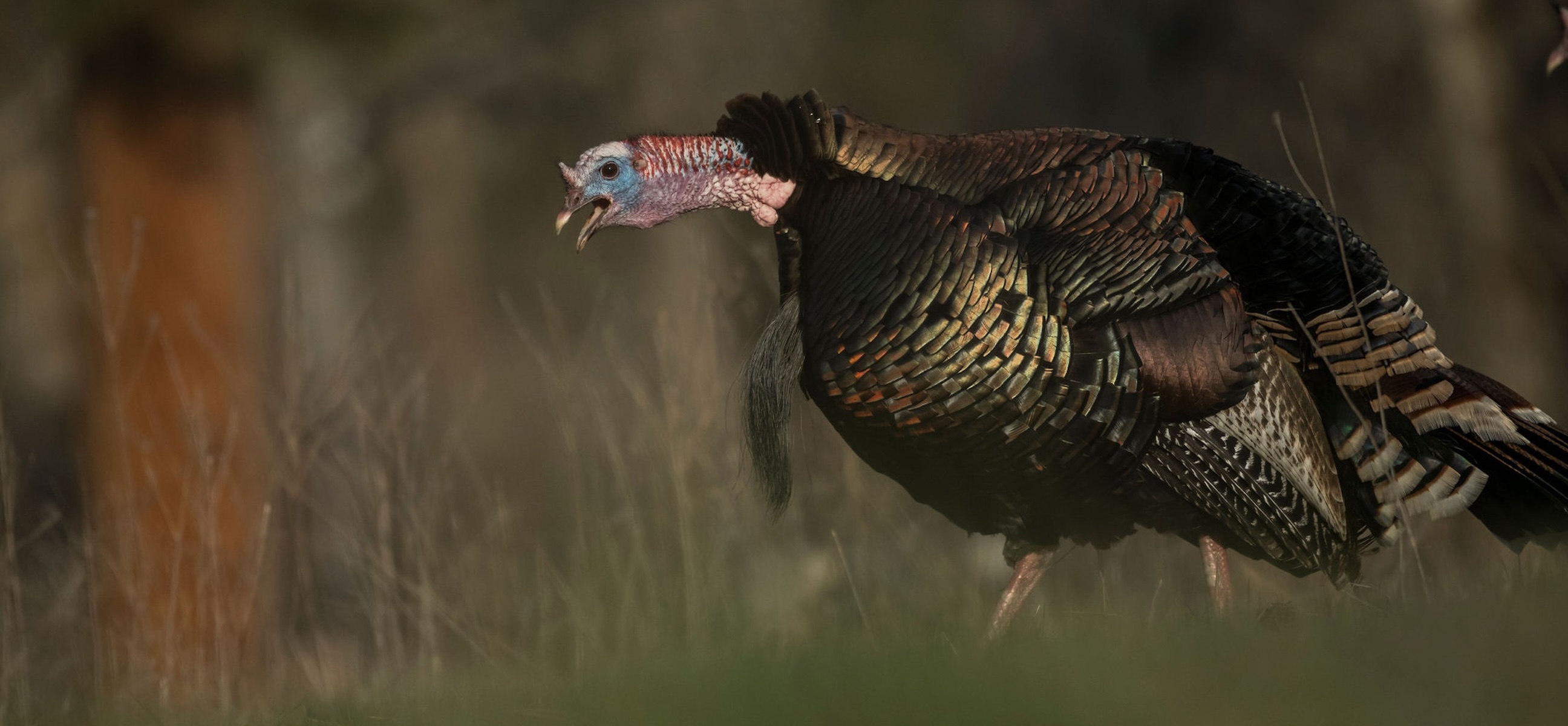
Easterns are the only turkeys of the Northeast.
Turkey Subspecies in the North
The Northeast is home to the Eastern wild turkey. Although the subspecies spreads far beyond the borders of this region, it’s a stronghold here in the eastern U.S. Northern hunters in states from the Virginias up to Maine enjoy chasing these big-woods birds, and it’s a grand time, and place, to hunt wild turkeys.
“Maine, Michigan, and Wisconsin go until the first week of June,” said Jeff Budz, a highly experienced turkey hunter and hunting guide. “You’re hunting birds till 8:30 at night and then they’re flying down at 4:30 in the morning. I mean, it’s crazy. You couldn’t fathom that in the South. But, when in Rome, you’re doing it.”
Budz is an experienced turkey hunter, and accomplished turkey hunting guide (Moreturkeys.com). He has killed more than 600 turkeys worldwide, registered 117 Grand Slams (he thinks), and has helped guide other hunters to more than 1,000 turkeys. So, when he speaks, turkey hunters should listen.

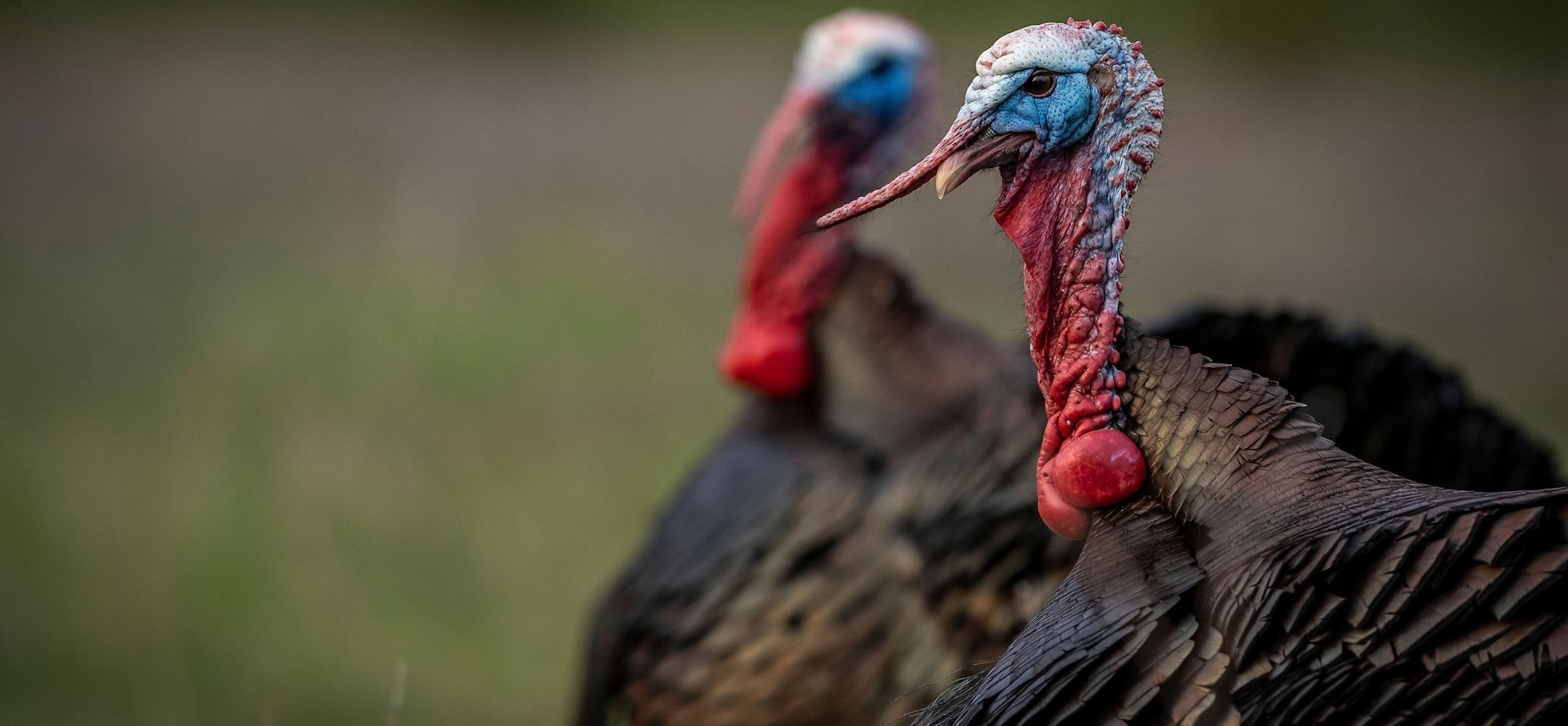
Northern turkeys are just that ... turkeys. But they do tend to exhibit signs of being pressured, just like southern birds.
Behavioral Tendencies of Northern Turkeys
Without question, there are subtle biological and behavioral differences with northern turkeys. In some areas, these turkeys are pressured, and the way they act reflects it.
Turkey hunting in the Northeast isn’t the same as hunting southern birds. Even so, it comes with its own form of heavy hunting pressure, especially in certain areas.
“For sure, eastern Pennsylvania, New Jersey, and Delaware are heavily pressured,” Budz said. “These are some of the toughest states because of population and land mass.”
In other locations, the birds don’t seem to be quite as pressured. “If you get up there in Maine, Vermont, and New Hampshire, it’s beautiful country,” Budz said. “And the laws are such they’re made for the hunters.
“Wherever you are, you can figure out when turkeys are pressured,” Budz continued. “If you pull in, and a bird not only runs but flies, guess what, those birds are pressured. You better hunker down and not call a bunch. Also, you better not move a bunch. It’s going to turn into a deer hunt. It stinks, but are you there to get a bird, or are you there to run and gun a bunch?”
Best Ways to Improve Your Land for Wild Turkeys

In the Northeast, the terrain can range from flat marshes to tall mountains.
Northern Turkey Hunting Terrain
The Northeast is a diverse landscape with many different habitat types. Mountain ranges, hill country, big timber, timber-field mixes, grain lands, hay crops, pasture grounds, fallow fields, swamplands, marshes, and more — hunters can test their skills in a wide variety of landscapes.
“There’s a lot of timber ground up there that you can hunt,” Budz said. “And there’s a lot of National Forest and other open ground.”
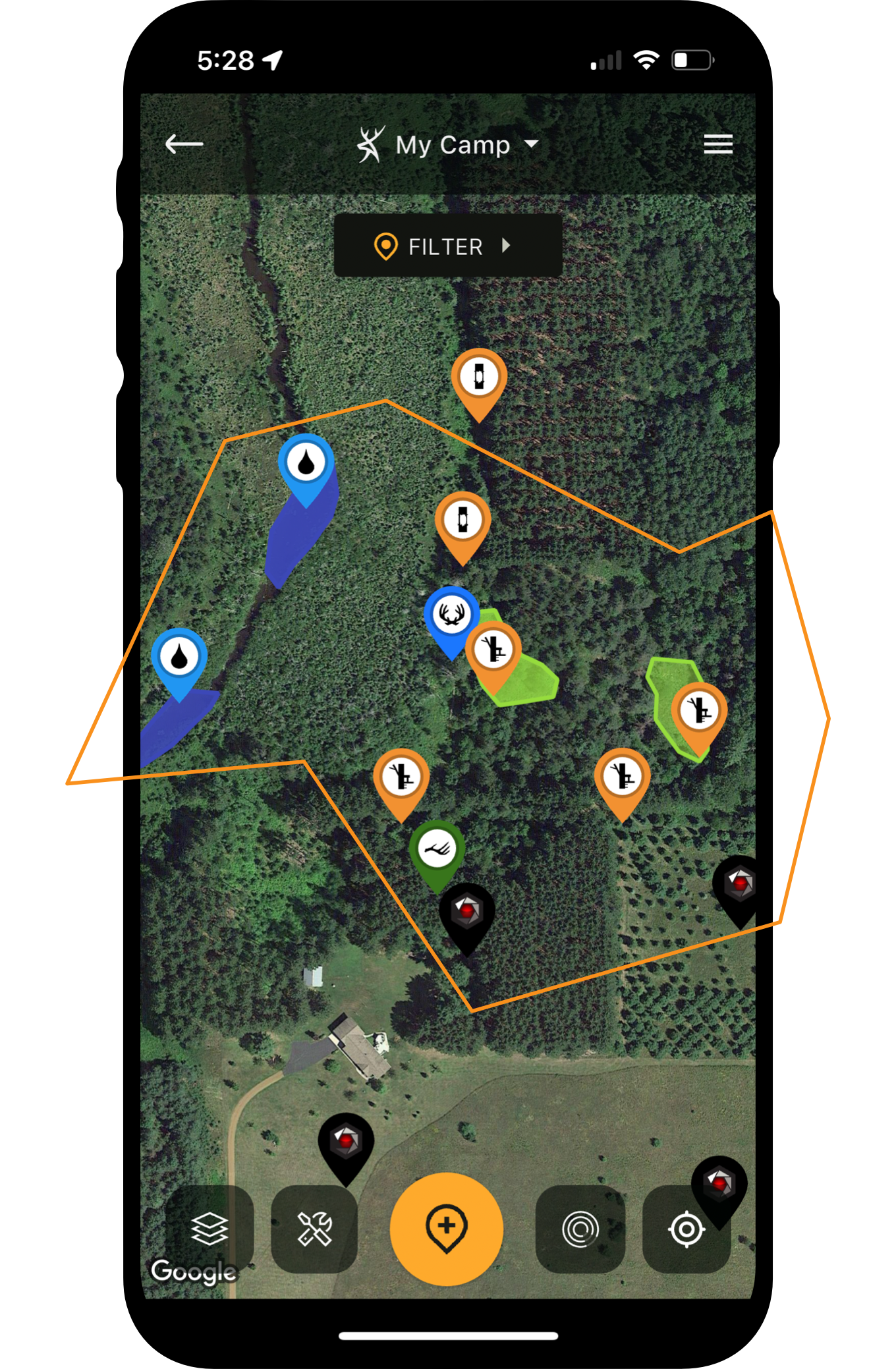
Use HuntStand’s Hunting Lands and Public Lands layers to find potential areas to target. Furthermore, use the 3D Map, Contour, Terrain, and other layers to identify important topography-based land features. Deploy the National Aerial Imagery, Mapbox Satellite, Satellite, and others, to see important habitat characteristics. The Monthly Satellite layer assists with updates for near-real-time changes to the terrain.
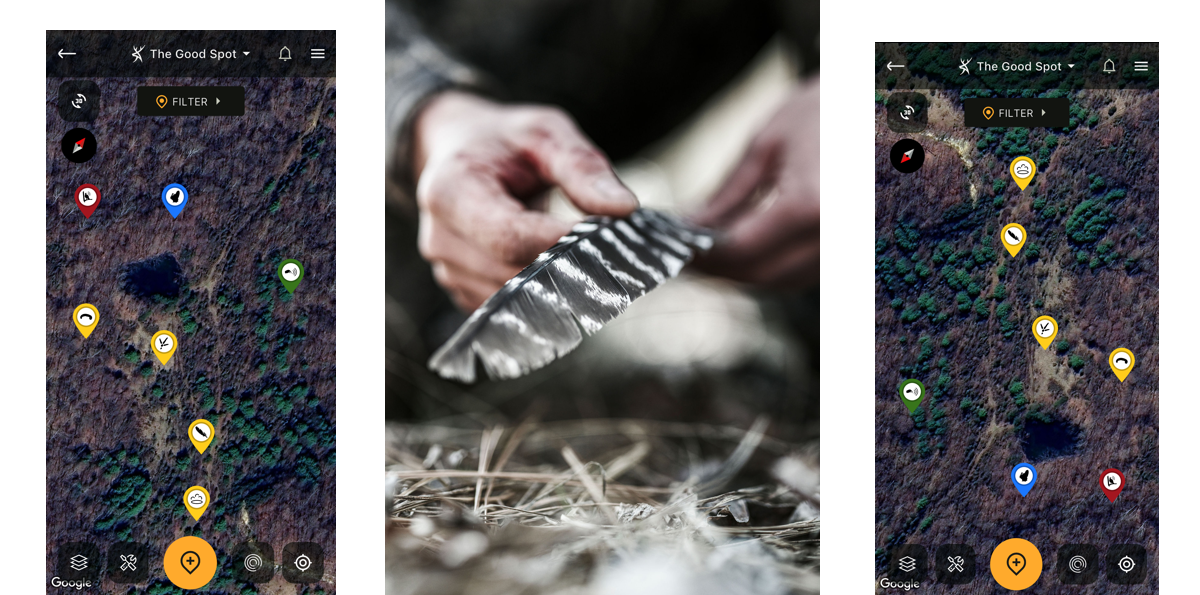
Use HuntStand to scout northern turkeys.
Scouting Northern Turkeys
The nuances of scouting northern turkeys vary somewhat from other parts of the country. “There are birds everywhere,” Budz said. “So, don’t be afraid to ask questions. Ask people about where they’re seeing turkeys. Knock on some doors. Ask some more questions. Then, just get in the woods.”
Focus efforts close to known roost trees. Large, mature timber with accessible horizontal limbs tend to serve as good roosts. Don’t overlook standalone trees or small pockets of timber with the necessary characteristics. HuntStand layers, such as Satellite, Mapbox Satellite, Tree Cover, and other habitat-based tools, can assist in finding roosts.
During the day, find areas that turkeys feed and strut. Edges such as fencerows, field corners, ridge lines, hillside benches, logging roads, mature oaks, mature pines, cattle pastures, livestock feedlots, green ag fields, green food plots, lush meadows, and other places turkeys love. A good slope or ridge line that connects to other areas turkeys frequent is sure to produce. Use HuntStand’s 3D Map, Contour, and Terrain features to find these locations.
HuntStand also provides other scouting tools. Examples include the Property Info, Hunting Lands, Public Lands, Tree Cover, Crop History, Monthly Satellite, and other base layers and overlays.
Overall, use HuntStand to accomplish key turkey scouting tasks. Pre-scout digitally to reduce scouting pressure once in the field. Study terrain, topography, and other key land features to find important turkey areas. Find quality private and public hunting lands to seek access. Drilling further down, pinpoint roosts, food sources, water sources, strut zones, and other turkey hotspots. Analyze where turkeys might be throughout the day, as their cyclical patterns tend to hit certain “checkpoints” based on time of season and time of day.
Once in the field, use the app to mark roosts, turkey sightings, heard birds, etc. Home in on the location of heard gobbles with the directional tool. Additionally, use the app to consider key access routes, setup spots, and more.
“Travel and get off the beaten path,” Budz said. “You’re going to need to hike nowadays. I use HuntStand all the time.”
Biggest Threats to the Wild Turkey
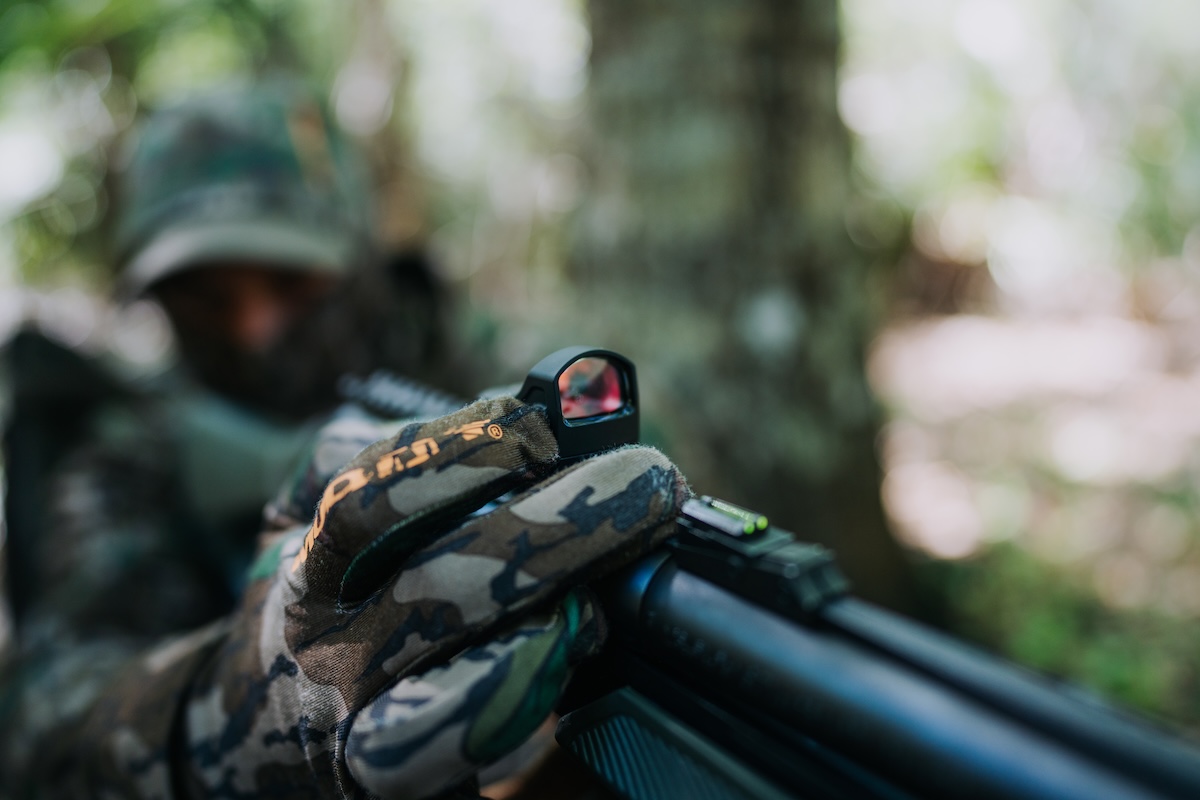
Calling northern turkeys to the gun barrel takes patience and skill.
Calling Northern Turkeys
Many calling tactics used in other parts of the country are viable for calling turkeys in the North.
“Then again, everybody goes and wants to hear a gobbling bird come in. Well, do what other people won’t,” Budz said. “Be there first. Be there the farthest. Then stay when everybody leaves. Everyone decides to go eat breakfast or get back to work. That’s not you.”
Later in the season, it’s greener and thicker. So, when you’re hearing birds, they’re closer than you expect.
Furthermore, less is more, especially later in the season. Typically, pressured birds mean less calling. “If you get one that’s really raging and answering every single time, you might want to pay attention,” Budz said. “Let him work a bit. So, less is more, I think.”
In some situations, it’s best to call with decoys deployed. Examples include when hunting in the open. Pressured turkeys that don’t see a turkey they’ve heard, and yet expect to see them, might hang up or altogether spook.
In contrast, if hunting in the timber, it’s easier to get away without having decoys. If it’s harder to see, the gobbler should continue approaching.
“If you strike a bird up at 11:30 A.M., your chances are fantastic,” Budz said. “I’d rather have a bird gobbling at me at 11:30 A.M. than 5:30 A.M. You stand a better chance of getting that bird that’s gobbling in the middle of the day, because he’s already seen to the whole thing and he doesn’t have anything else going for him.”

Use unorthodox decoying tips, such as deploying a lot of them.
Decoying Northern Turkeys
Certain decoying tactics work better than others for Northern turkeys. Budz is all about being different. He doesn’t want to do things the same way that other turkey hunters do. He wants to implement fresh tactics that turkeys rarely if ever see.
For example, most hunters use one, two, or three decoys. Oftentimes, in pressured hunting situations, he might deploy eight, nine, or 10 decoys. Turkeys aren’t used to seeing that, so they’re more apt to think it real and commit.
“I bring in everything, including the kitchen sink,” Budz said. “Also, I do anything and everything that few others do. I want them to see something different.”
In other words, don’t stake your jake and hen decoy 20 yards away looking back at you. Pressured turkeys have seen that over and over.
Surprising Facts About Wild Turkeys
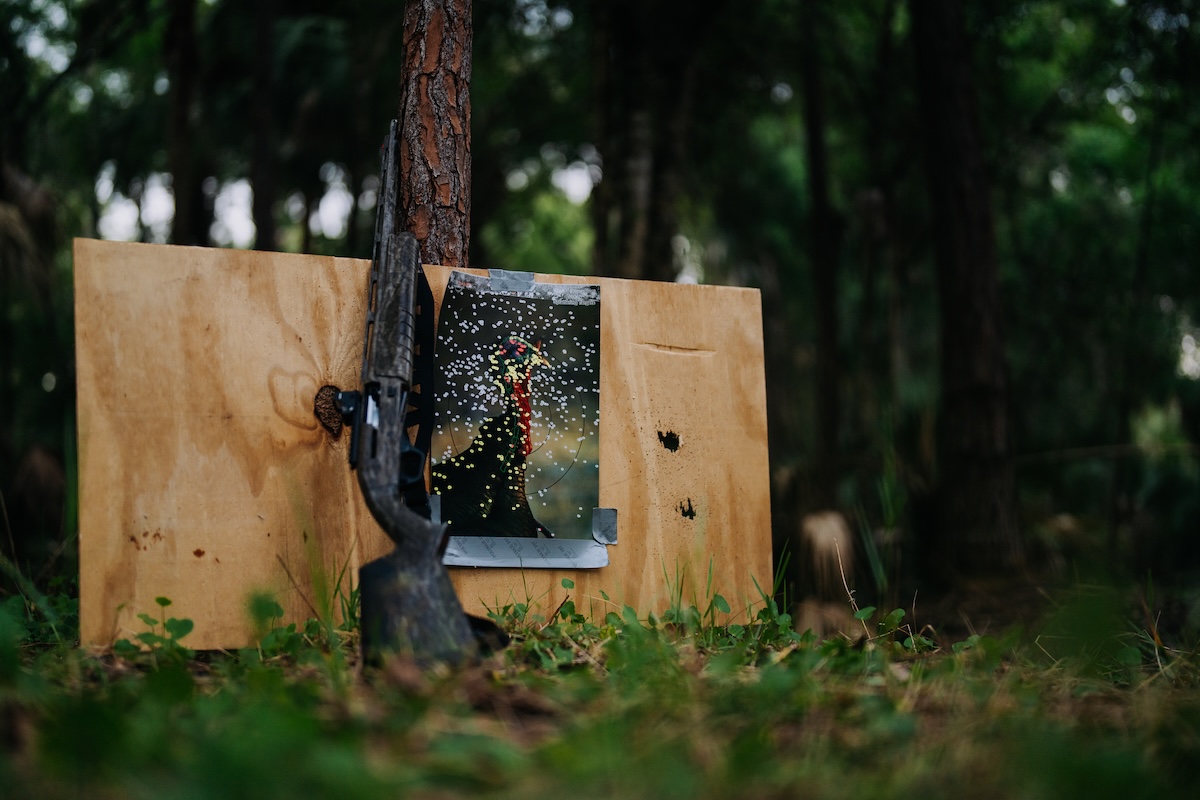
Pattern your gun, and make sure it's dialed, just in case you need to exercise the long end of your gun's range.
Basic Tactics for Northern Turkeys
Tactics to use on Northern turkeys vary from situation to situation. For example, don’t overlook the perimeters of urban and suburban areas. “There’s a pile of critters right on the fringe of the city limits,” Budz said.
In some areas, landowners must post their property borders, and sign and date for this year, to keep people off their property. Of course, if they show up, they can ask hunters to leave. But if it isn’t posted properly, they can’t ticket you. That said, always ask for hunting permission before entering a property. The point? Maybe landowners in the Northeast are more willing to permit hunting permission than those in the Southeast.
Of course, that’s vastly different than many other parts of the country. “In Florida, it’s a felony offense if you shoot across somebody’s fence line, let alone if you’re caught there with the weapon,” Budz said.
According to Budz, expect to hunt much smaller tracts of land. He says not to overlook properties just because they are smaller, though. Many of these offer excellent hunting. “As far as hunting accessibility, we’ve never had it so good,” Budz said.
“I just try and get somewhere where I’m the first one, and the only one, to get that fly-down bird,” Budz said. “Because they start acting differently as the day goes on.”

Think outside the box to fill more turkey tags.
Advanced Tactics for Northern Turkeys
Some tactics are more basic, while others are more advanced. It’s the latter that’s needed to target tough northern turkeys.
Everyone hopes for a bird to come in perfect. You know, gobbling and strutting all the way into the gun barrel. “Those are the rarities now,” Budz said. “It’s unfortunate, but that’s the way the ball bounces. The birds are definitely smarter. There are all these gadgets that everybody uses to enhance their hunting and the probabilities of success, which is great, but those birds are evolving as well.”
Without question, northern turkeys aren’t easy to kill. It takes implementing new skills, applying fresh tactics, and hoping for a bit of good fortune. Even then, odds are against you.
“Change it up,” Budz said. “Go out in the middle of the field. I’ll get out there in the middle 300 yards away from the tree line because nobody else is doing that. I’ll lay out there with a couple decoys just because nobody else ever does that.”
The Best Turkey Hunting Spots (and How HuntStand Pro Finds Them)
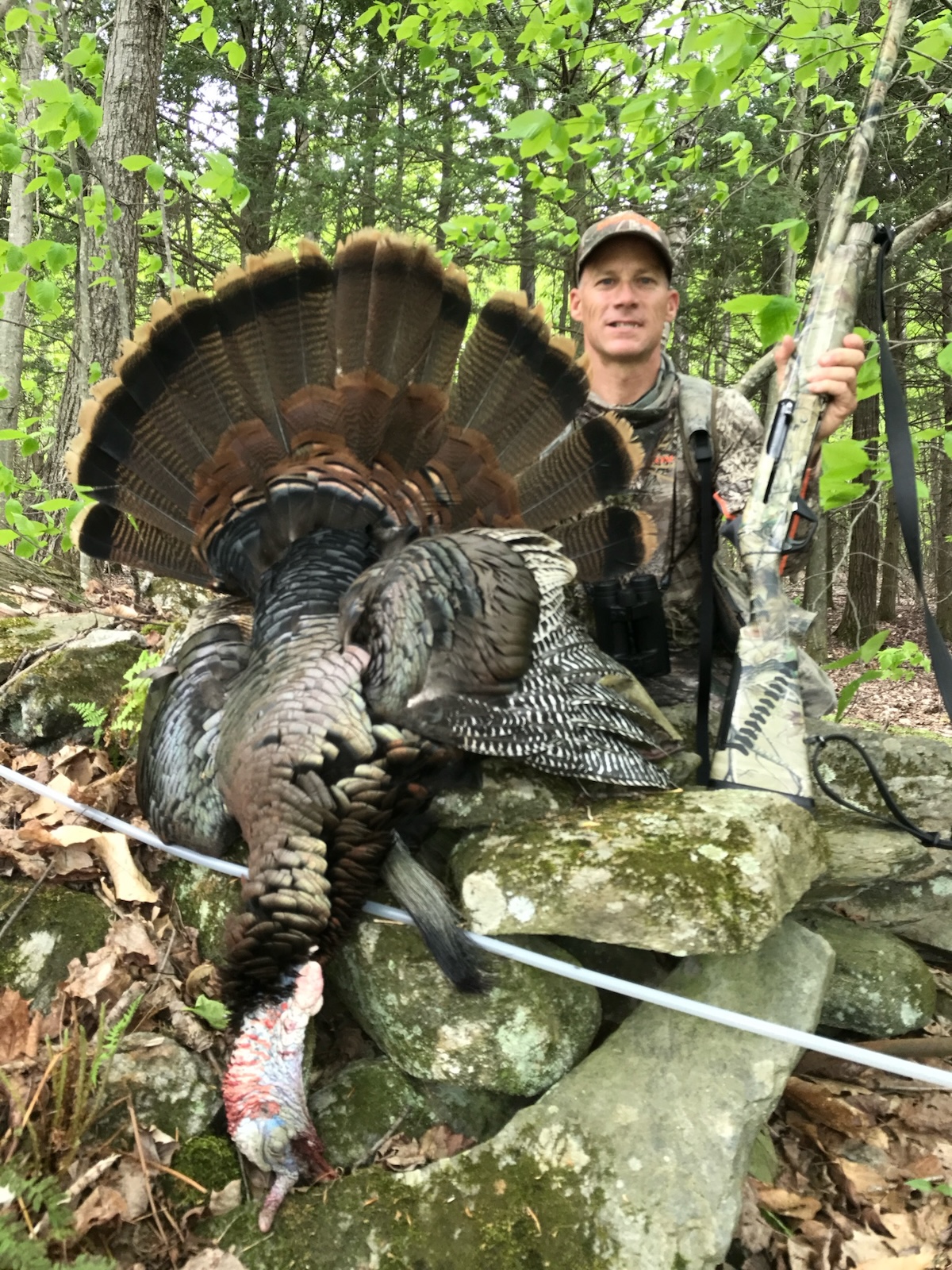
Jeff Budz harvested this turkey along maple syrup lines in Vermont.
Turkey Hunting in the North
The North is a great turkey hunting region. Some states are more challenging than others. Even so, they all have something good to offer. Search for key opportunities in areas of interest.
Connecticut: Although small, Connecticut has close to 35,000 turkeys statewide. The state offers cheaper hunting licenses and tags than most, and those hunting turkeys in the Northeast can expect solid hunting opportunities.
Delaware: Likewise, Delaware is another small state. It only has 5,000-7,000 turkeys. However, if you find a place to hunt, and get your licenses and tags, it just might be one of the best hunts of your life. Here, lottery hunts are part of the deal, though. Consider archery tackle.
Maine: Perhaps the biggest sleeper state in the region, Maine offers excellent hunting opportunities. It has about 75,000 turkeys, but bag limits vary by zone. Generally, the best hunting is in southern counties, but northern ones can be good, too.
Maryland: Without about 50,000 turkeys, Maryland has some action, too. Here, hunters can harvest two birds. The challenge is finding unpressured public land that holds wild turkeys, but it can be done. However, success often requires private land access.
Massachusetts: Likewise, Massachusetts has more than 35,000 turkeys, of which 2,500 to 3,500 tend to be harvested each year. Hunters can shoot two turkeys, tags permitting. Oftentimes, the best bet is finding turkeys just outside of suburban areas, and hunting with bow in hand.
New Hampshire: One of the more overlooked states, with a flock that’s more than 40,000-strong, New Hampshire provides great turkey hunting action. Fortunately, the New Hampshire Fish and Game Department reports high poult production, so the numbers should continue to be good. Only one may be harvested on WMAs.
New Jersey: In New Jersey, there are just over 20,000 turkeys, of which are hunted by about 10,000 hunters. So, there’s pressure here. You can shoot only one turkey per season.
New York: Most think of New York City, but New York the state provides excellent hunting. About 180,000 turkeys reside here, and hunters tend to take 20,000-30,000 each season. With the past couple years of positive poult production, the state wildlife agency predicts strong hunting ahead.
Pennsylvania: Pennsylvania comes with a big hunting heritage, which brings more than 150,000 turkey hunters with it. These devout adventurists bag about 40,000 turkeys annually. According to Mary Jo Casalena, a wild turkey biologist with the Pennsylvania Game Commission, the long-term population is stable in 16 units, increasing in four units, and decreasing in three units. Focusing on the short-term, the population is up basically statewide. Casalena reports a lot of 2-year-old turkeys on the landscape this spring.
Rhode Island: Being such a small state, Rhode Island doesn’t provide much opportunity to hunt here. Up to 1,500 turkey hunters harvest up to 500 turkeys each spring. Hunters can harvest two bearded turkeys, of which only one can be from state hunting land.
Vermont: Home to about 50,000 turkeys, 15,000 hunters chase thunder in Vermont. That usually results in about 5,000-7,000 harvested turkeys. It’s a two-turkey state.
West Virginia: With about 120,000 turkeys, West Virginia has a good population. The statewide harvest is usually about 10,000 to 15,000. According to the state wildlife agency, the harvest is trending upward. Public land access is great.
Finally, wherever you choose to hunt turkeys in the North, enjoy your time there. These animals are majestic, but they’re tough. It won’t be easy, but with a bit of skill and good fortune, you just might fill a tag or two.