


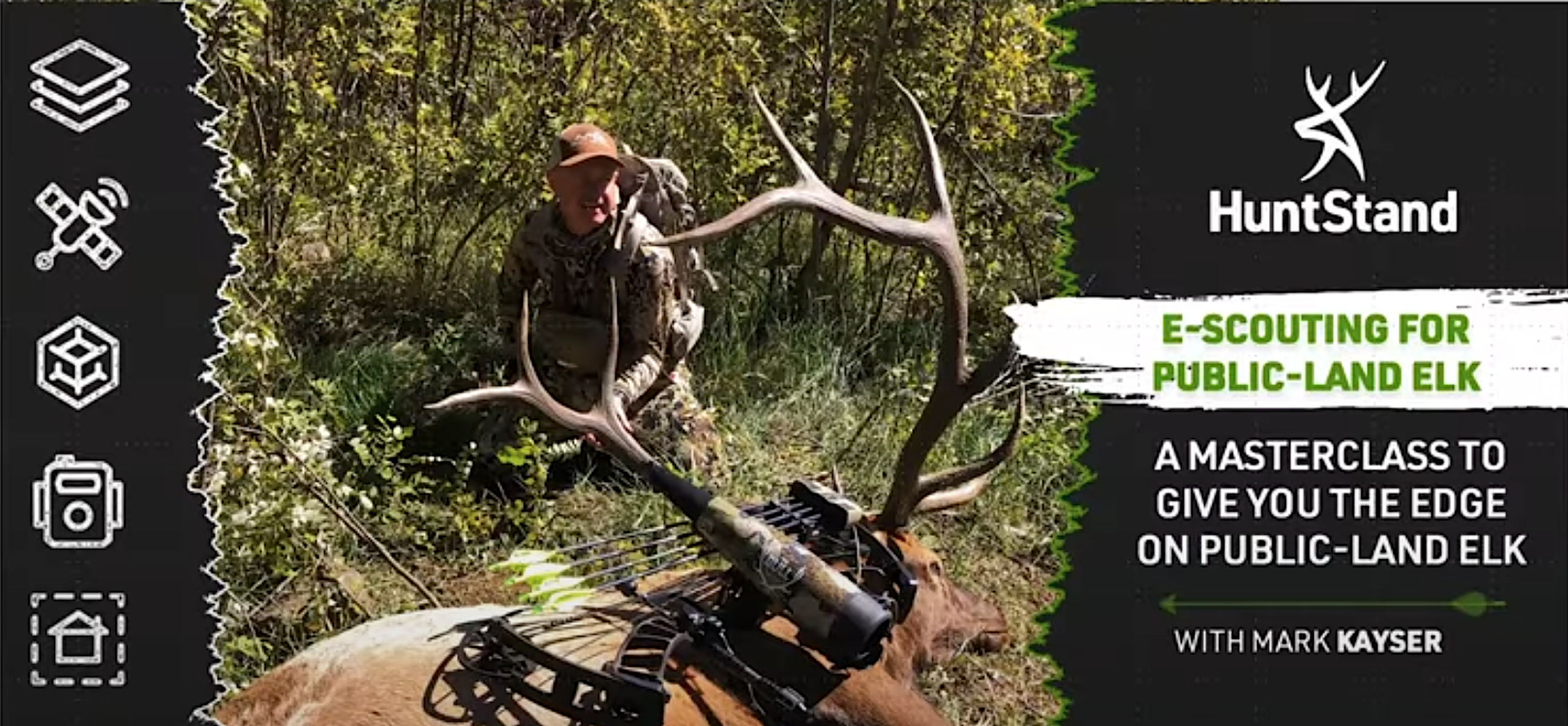
Hunting elk on public land is a tall mountain to climb. It’s an adventure many big game hunters embark on, but success rates aren’t high. Therefore, tagging a bull elk on public land is one of the greatest accomplishments in big game hunting.
Chasing wapiti on public land requires extensive effort. Getting the edge on public elk starts with effective e-scouting. Mark Kayser is here to jumpstart your next elk adventure. Check out his recent HuntClass on e-scouting public-land elk.
Hiking Miles Deep to Hunt Elk: Is It Necessary? Maybe Not.
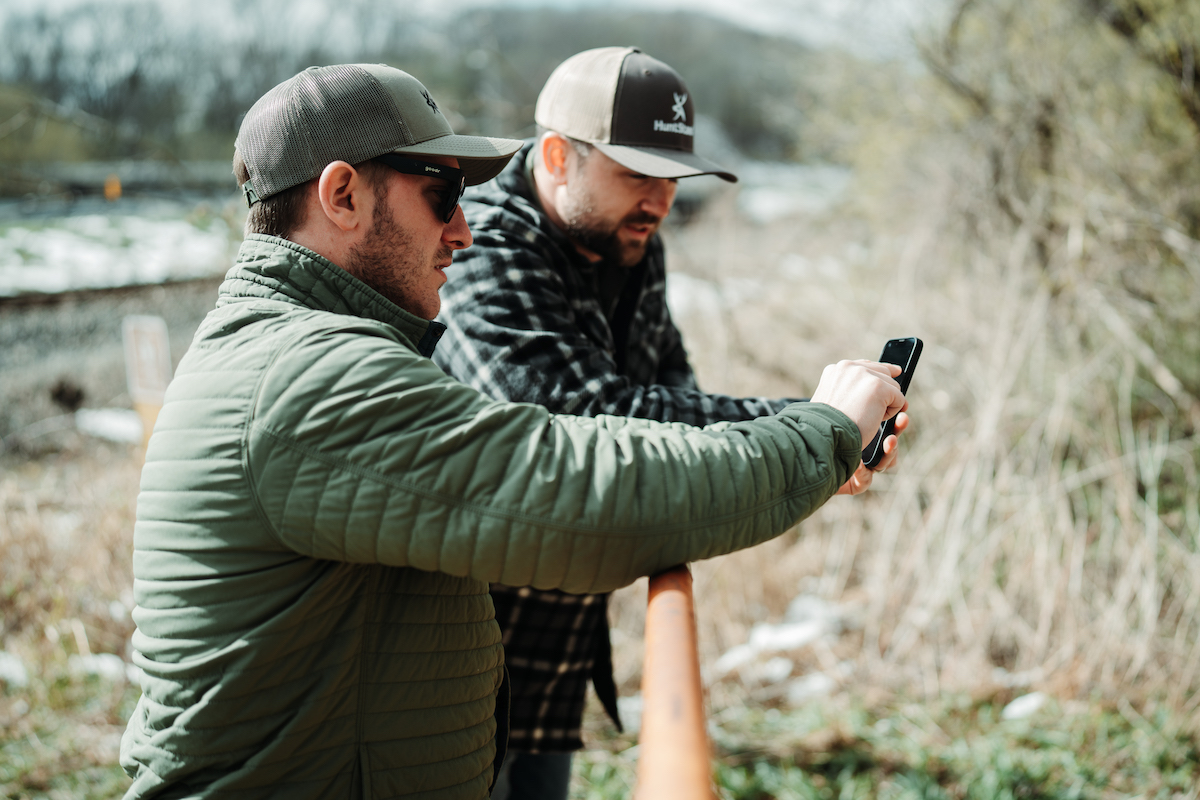

A thorough review of your hunting property can tell you if you need more food plots or sanctuary.
When your smartphone displays the legal end of shooting light on the last day of the late season, don’t think of it as the end of a long season. Think of it as the beginning of the next season. Winter scouting provides many benefits not found with the summer months of traditional scouting. After you recharge, catch up on family, tend to career duties, it’s time to plan a winter scouting strategy to jumpstart the next season. Here are post-season scouting tips for deer.

Optics can help you glass from afar to avoid disturbing winter deer.
Take a Physical Inventory
Winter scouting offers many benefits, but at the top of the list is an inventory of what bucks made it through the season. As hunting pressure fizzles, whitetails slowly normalize patterns and appearances. Deer start to feel the missing presence of hunters ghosting throughout their homelands. That confidence boost and a need to feed longer, prompt deer to expose themselves during daylight.
This movement coincides with the time of year when woodlands provide the best viewing opportunities. Most leaves have fallen, and in northern latitudes, snow blankets the ground to create a backdrop of white that highlights dark objects, like deer.
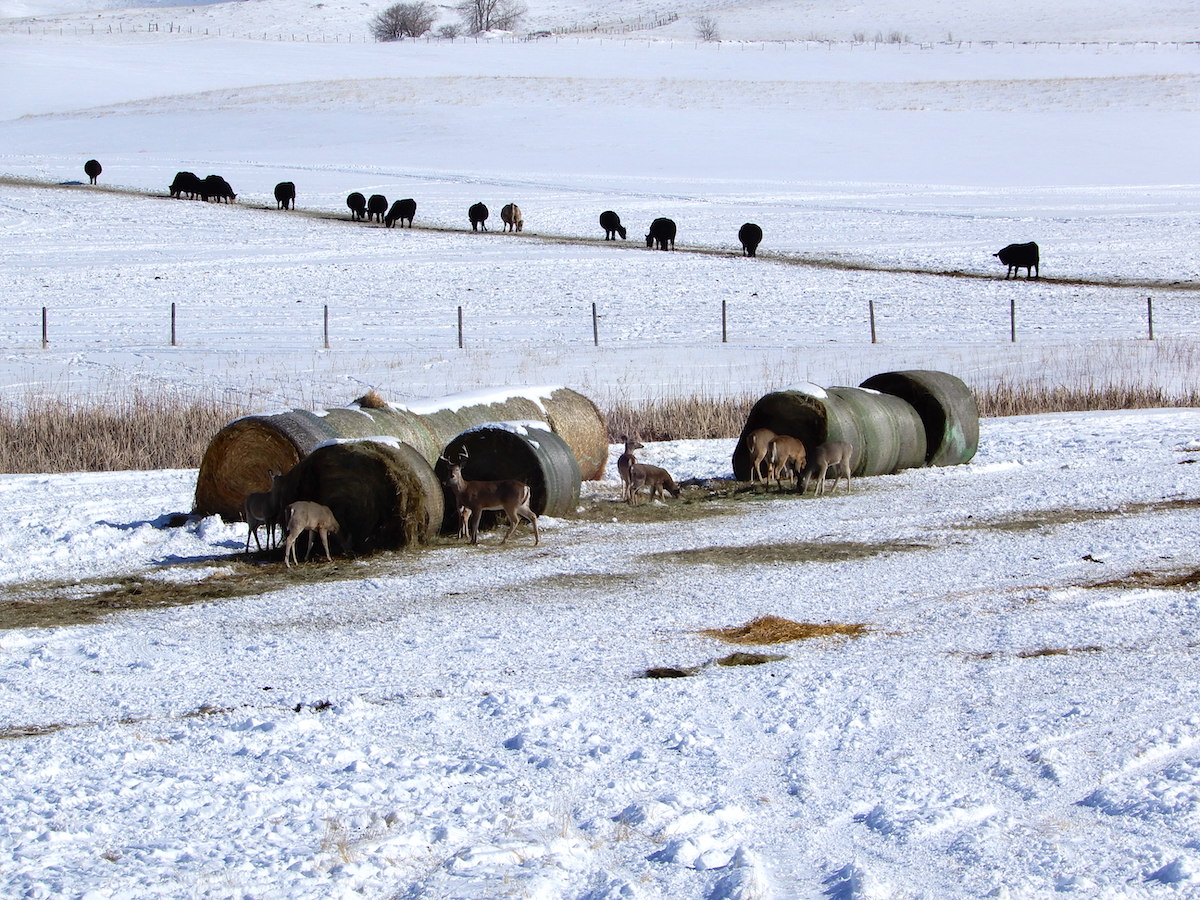
Habitat quality matters, especially during the late season. Deer moving off your property to feed on the neighbor’s is a major clue.
Without question, most whitetail enthusiasts hope to discover what bucks made it through the season. Not only does this benefit your preseason hit list, but it gives you a head start on shed antler hunting. Knowing where bucks bed and what foods they congregate on directly leads you to the areas most likely to hold their shed antlers in the coming weeks.
As you get glossy eyed over antler visions, don’t forget to do an inventory of the overall herd in an area. Does and fawns equal recruitment. Healthy, adult does typically have twin fawns. In addition to counting the actual deer on fields, you can begin to do the math on what lies ahead for your deer herd via fawns, barring a winter storm or unseen disease outbreak.
How to Find Deer with Topo Maps
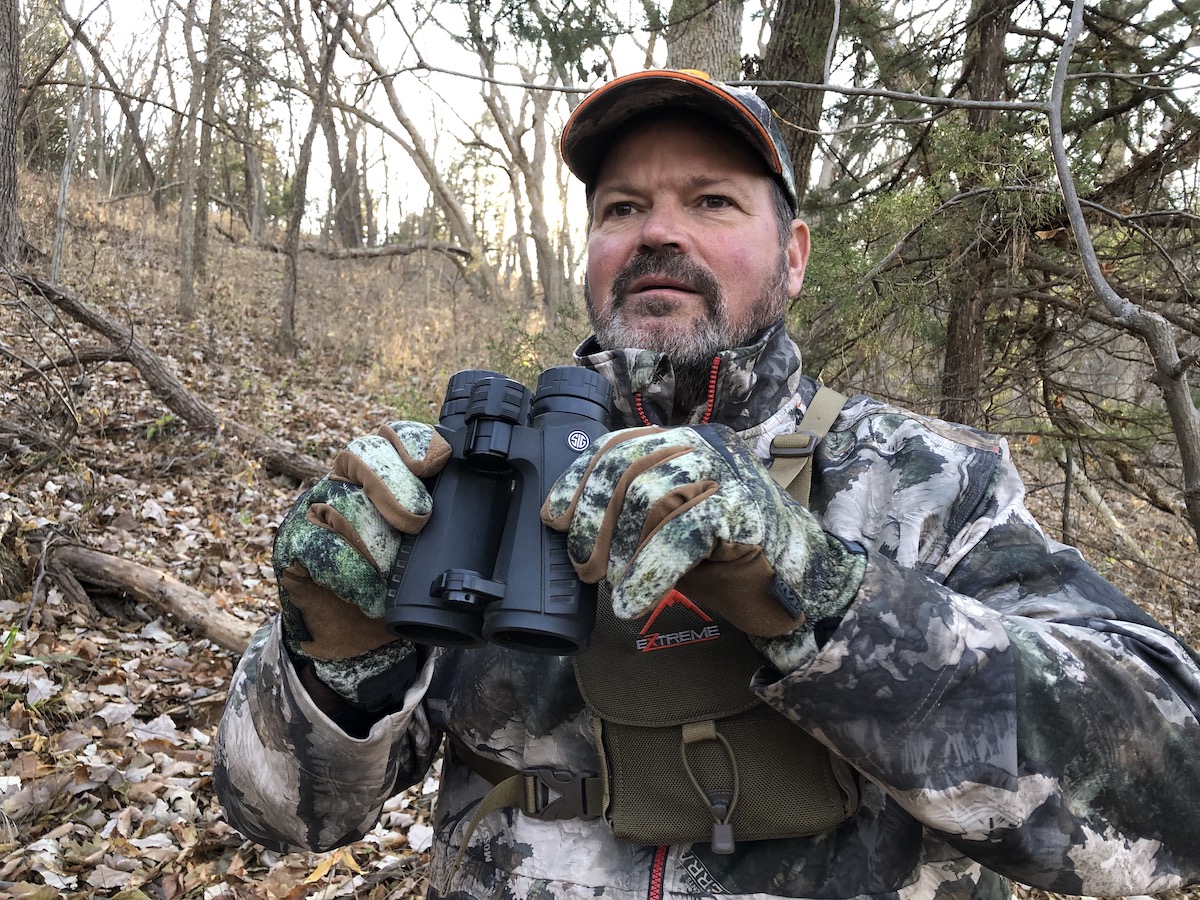
Optics can help you glass from afar to avoid disturbing winter deer.
Continue in Stealth Mode
If you hope to boost confidence in your deer herd comfort zone, continue in stealth mode. It might appear that deer have forgotten the weeks of hunting pressure, but one wrong intrusion could transform a mature buck back into a nocturnal fanatic.
Plan your entrances and exits with care as you observe and perform winter chores, including when changing batteries on trail cameras or filling feeders. Using HuntStand to map routes in — possibly a new one based on changing feed patterns — helps maintain a stealthy presence. The 3D and Hybrid layers offer some of the best ways to view a property.
Regardless, for the utmost concealment, use a long-range approach. Stick to roads and trails on the perimeter of a property and put your binocular to use. A good spotting scope also allows you to reach out from a nonthreatening position to monitor deer.

The all-new Muddy Maneuver Cellular Trail Camera offers aid in scouting winter deer without disturbing them.
All properties do not provide the best viewing platforms, though. You might need to hike to an elevated position to peer down into food plots, or even climb into the loft of a barn to watch a stubble cornfield at dusk. HuntStand’s 3D Map feature delivers a look at all high locations on a property.
In most scenarios, do the bulk of your scouting via trail cameras along easily accessible perimeters. My suggestion for invading farther into security cover is to not do it. Instead, hold off until shed hunting season for an invasive intrusion. Hopefully, by then, winter stress on deer is over and deer still have months afterward to forget about your meddling.
Just like during hunting season, trail camera placement and maintenance need to be stealthy and done with a plan. Use backdoor ins and out to access cameras, plus energize your cameras with either solar boosters or the best in lithium batteries. Winter temperature extremes devour batteries. Cellular trail camera models offer the advantage of not having to visit cameras for card swapping, but only when energized properly.
How to Work the Wind When Stalking Deer

Your HuntStand app helps find stealthy avenues into your property and make notes for improvements.
Analyze the Details
Now raises the big question. Are the deer you’re viewing and photographing residents or border jumpers taking advantage of the resort setting you provide? You will likely answer that question by comparing camera images from fall to winter, plus identifying standout bucks by name.
Fortunately, a HuntStand Pro Whitetail subscription offers an easy way to manage thousands of images for that comparison. Nevertheless, if your property has an all-you-can-eat buffet atmosphere, expect it to draw in deer from neighboring properties that do not pamper deer.

Winter scouting helps you determine which bucks made it through the year and what bucks might be trophies next season.
Those deer might just be vacationers for the year, but one friend of mine has years of management experience and he has seen numerous bucks switch home territories to stay year-round on his food-heavy property as opposed to returning at winter’s end. That might not occur everywhere, or with every buck, but it’s possible to sway deer into new digs if they enjoy the stay.
More deer, severe winter conditions, poor summer growth due to drought, or other anomalies, can tax your habitat. Winter scouting gives you a good window to review if any adjustments need to be made for the coming year. If you begin to see browse pressure, overuse of food plots, and competition at your feed stations, start a plan to remedy those situations. You might need to add more food plots, consider forestry projects, and where legal, even increase supplemental feed.
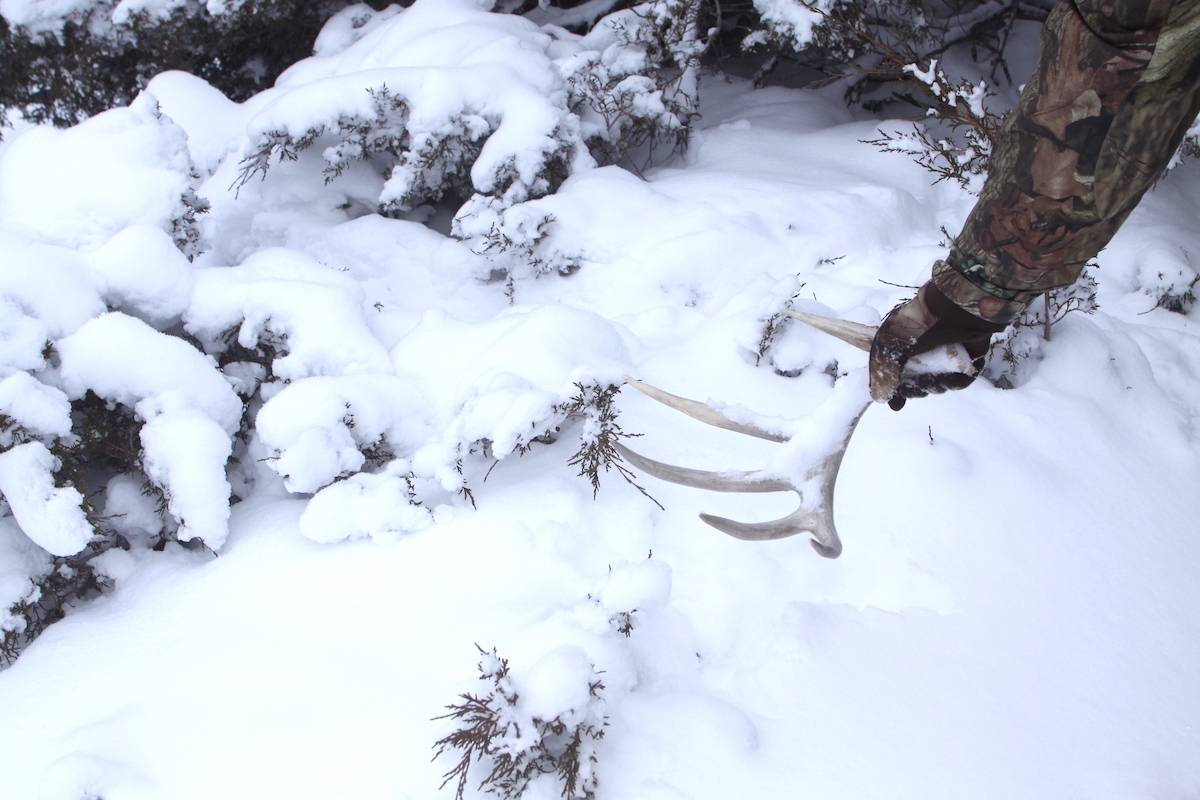
Once the stress of winter subsides, winter scouting can put you on the track of shed antlers.
Done right, winter scouting also gives you a glimpse into any predation issues you could be experiencing. Coyote predation has been documented to be a factor in many deer herds, especially during the spring fawning season. If your trail cameras and observations trigger a predator alarm, it might be time to invite a local trapper onto your property for some intensive and ongoing predator management.
Overall, it can be challenging to spark enthusiasm following a long deer season. Nevertheless, winter scouting offers an early and goal-oriented start to the coming season. Use good post-season scouting tips for deer, and next season just might be better.
HuntStand’s Whitetail Activity Forecast Tool
UPGRADE TO HUNTSTAND PRO WHITETAIL

Rattling can still attract bucks during the late season.
Take a breath and reset. The late season is here, and the road to a whitetail will not be easy, especially if you lack access to a mega property with whitetails openly frolicking due to unpressured conditions.
Yeah, that’s not me, either.
Fortunately, despite whitetails having been hunted in many states for up to three months, the late season does provide opportunity. You just need to focus on the positives. Try to forget about those negatives, like unrelenting pressure, whitetails already resting in a chest freezer, and oncoming winter harshness. That’s right, just put those aside.
Instead, motivate yourself with positives, like bucks tripping over themselves to land the last hint of lust, frail breeder bucks forced to feed in daylight, and more. You also can’t ignore the positive that most bucks that ranged in the rut now transition back to a pattern with limited baselines. So, put a strategy into play to ensure the late season gives you a last-chance reward until next season.
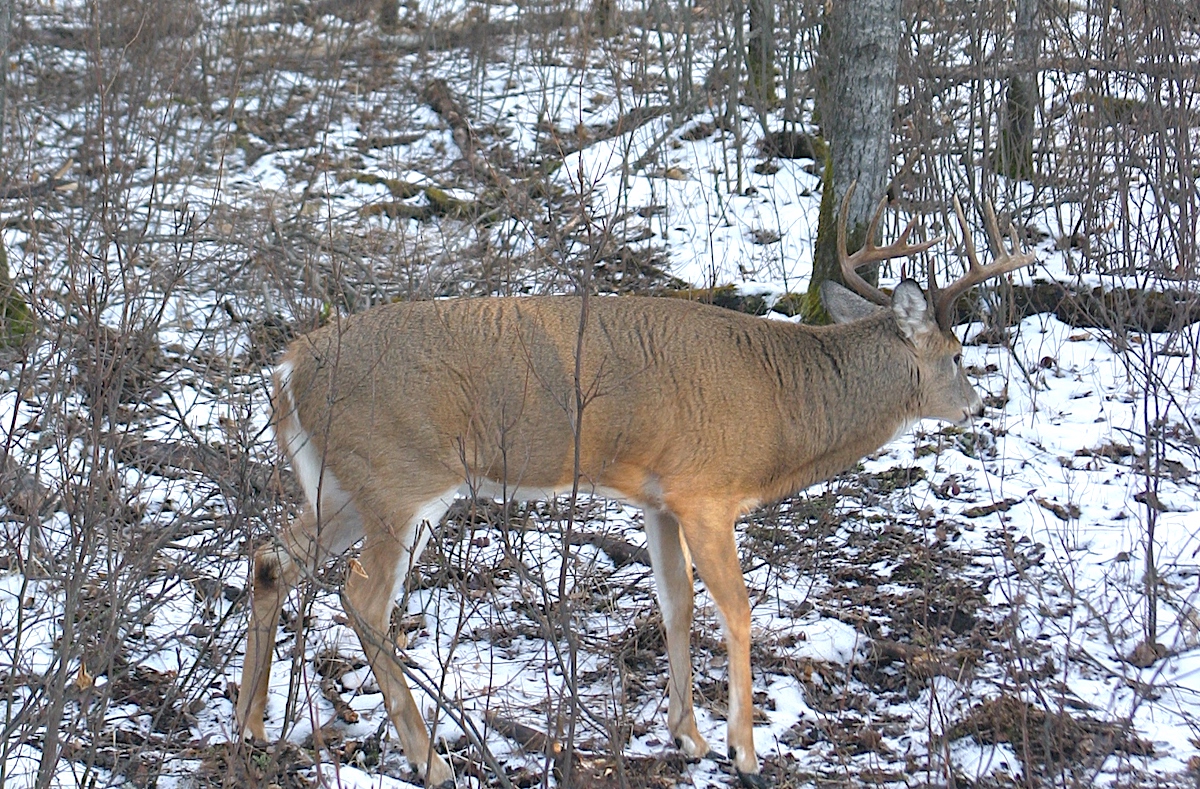
Although buck activity begins to wane after the main rut, approximately 10% of female fawns come into estrus in December, causing sparks of buck activity.
Motivation No. 1: Finding Love
Nearly every study you read states that by the end of November, approximately 90% of the females in a given whitetail population are bred. The remaining 10% — primarily healthy fawns of the year — could produce that spark of buck action you need for a spectacular December afternoon.
If you frown upon a 10% glimmer of hope, look at it this way. If someone told you that you had a 1 in 10 chance of winning the Powerball, would you stay at home on the couch to watch football or would you race down to the convenience store to purchase a ticket? I thought so.
You might even have a front-row seat to mature doe coming back into estrus. Although not common, some females simply do not get bred in the peak rut due to their lifestyle or bucks merely missing them due to a frantic schedule. That means they will cycle again about 28 days later for a second opportunity. That is the same window when a few, select fawns will come into estrus.
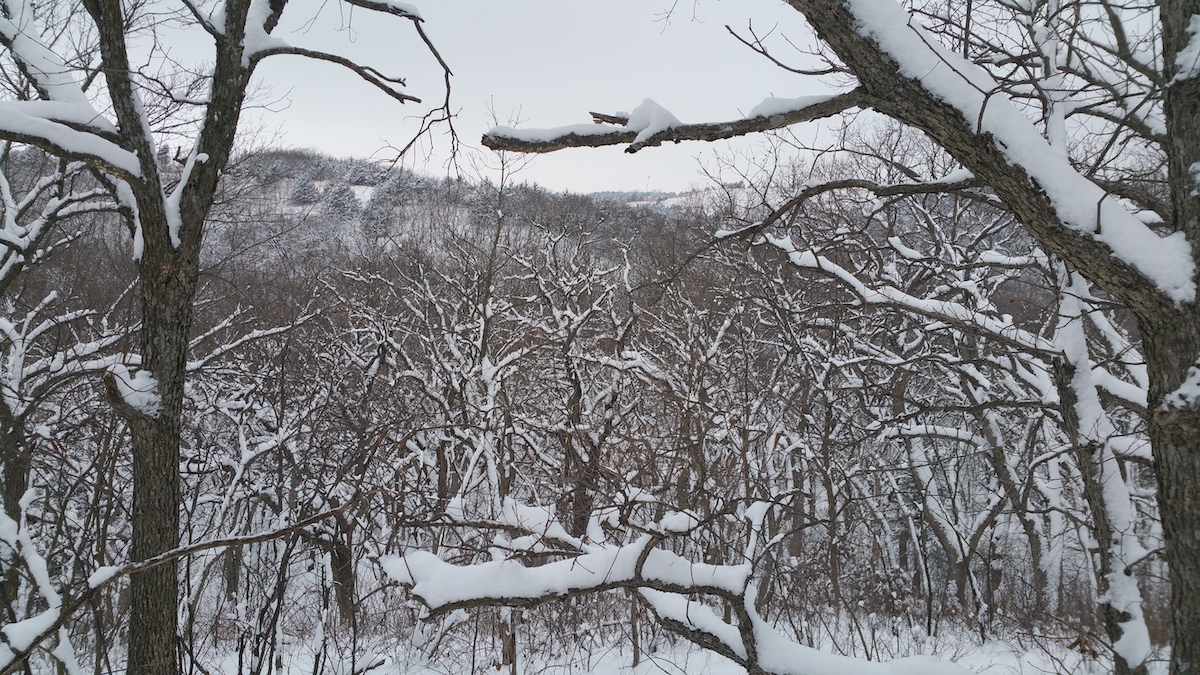
A post-rut environment can be challenging for whitetail survival, so look for food and shelter.
Although you see bucks hit the brakes on their long-distance searches, many still make the rounds as they enter a field. Oftentimes, you will witness them doing a downwind check of all females on a field as they enter, or casually as they feed amongst a herd. This creates opportunity for you. Consider scents or calls to entice a buck into bow, muzzleloader, or rifle range. I rarely hunt the late season without my rattling horns, a grunt tube, and a wick soaked in estrus strategically set in a shooting lane. I’m not afraid to climb down and move on distant deer action.
On numerous occasions I’ve seen all-out chases occur that prompted me to drop from my treestand and stalk estrus-fogged bucks. On one notable December muzzleloader hunt in Nebraska, a breeding party kicked off in a thick cedar patch. A mature buck made the mistake of stopping too long in a gap before my CVA filled the scene with successful smoke.

Upgrade to HuntStand’s Pro Whitetail subscription. It offers the Annual Rut Map, plus a Whitetail Activity Forecast, Whitetail Habitat layers for the United States, and more.
Not sure how to time that second rut? Upgrade to HuntStand’s Pro Whitetail subscription. It offers the Annual Rut Map, Whitetail Activity Forecast, Peak Whitetail Movement Times, and Whitetail Habitat layers for the United States. All this helps you when the 10% rule comes into play.
How to Find Deer with Topo Maps
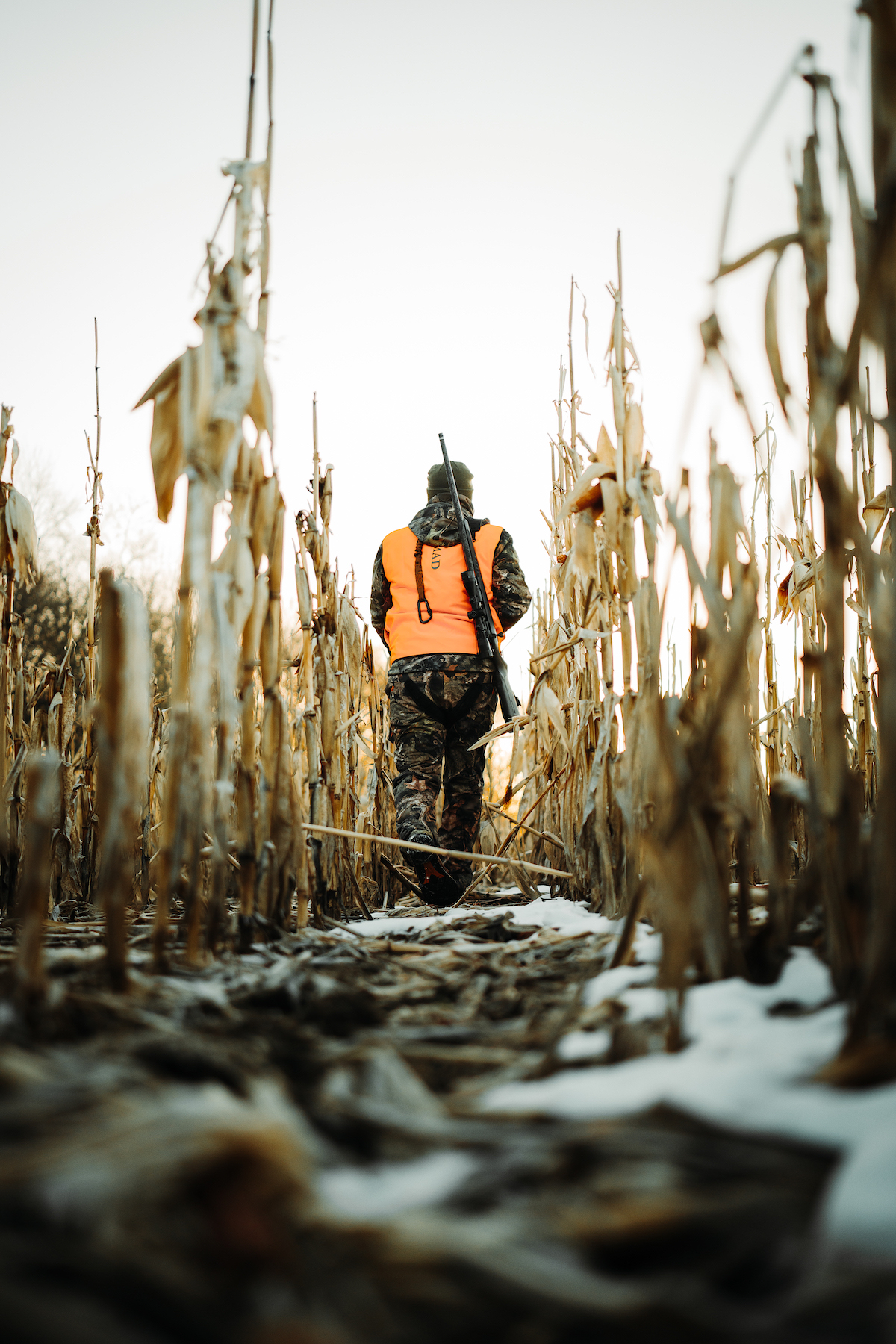
The weather can play a crucial role in your late-season success so pay attention to forecasts of cold and moisture.
Motivation No. 2: Achieving Survival
According to research from Penn State’s College of Agricultural Sciences Deer-Forest Blog, whitetails consume an enormous number of calories. In the summertime, they can chow down on an amazing 43,000 calories per day, as they sprout antlers or feed fawns.
By the end of the rut, whitetail bucks might lose 20 to 25% of their body mass. Rarely do they decline further, or death usually results. To combat this, they seek out the highest winter feed available near home. To look beyond your borders, utilize HuntStand’s Monthly Satellite imagery base and the Crop History feature. Combined, these will help you narrow down where deer might be feeding in the post-rut.
You’d think they’d try to match the summer calorie goal, but instead, data determines they drop their caloric intake to approximately 20,000 per day, or about 6 pounds of browse. Several factors matter. For instance, nutritional value in many foods drops in winter. Also, bucks slow down as a survival method. Researchers witness deer that voluntarily reduce activity to mimic a resting lifestyle, almost like hibernation without the den. They move less, consume the best nutrition around, and every so often, chase an estrus female. That begins the life of a whitetail buck in the post-rut period.
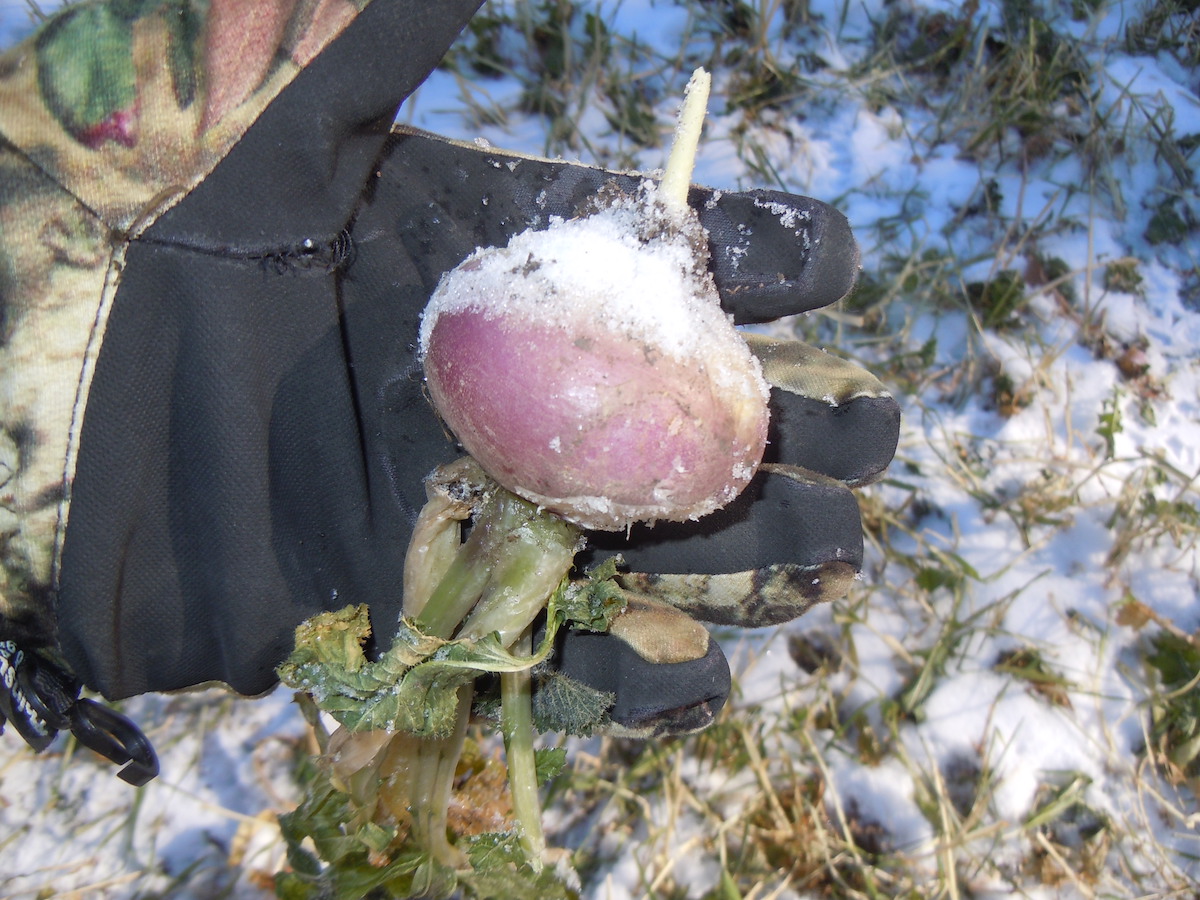
Turnips and similar food sources attract whitetails once temperatures begin to drop, and the rut is diminishing.
What’s the game plan? First, consider plotting a food-based ambush. Determine the highest energy nutrition in your hunting area. It could be as simple as setting up next to a turnip or brassica food plot. A farmer up the road could be behind on harvesting corn or have a poorly harvested soybean field. In areas void of heavy agriculture, varying browse and acorn mast could attract deer. Glass from afar, monitor cellular trail cameras, and begin a thorough search to determine the most valued nutrition in proximity to your hunting area.
10 Steps to a Successful Deer Drive
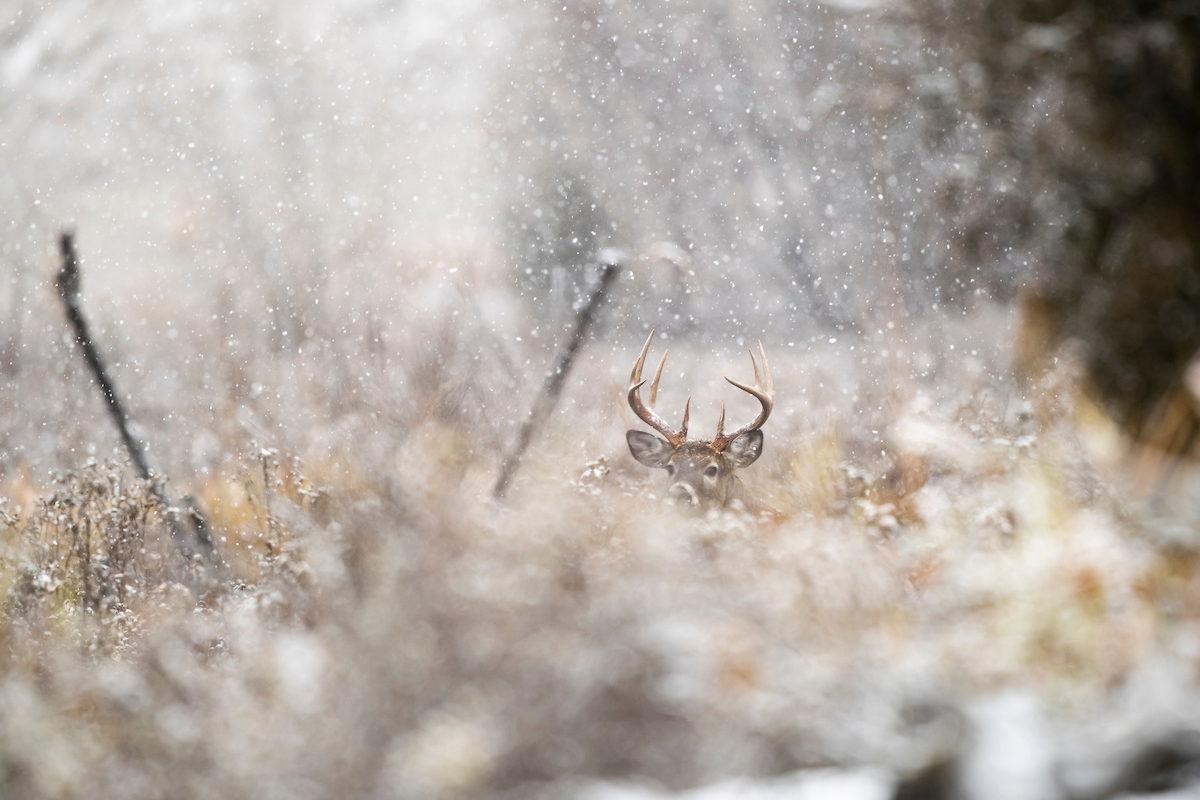
As the weather gets cold and food dwindles, whitetails move about to find the best in feed and sanctuary, but still try to stay close to home.
Motivation No. 3: Staying Home
Some help comes your way while trying to track down hungry deer. Bucks slowly transition from a wandering lifestyle to homebound living. Bucks that might’ve taken side trips of a mile or three to search for a doe settle down in their home territory. So, hunt them like you did during the early season.
Depending on the latitude and elevation, bucks might need to adjust bedding cover to take advantage of better nutrition and protection from winter environments. They also might adjust bedding cover to accommodate their paranoia from being hunted for months.
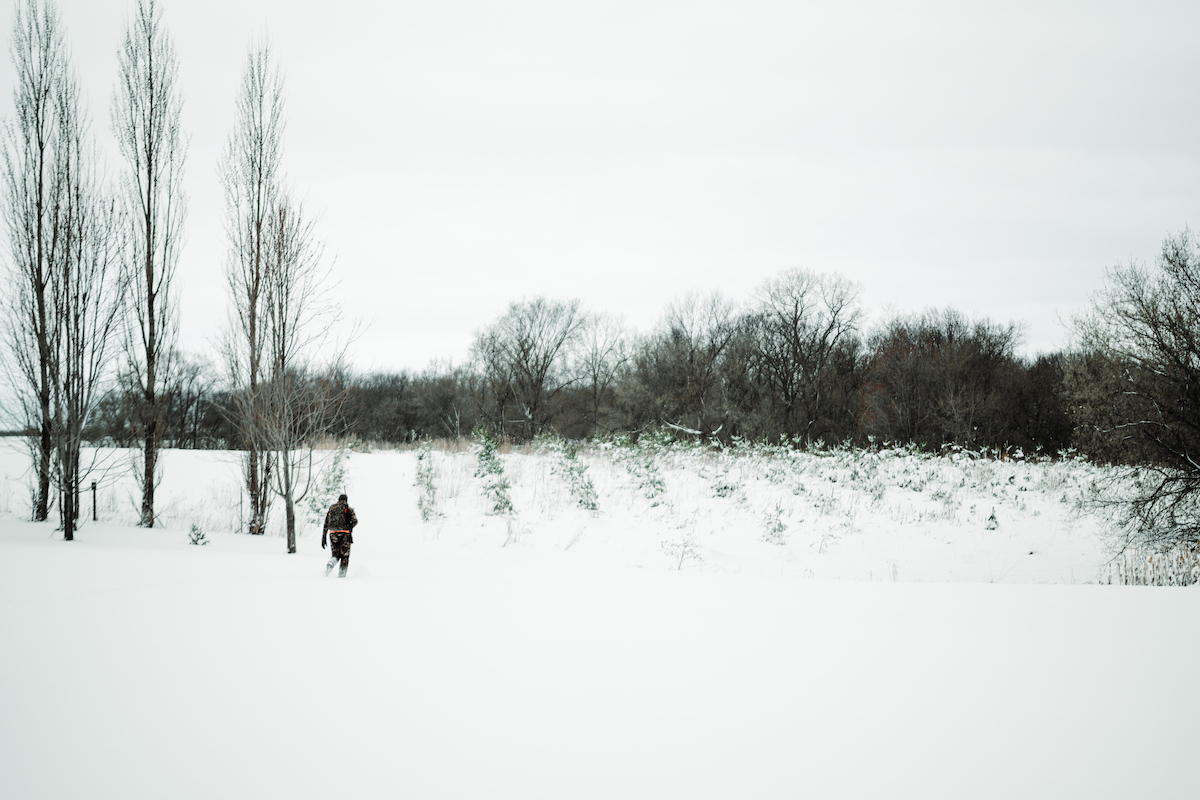
HuntStand has an incredible weather feature for you to use in forecasting and planning your hunt.
As food sources dwindle, expect bucks to follow the crowd. Look for the masses and set up surveillance. Trail cameras and time behind your binoculars are mandatory. Most deer focus on the best food sources around. Although you might not spot your target buck in daylight, nighttime trail camera images should confirm it’s in the vicinity. Again, think ambush, but with a tweak.
Start your ambush plans by monitoring the weather. Look for the nastiest winter weather available. Cold and moisture force skinny-jeans bucks to feed during daylight. Next, consider an ambush inside cover on the perimeter of suspected buck bedding areas. Do not invade the heavy cover, but use your HuntStand app to find any funnels or pinch points between security and feed. Place your ambush there with a downwind advantage.
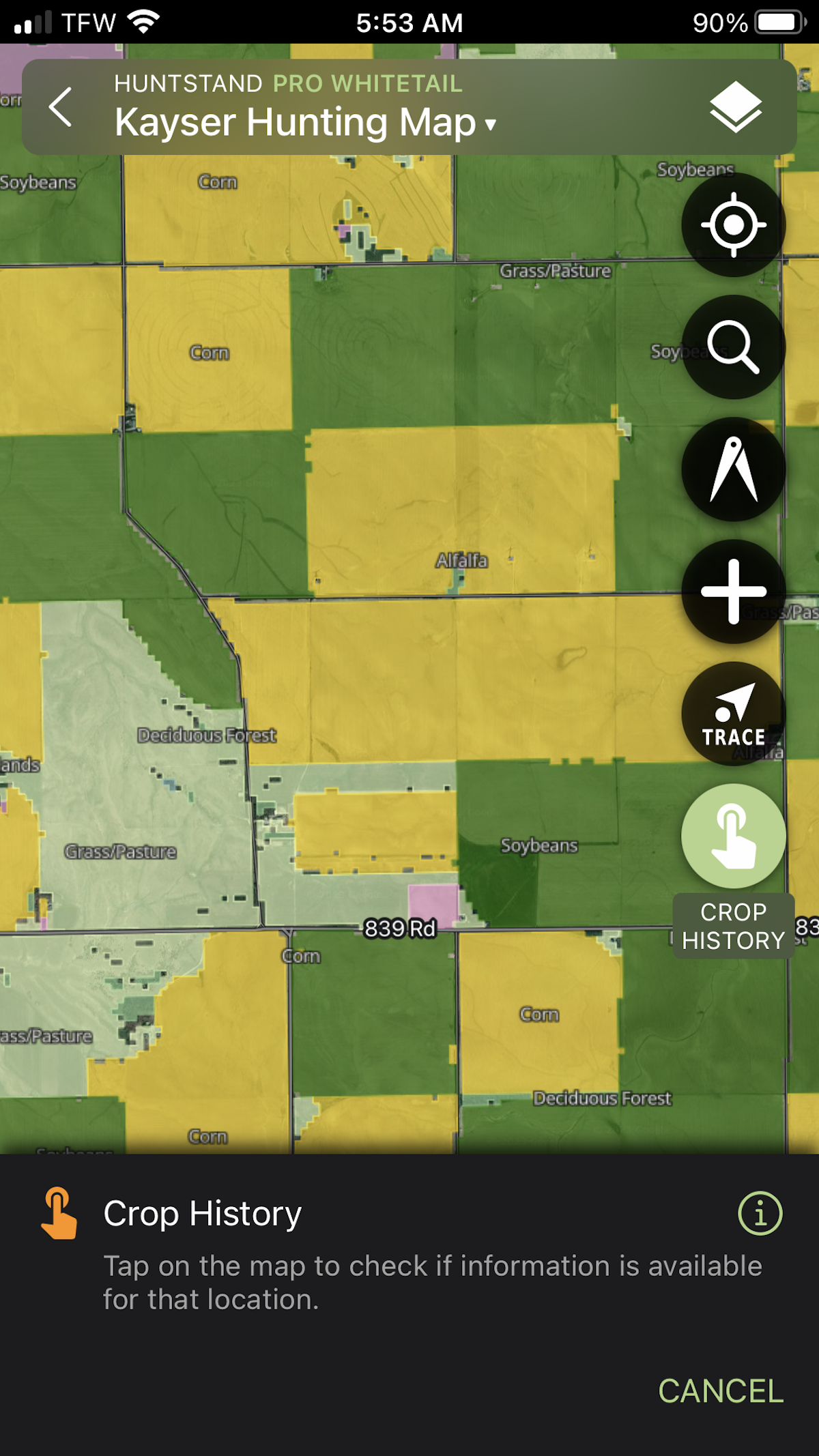
HuntStand’s Crop History feature aids you in finding food near your hunting property that whitetails might be visiting.
In severe conditions, such as deep snow, deer might bed within 400 yards or less of high-quality feed, like standing corn, or succulent browse on the perimeter of a forest thicket. If snow depth is not an issue, deer might still bed nearby. They could also travel a half mile or more to separate themselves from any perceived danger that feeding exposure could bring.
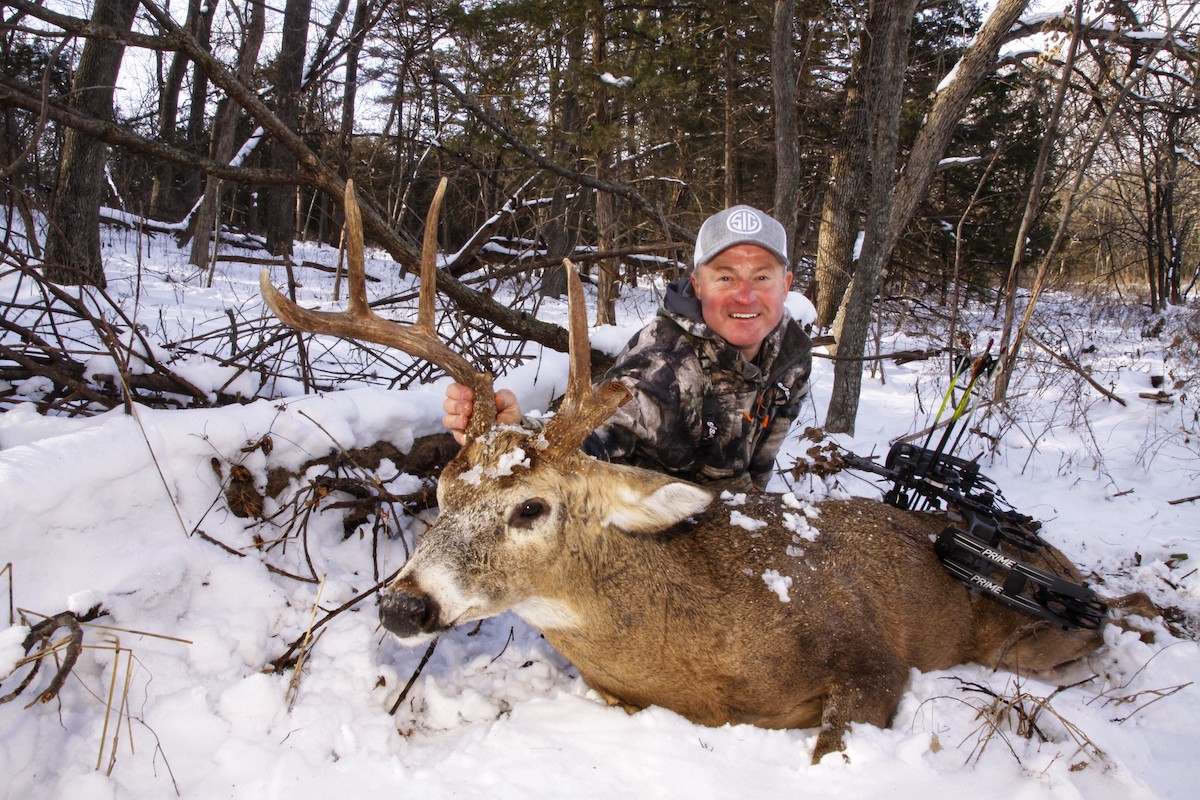
Mark Kayser arrowed this old whitetail while watching a visited food source. Kayser had a relationship with this buck for three seasons.
Deer might be less motivated in the post-rut, but elements exist to spark some action. Some of the activity could be as hot as seen earlier in the rut, while most will display a subdued nature. Take advantage of every motivational aspect in the post-rut for your last-gasp chance to fill a tag. Take advantage of the things that motivate monster late-season bucks.
15 Ways You Aren’t Using HuntStand Pro Whitetail, But Should Be
UPGRADE TO HUNTSTAND PRO WHITETAIL
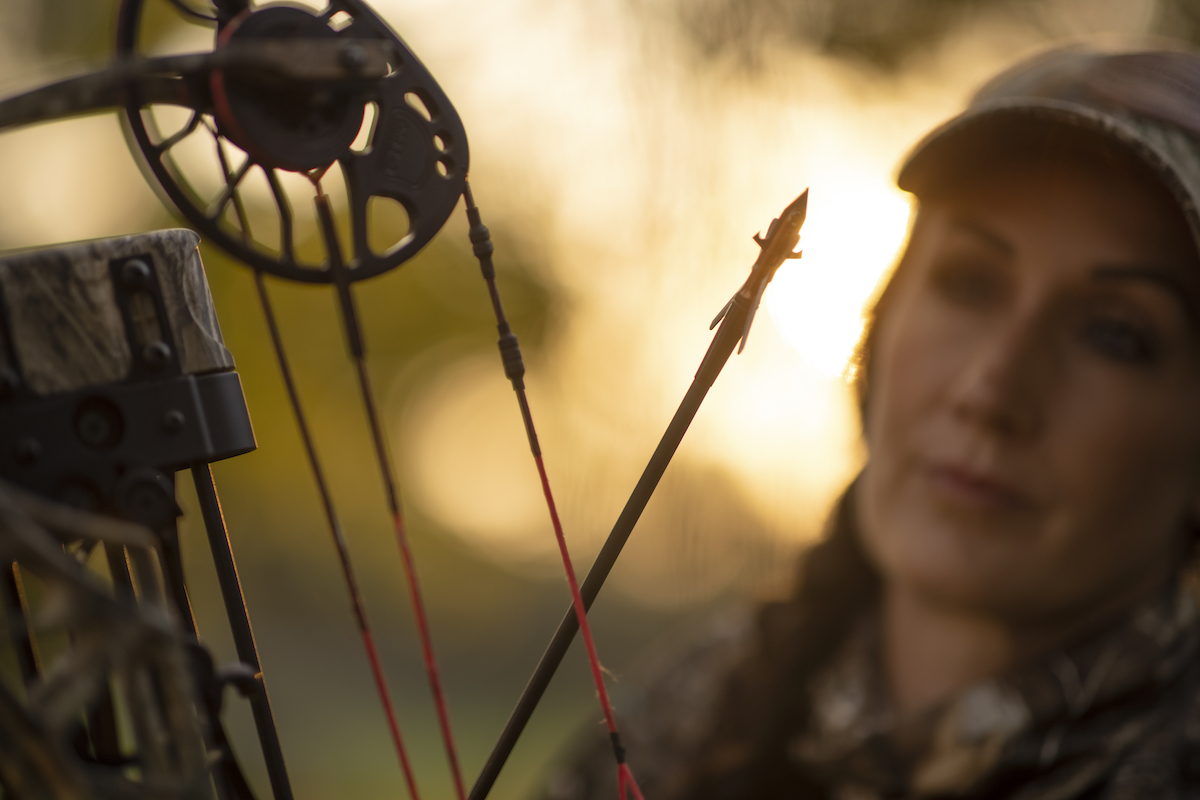
The lockdown phase can be challenging. But if you keep pushing, it just might come together for you.
The whitetail rut receives more marketing hype than the latest Hollywood blockbuster. Despite this red-carpet treatment, one shortcoming exists in this glorious period of the whitetail hunting season. It’s referred to by many as the whitetail rut lockdown phase, which is the peak breeding period of the rut.
This period lasts approximately two weeks. Yet, it creates a conundrum for hunters. Bucks change patterns, drop off the radar, and isolate themselves when they do hook up with an estrus doe. Even with these hitches, peak breeding still has many advantages, and the lockdown should not be overlooked. Instead of grumbling, consider these strategies to win the lockdown battle.
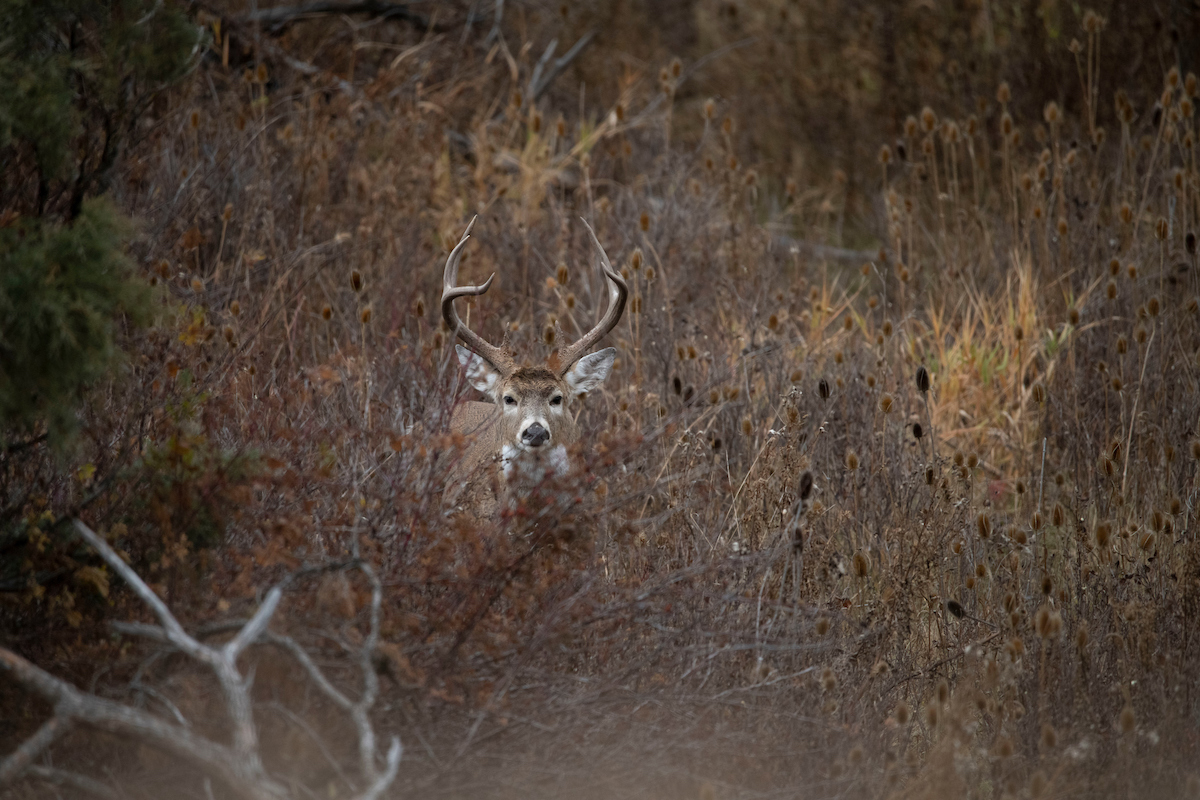
If you stand is in an area that attracts deer all fall, stay the course and it could pull in a wandering buck if enough females keep visiting the area.
The Lockdown: A Half-Truth
Although whitetail bucks often go missing as breeding spikes, the traditional response that they are in “lockdown” does not hold water in its straightforward definition. At hunting camp, you likely heard that a buck snatches an estrus doe and takes her to the Lost Trail Motel and stays in room 17 for a 24- to 48-hour hookup. First, most research reduces the time the two spend together to 24 hours or less and maybe as little as half that time. And do they actually lock down?
GPS tracking data suggests that instead of ordering room service in a quaint hollow for those 12 to 24 hours, sweethearts continue moving, browsing, and chasing. Yes, they do bed and rest from time to time, but most studies show that movement does not stop. Instead, bucks wander farther, stray from home territories and visit doe groups in surrounding areas. They leave their home territories for hours or days to return on occasion as breeding persists.
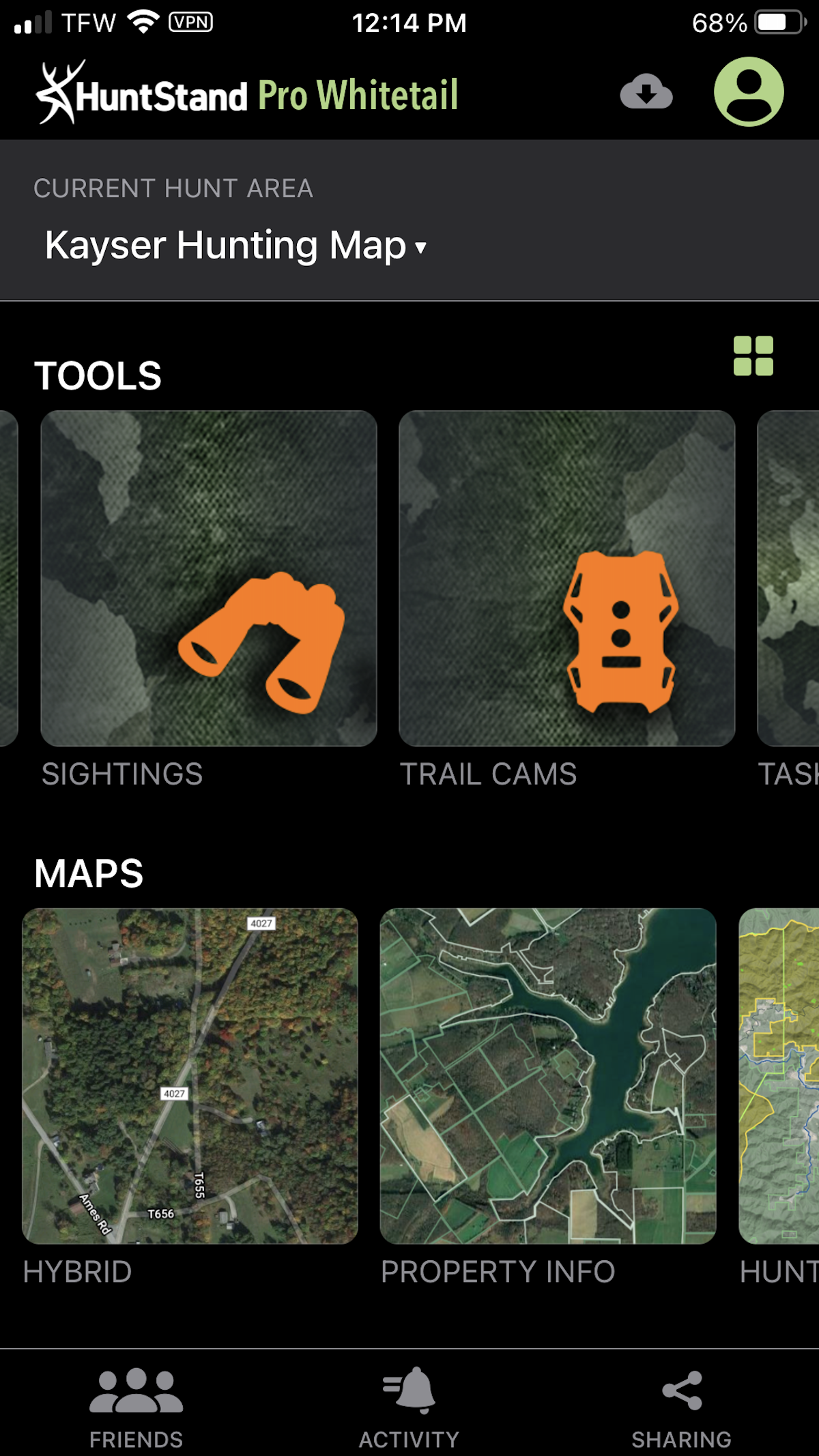
If you have not tried HuntStand Pro Whitetail, purchase a subscription to get the most for your rut planning.
When they do find a likely partner, they might also fall out of the public view by staying clear of deer populations to avoid the commotion or competition of brethren bucks. Leaving territories and trying to avoid the crowd leads to this lockdown look. Regardless, the buck you saw on trail camera for two months prior has suddenly gone rogue and that causes you to consider your next anxious move.
If you have not yet investigated the benefits of HuntStand’s Pro Whitetail subscription, you need to for help in unlocking the lockdown conundrum. HuntStand’s Pro Whitetail subscription has the answers to your hunt timing. Not only do you receive all maps, layers, features, and toolsets that are included in the Pro subscription, Pro Whitetail includes a Whitetail Activity Forecast, Nationwide Rut Map, and Whitetail Habitat layers for the United States.
UPGRADE TO HUNTSTAND PRO WHITETAIL
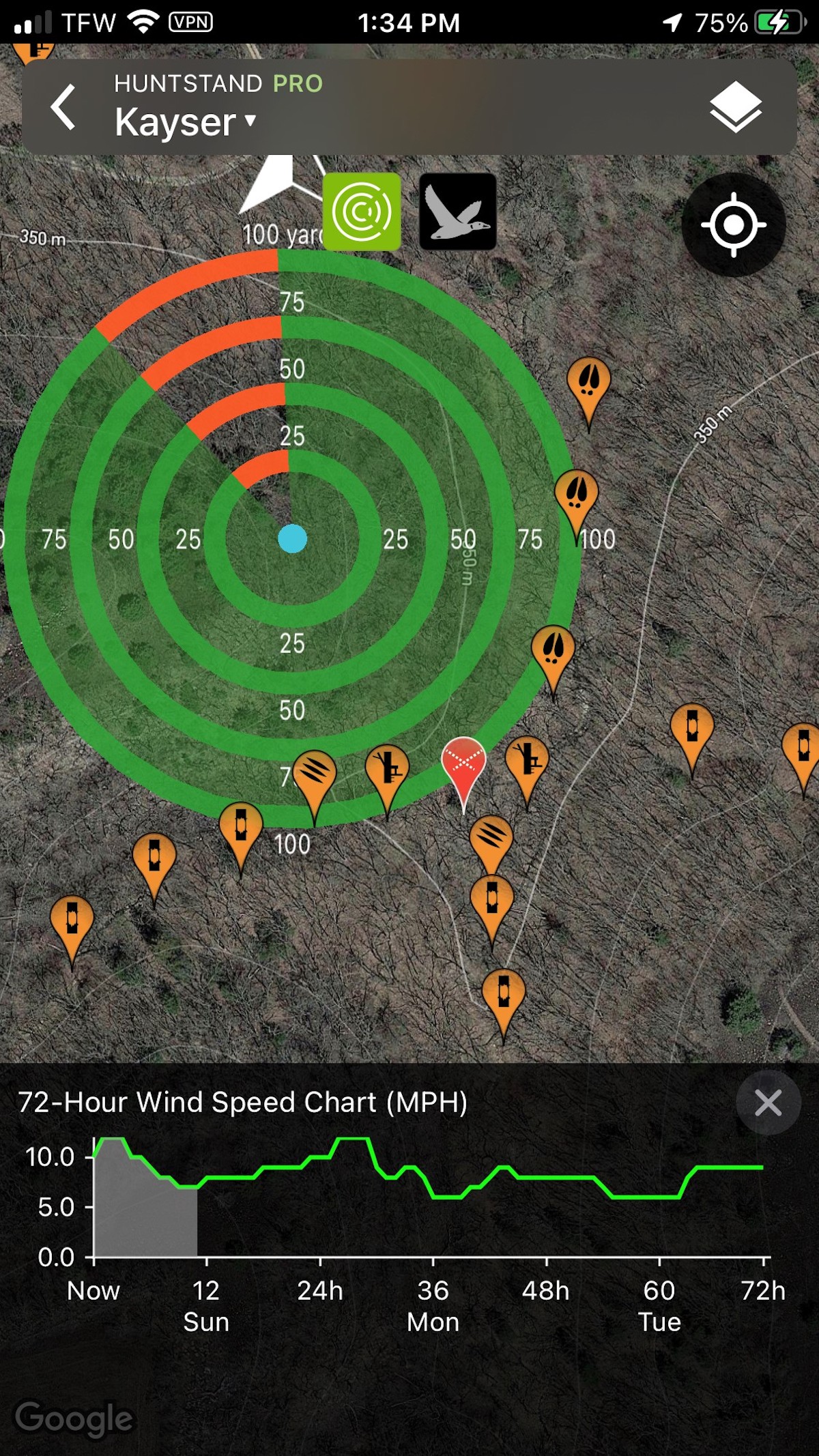
Your HuntStand app can help you forecast a good ambush in a remote corner of your hunting property.
1. Find the Does
Your next move might not require a move at all if you have scouted well. During the breeding or lockdown phase, bucks relentlessly search for estrus females. Hunting near large concentrations of does just makes sense during the breeding phase. Like the pre-rut phase days prior, bucks nose around does then and are guaranteed to visit large densities of females during the big breeding event.
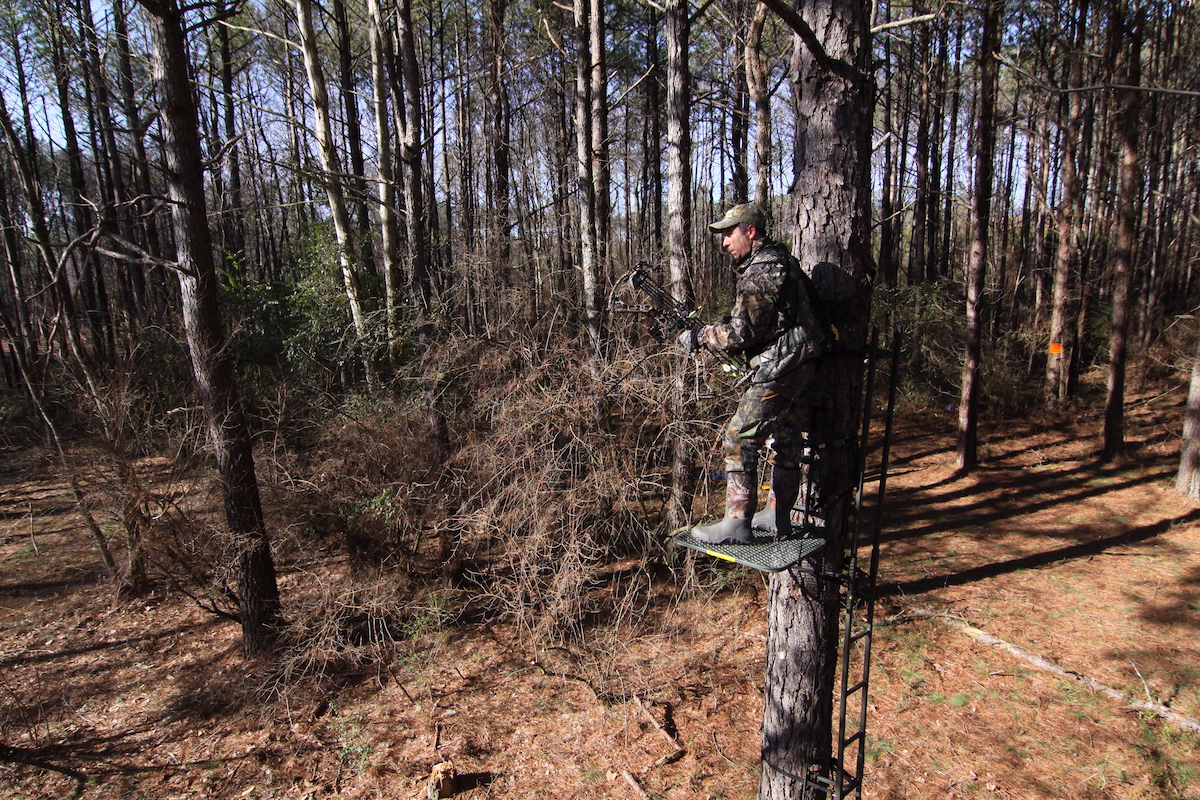
Moving to an offbeat location during the lockdown can sometimes be successful.
2. Hunt the Downwind Sides
Keep in mind that during the breeding phase, bucks become highly efficient. Instead of boldly walking across a field, they might skirt the downwind edges or inside corners to scent-confirm any estrus females. Placing a stand on the downwind corner of a field, downwind of a trail, might be a winning move.
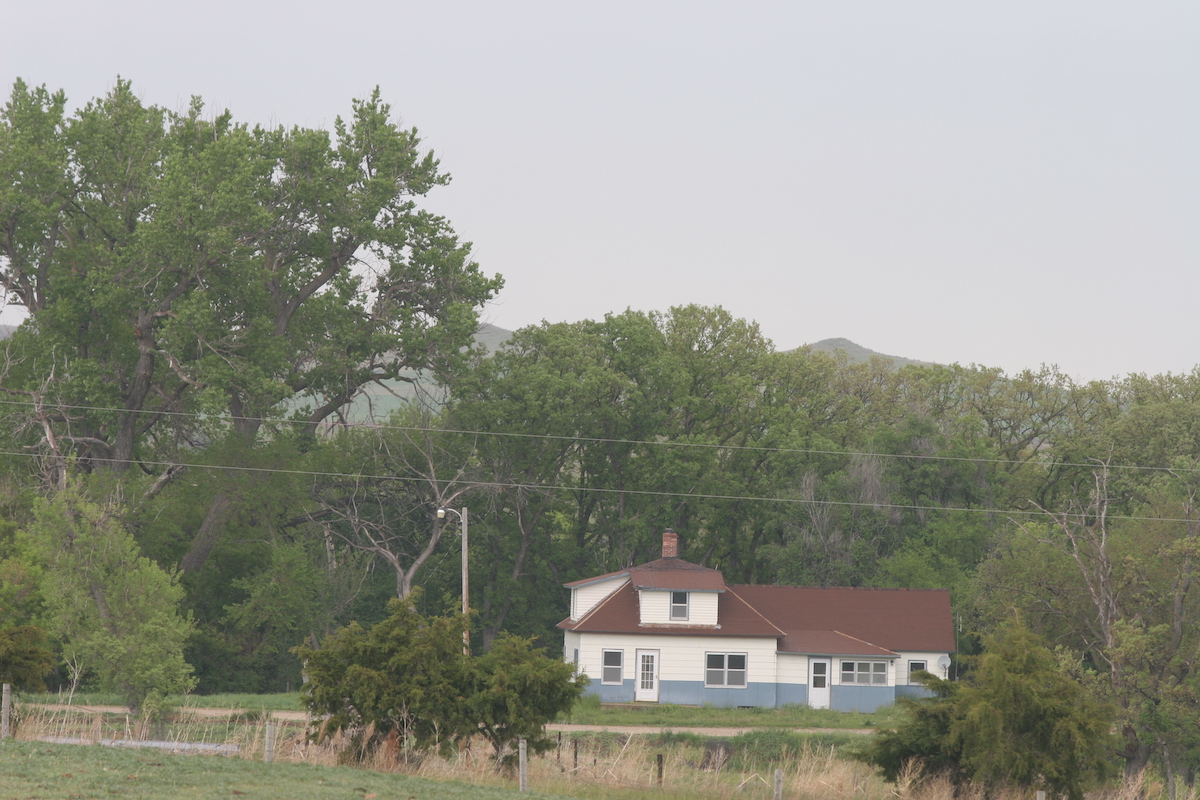
Old farmsteads can sometimes provide that love nest cover.
3. Find a Love Nest
You do have another option and whether you make it your main play or a backup, consider looking for a buck love nest. Once bucks find a doe, do they want to parade it through a crowd of potential suitors, or spend more time alone? When things get serious, most bucks prefer a little alone time.
By scouting, firsthand or HuntStand aided, you can isolate areas that deer might use for a bit of closed-door time. This me time equates to a lockdown disappearance, although as noted, most research shows the pair simply do not lock down for long. Inventory all secluded settings deer might escape to for isolation. Think in terms of privacy, but not too far from food sources and water. This might be the overgrown pig lot behind an abandoned barn, a pasture of waist-high native grass, a cattail slough, or a thicket deep in an oak draw.
4 Great Rut Stand Locations You Haven’t Tried
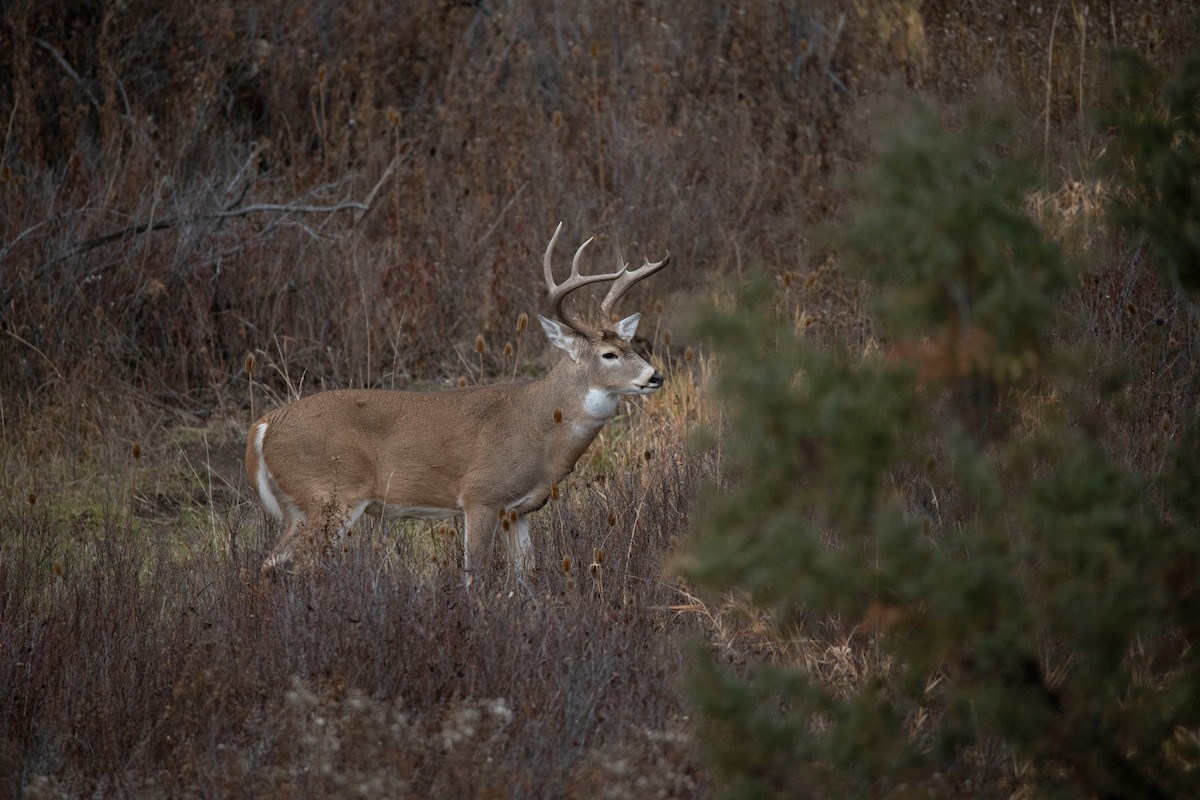
Don't give up during the lockdown phase. Bucks are still moving.
4. Find a Drifter
By scouting and setting up stands or blinds near highly visited food plots, agricultural fields or the routes in between, you stand a high chance of meeting up with a home territory buck. He might leave for a few days, but whitetails have a habit of returning home between estrus seeking. Stay the course as long as the does continue visiting your site.
Best of all, the drifter theory works in both directions. Your target buck might take a hiatus from the area, but a neighboring buck might suddenly appear to check out the female goods, thus expanding the selection of bucks to shop from.
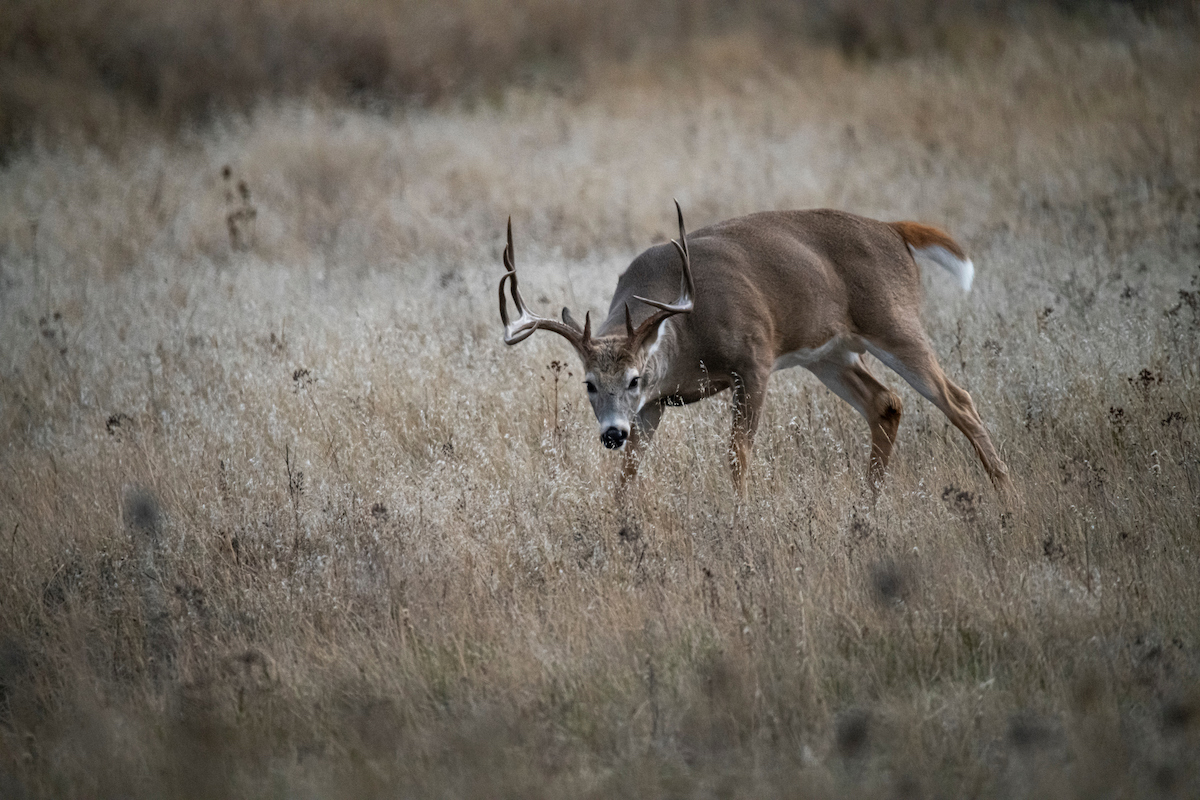
Between breeding sessions, home territory bucks could return to a productive food plot to look for another willing female, plus wandering deer might show up, so do not abandon a great location unless deer sightings plummet.
5. Deploy a Decoy
Surprisingly, during my Great Plains hunts it is not at all uncommon to see bucks wooing a doe in the middle of a winter wheat field, an overgrazed cattle pasture, or in a ditch along a major highway. Nothing surprises me during the rut. The real point to take home is preparedness. Have these hookup haunts pre-scouted and preset with treestands or blinds. Although the chase might begin on a food plot, you can bet as estrus peaks and the female wishes to breed, any veteran buck will move the action undercover. Your preparedness gives you options to hunt these areas as the rut spikes.
A prime example of hunting hookup haunts occurred on a hunt where suddenly, food plot action disappeared, and my mind went numb trying to locate the action. A small reservoir in the middle of a sunflower field grabbed my attention and I hung a treestand on the water’s edge. Sure enough, a pair of whitetails filtered from the crops in obvious lovesick fashion. The buck swung in to investigate my decoy and my arrow hit home. The doe was freed up to find another suitor.
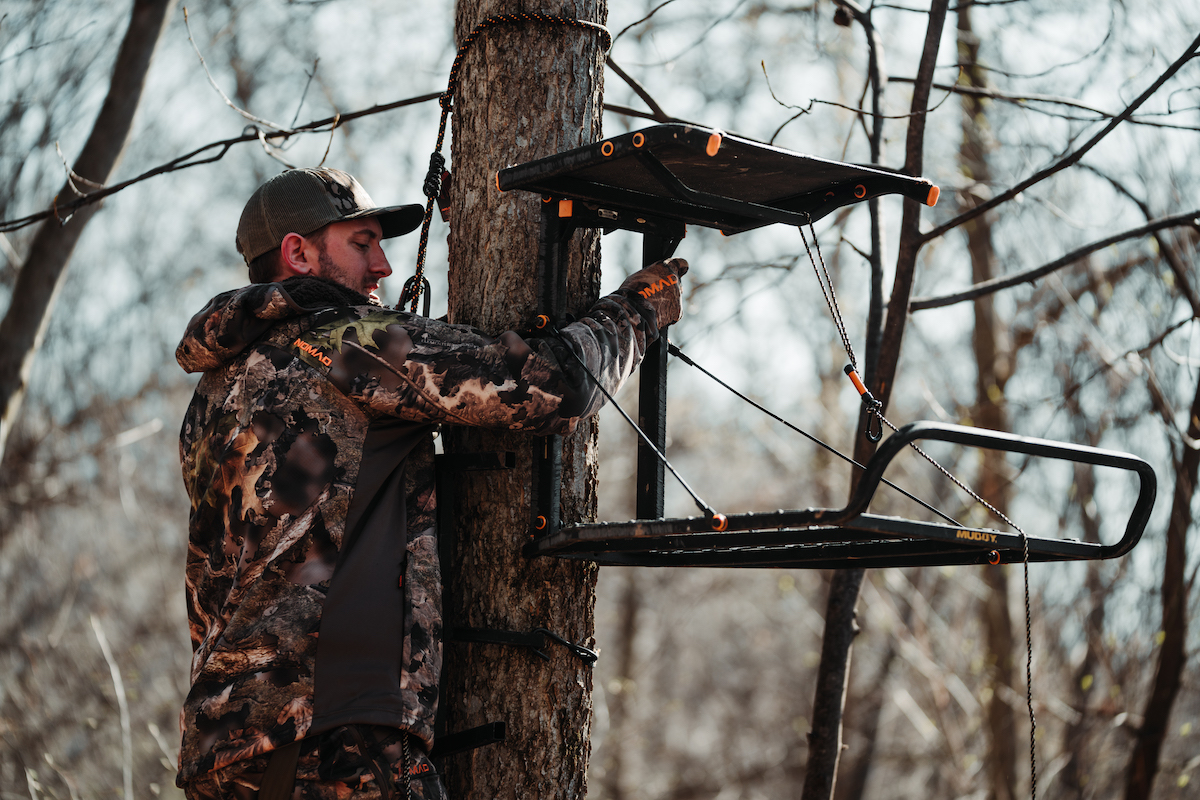
Consider hanging a treestand in an area that bucks might push estrus does to.
6. Do Nothing
The do-nothing approach has worked for me on more than one occasion. One season, a brawny, mature whitetail slipped by me on numerous occasions during the pre-rut and finally disappeared when does began coming into estrus. Instead of looking elsewhere, I stayed the course and continued a vigilant watch over a brush pocket adjacent to a hayfield the buck fed on in the early fall. One blustery morning, I heard grunting and to my shock, the big buck was back and pushing a doe right past my stand in the brush. When he vanished behind a cloak of willows, I grunted. Seconds later he charged right over for a 15-yard shot with my bow. Being stubborn in my wait paid off.
5 Times for All-Day Sits in the Deer Woods
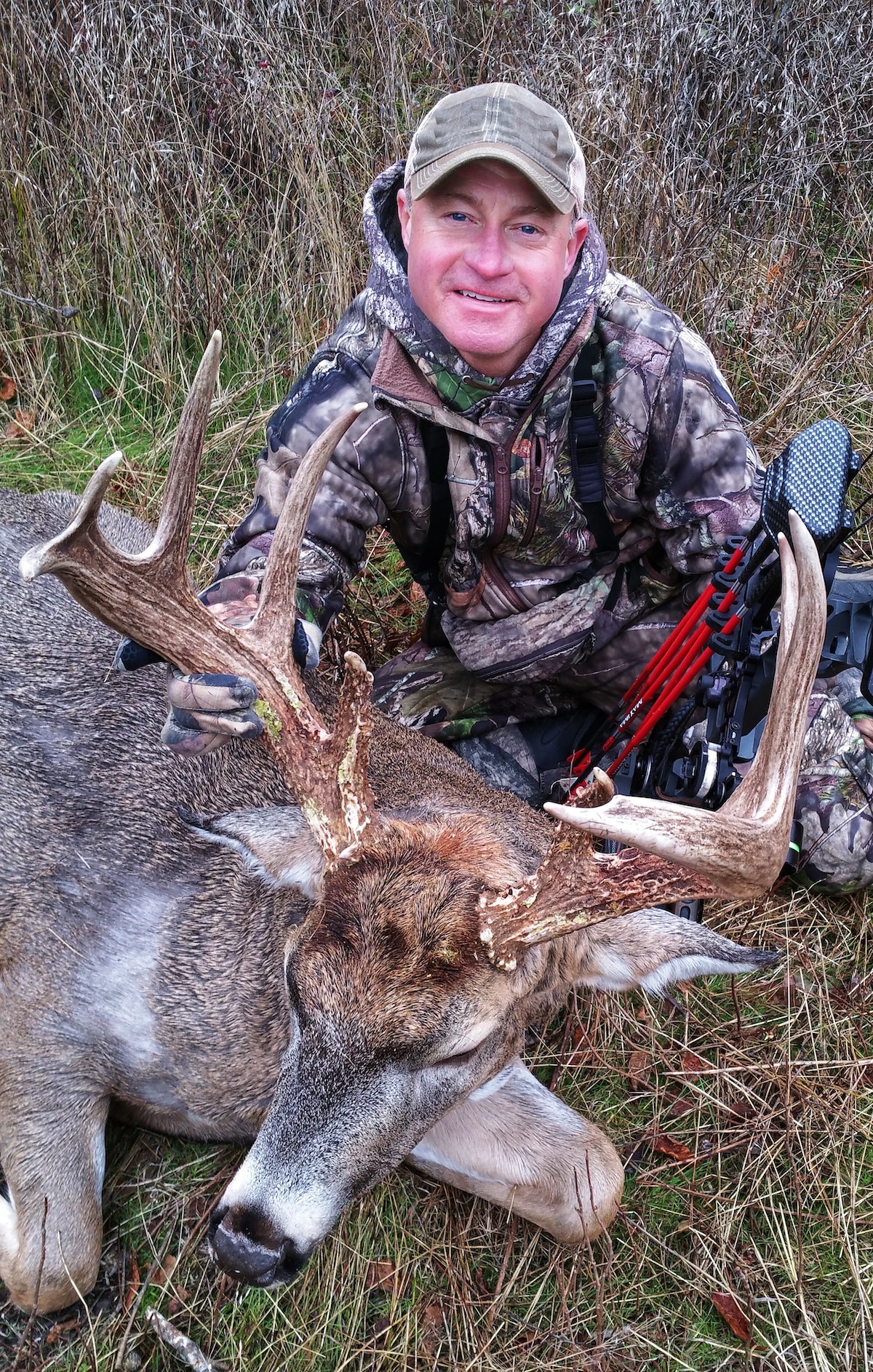
Mark Kayser returned to a great stand and put in his time during the lockdown to tag this mature buck in mid-November.
7. Be a Team Player
Sharing is caring and one of the best things to share during the lockdown is information with your hunting partners and neighbors. By passing along information via trail camera images and personal sightings, it helps everyone track bucks. HuntStand’s Trail Camera Management feature excels in this area to organize your army of image takers. Plus, image sharing widens your perspective on what really occurs during the lockdown. The only reasons to not share might be not having a good relationship with neighbors or potentially having the new world record traipsing on your property. Otherwise, you gain more than you lose if you share details during the lockdown.
Remember, you likely will not keep a rutting buck on the property you manage. Bucks wander during the rut and knowing your A lister is on the neighbor’s gives you opportunity to plan accordingly. If he stays across the fence, you might want to focus on another buck until he returns. And if by chance a neighbor harvests a buck that was living on your property, it is a benefit to know that buck can be removed from your hit list, thus freeing you to hunt a backup buck.
A couple seasons back, I arrowed a mature whitetail and took the rack over to the neighbors to share my celebration. He immediately recognized the buck and said thanks. He had planned to hunt that buck that very evening and now he could change his plans instead of waiting for a ghost to appear.
The peak of the breeding phase or lockdown as some refer to it, has its trials and tribulations. Nevertheless, it still provides a great opportunity for rut success by tweaking your tactics.
21 Tips for Still-Hunting Deer
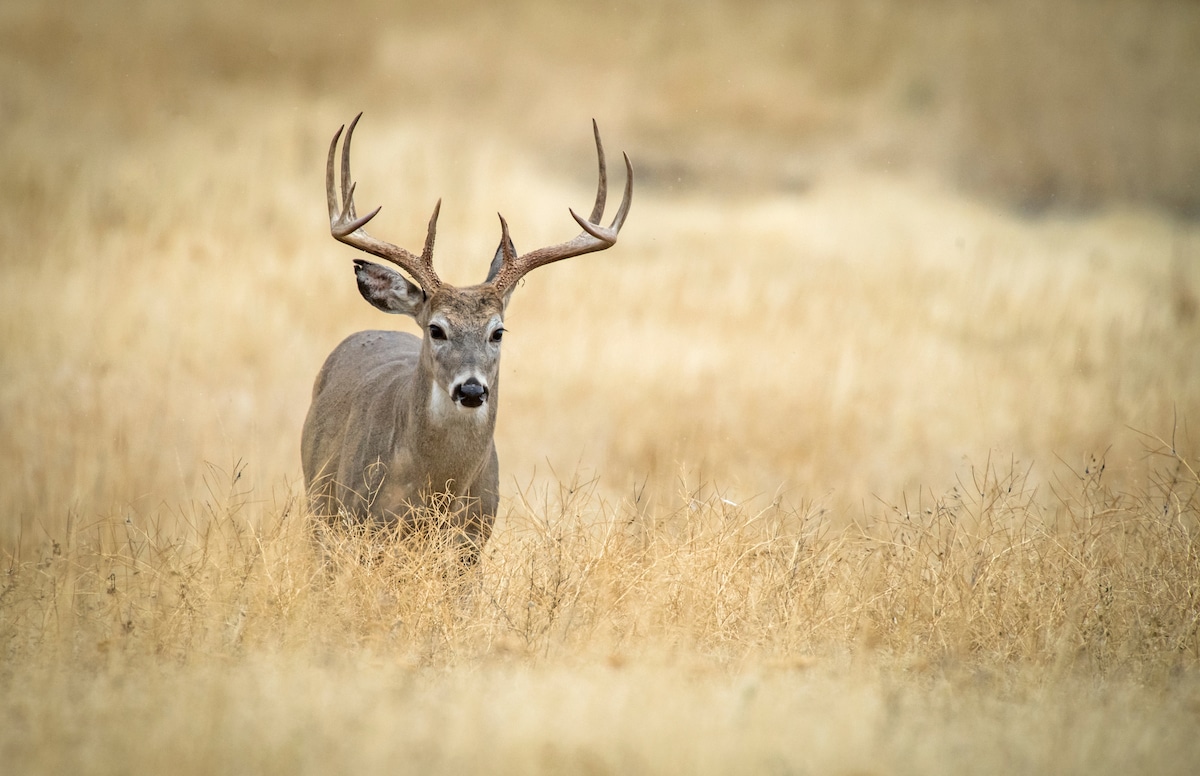
There are many different reasons your deer tags might go unfilled. But don't let it be one of the following.
If you find yourself holding an unfilled tag at the end of deer season, you must ask yourself “why?” Filling an antlerless tag might not be as difficult, but if the bucks continually elude you, consider if any or all the below factors are serving up a bowl of tag soup. Here are 10 reasons you don’t fill your deer tags.
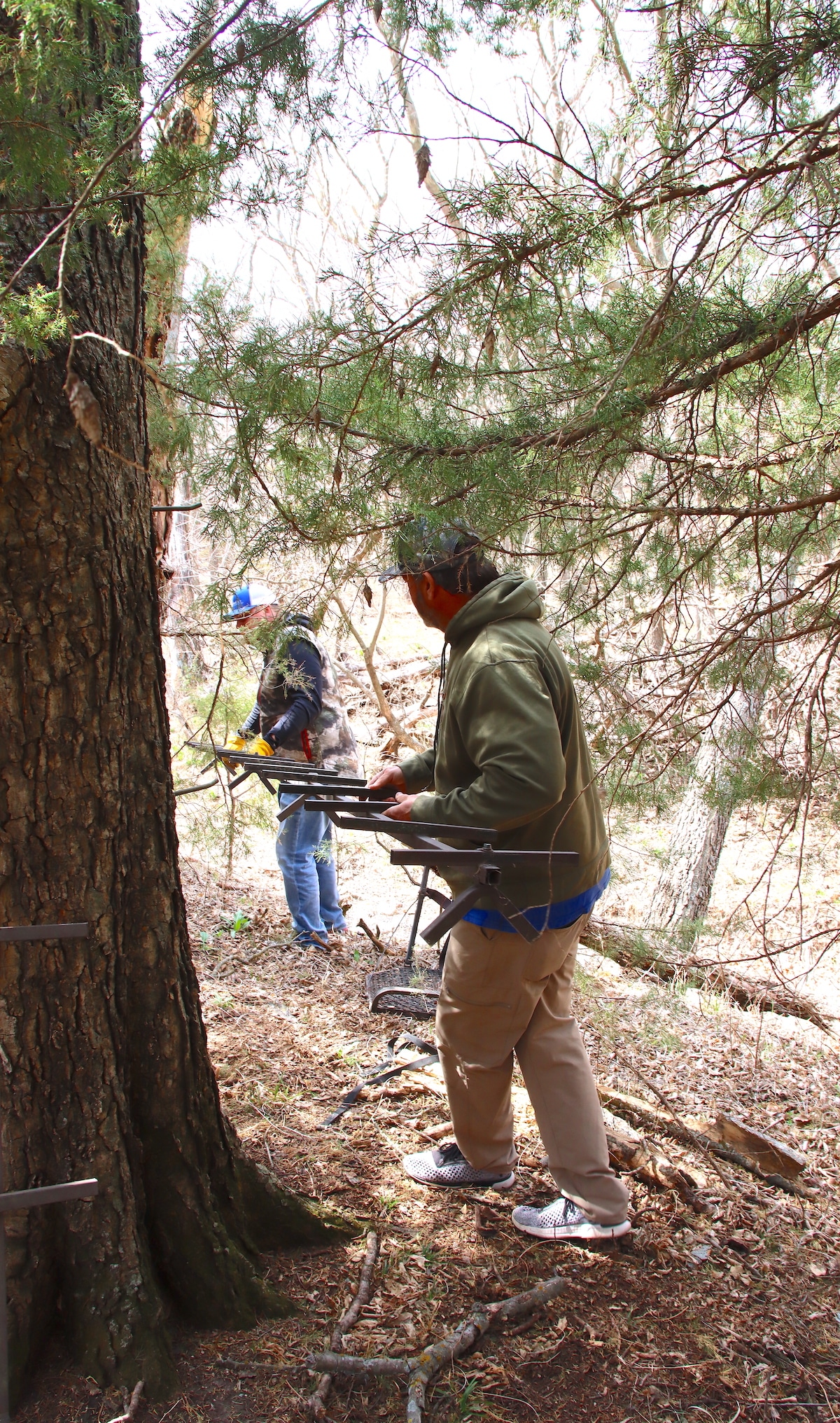
Use the best gear possible, especially when it comes to stands, as they can make your hunt much safer.
1. You’re Using Subpar Hunting Gear
I admit. I kicked off my whitetail bowhunting career with a garage sale bow and no formal training. Don’t be me. Gear up with the best-quality equipment you can afford. Begin with the basics and expand your inventory from there. For starters, put good money toward your weapon, bow or firearm, optics, treestands (for obvious safety) and clothing to combat the elements.
Research proven items that have been vetted over several years instead of purchasing recent technology that might pass the marketing board checklist, but not Mother Nature’s testing grounds. I once was handed a new rifle hyped as “the best” in backcountry technology. It would not cycle a second cartridge after the first shot. So much for that “best” designation.
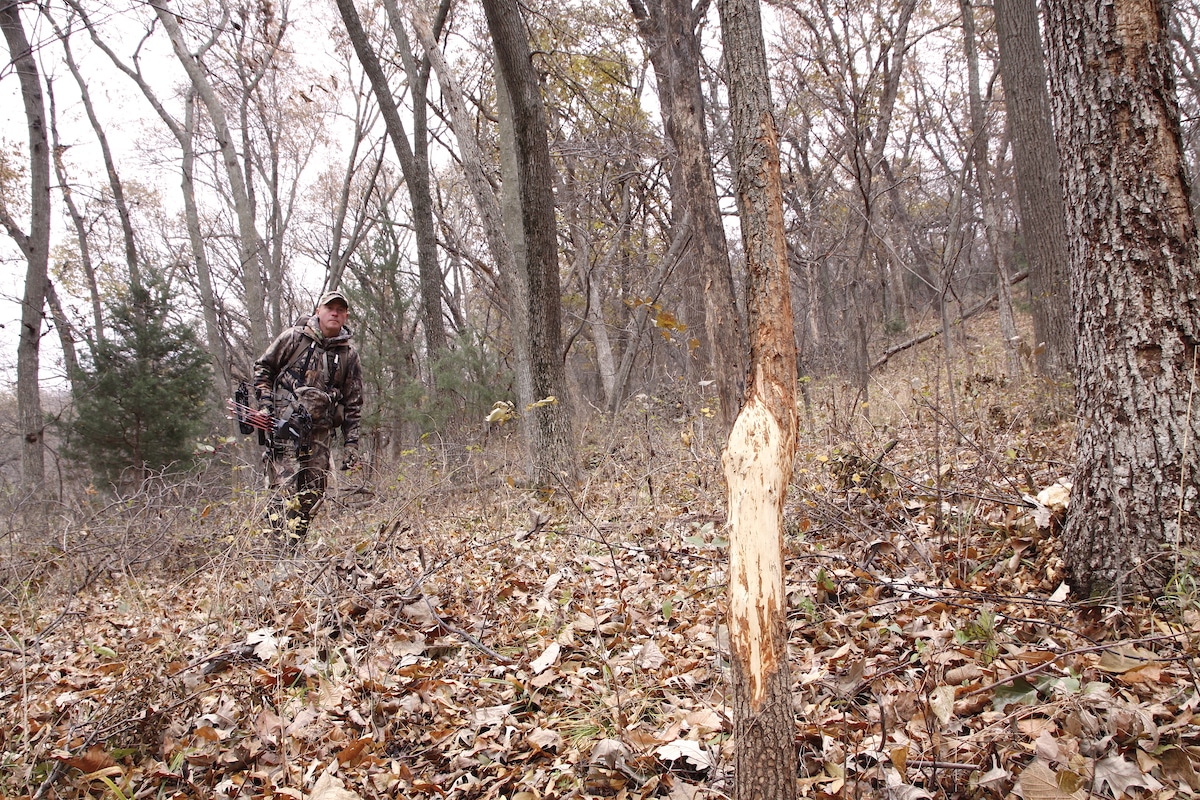
Stalking and still-hunting can open hunting opportunities, plus give you insight on what is occurring on your hunting property.
2. You Don’t Scout Efficiently
Sometimes you get too comfortable with a hunting property and your scouting lapses. Get back into the game. Whitetail populations rarely stay stable. They fluctuate, sometimes greatly. Dispersion, disease, winter-kill, predation, hunting pressure, agricultural changeups, and more, all can alter whitetail activity on your property. Schedule a couple preseason visits to manage trail cameras, survey land management changes, or even invest in a food plot. On public property, scout the interior for new stand sites and add map objects to HuntStand as you discover water, trails, old rubs, and scrapes.
Find Staging Areas to Find More Deer
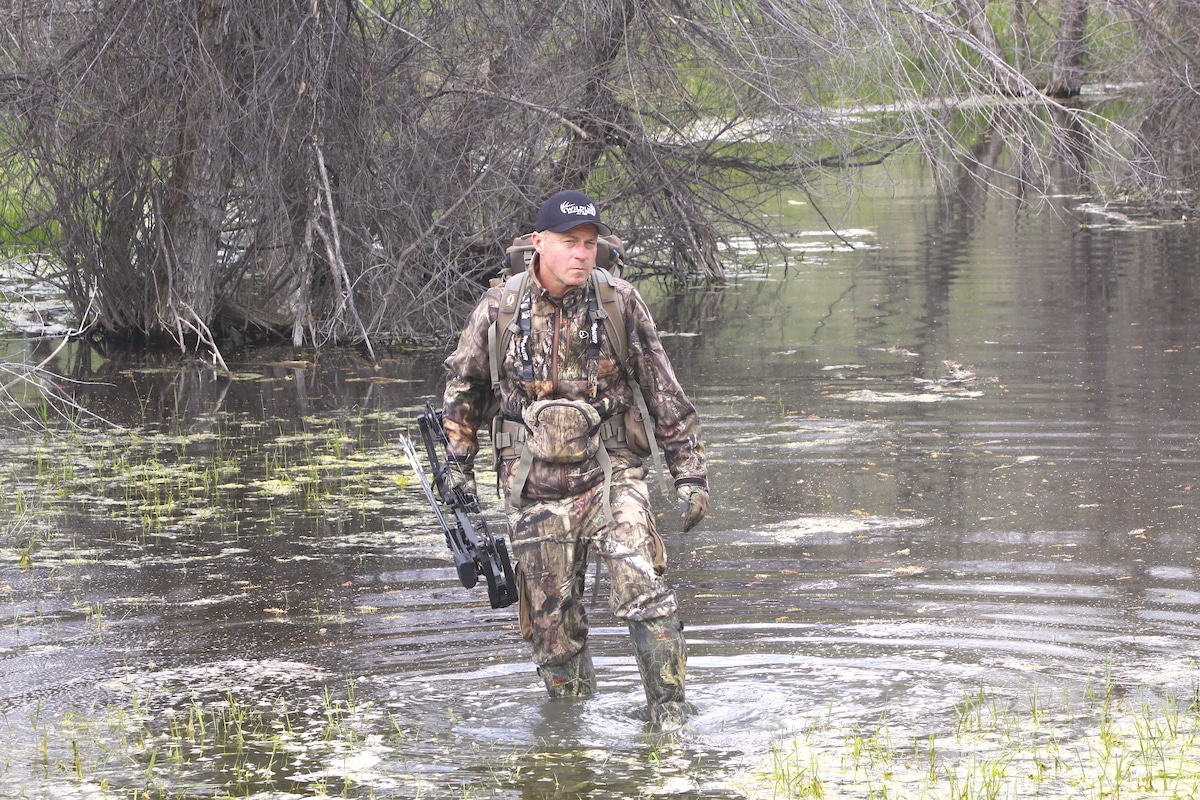
Go the extra mile and separate yourself from the hunting competition.
3. You Don’t Have Backup Plans
Every great plan needs a backup and so does your whitetail hunting strategy. If you manage your own property, backup your main hunting stand with at least three more to take care of different wind directions. Then, back that up with at least four more stands to take advantage of locations bucks might use in the pre-rut, rut, and post-rut. Think acorns, rut hideouts, and winter food sources.
On public lands, mark backup sites in case others beat you to your first choice, but don’t stop there. Scout at least one (if not more) additional public areas. Hunting pressure on public lands continues to grow, so seek out small, overlooked properties like those managed by the U.S. Army Corps of Engineers or U.S. Bureau of Reclamation, among others. HuntStand’s Property Info aids in discovering those gems. So, consider a subscription upgrade to HuntStand Pro or Pro Whitetail.

Practice with your bow and firearm in the preseason until you are comfortable with it as an extension of your body.
4. You Aren’t Practicing Enough or Correctly
You practice your golf putting and gather with the team to practice softball. Make sure you practice with your hunting weapons, bow or firearm. Hit the range several times prior to season with your firearm and the ammunition you plan to use during hunting season. After several bench sessions and confirmed zeros, move to a long-range setup, or a pasture where you can safely set targets in real-world hunting environments.
Do the same with your archery gear. Shooting at an indoor range aids in perfecting form, but outdoor shooting benefits in battling climatic conditions, especially wind. Practice in varying weather conditions, at extended range, shooting steep angles and with different shooting positions. Your HuntStand hunting app forecast and HuntZone wind graphic can help you plan your sessions with weather events. More practice equals a higher chance of bringing the trophy home.
How to Read Buck Rubs and Associated Patterns
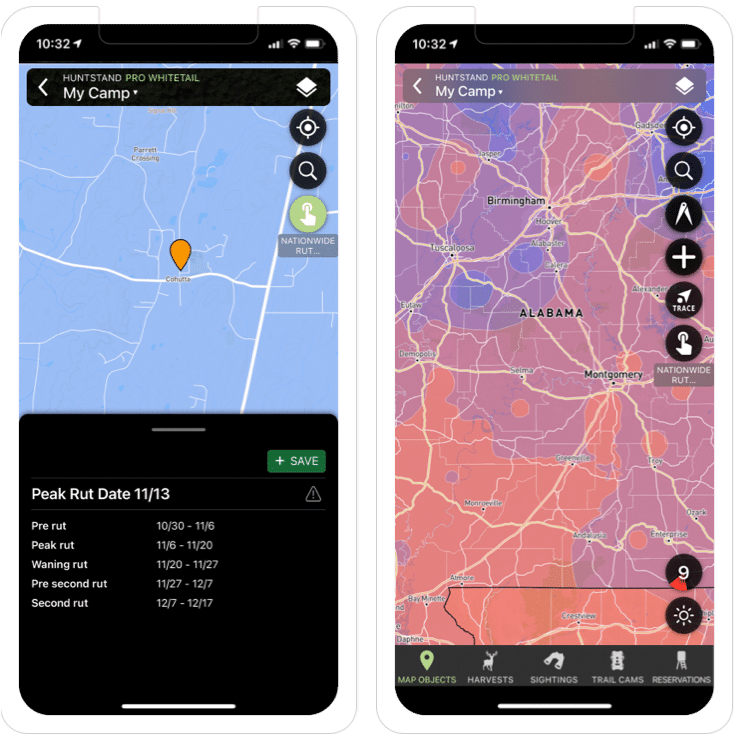
Use key features from HuntStand Pro Whitetail to better time your hunts. For example, the Nationwide Rut Map is great for researching rut dates for specific counties.
5. You Aren’t Timing Hunts Accurately
Whitetail activity varies in the fall. For those of you with limited hunting time, that requires planning for time off, and so, scheduling is essential. Your ability to take time off might not always match up to the rut, but you can discover significant windows of opportunity throughout the fall.
Consider that early-season bucks pattern well on food. Pre-rut bucks run scrape and rub lines. Even after the randomness of the rut, bucks begin to settle into a steady pattern again. HuntStand’s Pro Whitetail subscription has the answers to your hunt timing. Not only do you receive all maps, layers, features, and toolsets that are included in the Pro subscription, but also, Pro Whitetail includes a 7-day Whitetail Activity Forecast, an Annual Rut Map, Whitetail Habitat layers for the United States, and more.
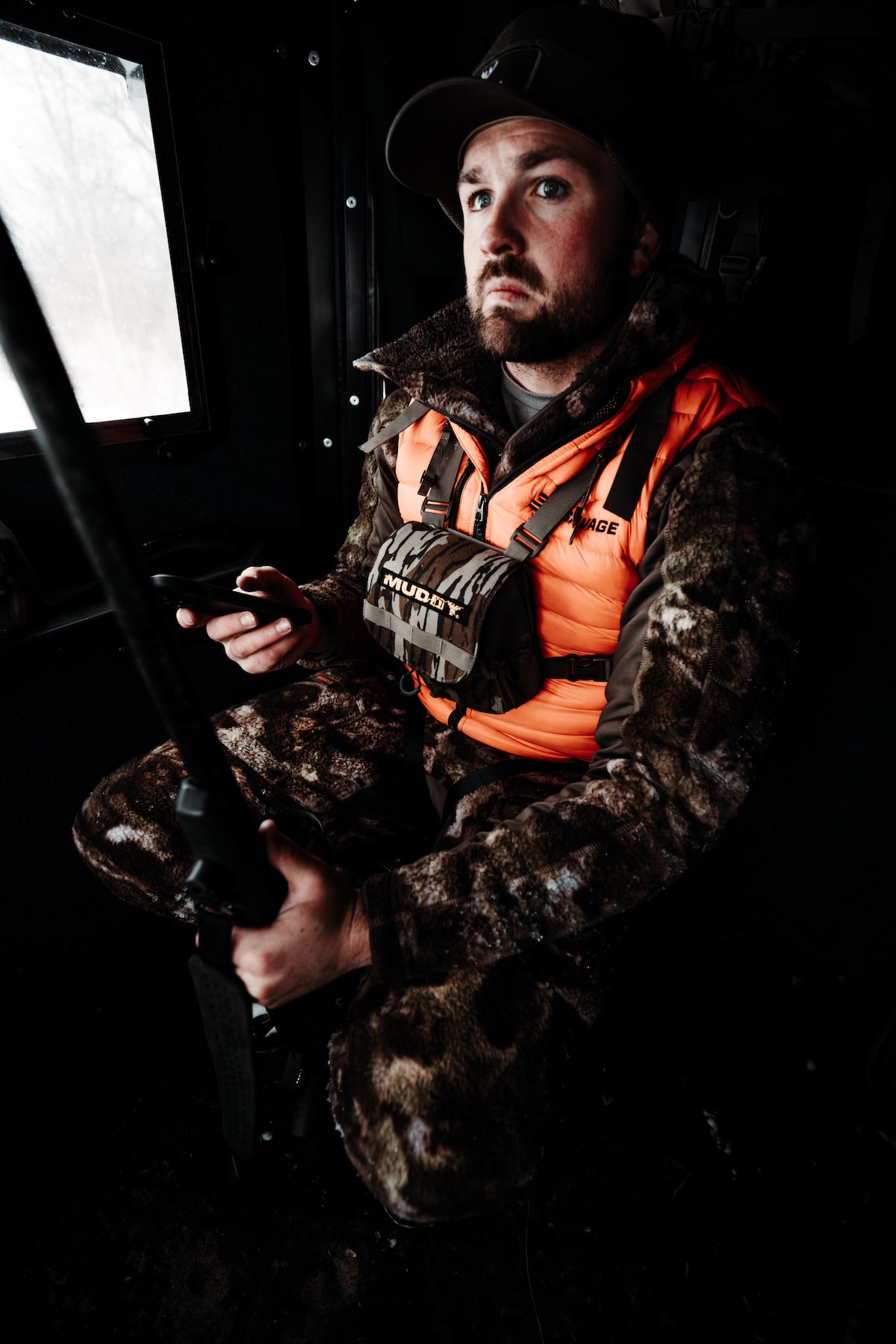
Too much time in the woods can lead to burnout. Manage that efficiently.
6. You Aren’t Responding Well to Burnout
As both an enthusiastic elk and whitetail hunter, I understand how easy it is to feel burnout during hunting season. Work to keep up the enthusiasm beyond the opening week. In any hunting situation, if I feel overwhelmed, depressed, and ready to hang it up, I take a break. I might skip a morning or evening hunt, take an entire day off, or return to hunt in the late season for a different perspective and opportunity. Even swapping stand locations can provide a new view of your hunting area, a fresh attitude, and possibly a new encounter with deer that changed patterns mid-season. So, change up your hunt if you feel burnout coming on.
Find Public-Land Deer Hotspots on the Fly with HuntStand Pro
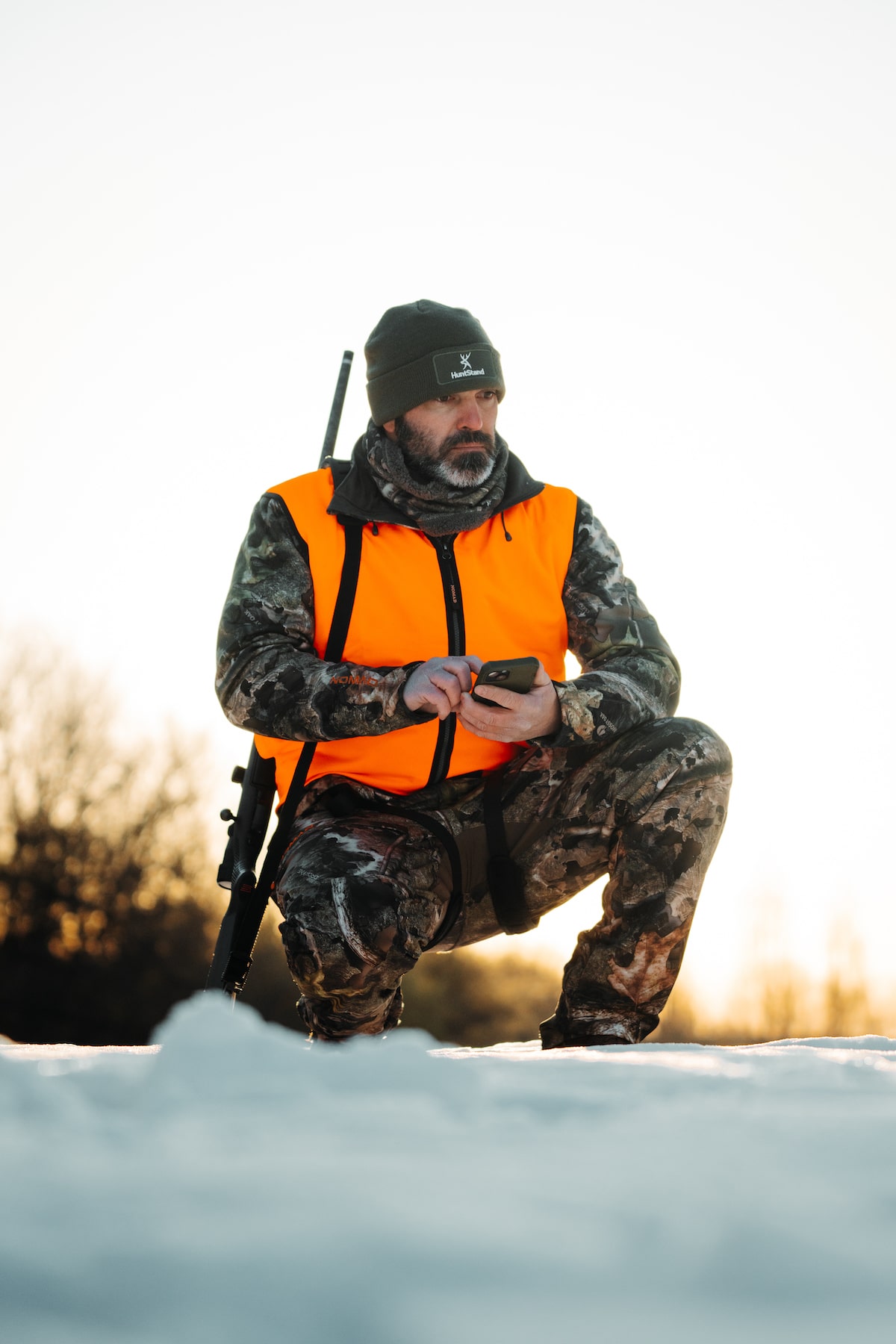
Don't follow the crowd. Find your own path.
7. You’re Following the Crowd
This tip has significance with the public-land hunting crowd. Do the opposite of everyone else. Whitetails quickly notice hunting pressure, sometimes even before the opener. GPS research keeps revealing new information and even though it differs from region to region, expect deer to find new hideouts and change behavior. Change your approach accordingly.
If your hunting peers all park at a designated parking lot and access the public property via a main trail, look for a backdoor entrance. If the crowd focuses on publicly planted food plots, hunt the thickest escape cover adjacent to the fields.
Finally, scour your HuntStand app to find steep country, remote corners, and any water sources you could put between you, and the average hunting crowd. Going beyond a mile in most public areas separates you from the 70 percent or more of Americans, especially those who are obese or overweight.
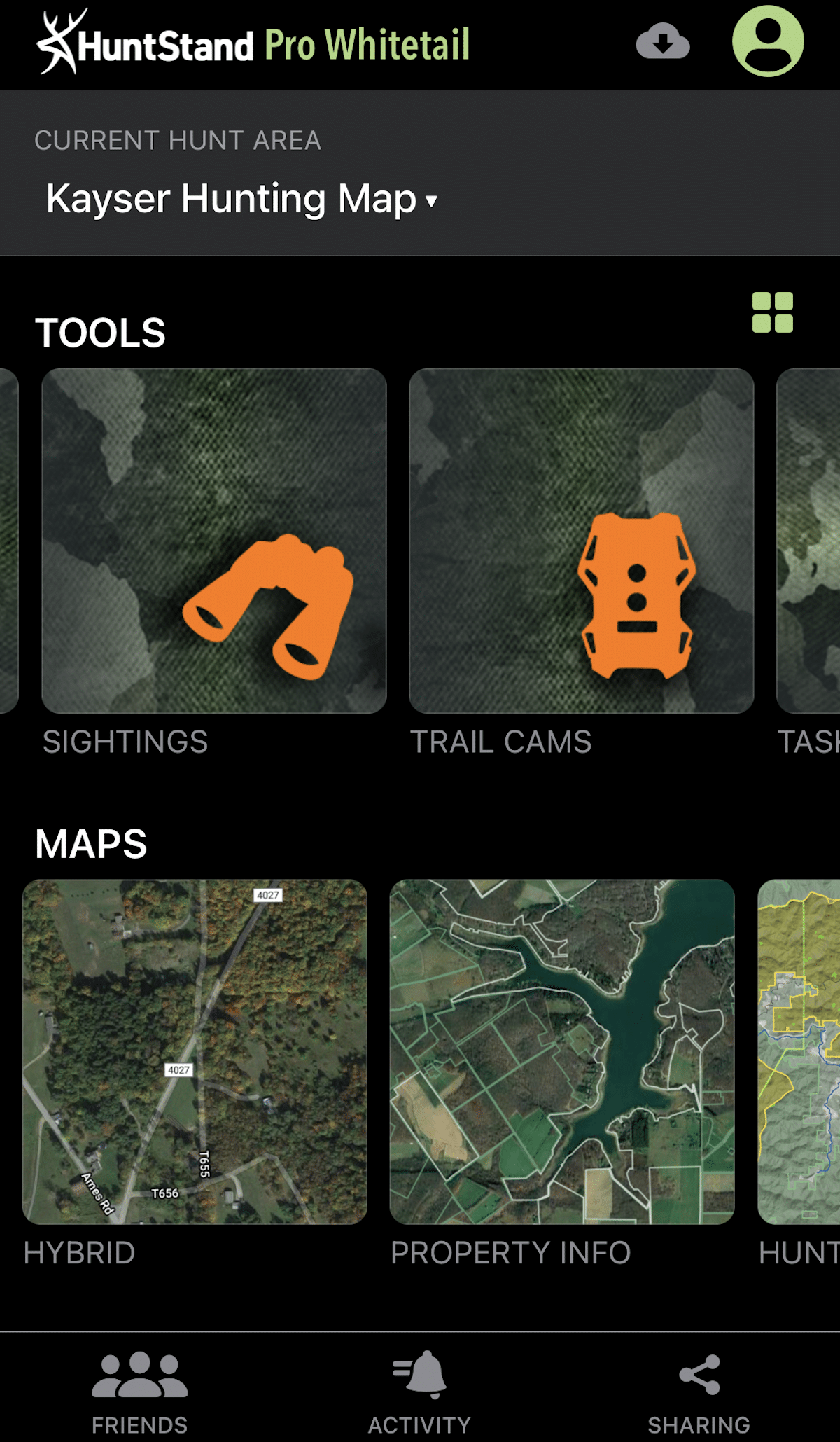
HuntStand’s Pro Whitetail subscription offers a myriad of information to aid you in making sure your tag is filled every season.
8. You Aren’t in Good Enough Shape
To hunt hard and move beyond the normal whitetail hunting crowd, you must be in shape. Visit with your physician and craft a workout program to meet your hunting needs. Being in shape allows you to push farther, hunt longer, and to be capable of packing out a buck from a remote area. One tactic I use routinely—in every hunting situation—is to arrive very early, hike into my hunting areas in the dark, and be in position well before anyone else hits the trail. (Your HuntStand Trace Path feature gives you a lighted way to your hunting destination in the dark.) Being in shape facilitates this strategy of being positioned in advance of morning deer movement. Being in position early also allows you to take advantage of the normal-arriving hunters. As the other hunters depart from designated trailheads, they could move deer your way at shooting light.
How to Shoot Bucks That Circle Downwind
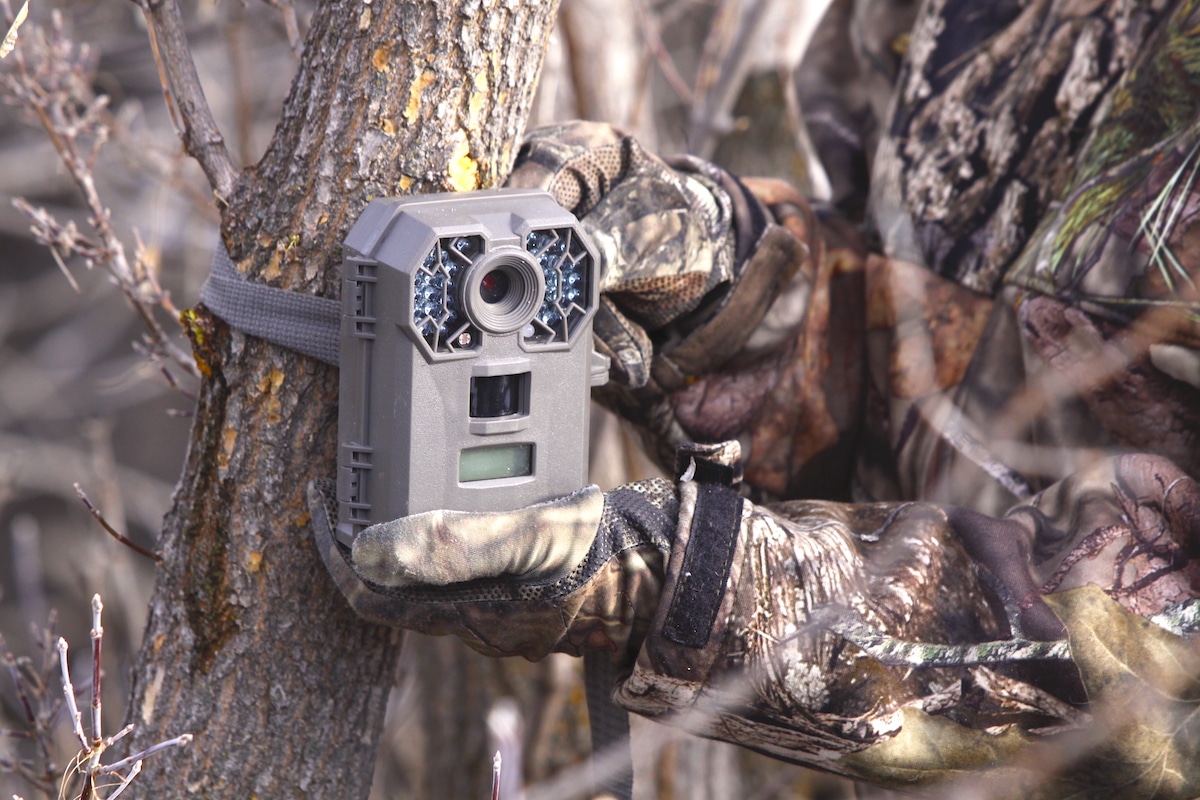
Do not neglect scouting even if you hunt the property all the time. Conditions change and that could change your hunting plan.
9. You Aren’t Adapting to Situations
Stand hunting is by far the most effective method to fill your tag, but sometimes, you need to leave that perch to get in on the action, particularly in the rut. During breeding season, the action could be hot just a short distance from your stand. This occurs throughout the rut, but when the first doe comes into estrus, it is hard to miss as bucks gang together in the chase. If the action is occurring a distance from your stand, leave it and join the playing field.
Bucks immersed in all activities, feeding, rutting, or even escaping hunting pressure, oftentimes place themselves in perfect stalking or still-hunting positions. The best opportunities occur during the rut. Use a buck’s distraction to cloak your stalk and optimize terrain for an invisible approach. Stands are great, but sometimes you must abandon ship for success.
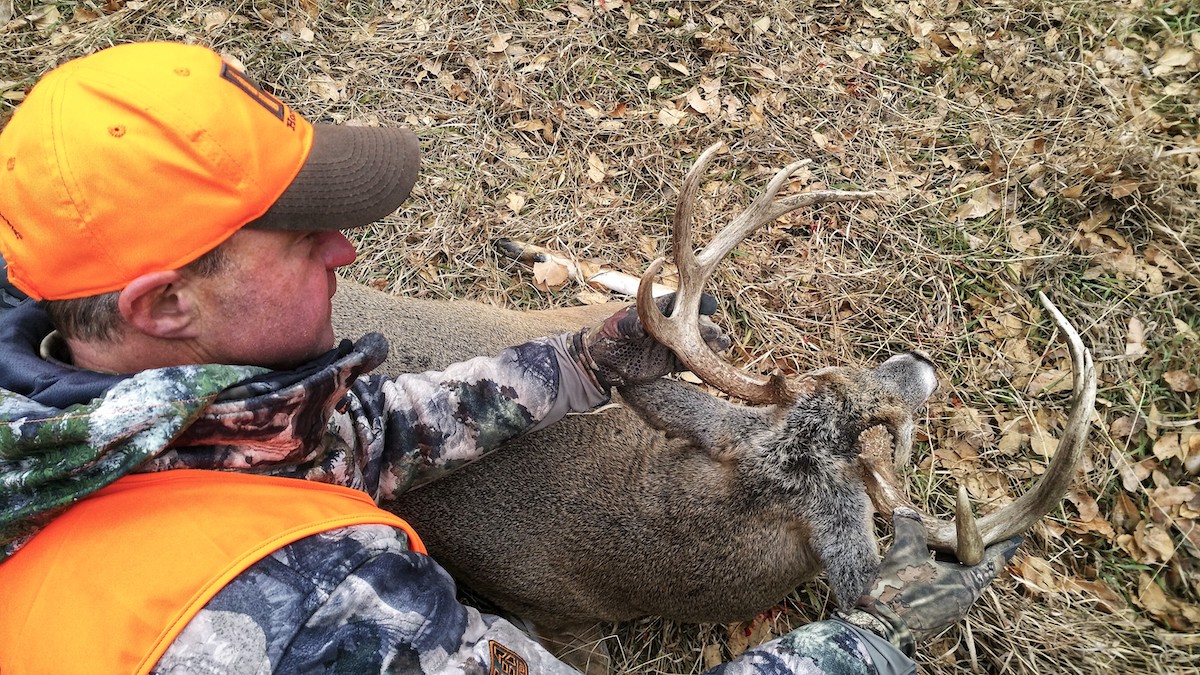
Follow a prepared strategy in the preseason and during your hunt to ensure your tag is filled.
10. You Aren’t Taking the First, Good Shot
When you do finally come face to face with a tag-worthy buck, be prepared to take the first, good shot. This begins with being prepared. Have your bow in hand or next to you on a hanger with an arrow nocked. The same is true of your rifle. Have it loaded and the variable power on the riflescope set to accommodate the likely encounter zone. Hunters who hunt haphazardly often relate tales of putting a riflescope to their eye and the high-power setting creates confusion in finding the target. So, be well-prepared beforehand.
Despite having a rangefinder in hand, range all shooting lanes when you arrive. Finally, when an encounter does happen, take the first ethical, good shot. Mature bucks rarely give you more than a fleeting glimpse. Use the meeting wisely and don’t hope for a better opportunity later. I shot my largest buck to date in an encounter that lasted 15 seconds … if that!
All things considered, there are many other reasons why deer hunters fail to fill deer tags, especially on mature bucks. But these are common ones, and if you can avoid these, odds of success certainly increase this season.
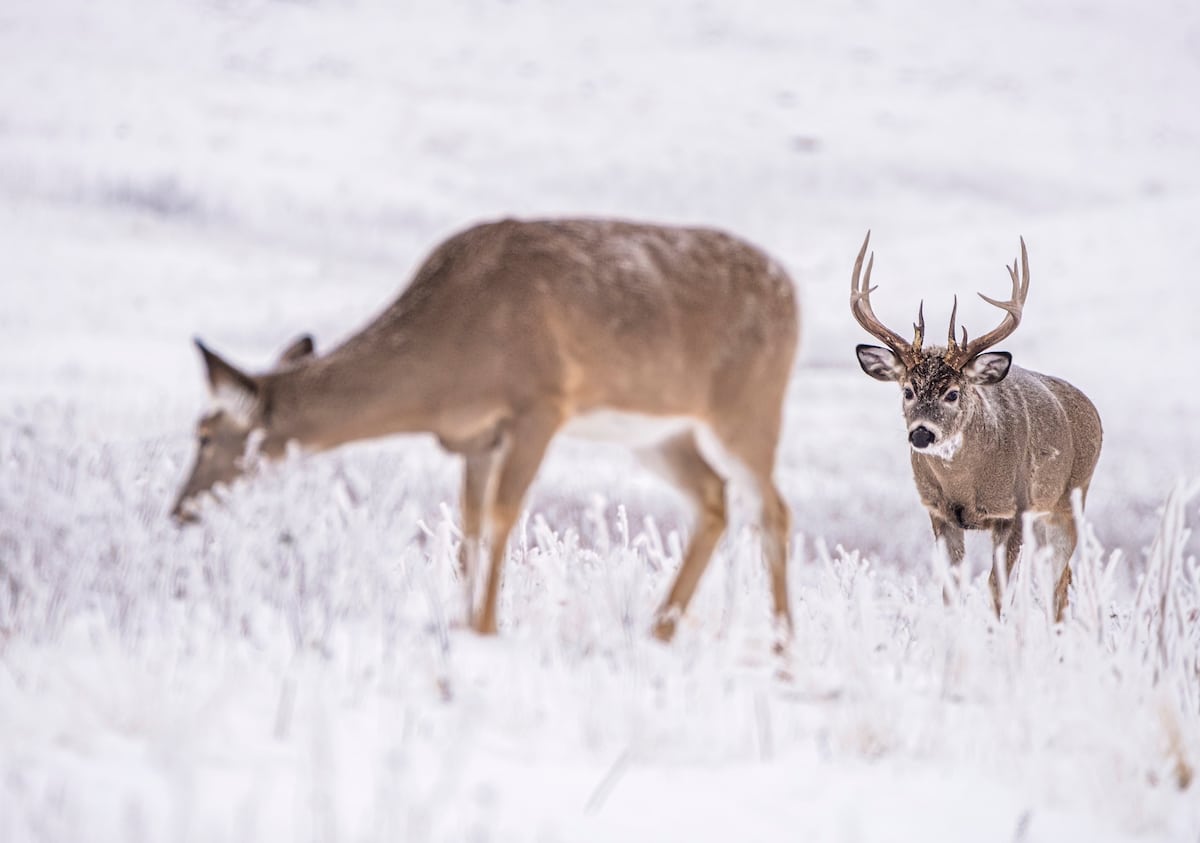
Doe groups can be great to hunt near during the rut as bucks search for another estrus doe.
The rut is the main event of whitetail season. Every year, deer hunters are dying to know the best rut times to spend in the woods. The whitetail rut offers a window to take advantage of a weakness in a buck’s security system. However, did you know the rut encompasses several distinct periods, each with its own characteristics to focus on for success?
As you’re mulling over the calendar for days to fit in a rut hunt (possibly a week or more), consider the progression of the whitetail breeding season. Each period triggers different types of deer activity that could influence your preferred hunt style or tactics. Review the different traits of each rut phase and see what makes the most sense for your hunt schedule.
Help comes in the way of HuntStand’s Pro Whitetail subscription. This investment opens a world of information that is specific to the county you hunt. Additionally, you receive all maps, layers, features, and toolsets that are included in the Pro upgrade. Pro Whitetail also includes a 7-day Whitetail Activity Forecast, Peak Whitetail Movement Times, Annual Rut Map, and Whitetail Habitat layers.
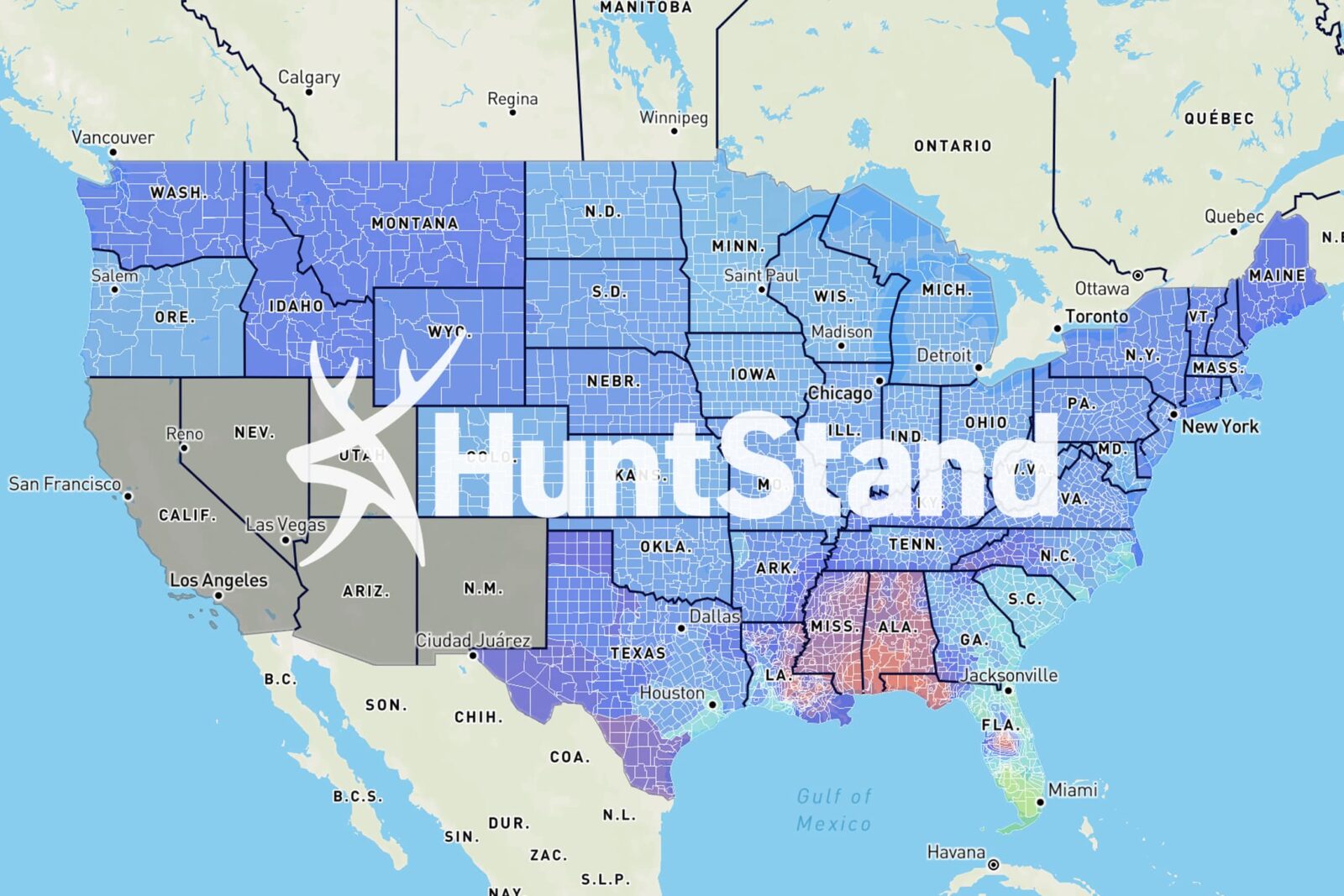
HuntStand’s Whitetail Rut Map
A groundbreaking feature for HuntStand Pro Whitetail subscribers, the first-of-its-kind Whitetail Rut Map is an incredible resource for deer hunters. It compiles and presents rut timeline data for almost every whitetail county in America, which is powerful knowledge for deer hunters.
To obtain this data, HuntStand partnered with each of the state wildlife agencies. In doing so, accurate rut timeline info for the entire country was gathered into one database. Now, deer hunters who just want to know when the rut is at home, or those who travel to hunt, can use this resource to determine current and upcoming deer behavior, all based on historical data.
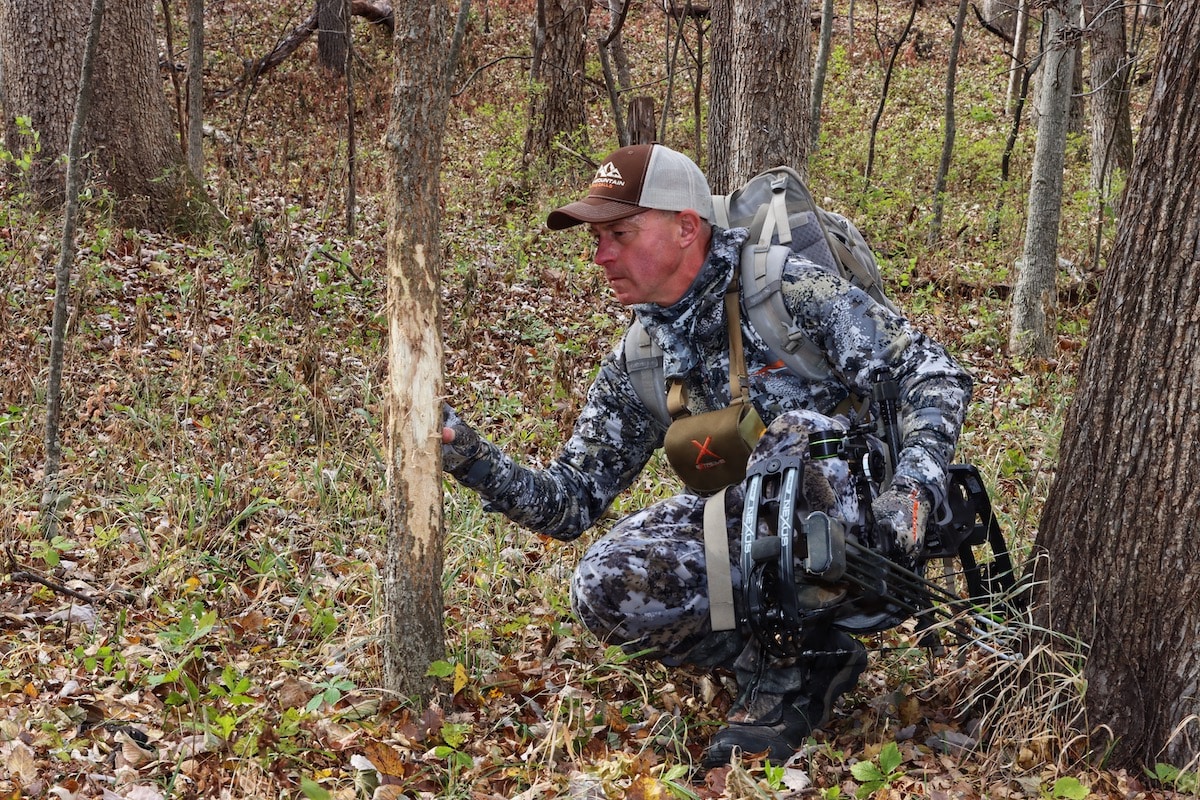
When you start to see rubs and scrapes with consistency, get ready for the rut to explode.
The Pre-Rut
By the end of October, a buck’s cup overflows with testosterone. They max out approximately one week before most breeding commences. This makes them edgy at best.
This anxiousness bodes well for you, as bucks begin moving more in daylight hours, but with patterns and regularity. The full-blown rut is a week or two into the future. Even so, these new behavior changes kick off the security system breakdown in a buck’s life.
Did you struggle to pinpoint patterns in early-October whitetails? Did you fail miserably when bucks shied from the public view during the midmonth transition? Fortunately, the pre-rut gives hope. In fact, nearly every buck strategy works in this first period. Bucks respond to scents, calls, and decoys, especially as they seek out their first breeding experience of the year.
The best part is that bucks maintain a pattern … but only for a short while. Of course, that goes out the window once an estrus doe appears on the landscape. Soon after, the dreaded perception of a lockdown clouds your hunt. Instead, pre-rut bucks heavily patrol their territory with visits to food plots, agricultural fields, bedding cover, and stopovers in the highest doe density groups in the area.
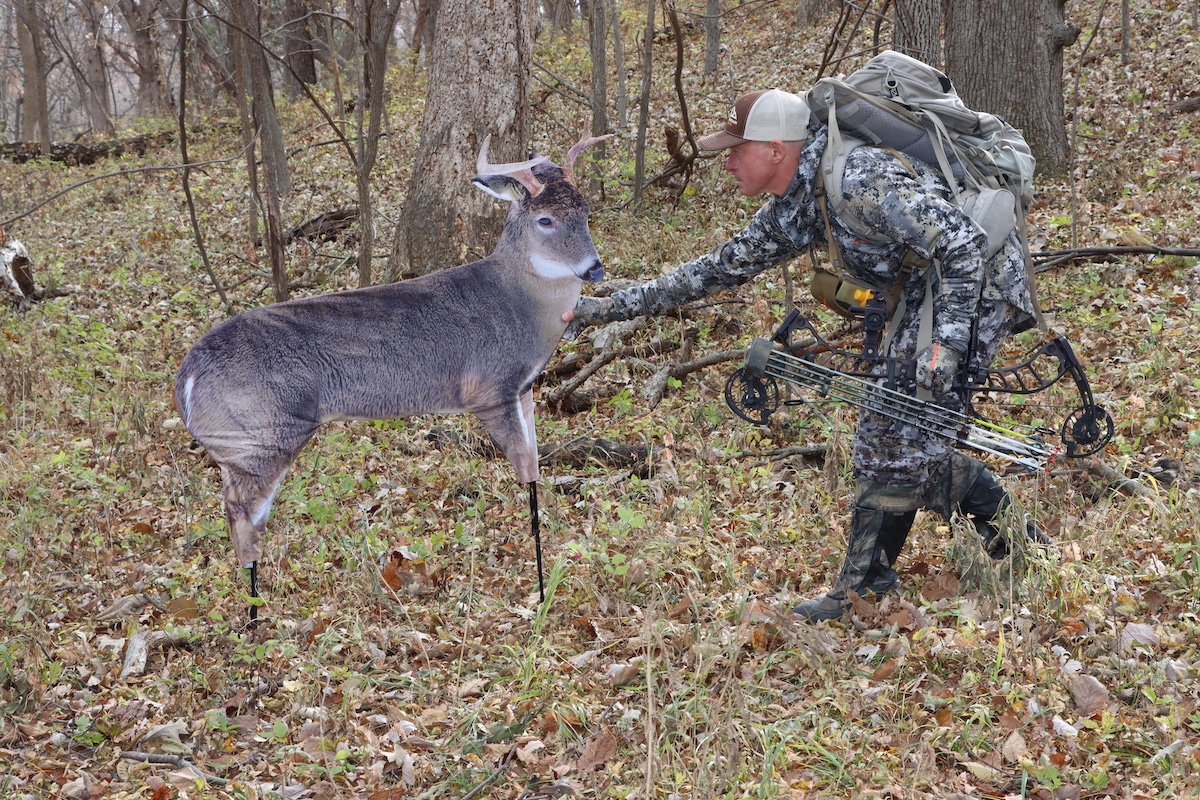
Deer calls, scents and even decoys, especially buck decoys, work great throughout the rut, but particularly in the pre-rut.
You likely realize all these locations with trail camera assistance. These also aid in scouting buck movements with rub and scrape clues. They begin appearing everywhere bucks roam, giving you breadcrumbs to follow along with the intel captured by your trail cameras.
With this information fresh in your mind, weigh your options for time off. The pre-rut has slowly gained traction as a top period to hunt. It’s even in competition with the peak rut of mid November.
Don’t believe me? Consider my hunting partner, Levi. He has drawn a Kansas archery license for five consecutive years. In those five years, he has sat in a stand only 12 times. This all unfolded in the days leading up to Halloween, with a couple of hunts just a day or two after. In five years and 12 sits, he’s tagged five mature whitetails with his bow. Yes, the pre-rut should receive serious consideration.
How to Speed Scout with HuntStand Pro’s Monthly Satellite Imagery
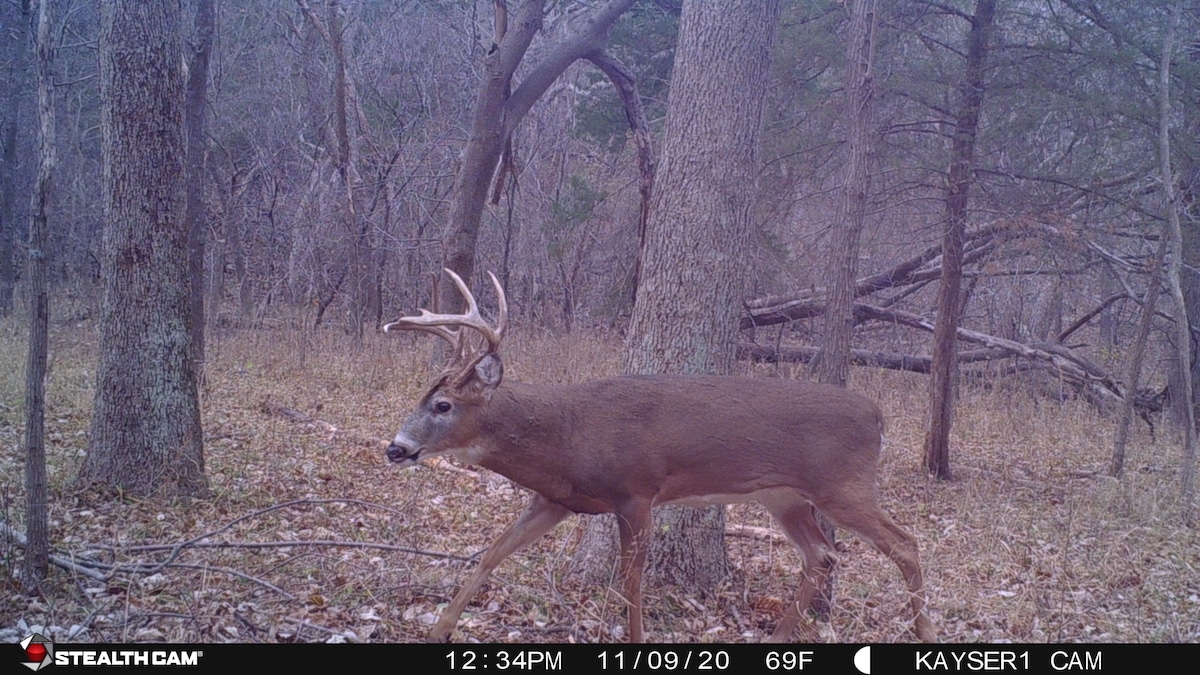
Trail cameras help identify the current phase of the rut.
The Peak Rut
Historically, I typically chose the mid-November rut hunting window. Why? Bucks were running crazy from doe to doe. A random buck — hopefully a bruiser — could appear at any minute thanks to bucks roaming for a lockdown situation. (For those unaware, the lockdown phase is the historical reference for when the bulk of does are in estrus and hunkered down, thus decreasing buck movement.)
Furthermore, documented studies confirm that the peak of the rut is determined by photoperiod, or the amount of daylight occurring during the fall. Decreasing daylight hours not only fills a buck’s testosterone tank but also sparks egg release in does. This schedules and synchronizes a small breeding window of a week or two. This system ensures the landscape is bombarded with fawns during prime spring conditions and overwhelms predators in one huge maternity event.
Of course, to complete the task, whitetail bucks must throw all semblance of a normal lifestyle out the window and run until they get the job done. That removes them from a reliable pattern, removes them from home territories, and creates uncertainty in your hunt. Toss in the lockdown (which new GPS evidence reveals is not a true lockdown at all, but more randomness), and you could debate the breeding season is not a good time to hunt. That said, you would be wrong. You just need to consider new hunting strategies.
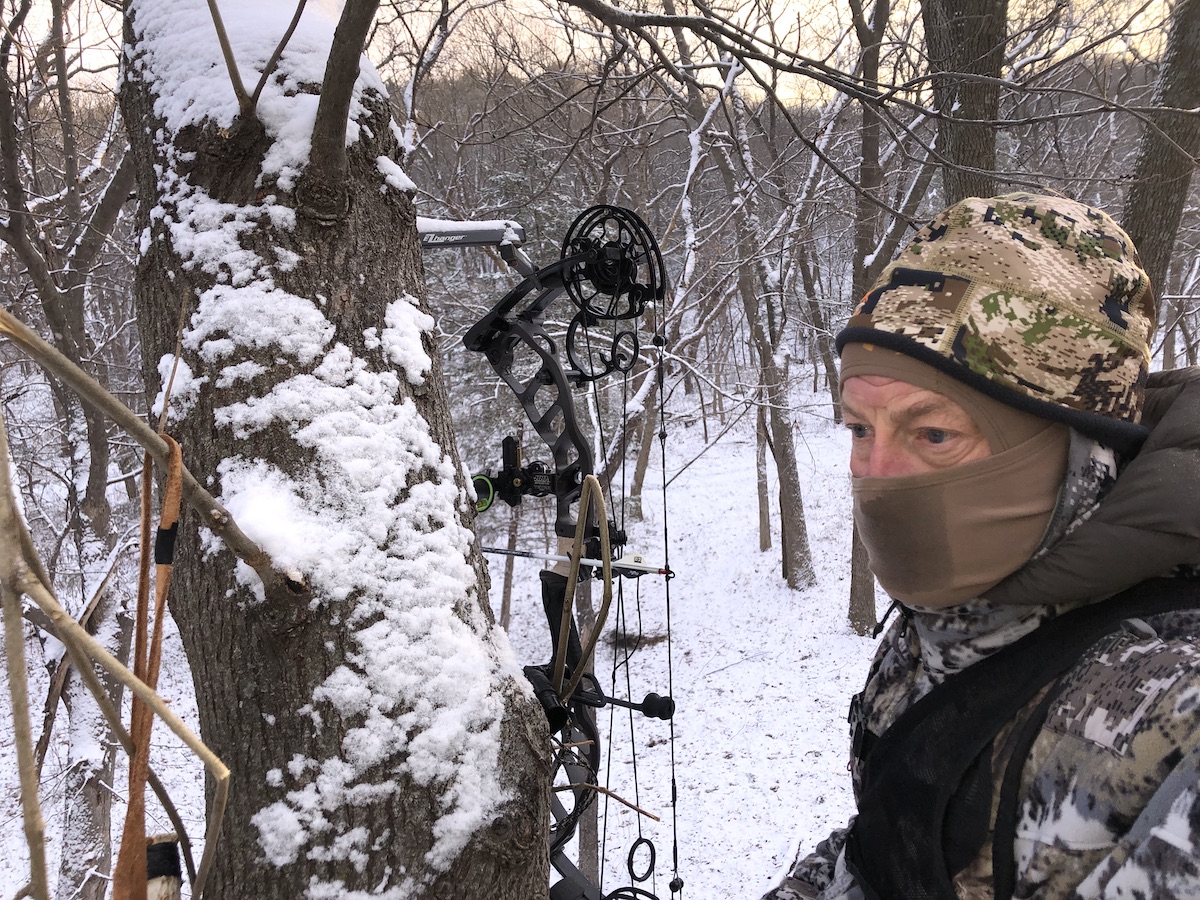
When breeding begins (the period many refer to as the lockdown), deer sightings can go down.
First, focus on doe groups and places you saw a target buck in the pre-rut. Research indicates that roaming bucks eventually return to their home territory after wandering a few hours or days. Doe groups also have magnetic powers to pull in neighboring bucks looking for estrus does. A surprise stud could show up unexpectedly. One of my top archery bucks appeared in that fashion after no confirmation he lived on the property.
Finally, consider hunting offbeat locations. Bucks and estrus does often escape to locales void of other deer to find peace for consummation. Having three 2 ½-year-old bucks hassle you in the middle of business makes business … difficult. Review dark hollows, abandoned farmsteads, grassy uplands and other unconventional sites that could offer serenity for a deer couple, and a great stand site for you. Fly over your hunting property using HuntStand’s 3D Map feature for a great view to pinpoint a lover’s lair.
The middle or breeding phase of the rut definitely includes chaos, but that chaos could pay off big on a lust-crazed buck showing up in an unknown territory under your stand.
Blood Trailing Deer with Confidence
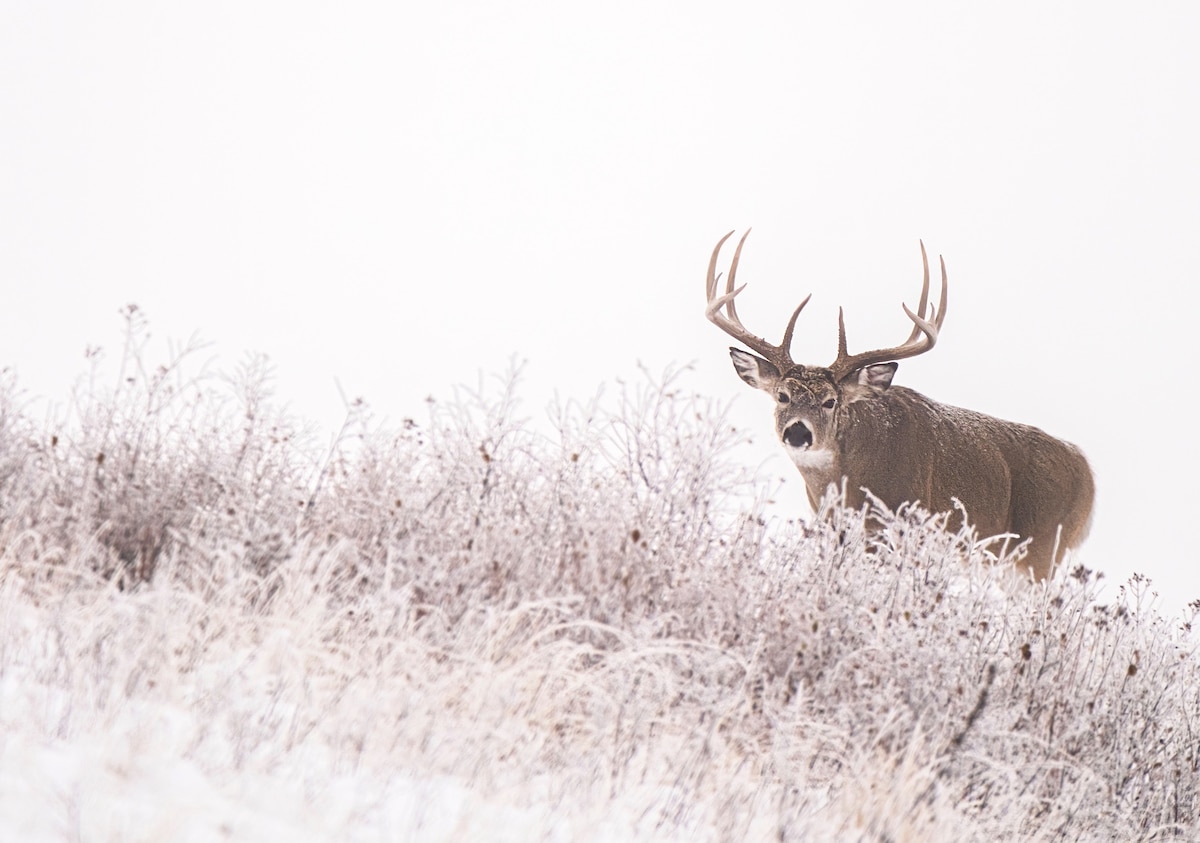
Even though rut action might slow in the waning days of breeding, it can explode and sometimes mature bucks make tragic mistakes. Keep hunting!
The Waning Rut
There are numerous reasons that the tail end of the rut gets a bad rap. Many bucks have already made pilgrimages to freezers, rut activity is beginning to wane, and in many regions, winter’s worst rears its ugly head. Add to that the ease in being sidetracked by Thanksgiving and NFL viewing.
Put those bad thoughts aside and drop the drumstick. The conclusion of the rut presents just as many bonuses. Sure, there might be fewer deer around due to the success of others, but typically, the hunting crowds diminish late in the rut. In addition to fading enthusiasm, the Thanksgiving gatherings sideline many. And although testosterone begins to dip in whitetail bucks, remember, they only breed once a year. The last push to find an estrus doe drives many toward riskier behavior than even during the main breeding season in mid-November.
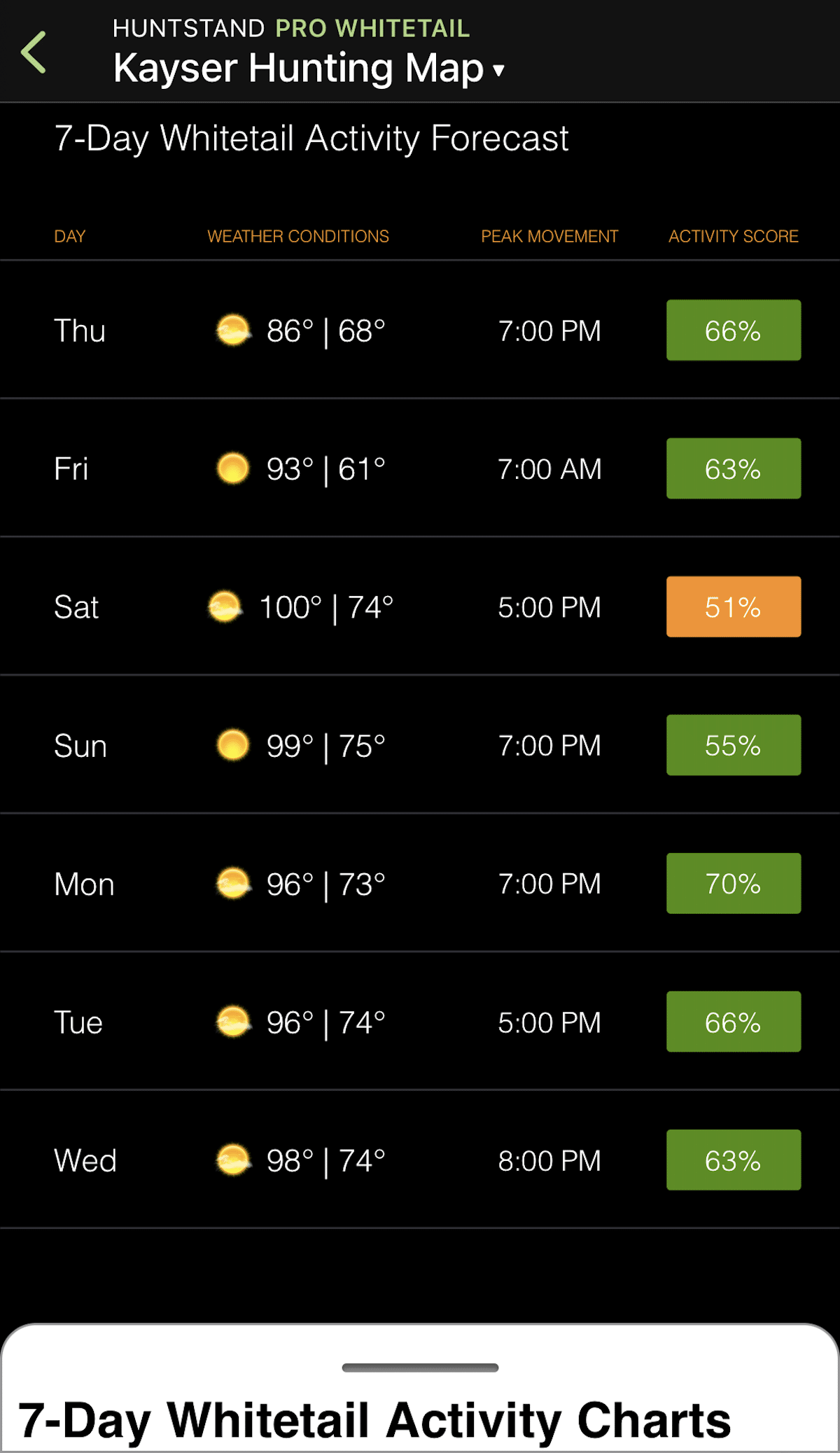
HuntStand’s 7-Day Whitetail Activity Forecast gives you great information to plan your rut hunt.
According to research from the Penn State College of Agricultural Sciences, more than 85 percent of females have been bred by the end of November. That fact means bucks need to work harder and roam farther. It is a race of time for those bucks and you. In addition to dropping testosterone levels that suppress breeding urges, bucks have lost up to 20%, or slightly more, of their body mass.
Eventually, they will drop out of the breeding race for survival reasons, but I have witnessed some of the best hunting in the week around Thanksgiving. Many of my best whitetail bucks were taken within a day or two of Thanksgiving. Most were in hot pursuit or hot hounding for one last hookup. Because of that, don’t overlook the pre-second-rut and second-rut phases, too.
Next-Level Deer Hunting with HuntStand Pro Whitetail
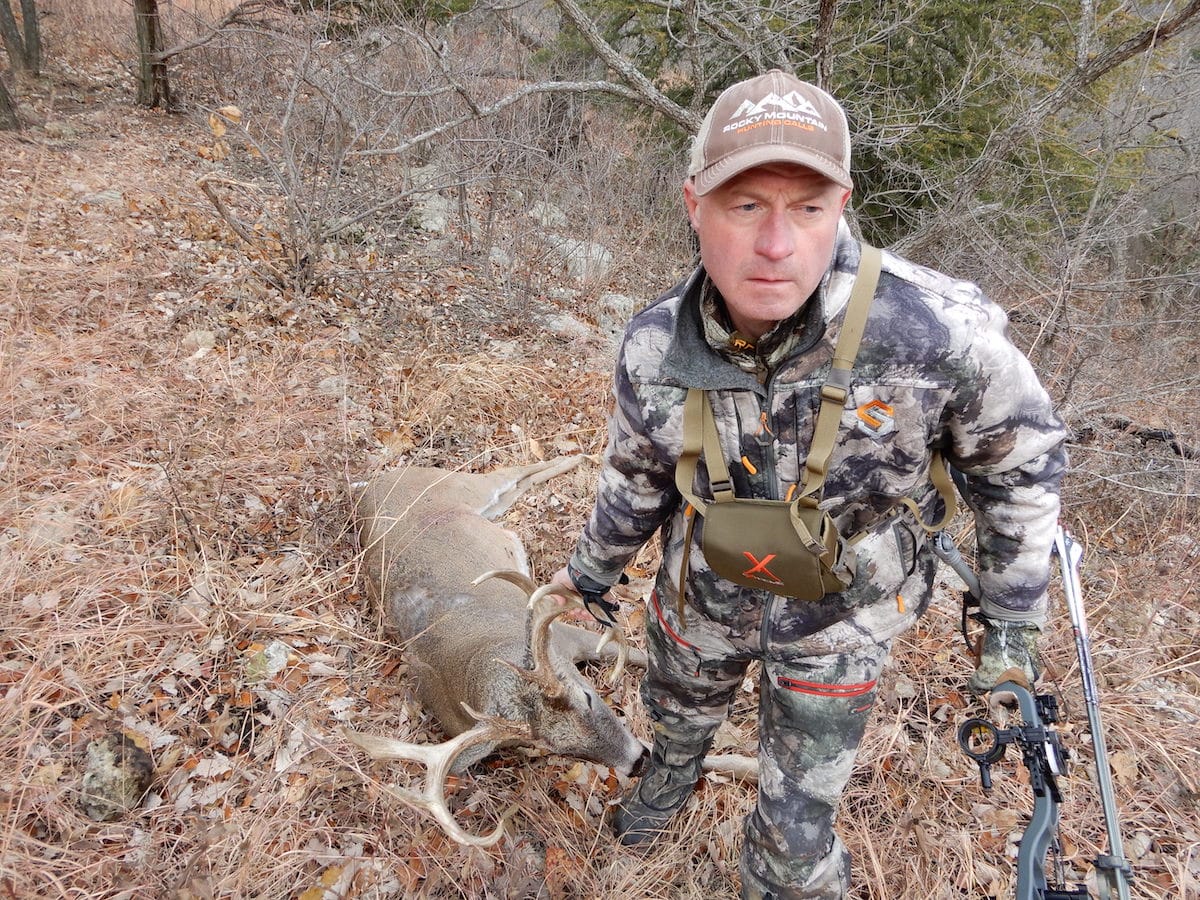
Mark Kayser has hunted the rut for more than nearly four decades and understands that each phase of the rut has a strong point.
The Calming Storm
Best of all, as bucks begin feeling the grind of a long rut, they gradually transition back to home territories and possibly a regular schedule that resembles the pre-rut. Bucks begin to settle on food sources to recharge and follow a pattern with the occasional relapse into rut chasing. Your map objects and notes on HuntStand for the pre-rut could pay off in a crucial way as bucks return to a life of mere existence after the rut.
What phase of the rut you choose as your period to burn vacation time includes a myriad of family and career considerations. Nevertheless, understand that each phase of the rut offers an advantage. Tweak your strategy, be flexible with your tactics, and spend as much time in the field as possible to take advantage of this once-a-year phenomenon.
UPGRADE TO HUNTSTAND PRO WHITETAIL
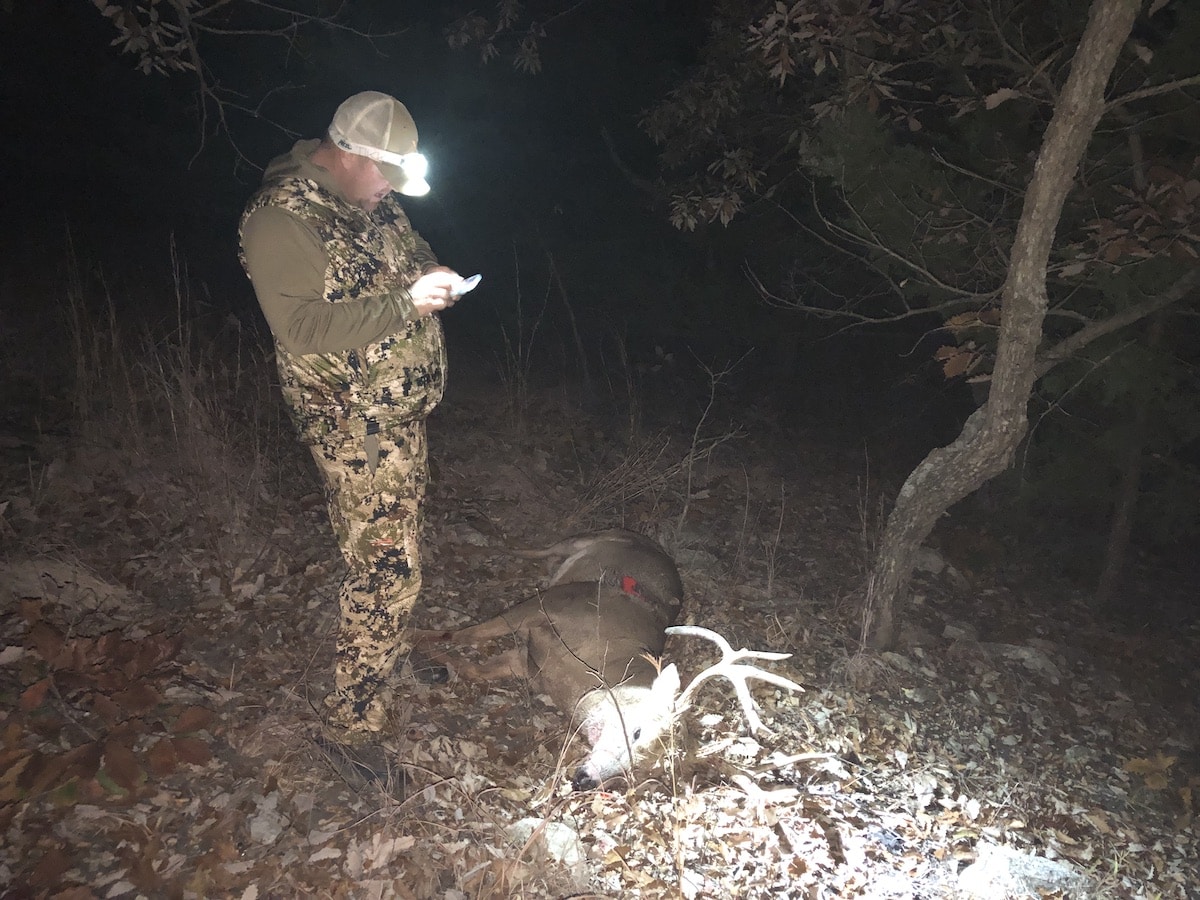
Tracking a wounded deer at night requires good lighting. If successful, mark the location of the dead deer on your HuntStand app.
Blood trailing deer isn’t easy. The odds are against you. If you hunt whitetails, the likelihood you will wound a deer that requires tracking is … likely.
You can be the most practiced hunter in your hunting party, but some elements fall outside your control. Combine a dose of buck fever with fidgety deer, an unseen branch, a gust of wind, or a simple distance miscalculation. Any or all could lead to a bad shot. Instead of going into the hunt believing it won’t happen, prepare for the worst, and accommodate the best outcome if a wounded scenario arises.
The best thing to do after you hit a deer, and it runs out of sight, is to do nothing at all. Calm down, review the hit, and wait for help to assist you.
Prepare for the Worst
Don’t just keep your fingers crossed and hope for the best outcome of your next shot. Prepare the recovery items required to confidently track down a wounded deer. A few minutes of preseason map sleuthing also increases a positive outcome.
Begin with the use of HuntStand. Open your Hunt Area map and look at each of the main stand locations. Measure their distance from any neighboring property lines. If neighboring boundaries are close enough for a gut-shot deer to make its way outside your property, you should establish a relationship with your neighbors. If you don’t know that neighbor, meet them and store their phone number and any details of your conversation as a note within their property details in HuntStand. The Property Info feature in HuntStand Pro or HuntStand Pro Whitetail speeds along the discovery period of who holds the deed to surrounding properties. If a wounded deer crosses the fence, you’ll likely require permission to track beyond your hunting boundaries.
Many states now allow the use of tracking dogs to aid in the recovery of wounded deer. A well-trained dog can be a godsend. Don’t wait until you need a tracking dog to frantically search for contacts. No different than getting to know your neighbors, try to establish at least one reliable tracking dog handler that you can call if the going gets tough.
Locate and confirm all bedding or refuge areas where deer might escape to when wounded. This could include nasty thickets, deep coulees, tall grasslands, or cattail swamps. Oftentimes, a wounded deer retreats to the direction it came from while seeking the best hideout available. HuntStand can help you pinpoint these areas. Plus, trail camera confirmation, along with real-world scouting, can confirm established usage. You can manage all your trail cam images within HuntStand’s trail camera management system to easily organize images with tags on species, weather, activity, and more.
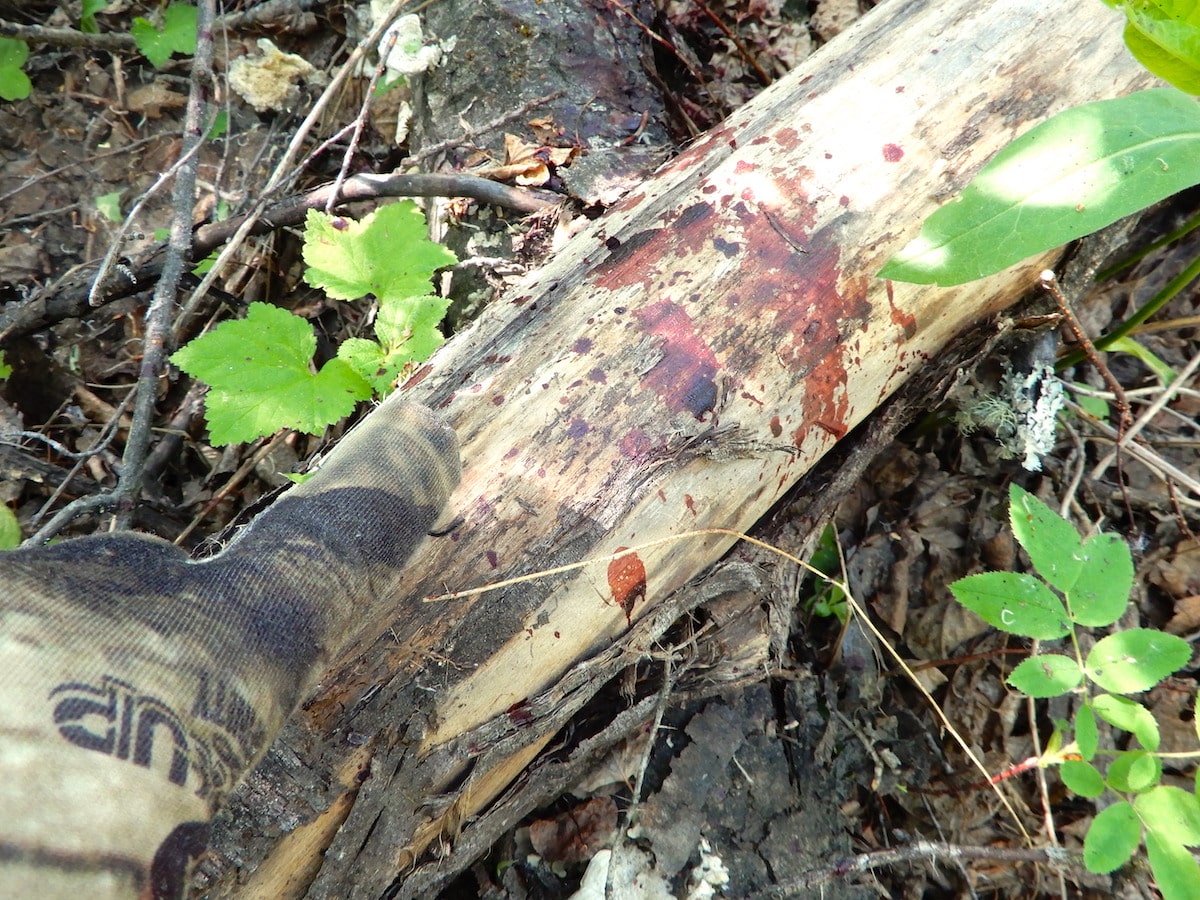
Reading blood sign can help you greatly in making decisions on how long to wait before taking up the trail of a wounded deer.
Next, prepare all recovery gear. Explore HuntStand to understand ways to mark blood sign with map objects. Furthermore, track your real-time movements with the Trace tool. Even with your hunting app in hand, it pays to carry biodegradable blaze-orange tape to hang from branches above blood sign or escape clues. This provides a quick, real-time visual review of a deer’s getaway path.
Pack a flashlight fueled with new batteries. At dusk, fresh blood shines brighter under artificial light. You might even wish to purchase a light aid designed with LEDs to assist in highlighting blood. Pack extra batteries.
How to Protect Your Hunting Spot
Another inexpensive way to confirm blood is to pack a small spray bottle filled with hydrogen peroxide. When sprayed on blood, hydrogen peroxide foams for confirmation. Approximately 8% of North American males have a red-green color vision deficiency, less for females. This little trick aids in recognizing fresh blood quickly.
Finally, take your binocular along for tracking. Use it to scan ahead to spot any signs of your deer, bedded or standing.
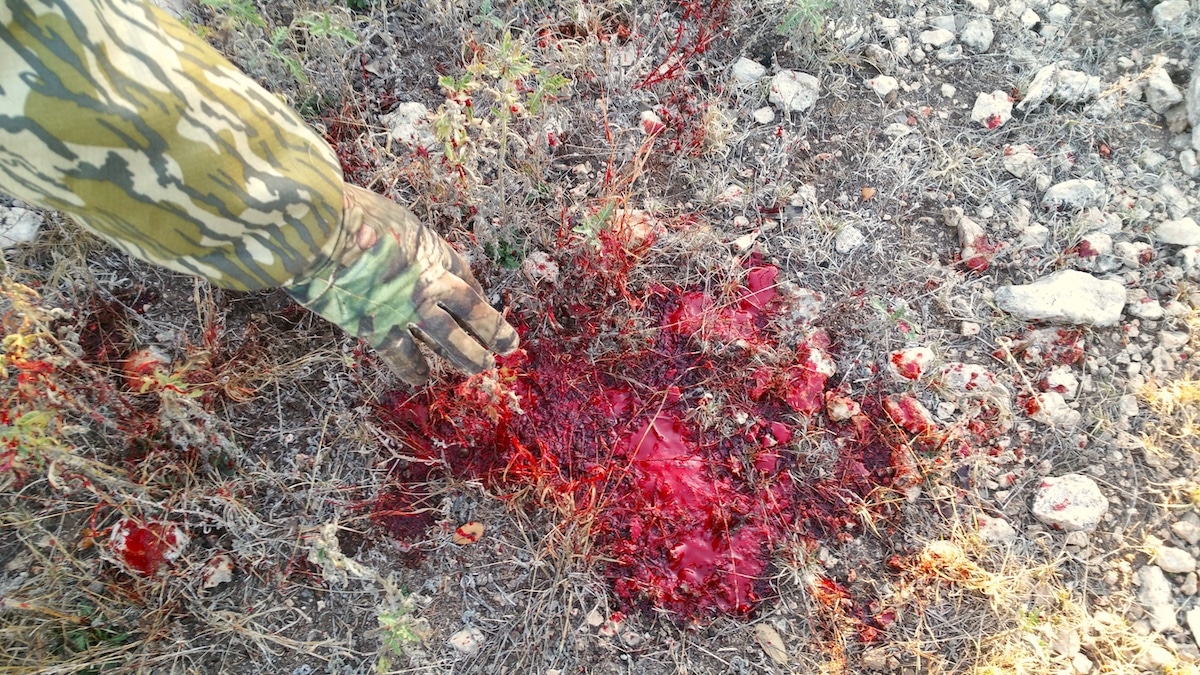
The best sign in the world is bright-red blood, and lots of it.
Pay Attention and Hit the Brakes
In our TikTok world, paying attention for more than a few seconds is challenging at best. Fortunately, most escapes by wounded deer last fewer seconds than a viral reel. After the shot, your No. 1 goal is to pay attention. Watch and remember every move the deer made, the direction of its escape flight, the way it moved its body, and if you could see any direct signs of a hit. Be especially alert to any odd movement, such as hunching its back, tucking its tail, or dragging a leg.
If the deer didn’t drop in sight, and you believe your shot was on, but less than perfect, the first step is easy: Do nothing. Sit still and reflect on what happened. Try your best to remember the location of the hit, where the deer was standing, etc. Recollect the actions the deer when hit, and how it fled. Mentally mark the last place you saw it before it disappeared. Mark it in HuntStand as well. If you know the shot distance, use the distance measurement tool to mark the precise location before you ever step foot away from your stand or blind. It also pays to take a picture, if light allows, as a reference before leaving your shot location.
With the ever-growing popularity of filming hunts, now’s a great time to rewind. Review any footage, scale up the image, and make notes on what you see in the video. On nearly every one of my filmed hunts, where the whitetail escapes into the brush before dying, I review the footage.
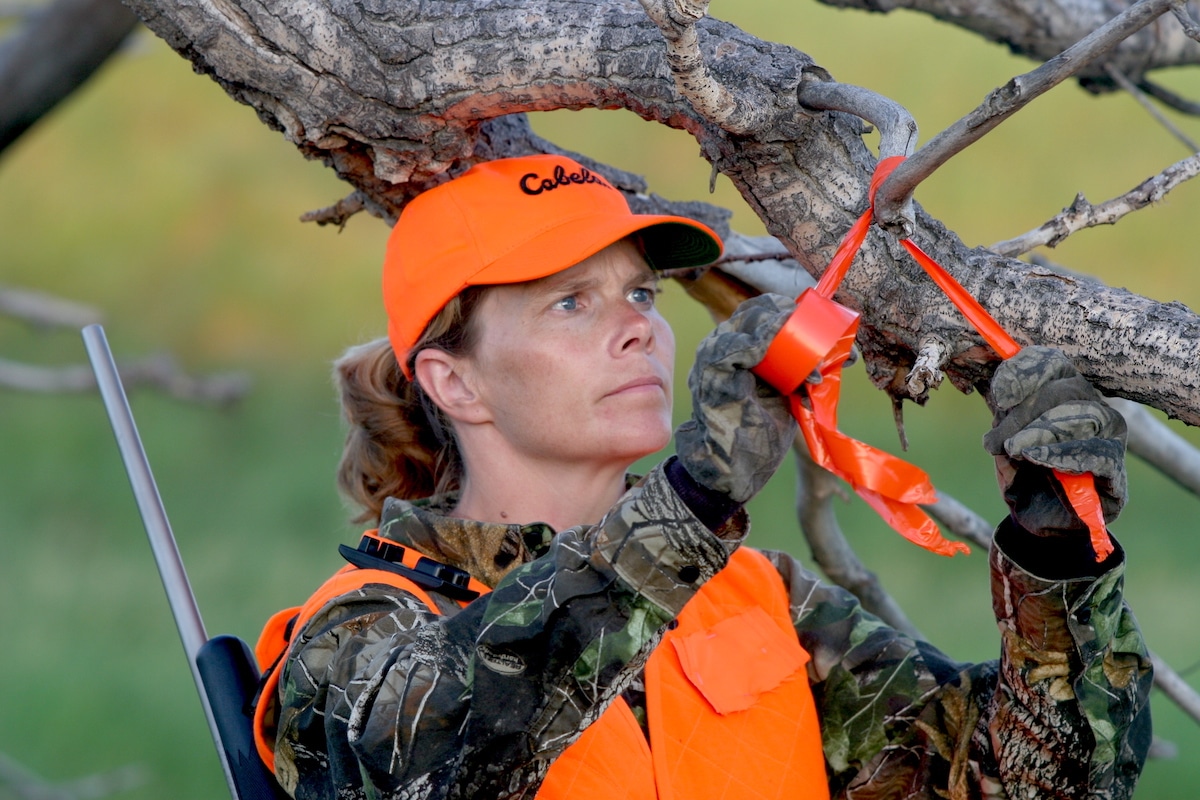
In addition to flagging each blood sign with surveyor’s tape, mark the clues on your HuntStand hunting app.
With mental notes made, video reviewed, and your heart rate returning to a safe level, it’s phone or text a friend time. Right now, another brain not fueled by adrenaline makes sense. Plus, two brains are better than one, especially as you begin to hatch a logical plan to follow up on a potentially wounded animal.
When you hit the ground, two sets of eyes are better than one. One person scans the ground for clues to an injured animal. The second person scans ahead in case the animal still has enough go juice for another escape attempt.

Pre-scouting bedding areas before hunting season and marking them on your HuntStand app gives you a jumpstart on where deer might head if wounded.
A Medical Assessment
You won’t be doing triage, but you will assess every wound possibility to consider the outcome. Remember, archery and firearm deaths differ greatly. Archery deer die from hemorrhaging, while firearm deaths begin with shock and overall destruction of vital organs.
Consider a hopeful scenario, such as a double-lung or heart hit. Deer die from double-lung and heart shots almost immediately. Nevertheless, you might not know it was a direct hit, so proceed with caution. Wait at least 30 minutes before following up. It’s common to misjudge shot placement in the rush of adrenaline. A good rule to follow is to wait a minimum of 30 minutes, regardless of the shot placement. Waiting an hour or longer is even better, especially when you consider the following shot circumstances.
What if you only pierce one lung or nick the liver? These shot placement situations might take three, four, five, or more hours for the animal to die. I once tracked a one-lung hit deer all day before my buddy was able to get another arrow into it.
Can You Speak Deer Antler Lingo? Here’s a Quick Guide
A paunch (gut) shot requires even more patience. Those wounds require a minimum of 6 hours for deer to expire. I wait even longer. Gut-shot deer typically hunch up when hit through the midsection of the body. Deer understand they’re mortally wounded, and they oftentimes hold up close to the shot. After the long wait, sneak out and return. A hit to the paunch always kills a deer. So, patience is a virtue.
At the location of the hit, look for blood, hair, and the arrow (if archery hunting). Bright-red blood indicates an arterial wound (high probability of recovering the deer). Dark-red blood generally means a muscle hit (questionable recovery success). It can also indicate a liver hit (moderate recovery success with proper wait time). Brown- or green-colored blood means a paunch hit (moderate recovery success with proper wait time).
Hair also tells a story. White hair points to a low hit. Dark hair could mean a brisket shot. Brown, body hair could indicate a good, marginal, or poor shot. Combine all clues to help you determine which follow-up procedure is best.
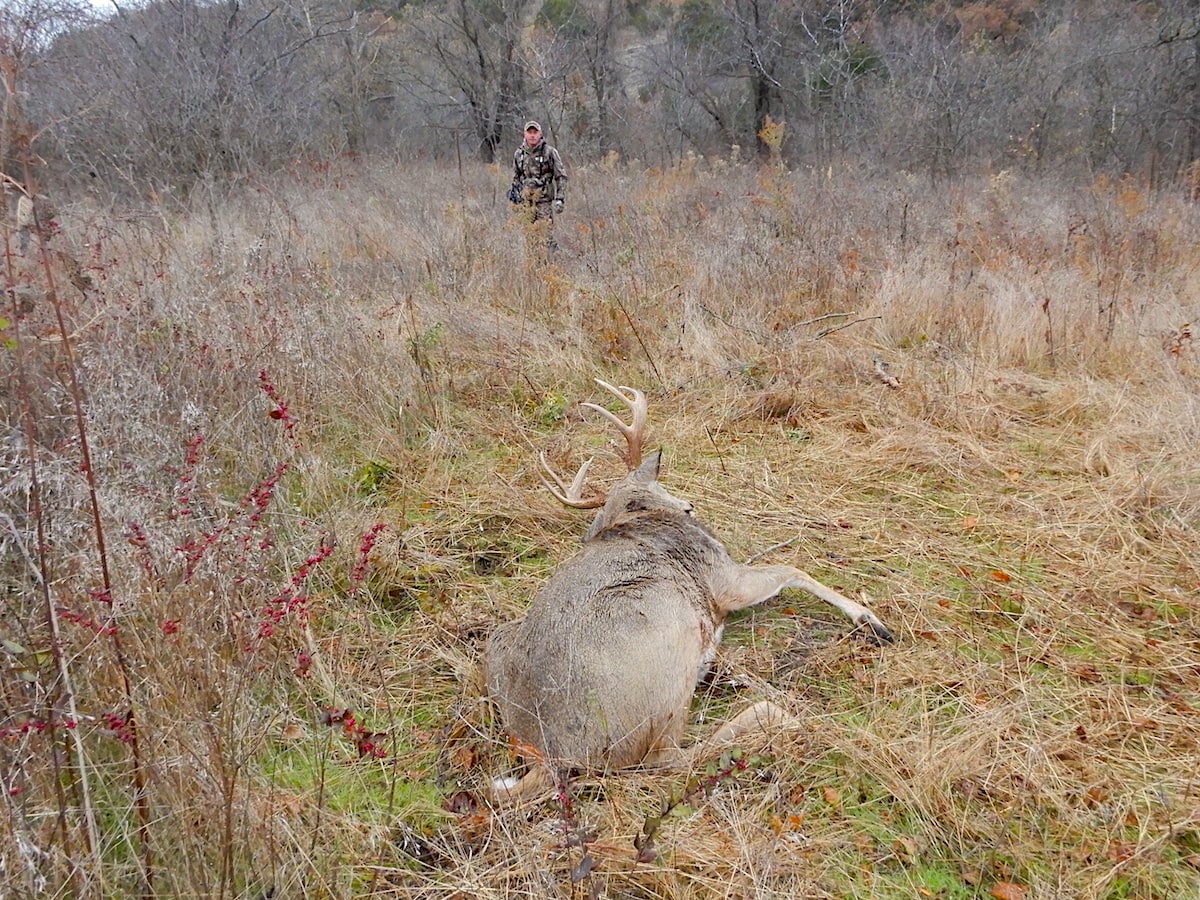
Mark Kayser took his time to blood trail this buck into a dry creek bed where it expired.
Proceed with Caution
All the clues determine how quickly to trail a wounded deer. That said, weather, predators, and other hunters also come into play. Rain washes away clues. Snow covers evidence. Coyotes and other hunters could find your deer, if you wait too long. Additionally, early season heat could ruin meat, if you don’t move quickly enough. These are all circumstances to consider, along with post-shot clues, as you plan a recovery timeframe.
When it’s time to take up the trail, move slowly and quietly. Every speck of blood, tissue, and disturbed dirt should be marked in HuntStand and with that orange tape I mentioned earlier. Expect to backtrack using your indicators. One person should be on the blood trail. The other person should be off to one side and painstakingly scanning ahead for the animal. You might unexpectedly walk up on it, alive or dead. Handle your weapon safely, but keep it at the ready when legal.
Wounded deer don’t always follow textbook rules. Still, severely wounded deer seek the path of least resistance to sanctuary. Expect a faltering deer to travel downhill for a less strenuous route. Or, to head toward water to rehydrate. Nevertheless, they might go straight uphill and sneak into a desolate valley, especially if they believe they’re being tracked.
Research Confirms It: Deer Have a Sixth Sense
In closing, plan for the worst. All deer are not found. If you still believe the deer is mortally wounded, yet the trail disappears, go home, recharge and try again in a few hours. Deer oftentimes circle back to the area where they were wounded. It can also pay to spend time in the woods and listen for birds and other scavengers, such as crows, causing a ruckus over a carcass. If your search fails, you’ll have to accept the inevitable. You might not find the deer.
It’s a sad prospect. But if you hunt enough, expect to lose a deer. Take solace in that there’s an outside chance the wound isn’t fatal, and the deer will survive. I once arrow-hit a giant buck high through the back. It turned up on trail cameras for several years after the encounter. Alas, a gravely hit deer might not recover, but it will join the circle of life and its carcass will feed other wildlife.
All things considered, do your best to prepare for a wounded deer. Execute a high-quality recovery mission each time.
UPGRADE TO HUNTSTAND PRO WHITETAIL
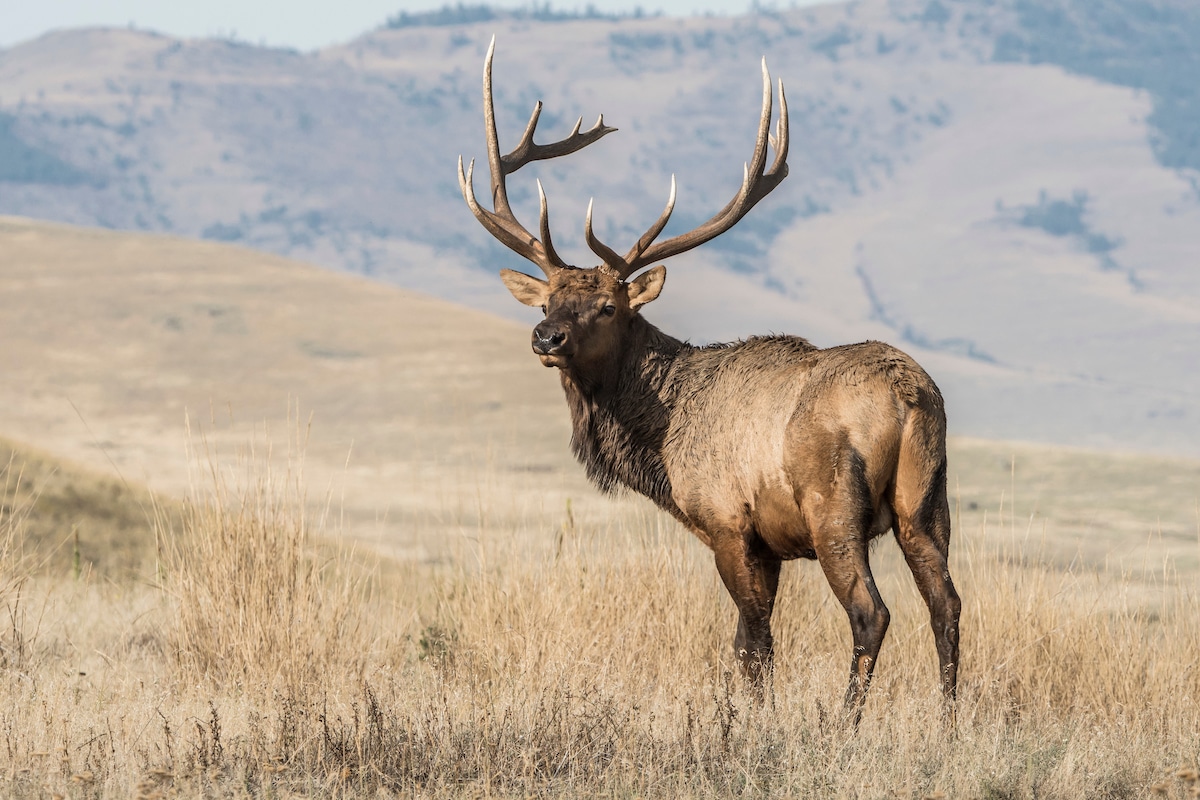
This might be your public-land elk hunting dream. But if it is, you better work for it. And start applying for points in premier elk hunting units.
Aspiring public-land elk hunters should expect a demanding challenge. After years of applying, a small percentage of you might draw a tag in a premium unit. For the rest of you, welcome to the elk jungle. Here’s what to expect.
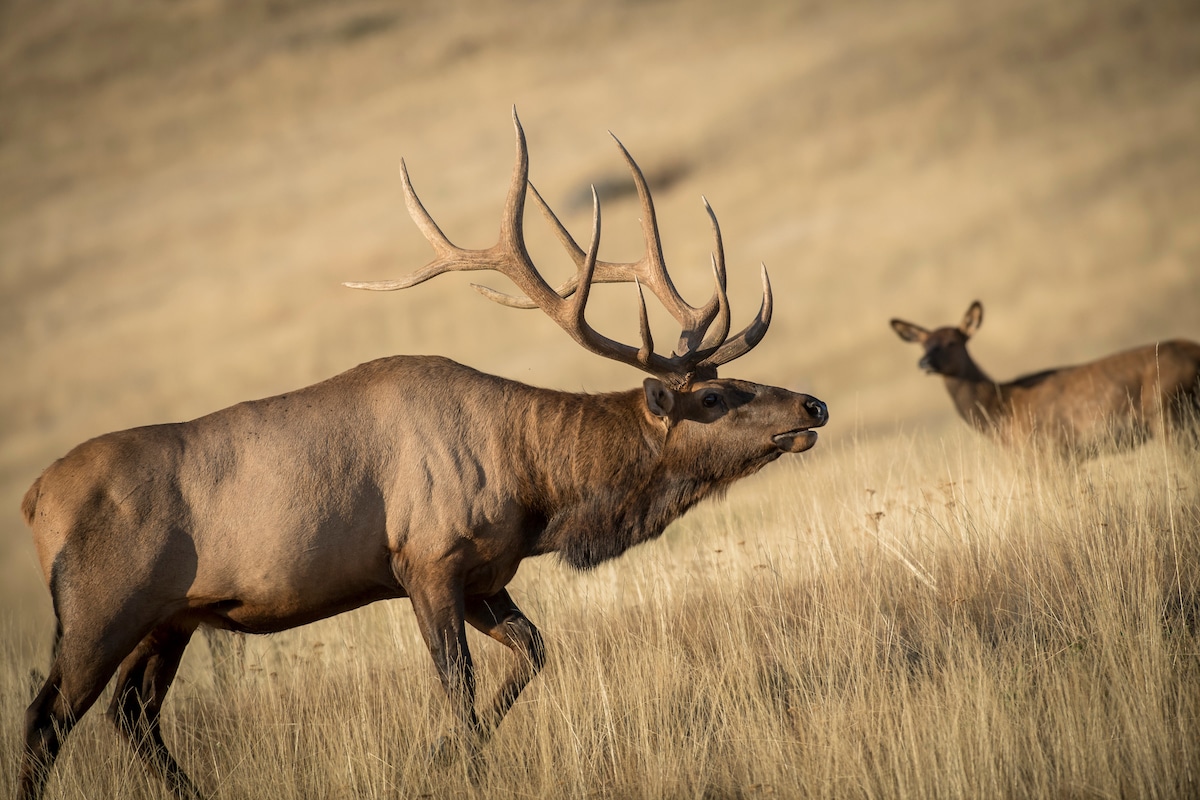
Rarely do pressured public-land elk venture into wide-open areas.
General Public-Land Elk Hunting Expectations
General-unit hunting and even tags in garden-variety draw units toss you into a salad bowl of public-land hunters. The days of gaining access to private ranches and using public land as a backup have all but ceased to exist. As the wealthy gobble up deeds and outfitters lease the rest of incredible private-land elk country, it forces you and me to sweat it out on public lands for an elk opportunity.
The odds of success in units across the West bare the truth. If you hold an archery tag, success rarely tops 20%, and for the public-land, do-it-yourself crowd, commonly falls between 10-15%. For firearm hunters, the odds don’t look any better and rarely top 15%, especially considering all general units and middling draw permits.
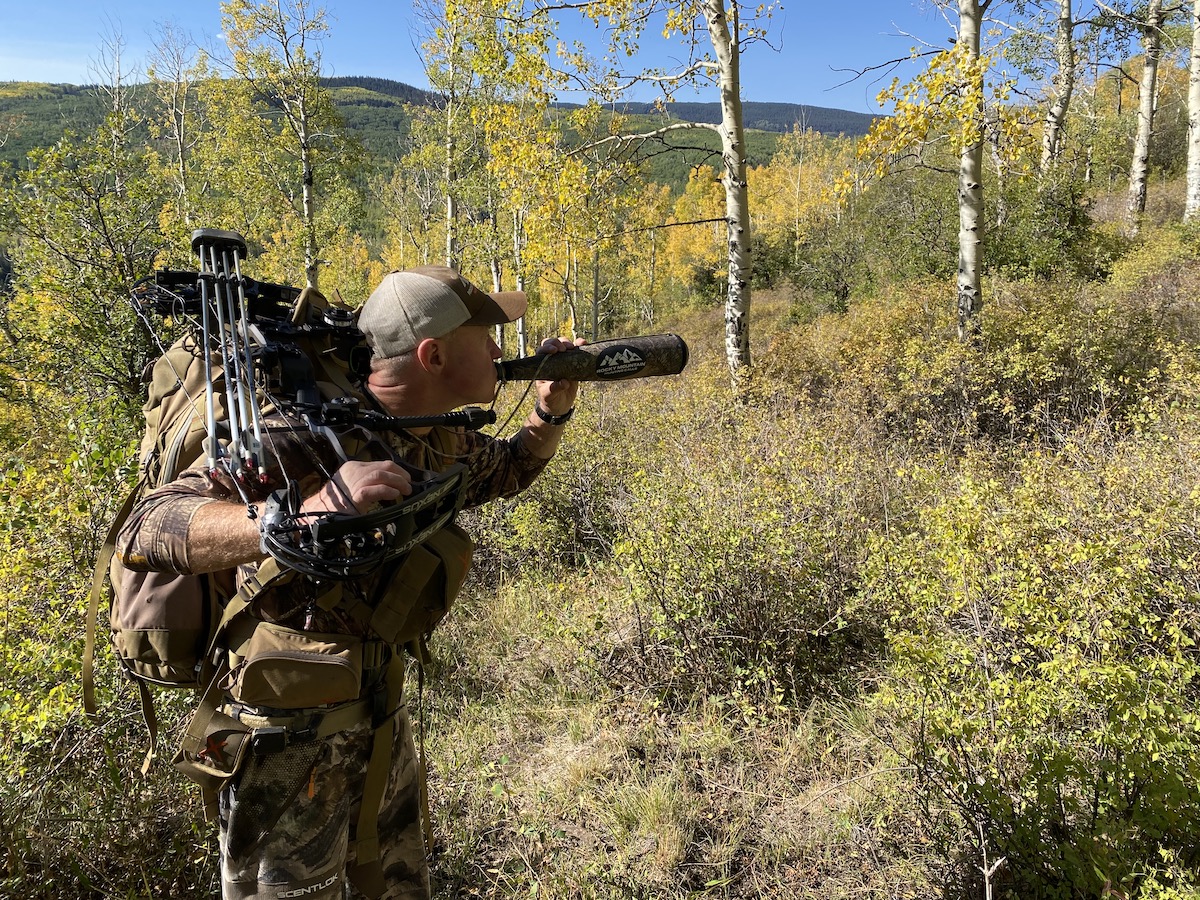
This is the terrain type that most public elk are located in.
One Montana general unit I occasionally hunt (when I’m lucky enough to draw a tag) sports an archery success rate of 11% on a good year. I’ve been lucky, though. In four years of holding a general tag, I arrowed four consecutive DIY bulls in crowded conditions. I’m waiting for a fifth try while purchasing Power Ball tickets simultaneously.
The only permits that top the average success rates are in strictly regulated units that require anywhere from a dozen or more years of preference points to acquire. What does that tell you? Apply for preference while you duke it out DIY in the general hunting arena.
Of course, with general or mediocre tags, you must scout relentlessly, brush up on your calling, practice for every shot possibility, and go beyond what the median hunter applies to their hunt.
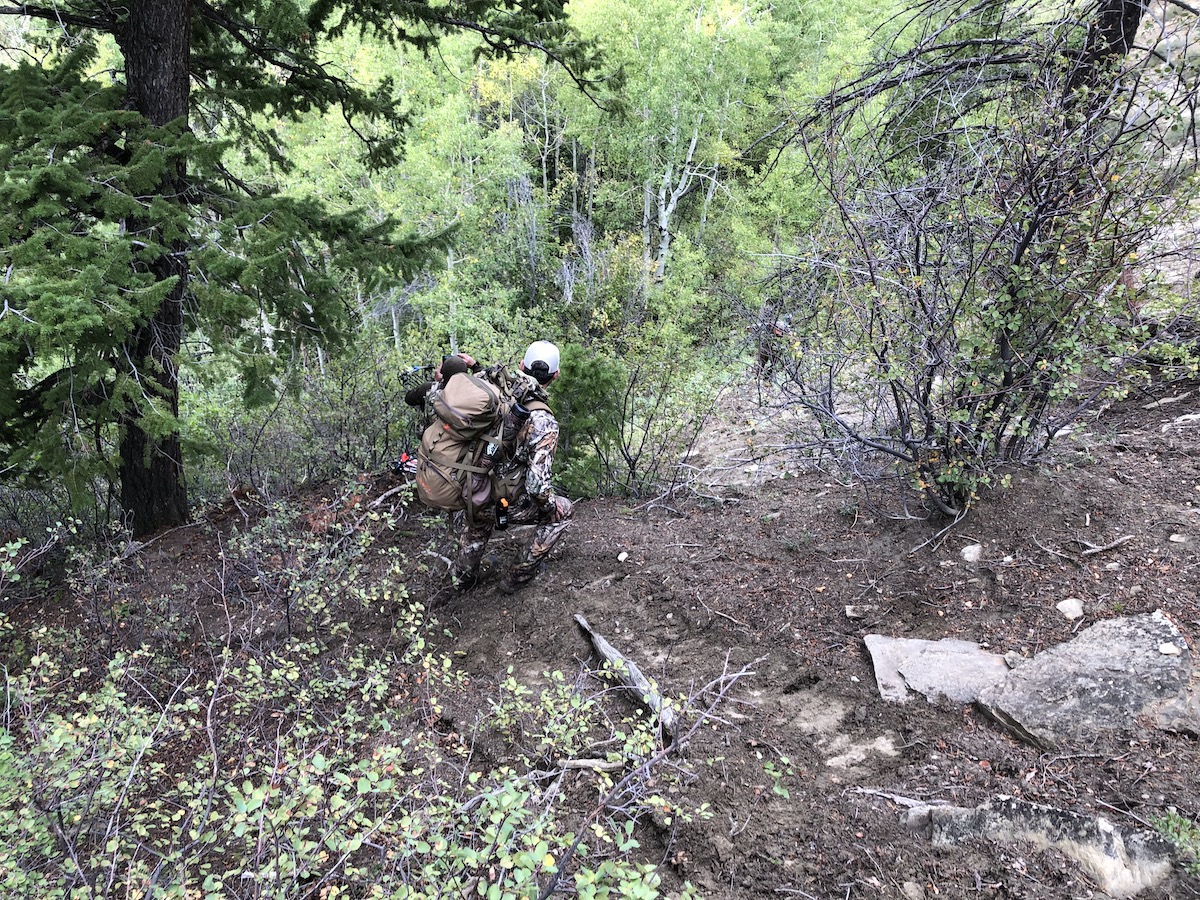
Real-world elk hunting requires significant, and quick, changes in elevation.
Getting Into Elk Hunting Shape
Begin with the basics. Get in shape. When you get locked out of the foothills where most topography rolls easily, expect to find elk in rugged, steep, and remote locations.
In short, expect the worst and be honest with yourself. Can you scramble up 1,000 or more feet through rocks and timber daily for the duration of a typical 5-day hunt? Can you descend that same craziness? More than half of the bulls I tagged in the past decade have been the result of scrambling up a mountain with 1,200 to more than 2,000 feet of separation from any trailhead. Your HuntStand app becomes a critical partner in your mountain forays to find the path of least resistance.
Do you have the stamina to hike eight miles every day through rough terrain at elevations from 8,000 to 10,000 feet, or more? Can you operate with limited nightly sleep and recharge daily with a catnap? September days are long and October days don’t offer much of a reprieve, either. According to government stats, nearly 80% of adults don’t meet the guidelines for muscle building and aerobic activities. That leaves you competing with the remaining 20%, many of whom have elk blood coursing through their veins.
Bowhunting Antelope: Tips for Getting Started
Before you start an Ironman workout, meet with a physician for an evaluation and recommendation on how to kick off a new workout program. In addition to what your doctor, trainer, and your conscience tell you to do, remember to strap on a weighted pack. With each day of hunting, you will tote 20 pounds or more of gear, including elk calls, water, food, survival gear, first aid, clothing layers, and meat extraction tools. If you need to dig out those extraction items (for the obvious), your pack could be triple digits on the way out. So, in addition to lifting weights and core training, hiking with a loaded backpack makes sense.
My workouts vary from daily hikes with my wife and border collie, to weightlifting in our basement gym, to cross-country shed antler hikes and endless ranch chores on our small Wyoming property. Pounding fence posts and carrying a hand sprayer across acres of sagebrush add to year-round fitness.

Create a mobile base camp.
Planning an Elk Hunt Base Camp
As your muscles reappear or bulge even more, begin planning for a hunt that keeps you close to the action. Embrace homelessness. Your goal is to avoid the Homestead Act and hunt more like the nomadic Native Americans of yesteryear. By utilizing a camp that provides a mobile platform, you can keep up with elk moving through a territory, which is commonplace in elk country. Your HuntStand hunting app, along with the Hybrid or Natural Atlas overlay, shows roads, plus terrain characteristics, while choosing camp options.
My go-to camp is my enclosed horse trailer. It transports horses or ATVs, and when unloaded, a quick cleanup turns the interior into camp with a cot, cooking area, wash station and propane heat. A renovated tack compartment now offers a studio apartment if I don’t want to set up the entire cargo area, or if friends join me for the backcountry misery. Setup and teardown take approximately one hour each. If I discover elk have left the building, I tear down and move base camp to the next location. Enclosed trailers, off-road campers, and even a pickup camper provide a similar mobile option.
How to Plan a Whitetail and Mule Deer Combo Hunt
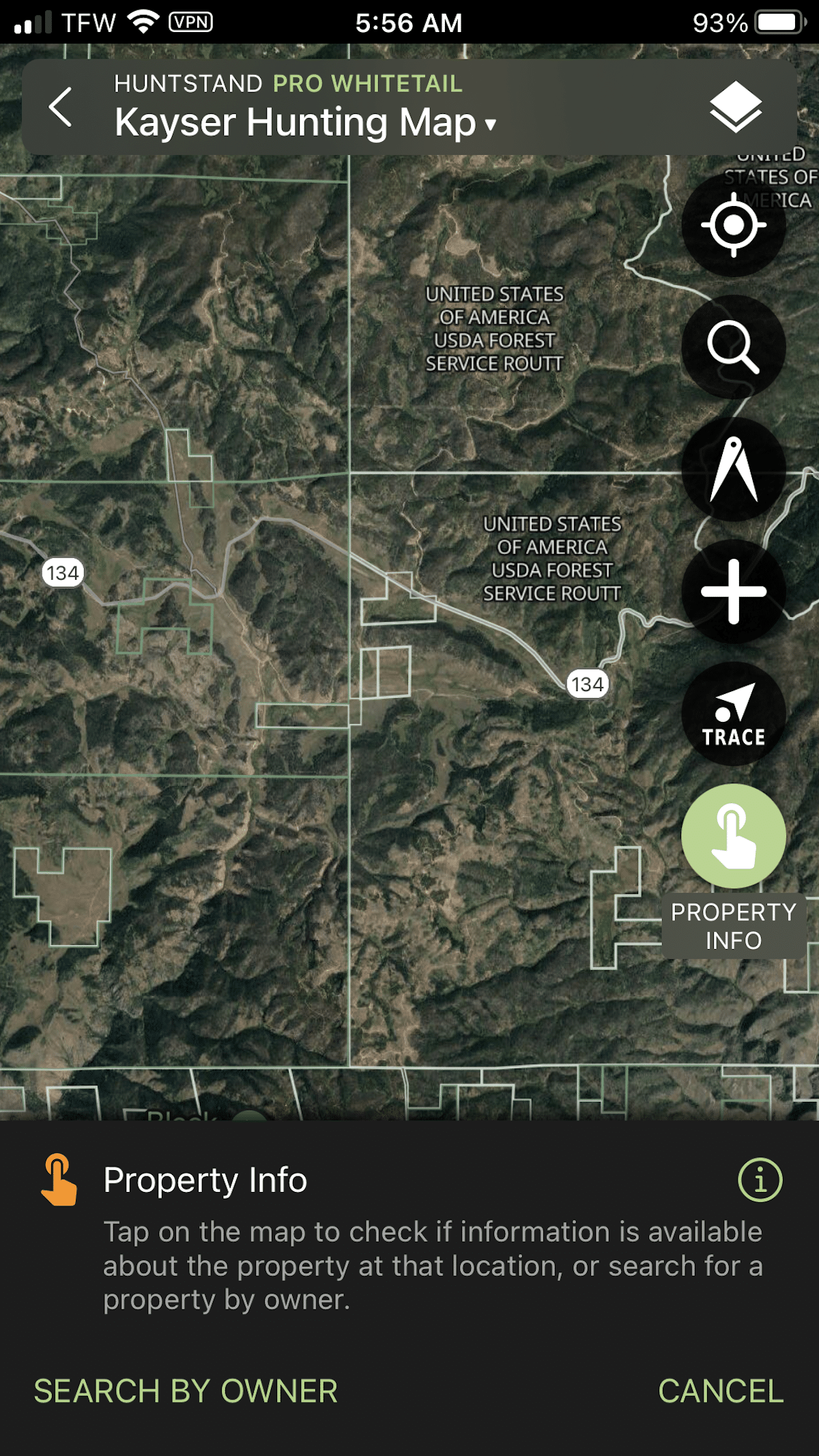
Use HuntStand to find likely areas pressured elk will hang out in.
Sometimes, I leave base camp set and pioneer with my pickup and ATV in the truck box. While prospecting, I pack along enough supplies to spend two to three days just living out of my truck as I explore new areas. Although not as comfortable as the Hilton, I set an air mattress across the front seat and slumber away.
Finally, if I need to dive further into the backcountry, I bivy. “Bivy” is merely short for bivouac and adds up to a meager shelter or camp. For elk, it offers the ideal way to keep up with a herd by utilizing a mobile camp including a bivy bag, lightweight sleeping bag and pad, food, stove, water filter, and other survival needs. You can carry these provisions on your back while you keep up with elk and set up camp basically anywhere with comfort.
A cabin or huge RV has its luxuries to refresh you for the next day of hunting. Unfortunately, it leaves you cemented to one location when elk might have a U-Haul lifestyle in mind.
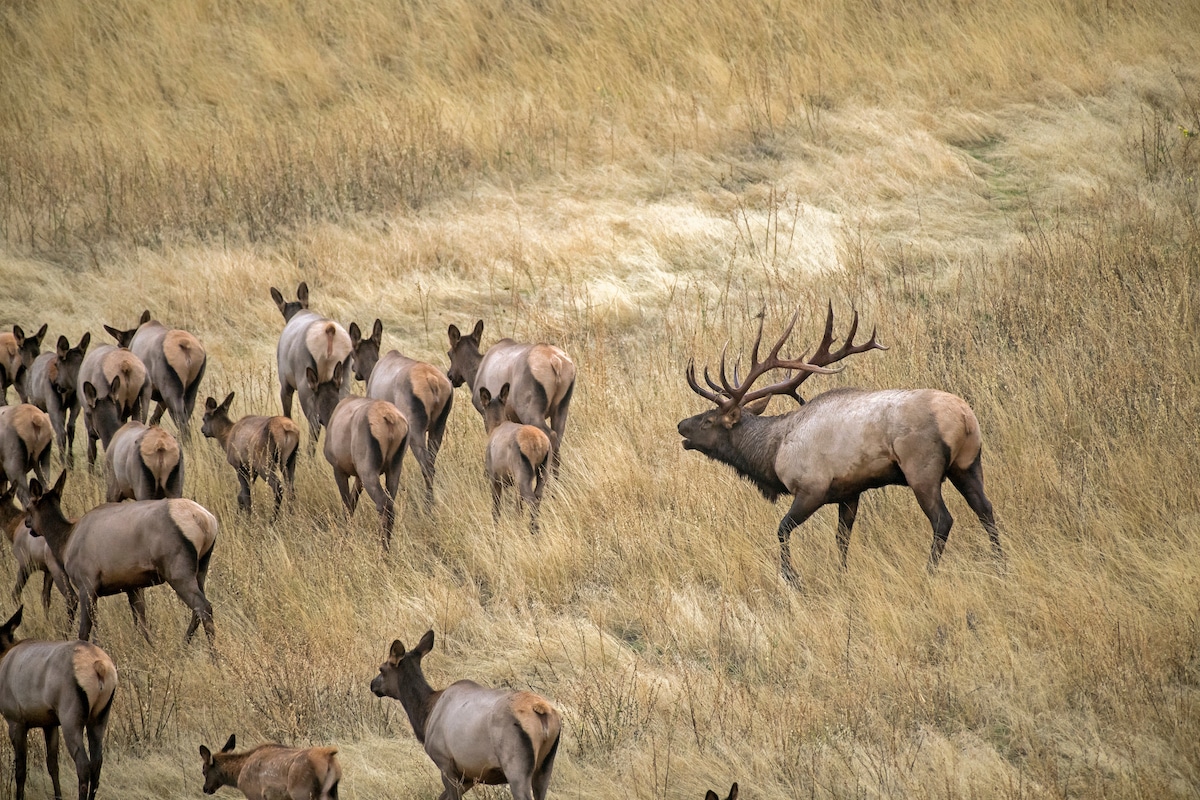
Once you find the herd, stay with it.
Elk on Mars and Someone’s Backyard
Be prepared to hunt in the roughest, remotest country on any map. In the same breath, be ready to thread the needle and hunt small parcels interspersed by a checkerboard of private lands. Today’s elk herds might travel with a path that resembles a Mars trajectory or they might simply run to a mountain subdivision to feed on a nearby golf course.
In either case, a subscription to HuntStand Pro or Pro Whitetail pays off quickly while dogging these elusive herds. As a rule, elk that don’t have an escape property — like a private ranch oasis — will retreat into areas of steepness, dark timber, roadless quadrants, etc. For private land information, including detailed boundaries, use the Property Info feature in HuntStand Pro or Pro Whitetail. These features also detail public ownership and boundaries to help keep you on the right side of the fence.
An effective way to sniff out a public parcel, in addition to very tight topographical lines, is to find areas that are two to four square miles of ground shut off to motorized access. Hike a mile or two into any roadless section of elk country, and you stand a good chance of being alone with elk aroma around you. Areas like these that require a major ascent or descent to access only increase the chance of never seeing another hunter when you hike in. Finally, any public area that’s separated by a dozen miles or more of rough country before private land appears on a map only further aids in the odds elk will stay on the public.
Navigating Western Hunting Tag Draws with HuntScore
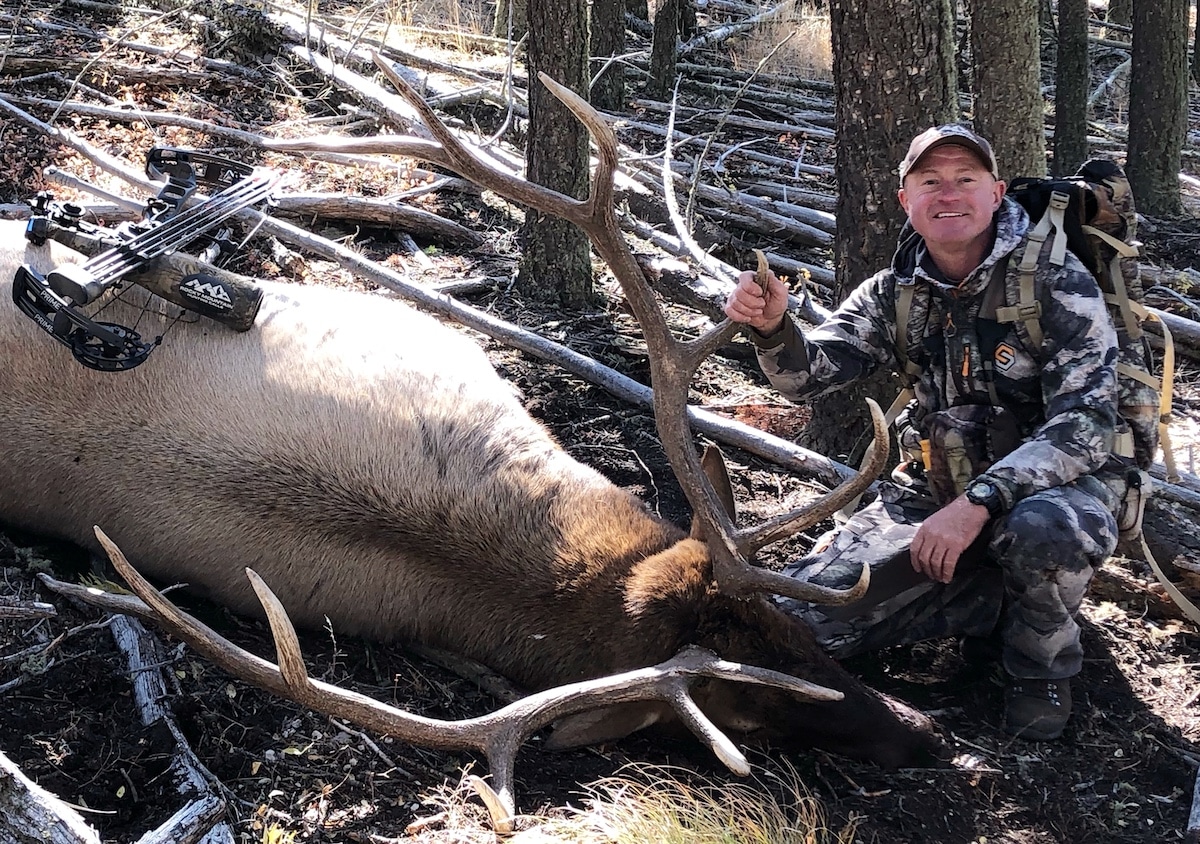
The author worked hard for this incredible experience.
Despite public land vastness in elk country, elk still beeline to private lands for sanctuary. Some of these private holdings swallow up herds to never be seen again by the public-land hunter. Fortunately, during the rut, and as bulls move to find good feed in late fall, elk begin making mistakes wandering between public and private.
With HuntStand in hand, seek out any public access corridors adjacent to private tracts and be prepared when conditions force movement. Bulls begin bouncing between herds early and late in the rut to find estrus cows. With snow in the forecast, they begin moving toward bachelor hangouts, oftentimes leaving private for the public rough country again. Check your HuntStand weather to watch for the worst of winter and the best of elk movement.
The challenge of public-land elk hunting is taxing with the odds squarely in the corner of elk. Nevertheless, put as many variables in your game plan as possible. Eventually, elk make mistakes and you can capitalize on the opportunity if you’re not on the sidelines.
Scouting for Elk with HuntStand Pro

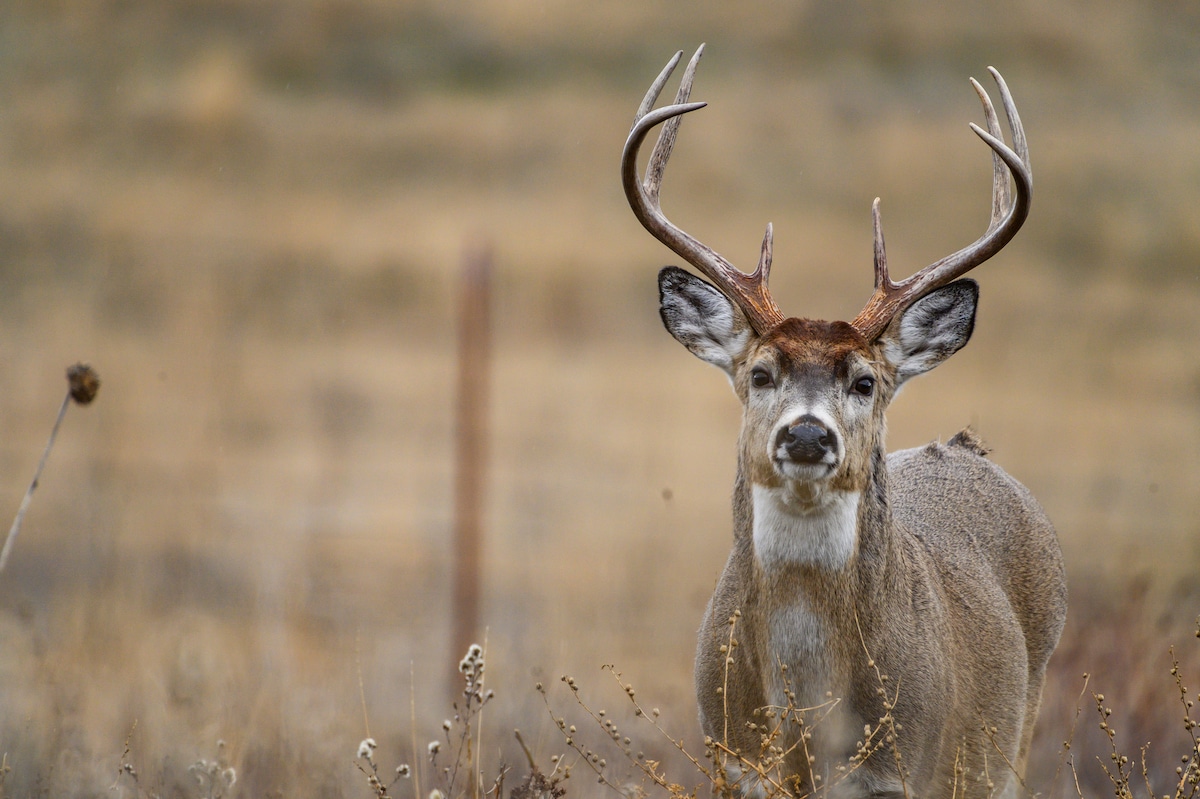
With the explosion of wildlife management across whitetail country, it makes sense to pay attention to what your neighbors are doing on their side of the fence.

Good neighbors could also be producing great hunting over there. Combine that with your efforts and the payoff equals more deer for everyone.
Good fences make good neighbors. Better fences allow deer to easily move back and forth with efficiency. With the explosion of wildlife management across whitetail country, it makes sense to pay attention to what neighbors are doing on their side of the fence. Good neighbors could be producing great hunting over there. Combine that with your efforts and the payoff equals more deer for everyone.
Of course, whitetails live in a home range. In spring and summer, when life is easy, they dial it back to a smaller area. The rut causes them to expand that territory exponentially. Winter does, too, and if it bites hard, deer make significant forage forays. Regardless of the wandering reason, you can hunt neighboring deer when they roam, and expand upon your deer density for a wider selection of bucks to consider.
On a hunt several years ago, a buck suddenly appeared on a food plot that did not summer on the farm previously. It took me more than a week of dogged hunting, but the buck finally slipped up for a 20-yard bow shot, landing my best buck to date. As news spread, a neighbor revealed that buck lived on his property nearly the entire year until it took a road trip in front of my hunting blind. That is a good neighbor.
So, how do hunters capitalize on this concept?
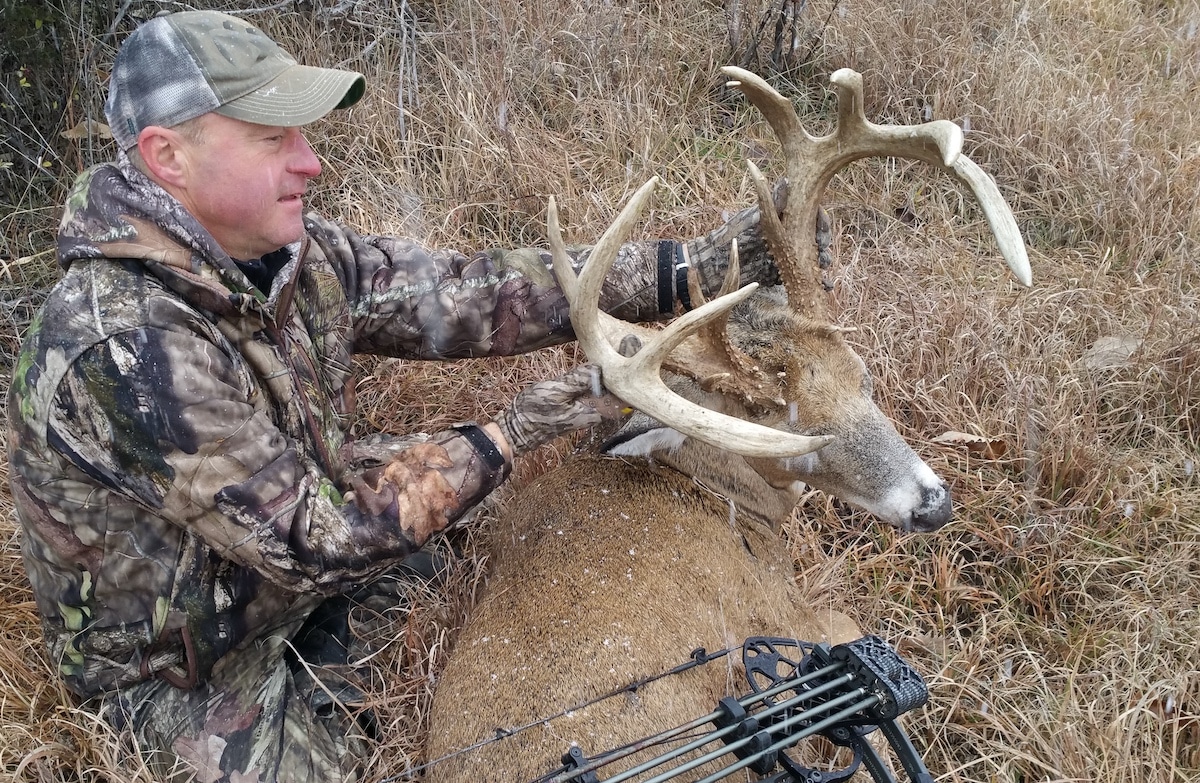
Kayser’s best archery whitetail was the result of it being lured from a neighboring property by food plots.
Step 1: Gauge the Relationship
There’s plenty to do each year on your own property, but it doesn’t hurt to evaluate the neighboring tracts to evaluate their wildlife management efforts. By evaluating surrounding properties, you can include a mixture of food plots, set aside the highest quality sanctuary, monitor water sources, and even patrol to ensure trespassing is minimized for all.
For some, that chore is moot as you have a good relationship with neighbors and know their lands. For those who haven’t established good relationships, that should be a top priority. A friendly rapport allows you to plan an overall management scheme that benefits the entire neighborhood.
Of course, some neighbors simply want to be left alone. No worries. A Sunday drive might be all that’s needed to reveal their management scheme and help you add the missing links. Take an inventory of surrounding crops (large and small), thick refuge cover, open spaces, and possible water sources, such as flowing creeks or standing reservoirs. Make note of new buildings, properties for sale, livestock grazing, and any other activities that could affect deer territory and movement.
Best Trail Camera Locations by Month for Scouting Big Deer
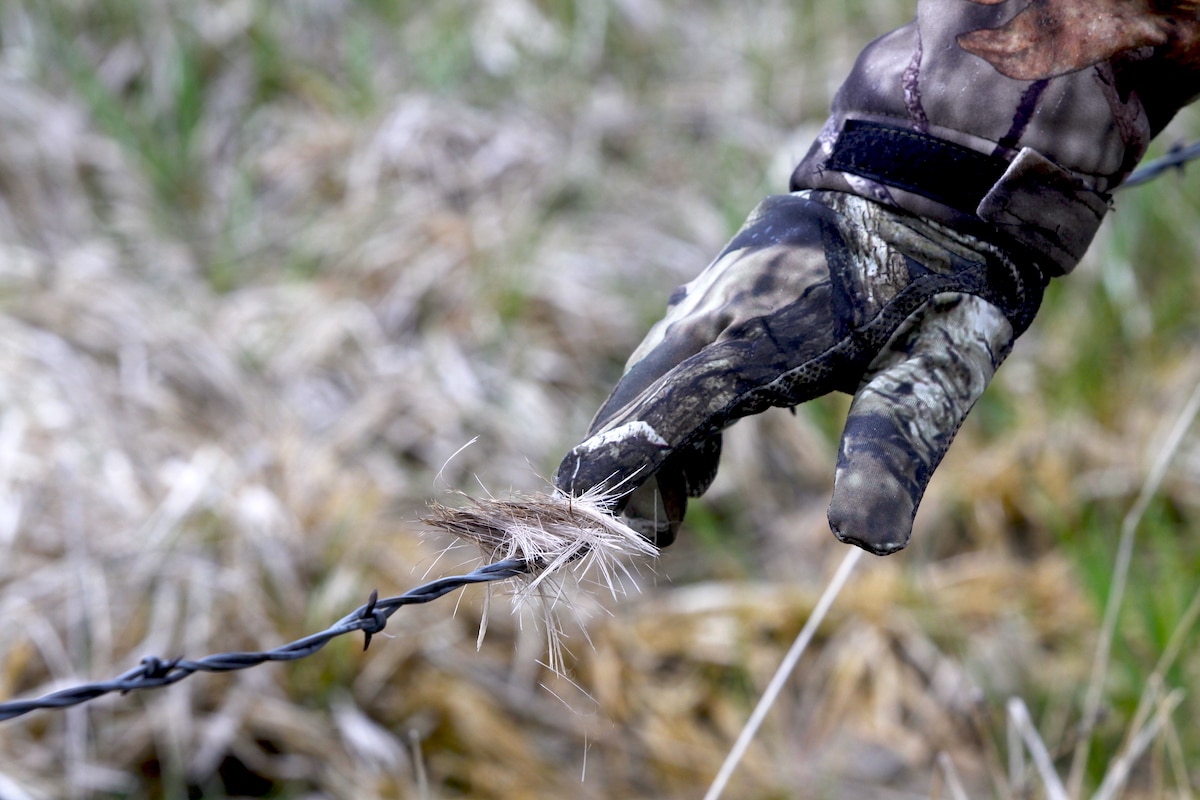
In addition to visual inspections and HuntStand sleuthing, a simple walk of your border fence aids in understanding travel between properties.
Step 2: Inspect the Boundaries
Start by walking the property lines. Look for downed fencing, especially if the neighbor hosts livestock from time to time. You do not want to drop $1,200 on a food plot, only to have it eaten overnight by cows because they walked over the fence where a tree fell on it.
Also, search for all fence crossings, trails and natural funnels deer might use to move between properties. These locations might be ideal for a stand-alone ambush or lead to locations you could manipulate for future management projects. Note all finds on HuntStand to easily return for the needed fixes or upgrades.
On fence reconnaissance missions, scan for freshly trampled trails and vegetation that could mean a new food plot or feeder on the neighbors. Also, scan for missing wires, sagging fence wires, or gaps underneath fences in low spots allowing deer to cross easily without jumping. Whitetails love the path of least resistance. Finding tufts of hair snagged in the fence further signifies a preferred travel route by the local ungulate population. Dig a little deeper and you might discover nearby rub lines and old scrapes that will reignite during the pre-rut. A trail camera easily reveals usage within a few days.
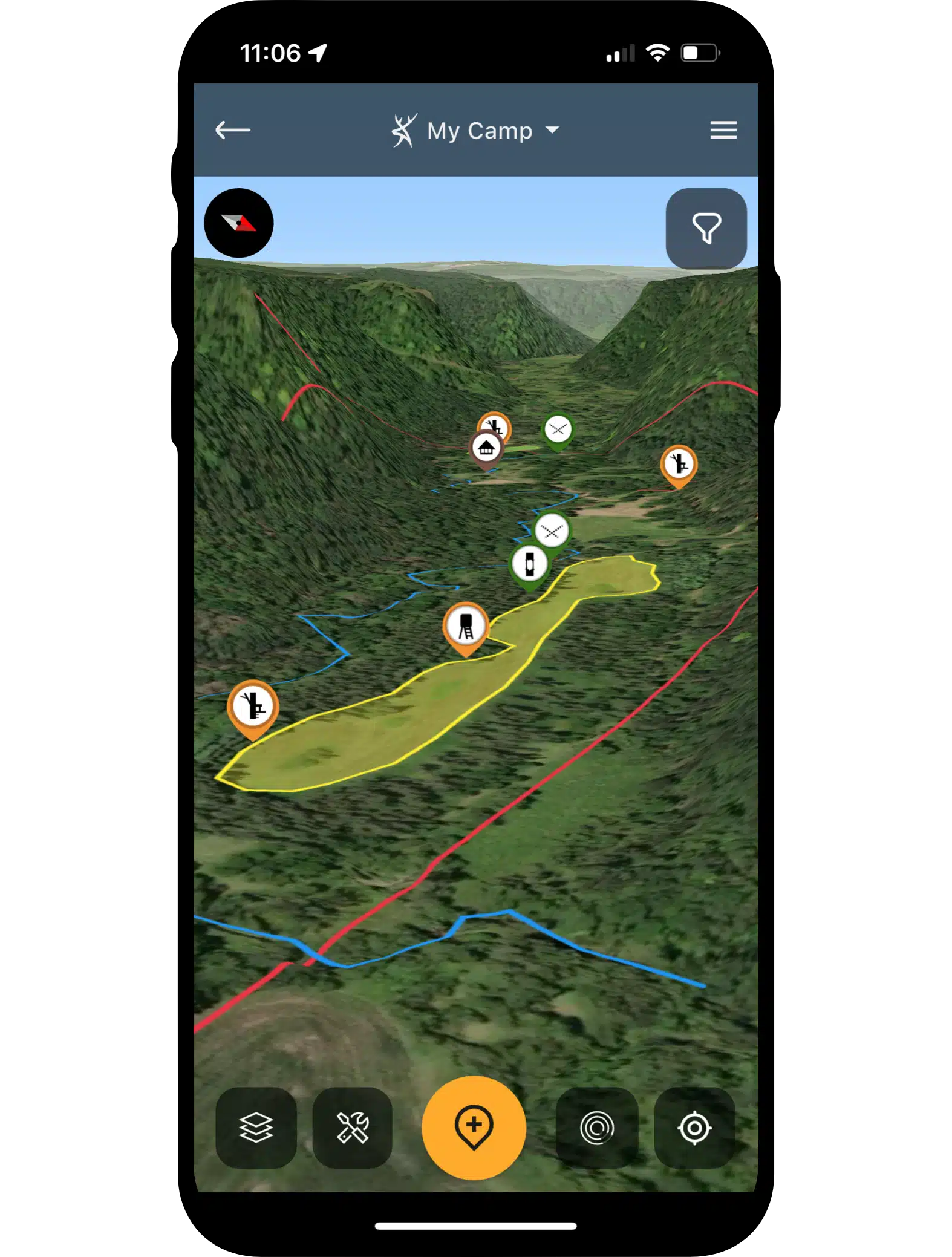
Visual inspections and HuntStand sleuthing can aid in understanding travel between properties.
Step 3: Inspect the Interiors
Unfortunately, some properties might be in a valley or veiled by cover. This blocks your spying eyes and limits evaluation from your side of the fence. Obviously, do not trespass. Furthermore, don’t use a drone. Instead, use HuntStand. An upgrade to HuntStand Ultimate offers the power of surveillance, evaluation, and planning, all in the palm of your hand.
First, the multitude of HuntStand overlays grant satellite views into neighboring properties. Using the Natural Atlas and Quad Topo overlays, you can see the thickest and steepest cover in images plus topographical information. The new Crop History overlay excels in showcasing the agricultural endeavors surrounding areas offer.
But that satellite imagery might be several months old. Fortunately, HuntStand provides a Monthly Satellite imagery layer for a current view of what is up down below. The resolution is less than stored images, but it’s typically sharp enough to see crops, forest projects, new clearings, and any recent land modifications occurring on neighboring lands.
Finally, a 3D Map flyover showcases the entire property and terrain features. All this could influence your hunting future. Even more importantly, it might help draft a land management strategy to encourage neighboring deer to visit your hunting property.
The Value of Summer Scouting for Deer
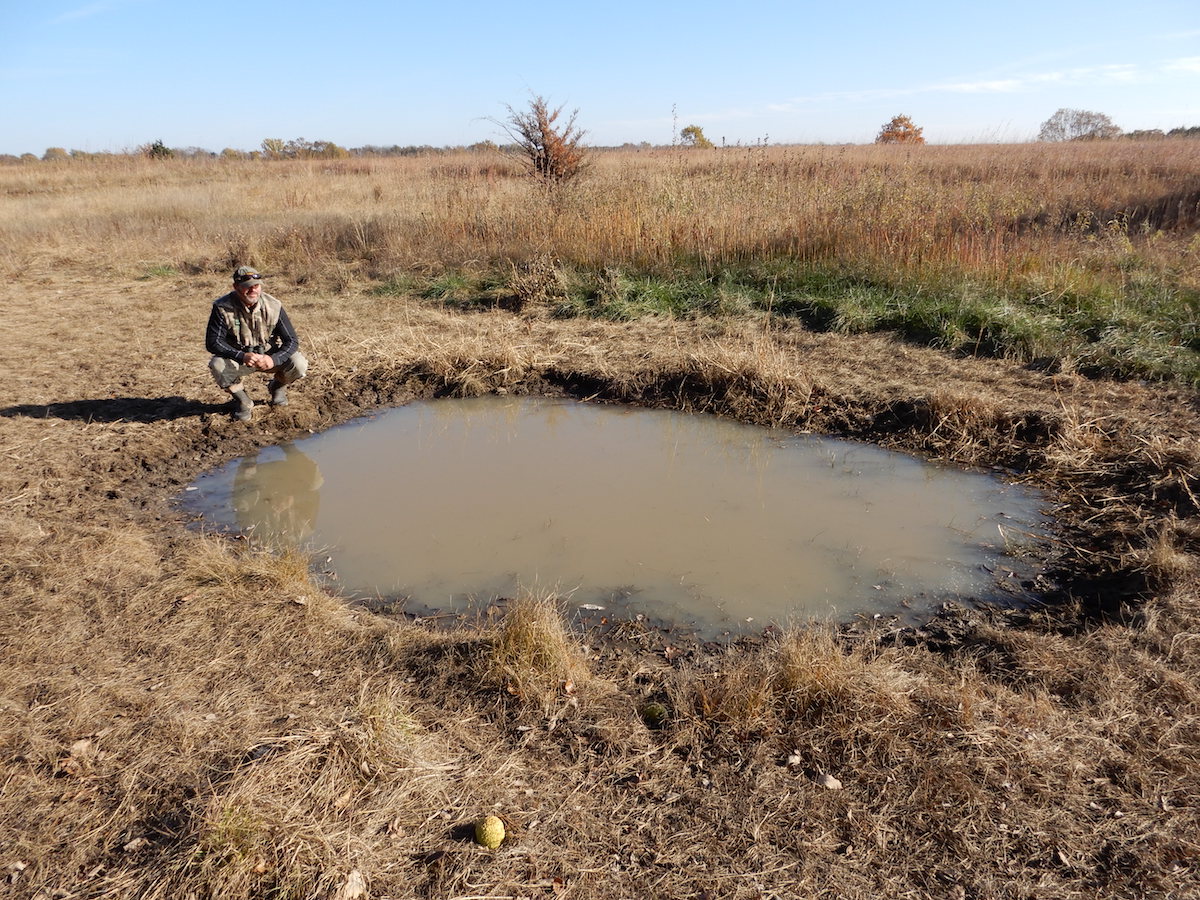
Although water resides in many hidden forms, adding water might be smart if it is a scarce commodity. It could be as easy as purchasing a livestock water tank and positioning it near food or refuge.
Step 4: Enhance Your Property
From your boundary walking, scouting drives, and app sleuthing, you likely have a good idea of what is occurring on the neighbor’s property. With evaluation completed, consider what, if any, adjustments need to be made for the hunting season. You might add to your management plan to attract neighboring deer.
First, consider adding ambush sites to take advantage of neighboring influences. Deer might use a nearby cornfield or food plot to feed, but still bed on your ground. A quick ambush site addition could keep you in the game. Add new blinds, stands, and trail manipulations to take advantage of established travel patterns.
It might help to add food, water, or bedding cover. Of course, this could alter the patterns of neighboring deer visiting your side of the fence. Sit down and consider what the neighbor offers the best of, and even scheme with them, if that relationship exists. In either event, provide something that deer do not have as much of on the other side of the fence.
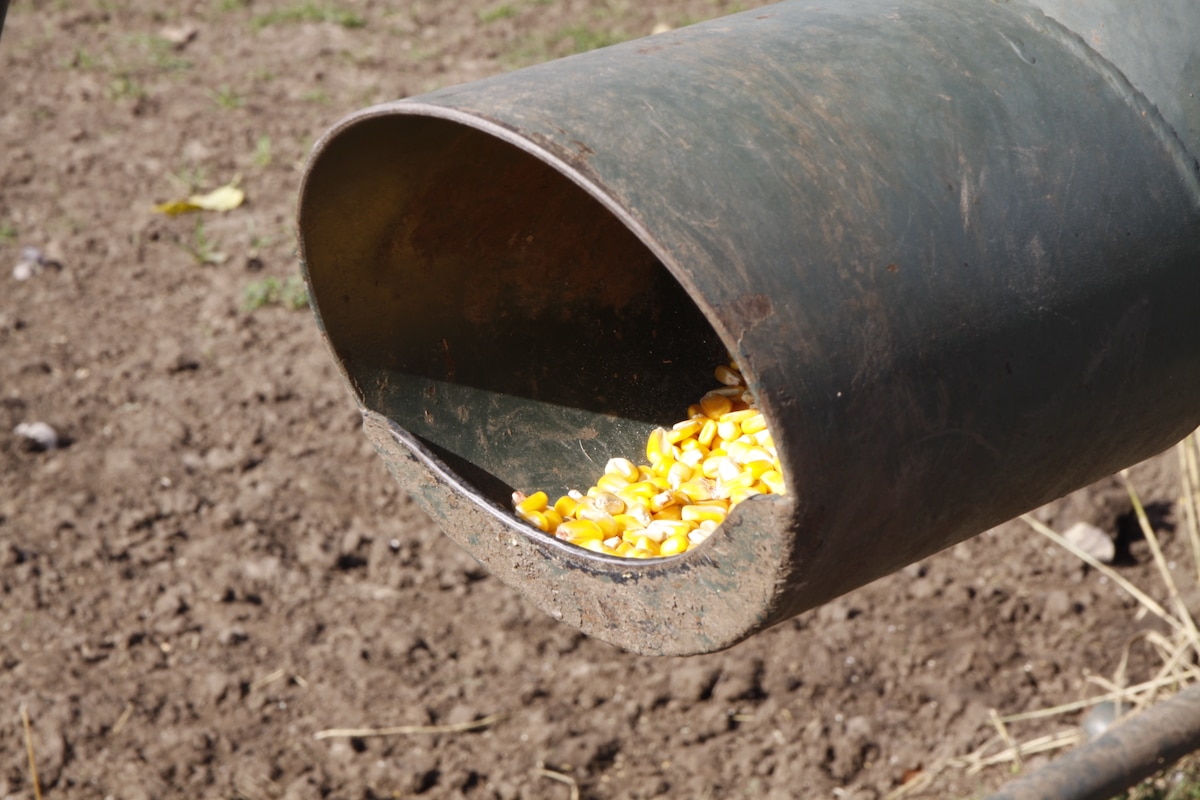
If your land is not conducive to food plots, where legal, use supplemental feeding to entice deer from the neighbor’s land.
You might already understand the missing link from previous hunting seasons, but now is the time to act. For example, a fall food plot needs time to green up before hunting season. Furthermore, expand on your food efforts to include several interior plots offering seasonal food such as alfalfa, brassicas, clover, and other nutrition to draw deer from the neighbors. And if food plots are not an option, but supplemental feeding is legal, corn lures deer, too.
Although water resides in many hidden forms, adding water might be smart if it’s a scarce commodity. Doing so could be as easy as purchasing a livestock water tank and positioning it near food or refuge. You can fill it via another water tank mounted in a truck bed, on a trailer, or on the back of a UTV. Long term, consider excavating a small reservoir in a good runoff area and lining it with a sealer.
Lastly, the neighbor might have loads of food, but lacking sanctuary. Restrict your brush clearing and set aside as much thick cover as possible as a no trespassing zone. Allow the deer to get comfortable with using it and not being disturbed. Your goal is to hunt the edges and give them a gated condo where they do not get human visitors.
And for those backup plan situations, or in case of a major shift in a deer pattern, always travel with a lightweight aluminum stand and climbing sticks for impromptu setups.
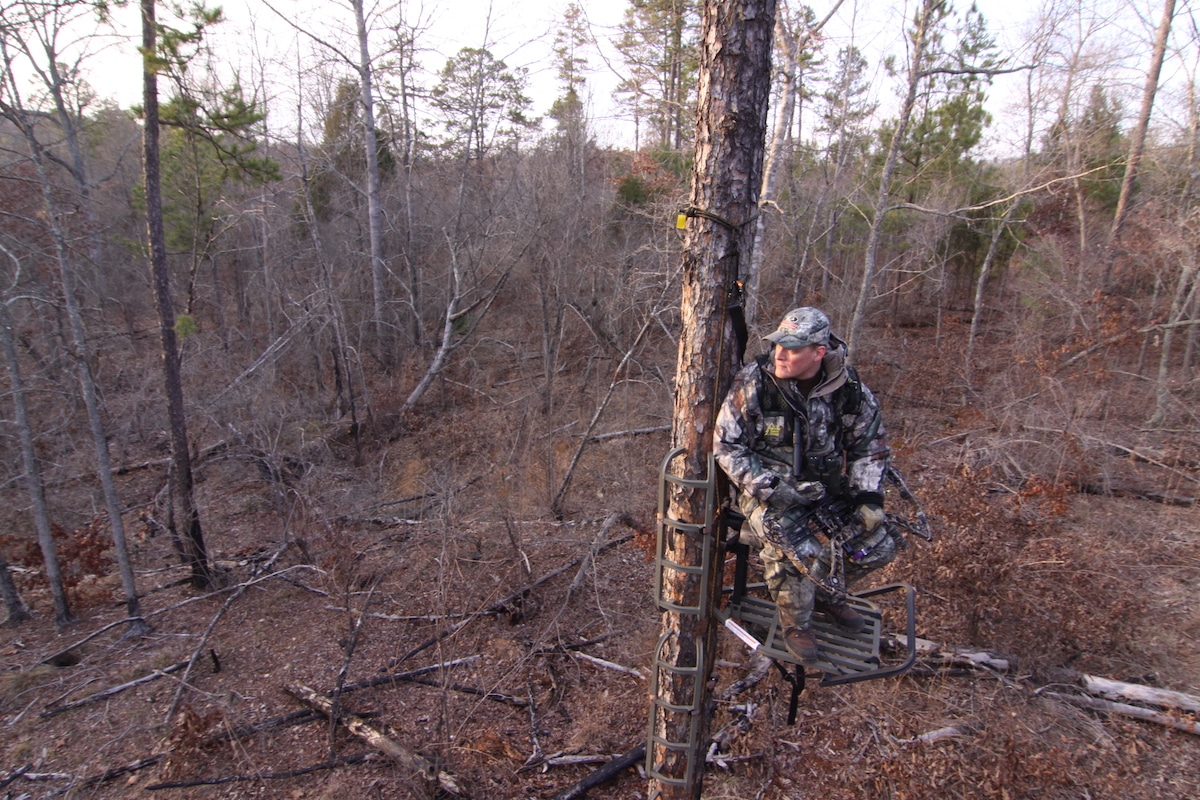
By understanding what is occurring on the neighbor’s side of the fence, you can create a simple or elaborate ambush plan.
Step 5: Hunt Property Lines Wisely
Hunting neighboring deer all sounds good and well, but if you do not have a Christmas-card relationship with the neighbor, be careful. You don’t want to hunt too close to a fence and have a wounded deer escape across a fence. This could leave you with an unpredictable recovery at best.
This is a common dilemma while bowhunting, but even occurs with firearm hunts. Sharp broadheads kill by hemorrhaging. An arrow-shot deer can run 100 yards or more even with perfect double-lung placement. You’ve likely heard of deer bounding 200-plus yards with a good shot. This means your minimum set-up distance from any fence should be at least 100 yards, with 200 being ideal.
Also, keep in mind it’s common for any animal to escape back to where it just came from because it likely felt safe prior to the shot. If you do make a questionable hit, and track the deer for more than 200 yards without finding a dead deer on your side of the fence, it’s time to back off. This is when preseason conversations with the neighbor can pay off. Obviously, don’t cross a property line to blood trail a deer without the required permission and documentation.

A good relationship with your neighbor can be helpful if a wounded deer crosses the neighbor’s fence.
Hopefully you have a great partnership with your neighbor. It can pay off in an overall neighborhood management plan. You can provide deer with the best food, water, and sanctuary. You can share buck information and cooperate on passing young bucks to grow older. Plus, if the herd grows too large, you can put together plans to cull antlerless deer.
Good fences make good neighbors, but they still allow deer to cross. So, you might as well take advantage of the bounty on the other side, even if the grass is not greener there. You can learn how to hunt your neighbors’ deer in a fair, respectful manner. They can do the same.
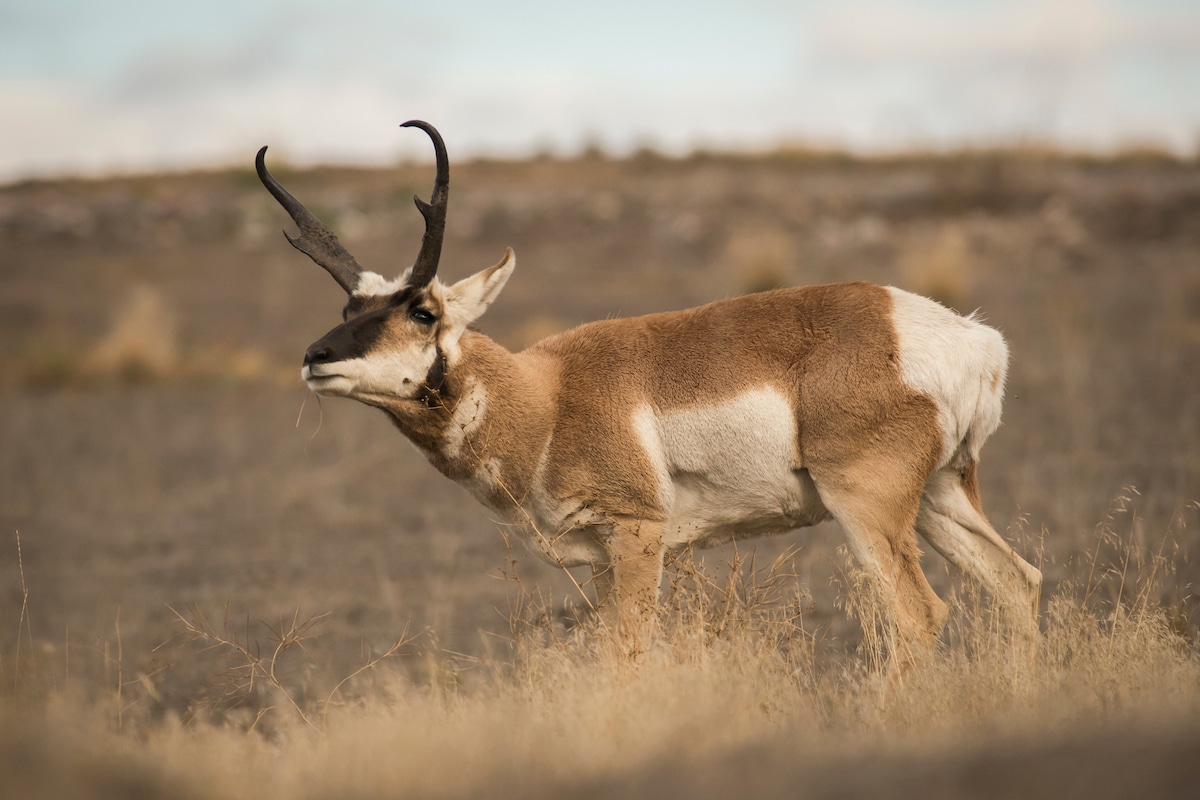
Pronghorn eyes are quite keen.
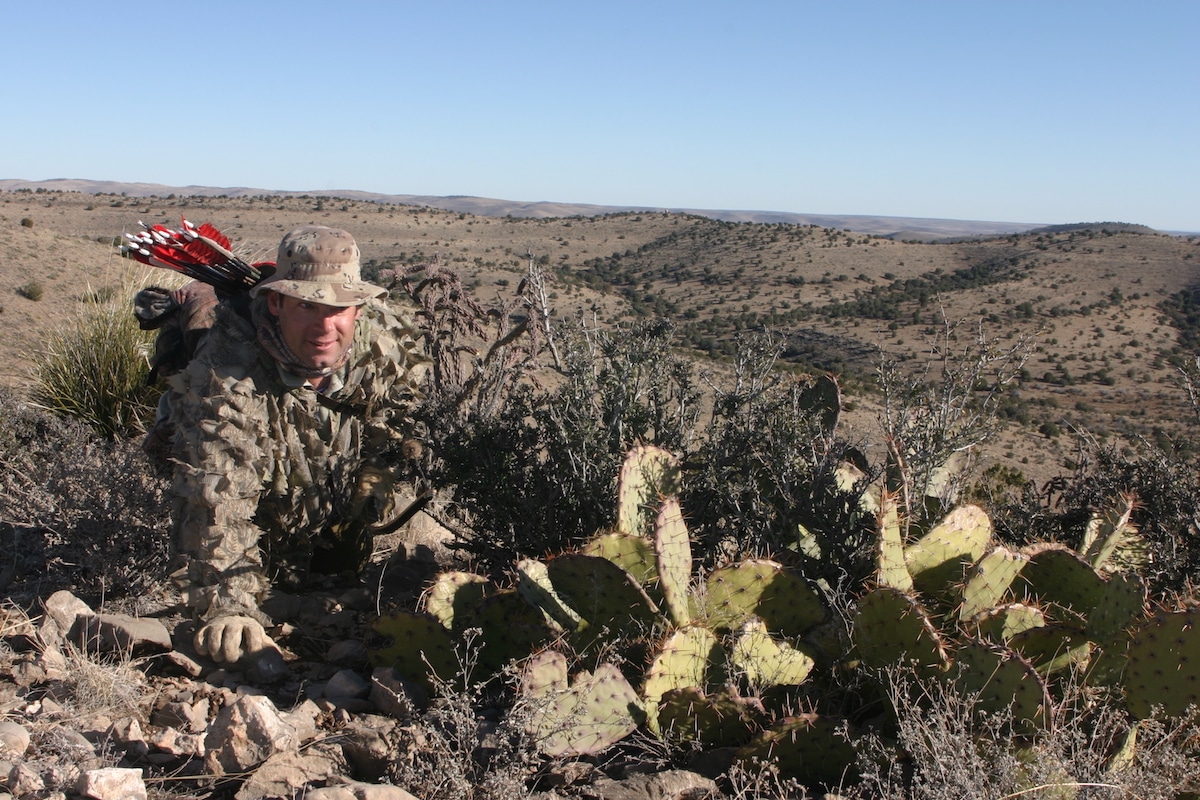
Use the terrain to get within bow range.
Bowhunting antelope can be one of the most exciting pursuits in all of big game hunting. Many shrug off antelope hunting as a second-tier western hunting opportunity, putting the prairie prince in a class below a big bull or wide muley buck. But those who dig into the nitty gritty of this unique species often become addicted, and the reasons are many.
First of all, let’s address the erroneous title of this article. We just used “antelope” so you could find this article on Google, as the species is actually “pronghorn.” If you didn’t know that already, there you go. In layman’s terms, if we’re speaking in the context of North America, the two names are synonymous. Jump over to Africa and the game changes, as the Dark Continent is a mural of different antelope species. The North American antelope (pronghorn) is the only of its kind.
The pronghorn is the second-fastest four-legged animal in the world, falling behind only the cheetah in a short-range land race. These animals once populated the North American grasslands in vast numbers, nearing estimates of the mighty bison herds prior to the European invasion. At present, the herds once numbering 30 to 40 million and spread from the Mississippi to the West Coast, have dwindled to approximately 1 million. Wyoming claims half of that figure alone and the rest are scattered throughout the states and provinces surrounding the Cowboy State. That’s actually a success, considering numbers plunged to less than 14,000 during settlement of the West.
Pronghorn populations yo-yo because they require a very specific niche habitat and environment to survive what can be a brutal neighborhood. Areas of Wyoming and northwestern Colorado lost more than 50 percent of their localized populations due to a brutal winter early in 2023.
Overall, if a hunt for one of these speedsters is in your future, consider a game plan that mitigates their strengths and behavioral attributes. Its aforementioned speed, extreme vision, a small frame, and supreme dominion over its wide-open turf—you’ve got your work cut out for you, especially if you’re trying to get it down with stick and string. With that in mind, here are proven tips and tactics for bowhunting antelope.

Compared to other big game, pronghorns have remarkable eyesight, often equated to a six or more-power binocular.
Overcome Pronghorn Eyes
Speed aside, another great sense pronghorns hold is eyesight. Compared to other big game, pronghorns have remarkable eyesight, often equated to a six-power binocular (or more). Plus, the placement of their 2-inch diameter bulging eyes gives them nearly 360-degree visibility. Keep this in mind when closing the deal on a stalk.
Of course, your best chance of drawing your bow or raising your firearm is when an animal is turned completely away from you. In a herd situation, expect alarm bells to ring if you expose any movement as herd heads continually revolve to monitor the surrounding terrain. Herd members signal danger by snorting a loud nose expulsion—like a whitetail snort—and fluffing their white rump patch as a visual alarm signal.
That doesn’t mean a stalk is impossible. It just takes the right stuff in both terrain and pronghorn densities. Consider terrain as you scout out a hunting area. Your HuntStand app is a standout partner in this job. An upgrade to HuntStand Pro or Pro Whitetail also makes sense to tap into the best features available.
How to Shoot at Running Game Animals
A variety of mapping tools provide overlays over maps to guide you into stalking terrain ideal for a pronghorn ambush. Consider using the Quad Topo, Contour, and Terrain overlays after you pinpoint your hunting area. These will reveal rolling and rugged terrain features, allowing you to disappear in draws, underneath hills, and behind buttes. Confirm your finds with a virtual flyover utilizing the 3D Map feature. Trying to pull off a stalk in a flat basin will lead to frustration and tossing in the towel after being spotted again and again. Look for terrain that signifies the best of the sage-land West for an approach to pronghorn.
While it’s tempting to go straight from the spot to the stalk, patience can pay big dividends, especially when you have limited terrain to work with. If you see a herd moving in one direction, consider setting up in their path and use any available cover. Even just one scant piece of sagebrush might provide the cover you need to make your final moves and get on target.
A perfect stalking scenario is a solo buck bedded in rolling terrain. You’ll be dealing with only one set of eyes instead of a herd. If you can’t find a lone buck, disappear into the lowlands as you ease toward a herd with the wind in your face. Use the HuntZone wind map in HuntStand to visually monitor changing wind conditions; sometimes stalks might take hours, and the wind won’t always remain consistent.
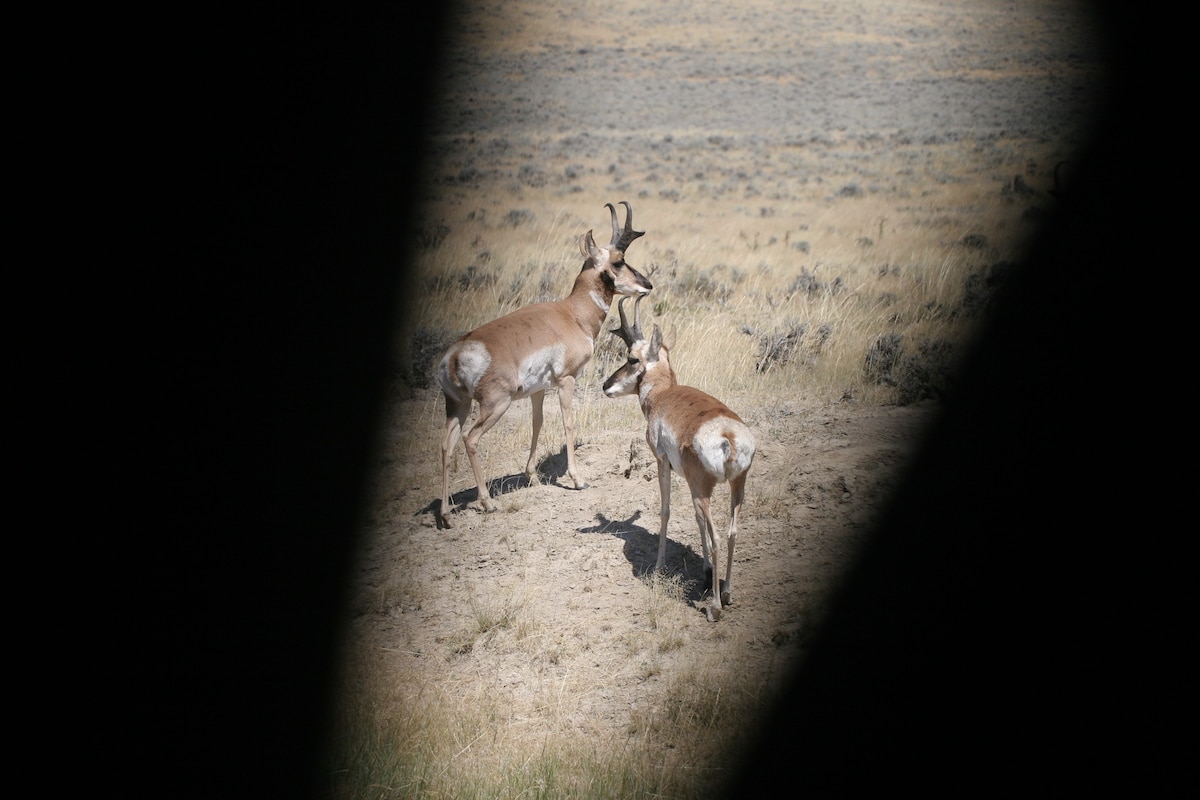
Ambush opportunities at waterholes, aided by use of a ground blind, provide a unique opportunity to hunt cagey pronghorns.
Benefit from Pronghorn Movements
Pronghorns do have some great traits that play out to your benefit. Consider the fact they lead a sunny, beach-style life. Unlike many other big-game species that can be notoriously nocturnal, antelope prefer to spend time in the sunshine. They roam, rut, and wander all day long.
Pronghorns are designed for the hunter who appreciates a good night’s sleep and hunting in a style similar to their 9-to-5 job. In fact, antelope oftentimes operate like you at night and hunker down. During the rut, they might wander a bit under moonlight, but it’s common to spot a pronghorn or herd at dusk and find them in basically the same location at dawn. Think of it like roosting a turkey if you locate a herd too late in the day. Get up early and you might just find them in the same location the following morning. Even if not exactly where you dropped a pin in HuntStand, they’re bound to be close at dawn.
How to Spot-and-Stalk Spring Black Bears
Although whitetails, mule deer, and elk have no aversion to slinking into the shadows and impenetrable jungles during the day, pronghorns go about their daily business all day long. This extends your hunting time. How often have you taken a nap in deer camp or snoozed on a mountainside at noon while elk did the same? Pronghorn hunting doesn’t offer that luxury. In good country, you won’t want to snooze, but instead glass for your next target. Don’t forget to pack plenty of provisions and stay hydrated, because the days can become deceivingly long.
If you’re bowhunting antelope all day, outfit yourself with a quality binocular, and possibly a spotting scope, as this all-day movement offers all-day spotting. In fact, if you hunt pronghorn Meccas like Wyoming, Montana, or South Dakota, expect to see hundreds a day in a window-shopping hunt. Depending on your style or choice of tactics, you might have the option of passing on several bucks before shooting selecting your suitor.

Use HuntStand to help locate water for a pronghorn ambush. Back up your findings with a firsthand review of the water and tracks that indicate usage.
Locate Water Sources for Pronghorn
In the most arid of pronghorn country, another behavioral aspect to focus on is a pronghorn’s need to rehydrate. Even in moderate antelope areas, like the Dakotas, drought occurs. In late summer, the rain disappears like the tourists. Pronghorns require 3 to 4 quarts of water daily on warm, fall days. That might decrease on cooler days or increase considerably during the raging rut. And if an early snow arrives, expect pronghorn to eat snow and snub water sources. Even so, I’ve watched pronghorn bucks run to water from a mile out in their desperation to refresh after a long chase during breeding season.
Although antelope vary their schedules like many big-game species, they do follow a basic routine during late-summer archery seasons and the September rut. This schedule is something many hunters overlook, particularly hunters armed with archery tackle. First, set up along water at the break of dawn. A trail camera surveillance team can aid in determining if your waterhole has a consistent presence of pronghorn.
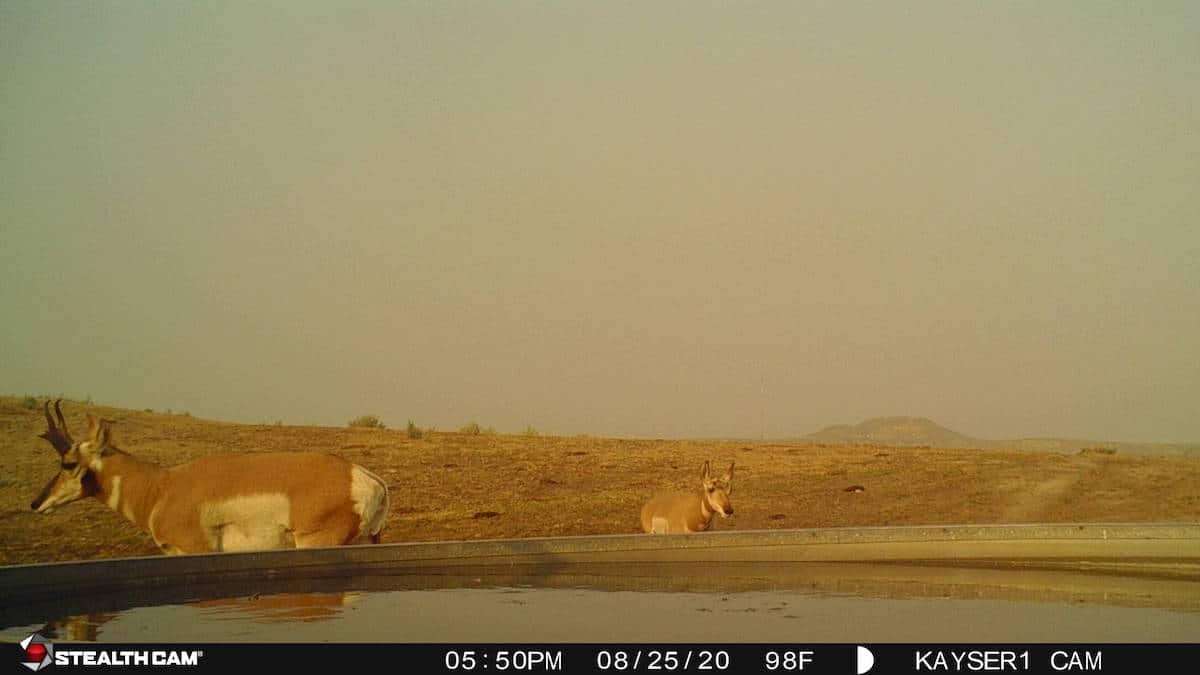
Pronghorns require water daily, especially during the heat and the rut. Find a used water source and you will find pronghorns.
Pronghorns can arrive at a waterhole at any time throughout the day, but as previously noted, they tend not to roam randomly at night. Arrive at your water ambush location in the dark to avoid detection. Be alert. It’s not uncommon for a rut-thirsty buck to head straight to a favored waterhole immediately at daybreak. Far-off herds might take longer to arrive.
Even when within sight of a water destination, antelope will approach cautiously as they survey for danger. Your wait can last all day, or you can abandon it by midmorning for another hunting tactic. In hot weather, I’d stay put all day, especially if water is scarce and pronghorns plentiful. During the rut, this is a guaranteed tactic.
How to Plan a Whitetail and Mule Deer Combo Hunt
To find good water, begin with HuntStand and utilize map overlays. Outdoor and Natural Atlas illustrate water and a quick review with the Monthly Satellite overlay gives you a refreshed image, albeit at a lower resolution, of the most recent images taken from overhead.
Confirm your findings with those folks who have boots on the ground. Landowners, range managers, BLM employees, and conservation officers all hold a wealth of knowledge in the location of consistent water sources. Most of these folks are relatively easy to track down online.
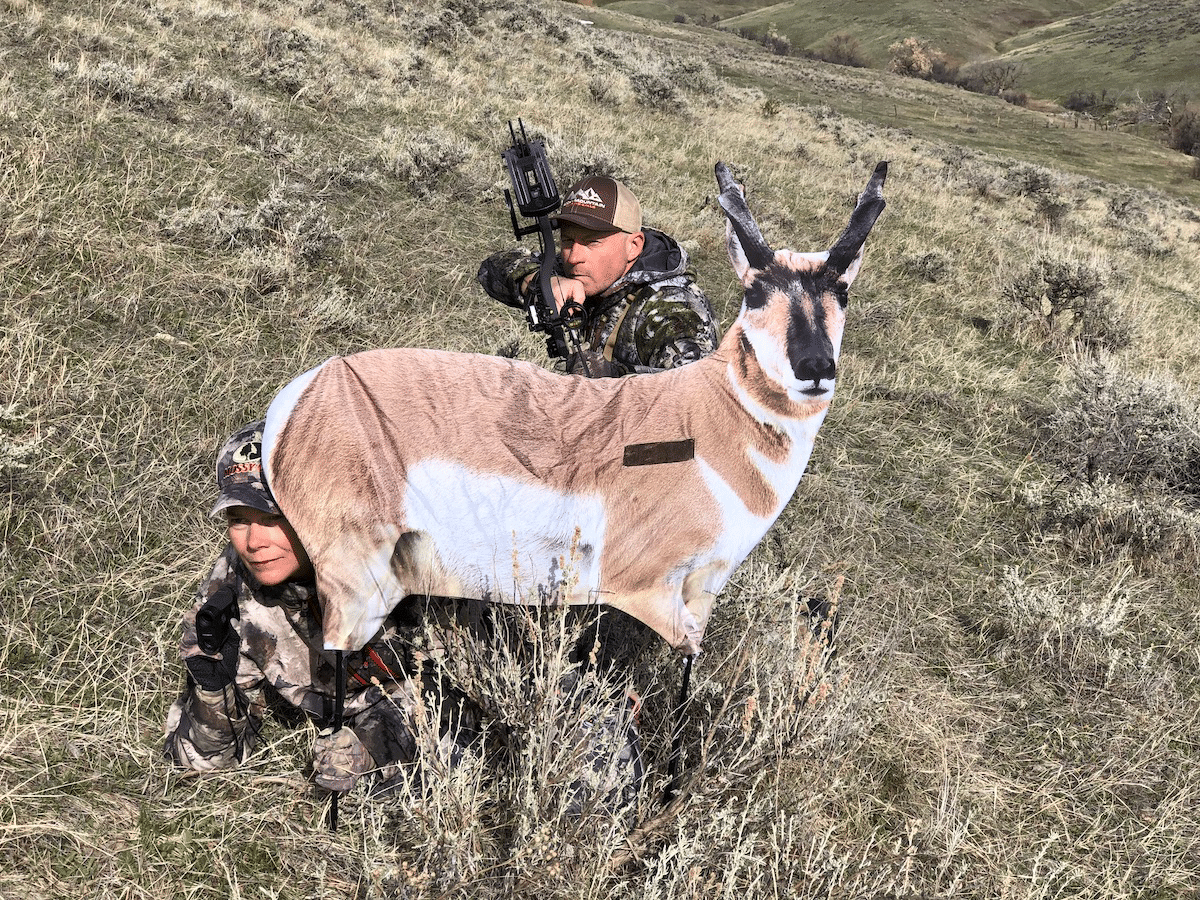
In the peak of the September pronghorn rut, decoying works well to sucker a pronghorn into shooting range.
Focus on the Pronghorn Rut
A final quality of pronghorns you should consider as a mainstay strategy is to hunt them during the rut. Most antelope seasons open in mid August and the remainder by September. Peak breeding takes place around mid September. Fierce competition for herds of does seems to be the most chaotic from September 15-25.
Pronghorn don’t rut like whitetails, but do have a very similar breeding behavior to elk. Mature bucks gather harems of about a dozen does. They stick with that herd and breed as many females as possible during peak estrus. Throughout the rut, these dominant bucks must protect their gals from constant incursions from adolescent, satellite bucks. This constant hoof race increases that thirst factor and the reason waterhole sitting can be so successful.
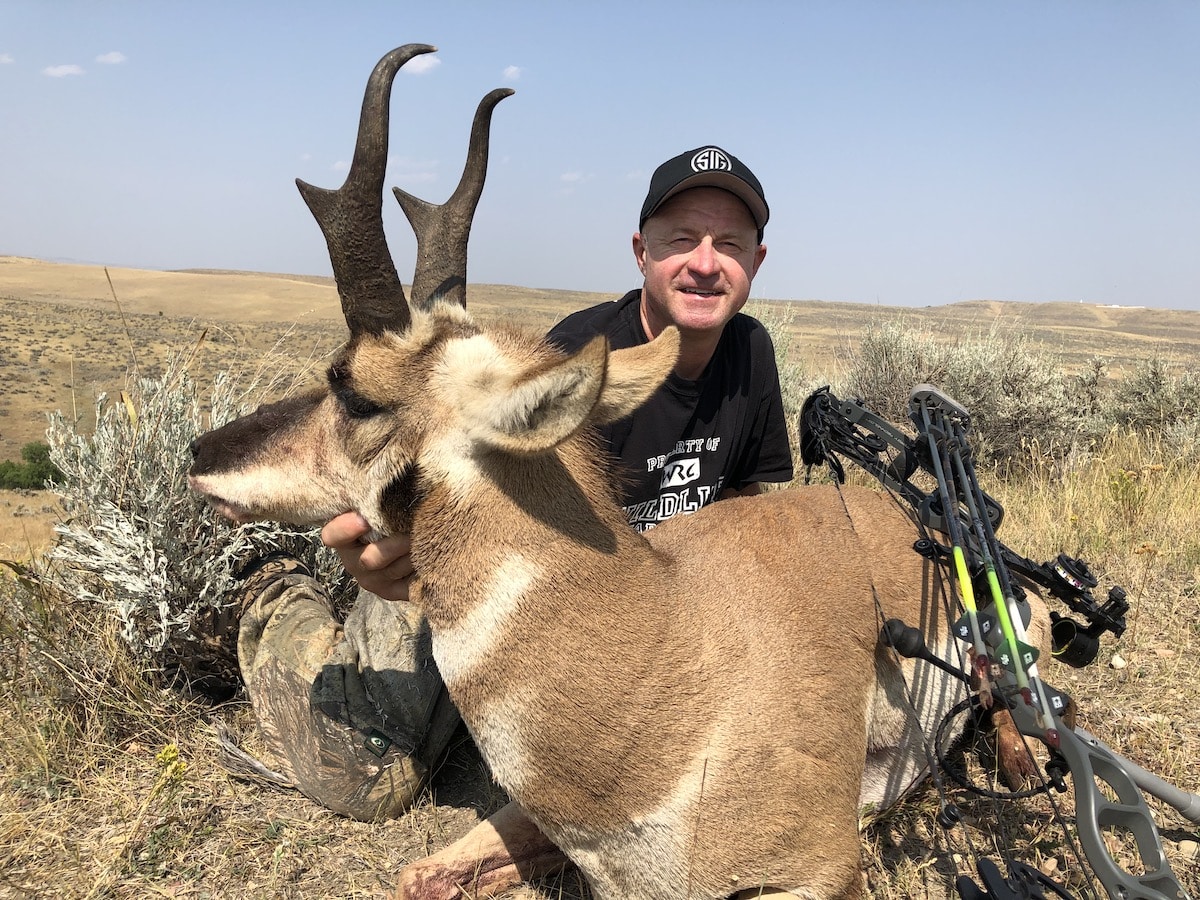
After locating a waterhole with consistent use, Mark Kayser set up an ambush to arrow this respectable Wyoming pronghorn.
This period also rocks as a great time to decoy antelope, but for safety reasons we’d recommend sticking only to archery season. Use a lightweight decoy and stalk the open country to find a herd. Next, circle downwind and use terrain to invisibly sneak to within 150 to 200 yards. Stake your decoy slowly to imitate a buck walking up a rise and wait to see if the herd buck sees the decoy. A slight and slow flash of the decoy typically attracts herd attention, and hopefully a response from the herd buck to run over and chase the perceived satellite buck away.
Don’t freak out if the buck circles downwind, as sometimes they disregard your scent and focus solely on the buck in front of them. They trust their eyesight. If you’re solo hunting, keep your release on your string while simultaneously preparing to use your rangefinder. Once you’re confident in the distance to your target, draw your bow in a low position and come up over the decoy to shoot. You might also be able to launch an arrow from the side. If you’re buddy hunting, let the hunter focus on their bow and the partner can run decoy and rangefinding duty.
Overall, pronghorns are uniquely North American. This hunt represents a great opportunity for a safari without leaving the continent, and hunting one of nature’s greatest survivors. Just keep in mind their eyesight and capitalize on chinks in their armor. With a little luck, you’ll bring home some backstraps.