


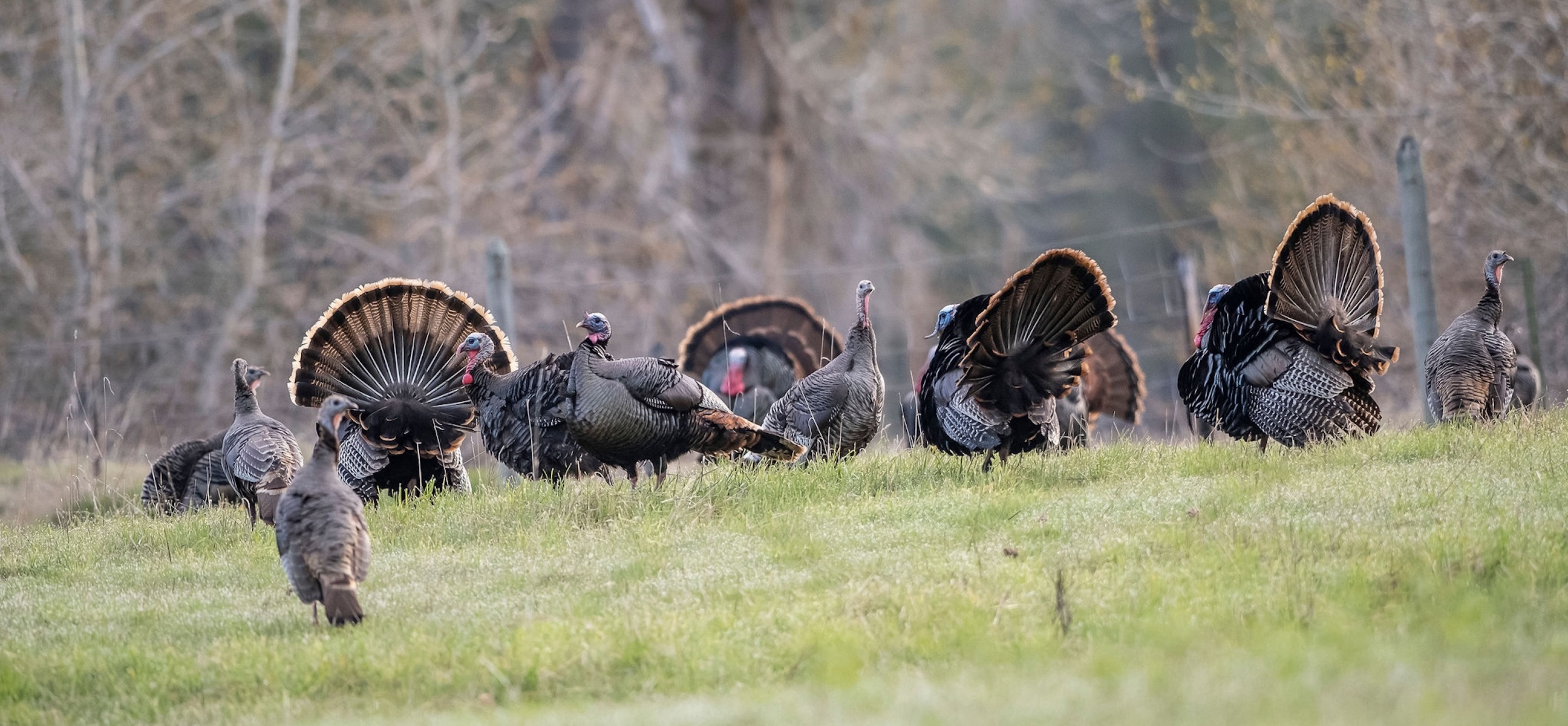
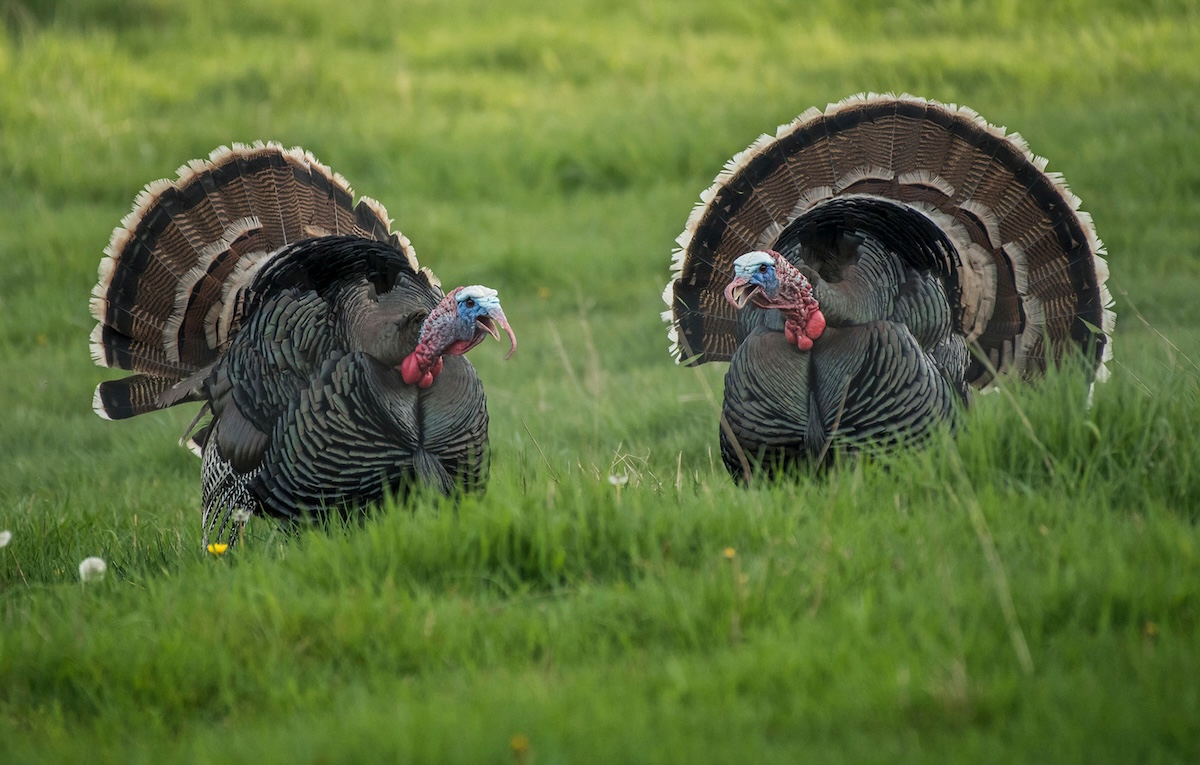

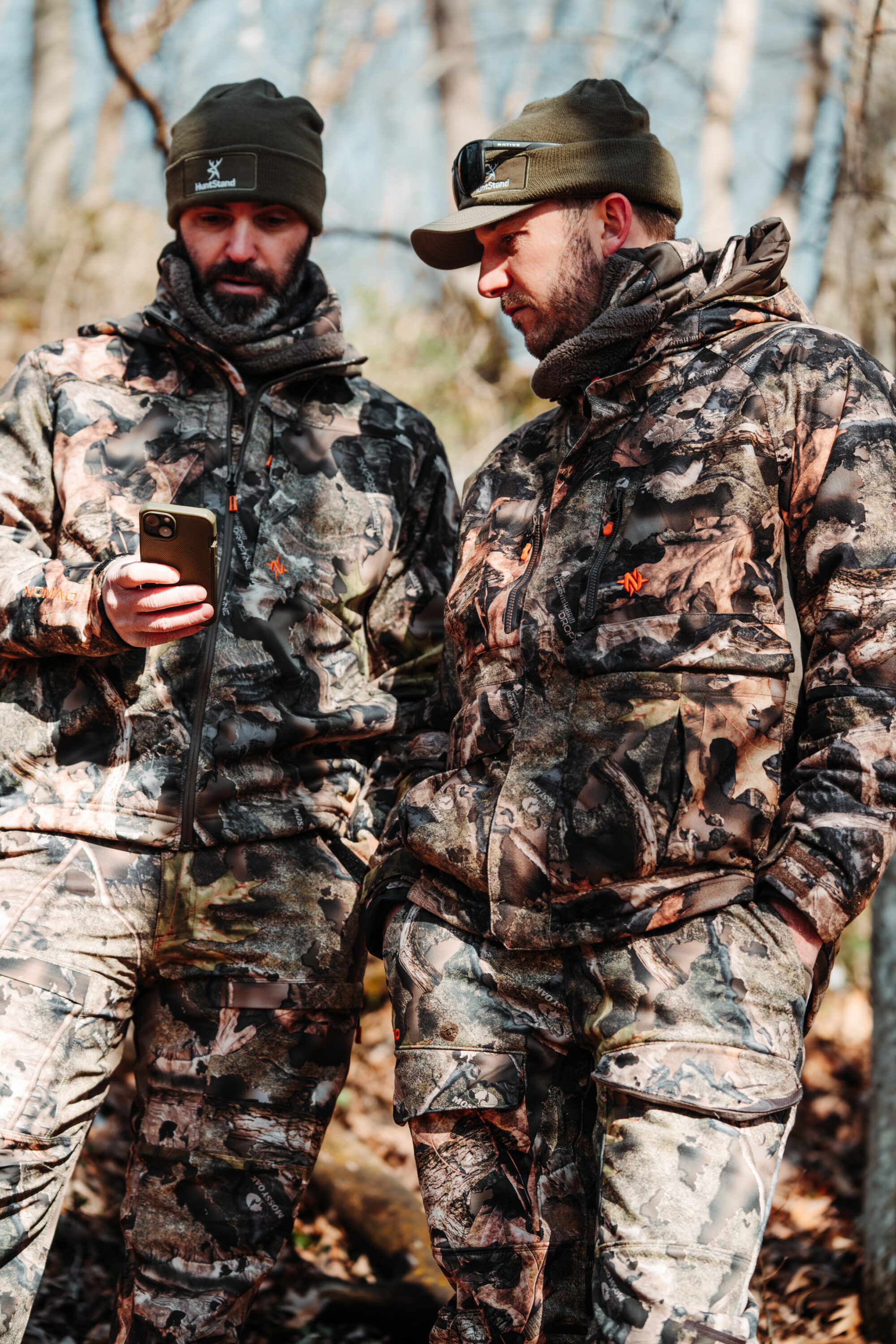
Wild turkeys face a long list of threats.
You face threats every day. You could be involved in a car accident during your commute to work. Or you might catch the flu from a sickly coworker. You might even get struck by lightning while taking your garbage to the curb. Wild turkeys live in a world full of threats, too. Their commutes, illnesses and unseen dangers differ, but threats invade every minute of their existence.
The National Wild Turkey Federation offers a library of information on the threats facing wild turkeys. Without question, habitat loss, predation and illness rank as leading threats to wild turkeys. These and more were the focus of a recent HuntStand Make Your Mark Podcast (episode 196).
Podcast host Will Cooper interviewed Dr. Mike Chamberlain. With a Ph.D. and serving as a professor of wildlife ecology, and management at the University of Georgia, Chamberlain was also recently appointed to the chair of the NWTF Distinguished Professor position at UGA. His 30 years of research of the wild turkey helps spotlight real threats of the wild turkey along with an awareness of how to avert these threats for continued enjoyment of this game species. For being a turkey-dedicated person, he has been nicknamed the “Wild Turkey Doc” and it is a moniker he is proud to embrace. “Turkeys are a true passion and a true part of my life.”
The following are the major threats to the wild turkey.
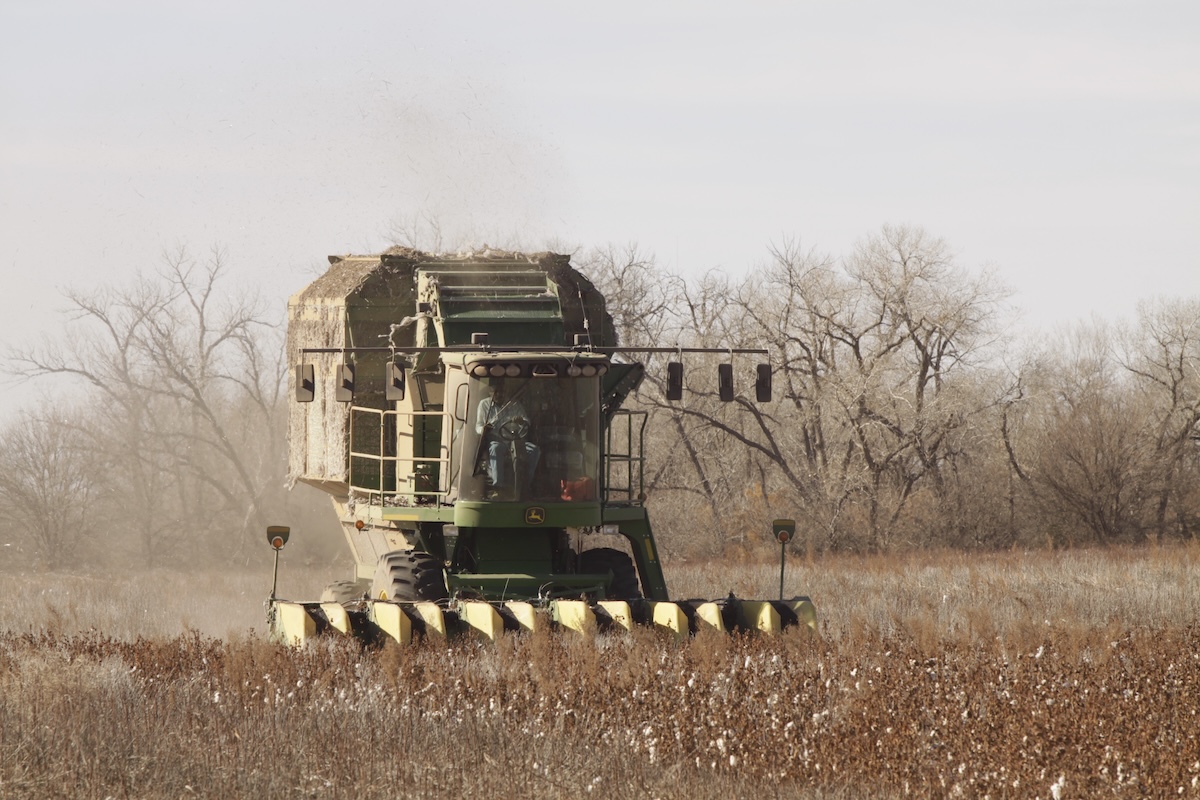
Habitat loss continues to take more turkey habitat.
Habitat Loss Hurts Turkey Populations
As the NWTF echoes habitat throughout its mission, Chamberlain agrees that the No. 1 threat of wild turkeys is the change to habitat in every corner of America. Some habitat fixes are easy, many are not, according to Chamberlain.
“If you ask anybody that does what I do, they will say first and foremost, it’s just loss and degradation of habitat. You know, I mean turkeys are dealing with the landscape that is changing just at incredible speeds, even in rural areas,” stresses Chamberlain. “In fact, this morning I was openly cussing as I was driving past a piece of property.
“This winter I saw one of the largest winter flocks that I’ve seen in many, many years,” Chamberlain said. “There were 35-plus hens in this flock, which is a big flock for this part of the world. And they’re clearing this property to put a golf course on it. And you know, as I’m driving by and I’m thinking to myself, right there Mike, that is, you know, you’re not going to see that flock again because that area of their winter range is gone. It is going to be taken.”
Chamberlain sees this across the country with loss of Florida habitat that Osceolas depend on from the ocean’s edge well into the state’s interior. Drought and cedar encroachment affect many areas of the Great Plains and West, and Chamberlain points to an aggressive agriculture trend for changes to Midwest habitat. In his opinion, the past few decades have experienced unmatched habitat alterations.
Best Ways to Improve Your Land for Wild Turkeys
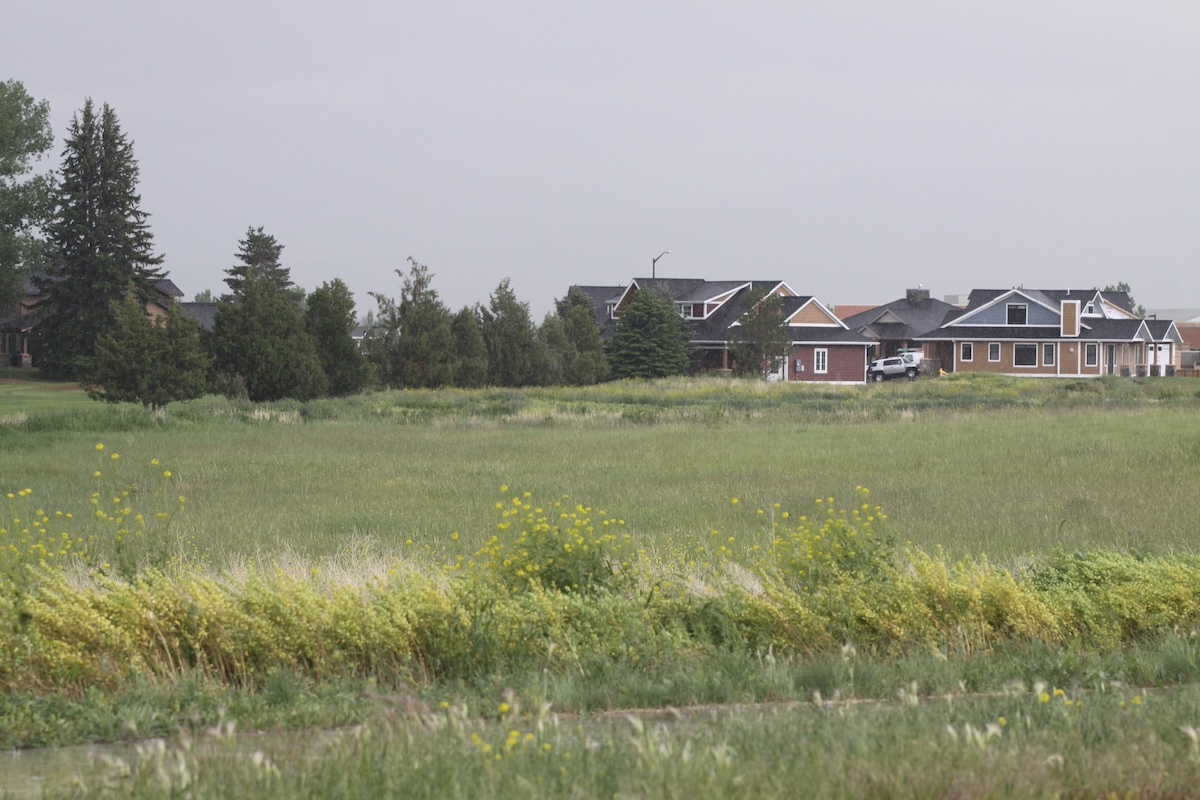
Urban sprawl is a growing concern for wild turkeys.
“I don’t go very few places where I don’t see the hand of man, if you will, creating problems for wild turkeys because we’re taking land and we’re doing it at rates that are a bit hard to comprehend. These larger cities are growing and how people are expanding out from these urban areas, and they’re claiming smaller chunks of land and you’re seeing these larger acres of land be split up, and subdivided,” he conveys. “And that to me is the biggest challenge we face. How are we going to conserve what is left in a way that turkeys are going to be able to benefit and thrive in those areas.”
What Chamberlain worries about the most is ensuring that generations from now, wild turkeys will be around for viewing and hunting enjoyment. To ensure longevity, he believes that initiatives for conservation must be implemented. The larger the better to preserve wildlife habitat everywhere.
“It really causes me pause when I think about, you know, where are we going to be 50 years from now and how we prioritize the bird we love, and make sure that we have the turkeys in our list of considerations when it comes to land use decisions and conservation practices through time,” Chamberlain emphasizes. “NWTF has some (initiatives) where they’re trying to enhance management practices in certain ecoregions and certain parts of the species’ range. You see other organizations and sportsman’s groups, and private citizens, you know, large landowners that are trying to collectively manage their properties in ways that are more sustainable. At the end of the day, society is going to win out on these battles for land, the battles for water. I think it just is going to take larger initiatives.”
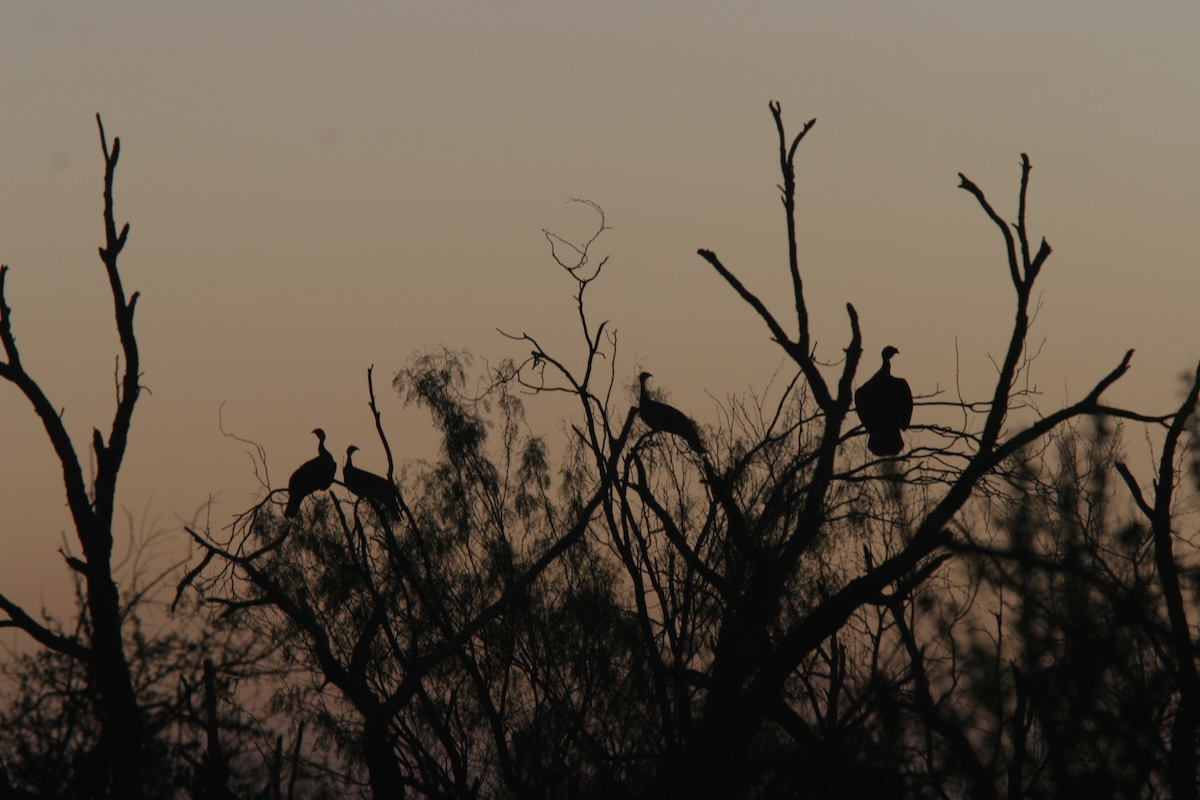
A third of adult turkey predation events occur while they're roosted (by great horned owls).
Predation on Turkeys Diminishes Flock Totals
As state game and fish agencies, and nonprofit conservation organizations fight for initiative funding, wild turkeys are literally fighting for their life. Predation ranks high as a threat to wild turkeys. Of course, ideal habitat would cancel many predation perils, but high-quality habitat does not exist in every turkey domicile. Predation affects all turkeys of every age and different predators attack those different age classes.
“It really depends on what part of the life cycle you’re asking about. If you’re an adult bird, there is no question that coyotes, bobcats and great horned owls, those are the biggies and we see a lot of mortalities where we are just publishing that data now,” Chamberlain shares. “These GPS units have triaxial accelerometers on them. Now we can see very clearly when a bird gets killed. You can see it in the signature.
“And we’re seeing that about one-third of mortalities overall are occurring when they’re in the tree,” Chamberlain said. “So, a lot of turkeys are dying when they’re on the roost. And logically, you know, that’s not obviously a coyote climbing a tree and picking a hen off it. It’s horned owls that are taking these birds and they’re doing it across the night from after they go to roost all the way through the night, and into the early morning. So those three are definitely the big adult killers.”
Without experience, fully developed escape mechanisms and even not being hatched yet, poults face equally extreme threats. Adult wild turkeys defend the family as best as possible, but once predators set their mind to a menacing task, few things can thwart their attack.
HuntStand App Layers and Tools for Backcountry Turkey Hunting
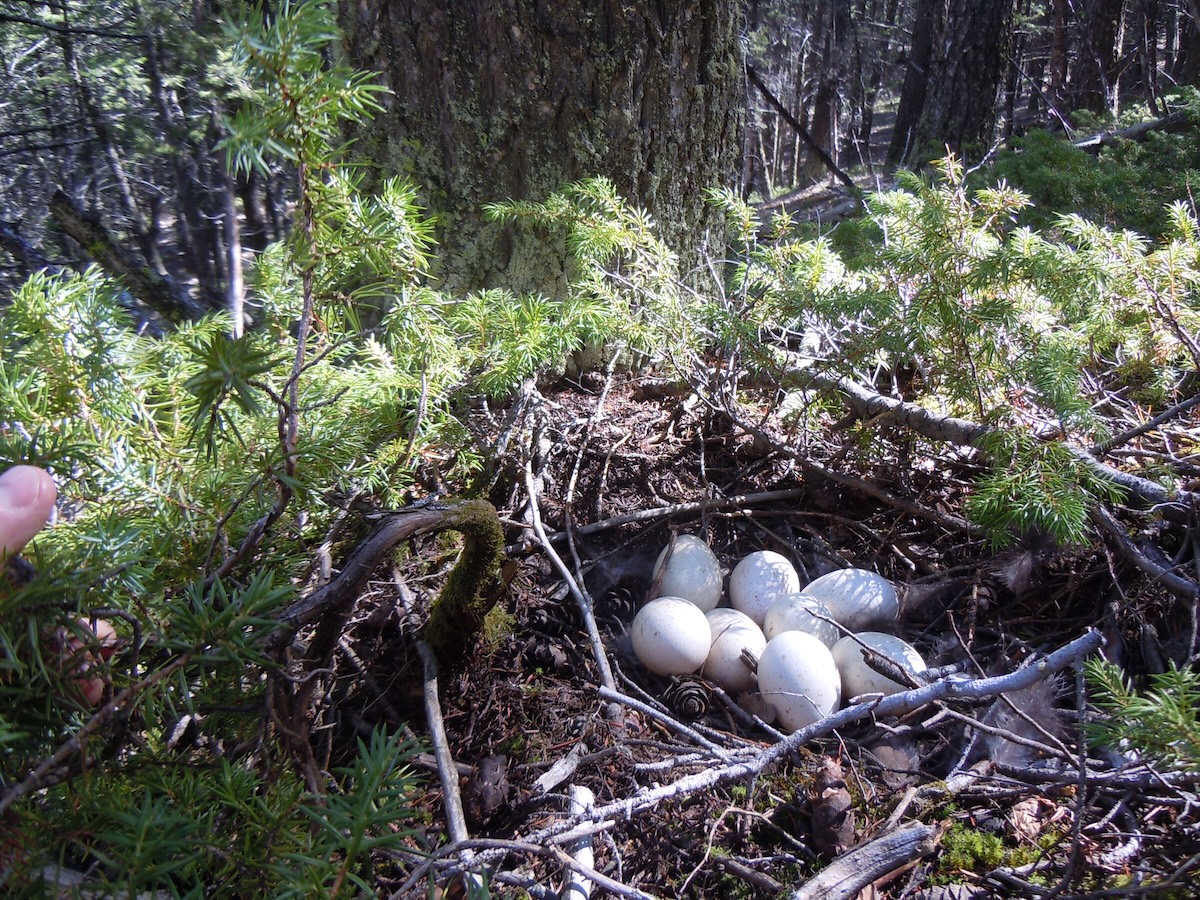
Nest predators take a lot of turkey eggs each spring.
“But when you start talking about the nest and poults, the playing field opens up to a number of other species,” Chamberlain reveals. “Raccoons, without question, are primary egg eaters. There’s no question about that. Foxes obviously are preying on nests. Rat snakes are very common. Coach whips are also a species that will eat poults for sure. Hawks, other birds of prey, are taking poults. We know that crows will periodically steal eggs out of nests. So, I mean it, literally to get a turkey egg to hatch in a predator-rich environment is truly almost, its’s miraculous that they can get through a month of sitting there on the ground — even with a hen protecting them — and end up hatching in some of these landscapes. Because we do have so many predator species that are responsible for taking eggs.”
Chamberlain understands the magnitude of predation. Yet, he believes that if concerned conservationists implemented a predator management program on their property, it would make a difference. He strongly recommends predator management with a goal to make it intensive and extensive — an all-inclusive predator program.
“I think you’re just seeing people that are saying, you know what, I can do this. Maybe I can go and I can catch some animals, and I can try to be part of the solution and contribute what I can,” he says. “I have some friends, that for instance, they have zero ability on the property that they hunt to change habitat. They have zero ability to make big scale changes to what the property looks like, but they have free reign to trap. And so, they have said OK, well we can’t control this and this, but we can work diligently on this (predators).”
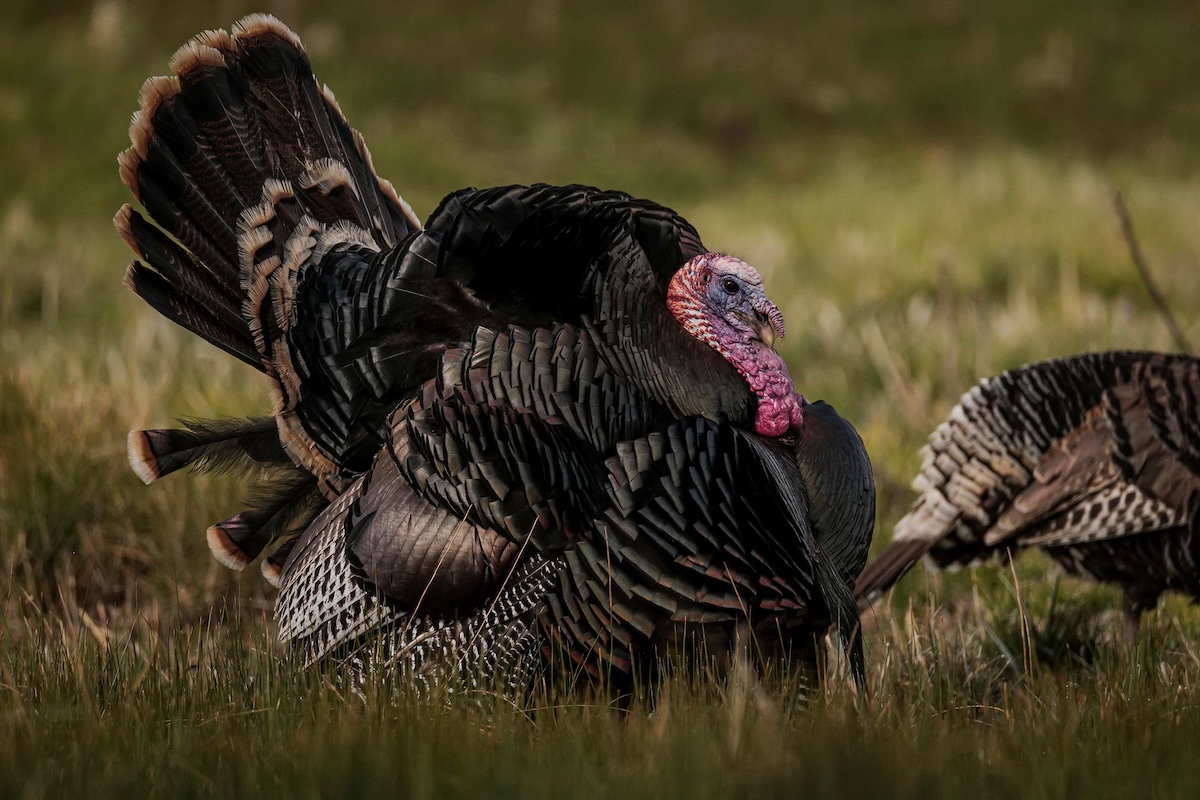
Disease continues to impact turkeys.
Disease Reduces Turkey Numbers
Scroll or view any news site today and you’re bound to discover a story about the bird flu. Can you say high egg prices? Diseases affect wild turkeys, but not at the same magnitude as domestic poultry, according to Chamberlain. Even so, diseases and illnesses are nothing to sneeze at for the wild turkey.
“Avian flu is really in the news right now. We haven’t seen die-offs affecting turkeys at any appreciable scale. Of course, turkeys get diseases like avian pox and blackhead, and things that can cause mortalities,” Chamberlain expounds. “One thing that’s on our radar, that we’re continuing to learn quite a bit about, is a proliferative virus that is capable of producing tumors. And what we’re finding with that virus is it’s actually very prevalent across the southeastern United States and even beyond. In fact, in some of our study populations, 75% of the birds are carrying the virus, but it doesn’t appear to be impacting their survival or really their reproduction, per se.”
The Best Turkey Hunting Spots (and How HuntStand Pro Finds Them)
There are some behavioral changes with the virus and Chamberlain noted it causes some birds to move more than otherwise a normal bird would day-to-day. Researchers are not certain if the movement is connected to a search for food or maybe something as simple as the bird is not feeling well. Regardless, the behavior causes birds to behave a bit more differently. Chamberlain also shares that it is primarily a virus connected to older birds.
“And I just have to wonder, similar to what you’re seeing with some other diseases that the longer you live, maybe there’s this cumulative type of issue that just very slowly compromises you through time.”
To learn more about threats to wild turkeys, download the HuntStand Make Your Mark Podcast episode 196 at your favorite app store. Each week, host Will Cooper educates and entertains listeners with a variety of seasonal hunting subject matters.

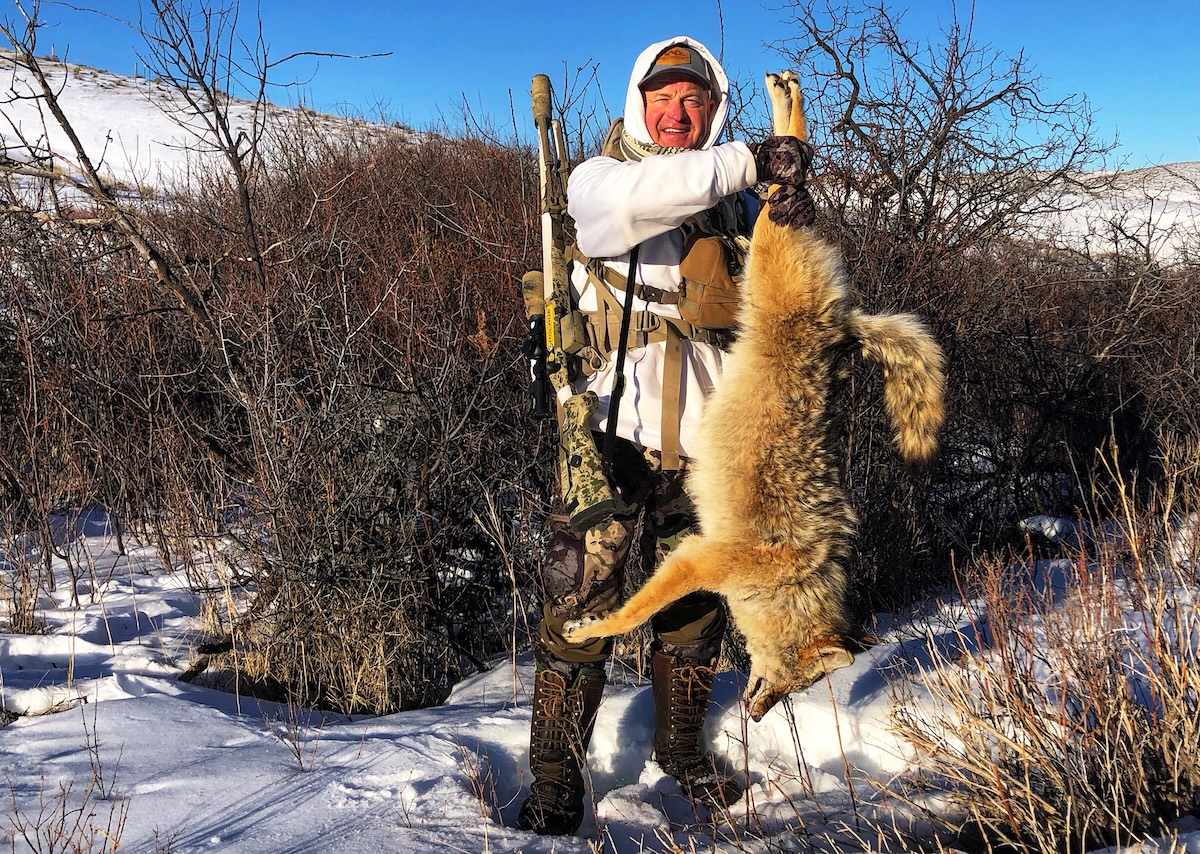
Mark Kayser with a February coyote that played right into a howling ambush.
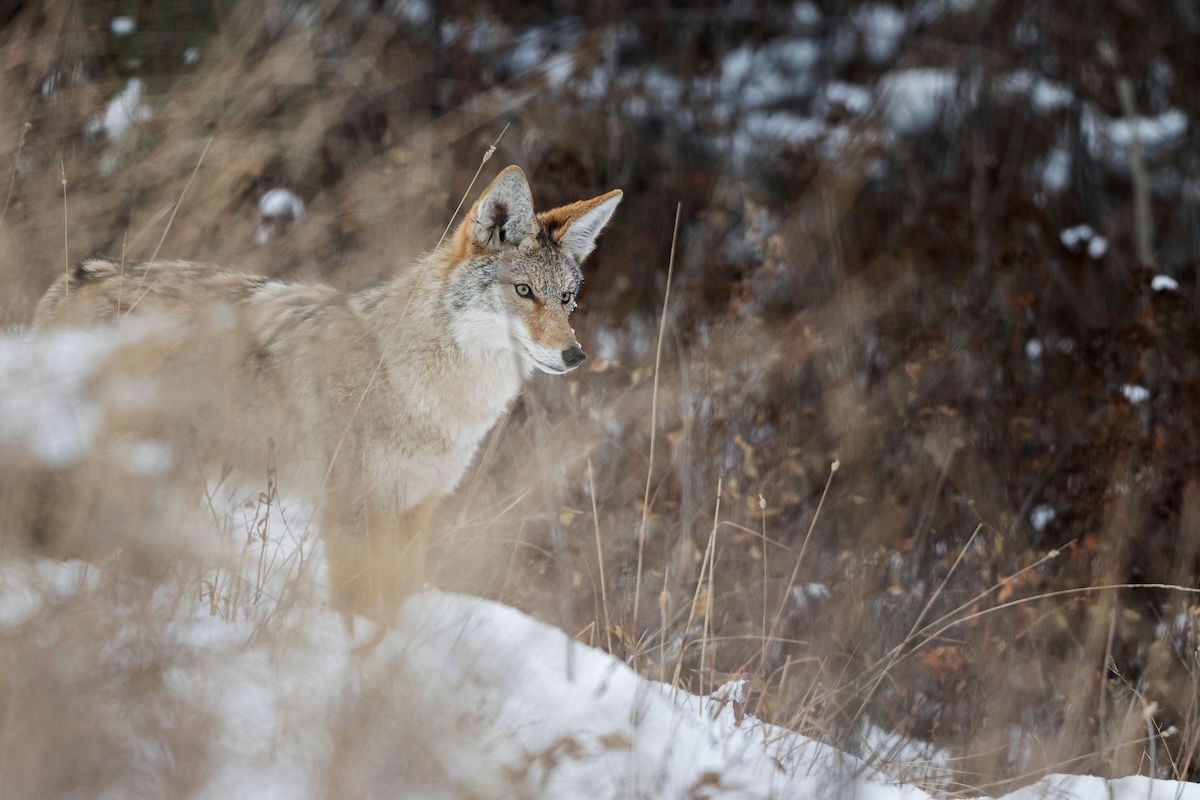
Big game can draw coyotes, too.
You watch YouTube videos and think to yourself, this coyote hunting thing is easy. Well, you’re wrong. In recent years, the sport of calling coyotes in close has transformed. More hunters jumped into it and educated coyotes quickly. I recently read an article by coyote pro Fred Eichler and even he was expressing how coyote hunting has become more challenging in recent years. I agree.
Whining aside, you can increase your success by having a playbook prepared ahead of your hunt to guide you to higher odds of success. By understanding coyote lifestyle, coyote behavior, coyote needs, calling site dominance and more, you remove many of the elements that cause failure on a hunt. Start with understanding your quarry.
Here’s how to hunt coyotes, with help from HuntStand Pro.
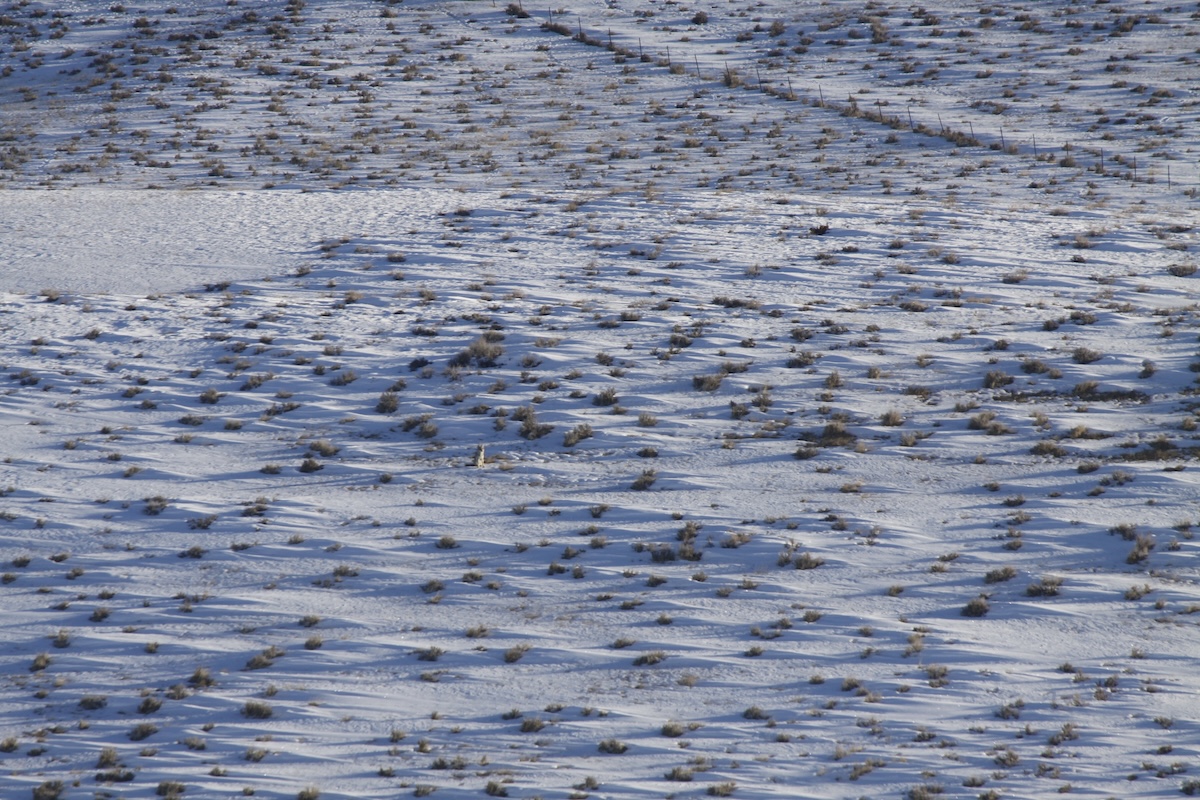
A coyote sitting on a hill waiting for its mate to survey an area.
Coyote Hunting 101
Midwinter coyote hunting differs greatly from summer, fall, or even a spring hunt. Coyote hunting in the dead of winter means coyotes are educated, paranoid, and evasive. They have been hunted hard since fall, either directly or indirectly as incidentals during other popular hunts. Even so, they have two weaknesses this time of year: food and love.
Start with food. Spring, summer, and fall represent a wealth of food for all species, including coyotes. Winter leaves the cupboards bare causing coyotes to hunt farther, take on larger prey, and scavenge more.
They need more calories to stay warm in frigid conditions, just like you and those calories arrive from a more determined hunt. Deep snow only eats up more calories as coyotes use precious energy to plow forward during the hunt.
As you plan a hunt in the winter, put an enormous amount of thought into where a coyote is finding its next meal. It’s a top location for your setup. We’ll talk sounds in a moment, but Coyote 101 moves on to breeding.
Coyotes across North America primarily breed in February. It’s the coyote rut and just like coyotes trotting farther to find food, they also embark on long jaunts looking for love. Coyotes begin to change from pack or single status to pairs in midwinter. Therefore, doubles could arrive at your setup at any time. From February through summer, pairs and a spring litter of pups dominate the life of coyotes.
Best Spots for Calling Winter Coyotes
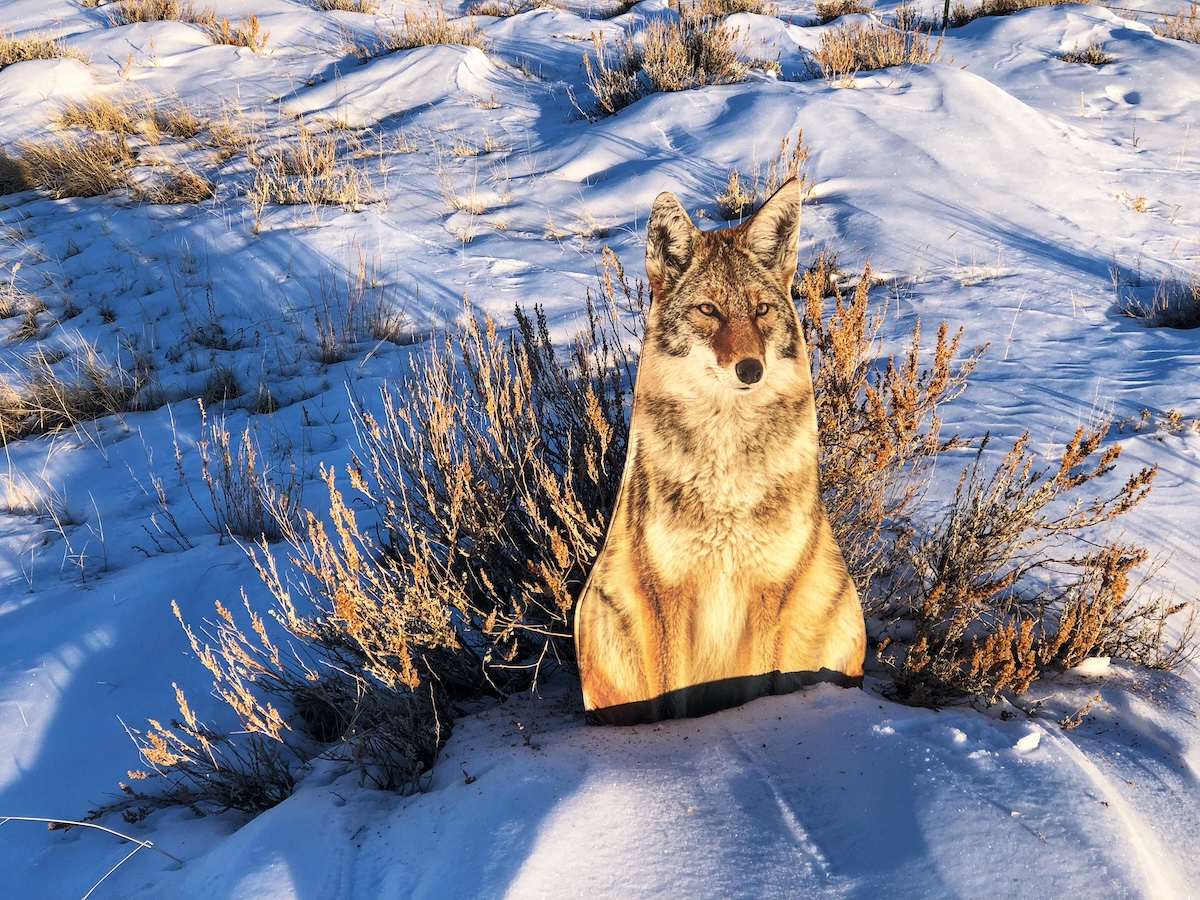
The Montana Decoy Sitting Coyote decoy looks quite real.
Call and Decoying Coyotes
In reality, you can call in a coyote at any time of the year with any sound. Nevertheless, use what you learned in Coyote 101 to match sounds to seasonal behavior. The midwinter blues might be hitting you, but for coyotes, it equals hookup time as coyotes choose mates for litter season ahead.
With the breeding season in full swing throughout February, consider a rousing round of coyote vocalizations during each set. Why vocalize? Coyotes that have not found a mate could easily be lured to your sounds looking for love. Lone howls, yips, and an end bark all signal a coyote looking for companionship. Master the lone howl in February and you have all the tools to call in a lonely coyote.
Of course, some coyotes are already paired up. No worries. Those coyotes running in pairs have switched their mission from finding a mate to holding territory. A lone howl to a pair already establishing territorial dominance over an area for denning also has the power to pull in coyotes.
Pairs might arrive out of curiosity. They might even be ready for an all-out brawl. One pair I called in last winter arrived with blinding speed and nonstop challenge howls letting me know my visit was not appreciated. One escaped. One did not.
Fortunately, there are certain scenarios proven to spark more and better responses from winter song dogs.
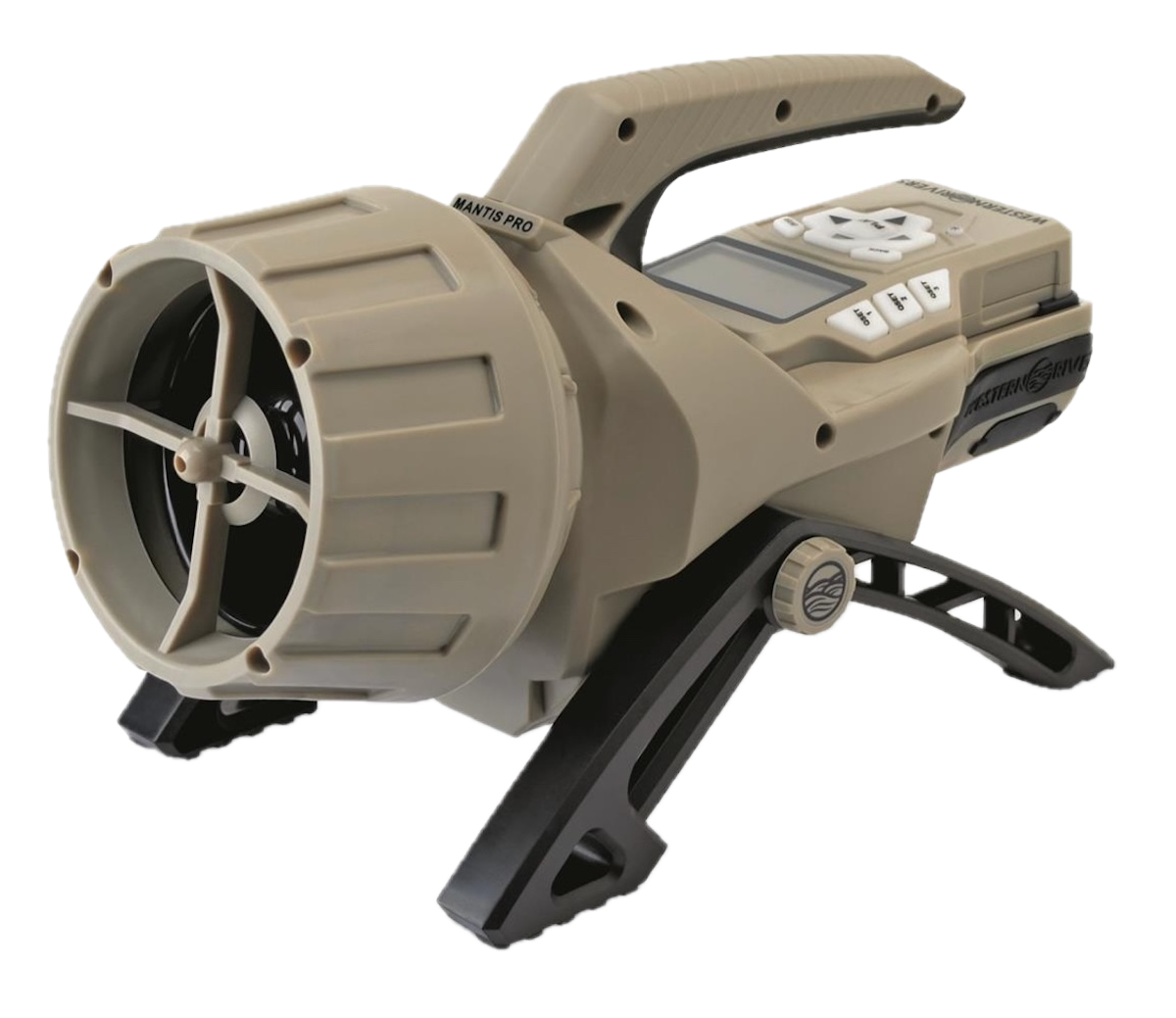
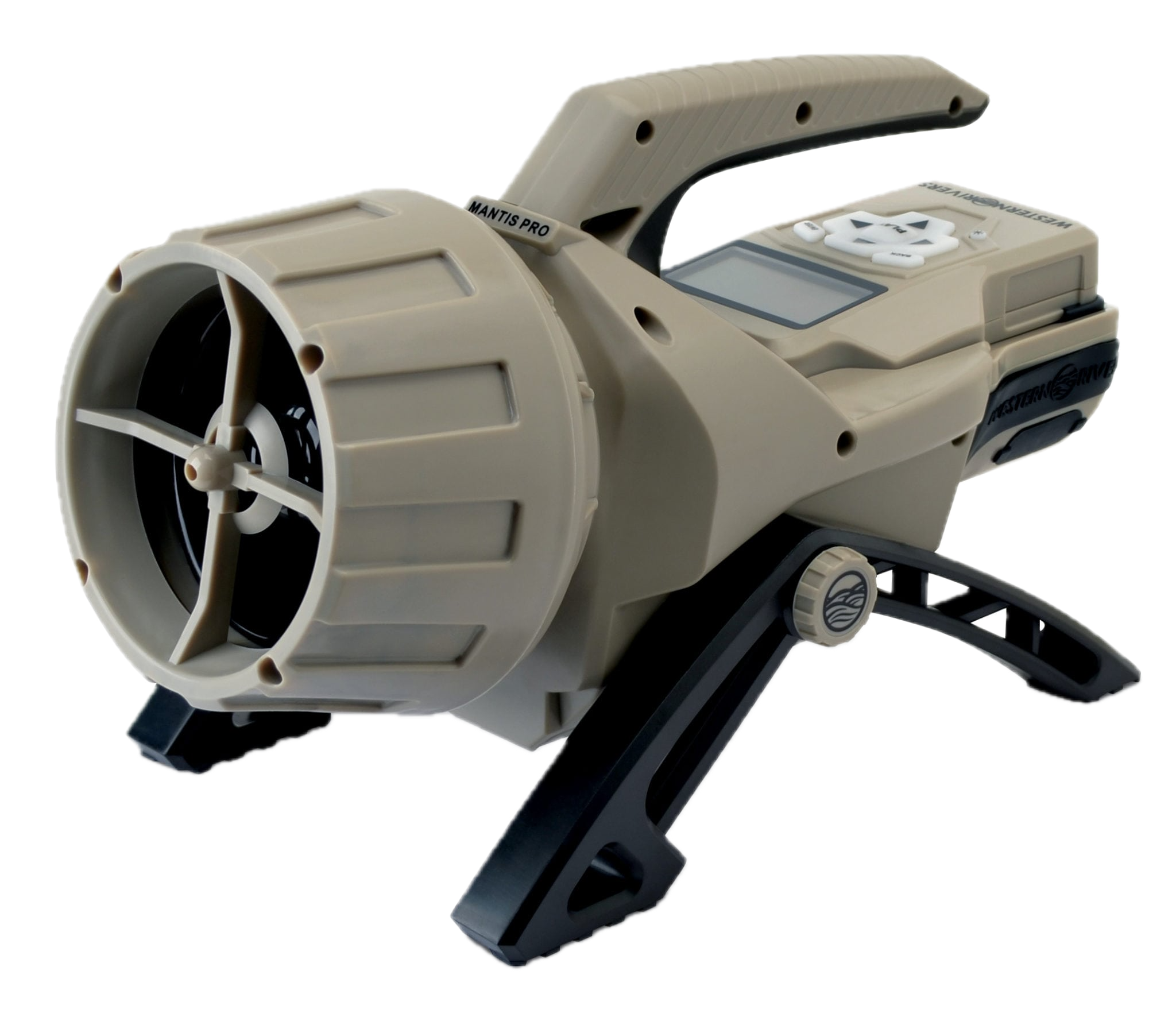
The Western Rivers Mantis Pro 400 electronic predator caller.
Males Fighting Over an Estrus Female: Hunters can take coyote vocalizations to the next level, especially during the breeding season. After initial howls, consider adding in estrus whines, yipping, and even coyotes-in-distress. This combination recreates the illusion of coyotes fighting over a female in estrus. Howls cement the location. Estrus whines and yips clarify an estrus female is onsite. Distress sounds indicate a fight over a lovely lady is taking place. I use this scenario consistently in breeding season.
Pups-in-Distress Sounds: Howls continue to irritate denning coyotes fervently defending dens. Once pups arrive in the spring, you can use pups-in-distress sounds to lure overprotective adults into shooting range.
Prey-in Distress Sounds: Later in the summer and early fall when pups begin hunting on their own, any prey-in-distress sound works. Be ready for multiple coyotes arriving at once. Finally, as fall transitions back to winter, use new prey sounds and slowly work back to more vocalizations.
Decoys add one last theatrical reality to your setups. Year-round, I carry the Montana Decoy Company Sitting Coyote decoy in my pack. When coyotes arrive, it bolsters coyote confidence to seal the deal. Set any decoy — coyote or prey — attached to your electronic caller, approximately 100 yards upwind of your position to take advantage of any coyote circling downwind. This puts the coyote between you and the caller with its attention focused away from you.
Coyote Hunting Setups with HuntStand
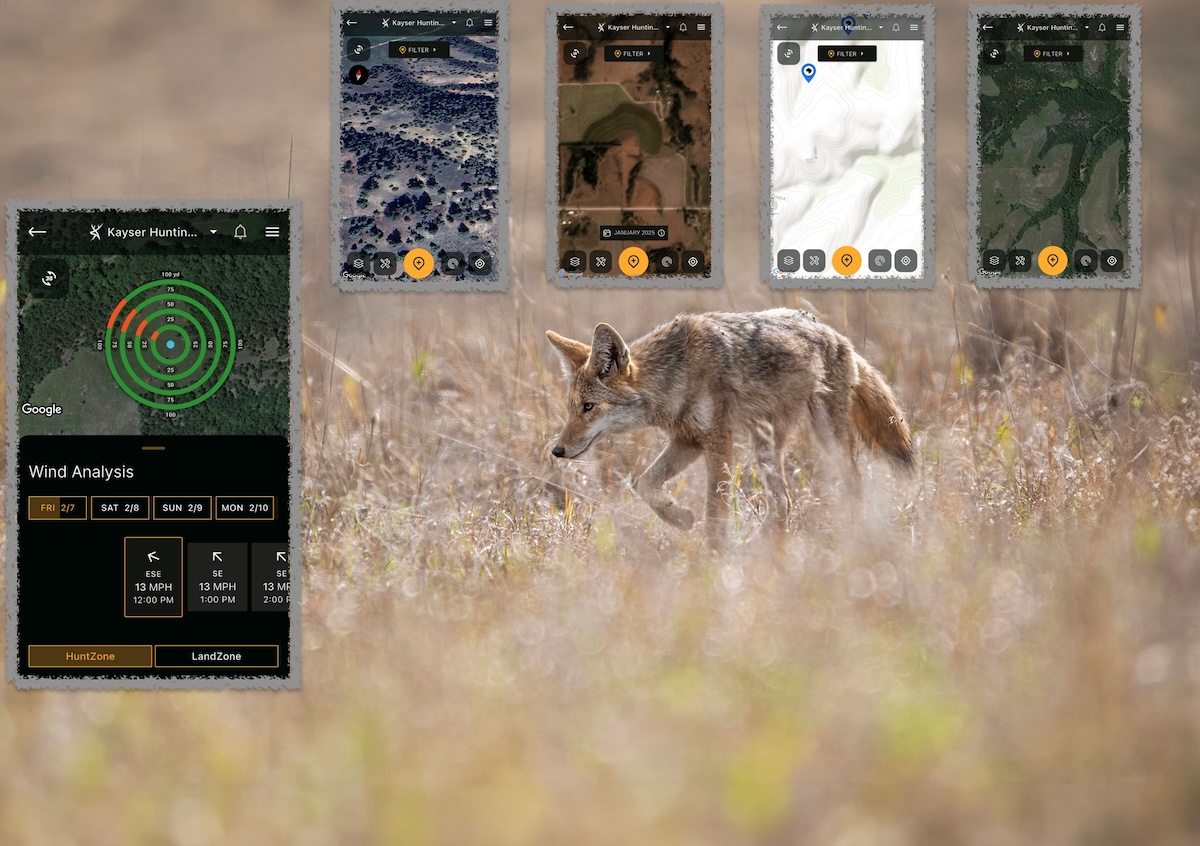
HuntStand's HuntZone is great for choosing coyote calling sites.
Coyote Hunting Hotspots
Site selection is where HuntStand performs at its highest level. HuntStand Pro or Ultimate subscriptions extend your ability to scout out calling sites even more.
Begin with locating the two most important habitat elements of a coyote’s life: sanctuary cover and hunting grounds. Coyotes top the charts for adaptability in each category. Even so, they prefer to seek seclusion away from humans in cover that not only acts as a weather shelter but also as a castle wall. Think of areas such as ungrazed prairie pastures, cattail wetlands, dog-hair timber, and craggy canyons. Any of these located away from roads and human activity need notes on your app.
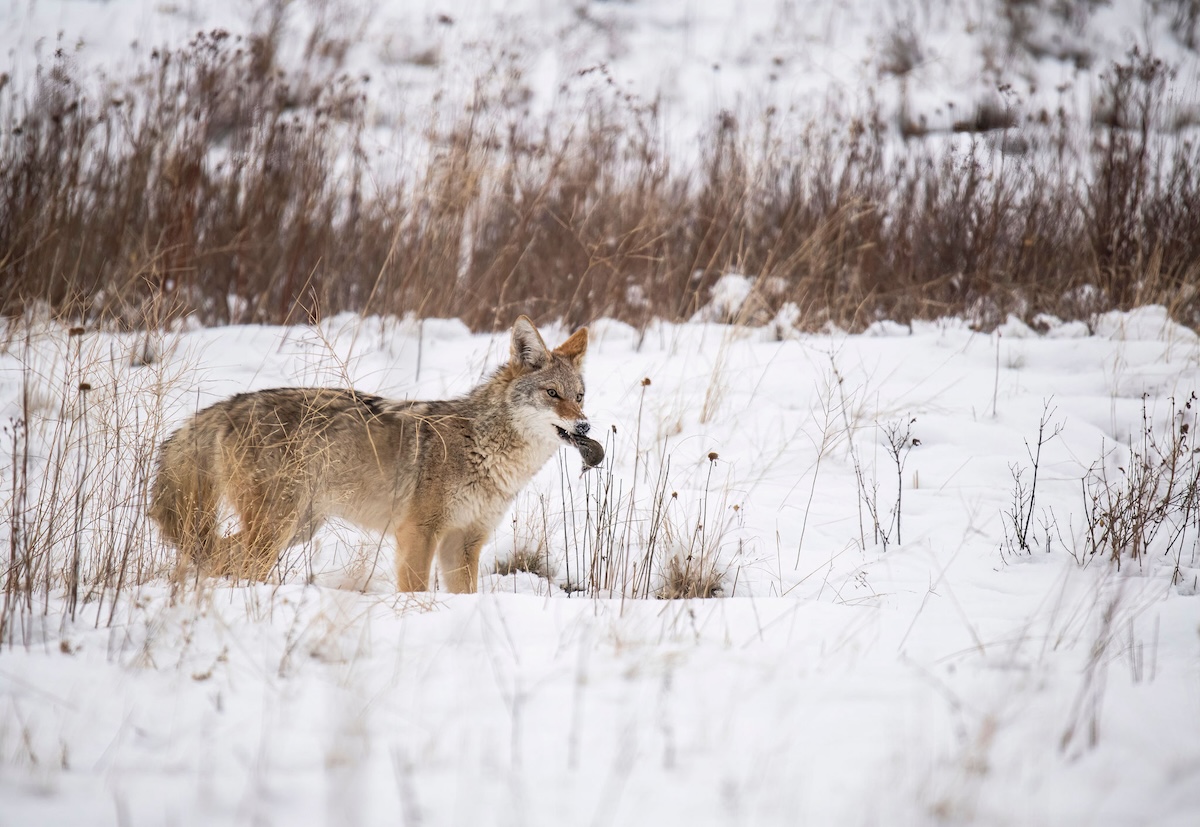
Rodents make up the bulk of a coyote diet. Find them. Find coyotes.
Small Rodent Hotspots: Next, look for hunting grounds. Most of a coyote’s diet consists of rodents, big and small. Again, coyotes might hunt anywhere, but habitats that hold an abundance of prey can be hotspots. Fields that hold mice and voles, a favorite of coyotes, plus brush pockets brimming with cottontails, are attendance record setters for coyotes.
Large Game Hubs: Next, move up to larger game. Coyotes tag along with deer, elk, and pronghorn herds hoping for a weakling to emerge. They visit turkey flocks and stalk geese in the big bird category. They also know the location of all cattle herds, goat herds, and chicken coops in their territory. Coyotes rarely attack a full-grown cow, but sometimes a cow dies and livestock producers who calve early know coyotes cruise the herds for stillborn calves, afterbirth, and to snack on milk-rich droppings of calves.
With several sites in mind, take an educated guess on the routes coyotes might use to travel between refuge and tempting hunting grounds. I generally try to think of where coyotes might hunt under cover of darkness and where they will retreat for a daytime nap.
Then, look for openings. High vantage points (with wind advantages) allow hunters to see and stay downwind of any coyote activity area. Invisibility while accessing or exiting these sites only helps keep your presence veiled. Look for timber stands, coulees or creek bottoms you can utilize to cloak your form when moving into position.
Hunting Coyote Bedding Areas
HuntStand's Monthly Satellite provides a fresh look at your hunting area. Quad Topo aids in finding elevated ambush sites. Hybrid map provides a clean look at your hunting area. The 3D Map layer gives you the flyover feel of your hunting area. And the 10-Day Forecast helps plan your hunt.
HuntStand Tools That Find Coyotes
Confirm your findings by doing a flyover using both the Hybrid and 3D Map layers. Cruise the area to get a feel for topography.
Next, confirm elevation of calling sites with a topographical review. Accomplish this using the Natural Atlas or Quad Topo base layer map.
If you can’t visit the site before your hunt, and you worry land management practices might have changed, use the Monthly Satellite baser layer. It offers a month-old view of the area at a lower resolution, but with ample quality to examine if the land use has changed recently.
Using appropriate marker locations, you can place coyote markers to indicate where you’ve seen coyotes. Or use it as the main marker to note best calling locations. Other markers you can place on your customizable Hunt Area include a parking marker, gate access, pinch points, heavily used food, or water markers. These and more help you better understand how coyotes use an area, plus aid you in navigating to sites under cover of darkness.
Finally, don’t forget about the weather. HuntStand shines in this area as well. HuntStand provides you with current conditions, hourly forecasts, and a 10-day forecast. Combine that information with the HuntZone wind analysis to see direction and the scent cones of your scent dispersion at the site. This feature is invaluable for whitetail hunters and coyote hunters alike.
With precise scouting of refuge and hunting areas, you might not even need calls. Several times a year, I set up and coyotes pass by me without ever lifting a call to my lips. That is precise scouting and demonstrates your playbook is complete.
HuntStand Pro helps accomplish this and more.
Use HuntStand’s 3D Map feature to help you in visualizing how a particular parcel of land lies.
If you deer hunt, you put a huge emphasis on locating whitetail bedrooms. These refuge zones offer targeted areas to focus on for possible whitetail encounters. Uncovering bedding areas also ensures that you stay clear of these sanctuary domiciles, thus giving deer an unpressured place to escape and relax.
Coyote hunters should take heed of this whitetail hunting strategy. Like deer and other game species, coyotes seek out bedding cover where they can find shelter from weather, protection from other predators, and a safe haven from humans. Although coyotes might plunk down anywhere, especially if an ample supply of cover resides nearby, they still retreat to places offering the most safety during their downtime hours. Think of these retreats in the same manner as you would deer bedding cover, and it could lead right to a great calling location. Here’s a game plan for hunting coyote bedding areas.
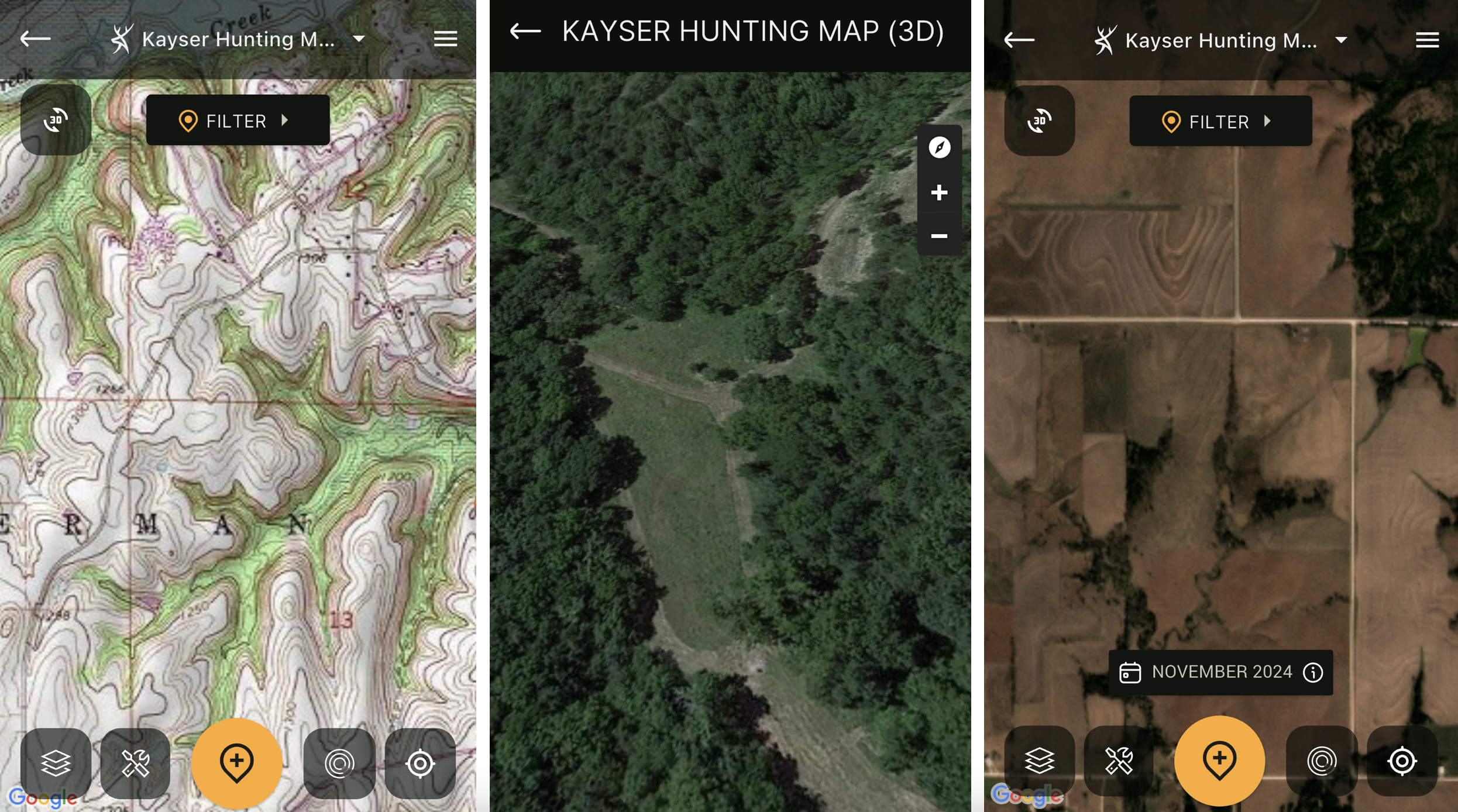
If you cannot visit an area before you hunt, use HuntStand’s Monthly Satellite feature to view the property in imagery a month or less old. HuntStand’s Quad Topo layer assists in finding high locations for the best in setup sites.
E-Scouting Coyotes with HuntStand
A proven hunting app like HuntStand is invaluable in helping you pinpoint coyote bedrooms. Install the app and begin using satellite images, markers, property boundary information, and weather to refine your search. Boost your abilities by upgrading to HuntStand Pro or Pro Whitetail to give you unprecedented information on a potential coyote hunting area.
As you virtually fly around a hunting property using HuntStand, look for remote, rugged shelter. Coyote-rich areas might have many different appearances, perhaps even outskirts of farmsteads, ranches, subdivisions, etc. That said, they tend to avoid the bulk of human activity. All coyotes don’t retreat from the human intrusion, but the majority rather rest in an area where they don’t have to worry about human disturbances.
Best Spots for Calling Winter Coyotes
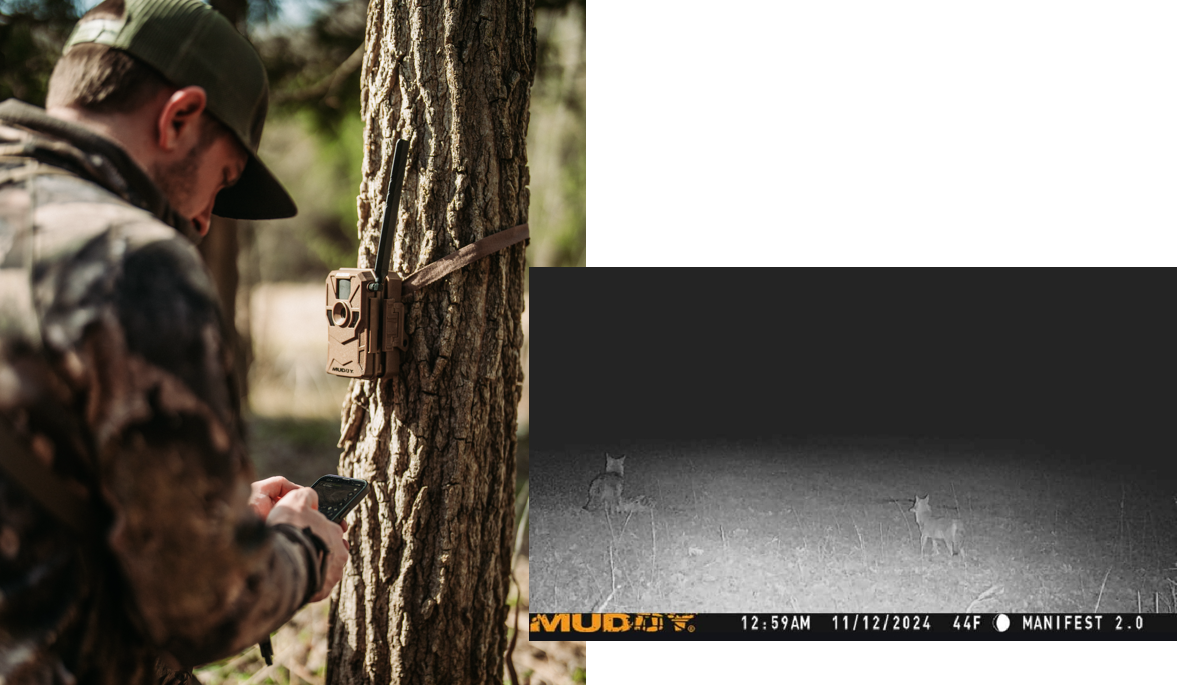
If you need further proof of coyotes using an area, put your trail cameras to use.
Scouting Coyotes with SD and Cellular Trail Cameras
All country is not coyote sighting friendly. Trail cameras offer some relief in this terrain dilemma when trying to confirm sanctuary zones. Utilize these along trails and even boost photo opportunities by utilizing scent attractants to stop coyotes for the perfect pose. I typically keep several cameras operating after deer season just for this reason.
Of course, position them a bit lower or position them with a downward angle and you’ll have another set of eyes scouting for coyote travel patterns to their preferred hangouts.
Without question, scouting efforts will vary based on location. Focus your coyote bedroom hunt withing the best bedding, which is different from region to region. Below are some ideas to spark your hunt with an emphasis on the corner of the country you call home.
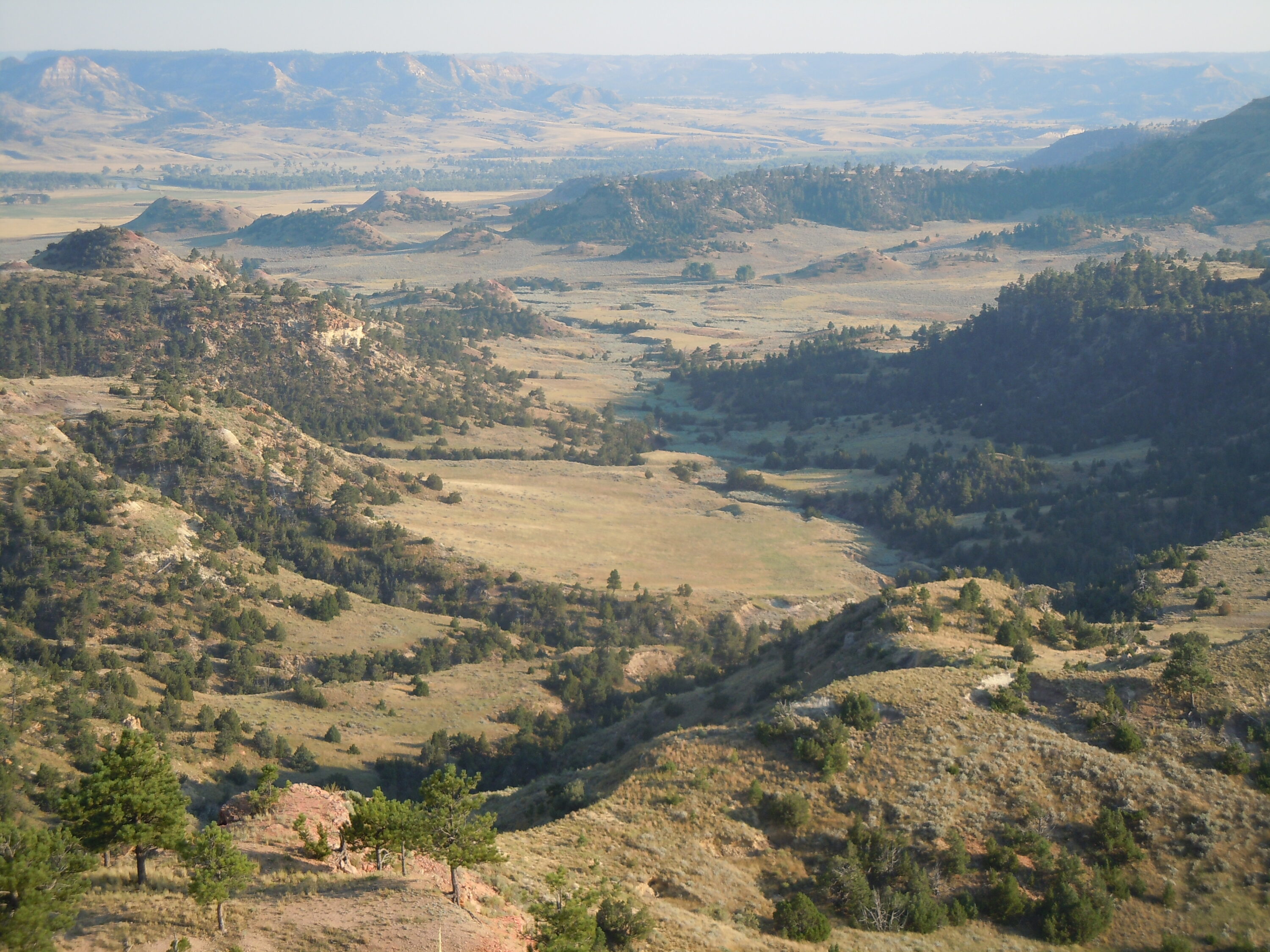
The vastness of the West offers ample coyote sanctuaries. Look for rough country away from roads or trails as top areas.
Coyote Hunting in the Northwest
In the Northwest, you can throw a rock in any direction and find coyote escape country. Canyons, coulees, badlands, and basins all have terrain that swallow coyotes whole. Coyotes might pass through open country, but rarely do you see them lounging around all day in an exposed environment. Still, coyotes do not want to be disturbed, and they seek protection from weather — such as gusty winds — that diminish their security senses.
HuntStand Pro provides detailed property boundaries for the U.S. and most of Canada. In the U.S., you receive detailed mapping information, including the owner’s name displayed right on your map (plus specific map property boundaries). Tap the screen and expanded details appear to ease your search to track down a landowner. Use this important feature to acquire access, call coyotes near property boundaries, and needless to say, keep you from trespassing.
How to Hunt Public-Land Coyotes
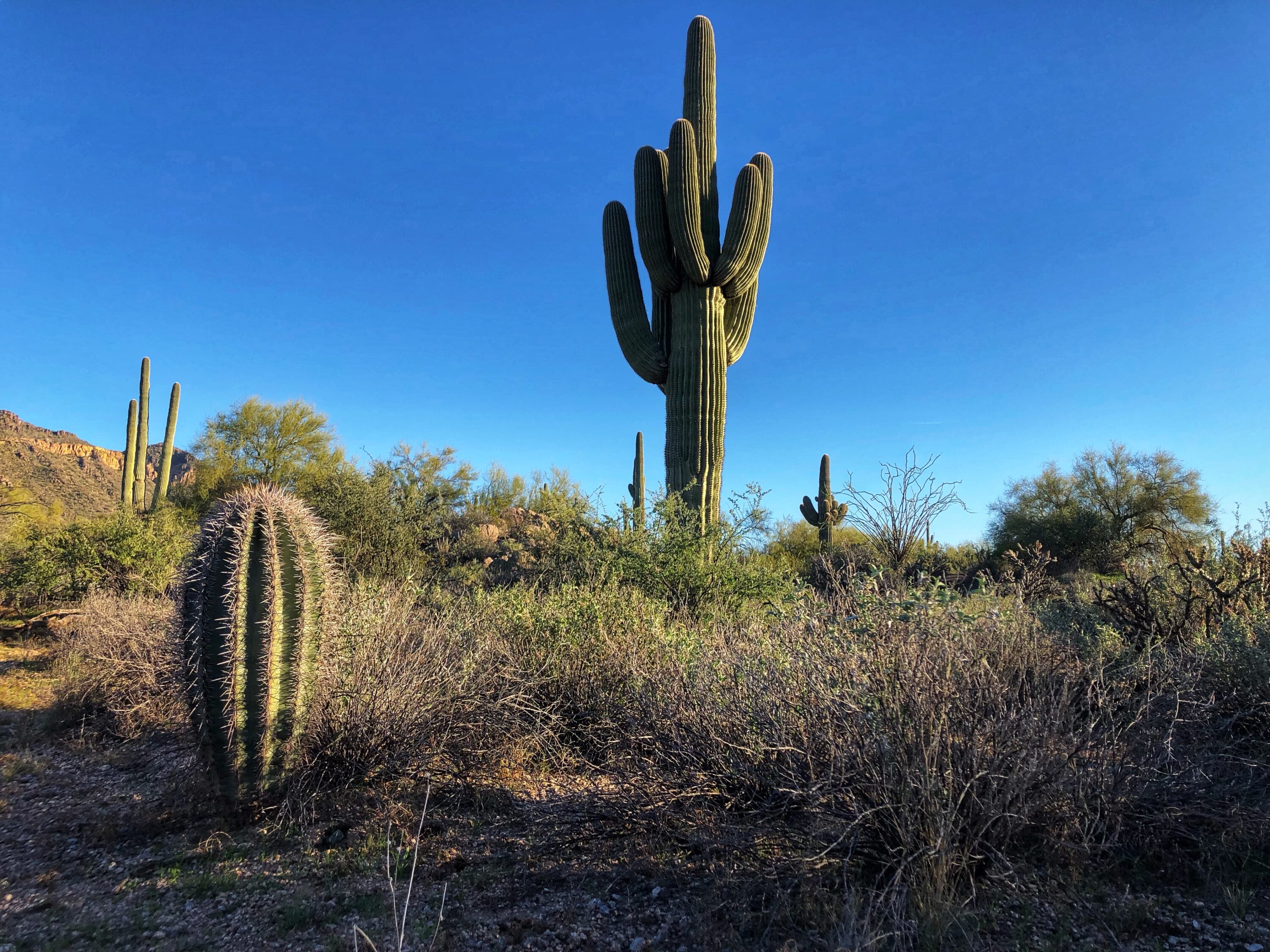
Desert arroyos provide deep cuts where coyotes can hide out, but desert fauna also helps in hiding coyotes when they need a siesta.
Coyote Hunting in the Southwest
Defined by deserts and mountain ranges, the Southwest includes many of the same refuge areas found in the northwestern section. Moving to the deserts, focus on the winding arroyos that crisscross the cactus plains. These dry washes temporarily fill during the rainy season, but the water in them doesn’t last long. Coyotes seek out these eroded channels for windbreaks, shade from the sweltering sun, and to utilize their banks to disappear from the broadness of the desert plain.
In addition to the ruggedness of arroyo corridors, seek out areas supporting large expanses of prickly pear cactuses, cholla cactuses, and plants such as yuccas or creosote bush. These all add to the cloaking cover a coyote would seek out. And in this and all locations, the farther you find a bedroom from any road or human hustle and bustle, the better.
One of the best overlays on the HuntStand app is the 3D Map. Use it as your personal drone or airplane ride to survey the terrain from above. It displays all the canyons, mountains, rolls, and depressions in a realistic ride to see what’s ahead.
The HuntStand Property Info feature provides you with ownership and border definitions to find hunting land and helps avoid trespassing.
Coyote Hunting in the Northeast
Northeastern coyotes require winter refuge and that oftentimes comes in the form of thick conifer swamps, south-facing ridges, dense stands of spruce, and even woodland wetlands characterized by abundant cattails. These locations break the wind, help subdue snow from piling up too deep, and best of all, attract a variety of prey.
For the same reasons, coyotes seek out these areas. Plus, other prey species, such as deer, rabbits, upland game, and a variety of smaller rodents, value these areas of habitat shelter. The dense cover gives coyotes a veil to hide behind. Then, when hunger yearns, they don’t have far to travel for their next meal.
If you feel the satellite image is too dated, HuntStand provides a mapping bonus with Monthly Satellite. Many systems use satellite imagery that might be updated every two years, or even longer. HuntStand Monthly Satellite offers images that are updated monthly, and this is imperative to understand the day-to-day changes occurring on a property, especially if you do not live near it. The layer is provided at a lower resolution, but ample clarity to see agricultural transformations, wildfire devastation, and even timber management. It also reveals snow cover, if late-season hunting is in your future.
How to Hunt Coyotes During the Mating Season
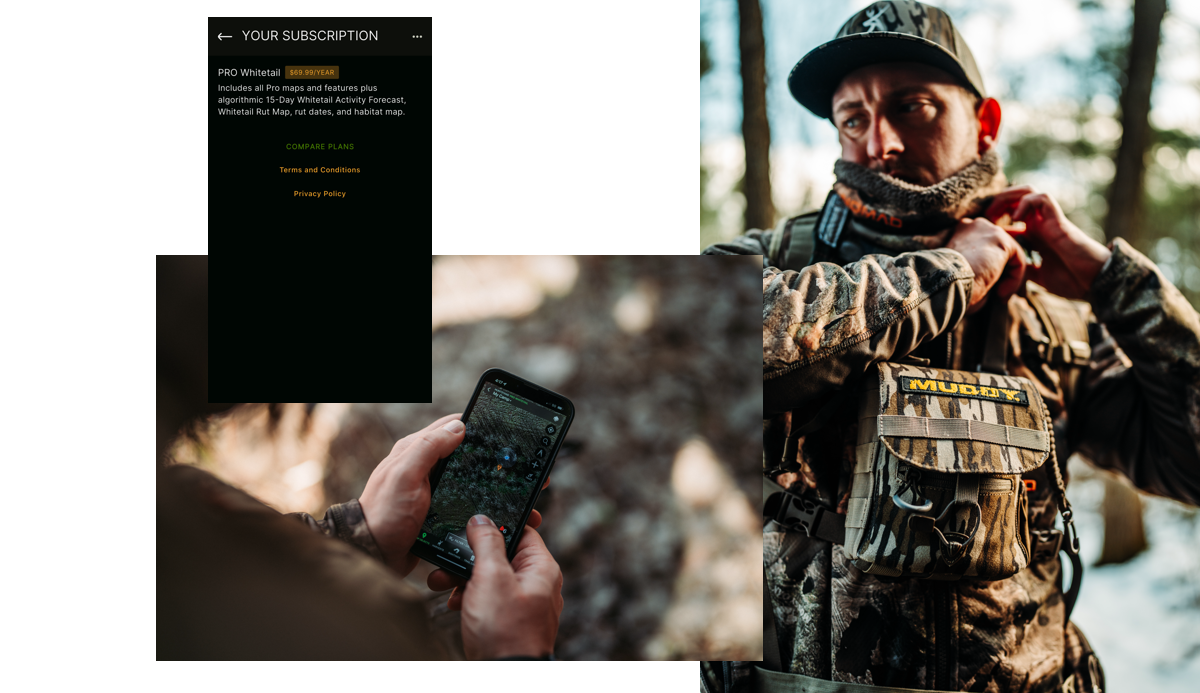
HuntStand, especially the Pro and Pro Whitetail subscriptions, offer unlimited amounts of imagery and information to find coyote refuge areas.
Coyote Hunting in the Southeast
In the Southeast, coyotes look to woodlots, steep terrain, wetlands, and even overgrown properties waiting for the right buyer. HuntStand overlays like Quad Topo, aid you in discovering steep slopes and benches coyotes could utilize as a retreat. The Natural Atlas overlay also provides topographical information along with all roads that could become a nuisance for coyotes seeking reprieve.
Also consider any properties closed off to hunting, but providing large, unkept habitat zones coyotes could nap in undisturbed. Obviously, wildlife refuges fit this definition, but think outside the box, such as industrial parks — especially those that have fallen on tough times — as coyote magnets. Oftentimes, even busy industrial parks will have large buffer zones of habitat that houses prey and predators alike. You will not acquire permission to hunt right on the property, but with the volume tweaked on your calls, any coyote living behind the fence can be coaxed across to meet its maker.
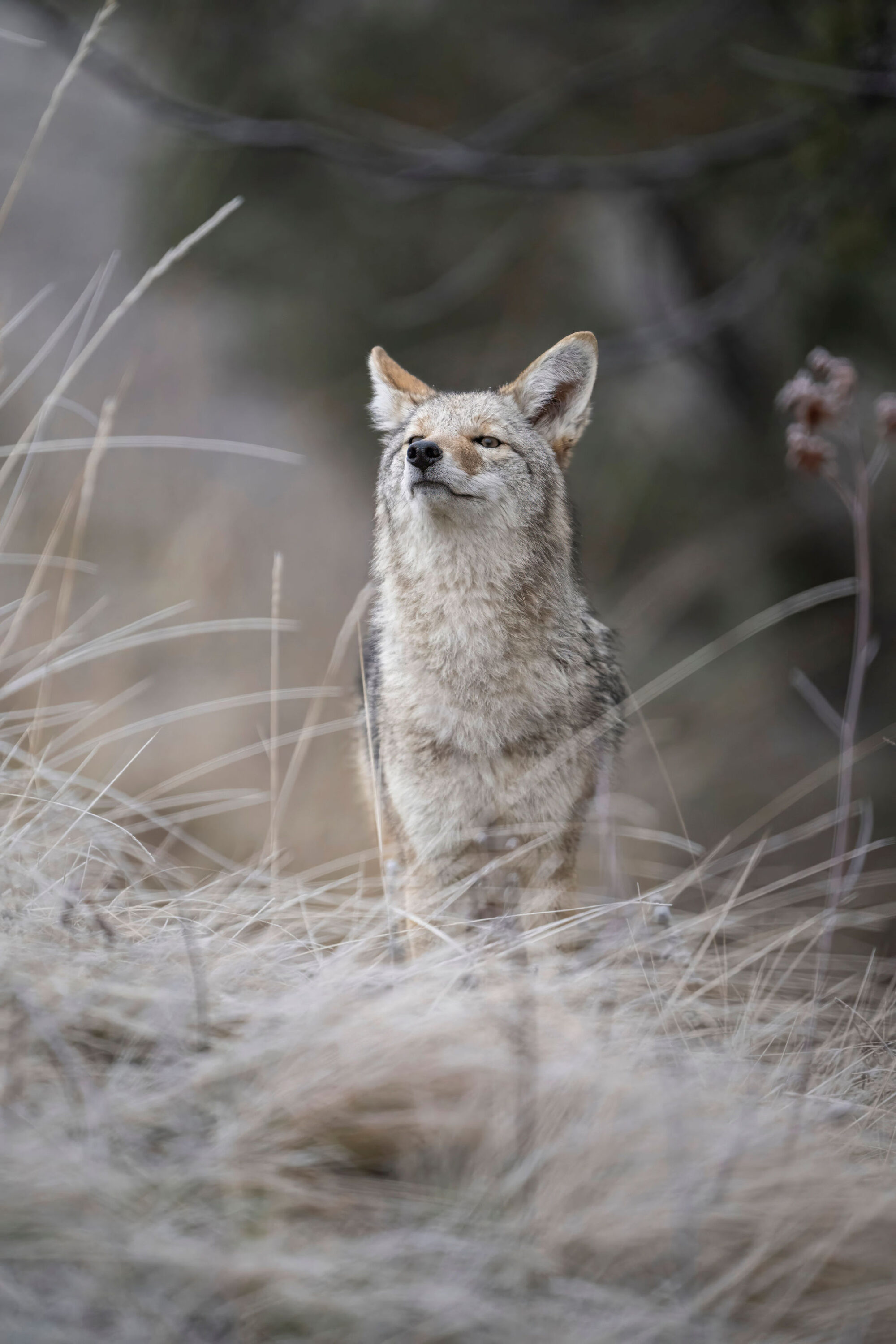
Coyotes might bed anywhere, but in certain areas of the country, they have preferred hideout habitat. Find this habitat and it gives you a location to set up nearby for calling success.
Hunting Coyote Bedding Areas
Like whitetails, you shouldn’t barge through every suspected coyote bedroom. Use that whitetail hunting savviness and leave the bedroom area as a refuge. Instead, look for setup sites on the perimeter of the sanctuary zone.
Since some areas still have cellular coverage issues, HuntStand provides a built-in platform to download offline maps to your phone. This keeps you going even when towers disappear behind a mountain, or you descend into a deep river valley on the way to a coyote bedroom. If you have the Hunt Area downloaded to your smartphone, the journey continues with screen help.
With an inventory of bedrooms at the ready, you can literally use any calls that have been your fan favorite. Proper positioning is a priority. Not only do you not want to tip your hand by barging too far into a bedroom or even altering coyotes with the whine of an ATV but you also want to ensure they feel confident in reusing the area. Even if you remove a coyote, it’s likely a mate or sibling will continue to use the bedroom if they don’t feel overly nervous about future security breaches.
Call coyotes from a bedroom at midday. Oftentimes, they hold up in large cedar thickets and come out to a dying rabbit call.
With that in mind, keep your distance. If you have a deer hunting background, you understand that if you bump deer repeatedly in a bedroom setting its likely they’ll find a new hideout. They rarely leave a home territory, but they will dig in deeper to avoid human encounters. Coyotes are similar, albeit they have more tendency to roam if they don’t appreciate your presence.
Noting that, your best attack method is to hunt the fringes. Determine travel corridors, whether it’s creeks, field edges, or timber peripheries, and locate calling sites with good vantage opportunities combined with prevailing wind benefits.
How to Hunt Coyotes [HuntClass]
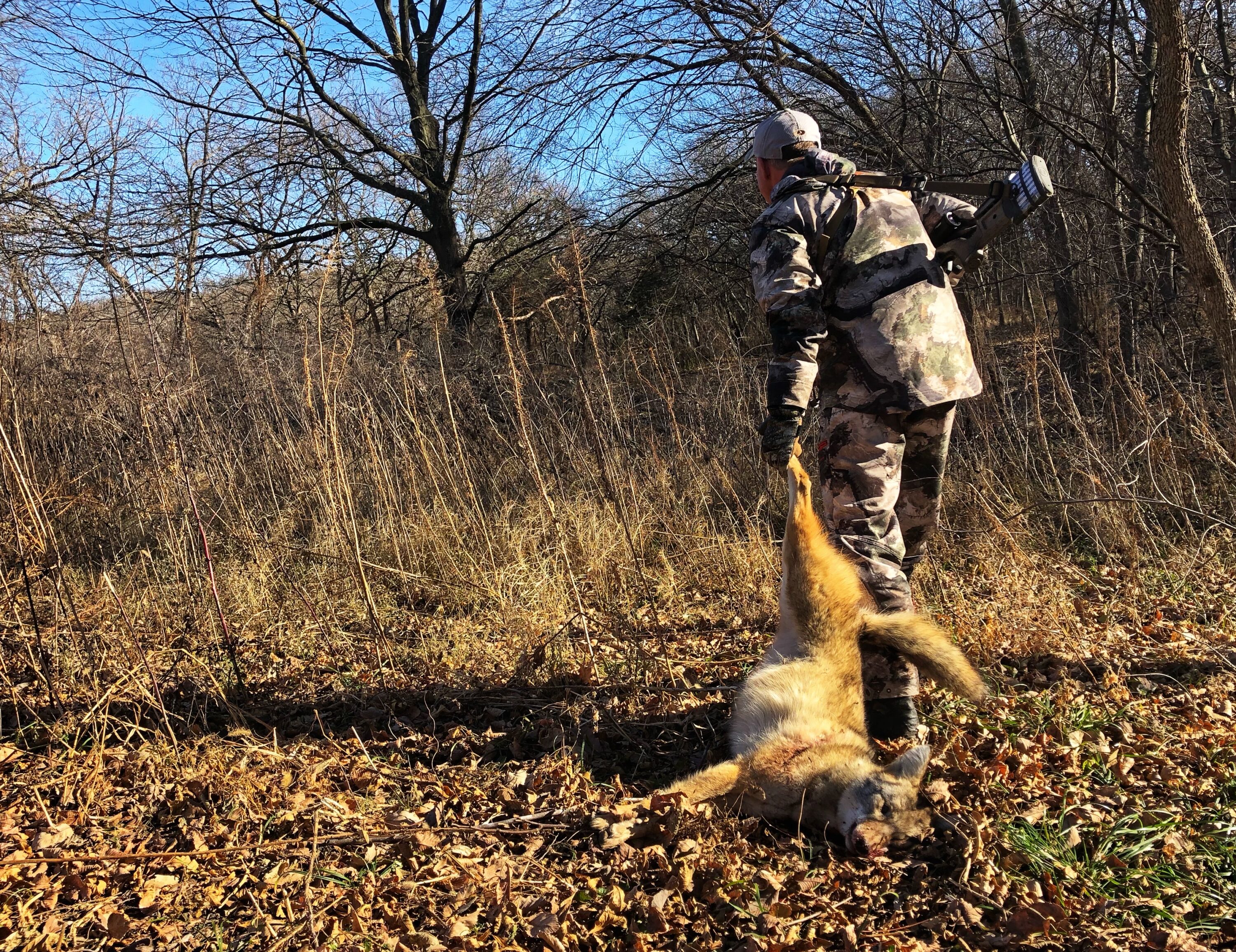
Coyotes might bed anywhere in the East or Midwest, but they do prefer to hide out in areas where human activity is less.
How far away you set up from a suspected coyote bedroom has many variables. Nevertheless, coyotes will hear your calls on calm days from more than a mile away. If terrain allows, slip into a half mile away from sanctuary zones and you should be able to pull any coyotes out that have napped long enough.
A coyote bedroom might not be as sure of a strategy as finding a whitetail bedroom, but coyotes definitely have preferred daytime refuge retreats. Locating a handful of these can be beneficial when calling is difficult, or you only have time for a set or two on a busy weekend.
Coyotes thrive across North America. In many places, with their abundant inhabitation, you could throw a dart at a map and go to that exact spot with the likelihood of calling a coyote. That noted, if you wish to increase your success with the limited time available to hunt coyotes, develop a roadmap for possible calling sites. To create a successful roadmap, follow the simple lifestyle of a coyote to lead you to the best spots to call winter coyotes.
Like Dracula, these toothy predators often retire to undisturbed thick cover for daylight security.
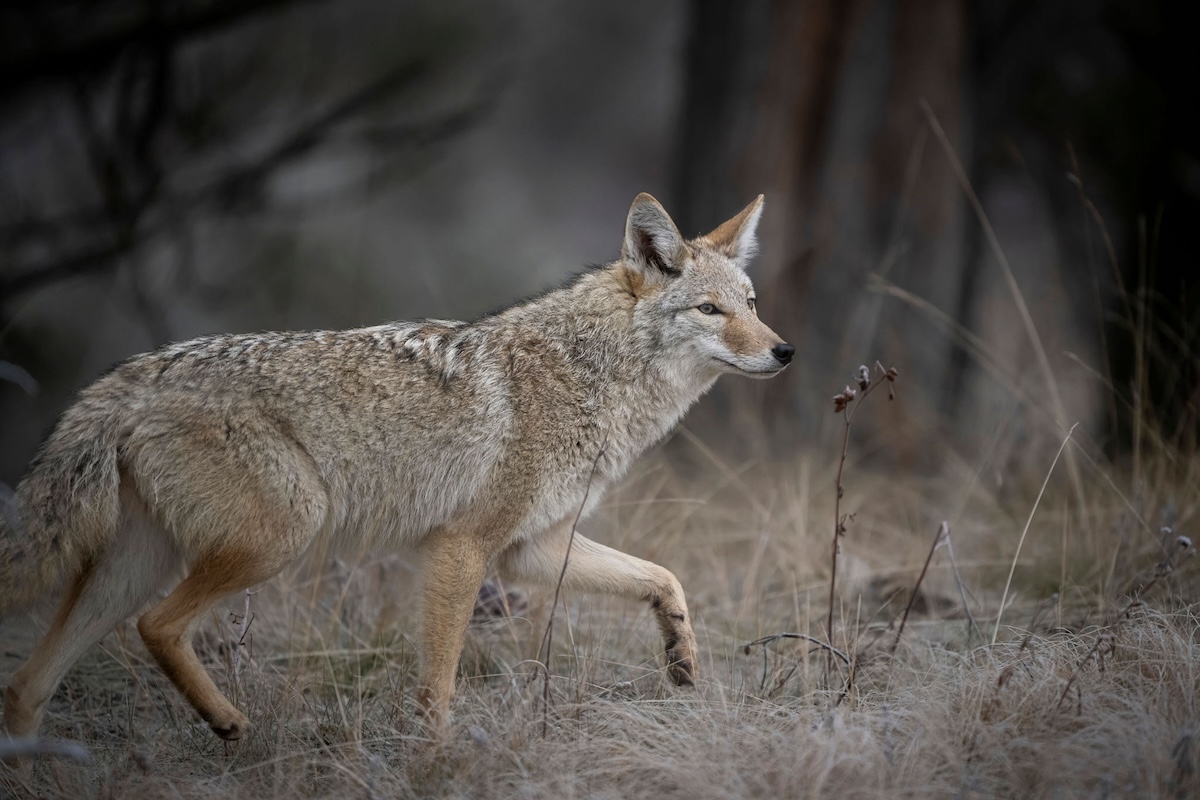
Understanding where coyotes travel, and where their final destination is, helps you find great calling locations.
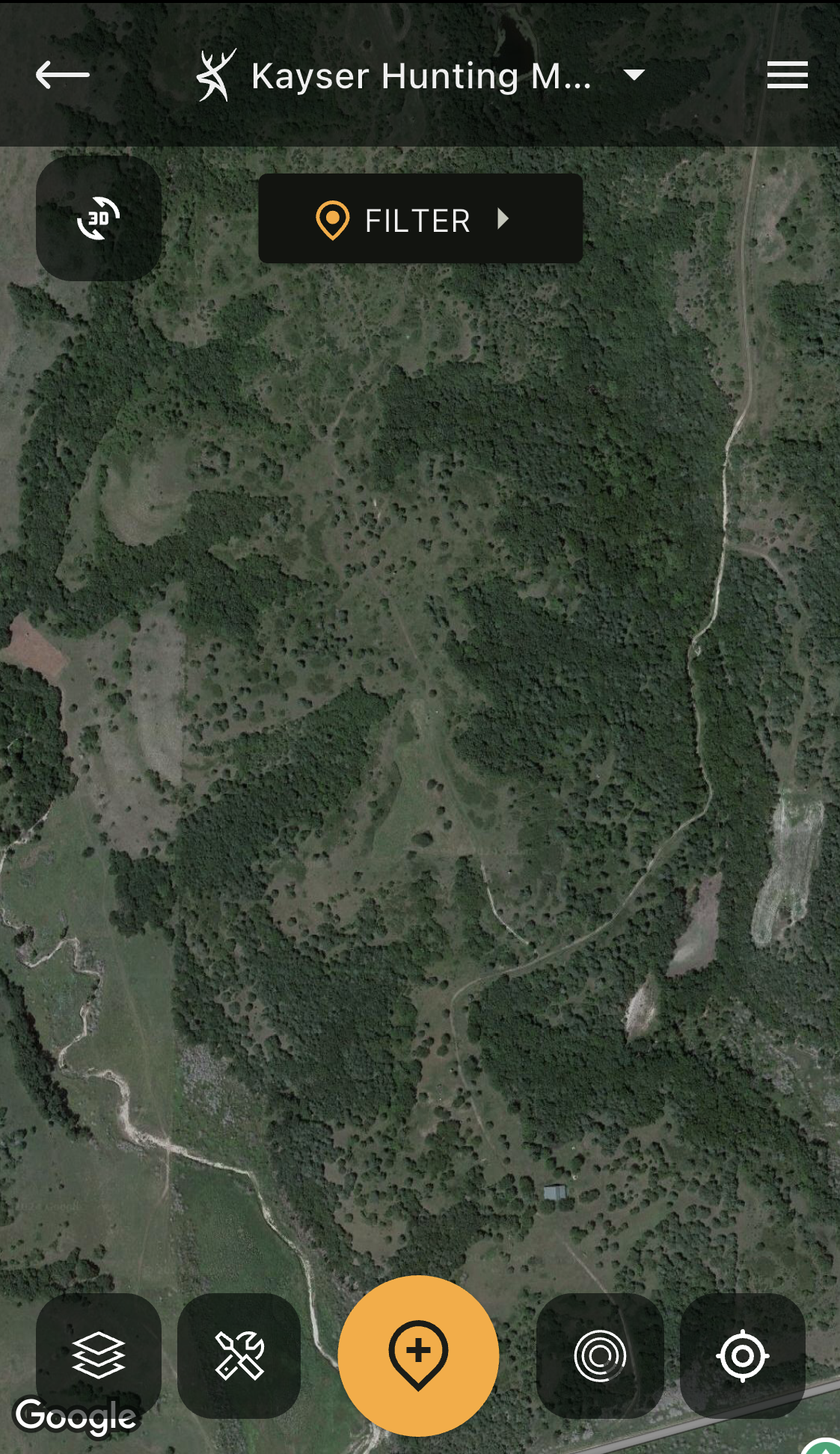
The HuntStand Hybrid Map shows landscapes and roadways to give you an idea if coyotes might avoid an area due to human activity.
1. Coyote Travel Routes
Start with what coyotes do best: travel. Depending on the region of the country, coyotes can have a home range of 3 square miles or more. Throughout this territory, they travel to and from for hunting, refuge, and social connectivity. Narrow down popular travel corridors and immediately the best calling sites begin to emerge.
For an easy starting point, think path of least resistance. Farm and ranch roads, two-track trails and heavily used livestock paths provide easy routes for coyotes to follow. To verify predator travel routines, stop and ask landowners or hired help about what they’ve seen. Even if they don’t hunt predators, they likely have seen coyotes in nearby pastures. These sightings can reaffirm your hunches or lead you to a new predator oasis. And, from time to time, don’t forget to jump out of the truck to do whirlwind tours. Stop and inspect cattle trails, two-track lanes, fence lines, gates, and water sources for tracks and scat.
In agricultural country, coyotes consistently use fence lines as a route to follow. It’s estimated that American has more than 52 billion miles of fence, most of it installed during the 20th Century. In addition to fences, landowners incorporated hedgerows, stone walls, and even brush piles from cleared fields to define property boundaries. These periphery borders provide the connectivity between adjacent blocks of cover. Coyotes look to weedy fence lines, old hedgerows, and the likes for travel ease and cloaking features just the right size to hide them.
Wintertime Gray Fox Hunting Tips
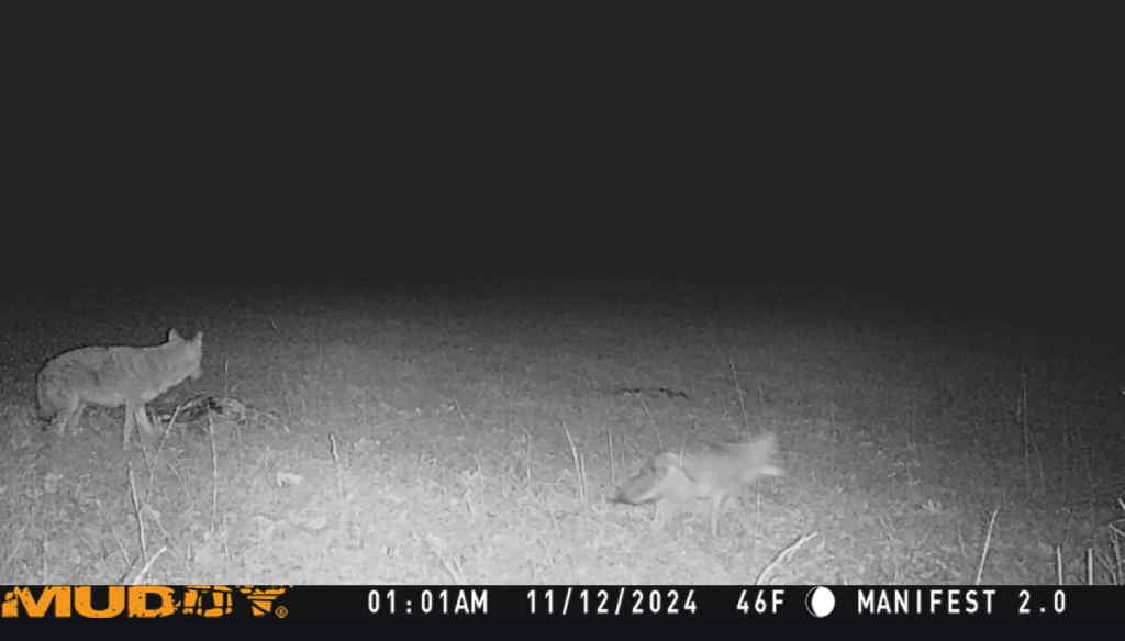
Trail cameras can be a boon in helping you uncover coyote patterns.
Coyotes in timbered settings might still follow a fence, but look for them to use other manmade manipulated corridors. Landowners, utility managers, and timber companies carve out corridors for access to fence repair, utility maintenance, and forestry operations. These openings carve out easy pathways for all species to follow. Don’t overlook Mother Nature’s highways that include rivers, creeks, lake shores, and the edges of natural openings.
In all instances, trail cameras can provide actual intelligence on a suspected travel corridor. Set the trail camera at coyote level or point it down to a trail. Use coyote urine or another scent at junctions to stop coyotes for images. Finally, consider using a cellular trail camera to avoid time wasted checking SD cards and to minimize disturbances in a good hunting area.
The HuntStand Hybrid layer reveals many manmade and natural coyote corridors, but the easy-to-read Natural Atlas layer displays trails and developed roadways. Use it to find coyote corridors and places coyotes might avoid due to too much activity.
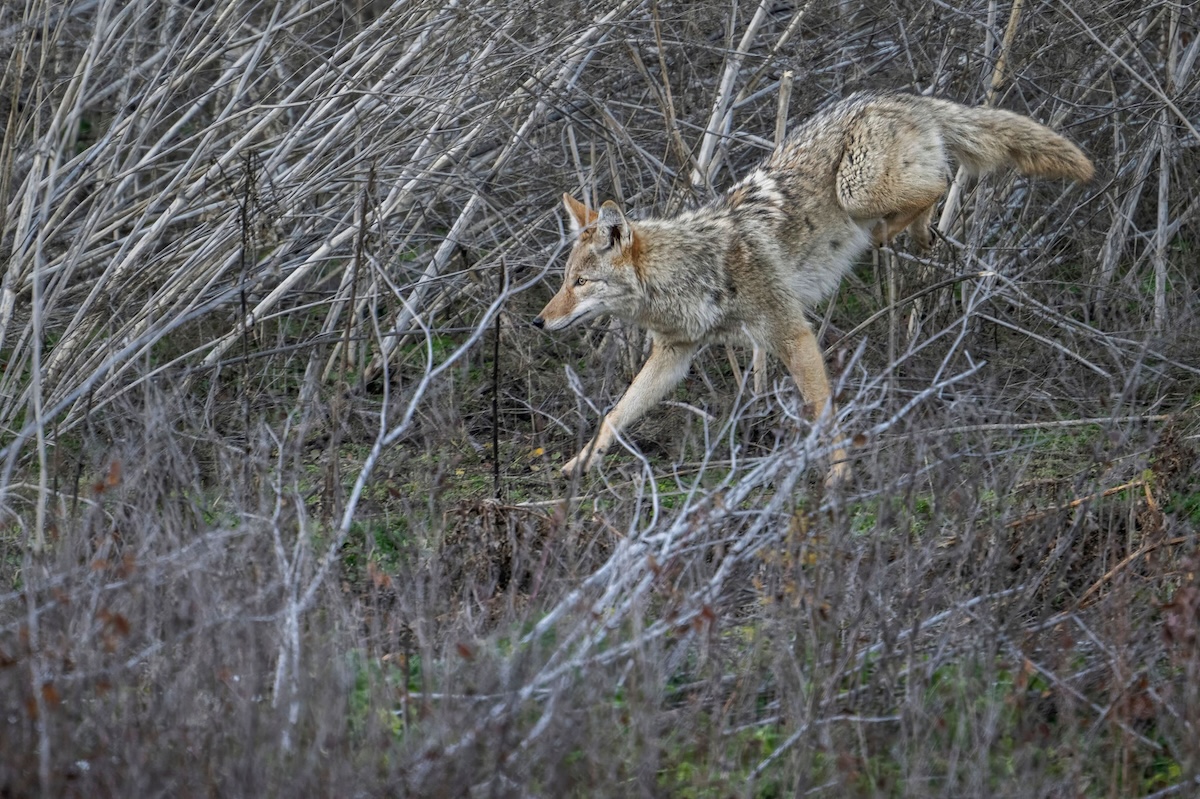
Once you dial in on a coyote calling site, use your knowledge of predominant winds and the HuntStand HuntZone wind graphic for precise stand positioning.
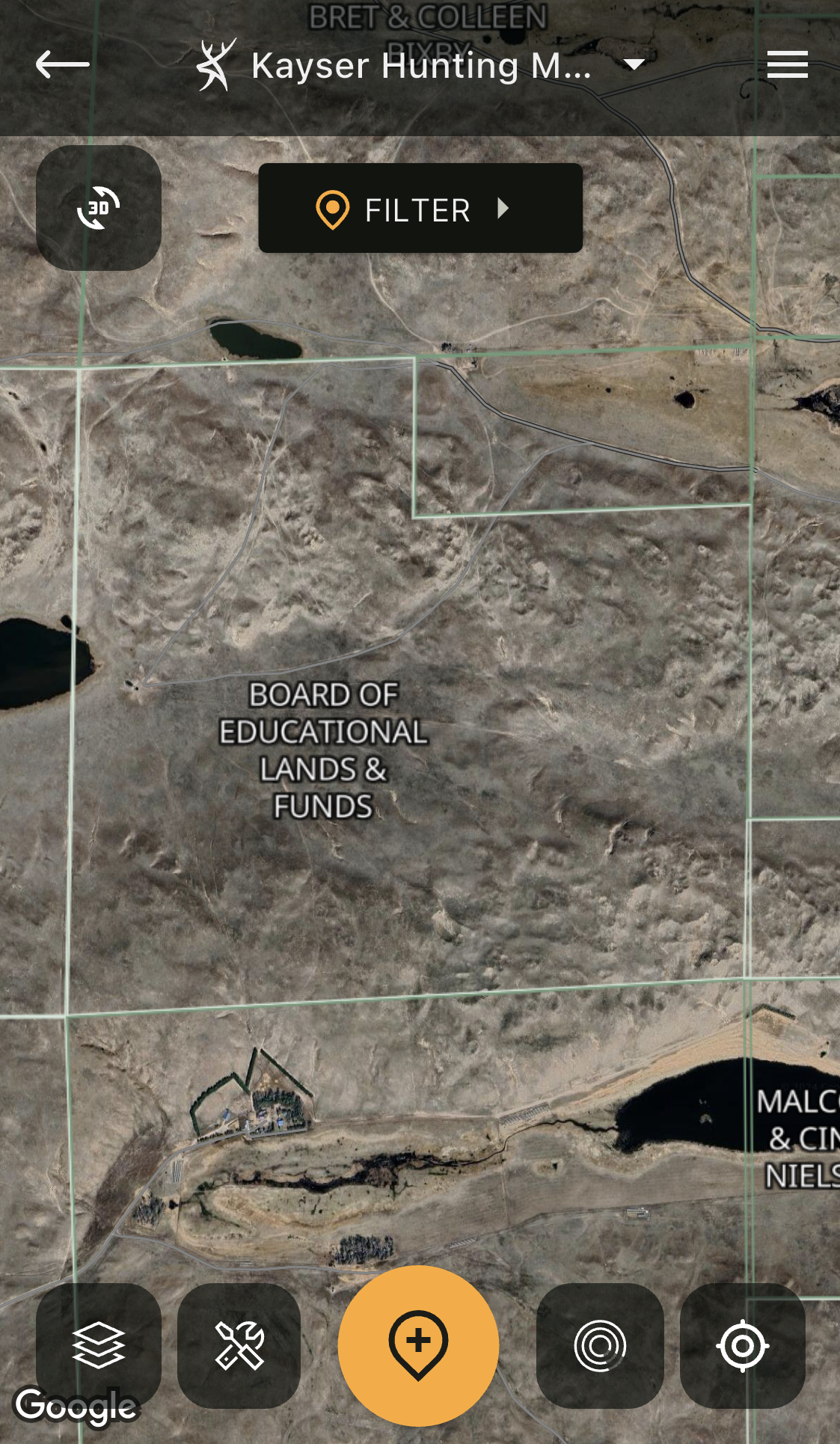
Use HuntStand’s Property Info feature to analyze calling areas for ownership and boundaries.
2. Coyote Bedding Areas
Although predators live near human activity daily, most of their nearness to humans occurs under the cover of darkness. Like Dracula, these toothy predators often retire to undisturbed thick cover for daylight security. Such refuges could be less than a mile from prime hunting areas, but scrutinize any type of sanctuary a mile or more from humans, or top hunting destinations, as top hiatus habitat for coyotes.
As you scour hunting properties for terrain that coyotes would seek out for their break time, think brush, overgrown thickets, dense woodlands, wetlands, tall-grass prairie and anything that looks like it might require rappelling gear, or a machete to access. Regions void of county roads, highways and even farm traffic get even more attention for unsocial coyotes.
How to Hunt Public-Land Coyotes
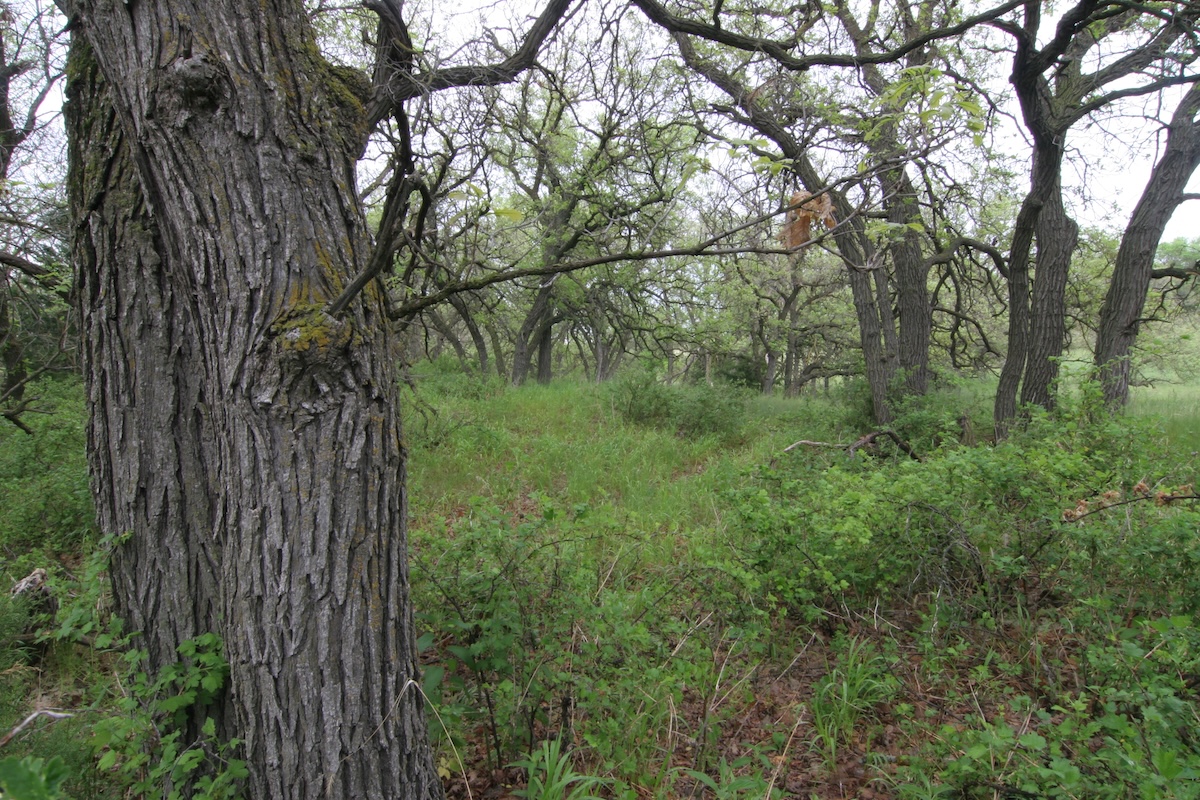
You can’t go wrong when you find coyote sign and it leads to dense vegetation.
Furthermore, be on the lookout for private properties with limited hunting access or outright no-hunting rules. As America’s love affair with private wildlife management flourishes (think food plot craze), and large estates being purchased for investments, more and more gates are closed to you and me. The same is true of a state park or refuge that receives limited or no hunting pressure.
These scenarios create vacuums that sucks in all species of wildlife, prey and predator. You might not be able to hunt an exact sanctuary you find. Even so, investigate borders using your HuntStand Pro or HuntStand Ultimate subscription via Property Info and Public Lands layers. You just might discover a neighboring landowner or sliver of public land giving you calling access next to a certified refuge.
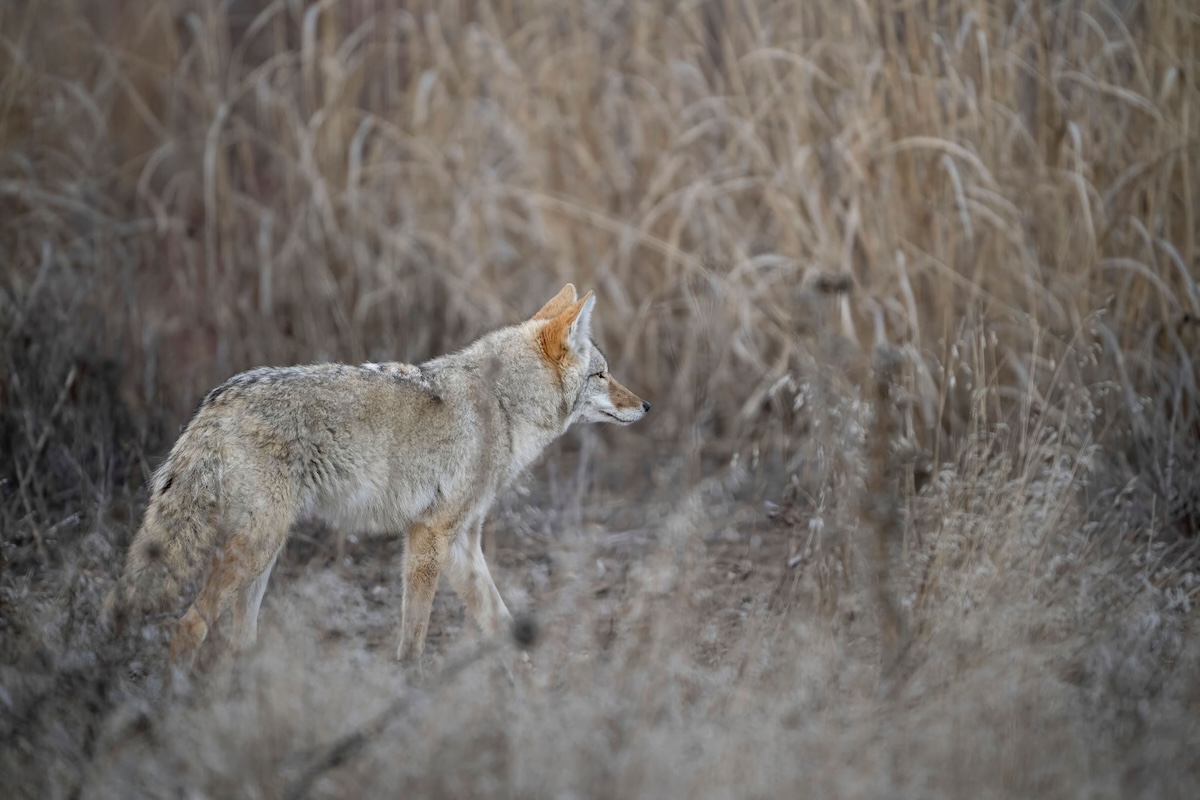
Anywhere you find rodents of any caliber, you will find coyotes nearby ready for the hunt. Understanding where coyotes hunt helps you find great calling locations.

HuntStand's Public Lands overlay is available to help you find hunting areas.
3. Coyote Feeding Areas
That earlier confirmation of coyote travel preferences connects coyotes to sanctuaries and to their hunting lands. Discover the best coyote hunting in the area and you land yet another location for a top calling setup.
Start with a coyote’s favorite menus choice of rodents. Mice, voles, cottontails and the likes make up the bulk of a coyote’s diet in most regions. These small critters thrive in grassy fields, brushy thickets, idle farm ground, and any property that has been allowed to return to a natural state.
Conservation Reserve Program lands, reseeded into native grasses, reign as top hunting spots anywhere. A cruise around your hunting area helps confirm and drop map markers on good-looking lands.
How to Hunt Coyotes During the Mating Season
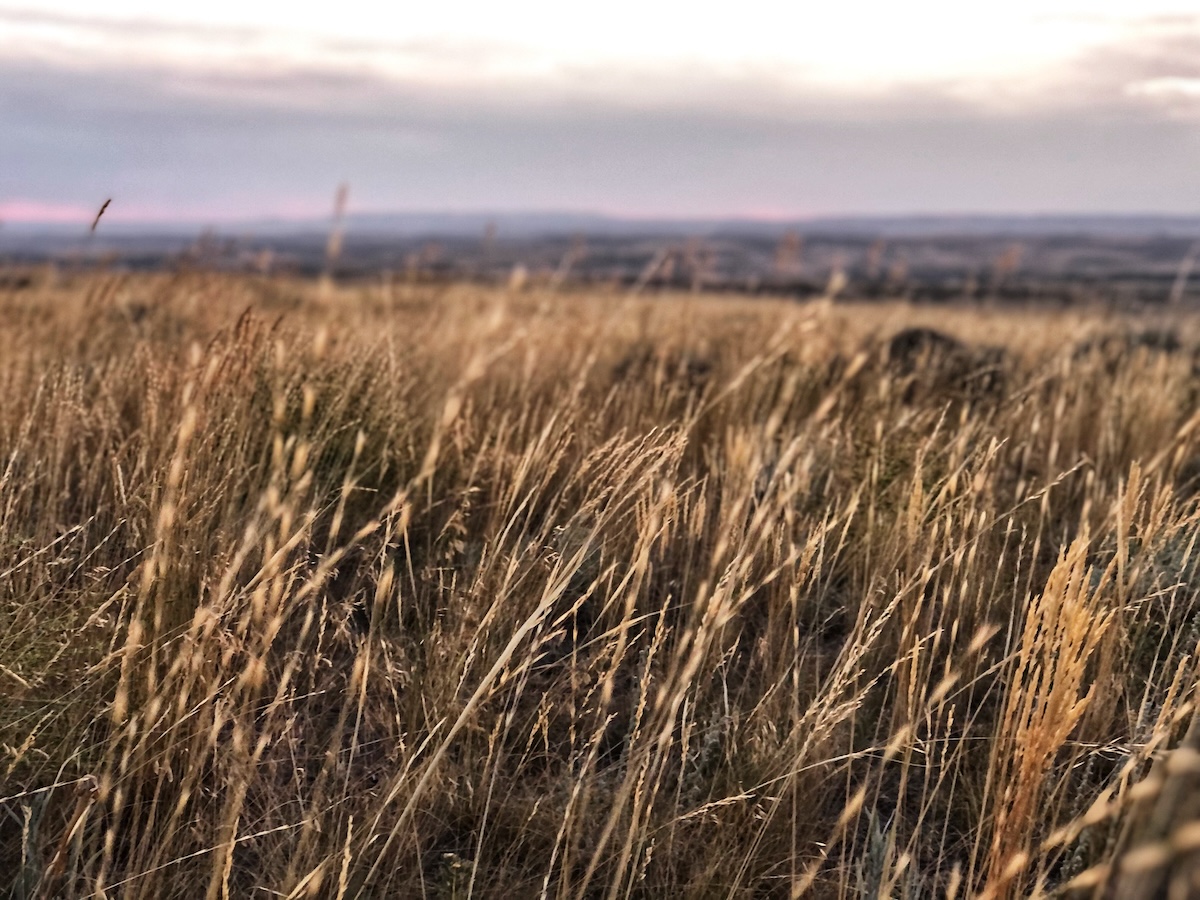
A top meal for coyotes is rodents, and they thrive in native grasslands.
If you cannot drive to a location, use HuntStand’s Monthly Satellite layer to view a recent image of the vicinity. Many systems use satellite imagery that might be updated every two years or so. The HuntStand Monthly Satellite offers images that are updated monthly, and this gives you a newer view of what is occurring on a property you plan to hunt. The layer is provided at a lower resolution, but ample clarity to see agricultural transformations.
Regardless of your GPS location, you’ll find livestock close by. Urban pioneers embrace free-range chickens. Midwestern farmers handle hogs and raise sheep. Western ranchers run cattle nearly everywhere. These scattered herds of protein don’t go unnoticed by coyotes. As you scout new properties, inventory every livestock element because. You can bet the coyotes are doing the same. They visit daily to seek out possible candidates for a meal that might be loose, weak, or injured. Calling near livestock always ranks as a good idea.
Larger operators also lose animals to a variety of incidents. Those agricultural businesses often have a kill pit on a property and every coyote in a 10-mile radius knows its location. Ask about a kill pit and consider setting up near it to call or merely watch.
You can also create your own kill site or bait. Many states have little or no laws pertaining to baiting coyotes. A meat processing facility, or even a grocery outlet, might have plenty of goods available to keep a bait site active to take a stand near or call from.
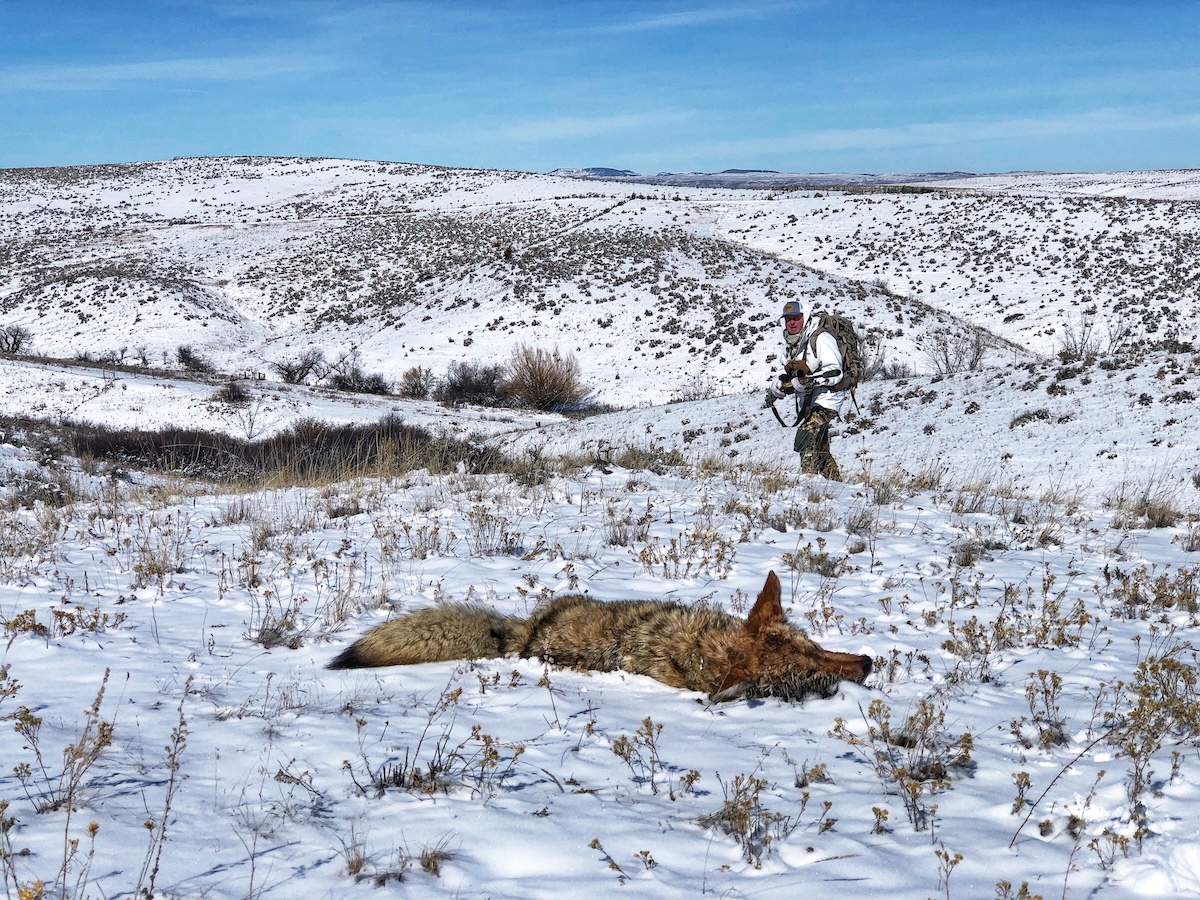
Finding the best calling sites often is determined by where coyotes travel, hide, and hunt.

In addition to uncovering a dense hillside coyotes used for daytime resting, Kayser homed in on a travel corridor and it worked on this cagey coyote.
Find the Kill Box
Once you begin to find areas of interest where coyotes might spend more time, zero in on possible calling sites. Use the HuntZone wind graphic, combined with your knowledge of predominant winds, for scent concealment. Survey HuntStand maps for openings, and then use the Quad Topo or Natural Atlas layers, to locate any high locations. Put this team together and you should have an ideal locale to call from for higher coyote success. It’s a winning plan for fur this winter.
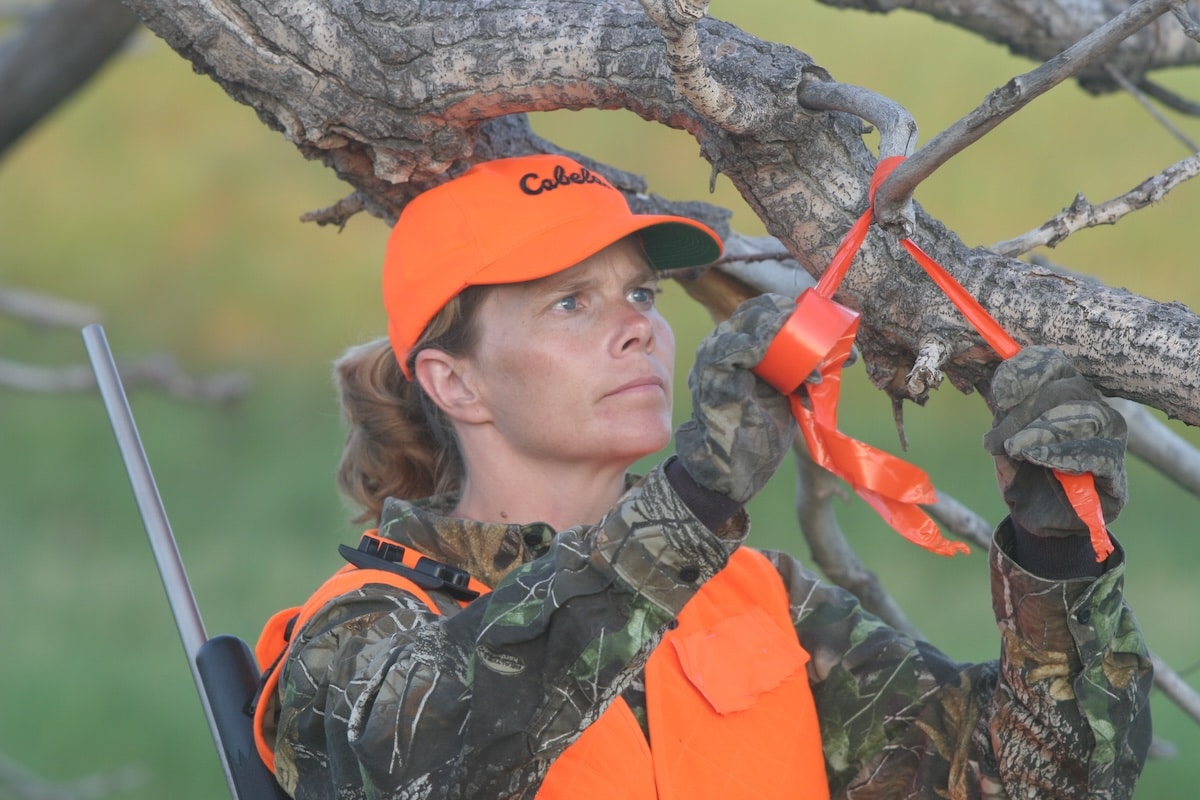
In addition to marking all blood on your HuntStand Pro Whitetail Hunt Area map, bring along a roll of surveyor’s tape to visually mark sign for quick, over-the-shoulder references.
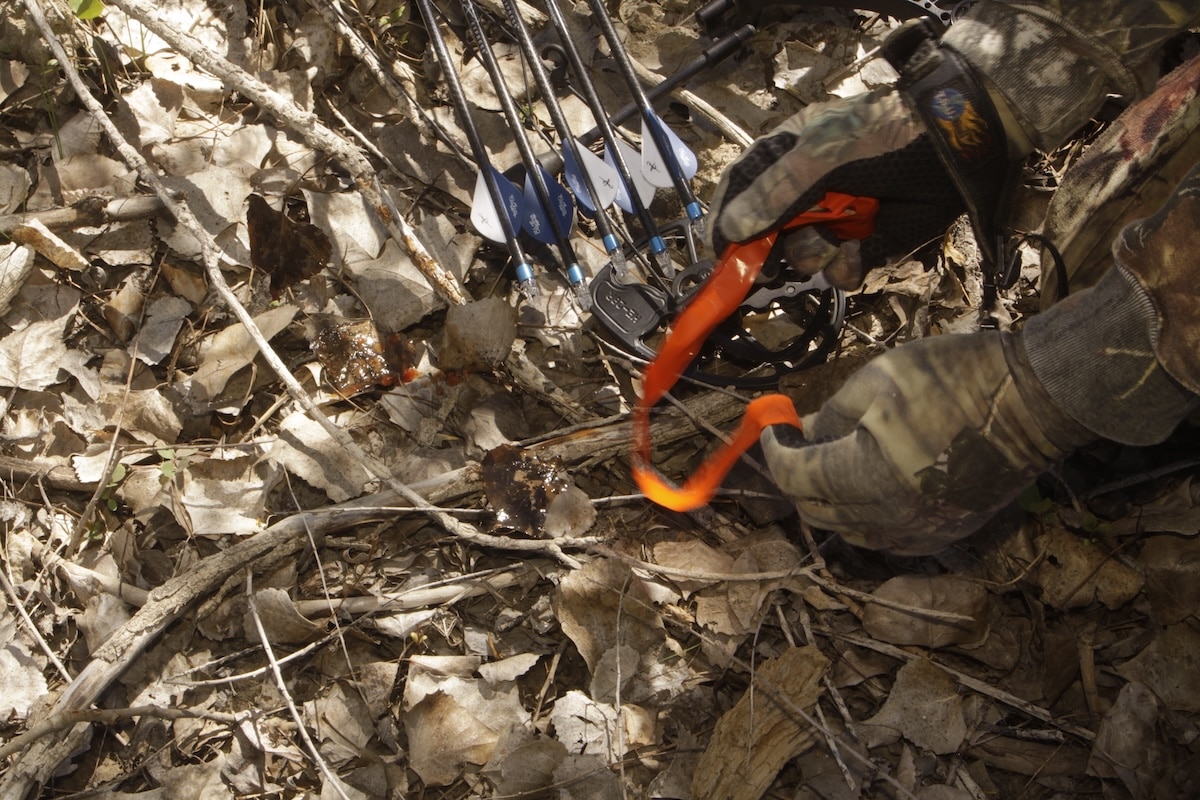
Examine all blood and note its color to help, along with other clues, determine your hit.
Nobody wants it to happen. Even dedicated hunters occasionally must deal with it. The “it” in question is a wounded deer. Sometimes the unforeseen causes your shot to go astray — and when it does, you best be ready to recover a wounded deer.
Your deer recovery plan should be committed to memory. Follow it religiously and don’t cut corners. Every step, every drop of blood can mean the difference between punching your tag or punching yourself in the gut over a poor recovery.
Here’s how to blood trail and recover wounded deer.
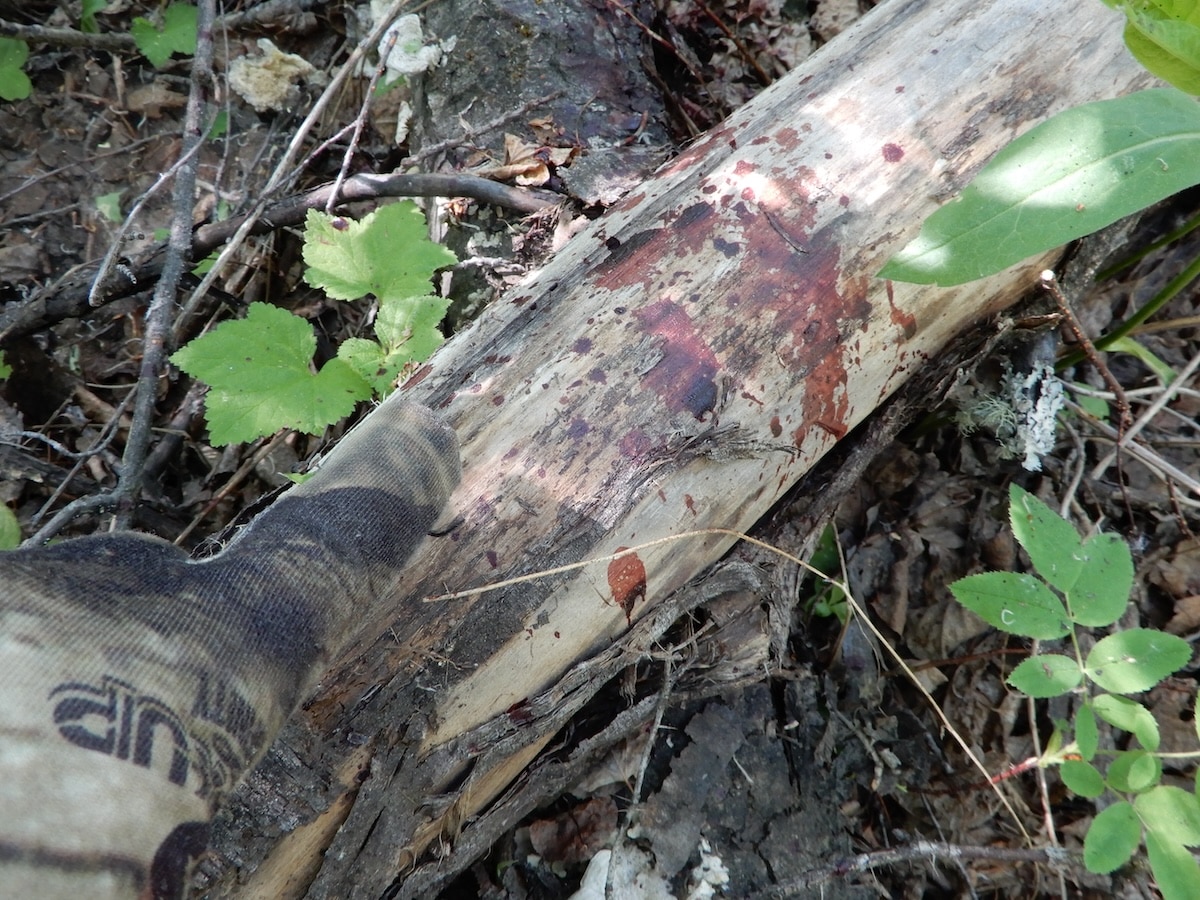
Wounded deer happen to most hunters at some point during their hunting career. How you handle and prepare for it often determines your outcome. Examine all blood to look for clues as to where your arrow hit.
Step 1: Sit, Wait, and Mark Shot Locations
If your deer didn’t drop in sight and you believe your shot was off, the first step is easy: Don’t do anything.
Sit still and reflect on what just happened. Try your best to remember the location of the hit and pull up HuntStand Pro Whitetail to confirm your location and the location of the deer at the time of the shot. From your shot location, back that up with a photo of the area where the deer was standing.
Step 2: Consider Post-Shot Reactions
Recall how the deer left and note any odd movement such as hunching its back, tucking its tail, dragging a leg, etc. Type out notes on your smartphone to avoid later confusion.
A hit through the vitals, or too far forward (or back), could cause a deer to drag a leg. Death might or might not result, depending on shot placement. As a deer flees, stumbling or an appearance of incoherency is also a positive sign. Again, waiting longer guarantees a successful recovery, as opposed to rushing in and bumping a dying animal.
Today, many hunters film their adventures. If you have a video of the hunt, rewind and watch it. Then watch it again and again, even enlarging the image, and watching in slow motion (frame by frame) if your recording device allows.
Now, based on video evidence, make additional notes on the animal’s location and behavior after the shot. Regardless of your perception of the shot, continue to wait.
Finding Big Public-Land Bucks Where No One Else Hunts
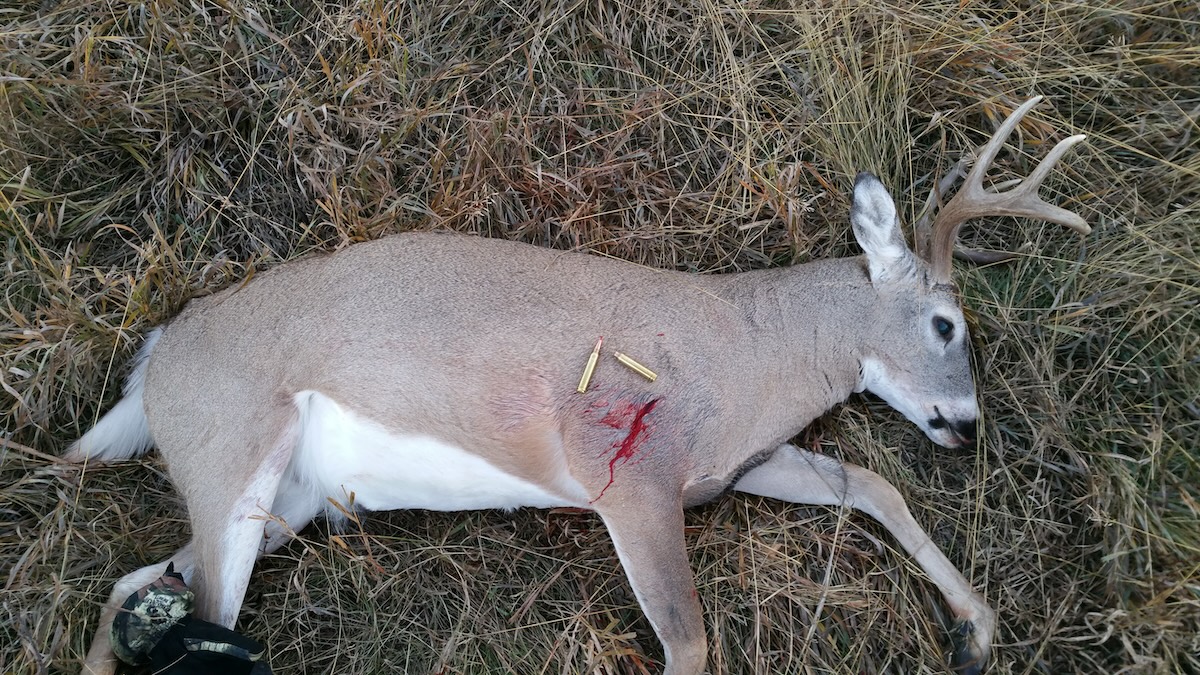
While trailing a deer with a partner, have one stay on the blood trail and the second person glassing ahead for signs of the deer.
Step 3: Relative to Shot Placement, Wait the Proper Amount of Time
I can’t stress the waiting enough. Why? Deer die from double-lung and heart shots almost immediately, but it’s not uncommon to misjudge shot placement in the fog of buck fever. If f the deer is dead, it’s not going anywhere, and if it’s still alive you risk bumping it out of your life by pressing in too fast.
A good rule to follow is to wait a minimum of 30 minutes, especially if the deer dashed out of sight, even if you believe the shot was solid. Waiting an hour (or longer) is even better, which gives the deer more time to bleed out.
One-lung shot placements, or liver shots, can take three, four, five-plus hours (or even more) for the animal to die. The deer might’ve kicked its back feet out, or hunched up at the shot, indicating a possible paunch hit. (Deer normally hunch their back when hit through the guts.) A shot to the paunch (gut shot) requires a minimum of eight hours for it to expire.
Another reason to avoid rushing the track job centers on adrenaline. If a deer has enough energy to leap from its bed and escape, it surges even more adrenaline into its system. This fuels a farther escape than if you let it die in a situation where it feels it found a refuge to hide. That adrenaline burst also leads to a lactic acid buildup that taints the taste of deer. Can you say “gamey?”
Shane Simpson, professional houndsman and deer tracker, refers to wounded rutting bucks as “zombie deer.” He has seen countless instances of these testosterone-infused bucks staying alive much longer than you’d ever imagine.
Step 4: Phone a Level-Headed Friend
With HuntStand notes made and the review of any digital evidence, it’s time to phone a friend. Two brains are better than one, and a non-adrenalized perspective helps with logical decisions. Additionally, sharing fine details about the shot with a buddy can be helpful for you to determine if your post-shot recall stays consistent as your buck fever wears off. Without question, leave any anxiety-ridden friends out of the equation. Your buck fever and any added anxiety clouds judgement. That combination could result in a rush to find answers.
A second set of eyes can also aid in spotting blood. Approximately one in 10 males are colorblind, with females afflicted at a much lower range. Anytime I must track a deer, I always reach out to friends with common sense, and who are not colorblind (like myself).
Finding the Best Rut Hunting Spots with HuntStand Pro Whitetail
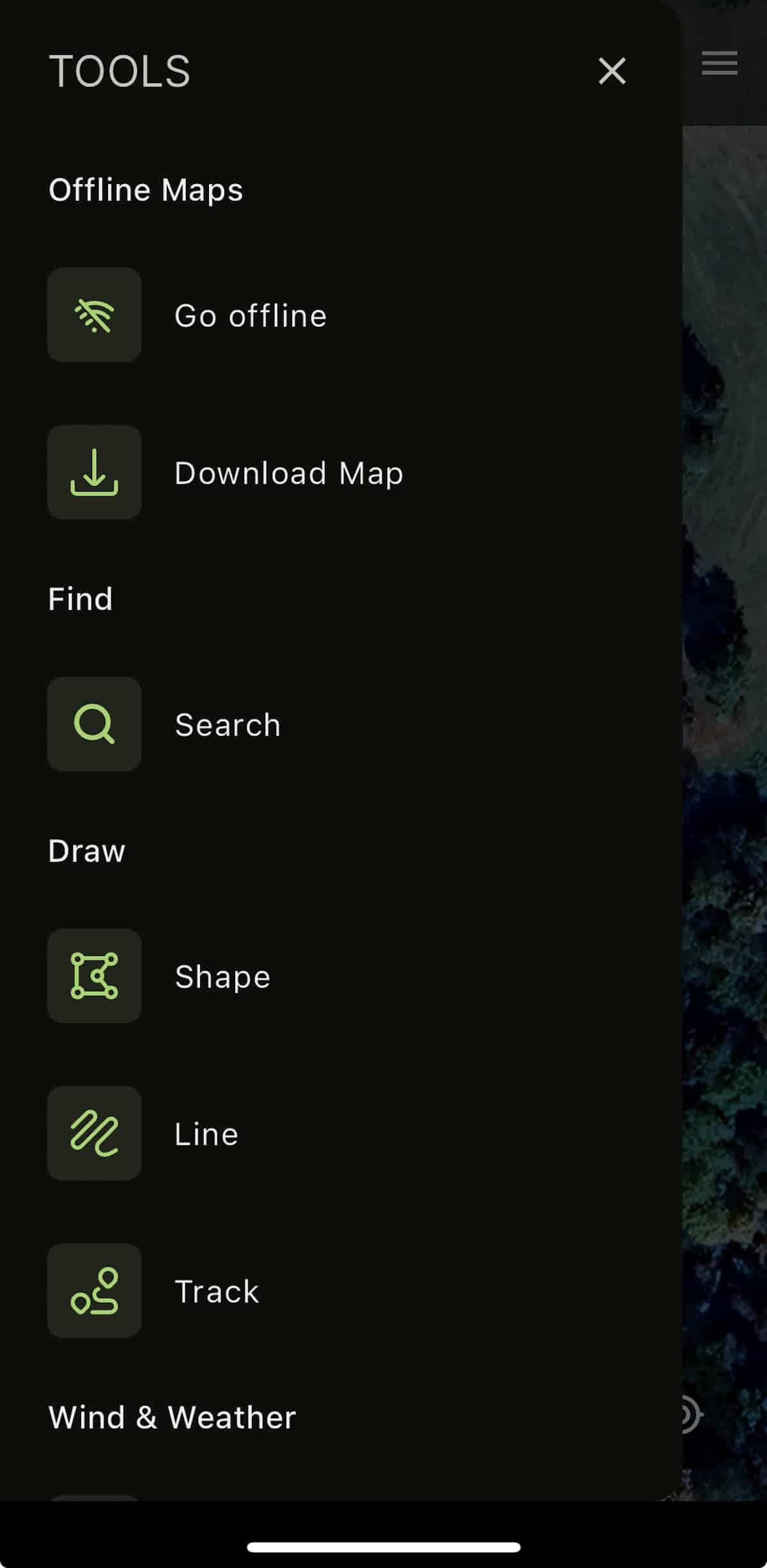
Mark all blood and clues on your HuntStand Pro Whitetail Hunt Area map.
Step 5: Assemble Deer Recovery Gear
Before taking up the blood trail, prepare all your recovery gear from your pack. After marking the shot location and impact site in HuntStand, begin dissecting the terrain in the direction the deer fled using various map base layers. Search ahead for water, benches, thick cover, and be aware of any boundaries the deer might cross where you must acquire permission before entering. The Property Info map layer can make it much easier to find a neighboring landowner, especially if their residence is separate from their land.
In addition, have a roll of biodegradable blaze orange surveyor’s tape available. These visual aids, in addition to the blood markers you drop in HuntStand, offer a quick, visual review of the deer’s path.
A flashlight helps in dusky or dark conditions. You might even wish to pre-purchase a light aid specifically designed with LEDs to highlight blood. Be sure to pack along extra batteries.
Another inexpensive way to confirm blood is to pack a small spray bottle filled with hydrogen peroxide. Hydrogen peroxide foams when sprayed on blood for quick confirmation.
Finally, take your binocular along for tracking. Use it to scan ahead to spot any signs of your deer, bedded or standing. Spotting a deer before spooking it could be the difference between a happy ending or seeing that deer for the last time as it flees.
Step 6: Read the Blood Trail
Once your re-enforcements arrive and you’ve waited an appropriate amount of time based on perceived shot placement, begin tracking. Turn on the Track tool in HuntStand to trace all your steps on the blood trail in real time and save the track in case you need to reference it later. Use HuntStand at every turn of the trail to peer ahead and understand the terrain you’re about to tackle. The 3D Map feature offers a virtual flyover of what lies ahead, along with clues on where a deer might escape.
Beginning at the location of the hit, look for blood, hair, or other matter. If you’re bowhunting, look for the arrow and, if found, inspect it thoroughly. Is the arrow fully covered in blood? Does it smell of foul gut matter? Does it only contain hair in the broadhead? Pay attention to the arrow, but also don’t put all your stock in it, as it can be deceiving — especially if it zipped through dirt or leaves and disrupted the shot evidence on the broadhead and shaft.
Bright-red blood indicates an artery wound and a high probability of recovering (if you sliced a major vessel). Wait a full hour and then begin trailing.
Bright, frothy blood inspires hope of a lung shot, particularly if it’s sprayed on vegetation lining both sides of the escape trail. You’ve got a green light for recovery. Frothy blood on only one side of the trail requires three hours (or more) of waiting, as you might only have pierced one lung.
Dark red blood generally means a muscle hit with questionable recovery success. It could also indicate a liver hit. If so, death could result within four to five hours, sometimes longer. Wait it out for the best results.
Lastly, brown or green-colored blood means a gut shot. The color comes from gut matter, possibly mixed with blood. Death is almost certain, but remember, it takes a minimum of six to eight hours. So, be patient for the deer to die. Hold off and take up the trail after the long wait.
Using Canoes and Kayaks for Better Public Land Deer Hunting

Bright blood is generally a good sign, but waiting is still recommended.
Step 7: Read Other Sign
Hair also tells a story. White hair at the hit location points to a low hit. Dark hair could also mean a brisket shot, as mature deer oftentimes have a dark strip of hair beginning at the point of their chest and diminishing as it goes back. Brown body hair could indicate a good, marginal or poor shot as it resides almost everywhere else on a deer. Use other clues to help you determine where brown body hair might be from.
When it’s time to take up the trail, move slowly and quietly. Every speck of blood, tissue, and disturbed dirt should be marked on your HuntStand map, and marked again with the surveyors tape.
Follow the blood trail, but stay off to the side to leave the trail and evidence in tact. If you’ve got a buddy supporting the mission, keep them at last blood and continue to hopscotch forward. Your buddy can also be scanning ahead to look for signs of the deer. You might unexpectedly walk up on it, living or dead. Handle your weapon safely, but keep it at the ready if you’re still within legal shooting hours. Some states have specific rules prohibiting carry of a weapon if you’re tracking a deer after legal shooting hours.
Wounded deer don’t always follow textbook rules. Oftentimes they travel downhill for a less strenuous route and head to water to rehydrate from blood loss. Nevertheless, they might go straight uphill and sneak into a desolate valley if they believe they’re being tracked.
Step 8: Keep Searching
What happens if you don’t find your deer on the first attempt? If you still believe the deer is mortally wounded, yet the trail disappears, give it a break.
Deer oftentimes circle back to the area where they were wounded, because it’s their home. Come back later the next day and do another sweep. Look and listen for signs of scavengers — crows, ravens, hawks, eagles, or coyotes — that could be feeding on the carcass. Only you can determine when enough is enough, but at some point you might have to accept the inevitable. You might not find the deer.
Other deer recovery methods (where legal):
- Grid-searching for the carcass (with HuntStand Track turned on)
- Consulting the services of a deer tracking dog (leashed or unleashed as regulated); check out the TRAKR app for a growing nationwide network of deer trackers
- Calling in a drone deer recovery service (if permitted within that state)
Whitetail Rut Deer Hunting Guide with HuntStand Pro Whitetail
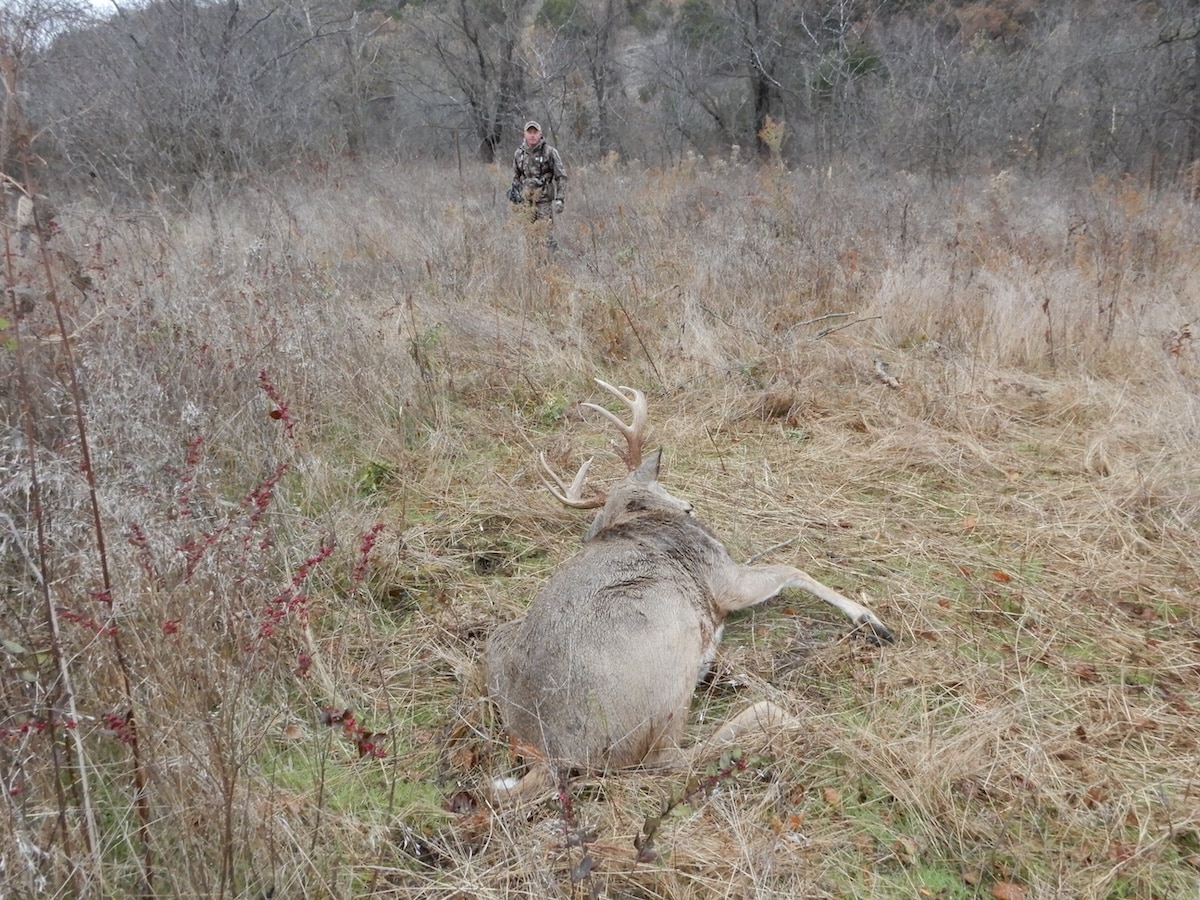
Mark all blood and clues on your HuntStand Pro Whitetail Hunt Area map and use HuntZone to maintain a downwind presence, if possible, to avoid alerting a wounded deer with your scent.
Find the Deer or Accept the Inevitable
It’s a sad prospect, but if you hunt long enough, especially with archery equipment, losing a deer is always a possibility. If the deer density is high in your area, begin hunting again. It takes your mind off of the situation. You can also take solace in two other facts: Oftentimes, an arrow-wounded deer hit outside of the vital zone will survive. Your trail camera might pick up the deer soon after. If you feel the deer was gravely hit, the carcass will feed other wildlife. It’s the circle of life, and your experience will serve to make you a better hunter, and hopefully avoid the situation on a future hunt.
UPGRADE TO HUNTSTAND PRO WHITETAIL
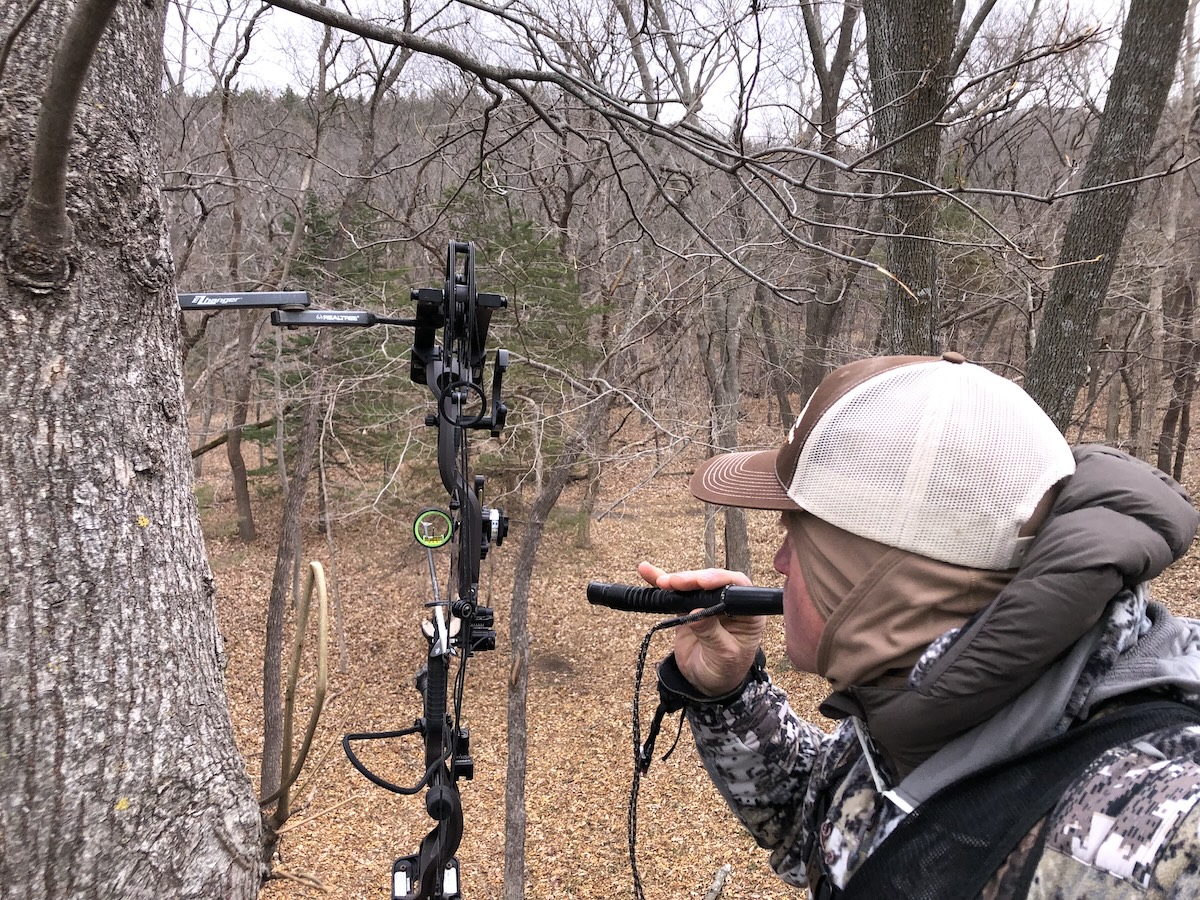
The 3D Map feature with HuntStand Pro helps you understand areas of a hill deer might use for bedding or travel.
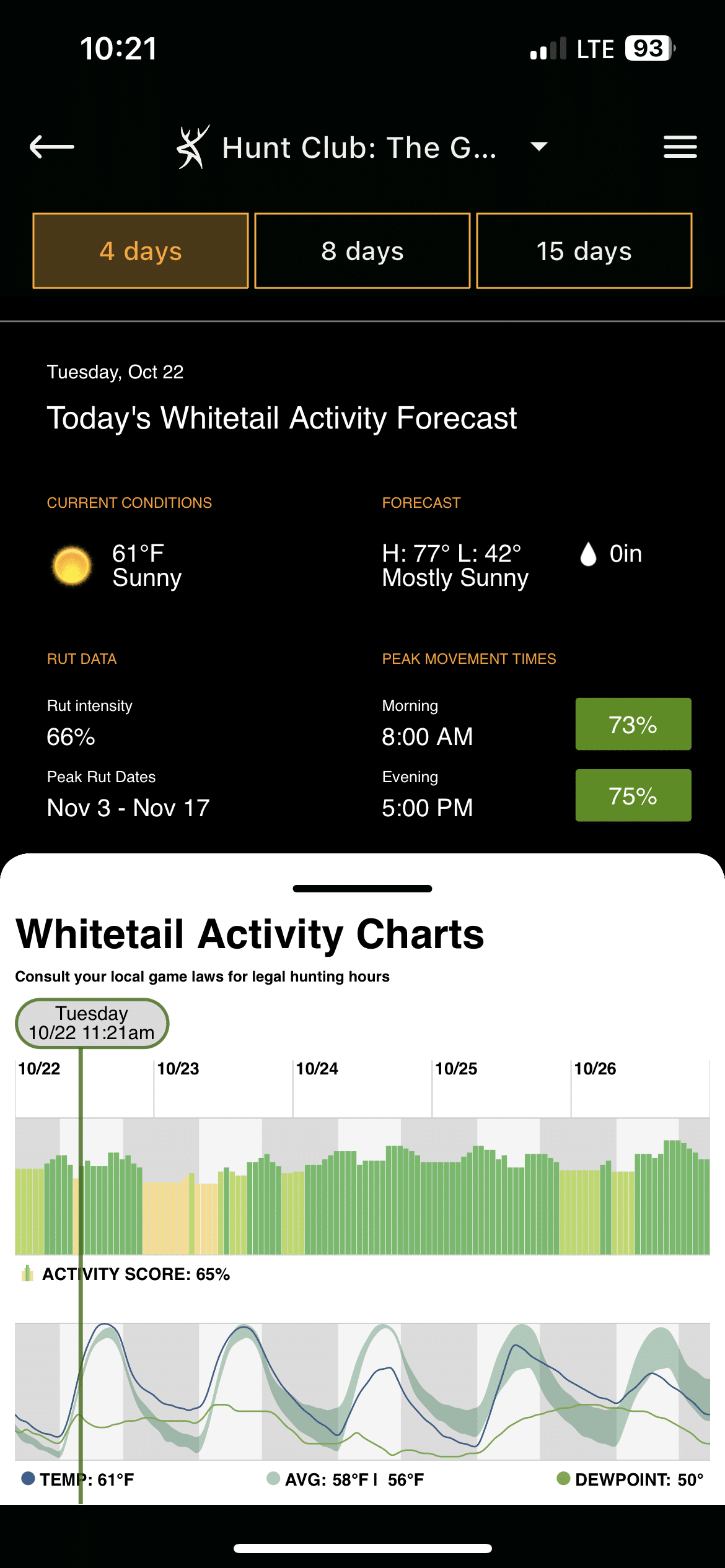
HuntStand Pro Whitetail’s Whitetail Activity Forecast feature gives you information to plan your hunt when challenges emerge.
Nobody said whitetail season would be as easy. Challenges lie ahead. Some have easy solutions, but others might never be solved. Read the deer hunting challenges listed here. Then, prepare for the worst with a chance for correction before a hunt disaster occurs.
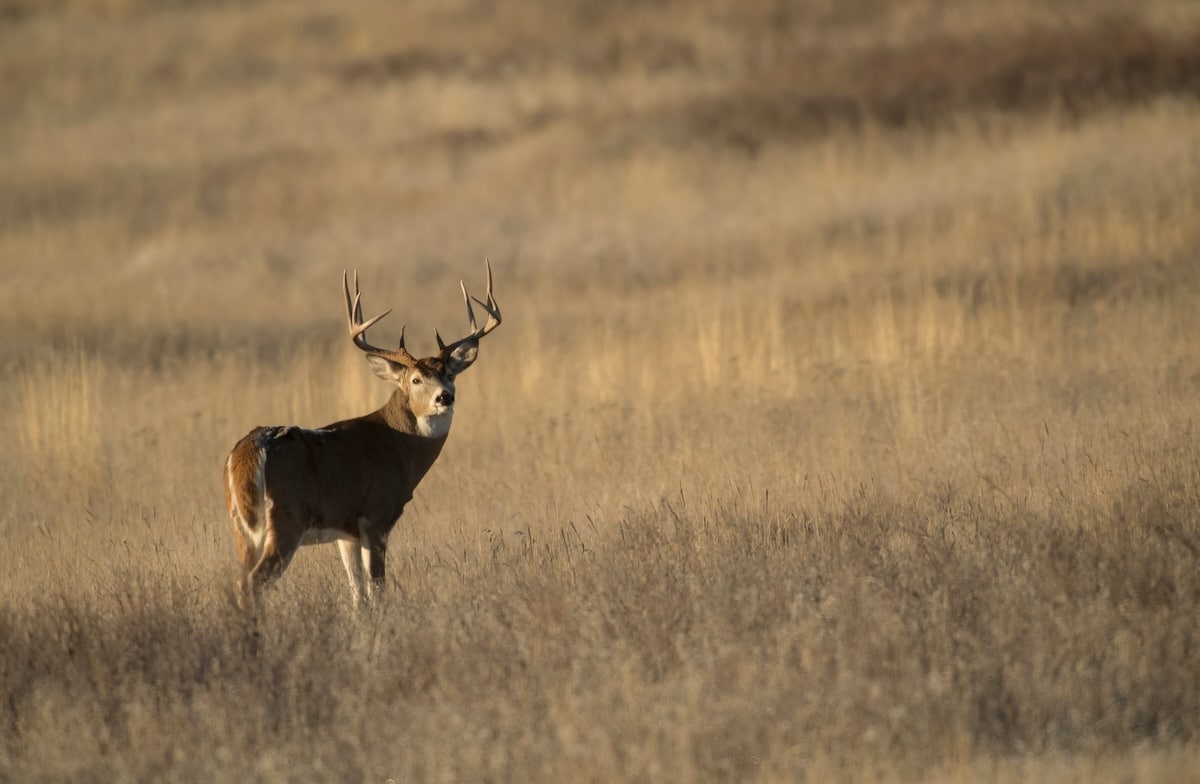
Prolonged warm spells can minimize deer movement.
1. Prolonged Hot Weather
Whether climate change or just another whacky weather year on the planet, hot weather invades most hunting seasons. Even during the rut, it curtails whitetail activity. Whitetails move less because they have heavy winter coats. They drink more water and seek shade.
Solution: You should do the same, except ditch the puffy jacket. Hunt water and set trail cameras to monitor likely water sources, especially during the rut. To catch deer in the shadows, move stands 100 yards back from fields or near mast, like oaks. Use your HuntStand Pro Whitetail subscription to access the Nationwide Rut Forecast, Whitetail Activity Forecast, and other features, to take advantage of limited hours of movement with precision movement projections.
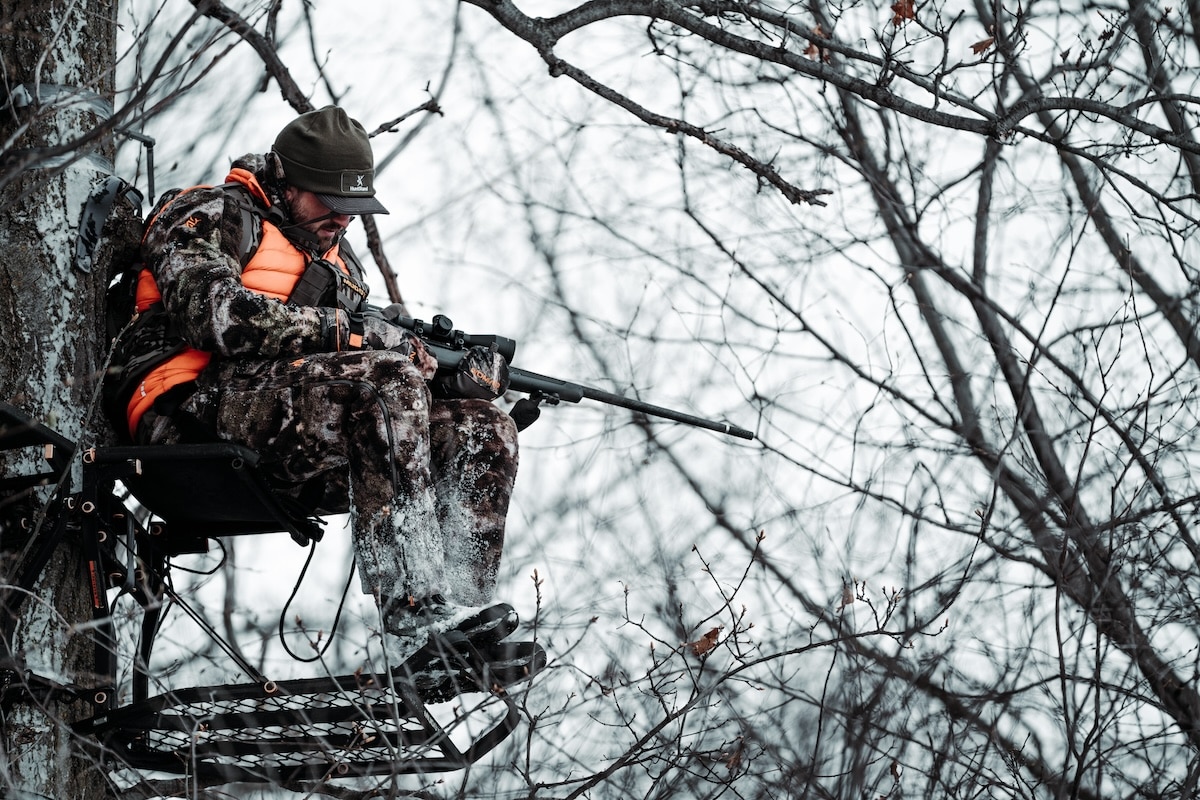
Challenging cold spells without a break in the temps can keep deer bedded to conserve energy, resulting in slow hunts.
2. Sustained Cold Weather
Like searing temperatures, frigid temperatures, especially when accompanied by a surprise fall storm, also can make deer hunker longer. Deer instinctively use prolonged bedding to preserve calories and retain as much energy as possible. When cold invades your hunt, early or late in the season, you have two choices.
Solution: First, you need to hunt for the highest quality nutrition possible. Energy-rich foods, such as corn, soybeans, and turnips, receive higher attention than native browse. Scout all food sources in your hunting area. Note them on your HuntStand app and scout for travel routes leading to these areas.
Next, have a backup stand set on the perimeter of bedding cover. When deer bed longer, be waiting for them to move toward feed, especially when the time is right. Do not fret cold or snow. It will not last long and the rut action is guaranteed to cancel it out soon.
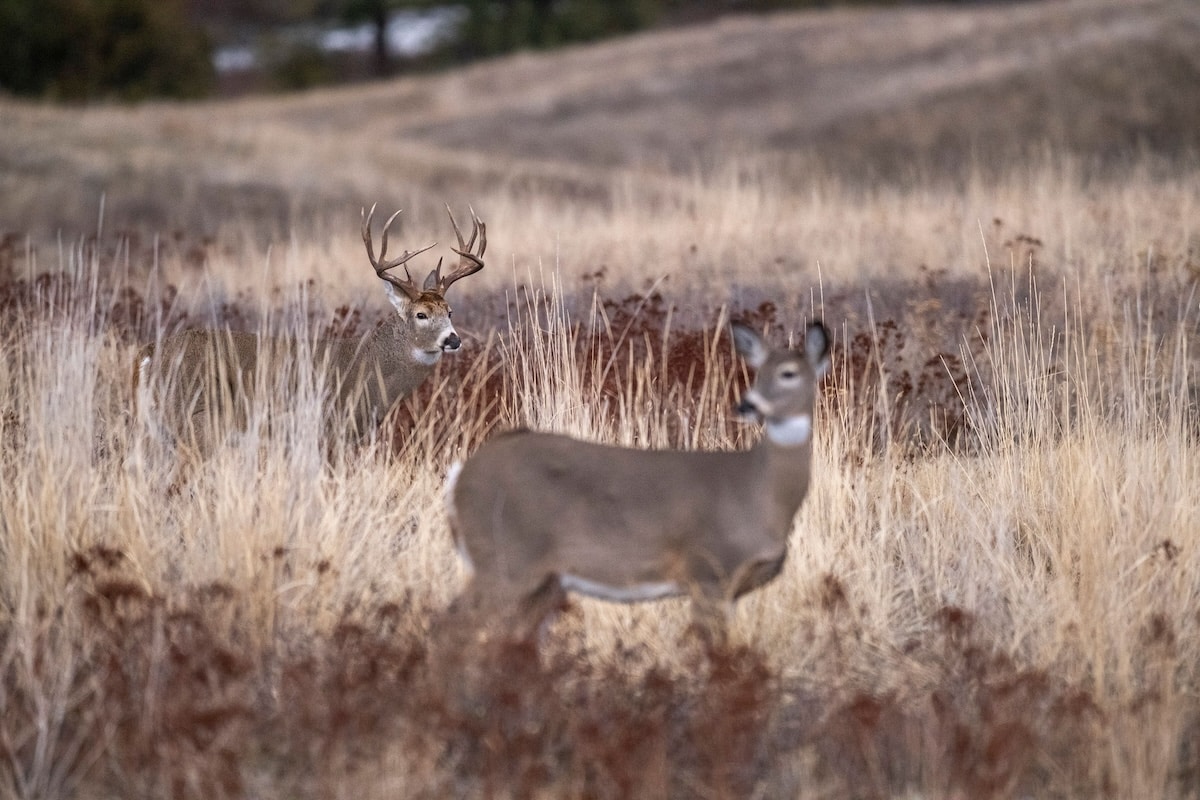
When bucks pair off with estrus does, it makes for slower sits in the stand.
3. “Typical” Rut Lockdown
Although the details of the rut lockdown have been disproved to a point with GPS tracking data, the phenomenon still appears due to deer behaving differently in the rut. Instead of visiting food plots with repeatable patterns, breeding behavior moves much of the whitetail lifestyle behind a curtain of timber for secrecy.
Solution: Do the same. When you see the first flurry of breeding activity, multiple bucks chasing one doe, transition to secondary treestands in secluded areas such as abandoned farmsteads, brushy draws and even wetland edges. Bucks and does seek out areas less populated with deer to breed in peace, and without competition. They still mingle, browse and bed, but in seclusion. Use the contour feature on HuntStand to find hidden benches on your hunting property as a start to finding hookup hotspots.
How to “Beat” a Deer’s Nose
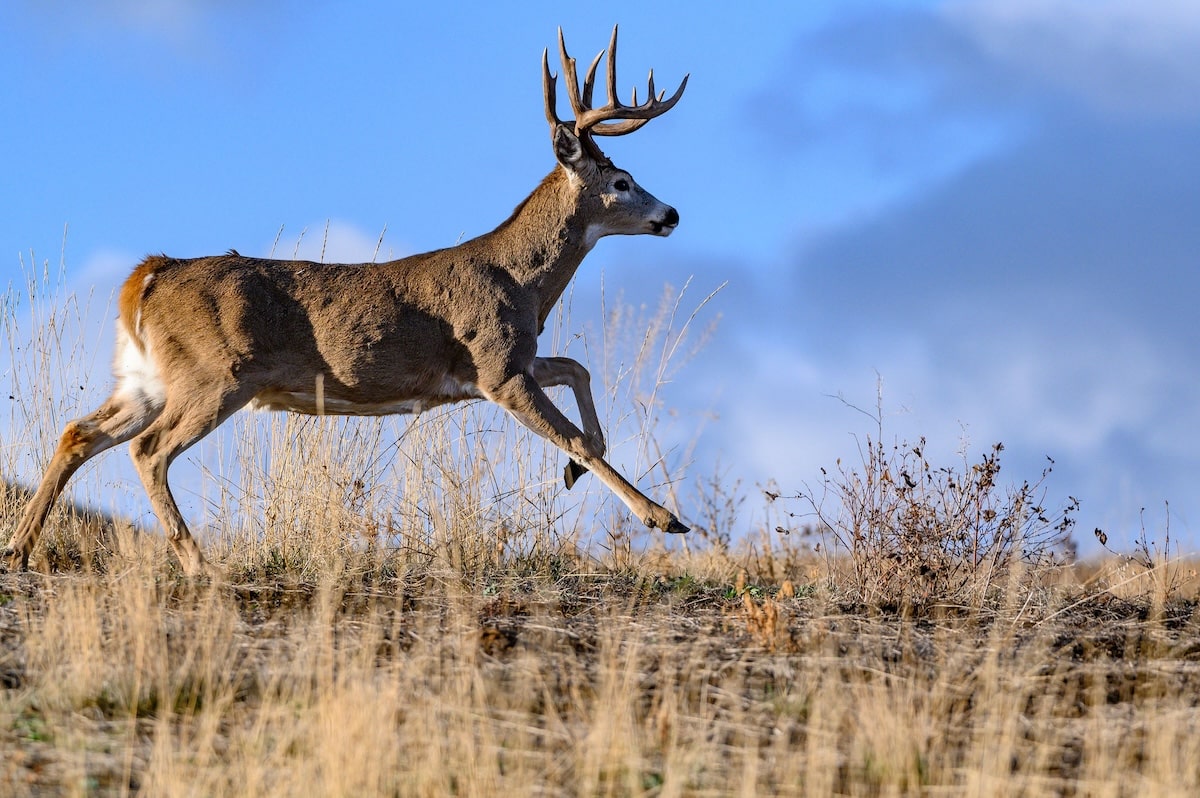
When open country is an issue, consider using blinds and even blending them into backdrops, such as abandoned farm machinery, or dilapidated buildings.
4. Wide-Open Country
Growing up in South Dakota’s Great Plains backdrop, trees often were in short supply. That meant no treestands. No worries. Use Mother Nature’s inventory to help you hide. First, search for lines of travel that deer might use as they traverse open country. Fence lines, utility pole pathways, field edges, waterways, and more hold defined trails. Next, look for any natural cover you could utilize to craft a hide. Cattails, plum thickets, dirt banks, and other vegetation all offer the opportunity to be crafted into a natural blind.
Solution: If the landscape is bare, consider a commercial blind, but do your best to blend it into the background. You also need to set it out early. A month in advance is not too early, and stake it like someone will steal it. Open-country winds are unforgiving. A better bet is to find old fence corners, abandoned farm machinery or even a well house to secure your blind with a goal of making it look like part of the existing backdrop.
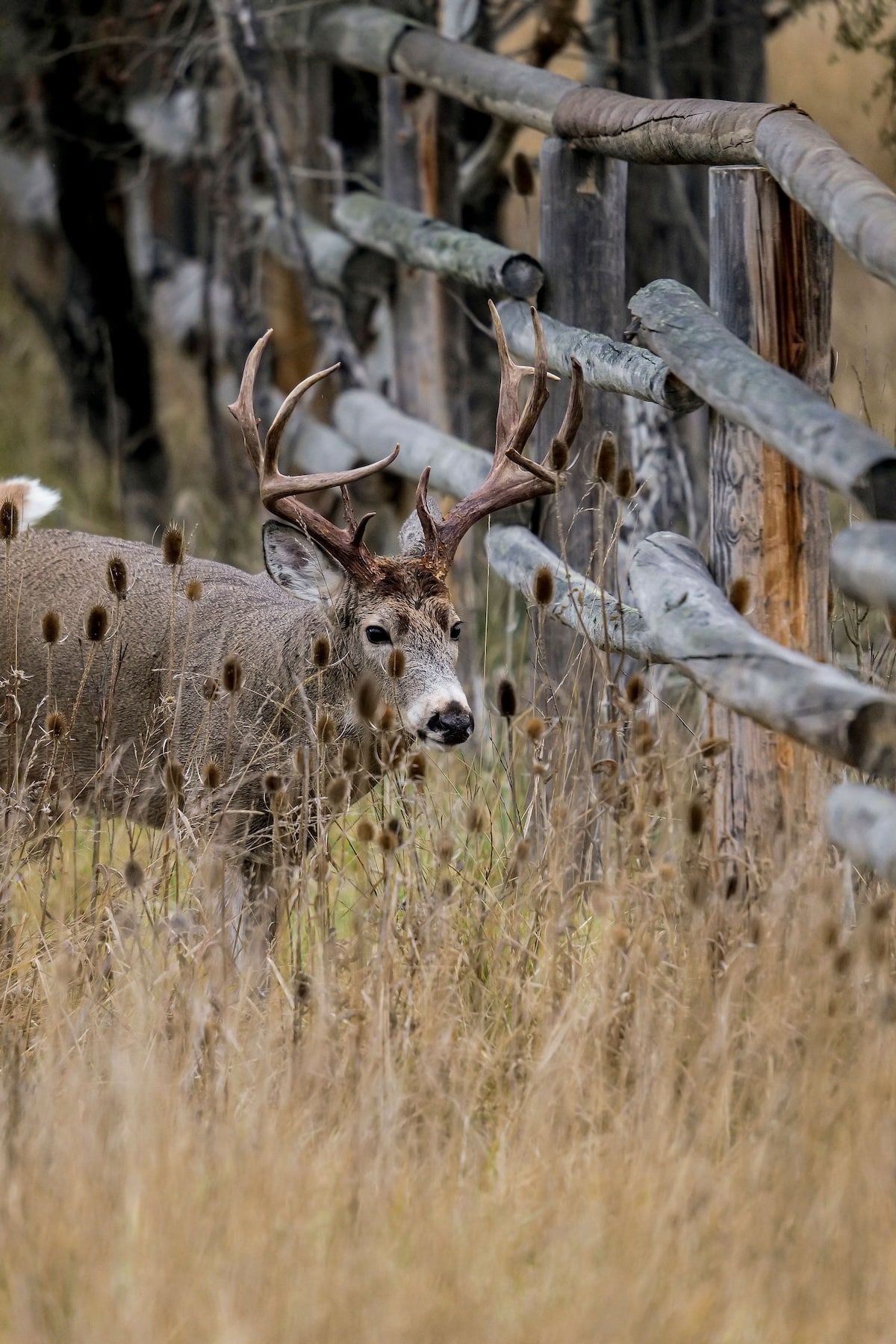
Hunting small tracts means some bucks will travel back and forth across property lines.
5. Small-Property Fence Jumpers
Deer rarely stay on a sole property, particularly during breeding season. Get ready for fence jumpers. Stay positive. The fence jumping goes both ways. A deer you admired down the road on a summer beanfield could be under your treestand during hunting season. Begin by being honest with yourself. A deer you managed for several years could become the neighbor’s social media post. Live with it.
Solution: Do your best to keep that deer at home, though. An easy step is to create a huge safe zone where you and your hunting partners do not hunt. Acreage depending, set aside 50% or more of a property as a refuge. It is not too much. Plan for as much food as you can and make food plot management a yearly objective. If baiting is legal, keep a site going to maintain a consistent pattern on your property. Finally, set up ambush points near fences to target those jumpers, but with plenty of space to avoid wounded deer escaping into “enemy” territory. The Property Info feature on HuntStand Pro Whitetail details all boundary information you need.
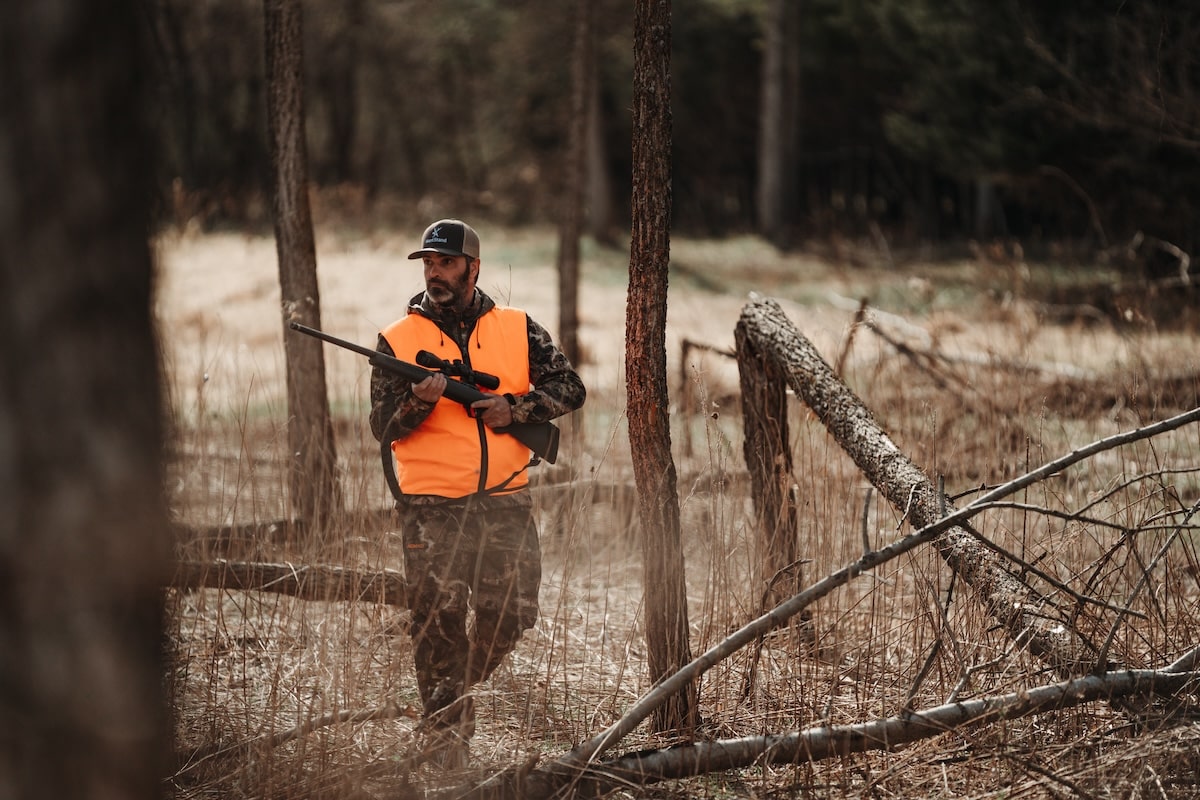
Increased hunting pressure creates significant challenges.
6. Intense Hunting Pressure
You alone are responsible for hunting pressure on any property you manage. If you hunt properties that openly allow others, or you join the public land army, you need to march to the sound of a different drummer. Intense hunting pressure alters deer behavior.
Solution: A beginning strategy includes hunting farther from trailheads and seeking out rugged terrain. HuntStand offers multiple layers to map your way from the crowds, including a virtual flyover with the 3D Map layer.
Next, hunt smart. Instead of hunting weekends, hunt weekdays when others must clock in. Arrive earlier than the rest to not only hike farther away from others but also your vehicle’s presence can discourage others when they see you are ahead of them.
Finally, hunt all day. When others leave for lunch, their movement could stir a buck right past your location.
How to Shoot a Deer on Opening Day
If an event is occurring on your hunting property and you need to find another location to hunt, refer to HuntStand Pro Whitetail’s Property Info feature for help.
7. Deer Noses and Wind Directions
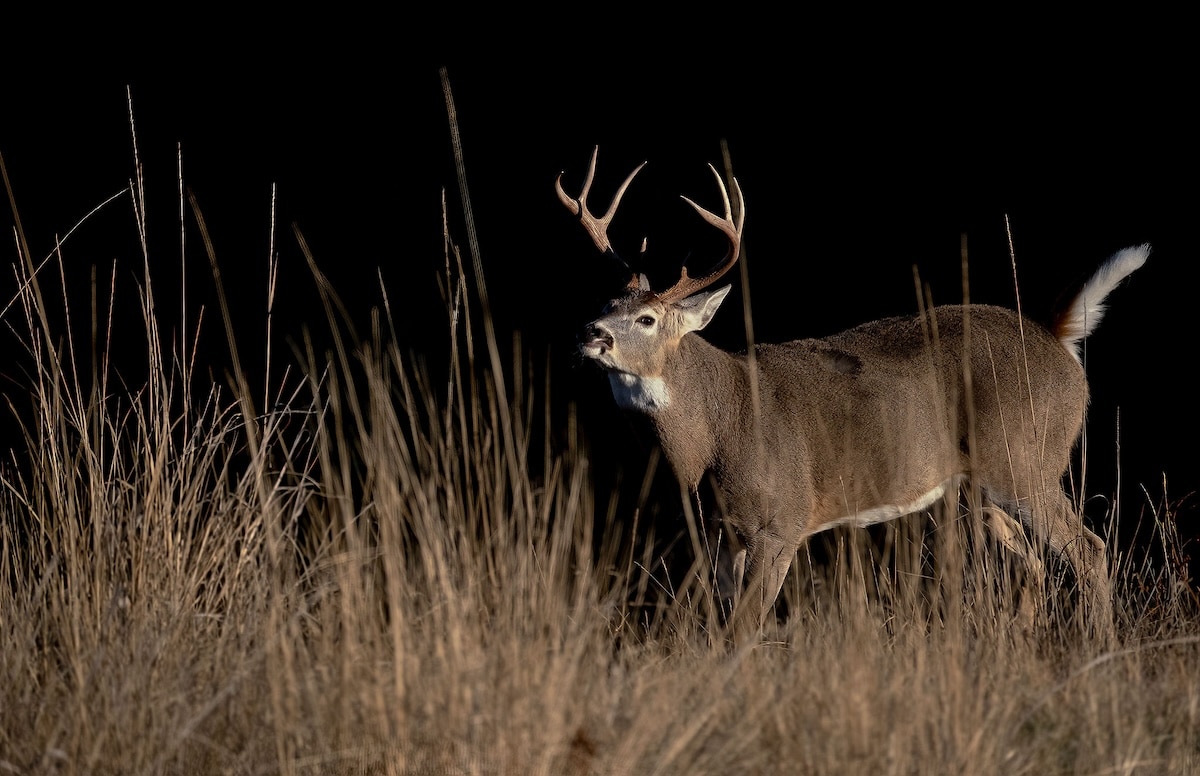
Whitetails live or die by their senses and their sense of smell leads the security team. Oftentimes, it’s the nose that beats a hunter. Getting past that defensive layer is difficult.
Solution: You always need to start out with a downwind advantage and work your way into the wind. HuntStand’s detailed forecasts help you maintain command over changing weather factors, especially hourly wind shifts. Next, put the HuntZone wind layer to work for you. It displays a graphic showing wind direction, your scent dispersion and a 72-hour graph of forecasted winds.
Now work hard to erase your scent. Begin with the use of Muddy’s DV8 natural vulcanized boot. It eliminates footprint odor you might be leaving along the trail. Stay above any deer scent with the use of a treestand, or if heights worry you, set a blind downwind of the trail. Keep only one window open and seal the rest to hold in your scent.
HuntStand’s HuntZone feature provides ample details to help you plan a hunt and outsmart whitetails.
8. Untimely Farming Disruptions
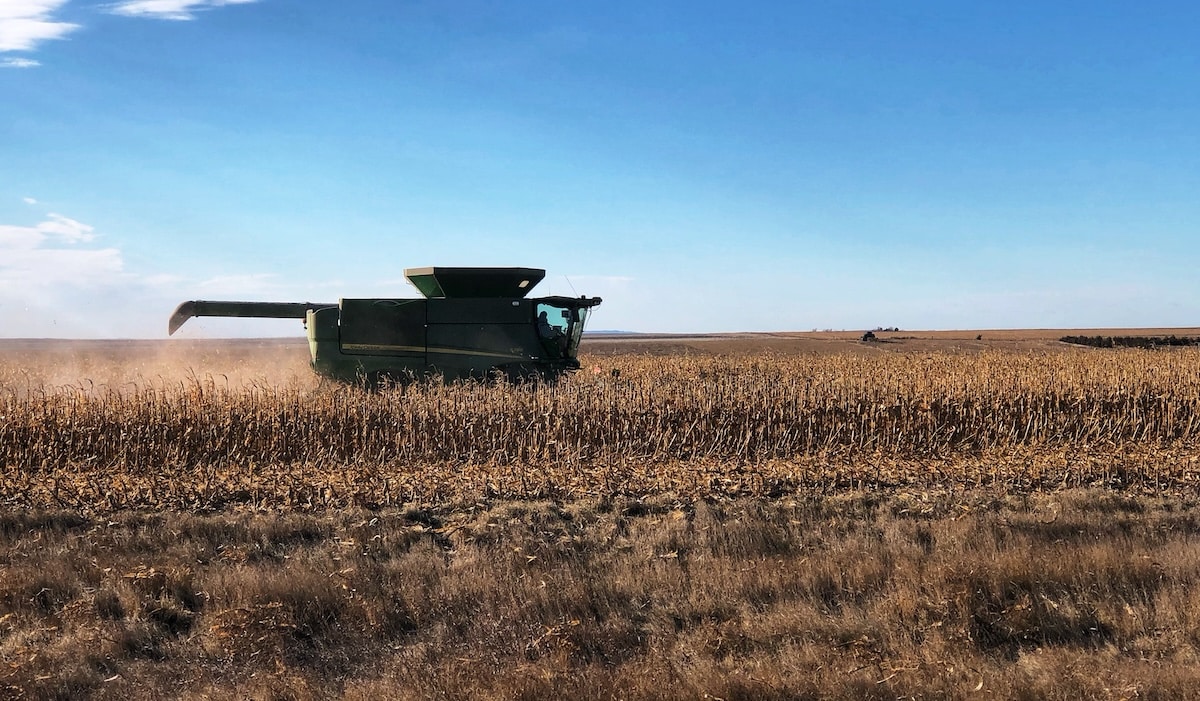
It never fails. About the time you settle in for a good sit, the landowner decides to harvest corn, move cows or fix fence. Grin and bear it. A better plan is to be prepared.
Solution: For starters, keep an open line of communication between you and the property owner. Ask them to text you any major farming plans or stop by weekly for an update. Do it at an appropriate time, like midday, not in the evenings.
To keep your hunt moving along, have backup ambush stands in place. Although you might wish to hunt an edge, have interior stands set along creeks, coulees, and near oak trees. That way when field chores take precedence, you can move into the timber and continue the hunt. Also, consider having a backup property, possibly public, on standby. The HuntStand Hunting Lands feature aids you in quickly finding a substitute when needed for a few days.
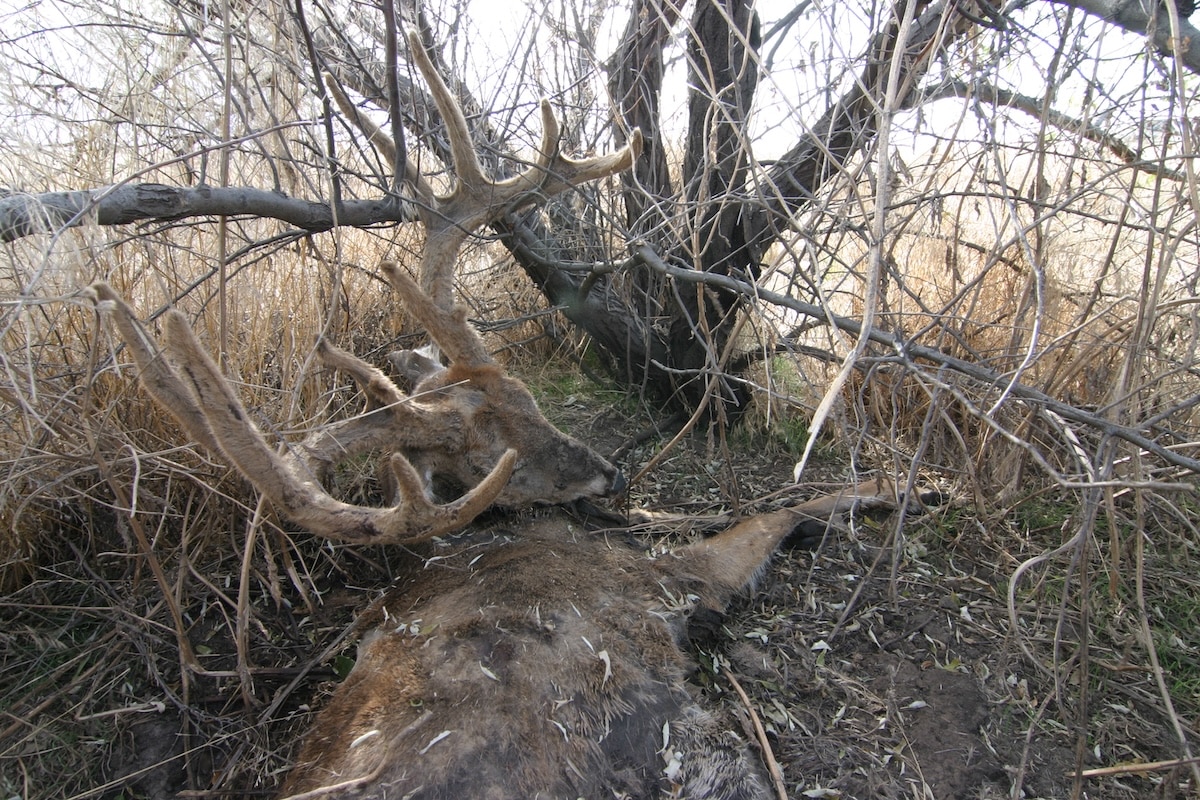
If disease, such as epizootic hemorrhagic disease has broken out, it leaves a trail of carcasses others discover and you will need to make a new hunting plan to overcome this challenge.
9. Sudden Deer Disappearances
When deer go missing you have two choices. Continue the hunt or take up pickleball. I advise you to keep hunting.
Solution: First, determine the reason for AWOL whitetails. Talk with landowners, hunting peers and the local game and fish personnel for insight. If disease, such as epizootic hemorrhagic disease (EHD) has broken out, it leaves a trail of carcasses others discover. Everyone will know.
Deer migrate as well. The rut is an obvious event causing shifts in deer populations, but agriculture can move deer around as well. A clean crop harvest could spur deer to move onto a neighboring property for food or the influx of a herd of cattle in a timbered parcel also might move deer.
Stay abreast of sudden deer disappearances and always have other hunting land options available. HuntStand offers features, such as the Public Lands feature, to keep you in the hunt.
Deer Hunting the October Lull (with HuntStand Pro Whitetail)
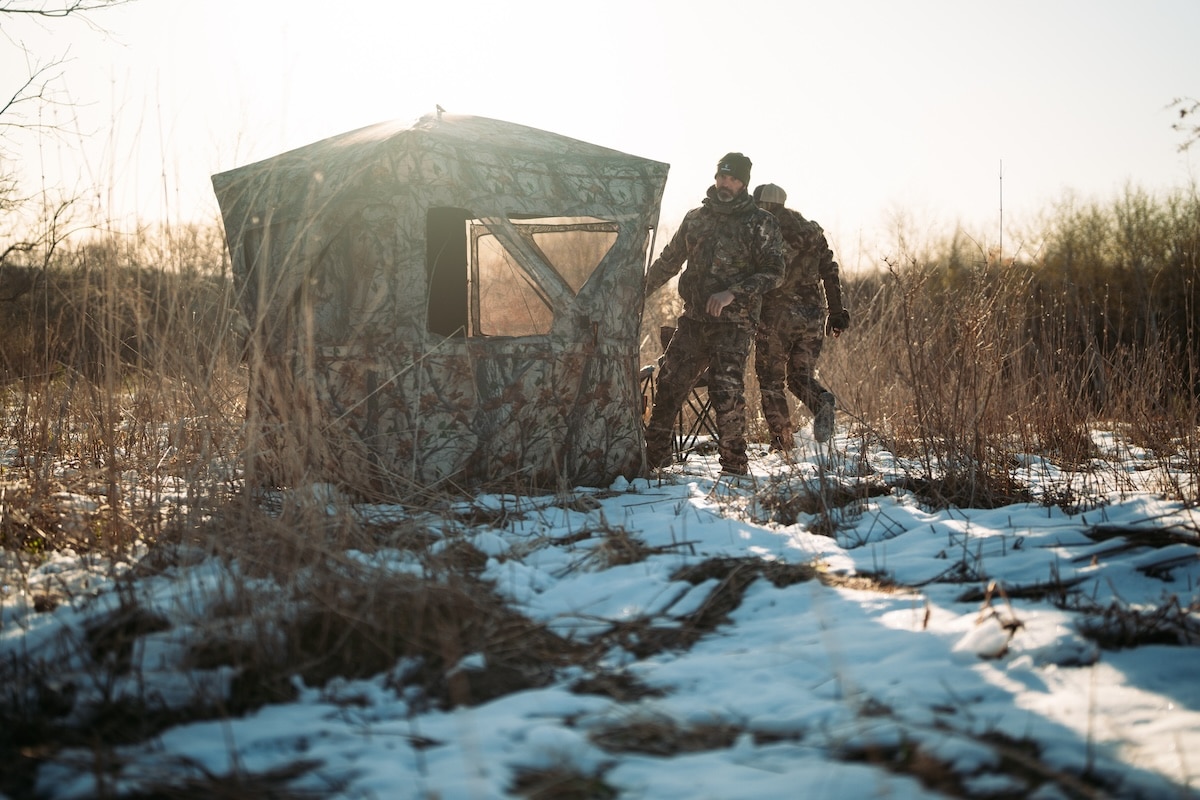
Get creative to create time to go hunting.
10. Not Enough Time to Hunt
Be honest. Nobody has enough time to hunt, but to make the best of the limited time you have to hunt, consider these remedies.
Solution: Start by researching the hunting lands nearest to you using HuntStand’s Pro Whitetail Hunting Lands layer. A short drive to new lands equals more hunting time. Another solution is to swap time with your spouse. You get to hunt now, but next week you are on duty to transport kids to after-school activities.
Another option that might be available is to work ahead. I personally do that all summer to prepare for fall hunting excursions. You could also swap hours with coworkers. Consider working their shifts over the weekends to give you openings to hunt on weekdays when lands might be less crowded.
The big takeaway is to be creative in carving out hunting time. And when you do land a window to hunt, do not squander it. Hunt hard and hunt smart to make the most of deer season’s ongoing challenges.
How to Use the HuntStand App
UPGRADE TO HUNTSTAND PRO WHITETAIL
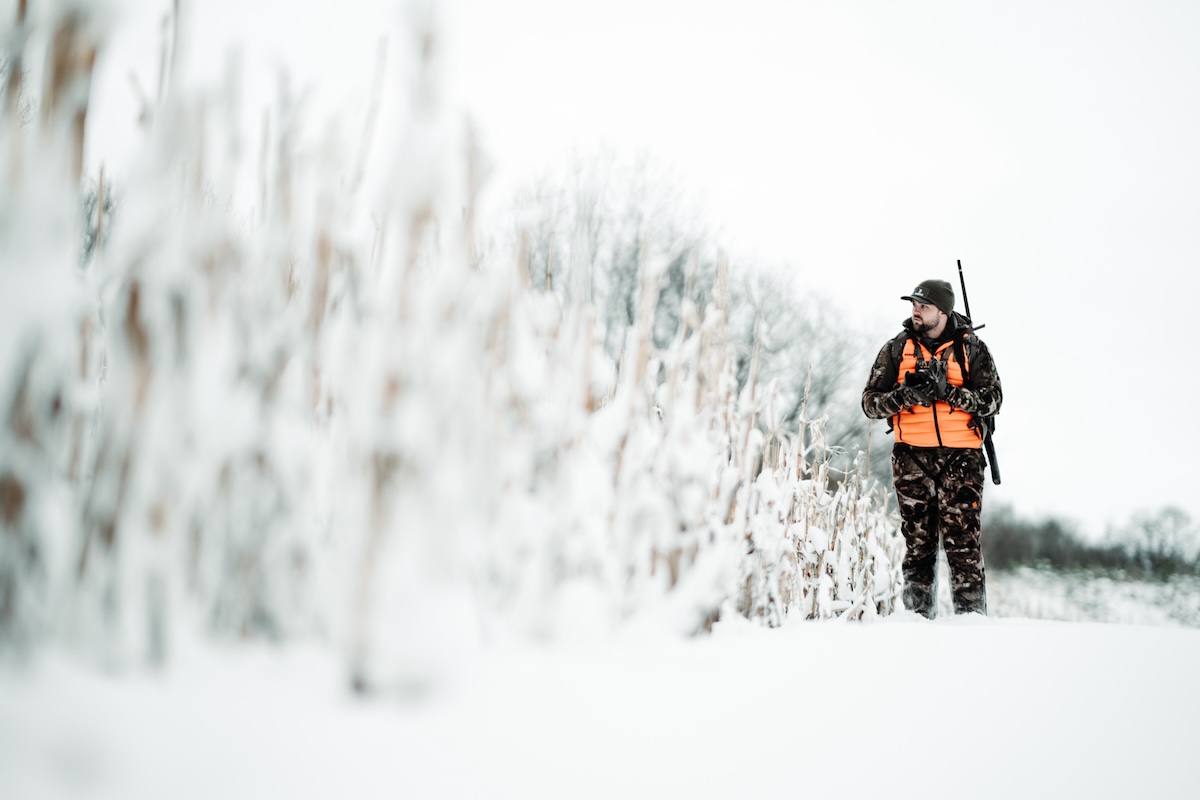
A silent arrival and departure from your hunting area ensures success on opening day to avoid alerting deer to your presence.

Scouting and preseason setup ensure success on opening day.
Opening day of hunting season comprises many experiences, hopefully with a venison finale. Regardless of whether your hunt kicks off on the actual opener of the season or your personal opener occurs when your career allows, be ready for success with these five categories to master to ensure a great kickoff to the hunt. Here’s how to shoot a deer on opening day.
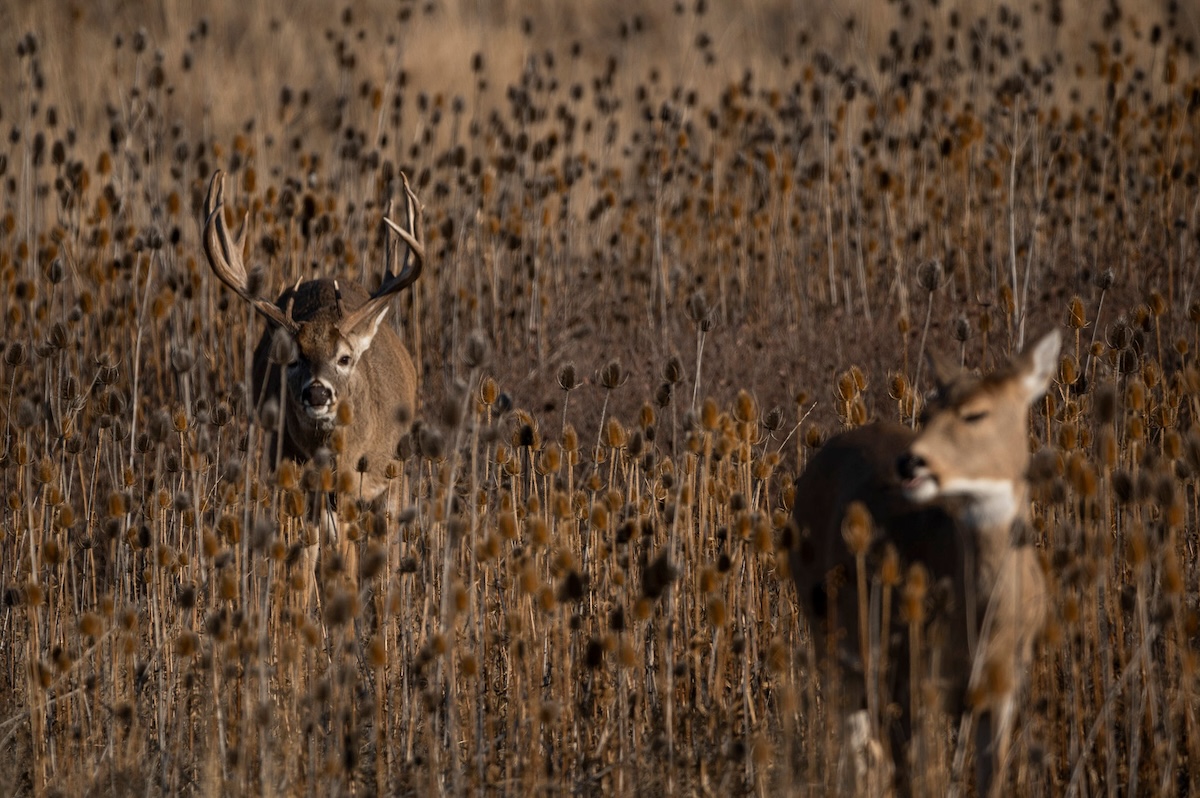
HuntStand Pro Whitetail’s Whitetail Activity Forecast gives you excellent forecasts on how to plan for opening day.
1. Scout with Seasonality in Mind
Above all, scout. This seems like an odd thing to include, but even with the unlimited potential in trail cameras and coordinating them with HuntStand Pro Whitetail, the coziness you get after repeatedly hunting a property could throw a huge wrench into your hunt. Depending on the season you hunt, early fall, rut, or late season, tailor your scouting, or you could miss clues on a changing playing field.
In the early season, whitetail bucks and does have one thing on their mind: food. They fully understand that the rut and winter await them. To thwart the effects of nonstop movement in the rut, and dried out leftovers in the winter, they pack on the pounds in the early season. Focus your scouting efforts on the highest-quality food in the neighborhood. If that food source lies off your property and on the neighbors, a pattern switch could sink your hunt, especially if you do not follow the clues.
How to Hunt Fringe Winds (A.K.A. Just-Off Winds)
During the rut, your focus should be on doe groups. Bands of females attract the attention of all bucks. The female herds might be right on the same fields you watched in the early season. More than likely, though, they moved. Harvesting, hunting pressure, and frost changing the palatability of food all could make substantial changes where groups of females gather.
Adjust trail cameras and be prepared for bucks to completely disappear once breeding begins. They really do not lock down, but time spent with hot does and forays to neighboring properties sure makes you feel like deer do a major disappearing act.
Finally, as the rut slows down and bucks suddenly discover they must wear skinny jeans due to a 20% (or more) of weight loss, again focus on food. Food plots heavy with brassica or turnips attract hungry deer, as do fields with spilt grain, like corn or soybeans. Once you locate a concentration of deer, spend a day or two monitoring to unravel suspected travel routes to a food source, before setting up your ambush.
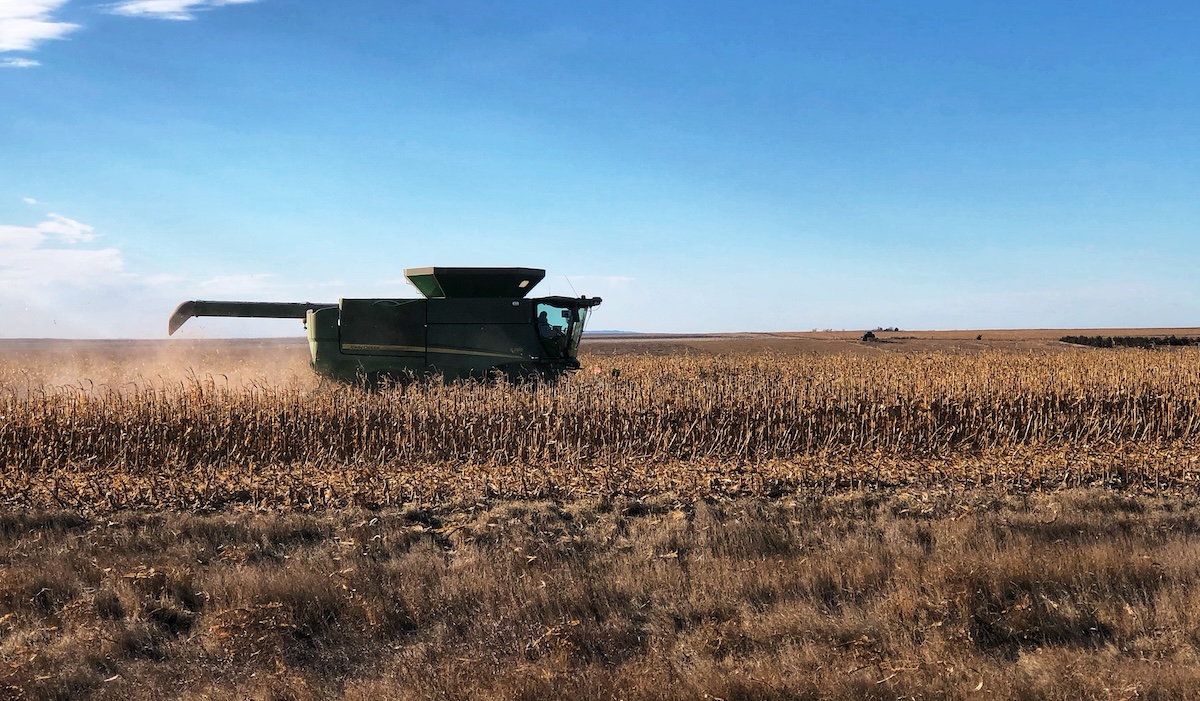
Big events, like farming, could disrupt deer on parts of a hunting property.
2. Choose the Right Hunting Strategy
As your scouting spits out details, and you confirm them with the Whitetail Forecast with HuntStand Pro Whitetail, choose a strategy for success. It might depend on a food plot, a massive agricultural field, a hollow leading from the neighbor’s field or even repeat visits to a stand of oaks in a woodlot.
Using the trail camera feature with HuntStand Pro Whitetail gives you the power to connect cameras, review images, and then catalog them for a coordinated view on your app. The Trail Cams feature does more than that, but when you begin connecting the dots, it provides you with a clear picture of what strategy offers the highest chance for success. Pay particular attention to the time of day, and if the pattern repeats itself daily or every other day.
Once a pattern sets itself apart for ambush opportunity, prep your ambush at least a week or more before the season opener. Treestands are easy to veil, but a new ground blind or permanent shooting blind should be set several weeks in advance of the season. Deer need time to become accustomed to the new landmark. Even a well, brushed-in blind stands out in a deer’s world.
How to “Beat” a Deer’s Nose
If you must set a treestand and hunt it the following day, use your trail camera and intel to decide what period offers a chance to avoid most deer traffic in an area. You do not want to be hanging a treestand along a food plot edge right before dark. The same goes with hanging an interior stand. Any ambush near a bedding area requires a late-day (or nighttime) approach to allow deer a chance to leave the sanctuary for food sources beyond.
Events, such as breezy or drizzly days, can also provide ample cover to slip in and out of an area while prepping a hunting spot. Timing your intrusion with local land management chores also offers a cloaking system. Tractors in a field, four-wheelers moving cattle, and a chainsaw buzzing nearby could give you the cover needed to get in and out while setting up your ambush invisibly.
Include the use of calls, decoys, and scents when applicable. All three of these tactics shine during the pre-rut and continue producing close encounters into the post-rut.
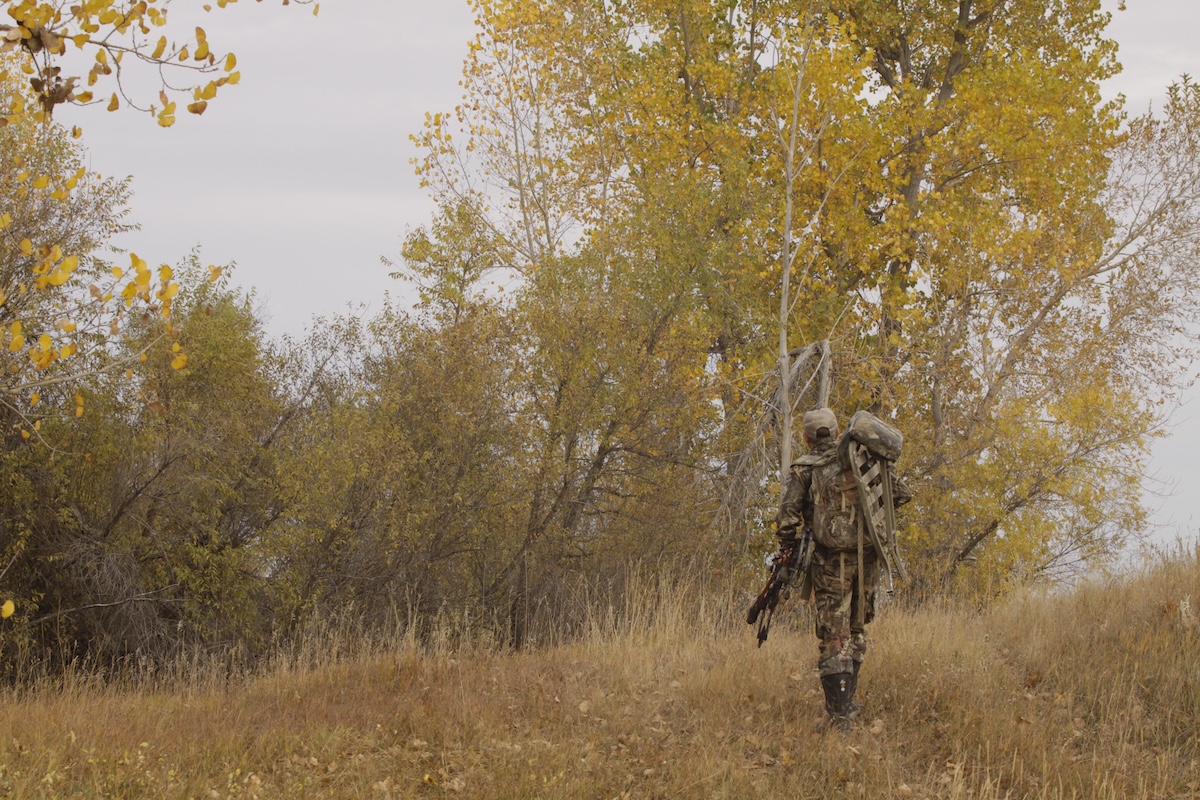
With the right planning, you can expect to hunt deer that are not aware of your presence for success on opening day.
3. Select the Right Stand Locations and Access Routes
Scouting completed and a solid strategy in place, concentrate all your next efforts to making yourself invisible on your opener. For starters, using HuntStand Pro Whitetail, search for invisible entrances and equally invisible exit routes to your ambush. By staying out of sight, the entrance to your ambush keeps your entire opening-day plan a secret. This is important for both a morning and afternoon hunt. If deer sense your presence, they could alter their patterns enough to avoid your stand area, even forcing you to produce a new strategy if deer shift to a new pattern.
Topography continues to be the best invisible route for ingress and egress from your stand. Fire up HuntStand and search for draws, ditches, creek beds, and other terrain features providing cover to your movement. The Natural Atlas feature overlays topographical information to help you see these rolling changes in the terrain. This, in combination with predominant winds for your ambush position, aid in masking your presence. HuntZone provides real-time information on not only wind direction but also how your scent disperses while hiking in and out (plus from your ambush site).
How to Stop Deer for a Shot Opportunity
To aid your hidden travel route, arrive ultra early. This allows you to use darkness while arriving in the morning. Deer see well in the dark, but are not equipped with night vision goggles. They might see a form, but if you arrive downwind, remain silent, and use terrain as much as possible, your odds increase of not spooking deer. Plus, an early arrival gives the woods ample time to resettle after you settle into your stand.
Follow the same protocol in the afternoon. Arrive early so you will not bump any deer already up and feeding on fields in the afternoon. Set your ambush play in motion a full hour before you normally would. Use your invisible access routes, arrive early, and your odds increase for a meeting of unsuspecting deer.
It goes without saying but follow a stringent scent-elimination protocol. Wash all your clothing and gear before taking it into the field. Spray down all your equipment when you leave your truck, and wear rubber-bottomed or scent-free boots to hunt. Now, you are ready for the opener.
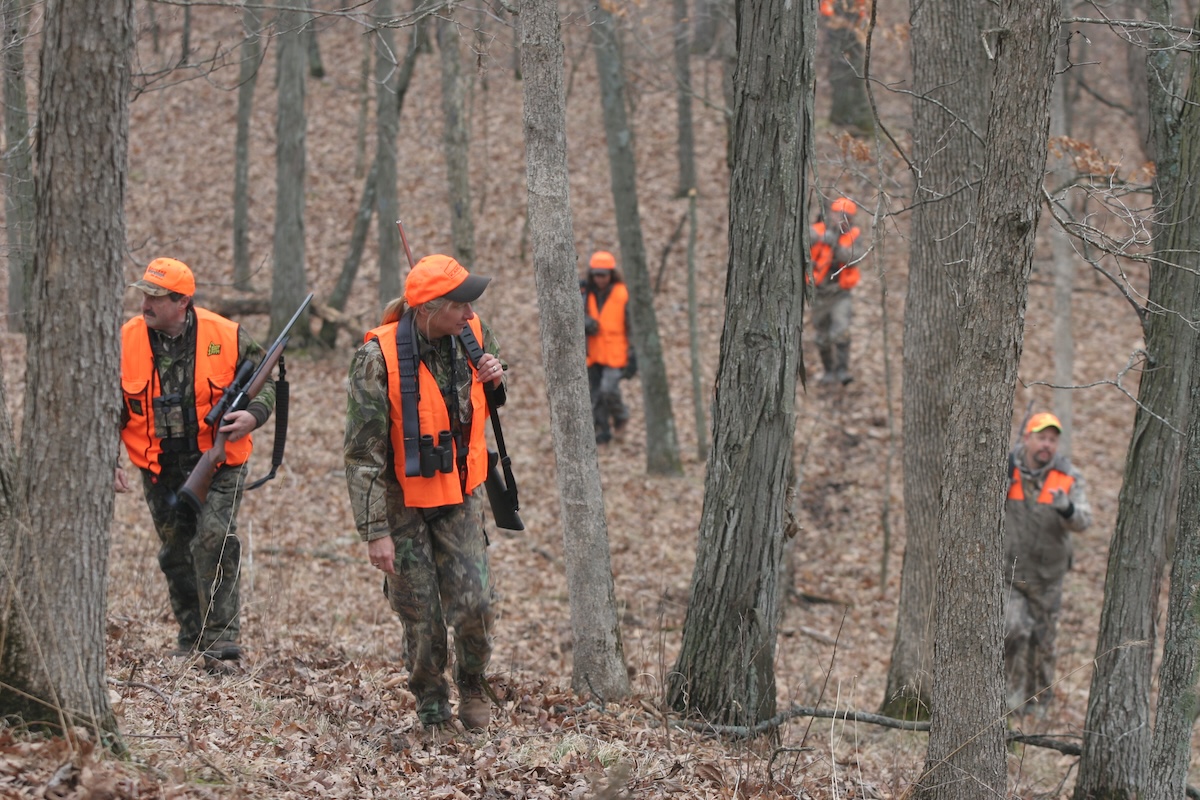
The opening day hunting crowd can work in your favor if you arrive early and in front of the hunting army.
4. Consider Other Hunters
Unless you have Elon Musk money, you likely share a hunting property with a handful of other hunters. On public land, the list could grow to great numbers. On a true opening day, the pressure from other hunters has the potential to wreak havoc in the deer woods. There is no way to sugarcoat this. Your hunt could be ruined by your hunting brethren.
That said, think positively. This invading army could also be a Godsend. To take advantage of others moving deer on a property, get in the way. Your goal is to intercept deer moving away from hunting pressure.
Advanced Trail Camera Tactics for Deer [HuntClass]
Put that early-morning Batman move into play and arrive extra early. Using HuntStand, use your previously marked route of invisible ingress to reach an interior ambush site. The best ambush location for this setup, if you have multiple setups, is refuge deer would seek out when they feel hunting pressure. Think of obvious escape corridors and sanctuary settings where deer flee when spooked. Funnels or pinch points stand out if they lead to the best sanctuary on a property.
On a traditional opening day, you might opt to stay in the stand all day. Hunting pressure could spike in the morning, but the trickle of hunters in and out of the woods adds up to deer movement any time of the day. Add to that fact deer movement predicted by the Whitetail Activity Forecast feature in HuntStand, and you have a basis to plan an entire day of hunting. Even a midday move to a stand closer to a food source might be a possibility based on what the activity score reports on the forecast app.

Having a plan and a backup plan for your opening day of hunting season just makes sense for success.
5. Have Backup Hunt Plans
Finally, have a backup plan in place … for everything. It always pays to have at least two stands or ground blinds at each hot location. You have no idea weeks ahead of what the wind direction will be on your opening day of hunting. Using the HuntStand Weather feature offers a view into future forecasts, but oftentimes, the most solid data is from a day or two prior to your hunt. Plan for all predominate winds.
Next, back up equipment so you can place another stand quickly. A new pattern suddenly appears on a property. The neighbor could harvest a cornfield, cattle could invade a river bottom, or hunting pressure might send deer into a tizzy. A second stand or blind waiting in your equipment shed gives you options to have another ambush in play without moving already set gear in sensitive whitetail habitat.
Finally, don’t hesitate to change strategies on the opener if you see a phenomenon that allows you to take advantage of deer behavior. On opening morning, you might see a horde of bucks chasing one doe into a wetland. Instead of patiently waiting hundreds of yards away, drop from your stand and stalk closer. You never know. The craziness could rush right by you giving you an opening day to remember.
UPGRADE TO HUNTSTAND PRO WHITETAIL
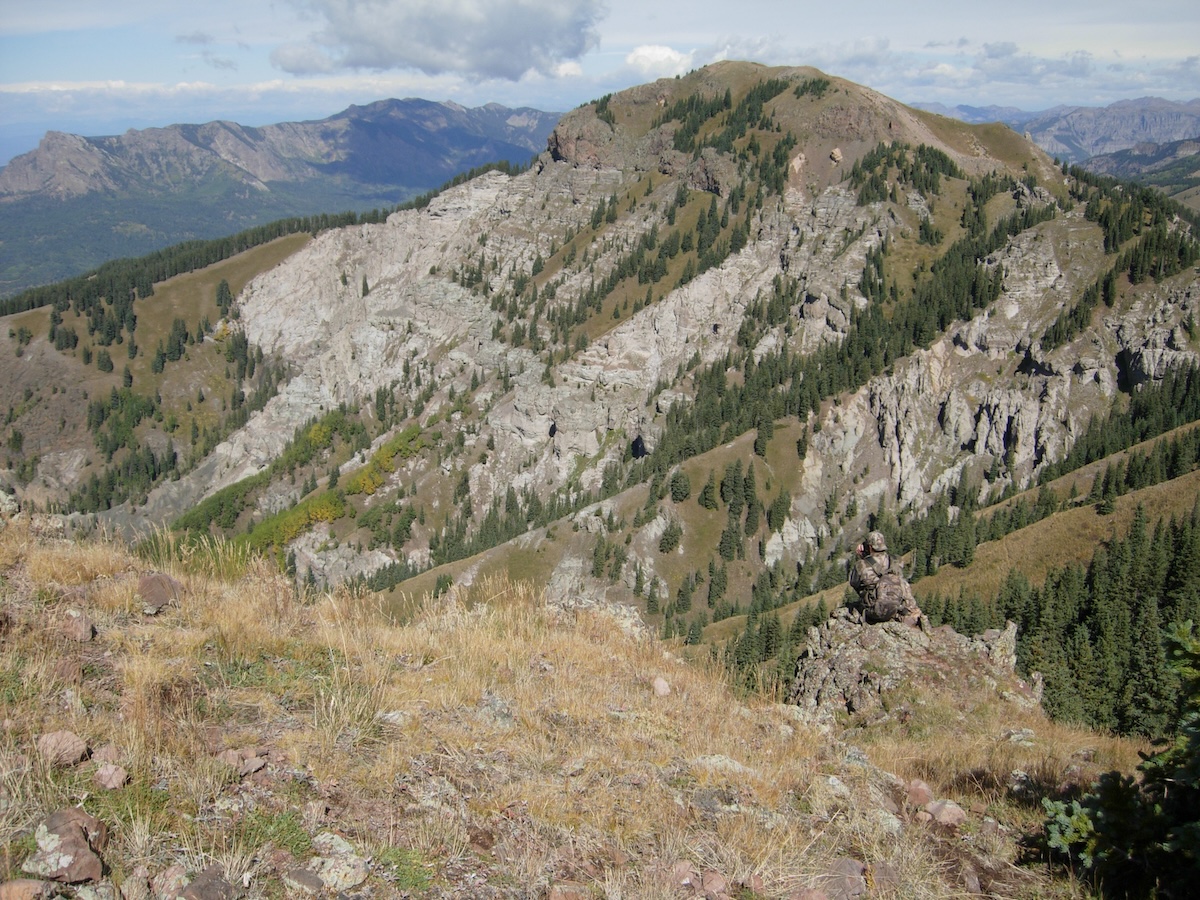
Elk herds require lots of grazing nutrition. Some of the best areas are on valley floors, but look for steep slopes to hold good grazing and security for elk, too.
Getting the most from a hunt is important. You only have limited days to put into a hunt and using your days wisely requires a savvy playbook. Fortunately, archery elk hunting provides you a platform to hunt elk all day while capitalizing on their daily schedule.
Although they do not have a schedule as stringent as a city subway system, they do exhibit trends toward varying behaviors throughout the day. Understand these behaviors and set your watch to take advantage of any mistakes they might deliver during your hunt. Here is how I plan my archery elk days during the elk rut.
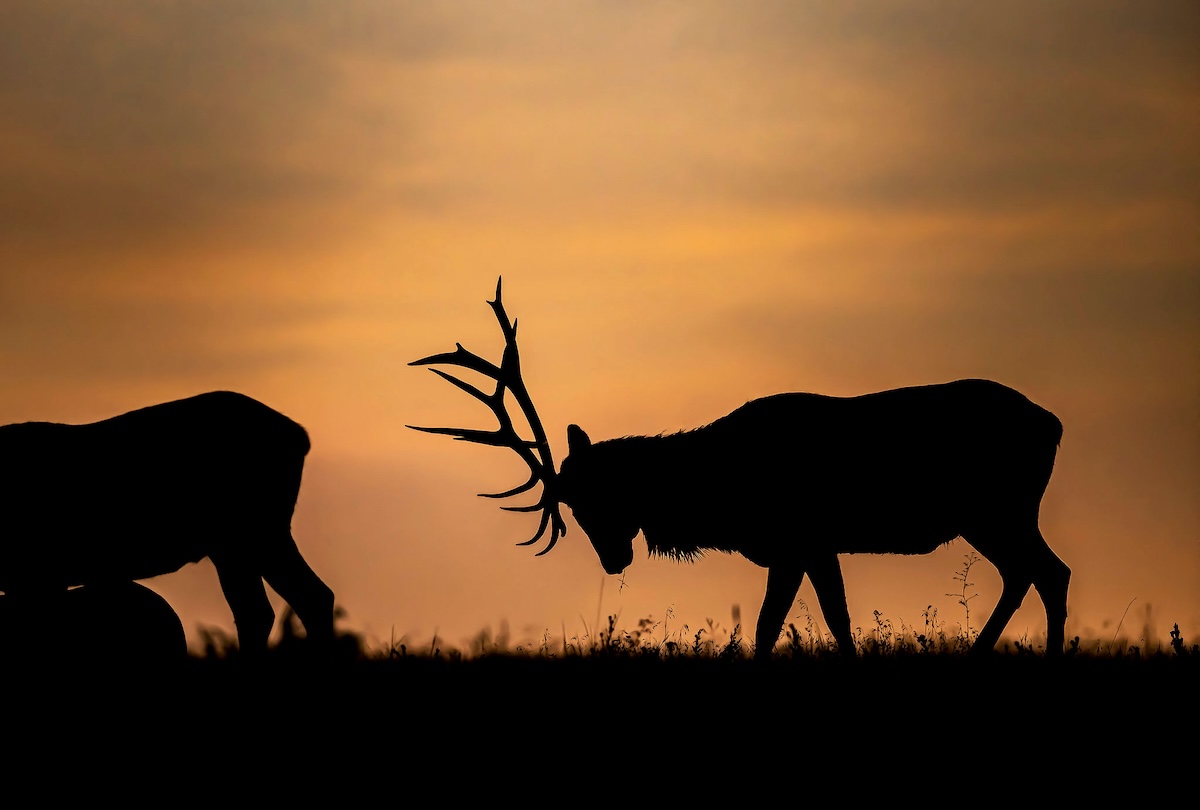
Follow elk in the morning and attempt to cut them off in an ambush.
Hunting Elk from Dawn to Mid-Morning
My archery hunts kick off well before dawn. Start your days early as well. Rise early and get into the woods way before sunrise. It offers multiple benefits. For starters, you beat most other tired hunters to the good spots. By day three or four of any hunt, most feel fatigue and grind. Getting out of the sleeping bag becomes a real challenge.
More than that, your dark hike allows you to move ahead of elk, which traditionally take off at dawn toward daytime refuge. Beat them to their bedrooms. And while moving through the woods in the dark, you also glean important information. Occasionally, bulls sound off and ramp up their talk as the first light of sunrise offers you a chance to shut off the headlamp. Use these vocalizations to direct your ambush and fine tune the final approach to a herd.
Hiking Miles Deep to Hunt Elk: Is It Necessary? Maybe Not.
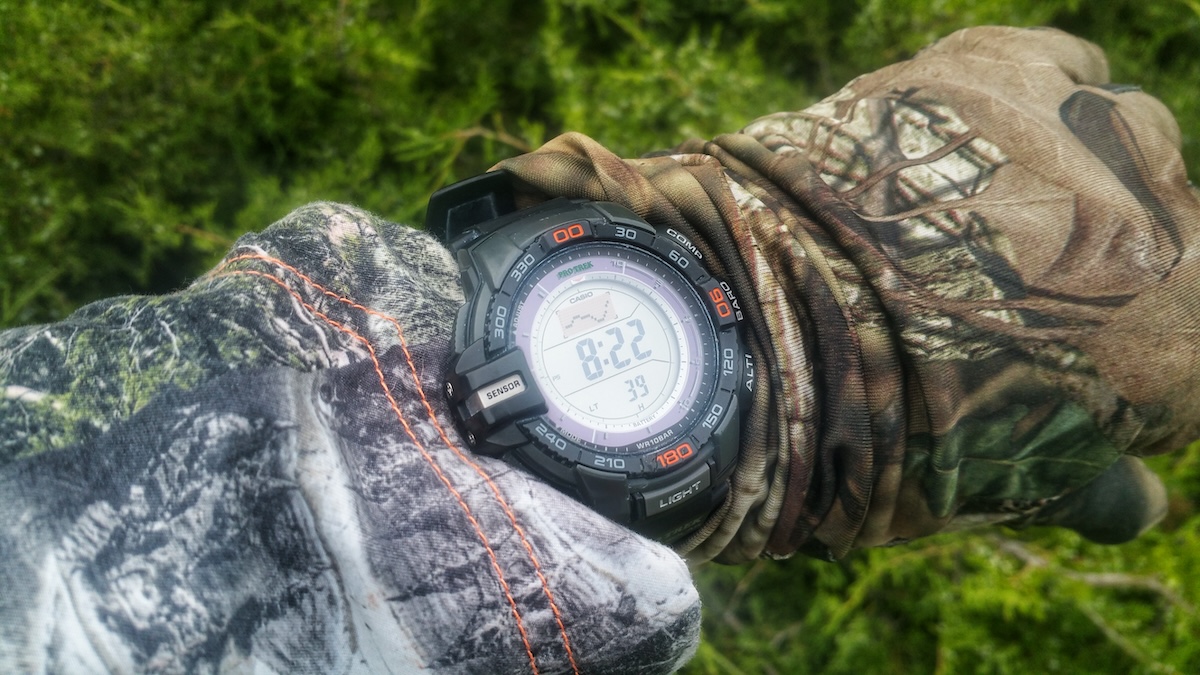
Elk follow a loose schedule during the rut. Learn that schedule and it helps you craft an all-day hunting plan.
A HuntStand Pro subscription plays an important role in these moves. Utilize HuntZone to monitor wind forecasts and stay abreast of terrain changes while adjusting to elk randomness. The Hybrid map feature, along with the Natural Atlas topographical information, guides you in tandem with bugles. Offline Maps gives you freedom to navigate without cellular service.
Stay as close to any herd as possible and adjust your position as thermals and winds change from the cool of the morning to the heating of the day. The goal of most herds is to end up high on a north face, across a major canyon, and buried in thick pines or junipers. Rugged terrain and dense cover forces you to burn calories to meet up with the herd, but you might be able to coordinate an encounter early in the morning movement, or later.
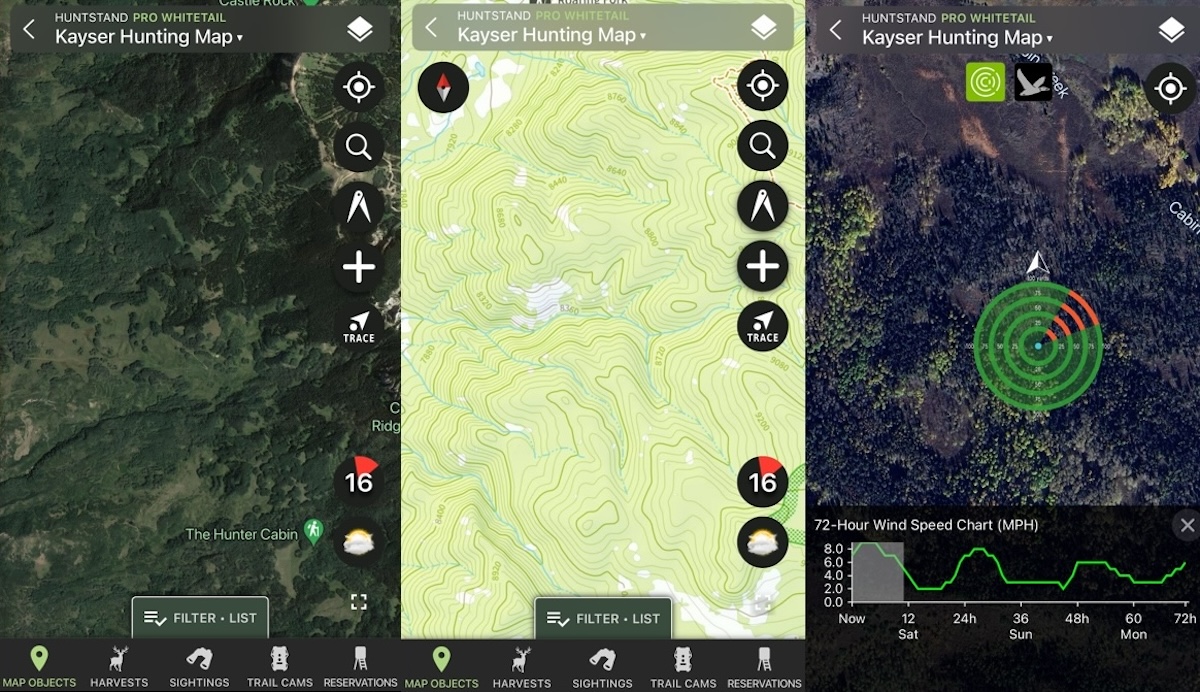
HuntStand’s Natural Atlas is good for comparing topographical terrain in elk country. The Hybrid map feature on HuntStand is ideal for studying elk country. Use HuntStand’s HuntZone to review wind for elk hunting.
Once elk reach a lounging location of their choosing, they often roam, rut, and frolic instead of merely dropping into beds. This bedroom teasing distracts elk giving you yet another opening to slip into shooting range.
If elk activity is high, you might not need to call. To nudge elk into your shooting lanes, consider sounding like a lost cow or a subordinate satellite bull. If the bull responds with vigor, cut him off and ramp up your challenge. He might have a cow nearby in estrus and ready to rumble to protect his domain.
How to Call Elk Like a Champion Caller [HuntClass]
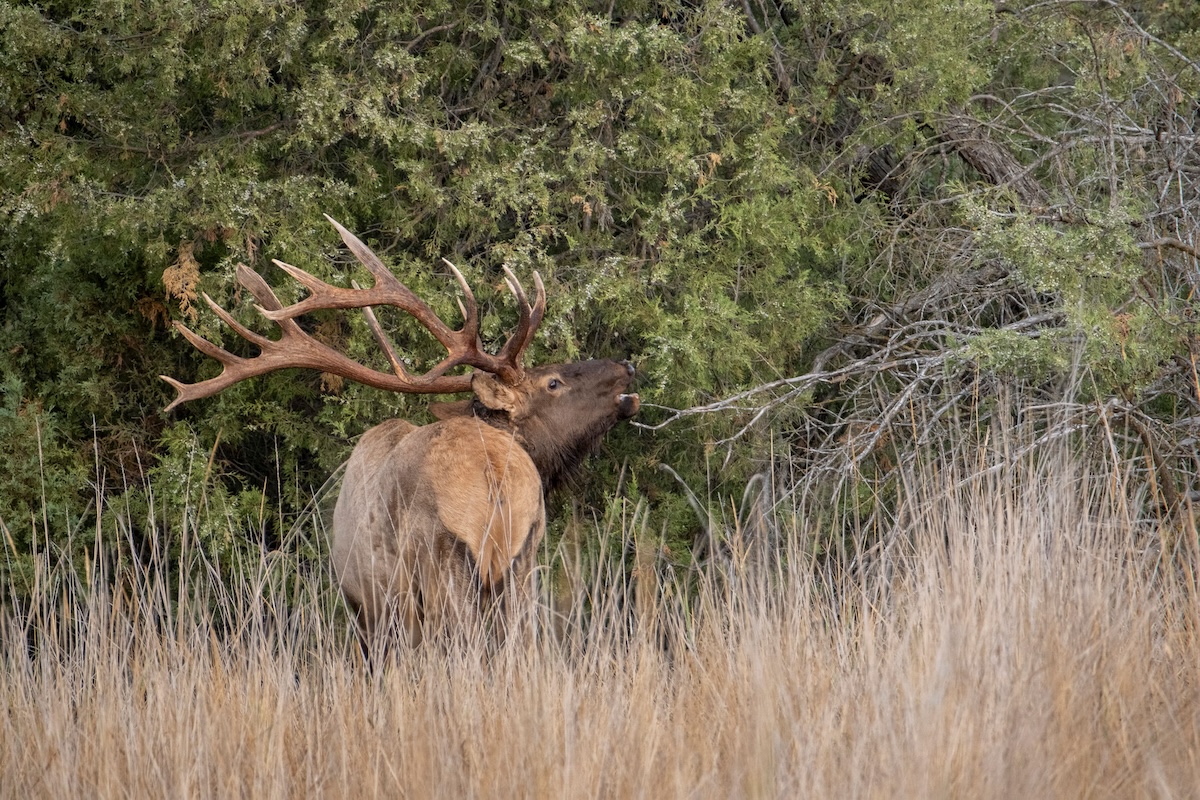
Construct a hide from a fallen tree and wait for elk to slip by in dark timber on a well-used trail.
Hunting Elk from Mid-Morning to Mid-Afternoon
Around mid-morning, whitetail hunters typically head back to camp. Don’t be a whitetail hunter. Instead, stay out and consider three strategies.
Your first strategy relies on if elk are bedded nearby. Keeping tabs on the wind, use your HuntStand Offline Maps feature to dissect the terrain and map out a route to get as close to the bedded herd as possible. With a stealthy approach, set up downwind (without spooking the herd) and wait for elk to stretch, graze, or walk anxiously around the bedroom. At any point during midday, a bull could walk by (silent or chuckling).
If you do not have a good handle on the location of a herd, but feel the area is “elky,” just still-hunt. Slowly drift into heavy cover, stop, glass, and then move a few more yards. Keep the wind in your face and put HuntStand Pro to work utilizing Natural Atlas to seek out benches and mesas that might be hidden under a canopy of pines.
How to Hunt Elk at Higher and Lower Elevations
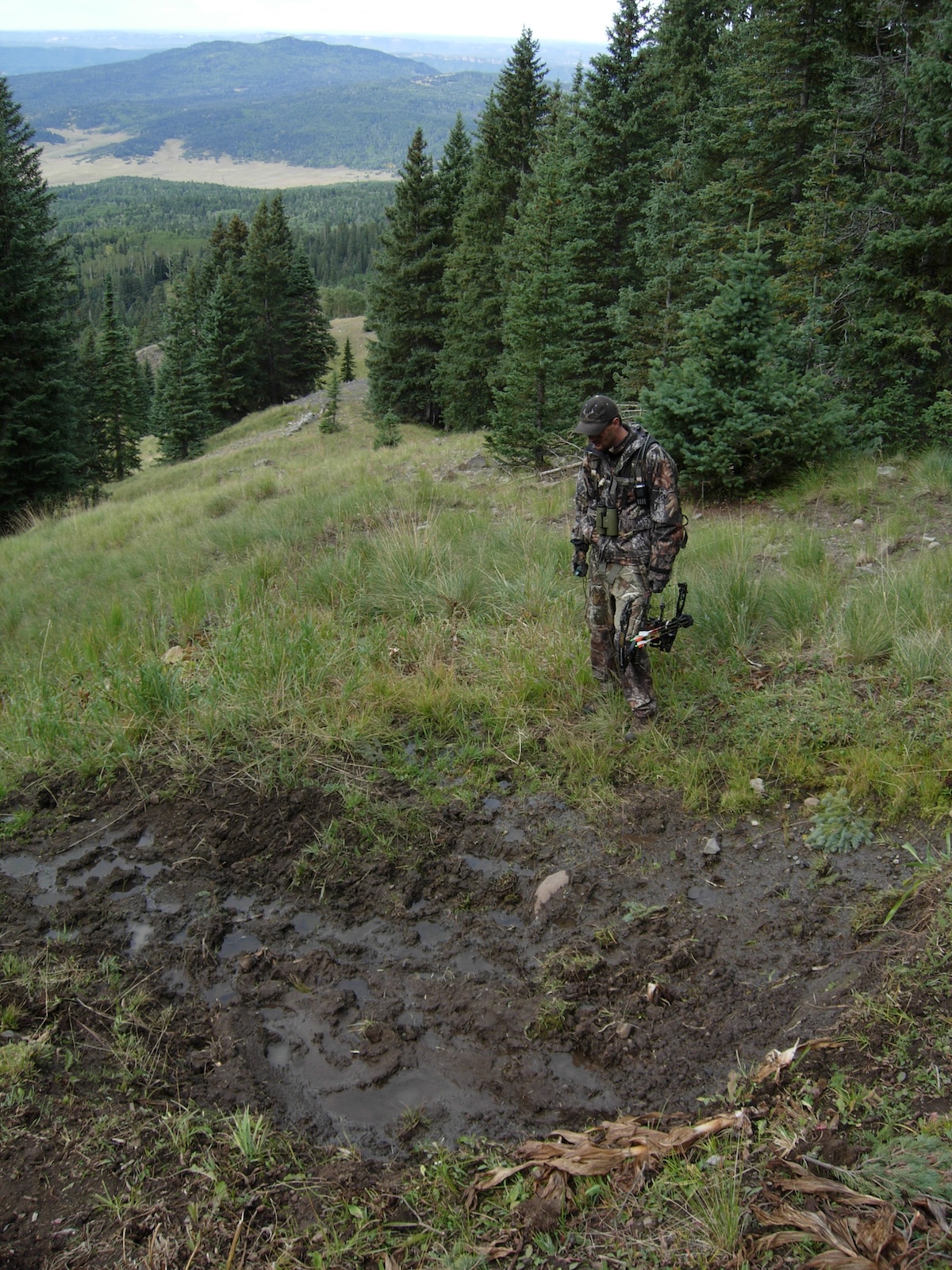
Elk can wallow and water at any time, but mid-morning to mid-afternoon is an ideal time to watch water in the heat of the day.
The third strategy option is water. Ek often drink right before bedding. Bulls commonly leave a bedroom to drink, or wallow, anytime during the midday siesta.
HuntStand’s Natural Atlas feature notes all major water sources in an area. Whenever you discover water, study it for activity. Place an icon on your map and revisit those with a muddy, wallow character. If I cannot locate a herd, I review my offline map for previously found wallows. After choosing one I feel has potential, I build a homemade hide downwind and catch a wink while waiting.
E-Scouting Public-Land Elk [HuntClass]
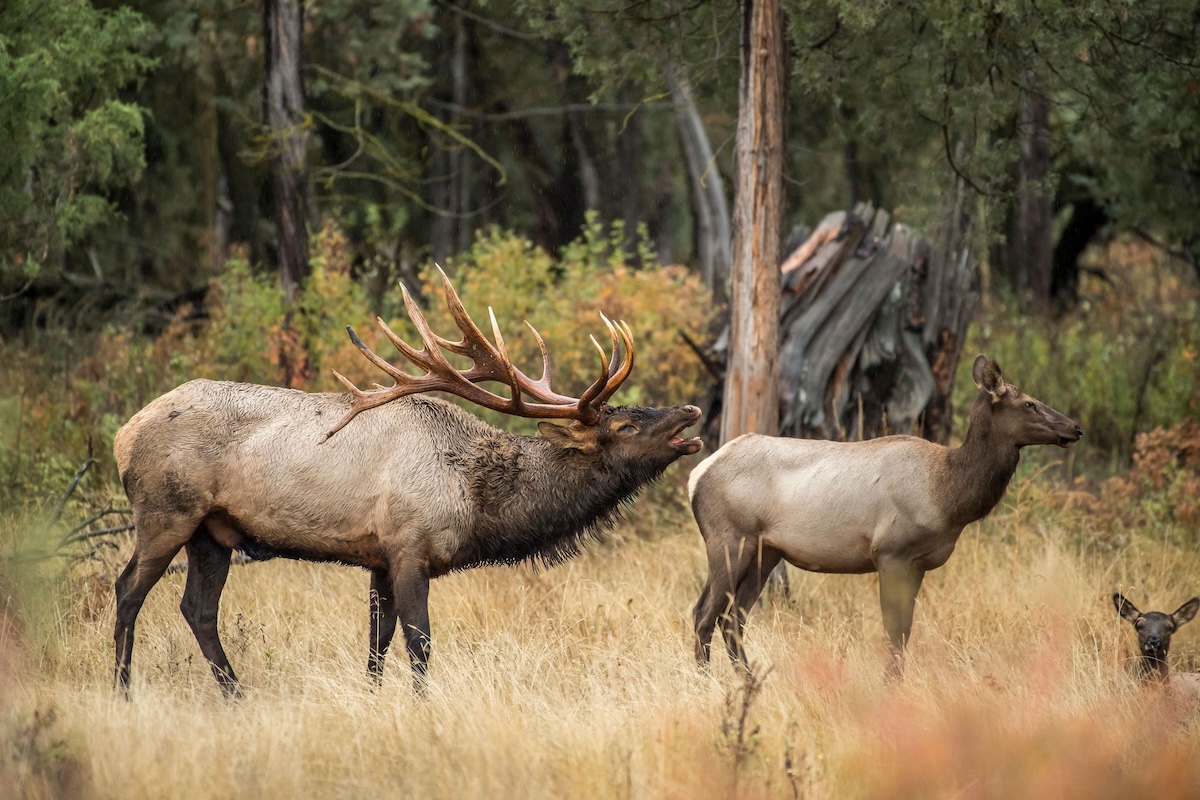
Build hides at key locations, such as wallows and trail pinch points, to wait for elk around midday.
Hunting Elk from Mid-Afternoon to Dusk
The afternoon could be a replay of the morning. Or, elk could leave you so far in the dust you cannot catch up to the busy herd. If they don’t, you have two strategies before dusk.
The first relies on setting yourself up in the exit alley of elk heading to their evening haunt. Think water, and then food. The second strategy relies on intuition, which is hopefully scouting based. Be at or near where the elk want to be at dark.
The first option takes into consideration that you know where the elk are bedded. While elk snooze, use HuntStand National Aerial Imagery layer to decipher their first move out of bed. This layer never gets older than two years (with constant updates) to give you the latest above-ground view of the area.
As you virtually scout, look for water sources elk might visit first. September can be hot, and elk seek water for relief, and to recharge from rut rigors.
Next, look for the best grazing. A herd requires hundreds of pounds of feed daily. Valleys, creek drainages, and mesas offer highly nutritious grazing vegetation.
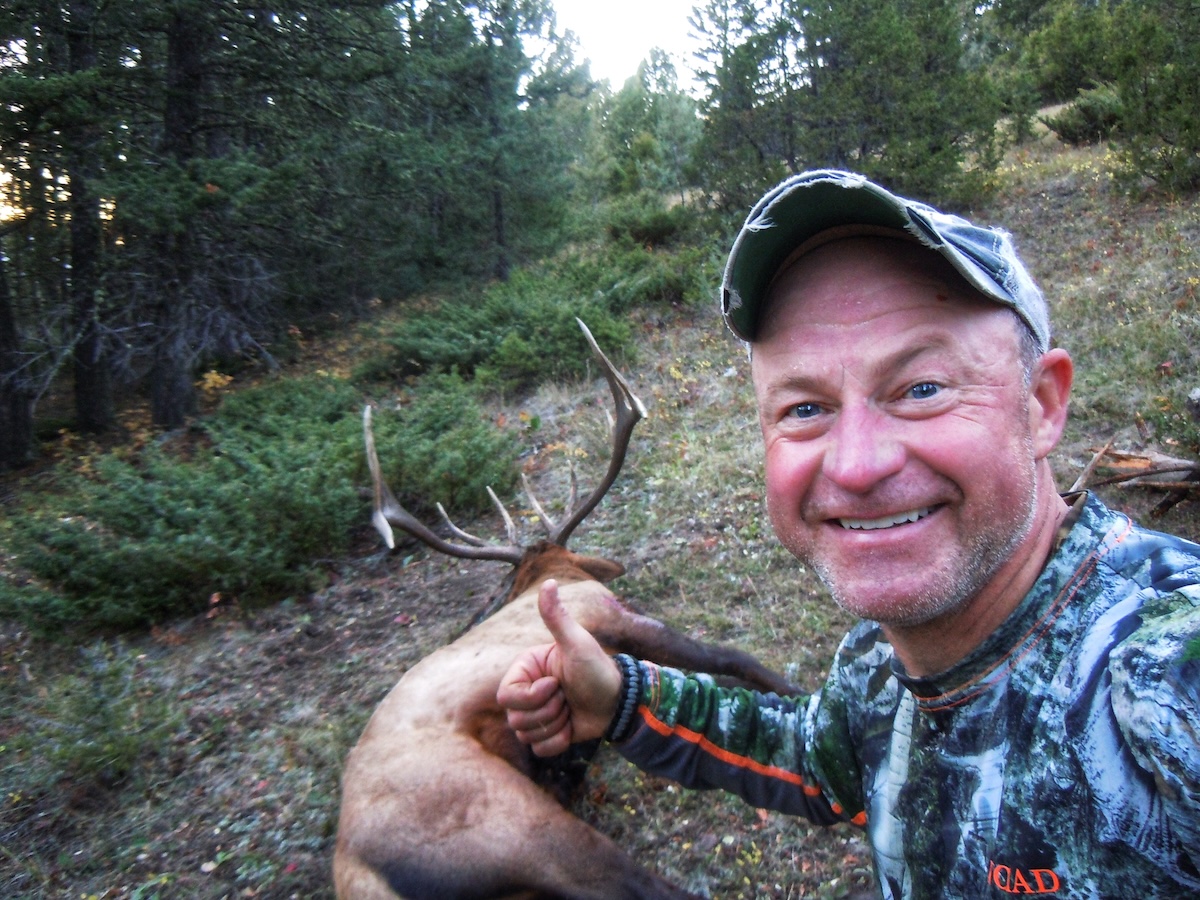
Most of Kayser’s archery kills are in the morning, but he called this satellite bull into archery range late in the afternoon after it split from a herd.
After noting a couple possibilities, take a guess on their route and maneuver into place. Wait in silence or use subtle calling as an attraction. Think whitetail-esque pinch-points and funnels as your best places to set the trap.
If too many escape routes exist, but you feel the elk will head to a grassy valley below, get ahead of them. Navigate to the feed or water and wait for them to arrive. A small meadow on the way might be a smarter bet, as herds could loiter there waiting for darkness before visiting the prime buffet. Remember again to consider shifting thermals that might be rising, but eventually falling, later in the day.
In the case of you have no clue of a herd, or their destination, I suggest working toward camp. Use the occasional locator call to spark any conversations along the way. If no bull wants to scrap, might as well get back to camp and grab an extra hour of sleep. Public land elk hunting is grueling, and the next day will not be any more forgiving.
Mule deer are cousins to whitetails, but the similarities diverge from there. If you venture West to hunt mule deer for the first time, understand their different demeanor to forge a path forward for success. Here is how to hunt mule deer — a primer for beginners.
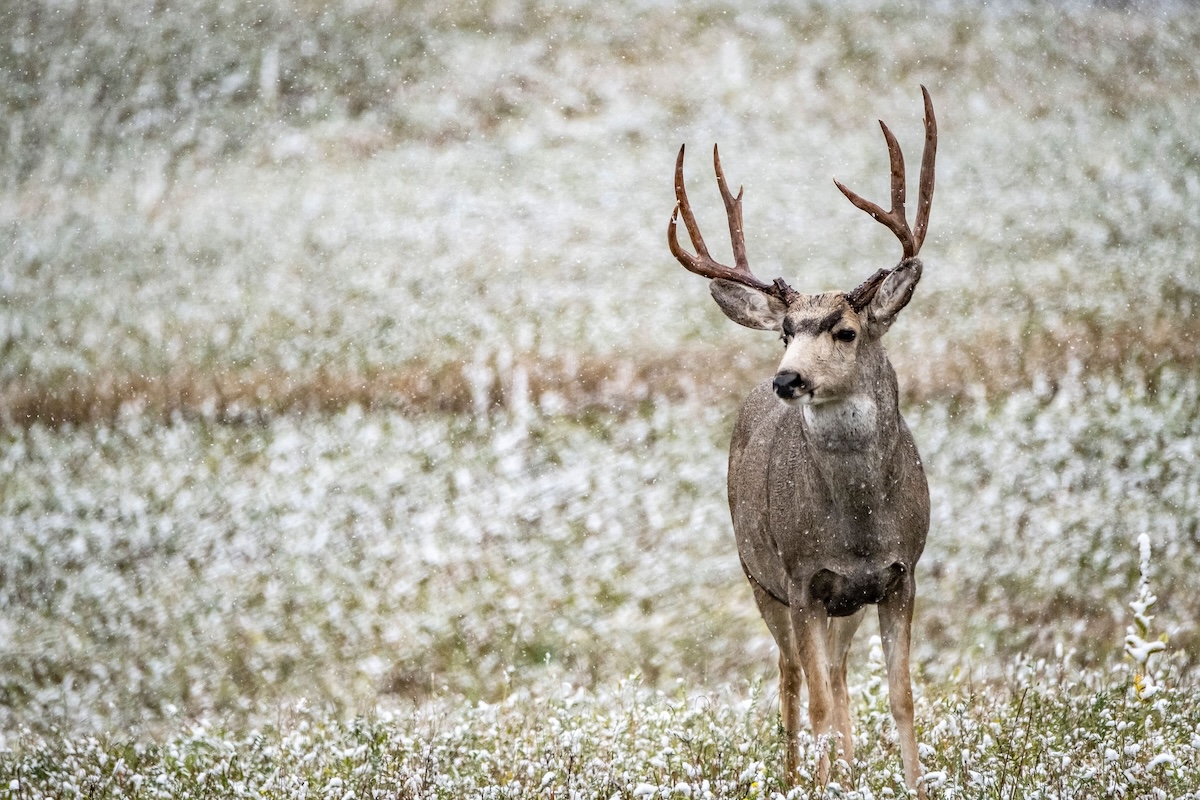
If you do not have an agricultural food source near your mule deer hunting area, talk to local experts on what deer might be feeding on during specific times of the fall.
Mule Deer History
Despite obvious body differences, mule deer and whitetails are genetically related and showcase very similar DNA. Even with almost identical DNA, you wouldn’t know that by looking at the two side by side and viewing their niche habitat preferences.
The late Valerius Geist, one of the most respected North American big game biologists, outlines the deer connection in the book “Mule Deer Country.” His research reveals that mule deer are recent newcomers to the North American continent and are descendants of white-tailed deer. And in case you’re ever in a game of Wildlife Jeopardy, whitetails are the oldest deer species in the Western hemisphere.
Geist theorizes that whitetails flourished throughout North America, finally populating the Northwest coast of North America and eventually contributed to the arrival of the black-tailed deer. This is the first link between whitetails and mule deer.
Over time, less competition and a changing habitat allowed both whitetails and blacktails to expand their populations and range. The two met somewhere in the middle, bred, and mule deer arrived on the scene, providing the second element of whitetail ancestry in mule deer.
So, how to hunt mule deer? Well, that depends.
A Guide to Pronghorn Hunting [HuntClass]
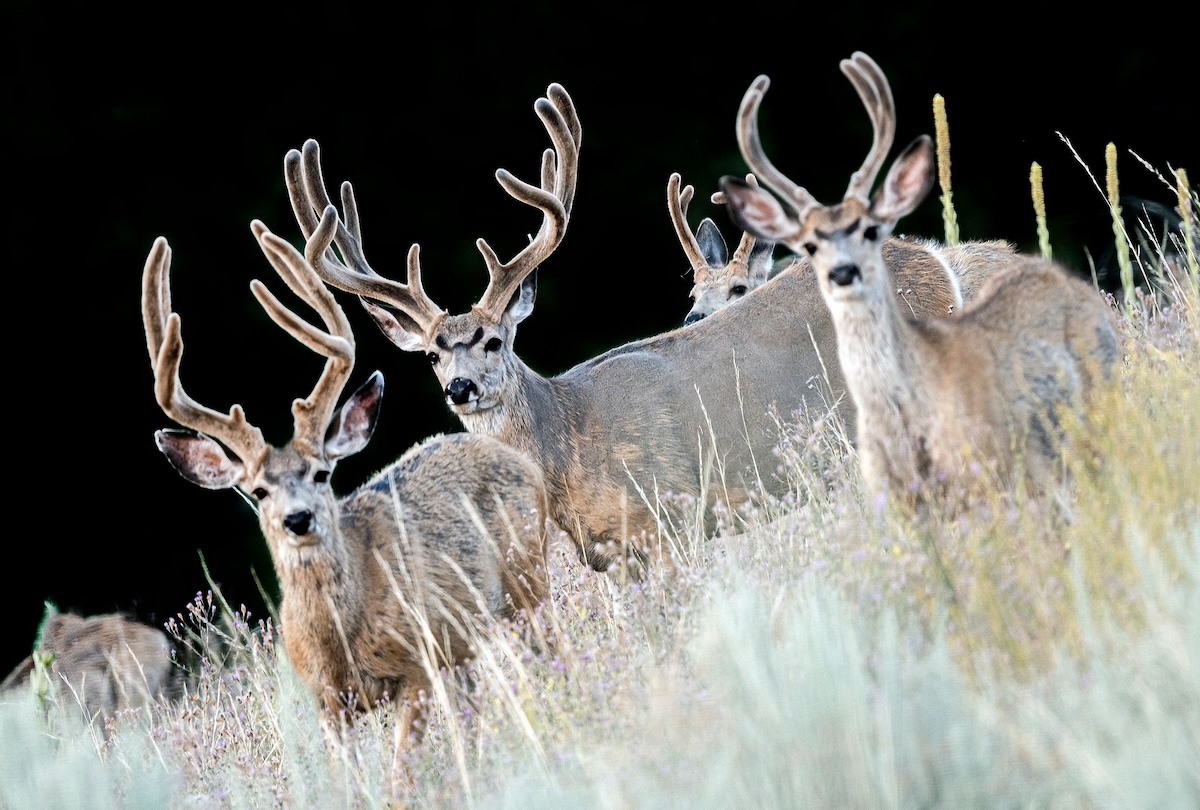
Much of the year, outside of the rut, mule deer bucks travel together in a bachelor group.
Hunting Early Season Mule Deer
For an early-season mule deer hunt, determine the topography of your hunt area. Dissect it to analyze food, water, and cover. Those elements, not females, have influence over a buck’s early season behavior and daily schedule. The female connection comes later — during the rut — with its own set of rules.
Utilizing HuntStand Pro offers an advantage in scouting virtually or on site for obvious mule deer attractions. Examples include water, irrigated croplands, and dense escape cover, such as a cedar-choked mountainside. Some landowners even plant food plots for mule deer.
Like early fall whitetails, mule deer have a focus on feeding. Rut and winter both take a toll on body mass. In the months prior to breeding season, bucks wolf down as many high-energy calories as possible.
In terrain mixed with hay or croplands, finding bucks merely requires glassing. Alfalfa, winter wheat, cut hayfields, and irrigated grounds all attract mule deer during daylight hours.
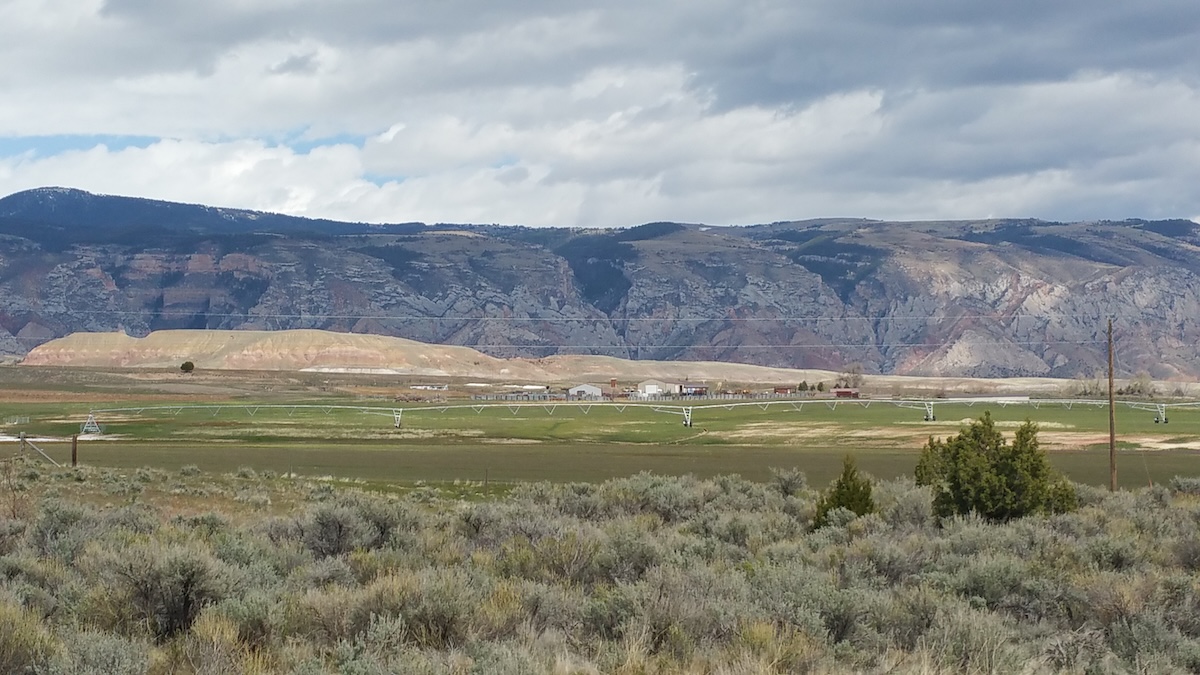
If you discover irrigated or agricultural fields near your mule deer hunting location, pay attention, as deer might use them as a food source.
Mule deer are primarily browsers, and their nutrition palette varies by season, especially when agriculture is not nearby. A browse species desirable in the early season might not have the same attraction after first frost. Glassing might help you determine if deer are nibbling on late dandelions, sawtooth butterweed, bluebell, or other broad-leafed vegetation that still offers green palatability.
The problem is that different environments offer varying browse for mule deer. So, call a biologist who oversees management in the hunting unit. Mule deer could be feeding in alpine meadows 3,000 feet higher than you expected, browsing in aspen stands, or moving on to sagebrush munching in a desert environment.
During the call, query about what habitat deer will be relying on for escape cover. That might be as obvious as deer ducking into the only canyon around, but some habitat is so vague, like a forest of lodgepole pine, that clues from experts are again required. Add those clues to your knowledge that deer frequent open meadows and shy from allotments publicly grazed by sheep herds. Minor aspects count, and when mule deer feel uncomfortable, they have no reservations about moving on.
Onsite insight is good when determining the early season feeding zone and where to find masses of mule deer. Putting the Natural Atlas feature to work on your HuntStand app for topographical information, and then using the 3D Map feature for a virtual flyover, offers invaluable details on mule deer topography.
E-Scouting Public-Land Elk [HuntClass]
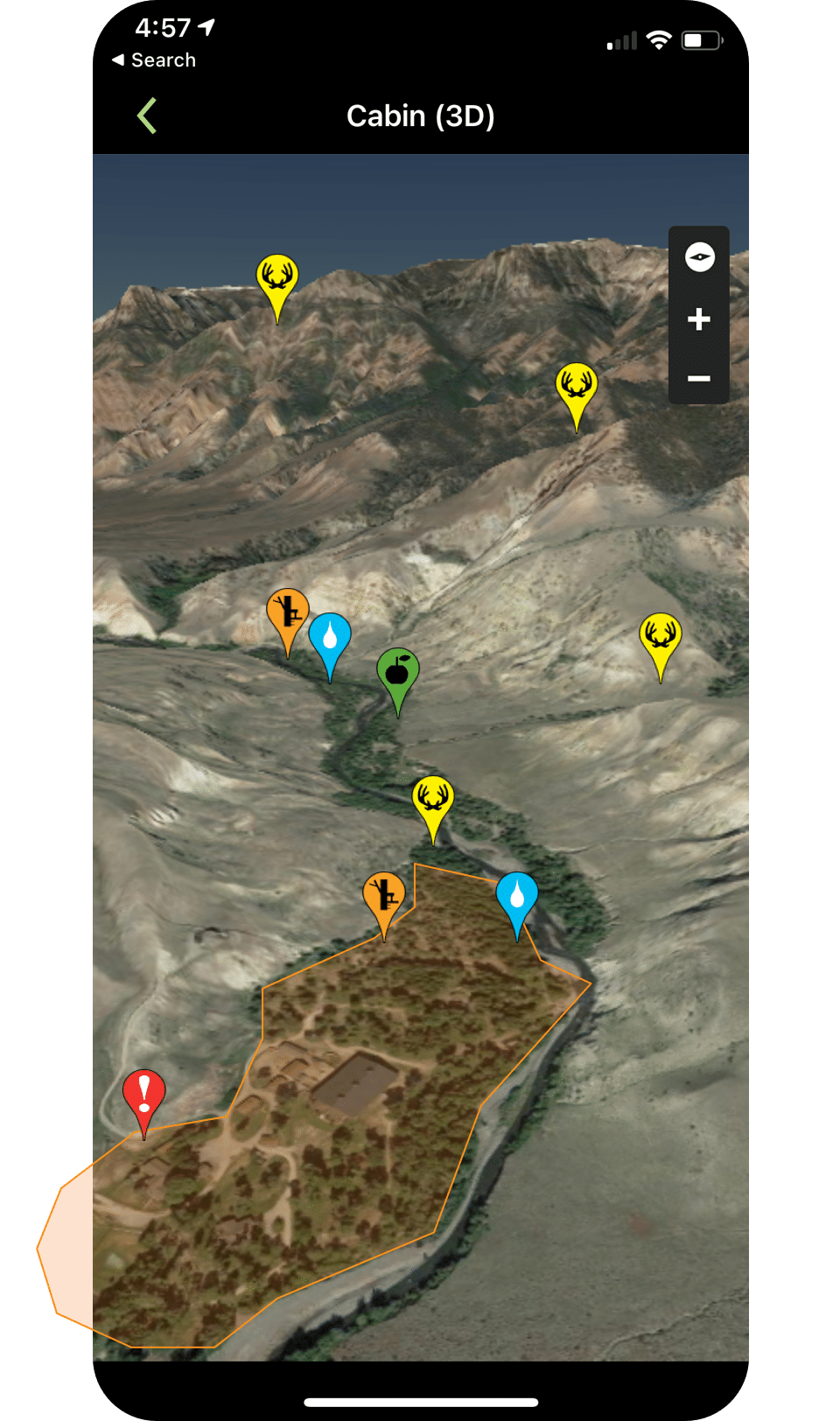
Understanding the steepness of the country and locating water sources is aided by the use of the Natural Atlas and 3D features on HuntStand.
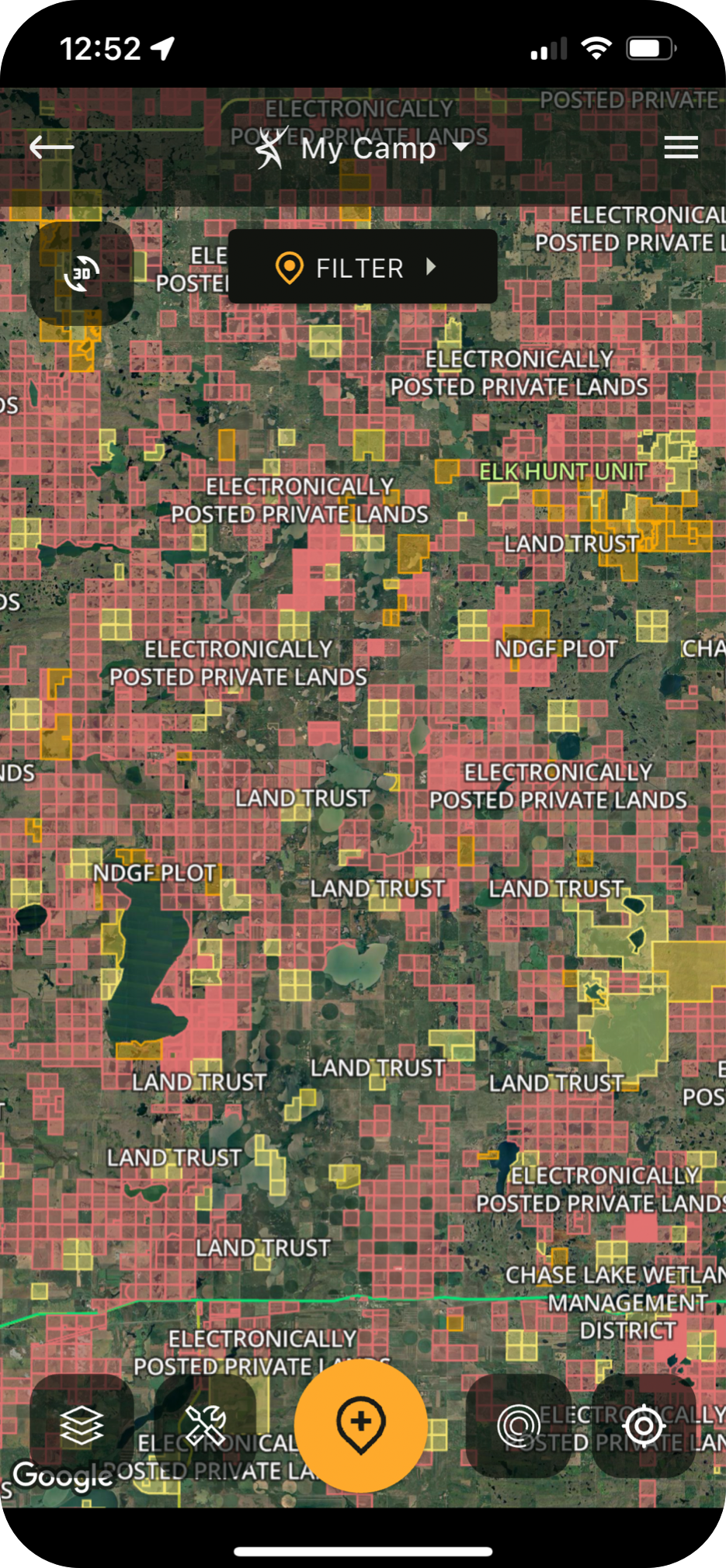
Find places to hunt by using HuntStand Pro.
Even open-country deer can be as elusive as Bigfoot. Some forest environments limit glassing potential, but time behind optics at dawn and dusk is the answer to finding treeless mule deer.
Think about climate and ruggedness. Certain conditions, particularly temperature spikes, spur roly-poly deer to seek shade. In open country, lone trees and steep banks offer the only awning relief. Scrutinize traveling deer to locate their preferred, sun-shielded bedding site and then continue to watch.
Mule deer characteristically move an hour or so after bedding to re-adjust and then move whenever the shade moves to follow the coolness. Even in the high country, you see bucks moving around in massive boulder fields chasing shade.
Water also weighs importantly in the world of mule deer. Unfortunately, outside of desert locations, or in the case of severe drought, water is naturally quite abundant in most environments. Regions defined as a desert, 10 inches or less of rain annually, provide the top opportunity for water ambush, but check for legality first before setting up a blind or trail cameras. Putting the Natural Atlas feature to work on your HuntStand app (for topographical information) and then using the 3D Map feature (for a virtual flyover) offers invaluable details on mule deer topography for potential hunting areas.
A final muley mindset is the bachelor mentality. From September into October, bucks travel in male-dominated groups. These factions begin disbanding as October arrives, but these groups follow a pecking order that asserts dominance while the grouping also aids in security. Later in October, the males separate. Until then, they travel with patternable consistency until testosterone drives a wedge amongst them. Use that pattern of consistency now, because as soon as the rut arrives, mule deer bucks throw it out the window.
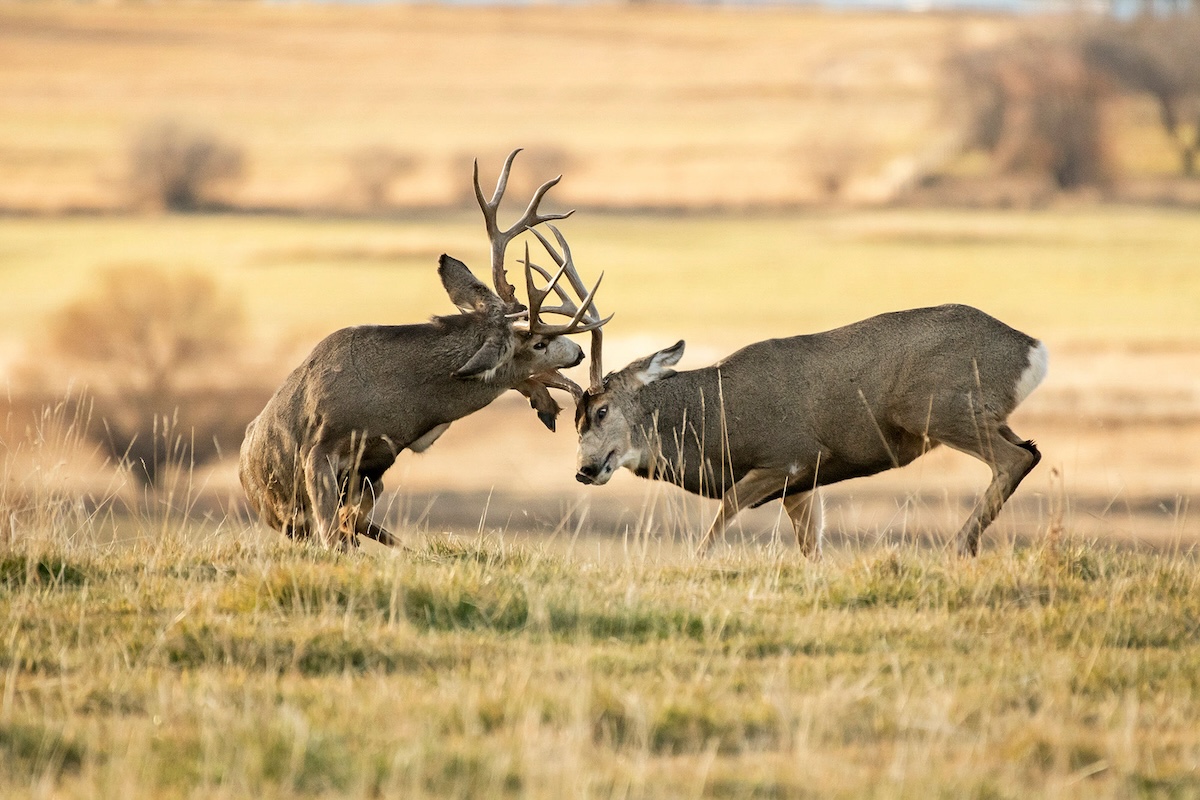
Since mule deer roam, pay attention to neighboring deer as they might cross a property boundary and be on your public land area next. HuntStand Pro’s Property Info feature gives you an overview of ownership boundaries.
Hunting Rutting Mule Deer
Up until the rut, it appears as if mule deer do act like whitetails. They pattern to food, water, and refuge. But here is conundrum. Mule deer rut drastically differently than their close cousins. And even though mule deer embrace some of the rutting behavior of their elk neighbors, they still have breeding mannerisms that are uniquely mule deer. Some of these can make hunting them during the rut straightforward and even fruitful. Other characteristics can be confounding, confusing, and even infuriating.
One rutting aspect you will realize is the habit of urinating on the tarsal gland. Both whitetails and mule deer urinate in a fashion where it runs down the leg and coats the tarsal gland for enhanced aroma. This is where the similarity ends, though. Once the urinating begins, mule deer adopt the ways of elk.
Whitetails allow the urine to drip down their leg and into a scraped-out area of prepared dirt. Mule deer take the urine splatter to another level. They use a bit more pressure that sprays the hind legs and tarsals collectively. This dispersion leads to an incredibly smelly being, like the actions of a bull elk while wallowing.
Why do mule deer carry additional scent on their bodies rather than leaving it in a scrape like the whitetail? The late Geist details the reason mule deer carry urine scent on their body over depositing it in a scrape could simply be from a territorial aspect.
“This behavior might be related to the mule deer’s relative lack of geographic fidelity as compared to a white-tailed deer, and the large areas he traverses,” he said.
Optimize Your New Hunting Property with Bill Winke [HuntClass]

Mule deer bucks do not keep a harem like elk, but they will stay with a group of does during the rut if enough come into estrus.
Whereas whitetails bond with a home territory, despite stretching the boundaries during the rut, mule deer bucks might roam for miles. They have a mission to visit surrounding herds of does in hopes of finding one in estrus. Count this behavior as a negative. Unlike a big whitetail that keeps a somewhat homebody attitude during the rut, a big mule deer might be here today and gone tomorrow. You’ll see that same behavior with elk, especially those that feel daily hunting pressure.
Even so, elk and mule deer differ. Whereas elk bulls command a herd or a harem of cows, mule deer bucks might just disappear and leave doe groups in the dust. They leave females to find a female in estrus. When he finds an estrus doe, he will stay close to her and that doe group, but possibly separating from the herd to breed her without disturbance. You can bet a buck will stay with a particular doe for at least 24 hours. After breeding, though, if another doe is not coming into estrus, he could be off and running again.
The fact that a mule deer buck might roam far and wide to find a willing doe gives you hope every time you hunt during the rut. A new buck might show up unexpectedly at any time due to this wandering tendency. Whitetail hunters cross their fingers that a trophy buck might leave a private-land refuge, but for mule deer hunters, the odds increase, because mule deer roam larger landscapes.
This means a buck you spied on private land might suddenly appear on a public-land tract you are hunting miles away. Use the HuntStand Property Info feature to stay abreast of nearby property boundaries. And, every time you encounter a herd of female mule deer, mark their location on HuntStand. Then, return to check on them sporadically during the hunting season.
Recipe: Blueberry Braised Shank
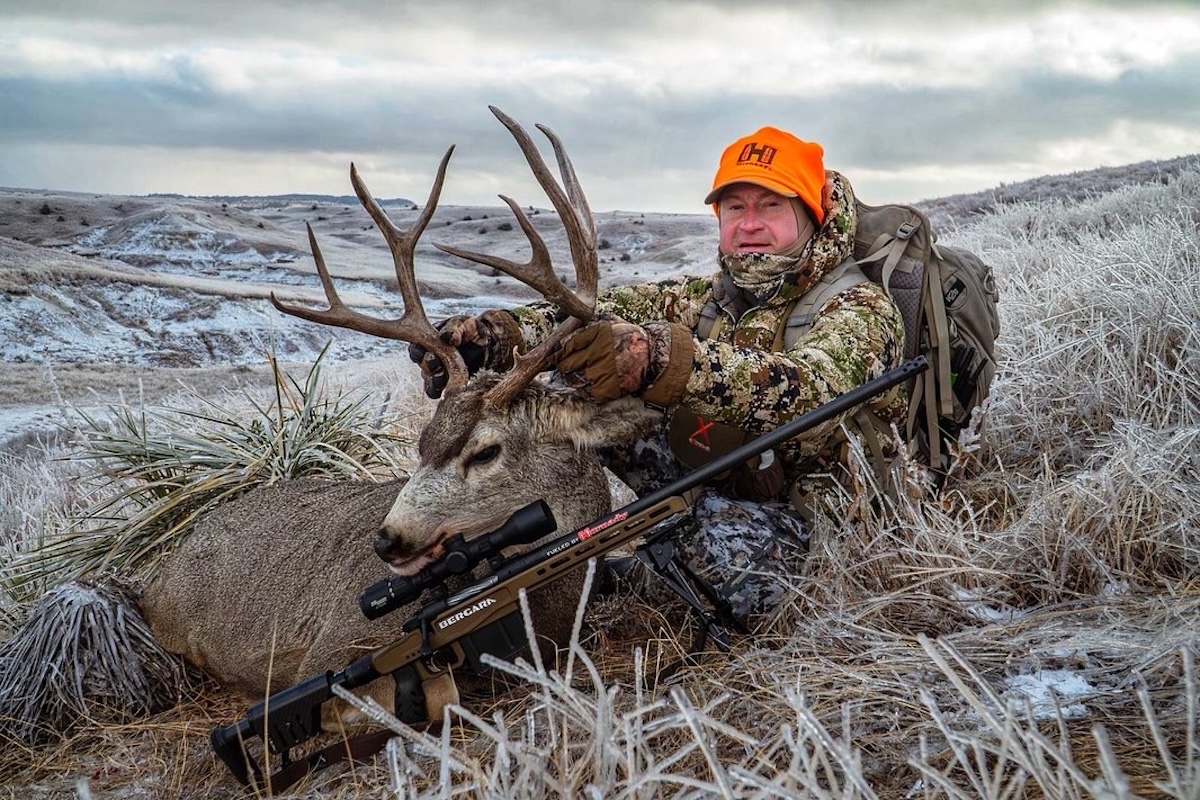
Mule deer are related to whitetails, but lead a different lifestyle than their cousins.
Summing It Up
In brief, once you understand the makeup of a hunting unit in the early season, look for patterns. Later in the rut, hunt doe groups and stay positive. A fork-horn buck might run a doe group one day and a giant the next.
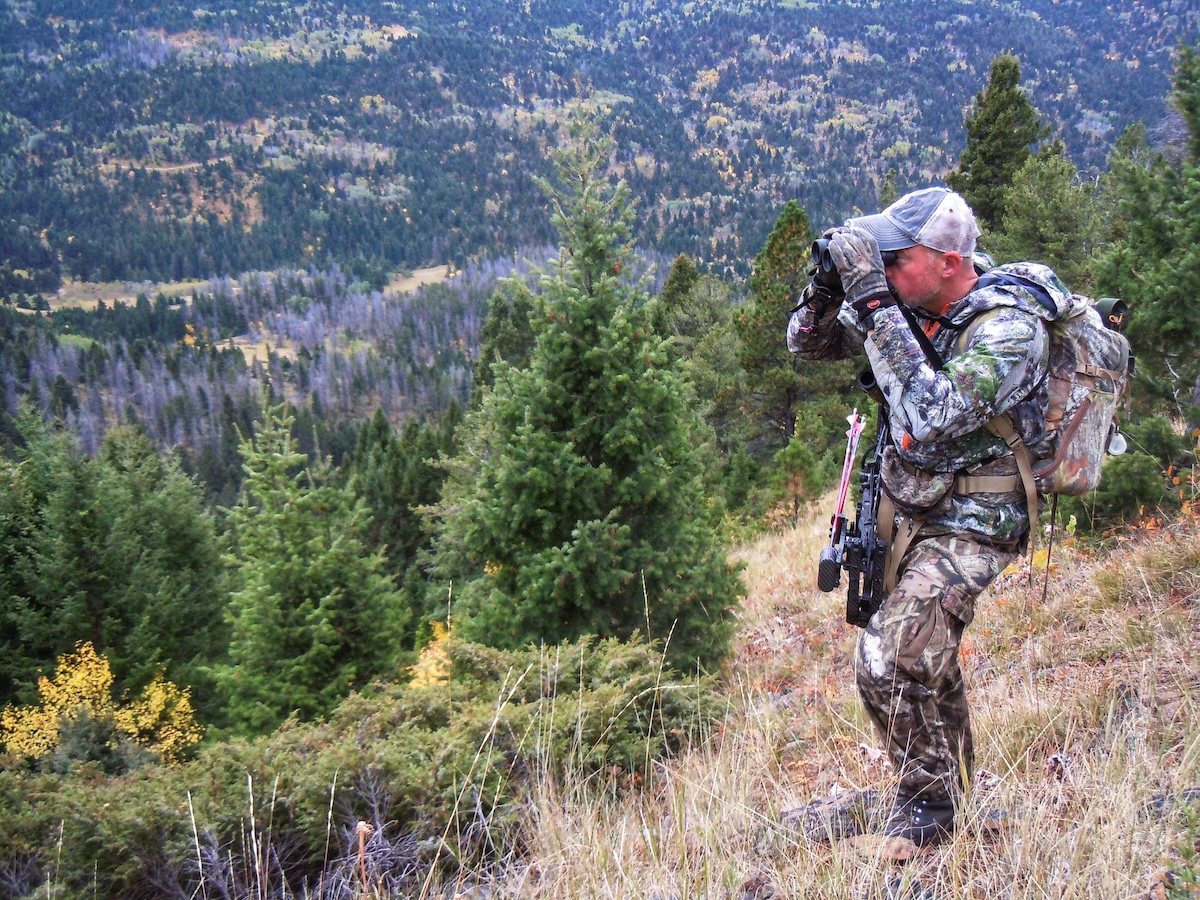
Elk sign, rubs, beds and fresh droppings, reveal if elk are using steep terrain to escape hunting pressure.

HuntStand’s Monthly Satellite (to review new imagery), Natural Atlas (for topographical terrain information), Hunting Lands (use for locating public hunting), Hybrid Map, Property Info, and more, are great elk hunting tools.
I felt like King Kong scrambling and grappling to the top of the Empire State Building, although I was not the one in search of a sanctuary. Several bands of elk passed by me in the daybreak rush hour. They weren’t heading east, west, north or south. Just straight up.
Of course, elk understand that up equals safety and down equals groceries. Elk hunters should remember this simplistic view of elk hunting. Do that, and success will climb like the elk you pursue. Here’s how to hunt elk at higher and lower elevations.
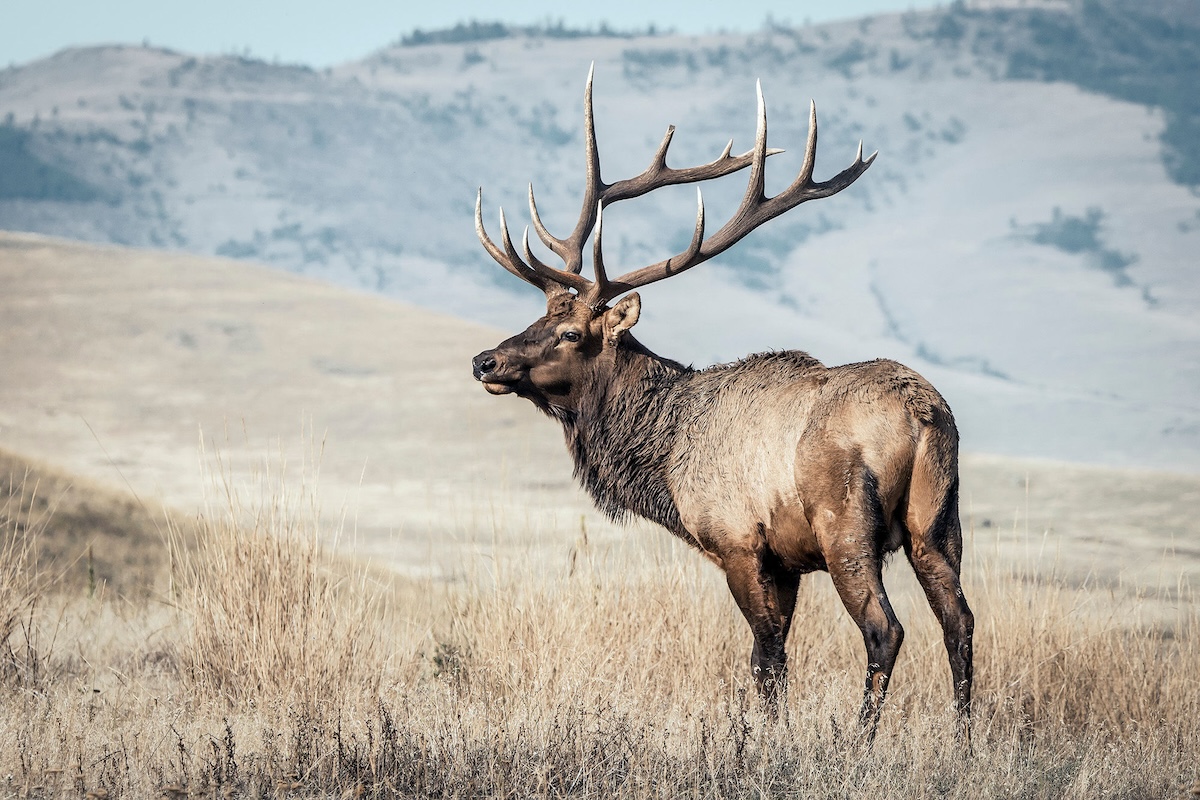
One of Mark Kayser’s go-to strategies is to use steep country to not only find elk but escape the pressure of other hunters.
Elk Were Made for Survival
Mother Nature equips wildlife with certain survival skills for hunting or evasion. Those skills hone to sharpness over time. For elk, several skills load up their survival abilities. For starters, elk evade pursuers by not being held to a lease on any land like a whitetail. Elk do have favorite areas and return to nursery habitat in the spring and survival habitat in the winter. But when hunted, they have no aversion to leaving an oasis for other pastures.
According to one 7-year study by the Montana Department of Fish, Wildlife, & Parks and Montana State University, hunters added to the influences that spur elk movement.
“Wolves influence elk distribution, movements, group sizes, and habitat selection to varying degrees in different areas, but hunting activity and hunter access have a greater impact on elk distribution, movements, group sizes, and habitat selection than do wolves,” the study reports.
When you or wolves move into elk country, that presence has the power to move elk elsewhere. In the book “North American Elk and Ecology,” esteemed, late wildlife biologist Valerius Geist describes elk escape mannerisms this way. “The elk evolved into a fairly competent long-legged ‘cursor’ (Gambaryan 1974, Geist 1998). Its goal is to escape predators by a strategy of rapid and sustained flight while trying to disorient pursuers by various tricks and, thereby, to lose itself in vast expanses.”
Killer Elk Calling Tips and Tactics

Elk escape to rugged, steep, and roadless areas when the pressure is on. Use HuntStand to help discover these elk areas.
The elk you hunt today inhabit a rugged landscape ordained with sagebrush, boulders, deadfall and other obstacles elk can easily navigate by using their long legs. This speeds them quickly across terrain that slows predators, including you, especially when you add vertical ascents into the escape equation.
By holding their heads high and using oversized eyeballs, they avoid tripping as the gallop from danger to heights beyond. And whereas whitetails might only bound a few hundred yards, elk have no issues jogging three to four miles before stopping to reassess their backdoor. Some days they vamoose. Other days they do act like whitetails. But rest assured, those long legs evolved to cover country.
Post-rut bulls really take to heart the vertical sanctuary as they move into survival mode. Still holding their antlers into early spring, bulls seek isolation in rugged, oftentimes steep terrain to avoid predator detection, noted by those antlers. Seclusion in steep, rough terrain with forage provides them with a haven strewn with hindrances (like steepness) to slow down any predatory attack.
Hiking Miles Deep to Hunt Elk: Is It Necessary? Maybe Not.

Bulls move upward on vertical slopes to avoid hunting pressure down below.
Hunting Elk at Higher Elevations
Now that you understand why elk not only leave you in the dust, but also have no fear of heights, what do you do about it? First, find their escape asylum. While virtually scouting at home, put your HuntStand Pro subscription to use by analyzing your elk hunting unit for everything described above … except wolves. HuntStand Pro offers a variety of features that can speed along the scouting sessions.
Begin with the Monthly Satellite feature. This satellite imagery is fresh. It gives you a perspective on lands to see if timber harvest, wildfire, development, and other elements recently changed the landscape.
E-Scouting Public-Land Elk [HuntClass]

Mark Kayser’s hunting partner, Levi Duncan, packs out his bull through some rugged terrain the elk were using to avoid hunting pressure.
After confirming any habitat makeovers, move on to the use of the Hybrid map along with the Natural Atlas. Search for roadless sections of public lands and then confirm their ruggedness with topographical lines. The closer the lines, the steeper the slope, but don’t go overboard. Elk clamor up cliffs like sheep but prefer grassy or northern slopes intertwined with benches. The occasional flat depression provides grazing and bedding options without rolling down the mountain.
On the way to an end-game location (like a bench), elk can almost climb straight up. Some steep locations could be near a road with steepness providing the single element stopping hunters. Nevertheless, elk still prefer to put a mile or more of nothingness between them and any road. Nearly every honey hole I have hunted over the years requires at minimum a mile of hiking and typically two, or more miles to reach an elk haven. Physical fitness is your winning ticket. Nearly 75% of the American population resides at overweight or obese. Walk beyond the couch crowd to the stairway to elk heaven. Look at your HuntStand app and measuring tools to confirm distances from roads as you evaluate challenging terrain as elk hideouts.
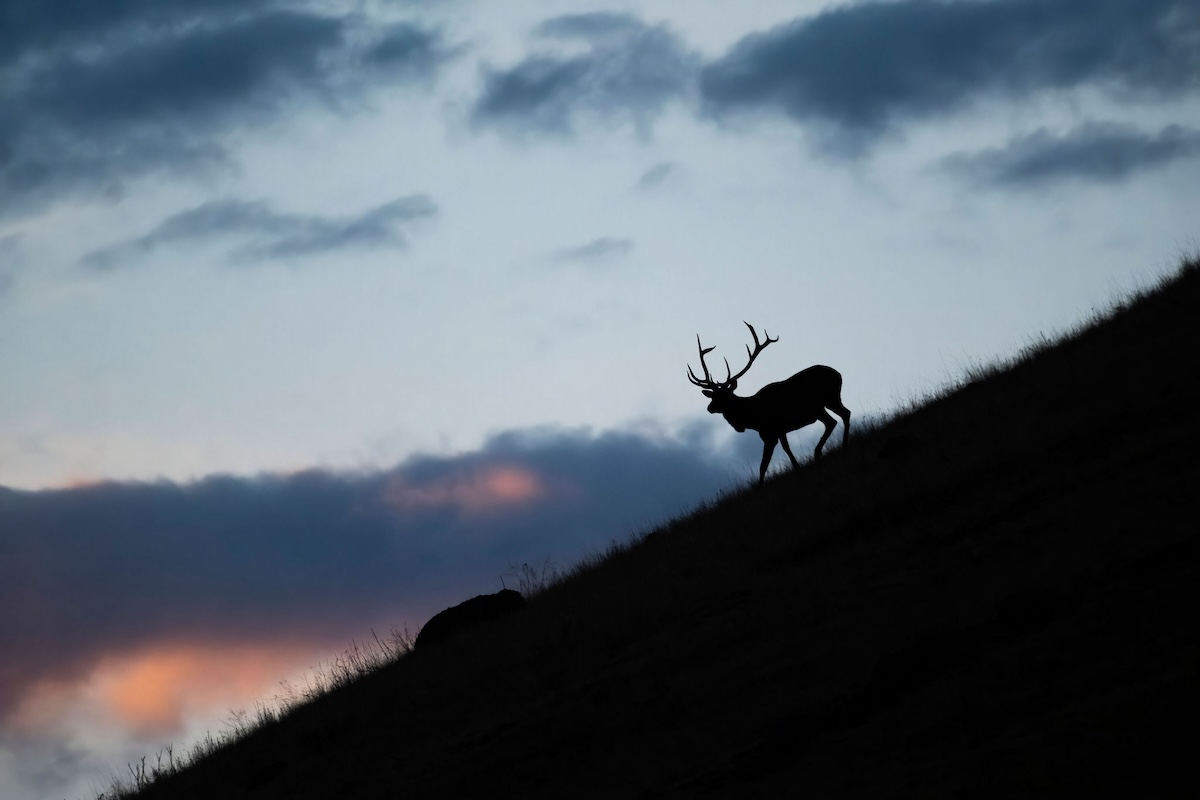
Use the HuntStand distance measuring tools to judge hikes to elk hunting spots.
Hunting Elk at Lower Elevations
Despite all the hype, elk do need to travel low on occasion. Depending on the environment, they might visit lower elevation habitat daily, weekly, or never. Be a sleuth to determine if the elk have a penchant for pushing the down button on the elevator.
The main reason they parachute down is nutrition. Their high sanctuary might just offer pine needles with hors d’oeuvre grazing only. Think of an elk herd as a small cattle herd. As grazers, they require a truckload of hay to keep them happy and some high elevation sanctuaries do not offer those dining options. To keep the family happy, elk drop in elevation and raid valleys, meadows, and meandering creek bottoms for the best in grass selection.
An area in Montana I hunted on a general tag for several seasons. It exhibited this up-and-down herd behavior. High elevation terrain sported little grass and lots of rocky outcroppings. More than 1,500 feet below, elk could graze on lush grass, even sharing the bounty at times with domestic cattle. To escape road hunting pressure, the herd left the lowlands each morning before shooting light to ascend into the timbered, rocky terrain. They bed in the divots left by fallen trees when they could not find a level area. I stumbled upon this pattern and tagged two mature bulls during the general archery season on consecutive hunts.
How to Call Elk Like a Champion Caller [HuntClass]

Mark Kayser tagged this Colorado bull in steep country at the top of a mountain. Elk escape to rugged, steep and roadless areas when the pressure is on.
Using HuntStand’s Hunting Lands feature to find public lands, move on to the Hybrid maps feature to look for any open areas in the rugged zones you discovered earlier. The Tree Cover feature could also help you locate possible open areas sporting more grass. Any grassy areas you discover should be further inspected for nearby water. Elk herds require copious amounts of water while feeding and for recharging during breeding season.
You might not have the option to hunt these grassy areas, though. The Property Info feature of HuntStand could tell you the lowlands fall under private ownership. Still, once you pinpoint grazing and sanctuary, you have a roadmap in your hands to map out an ambush on adjacent public lands.
That is exactly what I did in the opening. I knew I could not catch the elk passing by me in the dawn of the morning. Despite this setback, I followed the elk to the pinnacle of the mountain and soon discovered several benches with heavily used trails. Two days later, a plump satellite bull passed by me at 40 yards for a worthy, public-land trophy in DIY fashion.