


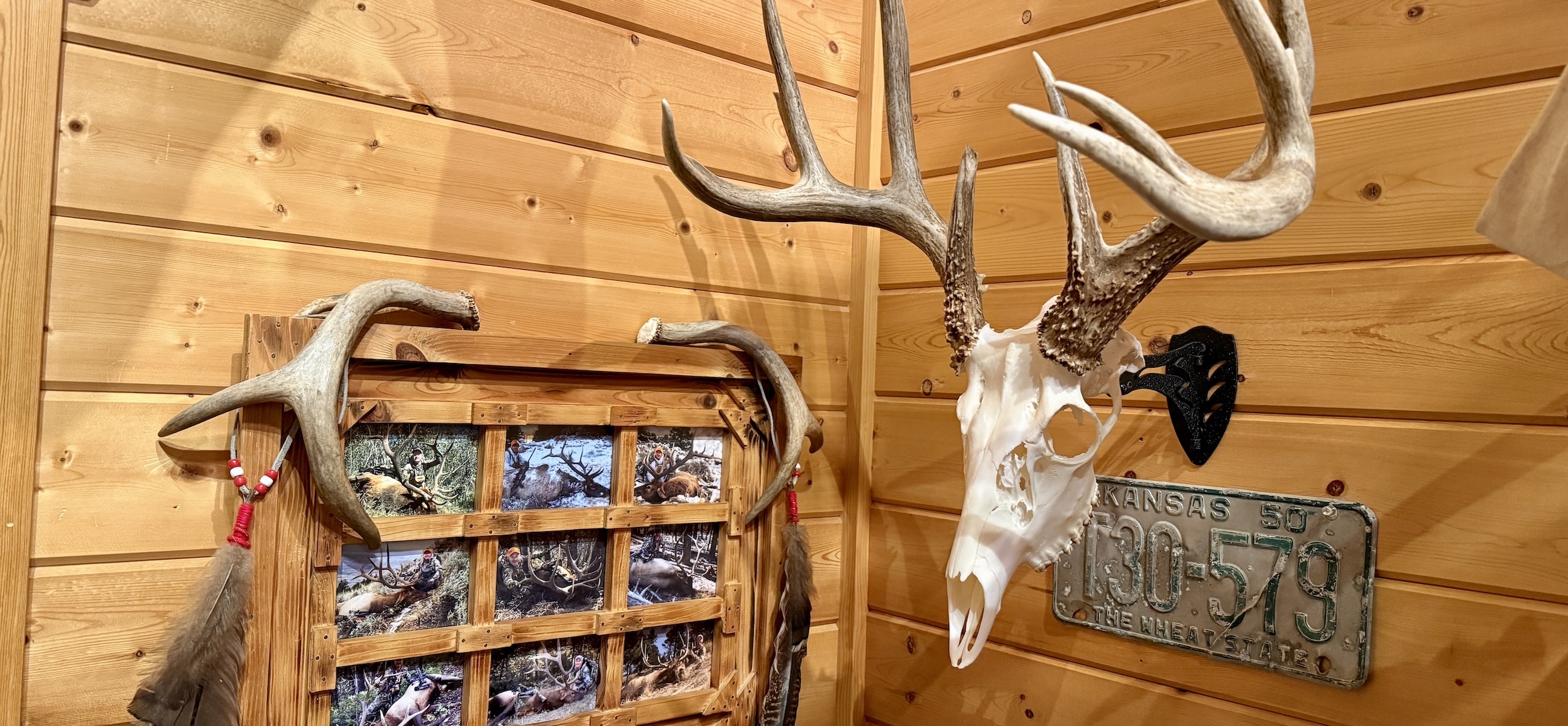
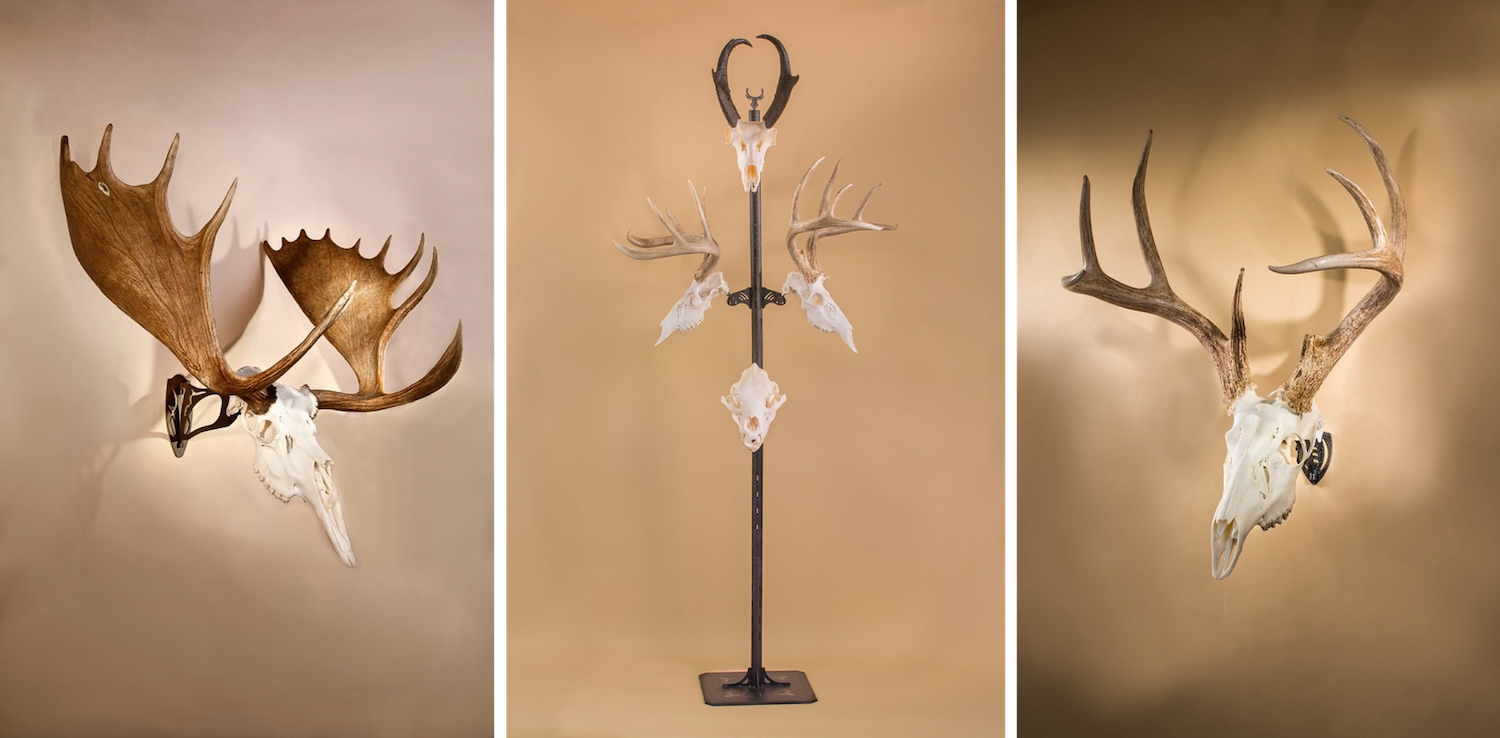

The European mount is a timeless preservation option for hard-earned big game.
The end goal of hunting is success. That success hopefully leads to freezer fodder for future meals and possibly even a trophy to admire for years to come. HuntStand teams with you the entire way for a hunting app that helps you in land management and landing a trophy. Combine HuntStand with the Command Pro app and your cellular team work in concert with HuntStand for the win.
If you do land an exceptional trophy, the next question you face is … what to do with it? Maybe you tagged a new world record whitetail and deciding what to do with it is a no brainer. For the rest of us, garden variety bucks and bulls have special significance, but maybe not enough to justify a hefty taxidermy bill.
No worries. You can turn that good-looking rack into an attractive European skull mount with a DIY approach. Pressure wash it whistle clean in a matter of minutes. Add whitener and invest in a convenient, classy Skull Hooker hanger to show off your latest hunting prize.
All said, here’s how to do a European mount.
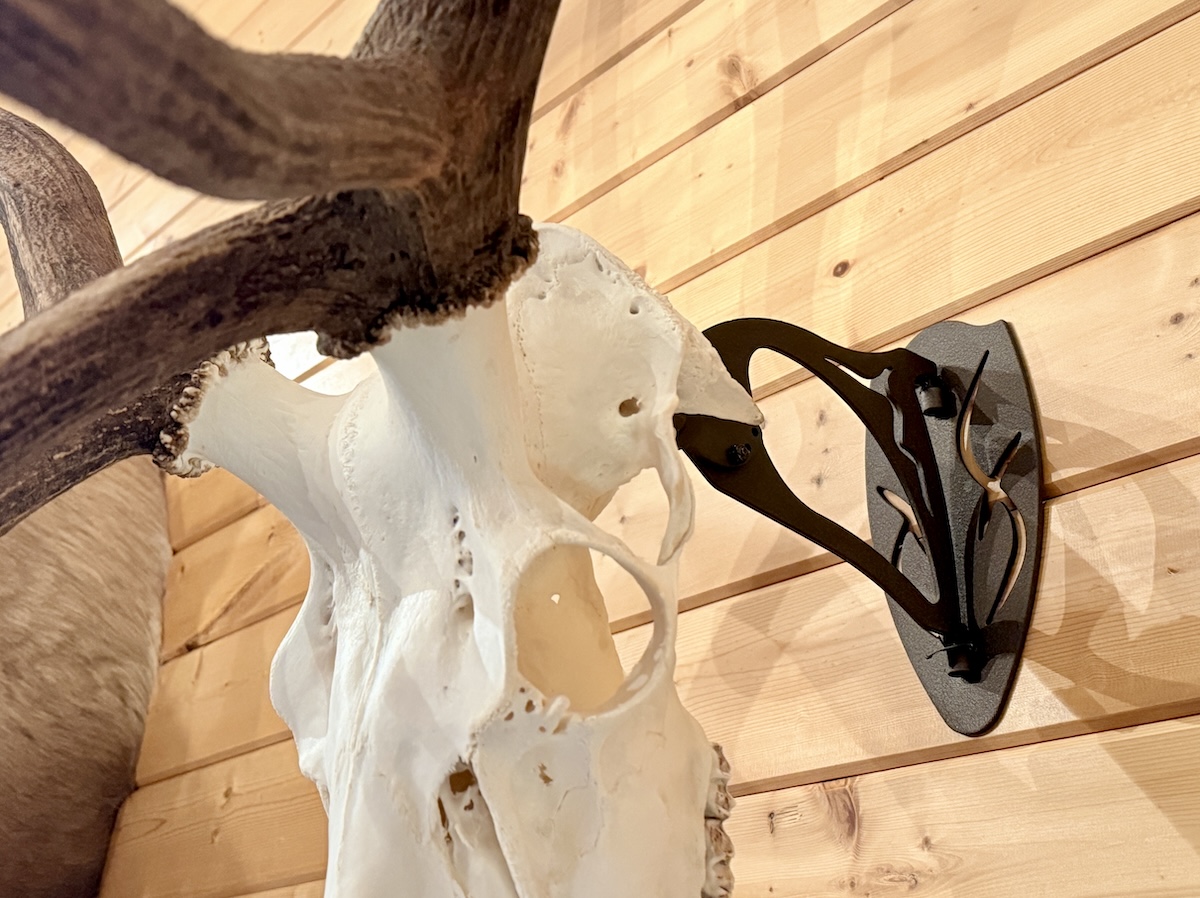
Wear latex gloves when skinning the head of your deer for pressure washing and use a sharp knife.
Methods for Doing European (Skull) Mounts
I’ve cleaned up hundreds of skulls over the years, starting out with the boiling process in my earlier attempts and transitioning to the pressure washing method. Some prefer the Dermestid beetle approach, but that becomes a year-round babysitting job of keeping a colony of meat-eating insects happy.
Instead, pressure washing with the right tools, and a simmering bath in between, is the fastest way to get from a meaty skull to home interior artwork. Yes, boiling, beetles, and even backyard burying your skull for nature to take its course works, but the speediness of cleaning with a pressure washer will amaze you when done correctly.
Deer Hunts in February or March You Should Schedule
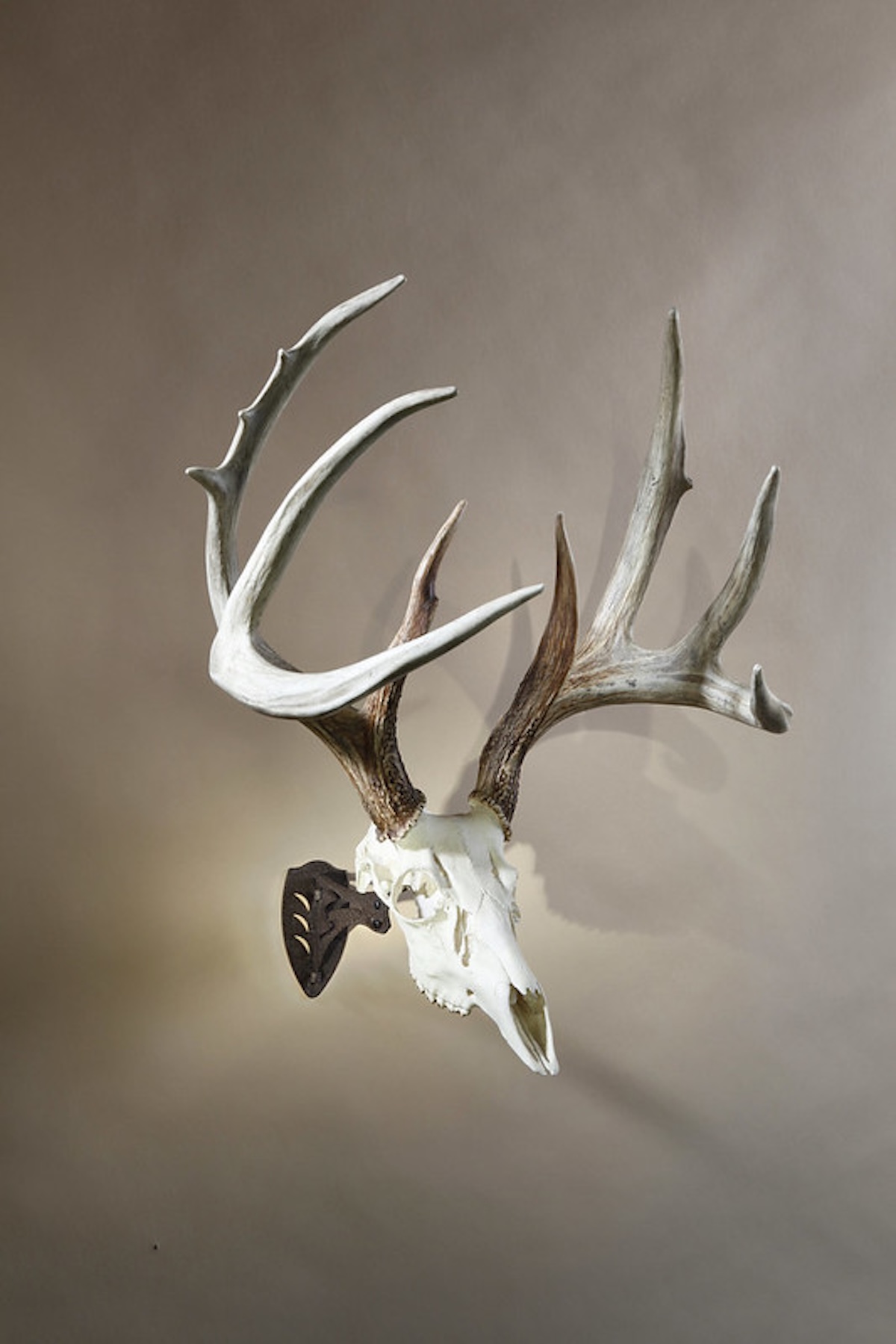
Completed deer skulls cleaned by pressure washing. A European (skull) mount is an excellent way to preserve harvested game.
The Gear You Need to Do European (Skull) Mounts
You need to deal with a relatively meat-free skull. This requires you to cape off the hide, remove the eyeballs, remove the lower jaw and slice away as much meat as possible from the sides of the skull. Also, make slices in the membrane of the mouth roof to allow pressurized water to tear away that covering.
For all of this, you need a sharp knife and sharpener. Caping knives tend to work best, such as the SOG Tellus FX fixed-blade knife. Team this with the Cold Steel Double Side Folding Knife Sharpener to keep your blade sharp for ease in skull cleaning.
Always stay safe from bodily fluids, especially the spinal cord and brain tissue, which are known to carry Chronic Wasting Disease (CWD). Multipurpose cleaning gloves ensure your hands are protected. Wearing quality rain gear, jacket, and pants, plus goggles, protects you from flying debris during the pressure washing session. Don’t risk injury, especially to your eyes.
Next, you need a pressure washer. Check with friends or purchase your own, but you need the correct PSI. Pressure washers that exert 3,000 psi or more clean skulls the most efficiently. My Mi-T-M pressure washer blasts at 3,500 PSI for unbelievably clean results.
To boost pressure effectiveness, outfit your pressure washer wand with a rotating nozzle. It slices meat away with its gyrating power effectively reducing the time of the process.
HuntStand Pro Tips for Last-Minute Turkey Hunting Road Trips
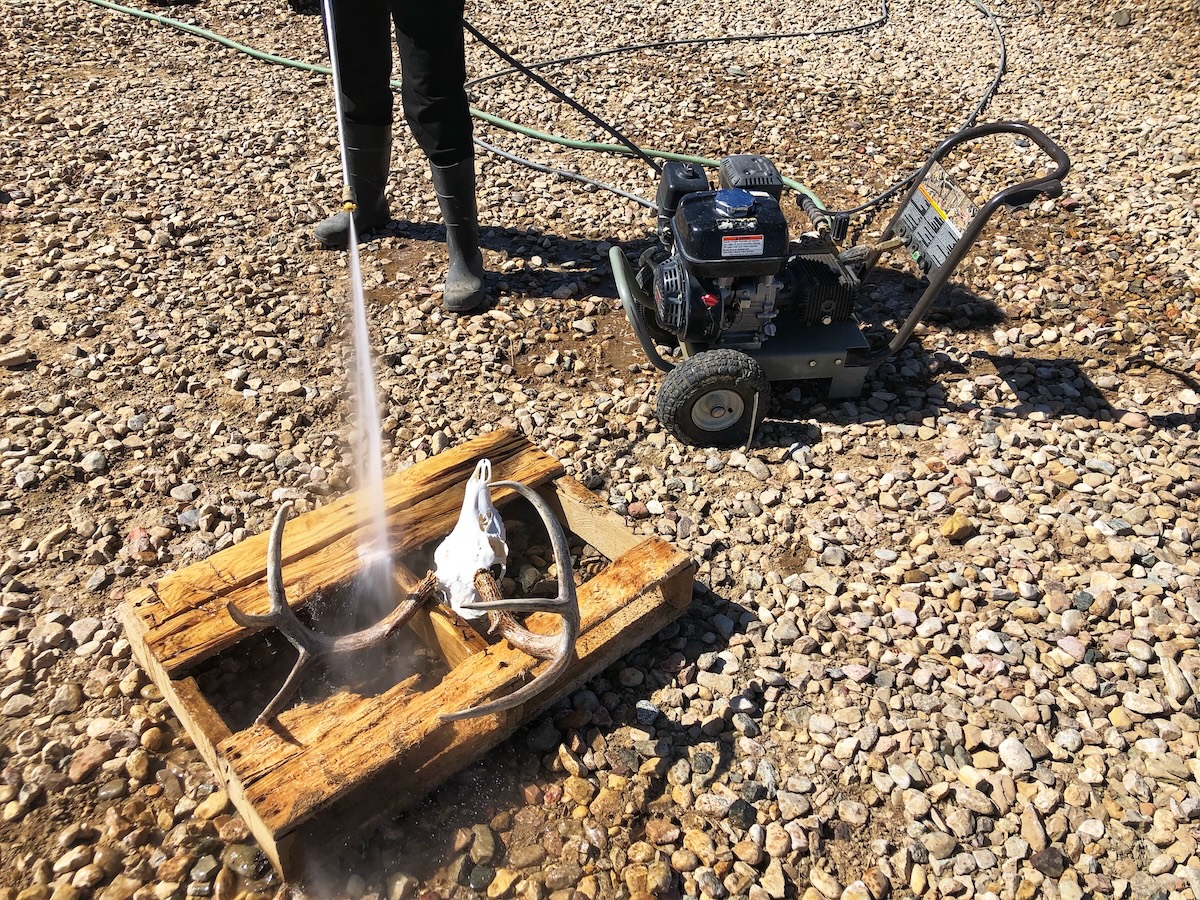
Simmering your skull can loosen any stubborn meat before your final pressure washing session.
Steps for Pressure Washing a European (Skull) Mount
With most species, you can operate at full power (except for thinner-skulled pronghorns). Too intense of washing can break through the fragile pronghorn skull. Back off or use a standard nozzle with these lightweights, but for the rest, power away.
Next, use plastic wrap and cover the base of the antlers to ensure the natural color stays intact. Secure wrap with duct tape. A pallet or woven wire fence works to hold a skull from blowing away. Jam antlers into pallet slots or woven wire and rotate as needed during the wash.
If for some reason you cannot pressure wash immediately, keep the skull cool and super moist, or better yet, freeze it. Dried out skulls become more difficult to remove meat, even more so with each passing day.
After 10 to 15 minutes of skull pressure washing, you should see a relatively clean skull. Turn your attention to brain removal. Put the nozzle in the rear brain cavity hole and blast to remove the brains in seconds. Lean away from the blast to avoid the splash.
For stubborn cartilage or meat, have a canning pot simmering on a stove (camping stoves or turkey fryers work well) and let the skull simmer for 30 minutes or so. Add a dash of Dawn dish detergent as a degreasing agent into the simmering water. Do not boil. Boiling softens skulls and they can fall apart. Complete this simmering step outside or in a shop in case of cooking odor and fumes, especially with a skull that has sat for a few days.
Take out the skull, and with a second pressure washing session, blast away the stubborn tissue now loosened from the cooking bath. This only takes a minute or two.
Why You Should Use Cellular Trail Cameras Year-Round
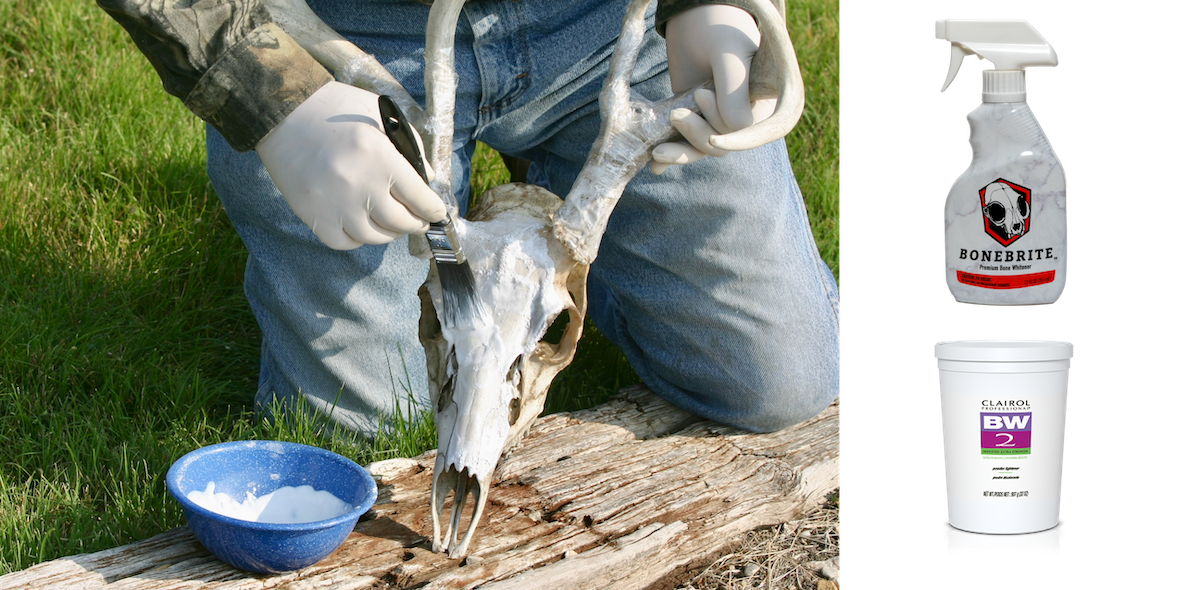
Paint the whitener on a skull to bring vivid whiteness to the skull. Deploy the Salon Basic White for skull whitening. Or use the Bone Brite Skull Whitener to make that skull look great. Final skull cleaning after whitening is to brush off dried whitener product.
Whitening a European (Skull) Mount
Your skull is nearly ready to hang on the wall but hold on. If you really want it to be brilliant white, you can add whitener to the outside to enhance its standout look.
Several methods exist to whiten skulls beyond your original thorough cleaning. An easy path to a white skull is to purchase a kit available through taxidermy outlets. Companies like Bone Brite have products, along with instructions, to whiten skulls. The chemicals required are included along with detailed instructions.
You can also substitute with hair salon products referred to as “basic white.” Mix this with a 40% ratio of hydrogen peroxide and paint the paste on the warm, moist skull. Wrapping the skull in foil or clear plastic wrap also enhances the whiteness, allowing the concoction to soak in. After a day or so, brush away the flaky residue for a snow-white trophy.
After removing the whitener with whisking motions from a paint brush, and then rinsing the skull, you might see some staining that faded on the antler bases. I touch these up with Minwax Wood Finish Stain Marker. Dark Walnut matches most antler colors, and a few blots of stain quickly blend into existing natural color.
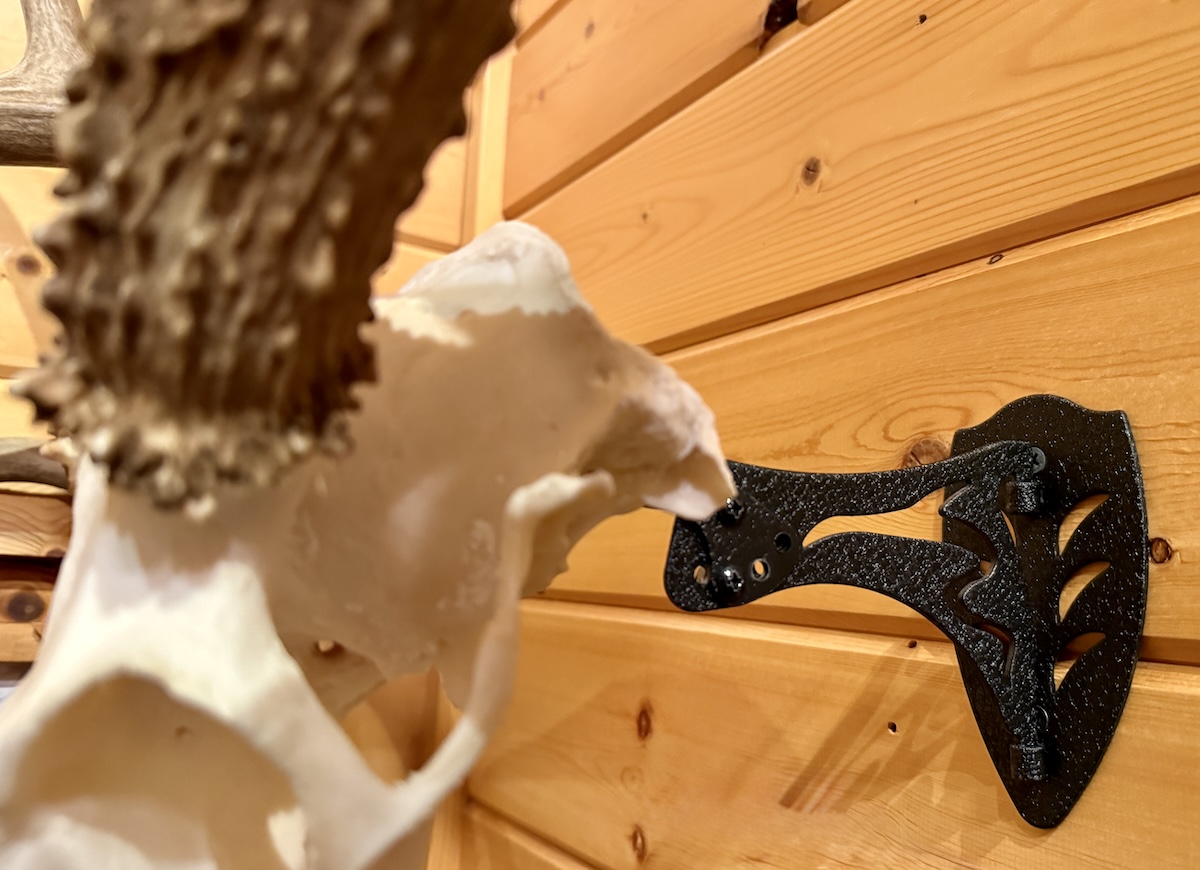
European mounts add a classic touch to nooks and major trophy areas, and the Skull Hooker makes hanging easy.
To elegantly display your new trophy, consider one of more than two dozen skull exhibition offerings from Skull Hooker. These display options vary from wall mounts to tabletop mounts and ceiling hangers to the Trophy Tree that allows you to customize a variety of skull displays together. Then sit back and enjoy that classy skull artwork.
The HuntStand Markers can be used to monitor your hunting area and combine with Command Pro camera images.
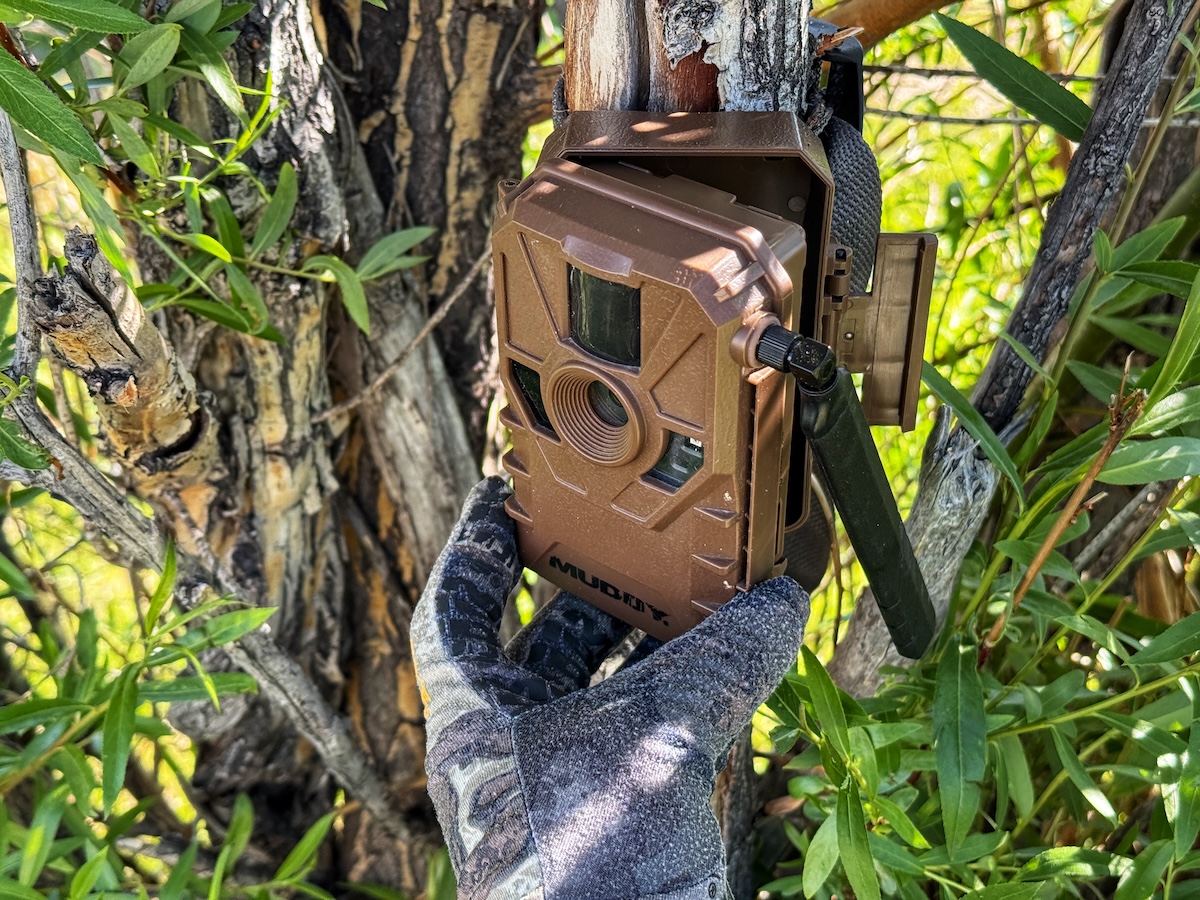
You invested. Reap a return. There’s no reason whatsoever to only deploy your cellular trail cameras for the last half of the year or only during the fall hunting season. They are designed to withstand the elements, send you countless images, and help hone your wildlife management with real-time captures of what’s occurring on your hunting property. Simply, there are many reasons why you should use cellular trail cameras year-round.

The Command Pro app teams with HuntStand to offer a detailed coordination of maps and images.
Integrating HuntStand and the Command Pro App
HuntStand becomes a crucial team member when deploying this lineup of image capture specialists. HuntStand partners with the Cam Command app to offer even more unity between your camera team and hunting app. Visit your favorite app store and download the free Command Pro app. It organizes your images in folders based on the camera and displays connectivity, battery level, SD card capacity and more. From the app you can also schedule daily test images to ensure the unit is working, plus adjust photo resolution, burst mode changes (one to three images per burst), delay adjustment, and so much more. If the cellular unit is solar powered, you rarely need to visit it.
The real bonus is connecting it to the HuntStand hunting app. Simplify management of your cameras by importing markers, viewing photos, and evaluating camera status in the HuntStand app. With images, locations, dates, and bursts of activity information, you can begin marking potential hunting sites, sanctuary areas to avoid, watering preferences, and estimating wildlife density. Why wouldn’t you want that information to be fed to you year-round?
HuntStand’s customized markers also allow you to mark mineral sites, bait, scrapes, food sources, and other locations ideal for camera surveillance. You can even add notes to each marker for precise information. Combine this with unique base layers, such as Quad Topo with elevation information, Natural Atlas with detailed geographic information, Monthly Satellite to understand surrounding land use, and many more.
To heighten the effectiveness of base layers, tailored overlays, such as the Whitetail Rut Map, illustrate rut activity in your region. Riparian Areas help pinpoint hot camera locations and a specific Whitetail Habitat Map overlay for even more information to get that camera in the perfect place.
Next, you might need to move cameras throughout the year, but a few adjustments could help you zero in on the best information. The following are some monthly activities and behaviors that you need to consider as a year of camera surveillance unfolds.
Check ag fields for winter nutrition and monitor all winter food with trail cameras.
Using Cell Cams in January
January could have two perspectives to consider. Both take into consideration that most whitetails are whipped from the rut and looking for rest and nutrition recuperation.
First, you might still be late season hunting with bow or muzzleloader. Monitoring bedroom entrances, food plot travel routes, and food sources themselves, take top precedence. Second, your hunting might be over, but your camera work reveals what bucks made it through the season with an inventory of up-and-comers along with the savvy survivor mature bucks.
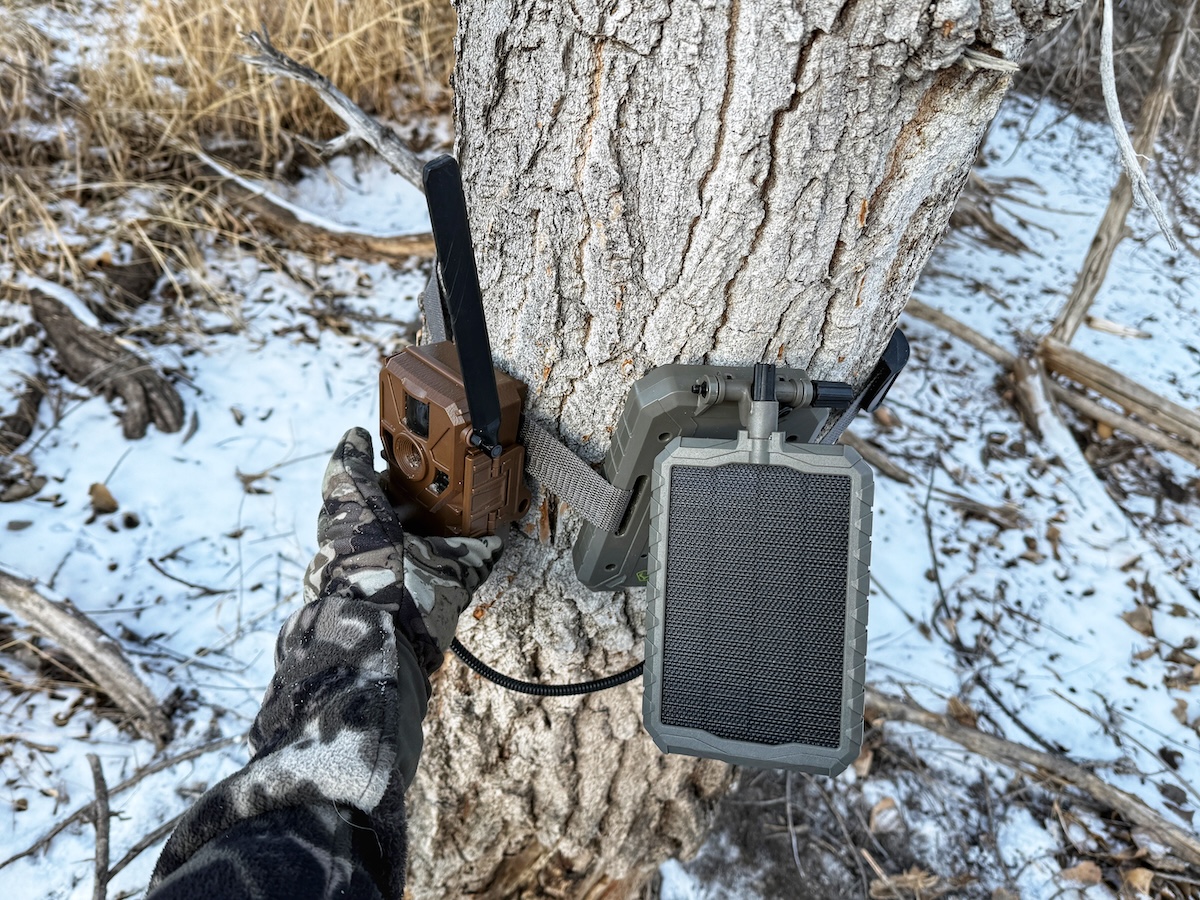
Consider adding a solar charger to help keep batteries boosted during cold snaps.
Using Cell Cams in February
Whitetails begin shedding their antlers depending on testosterone depletion and winter stress. You could begin seeing antlerless bucks already in late December and January, but February is when true shedding begins. Trail cameras that monitor busy trails, food plots, supplemental feed, and the like, give you regular updates on what bucks have shed their antlers and how many are still carrying. Make notes in your HuntStand app to help you later when finding these antlers around busy sites.
How Deer Survive Winter

A freshly shed whitetail antler in the snow — trail cameras can help you monitor when bucks have dropped.
Using Cell Cams in March
In addition to shed antler information (it’s an addiction for many), your army of trail cameras keeps a steady catalog of daily deer visits to specific areas. If you notice missing deer, make notes on your HuntStand app of when and where. Also keep notes of predator sightings. Properties with a healthy population of wildlife attract predators and those toothy visitors could have an impact on wildlife when they are at their winter’s weakest.
And yes, by March, many bucks have jettisoned their antlers, giving you information about when to possibly begin picking up the forest prizes.
Using Cell Cams in April
Some regions do not experience winter stress, but typically, April is a safe month to begin invading whitetail homelands for the real collection of all dropped antlers. Winter is past, green browse is beginning to bud, and deer and other wildlife are gaining weight. Monitor your images to confirm antlerless bucks and budding antlers on some male members of the herd.
That noted, a true invasion of bedrooms, food areas and established wildlife travel corridors will not stress deer into a death situation. Hike with confidence that your intrusion will not harm wildlife, plus it will be forgotten before hunting season with help from your trail cameras.
Additionally, where permitted, consider using cellular trail cameras to scout for spring turkey season. This can provide valuable intel when deciding where to hunt, and when to do so.
Deer Hunts in February or March
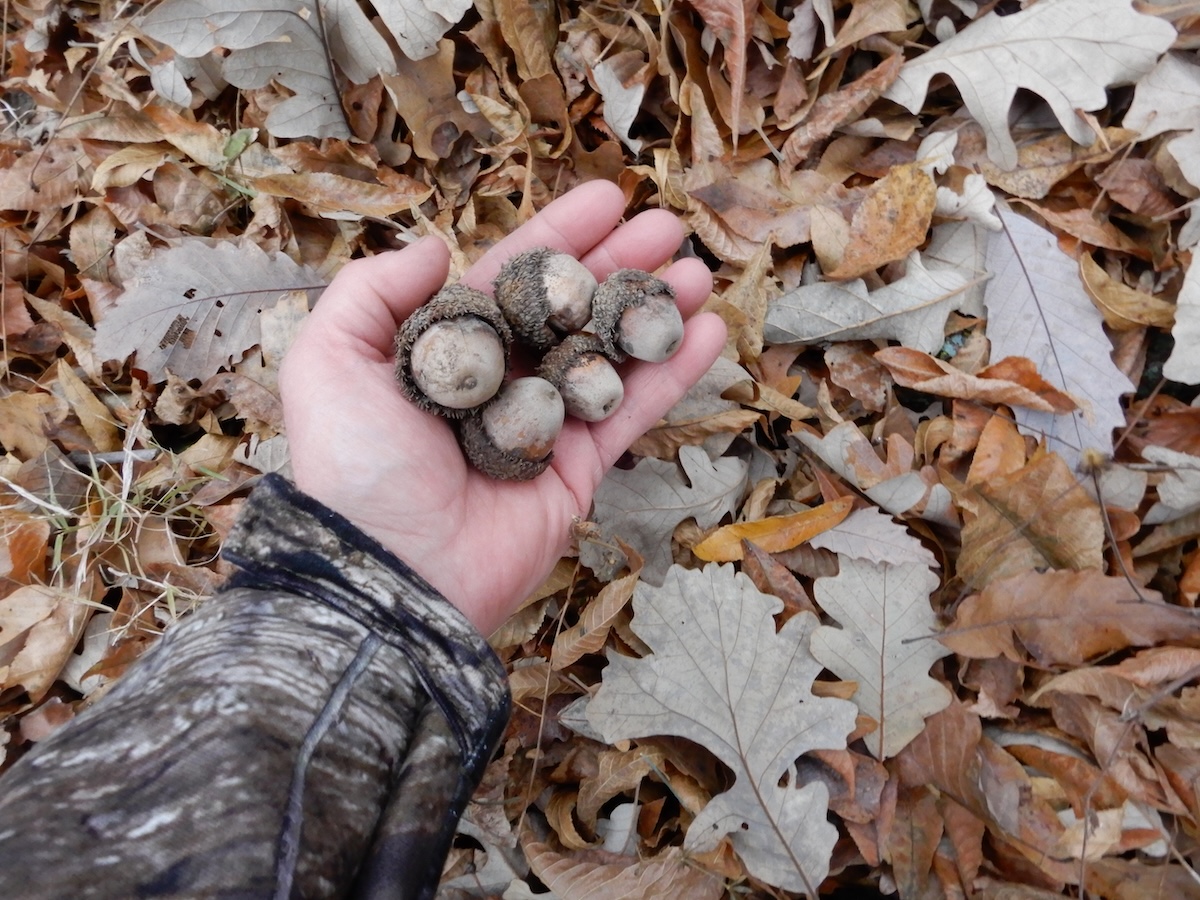
Acorns falling in timber create a mid-October whitetail pattern that you can track with trail cameras.
Using Cell Cams in May
May is an ideal time to do maintenance on your trail cameras, cellular or SD card models. This includes adding solar chargers, replacing batteries, readjusting point of view, moving cameras to summer locations and more. While you wander through the spring woods use your HuntStand app to make notes on the condition of food sources, food plots and water sources. Some might need fieldwork. Mineral sites might need to be replenished, especially for lactating does and antler-growing bucks. With cameras back in prime working order your summer surveillance is about to begin.
Again, where turkey seasons remain open, and where cellular trail cameras are allowed, continue using these for scouting wild turkeys. Furthermore, use these to take post-season surveys and monitor the flock.
Using Cell Cams in June
Fawns are on the ground and will begin moving with moms soon. Your trail cameras should be monitoring all nutrition to ensure it benefits the growing herd and that deer, plus all wildlife species, are acquiring the calories they need. Your cameras might not capture many fawns yet, but they will soon. Nevertheless, keep tabs on does visiting food sources and all-important mineral sites.
If any areas need a boost, begin making plans for summer food plot improvements and for sure, fall food plots. These will be important for hunts ahead and the well-being of all animals your trail cameras are sharing with you.
Shed Hunting Hacks, Tips, and Tactics
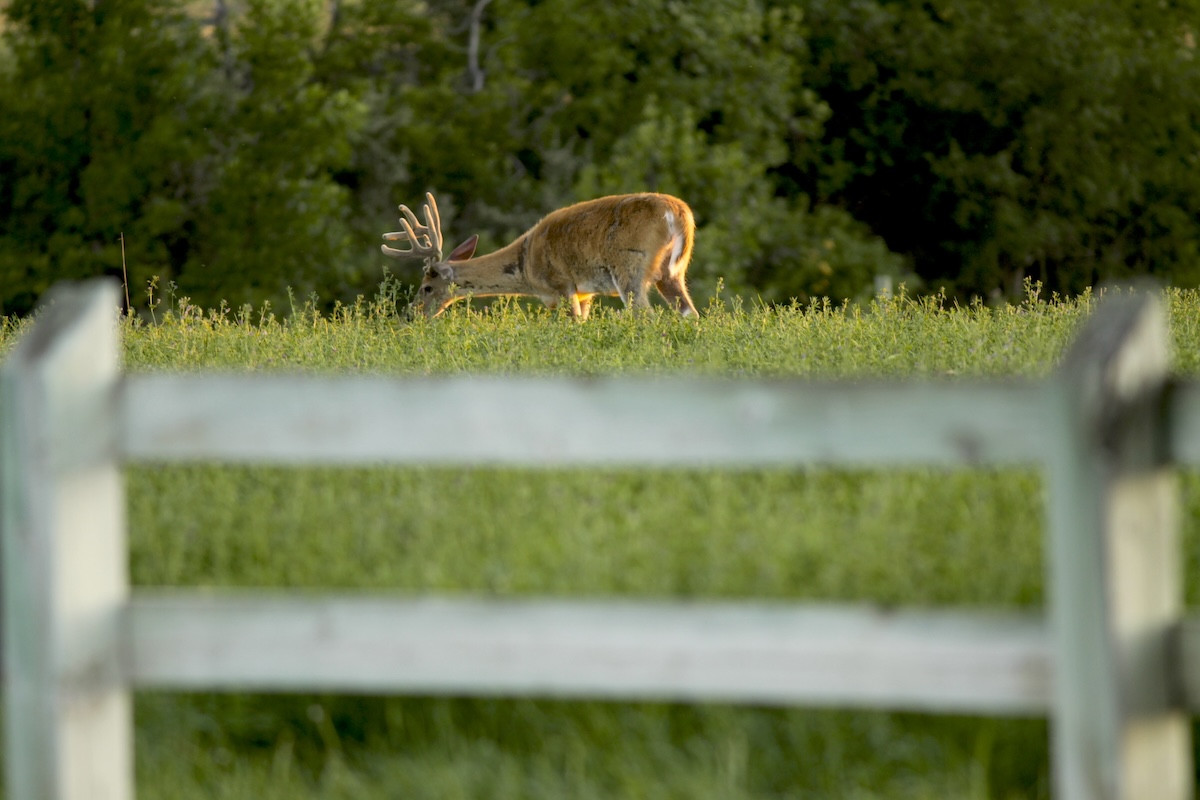
This whitetail buck is feeding before opening day of hunting season. Trail cameras can catch this movement when you are not scouting.
Using Cell Cams in July
July is a bustling month. Fawns begin moving more with does, bucks begin brazen daylight forays to food sources, and most wildlife species feel secure with bountiful cover, and food. Begin a census soon. Use the Cam Command Pro App tools to keep tabs on all identifiable bucks, does with fawns and other wildlife, such as turkey flocks. Your counts and identification efforts allow you to understand hunting potential ahead and whether you are gaining or losing wildlife populations on your property.
In addition, you can monitor what food sources deer and wildlife prefer at this important time of year. This gives you an idea of enhancements or improvements needed for the future.
Using Cell Cams in August
August is buck month. You now have a complete picture of the full potential of players passing by your trail cameras. Bucks are just weeks from full maturity and holding to patterns. You will discover bachelor groups setting up territorial use of certain food sources and establishing the pecking order. Video is an option this time of year to see what bucks display dominance and what bucks are subordinates. Interestingly, the best scoring bucks are not necessarily the bossiest in the bunch and video reveals that behavior.
Keep a steady eye on bucks at this time of the year. They might continue a strong pattern on a certain food source, but in heavy agricultural areas adjacent crops are also maturing and palatability could make a band disappear overnight for crops such as nearby soybeans.
What Shed Antlers Teach You About Deer and Elk
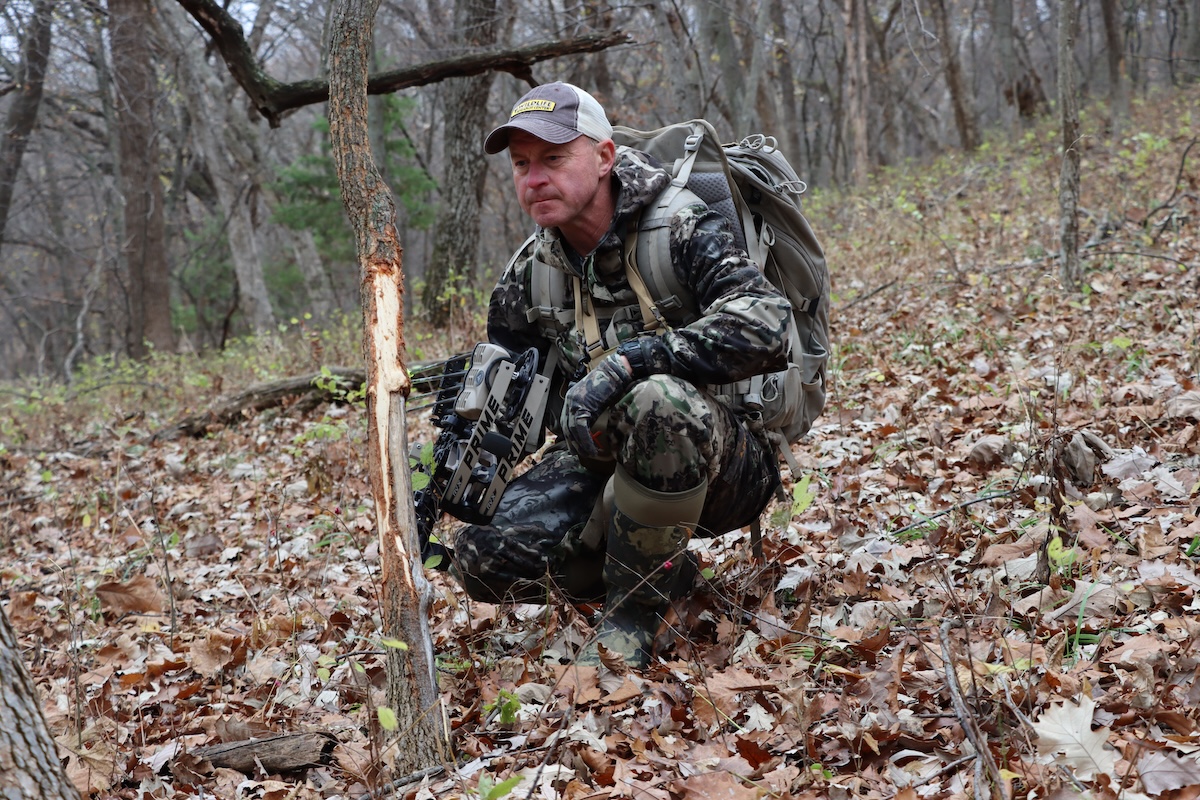
When rut rubs begin showing up, rub lines are great locations to monitor for buck information with trail cameras.
Using Cell Cams in September
Yes, it’s finally time for your trail camera army to pay venison dividends or whatever your hunt goals are for the month. Whitetails especially are on a pattern. Once you discover that pattern, you might need to move cameras, equip them with solar chargers and slip out undetected. Midday visits to food plots with a favorable wind are best. Consider adding your stand at the same time. Days with favorable winds and breezy conditions fuse for cloaking your invasion as you reset ambush sites.
Once you see a pattern emerging with trail camera assistance, take advantage of it immediately. Hunting pressure, harvest, other hunting activities and more can make a hot setup go cold in the blink of an eye.
Using Cell Cams in October
The next two months your trail cameras will play a crucial role. Unfortunately, the first half of October can be dizzying. Why? Bucks go underground and begin moving not only in a more secretive pattern, but they are focusing on new food sources popping up by the minute. A big reasons bucks disappear is due to the acorn or mast drop. Sometimes these hidden buffets allow bucks to feed without ever stepping foot on a food plot during daylight.
When you add this demeanor with the fact bachelor groups are disbanding and mature bucks become more antisocial, you need trail cameras to reveal a few clues to their continued existence. But do not fret. By the last half of October testosterone nears peak levels causing bucks to be irritable and roam. Travel corridors, large scrapes and rub lines become the focus to pattern your next trophy.
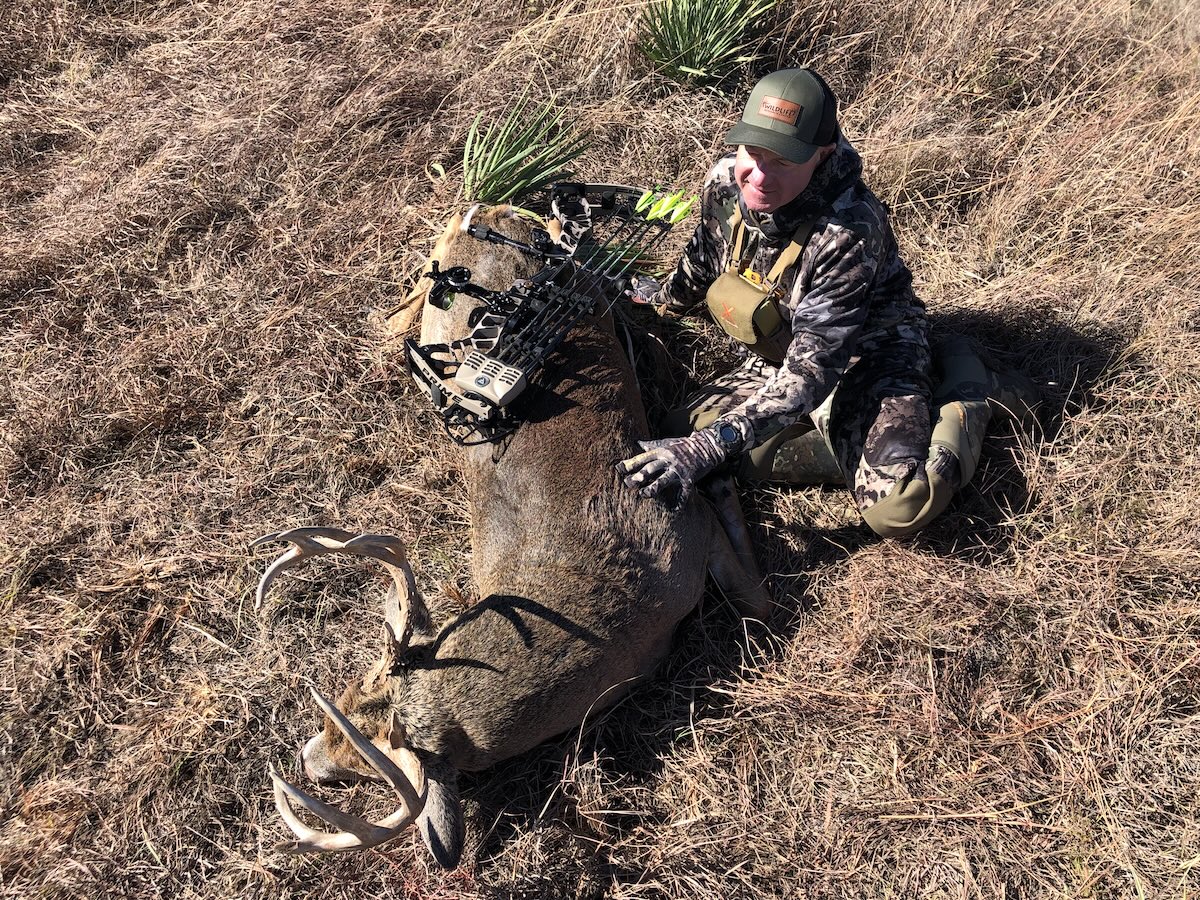
Kayser's mature Kansas 2024 buck was captured numerous times on his Muddy Manifest 2.0 trail camera.
Using Cell Cams in November
November also demands critical teamwork between you and your cameras. The first half of the month, you should be able to track bucks like late October, but once the majority of does come into estrus in mid-month, all patterns go out the window. Bucks begin to roam wider and wider as they search for additional females to breed. They often leave homelands and new bucks often show up unexpectedly. Trail cameras help you discover new patterns that might only last a day or two, but give you brief windows to establish a new ambush with quick stand setups.
By late November the rut begins to wane and again, your trail cameras can deliver images to ensure target bucks return. At the same time, cameras reconfirm patterns, especially to food sources, as deer gorge again to recuperate from the rigorous rut.
Using Cell Cams in December
With the arrival of December deer and other whitetail concentrate on survival. Monitoring food sources and the trails from bedroom cover provides you with information on hunting season survivors. Around mid-month, you might see a short burst of rutting activity as approximately 10 percent of females, mostly yearlings, have not been bred according to research.
After that, your cameras continue with the chore of monitoring wildlife throughout the year. Keep them out. Keep them charged. Keep them working for you. Trail cameras deserve a year-round job.

Hunting late-season whitetails in extreme winter conditions is helped with good trail camera information.
Excellent Cell Cams for 2026
For 2026, Muddy Outdoors delivers three new cameras to consider for your surveillance team. The first impressive addition is the Manifest 3.0 cellular camera. It now features 720p video, plus incredibly sharp images up to 16MP, so you never miss a detail. Camouflaged to appear like part of a tree trunk, it disappears effortlessly and works in silence. You can use AT&T or Verizon as your provider and if no reception occurs in remote areas, the Manifest 3.0 uses Automatic Network Coverage to catch imagery from active cameras. Like its predecessor, the Manifest 2.0, the Manifest 3.0 works in tandem with the Cam Command Pro app that sends images straight to your smartphone in real time. Users might also integrate the HuntStand hunting and land management app for the best in image utilization, plus it provides free camera image sharing.
The second trail camera to consider is the next-generation Mitigator 2.0 Cellular Trail Camera. This camera is offered in an affordable 2-pack purchase that fits the budget of most hunters. With the Cam Command Pro app, you get on demand access to images and photos. Video is delivered with an improved 720 HD capability and includes audio for more insight into what’s playing out at a particular site. These and many more features should have you researching the Mitigator 2.0 that competes with any cellular format out there.

But hold on. Another two-pack option comes in the new Matrix 2.0 Cellular Trail Camera. It boasts Automatic Network Coverage. Plus, it’s ready to go right out of the box thanks to two preinstalled SIM cards. When activated, the camera seeks out the strongest cellular signal, Verizon and AT&T, then automatically connects. You never miss the action with an 80-foot detection and flash range. Plus, it speeds along with a 0.4-second trigger speed. Set your camera for one to six image bursts that are crystal clear with 36 MP images. If video is your game, then you’ll appreciate the 1080 full HD video setting that includes audio.
These trail cameras and more can be viewed in the HuntStand Store. Enjoy significant deals and discounts.
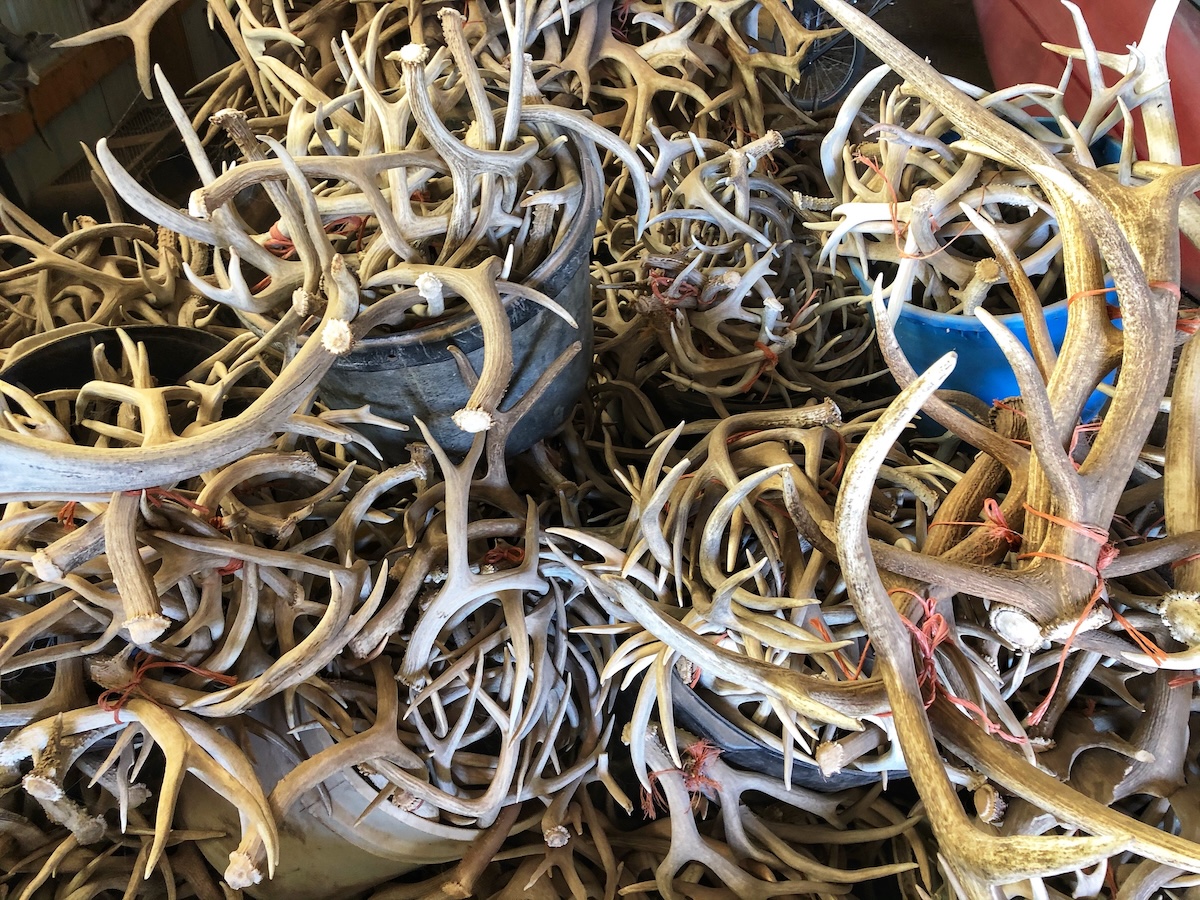
Mark Kayser's antler pile reveals much about individual hunting properties and areas.
It was 1976 and I was a young lad … a very young lad. Making an escape from my parent’s watchful eyes in South Dakota’s Black Hills, I stumbled across a small four-point shed whitetail antler already in chalky condition. That trivial tined prize would seem insignificant to most, but to me it was treasure and sparked a decades long Easter egg hunt for shed antlers wherever I might roam. Little did I know that my pursuit of shed antlers would be a consequential part of my hunting strategy.
The lessons learned from shed antler hunting are many. These are lessons I never try to dodge. Here’s what shed antlers teach you about deer and elk.
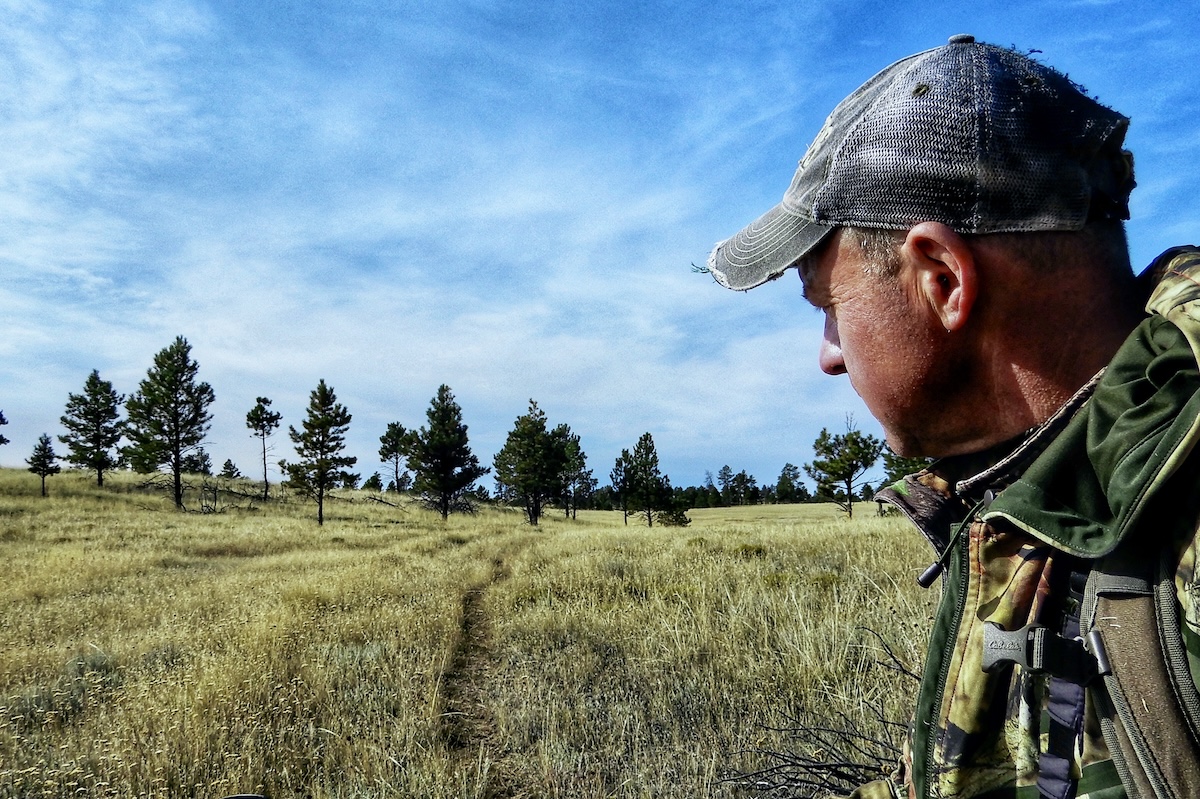
Examine trails while shed hunting.
Finding New Hunting Lands
No doubt, you virtually fly over the country sleuthing to find new hunting lands on your HuntStand hunting app. It’s worthy of time for the serious hunter. As you poke around for new public or private holdings, keep in mind their significance for a spring shed antler excursion. Although some Western locales (think high elevation) might not winter big game, most hunting locations across the country double as waypoints to kick off your spring shed antler hunts.
By focusing on possible new hunting lands, you are proverbially killing two birds with one stone. After a thorough vetting on HuntStand for everything your target species requires on a property — refuge, food, and water — an onsite visit allows your vetting to make a massive boost on whether your virtual discovery is as solid as the real world. Your satellite snooping often conjures images of trophy success, but hiking a property tells the real tale of whether a parcel holds the key to the kingdom or leads you toward a dead end.
How Deer Survive Winter
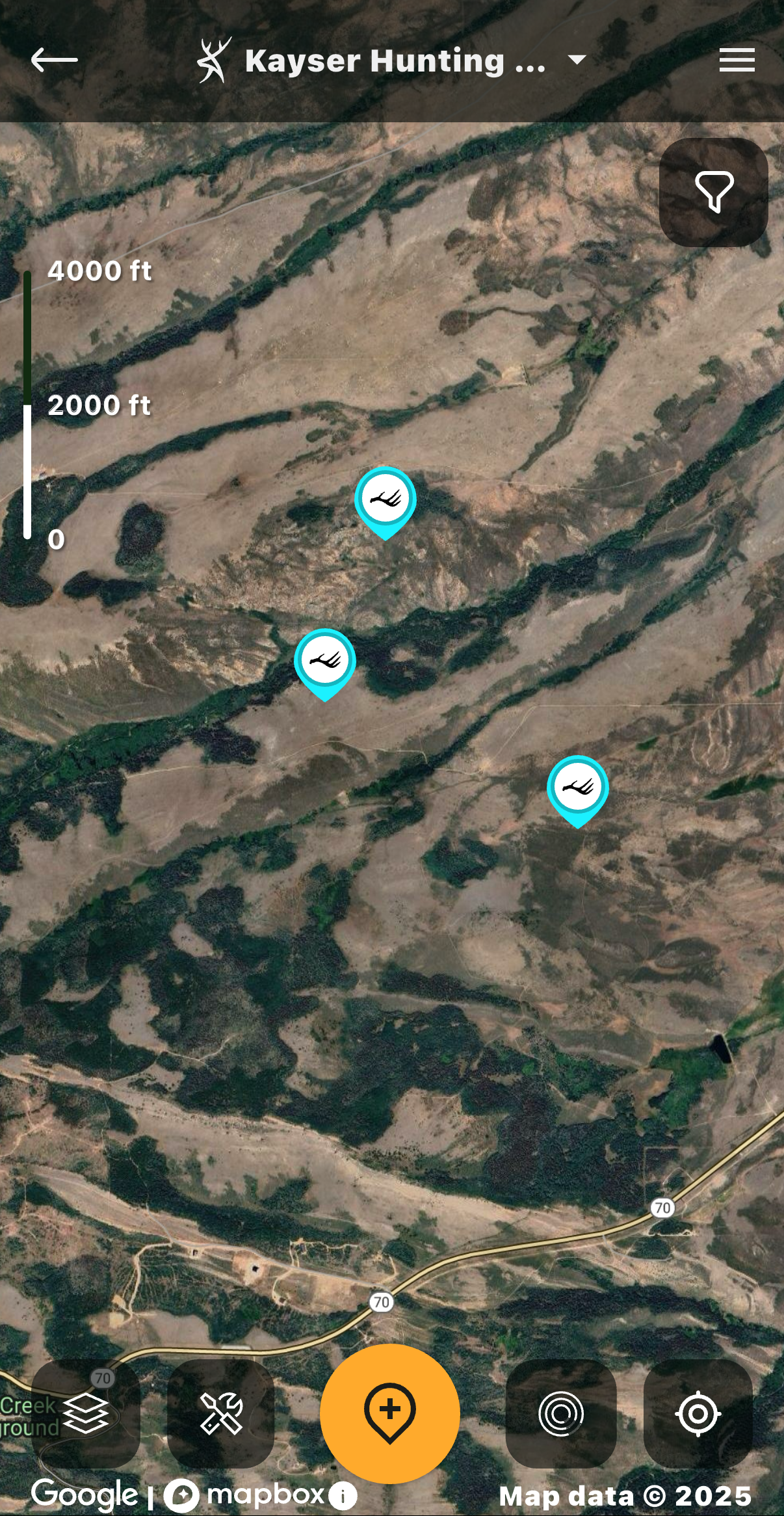
Use HuntStand's Hybrid base layer to help locate shed antlers.
One of my best elk hunting areas (when I can draw a tag) started out as a favorite shed antler hunting locale. At first, I never thought about hunting it. Then, it dawned on me one day, the same shed antlers I picked up at lower elevations were on bulls during the fall season at a slightly higher altitude.
A HuntStand examination of higher terrain along with access routes spurred me to apply for a license. To date, my son and I have taken seven public-land bulls from the area, and it all started with shed antler hunting.
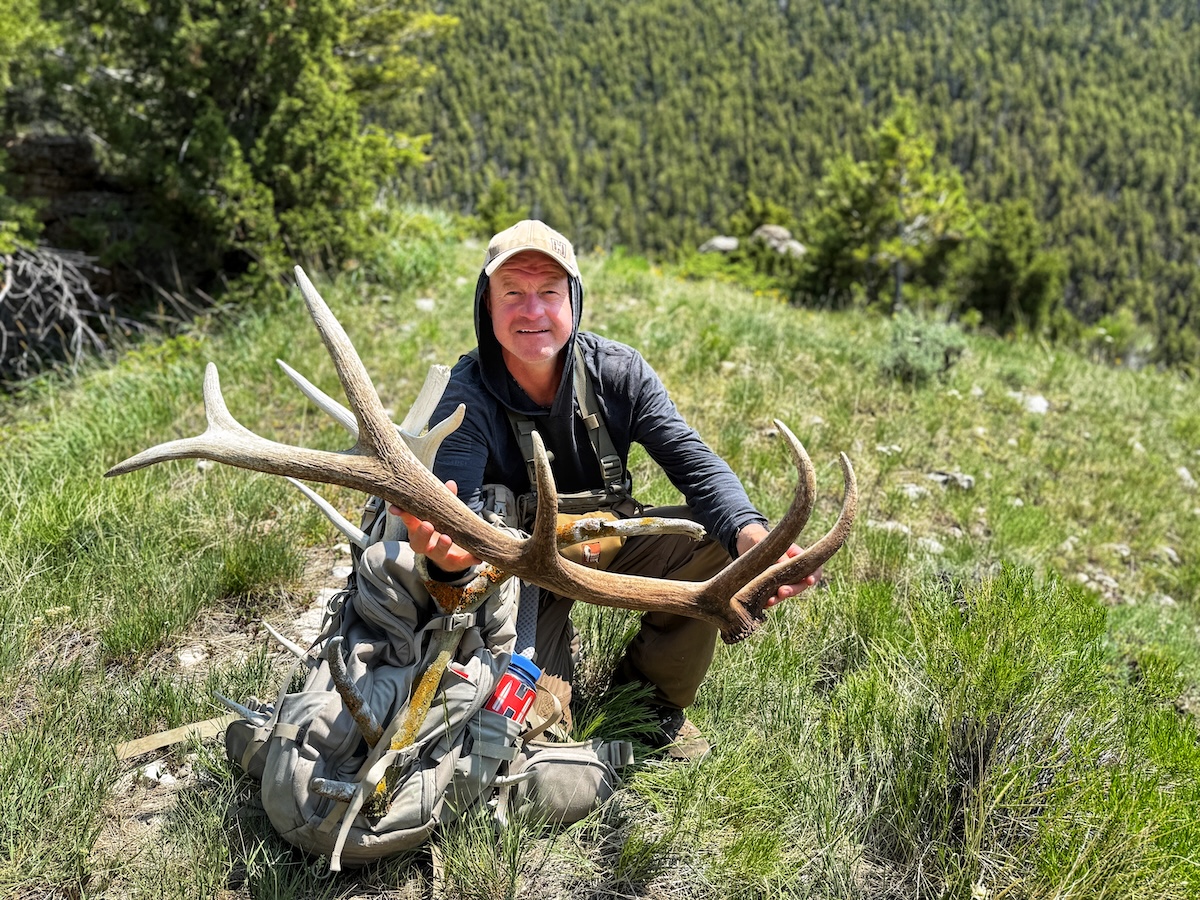
Mark Kayser with a nice elk shed found while learning the countryside.
Understanding Hunting Lands Better
As you shed antler hunt an area for the first ever visit, or through an extended relationship over the years, you simply understand the property better. Of course, your eyes scan for the signs of antler tips or curved beams on the landscape. Still, never overlook what spring visits can share with you. It can help assemble an all-inclusive hunting strategy.
Whether exploring Midwestern woodlots, Eastern forests, or Western slopes, stay alert for clues indicating the usage of a property over the months. In all environmental instances, look for trails with the highest traffic clues. Beaten paths, muddy highways, and snow-packed routes indicate heavy usage. The HuntStand Hybrid base layer and National Aerial Imagery base layer offer views ahead of where trails might end, such as food sources or dense sanctuary cover.
Next, note any rub lines or clusters of rubs with significant activity. Whitetails, mule deer, and elk all rub, and their clusters or lines of activity also indicate areas often frequented. Most rubs were made in the fall, but all three species rub throughout the winter until they shed their antlers. You can use various Tools on your app to mark trails or simply circle a cluster of good-looking rubs.
How Mature Bucks Move from A to B
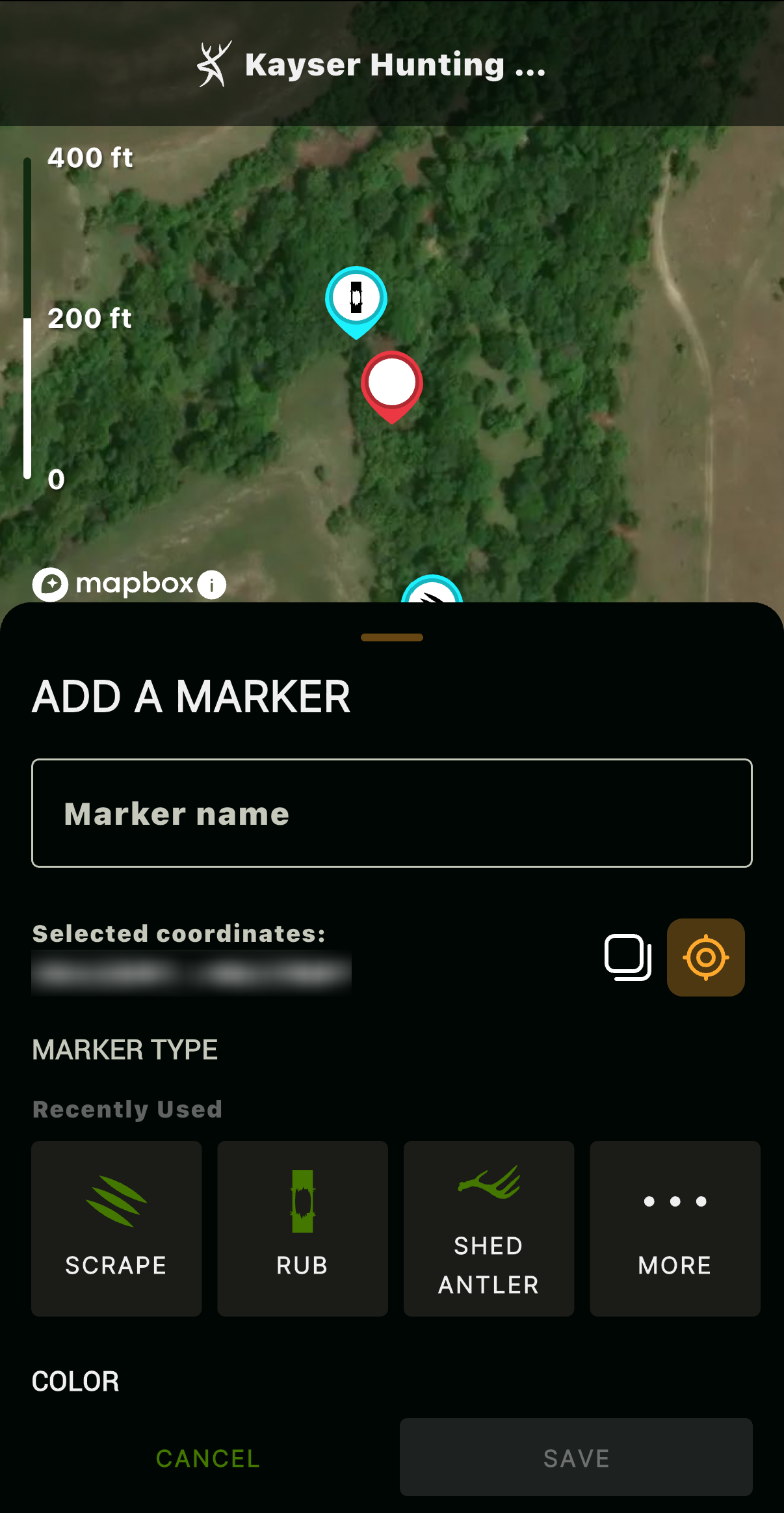
Use HuntStand's markers to mark scrapes and rubs to help locate shed antlers.
Finally, pay attention to the ground for scrapes, which are whitetail trademarks. Pay particular attention to those larger than a garbage-can lid in diameter. Scrapes are also used throughout the winter. The good thing about scrapes is that they often stand out even after months of nonuse.
Mark every scrape with a HuntStand scrape marker location. In whitetail country, the scrape and rub lines will stand out when you view them from above with the help of HuntStand.
A bonus for you is to peek into bedrooms and sanctuary areas. Trails will lead to these hideouts and beds should be evident in the pre-spring barren environment. Again, take a break from shed hunting to make notes for setting any bedroom perimeter stands or ambush locations to use on a later hunt.
Use HuntStand's National Aerial Imagery base layer to help locate shed antlers.
Witnessing Real-Time Animal Behavior and How It Relates to the Land
Any shed antler hunt needs to be as covert as a U.S. spy in a foreign country. You never want to stress animals this time of year unless they live on manicured property and have had a mild winter. That noted, shed antler hunting allows you real-time observations of how game species utilize a property. Depending on the species, animals use a property differently exhibiting differing behavior. Understanding their location preferences, food choices and preferred travel routes, plus their escape plans, all give you a jumpstart on a future hunt.
Having that hard evidence of shed antlers in hand gives you a boost of confidence, but by hiking and sneaking around a hunting area, you obtain a unique, first-hand perspective of how animals utilize their homeland.
Find Next Season’s Public Land Stand Locations Right Now
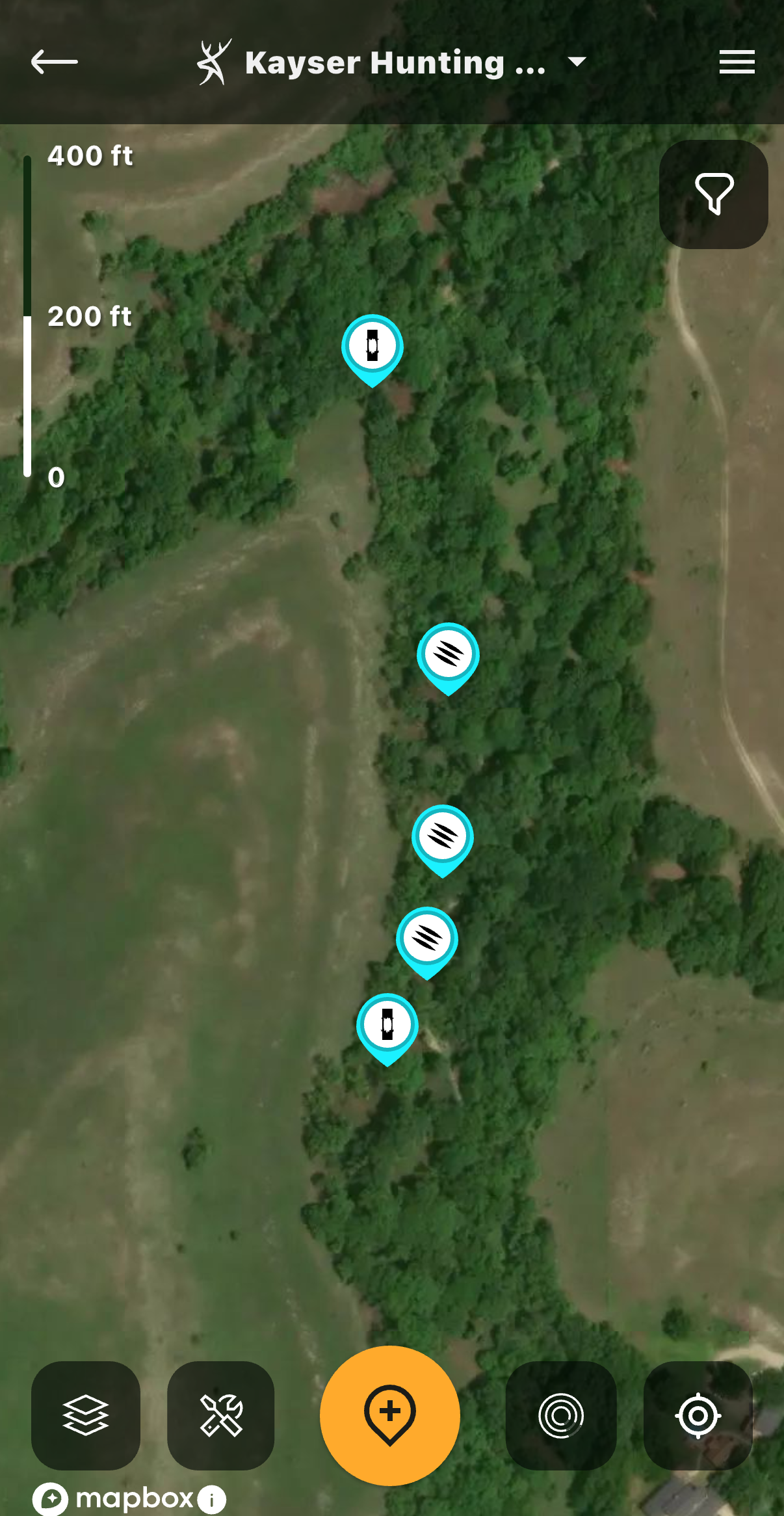
Use HuntStand's markers to mark scrapes and rubs to help locate shed antlers.
Additionally, hikes combined with HuntStand’s Terrain or Outdoor base layer reveal subtle terrain funnels, hidden benches, traffic-jam saddles, and more. Every time you see animals repeatedly using a geographic feature, add a marker and use the Tools to add lines of travel to understand the full hunting potential of each property segment.
I’ve learned to follow trails. Yes, they lead you to animal preference points, but better yet, they offer you speedy access. Carved trails in the Western mountains or through whitetail coulees did not receive eroded significance overnight. They represent decades of use with the path of least resistance being a major reason why.
In elk country, it’s not uncommon to run into dead ends, cliffs or grades too steep to traverse. Backing up and finding an elk trail has always been my easy out. Although elk definitely can traverse country beyond my capabilities, almost all trails offer an out and have gotten me out of tight spots where injury could easily have occurred.

Whether grid or circular, cover an area well for shed antlers.
Discovering the Good and Bad of Populations
Your shed antler finds are giving you some indication of the age structure of the bucks or bulls on a parcel of land. But what about the recruitment team for next season and the future? Evaluate the density of the overall herd, as shed antler hunting provides a platform for an informal census.
Are you seeing too many animals, too few, or just the right amount? Before the spring bloom, you have an open view, even in woodland settings, to see through the brush and into openings for accurate counts. Plus, you’ll have the chance to formulate estimates on male-to-female herd ratios. At this time of year, most males in all species have resumed a bachelor group lifestyle while females and young of the year make up the larger herds.
Shed Hunting Hacks, Tips, and Tactics
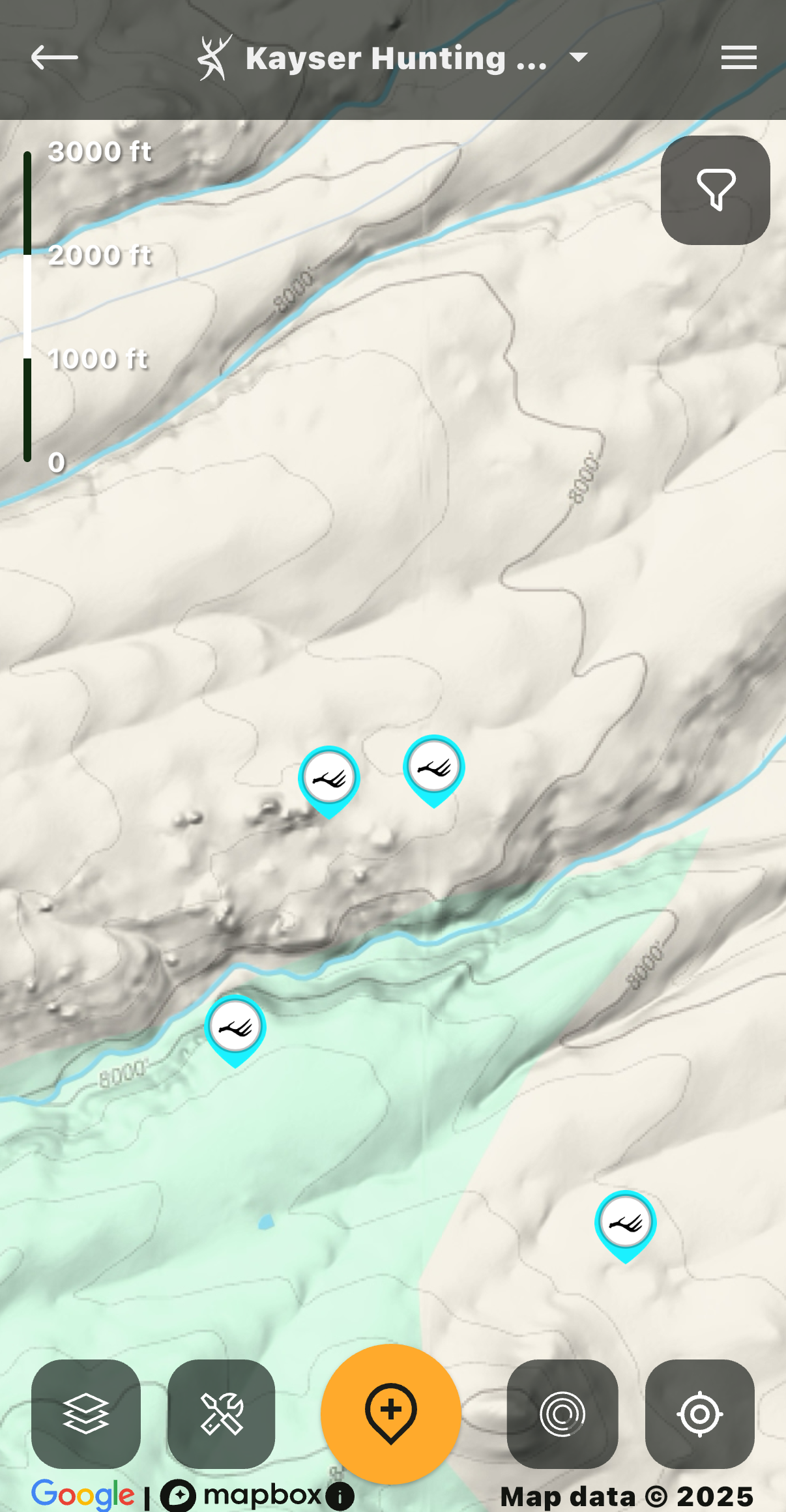
Use HuntStand's Terrain base layer to help locate shed antlers.
As you hike around your hunting area, take notes on the female groups you view, accurate counts, and if possible, how many fawns or calves are within the group. Young animals are critical to the ongoing well-being of any herd. If you notice an abnormally high number of missing fawns or calves, it could signal a problem.
Most plan several shed hunting outings. Therefore, record your big game counts on each trip using HuntStand markers to note the location of animals. Include counts in the name of the marker. This gives you several tallies to average for an accurate estimation.
Inevitably, you might discover some dead animals during your hikes. That is not uncommon, but if you find too many, you might discuss these findings with a local conservation officer or big game biologist. They can offer insight on what might have killed the animals. A variety of circumstances might lead to die-offs. Big game species might succumb to winter-kill, effects of wounding, disease, predation and other mishaps. They might even die from a simple accident. Big game might slip, fall, misjudge, and make blunders. One of those blunders is misjudging vehicle speed, but they also misjudge distance and routinely get trapped in barbed wire fences, even trapped in downed timber.

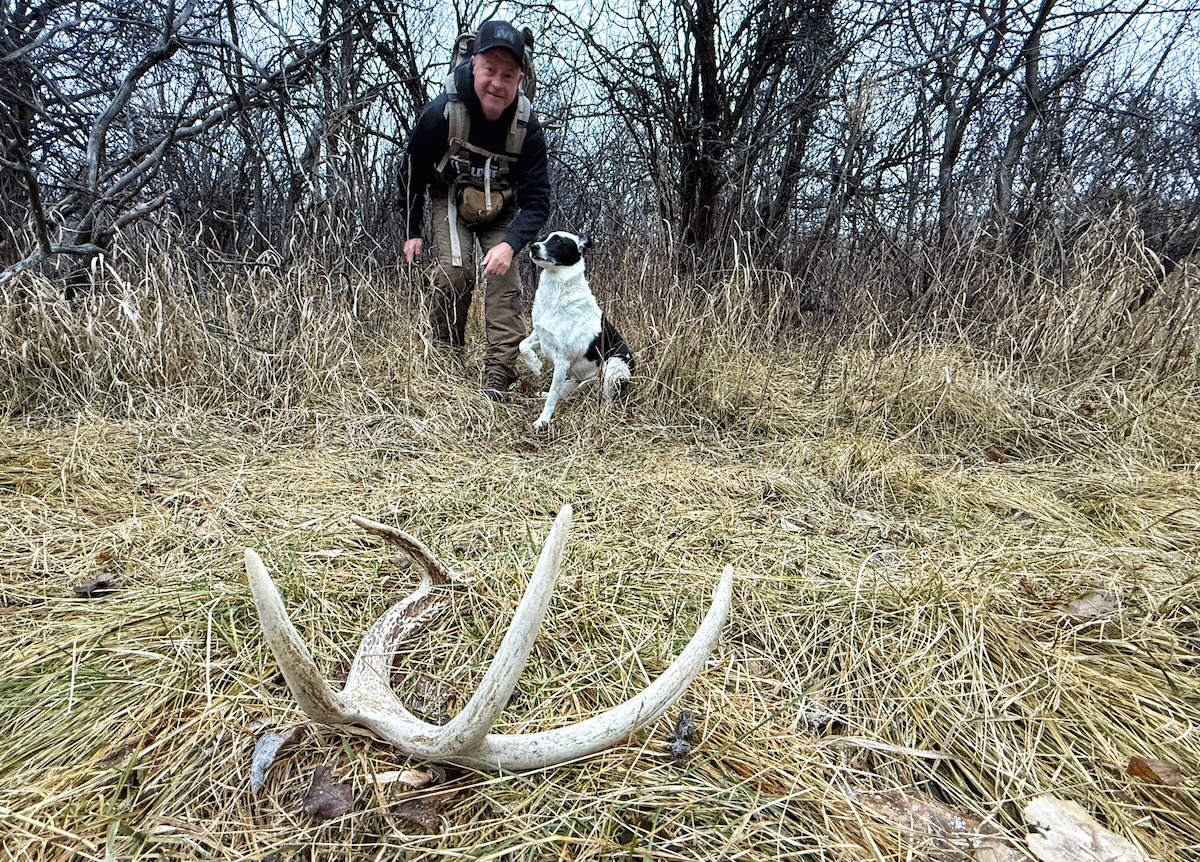
Mark Kayser and Sully find whitetail shed antlers in thick cover.
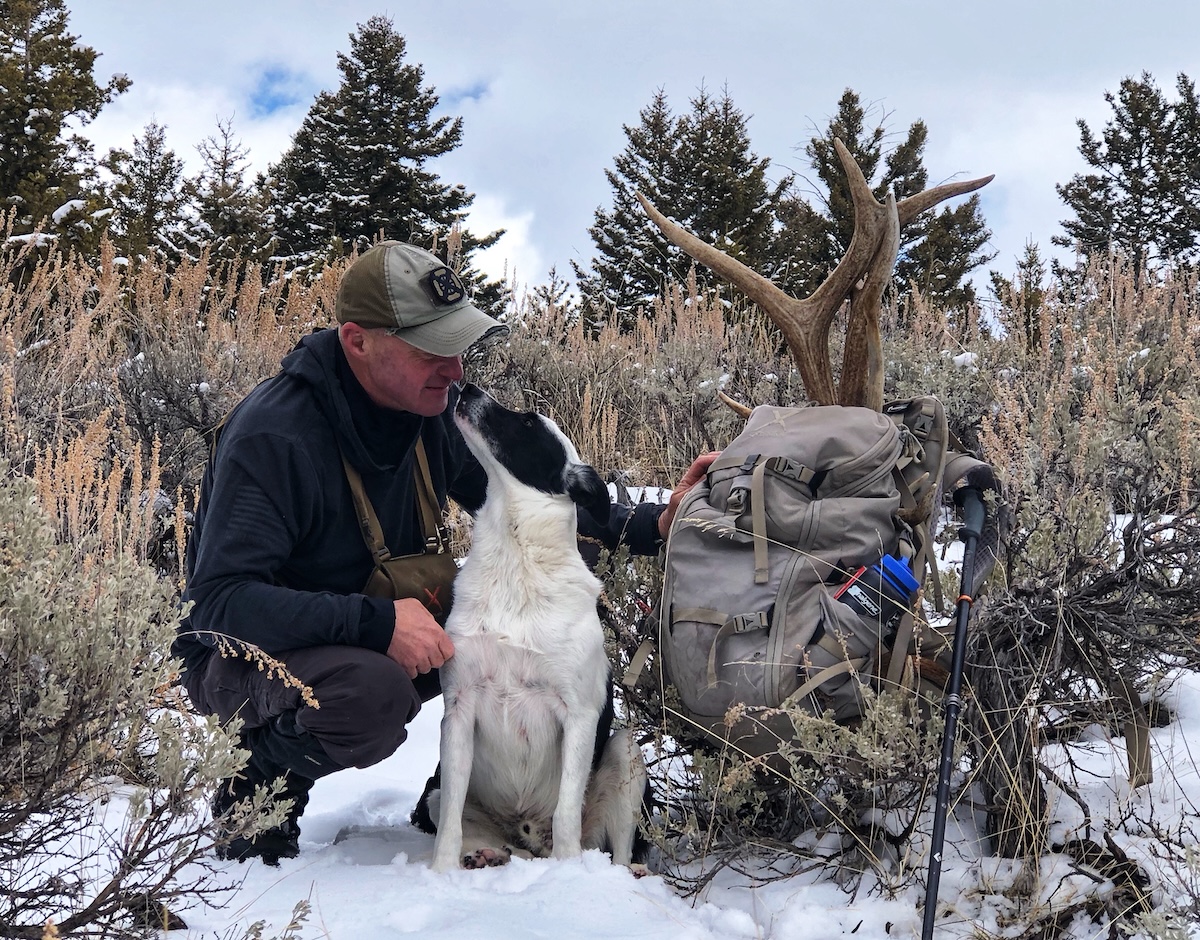
Shed hunt for elk antlers in thick, deep canyon cover, too.
Take your shed antler hunts a step further this spring, literally, and figuratively. The knowledge you acquire by finding a nice pair of shed antlers combines with an intimate understanding of a tract of land is invaluable for hunting seasons ahead.

Never do the same thing as others when hunting coyotes on public land. Change your stale hunting tactics for a fresh approach.
Although a few of you live in coyote-rich havens with no issues in calling these survivalists with consistency, the rest of us struggle from time to time. Like any issue, a collection of elements could be affecting our coyote hunting. Everything from the likely increase in hunting pressure to disease or even lack of hunting access could be affecting your success. Most of these factors you have no power to change. On the other hand, you do have the power to change up your playbook. Has it gone stale? Freshen it up with a new look at your approach to coyote hunting. Read on to learn more about hunting pressured coyotes.

Run the HuntStand Natural Atlas base layer to locate water sources where coyotes might hunt near. Use the HuntStand Hybrid base layer and Contour overlay to look for high points to call coyotes from. Deploy the HuntStand Natural Atlas base layer to locate openings, high points and roadless areas for coyote calling. Implement the HuntStand Quad Topo base layer to locate high points for calling coyotes.
Finding Coyote Hunting Hotspots
One of the great things about coyote hunting is you can practically plunk down anywhere and call a coyote. Can you though? As coyotes become wiser to calling, hunting pressure and just overall human activity, you might be wise to take a deep dive into their homelands for X-marks-the-spot calling locations.
Despite some habitats looking strikingly similar throughout, coyotes do have preferences and uncovering those niche areas takes some sleuthing. Top priorities include sanctuary and food. In arid areas, such as the desert Southwest, water also becomes a critical factor.
Begin with sanctuary. Although a coyote can hold up almost anywhere, use your HuntStand app to discover areas that include denser cover, more rugged topography and have fewer roads. These all add up to less human visitors when a coyote has downtime. Upgrading to HuntStand Pro or Ultimate adds more power to your e-planning. Put your Hybrid, Natural Atlas, and Quad Topo base layers into play and whenever needed, add the Contour overlay onto a map for another view of possible refuge characteristics coyotes love.
For food, take into consideration that most studies point to the fact coyotes subsist primarily on rodents. They eat almost anything and focus on fawns in the spring, but their overall livelihood relies on rodents. Grassy areas, meadows, wetlands, and overgrown suburban lots all provide the habitat needs for the rodents coyotes love. Scan for these on your Hybrid base layer or add the Tree Cover overlay to your favorite map to get a view of areas with possible open-country rodent infestations. All maps have the potential to give water clues, but the Natural Atlas base layer shines in this area along with the Outdoor base layer.
How to Hunt Public-Land Coyotes
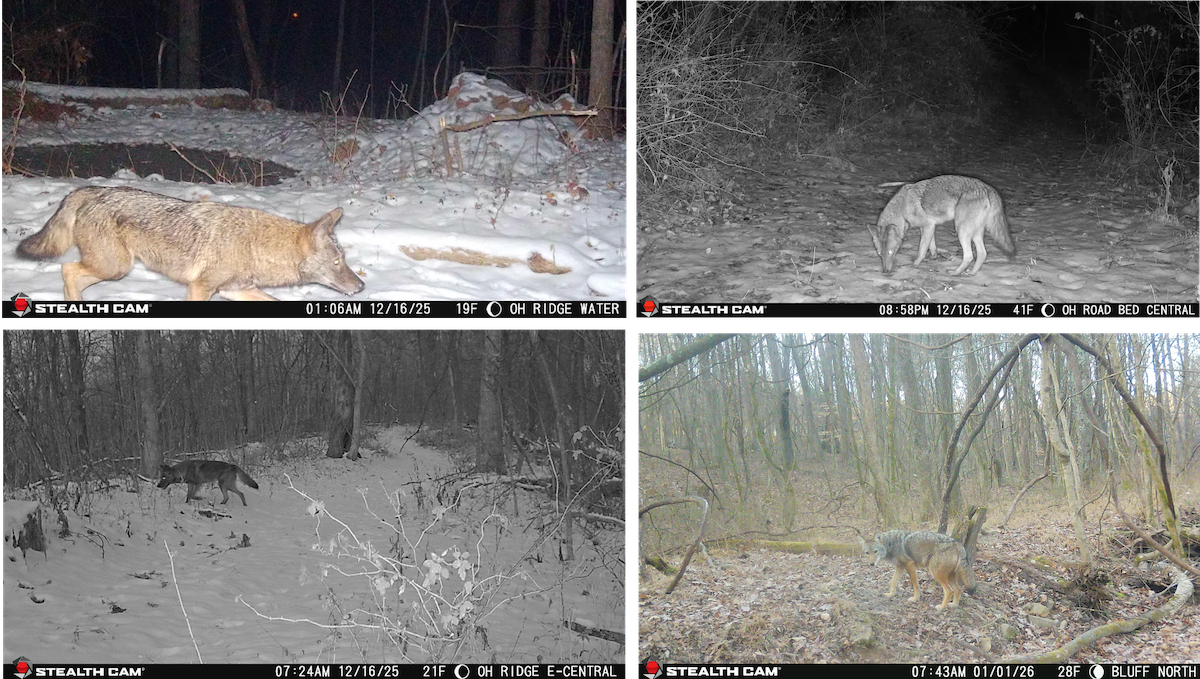
Deploy cell cams to scout coyotes. Use scent-eliminating spray on your boots and hang coyote urine wicks on either side of your scent stream to stop a coyote in your preferred shooting lane.
Choose Coyote Hunting Entry Routes, Stand Locations, and Exit Strategies
Once you have a homeland waypoint in hand, use it to map an invisible entrance. Utilizing wind forecasts on HuntStand’s HuntZone wind graphic and topography base layers start you out on a journey to invisibility.
Even without HuntStand, you can use common sense. If you’re hunting primarily flat country, access the area under the cover of darkness and wait at your setup site for shooting light. Coyotes might have great eyesight, but on dark nights, even they cannot gather enough light to see you. Have the wind in your favor and walk stealthily to your stand site.
For public land hunters, the advice is simple. Don’t be a lemming. Avoid hiking in from main trailheads and instead look for backdoor entrances. A secondary gate or even a right of way, when legal, could provide parking to hop over a fence to adjoining public land. Predators are fully aware of where most human traffic emanates and steer clear of it during daylight. Mimic their moves to put yourself in their core area. The Property Info overlay aids in keeping you on the right side of the fence.
Lastly, cloak your approach. Use terrain to stay hidden from big openings. Use low spots, such as ditches, gullies, or creek beds to advance out of sight. Add the Contour overlay to any applicable map for e-scouting assistance. And never silhouette yourself, if possible, day or night. Instead of going over a hill try and side hill to give yourself a background to blend against.
Hunting Coyote Bedding Areas
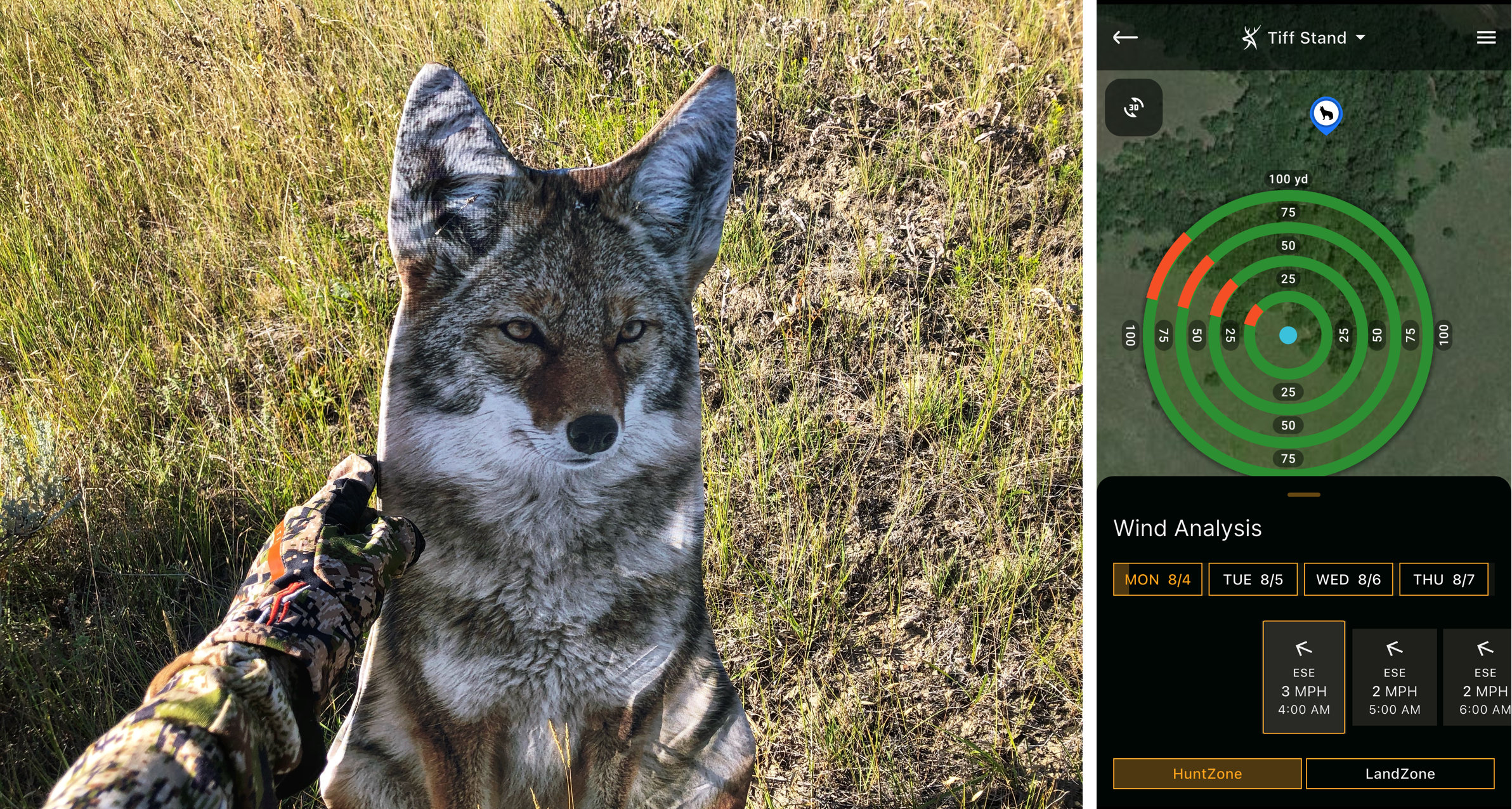
A coyote decoy not only boosts a coyote’s confidence but also can stop a trotting coyote to give you a standing shot. Use the HuntStand HuntZone to study wind forecasts for coyote calling and decoying.
Implement Advanced Coyote Calling, Decoying, and Hunting Tactics
When you hunt coyotes, you pit yourself against a 4D chess opponent. Make sure you match their wit with your own 4D moves. Begin with your electronic caller. It should never be positioned beside you. All major e-callers come with a remote, so use it. Place the caller away from you and in a strategic position to own the wind. How far away you place the e-caller depends on how pressured the coyotes are and how far you can see.
A good rule of thumb is to place the e-caller approximately 100 to 150 yards upwind of your position. This leaves a gap between you and the e-caller for coyotes to circle downwind and when they do, their focus should be on the origin of the sound, not you. Camouflage yourself appropriately, sit in shadows and do not adjust for the shot until the coyote looks completely away.
You can do the same 100-to 150-yard setup play with a downwind placement of the e-caller. In this scenario, you want to make sure there is plenty of room on either side of the e-caller for the coyote to be stopped before it reaches your direct downwind scent path. HuntStand’s HuntZone wind graphic gives you an exact read on where your scent is blowing. In both scenarios, using scent eliminating spray on your boots and hanging coyote urine wicks on either side of your scent stream to stop a coyote is a good idea.
I’m a fan of hand calls, so I often use decoys, but in similar setups as with an e-caller. The decoy stands ready to pull coyotes away from my position while distracted away from me in the shooting lane. A quality looking coyote decoy — even the 2D photo image decoys do the trick. If you set the decoy downwind, again use scent to stop a coyote before it crosses your scent stream or leave ample shooting room on each side of the decoy.
A final tactic I employ with hand calls, especially while using mouth howlers, is to move 100 yards or so upwind of my calling site, rip a series of mouth howls, then jog the 100 yards back and set up. This sets the stage for coyotes to look in the vicinity of where the howls emanated, not my current location.
Tips for Hunting Big-Woods Predators

Mark Kayser with a mature coyote he shot after e-scouting a location on HuntStand that held all the right ingredients.
Use Coyote Hunting Tactics Song Dogs Haven’t Seen Before
A final tactic to freshen up your coyote setups is to expand the conversation. When I hunt with buddies using e-callers, they place it upwind and run the remote. I’ll be caller No. 2 with hand calls and answer the e-caller’s howls, add a coyote fight, or work the prey-in-distress message with augmentation from the e-caller.
Ten minutes into the set, I like to add the squawking of crows or cries of magpies. These sounds almost always attract real aerial scavengers, giving coyotes a visual to focus on as they move toward the sound. Plus, crows, ravens, magpie and jays arriving boost a coyote’s confidence that the commotion is real, thus increasing your odds of seeing the coyote.
Old school is fine, but in the busy world of predator hunting, coyotes quickly understand that everything they hear is not what it seems to be. Freshen up your stale approach to coyote calling.
Whitetails are more abundant. And mule deer populations are in decline, yet still have huntable populations in most areas. So, should you focus on whitetail and mule deer combo hunts? For western deer hunting trips, should you hunt whitetails and muleys simultaneously? Should you be more opportunistic? Read on for more.
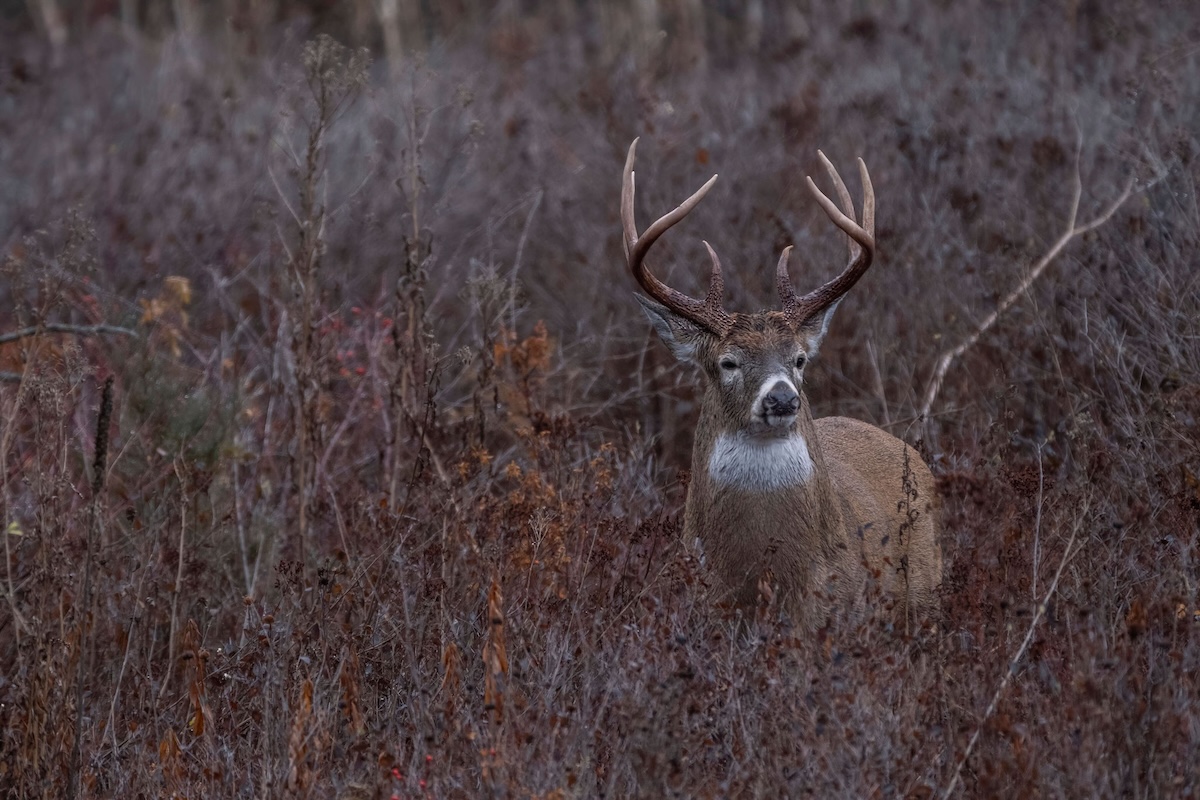
Much of the West is crossover country holding both populations of mule deer and whitetails in close proximity to each other.
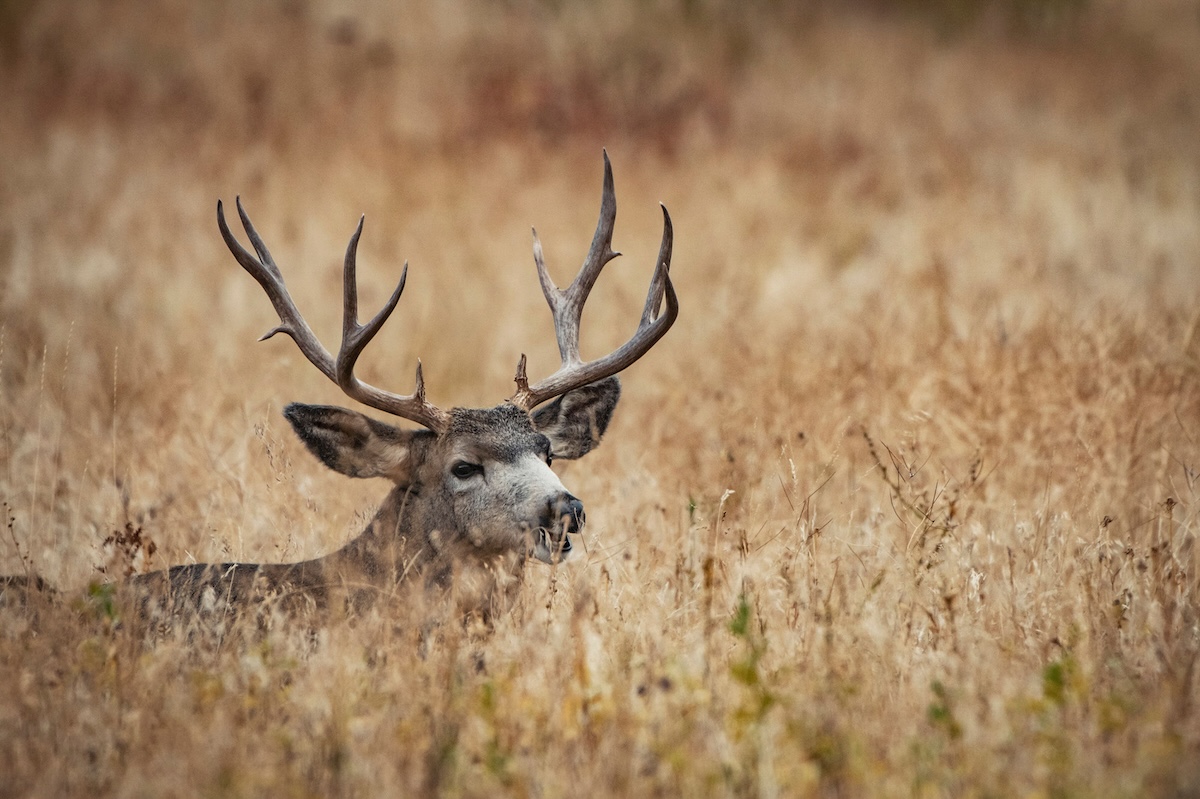
For generations of hunters, visiting the West meant the opportunity to hunt mule deer, a close cousin to everyone’s favorite big game species, the whitetail deer. The opportunity still exists, but the world is ever changing, including the world of the mule deer.
Mule Deer in Decline
For generations of hunters, visiting the West meant the opportunity to hunt mule deer, a close cousin to everyone’s favorite big game species — the whitetail deer. The opportunity still exists, but the world is ever changing, including the world of the mule deer. In short, the future is not bright.
States like Wyoming have seen populations crash upwards of 50%, and in recent public statements, do not see the numbers recovering … ever. The creation of several organizations to research the mule deer dilemma includes the Western Association of Fish and Wildlife Agencies Mule Deer Working Group. It combines the efforts, research and funding of Western government agencies, and conservation organizations, to study mule deer struggles.
The Mule Deer Foundation was formed in 1988 to address this same concern and to date has funneled millions to the cause. One contention many ask these organizations is whether the increase in western whitetails has anything to do with the plummeting mule deer numbers. So far, no conclusive evidence exists to back this argument.
The same goes for increasing numbers of elk and whether that affects mule deer populations. Again, no conclusive evidence stands out. Mule deer and whitetails meet in crossover zones, such as browsing areas, but live in different habitats (for the most part). The same is true of elk that are grazers and rarely compete with mule deer for food, as muleys are browsers.
What you need to take away from this is that, when hunting the West, your efforts for mule deer could be challenged. Fortunately, in many areas, mule deer and whitetails exist in close proximity. Your license might be good for either or you might simply wish to focus on a big-country whitetail buck.
The Best Days of Deer Season

Whitetail and mule deer crossover country is big in the West. Spot and stalk, plus stand hunting, could help you with success and HuntStand offers features to find the right locations.
White-Tailed Deer and Mule Deer Overlap
Whitetails have proven their adaptability by thriving throughout much of the lower 48 states and across lower Canada while expanding westward. Mule deer, on the other hand, require the niche habitat of the West. As pioneers expanded westward and created greenway paths of agriculture, whitetails expanded even farther into mule deer native lands. With that knowledge, plan your strategy accordingly to take advantage of both species (depending on your hunting license parameters).
Coues whitetails of the Southwest aside, whitetails now reside in almost every Western state. Research the options and then look for real estate. As more and more acres of Western real estate are farmed, and developed, green areas allow for additional whitetail distribution along ribbons of agriculture. By taking inhospitable habitat and adding irrigation, urban development, and grain crops, whitetails have been hopscotching north and west like never before. Start looking for whitetails in green belts.
As you review your hunting unit or area, note all riparian areas, valleys and canyons, especially those with water coursing through them. The riparian cover attracts both species and sizable acres of developed agriculture, including irrigated hayfields, allow whitetail expansion. HuntStand offers a Whitetail Habitat Overlay to assist in zeroing in on habitat homelands for whitetails.
Significant river bottoms are famous for western whitetail densities including Colorado’s South Platte River, Montana’s Yellowstone River, South Dakota’s Cheyenne River, Wyoming’s Belle Fourche River, and Idaho’s Salmon River. All have overlapping populations of whitetails and muleys, and dozens more rivers cater to crossover hunters. You might see both species living on these bottoms, but oftentimes the mule deer and some savvy whitetails, exit to the adjoining rough country above for sanctuary. Now put your property info Property Info, Hunting Lands and Public Lands overlays into play. These features distinguish access and boundaries to hunt near lowlands even if you cannot hunt the private ground.
Even with limited access, adjoining public parcels and nearby national forests house the expanding whitetail populations along with mule deer. Don’t be shocked to see whitetails and mule deer standing side by side while hunting South Dakota’s Black Hills National Forest, Montana’s Flathead National Forest, Idaho’s Payette National Forest and Wyoming’s Bighorn National Forest. Even if you don’t find both species living in harmony, you might only have to move camp a short distance to take advantage of a crossover situation.
And if you feel you need to focus on mule deer due to your western waypoint, consider that Western whitetails can carry their antler weight. One of the most famous crossbow bucks every taken was shot in Western Wyoming with a score of 262 1/8 points! Two of the top 25 all-time, highest scoring typicals in Boone and Crockett came from Montana’s Missoula and Flathead counties. And in 2018 Keven Perreault entered a 196-point buck from Montana’s Treasure County in the southeast. Do your research and you might not even consider mule deer hunting with numbers posting like these.
Find Better Deer Stand Sites with HuntStand
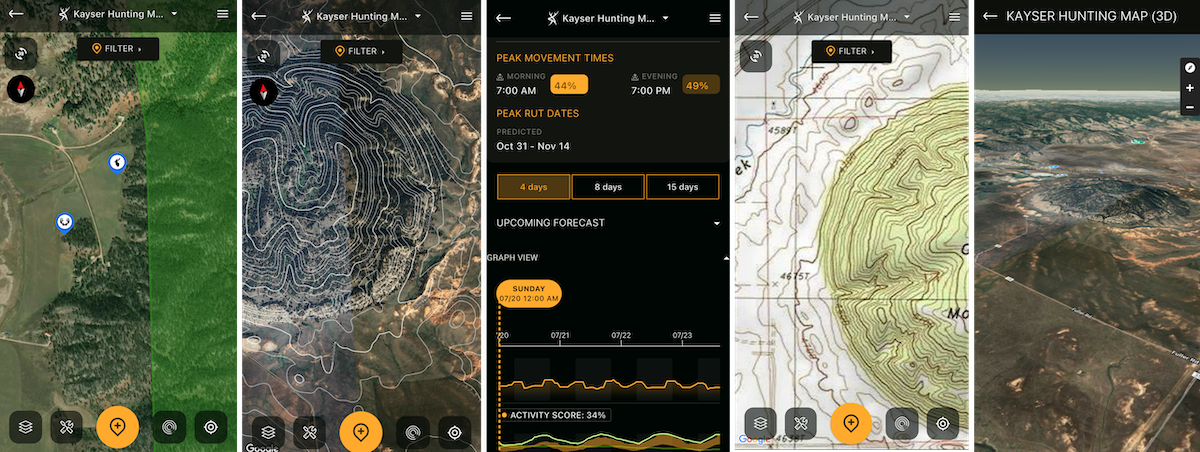
Look for benches on the HuntStand Hybrid base layer with the Contour overlay toggled on. The HuntStand Hybrid base layer with the contour overlay helps find a mule deer-whitetail crossover elevation area.
Scouting Western Deer with HuntStand
HuntStand offers you the tools to succeed. Upgrade your subscription to HuntStand Pro or Ultimate to unlock the most in e-scouting and boots-on-the-ground help. HuntStand has expanded its features to include the new Mule Deer Rut Map and Mule Deer Activity Forecast in addition to Whitetail Rut Map and Whitetail Activity Forecast.
Use these HuntStand features to knowledgeably plan your hunt, particularly for rut consideration and to pinpoint the best hours of the day to be in the field. All these tools work in concert when you understand that whitetails and mule deer are very closely related.
To locate high points, use the Quad Topo or Natural Atlas base layers. You can also put the Contour overlay into use on your preferred base layer. Confirm whether the location resides on public or private ground with Overlays including Property Info, Hunting Lands, and Public lands.
One overlooked aspect of many hunting apps is updated information. HuntStand resolves that with its Monthly Satellite base layer that gives you a recent look, a month old, at an area. It is offered in lower resolution but provides you with a review of property to assess agricultural changes, human development, and even wildfire activity.
How to Find Deer with Topo Maps
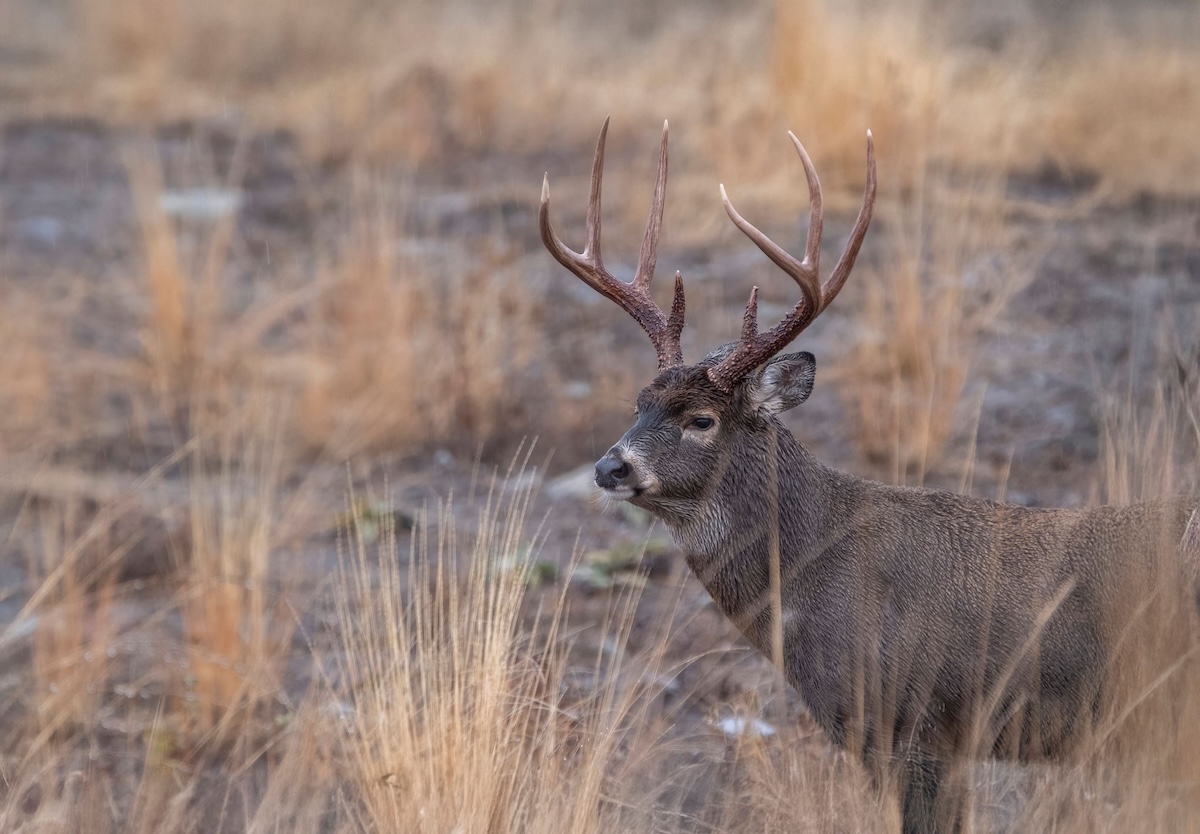
In many locations of the West, you are just as apt to see a whitetail as a mule deer. The HuntStand Quad Topo base layer helps discover high points as possible ambush sites.
Stand Hunting for Western Deer
Western hunters own the spot-and-stalk market. It’s the go-to for pronghorn, deer, and elk. Nevertheless, you might want to swap strategies for either flavor of deer.
Stand hunting doesn’t have a mule deer following like it does in whitetail country. But stand hunting doesn’t always equal strapping yourself to a treestand or utilizing a ground blind. You can just as easily take a stand on a cliff, in a winter stack of hay bales, slip into a rocky outcropping overlooking a narrow canyon or climb up on a rusted, abandoned machinery on the edge of an irrigated alfalfa field. Each offers equal ambush opportunities for hunters who have scouted and discovered either mule deer or whitetails using an area with consistency.
Start low and use your HuntStand Hybrid base layer to discover stand options that offer viewpoints of feeding or even watering areas in arid zones. Your e-scouting could also reveal canyons, gullies, and ridges that deer (both species) might utilize to move back to rugged country for refuge. Watching these routes, dawn and dusk, could provide you with a shot opportunity.
Is It Time To Deer Hunt Mornings?
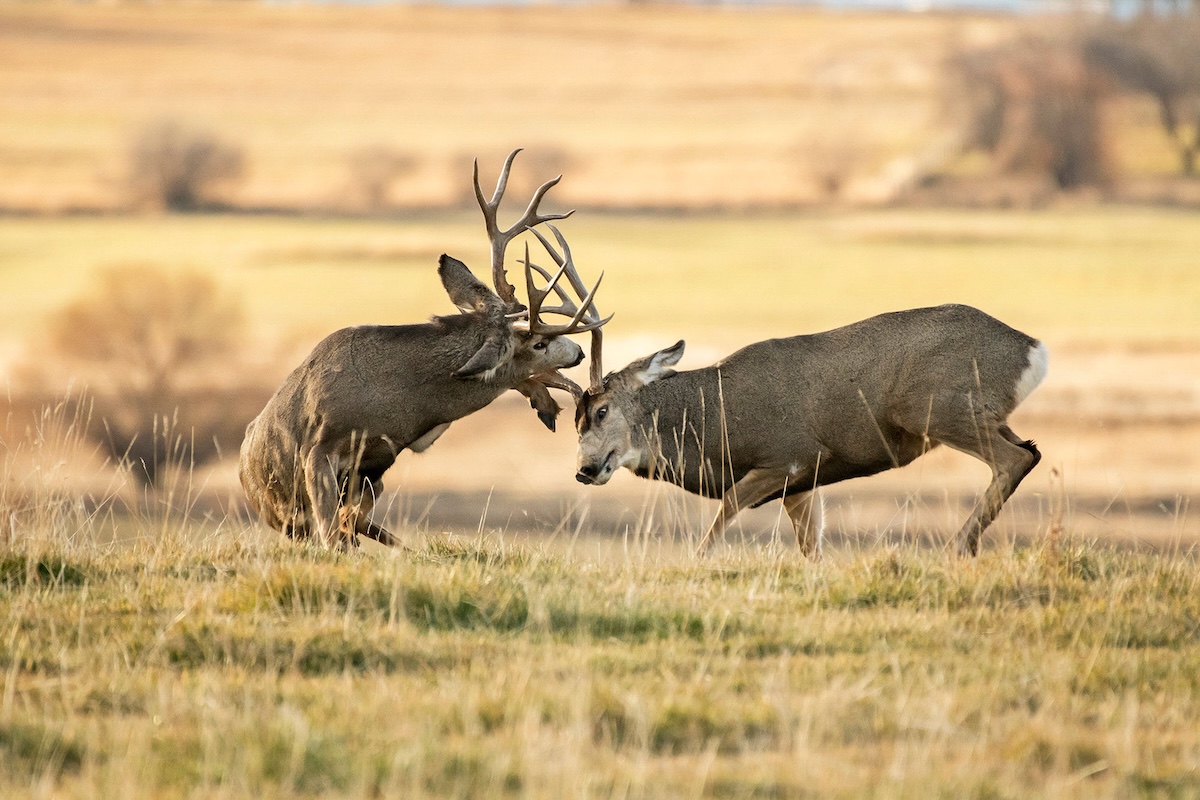
HuntStand Whitetail and Mule Deer Activity forecasts help in a crossover hunt.
Spot-and-Stalk Hunting Western Deer
There is no argument that Western landscapes are bigger than any postcard glimpse of a popular tourist backdrop. So yes, a spot-and-stalk approach does make sense, particularly to pinpoint current deer activity.
Most good spot-and-stalk situations begin with a stand-hunting approach. Scout for high vantage points and slip into these locations before shooting light, or prior to late-day deer activity. Again, find these by using the Quad Topo or Natural Atlas base layers. You can also put the Contour overlay into use on your preferred base layer.
Never skyline yourself and always give yourself an invisible exit to move on deer that are too far away for an ethical shot. Setting up in the middle of a field in an old hay corral might be great if the deer walk right by you, but if you have to move, the open terrain fails in veiling a speedy assault or eventual retreat. Since you might be corralled by public-land hunting only, stay focused on always having terrain options available to move on whitetails or muleys.
Even if you don’t pick a high location to begin your glassing, slow down. Too often I hunt with friends that have nonstop, perpetual motion. Some deer might travel at the pace of a marathoner, but most deer amble through territory. They take their time, so it pays to spend additional minutes at each location scanning for a buck to appear from a gully or to pop out of a distant creek bottom. It’s common to scan a valley and determine no deer are home and then have a buck browse from out of a terrain depression barely visible to the human eye.
How to Hunt Mule Deer (With the Fervor of a Nonresident Hunter)
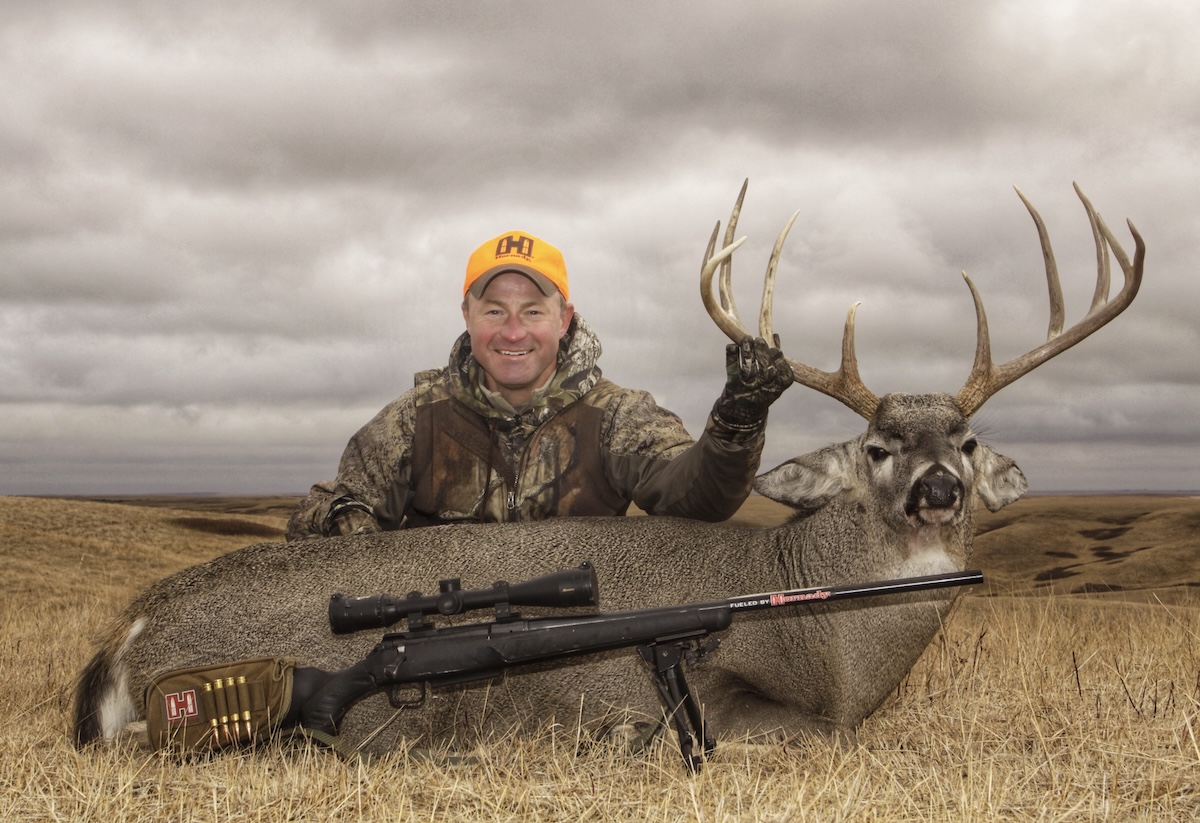
Mark Kayser tagged this South Dakota whitetail while on a hunt for either a mule deer or whitetail.
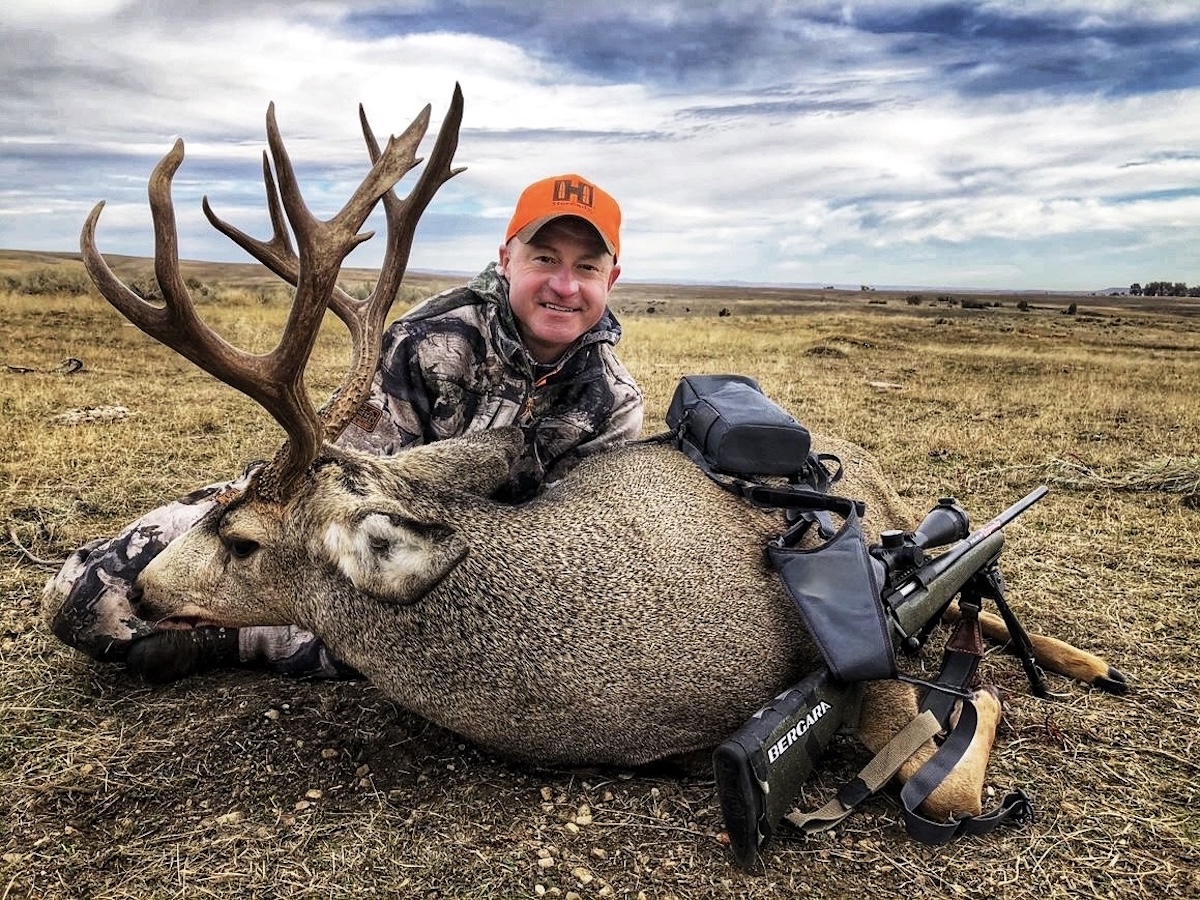
Mark Kayser celebrates the tagging of a mature mule deer in country that overlaps with whitetail habitat. He had also taken several whitetails from this exact location.
Still-Hunting Western Deer
Slow still-hunting through timber is a must and you will find both species using timber. Deer might feed on hayfields or mountain meadows but expect them to retreat to secure sanctuaries such as deep canyons and especially dark timber. Aspen groves, Gambel oak hillsides and pine forests all provide canopy cover for pressured deer.
In these instances, you might want to set up and watch likely edges for either species or use your HuntStand app to find internal benches that deer seek for comfortable bedding areas, especially on north slopes. They also utilize benches for hassle-free travel. Almost all the tools discussed above aid in locating a bench under the branches of timber. Utilize the Quad Topo or Natural Atlas base layer or add the contour overlay to a variety of base layers. Look for steep slopes that suddenly show a widening band of topographical contour lines as indicators of benches.
As a final consideration, use the 3D Map base layer and virtually fly over the entire hunting area. It offers a perspective and feel of what’s ahead on your hunt. Mule deer still capture the attention of Western hunters, but do not overlook the whitetail. You might find out you appreciate the challenge and Western perspective of a crossover hunt for either species.
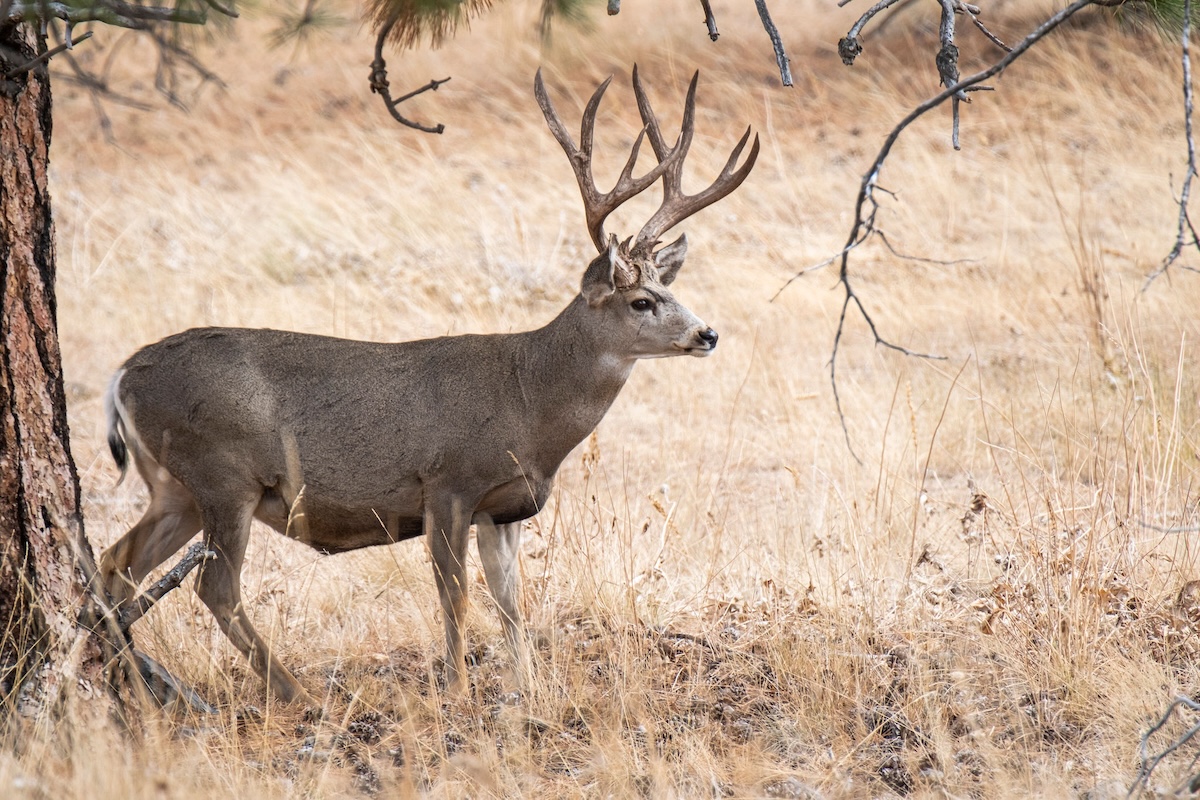
Using the HuntStand Tree Cover overlay to find open areas for possible deer browsing locations. HuntStand’s National Aerial Imagery is great for scouting for sanctuary and feeding areas for deer.
As a resident living in one of the West’s mule deer meccas, Wyoming, I experience a surprising influx every fall. No, it’s not migrating waterfowl. Instead, it’s the influx of nonresident deer hunters. Many arrive with a haphazard approach to their hunt, but when you dig deeper and discuss hunting with many you meet in the backcountry, you realize that a few are here to hunt with a fervor that even rivals the enthusiasm I see with resident hunters. Acquire that nonresident passion and dedication to make the most of any mule deer hunt, and your odds will skyrocket in an already challenging environment.
Why is the mule deer environment challenging? The population of mule deer continues to decrease, or at the very least, not rebuild. Stagnate or decreasing populations equal tougher hunting and lower success, especially for mature deer. To get past this barrier, the hardcore, ardent approach of a committed nonresident needs to be your goal, whether you are a nonresident or resident hunter.
Here is how to hunt mule deer with the fervor of a nonresident mule deer hunter.
Mule deer hunting is challenging, especially for a nonresident living hours away. Whether you are a resident or nonresident, e-scout and plan like a nonresident with a winning mission.
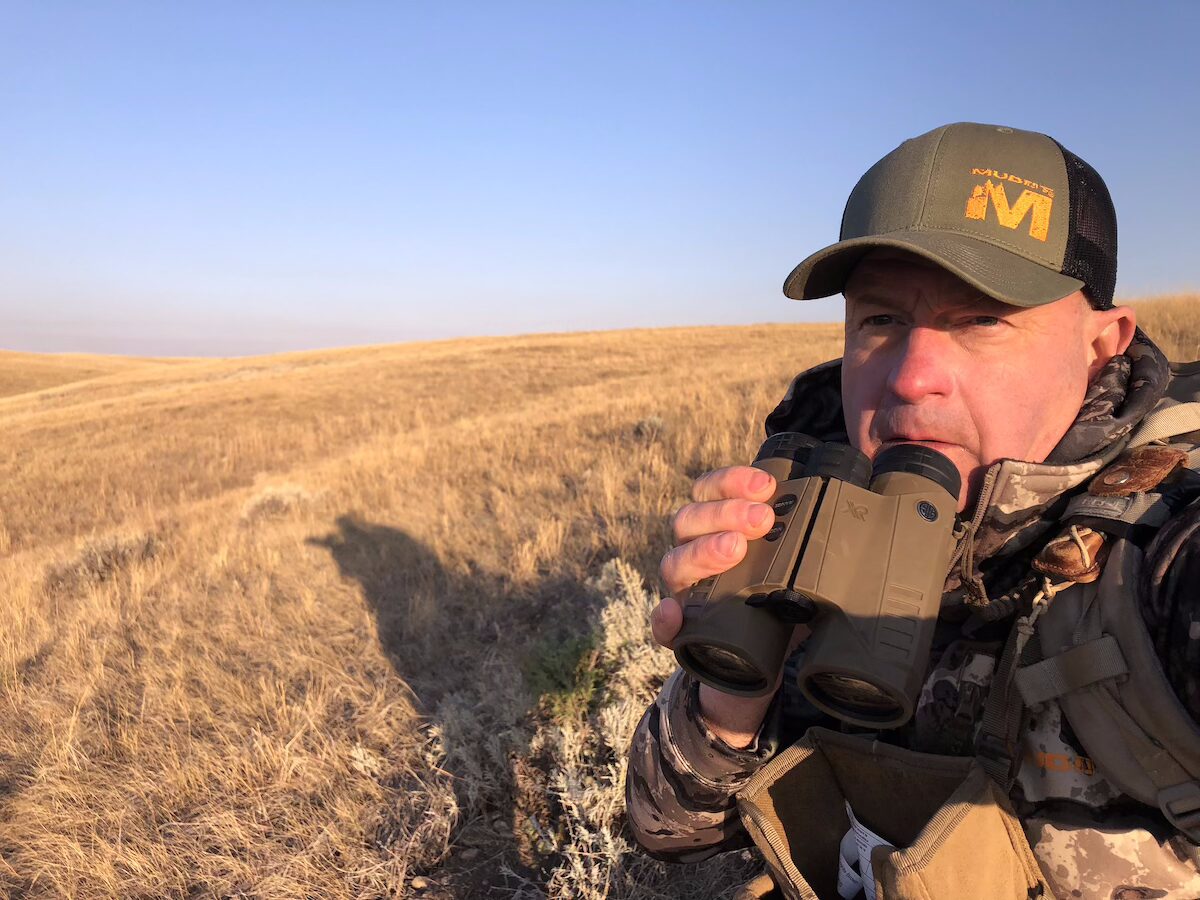
The HuntStand Property Info base layer helps you find areas where deer might cross from public to private.
Let Cash and Time Incentivize You
Why do many nonresidents hunt like their behinds are on fire? First, many often wait years to acquire a nonresident tag. The annoying game of preference or bonus points leads to point creep, and that leads to years of waiting for a quality mule deer tag, along with nearly every other big game tag west of the Mississippi.
Next, nonresidents accrue economic investment more than most resident hunters. Tags alone typically rise above $500. Then, there’s the cost to get there, not to mention new gear required to hunt a different environment. Resident hunters also dig into their wallets deeper to get the best gear, but licenses typically cost less than $50. And, of course, getting there does not cost as much when hunting your backyard.
Finally, everyone has a time investment in the hunt, but the nonresident has to add at least a day on each end just for travel and possibly another day or two for scouting upon arrival. Time is money, so residents might not have the extended travel investment, but everyone still needs to take off time for scouting and then the eventual hunt.
Add it all together and nonresidents, on average, bleed more money and time than the resident hunter leading to the final big consideration. They want it. With the long wait, economic ventures and time lost, it adds up to a resolute hunter going all in. So, if you plan on finding success as a garden variety nonresident or resident hunter, consider going all in like a zealot from out of state.
How to Pick the Best Days for Your Elk Hunting Vacation
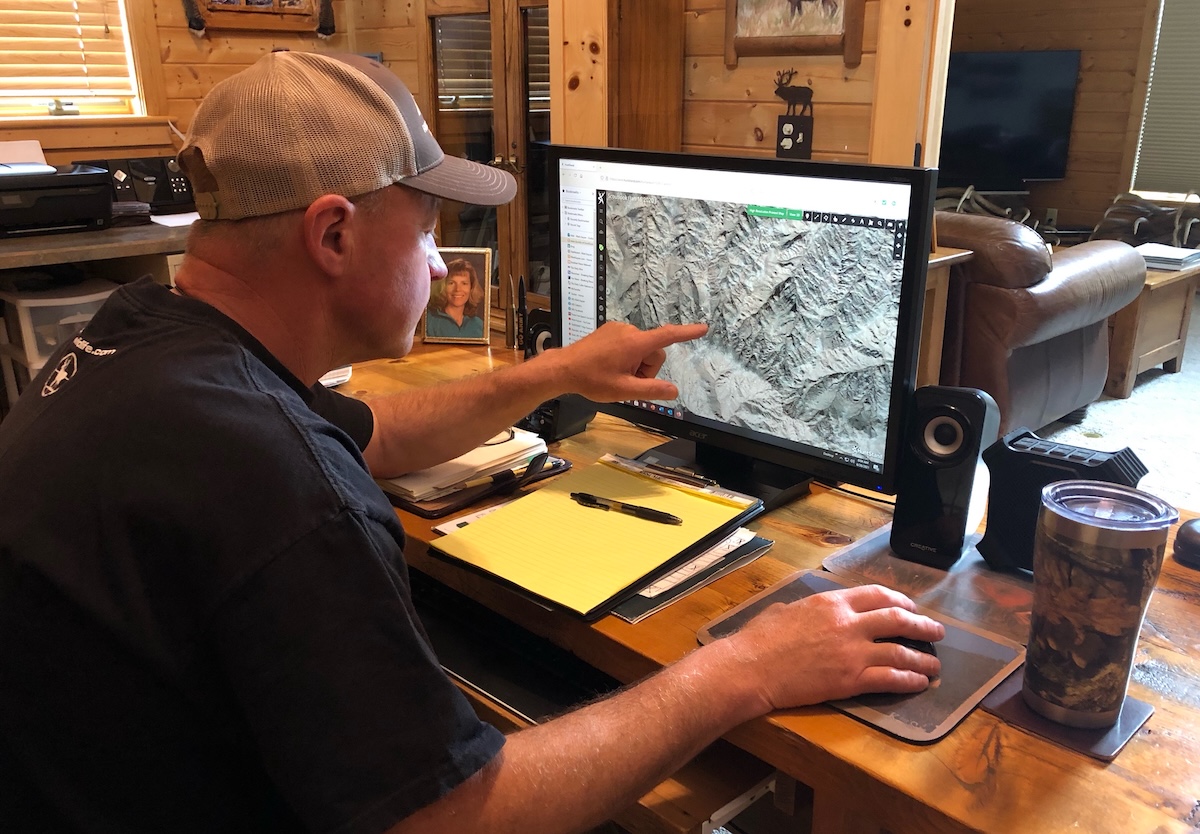
Mule deer hunting is challenging, especially for a nonresident living hours away. Whether you are a resident or nonresident, e-scout and plan like a nonresident with a winning mission.
Scouting Mule Deer the Right Way
One thing all successful nonresident fanatics have in common is e-scouting months, if not years before the hunt. HuntStand offers a solid platform to get the job done while at home or even a quick break while at work. Keep the work scouting sessions on the covert level though. The free version of HuntStand offers you the tools to succeed, but to get even more, peruse the subscriptions and consider upgrading to HuntStand Pro or Ultimate. Both unlock the most in e-scouting, as well as assurance once your boots hit the ground in your hunting unit.
HuntStand has even expanded its features to include the new Mule Deer Rut Map and Mule Deer Activity Forecast in addition to Whitetail Activity Forecast and Whitetail Rut Map. Use these HuntStand features to knowledgeably plan your hunt like a nonresident pro who has waited years for a tag. (And maybe you have, even as a resident.)
Your e-scouting should include a two-pronged approach. Consider the fact deer might be in a more mellow pattern and spending time in the open. Then move to Plan B. This plan takes into consideration increased hunting pressure. After the first few days or a week of hunting pressure, expect deer to go into a SERE (survival, evasion, resistance and escape) mode.
Terrain Features Elk Can’t Resist
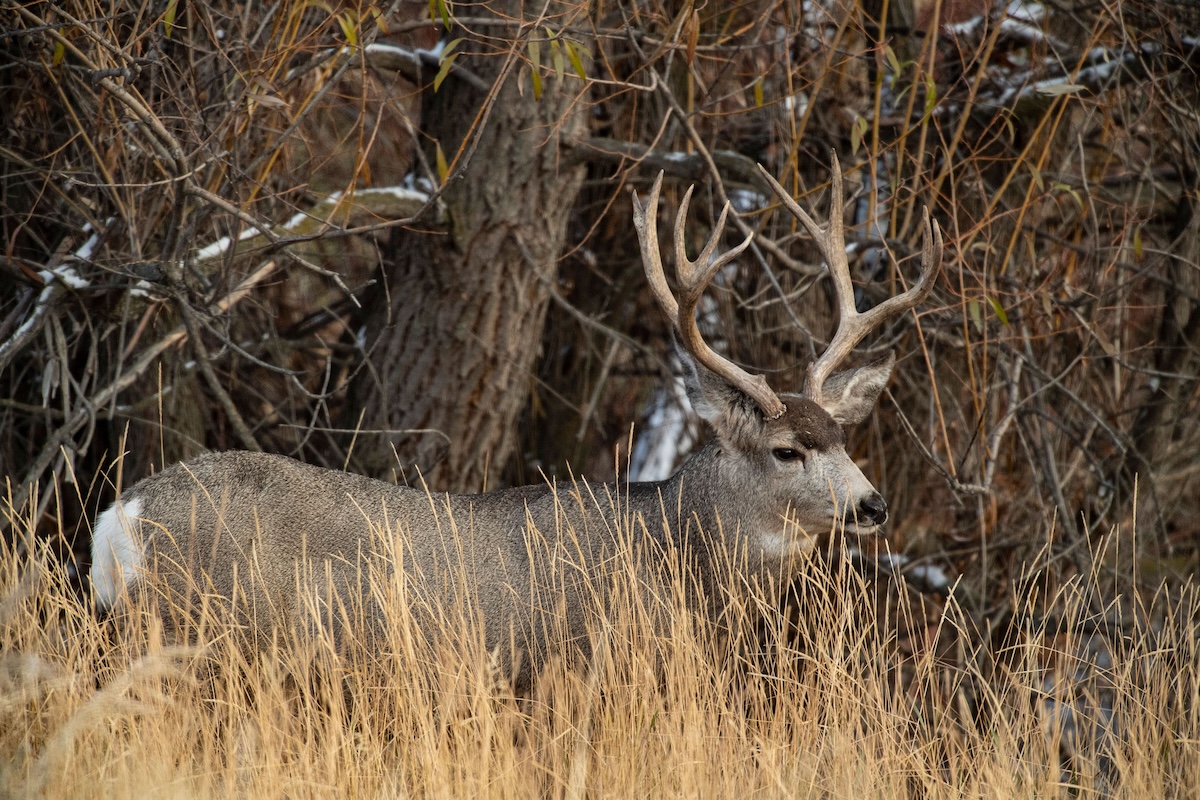
HuntStand’s Quad Topo base layer is great for scouting steep sanctuary cover for deer. HuntStand’s 3D Map gives you an aerial perspective of your deer hunting areas.
The Basic Needs of Mule Deer
Mule deer habitat varies from alpine mountains to southwestern desert landscapes. Some deer find everything they need within a relatively small area, whereas others require migration to help them survive the elements of seasonal changes. Scrutinize the area to ensure it has all three lifecycle elements available — food, water, and sanctuary.
Just because it has one element, such as cover, it might not have the other needed elements. Desert environments might be lacking in water. Old growth forests might be missing vegetation for browsing. Valleys, especially those efficiently farmed on private land, might not have sanctuary. Once you determine your hunting unit, identify these crucial elements to find mule deer in their happy place.
Which element means more? Sanctuary is a vital component that without, could make the other two components meaningless. Without security, nothing else in the mule deer life cycle could occur. They need to escape climatic conditions, predation, and other various threats surrounding them before they can eat, or drink.
How to Plan for Public-Land Elk Hunting
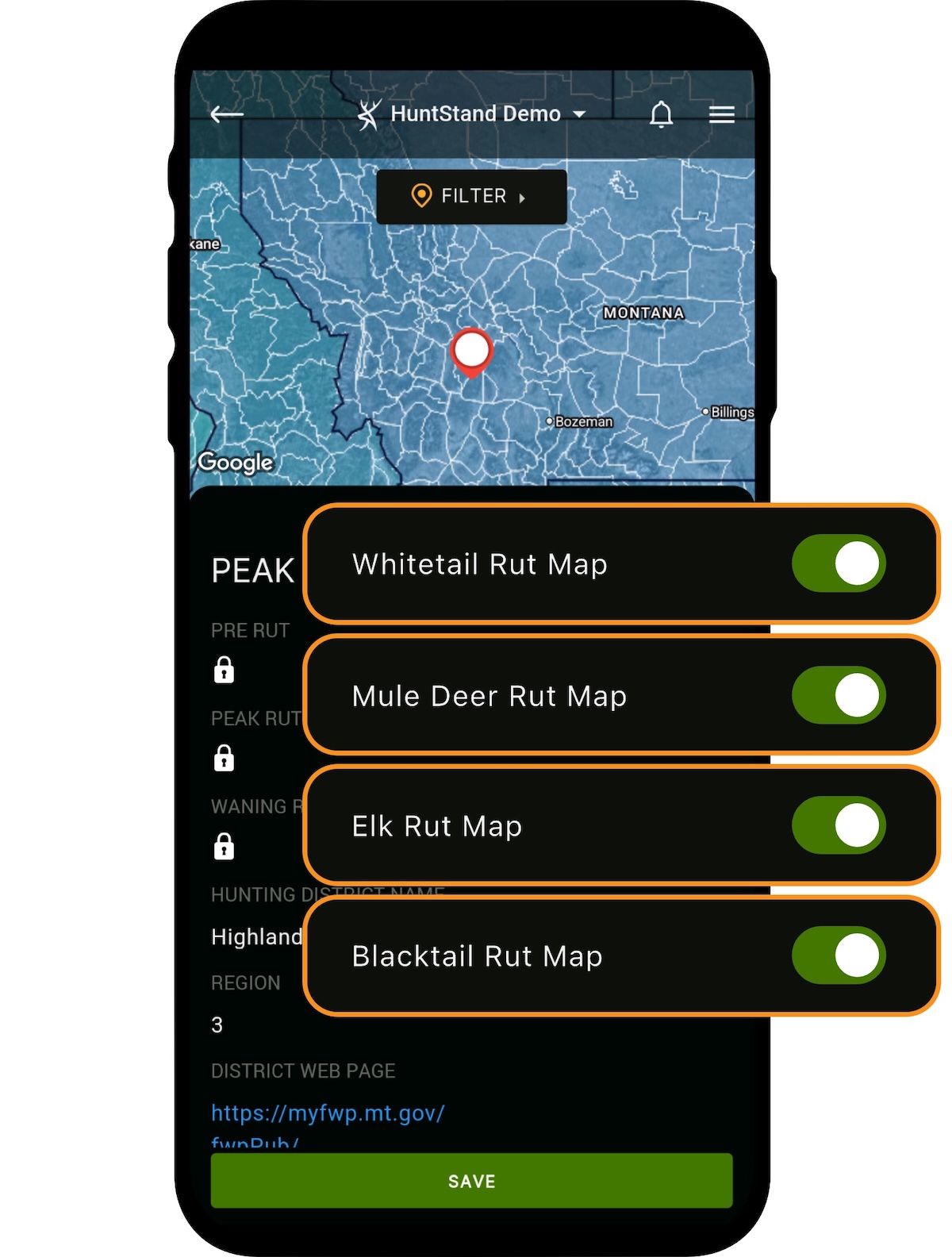
Use the Mule Deer Rut Map to time your hunt perfectly.
Using HuntStand to Find Mule Deer
HuntStand offers many base layers to help you find sanctuary habitat including a review of the landscape with the Hybrid, National Aerial Imagery or even the Satellite base layer. The Tree Cover overlay could also be helpful, especially when looking for areas of canopy to give mule deer thermal cover.
Water shows up not only in the Hybrid bigger view, but also in the Natural Atlas and Outdoor base layer. And since mule deer are categorized as browsers, their diet could be dozens of species with favorites including sagebrush, mountain mahogany, cactus fruit, and Gambel oak acorns, to name a few.
Plants in early successional stages of growth tend to provide the highest quality nutrition. Many times, these sprout after a managed logging operation or from wild fires that have not burned too hot. Find a recent wild fire of moderate burning and you could be near a hot spot attracting mule deer.
HuntStand’s Monthly Satellite base layer, at a lower resolution, provides insight into some of the more recent land changes occurring in your hunting unit. This map is updated monthly for the most recent view of your hunt area. Use the Monthly Satellite throughout your long wait to witness change and of course, check it right before your departure to ensure your hunting plan is executed with precision.
How to Hunt Elk During Gun Season
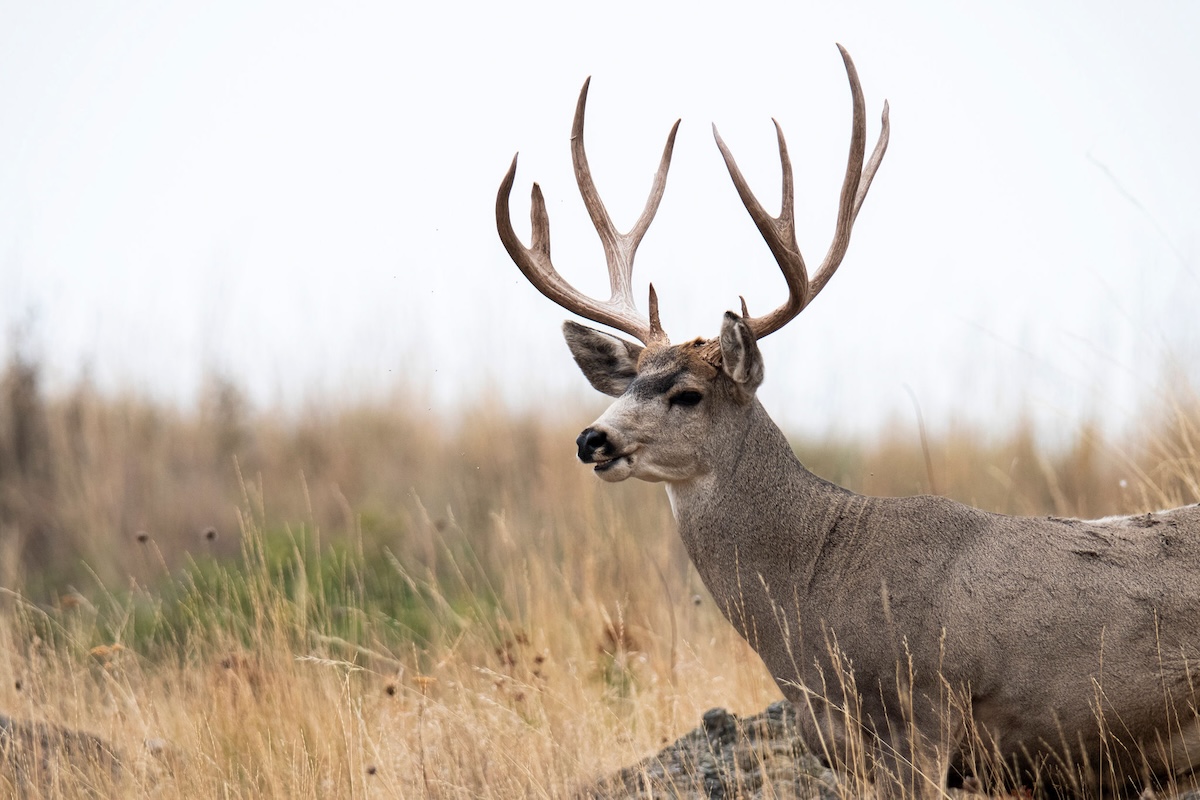
HuntStand’s Natural Atlas aids in finding roadless areas for deer refuge. Also, use it to find possible water sources while scouting.
Have a Plan B, C, D, Etc.
Your nonresident e-scouting craziness could be over with a single, detailed scrutinization of your hunting unit … but don’t bet on it. Craft multiple game plans. Then, if needed, move on to Plan B. Odds are your initial plan will go out the window quickly with hunting pressure, so begin searching for the absolute nastiest country on the map.
If the area holds browse, water, and concealment, expect deer to utilize the real estate, especially mature animals who have experienced years of hunting pressure. One hint of hunters setting up camps puts mature deer into evasive action. High elevation, alpine openness, badlands, deep basins protected by scree slopes, and any region void of a road, fits this definition. America’s oftentimes unhealthy relationship with off-road vehicles has prodded big game farther from the dusty trails, but that can work in your favor if you are not afraid to hike.
How to Hunt Late-Season Elk
My hunting plan is to utilize my truck or ATV to access the edge of a steep, roadless region and HuntStand’s Hybrid and Natural Atlas base layer points these areas out. Look for areas with at least 2 square miles of roadless sanctuary. Of course, the bigger, the better.
I also attempt to put more than a mile and 1,500 feet of elevation below or above me. That separates me from approximately 70% of the public that is overweight and obese. Those are the same people hunting close to the roads and their off-road vehicles.
The Quad Topo, Outdoor, and Natural Atlas base layers all provide elevation insight with topographical information. And when you finally find a roadless area, possibly with steep topography, put the HuntStand 3D Map feature into play. Use it to virtually fly over the country. It’s way cheaper than purchasing a drone or renting a helicopter when you arrive.
In addition to putting miles between you and the closest two-track, be mindful of boundaries, especially with private lands. The grass is always greener on the other side of the fence, and that holds true in some mule deer locations. Public lands that abut a private ranch with limited hunting access provide refuge for pressured deer. Desert habitat that adjoins an irrigated hayfield could serve up a herd of deer moving between rough country and a lush buffet.
HuntStand’s variety of base layers combined with the Property Info, Hunting Lands, and Public Lands overlays allow you to home in on the best boundary hunting around.
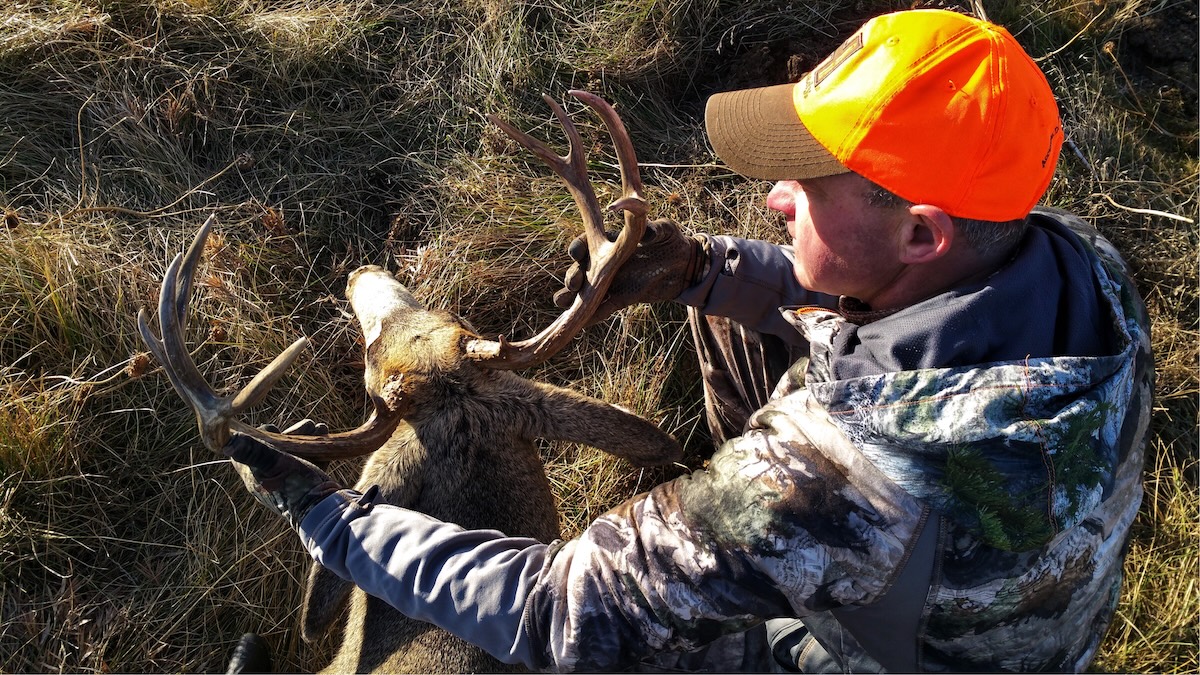
When you land boots on the ground, your hunt should speed along smoothly. You just might tag a buck like the author's deer.
In conclusion, you do not have to be a hunt-hungry nonresident with years of waiting to e-scout like you mean it. Pick a hunting unit. Study your odds of drawing a tag. Begin e-scouting with purpose and skyrocket your odds of success when you finally do land a great mule deer hunt — resident or nonresident hunter.
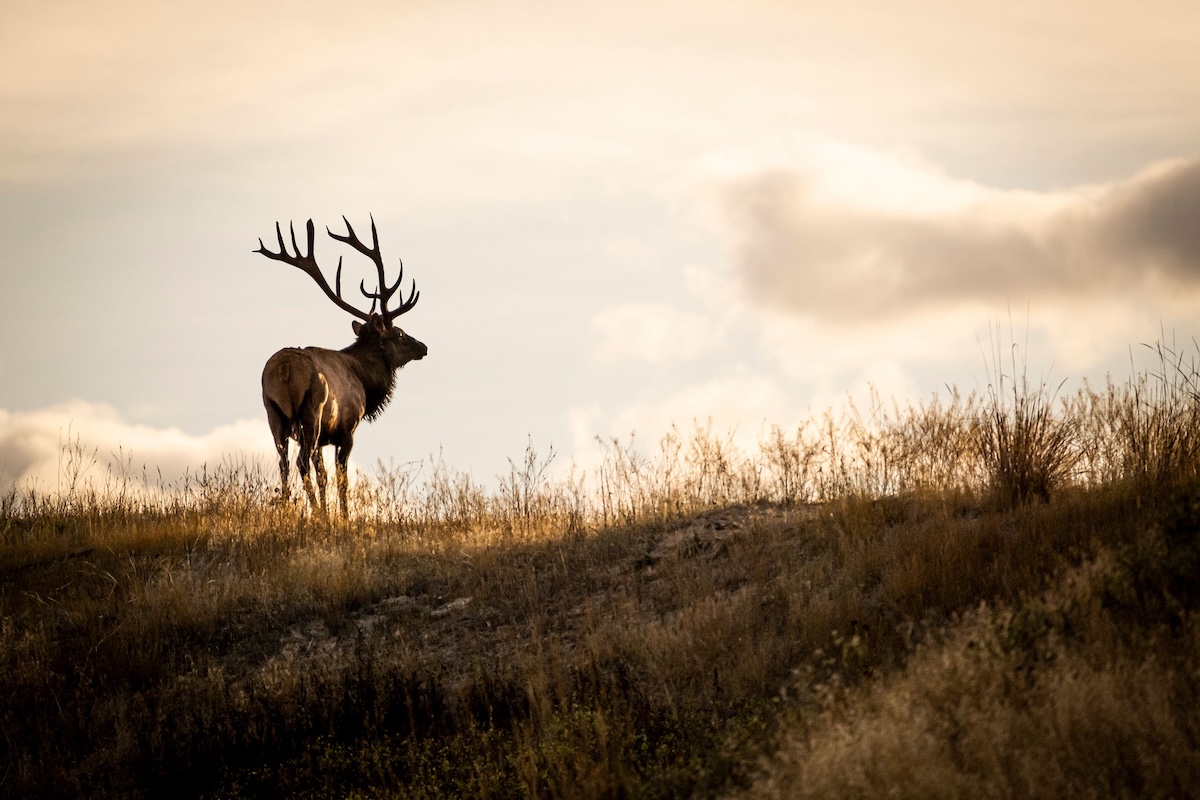
Elk gravitate to certain terrain types. Find these places.
When talking with fellow elk hunters, especially novices, the perplexing character of elk highlights the conversation. Unlike whitetails that adhere to patterns and live in a one-square-mile homeland, elk ramble and roam a vast home territory. On private lands, elk might settle into a whitetail-like living with regular hours, but do not expect that on public lands.
To better prepare yourself during your e-scouting and actual hunt, consider focusing on five terrain features that elk love. Find these terrain features elk can’t resist, build their use into your hunt strategy and expect them to lead you to elk. HuntStand can help, especially if you upgrade to HuntStand Ultimate, with infinite aspects to amplify your scouting.
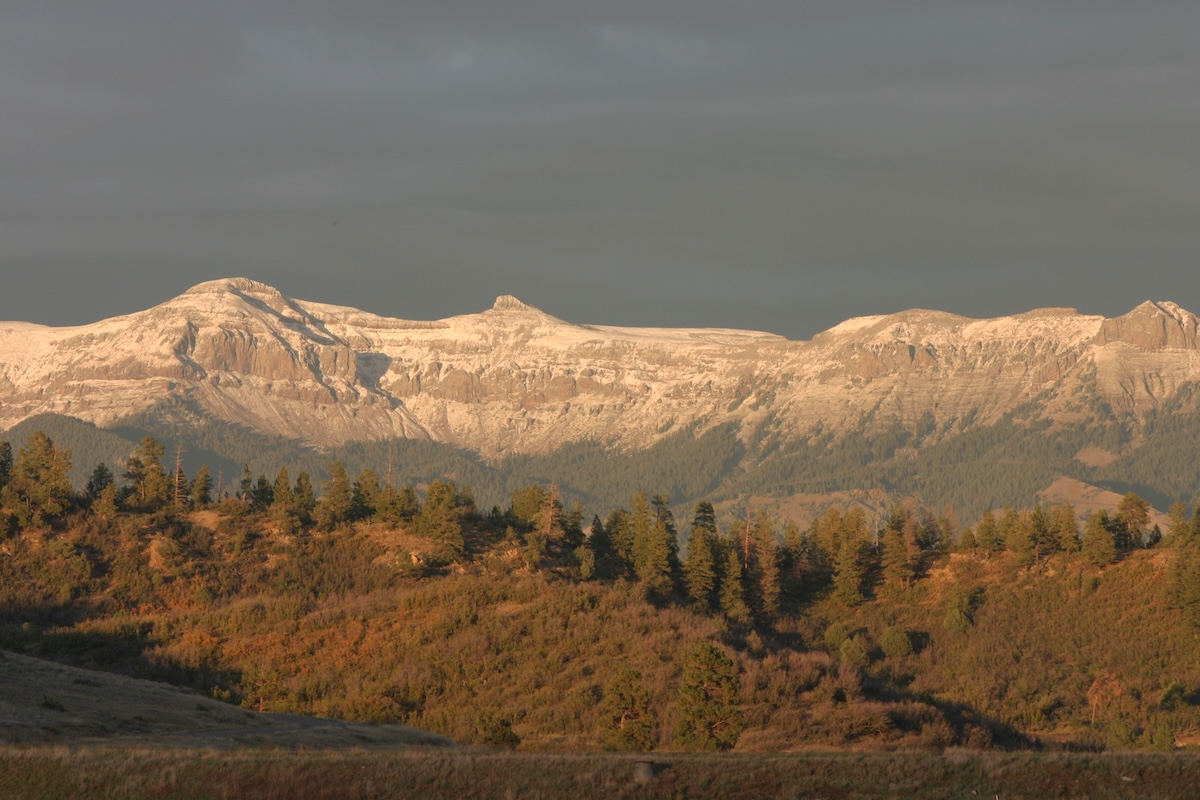
Elk country is big, and HuntStand can aid in finding terrain features that elk prefer.
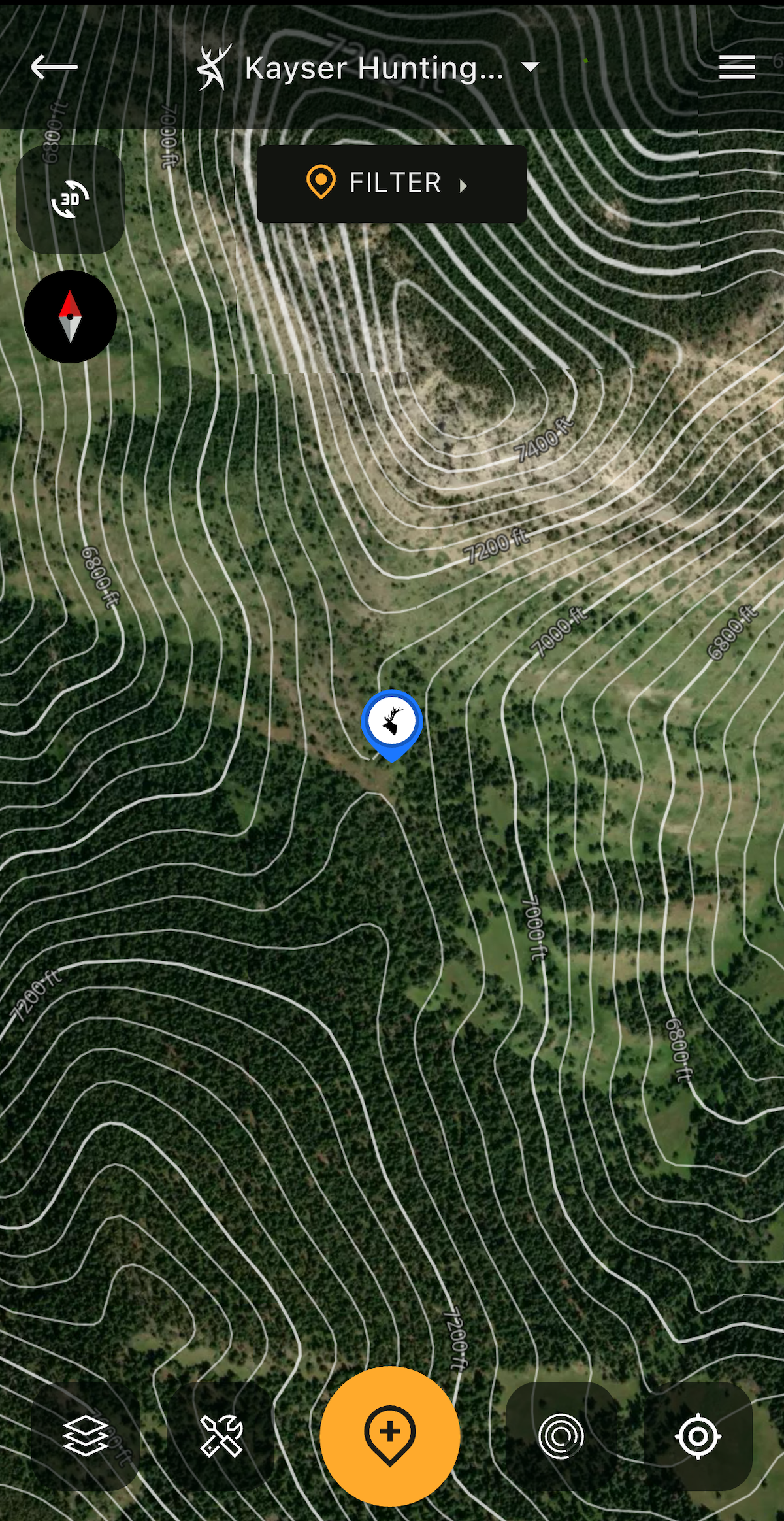
Deploy the HuntStand Contour overlay to discover saddles marked by the bull elk.
1. Mountain Pass Saddles
Cowboys still say, “saddle up.” I say saddle up or down. Saddles are commonly referred to as passes, and mountain gaps. They lay out easy access for elk to move from mountain to mountain. You often find these terrain interruptions on the sides of mountain summits. Instead of going straight over a mountain, generations of elk carve easily followed pathways around summits through these saddles and passes.
To find these routes easily at home, put HuntStand into play and begin with a look at your hunting unit with the Hybrid map layer. Once you settle on an area, use the Quad Topo layer to confirm your hunch. Interval breaks in the topographical lines indicate shifts in elevation and the presence of a possible saddle. These changes often include the saddle leading to a small canyon, creek or gully as they descend up and down the mountain in a V-shaped formation.
It might take a firsthand inspection to determine how elk are using the saddle and when. At home, look below and above. If feeding areas lie below, elk might utilize the saddle to access feed at night or return to mountain bedding cover through the saddle at daybreak. Elk also likely use these passes to escape hunting pressure from nearby areas easily accessed by other hunters. Regardless of the reason of use, consider the terrain feature as an ideal location to ambush elk or even take a break with an opportunity for elk to appear in the natural funnel at any point during shooting light.
Hunt Elk at Higher and Lower Elevations
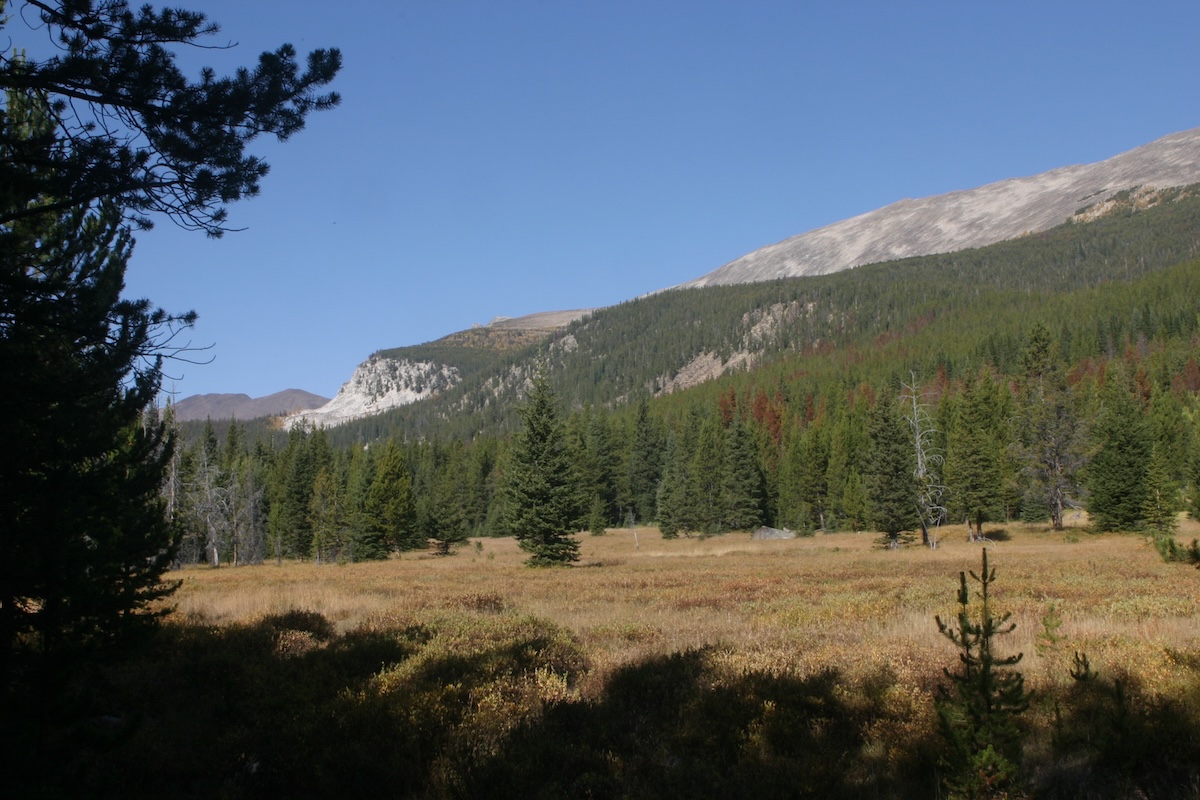
Elk are grazers, and as such, require lots of grass to survive. Find parks and meadows and you might find elk.
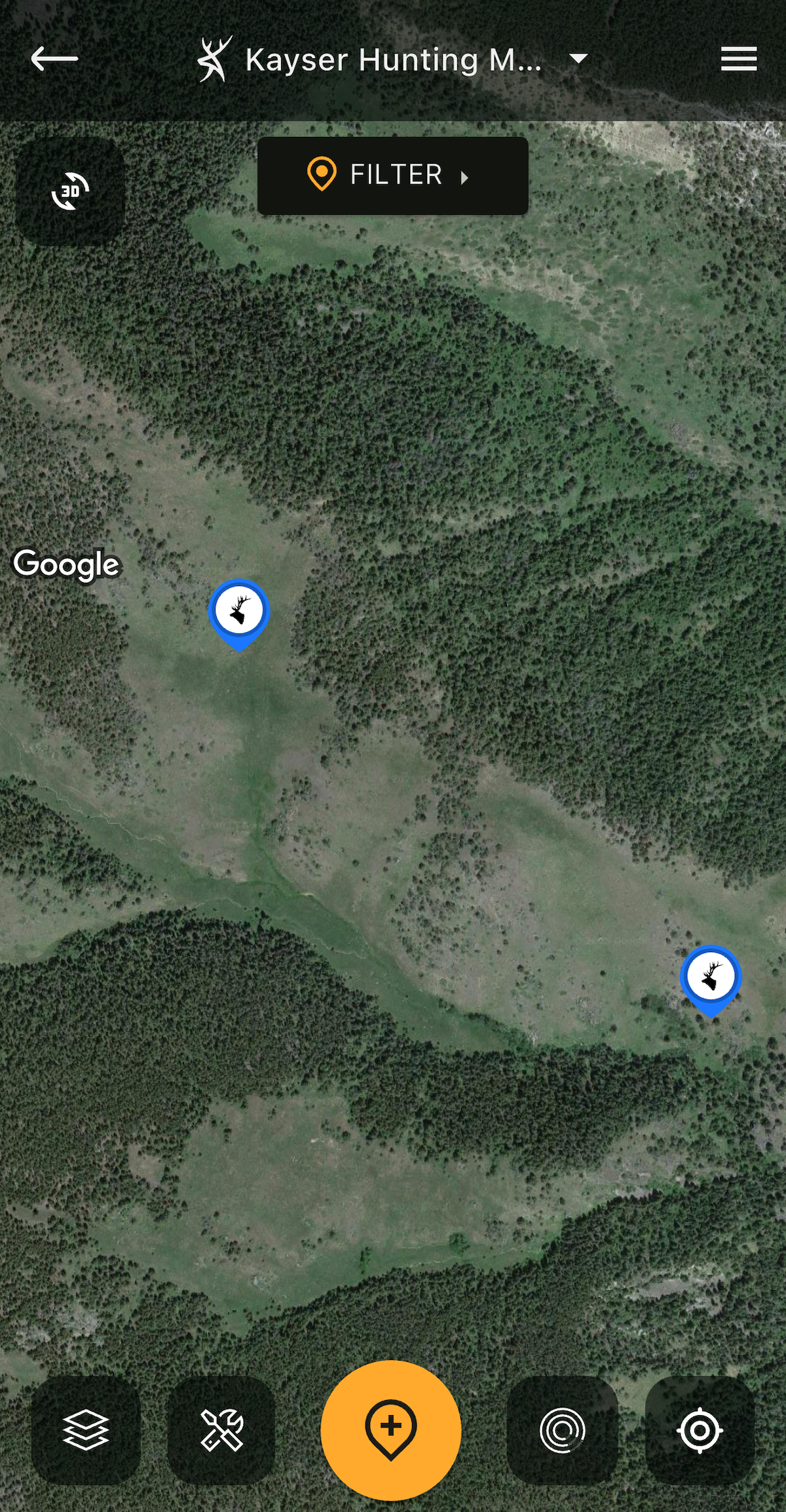
HuntStand's Hybrid base layer is great for discovering parks where elk feed.
2. Mountain Meadows
Saddles and passes often lead to your next e-scouting assignment: food. Elk are grazers and as large ungulates — 700 pounds or more — they require a big batch of grass daily. Depending on the size of the animal, they might require 12 to 20 pounds of vegetation during a 24-hour cycle. Most of that grass is found in openings called parks or mountain meadows. Find a series of these in your hunting area and expect elk to “park” for food at a park.
Elk country varies from region to region, thus the areas where elk feed also varies. Meadows and park openings play an important role for elk living in dense conifer settings. Using your Hybrid layer often lets you spy on these openings easily from above. The National Aerial Imagery base layer also offers viewing options to spot openings from above. If you struggle finding openings, consider the Tree Cover overlay map on various base layers to point out any openings.
And although elk prefer to feed in openings with abundant grass, when pressured or when looking for lush vegetation, they might spend time in areas where aspens or scrub oak flourish. The open nature of the canopy allows more sunlight to reach the ground, thus prompting adequate vegetation growth for optimum elk grazing within a veiled refuge. For confirmation onsite, add a team of trail cameras for your surveillance assurance.
Plan for Public-Land Elk Hunting
Use HuntStand's Natural Atlas base layer to locate water sources for big game.
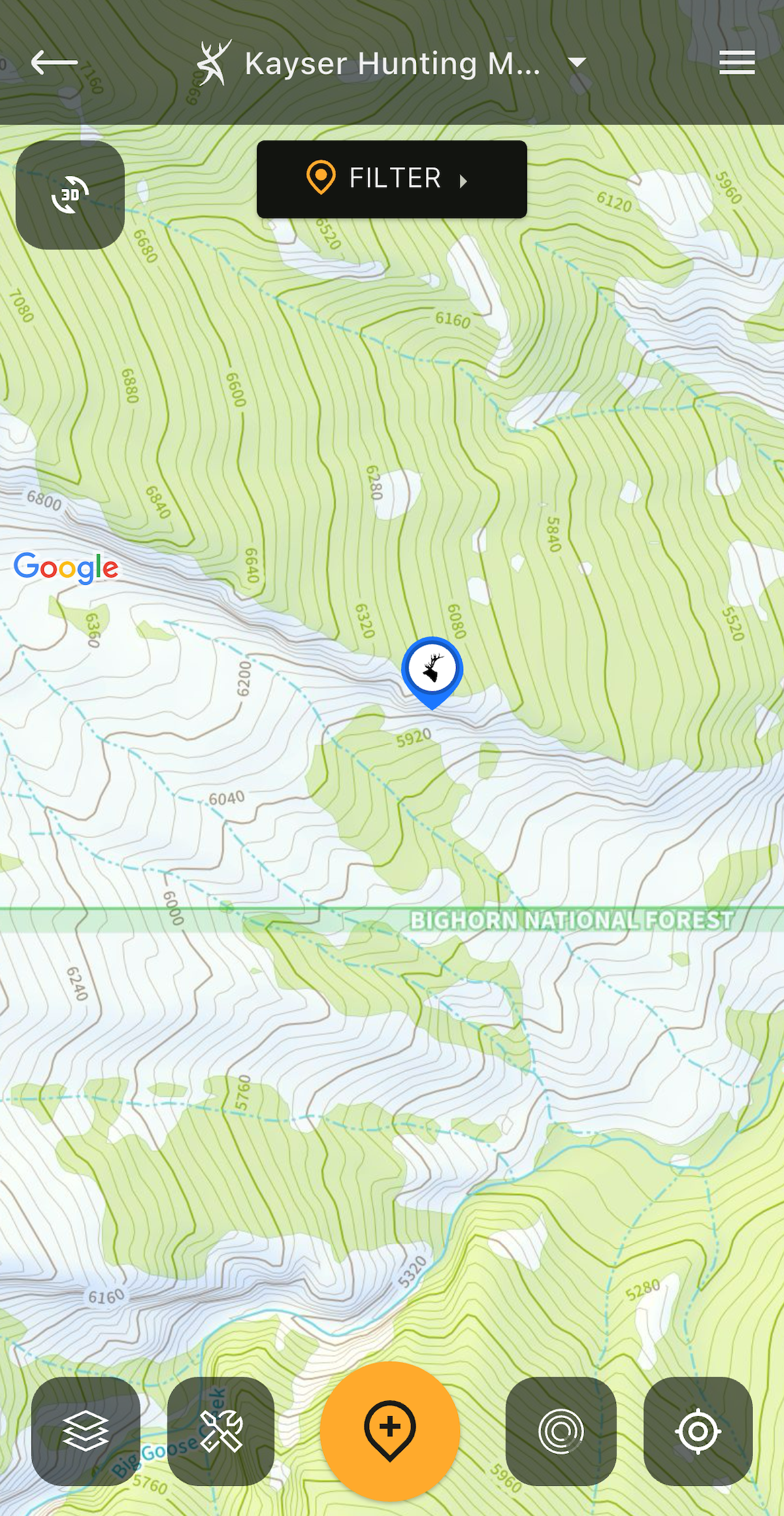
Use the HuntStand Natural Atlas layer to locate valleys and water sources.
3. Valleys and Canyons
Deep valleys and canyons also attract elk. Keep tabs on these terrain features as you e-scout your hunting area. The most attractive gorges include steep features and no roads. These elements dissuade hunters that are out of shape and require an ATV to access elk country.
To make a deep recess even more attractive to elk, in addition to the security it can provide, it might offer food and water. Coursing down many mountains and routing down canyons are creeks. Even the smallest sources of moving water attract elk, particularly during the heat of the early season and the rigors of the rut. Some creeks create marshy areas, but all feed vegetative growth along their banks.
These greenways at the bottom of a gorge become a major attraction when added to security and a water source. And do not neglect to glass steep mountainsides above a likely valley candidate. Finding elk in steep country is often easier than rolling lowlands. In steep country, elk are forced into limited areas and glassing is more effective. Rolling terrain allows elk to scatter and disperse in more locations, making locating more challenging.
Again, do an initial scan of an area with your Hybrid base layer, but move to the Natural Atlas and Quad Topo to confirm if the area provides steep, inaccessible foundations for isolation. The Natural Atlas also illustrates water sources in the bottoms or streaming down a mountainside to the valley below.
After landing on a top contender, put your 3D Map base layer to work and do a virtual flyover. It could scare you into rethinking your choice, but hopefully not.
Hunt Elk During Gun Season
Elk country is immense and HuntStand can aid in finding terrain features that elk prefer.
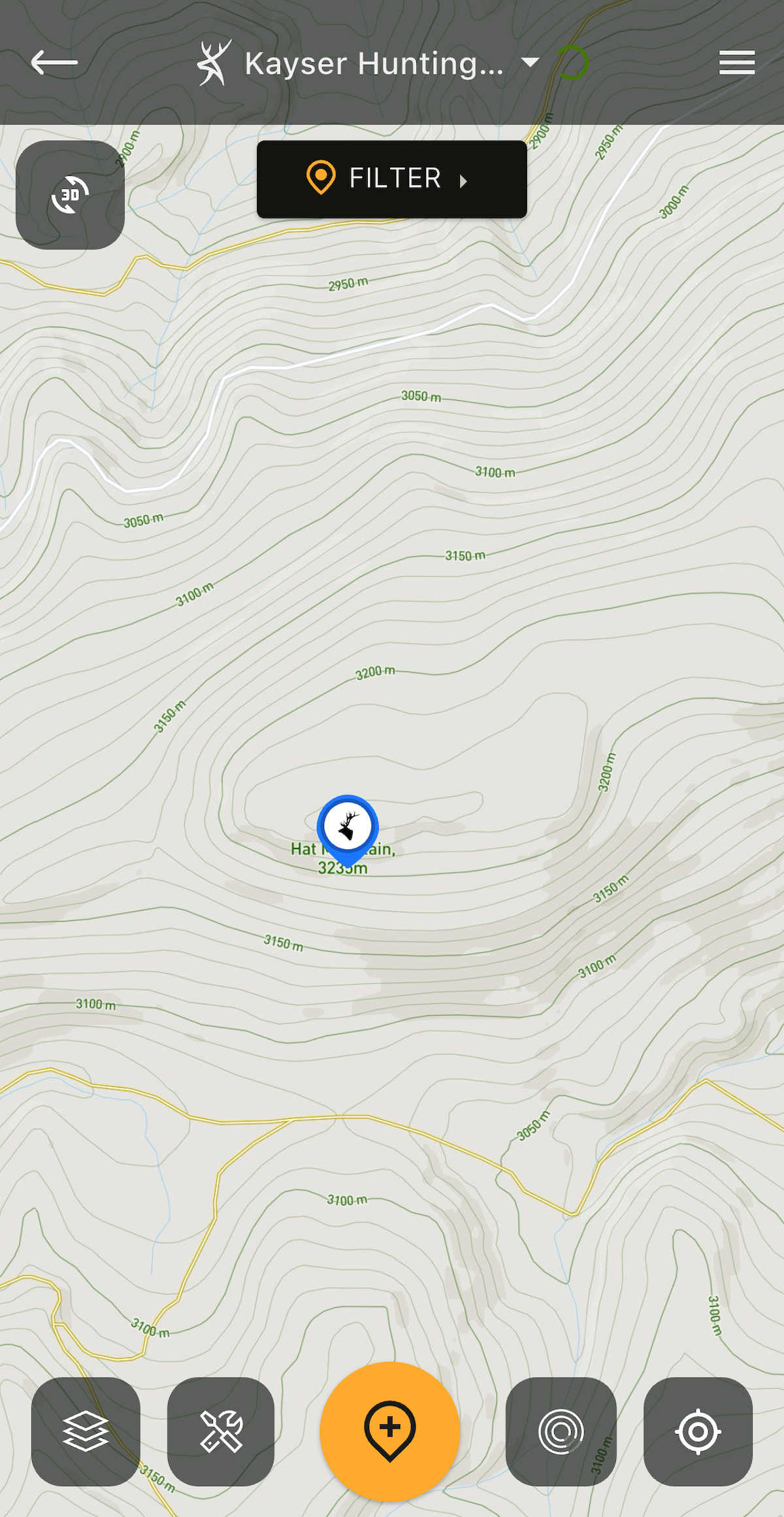
Use the HuntStand Outdoor base layer to locate flat mesas and mountaintops.
4. Mesas and Flat Tops
Unless elk find sanctuary behind a large fence hosting a “no trespassing” sign, expect them to go high for escape. They will cross those steep canyons and gorges looking for a mesa or mountaintop refuge. You should do the same.
Begin at home looking for those same refuges in your e-scouting preparation. Your hunt for deep, roadless valleys puts you ahead in this search. Now look above and beyond for a mesa, or mountaintop elk haven. Flat-topped highlands and mountains with broad tops attract elk looking for safety and air conditioning.
These heavenly sites catch winds often obstructed by other terrain features to cool elk and keep early season insects at bay. Depending on the latitude, conifers can be found on the top in varying degrees of thickness. Most importantly, mesas and some mountaintops typically include openings that provide elk with grazing opportunities between cud chewing. Consider these factors and scout if water is available nearby. A rugged mesa or mountaintop with no developed roads, grazing, and water could be holding elk consistently during hunting season.
HuntStand’s Outdoor base layer includes a quick overview of topographical variations in the terrain to spot these sometimes-hidden elk zones. Add the Contour overlay and your search becomes simple to zero in on elk mesas or mountaintop hideouts, especially with the marked trails (or lack thereof) easily showing. Put a 3D Map flyover into play at the end of your search for a final confirmation of your discovery.
Hunt the Elk Rut: Morning, Midday, and Afternoon
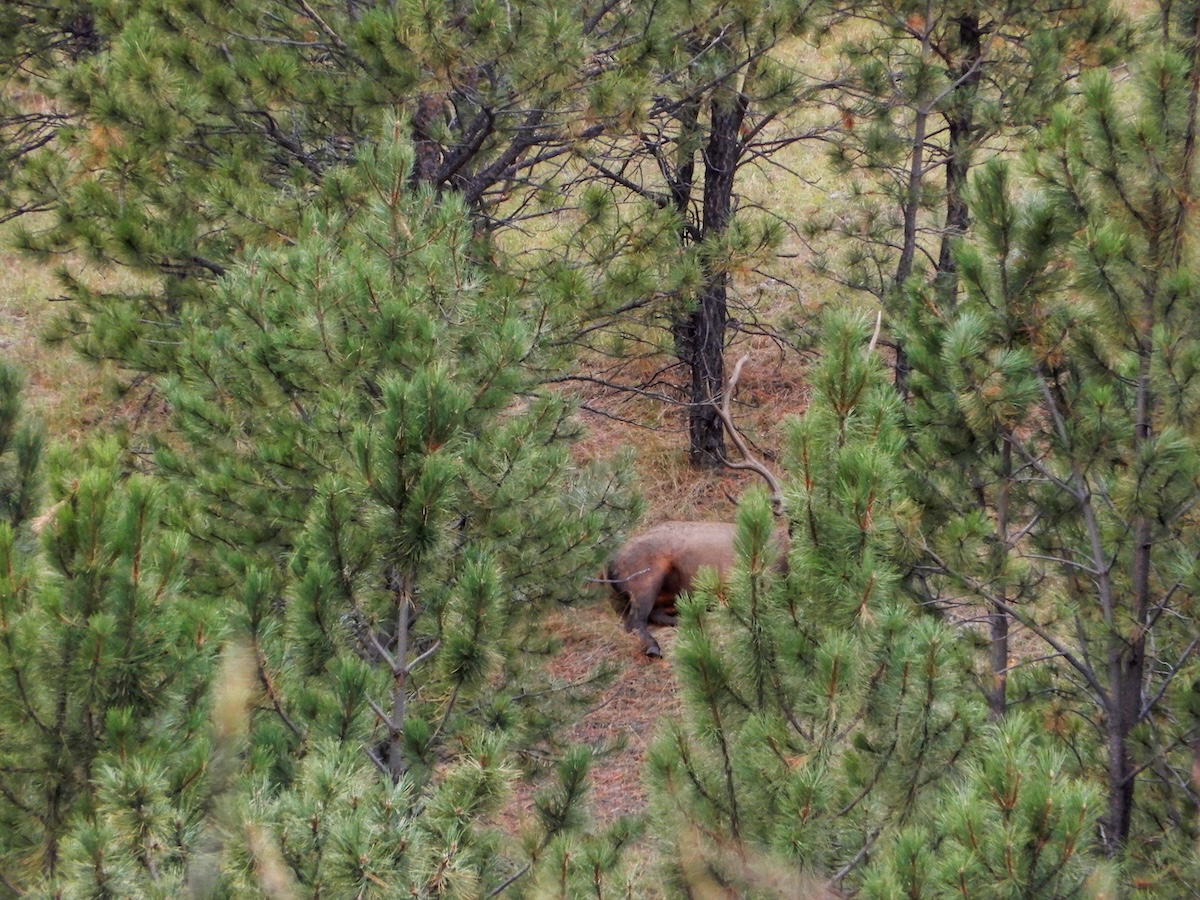
Use the HuntStand 3D Map to virtually fly over a hunting area.
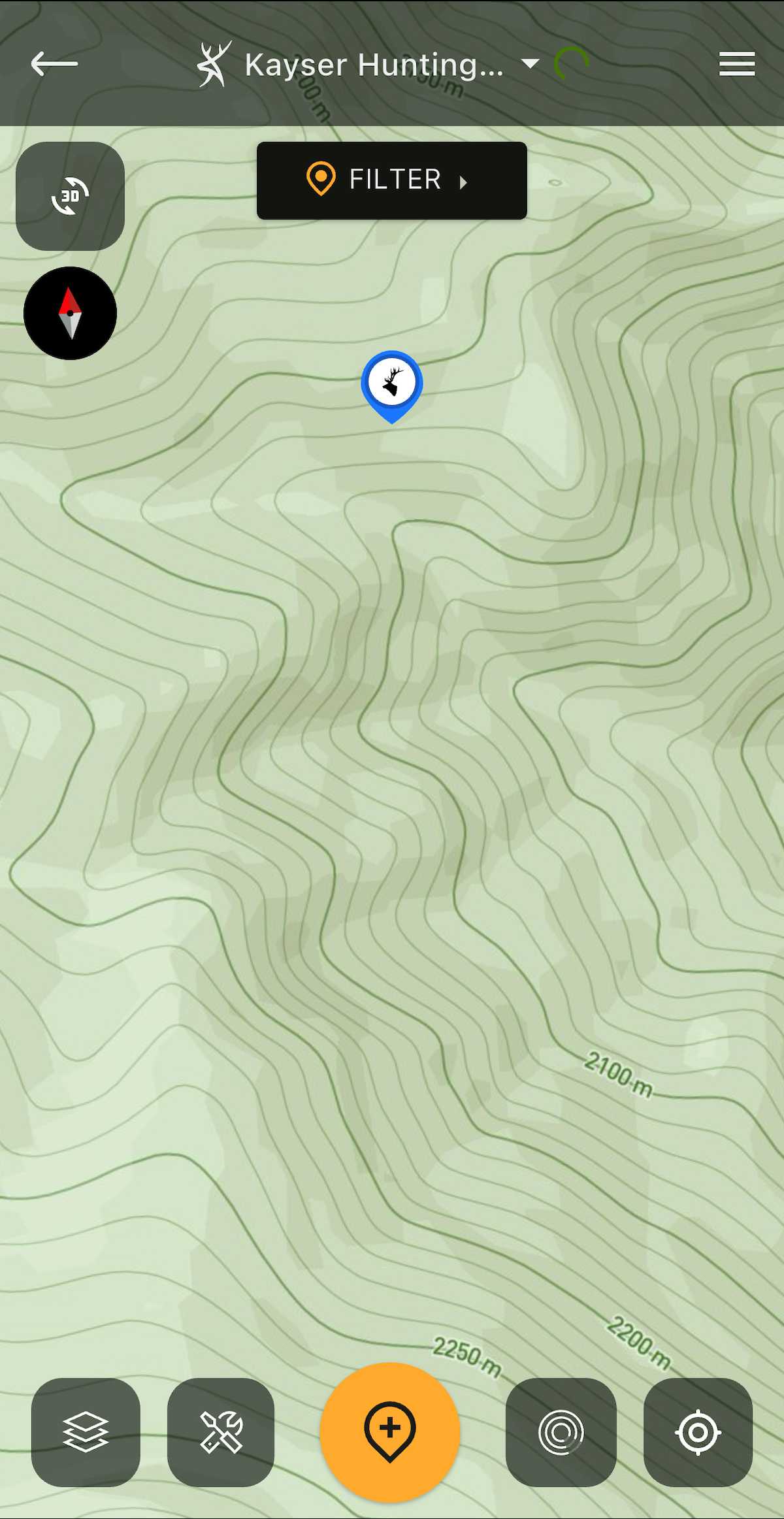
Use HuntStand to pinpoint likely benches where elk hang out during the day.
5. Benches
Sometimes elk hideouts are not as easy to find as a mesa or a favorable mountaintop. Sometimes you need to look underneath the timber canopy to find the “park” benches (get it … benches) that elk prefer during downtime. Heavily pressured elk, or elk living in zones where temperatures routinely exceed 70 degrees, dive into thick cover for escape. Dense stands of timber give elk security to see predators lurking and it also offers a cool bedding site. The preferred place to bed for elk lies on a north-facing slope with a bench for a comfortable rest stop.
Not only do benches offer elk a place to hide out during the day, but it gives you an opportunity to keep the hunt going long after the bugling or movement stops. Use benches as ambush locations to wait for elk to arrive or as still-hunting opportunity locations in the middle of the day. Work the wind and be cognitive of thermals to achieve a total hunting strategy that does not rely on dawn, and dusk. Benches hidden under a screen of old-growth timber are preferred, especially those that are adjacent to quality forage, water, and connect to other travel routes. If elk are in the vicinity, they will seek out these preferred comfort stations.
Almost all the tools discussed above aid in locating a bench under the branches of timber. Utilize the Quad Topo or Natural Atlas baser layer or add the Contour overlay to a variety of base layers. Look for steep slopes that suddenly show a widening band of topographical contour lines as indicators of benches. Stick to the north slopes.
Hunt Late-Season Elk
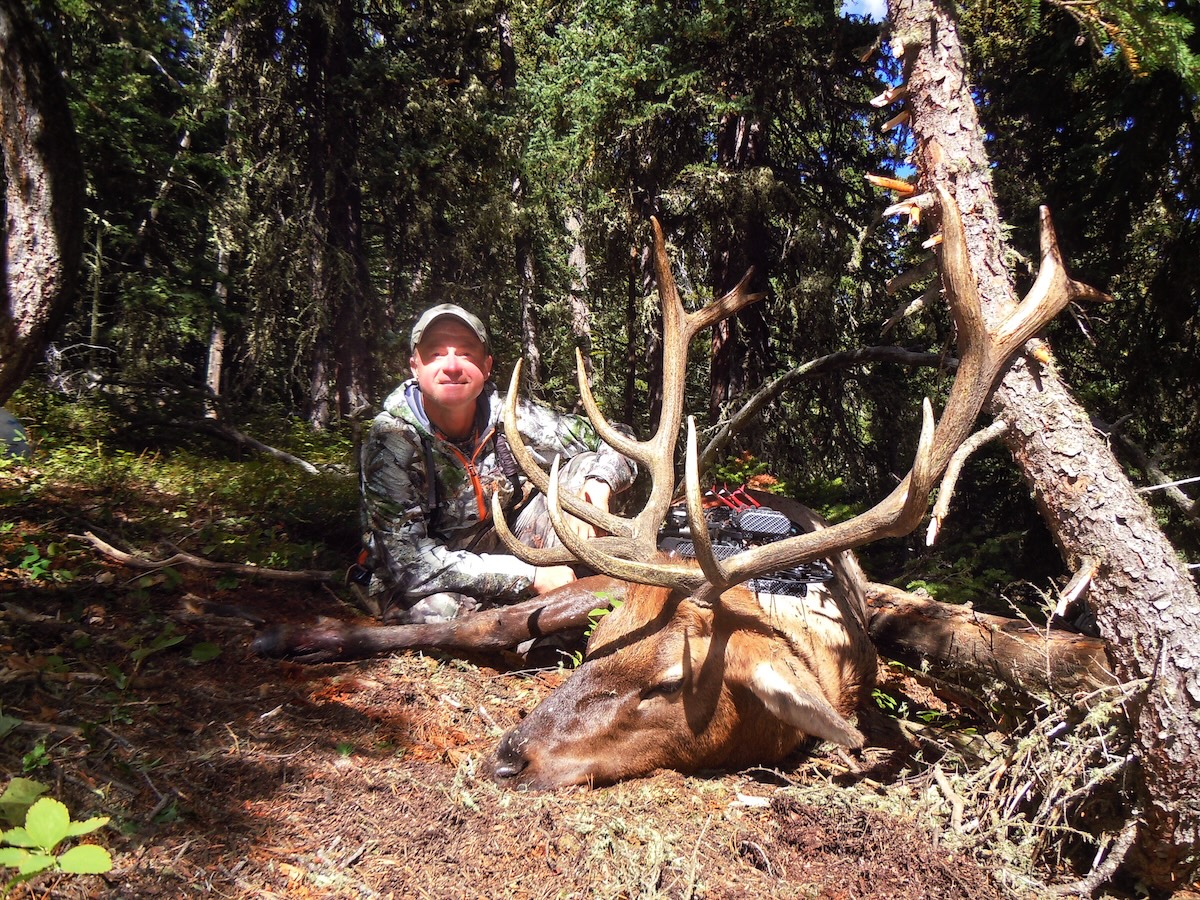
Mark Kayser tagged this DIY, public-land, solo hunt bull while hunting benches in dark timber on a north slope in the middle of the morning. HuntStand helped him find the benches hidden by timber.
Upgrade to HuntStand Ultimate
Elk continue to perplex many, including me, each season. To minimize the complexities, scout for the terrain elk love and mark them on your HuntStand app for visitation during the season. In fact, the all-new HuntStand Ultimate comes loaded with features made for the elk hunter. It offers every available map layer, and all HuntStand premium tools, at the nationwide level. It even includes an advanced elk activity forecast, elk rut map, western game unit maps (districts, game units, hunting zones, etc.), and much more.
The Activity Forecast is built with a proprietary algorithm backed by decades of elk movement research. It delivers hourly predictors for your exact location. Likewise, the rut map is backed by extensive research, and has color-coded phases for easier planning. Plus, with the power of the revamped 3D Map, you can plan hunts with the utmost precision. For all this and much more, upgrade to HuntStand Ultimate.
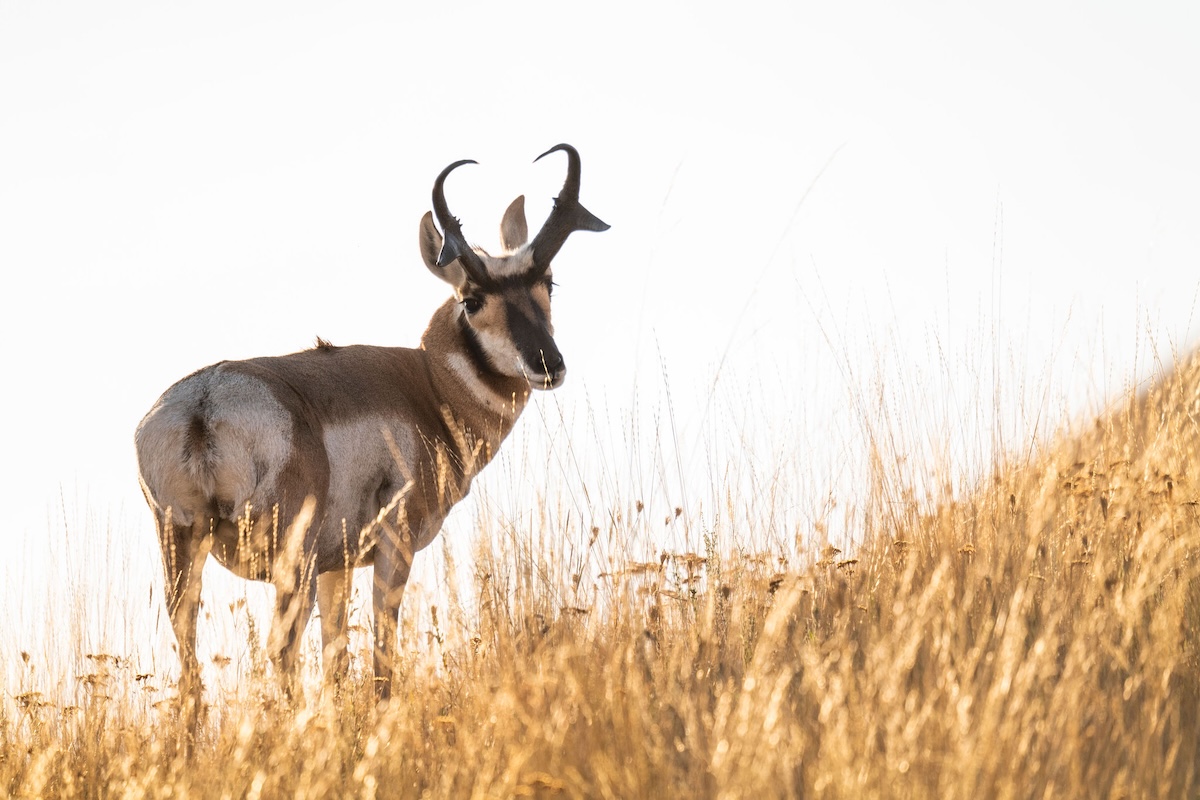
A good rule to follow is to stay low while pronghorn hunting. Their eyesight is equal to your binocular, and they spot danger from far off.
Pronghorn country is big, but knowing how to find pronghorn with e-scouting and advanced mapping shortens the learning curve. The West is massive with millions of acres of both private and public lands to account for in the hunt for a pronghorn paradise.
Luckily, pronghorn exhibit one character flaw that most big game animals do not display. They have no aversion to parading around all day long in complete view of the world. That small glitch in their DNA profile helps when you arrive on site to scout or hunt pronghorn. Unfortunately, it does not help you at home in the months and weeks leading to your hunt. So, how do you find North America’s most unique big game species hours away?
E-scouting is the answer. Pronghorn once numbered an estimated 30 to 40 million across North American savannas, with a handful of relatives. Extinction showed up and pronghorn are the sole survivors with populations that rarely jump above 1 million. Put a quality hunting app to work, like HuntStand, to boost your success once you arrive. Here are the areas you need to scout and the HuntStand features to help you.
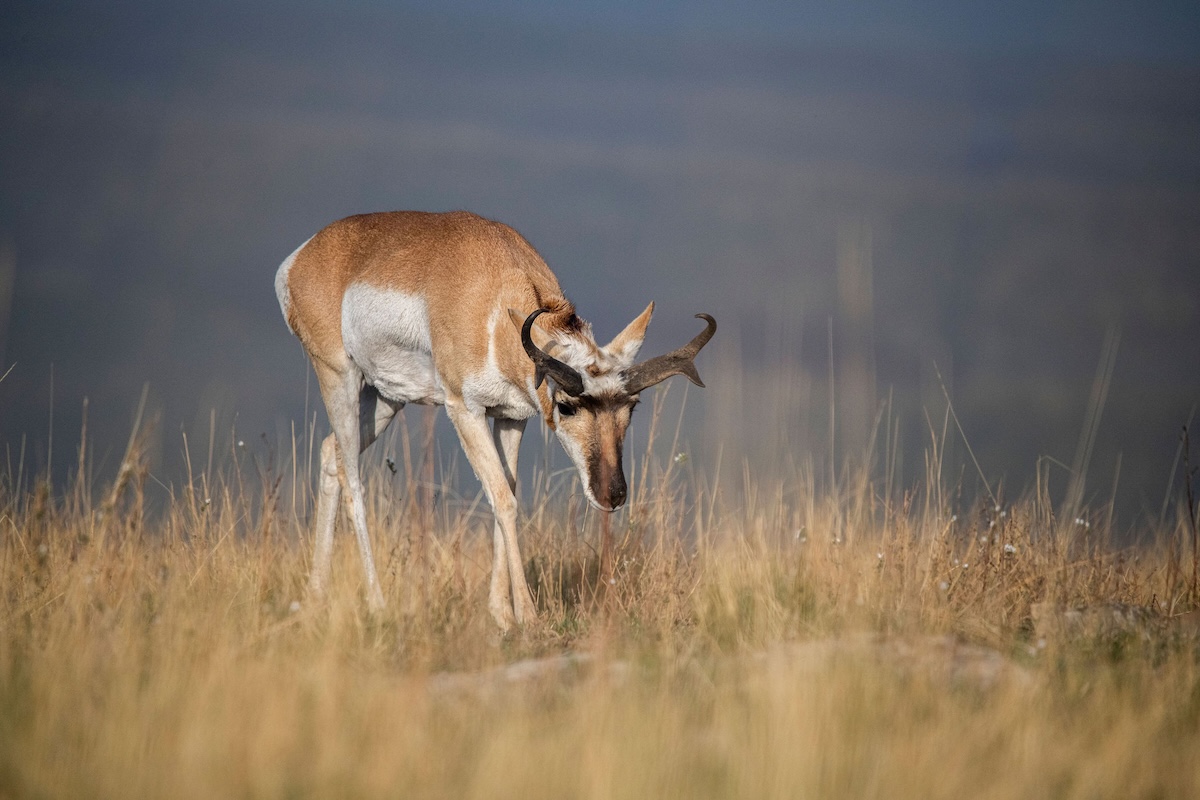
Pronghorn country is immense, but HuntStand offers options to zero in on hotspots.
Find the Best Pronghorn Food
Finding pronghorn food preference locations can be challenging, as their homeland habitat looks eerily similar from end to end. Primarily browsers, pronghorn nip at sagebrush, forbs, and other dry-land vegetation. That means they dine almost anywhere. Nevertheless, they do prefer fresh sprouts, lush vegetation, and anything green, as fall dries out most of their landscape. Yes, they live in a very arid landscape, that in many regions, meets the definition of a desert. Many areas see less than 16 inches of rain per year.
Start by locating all water sources in an area that could offer irrigation by Mother Nature. Creeks, seeps, springs, reservoirs, and even prairie rivers offer the moisture to keep some vegetation green along the banks. To find as many water sources as possible, you can look to several HuntStand base layers and overlays, but your best bet is to start with the Water Features map overlay; it showcases glimpses of main, but especially minor, natural water sources in pronghorn country.
Manmade water sources like windmills or water troughs for livestock can usually be pretty easy to recognize with the Hybrid base layer. Oftentimes, you’ll see dozens of cattle trails coming from every direction with a water source bull’s eye in the center. The Natural Atlas layer also names most major riparian zones, lakes, and reservoirs. Lastly, use the Terrain layer to find those small livestock reservoirs essential for wildlife and domestic animal hydration.
How to Spot and Stalk Spring Black Bears
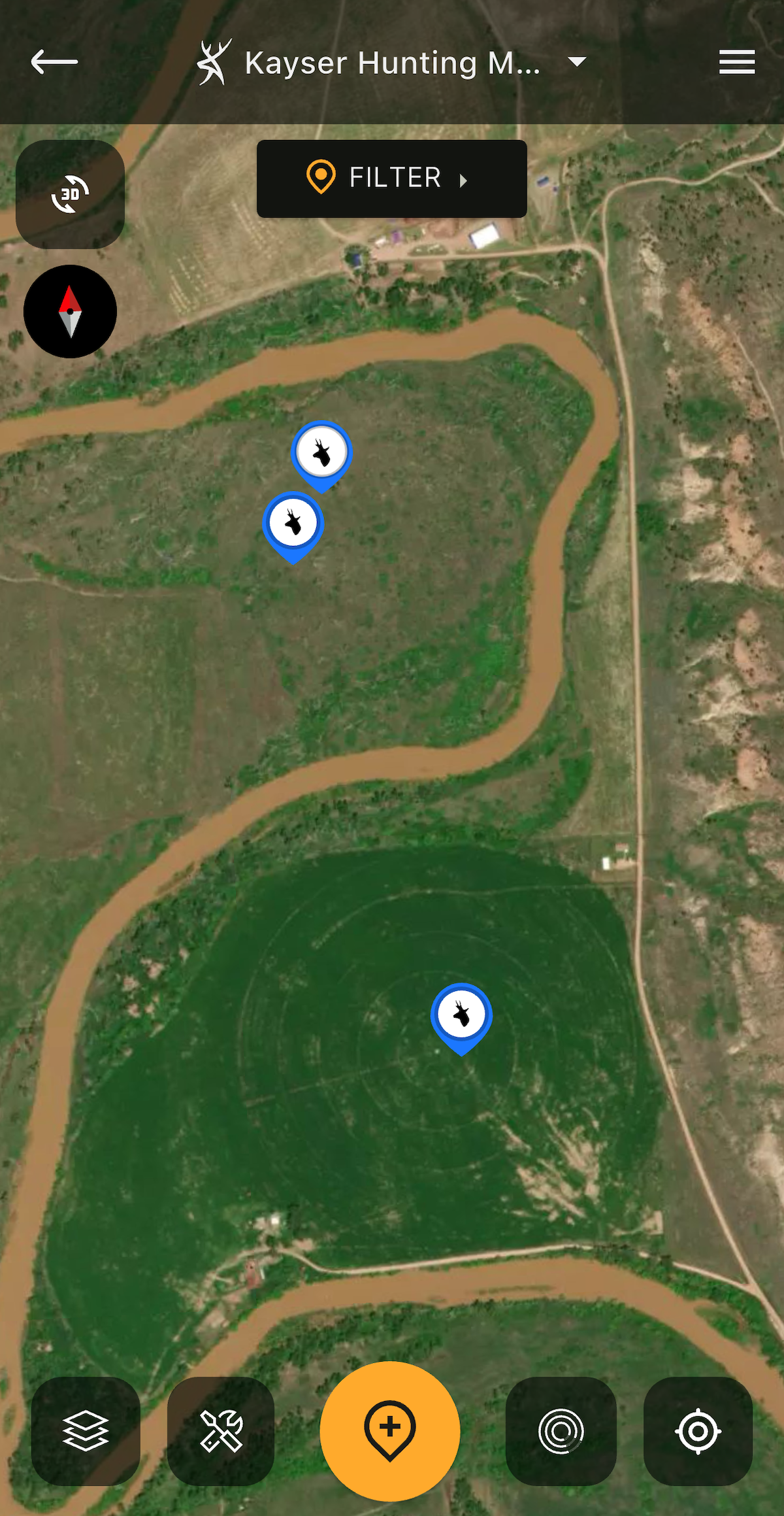
Use the HuntStand Hybrid baser layer to discover feeding and watering areas.
Around all these areas you will find green zones of browse, some large, many small, but all capable of attracting pronghorn due to their lush offerings. With the natural food search ongoing, look around your hunting unit via the Hybrid map with the Property Info overlay turned on. Locate any private land adjacent to the public lands you might be hunting.
With private lands located, transition to the Quad Topo base layer. It offers help as you search for lowlands using topographical line information. Why look for lowlands? Most irrigated hayfields, an addictive food for pronghorn, sit in low valleys where irrigation might be available. Pronghorn could stay on the fields 24/7 but expect some to bounce between private and adjacent public lands. Depending on the season, you could ambush pronghorn as they leave these groomed fields or stalk them when they seek solitude in surrounding rugged public country.
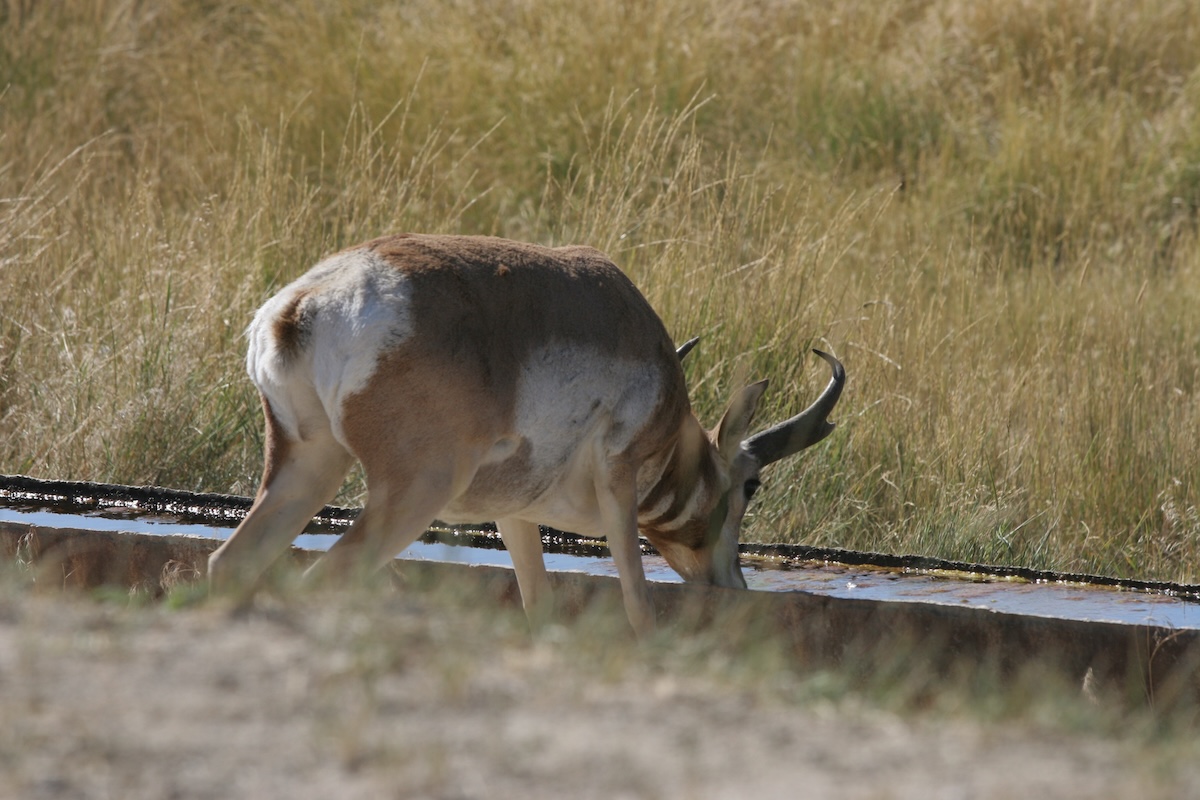
In addition to lush areas for feed, use HuntStand to focus on pronghorn water sources, natural and manmade.
Locate Top Pronghorn Watering Holes
Your search for water sets you miles ahead. It’s another element in arid pronghorn country that gives you the building blocks to put together a successful hunt from home.
A pronghorn needs water almost daily. By fall, as their homeland dries out, they must visit water sources, or in some instances, rely on snow to get their daily fill. Research also shows that pronghorn rarely venture further than four miles from a trusted water source. Mark hotspots at home, and during the hunt, upgrade your finds after witnessing how pronghorn use them.
How to Bowhunt Prairie Mule Deer
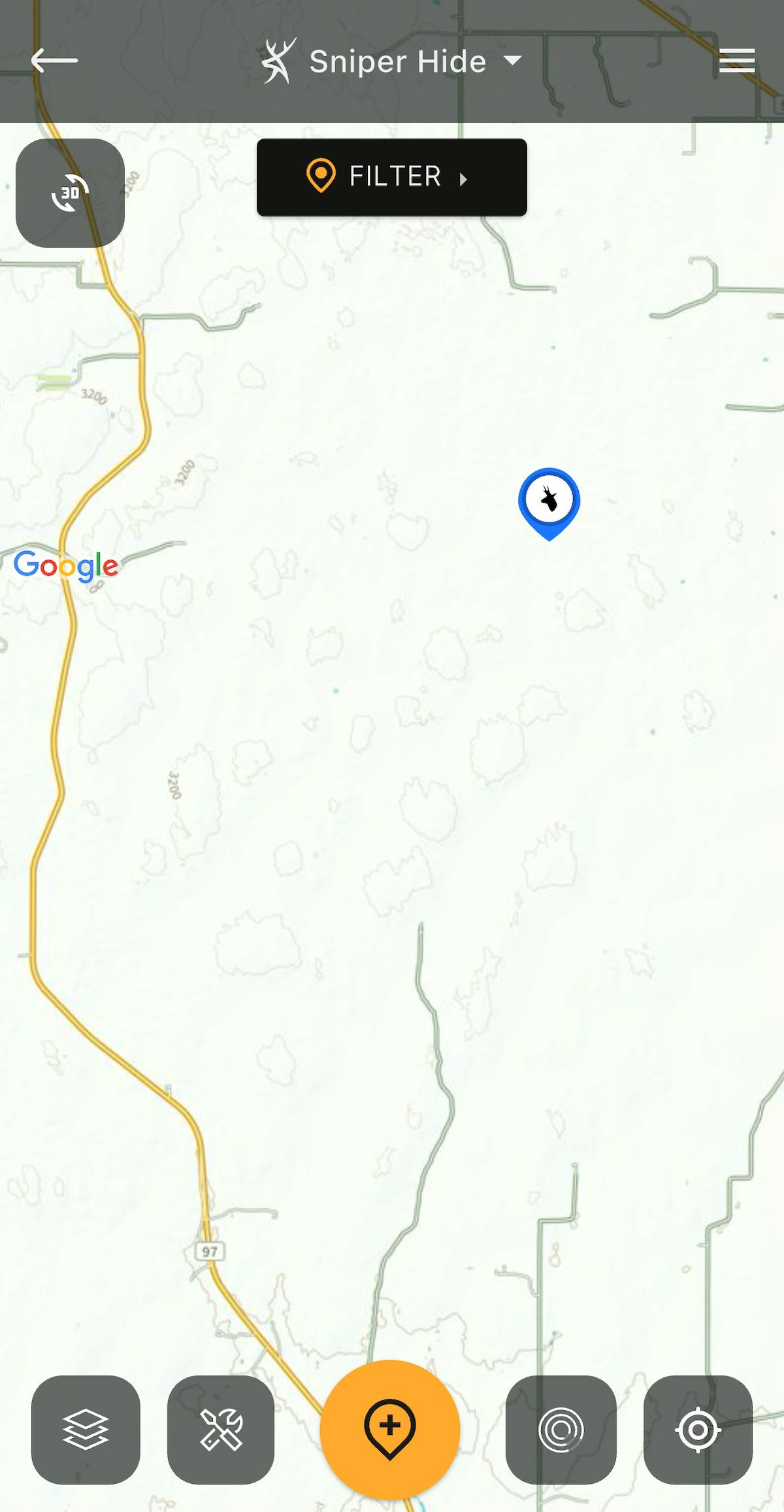
Using the HuntStand Natural Atlas to look for roadless areas.
Interestingly, a pronghorn requires approximately 3-4 quarts of water per day, more during intense heat and during the intensity of the rut. You can almost guarantee they’ll continue to visit water daily, especially between 8 and 10 A.M., during the early fall and through the rutting season of September.
Of course, during the rut, these prairie athletes might rush to a waterhole at any time of day to re-energize. Summer and early fall pronghorn settle into a comfortable lifestyle moving between reliable food and limited water. If you find a group one day, it’s very likely they’ll be there the next. That changes during the rut and periods of intense hunting pressure, but pronghorn keep a dependable schedule and pattern until mid-September. Then, your hunting intensity must match their willingness to survive.
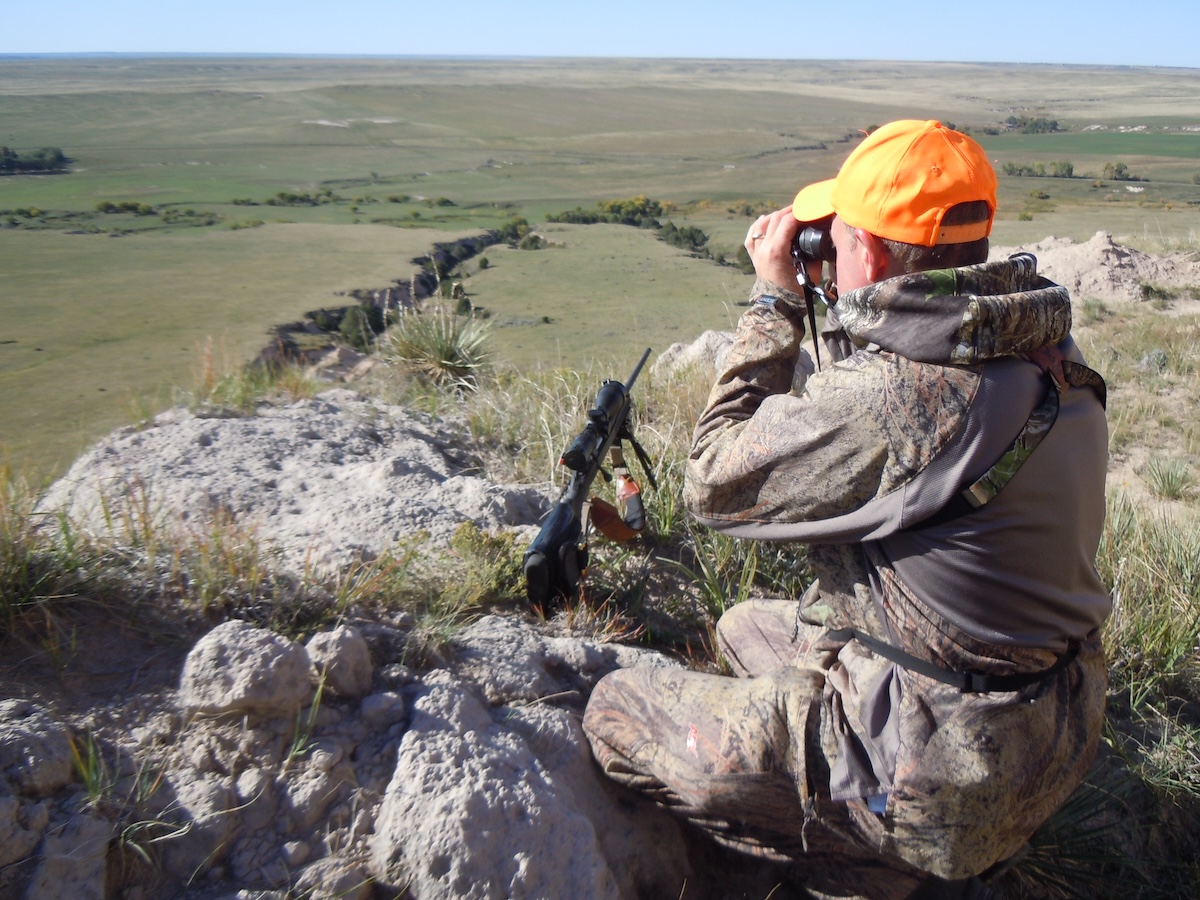
Glassing is critical once you arrive at your hunting area for pronghorn.
The Wild Card While Pronghorn Hunting
Undoubtedly, hunters push pronghorn into massive migration missions from hunting pressure. By keeping tabs on the most remote areas and overall health of habitat, you can surmise where pronghorn might congregate for opening-day success. Your main concern regarding the health of the habitat lies primarily with grazing livestock. In most instances, livestock and pronghorn do not compete for the same nutritional vegetation. Only in extreme cases of overgrazing do you find pronghorn leaving an area where cattle live.
Note: All real estate isn’t created equally. You must be ready to adapt to the circumstances. In much of whitetail country, hunters might only venture one mile from the road. In the West, that increases to maybe two miles, but since most Americans are out of shape (more than 70% according to government data), you simply need to hike farther. The further you can venture off the road the better for pronghorn.
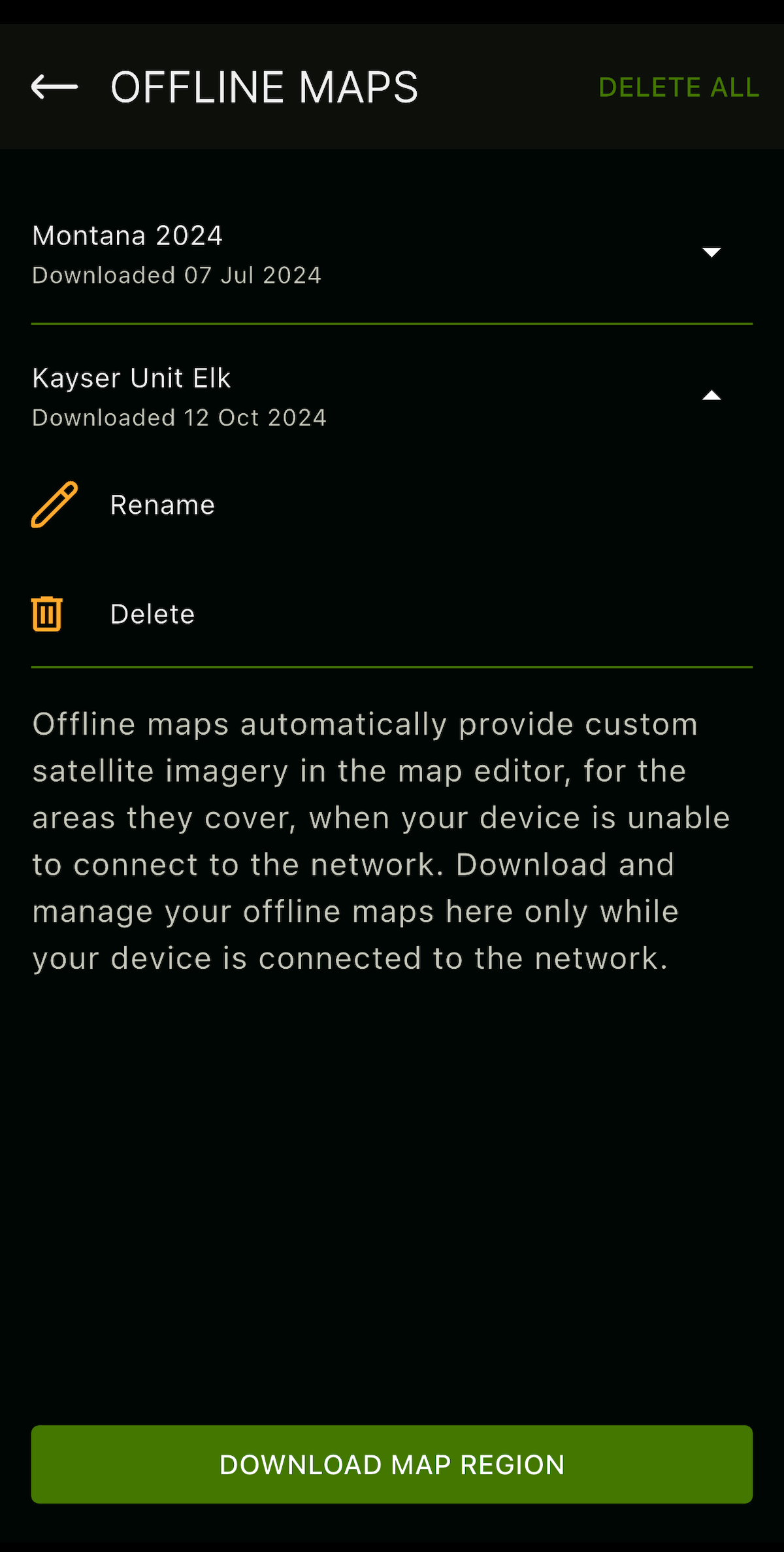
HuntStand Offline Maps are ideal for areas without cell service.
Landscapes that don’t cater to road construction require closer scrutiny as refuge for hunter-badgered animals. Pronghorn rely on their eyesight to reveal danger, and when visions of vehicles fill views, they move farther into remote areas. Use your Hybrid and Natural Atlas base layers to search for roadless areas, or roads closed to motorized vehicles. The Quad Topo layer also provides you with information to uncover the steepest of pronghorn habitats. They might not live on cliffs, but they have no issue with scrambling up mesas to escape recreational vehicle noise.
Once you have a handful of areas marked on your Hunt Area map, use the 3D Map for a virtual flyover of the hunting area to give you the best feel of how extreme the terrain will be. As you scout for the most rugged, be always looking for far-off borders to private land. Pronghorn might move to remote areas of less activity, especially if it borders a privately owned hayfield. It’s true. The grass is always greener on the other side of the fence and pronghorn follow that rule along with every other big game species. Look to your HuntStand maps to measure the distance from roads to more remote pockets that look suitable for pronghorn. Drop pins on parking spots and glassing points, and then map out your access routes. Road hunting for pronghorn can be very effective, but as hunting pressure increases you can benefit by getting off the beaten path.
How to Hunt Elk During Gun Season
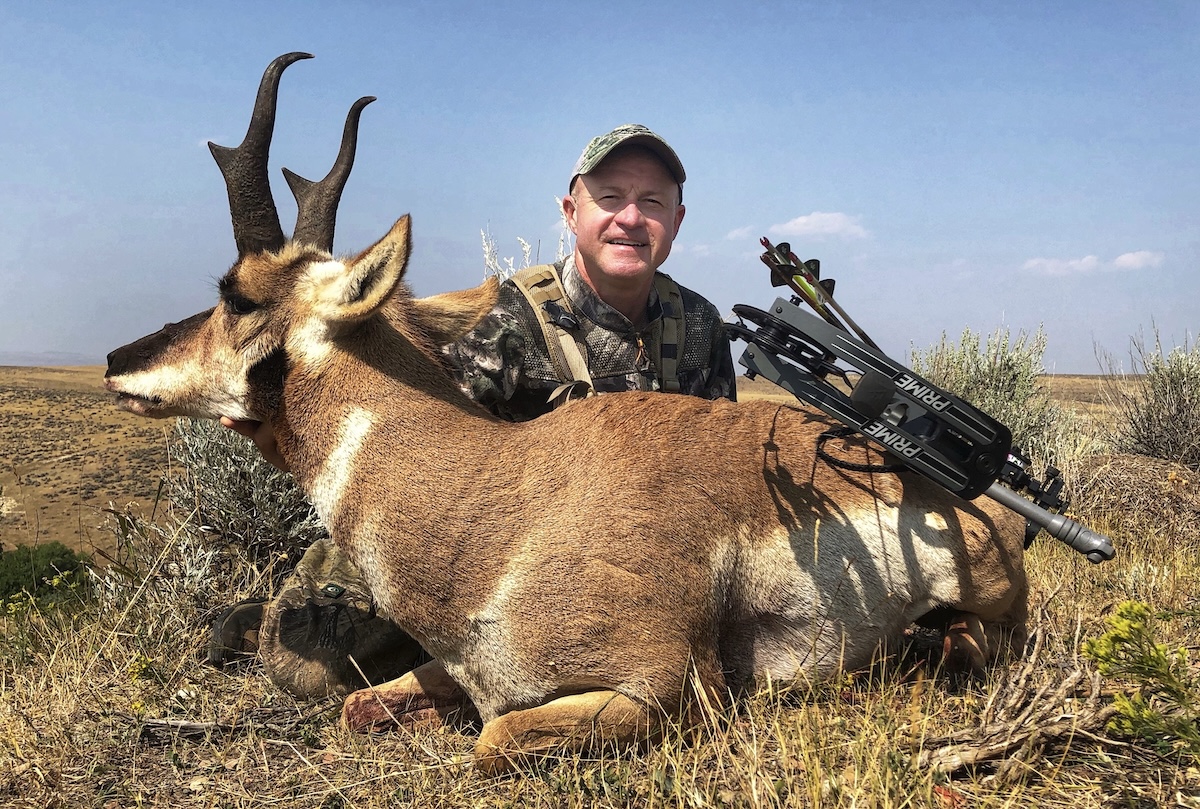
Mark Kayser used HuntStand to scout property boundaries on this Wyoming pronghorn.
If you want even more assurances of a pronghorn presence during season, consult with biologists and regional land managers while you scout from home. As a species dedicated to a specific environment, state agencies monitor pronghorn populations with precision. Most have roadmaps of pronghorn movement and can help direct you to areas where pronghorn might migrate as hunting pressure intensifies.
Finally, use the Offline Maps feature to download your Hunt Areas to your smartphone. Cell service might be difficult to locate in the remotest of pronghorn country, but you can still use your home-based scouting notes with offline assistance.
A pronghorn hunt delivers an experience to the wide open of America’s West. You experience a hunt where the quarry moves about in daylight, and in many instances, it’s on your public lands. Map out a pronghorn hunt as your next great adventure.
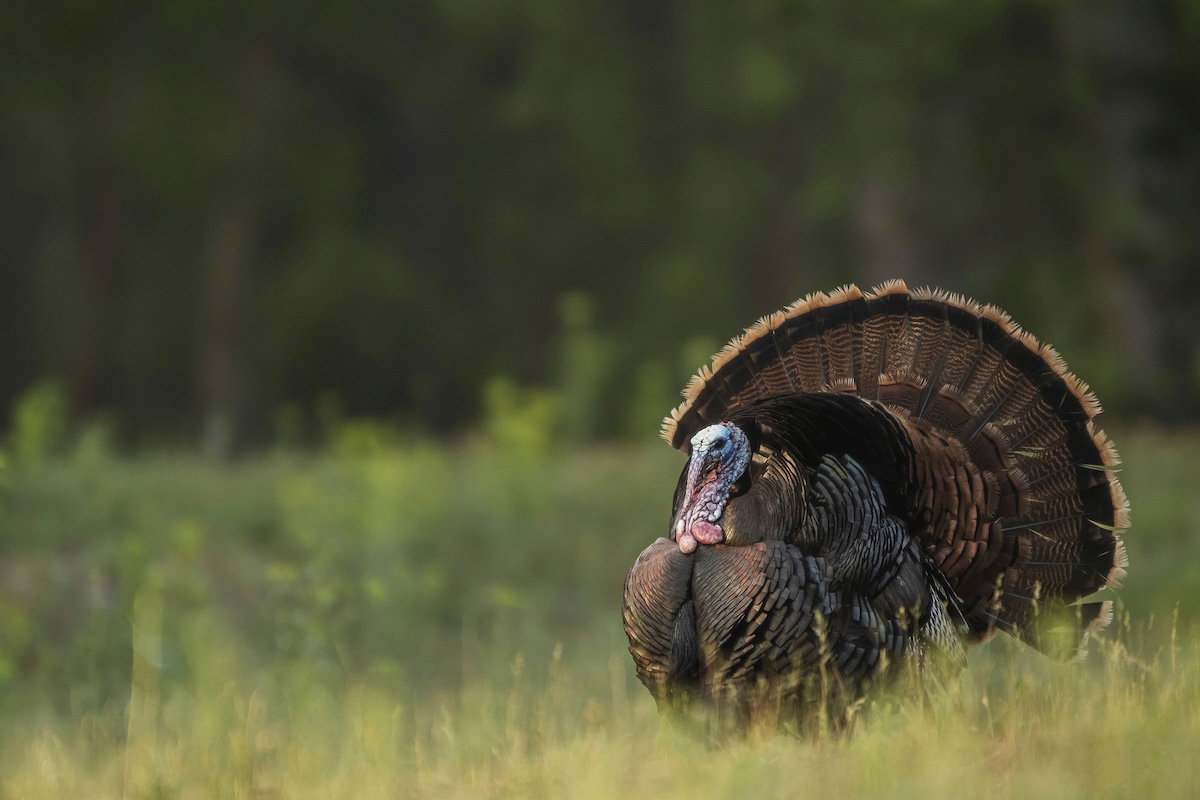
You can hunt Western turkeys from the desert to the mountains and even near the ocean shores in Hawaii.
The West encompasses an enormous swath of turkey habitat. This equals not only different subspecies of turkeys to hunt but also habitat that you could find in nearly every other corner of America. If you plan on hunting in the states of Washington, Oregon, California, Nevada, Idaho, Utah, Arizona, Montana, Wyoming, Colorado, New Mexico and Hawaii, plan on using a wide array of hunting tactics.
- How to Hunt Northern Turkeys
- How to Hunt Southern Turkeys
- How to Hunt Western Turkeys
- How to Hunt Midwestern Turkeys
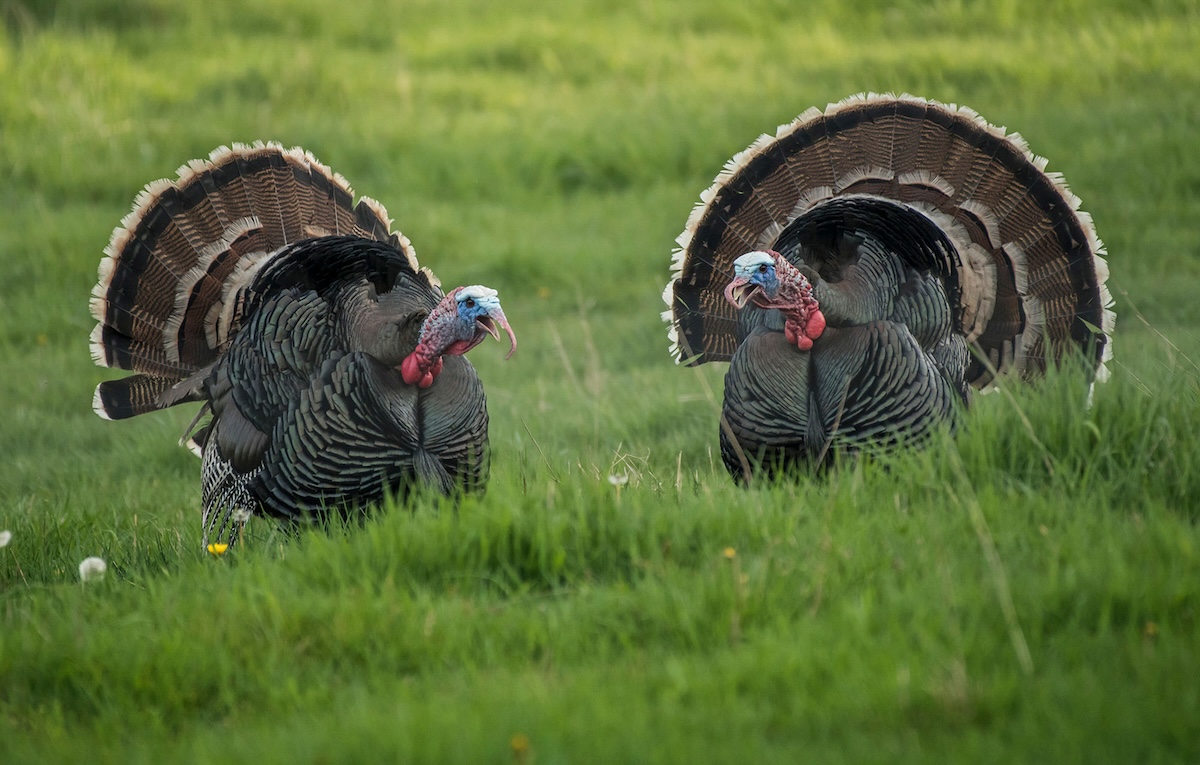
Western turkey hunting offers a wide array of landscapes and several subspecies to pursue.
Turkey Subspecies in the West
Big country with a medley of habitats adds up to more than one subspecies of wild turkeys calling the Western region home. Four subspecies call this home (including Hawaii), plus certain zones have hybrids inhabiting the woods and fields. From the islands of Hawaii to the edge of the eastern Rocky Mountains, expect to find Merriam’s, Rio Grande, Eastern, Gould’s, plus hybrids scattered where subspecies overlap habitat.
The standout in the bunch is the Merriam’s with its pearl white-tipped tail. According to the NWTF, Merriam’s have more white on their wings than other species. Merriam’s unfortunately have the weakest gobble, but barely. Beards and spurs are shortest of all the subspecies.
Another abundant subspecies is the Rio Grande with its notable tan-colored tail tips. It sports black and white barring on its wings with an average gobble, average beard, and average spur lengths.
Small pockets of Eastern turkeys exist in the West with their characteristic brown-tipped tail and white and black bars on the wings. Easterns shout the loudest gobble of all, plus win the longest beard contest of all species. NWTF ranks them second to Osceolas as the two toughest to call into shooting range.
In the far Southwest lives the Gould’s turkey with its very light-colored tail tips, moderate barred wing colors, and extremely long legs. Medium gobbles, beard length, and spurs describe Gould’s turkey makeup.
As for Hybrids, they oftentimes resemble a Merriam’s with tan or even rust-colored tail tips depending on the subspecies hookup.

Much of the West is public land and HuntStand’s Public Lands feature provides you information to find and hunt that ground
Western Turkey Behavior
David Nikonow has been a biologist for nearly a decade and is the Wyoming, Colorado, and Montana district biologist for the NWTF. Despite working solely in the West, he is schooled on wild turkeys throughout the country. He enjoys a wide array of hunting, especially the wild turkey of the West.
“You find a very diverse makeup of turkey hunting with the multiple subspecies in the West exhibiting different habitat selection and different behavior,” says Nikonow. “For instance, although Gould’s and Rio Grande turkeys survive arid regions, even arid pines, they tend to live near riparian systems whenever possible. Merriam’s and Easterns prefer more forested habitats.”
Another difference Nikonow points out is that Merriam’s are more adapted to colder climates and mountain environments, even over Easterns that live next door to them in some localized areas of the Northwest. And although all turkeys move about to take advantage of available nutrition and habitat shelter, Nikonow calls attention to the fact that Merriam’s absolutely undertake seasonal migrations in mountainous terrain.
“In the early part of the spring turkey hunting season, expect to find them at lower elevations,” reveals Nikonow. “Then, as the snowpack recedes, flocks move higher in the foothills and mountains. Hens will nest at those higher elevations, so be aware of that migration.”
Nikonow emphasizes that Rios and Gould’s favor a riparian system in their arid environments, but they do strike out throughout desert regions on occasion. Be mindful of pine ridges and scattered water sources as locations to pinpoint a flock if creeks, or rivers fail to produce sightings.
“So, when you plan a hunt and choose a state, research the subspecies living there and for sure their habitat requirements. It’s a reliable road to success, shares Nikonow.
In closing, he stresses that if you have a goal of tagging a Merriam’s subspecies, especially for your turkey slam, be aware of hybridization areas. Any locale where subspecies intermingle you could find hybrids. Certain regions, such as Wyoming’s Black Hills, are known for true Merriam’s subspecies making it a popular slam destination.
Surprising Facts About Wild Turkeys
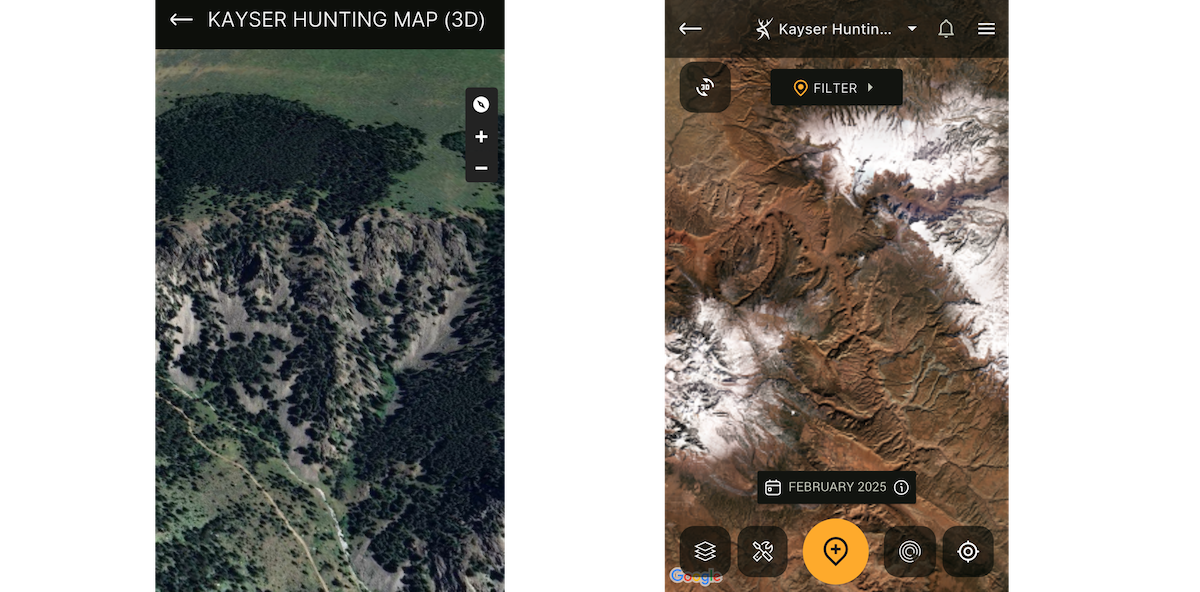
HuntStand’s 3D Map feature allows you to virtually fly over your hunting area.
Western Turkey Hunting Terrain
Think back to your high school geography class and visual the map on the wall. From the Rocky Mountains to the Pacific Ocean lies a giant portion of the American West, and in it, a mind-boggling amount of terrain. Successfully hunting that terrain requires the use of your HuntStand app to the utmost. Subscriptions to HuntStand Pro or Pro Whitetail unlock the most of the app for your scouting benefit.
Begin by determining which subspecies you likely will encounter. Remember, Merriam’s tend to be more mountain climbers while Rios prefer foothills, riparian zones and arid climates. Easterns do not mind the coastal timber and agriculture edges of the Northwest. Gould’s survive in the desert mountains and hybrids fit in anywhere.
Initial scouting should kick off with HuntStand’s Hybrid base map. After a terrain review and especially when targeting mountain birds, the Quad Topo base layer quickly sizes up steepness. A follow-up 3D Map virtual flyover allows you to experience the changing elevation as it pertains to topography.
In desert regions, the Tree Cover overlay affords you the chance to analyze areas for timber location that give turkeys sanctuary and roost opportunities. The Monthly Satellite layer, updated monthly, provides you with a refreshed satellite image to confirm the latest perspective on any hunting area.
The West includes a bounty of public land, but using the Property Info, Hunting Lands, and Public Lands overlays delivers detailed property information. You can locate public lands, property owners and access routes to the public land with this helpful data.

HuntStand’s Monthly Satellite feature shows you in a low-resolution image, fresh each month, what is taking place at a particular map location. It’s great to watch the snowline, common in many Western hunting locales.
Western Turkey Hunting Scouting
As you scout from home or firsthand, one of the most useful aspects of the HuntStand app is the ability to identify your finds with turkey-specific markers on your Hunt Area maps. This ensures your scouting and hunting discoveries are easily identifiable in your pursuit. These and many more features await you on the updated HuntStand app.
Chris Yeoman understands the importance of intensive scouting for Western turkeys. Since a 1973 start to Western turkey hunting in South Daklota’s Black Hills (for all purposes, the West), Yeoman has hunted turkeys from Wyoming to Washington and Montana to Arizona. He even professionally guided turkey hunters from 1985 to 2000. Yeoman’s top advice to kickoff your scouting? Talk to the locals.
“I ask everyone if they have seen turkeys lately,” says Yeoman. “It’s a huge jumpstart for me to get information from those that live in an area. I stop and talk to ranchers, talk to camouflaged hunters in convenience stores, and start up conversations in sporting goods stores. Most people are willing to share enough information to get you pointed in the right direction.”
After researching general areas with his hunting app, Yeoman suggests visiting those areas and covering as much ground as possible. He’s not shy about sharing his preference to drive logging roads with regular stops to use locator calls during the last 30 minutes of daylight. His locator call preference is the coyote howl. Once he finds turkeys, he knows where to start the following morning.
Best Ways to Improve Your Land for Wild Turkeys
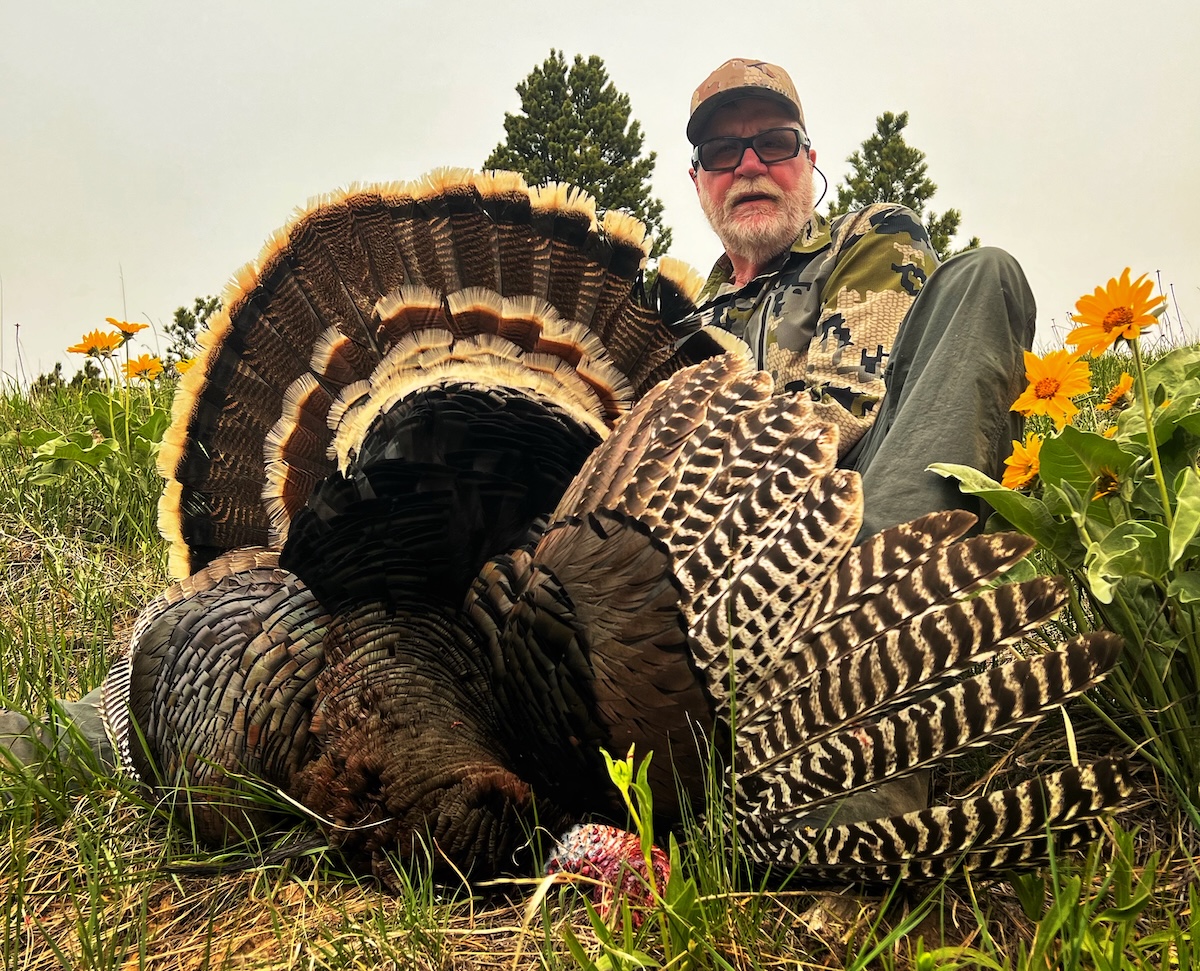
HuntStand’s Quad Topo layer gives you information on the steepness of Western terrain to plan your hunt.
Calling Western Turkeys
From his five decades of Western turkey hunting experience, Yeoman does not see a huge difference calling to Western birds based on their subspecies designation. Instead, he prefers to “take their temperature” and let the turkeys drive the conversation.
“I base my calling strategy the same whether I’m calling to Rios or Merriam’s,” states Yeoman. “All species like to be called to, but you need to take their temperature to see if they want to be called in soft or hard. Once you get them excited, you can determine how excitedly you need to call. Match their response for the surest calling strategy.”
Yeoman also runs into stubborn birds that simply will not budge. He stresses you need to use your imagination at this point and ask why the bird is not closing the distance.
“Can you hear hens, thus the reason he might not be coming to your calls? Is the brush too thick making the bird believe the predation risk is too high? Maybe there is a terrain issue stalling the bird, like a tight fence. Once I believe I know why the bird is not coming to the calls I move toward the bird or circle around it to get in a better position for the bird to make a move. I never sit and call to a bird for hours. Always reposition until the bird is comfortable and ready to commit.”
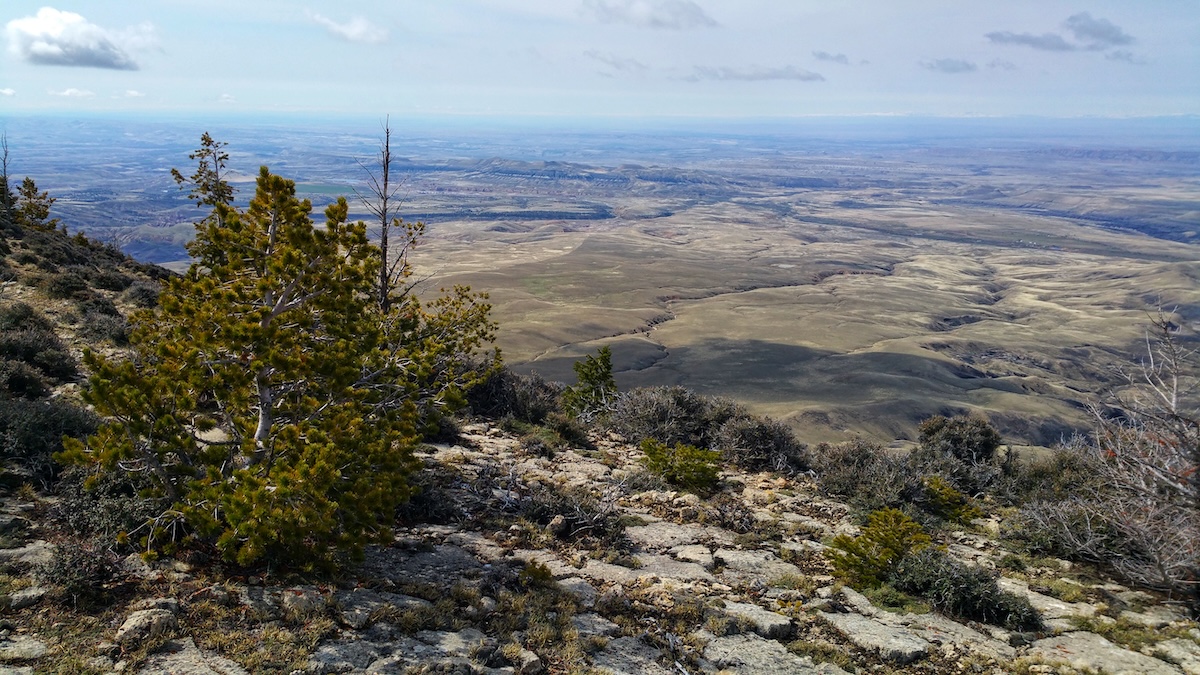
HuntStand’s Hybrid Map feature is an ideal starting location for scouting out the West.
Decoying Western Turkeys
Decoys play a huge role in luring toms across some of the vast basins, plains, and meadows found in the West. Having a full team of decoys at your disposal makes sense to match the mood of turkeys during a particular period of the spring breeding season. Yeoman agrees and has used decoys throughout his turkey hunting career.
“I love decoys and read each encounter to see if a decoy will benefit or even possibly hurt a particular hunting scenario,” Yeoman says. “In fact, I’m a huge proponent of fanning and have probably killed more gobblers simply by fanning over calling in recent years.”
Once again, Yeoman invites you to use your imagination. Observe the gobbler first and then match his actions move for move. If the gobbler comes at you in half strut, put your fan at half-mast. If he displays with his tail canted, reciprocate the move. Mimic his natural moves, even showing the back of the fan like a tom will do while spinning around during the strut. It’s a deadly tactic and works well in many open areas of the expansive West.
“I carry a fan with me everywhere tucked safely in my vest and safety is a high priority while fanning, especially in public areas. Use it cautiously and put it away if you feel the risk is too high of another hunter seeing the fan, and stalking you.”
Biggest Threats to the Wild Turkey
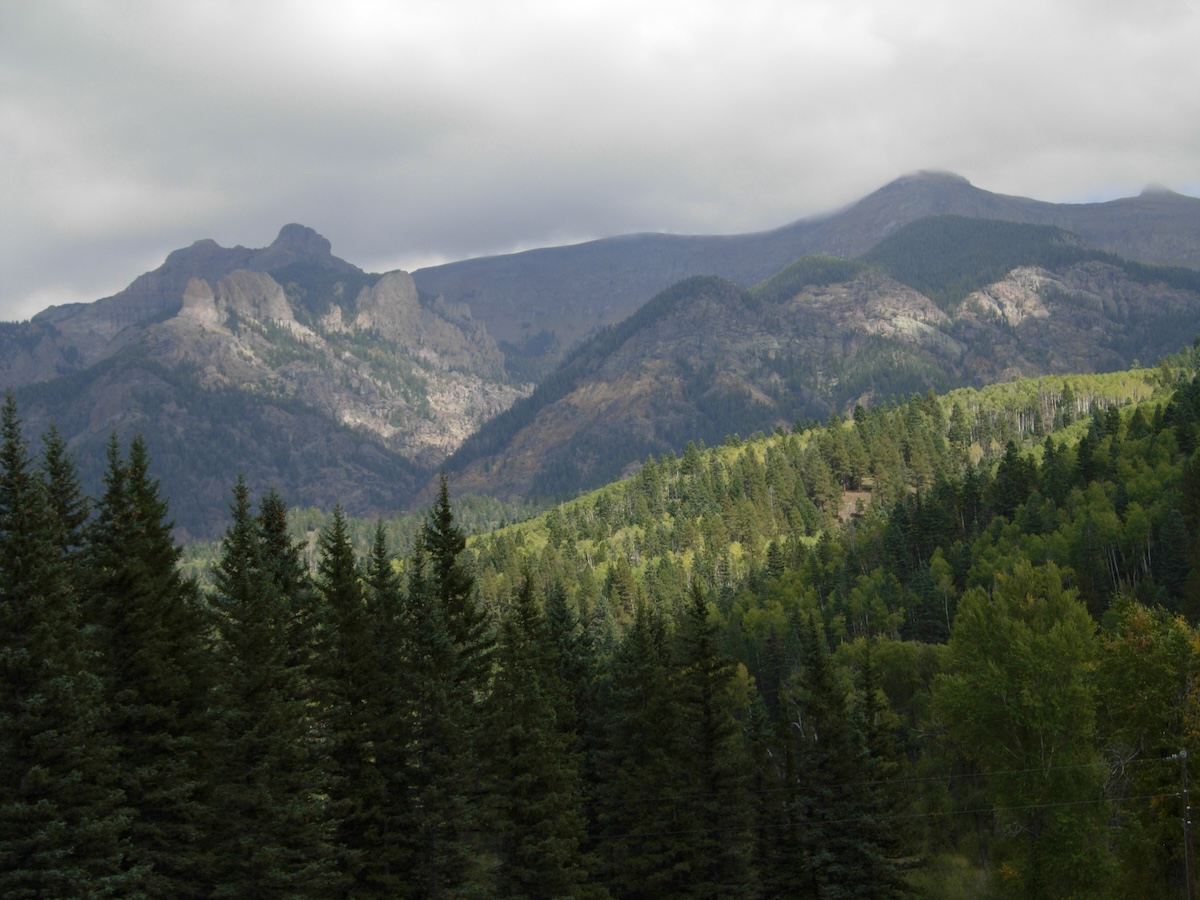
Use HuntStand to navigate challenging terrain.
Basic Tactics for Western Turkeys
Whether you wish to tag a certain subspecies or simply just be in turkeys as much as possible, Yeoman stresses you need to find turkey appealing habitat. Like whitetail deer, turkeys often prefer areas with edges. Edges that afford nearby security and nutrition rank highest. In Washington state, Yeoman oftentimes scouted for areas recently reclaimed after logging activities.
“Washington was a blast hunting and simply because of the way those logging companies reclaimed the ground, and planted clover,” he outlines. “Roads would be shut down in many of those areas, but you would walk up those roads calling and before you knew it, had a tom answering that was feeding in the new clover.”
Even in areas that have not been recently logged, Yeoman would still look for edges, shuttered roads, and timber sections that had been previously logged adjacent to unlogged timber.
“That’s when calling becomes so important, just to find out where they are. I would just use my crow call or occasional yelps to locate them, and then rely on my friction call. I always favor a friction call out West because of the loudness and realism. It teams together for success.”
Lastly, a basic rule he always follows is to match the camouflage to the terrain. The Western landscape varies from desert to high mountains and public-land turkeys spot anything out of place.

Find hotspots where turkeys love to hang out.
Advanced Tactics for Western Turkeys
In closing, Yeoman adds this last advice on how to score a Western gobbler early in the hunt. Locate him precisely the evening before.
“My tactic, when I howl one up after they fly into the roost is to try and pinpoint him exactly. I never just mark the mountainside he is gobbling from, but instead, sneak up in the evening and work my way up to that gobbling bird. I want to look where he is roosted and that usually means getting within 75 yards of him to examine the surrounding terrain.
Then I use my instinct to where he might pitch out the following morning based on my years of hunting experience. If he has several landing zones, I try to determine his possible travel route instead to set up a little farther away in the morning. Usually, I can spot open areas where he might land or benches he might follow after hitting the ground. That’s my advanced tactic, I pretty much know where he is going to go and I’ll be waiting for him the next morning.”
HuntStand App Layers and Tools for Backcountry Turkey Hunting
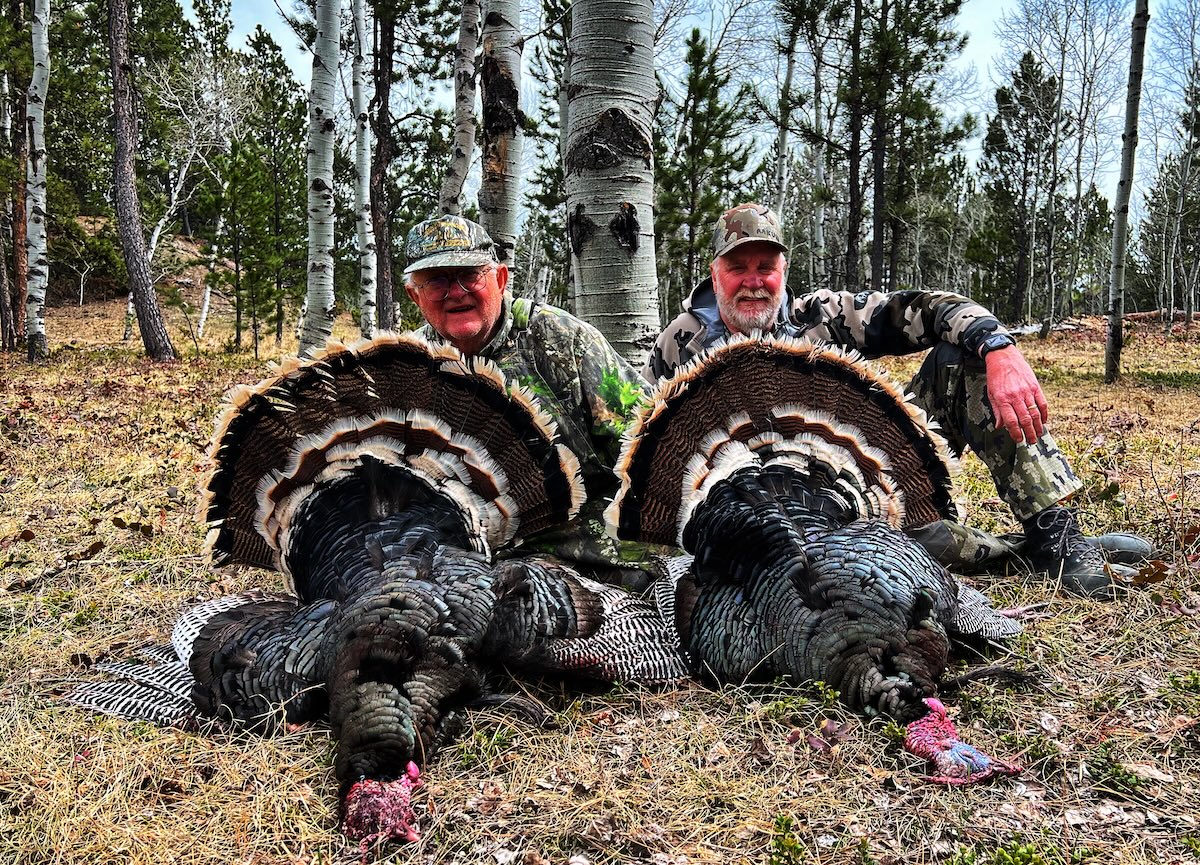
It's great when a plan comes together.
Turkey Hunting the West: Insider Info
Arizona: Look beyond Arizona’s trademark saguaro cactus and explore the vast mountain ranges in eastern and southern Arizona for turkey hunting opportunities. Arizona is home to Merriam’s and a handful of Rios, but for those looking to work on a slam, seek out the Gould’s subspecies in the southeast corner. Choose wisely with the opportunity for only one turkey per calendar year. Arizona Game and Fish Department
Oregon: Oregon turkey numbers continue be healthy, allowing hunters the opportunity to tag up to three birds, one per tag. Plus, Oregon hosts a strong legacy of Rio Grande turkeys with some hybrid birds found in the north-central section of the state. Oregon Department of Fish and Wildlife
California: Forget about Hollywood and focus on wild turkeys in California where hunters might take one bearded turkey per day with a total of three per season. The Rio Grande subspecies dominates the north half on the western slopes while Merriam’s thrive on the eastern slopes, plus the southern end of the state. California Department of Fish and Wildlife
Colorado: Forget spring skiing in Colorado and consider a mountain hunt for Merriam’s turkeys along the western slope. If the mountains scare you, the eastern plains hold a viable population of Rio Grande turkeys. Apply for a limited license or hunt turkeys on a general tag. Colorado Parks and Wildlife
Hawaii: Yes, you can take a break from surfing and hunt Rio Grande turkeys in Hawaii. Turkeys were released on all the islands, but have been doing the best in the drier climates of the big island of Hawaii, plus Molokai and Lanai. The daily and season limit is three bearded turkeys. Aloha. Hawaii Department of Land and Natural Resources
Idaho: Idaho has a hearty elk heritage, but that mountain atmosphere also aids Merriam’s productivity. Most of the turkey hunting is found in the northern panhandle of the state along the western border with a few flocks in the southeast corner. Research regulations for the chance at two birds. Idaho Fish and Game
Montana: Montana is Big Sky Country with big opportunities. Check the regulations, but you can take multiple turkeys in the state. Merriam’s are the primary game in town with the southeast, central river bottoms, mid-mountain ranges and areas along the western border supporting flocks. Despite Merriam’s predominance, the northwest does hold scattered flocks of Easterns, according to locals. Montana Fish Wildlife and Parks
Nevada: Nevada’s desert terrain limits turkey density, but scattered flocks of primarily Rio Grande wild turkeys inhabit the state. The good news is that most of the state is public land and wild turkeys stay close to the mountain ranges. Nevada Department of Wildlife
New Mexico: Like Arizona, New Mexico does sport desert, but the foothills, valleys, and mountain ranges grant hunters multiple turkey hunting opportunities. Merriam’s can be found across the state, but again, if a slam is in your future, consider the southwest for a Gould’s. Rio Grande turkeys also can be found in some eastern counties. New Mexico Game and Fish
Utah: Utah sports a wide habitat variance from desert to high mountains and because of that, is able to provide habitat for Merriam’s, Rio Grande, and hybrid wild turkeys. The central mountain portion of the state, running from north to south, houses many flocks with Merriam’s found in the east and hybrids in the southeast. You can tag one bird per season. Utah Division of Wildlife Resources
Washington: Not only does Washington offer the opportunity to take three turkeys total during their spring season, you could hunt three different subspecies. Merriam’s inhabit the northwest corner, Rio Grandes are found in the southeast corner and Easterns live in the southwest part of the state. Washington Department of Fish and Wildlife
Wyoming: Merriam’s populate the eastern half of Wyoming with the northeast Black Hills region being a turkey destination for decades. Do not overlook flocks in the Bighorn Mountains or the Snowy Range. Pine mountains from the Black Hills south also hold Merriam’s and possibly a hybrid. Wyoming Game and Fish Department
All things considered, the West is a great region for turkey hunting. If you’re up for a new challenge, hunt these expansive lands this turkey season. Or plant a trip for the future.
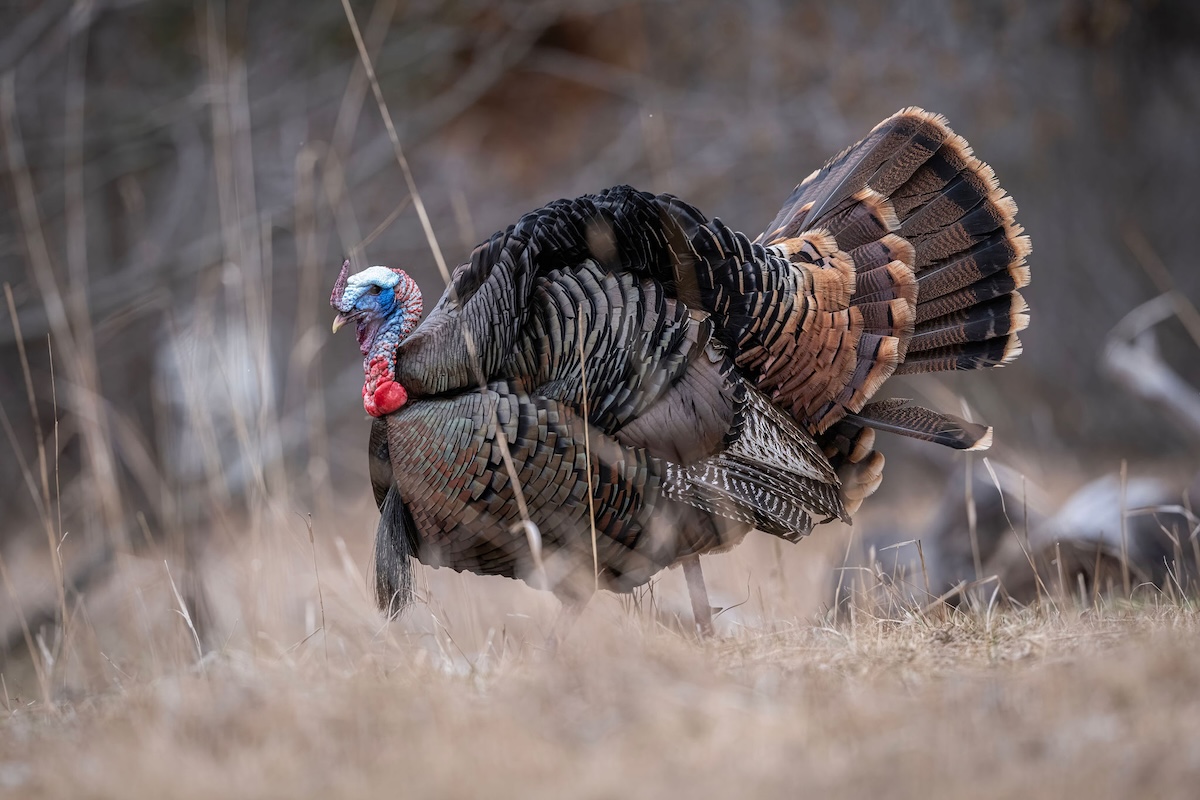
The wild turkey is an American treasure.
Did you know? In North America, there are five subspecies of wild turkeys. Another separate species lives solely in the Yucatan Peninsula. Did you know that wild turkey populations were crashing during European settlement as pioneers used them as a primary food source? Can you say pass the drumstick please? Did you know a male turkey can breed a hen once and she can store the sperm to fertilize her entire clutch of eggs? Turkeys are an amazing species despite their relatively small brain size (compared to their body). Check out the following surprising facts about wild turkeys.
Introducing Dr. Mike Chamberlain (The Wild Turkey Doc)
The National Wild Turkey Federation shares many of these interesting and surprising across their platforms from years of research. HuntStand’s Make Your Mark Podcast (episode 196) recently delved into some not-so-known interesting facts about wild turkeys. Podcast host Will Cooper interviewed Dr. Mike Chamberlain. With a Ph.D. and serving as a professor of wildlife ecology and management at the University of Georgia, Chamberlain was also recently appointed to the chair of the NWTF Distinguished Professor position at UGA. His 30 years of research of the wild turkey has unveiled many noteworthy discoveries, most of which are helping to preserve this wildlife for our hunting heritage. For being a turkey-dedicated person, he has been nicknamed the “Wild Turkey Doc,” and it is a moniker he is proud to embrace. “Turkeys are a true passion and a true part of my life.”
Chamberlain is not only a dedicated professor of all things wildlife, but he enjoys hunting wild turkeys as well. His hunts range from the Easterns in his Southern homeland, but he also travels, including hunts for western Merriam’s, and even a planned journey to Mexico for the Gould’s subspecies. Because of his passion for turkey research and hunting, he can offer a unique insight into questions hunters might have, including roost behavior.
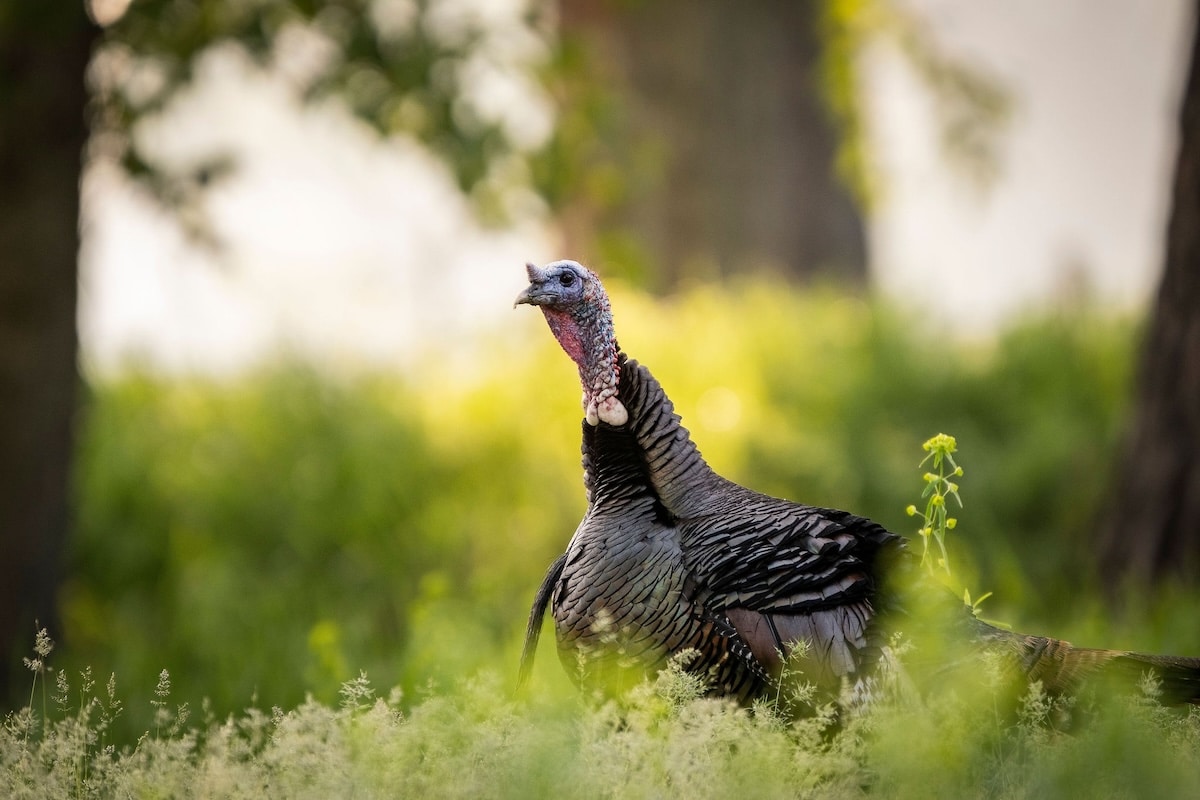
Gobblers bounce around to different roosts each day.
Turkey Roosts (And How Easterns Use Various Roosts)
“I think one, from a hunting standpoint, that sticks out to me that I did not know until we started using GPS telemetry to track turkeys, was that toms will switch roost sites with each other in consecutive nights,” Chamberlain asserts. “You might roost in this spot and then suddenly you leave, and I come in that same afternoon and roost in your spot. We see this routinely. It’s very common, particularly with Easterns, less so with the Western subspecies.”
Chamberlain says this roost pattern caused him to stop and think back to all the times he thought he was hunting the same tom at a specific roost. On a few occasions, he believes he was hunting the same bird, but the data revealed it was also probable a different bird occupied a certain roost on subsequent hunts.
“We think and it is logical to me, if you hunt Rios or Merriam’s, you know, or Gould’s, you know that roost sites are limited, right. There’s only a certain number of roosts in their home range and you can usually go find birds predictably in those roosts. But in the eastern forests, roost sites are more widely distributed, but there are places that turkeys use for generations, even in the eastern forests. And every turkey hunter that hunts over where I live knows this,” Chamberlain points out. “You can go to the same ridge and find turkeys roosting across two decades, and you know that could be five turkey generations and they keep roosting in the same locations. And what that tells us is that certain spots are better.”
Biggest Threats to the Wild Turkey
His theories on why they are better include safety from predators. The roost site might be more easily accessible, and the roost could allow sound to be projected more effectively. That is a major advantage during the brief breeding season.
“There is this concept called sound attenuation, this idea when a sound comes out, you know, a bird call for instance, comes out, there are things in the environment that shred it apart, that tear it up right. So, it doesn’t travel as far,” explains Chamberlain. “Well, it’s logical to me, these roosts that are used across many generations, are just better and perhaps there’s less attenuation, the sound travels farther, it’s cleaner, which would of kind of jive with why multiple toms use the same six or eight roosts in an area.”
Even Chamberlain gets stumped at times as to why a gobbler uses a particular roost. In cases like that, he suggests visiting the roost when turkeys are not around and analyzing it with critical thinking involved.
“OK, how does he get out of the roost? Which direction did he head when he left the roost? You know, where was he roosted in the tree? What’s out in front of that location? You start putting all these factors together, and at least one of those usually sticks out to me. Maybe it was a sound projection thing. Maybe it was that particular tree is very easy to get into and allow him to fly up or down,” Chamberlain notes.
The wild turkey breeds the same time each year, plus or minus a couple days.
The Turkey Breeding Season Timeline Is Consistent (Year Over Year)
The height of breeding season and how some hunters believe it varies year to year based on their personal observations is another myth Chamberlain is happy to debunk. Like many breeding cycles, wild turkey nesting is very reliable based on the science of photoperiod (increasing and decreasing amounts of daylight). For instance, the whitetail breeding season is triggered annually at the same time each fall due to decreasing amounts of daylight.
“I (recently) posted nesting data across eight consecutive years,” Chamberlain said. “You will see that peaks and nesting vary by about a week total across eight years. And then in some years, in most years, it’s only like one- or two-days difference. The peak of nesting is only one- or two-days difference from one year to the next.”
Although Chamberlain admits that in unique situations, such as prolonged inclement weather, breeding could be pushed later, it never occurs earlier due to the aforementioned lengthening of daylight called photoperiod. And remember, toms feel the effects of photoperiod before hens to ensure a successful breeding season.
The only obvious difference in breeding season across the nation is that it starts earlier in the South than North because of latitudinal gradient. A local biologist can help you pinpoint those important dates to permanently put on your calendar for your back-forty hunts.
Hens can impact the poult sex ratio of their clutch.
Turkey Eggshell Research (And How Hens Can Adjust Poult Ratios)
Although research that aids any turkey hunter definitely drives Chamberlain, he also appreciates a deep dive into the latest science being discovered about wild turkeys. An interesting revelation has to do with the very makeup of an eggshell and the reams of information something so simple has to offer.
“We’re doing a lot of work with sexing the poult using the eggshell at the membrane of the eggshell when the egg hatches,” Chamberlain describes. “So, you can take the membrane out of the egg and you can genetically test, and figure out what the sex of the poult is, which is really cool. Really, yeah, you can also determine who the mom is, which we usually know, right. (If we have the hen marked.) But you can also figure out who the dad is and whether it’s one of the birds, one of the males, that you’ve caught or not. And we’re seeing all kinds of interesting things.”
Even more mind blowing for Chamberlain is that research now seems to assert that hens can adjust the sex ratio of their clutch based on what is happening in their world. This is groundbreaking with researchers unearthing ongoing new discoveries.
“That the females, based on their body condition and their age, and these other things, might have the ability to make minor tweaks to the sex ratio of their clutches. And we’re seeing a pretty pronounced female bias, meaning more hens in our, you know, in our hatch clutches than males. We’re trying to wrap our head around why that is. And we’ve got some suspicions, but we’re literally digging in the data right now. But things like that are causing me to just kind of scratch my head.”
HuntStand App Layers and Tools for Backcountry Turkey Hunting
As Chamberlain sifts through the data, a hypothesis is beginning to take shape. Females are more efficient than males and less costly to reproduce. It makes sense if you think about the risks males take and the cautious lifestyle of a hen turkey.
“We suspect, this is just speculation at this point, but there is a lot of literature showing that males are more costly to produce,” Chamberlain reports. “And if you think about a wild turkey, if you’re to produce a male, you are going to ultimately produce something that has to live until it’s two years old to be able to breed. For the most part, they have to ascend to a position of dominance with their flocks to be a primary breeder. They’re bigger, they’re showier, they’re gaudy. And so, for a female to invest herself, her fitness into this thing with so much uncertainty, that he’ll ever get to that point of being a dominant breeder, there’s a lot of risk involved in that.”
Be part of the wild turkey conservation movement, and they'll be around for generations to come.
To hear more interesting facts about wild turkeys, download the HuntStand Make Your Mark Podcast episode 196 at your favorite app store. Each week host Will Cooper educates and entertains listeners with a variety of seasonal hunting subject matters.